State government trifecta is a term to describe single-party government, when one political party holds thegovernorship and majorities in both chambers of thestate legislature.
As of February 15, 2026, there are 23 Republican trifectas, 16 Democratic trifectas, and 11 divided governments where neither party holds trifecta control.
HIGHLIGHTS
As a result of the2025 elections, there are 39 trifectas across the country. Democrats gained one trifecta in the 2025 elections.
Between 1992 and 2026, the most trifectas for each party were 18 for Democrats (1993) and 26 for Republicans (2018).
As of January 2026, 39.1% of the country's population lived in a state with a Democratic trifecta, 41.5% lived in a state with a Republican trifecta, and 19.4% lived in a state with divided government.
The state with the longest running trifecta is Utah, where Republicans have controlled the state government since 1985.
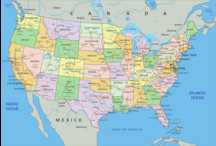
The map below highlights states based on their trifecta status. Hover over or click on a state below to learn about which party controls each component of the trifecta.
The following table shows the status of state government—divided control, Democratic trifecta, or Republican trifecta—in each state. It also includes the year of the last change to each state's trifecta status.
Percentage of Americans living under trifecta government
The chart below shows the percentage of the population living under Democratic trifectas, Republican trifectas, and divided governments. Population figures are taken from the U.S. Census Bureau's July 2024 estimates.[1]
Percent of Americans living under trifectas as of January 2026
The following chart displays how many trifectas each party held between 1992 and 2026. Because newly-elected officeholders are not sworn in until December of the election year or January of the following year, changes in trifecta status as a result of general elections are reflected in the following year's numbers.
TheRepublican Party lost four trifectas (in Kansas, Michigan, New Hampshire, and Wisconsin), ending up with 22 in six states. They did not gain any additional trifectas.
TheDemocratic Party added newstate government trifectas in six states: Colorado, Illinois, Maine, New Mexico, New York, and Nevada. They did not lose any trifectas, leaving them with 14.
Partisan control changes as a result of the 2018 elections
TheRepublican Party gainedtrifectas in Alabama, Florida, Indiana, Kansas, Maine, Michigan, Ohio, Oklahoma, Pennsylvania, Tennessee, Wisconsin, and Wyoming.
TheDemocratic Party losttrifectas in Colorado, Iowa, New Hampshire, New Mexico, New York, North Carolina, Oregon, and Vermont.
Partisan control changes as a result of the 2010 elections
State
Pre-election party in power
Post-election party in power
Alabama
Divided government
Republican
California
Divided government
Democratic
Colorado
Democratic
Divided government
Connecticut
Divided government
Democratic
Florida
Divided government
Republican
Hawaii
Divided government
Democratic
Indiana
Divided government
Republican
Iowa
Democratic
Divided government
Kansas
Divided government
Republican
Maine
Democratic
Republican
Michigan
Divided government
Republican
New Hampshire
Democratic
Divided government
New Mexico
Democratic
Divided government
New York
Democratic
Divided government
North Carolina
Democratic
Divided government
Ohio
Divided government
Republican
Oregon
Democratic
Divided government
Oklahoma
Divided government
Republican
Pennsylvania
Divided government
Republican
Tennessee
Divided government
Republican
Vermont
Democratic
Divided government
Wisconsin
Democratic
Republican
Wyoming
Divided government
Republican
Impact on redistricting
In 37 states, legislatures are primarily responsible for drawing congressional district lines. Seven states have only one congressional district each, rendering congressional redistricting unnecessary. Four states employindependent commissions to draw the district maps. In two states,politician commissions draw congressional district lines.
State legislative district lines are primarily the province of the state legislatures themselves in 37 states. In seven states, politician commissions draw state legislative district lines. In the remaining six states, independent commissions draw the lines.[3]
2010
As a result of the 2010 elections, 21 states had a change in trifecta status. Twelve of those states saw changes that would go on to impact the 2010 redistricting process. Details on the redistricting process in those 12 states can be seen below.
In Alabama, the state legislature is responsible for drawing both congressional and state legislative district lines.
In Colorado, the state legislature draws congressional district lines. Colorado's state legislative boundaries are drawn by a politician commission.
In Indiana, the state legislature is responsible for drawing both congressional and state legislative district lines. The governor may veto the maps drawn by the legislature.
In Iowa, an advisory commission drafts congressional and state legislative district boundaries. The state legislature retains final authority to implement district maps.
In Maine, both congressional and state legislative district boundaries are drawn by the state legislature. An advisory commission is also involved in the process.
In Michigan, congressional and state legislative district boundaries are drawn by the state legislature.
In New Hampshire, congressional and state legislative district boundaries are drawn by the state legislature.
In North Carolina, the state legislature is responsible for drawing both congressional and state legislative district lines. District maps cannot be vetoed by the governor.
In Ohio, congressional district boundaries are set by the state legislature. State legislative district lines are drawn by a politician commission.
In Oregon, the state legislature is primarily responsible for drawing both congressional and state legislative district lines. If the legislature fails to approve a state legislative district map, the secretary of state must draw the boundaries. There is no similar backup provision for congressional redistricting.
In Pennsylvania, congressional district boundaries are drawn by the state legislature. State legislative district lines are drawn by a politician commission.
In Wisconsin, both congressional and state legislative district boundaries are drawn by the Wisconsin State Legislature.
Trifecta status by state (1990-present)
The tables below display the partisan control of the governor's office and state legislative chambers in each state since 1990. Above the table is a calculation of how many years of trifecta control each party had during that time.
Select a state from the dropdown menu or map below to view a breakdown of its trifecta status since 1990.
Alabama Party Control: 1992-2026 Six years of Democratic trifectas • Sixteen years of Republican trifectas Scroll left and right on the table below to view more years.
Alaska Party Control: 1992-2026 No Democratic trifectas • Six years of Republican trifectas Scroll left and right on the table below to view more years.
Arizona Party Control: 1992-2026 No Democratic trifectas • Twenty-two years of Republican trifectas Scroll left and right on the table below to view more years.
Arkansas Party Control: 1992-2026 Eleven years of Democratic trifectas • Twelve years of Republican trifectas Scroll left and right on the table below to view more years.
California Party Control: 1992-2026 Twenty-one years with Democratic trifectas • No Republican trifectas Scroll left and right on the table below to view more years.
Colorado Party Control: 1992-2026 Fourteen years of Democratic trifectas • Four years of Republican trifectas Scroll left and right on the table below to view more years.
Connecticut Party Control: 1992-2026 Sixteen years of Democratic trifectas • No Republican trifectas Scroll left and right on the table below to view more years.
Delaware Party Control: 1992-2026 Eighteen years of Democratic trifectas • No Republican trifectas Scroll left and right on the table below to view more years.
Florida Party Control: 1992-2026 One year of a Democratic trifecta • Twenty-seven years of Republican trifectas Scroll left and right on the table below to view more years.
Georgia Party Control: 1992-2026 Eleven years of Democratic trifectas • Twenty-two years of Republican trifectas Scroll left and right on the table below to view more years.
Hawaii Party Control: 1992-2026 Twenty-seven years of Democratic trifectas • No Republican trifectas Scroll left and right on the table below to view more years.
Idaho Party Control: 1992-2026 No Democratic trifectas • Thirty-two years of Republican trifectas Scroll left and right on the table below to view more years.
Illinois Party Control: 1992-2026 20 years of Democratic trifectas • Two years of Republican trifectas Scroll left and right on the table below to view more years.
Indiana Party Control: 1992-2026 No Democratic trifectas • Eighteen years of Republican trifectas Scroll left and right on the table below to view more years.
Iowa Party Control: 1992-2026 Four years of Democratic trifectas • Twelve years of Republican trifectas Scroll left and right on the table below to view more years.
Kentucky Party Control: 1992-2026 Eight years of Democratic trifectas • Three years of Republican trifectas Scroll left and right on the table below to view more years.
Louisiana Party Control: 1992-2026 Eight years of Democratic trifectas • Eight years of Republican trifectas Scroll left and right on the table below to view more years.
Maine Party Control: 1992-2026 Sixteen years of Democratic trifectas • Two years of Republican trifectas Scroll left and right on the table below to view more years.
Maryland Party Control: 1992-2026 Twenty-three years of Democratic trifectas • No Republican trifectas Scroll left and right on the table below to view more years.
Massachusetts Party Control: 1992-2026 Twelve years of Democratic trifectas • No Republican trifectas Scroll left and right on the table below to view more years.
Michigan Party Control: 1992-2026 Two years of Democratic trifectas • Fourteen years of Republican trifectas Scroll left and right on the table below to view more years.
Minnesota Party Control: 1992-2026 Four years of Democratic trifectas • No Republican trifectas Scroll left and right on the table below to view more years.
Mississippi Party Control: 1992-2026 Four years of Democratic trifectas • Fifteen years of Republican trifectas Scroll left and right on the table below to view more years.
Missouri Party Control: 1992-2026 Eight years of Democratic trifectas • Fourteen years of Republican trifectas Scroll left and right on the table below to view more years.
Montana Party Control: 1992-2026 No Democratic trifectas • Sixteen years of Republican trifectas Scroll left and right on the table below to view more years.
Nebraska Party Control: 1992-2026 Seven years of Democratic trifectas • Twenty-eight years of Republican trifectas Scroll left and right on the table below to view more years.
Nevada Party Control: 1992-2026 Five years of Democratic trifectas • Two years of Republican trifectas Scroll left and right on the table below to view more years.
New Hampshire Party Control: 1992-2026 Four years of Democratic trifectas • Fifteen years of Republican trifectas Scroll left and right on the table below to view more years.
New Jersey Party Control: 1992-2026 Fifteen years of Democratic trifectas • Eight years of Republican trifectas Scroll left and right on the table below to view more years.
New Mexico Party Control: 1992-2025 Nineteen years of Democratic trifectas • No Republican trifectas Scroll left and right on the table below to view more years.
New York Party Control: 1992-2026 Ten years of Democratic trifectas • No Republican trifectas Scroll left and right on the table below to view more years.
North Carolina Party Control: 1992-2026 Fourteen years of Democratic trifectas • Four years of Republican trifectas Scroll left and right on the table below to view more years.
North Dakota Party Control: 1992-2026 No Democratic trifectas • Thirty-two years of Republican trifectas Scroll left and right on the table below to view more years.
Ohio Party Control: 1992-2026 No Democratic trifectas • Twenty-eight years of Republican trifectas Scroll left and right on the table below to view more years.
Oklahoma Party Control: 1992-2026 Five years of Democratic trifectas • Sixteen years of Republican trifectas Scroll left and right on the table below to view more years.
Oregon Party Control: 1992-2026 Eighteen years of Democratic trifectas • No Republican trifectas Scroll left and right on the table below to view more years.
Pennsylvania Party Control: 1992-2026 One year of a Democratic trifecta • Twelve years of Republican trifectas Scroll left and right on the table below to view more years.
Rhode Island Party Control: 1992-2026 Seventeen years of Democratic trifectas • No Republican trifectas Scroll left and right on the table below to view more years.
South Carolina Party Control: 1992-2026 No Democratic trifectas • Twenty-four years of Republican trifectas Scroll left and right on the table below to view more years.
South Dakota Party Control: 1992-2026 No Democratic trifectas • Thirty-three years of Republican trifectas Scroll left and right on the table below to view more years.
Tennessee Party Control: 1992-2026 Five years of Democratic trifectas • Sixteen years of Republican trifectas Scroll left and right on the table below to view more years.
Texas Party Control: 1992-2026 Three years of Democratic trifectas • Twenty-four years of Republican trifectas Scroll left and right on the table below to view more years.
Utah Party Control: 1992-2026 No Democratic trifectas • Thirty-five years of Republican trifectas Scroll left and right on the table below to view more years.
Vermont Party Control: 1992-2026 Ten years of Democratic trifectas • No Republican trifectas Scroll left and right on the table below to view more years.
Virginia Party Control: 1992-2026 Five years of Democratic trifectas • Four years of Republican trifectas Scroll left and right on the table below to view more years.
Washington Party Control: 1992-2026 Twenty years of Democratic trifectas • No Republican trifectas Scroll left and right on the table below to view more years.
West Virginia Party Control: 1992-2026 Nineteen years of Democratic trifectas • Nine years of Republican trifectas Scroll left and right on the table below to view more years.
Wisconsin Party Control: 1992-2026 Two years of Democratic trifectas • Ten years of Republican trifectas Scroll left and right on the table below to view more years.
Wyoming Party Control: 1992-2026 No Democratic trifectas • Twenty-four years of Republican trifectas Scroll left and right on the table below to view more years.
The following maps display current state government trifectas as well as historical trifectas leading up to elections dating back to 2010. Use the buttons below to select a map. A pending trifecta means that a trifecta was gained as a result of an election, but the winners have not yet been sworn in to create that trifecta.
State government trifectas, post-2025 elections
State government trifectas, pre-2025 elections
State government trifectas, post-2024 elections
State government trifectas, pre-2024 elections
State government trifectas, post-2022 elections
State government trifectas, pre-2022 elections
State government trifectas, post-2020 elections
State government trifectas, pre-2020 elections
State government trifectas, post-2018 elections
State government trifectas, pre-2018 elections
State government trifectas, post-2016 elections
State government trifectas, pre-2016 elections
State government trifectas, pre-2014
State government trifectas, pre-2012
State government trifectas, pre-2010
Learn more about Ballotpedia's analyses of trifectas and state governments
The following section contains quotes which are representative of media coverage of trifectas and their significance.
“
One-party dominance is not unique to Illinois; it’s part of the modern political landscape. In this era of extreme partisanship, state government “trifectas” — in which one party controls the governorship and both houses of the legislature — have become the rule. In 2002, just before Illinois turned Democratic, 30 states had divided government, 11 had Republican trifectas and eight had Democratic trifectas. Now, only 12 states have divided government, while 23 have Republican trifectas and 15 have Democratic trifectas.[7]
In more than half the states, Republican or Democratic trifectas are poised to exert outsized influence on redistricting after the 2020 census. In those states, elected officials set the critical boundaries that often determine whether the conditions are better for electing Democrats or Republicans.[7]
Now that Washington-style partisanship has seeped into statehouses, a trifecta may be necessary to get much done — whether the state is controlled by Democrats or by Republicans.
“In this highly polarized partisan environment,” said Carl Klarner, a former Indiana State University political science associate professor and political consultant, “a party needs to control both chambers of the legislature and the governor’s office to significantly change the direction of policy.”[7]
Democrats made real gains in state government on Tuesday. The party nearly doubled its number of trifecta governments, where one party controls the executive branch in addition to each chamber of the state legislature. They now have total control in 13 states versus 21 Republican trifectas. Three other states now have divided legislatures, where one party controls one chamber but not the other. Other states, like Wisconsin, elected Democratic governors while Republicans retained control of state legislatures.
The Democratic Party’s weaknesses in state government are legendary and have probably contributed to its weaknesses at the federal level. State government is an important pipeline to higher office, and as Stateline reported this week, Democrats lost 900 legislative seats during the Obama administration. In many states, ineffective local parties have prevented Democrats from blocking Republican bills, like those that undermine abortion rights, and from advancing their own legislation, like Medicaid expansion. But now in states with Democratic trifectas — or at least a significant number of lawmakers willing to work across the aisle — Democrats will have opportunities to implement their policies, and demonstrate their effectiveness to voters. Here are some issues they’re likely to focus on.[7]
It is the stuff of liberal fantasies: a vast, defiant territory, sweeping along the country’s Pacific coastline, governed by Democrats and resisting President Trump at every turn.
A single election in a wealthy Seattle suburb on Tuesday could make that scenario a reality, handing the party full control of government in Washington State — and extinguishing Republicans’ last fragile claim on power on the West Coast. The region has been a rare Democratic stronghold on an electoral map now dominated by vast swaths of red, and Republicans’ only toehold on power there has been a one-seat majority in the Washington State Senate.
The prospect of such far-reaching autonomy for Democrats, who already hold all three governors’ offices as well as both houses of the legislatures in Oregon and California, has infused extraordinary energy into what might have been a low-key special election.[7]
Astate government triplex is a term to describe when one political party holds the following three positions in a state's government:governor,attorney general, andsecretary of state.[13]
As of February 15, 2026, there are 23 states with both a Republican trifecta and triplex, 16 states with both a Democratic trifecta and triplex, and 11 whose trifecta and triplex statuses are different.
Currently,39 of the 50 states have a trifecta and a triplex of the same party.
↑Republicans gained a majority in 2007 when two Democratic state senators switched their party affiliation. Democrats regained the majority as a result of the 2007 elections.
↑Democrats gained full control of the state Senate after a special election on November 7, 2017.
↑Ballotpedia chose to highlight these offices because of they are typically the most visible positions in states and serve important administrative functions.






 Republican
 Democratic


