
Raúl Grijalva
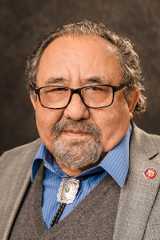
Raúl Grijalva (Democratic Party) was a member of theU.S. House, representingArizona's 7th Congressional District. He assumed office on January 3, 2023. He left office on March 13, 2025.
Grijalva (Democratic Party) ran for re-election to theU.S. House to representArizona's 7th Congressional District. He won in the general election onNovember 5, 2024.
Grijalva died on March 13, 2025.[1]
On April 2, 2024, Grijalva announced that he had been diagnosed with cancer. Grijalva said he planned to continue working while undergoing treatment.[2]
Biography
Raúl Grijalva was born in Tucson, Arizona. Grijalva graduated from Sunnyside High School. He earned a B.A. from the University of Arizona in 1986.[3] Grijalva served on the Tucson Unified School District Governing Board and the Pima County Board of Supervisors.[4]
Committee assignments
U.S. House
2021-2022
Grijalva was assigned to the following committees:[Source]
- Committee on Natural Resources,Chair
- Water, Oceans, and Wildlife
- Committee on Education and the Workforce
- Early Childhood, Elementary, and Secondary Education Subcommittee
- Higher Education and Workforce Investment Subcommittee
2017-2018
At the beginning of the115th Congress, Grijalva was assigned to the following committees:[5]
2015-2016
Grijalva served on the following committees:[6]
2013-2014
Grijalva served on the following committees:[7]
- Education and the Workforce Committee
- Subcommittee on Health, Employment, Labor and Pensions
- Subcommittee on Early Childhood, Elementary and Secondary Education
- Natural Resources Committee
- Subcommittee on Public Lands and Environmental RegulationRanking Member
- Subcommittee on Indian and Alaska Native Affairs
- Subcommittee on Energy and Mineral Resources
2011-2012
- Education and the Workforce Committee
- Subcommittee on Early Childhood, Elementary and Secondary Education
- Subcommittee on Higher Education and Workforce Training
- Natural Resources Committee
- Subcommittee on National Parks, Forests and Public Lands,Ranking Minority Member
- Subcommittee on Water and Power
Key votes
- See also:Key votes
Ballotpedia monitors legislation that receives a vote and highlights the ones that we consider to be key to understanding where elected officials stand on the issues. To read more about how we identify key votes, clickhere.
Key votes: 118th Congress, 2023-2025
The118th United States Congress began on January 3, 2023, and ended on January 3, 2025. At the start of the session, Republicans held the majority in theU.S. House of Representatives (222-212), and Democrats held the majority in theU.S. Senate (51-49).Joe Biden (D) was the president andKamala Harris (D) was the vice president. We identified the key votes below usingCongress' top-viewed bills list and through marquee coverage of certain votes on Ballotpedia.
| Key votes: 118th Congress, 2023-2025 | ||||||||
|---|---|---|---|---|---|---|---|---|
| Vote | Bill and description | Status | ||||||
 Yea Yea |
| Passed (310-118)[9] | ||||||
 Nay Nay |
| Passed (227-201)[11] | ||||||
| Nay |
| Passed (217-215)[13] | ||||||
| Nay |
| Passed (328-86)[15] | ||||||
| Nay |
| Passed (225-204)[17] | ||||||
| Nay |
| Passed (219-200)[19] | ||||||
| Nay |
| Passed (229-197)[21] | ||||||
| Nay |
| Passed (314-117)[23] | ||||||
| Rep.Hakeem Jeffries (D-N.Y.) |
| Rep.Kevin McCarthy (R-Calif.) (216-212) | ||||||
| Yea |
| Passed (216-210)[26] | ||||||
| Rep.Hakeem Jeffries (D-N.Y.) |
| Rep.Mike Johnson (R-La.) (220-209) | ||||||
| Nay |
| Passed (221-212)[29] | ||||||
| Yea |
| Passed (311-114)[31] | ||||||
| Not Voting |
| Passed (327-75)[33] | ||||||
| Nay |
| Passed (219-213)[35] | ||||||
| Nay |
| Passed (219-211)[37] | ||||||
| Yea |
| Passed (357-70)[39] | ||||||
| Present |
| Passed (217-199)[41] | ||||||
| Not Voting |
| Passed (320-91)[43] | ||||||
| Not Voting |
| Passed (387-26)[45] | ||||||
| Nay |
| Passed (219-184)[47] | ||||||
| Nay |
| Passed (214-213)[49] | ||||||
| Not Voting |
| Passed (341-82)[51] | ||||||
Key votes: Previous sessions of Congress
| Key votes | |||||||||||||||||||||||||||||||||||||||||||||||||||||||||||||||||||||||||||||||||||||||||||||||||||||||||||||||||||||||||||||||||||||||||||||||||||||||||||||||||||||||||||||||||||||||||||||||||||||||||||||||||||||||||||||||||||||||||||||||||||||||||||||||||||||||||||||||||||||||||||||||||||||||||||||||||||||||||||||||||||||||||||||||||||||||||||||||||||||||||||||||||||||||||||||||||||||||||||||||||||||||||||||||||||
|---|---|---|---|---|---|---|---|---|---|---|---|---|---|---|---|---|---|---|---|---|---|---|---|---|---|---|---|---|---|---|---|---|---|---|---|---|---|---|---|---|---|---|---|---|---|---|---|---|---|---|---|---|---|---|---|---|---|---|---|---|---|---|---|---|---|---|---|---|---|---|---|---|---|---|---|---|---|---|---|---|---|---|---|---|---|---|---|---|---|---|---|---|---|---|---|---|---|---|---|---|---|---|---|---|---|---|---|---|---|---|---|---|---|---|---|---|---|---|---|---|---|---|---|---|---|---|---|---|---|---|---|---|---|---|---|---|---|---|---|---|---|---|---|---|---|---|---|---|---|---|---|---|---|---|---|---|---|---|---|---|---|---|---|---|---|---|---|---|---|---|---|---|---|---|---|---|---|---|---|---|---|---|---|---|---|---|---|---|---|---|---|---|---|---|---|---|---|---|---|---|---|---|---|---|---|---|---|---|---|---|---|---|---|---|---|---|---|---|---|---|---|---|---|---|---|---|---|---|---|---|---|---|---|---|---|---|---|---|---|---|---|---|---|---|---|---|---|---|---|---|---|---|---|---|---|---|---|---|---|---|---|---|---|---|---|---|---|---|---|---|---|---|---|---|---|---|---|---|---|---|---|---|---|---|---|---|---|---|---|---|---|---|---|---|---|---|---|---|---|---|---|---|---|---|---|---|---|---|---|---|---|---|---|---|---|---|---|---|---|---|---|---|---|---|---|---|---|---|---|---|---|---|---|---|---|---|---|---|---|---|---|---|---|---|---|---|---|---|---|---|---|---|---|---|---|---|---|---|---|---|---|---|---|---|---|---|---|---|---|---|---|---|---|---|---|---|---|---|---|---|---|---|---|---|---|---|---|---|---|---|---|---|---|---|---|---|---|---|---|---|---|---|---|---|---|---|---|---|---|---|---|---|---|---|---|---|---|---|---|
Key votes: 117th Congress, 2021-2023The117th United States Congress began on January 3, 2021 and ended on January 3, 2023. At the start of the session, Democrats held the majority in theU.S. House of Representatives (222-213), and theU.S. Senate had a 50-50 makeup. Democrats assumed control of the Senate on January 20, 2021, when PresidentJoe Biden (D) and Vice PresidentKamala Harris (D), who acted as a tie-breaking vote in the chamber, assumed office. We identified the key votes below usingCongress' top-viewed bills list and through marquee coverage of certain votes on Ballotpedia.
Key votes: 116th Congress, 2019-2021The116th United States Congress began on January 9, 2019, and ended on January 3, 2021. At the start of the session, Democrats held the majority in theU.S. House of Representatives (235-200), and Republicans held the majority in theU.S. Senate (53-47).Donald Trump (R) was the president andMike Pence (R) was the vice president. We identified the key votes below usingCongress' top-viewed bills list and through marquee coverage of certain votes on Ballotpedia.
Key votes: 115th Congress, 2017-2018
114th Congress The first session of the114th Congress enacted into law six out of the 2,616 introduced bills (0.2 percent). Comparatively, the113th Congress had 1.3 percent of introduced bills enacted into law in the first session. In the second session, the114th Congress enacted 133 out of 3,159 introduced bills (4.2 percent). Comparatively, the113th Congress had 7.0 percent of introduced bills enacted into law in the second session.[135][136] For more information pertaining to Grijalva's voting record in the 114th Congress, please see the below sections.[137] Economic and fiscalTrade Act of 2015Trade adjustment assistance Defense spending authorization
2016 Budget proposal
2015 budget
Foreign AffairsIran nuclear deal
Export-Import Bank
DomesticUSA FREEDOM Act of 2015
Pain-Capable Unborn Child Protection Act
Cyber security
Immigration
113th CongressThe second session of the113th Congress enacted into law 224 out of the 3215 introduced bills (7 percent). Comparatively, the112th Congress had 4.2 percent of introduced bills enacted into law in the second session.[178] For more information pertaining to Grijalva's voting record in the 113th Congress, please see the below sections.[179] National securityNDAA
DHS Appropriations
CISPA (2013)
EconomyFarm bill
2014 Budget
Government shutdown
Federal Pay Adjustment Act
ImmigrationMorton Memos Prohibition
HealthcareHealthcare Reform Rules
Social issuesAbortion
Previous congressional sessionsGrijalva voted against the economic package known as the Emergency Economic Stabilization Act offered after the U.S. economic crash in 2008, saying it created too little oversight of Wall Street and the banking industry.[199] Grijalva voted in favor of the Affordable Care Act -- usually called "health care reform" -- even though he prefers a single-payer health care system, because he viewed the law as a step in the right direction.[200] Grijalva voted in favor of government intervention to stop GM and Chrysler from going bankrupt.[201] Supporters argued the move helped the economy; as CNN Money noted on Feb. 16, "The hit to the economy would have been far worse than the $15 billion or so that the bailouts might end up costing taxpayers, considering the estimated 1.5 million additional job losses, the closure of GM, Chrysler and many of their suppliers and the shifting of much auto production overseas if the companies had failed."[202] Grijalva voted in favor of the American Recovery and Reinvestment Act.[203] Leading Republicans, such as Speaker of the HouseJohn Boehner, frequently argued the plan was a waste of money, and presidential candidate Mitt Romney said "the only thing [it] produced is a series of broken promises."[204] According to a February 2012 Congressional Budget Office report, as many as 2 million Americans owed their current employment to the Recovery Act in December 2011.[205] Grijalva voted for the Car Allowance Rebate System that allowed people to trade in older cars for newer, more fuel-efficient models.[206] A University of Delaware study estimated the program cost $1.4 billion, a sum highlighted by opponents of the program. Separately, the Department of Transportation found a 58 percent average fuel efficiency improvement for families that traded in old cars for new ones.[207] A University of Michigan study concluded that CARS improved the average fuel economy of all vehicles purchased by 0.6 mpg in July 2009 and by 0.7 mpg in August 2009.[208] Grijalva voted for the American Clean Energy and Security Act of 2009, which would have limited the overall national emissions of carbon dioxide and other greenhouse gases and set regular ongoing reduction goals.[209] The Senate did not take up the bill, and it has not subsequently been introduced. 112th CongressAmong Grijalva's notable votes and actions in the 112th Congress, he:
In addition to his votes in Congress, he vocally opposed Arizona's SB 1070 immigration crackdown law and led the filing of an amicus brief with the Supreme Court arguing that it should be overturned because it violated the supremacy clause of the Constitution.[218] He is a co-sponsor of the Equal Rights Amendment to the Constitution prohibiting any discrimination on the basis of sex, a proposal formally titled House Joint Resolution 69 in the 112th Congress. The House Republican majority has not brought it up for a vote in the 112th Congress. Fiscal Cliff | |||||||||||||||||||||||||||||||||||||||||||||||||||||||||||||||||||||||||||||||||||||||||||||||||||||||||||||||||||||||||||||||||||||||||||||||||||||||||||||||||||||||||||||||||||||||||||||||||||||||||||||||||||||||||||||||||||||||||||||||||||||||||||||||||||||||||||||||||||||||||||||||||||||||||||||||||||||||||||||||||||||||||||||||||||||||||||||||||||||||||||||||||||||||||||||||||||||||||||||||||||||||||||||||||||



Issues
American response in Syria
- See also:United States involvement in Syria
On August 29, 2013, 53HouseDemocrats signed a letter written byCaliforniaRep.Barbara Lee that called for a congressional resolution on strikes and said that the situation in Syria "should not draw us into an unwise war—especially without adhering to our constitutional requirements."[220][221] The letter also called on theObama administration to work with the U.N. Security Council to build international consensus condemning the alleged use of chemical weapons. Grijalva was one of the 53Democrats in theHouse to sign the letter.[220][221]
Rank in the House
According to a special edition ofNational Journal, Grijalva -- who co-chaired the Congressional Progressive Caucus -- tied for most left-leaning member of the House in 2011 with other well-known liberal Democrats like Rep.Barbara Lee and fellow co-chair Rep.Keith Ellison.[222] Grijalva has often made a point of highlighting his values even in close campaigns, saying after being narrowly re-elected in 2010, "We're not going back with a renewed sense of caution, we're going back with a new sense of purpose."[223]
Elections
2024
See also: Arizona's 7th Congressional District election, 2024
Arizona's 7th Congressional District election, 2024 (July 30 Republican primary)
Arizona's 7th Congressional District election, 2024 (July 30 Democratic primary)
General election
General election for U.S. House Arizona District 7
IncumbentRaúl Grijalva defeatedDaniel Butierez in the general election for U.S. House Arizona District 7 on November 5, 2024.
Candidate | % | Votes | ||
| ✔ |  | Raúl Grijalva (D) | 63.4 | 171,954 |
 | Daniel Butierez (R)  | 36.6 | 99,057 | |
| Incumbents arebolded and underlined. The results have been certified. Source | Total votes: 271,011 | ||
| = candidate completed theBallotpedia Candidate Connection survey. | ||||
| If you are a candidate and would like to tell readers and voters more about why they should vote for you,complete the Ballotpedia Candidate Connection Survey. | ||||
Do you want a spreadsheet of this type of data?Contact our sales team. | ||||
Democratic primary election
Democratic primary for U.S. House Arizona District 7
IncumbentRaúl Grijalva advanced from the Democratic primary for U.S. House Arizona District 7 on July 30, 2024.
Candidate | % | Votes | ||
| ✔ | | Raúl Grijalva | 100.0 | 55,133 |
| Incumbents arebolded and underlined. The results have been certified. Source | Total votes: 55,133 | ||
| = candidate completed theBallotpedia Candidate Connection survey. | ||||
| If you are a candidate and would like to tell readers and voters more about why they should vote for you,complete the Ballotpedia Candidate Connection Survey. | ||||
Do you want a spreadsheet of this type of data?Contact our sales team. | ||||
Republican primary election
Republican primary for U.S. House Arizona District 7
Daniel Butierez advanced from the Republican primary for U.S. House Arizona District 7 on July 30, 2024.
Candidate | % | Votes | ||
| ✔ | | Daniel Butierez | 100.0 | 24,425 |
| There were noincumbents in this race. The results have been certified. Source | Total votes: 24,425 | ||
| = candidate completed theBallotpedia Candidate Connection survey. | ||||
| If you are a candidate and would like to tell readers and voters more about why they should vote for you,complete the Ballotpedia Candidate Connection Survey. | ||||
Do you want a spreadsheet of this type of data?Contact our sales team. | ||||
Withdrawn or disqualified candidates
- Walter Blackman (R)
Endorsements
Ballotpedia did not identify endorsements for Grijalva in this election.
2022
See also: Arizona's 7th Congressional District election, 2022
General election
General election for U.S. House Arizona District 7
IncumbentRaúl Grijalva defeatedLuis Pozzolo in the general election for U.S. House Arizona District 7 on November 8, 2022.
Candidate | % | Votes | ||
| ✔ | | Raúl Grijalva (D) | 64.5 | 126,418 |
 | Luis Pozzolo (R) | 35.5 | 69,444 | |
| Incumbents arebolded and underlined. The results have been certified. Source | Total votes: 195,862 | ||
| = candidate completed theBallotpedia Candidate Connection survey. | ||||
| If you are a candidate and would like to tell readers and voters more about why they should vote for you,complete the Ballotpedia Candidate Connection Survey. | ||||
Do you want a spreadsheet of this type of data?Contact our sales team. | ||||
Withdrawn or disqualified candidates
- Jeannette Garcia (R)
Democratic primary election
Democratic primary for U.S. House Arizona District 7
IncumbentRaúl Grijalva advanced from the Democratic primary for U.S. House Arizona District 7 on August 2, 2022.
Candidate | % | Votes | ||
| ✔ | | Raúl Grijalva | 100.0 | 62,547 |
| Incumbents arebolded and underlined. The results have been certified. Source | Total votes: 62,547 | ||
| = candidate completed theBallotpedia Candidate Connection survey. | ||||
| If you are a candidate and would like to tell readers and voters more about why they should vote for you,complete the Ballotpedia Candidate Connection Survey. | ||||
Do you want a spreadsheet of this type of data?Contact our sales team. | ||||
Republican primary election
Republican primary for U.S. House Arizona District 7
Luis Pozzolo defeatedNina Becker andDavid Reetz in the Republican primary for U.S. House Arizona District 7 on August 2, 2022.
Candidate | % | Votes | ||
| ✔ | | Luis Pozzolo | 69.0 | 20,413 |
 | Nina Becker | 30.6 | 9,064 | |
| David Reetz (Write-in) | 0.3 | 103 | ||

| There were noincumbents in this race. The results have been certified. Source | Total votes: 29,580 | ||
| = candidate completed theBallotpedia Candidate Connection survey. | ||||
| If you are a candidate and would like to tell readers and voters more about why they should vote for you,complete the Ballotpedia Candidate Connection Survey. | ||||
Do you want a spreadsheet of this type of data?Contact our sales team. | ||||
Withdrawn or disqualified candidates
- Alex Stovall (R)
2020
See also: Arizona's 3rd Congressional District election, 2020
Arizona's 3rd Congressional District election, 2020 (August 4 Republican primary)
Arizona's 3rd Congressional District election, 2020 (August 4 Democratic primary)
General election
General election for U.S. House Arizona District 3
IncumbentRaúl Grijalva defeatedDaniel Wood in the general election for U.S. House Arizona District 3 on November 3, 2020.
Candidate | % | Votes | ||
| ✔ | | Raúl Grijalva (D) | 64.6 | 174,243 |
 | Daniel Wood (R) | 35.4 | 95,594 | |
| Incumbents arebolded and underlined. The results have been certified. Source | Total votes: 269,837 | ||
| = candidate completed theBallotpedia Candidate Connection survey. | ||||
| If you are a candidate and would like to tell readers and voters more about why they should vote for you,complete the Ballotpedia Candidate Connection Survey. | ||||
Do you want a spreadsheet of this type of data?Contact our sales team. | ||||
Democratic primary election
Democratic primary for U.S. House Arizona District 3
IncumbentRaúl Grijalva advanced from the Democratic primary for U.S. House Arizona District 3 on August 4, 2020.
Candidate | % | Votes | ||
| ✔ | | Raúl Grijalva | 100.0 | 63,290 |
| Incumbents arebolded and underlined. The results have been certified. Source | Total votes: 63,290 | ||
| = candidate completed theBallotpedia Candidate Connection survey. | ||||
| If you are a candidate and would like to tell readers and voters more about why they should vote for you,complete the Ballotpedia Candidate Connection Survey. | ||||
Do you want a spreadsheet of this type of data?Contact our sales team. | ||||
Republican primary election
Republican primary for U.S. House Arizona District 3
Daniel Wood defeatedRichard Jolley in the Republican primary for U.S. House Arizona District 3 on August 4, 2020.
Candidate | % | Votes | ||
| ✔ | | Daniel Wood | 99.8 | 29,272 |
| Richard Jolley (Write-in) | 0.2 | 44 | ||
| There were noincumbents in this race. The results have been certified. Source | Total votes: 29,316 | ||
| = candidate completed theBallotpedia Candidate Connection survey. | ||||
| If you are a candidate and would like to tell readers and voters more about why they should vote for you,complete the Ballotpedia Candidate Connection Survey. | ||||
Do you want a spreadsheet of this type of data?Contact our sales team. | ||||
Withdrawn or disqualified candidates
- Steve Ronnebeck (R)
2018
General election
General election for U.S. House Arizona District 3
IncumbentRaúl Grijalva defeatedNicolas Pierson in the general election for U.S. House Arizona District 3 on November 6, 2018.
Candidate | % | Votes | ||
| ✔ | | Raúl Grijalva (D) | 63.9 | 114,650 |
| Nicolas Pierson (R) | 36.1 | 64,868 | ||
| Incumbents arebolded and underlined. The results have been certified. Source | Total votes: 179,518 (100.00% precincts reporting) | ||
| = candidate completed theBallotpedia Candidate Connection survey. | ||||
| If you are a candidate and would like to tell readers and voters more about why they should vote for you,complete the Ballotpedia Candidate Connection Survey. | ||||
Do you want a spreadsheet of this type of data?Contact our sales team. | ||||
Withdrawn or disqualified candidates
- Jaime Vasquez (Independent)
Democratic primary election
Democratic primary for U.S. House Arizona District 3
IncumbentRaúl Grijalva advanced from the Democratic primary for U.S. House Arizona District 3 on August 28, 2018.
Candidate | % | Votes | ||
| ✔ | | Raúl Grijalva | 100.0 | 45,186 |
| Incumbents arebolded and underlined. The results have been certified. Source | Total votes: 45,186 (100.00% precincts reporting) | ||
| = candidate completed theBallotpedia Candidate Connection survey. | ||||
| If you are a candidate and would like to tell readers and voters more about why they should vote for you,complete the Ballotpedia Candidate Connection Survey. | ||||
Do you want a spreadsheet of this type of data?Contact our sales team. | ||||
Republican primary election
Republican primary for U.S. House Arizona District 3
Nicolas Pierson defeatedSergio Arellano andEdna San Miguel in the Republican primary for U.S. House Arizona District 3 on August 28, 2018.
Candidate | % | Votes | ||
| ✔ | Nicolas Pierson | 49.9 | 13,090 | |
 | Sergio Arellano | 28.2 | 7,400 | |
 | Edna San Miguel | 21.9 | 5,756 | |
| There were noincumbents in this race. The results have been certified. Source | Total votes: 26,246 (100.00% precincts reporting) | ||
| = candidate completed theBallotpedia Candidate Connection survey. | ||||
| If you are a candidate and would like to tell readers and voters more about why they should vote for you,complete the Ballotpedia Candidate Connection Survey. | ||||
Do you want a spreadsheet of this type of data?Contact our sales team. | ||||
2016
Heading into the election, Ballotpediarated this race as safely Democratic. IncumbentRaul Grijalva (D) defeated write-in candidatesHarvey Martin (D) andMike Ross (L) in the general election on November 8, 2016.[224][225][226]
| Party | Candidate | Vote % | Votes | |
|---|---|---|---|---|
| Democratic |  Raul GrijalvaIncumbent Raul GrijalvaIncumbent | 98.6% | 148,973 | |
| N/A | Write-in | 1.4% | 2,062 | |
| Total Votes | 151,035 | |||
| Source:Arizona Secretary of State | ||||
2014
Grijalva wonre-election to theU.S. House in 2014. He faced no opposition in the Democratic primary on August 26, 2014. He then defeatedGabriela Saucedo Mercer (R) in the November general election.[227][228]
| Party | Candidate | Vote % | Votes | |
|---|---|---|---|---|
| Democratic | Raul GrijalvaIncumbent | 55.7% | 58,192 | |
| Republican | Gabriela Saucedo Mercer | 44.2% | 46,185 | |
| Write-in | F. Sanchez | 0% | 43 | |
| Write-in | Lee Thompson | 0% | 8 | |
| Total Votes | 104,428 | |||
| Source:Arizona Secretary of State | ||||
2012
Grijalva won re-election in the2012 election for theU.S. House, representingArizona's3rd District. He defeatedJ. Manuel Arreguin andAmanda Aguirre in the Democratic primary on August 28, 2012. He then defeatedGabriela Saucedo Mercer (R) andBlanca Guerra (L) in the general election on November 6, 2012.[229][230][231]
| Party | Candidate | Vote % | Votes | |
|---|---|---|---|---|
| Democratic | Raul GrijalvaIncumbent | 58.4% | 98,468 | |
| Republican | Gabriela Saucedo Mercer | 37.1% | 62,663 | |
| Libertarian | Blanca Guerra | 4.5% | 7,567 | |
| Total Votes | 168,698 | |||
| Source:Arizona Secretary of State "Official Election Results, 2012 General Election" | ||||
| Candidate | Vote % | Votes |
|---|---|---|
| Raúl GrijalvaIncumbent | 65.6% | 24,044 |
| Amanda Aguirre | 25.9% | 9,484 |
| Manny Arreguin | 8.5% | 3,105 |
| Total Votes | 36,633 | |
Full history
To view the full congressional electoral history for Raúl Grijalva, click [show] to expand the section. | |||||||||||||||||||||||||||||||||||||||||||||||||||||||||||||||||||||||||||||||||||||||||||||||||||||||||||||||||||||||||||||||||||||||||||||||||||||||||||||||||
|---|---|---|---|---|---|---|---|---|---|---|---|---|---|---|---|---|---|---|---|---|---|---|---|---|---|---|---|---|---|---|---|---|---|---|---|---|---|---|---|---|---|---|---|---|---|---|---|---|---|---|---|---|---|---|---|---|---|---|---|---|---|---|---|---|---|---|---|---|---|---|---|---|---|---|---|---|---|---|---|---|---|---|---|---|---|---|---|---|---|---|---|---|---|---|---|---|---|---|---|---|---|---|---|---|---|---|---|---|---|---|---|---|---|---|---|---|---|---|---|---|---|---|---|---|---|---|---|---|---|---|---|---|---|---|---|---|---|---|---|---|---|---|---|---|---|---|---|---|---|---|---|---|---|---|---|---|---|---|---|---|---|
2010 On November 2, 2010, Raul Grijalva won re-election to theUnited States House. He defeated Ruth McClung (R), Harley Meyer (I) and George Keane (L) in the general election.[232]
2008 On November 4, 2008, Raul Grijalva won re-election to theUnited States House. He defeated Joseph Sweeney (R), Raymond Petrulsky (L) and Harley Meyer (Write-in) in the general election.[233]
2006 On November 7, 2006, Raul Grijalva won re-election to theUnited States House. He defeated Ron Drake (R) and Joe Cobb (L) in the general election.[234]
2004 On November 2, 2004, Raul Grijalva won re-election to theUnited States House. He defeated Joseph Sweeney (R) and Dave Kaplan (L) in the general election.[235]
2002 On November 5, 2002, Raul Grijalva won election to theUnited States House. He defeated Ross Hieb (R) and John Nemeth (L) in the general election.[236]
| |||||||||||||||||||||||||||||||||||||||||||||||||||||||||||||||||||||||||||||||||||||||||||||||||||||||||||||||||||||||||||||||||||||||||||||||||||||||||||||||||
Campaign themes
2024
Ballotpedia survey responses
See also:Ballotpedia's Candidate Connection
Raúl Grijalva did not completeBallotpedia's 2024 Candidate Connection survey.
2022
Raúl Grijalva did not completeBallotpedia's 2022 Candidate Connection survey.
2020
Raúl Grijalva did not completeBallotpedia's 2020 Candidate Connection survey.
2018
Ballotpedia survey responses
See also:Ballotpedia's Candidate Connection

Raúl Grijalva completedBallotpedia's Candidate Connection survey. The survey questions appear in bold and are followed by Grijalva's responses.
What would be your top three priorities, if elected?
Economy, education and immigration:Economy. The American economy has left working families behind and is one of the most important issues in this election. I Every day, I fight for policies and programs that will create good-paying jobs and economic opportunity for the people of Arizona's third congressional district.. Arizona's working families are tired of seeing their wages stagnate while watching the rich getting richer. .CEOs are taking home upwards of 300 times that of the typical worker, while working families live paycheck-to-paycheck, get by with less and less, and work longer hours. Just this past year, Republicans in Congress passed a tax plan that prioritized the interests of the wealthy and big corporations over working families, and now--they are looking to pay for them by cutting your Social Security, Medicare, and Medicaid. I will not let this happen.To strengthen our economy, it's time we invest in our communities and workers. e need to raise the minimum wage, provide paid sick and parental leave, ensure affordable child care, and offer debt-free college to allow families to save more of their money. We need to put Americans back to work with good-paying jobs that ensure stronger collective bargaining rights, end wage theft, and stop the abuse of unpaid overtime hours. We need to protect and expand Social Security, Medicare, and Medicaid--not make debilitating cuts to them. We can fund these investments by ending the Trump tax cuts for the wealthy and corporations and ensuring that they pay their fair share.EducationAll kids, regardless of their zip code, deserve access to quality schools, and public schools and teachers must be equipped with the resources they need to give our students an excellent education. As we've seen with teacher-led protests around the country--including in Arizona--teachers and educational professionals need support to ensure they can enable student success. Outdated textbooks, crumbling school buildings and stagnant salaries are the results of Republican policies at the state and national level that have gutted school funding and left our teachers to make miracles with few resources. I've consistently fought for more school funding, greater accountability, and better resources to ensure that our students get the best education possible from K-12 and beyond.WIth student debt spiraling out of control and higher education becoming less affordable, attending college is not longer a reality for individuals across the country. In Congress, I will continue to prioritize access to higher education opportunities and support proposals that tackle the student debt crisis, increase affordability, and prevent predatory for-profit institutions from preying on vulnerable students. It's time for Congress to start prioritizing education and invest in the future of our country.ImmigrationWe are a nation of laws and a nation of immigrants, and we need to reconcile those facts. Republicans continue to block comprehensive immigration reform and offer unrealistic threats in its place, including the horrific policy of separating children from their parents.Those of us who live and work on the border appreciate its uniqueness and know it remains a safe place. We should not vilify people who are seeking a better life but focus on human traffickers and drug smuggling cartels who actually pose a threat.Trump's border wall would waste billions in taxpayer money, cause irreparable environmental damage, and further divide families and sovereign tribal nations.It is absurd to think that we can simply deport every undocumented person. It would wreak havoc on our economy, in addition to the enormous human toll of asking 12 million people to abandon their livelihoods. Instead, a more practical solution is to allow them to apply for permanent residency with a pathway to citizenship, that includes paying a fee. A recent report from the nonpartisan Congressional Budget Office (CBO) found that comprehensive immigration reform would reduce the federal budget deficit by $197 billion over the next decade and $700 billion over the next 20 years. Comprehensive immigration reform will build a stronger society and economy. The time for reform is now.
What areas of public policy are you personally passionate about?
Climate change is an existential crisis for our planet, not a question of personal opinion. The science is clear. Our climate is getting warmer in large part because carbon and methane emissions have changed the way our planet behaves. The oil and gas industry has spent decades and many millions of dollars trying to convince the American people not to take action. Unfortunately that dishonest campaign has succeeded in Congress and the Trump administration, even where it's failed with public opinion. We need to increase support for renewable energy -- particularly solar in hotspots like Arizona and the Southwest -- and put a tax on every ton of carbon emitted by industrial sources. The last thing we need is to keep waiting or pretending there's a scientific debate. The scientific debate ended a long time ago. The political debate has done nothing but paralyze our government, delay needed action, and put our communities at risk.
Who do you look up to? Whose example would you like to follow, and why?
Robert F. Kennedy was, and continues to be, a source of inspiration to me and my career in public service. His untimely assassination changed our history, and we're left with unanswered questions and unrealized aspirations about what could have been. One's politics are never static. They change with us as we go through new experiences, meet new people, and experience periods of personal growth. When Kennedy changed as a person, his politics reflected this. He was both inspirational and aspirational. He worked for the poor, pushed for a more equitable society, and sought tolerance and racial reconciliation. Unfortunately, our current political reality is quite the opposite. The ideals that Kennedy worked hard to embody are viewed as signs of weakness by the current administration. Values like tolerance, dignity, and a general desire to do what's best for the American people are in short supply in the current White House. Kennedy represents the true strength of political leadership and the enduring need to do what's right, not what's politically expedient. As Kennedy once said, "The future is not completely beyond our control. It is the work of our own hands." Each day that I'm in Congress, I recognize this responsibility and do everything in my power to create a better future for America's children and grandchildren.
What characteristics or principles are most important for an elected official?
Bravery and sincerity are more important in politics than many people realize. You can make more of a difference by speaking the truth you believe in -- despite powerful establishment opposition -- than by saying what you think everyone wants to hear. I stand by my principles and take a clear stance on issues impacting Arizonans.Serving the voters means taking real positions on real pieces of legislation, not hiding behind generalities.
What qualities do you possess that you believe would make you a successful officeholder?
The ability to compromise and the ability to organize without losing out on your priorities is an important quality. When I joined Congress in early 2003, former Speaker of the House John Boehner was chairman of the House Committee on Education and the Workforce. I worked with him to expand Head Start for Native American communities and to increase resources for the Migrant Head Start program. That process taught me, early in my congressional career, that real compromise means give and take on both sides, no matter who's in the majority or minority on a given day. Expecting the minority to give everything and get nothing in return is not a compromise, and it doesn't build trust for the next negotiation. Getting things done in Congress is impossible when force and a bare majority are the only things that matter. That's the system we have today. The American people would think a lot more of Congress if we started treating compromise as a serious option rather than as a surrender. It's also important to make politics local, by making sure people at the community level fully understand the repercussions of the policies in Washington, including who is standing on which side of a debate. I'm willing to take a stand on difficult issues and to help people engage around the issues, so that they speak together as a powerful voice to make sure their best interests are being represented.
What do you believe are the core responsibilities for someone elected to this office?
The core responsibility of someone elected to this office is to serve the people and legislate according to their best interests. I have a proven record of helping Arizona's economy, protecting Arizona's environment, and standing up for Arizona's working families. I have fought, and continue to fight, for comprehensive immigration reform and an end to the militarization of our borders. I was shaped by and continue to uphold the best values of our community: environmental and historical conservation, cultural diversity, fair treatment for everyone, and respect for our history. Those values have compelled me to support stronger environmental standards, a higher minimum wage, comprehensive immigration reform, an end to the militarization of our borders, and an expansion of the social safety net that supports people in need. Arizona sets a high standard for treating other people well and supporting the community. I'm honored to meet that standard as a public servant.
What is your favorite book? Why?
My current favorite book is "Robert F. Kennedy: The Making of a Liberal Icon" by Larry Tye. I remain impressed, even decades later, by the way Robert Kennedy energized people from all walks of life to believe in a real, positive, achievable vision of a better future. Many leaders have a single skill that helps them get things done: they know how to connect with people, or they have great organizational skills, or they have a compelling set of values that mean a great deal to the people they encounter. Robert Kennedy had each of those qualities and many more, and the story of his life remains compelling to me and to everyone who believes in public service. This biography tells that story in a rare way that shows his qualities in human terms, not just in political terms. I hope more people read it. It's a true inspiration.
If you are a current representative, why did you join your current committees?
As Ranking Member of the Natural Resources Committee, I lead the fight to address climate change, hold polluters accountable and preserve our public lands.As a member of the Committee on Education and The Workforce, I fight to provide needed resources and equity to our faltering education system and make access to debt-free higher education a reality for all.
Is there a particular representative, past or present, whom you want to model yourself after?
I have always greatly admired Mo Udall. His advocacy for the environment, especially here in Arizona, had a formative effect on my own political views, and I consider it a great responsibility to live up to his conservation legacy. His support for social justice and his willingness to speak his mind, even when he was in the political minority, were important touchstones for Arizonans of all political persuasions during his career and remain important today. His wit, friendliness and humanity -- even in the midst of vital political battles -- have always been a reminder that public servants can't succeed without maintaining relationships and keeping perspective. His achievements have helped guide my own efforts to conserve Arizona's natural places and to uplift the Southern Arizona community.
Note: Ballotpedia reserves the right to edit Candidate Connection survey responses. Any edits made by Ballotpedia will be clearly marked with [brackets] for the public. If the candidate disagrees with an edit, he or she may request the full removal of the survey response from Ballotpedia.org. Ballotpedia does not edit or correct typographical errors unless the candidate's campaign requests it.
2016
The following issues were listed on Grijalva's campaign website. For a full list of campaign themes,click here.
| “ |
| ” |
| —Raúl Grijalva's campaign website,http://www.standwithraul.com/issues/ | ||
2014
To view more details about the 2014 election, click [show] to expand the section. | |||
|---|---|---|---|
| |||
Campaign finance summary
 Note: The finance data shown here comes from the disclosures required of candidates and parties. Depending on the election or state, this may represent only a portion of all the funds spent on their behalf.Satellite spending groups may or may not have expended funds related to the candidate or politician on whose page you are reading this disclaimer. Campaign finance data from elections may be incomplete. For elections to federal offices, complete data can be found at theFEC website. Clickhere for more on federal campaign finance law andhere for more on state campaign finance law.
| Year | Office | Status | Contributions | Expenditures |
|---|---|---|---|---|
| 2024 | U.S. House Arizona District 7 | Won general | $643,863 | $549,407 |
| 2022 | U.S. House Arizona District 7 | Won general | $660,514 | $680,217 |
| 2020 | U.S. House Arizona District 3 | Won general | $879,341 | $691,288 |
| 2018 | U.S. House Arizona District 3 | Won general | $649,163 | N/A** |
| 2016 | U.S. House, Arizona District 3 | Won | $654,098 | N/A** |
| 2014 | U.S. House (Arizona, District 3) | Won | $589,088 | N/A** |
| 2012 | U.S. House Arizona District 3 | Won | $908,543 | N/A** |
| 2010 | U.S. House Arizona District 7 | Won | $1,470,861 | N/A** |
| 2008 | U.S. House Arizona District 7 | Won | $708,514 | N/A** |
| 2006 | U.S. House Arizona District 7 | Won | $623,493 | N/A** |
| 2004 | U.S. House Arizona District 7 | Won | $667,936 | N/A** |
| 2002 | U.S. House Arizona District 7 | Won | $554,156 | N/A** |
| ** Data on expenditures is not available for this election cycle | ||||
| Note: Totals above reflect only available data. | ||||
Notable endorsements
This section displays endorsements this individual made in elections within Ballotpedia'scoverage scope.
| Endorsee | Election | Stage | Outcome |
|---|---|---|---|
| Kamala D. Harris source (D, Working Families Party) | President of the United States (2024) | Primary | Lost General |
| Marlene Galán-Woods source (D) | U.S. House Arizona District 1 (2024) | Primary | Lost Primary |
| Raquel Terán source (D) | U.S. House Arizona District 3 (2024) | Primary | Lost Primary |
| Tom Perez source (D) | Governor of Maryland (2022) | Primary | Lost Primary |
| Andy Levin source (D) | U.S. House Michigan District 11 (2022) | Primary | Lost Primary |
| Elizabeth Warren source | President of the United States (2020) | Withdrew in Convention | |
| Bernie Sanders source (D) | President of the United States (2016) | Primary | Lost Convention |
| Hillary Clinton source (D) | President of the United States (2016) | General | Lost General |
Personal Gain Index

- See also:Personal Gain Index (U.S. Congress)
- See also:Personal Gain Index (U.S. Congress)
ThePersonal Gain Index (U.S. Congress) is a two-part measurement that illustrates the extent to which members of theU.S. Congress have prospered during their tenure as public servants.
It consists of two different metrics:
PGI: Change in net worth

Based oncongressional financial disclosure forms and calculations made available byOpenSecrets.org, Grijalva's net worth as of 2012 was estimated between $74,012 and $325,000. That averages to$199,506, which is lower than the average net worth of Democratic representatives in 2012 of $5,700,168.36. Grijalva ranked as the 347th most wealthy representative in 2012.[239] Between 2004 and 2012, Grijalva's calculated net worth[240] decreased by an average of 1 percent per year. Between 2004 and 2012, the average annual percentage increase for a member of Congress was 15.4 percent.[241]
| Raul Grijalva Yearly Net Worth | |
|---|---|
| Year | Average Net Worth |
| 2004 | $216,348 |
| 2012 | $199,506 |
| Growth from 2004 to 2012: | −8% |
| Average annual growth: | −1%[242] |
| Comparatively, theAmerican citizen experienced a median yearlydecline in net worth of-0.94%.[243] | |
The data used to calculate changes in net worth may include changes resulting from assets gained through marriage, inheritance, changes in family estates and/or trusts, changes in family business ownership, and many other variables unrelated to a member's behavior in Congress.
PGI: Donation Concentration Metric
Filings required by theFederal Election Commission report on the industries that give to each candidate. Using campaign filings and information calculated byOpenSecrets.org, Ballotpedia calculated the percentage of donations by industry received by each incumbent over the course of his or her career (or 1989 and later, if elected prior to 1988). Grijalva received the most donations from individuals and PACs employed by thePublic Sector Unions industry.
From 2001-2014,24.69 percent of Grijalva's career contributions came from the top five industries as listed below.[244]

| Raúl Grijalva Campaign Contributions | |
|---|---|
| Total Raised | $5,390,785 |
| Total Spent | $5,288,040 |
| Top five industries that contributed to campaign committee | |
| Public Sector Unions | $325,500 |
| Industrial Unions | $267,500 |
| Lawyers/Law Firms | $256,207 |
| Transportation Unions | $248,950 |
| Casinos/Gambling | $232,835 |
| % total in top industry | 6.04% |
| % total in top two industries | 11% |
| % total in top five industries | 24.69% |
Analysis
Ideology and leadership
Based on an analysis of bill sponsorship byGovTrack, Grijalva was afar-left Democrat as of July 2014. This was the same rating Grijalva received in June 2013.[245]
Like-minded colleagues
The websiteOpenCongress tracks the voting records of each member to determine with whom he or she votes most and least often. The results include a member from each party.[246]
Grijalva most often votes with: | Grijalva least often votes with: |


Lifetime voting record
According to the websiteGovTrack, Grijalva missed 592 of 9,281 roll call votes from January 2003 to September 2015. This amounted to 6.4 percent, which was higher than the median of 2.2 percent among representatives as of September 2015.[247]
Congressional staff salaries
The websiteLegistorm compiles staff salary information for members of Congress. Grijalva paid his congressional staff a total of $1,058,447 in 2011. He ranked 108th on the list of the lowest paid Democratic representative staff salaries and ranked 328th overall of the lowest paid representative staff salaries in 2011. Overall,Arizona ranked 47th in average salary for representative staff. The averageU.S. House of Representatives congressional staff was paid $954,912.20 in fiscal year 2011.[248]
National Journal vote ratings
- See also:National Journal vote ratings
Each yearNational Journal publishes an analysis of how liberally or conservatively each member of Congress voted in the previous year. Click the link above for the full ratings of all members of Congress.
2013
Grijalva ranked 35th in the liberal rankings in 2013.[249]
2012
Grijalva ranked 24th in the liberal rankings in 2012.[250]
2011
Grijalva is 1 of 19 members of congress who ranked 1st in the liberal rankings in 2011.[251]
Voting with party
The websiteOpenCongress tracks how often members of Congress vote with the majority of the chamber caucus.
2014
Grijalva voted with the Democratic Party92.4 percent of the time, which ranked 121st among the 204 House Democratic members as of July 2014.[252]
2013
Grijalva voted with the Democratic Party94.3 percent of the time, which ranked 135th among the 201 House Democratic members as of June 2013.[253]
Personal
Note: Pleasecontact us if the personal information below requires an update.
Grijalva and his wife, Ramona, have three children.
Noteworthy events
Said President Joe Biden (D) should withdraw as 2024 Democratic presidential nominee
On July 3, 2024, U.S. Rep. Raúl Grijalva (D-Ariz.) said President Joe Biden (D) should withdraw from the 2024 Democratic presidential race ahead of theDemocratic National Convention on August 19-22, 2024.
Grijalva said, "If he’s the candidate, I’m going to support him, but I think that this is an opportunity to look elsewhere. What he needs to do is shoulder the responsibility for keeping that seat — and part of that responsibility is to get out of this race."[254]
Following thefirst 2024 presidential debate, Democratic elected officials commented publicly on PresidentJoe Biden's (D) debate performance and his presidential candidacy. On July 2, 2024, U.S. Rep.Lloyd Doggett (D-Texas) became the first Democratic federal elected official to call on Biden to withdraw from the race in the wake of the debate.
 |
|---|
| Coronavirus pandemic |
| Select a topic from the dropdown below to learn more. |
Tested positive for coronavirus on July 29, 2020
On August 1, 2020, Grijalva announced that he tested positive for coronavirus.[255]
Arrest during immigration protest
- See also:Gang of Eight
On October 8, 2013, eightDemocratic members ofCongress were arrested while attending a protest calling for comprehensive immigration reform in front of the U.S. Capitol.[256]
The eight included Grijalva,John Lewis (D-Ga.),Luis Gutierrez (D-Ill.),Charlie Rangel (D-N.Y.),Keith Ellison (D-Minn.),Joe Crowley (D-N.Y.),Jan Schakowsky (D-Ill.) andAl Green (D-Texas).[256] The politicians, along with activists who attended an immigration rally on the National Mall, staged a sit-in near the west side of the Capitol.[256] Authorities arrested the lawmakers for crowding and disrupting the streets around the Capitol. Almost 200 people were arrested by police during the protest.[256]
See also
2024 Elections


External links
Footnotes
- ↑Politico, "Raúl Grijalva, Arizona Congressman, Dies at 77," accessed March 13, 2025
- ↑The Washington Post, "Arizona congressman Raúl Grijalva says he has cancer, but plans to work while undergoing treatment," accessed March 27, 2024
- ↑Biographical Directory of the United States Congress, "Grijalva, Raúl M.," accessed November 18, 2022
- ↑Raúl Grijalva, "About Raúl," accessed November 18, 2022
- ↑U.S. House Clerk, "Official Alphabetical List of the House of Representatives of the United States One Hundred Fifteenth Congress," accessed February 2, 2017
- ↑U.S. House of Representatives, Office of the Clerk, "Committee Information," accessed February 18, 2015
- ↑CQ.com - Roll Call, "House Committee Rosters for the 113th Congress," accessed January 18, 2013
- ↑Congress.gov, "H.R.2670 - National Defense Authorization Act for Fiscal Year 2024," accessed February 23, 2024
- ↑Clerk of the United States House of Representatives, "Roll Call 723," December 14, 2023
- ↑Congress.gov, "H.R.185 - To terminate the requirement imposed by the Director of the Centers for Disease Control and Prevention for proof of COVID-19 vaccination for foreign travelers, and for other purposes." accessed February 23, 2024
- ↑Clerk of the United States House of Representatives, "Roll Call 116," accessed May 15, 2025
- ↑Congress.gov, "H.R.2811 - Limit, Save, Grow Act of 2023," accessed February 23, 2024
- ↑Clerk of the United States House of Representatives, "Roll Call 199," accessed May 15, 2025
- ↑Congress.gov, "H.Con.Res.9 - Denouncing the horrors of socialism." accessed February 23, 2024
- ↑Clerk of the United States House of Representatives, "Roll Call 106," accessed May 15, 2025
- ↑Congress.gov, "H.R.1 - Lower Energy Costs Act," accessed February 23, 2024
- ↑Clerk of the United States House of Representatives, "Roll Call 182," accessed May 15, 2025
- ↑Congress.gov, "H.J.Res.30 - Providing for congressional disapproval under chapter 8 of title 5, United States Code, of the rule submitted by the Department of Labor relating to 'Prudence and Loyalty in Selecting Plan Investments and Exercising Shareholder Rights'." accessed February 23, 2024
- ↑Clerk of the United States House of Representatives, "Roll Call 149," accessed May 15, 2025
- ↑Congress.gov, "H.J.Res.7 - Relating to a national emergency declared by the President on March 13, 2020." accessed February 23, 2024
- ↑Clerk of the United States House of Representatives, "Roll Call 104," accessed May 15, 2025
- ↑Congress.gov, "H.R.3746 - Fiscal Responsibility Act of 2023," accessed February 23, 2024
- ↑Clerk of the United States House of Representatives, "Roll Call 243," accessed May 15, 2025
- ↑Congress.gov, "Roll Call 20," accessed February 23, 2024
- ↑Congress.gov, "H.Res.757 - Declaring the office of Speaker of the House of Representatives to be vacant.," accessed February 23, 2024
- ↑Clerk of the United States House of Representatives, "Roll Call 519," accessed May 15, 2025
- ↑Congress.gov, "Roll Call 527," accessed February 23, 2024
- ↑Congress.gov, "H.Res.757 - Declaring the office of Speaker of the House of Representatives to be vacant." accessed February 23, 2024
- ↑Clerk of the United States House of Representatives, "Roll Call 519," accessed May 15, 2025
- ↑Congress.gov, "H.Res.878 - Providing for the expulsion of Representative George Santos from the United States House of Representatives." accessed February 23, 2024
- ↑Clerk of the United States House of Representatives, "Roll Call 691," accessed May 15, 2025
- ↑Congress.gov, "Social Security Fairness Act of 2023." accessed February 13, 2025
- ↑Clerk of the United States House of Representatives, "Roll Call 456," accessed May 15, 2025
- ↑Congress.gov, "H.R.2 - Secure the Border Act of 2023," accessed February 13, 2025
- ↑Clerk of the United States House of Representatives, "Roll Call 209," accessed May 15, 2025
- ↑Congress.gov, "H.R.4366 - Consolidated Appropriations Act, 2024," accessed February 13, 2025
- ↑Clerk of the United States House of Representatives, "Roll Call 380," accessed May 15, 2025
- ↑Congress.gov, "Tax Relief for American Families and Workers Act of 2024," accessed February 23, 2024
- ↑Clerk of the United States House of Representatives, "Roll Call 30," accessed May 15, 2025
- ↑Congress.gov, "H.R.8070 - Servicemember Quality of Life Improvement and National Defense Authorization Act for Fiscal Year 2025," accessed February 18, 2025
- ↑Clerk of the United States House of Representatives, "Roll Call 279," accessed May 15, 2025
- ↑Congress.gov, "H.R.6090 - Antisemitism Awareness Act of 2023," accessed February 13, 2025
- ↑Clerk of the United States House of Representatives, "Roll Call 172," accessed May 15, 2025
- ↑Congress.gov, "H.R.3935 - FAA Reauthorization Act of 2024," accessed February 13, 2025
- ↑Clerk of the United States House of Representatives, "Roll Call 200," accessed May 15, 2025
- ↑Congress.gov, "H.R.9495 - Stop Terror-Financing and Tax Penalties on American Hostages Act," accessed February 13, 2025
- ↑Clerk of the United States House of Representatives, "Roll Call 477," accessed May 15, 2025
- ↑Congress.gov, "H.Res.863 - Impeaching Alejandro Nicholas Mayorkas, Secretary of Homeland Security, for high crimes and misdemeanors." accessed February 13, 2025
- ↑Clerk of the United States House of Representatives, "Roll Call 43," accessed May 15, 2025
- ↑Congress.gov, "H.R.9747 - Continuing Appropriations and Extensions Act, 2025," accessed February 13, 2025
- ↑Clerk of the United States House of Representatives, "Roll Call 450," accessed May 15, 2025
- ↑Congress.gov, "H.R.3684 - Infrastructure Investment and Jobs Act," accessed April 15, 2022
- ↑Congress.gov, "H.R.1319 - American Rescue Plan Act of 2021," accessed April 15, 2022
- ↑Congress.gov, "H.R.5376 - Inflation Reduction Act of 2022," accessed January 20, 2023
- ↑Congress.gov, "H.R.3617 - Marijuana Opportunity Reinvestment and Expungement Act," accessed January 20, 2023
- ↑Congress.gov, "H.R.1 - For the People Act of 2021," accessed April 15, 2022
- ↑Congress.gov, "H.R.1808 - Assault Weapons Ban of 2022," accessed January 20, 2023
- ↑Congress.gov, "S.1605 - National Defense Authorization Act for Fiscal Year 2022," accessed April 15, 2022
- ↑Congress.gov, "H.R.7776 - James M. Inhofe National Defense Authorization Act for Fiscal Year 2023," accessed January 20, 2023
- ↑Congress.gov, "H.R.6 - American Dream and Promise Act of 2021," accessed April 15, 2022
- ↑Congress.gov, "S.3373 - Sergeant First Class Heath Robinson Honoring our Promise to Address Comprehensive Toxics Act of 2022," accessed January 20, 2023
- ↑Congress.gov, "H.R.4346 - Chips and Science Act," accessed January 20, 2023
- ↑Congress.gov, "H.R.3755 - Women's Health Protection Act of 2021," accessed April 15, 2022
- ↑Congress.gov, "H.R.1996 - SAFE Banking Act of 2021," accessed April 15, 2022
- ↑Congress.gov, "H.R.2471 - Consolidated Appropriations Act, 2022," accessed January 20, 2023
- ↑Congress.gov, "H.R.5 - Equality Act," accessed April 15, 2022
- ↑Congress.gov, "H.R.8404 - Respect for Marriage Act," accessed January 20, 2023
- ↑Congress.gov, "H.R.6833 - Continuing Appropriations and Ukraine Supplemental Appropriations Act, 2023," accessed January 20, 2023
- ↑Congress.gov, "H.R.7688 - Consumer Fuel Price Gouging Prevention Act," accessed January 20, 2023
- ↑Congress.gov, "H.R.8 - Bipartisan Background Checks Act of 2021," accessed January 20, 2023
- ↑Congress.gov, "H.R.5746 - Freedom to Vote: John R. Lewis Act," accessed January 20, 2023
- ↑Congress.gov, "S.2938 - Bipartisan Safer Communities Act," accessed January 20, 2023
- ↑Congress.gov, "H.Res.24 - Impeaching Donald John Trump, President of the United States, for high crimes and misdemeanors.," accessed April 15, 2022
- ↑Congress.gov, "H.R.2617 - Consolidated Appropriations Act, 2023," accessed January 20, 2023
- ↑Congress.gov, "H.R.1044 - Fairness for High-Skilled Immigrants Act of 2020," accessed March 22, 2024
- ↑Congress.gov, "H.R.6800 - The Heroes Act," accessed April 23, 2024
- ↑Congress.gov, "H.R.1 - For the People Act of 2019," accessed April 23, 2024
- ↑Congress.gov, "H.R.748 - CARES Act," accessed April 23, 2024
- ↑Congress.gov, "H.R.5 - Equality Act," accessed April 23, 2024
- ↑Congress.gov, "H.R.8 - Bipartisan Background Checks Act of 2019," accessed April 23, 2024
- ↑Congress.gov, "H.R.6 - American Dream and Promise Act of 2019," accessed April 27, 2024
- ↑Congress.gov, "S.1790 - National Defense Authorization Act for Fiscal Year 2020," accessed April 27, 2024
- ↑Congress.gov, "H.R.6201 - Families First Coronavirus Response Act," accessed April 24, 2024
- ↑Congress.gov, "H.R.1994 - Setting Every Community Up for Retirement Enhancement Act of 2019," accessed April 27, 2024
- ↑Congress.gov, "H.R.3 - Elijah E. Cummings Lower Drug Costs Now Act," accessed March 22, 2024
- ↑Congress.gov, "H.R.1865 - Further Consolidated Appropriations Act, 2020," accessed April 27, 2024
- ↑Congress.gov, "S.1838 - Hong Kong Human Rights and Democracy Act of 2019," accessed April 27, 2024
- ↑Congress.gov, "H.R.3884 - MORE Act of 2020," accessed April 27, 2024
- ↑Congress.gov, "H.R.6074 - Coronavirus Preparedness and Response Supplemental Appropriations Act, 2020," accessed April 27, 2024
- ↑Congress.gov, "H.J.Res.31 - Consolidated Appropriations Act, 2019," accessed April 27, 2024
- ↑Congress.gov, "S.47 - John D. Dingell, Jr. Conservation, Management, and Recreation Act," accessed April 27, 2024
- ↑Congress.gov, "H.R.6395 - William M. (Mac) Thornberry National Defense Authorization Act for Fiscal Year 2021," accessed April 27, 2024
- ↑Congress.gov, "H.R.6395 - William M. (Mac) Thornberry National Defense Authorization Act for Fiscal Year 2021," accessed April 27, 2024
- ↑Congress.gov, "S.24 - Government Employee Fair Treatment Act of 2019," accessed April 27, 2024
- ↑Congress.gov, "H.Res.755 - Impeaching Donald John Trump, President of the United States, for high crimes and misdemeanors," accessed April 27, 2024
- ↑Congress.gov, "H.Res.755 - Impeaching Donald John Trump, President of the United States, for high crimes and misdemeanors," accessed April 27, 2024
- ↑Clerk.House.gov, "Final Vote Results for Roll Call 434," accessed December 13, 2018
- ↑Clerk.House.gov, "Final Vote Results For Roll Call 284," June 21, 2018
- ↑Clerk.House.gov, "Final Vote Results For Roll Call 282," June 21, 2018
- ↑Clerk.House.gov, "Final Vote Results for Roll Call 434," accessed March 12, 2019
- ↑Clerk.House.gov, "Final Vote Results For Roll Call 549," October 3, 2017
- ↑Clerk.House.gov, "Final Vote Results For Roll Call 344," June 29, 2017
- ↑Clerk.House.gov, "Final Vote Results For Roll Call 342," June 29, 2017
- ↑Clerk.House.gov, "Final Vote Results For Roll Call 256," May 4, 2017
- ↑Clerk.House.gov, "Final Vote Results For Roll Call 405," September 26, 2018
- ↑Clerk.House.gov, "Final Vote Results For Roll Call 399," September 13, 2018
- ↑Clerk.House.gov, "Final Vote Results For Roll Call 313," June 28, 2018
- ↑Clerk.House.gov, "Final Vote Results For Roll Call 257," June 8, 2018
- ↑Clerk.House.gov, "Final Vote Results For Roll Call 216," May 22, 2018
- ↑Clerk.House.gov, "Final Vote Results For Roll Call 127," March 22, 2018
- ↑Clerk.House.gov, "Final Vote Results For Roll Call 69," February 9, 2018
- ↑Clerk.House.gov, "Final Vote Results For Roll Call 60," February 6, 2018
- ↑Clerk.House.gov, "Final Vote Results For Roll Call 44," January 22, 2018
- ↑Clerk.House.gov, "Final Vote Results For Roll Call 33," January 18, 2018
- ↑Clerk.House.gov, "Final Vote Results For Roll Call 708," December 21, 2017
- ↑Clerk.House.gov, "Final Vote Results For Roll Call 692," December 19, 2017
- ↑Clerk.House.gov, "Final Vote Results For Roll Call 670," December 7, 2017
- ↑Clerk.House.gov, "Final Vote Results For Roll Call 637," November 16, 2017
- ↑Clerk.House.gov, "Final Vote Results For Roll Call 589," October 26, 2017
- ↑Clerk.House.gov, "Final Vote Results For Roll Call 557," October 5, 2017
- ↑Clerk.House.gov, "Final Vote Results For Roll Call 528," September 14, 2017
- ↑Clerk.House.gov, "Final Vote Results For Roll Call 480," September 8, 2017
- ↑Clerk.House.gov, "Final Vote Results For Roll Call 441," September 6, 2017
- ↑Clerk.House.gov, "Final Vote Results For Roll Call 299," June 8, 2017
- ↑Clerk.House.gov, "Final Vote Results For Roll Call 249," May 3, 2017
- ↑Clerk.House.gov, "Final Vote Results For Roll Call 230," May 24, 2018
- ↑Clerk.House.gov, "Final Vote Results For Roll Call 49," January 30, 2018
- ↑Clerk.House.gov, "Final Vote Results For Roll Call 631," November 14, 2017
- ↑Clerk.House.gov, "Final Vote Results For Roll Call 435," July 27, 2017
- ↑Clerk.House.gov, "Final Vote Results For Roll Call 413," July 25, 2017
- ↑Clerk.House.gov, "Final Vote Results For Roll Call 437," July 28, 2017
- ↑Clerk.House.gov, "Final Vote Results For Roll Call 407," July 24, 2017
- ↑Clerk.House.gov, "Final Vote Results For Roll Call 378," July 14, 2017
- ↑Clerk.House.gov, "Final Vote Results for Roll Call 136," March 8, 2017
- ↑Congressional Record, "Resume of Congressional Activity, First Session of the 113th Congress," accessed April 29, 2015
- ↑Congressional Record, "Resume of Congressional Activity, Second Session of the 114th Congress," accessed January 5, 2017
- ↑Congressional Record, "Resume of Congressional Activity, First Session of the One Hundred Fourteenth Congress," April 13, 2015
- ↑Clerk.House.gov, "Final Vote Results for Roll Call 361," June 12, 2015
- ↑Roll Call, "Deadline for TAA Do-Over Vote Extended to July 30 (Updated)," June 15, 2015
- ↑Clerk.House.gov, "Final Vote Results for Roll Call 362," June 12, 2015
- ↑Roll Call, "Deadline for TAA Do-Over Vote Extended to July 30 (Updated)," June 15, 2015
- ↑Clerk.House.gov, "Final Vote Results for Roll Call 374," June 18, 2015
- ↑Politico, "Trade turnaround: House backs new power for Obama," June 18, 2015
- ↑Clerk.House.gov, "Final Vote Results for Roll Call 388," June 24, 2015
- ↑The Hill, "Obama signs trade bills," June 29, 2015
- ↑Clerk.House.gov, "Final Vote Results for Roll Call 239," accessed May 27, 2015
- ↑Congress.gov, "H.R. 1735," accessed May 27, 2015
- ↑The Hill, "Redone defense policy bill sails through House," accessed November 12, 2015
- ↑Congress.gov, "S. 1356," accessed November 12, 2015
- ↑Clerk.House.gov, "Final Vote Results for Roll Call 618," accessed November 12, 2015
- ↑Senate.gov, "On the Motion (Motion to Concur in the House Amendment to S. 1356)," accessed November 12, 2015
- ↑Congress.gov, "S.Con.Res.11," accessed May 5, 2015
- ↑Clerk.House.gov, "Final Vote Results for Roll Call 183," accessed May 5, 2015
- ↑The Hill, "Republicans pass a budget, flexing power of majority," accessed May 5, 2015
- ↑Congress.gov, "HR 1314 - Bipartisan Budget Act of 2015," accessed November 1, 2015
- ↑Clerk.House.gov, "Final Vote Results for Roll Call 579," accessed November 1, 2015
- ↑Senate.gov, "On the Motion (Motion to Concur in the House Amendment to the Senate Amendment to H.R. 1314)," accessed November 1, 2015
- ↑Congress.gov, "H.R.1191 - Iran Nuclear Agreement Review Act of 2015," accessed May 16, 2015
- ↑Clerk.House.gov, "Final Vote Results for Roll Call 226," accessed May 16, 2015
- ↑Congress.gov, "HR 3461," accessed September 11, 2015
- ↑Clerk.House.gov, "Final Vote Results for Roll Call 493," accessed September 11, 2015
- ↑Congress.gov, "HR 3460," accessed September 10, 2015
- ↑Clerk.House.gov, "Final Vote Results for Roll Call 494," accessed September 11, 2015
- ↑Congress.gov, "H Res 411," accessed September 10, 2015
- ↑Clerk.House.gov, "Final Vote Results for Roll Call 492," accessed September 10, 2015
- ↑Congress.gov, "HR 597," accessed November 2, 2015
- ↑Clerk.House.gov, "Final Vote Results for Roll Call 576," accessed November 2, 2015
- ↑Congress.gov, "H.R.2048," accessed May 26, 2015
- ↑Clerk.House.gov, "Final Vote Results for Roll Call 224," accessed May 26, 2015
- ↑Congress.gov, "HR 36 - the Pain-Capable Unborn Child Protection Act," accessed May 16, 2015
- ↑Clerk.House.gov, "HR 36," accessed May 16, 2015
- ↑Congress.gov, "HR 1731," accessed November 2, 2015
- ↑Clerk.House.gov, "Final Vote Results for Roll Call 173," accessed November 2, 2015
- ↑Congress.gov, "HR 1560 - Protecting Cyber Networks Act," accessed November 1, 2015
- ↑Clerk.House.gov, "Final Vote Results for Roll Call 170," accessed November 1, 2015
- ↑Congress.gov, "HR 4038 - the American SAFE Act of 2015," accessed November 20, 2015
- ↑Clerk.House.gov, "Final Vote Results for Roll Call 643," accessed November 20, 2015
- ↑Congressional Record, "Resume of Congressional Activity, First Session of the 112th Congress," accessed September 5, 2013
- ↑Congressional Record, "Resume of Congressional Activity, Second Session of the 113th Congress," accessed March 4, 2014
- ↑Project Vote Smart, "HR 1960 - National Defense Authorization Act for Fiscal Year 2014 - Voting Record," accessed September 16, 2013
- ↑Project Vote Smart, "HR 2217 - DHS Appropriations Act of 2014 - Voting Record," accessed September 16, 2013
- ↑Project Vote Smart, "HR 624 - CISPA (2013) - Voting Record," accessed September 16, 2013
- ↑Clerk of U.S. House, "Roll Call Vote 31: H.R. 2642," accessed February 12, 2014
- ↑Politico, "House clears Farm Bill," accessed February 12, 2014
- ↑185.0185.1New York Times, "Senate passes long-stalled Farm Bill, with clear winners and losers," accessed February 12, 2014
- ↑186.0186.1CNN.com, "House passes compromise $1.1 trillion budget for 2014," accessed January 20, 2014
- ↑187.0187.1187.2U.S. House, "Roll Call Vote 21," accessed January 20, 2014
- ↑Roll Call, "House Passes $1.1 Trillion Omnibus," accessed January 20, 2014
- ↑Clerk of the U.S. House, "Final vote results for Roll Call 504," accessed October 31, 2013
- ↑Buzzfeed, "Government Shutdown: How We Got Here," accessed October 1, 2013
- ↑Clerk of the U.S. House, "Final vote results for Roll Call 504," accessed October 31, 2013
- ↑The Washington Post, "Reid, McConnell propose bipartisan Senate bill to end shutdown, extend borrowing," accessed October 16, 2013
- ↑U.S. House, "Final vote results for Roll Call 550," accessed October 31, 2013
- ↑Project Vote Smart, "HR 273 - Eliminates the 2013 Statutory Pay Adjustment for Federal Employees - Voting Record," accessed September 16, 2013
- ↑The Library of Congress, "H.AMDT.136," accessed September 16, 2013
- ↑Project Vote Smart, "H Amdt 136 - Prohibits the Enforcement of the Immigration Executive Order - Voting Record," accessed September 16, 2013
- ↑Project Vote Smart, "H Amdt 450 - Requires Congressional Approval for Any Rules Under the Patient Protection and Affordable Care Act - Voting Record," accessed September 16, 2013
- ↑Project Vote Smart, "HR 1797 - Pain-Capable Unborn Child Protection Act - Voting Record," accessed September 16, 2013
- ↑U.S. House Clerk, "Final Vote Results For Roll Call 681," October 3, 2008
- ↑YouTube, "Arizona Illustrated," April 1, 2011
- ↑US House Clerk, "Roll Call 690," December 10, 2008
- ↑CNN Money, "Still fighting over GM's bailout," February 16, 2012
- ↑US House Clerk, "Roll Call 46," January 28, 2009
- ↑ThinkProgress, "‘Ohio Manufacturers For Romney’ Received Nearly $1.6 Million In Stimulus Funds," February 29, 2012
- ↑CBPP, "New CBO Report Finds Up to Two Million People Still Owe Their Jobs to the Recovery Act," February 24, 2014
- ↑US House Clerk, "Roll Call 314," June 9, 2009
- ↑[1](dead link)
- ↑University of Michigan, "The Effect of the "Cash for Clunkers" Program on the Overall Fuel Economy of Purchased New Vehicles," September 2009
- ↑US House Clerk, "Roll Call 477," June 26, 2009
- ↑Economic Policy Institute, "The Restore the American Dream for the 99% Act: An analysis of job-creation provisions," December 13, 2011
- ↑US House Clerk, "Roll Call 20," January 25, 2011
- ↑US House Clerk, "Roll Call 151," March 1, 2011
- ↑DemocraticUnderground.com, "Progressive Caucus "Peoples Budget" Voted Down. 108 Democrats in House vote against it!" April 15, 2011
- ↑Economic Policy Institute, "The People's Budget: A Technical Analysis," April 13, 2011
- ↑US House Clerk, "Roll Call 148," March 29, 2012
- ↑US House Clerk, "Roll Call 47," February 9, 2012
- ↑ProPublica, "Rep. Raúl M. Grijalva," updated January 20, 2012
- ↑CBS 5 Phoenix, "U.S. lawmakers join to oppose SB 1070 before court," March 27, 2012
- ↑U.S. House, "Roll Call Vote on the Fiscal Cliff," accessed January 4, 2013
- ↑220.0220.1Congresswoman Barbara Lee, "Rep. Barbara Lee and 53 other Democrats sign letter to Obama urging debate on Syria," accessed September 3, 2019
- ↑221.0221.1Washington Post, "More than 50 House Democrats also want Syria strike resolution," accessed September 2, 2013
- ↑National Journal, "Vote Ratings 2011," accessed February 23, 2012
- ↑Arizona Daily Star, "Giffords has slim lead; Grijalva in a tight race," November 3, 2012
- ↑Arizona Secretary of State, "2016 Primary Candidates," accessed June 2, 2016
- ↑Politico, " Arizona House Primaries Results," August 30, 2016
- ↑CNN, "Election Results," accessed November 8, 2016
- ↑Cite error: Invalid
<ref>tag; no text was provided for refs namedhuffpost14 - ↑Politico, "2014 Arizona House Primaries Results," accessed August 26, 2014
- ↑ABC News, "General Election Results 2012-Arizona," November 7, 2012
- ↑Arizona Secretary of State, "Official primary candidate list," August 28, 2012
- ↑Associated Press, "Primary results," August 28, 2012
- ↑U.S. Congress House Clerk, "Statistics of the Congressional Election of November 2, 2010," accessed March 28, 2013
- ↑U.S. Congress House Clerk, "Statistics of the Congressional Election of November 4, 2008," accessed March 28, 2013
- ↑U.S. Congress House Clerk, "Statistics of the Congressional Election of November 7, 2006," accessed March 28, 2013
- ↑U.S. Congress House Clerk, "Statistics of the Congressional Election of November 2, 2004," accessed March 28, 2013
- ↑U.S. Congress House Clerk, "Statistics of the Congressional Election of November 5, 2002," accessed March 28, 2013
- ↑Note: This text is quoted verbatim from the original source. Any inconsistencies are attributable to the original source.
- ↑Campaign website, "Issues," accessed August 10, 2014
- ↑OpenSecrets, "Raul M. Grijalva (D-Ariz), 2012," accessed February 18, 2014
- ↑This figure represents the total percentage growth from either 2004 (if the member entered office in 2004 or earlier) or the member's first year in office (as noted in the chart below).
- ↑This number was found by dividing each member's total net worth growth percentage by the number of years included in the calculation.
- ↑This figure represents the total percentage growth divided by the number of years for which there are net worth figures for each member.
- ↑This figure was calculated using median asset data from the Census Bureau. Please see theCongressional Net Worth data for Ballotpedia spreadsheet for more information on this calculation.
- ↑OpenSecrets.org, "Rep. Raul M. Grijalva," accessed September 22, 2014
- ↑GovTrack, "Raul Grijalva," accessed July 21, 2014
- ↑OpenCongress, "Raul Grijalva," archived January 12, 2016
- ↑GovTrack, "Rep. Raúl Grijalva (D)," accessed September 23, 2015
- ↑LegiStorm, "Raul Grijalva," accessed August 21, 2012
- ↑National Journal, "2013 Congressional Vote Ratings," accessed July 18, 2014
- ↑National Journal, "2012 Congressional Vote Ratings," February 21, 2013
- ↑National Journal, "Searchable Vote Ratings Tables: House," accessed February 23, 2012
- ↑OpenCongress, "Voting With Party," accessed July 2014
- ↑OpenCongress, "Voting With Party," accessed July 2014
- ↑The New York Times, "Election Updates: Biden Met With Democratic Governors to Calm Fears; Poll Shows Slipping Support," July 3, 2024
- ↑CNBC, "POLITICS Arizona Congressman Raul Grijalva tests positive for coronavirus," August 1, 2020
- ↑256.0256.1256.2256.3NBC News, "Democratic lawmakers arrested during immigration protest," accessed October 9, 2013
| Political offices | ||
|---|---|---|
| Preceded by Ruben Gallego (D) | U.S. House Arizona District 7 2023-2025 | Succeeded by Adelita Grijalva (D) |
| Preceded by Benjamin Quayle (R) | U.S. House Arizona District 3 2013-2023 | Succeeded by Ruben Gallego (D) |
| Preceded by - | U.S. House Arizona District 7 2003-2013 | Succeeded by Ed Pastor (D) |
| Preceded by - | Pima County Board of Supervisors 1989-2002 | Succeeded by - |
| Preceded by - | Tucson Unified School District, At-large 1974-1986 | Succeeded by - |

- 108th Congress
- 109th Congress
- 110th Congress
- 111th Congress
- 112th Congress
- 113th Congress
- 114th Congress
- 115th Congress
- 116th Congress
- 117th Congress
- 118th Congress
- 119th Congress
- 2014 general election (winner)
- 2014 incumbent
- 2014 primary (winner)
- 2016 general election (winner)
- 2016 incumbent
- 2016 primary (winner)
- 2018 general election (winner)
- 2018 incumbent
- 2018 primary (winner)
- 2020 general election (winner)
- 2020 incumbent
- 2020 primary (winner)
- 2022 general election (winner)
- 2022 incumbent
- 2022 primary (winner)
- 2024 general election (winner)
- 2024 incumbent
- 2024 primary (winner)
- Arizona
- Democratic Party
- Former member, U.S. Congress
- Former member, U.S. House
- Former school board member
- U.S. House, Arizona
- U.S. House candidate, 2014
- U.S. House candidate, 2016
- U.S. House candidate, 2018
- U.S. House candidate, 2020
- U.S. House candidate, 2022
- U.S. House candidate, 2024
- U.S. House candidates
- Coronavirus federal positive, 2020
- Coronavirus Arizona, 2020
- 2012 Congress incumbent
- 2012 incumbent
- U.S. House candidate, 2012
- 2012 Congress incumbent displaced by redistricting
- 2014 Congress incumbent
- DNC delegates Arizona, 2016
- DNC superdelegates, 2016
- DNC Clinton delegates, 2016
- DNC former Sanders superdelegates, 2016
- 2016 Congress incumbent
- 2018 Congress incumbent


