

Privacy Act of 1974
- The Administrative State
- Administrative State Index
- Ballotpedia's Five Pillars
- Educational opportunities related to the administrative state
- The Checks and Balances Newsletter
- January 2026
- December 2025
- November 2025
- October 2025
- September 2025
- August 2025
- July 2025
- June 2025
- May 2025
- April 2025
- March 2025
- February 2025
- January 2025
- December 2024
- November 2024
- October 2024
- September 2024
- August 2024
- July 2024
- June 2024
- May 2024
- April 2024
- March 2024
- February 2024
- January 2024
- December 2023
- November 2023
- October 2023
- September 2023
- August 2023
- July 2023
- June 2023
- May 2023
- April 2023
- March 2023
- February 2023
- January 2023
- December 2022
- November 2022
- October 2022
- September 2022
- August 2022
- July 2022
- June 2022
- May 2022
- April 2022
- March 2022
- February 2022
- January 2022
- December 2021
- November 2021
- October 2021
- September 2021
- August 2021
- July 2021
- June 2021
- May 2021
- April 2021
- March 2021
- February 2021
- January 2021
- December 2020
- November 2020
- October 2020
- September 2020
- August 2020
- July 2020
- June 2020
- May 2020
- April 2020
- March 2020
- February 2020
- January 2020
- December 2019
- November 2019
- October 2019
- September 2019
- August 2019
- July 2019
- June 2019
- May 2019
- April 2019
- March 2019
- February 2019
- January 2019
- December 2018
- November 2018
- October 2018
- September 2018
- August 2018
- July 2018
- June 2018
- May 2018
- April 2018
- Tracking
- Terms and definitions
- Glossary of administrative state terms
- Deference
- Rulemaking
- Formal rulemaking
- Informal rulemaking
- Hybrid rulemaking
- Proposed rule
- Final rule
- Comment period
- Ex parte communications
- Judicial review
- Nondelegation doctrine
- Adjudication
- Administrative law judge
- Due process
- Federalism
- Guidance
- Executive agency
- Independent federal agency
- More terms and definitions
- Laws and statutes
- Executive orders
- Jimmy Carter
- Ronald Reagan
- Bill Clinton
- George W. Bush
- Barack Obama
- Donald Trump (first term)
- Presidential Executive Order 13765 (Donald Trump, 2017)
- Presidential Executive Order 13771 (Donald Trump, 2017)
- Presidential Executive Order 13772 (Donald Trump, 2017)
- Presidential Executive Order 13777 (Donald Trump, 2017)
- Presidential Executive Order 13781 (Donald Trump, 2017)
- Presidential Executive Order 13783 (Donald Trump, 2017)
- Presidential Executive Order 13789 (Donald Trump, 2017)
- Presidential Executive Order 13836 (Donald Trump, 2018)
- Presidential Executive Order 13837 (Donald Trump, 2018)
- Presidential Executive Order 13839 (Donald Trump, 2018)
- Presidential Executive Order 13843 (Donald Trump, 2018)
- Joseph Biden
- Donald Trump (second term)
- Executive Order: Exclusions From Federal Labor-Management Relations Programs (Donald Trump, 2025)
- Executive Order: Stopping Waste, Fraud, and Abuse by Eliminating Information Silos (Donald Trump, 2025)
- Executive Order: Eliminating Waste and Saving Taxpayer Dollars by Consolidating Procurement (Donald Trump, 2025)
- Executive Order: Continuing the Reduction of the Federal Bureaucracy (Donald Trump, 2025)
- Executive Order: Implementing the President's "Department of Government Efficiency" Cost Efficiency Initiative (Donald Trump, 2025)
- Executive Order: Ensuring Lawful Governance and Implementing the President's "Department of Government Efficiency" Deregulatory Initiative (Donald Trump, 2025)
- Executive Order: Commencing the Reduction of the Federal Bureaucracy (Donald Trump, 2025)
- Executive Order: Ensuring Accountability for All Agencies (Donald Trump, 2025)
- Executive Order: Implementing The President’s “Department of Government Efficiency” Workforce Optimization Initiative (Donald Trump, 2025)
- Executive Order: Unleashing Prosperity Through Deregulation (Donald Trump, 2025)
- Executive Order: Eliminating the Federal Executive Institute (Donald Trump, 2025)
- Executive Order: Council To Assess The Federal Emergency Management Agency (Donald Trump, 2025)
- Executive Order: Ending Radical And Wasteful Government DEI Programs And Preferencing (Donald Trump, 2025)
- Executive Order: Reforming The Federal Hiring Process And Restoring Merit To Government Service (Donald Trump, 2025)
- Executive Order: Establishing And Implementing The President’s “Department Of Government Efficiency” (Donald Trump, 2025)
- Executive Order: Restoring Accountability to Policy-Influencing Positions Within the Federal Workforce (Donald Trump, 2025)
- More executive orders
- Agencies
- Executive departments
- Dept. of State
- Dept. of Defense
- Dept. of Justice
- Dept. of the Treasury
- Dept. of Homeland Security
- Dept. of Education
- Dept. of Health and Human Services
- Dept. of Labor
- Dept. of Veterans Affairs
- Dept. of Transportation
- Dept. of Energy
- Dept. of Housing and Urban Development
- Dept. of the Interior
- Dept. of Agriculture
- Dept. of Commerce
- Executive agencies
- Independent agencies
- Executive departments
- Court cases
- Administrative state legislation tracker
- Research
| Administrative State |
|---|
 |
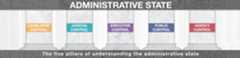
| Five Pillars of the Administrative State |
| •Agency control •Executive control •Judicial control •Legislative control • Public Control |
| Click here for more coverage of theadministrative state on Ballotpedia. |
| Click here to accessBallotpedia's administrative state legislation tracker. |
ThePrivacy Act of 1974 or simplyPrivacy Act is a federal law passed in 1974 regulating the collection and use of personal information by federal executive agencies. It was signed into law by PresidentGerald Ford at the end of 1974 following the Watergate scandal and growing concerns over the government's use of computers to collect and store the personal information of American citizens.[1][2]
Background
The Privacy Act of 1974 was passed by Congress and signed into law by PresidentGerald Ford in 1974. It took effect on September 27, 1975. According to a 2010 overview of the act produced by theU.S. Department of Justice, "In 1974, Congress was concerned with curbing the illegal surveillance and investigation of individuals by federal agencies that had been exposed during the Watergate scandal; it was also concerned with potential abuses presented by the government’s increasing use of computers to store and retrieve personal data by means of a universal identifier — such as an individual’s social security number."[2]
Legislative history
A 2015 overview produced by theU.S. Department of Justice described the legislative history of the Privacy Act as follows:[1]
| “ | The Act was passed in great haste during the final week of the Ninety-Third Congress. No conference committee was convened to reconcile differences in the bills passed by the House and Senate. Instead, staffs of the respective committees – led by Senators Ervin and Percy, and Representatives Moorhead and Erlenborn – prepared a final version of the bill that was ultimately enacted.[3] | ” |
| —U.S. Department of Justice, "Overview of the Privacy Act of 1974" (2015)[1] | ||
Provisions
According to a summary of the Privacy Act from the website of the U.S. Department of Justice, the act regulates the collection and utilization of personal information by federal executive agencies:[4]
| “ | The Privacy Act of 1974, 5 U.S.C. § 552a, establishes a code of fair information practices that governs the collection, maintenance, use, and dissemination of information about individuals that is maintained in systems of records by federal agencies. A system of records is a group of records under the control of an agency from which information is retrieved by the name of the individual or by some identifier assigned to the individual.[4][3] | ” |
According to the same source, the act requires agencies to publish public notices about their records systems in theFederal Register. It also provides for individuals to seek access and amendendment to their records, and, except in certain exempt cases, prohibits the disclosure of personal information without an individual's consent:[4]
| “ | The Privacy Act requires that agencies give the public notice of their systems of records by publication in theFederal Register. ... The Privacy Act prohibits the disclosure of a record about an individual from a system of records absent the written consent of the individual, unless the disclosure is pursuant to one of twelve statutory exceptions. The Act also provides individuals with a means by which to seek access to and amendment of their records, and sets forth various agency record-keeping requirements.[4][3] | ” |
Exemptions
According to theU.S. Department of Justice, the Privacy Act provides exemptions from its protections for the following agencies and uses of information:[2]
| “ |
| ” |
| —5 U.S.C. § 552a(b)[2] | ||
Amending statutes
Below is a list of subsequent laws that amended provisions of the Privacy Act of 1974:[2]
- Computer Matching and Privacy Act (1988)
- Computer Matching and Privacy Protection Amendments (1990)
See also
External links
Footnotes
- ↑1.01.11.2United States Department of Justice, "Overview of the Privacy Act of 1974," 2015
- ↑2.02.12.22.32.4Justice Information Sharing, "Privacy Act of 1974, 5 U.S.C. § 552a," accessed January 16, 2018
- ↑3.03.13.23.3Note: This text is quoted verbatim from the original source. Any inconsistencies are attributable to the original source.
- ↑4.04.14.24.3United States Department of Justice, "Privacy Act of 1974," last updated July 17, 2015


