

Personal Gain Index (U.S. Congress)

ThePersonal Gain Index (U.S. Congress) is a two-part measurement that illustrates the extent to which members of theU.S. Congress have prospered during their tenure as public servants.
It consists of two different metrics:
The Net Worth Metric
- Has a politician’s net worth had an abnormal increase? How does the increase in an incumbent’s net worth compare to the increase of other incumbents? How does it compare to the typical U.S. citizen?
The Donation Concentration Metric
- In this study, we look at theconcentration of career donations for each member and industry. This allows us to:
- See which members had the highest percentage of their donations coming from their top fiveindustries
- Provide anecdotal examples of the relationship between committee membership and industry donations
- Compare the partisan breakdown of eachsector's highest recipients
- Provide anecdotal examples of the relationship between sponsored legislation topics andsector donations
- Establish most involved sectors
The "Changes in Net Worth" metric
This is the first part of thePersonal Gain Index. ThePersonal Gain Index is a two-part study that examines the extent to which members of theU.S. Congress have individually prospered during their tenure as public servants.
Researchers used data provided byOpenSecrets.org to calculate the change in net worth of each congressional incumbent from either 2004 or the year he or she was first elected, if that year was after 2004.[1]
The tables and graphs on this page show some of the highlights of the study. Thechange in net worth information has also been added to each ofBallotpedia's profiles of the 535 congressional incumbents. The data also includes some former members, whose net worth would have been calculated at the end of their term in the112th Congress. The data used to calculate changes in net worth may include changes resulting from assets gained through marriage, inheritance, changes in family estates and/or trusts, changes in family business ownership and many other variables unrelated to a member's behavior in Congress. Because many members have been in office for longer than the eight years this study illustrates, the real change in net worth each member sees after initially taking office may be higher than the numbers in this data.

Some incumbents experienced a net loss in net worth. When this is the case, it is expressed with a negative percent.
For the full set of data, please visit ourGoogle spreadsheet here.
Top 100 net worth increases
This chart shows the average yearly percentage change in net worth of the 100 congressional incumbents whose calculated net worth[2] divided by the number of years studied was the highest.[3]
- The average increase in net worth in the Top 100 was 114% per year.[4]
- Of the "Top 100", 56 are Republicans, 43 are Democrats and one is an Independent.
- In total, the study looks at 320 Republicans, 296 Democrats and two Independents.
Rep.Chellie Pingree's dramatic net worth increase is due to her marriage. Because of this, Ballotpedia removed Pingree when calculating the averages for this study, while continuing to list her in the chart.
The study is able to have figures for freshman members of the 113th Congress from 2011, despite their terms beginning in 2012, because they were required to filePersonal Finance Disclosure forms during their candidacies in 2011.
The Top 100 table includes a handful of politicians who left office during or after 2012.
| Name | Year elected | Increase in average net worth in dollars | Annual % increase (rounded)[5] |
|---|---|---|---|
| Chellie Pingree (D-ME)[6] | 2008 | $40,450,969 | 73,039% |
| Pedro Pierluisi (D-PR) | 2008 | $2,657,074 | 1,707% |
| Patrick Murphy (D-FL) | 2012 | $2,979,329 | 1,449% |
| Marc Veasey (D-TX) | 2012 | $208,078 | 994% |
| Jeff Denham (R-CA) | 2010 | $14,950,520 | 661% |
| Judy Chu (D-CA) | 2009 | $2,114,405 | 539% |
| Luis V. Gutierrez (D-IL) | 1992 | $2,406,313 | 521% |
| Jerry McNerney (D-CA) | 2006 | $365,779 | 335% |
| Trey Gowdy (R-SC) | 2010 | $178,596 | 278% |
| Adam Kinzinger (R-IL) | 2010 | $162,818 | 211% |
| Ted Poe (R-TX) | 2004 | $413,795 | 161% |
| Mike Pence (R-IN)[7] | 2000 | $195,707 | 155% |
| Roy Blunt (R-MO) | 1996-2008, 2010 | $3,188,966 | 147% |
| Loretta Sanchez (D-CA) | 1996 | $2,752,664 | 144% |
| Saxby Chambliss (R-GA) | 2002 | $224,056 | 144% |
| Susan Collins (R-ME) | 1996 | $2,635,243 | 138% |
| Rob Wittman (R-VA) | 2006 | $704,340 | 117% |
| Cathy McMorris Rodgers (R-WA) | 2004 | $1,189,060 | 115% |
| Eddie Bernice Johnson (D-TX) | 1992 | $686,995 | 109% |
| C. W. Bill Young (R-FL)[8] | 1970 | $366,275 | 93% |
| 11 of the Top 20 are Republicans. 9 are Democrats. | |||
| Frank Pallone Jr. (D-NJ) | 1992 | $3,864,650 | 87% |
| Steven Palazzo (R-MS) | 2010 | $804,060 | 84% |
| Ted Cruz (R-TX) | 2012 | $1,399,128 | 83% |
| Kerry Bentivolio (R-MI) | 2012 | $291,139 | 80% |
| Collin Peterson (D-MN) | 1990 | $1,380,192 | 78% |
| Martha Roby (R-AL) | 2010 | $661,156 | 77% |
| Martin Heinrich (D-NM) | 2012 | $135,563 | 77% |
| Steve Daines (R-MT) | 2012 | $10,532,917 | 76% |
| Jeff Landry (R-LA) | 2010 | $5,786,600 | 73% |
| Cory Gardner (R-CO) | 2010 | $89,730 | 71% |
| Mitch McConnell (R-KY) | 1984 | $19,106,612 | 64% |
| David Scott (D-GA) | 2002 | $627,632 | 60% |
| Robert Pittenger (R-NC) | 2012 | $20,513,031 | 60% |
| Sam Graves (R-MO) | 2000 | $2,935,098 | 58% |
| Tom Harkin (D-IA) | 1984 | $14,821,804 | 58% |
| James P. McGovern (D-MA) | 1996 | $2,629,891 | 57% |
| Eni F. H. Faleomavaega (D-AS) | 1988 | $416,914 | 56% |
| Randy Forbes (R-VA) | 2001 | $2,343,406 | 55% |
| Tony Cardenas (D-CA) | 2012 | $104,570 | 54% |
| Chip Cravaack (R-MN) | 2010 | $1,208,094 | 53% |
| 23 of the Top 40 are Republicans. 17 are Democrats. | |||
| Suzanne Bonamici (D-OR) | 2012 | $2,079,350 | 52% |
| Richard Burr (R-NC) | 2004 | $2,542,341 | 52% |
| Alan Lowenthal (D-CA) | 2012 | $561,800 | 51% |
| Matt Salmon (R-AZ) | 2012 | $86,024 | 50% |
| Sheila Jackson Lee (D-TX) | 1994 | $750,245 | 49% |
| John Garamendi (D-CA) | 2009 | $4,297,396 | 46% |
| Mac Thornberry (R-TX) | 1994 | $346,015 | 43% |
| Trent Franks (R-AZ) | 2003 | $25,640,241 | 43% |
| Roger Williams (R-TX) | 2012 | $5,616,366 | 41% |
| Elijah Cummings (D-MD) | 1996 | $702,304 | 41% |
| Ann Kirkpatrick (D-AZ) | 2012 | $781,362 | 40% |
| Howard Berman (D-CA) | 1982 | $1,939,667 | 40% |
| John Olver (D-MA) | 1991 | $2,648,294 | 40% |
| Diana DeGette (D-CO) | 1996 | $1,444,000 | 40% |
| Ami Bera (D-CA) | 2012 | $1,437,149 | 39% |
| Ron Wyden (D-OR) | 1996 | $5,504,912 | 39% |
| Scott Tipton (R-CO) | 2010 | $3,366,748 | 37% |
| Randy Weber (R-TX) | 2012 | $220,074 | 36% |
| Brett Guthrie (R-KY) | 2008 | $884,543 | 36% |
| Kelly Ayotte (R-NH) | 2010 | $496,403 | 36% |
| 32 of the Top 60 are Republicans. 28 are Democrats. | |||
| John Boccieri (D-OH) | 2008 | $218,075 | 36% |
| James Lankford (R-OK) | 2010 | $120,497 | 35% |
| John Cornyn (R-TX) | 2002 | $511,937 | 34% |
| Jim Costa (D-CA) | 2004 | $2,804,672 | 34% |
| Reid Ribble (R-WI) | 2010 | $1,710,369 | 31% |
| Richard Nugent (R-FL) | 2010 | $556,807 | 31% |
| Michael McCaul (R-TX) | 2004 | $101,614,818 | 31% |
| Brian P. Bilbray (R-CA) | 1995-2001, 2006-2013 | $1,156,068 | 31% |
| Trey Radel (R-FL) | 2012 | $935,007 | 30% |
| Mark Pocan (D-WI) | 2012 | $176,039 | 30% |
| Bernie Sanders (I-VT) | 2006 | $320,123 | 29% |
| Richard Hudson (R-NC) | 2012 | $37,302 | 28% |
| Justin Amash (R-MI) | 2010 | $700,625 | 28% |
| Don Young (R-AK) | 1973 | $600,853 | 28% |
| John Yarmuth (D-KY) | 2006 | $13,202,242 | 28% |
| Frank Lucas (R-OK) | 1994 | $1,074,682 | 27% |
| Michael G. Fitzpatrick (R-PA) | 2005-2006, 2010 | $296,135 | 26% |
| Bob Gibbs (R-OH) | 2010 | $694,262 | 26% |
| Ron Barber (D-AZ) | 2012 | $237,624 | 26% |
| Dan Boren (D-OK) | 2004 | $1,479,090 | 26% |
| 45 of the Top 80 are Republicans. 34 are Democrats. | |||
| David Joyce (R-OH) | 2012 | $862,513 | 25% |
| John Hoeven (R-ND) | 2010 | $15,700,072 | 24% |
| Tim Kaine (D-VA) | 2012 | $269,522 | 24% |
| Jerry Costello (D-IL) | 1988 | $702,191 | 24% |
| Dana Rohrabacher (R-CA) | 1988 | $99,182 | 24% |
| Jeff Sessions (R-AL) | 1996 | $4,589,580 | 23% |
| Tom Rice (R-SC) | 2012 | $1,010,090 | 23% |
| Pete Visclosky (D-IN) | 1984 | $873,376 | 23% |
| Madeleine Z. Bordallo (D-Guam) | 2002 | $3,296,405 | 22% |
| Paul Ryan (R-WI) | 1998 | $3,455,342 | 22% |
| Scott Peters (D-CA) | 2012 | $20,248,262 | 22% |
| Jan Schakowsky (D-IL) | 1998 | $149,707 | 22% |
| John Boozman (R-AR) | 2010 | $2,259,240 | 22% |
| Mike Kelly (R-PA) | 2010 | $5,444,290 | 21% |
| Ed Royce (R-CA) | 1992 | $243,438 | 21% |
| Max Baucus (D-MT) | 1978 | $322,591 | 21% |
| Todd Rokita (R-IN) | 2010 | $283,402 | 21% |
| Jim Matheson (D-UT) | 2000 | $1,112,497 | 20% |
| Donna Christian-Christensen (D-VI) | 1996 | $400,730 | 20% |
| Morgan Griffith (R-VA) | 2010 | $87,488 | 20% |
| 56 of the Top 100 are Republicans. 43 are Democrats. | |||
Negative to positive increases
Because the study focuses on percentage increases, a gap in the study it is difficult to determine a meaningful percentage for a member who had a starting net worth in the negatives but increased to a positive net worth by 2012. However, there were substantial increases in wealth of the members who fell into this category. For the 49 members who went from a negative net worth to a positive net worth, the average increase was$3.4 million per member.[9]

Yearly average gains
As illustrated in the"Top 100" chart above, the average yearly percentage gain was found by dividing each member's total net worth growth percentage by the number of years included in the calculation. For example, Sen.John McCain would have his net worth percentage divided by eight (2004-2012), since those are the years for which data is available for his net worth. For someone like Sen.Ted Cruz, however, his total net worth increase would be thesame as his average yearly net worth increase, since the only available data is the increase between 2011 and 2012.
The average member saw his or her net worth increase by an average of 15.4 percent per year.

For the purpose of our comparison to the median American citizen data below, themedian congressional increase was 1.55 percent per year.
Winner's Circle
When the members who lost money during this time period are removed from the calculation,[10] the growth in wealth among the "wealth gainers" stands out. If a membergains, expect the gain to be large.
The average yearly percentage increase for those members who increased their net worth was 43.6 percent.

Millionaire's Club
Those in Congress who held assets above the median net worth of $1 million in 2012 also saw a hefty annual percentage increase.
Congressional millionaires had an average yearly percentage increase of 23.9 percent.

Total average gains
As compared to the yearly average gains, the total average gains percentage change looks at the total change between the first year data is available for each member[11] and the 2012 data. Although this data is harder to compare member-to-member because the starting year may be different, it still provides insight as to who experienced the most drastic total increases.
Ten greatest overall gains
The tencurrent senators and representatives listed below experienced the highest overall net worthgains (by percentage) from 2004-2012.[12]

Ten greatest overall losses
The tencurrent senators and representatives listed here experienced the greatestdeclines in net worth (by percentage) from 2004-2012.[12]

Congress compared to American citizens
This report comparedaverage andmedian data, and in both cases the growth of congressional net worth significantly outpaced that of the American citizen.
Congressional net worth figures are a relatively small data set,[13] so Ballotpedia usedaverage percentage changes throughout the study (adjusted as needed for outliers)[14] to best illustrate the average growth of wealth of members of Congress. The data for American citizens is a large sampling of the population that includes many households on either end of the distribution (high or low wealth), somedian numbers were also included.
Anaverage value is calculated by adding all the observations and dividing by the number of observations. Amedian is the middle value of a list.[15] Themedian figure can be beneficial in circumstances, like this one, where the high net worth of the wealthiest Americans can skew theaverage. Both the average and median for congressional and American citizen net worth growth are provided below. For a direct comparison to each individual member's figures (as shown on his or her Ballotpedia profile), the yearlymedian change will correspond with each member's average yearly change.
Median figures
Between 2004-2012, themedian American household[16] saw an inflation-adjusteddecrease of assets from $18,990 in 2004[17] to $17,557 in 2012. This was an inflation-adjusted annual percentage change of -0.94 from 2004 to 2012.Note that in order to have an apples-to-apples comparison between the household net worth of U.S. Congressmen and that of the American citizen, the value of equity in the citizen's personal residence was not taken into account in calculating the net worth of the average citizen, since the value of the personal residence of a Congressman is not included in their disclosure of theirhousehold net worth.
| Median annual congressional growth:[18] | Median annual citizen growth:[19] |
|---|---|
 |  |
Median citizen growth
| American Citizen Median value of assets for households - Census data | ||||
| Raw figures | Adjusted for inflation | |||
| Year | Net worth excluding home equity | Net worth excluding home equity[20] | Percent change (year to year) | |
| 2012[21] | $17,298 | $17,557 | -7.55% | |
| 2004 | $15,561[22] | $18,990 | -- | |
| Change from 2004 to 2012 | $1,737 | -$1,433 | -7.55% | |
| Average yearly change over eight years ('04-'12) | -0.94%[23] | |||
| Source: United States Census Bureau; Wealth and Asset Ownership; Detailed Tables on Wealth and Asset Ownership (http://www.census.gov/people/wealth/data/dtables.html) | ||||
Average figures
Between 2004-2012, theaverage American household[16] saw an inflation-adjusted slightincrease of assets from $204,957 in 2004[17] to $264,963 in 2012. This was an inflation-adjusted annual percentage change of 3.7 percent from 2004 to 2012.
- As stated in themedian section above, in order to have an apples-to-apples comparison between the household net worth of U.S. Congressmen and that of the American citizen, the value of equity in the citizen's personal residence was not taken into account in calculating the net worth of the average citizen, since the value of the personal residence of a Congressman is not included in their disclosure of theirhousehold net worth.
| Average annual congressional growth:[24] | Average annual citizen growth:[25] |
|---|---|
|  |
Average citizen growth
| American Citizen average value of assets for households - Census data | ||||
| Raw figures | Adjusted for inflation | |||
| Year | Net worth excluding home equity | Net worth excluding home equity[26] | Percent change (year to year) | |
| 2012[27] | $261,138 | $264,963 | 29.3% | |
| 2004 | $166,195[28] | $204,957 | -- | |
| Change from 2004 to 2012 | $94,942.40 | $60,006 | 3.7% | |
| Average yearly change over eight years ('04-'12) | 3.7%[29] | |||
| Source: United States Census Bureau; Wealth and Asset Ownership; Detailed Tables on Wealth and Asset Ownership (http://www.census.gov/people/wealth/data/dtables.html) | ||||
Freshman increases
A limitation to the data set is that the whole picture of wealth growth while in Congress is unavailable for those members who entered office prior to 2004.
For example, Sen.John McCain, who has been in Congress since 1982, shows a total net worth decrease of -74.5 percent during the period of 2004-2012. However, what the study is missing is how much he was worth in 1982 compared to 2012.
For this reason, Ballotpedia studied the freshmen members of both the113th Congress (which began in January 2012) and the112th Congress (which began in January 2010). Although the 2012 freshmen only saw moderate growth after one year in office, the growth for the 112th freshmen was staggering. One could say that the new retirement plan is to get elected and then re-elected (that is the key) to Congress and you will be set for life.
113th Congress freshmen
From 2011 to 2012, the average net worth change of a freshman member of the113th Congress inone year was:

The study is able to have figures for freshman members of the 113th Congress from 2011, despite their terms beginning in 2012, because they were required to filePersonal Finance Disclosure forms during their candidacies in 2011.
The 2012 "Freshman 15"
The following 15 freshman senators and representatives of the 113th Congress saw their net worth increase the most out of their incoming class of new members:
| Member | Increase from 2011-12 |
|---|---|
| Rep.Marc Veasey (D-TX) | 994.1% |
| Sen.Ted Cruz (R-TX) | 82.5% |
| Rep.Kerry Bentivolio (R-MI) | 80.2% |
| Rep.Steve Daines (R-MT) | 76% |
| Rep.Dan Kildee (D-MI) | 59.9% |
| Rep.Robert Pittenger (R-NC) | 59.8% |
| Rep.Tony Cardenas (D-CA) | 53.9% |
| Rep.Suzanne Bonamici (D-OR) | 52.3% |
| Rep.Alan Lowenthal (D-CA) | 51.3% |
| Rep.Matt Salmon (R-AZ) | 50.2% |
| Rep.Scott Peters (D-CA) | 45% |
| Rep.Roger Williams (R-TX) | 41.4% |
| Rep.Ami Bera (D-CA) | 38.9% |
| Rep.Randy Weber (R-TX) | 35.9% |
| Rep.Trey Radel (R-FL) | 29.8% |
112th Congress freshmen
From 2009 to 2012, the average net worth change of a freshman member of the112th Congress inthree years[30] was:

The 2010 "Freshman 15"
The following 15 freshman representatives of the 112th Congress (no senators made the top 15 list) saw their net worth increase the most out of their incoming class of new members:
| Member | Increase from 2009-12 |
|---|---|
| Rep.Jeff Denham (R-CA) | 1981.6% |
| Rep.Adam Kinzinger (R-IL) | 633.9% |
| Rep.Steven Palazzo (R-MS) | 251.7% |
| Rep.Martha Roby (R-AL) | 230.1% |
| Rep.Jeff Landry (R-LA) | 219.5% |
| Rep.Cory Gardner (R-CO) | 212.2% |
| Rep.Mike Fitzpatrick (R-PA) | 210.9% |
| Rep.Chip Cravaack (R-MN) | 160.3% |
| Rep.Karen Bass (D-CA) | 136.2% |
| Rep.Charlie Bass (R-NH) | 136.2% |
| Rep.Scott Tipton (R-CO) | 111.9% |
| Rep.James Lankford (R-OK) | 105.2% |
| Rep.Reid Ribble (R-WI) | 94.1% |
| Rep.Rich Nugent (R-IL) | 93.2% |
| Rep.Justin Amash (R-MI) | 83% |
The Donation Concentration Metric
- The Donation Concentration Metric (U.S. Congress Personal Gain Index)
The following are the key findings of theDonation Concentration Metric study:
Industry Concentration: Of the six members with the highest concentration of donations by industry, five were Democrats: three from theU.S. House of Representatives and two from theU.S. Senate.Lawyers/Law Firms appear in all five of the Democrats' top five. The five industries that make up the top five industries of the Republican member, Rep.Michael Burgess (R-TX), are not shared by any of the four Democrats in the top five.
Sector Concentration: Of the 15 sectors analyzed byBallotpedia, nine had highly partisan giving patterns, appearing primarily in either Republican or Democratic members' top five sectors. TheEnergy sector favored Republicans highly, with the sector appearing in the top five sectors of 19 Republicans, but only three Democrats. Democrats were the most favorable within theUnions sector, which placed in the top five of 18 Democrats and one independent. Like theEducation sector, theUnions sector does not appear in the top five of any Republicans, indicating that they are more heavily supportive of Democrats than Republicans. The other 13 sectors appear in the top five sectors of at least one member of both major parties.
Bill Sponsorship: Of the 15 sectors, four of the highest recipients had direct correlations between sector donations and bill sponsorship. These four members sponsored a significant portion of legislation that is relevant to their highest donating sector. When organizing their sponsored legislation into categories, the category with the most sponsored legislation is directly relevant to the highest contributing sector of three of the four members.

The average member of the113th Congress received 26.34 percent of his or her career donations from only five industries. Althoughsenators were marginally less concentrated (at 24.66 percent) compared torepresentatives (at 26.72 percent), many members received a high ratio of total contributions from a small selection of industries.
 |  |
Three highest overall: U.S. House
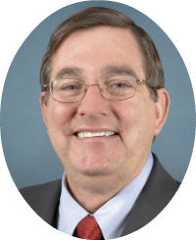
Rep. Burgess: 49.56 percent

| Michael Burgess Campaign Contributions | |
|---|---|
| Total Raised | $6,320,053 |
| Total Spent | $6,120,189 |
| Top five industries that contributed to campaign committee | |
| Health Professionals | $1,740,538 |
| Pharmaceuticals/Health Products | $637,424 |
| Oil & Gas | $348,146 |
| Health Services/HMOs | $216,250 |
| Electric Utilities | $189,822 |
| % total in top industry | 27.54% |
| % total in top two industries | 37.63% |
| % total in top five industries | 49.56% |
Rep. Cartwright: 45.65 percent

| Matt Cartwright Campaign Contributions | |
|---|---|
| Total Raised | $2,423,482 |
| Total Spent | $1,726,491 |
| Top five industries that contributed to campaign committee | |
| Lawyers/Law Firms | $817,014 |
| Public Sector Unions | $99,750 |
| Building Trade Unions | $80,000 |
| Industrial Unions | $61,500 |
| Transportation Unions | $48,000 |
| % total in top industry | 33.71% |
| % total in top two industries | 37.83% |
| % total in top five industries | 45.65% |
Rep. Sarbanes: 43.42 percent

| John Sarbanes Campaign Contributions | |
|---|---|
| Total Raised | $5,108,715 |
| Total Spent | $4,175,626 |
| Top five industries that contributed to campaign committee | |
| Lawyers/Law Firms | $841,756 |
| Retirement | $456,775 |
| Real Estate | $382,507 |
| Securities & Investment | $271,028 |
| Education | $266,250 |
| % total in top industry | 16.48% |
| % total in top two industries | 25.42% |
| % total in top five industries | 43.42% |
Three highest overall: U.S. Senate
Sen. McCaskill: 38.34 percent
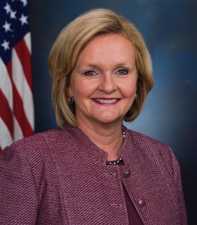
| Claire McCaskill Campaign Contributions | |
|---|---|
| Total Raised | $33,663,468 |
| Total Spent | $33,423,083 |
| Top five industries that contributed to campaign committee | |
| Women's Issues | $5,116,239 |
| Lawyers/Law Firms | $4,076,329 |
| Retirement | $2,146,772 |
| Securities & Investments | $872,918 |
| Real Estate | $693,030 |
| % total in top industry | 15.2% |
| % total in top two industries | 27.31% |
| % total in top five industries | 38.34% |
Sen. Walsh: 37.85 percent

| John Walsh Campaign Contributions | |
|---|---|
| Total Raised | $2,779,750 |
| Total Spent | $2,066,129 |
| Top five industries that contributed to campaign committee | |
| Lawyers/Law Firms | $347,146 |
| Leadership PACs | $313,000 |
| Retirement | $191,300 |
| Lobbyists | $112,100 |
| Real Estate | $88,610 |
| % total in top industry | 12.49% |
| % total in top two industries | 23.75% |
| % total in top five industries | 37.85% |
Sen. Booker: 37.85 percent
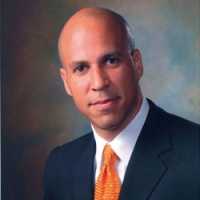
| Cory Booker Campaign Contributions | |
|---|---|
| Total Raised | $16,171,449 |
| Total Spent | $12,682,311 |
| Top five industries that contributed to campaign committee | |
| Lawyers/Law Firms | $1,930,689 |
| Securities & Investment | $1,897,370 |
| Real Estate | $958,645 |
| TV/Movies/Music | $635,750 |
| Business Services | $416,350 |
| % total in top industry | 11.94% |
| % total in top two industries | 23.67% |
| % total in top five industries | 36.11% |
Top 100 most concentrated
Although many of the individual sectors and industries are highly polarized, having a high concentration of donations appears to be a bipartisan way of life. Of thetop 100 most concentrated members of Congress, 54 were Democrats and 46 were Republican. There is also little difference between members of the two parties in terms of the percentage a member has in their top five industries. Democrats average 34.65 percent in their top five industries, while Republicans average just below at 34.41 percent.
| Members with highest % from top five industries | |||
|---|---|---|---|
| Party | Member of Congress | % of career contributions[33] | Year assumed office |
| Top 20: The average concentrated percentage in the top 20 was40.23% over career contributions. | |||
 | Rep.Michael C. Burgess | 49.56% | 2003 |
 | Rep.Matt Cartwright | 45.65% | 2013 |
| Rep.John Sarbanes | 43.42% | 2007 |
| Rep.Paul Gosar | 42.24% | 2011 |
| Rep.David G. Valadao | 41.10% | 2013 |
| Rep.Henry Waxman | 40.64% | 1975 |
| Rep.Tom Price | 40.23% | 2005 |
| Rep.Spencer Bachus | 40.23% | 1993 |
| Rep.Roger Williams | 39.89% | 2013 |
| Rep.Bruce Braley | 39.28% | 2007 |
| Rep.Andrew Harris | 38.97% | 2011 |
| Rep.Theodore E. Deutch | 38.83% | 2010 |
| Rep.Jose Serrano | 38.69% | 1973 |
| Rep.Jerrold Nadler | 38.65% | 1993 |
| Rep.James A. Himes | 38.55% | 2009 |
| Sen.Claire McCaskill | 38.34% | 2007 |
| Sen.John Walsh | 37.85% | 2014 |
| Rep.Joe Heck | 37.80% | 2011 |
| Rep.Phil Gingrey | 37.42% | 2003 |
| Rep.Gene Green | 37.21% | 1993 |
| Total by party (1-20):11 were Democrats 9 were Republicans. | |||
| Top 21-40:The average concentrated percentage in the top 40 was37.86% over career contributions.; for those in spots 21-40, it was 35.5%. | |||
| Rep.Mike Conaway (Texas) | 36.45% | 2005 |
| Rep.Frank D. Lucas | 36.39% | 1994 |
| Rep.David Jolly | 36.37% | 2014 |
| Sen.Cory Booker | 36.11% | 2013 |
| Rep.Joseph Kennedy III | 36.09% | 2013 |
| Sen.Sheldon Whitehouse | 36.00% | 2007 |
| Rep.Hakeem Jeffries | 35.94% | 2013 |
| Rep.Anna Eshoo | 35.94% | 1993 |
| Rep.John C. Carney Jr. | 35.67% | 2011 |
| Sen.Chris Coons | 35.66% | 2010 |
| Rep.Zoe Lofgren | 35.55% | 1995 |
| Sen.Kirsten Gillibrand | 35.47% | 2009 |
| Rep.Lloyd Doggett | 35.28% | 1995 |
| Rep.Joseph Crowley | 35.25% | 1999 |
| Rep.Doug LaMalfa | 35.18% | 2013 |
| Sen.Chuck Schumer | 34.87% | 1999 |
| Rep.William Enyart | 34.78% | 2013 |
| Rep.Gregory W. Meeks | 34.37% | 1998 |
| Rep.Nita Lowey | 34.34% | 1989 |
| Rep.Jeb Hensarling | 34.29% | 2003 |
| Total by party (1-40):26 were Democrats 14 were Republicans. | |||
| Top 41-60:The average concentrated percentage in the top 60 was36.43% over career contributions.; for those in spots 41-60, it was 33.57%. | |||
| Rep.Devin Nunes | 34.29% | 2003 |
| Rep.George Miller | 34.21% | 1975 |
| Rep.Al Green | 33.90% | 2005 |
| Rep.Bill Huizenga | 33.87% | 2011 |
| Rep.Terri Sewell | 33.87% | 2011 |
| Rep.Chaka Fattah | 33.84% | 1995 |
| Rep.Collin Peterson | 33.79% | 1991 |
| Rep.John Barrow | 33.69% | 2005 |
| Rep.Scott DesJarlais | 33.58% | 2011 |
| Rep.Phil Roe | 33.55% | 2009 |
| Rep.Jim Bridenstine | 33.53% | 2013 |
| Rep.Cynthia Lummis | 33.50% | 2009 |
| Rep.John Campbell | 33.42% | 2005 |
| Rep.Charles Boustany Jr. | 33.40% | 2005 |
| Rep.Richard Neal | 33.39% | 1989 |
| Rep.Daniel Lipinski | 33.26% | 2005 |
| Rep.Larry Bucshon | 33.24% | 2011 |
| Sen.Mark Kirk | 33.13% | 2011 |
| Rep.Lucille Roybal-Allard | 33.08% | 1993 |
| Rep.John Conyers, Jr. | 32.96% | 1965 |
| Total by party (1-60):36 were Democrats 24 were Republicans. | |||
| Top 61-80:The average concentrated percentage in the top 80 was35.38% over career contributions.; for those in spots 61-80, it was 32.24%. | |||
| Rep.John Culberson | 32.84% | 2001 |
| Rep.Kevin Brady | 32.84% | 1997 |
| Rep.Sean Maloney | 32.84% | 2013 |
| Rep.Joseph R. Pitts | 32.77% | 1997 |
| Sen.John Barrasso | 32.73% | 2007 |
| Rep.Robert Brady | 32.72% | 1998 |
| Rep.Tom Cotton | 32.65% | 2013 |
| Rep.Allyson Schwartz | 32.34% | 2005 |
| Rep.Mike Quigley | 32.32% | 2009 |
| Rep.Chris Van Hollen | 32.17% | 2003 |
| Rep.Scott Garrett | 32.12% | 2003 |
| Rep.Bradley Byrne | 32.00% | 2014 |
| Rep.Marcy Kaptur | 31.95% | 1983 |
| Rep.John Lewis | 31.86% | 1987 |
| Rep.Julia Brownley | 31.82% | 2013 |
| Rep.Dan Benishek | 31.79% | 2011 |
| Rep.Rob Woodall | 31.77% | 2011 |
| Rep.Scott Tipton | 31.77% | 2011 |
| Rep.Mo Brooks | 31.74% | 2011 |
| Sen.Rob Portman | 31.73% | 2011 |
| Total by party (1-80):44 were Democrats 36 were Republicans. | |||
| Top 81-100:The average concentrated percentage in the top 100 was34.54% over career contributions.; for those in spots 61-80, it was 31.16%. | |||
| Rep.Louis B. "Louie" Gohmert Jr. | 31.69% | 2005 |
| Rep.Diana DeGette | 31.62% | 1997 |
| Rep.Mac Thornberry | 31.58% | 1995 |
| Rep.Ann Kirkpatrick | 31.53% | 2013 |
| Rep.Carolyn B. Maloney | 31.50% | 1993 |
| Rep.Frederica S. Wilson | 31.46% | 2011 |
| Sen.Bill Nelson | 31.29% | 2000 |
| Rep.Mark Meadows | 31.28% | 2013 |
| Sen.Michael Bennet | 31.27% | 2009 |
| Rep.Stephen Lee Fincher | 31.22% | 2011 |
| Rep.Carol Shea-Porter | 31.14% | 2013 |
| Rep.Jared Huffman | 31.08% | 2013 |
| Rep.Raul Ruiz | 31.03% | 2013 |
| Rep.John Fleming | 30.98% | 2009 |
| Rep.Joe Barton | 30.92% | 1985 |
| Rep.Ron DeSantis | 30.80% | 2013 |
| Sen.Tim Scott | 30.75% | 2013 |
| Rep.Michael Grimm | 30.71% | 2011 |
| Rep.Frank Pallone Jr. | 30.65% | 1993 |
| Rep.Eddie Bernice Johnson | 30.62% | 1993 |
| Total by party (1-100):54 were Democrats 46 were Republicans. | |||
See also
- List of current members of the U.S. Congress
- Net worth of United States Senators and Representatives
- United States Senate
- United States House of Representatives
External links
Footnotes
- ↑All data relating to the average net worth of individual members of congress fromOpenSecrets.org and The Center for Responsive Politics is posted under aCreative Commons Attribution-Noncommercial-Share Alike 3.0 United States License.
- ↑This figure represents the total percentage growth from either 2004 (if the member entered office in 2004 or earlier) or his or her first year in office (as noted in the chart below).
- ↑The period studied is 2004-2012, or from the year the incumbent took office, if it was after 2004.
- ↑4.04.14.24.34.4This calculation excludesChellie Pingree.
- ↑This number was found by dividing each member's total net worth growth percentage by the number of years included in the calculation. For example, forChellie Pingree, her total net worth increase was divided by four, since it was calculated for four years (2008-2012). If the incumbent had been in office earlier than 2004, it would still only be divided by eight (2004-2012), since those are the only years for which we have data.
- ↑Pingree's dramatic increase in net worth after her 2008 election was due to her 2010 marriage to billionaire Donald Sussman.
- ↑Gov. Pence left Congress in 2012 to become the governor of Indiana.
- ↑Rep. Young passed away on October 18, 2013.
- ↑$3,403,112, to be precise.
- ↑I.e. had a negative percentage change.
- ↑The data starts in 2004 for any member who started either in 2004 or prior, or at a later year for anyone who was elected after 2004.
- ↑12.012.1Or from the year the incumbent was first elected, if that year was after 2004.
- ↑618 members are included in the congressional data, compared to the millions sampled in the census data.
- ↑Such as Chellie Pingree.
- ↑"Medians are often used when data are skewed, meaning that the distribution is uneven. In that case, a few very high numbers could, for instance, change the average, but they would not change the median."Bandolier, "Mean, Median, Mode," accessed July 15, 2014
- ↑16.016.1The citizen net worth data was calculated from figures from the United States Census Bureau. In keeping with the method of calculating congressional net worth, home equity was withheld from the figure. The figures reflect themedian household holdings.
- ↑17.017.1The 2004 figure was adjusted for inflation to 2012 dollars.
- ↑This percentage reflects the median annual percentage growth of all members of Congress.
- ↑As stated above, this is the total change in the amount of assets themedian American household had from 2004 to 2012 divided by the eight year span.
- ↑To ensure consistency among data sets, home equity was withheld in a similar fashion to primary residences not being counted as assets for congressional data.
- ↑Because 2012 household net worth figures had not been released as of publication date, this figure represents the 2011 numbers adjusted for inflation. These estimates assume no change in net worth between 2011 and 2012. The 2012 figure will be updated when available.
- ↑Census figures were unavailable for the raw, excluding home equity figure -- this figure is an estimate calculated by applying the 2005 ratio of net worth excluding home equity to the net worth figure available for 2004 (which included home equity).
- ↑For a direct comparison to each individual member's figures (as shown on his or her Ballotpedia profile), the yearly change will correspond with each member's average yearly change.
- ↑This percentage reflects theaverage annual percentage growth of all members of Congress.
- ↑As stated above, this is the total change in the amount of assets theaverage American household had from 2004 to 2012 divided by the eight year span.
- ↑To ensure consistency among data sets, home equity was withheld in a similar fashion to primary residences not being counted as assets for congressional data.
- ↑Because 2012 household net worth figures had not been released as of publication date, this figure represents the 2011 numbers adjusted for inflation. These estimates assume no change in net worth between 2011 and 2012. The 2012 figure will be updated when available.
- ↑Census figures were unavailable for the raw, excluding home equity figure -- this figure is an estimate calculated by applying the 2005 ratio of net worth excluding home equity to the net worth figure available for 2004 (which included home equity).
- ↑For a direct comparison to each individual member's figures (as shown on his or her Ballotpedia profile), the yearly change will correspond with each member's average yearly change.
- ↑From their 2009 required candidacy filing to 2012.
- ↑OpenSecrets.org, "Rep. Michael Burgess," accessed September 23, 2014
- ↑OpenSecrets.org, "Rep. Scott Perry," accessed September 24, 2014
- ↑Career contributions is defined as a member's donations from his or her first race to updated figures for 2014. If a member was elected prior to 1990, there is only data back to 1989.


