

Michigan State Board of Education election, 2018
- General election: Nov. 6
- Voter registration deadline: Oct. 9
- Early voting: N/A
- Absentee voting deadline: Nov. 6
- Online registration: No
- Same-day registration: No
- Voter ID: Photo ID requested
- Poll times: 7:00 a.m. to 8:00 p.m.
2020→ |
| Michigan State Board of Education |
|---|
 |
| Election details |
| Filing deadline:April 24, 2018 |
| General: November 6, 2018 Pre-election incumbent(s): Eileen Weiser (Republican) Richard Zeile (Republican) |
| How to vote |
| Poll times: 7 a.m. to 8 p.m. Voting in Michigan |
| Ballotpedia analysis |
| Federal and state primary competitiveness State executive elections in 2018 Impact of term limits in 2018 State government trifectas State government triplexes Ballotpedia's Election Analysis Hub, 2018 |
| Michigan executive elections |
| Governor Lieutenant governor |
Michigan held an election for two of the eight seats on thestate board of education onNovember 6, 2018.
In Michigan, political parties nominate candidates for some offices at their conventions instead of holding a primary. Candidates for lieutenant governor, secretary of state, attorney general, Supreme Court, and the boards of Michigan State University, Wayne State University, the University of Michigan and the state Board of Education are nominated by political parties. The Democratic Party state convention and the Republican Party state convention were both held from August 25 to August 26.[1][2][3]
The seats up for election were those held byEileen Weiser (R) andRichard Zeile (R). As of January 2018, four members of the board were Democratic and four members of the board were Republican.
Candidates and election results
General election
General election for Michigan State Board of Education (2 seats)
The following candidates ran in the general election for Michigan State Board of Education on November 6, 2018.
Candidate | % | Votes | ||
| ✔ |  | Judith Pritchett (D)  | 25.2 | 1,830,312 |
| ✔ | 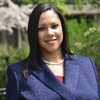 | Tiffany Tilley (D) | 24.0 | 1,743,379 |
 | Tami Carlone (R) | 22.3 | 1,615,129 | |
 | Richard Zeile (R) | 20.3 | 1,473,904 | |
 | Mary Anne Hering (Working Class Party) | 1.7 | 125,693 | |
 | Scott Boman (L) | 1.7 | 125,309 | |
| Logan Smith (Working Class Party) | 1.3 | 91,077 | ||
| John Tatar (L) | 1.1 | 80,414 | ||
| Karen Adams (U.S. Taxpayers Party) | 1.0 | 72,639 | ||
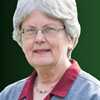 | Sherry A. Wells (G) | 0.8 | 61,493 | |
| Douglas Levesque (U.S. Taxpayers Party) | 0.4 | 32,326 | ||

| Incumbents arebolded and underlined. The results have been certified. Source | Total votes: 7,251,675 | ||
| = candidate completed theBallotpedia Candidate Connection survey. | ||||
| If you are a candidate and would like to tell readers and voters more about why they should vote for you,complete the Ballotpedia Candidate Connection Survey. | ||||
Do you want a spreadsheet of this type of data?Contact our sales team. | ||||
State overview
Partisan control
This section details the partisan control of federal and state positions in Michigan heading into the 2018 elections.
Congressional delegation
- Following the2016 elections, Democrats held both U.S. Senate seats in Michigan.
- Republicans held 9 of 14U.S. House seats in Michigan, Democrats held four seats, and one seat was vacant.
State executives
- As of September 2018, Republicans held eight of 16state executive positions, Democrats held four, and the remaining four positions were officially nonpartisan.
- The governor of Michigan was RepublicanRick Snyder. The state held anelection forgovernor andlieutenant governor onNovember 6, 2018.
State legislature
- Republicans controlled both chambers of theMichigan State Legislature. They had a 63-46 majority in the state House and a 27-10 majority in the state Senate.
Trifecta status
- Michigan was aRepublican trifecta, meaning that theRepublican Party controlled the state government.Rick Snyder (R) served as governor, while Republicans controlled the state legislature.
2018 elections
- See also:Michigan elections, 2018
Michigan held elections for the following positions in 2018:
- One U.S. Senate seat
- 14 U.S. House seats
- Governor and lieutenant governor
- Five lower state executive positions
- 38 state Senate seats
- 110 state House seats
- Municipal elections in Wayne County
Demographics
| Demographic data for Michigan | ||
|---|---|---|
| Michigan | U.S. | |
| Total population: | 9,917,715 | 316,515,021 |
| Land area (sq mi): | 56,539 | 3,531,905 |
| Race and ethnicity** | ||
| White: | 79% | 73.6% |
| Black/African American: | 14% | 12.6% |
| Asian: | 2.7% | 5.1% |
| Native American: | 0.5% | 0.8% |
| Pacific Islander: | 0% | 0.2% |
| Two or more: | 2.6% | 3% |
| Hispanic/Latino: | 4.7% | 17.1% |
| Education | ||
| High school graduation rate: | 89.6% | 86.7% |
| College graduation rate: | 26.9% | 29.8% |
| Income | ||
| Median household income: | $49,576 | $53,889 |
| Persons below poverty level: | 20% | 11.3% |
| Source:U.S. Census Bureau, "American Community Survey" (5-year estimates 2010-2015) Clickhere for more information on the 2020 census andhere for more on its impact on the redistricting process in Michigan. **Note: Percentages for race and ethnicity may add up to more than 100 percent because respondents may report more than one race and the Hispanic/Latino ethnicity may be selected in conjunction with any race. Read more about race and ethnicity in the censushere. | ||
As of July 2016, Michigan's three largest cities were Detroit (pop. est. 673,000), Grand Rapids (pop. est. 199,000), and Warren (pop. est. 135,000).[4]
State election history
This section provides an overview of federal and state elections in Michigan from 2000 to 2016. All data comes from theMichigan Secretary of State.
Historical elections
Presidential elections, 2000-2016
This chart shows the results of the presidential election in Michigan every year from 2000 to 2016.
| Election results (President of the United States), Michigan 2000-2016 | |||||
|---|---|---|---|---|---|
| Year | First-place candidate | First-place candidate votes (%) | Second-place candidate | Second-place candidate votes (%) | Margin of victory (%) |
| 2016 |  Donald Trump Donald Trump | 47.5% |  Hillary Clinton Hillary Clinton | 47.3% | 0.2% |
| 2012 | Barack Obama | 54.2% | Mitt Romney | 44.7% | 9.5% |
| 2008 | Barack Obama | 57.4% | John McCain | 41.0% | 16.4% |
| 2004 | John Kerry | 51.2% | George W. Bush | 47.8% | 3.4% |
| 2000 | Al Gore | 51.3% | George W. Bush | 46.2% | 5.1% |
U.S. Senate elections, 2000-2016
This chart shows the results ofU.S. Senate races in Michigan from 2000 to 2016. Every state has two Senate seats, and each seat goes up for election every six years. The terms of the seats are staggered so that roughly one-third of the seats are up every two years.
| Election results (U.S. Senator), Michigan 2000-2016 | |||||
|---|---|---|---|---|---|
| Year | First-place candidate | First-place candidate votes (%) | Second-place candidate | Second-place candidate votes (%) | Margin of victory (%) |
| 2014 | Gary Peters | 54.6% | Terri Lynn Land | 41.3% | 13.3% |
| 2012 | Debbie Stabenow | 58.8% | Pete Hoekstra | 38.0% | 20.8% |
| 2008 | Carl Levin | 62.7% | Jack Hoogendyk, Jr. | 33.9% | 28.8% |
| 2006 | Debbie Stabenow | 56.9% | Michael Bouchard | 41.3% | 15.6% |
| 2002 | Carl Levin | 60.6% | Rocky Raczkowski | 37.9% | 22.7% |
| 2000 | Debbie Stabenow | 49.5% | Spence Abraham | 47.9% | 1.6% |
Gubernatorial elections, 2000-2016
This chart shows the results of the four gubernatorial elections held between 2000 and 2016. Gubernatorial elections are held every four years in Michigan.
| Election results (Governor), Michigan 2000-2016 | |||||
|---|---|---|---|---|---|
| Year | First-place candidate | First-place candidate votes (%) | Second-place candidate | Second-place candidate votes (%) | Margin of victory (%) |
| 2014 | Rick Snyder | 50.9% | Mark Schauer | 46.9% | 4.0% |
| 2010 | Rick Snyder | 58.1% | Virg Bernero | 39.9% | 18.2% |
| 2006 | Jennifer Granholm | 56.4% | Dick DeVos | 42.3% | 14.1% |
| 2002 | Jennifer Granholm | 51.4% | Dick Posthumus | 47.4% | 4.0% |
Congressional delegation, 2000-2016
This chart shows the number of Democrats and Republicans who were elected to represent Michigan in theU.S. House from 2000 to 2016. Elections for U.S. House seats are held every two years.
| Congressional delegation, Michigan 2000-2016 | |||||
|---|---|---|---|---|---|
| Year | Republicans | Republicans (%) | Democrats | Democrats (%) | Balance of power |
| 2016 | 9 | 64.3% | 5 | 35.7% | R+4 |
| 2014 | 9 | 64.3% | 5 | 35.7% | R+4 |
| 2012 | 9 | 64.3% | 5 | 35.7% | R+4 |
| 2010 | 9 | 60.0% | 6 | 40.0% | R+3 |
| 2008 | 7 | 46.7% | 8 | 53.3% | D+1 |
| 2006 | 8 | 53.3% | 7 | 46.7% | R+1 |
| 2004 | 9 | 60.0% | 6 | 40.0% | R+3 |
| 2002 | 9 | 60.0% | 6 | 40.0% | R+3 |
| 2000 | 7 | 43.75% | 9 | 56.25% | D+2 |
Trifectas, 1992-2017
Astate government trifecta occurs when one party controls both chambers of the state legislature and the governor's office.
Michigan Party Control: 1992-2026
Two years of Democratic trifectas • Fourteen years of Republican trifectas
Scroll left and right on the table below to view more years.
See also
Michigan government: | Elections: | Ballotpedia exclusives: |
External links

Footnotes
- ↑Detroit Free Press, "Democratic endorsement convention reveals divide between progressives, African Americans," April 19, 2018
- ↑Michigan.gov, "Michigan Election dates," accessed April 30, 2018
- ↑Michigan GOP, "2018 Michigan Republican Party State Convention," accessed April 30, 2018
- ↑Michigan Demographics, "Michigan Cities by Population," accessed September 5, 2018


