
John Cornyn
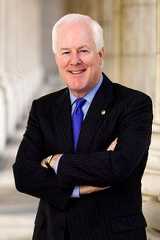
John Cornyn (Republican Party) is a member of theU.S. Senate from Texas. He assumed office on December 2, 2002. His current term ends on January 3, 2027.
Cornyn (Republican Party) is running for re-election to theU.S. Senate to represent Texas. He is on the ballot in the Republican primary onMarch 3, 2026.[source]
Biography
Cornyn was born inHouston, Texas in 1952, He warned a B.A. from Trinity University in 1973 and a J.D. from St. Mary’s School of Law in 1977, and an LLM from the University of Virginia in 1995. Cornyn was a Bexar County district court judge from 1984 to 1990 and a Texas Supreme Court justice from 1990 to 1997. Cornyn served asTexas attorney general from 1999 until his election to theU.S. Senate in 2002. Cornyn served as the Senate majority whip from 2013 to 2019.[1]
2026 battleground election
Ballotpedia identified the March 3 Republican primary as abattleground election. The summary below is from our coverage of this election,found here.
IncumbentJohn Cornyn (R),Wesley Hunt (R),Ken Paxton (R), and five other candidates are running in the Republican primary forU.S. Senate in Texas on March 3, 2026. The filing deadline was December 8, 2025. As of February 2026, Cornyn, Hunt, and Paxton led inpolling,fundraising,endorsements, and media attention.
The Texas Tribune's Gabby Birenbaum described the primary as "expensive and brutal. Cornyn, a 23-year veteran of the Senate, has been in hot water with the Republican base over his efforts to pass a bipartisan gun safety bill in 2022 and past comments casting doubt on Trump’s political durability."[2]Roll Call's Nathan L. Gonzales said the race is"an example of how data can be presented to paint whatever picture you want to see...Trump remains a wild card. His support is often the difference maker in Republican primaries, but he hasn’t made a decision in this race."[3]
If no candidate receives more than 50% of the primary vote, then the top two finishers will advance to a runoff on May 26, 2026. Writing after Hunt joined the race in October 2025, theAssociated Press' Thomas Beaumont said that "Hunt’s entry into the race raises the potential of a runoff for the GOP nomination."[4]
Cornyn was first elected to the Senate in 2002. He earlier served asstate attorney general and on theTexas Supreme Court. Cornyn said he had delivered for Texas while in office and was running for re-election "so President Trump and I can pick-up where we left off."[5]The Texas Tribune's Owen Dahlkamp described Cornyn's strategy as "going all in on emphasizing his support for Trump — something he has been previously wary to do — to court the MAGA base that will be key to winning."[6] Cornyn's campaign website says he has a "more than 99.2% voting record with President Trump — higher than Ted Cruz."[7] Senate Majority LeaderJohn Thune (R) and the National Border Patrol Councilendorsed Cornyn.
Hunt has represented the38th Congressional District since2022. He is an eight-year veteran of the U.S. Army and a former loan officer.The Texas Tribune's Gabby Birenbaum described Hunt's strategy as "pressing the case that he would carry stronger appeal than Cornyn among the MAGA-dominated primary base, while bringing none of Paxton’s political baggage to the general election."[2] Hunt says he is running because "nothing is more worth fighting for than our great country and our Texas values."[8] U.S. Rep.Eli Crane (R)endorsed Hunt.
Paxton has served asTexas Attorney General since 2015. He was also a member of theTexas House for ten years and of theTexas Senate for two.The Texas Tribune's Jasper Scherer described Paxton's run as "the latest flashpoint in a power struggle between the Texas GOP’s hardline, socially conservative wing — which views Paxton as a standard-bearer — and the Cornyn-aligned, business-minded Republican old guard."[9] Paxton's campaign website says that both "President Trump and Ken Paxton have been targeted in politically motivated witch hunts because there’s nothing that scares the establishment more than courageous conservatives who never back down from standing up for the American people."[10] U.S. Reps.Lance Gooden (R) andTroy Nehls (R)endorsed Paxton.
Also running in the primary areJohn Adefope (R),Anna Bender (R),Virgil Bierschwale (R),Sara Canady (R), andGulrez Khan (R).
As of February 2026,The Cook Political Report with Amy Walter,Inside Elections with Nathan Gonzales, andLarry J. Sabato's Crystal Ball each rated the general electionLikely Republican. In the2024 election, incumbentTed Cruz (R) defeatedColin Allred (D) 53%–45%. In2020, Cornyn defeatedM.J. Hegar (D) 54%–44%.
Committee assignments
U.S. Senate
2025-2026
Cornyn was assigned to the following committees:[Source]
- Committee on the Judiciary
- Subcommittee on Border Security and Immigration,Chairman
- Subcommittee on Crime and Counterterrorism
- Subcommittee on Privacy, Technology, and the Law
- Committee on Foreign Relations
- Committee on Finance
- Subcommittee on Energy, Natural Resources, and Infrastructure
- Subcommittee on Taxation and IRS Oversight
- Subcommittee on Energy, Natural Resources, and Infrastructure
- Subcommittee on International Trade, Customs, and Global Competitiveness,Chairman
- Committee on Intelligence (Select)
- Joint Committee on Taxation
- Senate Committee on the Budget
2023-2024
Cornyn was assigned to the following committees:[Source]
- Committee on Finance
- Energy, Natural Resources, and Infrastructure
- International Trade, Customs, and Global Competitiveness,Ranking Member
- Subcommittee on Taxation and IRS Oversight
- Committee on Intelligence (Select)
- Committee on the Judiciary
- Subcommittee on Crime and Terrorism
- Subcommittee on Immigration, Citizenship, and Border Safety,Ranking Member
- Subcommittee on Intellectual Property
2021-2022
Cornyn was assigned to the following committees:[Source]
- Committee on Intelligence (Select)
- Committee on the Judiciary
- Subcommittee on Immigration, Citizenship, and Border Safety,Ranking member
- Subcommittee on Crime and Terrorism
- Subcommittee on The Constitution
- Subcommittee on Intellectual Property
- Committee on Finance
- International Trade, Customs, and Global Competitiveness,Ranking Member
- Energy, Natural Resources, and Infrastructure
- Taxation and IRS Oversight
2017-2018
At the beginning of the115th Congress, Cornyn was assigned to the following committees:[11]
- United States Senate Caucus on International Narcotics Control
- Committee on Intelligence (Select)
- Committee on Finance
- Committee on the Judiciary
2015-2016
Cornyn served on the following committees:[12]
2013-2014
Cornyn served on the following Senate committees:[13]
- Committee on Finance
- The Subcommittee on Taxation and IRS Oversight
- The Subcommittee on Healthcare
- Committee on the Judiciary
- Subcommittee on Immigration, Refugees and Border SecurityRanking Member
- Subcommittee on Privacy, Technology and the Law
- Subcommittee on The Constitution, Civil Rights and Human Rights
2011-12
Cornyn was a member of the following Senate committees:[14]
- Armed Services Committee
- Committee on Finance
- Subcommittee on Energy, Natural Resources, and Infrastructure
- Subcommittee on Health Care
- Subcommittee on Taxation, IRS Oversight, and Long-Term Growth
- Committee on the Budget
- Committee on the Judiciary
- Subcommittee on Antitrust, Competition Policy and Consumer Rights
- Subcommittee on Immigration, Refugees and Border SecurityRanking Member
- Subcommittee on Terrorism and Homeland Security
- Subcommittee on the Constitution
Elections
2026
See also: United States Senate election in Texas, 2026
General election
The primary will occur on March 3, 2026. The general election will occur on November 3, 2026. Additional general election candidates will be added here following the primary.
General election for U.S. Senate Texas
Joshua Cain,Camencia Ford,Jade Simmons, andHans Truelson are running in the general election for U.S. Senate Texas on November 3, 2026.
Candidate | ||
| Joshua Cain (Independent) | ||
| Camencia Ford (Independent) | ||
 | Jade Simmons (Independent) | |
 | Hans Truelson (Independent) | |

| There are noincumbents in this race. | |||
 = candidate completed theBallotpedia Candidate Connection survey. = candidate completed theBallotpedia Candidate Connection survey. | ||||
| If you are a candidate and would like to tell readers and voters more about why they should vote for you,complete the Ballotpedia Candidate Connection Survey. | ||||
Do you want a spreadsheet of this type of data?Contact our sales team. | ||||
Withdrawn or disqualified candidates
- Ronald Evans (Independent)
Democratic primary election
Democratic primary for U.S. Senate Texas
Jasmine Crockett,Ahmad Hassan, andJames Talarico are running in the Democratic primary for U.S. Senate Texas on March 3, 2026.



| There are noincumbents in this race. | |||
| = candidate completed theBallotpedia Candidate Connection survey. | ||||
| If you are a candidate and would like to tell readers and voters more about why they should vote for you,complete the Ballotpedia Candidate Connection Survey. | ||||
Do you want a spreadsheet of this type of data?Contact our sales team. | ||||
Withdrawn or disqualified candidates
- Emily Morgul (D)
- Terry Virts (D)
- Colin Allred (D)
- Paula Williams (D)
- Michael Swanson (D)
Republican primary election
Republican primary for U.S. Senate Texas
The following candidates are running in the Republican primary for U.S. Senate Texas on March 3, 2026.
Candidate | ||
 | John Cornyn | |
| John Adefope | ||
| Anna Bender | ||
 | Virgil Bierschwale | |
 | Sara Canady | |
 | Wesley Hunt | |
 | Gulrez Khan | |
 | Ken Paxton | |
| Incumbents arebolded and underlined. | |||
| = candidate completed theBallotpedia Candidate Connection survey. | ||||
| If you are a candidate and would like to tell readers and voters more about why they should vote for you,complete the Ballotpedia Candidate Connection Survey. | ||||
Do you want a spreadsheet of this type of data?Contact our sales team. | ||||
Withdrawn or disqualified candidates
- Rennie Mann (R)
- Alexander Duncan (R)
- Barrett McNabb (R)
- Andrew Trakas (R)
- Matthew Elliot Kelley (R)
- Keith Allen (R)
- Andrew Alvarez (R)
- Connor Kraus (R)
- Leo Wyatt (R)
- Tony Schmoker (R)
Libertarian convention
Libertarian convention for U.S. Senate Texas
Ted Brown andDaniel Mark Sims are running in the Libertarian convention for U.S. Senate Texas on April 12, 2026.
Candidate | ||
 | Ted Brown (L) | |
| Daniel Mark Sims (L) | ||
| There are noincumbents in this race. | |||
| = candidate completed theBallotpedia Candidate Connection survey. | ||||
| If you are a candidate and would like to tell readers and voters more about why they should vote for you,complete the Ballotpedia Candidate Connection Survey. | ||||
Do you want a spreadsheet of this type of data?Contact our sales team. | ||||
Polls
Polls are conducted with a variety of methodologies and havemargins of error orcredibility intervals.[15] The Pew Research Center wrote, "A margin of error of plus or minus 3 percentage points at the 95% confidence level means that if we fielded the same survey 100 times, we would expect the result to be within 3 percentage points of the true population value 95 of those times."[16] For tips on reading polls fromFiveThirtyEight,click here. For tips from Pew,click here.
Below we provide results for polls froma wide variety of sources, including media outlets, social media, campaigns, and aggregation websites, when available. We only report polls for which we can find a margin of error or credibility interval. Know of something we're missing?Click here to let us know.
| Poll | Dates | Cornyn | Hunt | Paxton | Other | Undecided | Sample size | Margin of error | Sponsor |
|---|---|---|---|---|---|---|---|---|---|
– | 26 | 26 | 27 | -- | -- | 600LV | ± 4.0% | ||
– | 31 | 17 | 38 | 2 | 12 | 550LV | ± 4.2% | ||
– | 46 | 39 | -- | -- | 11 | 550LV | ± 4.2% | ||
– | 40 | -- | 51 | -- | 9 | 550LV | ± 4.2% | ||
– | -- | 33 | 56 | -- | 11 | 550LV | ± 4.2% | ||
– | 26 | 16 | 27 | 2 | 29 | 550LV | ± 4.1% | N/A | |
– | 28 | 19 | 27 | -- | 26 | 1,022LV | ± 3.0% | N/A | |
– | 24 | 24 | 29 | -- | -- | 600LV | ± 4.0% | ||
– | 32 | 43 | -- | -- | 25 | 600LV | ± 4.0% | ||
– | 31 | -- | 45 | -- | 4 | 600LV | ± 4.0% | ||
– | -- | 37 | 35 | -- | 28 | 600LV | ± 4.0% | ||
Peak Insights NoteSponsored by a pro-Cornyn organization | – | 35 | 18 | 33 | -- | -- | 600LV | ± 4.0% | Texans for a Conservative Majority PAC |
Stratus Intelligence NoteSponsored by Pro-Wesley Hunt group | – | 25 | 26 | 36 | -- | 13 | 857LV | ± 3.3% | |
University of Houston Hobby School of Public Affairs/Texas Southern University (Cornyn vs. Hunt) NoteHypothetical matchup between Cornyn and Hunt. | – | 50 | 34 | -- | -- | 16 | 576RV | ± 4.1% | N/A |
University of Houston Hobby School of Public Affairs/Texas Southern University (Cornyn vs. Hunt vs. Paxton) NoteHypothetical matchup between Cornyn, Hunt, and Paxton. | – | 33 | 22 | 34 | -- | 11 | 576RV | ± 4.1% | N/A |
University of Houston Hobby School of Public Affairs/Texas Southern University (Cornyn vs. Paxton) NoteTwo-way race between Cornyn and Paxton. | – | 44 | -- | 43 | -- | 13 | 576RV | ± 4.1% | N/A |
University of Houston Hobby School of Public Affairs/Texas Southern University (Hunt vs. Paxton) NoteHypothetical matchup between Hunt and Paxton. | – | -- | 35 | 50 | -- | 15 | 576RV | ± 4.1% | N/A |
Emerson College NoteTwo-way race between Cornyn and Paxton. | – | 30 | -- | 29 | 5 | 37 | 491RV | ± 4.4% | N/A |
Texas Southern University (Cornyn vs. Hunt) NoteHypothetical matchup between Cornyn and Hunt. | – | 42 | 36 | -- | -- | -- | 1,500LV | ± 2.5% | N/A |
Texas Southern University (Cornyn vs. Hunt vs. Paxton) NoteHypothetical matchup between Cornyn, Hunt, and Paxton. | – | 30 | 22 | 35 | -- | 13 | 1,500LV | ± 2.5% | N/A |
Texas Southern University (Cornyn vs. Jackson) NoteHypothetical matchup between Cornyn and Ronny Jackson (R). "Other" indicates support for Jackson. | – | 43 | -- | -- | 35 | 22 | 1,500LV | ± 2.5% | N/A |
Texas Southern University (Cornyn vs. Jackson vs. Paxton) NoteHypothetical matchup between Cornyn, Ronny Jackson (R), and Paxton. "Other" indicates support for Jackson. | – | 33 | -- | 38 | 15 | 14 | 1,500LV | ± 2.5% | N/A |
Texas Southern University (Cornyn vs. Paxton) NoteTwo-way race between Cornyn and Paxton. | – | 39 | -- | 44 | -- | 17 | 1,500LV | ± 2.5% | N/A |
Texas Southern University (Hunt vs. Paxton) NoteHypothetical matchup between Hunt and Paxton. | – | -- | 36 | 43 | -- | 21 | 1,500LV | ± 2.5% | N/A |
Texas Southern University (Jackson vs. Paxton) NoteHypothetical matchup between Paxton and Ronny Jackson (R). "Other" indicates support for Jackson. | – | -- | -- | 44 | 33 | 23 | 1,500LV | ± 2.5% | N/A |
Texas Southern University NoteHypothetical three-way race between Cornyn, Hunt, and Paxton. | – | 27 | 15 | 34 | -- | 24 | 510LV | ± 4.3% | N/A |
Texas Southern University (Cornyn vs. Hunt) NoteHypothetical two-way race between Cornyn and Hunt. | – | 39 | 31 | -- | -- | 30 | 510LV | ± 4.3% | N/A |
Texas Southern University (Cornyn vs. Paxton) NoteTwo-way race between Cornyn and Paxton. | – | 34 | -- | 43 | -- | 23 | 510LV | ± 4.3% | N/A |
Texas Southern University (Hunt vs. Paxton) NoteHypothetical two-way race between Hunt and Paxton. | – | -- | 25 | 45 | -- | 30 | 510LV | ± 4.3% | N/A |
Quantus Insights NoteTwo-way race between Cornyn and Paxton. | – | 39 | -- | 52 | -- | 9 | 600RV | ± 4.4% | N/A |
| Note: LV is likely voters, RV is registered voters, and EV is eligible voters. | |||||||||
Election campaign finance
| Name | Party | Receipts* | Disbursements** | Cash on hand | Date |
|---|---|---|---|---|---|
| John Cornyn | Republican Party | $10,030,736 | $4,802,390 | $5,861,807 | As of December 31, 2025 |
| John Adefope | Republican Party | $0 | $0 | $0 | Data not available*** |
| Anna Bender | Republican Party | $0 | $0 | $0 | As of December 31, 2025 |
| Virgil Bierschwale | Republican Party | $9,918 | $9,657 | $261 | As of December 31, 2025 |
| Sara Canady | Republican Party | $665 | $5,157 | $-4,492 | As of December 31, 2025 |
| Wesley Hunt | Republican Party | $1,800,720 | $3,544,138 | $743,758 | As of December 31, 2025 |
| Gulrez Khan | Republican Party | $9,342 | $9,861 | $-519 | As of December 31, 2025 |
| Ken Paxton | Republican Party | $5,320,191 | $1,654,744 | $3,665,447 | As of December 31, 2025 |
Source:Federal Elections Commission, "Campaign finance data," 2026. This product uses the openFEC API but is not endorsed or certified by the Federal Election Commission (FEC). *According to the FEC, "Receipts are anything of value (money, goods, services or property) received by a political committee." | |||||
Satellite spending
- See also:Satellite spending
Satellite spending describes political spending not controlled by candidates or their campaigns; that is, any political expenditures made by groups or individuals that are not directly affiliated with a candidate. This includes spending by political party committees,super PACs, trade associations, and501(c)(4)nonprofit groups.[17][18]
If available, satellite spending reports by theFederal Election Commission (FEC) andOpenSecrets.org are linked below. FEC links include totals from monthly, quarterly, and semi-annual reports. OpenSecrets.org compiles data from those reports as well as 24- and 48-hour reports from the FEC.[19]
Details about satellite spending of significant amounts and/or reported by media are included below those links. The amounts listed may not represent the total satellite spending in the election. To notify us of additional satellite spending,email us.
| By candidate | By election |
|---|---|
Spending news
- February 4, 2026:The New York Times reported that satellite groups supporting Cornyn had spent around $50,000,000, groups supporting Hunt had spent $240,000, and groups supporting Paxton had spent $375,000.[20]
Endorsements
Cornyn received the following endorsements. To send us additional endorsements,click here.
- U.S. Sen.John Thune (R)
- U.S. Rep.Jake Ellzey (R)
- U.S. Rep.Craig Goldman (R)
- Mayor of Fort Worth Mattie Parker (Nonpartisan)
- Frmr. Gov. Rick Perry (R)
- Frmr. Agriculture Commissioner Todd Staples (R)
- Combined Law Enforcement Associations of Texas (CLEAT)
- National Border Patrol Council
- American Israel Public Affairs Committee (AIPAC)
- Austin American-Statesman
- Houston Chronicle Editorial Board
- Plains Cotton Growers
- Republican Jewish Coalition-Political Action Committee (RJC-PAC)
- Rolling Plains Cotton Growers
- South Texans’ Property Rights Association
- Texans for Life
- Texas & Southwestern Cattle Raisers Association PAC
- Texas Alliance For Life
- Texas Cattle Feeders Association (BEEF-PAC)
- Texas Citrus Mutual
- Texas Corn Producers Association
- Texas Farm Bureau (AGFUND)
- Texas International Produce Association
- Texas Municipal Police Association (TMPA)
- Texas Wheat Producers Association
- U.S. Chamber of Commerce
- Western Peanut Growers Association
2020
See also: United States Senate election in Texas, 2020
United States Senate election in Texas, 2020 (March 3 Republican primary)
United States Senate election in Texas, 2020 (March 3 Democratic primary)
General election
General election for U.S. Senate Texas
IncumbentJohn Cornyn defeatedMary Jennings Hegar,Kerry McKennon,David B. Collins, andRicardo Turullols-Bonilla in the general election for U.S. Senate Texas on November 3, 2020.
Candidate | % | Votes | ||
| ✔ | | John Cornyn (R) | 53.5 | 5,962,983 |
 | Mary Jennings Hegar (D) | 43.9 | 4,888,764 | |
 | Kerry McKennon (L) | 1.9 | 209,722 | |
 | David B. Collins (G) | 0.7 | 81,893 | |
 | Ricardo Turullols-Bonilla (Independent) (Write-in) | 0.0 | 678 | |
| Incumbents arebolded and underlined. The results have been certified. Source | Total votes: 11,144,040 | ||
| = candidate completed theBallotpedia Candidate Connection survey. | ||||
| If you are a candidate and would like to tell readers and voters more about why they should vote for you,complete the Ballotpedia Candidate Connection Survey. | ||||
Do you want a spreadsheet of this type of data?Contact our sales team. | ||||
Withdrawn or disqualified candidates
- Arjun Srinivasan (Independent)
- Cedric Jefferson (People Over Politics Party)
- James Brumley (The Human Rights Party)
- Tim Smith (Independent)
Democratic primary runoff election
Democratic primary runoff for U.S. Senate Texas
Mary Jennings Hegar defeatedRoyce West in the Democratic primary runoff for U.S. Senate Texas on July 14, 2020.
Candidate | % | Votes | ||
| ✔ | | Mary Jennings Hegar | 52.2 | 502,516 |
 | Royce West | 47.8 | 459,457 | |
| There were noincumbents in this race. The results have been certified. Source | Total votes: 961,973 (100.00% precincts reporting) | ||
| = candidate completed theBallotpedia Candidate Connection survey. | ||||
| If you are a candidate and would like to tell readers and voters more about why they should vote for you,complete the Ballotpedia Candidate Connection Survey. | ||||
Do you want a spreadsheet of this type of data?Contact our sales team. | ||||
Democratic primary election
Democratic primary for U.S. Senate Texas
The following candidates ran in the Democratic primary for U.S. Senate Texas on March 3, 2020.
Candidate | % | Votes | ||
| ✔ | | Mary Jennings Hegar | 22.3 | 417,160 |
| ✔ | | Royce West | 14.7 | 274,074 |
 | Cristina Tzintzún Ramirez | 13.2 | 246,659 | |
 | Annie Garcia | 10.3 | 191,900 | |
 | Amanda Edwards | 10.1 | 189,624 | |
 | Chris Bell | 8.5 | 159,751 | |
 | Sema Hernandez | 7.4 | 137,892 | |
 | Michael Cooper | 4.9 | 92,463 | |
 | Victor Harris | 3.2 | 59,710 | |
 | Adrian Ocegueda | 2.2 | 41,566 | |
 | Jack Daniel Foster Jr. | 1.7 | 31,718 | |
 | D.R. Hunter | 1.4 | 26,902 | |
| There were noincumbents in this race. The results have been certified. Source | Total votes: 1,869,419 | ||
| = candidate completed theBallotpedia Candidate Connection survey. | ||||
| If you are a candidate and would like to tell readers and voters more about why they should vote for you,complete the Ballotpedia Candidate Connection Survey. | ||||
Do you want a spreadsheet of this type of data?Contact our sales team. | ||||
Withdrawn or disqualified candidates
- John Love III (D)
Republican primary election
Republican primary for U.S. Senate Texas
IncumbentJohn Cornyn defeatedDwayne Stovall,Mark Yancey,John Castro, andVirgil Bierschwale in the Republican primary for U.S. Senate Texas on March 3, 2020.
Candidate | % | Votes | ||
| ✔ | | John Cornyn | 76.0 | 1,470,669 |
 | Dwayne Stovall | 11.9 | 231,104 | |
 | Mark Yancey | 6.5 | 124,864 | |
 | John Castro | 4.5 | 86,916 | |
| Virgil Bierschwale | 1.1 | 20,494 | |
| Incumbents arebolded and underlined. The results have been certified. Source | Total votes: 1,934,047 | ||
| = candidate completed theBallotpedia Candidate Connection survey. | ||||
| If you are a candidate and would like to tell readers and voters more about why they should vote for you,complete the Ballotpedia Candidate Connection Survey. | ||||
Do you want a spreadsheet of this type of data?Contact our sales team. | ||||
Green convention
Green convention for U.S. Senate Texas
David B. Collins advanced from the Green convention for U.S. Senate Texas on April 18, 2020.
Candidate | ||
| ✔ | | David B. Collins (G) |
| There were noincumbents in this race. The results have been certified. | |||
| = candidate completed theBallotpedia Candidate Connection survey. | ||||
| If you are a candidate and would like to tell readers and voters more about why they should vote for you,complete the Ballotpedia Candidate Connection Survey. | ||||
Do you want a spreadsheet of this type of data?Contact our sales team. | ||||
Libertarian convention
Libertarian convention for U.S. Senate Texas
Kerry McKennon advanced from the Libertarian convention for U.S. Senate Texas on August 3, 2020.
Candidate | ||
| ✔ | | Kerry McKennon (L) |
| There were noincumbents in this race. The results have been certified. Source | |||
| = candidate completed theBallotpedia Candidate Connection survey. | ||||
| If you are a candidate and would like to tell readers and voters more about why they should vote for you,complete the Ballotpedia Candidate Connection Survey. | ||||
Do you want a spreadsheet of this type of data?Contact our sales team. | ||||
Withdrawn or disqualified candidates
2014
Cornyn won re-election in the2014 election for theU.S. Senate, representingTexas. He defeatedCurt Cleaver,Ken Cope,Chris Mapp,Reid Reasor,Steve Stockman,Dwayne Stovall andLinda Vega in the primary election on March 4, 2014. He then defeatedDavid Alameel (D),Rebecca Paddock (L) andEmily Marie Sanchez (G) in the general election on November 4, 2014.[21]
Cornyn hired a campaign manager with ties to fellow senatorTed Cruz, in an attempt to appeal to a broader Republican base in 2014. The goal of this move was to avoid a potential primary challenge in 2014.[22]
| Party | Candidate | Vote % | Votes | |
|---|---|---|---|---|
| Republican |  John CornynIncumbent John CornynIncumbent | 61.6% | 2,861,531 | |
| Democratic | David Alameel | 34.4% | 1,597,387 | |
| Libertarian | Rebecca Paddock | 2.9% | 133,751 | |
| Green | Emily Marie Sanchez | 1.2% | 54,701 | |
| Write-in | Mohammed Tahiro | 0% | 988 | |
| Total Votes | 4,648,358 | |||
| Source:U.S. House Clerk "2014 Election Statistics" | ||||
| Candidate | Vote % | Votes | ||
|---|---|---|---|---|
| John CornynIncumbent | 59.4% | 781,259 | ||
| Steve Stockman | 19.1% | 251,577 | ||
| Dwayne Stovall | 10.7% | 140,794 | ||
| Linda Vega | 3.8% | 50,057 | ||
| Ken Cope | 2.6% | 34,409 | ||
| Chris Mapp | 1.8% | 23,535 | ||
| Reid Reasor | 1.6% | 20,600 | ||
| Curt Cleaver | 0.9% | 12,325 | ||
| Total Votes | 1,314,556 | |||
| Source:Texas Secretary of State | ||||
Endorsements
Despite a pledge to steer clear of endorsing incumbents,Ted Cruz financially backed a handful ofSenateRepublicans, including fellow Texan John Cornyn.[23]
Cruz’s leadership political action committee, Jobs Growth and Freedom Fund, made only five donations in the first six months of its existence, and all of those dollars went to incumbents. On May 10, 2013, according to Federal Election Commission records, Cruz wrote a $2,500 check to the campaign of Cornyn.[23]
Cruz also handed out four other $2,500 donations to incumbents that same day:Jim Inhofe,Mike Lee,Jim Risch andTim Scott, who was appointed to theSenate afterJim DeMint resigned and ran in 2014 for the remaining years ofDeMint’s term.[23]
Cruz was also endorsed by theNRA Political Victory Fund. It stated, “The choice is clear for law-abiding gun owners and sportsmen in the U.S. Senate Republican primary election in Texas, and that choice is John Cornyn.”[24]
Tea-party opposition
Texas tea-party activists helped fuel an unsuccessful primary challenge to Cornyn in his 2014 Senate bid. This came after Cornyn withdrew his support from SenatorMike Lee's efforts to defund the Affordable Care Act.[25][26]
2008
On November 4, 2008, John Cornyn won re-election to theUnited States Senate. He defeated Richard Noriega (D) and Yvonne Adams Schick (L) in the general election.[27]
| U.S. Senate, Texas General Election, 2008 | ||||
|---|---|---|---|---|
| Party | Candidate | Vote % | Votes | |
| Republican | John Cornynincumbent | 54.8% | 4,337,469 | |
| Democratic | Richard Noriega | 42.8% | 3,389,365 | |
| Libertarian | Yvonne Adams Schick | 2.3% | 185,241 | |
| Total Votes | 7,912,075 | |||
Full history
To view the full congressional electoral history for John Cornyn, click [show] to expand the section. | |||||||||||||||||||||||||||||||||||||||||
|---|---|---|---|---|---|---|---|---|---|---|---|---|---|---|---|---|---|---|---|---|---|---|---|---|---|---|---|---|---|---|---|---|---|---|---|---|---|---|---|---|---|
2002 On November 5, 2002, John Cornyn won election to theUnited States Senate. He defeated Ron Kirk (D), Scott Lanier Jameson (L), Roy Williams (G) and James Wright (Write-in) in the general election.[28]
| |||||||||||||||||||||||||||||||||||||||||
Campaign themes
2026
Ballotpedia survey responses
See also:Ballotpedia's Candidate Connection

John Cornyn has not yet completedBallotpedia's 2026 Candidate Connection survey.If you are John Cornyn,click here to fill out Ballotpedia's 2026 Candidate Connection survey.
Who fills out Ballotpedia's Candidate Connection survey?
Any candidate running for elected office, at any level, can complete Ballotpedia's Candidate Survey. Completing the survey will update the candidate's Ballotpedia profile, letting voters know who they are and what they stand for. More than 25,000 candidates have taken Ballotpedia's candidate survey since we launched it in 2015. Learn more about the surveyhere.
You can ask John Cornyn to fill out this survey by using the button below.

Campaign website
Cornyn's campaign website stated the following:
Protecting Texas & Securing the Border
For years, Texas has been under full-scale invasion—not from a foreign army, but from the unchecked flood of illegal migrants pouring across our border. And who opened the gates? Joe Biden and his leftist handlers. So Texas did what Texas does best: We took the job into our own hands and took action. We built the barriers Biden tore down. We deployed our own National Guard. Texas spent $11 BILLION of YOUR tax dollars doing Joe Biden’s job.
Senator Cornyn’s take? It’s time for payback. That’s why Senator Cornyn has demanded that the federal government reimburse the Lone Star State for every penny spent doing the federal government’s job.
Throughout his career, he’s led the fight to restore order at the border and keep dangerous criminals out of our country, including:
- Authored a key provision of the Laken Riley Act, President Trump’s first law of his second term, ensuring the detention of violent illegal immigrants.
- Led efforts to crack down on drug cartels, successfully passing laws to combat fentanyl and human trafficking.
- Fighting to END sanctuary cities, supporting legislation that blocks federal funding to cities that refuse to enforce immigration laws.
Protecting Life
Senator Cornyn has been a tireless defender of the unborn, fighting to protect innocent life and stop taxpayer funding of abortion. With a 100% pro-life voting record, he is committed to standing for the rights of the unborn and ensuring that Texas remains a pro-life state.
- Cosponsored the Born-Alive Abortion Survivors Protection Act, ensuring babies who survive an abortion receive medical care.
- Fought to make the Hyde Amendment permanent, blocking taxpayer dollars from funding abortion
- Earned an “A+” rating from Susan B. Anthony Pro-Life America anda 100% rating from National Right to Life.
Defending the Second Amendment
Senator Cornyn has been a champion for gun rights, standing up to the radical left’s attempts to dismantle the Second Amendment and ensure that only criminals have access to firearms.
- Earned an A+ rating from the National Rifle Association andan A rating from the National Shooting Sports Foundation.
- Opposed Biden’s gun control agenda, fighting to protect Texans’ right to bear arms.
- Has been a leader on concealed carry reciprocity legislation, which would allow concealed carry licenses in one state to apply to other states that allow it.
- Defended President Trump’s nominees for FBI Director and U.S. Attorney General from Democrat attacks during their confirmation processes
- Supports efforts to remove burdensome rules and fees on silencers.
- Urged the Trump administration to undo Joe Biden’s unconstitutional rulemaking, including thepistol brace rule and theghost-gun rule.
- Defended Federal Firearms Licensees (FFLs) against Joe Biden’s harmfulzero tolerance policy andunconstitutional implementation of “engaged in the business” provisions.
- Successfully passed into law the Protecting Hunting Heritage and Education Act to stop the Biden administration’s push to restrict hunting education in schools.
Standing With Israel
Senator Cornyn has been a leader in ensuring our allies—especially Israel—have the support they need. He has worked to defend Israel against attacks, crack down on antisemitism here at home, and prevent radical left-wing efforts to delegitimize America’s strongest ally in the Middle East.
- Cosponsored the Antisemitism Awareness Act to crack down on antisemitism on college campuses.
- Backed sanctions against Hamas, holding terrorist groups accountable.
- Strongly supports the Iron Dome to ensure Israel can defend itself.
- Opposes efforts to delegitimize the State of Israel, including the liberal Boycott, Divestment and Sanctions (BDS) movement.
Championing Texas Ag
Senator Cornyn is a friend and steadfast advocate for Texas farmers, ranchers, and producers. The Lone Star State has the most farms and ranches in the country, and they know that Senator Cornyn has their back as they do the tireless work of providing food, fiber, and fuel for the entire nation.
- Introduced Agriculture Secretary and Texan Brooke Rollins at her committee hearing and worked to ensure her confirmation.
- Actively partnering with Secretary of State Marco Rubio to force Mexico to meet their water delivery commitments for South Texas.
- Helped lead the passage of Pres. Trump’s U.S.-Mexico-Canada Agreement to even the playing field for American agriculture producers and consumers.
- Reduced taxes on family farms through the Trump Tax Cuts and is fighting to renew them.
- Pushed back against unnecessary EPA regulations that negatively affect agriculture.
- Fighting back against pests like cattle fever tick and foot and mouth disease by introducing legislation to combat infestations and respond quickly to animal disease outbreaks across the country.
- Led the charge to protect seed cotton eligibility for the Farm Bill safety net.
- Voted to successfully end mandatory Country of Original Labeling (COOL) regulations for pork and beef.
Unleashing American Energy
Texas’ energy sector is only as strong as those who fight to protect it, and Senator Cornyn has been a fearsome defender of our oil and gas industry at every turn. From promoting job creation through LNG expansion to preserving drilling in the Gulf of America, Senator Cornyn is working in lockstep with the Trump administration to unleash American energy after four years of Joe Biden’s America Last policies.
- Led the charge to lift the crude oil export ban, transforming Texas’ energy sector.
- Fought back against Joe Biden’s LNG permitting freeze and applauded President Trump for reversing this horrific decision.
- Cosponsored legislation to promote nuclear energy and reduce burdensome regulations on oil and gas production in the Gulf of America.
- Voted for the Keystone XL Pipeline
- Supports drilling in ANWR
- Served as chief vote counter for passing Pres. Trump’s U.S.-Mexico-Canada Agreement, which benefited the Texas energy sector and strengthened North American energy independence.
- Opposed taxes on windfall profits, which would harm domestic production and lead to an increase in foreign energy dependence..
- Spoke out against the Green New Deal and other woke policies that would decimate our energy sector.
— John Cornyn'scampaign website (November 19, 2025)
Campaign ads
View more ads here:
2020
John Cornyn did not completeBallotpedia's 2020 Candidate Connection survey.
Campaign website
Cornyn’s campaign website stated the following:
| “ |
| ” |
| —John Cornyn’s campaign website (2020)[30] | ||
2014
Cornyn's campaign website listed the following issues:[31]
- Federal Budget and Debt
- Excerpt: "For far too long government spending has run amok, resulting in trillion-dollar deficits, a ballooning national debt, and a government that now borrows forty cents out of every dollar it spends from places like China. As our nation continues to head down a fiscally-unsustainable path, Senator Cornyn will keep fighting to preserve the American Dream for the next generation of Texans."
- National Defense
- Excerpt: "Senator Cornyn is committed to ensuring a strong military that has the resources necessary to meet the challenges our nation faces and preserve our way of life for the next generation of Texans."
- Economy and Jobs
- Excerpt: "To jump start the economy, Senator Cornyn has introduced plans to live within our means by reforming our convoluted tax code, ease Washington regulations on Texas businesses, and tap into the abundant energy resources we have here at home."
- Health Care
- Excerpt: "Senator Cornyn believes that the President's health care law must be repealed and replaced with patient-centered reforms that lower costs and increase access. Under the President's health care law, Texans continue to face skyrocketing premiums, employers are abandoning plans to expand and laying off workers, and Washington bureaucrats – not patients and their Doctors – are making treatment decisions."
- Tax Relief
- Excerpt: "Most folks know you can't tax and spend your way out of a recession, and Senator Cornyn continues to fight the Obama Administration's permanent campaign to raise taxes on Texas families and small businesses. He has consistently voted to protect taxpayers, allowing Texans to keep more of their hard-earned money in their wallets instead of sending it to Washington."
Campaign finance summary
 Note: The finance data shown here comes from the disclosures required of candidates and parties. Depending on the election or state, this may represent only a portion of all the funds spent on their behalf.Satellite spending groups may or may not have expended funds related to the candidate or politician on whose page you are reading this disclaimer. Campaign finance data from elections may be incomplete. For elections to federal offices, complete data can be found at theFEC website. Clickhere for more on federal campaign finance law andhere for more on state campaign finance law.
| Year | Office | Status | Contributions | Expenditures |
|---|---|---|---|---|
| 2026* | U.S. Senate Texas | On the Ballot primary | $10,030,736 | $4,802,390 |
| 2020 | U.S. Senate Texas | Won general | $34,375,761 | $36,654,082 |
| 2014 | U.S. Senate (Texas) | Won | $17,223,563 | N/A** |
| 2008 | U.S. Senate (Texas) | Won | $19,326,337 | N/A** |
| 2002 | U.S. Senate (Texas) | Won | $9,782,572 | N/A** |
| Grand total | $90,738,969 | $41,456,472 | ||
| Sources:OpenSecrets, Federal Elections Commission ***This product uses the openFEC API but is not endorsed or certified by the Federal Election Commission (FEC). | ||||
| * Data from this year may not be complete | ||||
| ** Data on expenditures is not available for this election cycle | ||||
| Note: Totals above reflect only available data. | ||||
Notable endorsements
This section displays endorsements this individual made in elections within Ballotpedia'scoverage scope.
| Endorsee | Election | Stage | Outcome |
|---|---|---|---|
| Dan Patrick source (R) | Lieutenant Governor of Texas (2026) | General | – |
| Donald Trump source (Conservative Party, R) | President of the United States (2024) | Primary | Won General |
| Kari Lake source (R) | U.S. Senate Arizona (2024) | Primary | Lost General |
| Jim Banks source (R) | U.S. Senate Indiana (2024) | Primary | Won General |
Noteworthy events
Senate leadership elections
On February 29, 2024, Cornyn announced he was running to replace Sen.Mitch McConnell (R) as Senate GOP leader.[32] He was defeated by Sen.John Thune (R-S.D.) in the November 13, 2024, leadership election.[33]Click here to read more about the election.
Letter to Iran
On March 9, 2015, SenatorTom Cotton (R-Ark.) wrote a letter to Iran's leadership, warning them that signing a nuclear deal with theObama administration without congressional approval constituted only an executive agreement. The letter also stated that "The next president could revoke such an executive agreement with the stroke of a pen and future Congresses could modify the terms of the agreement at any time." The letter was signed by 47 Republican members of theSenate. Cornyn was one of the 47 who signed the letter. No Democrats signed it.[34]
Members of the Obama administration and of Congress reacted to the letter.[35] Vice PresidentJoe Biden said of the letter, "In thirty-six years in the United States Senate, I cannot recall another instance in which senators wrote directly to advise another country — much less a longtime foreign adversary — that the president does not have the constitutional authority to reach a meaningful understanding with them."[36]
Immigration
On June 30, 2014, PresidentBarack Obama (D) announced plans to take executive action on immigration. Obama said House Republicans failed to act on this issue. This came after thousands of unaccompanied children showed up at the U.S. border.[37]
In response, Cornyn issued the following statement, "It’s painfully clear that the President’s previous ‘administrative’ or executive actions on immigration resulted in the current humanitarian crisis in Texas. Given the current crisis on the Southern Border, how can the President consider more pen and phone policy changes that will lead to another surge of illegal immigration and put more lives in danger?"[38]
Cornyn and Rep.Henry Cuellar (D) discussed sponsoring bipartisan legislation to amend a 2008 law that required the federal government to provide greater legal protection to minors attempting to enter the United States from countries other than Canada or Mexico. The amendment would have allowed Central American minors to be treated as those from Mexico and Canada, meaning they could be deported more quickly. Some immigrant rights advocates opposed the changes, saying that they would have resulted in sending children back to dangerous situations in Honduras, El Salvador, and Guatemala.[39]
Benghazi attack
On September 11, 2012, the Islamic militant group, Ansar al-Sharia, attacked the U.S. Embassy in Benghazi, Libya. Ambassador Christopher Stevens, IT expert Sean Smith and former U.S. Navy SEALs Glen Doherty and Tyrone Woods were killed during the attack.[40]
In December 2013, Cornyn said, "I think the current administration has taken lying to a new level. ... Since the terrible tragedy that took four American lives in Benghazi, we’ve had a difficulty — to put it mildly — trying to get to the bottom of this. Now the goal is to talk to the Benghazi survivors, the people who were actually there, who can tell the truth and expose what happened and hold the people responsible accountable. This has been a cover-up from the very beginning."[41]
Cornyn also said, "It’s harder when the administration decides to cover this up and mislead and to change the subject, which they seem very good at doing, but … I assure you we’re not going to let this one go. To me that’s the one thing that I find most aggravating about what’s happening in Washington these days and particularly about this administration, which is a lack of accountability and the willingness to mislead people or provide them just demonstrably false information and expect to be able to move on."[41]
American response in Syria
- See also:United States involvement in Syria
On August 31, 2013, Cornyn asked PresidentObama to bring the question of a strike on Syria toCongress before he authorized any military action.[42]
Cornyn sent a letter to U.S. Secretary of StateJohn Kerry asking him to be hard on biological weapons in his negotiations with Russia, not just chemical weapons. Cornyn wrote, "Any credible agreement must force the surrender of both Assad’s bioweapons and chemical weapons, and it must achieve their destruction in a way that is workable, effective, timely, and verifiable. I ask for your best efforts to ensure that these important criteria are satisfied." Cornyn was one of three senators to vote against Kerry's confirmation in January.[43]
Opposition to Summers nomination
Cornyn said that he did not want Lawrence Summers to become Federal Reserve chairman afterBen Bernanke. Cornyn's spokeswoman, Megan Mitchell, said, "If you look at Larry Summers' record, he has a history of promoting stimulus funding and higher taxes, and that's not in line with Texas values." At the time, Summers was seen as one of the top two candidates to replace Bernanke, the other beingJanet Yellen.[44]
Analysis
Below are links to scores and rankings Ballotpedia compiled for members of Congress. We chose analyses that help readers understand how each individual legislator fit into the context of the chamber as a whole in terms of ideology, bill advancement, bipartisanship, and more.
If you would like to suggest an analysis for inclusion in this section, please emaileditor@ballotpedia.org.
119th Congress (2025-2027)
118th Congress (2023-2025)
117th Congress (2021-2023)
116th Congress (2019-2021)
115th Congress (2017-2019)
114th Congress (2015-2017)
113th Congress (2013-2015)
Key votes
- See also:Key votes
Ballotpedia monitors legislation that receives a vote and highlights the ones that we consider to be key to understanding where elected officials stand on the issues. To read more about how we identify key votes, clickhere.
Key votes: 118th Congress, 2023-2025
The118th United States Congress began on January 3, 2023, and ended on January 3, 2025. At the start of the session, Republicans held the majority in theU.S. House of Representatives (222-212), and Democrats held the majority in theU.S. Senate (51-49).Joe Biden (D) was the president andKamala Harris (D) was the vice president. We identified the key votes below usingCongress' top-viewed bills list and through marquee coverage of certain votes on Ballotpedia.
| Key votes: 118th Congress, 2023-2025 | ||||||||
|---|---|---|---|---|---|---|---|---|
| Vote | Bill and description | Status | ||||||
 Yea Yea |
| Passed (87-13)[46] | ||||||
| Not Voting |
| Passed (87-11)[48] | ||||||
| Yea |
| Passed (88-9)[50] | ||||||
| Yea |
| Passed (63-36)[52] | ||||||
| Yea |
| Passed (68-23)[54] | ||||||
| Yea |
|  Failed (50-49)[56] Failed (50-49)[56] | ||||||
| Yea |
| Passed (50-46)[58] | ||||||
| Yea |
| Passed (76-20)[60] | ||||||
| Yea |
| Passed (75-22)[62] | ||||||
| Yea |
| Passed (88-4)[64] | ||||||
| Nay |
| Passed (51-48)[66] | ||||||
| Nay |
| Passed (51-49)[68] | ||||||
| Yea |
| Passed (79-18)[70] | ||||||
| Nay |
| Failed (43-50)[72] | ||||||
| Nay |
| Failed (51-44)[74] | ||||||
| Yea |
| Passed (78-18)[76] | ||||||
| Nay |
| Failed (48-44)[78] | ||||||
Key votes: Previous sessions of Congress
| Key votes | |||||||||||||||||||||||||||||||||||||||||||||||||||||||||||||||||||||||||||||||||||||||||||||||||||||||||||||||||||||||||||||||||||||||||||||||||||||||||||||||||||||||||||||||||||||||||||||||||||||||||||||||||||||||||||||||||||||||||||||||||||||||||||||||||||||||||||||||||||||||||||||||||||||||||||||||||||||||||||||||||||||||||||||||||||||||||||||||||||||||||||||||||||||||||||||||
|---|---|---|---|---|---|---|---|---|---|---|---|---|---|---|---|---|---|---|---|---|---|---|---|---|---|---|---|---|---|---|---|---|---|---|---|---|---|---|---|---|---|---|---|---|---|---|---|---|---|---|---|---|---|---|---|---|---|---|---|---|---|---|---|---|---|---|---|---|---|---|---|---|---|---|---|---|---|---|---|---|---|---|---|---|---|---|---|---|---|---|---|---|---|---|---|---|---|---|---|---|---|---|---|---|---|---|---|---|---|---|---|---|---|---|---|---|---|---|---|---|---|---|---|---|---|---|---|---|---|---|---|---|---|---|---|---|---|---|---|---|---|---|---|---|---|---|---|---|---|---|---|---|---|---|---|---|---|---|---|---|---|---|---|---|---|---|---|---|---|---|---|---|---|---|---|---|---|---|---|---|---|---|---|---|---|---|---|---|---|---|---|---|---|---|---|---|---|---|---|---|---|---|---|---|---|---|---|---|---|---|---|---|---|---|---|---|---|---|---|---|---|---|---|---|---|---|---|---|---|---|---|---|---|---|---|---|---|---|---|---|---|---|---|---|---|---|---|---|---|---|---|---|---|---|---|---|---|---|---|---|---|---|---|---|---|---|---|---|---|---|---|---|---|---|---|---|---|---|---|---|---|---|---|---|---|---|---|---|---|---|---|---|---|---|---|---|---|---|---|---|---|---|---|---|---|---|---|---|---|---|---|---|---|---|---|---|---|---|---|---|---|---|---|---|---|---|---|---|---|---|---|---|---|---|---|---|---|---|---|---|---|---|---|---|---|---|---|---|---|---|---|---|---|---|---|---|---|---|---|---|---|---|---|---|---|---|---|---|---|---|---|---|---|---|---|---|---|---|---|---|---|---|---|
Key votes: 117th Congress, 2021-2023The117th United States Congress began on January 3, 2021 and ended on January 3, 2023. At the start of the session, Democrats held the majority in theU.S. House of Representatives (222-213), and theU.S. Senate had a 50-50 makeup. Democrats assumed control of the Senate on January 20, 2021, when PresidentJoe Biden (D) and Vice PresidentKamala Harris (D), who acted as a tie-breaking vote in the chamber, assumed office. We identified the key votes below usingCongress' top-viewed bills list and through marquee coverage of certain votes on Ballotpedia.
Key votes: 116th Congress, 2019-2021The116th United States Congress began on January 9, 2019, and ended on January 3, 2021. At the start of the session, Democrats held the majority in theU.S. House of Representatives (235-200), and Republicans held the majority in theU.S. Senate (53-47).Donald Trump (R) was the president andMike Pence (R) was the vice president. We identified the key votes below usingCongress' top-viewed bills list and through marquee coverage of certain votes on Ballotpedia.
Key votes: 115th Congress, 2017-2018
114th Congress The first session of the114th Congress enacted into law six out of the 2,616 introduced bills (0.2 percent). Comparatively, the113th Congress had 1.3 percent of introduced bills enacted into law in the first session. In the second session, the114th Congress enacted 133 out of 3,159 introduced bills (4.2 percent). Comparatively, the113th Congress had 7.0 percent of introduced bills enacted into law in the second session.[160][161] The Senate confirmed 18,117 out of 21,815 executive nominations received (83 percent). For more information pertaining to Cornyn's voting record in the 114th Congress, please see the below sections.[162] Economic and fiscalTrade Act of 2015
2016 Budget proposal
Defense spending authorization
2015 budget
Foreign AffairsIran nuclear deal
DomesticUSA FREEDOM Act of 2015
Loretta Lynch AG nomination
Cyber security
Immigration
113th CongressThe second session of the113th Congress enacted into law 224 out of the 3215 introduced bills (7 percent). Comparatively, the112th Congress had 4.2 percent of introduced bills enacted into law in the second session.[197] The Senate confirmed 13,949 out of 18,323 executive nominations received (76.1 percent). For more information pertaining to Cornyn's voting record in the 113th Congress, please see the below sections.[198] National securityJohn Brennan CIA nomination
Drones filibusterOn March 6, 2013, SenatorRand Paul (R) led a 13-hour filibuster ofPresident Obama's CIA Director nominee, John Brennan. Paul started the filibuster in order to highlight his concerns about the administration's drone policies. In particular, Paul said he was concerned about whether a drone could be used to kill an American citizen within the United States border without any due process involved. Paul and other civil liberties activists were critical of President Obama for not offering a clear response to the question. A total of 14 senators joined Paul in the filibuster—13 Republicans and one Democrat.[200][201][202] Cornyn was one of the 13 Republican senators who joined Paul in his filibuster.[203][204] Thirty Republican senators did not support the filibuster.[205][206][207] The day after the filibuster, Attorney General Eric Holder sent a letter toPaul, responding to the filibuster. Holder wrote, "Does the president have the authority to use a weaponized drone to kill an American not engaged in combat on U.S. soil? The answer to that is no."[208] EconomyFarm bill
2014 Budget
Cornyn voted with 25 otherRepublican members against the bill.[211][212] Government shutdown
A spokesperson for Cornyn said that he would "not be paid during the federal shutdown. He donates to charity and does not believe a government shutdown should necessitate charitable contributions, compassion for fellow man should."[216] No Budget, No Pay Act of 2013
ImmigrationMexico-U.S. border
Social issuesViolence Against Women (2013)
Previous congressional sessionsFiscal Cliff
| |||||||||||||||||||||||||||||||||||||||||||||||||||||||||||||||||||||||||||||||||||||||||||||||||||||||||||||||||||||||||||||||||||||||||||||||||||||||||||||||||||||||||||||||||||||||||||||||||||||||||||||||||||||||||||||||||||||||||||||||||||||||||||||||||||||||||||||||||||||||||||||||||||||||||||||||||||||||||||||||||||||||||||||||||||||||||||||||||||||||||||||||||||||||||||||||



See also
2026 Elections



External links
Candidate U.S. Senate Texas | Officeholder U.S. Senate Texas |
Footnotes
- ↑Biographical Directory of the United States Congress, "John Cornyn," accessed December 4, 2025
- ↑2.02.1The Texas Tribune, "GOP Rep. Wesley Hunt announces run for U.S. Senate, joining Cornyn, Paxton in primary," October 6, 2025
- ↑Roll Call, "Why Cornyn is still at risk of losing in Texas," October 20, 2025
- ↑Associated Press, "Rep. Wesley Hunt is running for US Senate in Texas, defying GOP leaders to take on Cornyn and Paxton," October 6, 2025
- ↑CBS News, "Senator Cornyn kicks off re-election campaign early as Ken Paxton weighs primary challenge," March 30, 2025
- ↑The Texas Tribune, "Sen. John Cornyn looks to overcome Paxton primary challenge by embracing Trump," June 30, 2025
- ↑John Cornyn campaign website, "The Trump-Cornyn Record," accessed October 22, 2025
- ↑Wesley Hunt campaign website, "Meet Wesley Hunt," accessed October 22, 2025
- ↑The Texas Tribune, "Texas AG Ken Paxton officially joins U.S. Senate race challenging John Cornyn," April 8, 2025
- ↑Ken Paxton campaign website, "The Fight at Hand," accessed October 22, 2025
- ↑United States Senate, "Committee Assignments of the 115th Congress," accessed January 19, 2017
- ↑United States Senate, "Committee Assignments of the 114th Congress," accessed February 17, 2015
- ↑Congressional Quarterly, "Senate Committee List," accessed January 22, 2013
- ↑Official Senate website, "Committee Assignments," accessed November 23, 2011
- ↑For more information on the difference between margins of error and credibility intervals, see explanations from theAmerican Association for Public Opinion Research andIpsos.
- ↑Pew Research Center, "5 key things to know about the margin of error in election polls," September 8, 2016
- ↑OpenSecrets.org, "Outside Spending," accessed December 12, 2021
- ↑OpenSecrets.org, "Total Outside Spending by Election Cycle, All Groups," accessed December 12, 2021
- ↑Amee LaTour, Email correspondence with the Center for Responsive Politics, August 5, 2022
- ↑The New York Times, "Republicans Make a Costly Push to Try to Save Cornyn in Texas," February 4, 2026
- ↑Cite error: Invalid
<ref>tag; no text was provided for refs namedhuffpost14 - ↑Politico, "John Cornyn hires campaign aide with Ted Cruz ties," July 11, 2013
- ↑23.023.123.2Washington Post, "Cruz backed Cornyn, other incumbents, despite no-endorsement pledge," accessed August 26, 2013
- ↑John Cornyn Facebook, accessed December 18, 2013
- ↑news-journal.com, "Red State calls Cornyn 'a sad joke'," July 29, 2013
- ↑National Review Online, "Texas Tea Partiers Gunning For Gohmert to Primary Cornyn," August 7, 2013
- ↑U.S. Congress House Clerk, "Statistics of the Congressional Election of November 4, 2008," accessed March 28, 2013
- ↑U.S. Congress House Clerk, "Statistics of the Congressional Election of November 5, 2002," accessed March 28, 2013
- ↑Note: This text is quoted verbatim from the original source. Any inconsistencies are attributable to the original source.
- ↑John Cornyn’s 2020 campaign website, “Issues,” accessed October 5, 2020
- ↑John Cornyn, U.S. Senator, "Issues," accessed January 10, 2014
- ↑CBS News, "Sen. John Cornyn announces bid for Senate GOP leader, kicking off race to replace McConnell," accessed March 1, 2024
- ↑X, "Jake Sherman on November 13, 2024," accessed November 13, 2024
- ↑The Wall Street Journal, "Text of GOP Senators’ Letter to Iran’s Leaders on Nuclear Talks," March 9, 2015
- ↑Politico, "Iran letter blowback startles GOP," March 12, 2015
- ↑Fox News, "Firestorm erupts over GOP letter challenging Obama's power to approve Iran nuclear deal," March 10, 2015
- ↑Breitbart, "Obama: I'll Act on My Own on Immigration," June 30, 2014
- ↑Breitbart, "Texas Politicians Lambast Obama's Immigration Speech," July 1, 2014
- ↑The Washington Post, "Texas lawmakers to introduce new border plan in Congress to speed up deportations of minors," July 14, 2014
- ↑CNN, "Benghazi Attack Timeline," August 7, 2013
- ↑41.041.1Politico, "John Cornyn: White House lying at ‘new level’," December 3, 2013
- ↑Talking Points Memo, "Sen. John Cornyn To Obama: Call Congress For A Vote On Syria," accessed September 2, 2013
- ↑Politico, "John Cornyn pushes John Kerry to focus on Syria’s bioweapons," September 13, 2013
- ↑Reuters, "U.S. Senate's No. 2 Republican would oppose Summers for Fed chief," September 12, 2013
- ↑Congress.gov, "H.R.2670 - National Defense Authorization Act for Fiscal Year 2024," accessed February 27, 2024
- ↑Senate.gov, "On the Conference Report (Conference Report to Accompany H.R. 2670 )," accessed May 15, 2025
- ↑Congress.gov, "H.R.6363 - Further Continuing Appropriations and Other Extensions Act, 2024," accessed February 27, 2024
- ↑Senate.gov, "On Passage of the Bill (H.R. 6363)," accessed May 15, 2025
- ↑Congress.gov, "H.R.5860 - Continuing Appropriations Act, 2024 and Other Extensions Act," accessed February 27, 2024
- ↑Senate.gov, "On Passage of the Bill (H.R. 5860)," accessed May 15, 2025
- ↑Congress.gov, "H.R.3746 - Fiscal Responsibility Act of 2023," accessed February 27, 2024
- ↑Senate.gov, "On Passage of the Bill (H.R. 3746)," accessed May 15, 2025
- ↑Congress.gov, "H.J.Res.7 - Relating to a national emergency declared by the President on March 13, 2020." accessed February 23, 2024
- ↑Senate.gov, "On the Joint Resolution (H.J. Res. 7)," accessed May 15, 2025
- ↑Congress.gov, "H.J.Res.44 - Providing for congressional disapproval under chapter 8 of title 5, United States Code, of the rule submitted by the Bureau of Alcohol, Tobacco, Firearms, and Explosives relating to "Factoring Criteria for Firearms with Attached 'Stabilizing Braces'"" accessed February 28, 2024
- ↑Senate.gov, "On the Joint Resolution (H.J. Res. 44)," accessed May 15, 2025
- ↑Congress.gov, "H.J.Res.30 - Providing for congressional disapproval under chapter 8 of title 5, United States Code, of the rule submitted by the Department of Labor relating to 'Prudence and Loyalty in Selecting Plan Investments and Exercising Shareholder Rights'." accessed February 23, 2024
- ↑Senate.gov, "On the Joint Resolution (H.J. Res. 30)," accessed May 15, 2025
- ↑Congress.gov, "Social Security Fairness Act of 2023." accessed February 13, 2025
- ↑Senate.gov, "On Passage of the Bill (H.R. 82)," accessed May 15, 2025
- ↑Congress.gov, "H.R.4366 - Consolidated Appropriations Act, 2024," accessed February 13, 2025
- ↑Senate.gov, "On the Motion (Schumer Motion to Concur in the House Amendment to the Senate Amendment to H.R. 4366)," accessed May 15, 2025
- ↑Congress.gov, "FAA Reauthorization Act of 2024," accessed February 13, 2025
- ↑Senate.gov, "On Passage of the Bill (H.R. 3935, As Amended)," accessed May 15, 2025
- ↑Congress.gov, "H.R.863- Impeaching Alejandro Nicholas Mayorkas, Secretary of Homeland Security, for high crimes and misdemeanors." accessed February 13, 2025
- ↑Senate.gov, "On the Point of Order (Is the Schumer Constitutional Point of Order Against Article I Well Taken)," accessed May 15, 2025
- ↑Congress.gov, "H.R.863- Impeaching Alejandro Nicholas Mayorkas, Secretary of Homeland Security, for high crimes and misdemeanors." accessed February 13, 2025
- ↑Senate.gov, "On the Point of Order (Is the Schumer Constitutional Point of Order Against Article II Well Taken)," accessed May 15, 2025
- ↑Congress.gov, "H.R.815 - Making emergency supplemental appropriations for the fiscal year ending September 30, 2024, and for other purposes." accessed February 13, 2025
- ↑Senate.gov, "On the Motion (Motion to Concur in the House Amendment to the Senate Amendment to H.R. 815)," accessed May 15, 2025
- ↑Congress.gov, "S.4361 - Border Act of 2024" accessed February 13, 2025
- ↑Senate.gov, "On Cloture on the Motion to Proceed (Motion to Invoke Cloture: Motion to Proceed to S. 4361)," accessed May 15, 2025
- ↑Congress.gov, "S.4445 - Right to IVF Act," accessed February 13, 2025
- ↑Senate.gov, "On the Cloture Motion (Motion to Invoke Cloture: Motion to Proceed to S. 4445, Upon Reconsideration)," accessed May 15, 2025
- ↑Congress.gov, "H.R.9747 - Continuing Appropriations and Extensions Act, 2025" accessed February 13, 2025
- ↑Senate.gov, "On Passage of the Bill (H.R. 9747)," accessed May 15, 2025
- ↑Congress.gov, "H.R.7024 - Tax Relief for American Families and Workers Act of 2024," accessed February 13, 2025
- ↑Senate.gov, "On Cloture on the Motion to Proceed (Motion to Invoke Cloture on the Motion to Proceed to H.R. 7024)," accessed May 15, 2025
- ↑Congress.gov, "H.R.3684 - Infrastructure Investment and Jobs Act," accessed April 15, 2022
- ↑Congress.gov, "H.R.1319 - American Rescue Plan Act of 2021," accessed April 15, 2022
- ↑Congress.gov, "H.R.5376 - Inflation Reduction Act of 2022," accessed January 20, 2023
- ↑Congress.gov, "S.1605 - National Defense Authorization Act for Fiscal Year 2022," accessed April 15, 2022
- ↑Congress.gov, "H.R.7776 - James M. Inhofe National Defense Authorization Act for Fiscal Year 2023," accessed January 20, 2023
- ↑Congress.gov, "S.3373 - Sergeant First Class Heath Robinson Honoring our Promise to Address Comprehensive Toxics Act of 2022," accessed January 20, 2023
- ↑Congress.gov, "H.R.4346 - Chips and Science Act," accessed January 20, 2023
- ↑Congress.gov, "H.R.3755 - Women's Health Protection Act of 2021," accessed April 15, 2022
- ↑Congress.gov, "H.R.2471 - Consolidated Appropriations Act, 2022," accessed January 20, 2023
- ↑Congress.gov, "H.R.8404 - Respect for Marriage Act," accessed January 20, 2023
- ↑Congress.gov, "H.R.6833 - Continuing Appropriations and Ukraine Supplemental Appropriations Act, 2023," accessed January 20, 2023
- ↑Congress.gov, "S.937 - COVID-19 Hate Crimes Act," accessed April 15, 2022
- ↑Congress.gov, "H.R.3076 - Postal Service Reform Act of 2022," accessed January 23, 2023
- ↑Congress.gov, "S.2938 - Bipartisan Safer Communities Act," accessed January 20, 2023
- ↑Congress.gov, "H.R.5305 - Extending Government Funding and Delivering Emergency Assistance Act," accessed January 23, 2023
- ↑Congress.gov, "H.Res.24 - Impeaching Donald John Trump, President of the United States, for high crimes and misdemeanors.," accessed April 15, 2022
- ↑Congress.gov, "H.R.350 - Domestic Terrorism Prevention Act of 2022," accessed January 23, 2023
- ↑Congress.gov, "S.Con.Res.14 - A concurrent resolution setting forth the congressional budget for the United States Government for fiscal year 2022 and setting forth the appropriate budgetary levels for fiscal years 2023 through 2031.," accessed April 15, 2022
- ↑Congress.gov, "H.R.5746 - Freedom to Vote: John R. Lewis Act," accessed January 20, 2023
- ↑Congress.gov, "H.R.2617 - Consolidated Appropriations Act, 2023," accessed January 20, 2023
- ↑Congress.gov, "H.R.748 - CARES Act," accessed March 22, 2024
- ↑Congress.gov, "S.1790 - National Defense Authorization Act for Fiscal Year 2020," accessed April 27, 2024
- ↑Congress.gov, "H.R.6201 - Families First Coronavirus Response Act," accessed April 27, 2024
- ↑Congress.gov, "H.R.1865 - Further Consolidated Appropriations Act, 2020," accessed April 27, 2024
- ↑Congress.gov, "H.R.6074 - Coronavirus Preparedness and Response Supplemental Appropriations Act, 2020," accessed April 27, 2024
- ↑Congress.gov, "H.J.Res.31 - Consolidated Appropriations Act, 2019," accessed April 27, 2024
- ↑Congress.gov, "S.47 - John D. Dingell, Jr. Conservation, Management, and Recreation Act," accessed April 27, 2024
- ↑Congress.gov, "H.R.6395 - William M. (Mac) Thornberry National Defense Authorization Act for Fiscal Year 2021," accessed April 27, 2024
- ↑Congress.gov, "H.R.6395 - William M. (Mac) Thornberry National Defense Authorization Act for Fiscal Year 2021," accessed April 27, 2024
- ↑Congress.gov, "S.1 - Strengthening America's Security in the Middle East Act of 2019," accessed April 27, 2024
- ↑Congress.gov, "H.R.8337 - Continuing Appropriations Act, 2021 and Other Extensions Act," accessed April 27, 2024
- ↑Congress.gov, "H.R.1158 - Consolidated Appropriations Act, 2020," accessed April 27, 2024
- ↑Congress.gov, "H.R.3055 - Further Continuing Appropriations Act, 2020, and Further Health Extenders Act of 2019," accessed April 27, 2024
- ↑Congress.gov, "H.R.1327 - Never Forget the Heroes: James Zadroga, Ray Pfeifer, and Luis Alvarez Permanent Authorization of the September 11th Victim Compensation Fund Act," accessed April 27, 2024
- ↑Congress.gov, "H.Res.755 - Impeaching Donald John Trump, President of the United States, for high crimes and misdemeanors.," accessed April 28, 2024
- ↑Congress.gov, "H.Res.755 - Impeaching Donald John Trump, President of the United States, for high crimes and misdemeanors.," accessed April 28, 2024
- ↑Congress.gov, “H.R.5430 - United States-Mexico-Canada Agreement Implementation Act,” accessed April 28, 2024
- ↑Congress.gov, "S.151 - Pallone-Thune Telephone Robocall Abuse Criminal Enforcement and Deterrence Act" accessed April 28, 2024
- ↑Congress.gov, "H.R.3401 - Emergency Supplemental Appropriations for Humanitarian Assistance and Security at the Southern Border Act, 2019,' accessed April 28, 2024
- ↑Congress.gov, "H.R.2157 - Additional Supplemental Appropriations for Disaster Relief Act, 2019," accessed April 28, 2024
- ↑Congress.gov, "H.J.Res.46 - Relating to a national emergency declared by the President on February 15, 2019.," accessed April 28, 2024
- ↑Senate.gov, "On the Motion (Motion to Concur in the House Amendment with an Amendment)," December 18, 2018
- ↑Senate.gov, "On the Conference Report (Conference Report to Accompany H.R. 2)," December 11, 2018
- ↑Senate.gov, "On the Nomination (Confirmation Brett M. Kavanaugh, of Maryland, to be an Associate Justice of the Supreme Court of the United States)," October 6, 2018
- ↑Senate.gov, "On the Cloture Motion (Motion to Invoke Cloture Re: Brett M. Kavanaugh to be an Associate Justice of the Supreme Court of the United States)," October 5, 2018
- ↑Senate.gov, "On Passage of the Bill (H.R. 2, As Amended)," June 28, 2018
- ↑Senate.gov, "On the Cloture Motion (Motion to Invoke Cloture on Amdt. No. 1959)," February 15, 2018
- ↑Senate.gov, "On the Cloture Motion (Motion to Invoke Cloture on Amdt. No. 1958 As Modified)," February 15, 2018
- ↑Senate.gov, "On the Cloture Motion (Motion to Invoke Cloture on Amdt. No. 1948)," February 15, 2018
- ↑Senate.gov, "On the Cloture Motion (Motion to Invoke Cloture on Amdt. No. 1955)," February 15, 2018
- ↑Senate.gov, "On Cloture on the Motion to Proceed (Motion to Invoke Cloture on the Motion to Proceed to the Consideration of S. 2311)," January 29, 2018
- ↑Senate.gov, "On the Amendment (McConnell Amdt. No. 667)," July 28, 2017
- ↑Senate.gov, "On the Amendment (Paul Amdt. No. 271 )," July 26, 2017
- ↑Senate.gov, "On the Motion (Motion to Waive All Applicable Budgetary Discipline Re: Amdt. No. 270)," July 25, 2017
- ↑Senate.gov, "On the Motion to Proceed (Motion to Proceed to H.R. 1628)," July 25, 2017
- ↑U.S. Senate, "On the Nomination (Confirmation: Neil M. Gorsuch, of Colorado, to be an Associate Justice of the Supreme Court of the United States)," April 7, 2017
- ↑U.S. Senate, "On the Cloture Motion (Upon Reconsideration, Motion to Invoke Cloture on the Nomination of Neil M. Gorsuch of Colorado, to be an Associate Justice of the Supreme Court of the United States)," April 6, 2017
- ↑U.S. Senate, "On the Decision of the Chair (Shall the Decision of the Chair Stand as the Judgment of the Senate?)," April 6, 2017
- ↑U.S. Senate, "On the Cloture Motion (Motion to Invoke Cloture on the Nomination of Neil M. Gorsuch, of Colorado, to be an Associate Justice of the Supreme Court of the United States)," April 6, 2017
- ↑Senate.gov, "On the Conference Report (Conference Report to Accompany H.R. 6157)," September 18, 2018
- ↑Senate.gov, "On the Conference Report (Conference Report to Accompany H.R. 5895)," September 12, 2018
- ↑Senate.gov, "On Passage of the Bill (H. R. 6157 As Amended)," August 23, 2018
- ↑Senate.gov, "On Passage of the Bill (H.R. 5895 As Amended)," June 25, 2018
- ↑Senate.gov, "On the Motion (Motion to Concur in the House Amendment to the Senate Amendment to H.R. 1625)," March 23, 2018
- ↑Senate.gov, "On the Motion (Motion to Concur in the House Amendment to the Senate Amendment to H.R. 1892 with an Amendment (SA 1930))," February 9, 2018
- ↑Senate.gov, "On the Cloture Motion (Motion to Invoke Cloture on the Motion to Concur in the House Amendment to the Senate Amendment to H.R. 695)," February 8, 2018
- ↑Senate.gov, "On the Motion (Motion to Concur in the House Amendment to the Senate Amendment with Further Amendment)," January 22, 2018
- ↑Senate.gov, "On the Cloture Motion (Motion to Invoke Cloture: Motion to Concur in the House Amendment to the Senate Amendment to H.R. 195)," January 22, 2018
- ↑Senate.gov, "On the Cloture Motion (Motion to Invoke Cloture: House Amendment to the Senate Amendment to H.R. 195)," January 19, 2018
- ↑Senate.gov, "On the Motion (Motion to Concur in the House Amendment to the Senate Amendment to H.R. 1370)," December 21, 2017
- ↑Senate.gov, "On the Motion to Recede from the Senate Amendment to H.R. 1 and Concur with Further Amendment ," December 20, 2017
- ↑Senate.gov, "On the Joint Resolution (H.J. Res. 123)," December 7, 2017
- ↑Senate.gov, "On Passage of the Bill (H.R. 1 As Amended )," December 2, 2017
- ↑Senate.gov, "On the Concurrent Resolution (H. Con. Res. 71 As Amended)," October 19, 2017
- ↑Senate.gov, "On the Motion (Motion to Concur in the House Amdt. to the Senate Amdt. with an Amdt. No. 808 to H.R. 601)," September 7, 2017
- ↑U.S. Senate, "On the Motion (Motion to Concur in the House Amendment to the Senate Amendment to H.R. 244)," May 4, 2017
- ↑Senate.gov, "On the Joint Resolution (S.J. Res. 54, As Amended), December 13, 2018
- ↑Senate.gov, "On Passage of the Bill (H.R. 2810 As Amended)," September 18, 2017
- ↑The Hill, "Senate sends $692B defense policy bill to Trump's desk," November 15, 2017
- ↑Senate.gov, "On Passage of the Bill (H.R. 3364)," July 27, 2017
- ↑Senate.gov, "On Passage of the Bill (S. 722 As Amended)," June 15, 2017
- ↑Congressional Record, "Resume of Congressional Activity, First Session of the 113th Congress," accessed April 29, 2015
- ↑Congressional Record, "Resume of Congressional Activity, Second Session of the 114th Congress," accessed January 5, 2017
- ↑Congressional Record, "Resume of Congressional Activity, First Session of the One Hundred Fourteenth Congress," April 13, 2015
- ↑Congress.gov, "HR 1314," accessed May 25, 2015
- ↑Senate.gov, "H.R. 1314 (Ensuring Tax Exempt Organizations the Right to Appeal Act)," accessed May 25, 2015
- ↑Senate.gov, "Roll Call for HR 2146," June 24, 2015
- ↑The Hill, "Senate approves fast-track, sending trade bill to White House," June 24, 2015
- ↑The Hill, "Obama signs trade bills," June 29, 2015
- ↑Congress.gov, "S.Con.Res.11," accessed May 5, 2015
- ↑Senate.gov, "On the Conference Report (Conference Report to Accompany S. Con. Res. 11)," accessed May 5, 2015
- ↑The Hill, "Republicans pass a budget, flexing power of majority," accessed May 5, 2015
- ↑The Hill, "Redone defense policy bill sails through House," accessed November 12, 2015
- ↑Congress.gov, "S. 1356," accessed November 12, 2015
- ↑Senate.gov, "On the Motion (Motion to Concur in the House Amendment to S. 1356)," accessed November 12, 2015
- ↑Clerk.House.gov, "Final Vote Results for Roll Call 618," accessed November 12, 2015
- ↑Senate.gov, "On the Cloture Motion (Motion to Invoke Cloture Re: Conference Report to Accompany H.R. 1735)," accessed October 6, 2015
- ↑Clerk.House.gov, "Final Vote Results for Roll Call 239," accessed May 27, 2015
- ↑Congress.gov, "H.R. 1735," accessed May 27, 2015
- ↑Congress.gov, "HR 1314 - Bipartisan Budget Act of 2015," accessed November 1, 2015
- ↑Senate.gov, "On the Motion (Motion to Concur in the House Amendment to the Senate Amendment to H.R. 1314)," accessed November 1, 2015
- ↑Clerk.House.gov, "Final Vote Results for Roll Call 579," accessed November 1, 2015
- ↑Congress.gov, "HR 1191," accessed May 8, 2015
- ↑Senate.gov, "H.R. 1191," accessed May 8, 2015
- ↑Congress.gov, "S.Amdt.2640 to H.J.Res.61," accessed September 10, 2015
- ↑Congress.gov, "HJ Res 61," accessed September 10, 2015
- ↑Senates.gov, "On the Cloture Motion (Motion to Invoke Cloture on McConnell Amdt. No. 2640 )," accessed September 16, 2015
- ↑Congress.gov, "HJ Res 61," accessed September 10, 2015
- ↑Senate.gov, "On the Cloture Motion (Motion to Invoke Cloture on McConnell Amdt. No. 2640 )," accessed September 17, 2015
- ↑Congress.gov, "S.Amdt.2656 to S.Amdt.2640," accessed September 17, 2015
- ↑Senate.gov, "On the Cloture Motion (Motion to Invoke Cloture on McConnell Amdt. No. 2656)," accessed September 17, 2015
- ↑Congress.gov, "H.R.2048," accessed May 26, 2015
- ↑Senate.gov, "On Passage of the Bill (H.R. 2048)," accessed June 2, 2015
- ↑Senate.gov, "On the Nomination (Confirmation Loretta E. Lynch, of New York, to be Attorney General)," accessed April 29, 2015
- ↑Congress.gov, "S 754," accessed November 1, 2015
- ↑Senate.gov, "On Passage of the Bill (S. 754, As Amended)," accessed November 1, 2015
- ↑Congress.gov, "S 2146," accessed November 2, 2015
- ↑Senate.gov, "On Cloture on the Motion to Proceed (Motion to Invoke Cloture on the Motion to Proceed to S. 2146)," accessed November 2, 2015
- ↑Congressional Record, "Resume of Congressional Activity, First Session of the 112th Congress," accessed September 5, 2013
- ↑Congressional Record, "Resume of Congressional Activity, Second Session of the 113th Congress," accessed March 4, 2014
- ↑Project Vote Smart, "PN 48 - Nomination of John Brennan to be Director of the Central Intelligence Agency - Voting Record," accessed September 25, 2013
- ↑CNN, "Rand Paul says he's heard from White House after filibuster," March 7, 2013
- ↑USA Today, "Rand Paul filibuster ranks among Senate's longest," March 7, 2013
- ↑ABC News, "Rand Paul Wins Applause From GOP and Liberals," March 7, 2013
- ↑The Blaze, "Here Are All the GOP Senators That Participated in Rand Paul’s 12+ Hour Filibuster… and the Ones Who Didn’t," March 7, 2013
- ↑Los Angeles Times, "Sen. Rand Paul ends marathon filibuster of John Brennan," March 7, 2013
- ↑Breitbart, "AWOL: Meet The GOP Senators Who Refused to Stand With Rand," March 7, 2013
- ↑Politico, "Rand Paul filibuster blasted by Sens. John McCain, Lindsey Graham," March 7, 2013
- ↑Politico, "Rand Paul pulls plug on nearly 13-hour filibuster," March 7, 2017
- ↑Washington Post, "Eric Holder responds to Rand Paul with ‘no’," March 7, 2013
- ↑Senate.gov, "H.R. 2642 (Federal Agriculture Reform and Risk Management Act of 2013)," accessed February 12, 2014
- ↑New York Times, "Senate Passes Long-Stalled Farm Bill, With Clear Winners and Losers," accessed February 12, 2014
- ↑211.0211.1Politico, "Senate approves $1.1 trillion spending bill," accessed January 20, 2014
- ↑212.0212.1212.2U.S. Senate, "January 16 Vote," accessed January 20, 2014
- ↑Roll Call, "House Passes $1.1 Trillion Omnibus," accessed January 20, 2014
- ↑The Washington Post, "Reid, McConnell propose bipartisan Senate bill to end shutdown, extend borrowing," accessed October 16, 2013
- ↑Senate.gov, "H.R. 2775 As Amended," accessed October 31, 2013
- ↑Washington Post, "Which lawmakers will refuse their pay during the shutdown?" accessed October 2, 2013
- ↑Project Vote Smart, "HR 325 - To Ensure the Complete and Timely Payment of the Obligations of the United States Government Until May 19, 2013 - Voting Record," accessed September 25, 2013
- ↑Project Vote Smart, "S Amdt 1197 - Requires the Completion of the Fence Along the United States-Mexico Border - Voting Record," accessed September 25, 2013
- ↑Project Vote Smart, "S 47 - Violence Against Women Reauthorization Act of 2013 - Voting Record," accessed September 25, 2013
- ↑U.S. Senate, "Roll Call Vote on the Fiscal Cliff," accessed January 4, 2013
| Political offices | ||
|---|---|---|
| Preceded by - | U.S. Senate Texas 2002-Present | Succeeded by - |
| Preceded by - | Attorney General of Texas 1999-2002 | Succeeded by - |
| Preceded by - | Texas Supreme Court Place 7 1990-1997 | Succeeded by - |

- 107th Congress
- 108th Congress
- 109th Congress
- 110th Congress
- 111th Congress
- 112th Congress
- 113th Congress
- 114th Congress
- 115th Congress
- 116th Congress
- 117th Congress
- 118th Congress
- 119th Congress
- 2014 general election (winner)
- 2014 incumbent
- 2014 primary (winner)
- 2020 general election (winner)
- 2020 incumbent
- 2020 primary (winner)
- 2026 incumbent
- 2026 primary
- Current member, U.S. Congress
- Current member, U.S. Senate
- Former Republican attorney general
- Former Texas attorney general
- Former Texas supreme court judges
- Former attorneys general
- Former state court of last resort judge
- Former state executive
- Marquee, general candidate, 2020
- Marquee, primary candidate, 2026
- Republican Party
- Texas
- U.S. Senate, Texas
- U.S. Senate candidate, 2014
- U.S. Senate candidate, 2020
- U.S. Senate candidate, 2026
- U.S. Senate candidates
- 2014 Congress incumbent


