Everything you need to know about ranked-choice voting in one spot.Click to learn more!

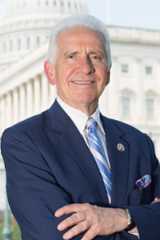
Jim Costa

From Ballotpedia
Jim Costa
Candidate, U.S. House California District 21
U.S. House California District 21
Tenure
2023 - Present
Term ends
2027
Years in position
3
Predecessor:David G. Valadao (R)
Prior offices:
U.S. House California District 16
Years in office: 2013 - 2023
Predecessor:Zoe Lofgren (D)
Successor:Anna Eshoo (D)

U.S. House California District 20
Years in office: 2005 - 2013
Successor:Sam Farr (D)

California State Senate District 16
Years in office: 1994 - 2002

California State Assembly District 30
Years in office: 1978 - 1994
Compensation
Base salary
$174,000
Net worth
(2012) $3,839,003
Elections and appointments
Last election
November 5, 2024
Next election
June 2, 2026
Education
Bachelor's
California State University, Fresno, 1974
Personal
Birthplace
Fresno, CA
Religion
Christian: Catholic
Profession
Farmer
Contact

Jim Costa (Democratic Party) is a member of theU.S. House, representingCalifornia's 21st Congressional District. He assumed office on January 3, 2023. His current term ends on January 3, 2027.

Costa (Democratic Party) is running for re-election to theU.S. House to representCalifornia's 21st Congressional District. He declared candidacy for the primary scheduled onJune 2, 2026.

Contents

Biography

Jim Costa was born inFresno, California, in 1952. He earned a B.A. in political science from California State University at Fresno in 1974.[1][2] His career experience includes working as a farmer.[3] From 1978 to 1994, Costa served as a member of theCalifornia State Assembly and from 1994-2002, he was a member of theCalifornia Senate.[1]

Committee assignments

U.S. House

2025-2026

Costa was assigned to the following committees:[Source]

2023-2024

Costa was assigned to the following committees:[Source]

2021-2022

Costa was assigned to the following committees:[Source]

2017-2018

At the beginning of the115th Congress, Costa was assigned to the following committees:[4]

2015-2016

Costa served on the following committees:[5]

2013-2014

Costa served on the following committees:[6]

  • Agriculture Committee
    • Subcommittee on General Farm Commodities and Risk Management
    • Subcommittee on Horticulture, Research, Biotechnology and Foreign Agriculture
    • Subcommittee on Livestock, Rural Development and Credit (Ranking member)
  • Natural Resources Committee
    • Subcommittee on Water and Power
    • Subcommittee on Energy and Mineral Resources

2011-2012

Costa served on the following committees:[7]

  • Agriculture Committee
    • Subcommittee on Conservation, Energy, and ForestryRanking Member
    • Subcommittee on Rural Development, Research, Biotechnology, and Foreign Agriculture,Ranking Member
  • Natural Resources Committee
    • Subcommittee on Energy and Mineral Resources
    • Subcommittee on Water and Power

Elections

2026

See also: California's 21st Congressional District election, 2026

General election

The primary will occur on June 2, 2026. The general election will occur on November 3, 2026. General election candidates will be added here following the primary.

Nonpartisan primary election

Nonpartisan primary for U.S. House California District 21

IncumbentJim Costa,Lourin Hubbard,Kyle Kirkland, andLorenzo Rios are running in the primary for U.S. House California District 21 on June 2, 2026.


Ballotpedia Logo

Incumbents arebolded and underlined.

Candidate Connection = candidate completed theBallotpedia Candidate Connection survey.
If you are a candidate and would like to tell readers and voters more about why they should vote for you,complete the Ballotpedia Candidate Connection Survey.

Do you want a spreadsheet of this type of data?Contact our sales team.

Endorsements

Ballotpedia is gathering information about candidate endorsements. To send us an endorsement,click here.

2024

See also: California's 21st Congressional District election, 2024

California's 21st Congressional District election, 2024 (March 5 top-two primary)

General election

General election for U.S. House California District 21

IncumbentJim Costa defeatedMichael Maher in the general election for U.S. House California District 21 on November 5, 2024.

Candidate
%
Votes
Image of Jim Costa
Jim Costa (D)
 
52.6
 
102,798
Image of Michael Maher
Michael Maher (R)
 
47.4
 
92,733

Ballotpedia Logo

Incumbents arebolded and underlined. The results have been certified. Source

Total votes: 195,531
Candidate Connection = candidate completed theBallotpedia Candidate Connection survey.
If you are a candidate and would like to tell readers and voters more about why they should vote for you,complete the Ballotpedia Candidate Connection Survey.

Do you want a spreadsheet of this type of data?Contact our sales team.

Nonpartisan primary election

Nonpartisan primary for U.S. House California District 21

IncumbentJim Costa andMichael Maher advanced from the primary for U.S. House California District 21 on March 5, 2024.

Candidate
%
Votes
Image of Jim Costa
Jim Costa (D)
 
53.0
 
42,697
Image of Michael Maher
Michael Maher (R)
 
47.0
 
37,935

Ballotpedia Logo

Incumbents arebolded and underlined. The results have been certified. Source

Total votes: 80,632
Candidate Connection = candidate completed theBallotpedia Candidate Connection survey.
If you are a candidate and would like to tell readers and voters more about why they should vote for you,complete the Ballotpedia Candidate Connection Survey.

Do you want a spreadsheet of this type of data?Contact our sales team.

Endorsements

Ballotpedia did not identify endorsements for Costa in this election.

2022

See also: California's 21st Congressional District election, 2022

General election

General election for U.S. House California District 21

IncumbentJim Costa defeatedMichael Maher in the general election for U.S. House California District 21 on November 8, 2022.

Candidate
%
Votes
Image of Jim Costa
Jim Costa (D)
 
54.2
 
68,074
Image of Michael Maher
Michael Maher (R)
 
45.8
 
57,573

Ballotpedia Logo

Incumbents arebolded and underlined. The results have been certified. Source

Total votes: 125,647
Candidate Connection = candidate completed theBallotpedia Candidate Connection survey.
If you are a candidate and would like to tell readers and voters more about why they should vote for you,complete the Ballotpedia Candidate Connection Survey.

Do you want a spreadsheet of this type of data?Contact our sales team.

Nonpartisan primary election

Nonpartisan primary for U.S. House California District 21

IncumbentJim Costa andMichael Maher defeatedMatt Stoll andEric Garcia in the primary for U.S. House California District 21 on June 7, 2022.

Candidate
%
Votes
Image of Jim Costa
Jim Costa (D)
 
47.0
 
33,850
Image of Michael Maher
Michael Maher (R)
 
26.4
 
19,040
Image of Matt Stoll
Matt Stoll (R)
 
16.6
 
11,931
Image of Eric Garcia
Eric Garcia (D)
 
10.0
 
7,239

Ballotpedia Logo

Incumbents arebolded and underlined. The results have been certified. Source

Total votes: 72,060
Candidate Connection = candidate completed theBallotpedia Candidate Connection survey.
If you are a candidate and would like to tell readers and voters more about why they should vote for you,complete the Ballotpedia Candidate Connection Survey.

Do you want a spreadsheet of this type of data?Contact our sales team.

Withdrawn or disqualified candidates

2020

See also: California's 16th Congressional District election, 2020

General election

General election for U.S. House California District 16

IncumbentJim Costa defeatedKevin Cookingham in the general election for U.S. House California District 16 on November 3, 2020.

Candidate
%
Votes
Image of Jim Costa
Jim Costa (D)
 
59.4
 
128,690
Image of Kevin Cookingham
Kevin Cookingham (R) Candidate Connection
 
40.6
 
88,039

Ballotpedia Logo

Incumbents arebolded and underlined. The results have been certified. Source

Total votes: 216,729
Candidate Connection = candidate completed theBallotpedia Candidate Connection survey.
If you are a candidate and would like to tell readers and voters more about why they should vote for you,complete the Ballotpedia Candidate Connection Survey.

Do you want a spreadsheet of this type of data?Contact our sales team.

Nonpartisan primary election

Nonpartisan primary for U.S. House California District 16

IncumbentJim Costa andKevin Cookingham defeatedEsmeralda Soria andKim Williams in the primary for U.S. House California District 16 on March 3, 2020.

Candidate
%
Votes
Image of Jim Costa
Jim Costa (D)
 
37.5
 
41,228
Image of Kevin Cookingham
Kevin Cookingham (R) Candidate Connection
 
35.2
 
38,652
Image of Esmeralda Soria
Esmeralda Soria (D)
 
21.4
 
23,484
Image of Kim Williams
Kim Williams (D) Candidate Connection
 
5.9
 
6,458

Ballotpedia Logo

Incumbents arebolded and underlined. The results have been certified. Source

Total votes: 109,822
Candidate Connection = candidate completed theBallotpedia Candidate Connection survey.
If you are a candidate and would like to tell readers and voters more about why they should vote for you,complete the Ballotpedia Candidate Connection Survey.

Do you want a spreadsheet of this type of data?Contact our sales team.


2018

See also:California's 16th Congressional District election, 2018
See also:California's 16th Congressional District election (June 5, 2018 top-two primary)

General election

General election for U.S. House California District 16

IncumbentJim Costa defeatedElizabeth Heng in the general election for U.S. House California District 16 on November 6, 2018.

Candidate
%
Votes
Image of Jim Costa
Jim Costa (D)
 
57.5
 
82,266
Image of Elizabeth Heng
Elizabeth Heng (R)
 
42.5
 
60,693

Ballotpedia Logo

Incumbents arebolded and underlined. The results have been certified. Source

Total votes: 142,959
Candidate Connection = candidate completed theBallotpedia Candidate Connection survey.
If you are a candidate and would like to tell readers and voters more about why they should vote for you,complete the Ballotpedia Candidate Connection Survey.

Do you want a spreadsheet of this type of data?Contact our sales team.

Nonpartisan primary election

Nonpartisan primary for U.S. House California District 16

IncumbentJim Costa andElizabeth Heng advanced from the primary for U.S. House California District 16 on June 5, 2018.

Candidate
%
Votes
Image of Jim Costa
Jim Costa (D)
 
53.0
 
39,527
Image of Elizabeth Heng
Elizabeth Heng (R)
 
47.0
 
35,080

Ballotpedia Logo

Incumbents arebolded and underlined. The results have been certified.

Total votes: 74,607
Candidate Connection = candidate completed theBallotpedia Candidate Connection survey.
If you are a candidate and would like to tell readers and voters more about why they should vote for you,complete the Ballotpedia Candidate Connection Survey.

Do you want a spreadsheet of this type of data?Contact our sales team.

2016

See also:California's 16th Congressional District election, 2016

Heading into the election, Ballotpediarated this race as safely Democratic. IncumbentJim Costa (D) defeatedJohnny Tacherra (R) in the general election on November 8, 2016. Costa and Tacherra defeatedDavid Rogers (R) in thetop-two primary on June 7, 2016.[8][9]

U.S. House, California District 16 General Election, 2016
PartyCandidateVote %Votes
    DemocraticGreen check mark transparent.pngJim CostaIncumbent58%97,473
    Republican Johnny Tacherra42%70,483
Total Votes167,956
Source:California Secretary of State


U.S. House, California District 16 General Primary, 2016
PartyCandidateVote %Votes
    DemocraticGreen check mark transparent.pngJim CostaIncumbent55.9%52,822
    RepublicanGreen check mark transparent.pngJohnny Tacherra32.8%31,028
    Republican David Rogers11.2%10,606
Total Votes94,456
Source:California Secretary of State

2014

See also:California's 16th Congressional District elections, 2014
U.S. House, California District 16 General Election, 2014
PartyCandidateVote %Votes
    DemocraticGreen check mark transparent.pngJim CostaIncumbent50.7%46,277
    Republican Johnny Tacherra49.3%44,943
Total Votes91,220
Source:California Secretary of State
U.S. House, California District 16 Primary, 2014
PartyCandidateVote %Votes
    DemocraticGreen check mark transparent.pngJim CostaIncumbent44.3%25,586
    RepublicanGreen check mark transparent.pngJohnny Tacherra21.7%12,542
    Republican Steve Crass15.4%8,877
    Republican Mel Levey7.9%4,565
    Republican Joanna Garcia-Botelho6.6%3,827
    Democratic Job Melton4.1%2,370
Total Votes57,767
Source:California Secretary of State

2012

See also:California's 16th Congressional District elections, 2012
U.S. House, California District 16 General Election, 2012
PartyCandidateVote %Votes
    DemocraticGreen check mark transparent.pngJim CostaIncumbent57.4%84,649
    Republican Brian Daniel Whelan42.6%62,801
Total Votes147,450
Source:California Secretary of State "Official Election Results, 2012 General Election"
U.S. House, California District 16 Open Primary, 2012
CandidateVote %Votes
Green check mark transparent.pngJim Costa (D)Incumbent42.7%25,355
Green check mark transparent.pngBrian Daniel Whelan (R)25.3%15,053
Johnny Tacherra (R)11.4%6,776
Mark Garcia (R)11%6,529
Loraine Goodwin (D)9.6%5,703
Total Votes59,416

Full history

To view the full congressional electoral history for Jim Costa, click [show] to expand the section.
 

2010

On November 2, 2010, Jim Costa won re-election to theUnited States House. He defeated Andy Vidak (R) in the general election.[10]

U.S. House, California District 20 General Election, 2010
PartyCandidateVote %Votes
    DemocraticGreen check mark transparent.pngJim Costaincumbent51.7%46,247
    Republican Andy Vidak48.3%43,197
Total Votes89,444

2008

On November 4, 2008, Jim Costa won re-election to theUnited States House. He defeated Jim Lopez (R) in the general election.[11]

U.S. House, California District 20 General Election, 2008
PartyCandidateVote %Votes
    DemocraticGreen check mark transparent.pngJim Costaincumbent74.3%93,023
    Republican Jim Lopez25.7%32,118
Total Votes125,141

2006

On November 7, 2006, Jim Costa won re-election to theUnited States House. He ran unopposed in the general election.[12]

U.S. House, California District 20 General Election, 2006
PartyCandidateVote %Votes
    DemocraticGreen check mark transparent.pngJim Costaincumbent0%0
Total Votes61,120

2004

On November 2, 2004, Jim Costa won election to theUnited States House. He defeated Roy Ashburn (R) in the general election.[13]

U.S. House, California District 20 General Election, 2004
PartyCandidateVote %Votes
    DemocraticGreen check mark transparent.pngJim Costa53.4%61,005
    Republican Roy Ashburn46.6%53,231
Total Votes114,236


Campaign themes

2026

Ballotpedia survey responses

See also:Ballotpedia's Candidate Connection

Candidate Connection

Jim Costa has not yet completedBallotpedia's 2026 Candidate Connection survey.Send a message to Jim Costa asking him to fill out the survey. If you are Jim Costa,click here to fill out Ballotpedia's 2026 Candidate Connection survey.

Who fills out Ballotpedia's Candidate Connection survey?

Any candidate running for elected office, at any level, can complete Ballotpedia's Candidate Survey. Completing the survey will update the candidate's Ballotpedia profile, letting voters know who they are and what they stand for.  More than 25,000 candidates have taken Ballotpedia's candidate survey since we launched it in 2015. Learn more about the surveyhere.

You can ask Jim Costa to fill out this survey by using the button below or emailing info@jimcosta.com.

Email

2024

Jim Costa did not completeBallotpedia's 2024 Candidate Connection survey.

2022

Jim Costa did not completeBallotpedia's 2022 Candidate Connection survey.

2020

Jim Costa did not completeBallotpedia's 2020 Candidate Connection survey.

Campaign website

Costa’s campaign website stated the following:

Issues & Legislation

Fighting for Water

The San Joaquin Valley needs water to survive. Our Valley’s jobs and way of life are at stake, and it is my top priority to ensure that our farmers, workers, and communities receive the water we need to get our economy going again.

We are making progress, and each day is a new opportunity to secure more water and take on the critics of our Valley. This page will provide you with background on the water crisis, along with news and updates on my ongoing efforts to increase the flow of water to our Valley.

Producing Results

Water is the lifeblood of our Valley. Without water there are no jobs and no economic opportunity. Fighting to increase our water supply is my top priority and we are making progress.

Our Valley’s water challenges have taught us a lot about the art of the possible. In pressing this Administration to look for other ways to operate the water projects, we were successful in boosting the water allocation to Valley farmers over the past two years and continue to push for more. I fought hard for better science to be used so that we take a look at all the factors affecting the decline of the Delta, not just the pumps. Our Valley has been winning that fight and now the federal agencies are going back to the drawing board. I also worked with my colleagues in Congress to secure funding for the Valley and expedite water infrastructure projects like the California Aqueduct/Delta Mendota Canal Intertie project, which had been backlogged for more than 25 years. Last Congress, I also introduced H.R. 1251, the More Water for Our Valley Act, which continues my efforts to find commonsense solutions to California’s broken water system.

Looking at the Long-Term

There is no silver bullet that will solve all of our water problems. Compromise involves working together in a bipartisan fashion to find common ground on solutions for the short-term, interim, and long-term, and we have to work on all of them at the same time.

Valley communities require a sustainable water supply now as we work through long-term issues. We need to build new infrastructure that includes major conveyance and storage projects such as the Peripheral Canal/Tunnel, Temperance Flat, and raising Shasta Dam. If we expect to find compromise and stop the ages-old water wars, we need to fix our broken plumbing system, and rebuilding our infrastructure will get us to an even better place than we are today.

Our work is far from over, but we are winning this fight and more water is flowing to the Valley.

We will continue to fight against regulations that send water to the Pacific Ocean and do not consider the health and welfare of the Valley’s residents and their environment. We will continue to press the Administration and support a legal strategy to get the pumps flowing at maximum capacity. We will also continue to take on our critics and keep working towards long-term solutions to protect our Valley and state’s water supply for generations to come.

Improving Education

Education is the key to the future success of our children and promoting long-term economic opportunity across the Valley. Providing access to a high quality and affordable education is essential for our children to compete in today’s ever-evolving workforce and to ensure that they can make the kind of living our parents fought to provide our generation. To make good on these goals, our students must have the resources, schools and teachers they need in order to graduate high school prepared for college or their career.

A good education begins early on. As a result, I’ve fought to support programs like Head Start and Early Head Start in our Valley. For instance, I’ve worked to secure nearly $14 million for the Head Start program operated by the Fresno County Economic Opportunities Commission. I also supported $3.3 million to strengthen Head Start and Early Head Start programs in Kings County.

I have also fought for additional support to improve Valley schools and universities. During these tough times, many schools faced teacher layoffs and drastic budget cuts. To keep teachers in the classrooms I supported legislation like the Education Jobs and Medicaid Assistance Act. According to the National Education Association, this bill protected over 900 teaching jobs in our district. No one would have felt the effects of those job losses more than Valley students and families.

In addition, I have worked to secure funding for Valley community colleges and universities. This includes funding for West Hills College to create new academic programs in agriculture and water science, and funding for CSU Fresno to recruit and train more students in the field of agriculture education. These programs are double wins for our Valley. Not only do they allow more Valley students to obtain college degrees, but they also train the next generation of leaders to grow our agriculture economy.

One of the most important aspects of improving education is making college affordable. As college tuition has skyrocketed over the past years, a degree from a 2-year of 4-year college has become less obtainable for too many Valley students. To make it easier for Valley students to attend college and secure a good-paying job, I helped pass the College Cost Reduction Act of 2007 which increased Pell Grants and cut student loan interest rates. In 2010, I helped pass a new law that switched all schools to the more efficient Direct Loan program, saving $61 billion. This new law makes it easier for Valley students to finance their educations and $19 billion of the savings will go towards reducing the federal deficit.

Investing in our children's education is central to supporting economic development in our Valley and ensuring that we have an educated workforce that will meet the demands and challenges of the 21st century. I will continue working to secure the resources needed to strengthen Valley education and advocate for the greatest standards for our children.

Protecting Valley Agriculture

As a third generation family farmer, I know first-hand the daily challenges our farmers and ranchers face. Agriculture is our way of life and the viability of our region depends on this industry to create jobs and economic opportunity. This is why I have made protecting and growing Valley agriculture a top priority.

Securing a stable supply of water for our farmers and farm communities is central to supporting Valley agriculture. To make sure our farmers have the water they need to put food on America’s dinner table and put people back to work, I have pressed the Administration to increase our water allocations, secured federal funding for Valley water projects, and fought the flawed federal regulations that limit the water flowing to our region. Our work to secure our fair share is far from over, but we have made progress. To learn more about my fight for Valley water, click here.

Along with fighting for water, I have worked to ensure that our government recognizes the vital role Valley agriculture plays in our national economy. Our Valley is the leading producer of specialty crops which include tree nuts, fruits, dried fruits, and vegetables. For too long, the Valley did not receive its fair share of federal funds for these kinds of crops. To fix this, I worked with other Valley leaders to secure $1.7 billion for specialty crops in the 2008 Farm Bill. This was a win for our local economy and success we can build on.

A critical part of Valley agriculture is our dairy industry. In 2009, dairy farms throughout the Valley and nation experienced one of the worst price crises of the last 40 years. America’s roughly 65,000 dairies lost over $12 billion. Sharp losses forced dairy farmers to lay off workers and, in many cases, shutter their operations. To protect Valley jobs and help the dairy industry get back on track, I introduced the Dairy Price Stabilization Act. My plan would promote market stability and individual dairy farmers’ ability to grow their own business.

I have also worked to reduce some of regulatory burdens placed on Valley farmers and ranchers. Part of my work during the 2008 Farm Bill was to secure addition funding through the Environmental Quality Incentive Program to help farmers convert equipment to newer engines that meet air quality standards and water funding that helped growers install drip irrigation systems. I also support fully repealing the estate tax and have supported legislation that would exempt family farms and ranches from this burden. I know from personal experience the difficulty of protecting your family farm when a family member passes away.

I speak with our Valley’s farmers and ranchers on a daily basis to discuss what we can do to strengthen our agriculture industry. Being in close contact has allowed me to respond quickly to our Valley’s needs. When the European Grapevine Moth was detected in our Valley, I was able to press the USDA to release $2.75 million to help our farmers combat this foreign pest. These funds helped mitigate some of the economic impact it had on our summer harvest.

These are only a few examples of my work on behalf of Valley farmers and ranchers. Whether it is fighting for more water, securing additional funding, or advocating for expanding trade opportunities, I will continue to work to help our agriculture economy grow.

Addressing California's Housing Needs

Homeownership helps to form the foundation of the American Dream, but that dream is under attack. The housing crisis in our country ripped the bottom out of our economy and left millions of Americans with few other options than foreclosure. Few communities in the United States were hit harder when the housing bubble burst than the San Joaquin Valley. Hundreds of thousands of Valley families lost their homes – often a family’s biggest investment – and entire neighborhoods were economically decimated.

As your representative in Congress, I will do all that I can to cut through the red tape in Washington and connect you with the right resources to help you stay in your home. You can find more information about how I can help by clicking here.

While I will fight as hard as I can to prevent our homes from falling into foreclosure, we need an aggressive and comprehensive national strategy to right the market. For years, both the Bush and Obama administrations have tried and failed to fix the housing crisis. I will continue to push this administration and my colleagues in Congress to take action now.

One important step the Congress could take to stem the tide of these devastating foreclosures is to pass the Housing Opportunity and Mortgage Equity Act (H.R. 363). This legislation would put thousands of dollars in the pockets of millions of families across the country by allowing millions of responsible homeowners to refinance home mortgages at historically low rates. Preventing additional foreclosures would help families rebuild lost savings and wealth and our communities get back on their feet.

Strengthening Healthcare

What Health Care Reform Means For You

FOR THE VALLEY:

  • No discrimination against people with pre-existing conditions
  • Children can stay on their parents’ insurance until they’re 26
  • Ban on insurance plans dropping you if you get sick
  • Ban on lifetime coverage limits and caps out-of-pocket expenses
  • Tax cuts for 156,000 middle class households in the district to pay for coverage

FOR SENIORS:

  • Closing the Medicare Part D donut hole
  • Extends the solvency of the Medicare Trust Fund from 2017 to 2026
  • Free preventive care under Medicare – no co-payments and deductibles
  • Help for early retirees – temporary coverage for ages 55-64

FOR WOMEN:

  • Ban on gender rating that results in higher premiums for women
  • Eliminates all co-pays and deductibles for preventive services like mammograms
  • No discrimination for pre-existing conditions such as having had a C-section or being the victim of domestic violence

FOR SMALL BUSINESSES:

  • $40 billion in tax credits for small businesses to help them offer employee coverage
  • 9,700 small businesses in the district qualify for tax credits of up to 50% of the costs of providing insurance
  • The same access to quality, affordable coverage that larger firms have
  • Lower administrative costs and stable pricing from year to year

Energy Sustainability

Our Valley is an energy rich region, supplying the state with power from oil, gas, and renewable sources like hydropower, biomass, wind, and solar. This vital sector of our economy is a job creator in our communities and a key player in reducing our nation’s dependence on foreign sources of energy.

For these reasons, I took the lead on this issue with a bipartisan group of legislators in the 112th Congress in introducing the Infrastructure Jobs and Energy Independence Act. Unlike the “cap and trade” bill which I opposed and voted against, this bill outlines a practical, responsible energy plan for America that would further develop domestic energy production of traditional oil and gas, provide a funding stream to clean up the environment and fully develop clean energy technologies.

In addition, our Valley’s energy economy has been bolstered through the Recovery Act. These funds have gone toward creating good-paying jobs, allowing Valley cities to develop and implement projects to improve energy efficiency and reduce fossil fuel emissions in our cities.

Fiscal Responsibility

Increasing our water supply and investing in Valley communities are critical to renewing our economy. However, long-term and sustainable growth also relies on getting our nation’s fiscal house in order.

Today, the national debt is approaching $20 trillion dollars, which is approximately $61,350 per U.S. citizen, and ensuring a robust 21st century U.S. economy will require Congress to get our fiscal house in order. As a co-chair of the Blue Dog Coalition, I will continue supporting fiscally sustainable policies that will grow our Valley and U.S. economy.

Just as no single reason led to the deep deficits now facing our country, there are no silver bullets or quick fixes to getting our country back on track. Putting our fiscal house in order will take hard work and tough decisions. This means reviewing and terminating unnecessary federal programs; ending expensive policies that encourage companies to ship American jobs overseas; and eliminating so much of the fraud, waste, and abuse draining our government’s resources.

As Americans, we must be honest about our long-term economic obligations and work together to get the job done. To learn more about some of the measures I have supported to help increase accountability and fiscal responsibility, you can visit the Blue Dog website here.

Serving Valley Veterans

Our Valley’s veterans hail from all backgrounds and represent what is great about our nation. The debt we owe to these selfless individuals and their families is immeasurable and we must always deliver on the promises made to those who stand up to protect our freedom and values.

Every day we have the responsibility to assist our service members and it is my personal mission to help our Valley’s veterans access the benefits they have earned and deserve. Since taking office, I have helped over 1,000 Valley veterans cut through red tape at the Veterans Administration (VA) or other federal agencies to access their health care, social security checks, and even medals. If you or a veteran you know is having difficulty with the VA or federal government, I encourage you to call my office in Fresno at (559) 495-1620.

Along with working with our veterans personally, I have fought to secure funding for programs and pass legislation that will benefit members of our armed services.

Fresno Veterans HomeOne of the greatest achievements for our veterans can be found right here in our Valley. After we fought to secure $92 million in funding and a location, I was able to join with local veterans and leaders to break ground on the first ever Veterans Home in Fresno County. In 2013, we opened the Fresno Veterans Home, which includes a 120-bed nursing home and a 180-bed domiciliary. Construction of the home created nearly 1000 jobs in the Fresno area.

Reducing the VA Backlog

Veterans in the Central Valley know all too well the severe backlogs that plague the Oakland and Los Angeles Veterans Affairs Regional Offices. When the VA announced that not one California benefits office would implement a pilot program to reduce the backlog, I urged the VA to reverse its decision and received a commitment from the VA for additional staff and training at the Oakland office. I also instructed the government watchdog agency to investigate the Los Angeles office and provide recommendations for how to reduce the backlog.

Legislation for Veterans

With over one million unemployed veterans in the United States today, it is imperative for us to find ways in which we can ease their transition to civilian life. One of the best ways to facilitate that transition is by helping them find gainful employment. That’s why I was proud to support the VOW to Hire Heroes Act. This law helps our veterans by expanding education and training programs; educating separating service members on how their military skills and training can be easily adapted in civilian life; allowing service members to begin the federal employment process prior to their separation; and providing a veterans tax credit to businesses that hire veterans.

The President also signed another bill that passed the House with my strong support, the Restoring GI Bill Fairness Act of 2011. In 2008, Congress passed the Post-9/11 GI Bill, landmark legislation that restored the promise of a four-year education for veterans of the wars in Iraq and Afghanistan. This law builds upon the success of the Post-9/11 GI Bill by increasing the amount of educational assistance available to student veterans attending private universities and colleges.

Because just one veteran falling asleep at night without a permanent roof over his or her head is one veteran too many, I fought to secure $1 million to help homeless and at-risk veteran families in the Valley find sustainable, stable housing. Ending homelessness among veterans and their families once and for all must be a national goal.

On the battlefield, the military pledges to leave no soldier behind. Let it be our pledge that when they return home, we leave no veteran behind.

National Security

One of my top duties in Congress is to keep our country safe. This means strengthening our national security, supporting our troops at home and abroad, and completing our missions in Iraq and Afghanistan.

To increase our national security, I have supported legislation to give our men and women in uniform the resources they need to keep us safe while ensuring accountability and good stewardship of our taxpayer dollars. For instance, 2011’s National Defense Authorization provides our military with the additional tools they need to disrupt, dismantle, and eventually defeat al Qaeda and its extremist allies. These tools include counter-proliferation programs to keep weapons out of the hands of our enemies and intelligence and cyber security efforts to deter threats as soon as we learn about them. Al Qaeda and our enemies are constantly adapting, and I am committed to supporting our military and defense community in evolving to meet new threats.

Supporting our Troops

Over two million American service members have deployed to Iraq and Afghanistan since 2001. These brave men and women put their lives on the line to keep us safe and it is critical to our national honor and security to support members of our military when they are in the field and when they return home. To learn more about my work for veterans and their families, click here.

Saving Fresno’s 144th Fighter Wing

The Air National Guard’s 144th Fighter Wing in Fresno is vital for our national security and our Valley’s economic security. The location of the 144th Fighter Wing on the West Coast helps our nation maintain air superiority in the Southwest region of the United States and around the world, and with more than 1000 guardsmen and women stationed at the wing, the 144th is a central part of our local economy.

That’s why I fought so hard to stop proposals by other states to end the 144th fighter wing and halt the transfer of new F-15s to the wing. On a bipartisan basis, I rallied more than half the California Congressional delegation in support of the wing, and we were successful. The new F-15s are on track and the 144th is safe from any proposed elimination.

Standing Up for Victims' Rights

Protecting victims of crime should be a top priority for legislatures at all levels of government. When I came to Washington in 2005, there was a void in leadership on issues related to crime victims. After speaking with some of my colleagues, I gathered several like-minded representatives together and co-founded the first Congressional Victims' Rights Caucus. This is a bipartisan caucus that seeks to represent crime victims in the United States through legislation that reflects their interests, rights and needs.

Furthermore, the Victims' Rights Caucus is designed to provide an ongoing dialogue between Congress and national victim assistance programs to enhance public education initiatives and communication. This way, our communities can better understand the impact of crime on victims and get involved in crime prevention and victim assistance.

Protecting the Crime Victim's Fund is a top priority of the Caucus. The Crime Victims’ Fund was started in 1984 to support crime victim assistance programs, helping over 3.8 million people each year. The fund also takes the burden off of victims for financial costs associated with crime, such as unreimbursed medical expenses, lost wages and funeral costs. Instead of being supported by taxpayer dollars, the fund is sustained through the collection of criminal fines and I want to ensure that it continues to be applied to the people it was meant to help. In each of the past years I have been in Congress, I led the effort to appropriate funds so that the Violence Against Women Act could be renewed, ensuring that national sexual assault and domestic violence programs have adequate funding to continue their efforts in our communities.

Victims of crime are our sons and daughters, husbands, brothers, wives and mothers struggling to survive in the aftermath of crime and they deserve our help. I pledge to continue my advocacy on behalf of victims as the co-chair of the Congressional Victims’ Rights Caucus, enacting compassionate policy and raising awareness of these crucial issues.

Immigration Resources

We are a nation of immigrants past and immigrants present. For more than 250 years, since the formation of the United States, immigrants have made our country what it is today.

Our immigration system is broken, and we must fix it. That’s why I support policies that would modernize our broken immigration system for the 21st Century by securing our borders, uniting families, and providing an earned pathway to citizenship.

My entire career in the House of Representatives has given me the opportunity to be a strong advocate for comprehensive immigration reform. I know first-hand the benefits that reforming our system will bring to the Valley. Continuing the status quo is not acceptable for the sake of our economy, the future of the San Joaquin Valley, and the 11 million people living in the shadows. We need reform now.[14]

—Jim Costa's campaign website (2020)[15]


2018

Campaign website

Costa's campaign website stated the following:


Valley Water

  • Led the charge to ensure that the 340,000 acre-feet of 2013 carryover water was able to be used for its intended purpose of irrigated agriculture during the 2014 drought.
  • Urged Governor Brown to declare a drought emergency in the state and to take actions to conserve the water available to the state for human use. On January 17, 2014, Governor Brown declared a statewide drought emergency, calling for actions to reduce the state’s water use, activating California’s Emergency Response plan and freeing up drought relief funding for many of the counties across the Valley. The actions and flexibility provided by state and federal agencies this year resulted in approximately 200,000 acre-feet of water being pumped that would have been lost under standard regulatory practices.
  • Brought President Obama and Governor Brown to the Valley, where the President announced that the federal government would be providing the following disaster assistance to California:
  • $100 million in livestock disaster assistance for California producers;
  • $15 million in targeted conservation assistance for the most extreme and exceptional drought areas;
  • $5 million in targeted Emergency Watershed Protection (EWP) Program assistance to the most drought impacted areas of California to protect vulnerable soils;
  • $60 million to California food banks to help families that may be economically impacted by the drought;
  • 600 summer meal sites to be established in California’s drought stricken areas;
  • $3 million in Emergency Water Assistance Grants for rural communities experiencing water shortages.
  • This assistance is in addition to the USDA announcement of $20 million in Environmental Quality Incentives Program (EQIP) Funds for agricultural conservation in California and $15 million in Conservation Innovation Grants.
  • Authored legislation to create the Kern County Water Bank-America's largest water bank.
  • Obtained $18.7 million for Delta Mendota Canal-California Aqueduct Intertie, producing 35,000 acre-feet of water annually.
  • Brought over $25 million to local water districts for projects increasing water quality, supply and water crisis relief for families and farms, including the following: Westlands Water District, Byron Bethany Irrigation District, Del Puerto Water District, Firebaugh Canal Water District, Fresno Slough Water District, Central California Irrigation District, Semitropic Water Storage District, Grassland Water District, and San Luis Water District.
  • Instrumental in bringing over 200,000 acre-feet of transferred water to combat the 2009 crisis.
  • $2.5 million for Improved Water Supply Reliability Grants.
  • $1 million to Improve and Maintain Jones Pumping Plant Systems.
  • Helped bring increased water allocation to south of Delta agriculture in 2010, totaling up to 198,000 acre feet of water not previously available to farmers at contracted rates.
  • $1.5 million for Water Conservation and Delivery at Madera Water Bank. Increased Kaweah Reservoir's capacity by 48,000 acre feet, improving water storage and flood protection.

Agriculture

  • As a member of the House Committee on Agriculture, and 2014 Farm Bill Conference Committee secured more than $1 billion for specialty crops in the 2014 Farm Bill
  • Obtained more than half a billion dollars for plant pest and disease prevention for the eradication of European Grapevine Moth, Light Brown Apple Moth and other invasive species
  • Secured millions through the EQIP program to help Valley farmers improve efficiencies in conservation
  • Included language in the 2014 Farm Bill that would allow California the opportunity to enter the Federal Milk Marketing Order. Costa has long advocated giving producers the chance to petition the U.S. Agriculture Secretary for entrance into the Federal Order
  • Fought to end $6 billion in taxpayer subsidies for the corn ethanol industry
  • Improved Williamson Act & Inheritance Tax for farm families bringing millions in tax cuts
  • Supported free trade agreements with South Korea, Colombia and Panama to help create new markets for California agricultural products

Housing Crisis

  • Fought federal regulators to bring mortgage relief to Valley homeowners
  • Helped hundreds of Valley residents avoid foreclosure
  • Fighting to pass his Responsible Homeowner Refinancing Act, which will help millions of homeowners refinance their mortgage and take advantage of today’s low interest rates
  • Secured millions to end homelessness in the Valley

Transportation

  • Led efforts to bring hundreds of millions for Highway 99 improvements
  • Secured $5 million to rehabilitate the Fresno Yosemite Int'l airport taxiway
  • Delivered millions for upgrades to highways 180, 198, and 41 and local transit
  • Saved the air traffic control tower at Castle Air Force Base
  • Secured $16 million in funding for downtown revitalization efforts at the Fulton Mall

Clean Air & Water

  • Created San Joaquin Valley Air District to clean our air
  • Forced SF Bay Area to stop sending air pollution to the Valley
  • Secured $30 million for zero emission power plants to clean our air
  • Directed $6 million for diesel retrofits on school buses and agricultural equipment
  • Brought $23 million to farmers to retire old, inefficient engines
  • Established San Joaquin River Conservancy
  • Provided millions for wildlife refuges

Law & Order

  • Stiffened the sentence for meth trafficking
  • Co-founded the first Congressional Victims' Rights caucus
  • Delivered funding to local law enforcement for gang and drug-bust programs
  • Delivered hundreds of thousands in funding to hire police officers in Atwater, Dos Palos, Gustine, and Madera
  • Secured $142 million for completion of the Mendota federal prison
  • Co-wrote three strikes law
  • Secured $3.1 million to fight internet crimes against children

Education

  • Authored class-size reduction in public schools
  • Funded $783,000 for Valley Colleges & Universities
  • $46.6 million expanding broadband Internet access in the Valley
  • Secured nearly $17.3 million for local Head Start programs
  • Initiated the California Water Institute at CSU, Fresno

Veterans

  • Delivered $92 Million for Fresno Veterans Home
  • Fighting to end the immoral VA benefit claims and appeals backlog
  • Secured funding to end the epidemic of homeless veterans
  • Supported restoring our soldiers' full, 4-year college GI Bill benefit
  • Provided $5.92 million to improve Fresno Veterans Hospital
  • Eliminated copayments for catastrophically disabled veterans
  • Implemented family-leave benefits for families of wounded warriors
  • Authored legislation honoring Hmong Veterans

Health Care

  • Expanded access to quality and affordable healthcare coverage for millions of Californians
  • Ended harmful insurance company practices like denying coverage for pre-existing conditions and dropping you from coverage if you get sick
  • Strengthened Medicare by closing the “donut hole,” providing free preventive care for seniors, and extending the solvency of the Medicare Trust Fund
  • Fought against efforts to end Medicare as we know it by turning it into a voucher program
  • Working with Republicans and Democrats to ensure the new health care law works for every Valley resident
  • Fighting to establish a UC Merced Medical School
  • Brought hundreds of thousands of dollars to train medical professionals here in the Valley
  • Brought $167 million for rural healthcare clinics
  • Helped start the Regional Burn and Trauma Centers[14]
—Costa for Congress[16]

Campaign advertisements

The following is an example of an ad from Costa's 2018 election campaign.

"Delivering" - Costa campaign ad, released September 15, 2018


Campaign finance summary


Ballotpedia LogoNote: The finance data shown here comes from the disclosures required of candidates and parties. Depending on the election or state, this may represent only a portion of all the funds spent on their behalf.Satellite spending groups may or may not have expended funds related to the candidate or politician on whose page you are reading this disclaimer. Campaign finance data from elections may be incomplete. For elections to federal offices, complete data can be found at theFEC website. Clickhere for more on federal campaign finance law andhere for more on state campaign finance law.


Jim Costa campaign contribution history
YearOfficeStatusContributionsExpenditures
2026*U.S. House California District 21Candidacy Declared primary$823,251 $344,371
2024U.S. House California District 21Won general$1,709,408 $1,889,604
2022U.S. House California District 21Won general$2,034,865 $2,055,958
2020U.S. House California District 16Won general$2,146,775 $1,846,494
2018U.S. House California District 16Won general$1,856,798 $2,363,583
2016U.S. House, California District 16Won$1,749,100 N/A**
2014U.S. House (California, District 16)Won$1,524,075 N/A**
2012U.S. House California District 16Won$1,483,125 N/A**
2010U.S. House California District 20Won$1,795,156 N/A**
2008U.S. House California District 20Won$1,026,588 N/A**
2006U.S. House California District 20Won$885,524 N/A**
2004U.S. House California District 20Won$1,913,507 N/A**
** Data on expenditures is not available for this election cycle
Note: Totals above reflect only available data.

Notable endorsements

See also:Ballotpedia: Our approach to covering endorsements

This section displays endorsements this individual made in elections within Ballotpedia'scoverage scope.

Notable candidate endorsements by Jim Costa
EndorseeElectionStageOutcome
Kamala D. Harris  source  (D, Working Families Party)President of the United States (2024)PrimaryLost General
Adam Schiff  source  (D)U.S. Senate California (2024)PrimaryWon General
David Trone  source  (D)U.S. Senate Maryland (2024)PrimaryLost Primary
Joe Biden  source  (D, Working Families Party)President of the United States (2020)PrimaryWon General
Kamala D. Harris  source President of the United States (2020)Withdrew in Convention
Hillary Clinton  source  (D)President of the United States (2016)PrimaryLost General

Personal finance disclosures

Members of the House are required to file financial disclosure reports. You can search disclosure reports on the House’s official websitehere.

Analysis

Below are links to scores and rankings Ballotpedia compiled for members of Congress. We chose analyses that help readers understand how each individual legislator fit into the context of the chamber as a whole in terms of ideology, bill advancement, bipartisanship, and more.

If you would like to suggest an analysis for inclusion in this section, please emaileditor@ballotpedia.org.

119th Congress (2025-2027)

Rankings and scores for the 119th Congress

118th Congress (2023-2025)

Rankings and scores for the 118th Congress

117th Congress (2021-2023)

Rankings and scores for the 117th Congress

116th Congress (2019-2021)

Rankings and scores for the 116th Congress

115th Congress (2017-2019)

Rankings and scores for the 115th Congress

114th Congress (2015-2017)

Rankings and scores for the 114th Congress

113th Congress (2013-2015)

Rankings and scores for the 113th Congress

Key votes

See also:Key votes

Ballotpedia monitors legislation that receives a vote and highlights the ones that we consider to be key to understanding where elected officials stand on the issues. To read more about how we identify key votes, clickhere.

Key votes: 118th Congress, 2023-2025

The118th United States Congress began on January 3, 2023, and ended on January 3, 2025. At the start of the session, Republicans held the majority in theU.S. House of Representatives (222-212), and Democrats held the majority in theU.S. Senate (51-49).Joe Biden (D) was the president andKamala Harris (D) was the vice president. We identified the key votes below usingCongress' top-viewed bills list and through marquee coverage of certain votes on Ballotpedia.

Key votes: 118th Congress, 2023-2025
VoteBill and descriptionStatus
Yes check.svg Yea
National Defense Authorization Act for Fiscal Year 2024
 
The National Defense Authorization Act for Fiscal Year 2024 (H.R. 2670) was a bill passed by the118th Congress and signed into law by PresidentJoe Biden (D) on December 22, 2023, authorizingDepartment of Defense activities and programs for fiscal year 2024. The bill required a two-thirds majority vote in the House to pass the bill as amended by a Senate and House conference report.[17]
Yes check.svg Passed (310-118)[18]
Red x.svg Nay
To terminate the requirement imposed by the Director of the Centers for Disease Control and Prevention for proof of COVID-19 vaccination for foreign travelers, and for other purposes.
 
H.R. 185 (To terminate the requirement imposed by the Director of the Centers for Disease Control and Prevention for proof of COVID-19 vaccination for foreign travelers, and for other purposes.) was a bill approved by theHouse of Representatives that sought to nullify aCenters for Disease Control and Prevention (CDC) order restricting the entry of foreign citizens to the United States unless the individual was vaccinated against the coronavirus or attested they would take public health measures to prevent the spread of the coronavirus. The bill required a simple majority vote in the House.[19]
Yes check.svg Passed (227-201)[20]
Red x.svg Nay
Limit, Save, Grow Act of 2023
 
The Limit, Save, Grow Act of 2023 (H.R. 2811) was a bill approved by theHouse of Representatives that sought to raise the federal debt limit before a June 5, 2023, deadline. The bill also sought to repeal certain green energy tax credits, increase domestic natural gas and oil production, expand work requirements for the Supplemental Nutrition Assistance Program (SNAP) and Temporary Assistance to Needy Families (TANF) program, and nullify PresidentJoe Biden's (D) proposed student loan debt cancellation program. This bill was not taken up in the Senate, and the debt limit was instead raised through theFiscal Responsibility Act of 2023. This bill required a simple majority vote in the House.[21]
Yes check.svg Passed (217-215)[22]
Not Voting
Denouncing the horrors of socialism.
 
H.Con.Res. 9 (Denouncing the horrors of socialism.) was a resolution approved by theHouse of Representatives denouncing socialism and opposing the implementation of socialist policies in the United States. The resolution required a simple majority vote in the House.[23]
Yes check.svg Passed (328-86)[24]
Red x.svg Nay
Lower Energy Costs Act
 
The Lower Energy Costs Act (H.R. 1) was a bill approved by theHouse of Representatives that sought to increase domestic energy production and exports by increasing the production of oil, natural gas, and coal, reducing permitting restrictions for pipelines, refineries, and other energy projects, and increase the production of minerals used in electronics, among other energy production-related policies. The bill required a simple majority vote in the House.[25]
Yes check.svg Passed (225-204)[26]
Red x.svg Nay
Providing for congressional disapproval under chapter 8 of title 5, United States Code, of the rule submitted by the Department of Labor relating to "Prudence and Loyalty in Selecting Plan Investments and Exercising Shareholder Rights".
 
H.J.Res. 30 (Providing for congressional disapproval under chapter 8 of title 5, United States Code, of the rule submitted by the Department of Labor relating to "Prudence and Loyalty in Selecting Plan Investments and Exercising Shareholder Rights".) was a joint resolution of disapproval under the terms of theCongressional Review Act (CRA) passed by the118th Congress andvetoed by PresidentJoe Biden (D) on March 20, 2023. This was Biden's first veto of his presidency. The resolution sought to nullify aDepartment of Labor rule that amended the Employee Retirement Income Security Act of 1974 (ERISA) to allow retirement plans to consider certainenvironmental, social, and corporate governance (ESG) factors in investment-related decisions. The resolution required a simple majority vote in the House.[27]Click here to read more.
Yes check.svg Passed (219-200)[28]
Red x.svg Nay
Relating to a national emergency declared by the President on March 13, 2020.
 
H.J.Res. 7 (Relating to a national emergency declared by the President on March 13, 2020.) was a joint resolution of disapproval under the terms of theCongressional Review Act (CRA) passed by the118th Congress and signed into law by PresidentJoe Biden (D) on April 10, 2023. The resolution ended thenational coronavirus state of emergency, which began on March 13, 2020. The resolution required a simple majority vote in the House.[29]Click here to read more.
Yes check.svg Passed (229-197)[30]
Yes check.svg Yea
Fiscal Responsibility Act of 2023
 
TheFiscal Responsibility Act of 2023 (H.R. 3746) was a bill passed by the118th Congress and signed into law by PresidentJoe Biden (D) on June 3, 2023. The bill raised the federal debt limit until January 2025. The bill also capped non-defense spending in fiscal year 2024, rescinded unspent coronavirus relief funding, rescinded some Internal Revenue Service (IRS) funding, enhanced work requirements for the Supplemental Nutrition Assistance Program (SNAP) and the Temporary Assistance to Needy Families program (TANF), simplified environmental reviews for energy projects, and ended the student loan debt repayment pause in August 2023. The bill required a simple majority vote in the House.[31]Click here to read more.
Yes check.svg Passed (314-117)[32]
Rep.Hakeem Jeffries (D-N.Y.)
Speaker of the House election (January 2023) - 15th vote
 
In January 2023, theHouse of Representatives held itsregular election for Speaker of the House at the start of the118th Congress. Voting began on January 3, and ended on January 7. Rep.Kevin McCarthy (R-Calif.) was elected speaker of the House in a 216-212 vote during the 15th round of voting. In order to elect a Speaker of the House, a majority of votes cast for a person by name was required.[33]Click here to read more.
Rep.Kevin McCarthy (R-Calif.) (216-212)
Yes check.svg Yea
Declaring the office of Speaker of the House of Representatives to be vacant.
 
H.Res. 757 (Declaring the office of Speaker of the House of Representatives to be vacant.) was a resolution passed by the House of Representatives that removed Rep.Kevin McCarthy (R-Calif.) from his position as Speaker of the House. The resolution required a simple majority vote in the House.[34]Click here to read more.
Yes check.svg Passed (216-210)[35]
Rep.Hakeem Jeffries (D-N.Y.)
Speaker of the House election (October 2023) - 4th vote
 
In October 2023, following Rep.Kevin McCarthy's (R-Calif.) removal as Speaker of the House, theHouse of Representatives heldanother election for the position. Voting began on October 17 and ended on October 25. Rep.Mike Johnson (R-La.) was elected Speaker of the House in a 220-209 vote in the fourth round of voting. In order to elect a Speaker of the House, a majority of votes cast for a person by name was required.[36]Click here to read more.
Rep.Mike Johnson (R-La.) (220-209)
Red x.svg Nay
Directing certain committees to continue their ongoing investigations as part of the existing House of Representatives inquiry into whether sufficient grounds exist for the House of Representatives to exercise its Constitutional power to impeach Joseph Biden, President of the United States of America, and for other purposes.
 
H.Res. 918 (Directing certain committees to continue their ongoing investigations as part of the existing House of Representatives inquiry into whether sufficient grounds exist for the House of Representatives to exercise its Constitutional power to impeach Joseph Biden, President of the United States of America, and for other purposes.) was a resolution passed by theHouse of Representatives that formally authorized animpeachment inquiry into PresidentJoe Biden (D). The inquiry focused on allegations that Biden used his influence as vice president from 2009 to 2017 to improperly profit from his son Hunter Biden's business dealings. The resolution required a simple majority vote in the House.[37]Click here to read more.
Yes check.svg Passed (221-212)[38]
Yes check.svg Yea
Providing for the expulsion of Representative George Santos from the United States House of Representatives.
 
H.Res. 878 (Providing for the expulsion of Representative George Santos from the United States House of Representatives.) was a resolution passed by the House of Representatives that removed Rep.George Santos (R-N.Y.) from office following aHouse Ethics Committee investigation that determined there was substantial evidence that Santos violated the law during his 2020 and 2022 campaigns. The resolution required a simple majority vote in the House.[39]
Yes check.svg Passed (311-114)[40]
Yes check.svg Yea
The Social Security Fairness Act of 2023
 
The Social Security Fairness Act of 2023 (H.R. 82) was a bill passed by the118th Congress and signed into law by PresidentJoe Biden (D) on January 5, 2025, that reduced Social Security benefits for individuals who received other pensions from state or local governments. It also eliminated an offset that would reduce benefits for spouses and widows of individuals with government pensions. It also eliminated a provision that reduced benefits for an individual who received a pension or disability benefit from an employer that did not withhold Social Security taxes. This bill required a 2/3rds majority vote to pass.[41]
Yes check.svg Passed (327-75)[42]
Red x.svg Nay
Secure the Border Act of 2023
 
The Secure the Border Act of 2023 (H.R. 2) was passed by theU.S. House on May 11, 2024. This bill would have introduced limits to asylum eligibility and required employers to use electronic verification of employee's legal eligibility to work. This bill required a simple majority vote.[43]
Yes check.svg Passed (219-213)[44]
Red x.svg Nay
Consolidated Appropriations Act, 2024
 
The Consolidated Appropriations Act 2024 (H.R. 4366) was a bill passed by the118th Congress and signed into law by PresidentJoe Biden (D) on March 9, 2024, authorizing appropriations for various government departments for the fiscal year 2024. The bill required a majority vote to pass.[45]
Yes check.svg Passed (219-211)[46]
Yes check.svg Yea
Tax Relief for American Families and Workers Act of 2024
 
The Tax Relief for American Families and Workers Act of 2024 (H.R. 7024) was a bill passed by theU.S. House on January 31, 2024, that would have modified the U.S. tax code, increasing how much money can be given back in credits and what is exempt. This bill required a 2/3rds majority vote to pass.[47]
Yes check.svg Passed (357-70)[48]
Red x.svg Nay
Servicemember Quality of Life Improvement and National Defense Authorization Act for Fiscal Year 2025
 
The Servicemember Quality of Life Improvement and National Defense Authorization Act for Fiscal Year 2025 (H.R. 8070) was passed by theU.S. House on June 14, 2024. The bill would have modified defense spending in the fiscal year 2025. The bill required a two-thirds majority vote in the House to pass the bill as amended by a Senate and House conference report.[49]
Yes check.svg Passed (217-199)[50]
Yes check.svg Yea
Antisemitism Awareness Act of 2023
 
The Antisemitism Awareness Act of 2023 (H.R. 6090) was passed by theU.S. House on May 1, 2024. This bill made it so the Department of Education's Office of Civil Rights could have the authority to use the International Holocaust Remembrance Alliance's definition of antisemitism when investigating cases of discrimination. This bill required a simple majority vote to pass.[51]
Yes check.svg Passed (320-91)[52]
Yes check.svg Yea
FAA Reauthorization Act of 2024
 
The FAA Reauthorization Act of 2024 (H.R.3935) was a bill passed by the118th Congress and signed into law by PresidentJoe Biden (D) on May 16, 2024, that reauthorized Federal Aviation Administration (FAA) funding until fiscal year 2028. The bill also made other modifications to address various department-related issues. The bill required a two-thirds majority vote in the House to pass the bill as amended by a Senate and House conference report.[53]
Yes check.svg Passed (387-26)[54]
Red x.svg Nay
Stop Terror-Financing and Tax Penalties on American Hostages Act
 
The Stop Terror-Financing and Tax Penalties on American Hostages Act (H.R. 9495) was passed by theU.S. House on November 21, 2024. The bill would have postponed U.S. tax deadlines for citizens who were wrongfully detained abroad. This bill required a simple majority to pass.[55]
Yes check.svg Passed (219-184)[56]
Red x.svg Nay
Impeaching Alejandro Nicholas Mayorkas, Secretary of Homeland Security, for high crimes and misdemeanors.
 
H.Res.863, Impeaching Alejandro Nicholas Mayorkas, Secretary of Homeland Security, for high crimes and misdemeanors, passed the U.S. House on February 13, 2024. The resolution impeached U.S. Secretary ofHomeland SecurityAlejandro Mayorkas (D) for high crimes and misdemeanors. The motion to impeach required a majority in the House and a 2/3rds vote in the Senate.[57]
Yes check.svg Passed (214-213)[58]
Yes check.svg Yea
Continuing Appropriations and Extensions Act, 2025
 
H.R.9747, the Continuing Appropriations and Extensions Act, 2025, was passed by the118th Congress and signed into law by PresidentJoe Biden (D) on September 26, 2024, providing funding to federal agencies, including the Secret Service, and federal programs for the 2025 fiscal year. The bill required a two-thirds majority vote in the House to pass the bill as amended by a Senate and House conference report.[59]
Yes check.svg Passed (341-82)[60]


Key votes: Previous sessions of Congress

Key votes

Key votes: 117th Congress, 2021-2023

The117th United States Congress began on January 3, 2021 and ended on January 3, 2023. At the start of the session, Democrats held the majority in theU.S. House of Representatives (222-213), and theU.S. Senate had a 50-50 makeup. Democrats assumed control of the Senate on January 20, 2021, when PresidentJoe Biden (D) and Vice PresidentKamala Harris (D), who acted as a tie-breaking vote in the chamber, assumed office. We identified the key votes below usingCongress' top-viewed bills list and through marquee coverage of certain votes on Ballotpedia.

Key votes: 117th Congress, 2021-2023
VoteBill and descriptionStatus
Yes check.svg Yea
Infrastructure Investment and Jobs Act
 
TheInfrastructure Investment and Jobs Act (H.R. 3684) was a federal infrastructure bill passed by the 117th Congress and signed into law by President Joe Biden (D) on November 15, 2021. Among other provisions, the bill provided funding for new infrastructure projects and reauthorizations, Amtrak maintenance and development, bridge repair, replacement, and rehabilitation, clean drinking water, high-speed internet, and clean energy transmission and power infrastructure upgrades. The bill required a simple majority vote in the House.[61]Click here to read more.
Yes check.svg Passed (228-206)
Yes check.svg Yea
American Rescue Plan Act of 2021
 
TheAmerican Rescue Plan Act of 2021 (H.R. 1319) was a bill passed by the 117th Congress and signed into law by President Joe Biden (D) on March 11, 2021, to provide economic relief in response to the COVID-19 pandemic. Key features of the bill included funding for a national vaccination program and response, funding to safely reopen schools, distribution of $1,400 per person in relief payments, and extended unemployment benefits. The bill required a simple majority vote in the House.[62]Click here to read more.
Yes check.svg Passed (220-210)
Yes check.svg Yea
Inflation Reduction Act of 2022
 
TheInflation Reduction Act of 2022 (H.R. 5376) was a bill passed by the 117th Congress and signed into law by President Joe Biden (D) on August 16, 2022, to address climate change, healthcare costs, and tax enforcement. Key features of the bill included a $369 billion investment to address energy security and climate change, an extension of Affordable Care Act subsidies, allowing Medicare to negotiate certain drug prices, a 15% corporate minimum tax, a 1% stock buyback fee, and enhanced Internal Revenue Service (IRS) enforcement, and an estimated $300 billion deficit reduction from 2022-2031. The bill required a simple majority vote in the House.[63]Click here to read more.
Yes check.svg Passed (220-207)
Yes check.svg Yea
Marijuana Opportunity Reinvestment and Expungement Act
 
The Marijuana Opportunity Reinvestment and Expungement Act (H.R. 3617) was a bill approved by the House of Representatives that sought to decriminalize marijuana, establish studies of legal marijuana sales, tax marijuana imports and production, and establish a process to expunge and review federal marijuana offenses. The bill required a simple majority vote in the House.[64]
Yes check.svg Passed (220-204)
Yes check.svg Yea
For the People Act of 2021
 
TheFor the People Act of 2021 (H.R. 1) was a federal election law and government ethics bill approved by the House of Representatives. The Congressional Research Service said the bill would "expand voter registration (e.g., automatic and same-day registration) and voting access (e.g., vote-by-mail and early voting). It [would also limit] removing voters from voter rolls. ... Further, the bill [would address] campaign finance, including by expanding the prohibition on campaign spending by foreign nationals, requiring additional disclosure of campaign-related fundraising and spending, requiring additional disclaimers regarding certain political advertising, and establishing an alternative campaign funding system for certain federal offices." The bill required a simple majority vote in the House.[65]Click here to read more.
Yes check.svg Passed (220-210)
Yes check.svg Yea
Assault Weapons Ban of 2022
 
The Assault Weapons Ban of 2022 (H.R. 1808) was a bill passed by the House of Representatives that sought to criminalize the knowing import, sale, manufacture, transfer, or possession of semiautomatic assault weapons (SAW) or large capacity ammunition feeding devices (LCAFD). The bill made exemptions for grandfathered SAWs and LCAFDs. It required a simple majority vote in the House.[66]
Yes check.svg Passed (217-213)
Yes check.svg Yea
National Defense Authorization Act for Fiscal Year 2022
 
The National Defense Authorization Act for Fiscal Year 2022 (S. 1605) was a bill passed by the 117th Congress and signed into law by President Joe Biden (D) on December 27, 2021, authorizingDepartment of Defense acitivities and programs for fiscal year 2022. The bill required a simple majority vote in the House.[67]
Yes check.svg Passed (363-70)
Yes check.svg Yea
James M. Inhofe National Defense Authorization Act for Fiscal Year 2023
 
The James M. Inhofe National Defense Authorization Act for Fiscal Year 2023 (H.R. 7776) was a bill passed by the 117th Congress and signed into law by President Joe Biden (D) on December 23, 2022, authorizing Department of Defense activities and programs for fiscal year 2023. The bill required a 2/3 majority in the House to suspend rules and pass the bill as amended.[68]
Yes check.svg Passed (350-80)
Yes check.svg Yea
American Dream and Promise Act of 2021
 
The American Dream and Promise Act of 2021 (H.R. 6) was an immigration bill approved by the House of Representatives that proposed a path to permanent residence status for unauthorized immigrants eligible for Temporary Protected Status or Deferred Enforced Departure, among other immigration-related proposals. The bill required a simple majority vote in the House.[69]
Yes check.svg Passed (228-197)
Yes check.svg Yea
Sergeant First Class Heath Robinson Honoring our Promise to Address Comprehensive Toxics Act of 2022
 
The Sergeant First Class Heath Robinson Honoring our Promise to Address Comprehensive Toxics Act of 2022 (S. 3373) was a bill passed by the 117th Congress and signed into law by President Joe Biden (D) on August 10, 2022, that sought to address healthcare access, the presumption of service-connection, and research, resources, and other matters related to veterans who were exposed to toxic substances during military service. The bill required a simple majority vote in the House.[70]
Yes check.svg Passed (342-88)
Yes check.svg Yea
Chips and Science Act
 
The Chips and Science Act (H.R. 4346) was a bill approved by the 117th Congress and signed into law by President Joe Biden (D) on August 9, 2022, which sought to fund domestic production of semiconductors and authorized various federal science agency programs and activities. The bill required a simple majority vote in the House.[71]
Yes check.svg Passed (243-187)
Yes check.svg Yea
Women’s Health Protection Act of 2021
 
The Women's Health Protection Act of 2021 (H.R. 3755) was a bill passed by the House of Representatives. The bill proposed prohibiting governmental restrictions on the provision of and access to abortion services and prohibiting governments from issuing some other abortion-related restrictions. The bill required a simple majority vote in the House.[72]
Yes check.svg Passed (218-211)
Yes check.svg Yea
SAFE Banking Act of 2021
 
The SAFE Banking Act of 2021 (H.R. 1996) was a bill passed by the House of Representatives that proposed prohibiting federal regulators from penalizing banks for providing services to legitimate cannabis-related businesses and defining proceeds from such transactions as not being proceeds from unlawful activity, among other related proposals. Since the House moved to suspend the rules and pass the bill in an expedited process, it required a two-thirds majority vote in the House.[73]
Yes check.svg Passed (321-101)
Yes check.svg Yea
Consolidated Appropriations Act, 2022
 
The Consolidated Appropriations Act, 2022 (H.R. 2471) was a bill passed by the 117th Congress and signed into law by President Joe Biden (D) on March 15, 2022, providing for the funding of federal agencies for the remainder of 2022, providing funding for activities related to Ukraine, and modifying or establishing various programs. The bill required a simple majority vote in the House.[74]
Yes check.svg Passed (260-171)
Yes check.svg Yea
Equality Act
 
The Equality Act (H.R. 5) was a bill approved by the House of Representatives that proposed prohibiting discrimination on the basis of sex, sexual orientation, and gender identity in areas including public accommodations and facilities, education, federal funding, employment, housing, credit, and the jury system, among other related proposals. The bill required a simple majority vote in the House.[75]
Yes check.svg Passed (224-206)
Yes check.svg Yea
Respect for Marriage Act
 
TheRespect for Marriage Act (H.R. 8404) was a bill passed by the 117th Congress and signed into law by President Joe Biden (D) on December 13, 2022. The bill codified the recognition of marriages between individuals of the same sex and of different races, ethnicities, or national origins, and provided that the law would not impact religious liberty or conscience protections, or provide grounds to compel nonprofit religious organizations to recognize same-sex marriages. The bill required a simple majority vote in the House.[76]Click here to read more.
Yes check.svg Passed (258-169)
Yes check.svg Yea
Continuing Appropriations and Ukraine Supplemental Appropriations Act, 2023
 
The Continuing Appropriations and Ukraine Supplemental Appropriations Act, 2023 (H.R. 6833) was a bill approved by the 117th Congress and signed into law by President Joe Biden (D) on September 30, 2022. It provided for some fiscal year 2023 appropriations, supplemental funds for Ukraine, and extended several other programs and authorities. The bill required a simple majority vote in the House.[77]
Yes check.svg Passed (230-201)
Yes check.svg Yea
Consumer Fuel Price Gouging Prevention Act
 
The Consumer Fuel Price Gouging Prevention Act (H.R. 7688) was a bill approved by the House of Representatives that sought to prohibit individuals from selling consumer fuels at excessive prices during a proclaimed energy emergency. It would have also required the Federal Trade Commission to investigate whether the price of gasoline was being manipulated. The bill required a simple majority vote in the House.[78]
Yes check.svg Passed (217-207)
Yes check.svg Yea
Bipartisan Background Checks Act of 2021
 
The Bipartisan Background Checks Act of 2021 (H.R. 8) was a bill approved by the House of Representatives that sought to prohibit the transfer of firearms between private parties unless a licensed firearm vendor conducted a background check on the recipient. The bill also provided for certain exceptions to this requirement. The bill required a simple majority vote in the House.[79]
Yes check.svg Passed (227-203)
Yes check.svg Yea
Freedom to Vote: John R. Lewis Act
 
TheFreedom to Vote: John R. Lewis Act was a federal elections bill approved by the House of Representatives and voted down by the Senate in a failed cloture vote that sought to, among other provisions, make Election Day a public holiday, allow for same-day voter registration, establish minimum early voting periods, and allow absentee voting for any reason, restrict the removal of local election administrators in federal elections, regulate congressional redistricting, expand campaign finance disclosure rules for some organizations, and amend the Voting Rights Act to require some states to obtain clearance from the U.S. Department of Justice before implementing new election laws. The bill required a simple majority vote in the House.[80]Click here to read more.
Yes check.svg Passed (220-203)
Yes check.svg Yea
Bipartisan Safer Communities Act
 
TheBipartisan Safer Communities Act (S. 2938) was a firearm regulation and mental health bill passed by the 117th Congress and signed into law by President Joe Biden (D) on June 25, 2022. Provisions of the bill included expanding background checks for individuals under the age of 21, providing funding for mental health services, preventing individuals who had been convicted of a domestic violence misdemeanor or felony in dating relationships from purchasing firearms for five years, providing funding for state grants to implement crisis intervention order programs, and providing funding for community-based violence prevention initiatives. The bill required a simple majority vote in the House.[81]Click here to read more.
Yes check.svg Passed (234-193)
Yes check.svg Yea
Impeaching Donald John Trump, President of the United States, for high crimes and misdemeanors.
 
This was a resolution before the 117th Congress setting forth anarticle of impeachment saying thatDonald Trump (R) incited an insurrection against the government of the United States on January 6, 2021. The House of Representatives approved the article of impeachment, and the Senate adjudged that Trump was not guilty of the charges. The article of impeachment required a simple majority vote in the House.[82]Click here to read more.
Yes check.svg Passed (232-197)
Yes check.svg Yea
Electoral Count Reform and Presidential Transition Improvement Act of 2022
 
TheElectoral Count Reform and Presidential Transition Improvement Act was a bill passed by the 117th Congress in the form of an amendment to a year-end omnibus funding bill that was signed into law by President Joe Biden (D) on December 23, 2022. The bill changed the procedure for counting electoral votes outlined in the Electoral Count Act of 1887. Elements of the bill included specifying that the vice president's role at the joint session of congress to count electoral votes is ministerial, raising the objection threshold at the joint session of congress to count electoral votes to one-fifth of the members of both the House of Representatives and the Senate, identifying governors as the single official responsible for submitting the certificate of ascertainment identifying that state’s electors, and providing for expedited judicial review of certain claims about states' certificates identifying their electors. The bill required a simple majority vote in the House.[83]Click here to read more.
Yes check.svg Passed (225-201)


Key votes: 116th Congress, 2019-2021

The116th United States Congress began on January 9, 2019, and ended on January 3, 2021. At the start of the session, Democrats held the majority in theU.S. House of Representatives (235-200), and Republicans held the majority in theU.S. Senate (53-47).Donald Trump (R) was the president andMike Pence (R) was the vice president. We identified the key votes below usingCongress' top-viewed bills list and through marquee coverage of certain votes on Ballotpedia.

Key votes: 116th Congress, 2019-2021
VoteBill and descriptionStatus
Yes check.svg Yea
Fairness for High-Skilled Immigrants Act of 2020
 
The Fairness for High-Skilled Immigrants Act of 2020 (H.R. 1044) was a bill passed by the House of Representatives seeking to increase the cap on employment-based visas, establish certain rules governing such visas, and impose some additional requirements on employers hiring holders of such visas. The bill required a two-thirds majority vote in the House to suspend the rules and pass the bill as amended.[84]
Yes check.svg Passed (365-65)
Yes check.svg Yea
The Heroes Act
 
The HEROES Act (H.R. 6800) was a bill approved by the House of Representatives that sought to address the COVID-19 outbreak by providing $1,200 payments to individuals, extending and expanding the moratorium on some evictions and foreclosures, outlining requirements and establishing finding for contact tracing and COVID-19 testing, providing emergency supplemental appropriations to federal agencies for fiscal year 2020, and eliminating cost-sharing for COVID-19 treatments. This bill required a simple majority vote in the House.[85]
Yes check.svg Passed (208-199)
Yes check.svg Yea
For the People Act of 2019
 
The For the People Act of 2019 (H.R.1) was a bill approved by the House of Representatives that sought to protect election security, revise rules on campaign funding, introduce new provisions related to ethics, establish independent, nonpartisan redistricting commissions, and establish new rules on the release of tax returns for presidential and vice presidential candidates. This bill required a simple majority vote in the House.[86]
Yes check.svg Passed (234-193)
Yes check.svg Yea
CARES Act
 
The Coronavirus Aid, Relief, and Economic Security (CARES) Act (H.R. 748) was a bill passed by the 116th Congress and signed into law by President Donald Trump (R) on March 27, 2020, that expanded benefits through the joint federal-state unemployment insurance program during the coronavirus pandemic. The legislation also included $1,200 payments to certain individuals, funding for Supplemental Nutrition Assistance Program (SNAP) benefits, and funds for businesses, hospitals, and state and local governments. This bill required a two-thirds majority vote in the House.[87]
Yes check.svg Passed (419-6)
Yes check.svg Yea
Equality Act
 
The Equality Act (H.R. 5) was a bill approved by the House Representatives that sought to ban discrimination based on sex, sexual orientation, and gender identity by expanding the definition of establishments that fall under public accomodation and prohibiting the denial of access to a shared facility that is in agreement with an indiviual's gender indenitity. This bill required a simple majority vote in the House.[88]
Yes check.svg Passed (236-173)
Yes check.svg Yea
Bipartisan Background Checks Act of 2019
 
The Bipartisan Background Checks Act of 2019 (H.R. 8) was a bill approved by the House that sought to ban firearm transfers between private parties unless a licensed gun dealer, manufacturer, or importer first takes possession of the firearm to conduct a background check. This bill required a simple majority vote in the House.[89]
Yes check.svg Passed (240-190)
Yes check.svg Yea
American Dream and Promise Act of 2019
 
The American Dream and Promise Act of 2019 (H.R.6) was a bill approved by the House Representatives that sought to protect certain immigrants from removal proceedings and provide a path to permanent resident status by establishing streamlined procedures for permanant residency and canceling removal proceedings against certain qualifed individuals. This bill required a simple majority vote in the House.[90]
Yes check.svg Passed (237-187)
Yes check.svg Yea
National Defense Authorization Act for Fiscal Year 2020
 
The National Defense Authorization Act for Fiscal Year 2020 (S. 1790) was a bill passed by the 116th Congress and signed into law by President Donald Trump (R) on December 20, 2019, setting policies and appropriations for the Department of Defense. Key features of this bill include appropriations for research/development, procurement, military construction, and operation/maintenence, as well as policies for paid family leave, North Korea nuclear sanctions, limiting the use of criminal history in federal hiring and contracting, military housing privatization, and paid family leave for federal personnel. This bill required a simple majority vote in the House.[91]
Yes check.svg Passed (377-48)
Yes check.svg Yea
Families First Coronavirus Response Act
 
The Families First Coronavirus Response Act (H.R. 6201) was a bill passed by the 116th Congress and signed into law by President Donald Trump (R) on March 18, 2020, addressing the COVID-19 pandemic by increasing access to unemployment benefits and food assistance, increasing funding for Medicaid, providing free testing for COVID-19, and requiring employers to provide paid sick time to employees who cannot work due to COVID-19. The bill required a two-thirds majority vote in the House.[92]
Yes check.svg Passed (363-40)
Yes check.svg Yea
Setting Every Community Up for Retirement Enhancement Act of 2019
 
The Setting Every Community Up for Retirement Enhancement Act (H.R. 1994) was a bill passed by the House Representatives that sought to change the requirements for employer provided retirement plans, IRAs, and other tax-favored savings accounts by modfying the requirements for things such as loans, lifetime income options, required minimum distributions, the eligibility rules for certain long-term, part-time employees, and nondiscrimination rules. The bill also sought to treat taxable non-tuition fellowship and stipend payments as compensation for the purpose of an IRA, repeal the maximum age for traditional IRA contributions, increase penalties for failing to file tax returns, allow penalty-free withdrawals from retirement plans if a child is born or adopted, and expand the purposes for which qualified tuition programs may be used. This bill required a simple majority vote in the House.[93]
Yes check.svg Passed (417-3)
Yes check.svg Yea
Elijah E. Cummings Lower Drug Costs Now Act
 
The Elijah E. Cummings Lower Drug Costs Now Act (H.R. 3) was a bill approved by the House Representatives that sought to address the price of healthcare by requiring the Department of Health and Human Services (HHS) to negotiate prices for certain drugs, requiring drug manufactures to issue rebates for certain drugs covered under Medicare, requiring drug price transparency from drug manufacturers, expanding Medicare coverage, and providing funds for certain public health programs. This bill required a simple majority vote in the House.[94]
Yes check.svg Passed (230-192)
Yes check.svg Yea
Further Consolidated Appropriations Act, 2020
 
The Further Consolidated Appropriations Act, 2020 (H.R. 1865) was a bill passed by the 116th Congress and signed into law by President Donald Trump (R) on December 20, 2019, providing appropriations for federal agencies in fiscal year 2020. This bill required a simple majority vote in the House.[95]
Yes check.svg Passed (297-120)
Yes check.svg Yea
Hong Kong Human Rights and Democracy Act of 2019
 
The Hong Kong Human Rights and Democracy Act of 2019 (S. 1838) was a bill passed by the 116th Congress and signed into law by President Donald Trump (R) on November 27, 2019, directing several federal departments to assess Hong Kong's unique treatment under U.S. law. Key features of the bill include directing the Department of State to report and certify annually to Congress as to whether Hong Kong is sufficiently autonomous from China to justify its unique treatment, and directing the Department of Commerce to report annually to Congress on China's efforts to use Hong Kong to evade U.S. export controls and sanctions. This bill required a two-thirds majority vote in the House.[96]
Yes check.svg Passed (417-1)
Yes check.svg Yea
MORE Act of 2020
 
The MORE Act of 2020 (H.R. 3884) was a bill approved by the House of Representatives that sought to decriminalize marijuana by removing marijuana as a scheduled controlled substance and eliminating criminal penalties for an individual who manufactures, distributes, or possesses marijuana. This bill required a simple majority vote from the House.[97]
Yes check.svg Passed (228-164)
Yes check.svg Yea
Coronavirus Preparedness and Response Supplemental Appropriations Act, 2020
 
The Coronavirus Preparedness and Response Supplemental Appropriations Act, 2020 (H.R. 6074) was a bill passed by the 116th Congress and signed into law by President Donald Trump on March 6, 2020, providing emergency funding to federal agencies in response to the COVID-19 outbreak. Key features of the bill include funding for vaccine research, small business loans, humanitarian assistance to affected foreign countries, emergency preparedness, and grants for public health agencies and organizations. This bill required a two-thirds majority vote in the House to suspend the rules and pass the bill.[98]
Yes check.svg Passed (415-2)
Yes check.svg Yea
Consolidated Appropriations Act, 2019
 
The Consolidated Appropriations Act, 2019 (H.J.Res. 31) was a bill passed by the 116th Congress and signed into law by President Donald Trump on February 15, 2019, providing approrations for Fiscal Year 2019. This bill required a simple majority vote in the House.[99]
Yes check.svg Passed (300 -128)
Yes check.svg Yea
John D. Dingell, Jr. Conservation, Management, and Recreation Act
 
The John D. Dingell, Jr. Conservation, Management, and Recreation Act (S. 47) was a bill passed by the 116th Congress and signed into law by President Doanld Trump on March 12, 2019. This bill sought to set provisions for federal land management and conservation by doing things such as conducting land exchanges and conveyances, establishing programs to respond to wildfires, and extending and reauthorizing wildlife conservation programs. This bill required a two-thirds majority vote in the House.[100]
Yes check.svg Passed (363-62)
Yes check.svg Yea
William M. (Mac) Thornberry National Defense Authorization Act for Fiscal Year 2021 (On passage)
 
The William M. (Mac) Thornberry National Defense Authorization Act for Fiscal Year 2021 (H.R. 6395) was a bill passed by the 116th Congress and vetoed by President Donald Trump on December 23, 2020. Congress voted to override Trump's veto, and the bill became law on January 1, 2021. The bill set Department of Defense policies and appropriations for Fiscal Year 2021. Trump vetoed the bill due to disagreement with provisions related to Section 230 of the Communications Decency Act, the renaming of certain military installations, limits on emergency military construction fund usage, and limits on troop withdrawals. This bill required a simple majority vote in the House on passage, and a two-thirds majority vote in the House to override Trump's veto.[101]
Yes check.svg Passed (335-78)
Yes check.svg Yea
William M. (Mac) Thornberry National Defense Authorization Act for Fiscal Year 2021 (Overcoming veto)
 
The William M. (Mac) Thornberry National Defense Authorization Act for Fiscal Year 2021 (H.R. 6395) was a bill passed by the 116th Congress and vetoed by President Donald Trump on December 23, 2020. Congress voted to override Trump's veto, and the bill became law on January 1, 2021. The bill set Department of Defense policies and appropriations for Fiscal Year 2021. Trump vetoed the bill due to disagreement with provisions related to Section 230 of the Communications Decency Act, the renaming of certain military installations, limits on emergency military construction fund usage, and limits on troop withdrawals. This bill required a simple majority vote in the House on passage, and a two-thirds majority vote in the House to override Trump's veto.[102]
Yes check.svg Passed (322-87)
Yes check.svg Yea
Government Employee Fair Treatment Act of 2019
 
The Government Employee Fair Treatment Act of 2019 (S.24) was a bill passed by the 116th Congress and signed into law by President Donald Trump on January 16, 2019, that requires federal employees who were furloughed or compelled to work during a lapse in government funding to be compensated for that time. The bill also required those employees to be compensated as soon as the lapse in funding ends, irregardless of official pay date. This bill required a two-thirds majority vote in the House to suspend the rules and pass the bill.[103]
Yes check.svg Passed (411-7)
Yes check.svg Yea
Impeaching Donald John Trump, President of the United States, for high crimes and misdemeanors. (Article 1)
 
The 2020 impeachment of Donald Trump (R) was a resolution before the 116th Congress to set forth two articles of impeachment saying that Trump abused his power and obstructed congress. The first article was related to allegations that Trump requested the Ukrainian government investigate former Vice President Joe Biden (D) and his son, Hunter Biden, in exchange for aid, and the second was related to Trump's response to the impeachment inquiry. The House of Representatives approved both articles of impeachment, and the Senate adjudged that Trump was not guilty of either charge. The articles of impeachment required a simple majority vote in the House.[104]
Yes check.svg Guilty (230-197)
Yes check.svg Yea
Impeaching Donald John Trump, President of the United States, for high crimes and misdemeanors. (Article 2)
 
The 2020 impeachment of Donald Trump (R) was a resolution before the 116th Congress to set forth two articles of impeachment saying that Trump abused his power and obstructed congress. The first article was related to allegations that Trump requested the Ukrainian government investigate former Vice President Joe Biden (D) and his son, Hunter Biden, in exchange for aid, and the second was related to Trump's response to the impeachment inquiry. The House of Representatives approved both articles of impeachment, and the Senate adjudged that Trump was not guilty of either charge. The articles of impeachment required a simple majority vote in the House.[105]
Yes check.svg Guilty (229-198)


Key votes: 115th Congress, 2017-2018

For detailed information about each vote, clickhere.

  • Votes on domestic policy (click to expand)

    VotedYea on: Agriculture and Nutrition Act of 2018 (Conference report) (HR 2)

    Yes check.svg Bill Passed (369-47) on December 12, 2018
    Proposed providing funding for commodity support, conservation, trade and international food aid, nutrition assistance, farm credit, rural development, research and extension activities, forestry, horticulture, and crop insurance through fiscal year 2023.[106]

    VotedNay on: Agriculture and Nutrition Act of 2018 (HR 2 (second vote))

    Yes check.svg Bill Passed (213-211) on June 21, 2018
    Proposed providing funding for commodity support, conservation, trade and international food aid, nutrition assistance, farm credit, rural development, research and extension activities, forestry, horticulture, and crop insurance. It also proposed modifying the Supplemental Nutrition Assistance Program, previously known as the food stamp program.[107]

    VotedNay on: Securing America’s Future Act of 2018 (HR 4760)

    Red x.svg Bill Failed (193-231) on June 21, 2018
    Proposed funding a border wall, limiting legal immigration, a mandatory worker verification program, allowing DACA recipients to apply for legal status, and preventing separation of families at the border.[108]

    VotedYea on: Agriculture and Nutrition Act of 2018 (HR 2)

    Yes check.svg Bill Passed (369-47) on December 12, 2018
    Reauthorizes through FY2023 and modifies some Department of Agriculture (USDA) programs.[109]

    VotedNay on: Pain-Capable Unborn Child Protection Act (HR 36)

    Yes check.svg Bill Passed (237-189) on October 3, 2017
    Proposed amending the federal criminal code to make it a crime for any person to perform or attempt to perform an abortion if the probable post-fertilization age of the fetus was 20 weeks or more. The bill provided exceptions for an abortion: (1) that was necessary to save the life of the pregnant woman, or (2) when the pregnancy was the result of rape or incest.[110]

    VotedNay on: Kate's Law (HR 3004)

    Yes check.svg Bill Passed (257-167) on June 29, 2017
    Proposed increasing criminal penalties for individuals in the country illegally who were convicted of certain crimes, deported, and then re-entered the U.S. illegally.[111]

    VotedNay on: No Sanctuary for Criminals Act (HR 3003)

    Yes check.svg Bill Passed (228-195) on June 29, 2017
    Proposed withholding federal funds from states and localities that chose not to follow federal immigration laws.[112]

    VotedNay on: American Health Care Act of 2017 (HR 1628)

    Yes check.svg Bill passed (217-213) on May 4, 2017
    Proposed modifying the budgetary and fiscal provisions of the Patient Protection and Affordable Care Act (ACA), also known as Obamacare.[113]

  • Votes on economic affairs and regulations (click to expand)

    VotedYea on: Department of Defense and Labor, Health and Human Services, and Education Appropriations Act, 2019 (Conference report) (HR 6157)

    Yes check.svg Bill Passed (361-61) on September 26, 2018Signed by President
    Proposed authorizing FY2019 appropriations and policies for the Departments of Defense, Health and Human Services (HHS), Labor, and Education.[114]

    VotedYea on: Energy and Water, Legislative Branch, and Military Construction and Veterans Affairs Appropriations Act, 2019 (Conference report) (HR 5895)

    Yes check.svg Bill Passed (377-20) on September 13, 2018Signed by President
    Proposed authorizing FY2019 appropriations and policies for the Department of Energy, water resources, the legislative branch, military construction, and the Department of Veterans Affairs, among other programs.[115]

    VotedYea on: Department of Defense and Labor, Health and Human Services, and Education Appropriations Act, 2019 (HR 6157)

    Yes check.svg Bill Passed (359-49) on June 28, 2018
    Proposed authorizing FY2019 appropriations and policies for the Departments of Defense, Health and Human Services (HHS), Labor, and Education.[116]

    VotedYea on: Energy and Water Development and Related Agencies Appropriations Act, 2019 (HR 5895)

    Yes check.svg Bill Passed (235-179) on June 8, 2018
    Proposed authorizing FY2019 appropriations and policies for the Department of Energy, water resources, the legislative branch, military construction, and the Department of Veterans Affairs, among other programs.[117]

    VotedYea on: Economic Growth, Regulatory Relief, and Consumer Protection Act (S 2155)

    Yes check.svg Bill Passed (258-159) on May 22, 2018Signed by President
    Proposed exempting some banks from the Dodd–Frank Wall Street Reform and Consumer Protection Act[118]

    VotedYea on: Consolidated Appropriations Act, 2018 (HR 1625)

    Yes check.svg Bill Passed (256-167) on March 22, 2018Signed by President
    Proposed providing appropriations for fiscal year 2018, and for other purposes.[119]

    VotedYea on: The Bipartisan Budget Act of 2018 (HR 1892)

    Yes check.svg Bill Passed (240-186) on February 9, 2018Signed by President
    Proposed providing appropriations through March 23, 2018.[120]

    VotedYea on: Further Extension Of Continuing Appropriations Act, 2018 (HR 1892)

    Yes check.svg Bill Passed (245-182) on February 6, 2018
    Proposed providing appropriations through March 23, 2018.[121]

    VotedYea on: Making further continuing appropriations for the fiscal year ending September 30, 2018, and for other purposes. (HR 195)

    Yes check.svg Bill Passed (266-150) on January 22, 2018Signed by President
    Proposed providing further continuing appropriations through February 8, 2018.[122]

    VotedYea on: Making further continuing appropriations for the fiscal year ending September 30, 2018, and for other purposes. (HR 195)

    Yes check.svg Bill Passed (230-197) on January 18, 2018
    Proposed providing further continuing appropriations through February 16, 2018.[123]

    VotedYea on: Further Additional Continuing Appropriations Act, 2018 (HR 1370)

    Yes check.svg Bill Passed (231-188) on December 21, 2017Signed by President
    Proposed providing further continuing appropriations through January 19, 2018.[124]

    VotedNay on: Tax Cuts and Jobs Act (HR 1)

    Yes check.svg Bill Passed (227-203) on December 19, 2017Signed by President
    Proposed providing for reconciliation pursuant to titles II and V of the concurrent resolution on the budget for fiscal year 2018.[125]

    VotedNay on: Making further continuing appropriations for fiscal year 2018, and for other purposes (HJ Res 123)

    Yes check.svg Bill Passed (235-193) on December 7, 2017Signed by President
    Proposed funding the government until December 22, 2017.[126]

    VotedNay on: Tax Cuts and Jobs Act (HR 1)

    Yes check.svg Bill Passed (227-205) on November 16, 2017
    Proposed amending the Internal Revenue Code to reduce tax rates and modify policies, credits, and deductions for individuals and businesses.[127]

    VotedNay on: Establishing the congressional budget for the United States Government for fiscal year 2018 and setting forth the appropriate budgetary levels for fiscal years 2019 through 2027. (H Con Res 71)

    Yes check.svg Bill Passed (216-212) on October 26, 2017
    Proposed establishing the congressional budget for the federal government for FY2018 and setting forth budgetary levels for FY2019-FY2027. (This bill proposed adopting the Senate's budget resolution.)[128]

    VotedNay on: Establishing the congressional budget for the United States Government for fiscal year 2018 and setting forth the appropriate budgetary levels for fiscal years 2019 through 2027. (H Con Res 71)

    Yes check.svg Bill Passed (219-206) on October 5, 2017
    Proposed establishing the congressional budget for the federal government for FY2018 and setting forth budgetary levels for FY2019-FY2027.[129]


    Did not vote on: Make America Secure and Prosperous Appropriations Act, 2018 (HR 3354)

    Yes check.svg Bill Passed (211-198) on September 14, 2017
    Proposed providing FY2018 appropriations for the federal government. It combined 12 appropriations bills.[130]

    Did not vote on: Disaster Relief Appropriations Act, 2017 (Included amendments to suspend the debt ceiling and fund the government) (HR 601)

    Yes check.svg Bill Passed (316-90) on September 8, 2017Signed by President
    Proposed suspending the debt ceiling and funding the government until December 8, 2017, and providing funding for Hurricanes Harvey and Irma relief efforts.[131]

    Did not vote on: Disaster Relief Appropriations Act, 2017 (HR 601)

    Yes check.svg Bill Passed (419-3) on September 6, 2017
    Proposed providing $7.85 billion for disaster relief requirements, including response and recovery efforts from Hurricane Harvey.[132]

    Did not vote on: Financial CHOICE Act of 2017 (HR 10)

    Yes check.svg Bill passed (233-186) on June 8, 2017
    Proposed amending the Dodd-Frank Wall Street Reform and Consumer Protection Act, among other acts.[133]

    VotedYea on: Consolidated Appropriations Act of 2017 (HR 244)

    Yes check.svg Bill passed (309-118) on May 3, 2017Signed by President
    Proposed a $1.2 trillion budget to fund the government through the end of the fiscal year on September 30, 2017.[134]

  • Votes on foreign policy and national security issues (click to expand)

    VotedYea on: National Defense Authorization Act for Fiscal Year 2019 (HR 5515)

    Yes check.svg Bill Passed (351-66) on May 24, 2018
    Proposed authorizing FY2019 appropriations and policies for Department of Defense (DOD) programs and activities[135]

    VotedNay on: Department of Defense Appropriations Act, 2018 (HR 695)

    Yes check.svg Bill Passed (250-166) on January 30, 2018
    Proposed providing appropriations for military functions administered by the Department of Defense and for other purposes, for the fiscal year ending September 30, 2018.[136]


    VotedYea on: National Defense Authorization Act for Fiscal Year 2018—Conference report (HR 2810)

    Yes check.svg Bill Passed (356-70) on November 14, 2017Signed by President
    Proposed authorizing FY2018 appropriations and setting forth policies for Department of Defense (DOD) programs and activities, including military personnel strengths.[137]

    VotedNay on: Make America Secure Appropriations Act, 2018 (HR 3219)

    Yes check.svg Bill Passed (235-192) on July 27, 2017
    Proposed making appropriations for defense, military construction, Veterans Affairs, the Legislative Branch, energy and water development, and for other purposes for the fiscal year ending on September 30, 2018.[138]

    VotedYea on: Countering America's Adversaries Through Sanctions Act (HR 3364)

    Yes check.svg Bill Passed (419-3) on July 25, 2017Signed by President
    Proposed providing congressional review and measures to counter aggression by the governments of Iran, the Russian Federation, and North Korea, and for other purposes.[139]

    Did not vote on: Intelligence Authorization Act for Fiscal Year 2018 (HR 3180, second vote)

    Yes check.svg Bill Passed (380-35) on July 28, 2017
    Proposed authorizing appropriations for fiscal year 2018 for intelligence and intelligence-related activities of the United States Government, the Community Management Account, and the Central Intelligence Agency Retirement and Disability System, and for other purposes.[140]

    VotedYea on: Intelligence Authorization Act for Fiscal Year 2018 (HR 3180)

    Red x.svg Bill Failed (241-163) on July 24, 2017
    Proposed authorizing appropriations for fiscal year 2018 for intelligence and intelligence-related activities of the United States Government, the Community Management Account, and the Central Intelligence Agency Retirement and Disability System, and for other purposes.[141]

    VotedYea on: National Defense Authorization Act for Fiscal Year 2018 (HR 2810)

    Yes check.svg Bill Passed (344-81) on July 14, 2017
    Proposed authorizing fiscal year 2018 appropriations and setting forth policies for Department of Defense (DOD) programs and activities, including military personnel strengths. It did not provide budget authority.[142]

    VotedYea on: Department of Defense Appropriations Act, 2017 (HR 1301)

    Yes check.svg Bill passed (371-48) on March 8, 2017
    The $577.9 billion fiscal year 2017 defense spending bill proposed $516.1 billion in base budget funding and $61.8 billion for Overseas Contingency Operations/ Global War on Terrorism funding.[143]

114th Congress

CongressLogo.png

The first session of the114th Congress enacted into law six out of the 2,616 introduced bills (0.2 percent). Comparatively, the113th Congress had 1.3 percent of introduced bills enacted into law in the first session. In the second session, the114th Congress enacted 133 out of 3,159 introduced bills (4.2 percent). Comparatively, the113th Congress had 7.0 percent of introduced bills enacted into law in the second session.[144][145] For more information pertaining to Costa's voting record in the 114th Congress, please see the below sections.[146]

Economic and fiscal

Trade Act of 2015
See also:The Trans-Pacific Partnership trade deal, 2015

Trade adjustment assistance
Yea3.png On June 12, 2015, theHouse rejected thetrade adjustment assistance (TAA) measure inHR 1314—the Trade Act of 2015—by a vote of 126-302.Trade adjustment assistance (TAA) is a federal program providing American workers displaced by foreign trade agreements with job training and services. The measure was packaged withtrade promotion authority (TPA), also known as fast-track authority. TPA is a legislative procedure that allows Congress to define "U.S. negotiating objectives and spells out a detailed oversight and consultation process for during trade negotiations. Under TPA, Congress retains the authority to review and decide whether any proposed U.S. trade agreement will be implemented," according to the Office of the United States Trade Representative. Costa was one of 40 Democrats to vote in favor of TAA.[147][148]
Trade promotion authority
Yea3.png On June 12, 2015, theHouse passed thetrade promotion authority (TPA) measure inHR 1314—the Trade Act of 2015 —by a vote of 219-211. TPA gives thepresident fast-track authority to negotiate trade agreements sent toCongress without the opportunity for amendment or filibuster. Although the House approved TPA, it was a largely symbolic vote given the measure was part of a package trade bill includingtrade adjustment assistance (TAA), which was rejected earlier the same day. Costa was one of 28Democrats to support the measure.[149][150]
Trade promotion authority second vote
Yea3.png After thetrade adjustment assistance (TAA) andtrade promotion authority (TPA) did not pass theHouse together on June 12, 2015, representatives voted to authorize TPA alone as an amendment toHR 2146—the Defending Public Safety Employees' Retirement Act—on June 18, 2015. The amendment passed by a vote of 218-208, with all voting members of the House maintaining his or her original position on TPA except forTed Yoho (R-Fla.). Costa was one of 28Democrats to vote in favor of the amendment.[151][152]
Trade adjustment assistance second vote
Yea3.png TheHouse passedHR 1295—the Trade Preferences Extension Act of 2015—on June 25, 2015, by a vote of 286-138. TheSenate packagedtrade adjustment assistance (TAA) in this bill after the House rejected the TAA measure inHR 1314—the Trade Act of 2015. Along withtrade promotion authority (TPA), whichCongress passed as part ofHR 2146—the Defending Public Safety Employees' Retirement Act—TAA became law on June 29, 2015. Costa was one of 175Democrats to vote in favor of HR 1295.[153][154]

Defense spending authorization

Yea3.png On May 15, 2015, theHouse passedHR 1735—the National Defense Authorization Act for Fiscal Year 2016—by a vote of 269-151. The bill "authorizes FY2016 appropriations and sets forth policies for Department of Defense (DOD) programs and activities, including military personnel strengths. It does not provide budget authority, which is provided in subsequent appropriations legislation." Costa voted with 40Democrats and 228Republicans to approve the bill.[155] The Senate passed the bill on June 18, 2015, by a vote of 71-25. PresidentBarack Obamavetoed the bill on October 22, 2015.[156]

Yea3.png On November 5, 2015, theHouse passedS 1356—the National Defense Authorization Act for Fiscal Year 2016—by a vote of 370-58. The second version of the $607 billion national defense bill included $5 billion in cuts to match what was approved in the budget and language preventing the closure of the Guantanamo Bay military prison.[157][158] Costa voted with 134 otherDemocrats and 235Republicans to approve the bill.[159] On November 10, 2015, theSenate passed the bill by a vote of 91-3, and PresidentBarack Obama signed it into law on November 25, 2015.[160]

2016 Budget proposal

Nay3.png On April 30, 2015, theHouse voted to approveSConRes11, a congressional budget proposal for fiscal year 2016, by a vote of 226-197. The non-binding resolution was designed to create 12 appropriations bills to fund the government. All 183Democrats who voted, including Costa, voted against the resolution.[161][162][163]

2015 budget

Yea3.png On October 28, 2015, theHouse passedHR 1314—the Bipartisan Budget Act of 2015—by a vote of 266-167. The bill increased military and domestic spending levels and suspended the debt ceiling until March 2017.[164] Costa voted with 186Democrats and 79Republicans in favor of the bill.[165] It passed theSenate on October 30, 2015.[166] PresidentBarack Obama signed it into law on November 2, 2015.

Foreign Affairs

Iran nuclear deal
See also:Iran nuclear agreement, 2015

Yea3.png On May 14, 2015, theHouse approvedHR 1191—the Iran Nuclear Agreement Review Act of 2015—by a vote of 400-25. The bill required PresidentBarack Obama to submit the details of the nuclear deal with Iran for congressional review.Congress had 60 days to review the deal and vote to approve, disapprove, or take no action on the deal. During the review period, sanctions on Iran could not be lifted. Costa voted with 176Democrats to approve the bill.[167][168]


Approval of Joint Comprehensive Plan of Action
Yea3.png On September 11, 2015, theHouse rejectedHR 3461—To approve the Joint Comprehensive Plan of Action, signed at Vienna on July 14, 2015, relating to the nuclear program of Iran—by a vote of 162-269. The legislation proposed approvingthe nuclear agreement with Iran. Costa voted with 161Democrats for the bill.[169][170]


Suspension of Iran sanctions relief
Nay3.png On September 11, 2015, theHouse approvedHR 3460—To suspend until January 21, 2017, the authority of the President to waive, suspend, reduce, provide relief from, or otherwise limit the application of sanctions pursuant to an agreement related to the nuclear program of Iran—by a vote of 247-186. HR 3460 prohibited "the President, prior to January 21, 2017, from: limiting the application of specified sanctions on Iran or refraining from applying any such sanctions; or removing a foreign person (including entities) listed in Attachments 3 or 4 to Annex II of the Joint Comprehensive Plan of Action (JCPA) from the list of designated nationals and blocked persons maintained by the Office of Foreign Asset Control of the Department of the Treasury." Costa voted with 185Democrats against the bill.[171][172]


Presidential non-compliance of section 2
Nay3.png On September 10, 2015, theHouse passedH Res 411—Finding that the President has not complied with section 2 of the Iran Nuclear Agreement Review Act of 2015—by a vote of 245-186. Section 2 of theIran Nuclear Agreement Review Act of 2015 required the president to submit all materials related to the nuclear agreement for congressional review. HouseRepublicans introduced the resolution because two agreements between the International Atomic Energy Agency and Iran were not submitted to Congress. Costa voted with 185Democrats against the resolution.[173][174]

Export-Import Bank

Yea3.png On October 27, 2015, theHouse passedHR 597—the Export-Import Bank Reform and Reauthorization Act of 2015—by a vote of 313-118. The bill proposed reauthorizing the Export-Import Bank and allowing it to resume offering assistance in the form of loans and insurance to foreign companies that wanted to buy U.S. goods.[175] Costa voted with 185Democrats and 127Republicans in favor of the bill.[176]

Domestic

USA FREEDOM Act of 2015

Yea3.png On May 13, 2015, theHouse passedHR 2048—the Uniting and Strengthening America by Fulfilling Rights and Ensuring Effective Discipline Over Monitoring Act of 2015 or the USA FREEDOM Act of 2015—by a vote of 338-88. The legislation revisedHR 3199—the USA PATRIOT Improvement and Reauthorization Act of 2005—by ending the bulk collection of metadata under Sec. 215 of the act, requiring increased reporting from theForeign Intelligence Surveillance Court, and requiring the use of "a specific selection term as the basis for national security letters that request information from wire or electronic communication service providers, financial institutions, or consumer reporting agencies." Costa voted with 141Democrats and 196Republicans to approve the legislation. It became law on June 2, 2015.[177][178]

Pain-Capable Unborn Child Protection Act

Nay3.png On May 13, 2015, theHouse passedHR 36—the Pain-Capable Unborn Child Protection Act—by a vote of 242-184. The bill proposed prohibiting abortions from being performed after a fetus was determined to be 20 weeks or older. The bill proposed exceptions in cases of rape, incest, or to save the life of the mother. Costa voted with 179Democrats against the bill.[179][180]

Cyber security

Yea3.png On April 23, 2015, theHouse passedHR 1731—the National Cybersecurity Protection Advancement Act of 2015—by a vote of 355-63. The bill proposed creating an information sharing program that would allow federal agencies and private entities to share information about cyber threats. It also proposed including liability protections for companies.[181] Costa voted with 134Democrats and 220Republicans to approve the bill.[182]

Yea3.png On April 22, 2015, theHouse passedHR 1560—the Protecting Cyber Networks Act—by a vote of 307-116.[183] The bill proposed procedures that would allow federal agencies and private entities to share information about cyber threats. Costa voted with 104Democrats and 202Republicans in favor of the bill.[184]

Immigration

Yea3.png On November 19, 2015, theHouse passedHR 4038—the American SAFE Act of 2015—by a vote of 289-137.[185] The bill proposed instituting additional screening processes for refugees from Iraq and Syria who applied for admission to the U.S. Costa voted with 46Democrats and 242Republicans in favor of the bill.[186]

113th Congress

The second session of the113th Congress enacted into law 224 out of the 3215 introduced bills (7 percent). Comparatively, the112th Congress had 4.2 percent of introduced bills enacted into law in the second session.[187] For more information pertaining to Costa's voting record in the 113th Congress, please see the below sections.[188]

National security

HR 644

See also:Bowe Bergdahl exchange

Yea3.png On September 9, 2014, theRepublican-runHouse approvedH.R. 644, a resolution criticizing PresidentBarack Obama's act of exchanging five Guantanamo Bay prisoners forSgt. Bowe Bergdahl.[189][190] The House voted 249-163 for resolution, with allRepublicans and22 Democrats supporting the bill. Fourteen Democrats and five Republicans did not vote on the resolution, while all other Democrats opposed its passage.[190] Costa dissented from the majority of theDemocratic party and voted in favor of the bill.[189][190]

NDAA

Yea3.png Costa voted for HR 1960 - the National Defense Authorization Act for Fiscal Year 2014. The bill passed the House on June 14, 2013, with a vote of 315 - 108. Both parties were somewhat divided on the vote.[191]

DHS Appropriations

Nay3.png Costa voted against HR 2217 - the DHS Appropriations Act of 2014. The bill passed the House on June 6, 2013, with a vote of 245 - 182 that was largely along party lines.[192]

CISPA (2013)

Yea3.png Costa voted for HR 624 - the CISPA (2013). The bill passed the House on April 18, 2013, with a vote of 288 - 127. The bill permitted federal intelligence agencies to share cybersecurity intelligence and information with private entities and utilities. The bill was largely supported by Republicans, but divided the Democratic Party.[193]

Economy

Farm bill

Yea3.png On January 29, 2014, theU.S. House approved the Federal Agriculture Reform and Risk Management Act of 2013,H.R. 2642, also known as theFarm Bill.[194] The bill passed by a vote of 251-166. The nearly 1,000-page bill reformed and continued various programs of the Department of Agriculture through 2018. The $1 trillion bill expanded crop insurance for farmers by $7 billion over the next decade and created new subsidies for rice and peanut growers that would kick in when prices drop.[195][196] However, cuts to the food stamp program cut an average of $90 per month for 1.7 million people in 15 states.[196] Costa voted with 88 otherDemocraticrepresentatives in favor of the bill.

2014 Budget

Yea3.png On January 15, 2014, theRepublican-runHouse approvedH.R. 3547, a $1.1 trillion spending bill to fund the government through September 30, 2014.[197][198] The House voted 359-67 for the 1,582 page bill, with 64Republicans and threeDemocrats voting against the bill.[198] The omnibus package included 12 annual spending bills to fund federal operations.[199] It included a 1 percent increase in the paychecks of federal workers and military personnel, a $1 billion increase in Head Start funding for early childhood education, reduced funding to the Internal Revenue Service and the Environmental Protection Agency, and the protection of theAffordable Care Act from any drastic cuts. Costa joined with the majority of theDemocratic party and voted in favor of the bill.[197][198]

Government shutdown

See also:United States budget debate, 2013

Nay3.png On September 30, 2013, the House passed a final stopgap spending bill before the shutdown went into effect. The bill included a one-year delay of the Affordable Care Act's individual mandate and would have also stripped the bill of federal subsidies for congressional members and staff. It passed through the House with a vote of 228-201.[200] At 1 a.m. on October 1, 2013, one hour after the shutdown officially began, the House voted to move forward with going to a conference. In short order, Sen.Harry Reid rejected the call to conference.[201] Costa voted against the stopgap spending bill that would have delayed the individual mandate.[202]

Yea3.png The shutdown ended on October 16, 2013, when the House took a vote on HR 2775 after it was approved by theSenate. The bill to reopen the government lifted the $16.7 trillion debt limit and funded the government through January 15, 2014. Federal employees also received retroactive pay for the shutdown period. The only concession made bySenate Democrats was to require income verification forObamacare subsidies.[203] The House passed the legislation shortly after the Senate, by a vote of 285-144, with all 144 votes against the legislation coming fromRepublican members. Costa voted for HR 2775.[204]

Federal Pay Adjustment Elimination

Yea3.png Costa voted for HR 273 - Eliminates the 2013 Statutory Pay Adjustment for Federal Employees. The bill passed the House on February 15, 2013, with a vote of 261 - 154. The bill called for stopping a 0.5 percent pay increase for all federal workers from taking effect. The raises were projected to cost $11 billion over 10 years. Costa was 1 of 44 Democrats who supported the bill, while 144 voted against it.[205]

Immigration

Morton Memos Prohibition

Nay3.png Costa voted against House Amendment 136 - Prohibits the Enforcement of the Immigration Executive Order. The amendment was adopted by the House on June 6, 2013, with a vote of 224 - 201. The purpose of the amendment as stated on the official text is to "prohibit the use of funds to finalize, implement, administer, or enforce the Morton Memos." These memos would have granted administrative amnesty to certain individuals residing in the United States without legal status.[206] The vote largely followed party lines.[207]

Healthcare

Healthcare Reform Rules

Nay3.png Costa voted against House Amendment 450 - Requires Congressional Approval for Any Rules Under the Patient Protection and Affordable Care Act. The amendment was adopted by the House on August 2, 2013, with a vote of 227-185. The amendment requires that all changes to the Patient Protection and Affordable Care Act be approved by Congress before taking effect. The vote was largely along party lines.[208]

Social issues

Abortion

Nay3.png Costa voted against HR 1797 - Pain-Capable Unborn Child Protection Act. The resolution passed the House on June 18, 2013, with a vote of 228 - 196 that largely followed party lines. The purpose of the bill was to ban abortions that would take place 20 or more weeks after fertilization.[209]

Previous congressional sessions

Fiscal Cliff

Yea3.pngCosta voted for the fiscal cliff compromise bill, which made permanent most of the Bush tax cuts originally passed in 2001 and 2003 while also raising tax rates on the highest income levels. He was one of 172 Democrats who voted in favor of the bill. The bill was passed in the House by a 257 - 167 vote on January 1, 2013.[210]

Other votes

Rep. Costa voted for TARP.[211] According to a Gallup poll from September 13, 2010, 61 percent of Americans disapproved of TARP, while 37 percent approved.[212]

Costa also supported the stimulus bill.[213] According to polls, 57% of U.S. voters believe that the stimulus has either hurt the economy (36%) or had no impact (21%), while 38% believe the stimulus helped the economy.[214]

In addition, Rep. Costa voted for the "Cash for Clunkers" bill.[215] According to a June 2009 Rasmussen Reports poll, 54 percent of likely U.S. voters opposed Cash for Clunkers, while 35 percent supported it.[216]

Rep. Costa supported the health care reform bill.[217] According to a poll, 57% of likely voters at least somewhat favor repeal of the health care reform bill, including 46% who strongly favor repeal. Additionally, 35% of likely voters oppose repeal. Finally, 51% of likely voters believe the health care reform bill will be bad for the country, while 36% believe it will be beneficial.[218]

See also


External links

Candidate

U.S. House California District 21

  • Website
  • Facebook
  • Instagram
  • Officeholder

    U.S. House California District 21

  • Website
  • Facebook
  • X
  • Instagram
  • YouTube
  • Personal

  • YouTube
  • LinkedIn
  • Footnotes

    1. 1.01.1Biographical Directory of the United States Congress, "Costa, Jim," accessed December 2, 2022
    2. Congressman Jim Costa, "Biography," accessed December 2, 2022
    3. Jim Costa For Congress, "About Jim," accessed December 2, 2022
    4. U.S. House Clerk, "Official Alphabetical List of the House of Representatives of the United States One Hundred Fifteenth Congress," accessed February 2, 2017
    5. U.S. House of Representatives, Office of the Clerk, "Committee Information," accessed February 18, 2015
    6. CQ.com, "House Committee Rosters for the 113th Congress," accessed March 3, 2013
    7. Jim Costa, Representing the 20th District of California, "Committees," accessed August 1, 2011
    8. California Secretary of State, "Certified List of Candidates for Voter-Nominated Offices June 7, 2016, Presidential Primary Election," accessed April 4, 2016
    9. The New York Times, "California Primary Results," June 7, 2016
    10. U.S. Congress House Clerk, "Statistics of the Congressional Election of November 2, 2010," accessed March 28, 2013
    11. U.S. Congress House Clerk, "Statistics of the Congressional Election of November 4, 2008," accessed March 28, 2013
    12. U.S. Congress House Clerk, "Statistics of the Congressional Election of November 7, 2006," accessed March 28, 2013
    13. U.S. Congress House Clerk, "Statistics of the Congressional Election of November 2, 2004," accessed March 28, 2013
    14. 14.014.1Note: This text is quoted verbatim from the original source. Any inconsistencies are attributable to the original source.
    15. Jim Costa 2020 campaign website, “Issues & Legislation,” accessed February 12, 2020
    16. Jim Costa for Congress', "Results," accessed September 16, 2018
    17. Congress.gov, "H.R.2670 - National Defense Authorization Act for Fiscal Year 2024," accessed February 23, 2024
    18. Clerk of the United States House of Representatives, "Roll Call 723," December 14, 2023
    19. Congress.gov, "H.R.185 - To terminate the requirement imposed by the Director of the Centers for Disease Control and Prevention for proof of COVID-19 vaccination for foreign travelers, and for other purposes." accessed February 23, 2024
    20. Clerk of the United States House of Representatives, "Roll Call 116," accessed May 15, 2025
    21. Congress.gov, "H.R.2811 - Limit, Save, Grow Act of 2023," accessed February 23, 2024
    22. Clerk of the United States House of Representatives, "Roll Call 199," accessed May 15, 2025
    23. Congress.gov, "H.Con.Res.9 - Denouncing the horrors of socialism." accessed February 23, 2024
    24. Clerk of the United States House of Representatives, "Roll Call 106," accessed May 15, 2025
    25. Congress.gov, "H.R.1 - Lower Energy Costs Act," accessed February 23, 2024
    26. Clerk of the United States House of Representatives, "Roll Call 182," accessed May 15, 2025
    27. Congress.gov, "H.J.Res.30 - Providing for congressional disapproval under chapter 8 of title 5, United States Code, of the rule submitted by the Department of Labor relating to 'Prudence and Loyalty in Selecting Plan Investments and Exercising Shareholder Rights'." accessed February 23, 2024
    28. Clerk of the United States House of Representatives, "Roll Call 149," accessed May 15, 2025
    29. Congress.gov, "H.J.Res.7 - Relating to a national emergency declared by the President on March 13, 2020." accessed February 23, 2024
    30. Clerk of the United States House of Representatives, "Roll Call 104," accessed May 15, 2025
    31. Congress.gov, "H.R.3746 - Fiscal Responsibility Act of 2023," accessed February 23, 2024
    32. Clerk of the United States House of Representatives, "Roll Call 243," accessed May 15, 2025
    33. Congress.gov, "Roll Call 20," accessed February 23, 2024
    34. Congress.gov, "H.Res.757 - Declaring the office of Speaker of the House of Representatives to be vacant.," accessed February 23, 2024
    35. Clerk of the United States House of Representatives, "Roll Call 519," accessed May 15, 2025
    36. Congress.gov, "Roll Call 527," accessed February 23, 2024
    37. Congress.gov, "H.Res.757 - Declaring the office of Speaker of the House of Representatives to be vacant." accessed February 23, 2024
    38. Clerk of the United States House of Representatives, "Roll Call 519," accessed May 15, 2025
    39. Congress.gov, "H.Res.878 - Providing for the expulsion of Representative George Santos from the United States House of Representatives." accessed February 23, 2024
    40. Clerk of the United States House of Representatives, "Roll Call 691," accessed May 15, 2025
    41. Congress.gov, "Social Security Fairness Act of 2023." accessed February 13, 2025
    42. Clerk of the United States House of Representatives, "Roll Call 456," accessed May 15, 2025
    43. Congress.gov, "H.R.2 - Secure the Border Act of 2023," accessed February 13, 2025
    44. Clerk of the United States House of Representatives, "Roll Call 209," accessed May 15, 2025
    45. Congress.gov, "H.R.4366 - Consolidated Appropriations Act, 2024," accessed February 13, 2025
    46. Clerk of the United States House of Representatives, "Roll Call 380," accessed May 15, 2025
    47. Congress.gov, "Tax Relief for American Families and Workers Act of 2024," accessed February 23, 2024
    48. Clerk of the United States House of Representatives, "Roll Call 30," accessed May 15, 2025
    49. Congress.gov, "H.R.8070 - Servicemember Quality of Life Improvement and National Defense Authorization Act for Fiscal Year 2025," accessed February 18, 2025
    50. Clerk of the United States House of Representatives, "Roll Call 279," accessed May 15, 2025
    51. Congress.gov, "H.R.6090 - Antisemitism Awareness Act of 2023," accessed February 13, 2025
    52. Clerk of the United States House of Representatives, "Roll Call 172," accessed May 15, 2025
    53. Congress.gov, "H.R.3935 - FAA Reauthorization Act of 2024," accessed February 13, 2025
    54. Clerk of the United States House of Representatives, "Roll Call 200," accessed May 15, 2025
    55. Congress.gov, "H.R.9495 - Stop Terror-Financing and Tax Penalties on American Hostages Act," accessed February 13, 2025
    56. Clerk of the United States House of Representatives, "Roll Call 477," accessed May 15, 2025
    57. Congress.gov, "H.Res.863 - Impeaching Alejandro Nicholas Mayorkas, Secretary of Homeland Security, for high crimes and misdemeanors." accessed February 13, 2025
    58. Clerk of the United States House of Representatives, "Roll Call 43," accessed May 15, 2025
    59. Congress.gov, "H.R.9747 - Continuing Appropriations and Extensions Act, 2025," accessed February 13, 2025
    60. Clerk of the United States House of Representatives, "Roll Call 450," accessed May 15, 2025
    61. Congress.gov, "H.R.3684 - Infrastructure Investment and Jobs Act," accessed April 15, 2022
    62. Congress.gov, "H.R.1319 - American Rescue Plan Act of 2021," accessed April 15, 2022
    63. Congress.gov, "H.R.5376 - Inflation Reduction Act of 2022," accessed January 20, 2023
    64. Congress.gov, "H.R.3617 - Marijuana Opportunity Reinvestment and Expungement Act," accessed January 20, 2023
    65. Congress.gov, "H.R.1 - For the People Act of 2021," accessed April 15, 2022
    66. Congress.gov, "H.R.1808 - Assault Weapons Ban of 2022," accessed January 20, 2023
    67. Congress.gov, "S.1605 - National Defense Authorization Act for Fiscal Year 2022," accessed April 15, 2022
    68. Congress.gov, "H.R.7776 - James M. Inhofe National Defense Authorization Act for Fiscal Year 2023," accessed January 20, 2023
    69. Congress.gov, "H.R.6 - American Dream and Promise Act of 2021," accessed April 15, 2022
    70. Congress.gov, "S.3373 - Sergeant First Class Heath Robinson Honoring our Promise to Address Comprehensive Toxics Act of 2022," accessed January 20, 2023
    71. Congress.gov, "H.R.4346 - Chips and Science Act," accessed January 20, 2023
    72. Congress.gov, "H.R.3755 - Women's Health Protection Act of 2021," accessed April 15, 2022
    73. Congress.gov, "H.R.1996 - SAFE Banking Act of 2021," accessed April 15, 2022
    74. Congress.gov, "H.R.2471 - Consolidated Appropriations Act, 2022," accessed January 20, 2023
    75. Congress.gov, "H.R.5 - Equality Act," accessed April 15, 2022
    76. Congress.gov, "H.R.8404 - Respect for Marriage Act," accessed January 20, 2023
    77. Congress.gov, "H.R.6833 - Continuing Appropriations and Ukraine Supplemental Appropriations Act, 2023," accessed January 20, 2023
    78. Congress.gov, "H.R.7688 - Consumer Fuel Price Gouging Prevention Act," accessed January 20, 2023
    79. Congress.gov, "H.R.8 - Bipartisan Background Checks Act of 2021," accessed January 20, 2023
    80. Congress.gov, "H.R.5746 - Freedom to Vote: John R. Lewis Act," accessed January 20, 2023
    81. Congress.gov, "S.2938 - Bipartisan Safer Communities Act," accessed January 20, 2023
    82. Congress.gov, "H.Res.24 - Impeaching Donald John Trump, President of the United States, for high crimes and misdemeanors.," accessed April 15, 2022
    83. Congress.gov, "H.R.2617 - Consolidated Appropriations Act, 2023," accessed January 20, 2023
    84. Congress.gov, "H.R.1044 - Fairness for High-Skilled Immigrants Act of 2020," accessed March 22, 2024
    85. Congress.gov, "H.R.6800 - The Heroes Act," accessed April 23, 2024
    86. Congress.gov, "H.R.1 - For the People Act of 2019," accessed April 23, 2024
    87. Congress.gov, "H.R.748 - CARES Act," accessed April 23, 2024
    88. Congress.gov, "H.R.5 - Equality Act," accessed April 23, 2024
    89. Congress.gov, "H.R.8 - Bipartisan Background Checks Act of 2019," accessed April 23, 2024
    90. Congress.gov, "H.R.6 - American Dream and Promise Act of 2019," accessed April 27, 2024
    91. Congress.gov, "S.1790 - National Defense Authorization Act for Fiscal Year 2020," accessed April 27, 2024
    92. Congress.gov, "H.R.6201 - Families First Coronavirus Response Act," accessed April 24, 2024
    93. Congress.gov, "H.R.1994 - Setting Every Community Up for Retirement Enhancement Act of 2019," accessed April 27, 2024
    94. Congress.gov, "H.R.3 - Elijah E. Cummings Lower Drug Costs Now Act," accessed March 22, 2024
    95. Congress.gov, "H.R.1865 - Further Consolidated Appropriations Act, 2020," accessed April 27, 2024
    96. Congress.gov, "S.1838 - Hong Kong Human Rights and Democracy Act of 2019," accessed April 27, 2024
    97. Congress.gov, "H.R.3884 - MORE Act of 2020," accessed April 27, 2024
    98. Congress.gov, "H.R.6074 - Coronavirus Preparedness and Response Supplemental Appropriations Act, 2020," accessed April 27, 2024
    99. Congress.gov, "H.J.Res.31 - Consolidated Appropriations Act, 2019," accessed April 27, 2024
    100. Congress.gov, "S.47 - John D. Dingell, Jr. Conservation, Management, and Recreation Act," accessed April 27, 2024
    101. Congress.gov, "H.R.6395 - William M. (Mac) Thornberry National Defense Authorization Act for Fiscal Year 2021," accessed April 27, 2024
    102. Congress.gov, "H.R.6395 - William M. (Mac) Thornberry National Defense Authorization Act for Fiscal Year 2021," accessed April 27, 2024
    103. Congress.gov, "S.24 - Government Employee Fair Treatment Act of 2019," accessed April 27, 2024
    104. Congress.gov, "H.Res.755 - Impeaching Donald John Trump, President of the United States, for high crimes and misdemeanors," accessed April 27, 2024
    105. Congress.gov, "H.Res.755 - Impeaching Donald John Trump, President of the United States, for high crimes and misdemeanors," accessed April 27, 2024
    106. Clerk.House.gov, "Final Vote Results for Roll Call 434," accessed December 13, 2018
    107. Clerk.House.gov, "Final Vote Results For Roll Call 284," June 21, 2018
    108. Clerk.House.gov, "Final Vote Results For Roll Call 282," June 21, 2018
    109. Clerk.House.gov, "Final Vote Results for Roll Call 434," accessed March 12, 2019
    110. Clerk.House.gov, "Final Vote Results For Roll Call 549," October 3, 2017
    111. Clerk.House.gov, "Final Vote Results For Roll Call 344," June 29, 2017
    112. Clerk.House.gov, "Final Vote Results For Roll Call 342," June 29, 2017
    113. Clerk.House.gov, "Final Vote Results For Roll Call 256," May 4, 2017
    114. Clerk.House.gov, "Final Vote Results For Roll Call 405," September 26, 2018
    115. Clerk.House.gov, "Final Vote Results For Roll Call 399," September 13, 2018
    116. Clerk.House.gov, "Final Vote Results For Roll Call 313," June 28, 2018
    117. Clerk.House.gov, "Final Vote Results For Roll Call 257," June 8, 2018
    118. Clerk.House.gov, "Final Vote Results For Roll Call 216," May 22, 2018
    119. Clerk.House.gov, "Final Vote Results For Roll Call 127," March 22, 2018
    120. Clerk.House.gov, "Final Vote Results For Roll Call 69," February 9, 2018
    121. Clerk.House.gov, "Final Vote Results For Roll Call 60," February 6, 2018
    122. Clerk.House.gov, "Final Vote Results For Roll Call 44," January 22, 2018
    123. Clerk.House.gov, "Final Vote Results For Roll Call 33," January 18, 2018
    124. Clerk.House.gov, "Final Vote Results For Roll Call 708," December 21, 2017
    125. Clerk.House.gov, "Final Vote Results For Roll Call 692," December 19, 2017
    126. Clerk.House.gov, "Final Vote Results For Roll Call 670," December 7, 2017
    127. Clerk.House.gov, "Final Vote Results For Roll Call 637," November 16, 2017
    128. Clerk.House.gov, "Final Vote Results For Roll Call 589," October 26, 2017
    129. Clerk.House.gov, "Final Vote Results For Roll Call 557," October 5, 2017
    130. Clerk.House.gov, "Final Vote Results For Roll Call 528," September 14, 2017
    131. Clerk.House.gov, "Final Vote Results For Roll Call 480," September 8, 2017
    132. Clerk.House.gov, "Final Vote Results For Roll Call 441," September 6, 2017
    133. Clerk.House.gov, "Final Vote Results For Roll Call 299," June 8, 2017
    134. Clerk.House.gov, "Final Vote Results For Roll Call 249," May 3, 2017
    135. Clerk.House.gov, "Final Vote Results For Roll Call 230," May 24, 2018
    136. Clerk.House.gov, "Final Vote Results For Roll Call 49," January 30, 2018
    137. Clerk.House.gov, "Final Vote Results For Roll Call 631," November 14, 2017
    138. Clerk.House.gov, "Final Vote Results For Roll Call 435," July 27, 2017
    139. Clerk.House.gov, "Final Vote Results For Roll Call 413," July 25, 2017
    140. Clerk.House.gov, "Final Vote Results For Roll Call 437," July 28, 2017
    141. Clerk.House.gov, "Final Vote Results For Roll Call 407," July 24, 2017
    142. Clerk.House.gov, "Final Vote Results For Roll Call 378," July 14, 2017
    143. Clerk.House.gov, "Final Vote Results for Roll Call 136," March 8, 2017
    144. Congressional Record, "Resume of Congressional Activity, First Session of the 113th Congress," accessed April 29, 2015
    145. Congressional Record, "Resume of Congressional Activity, Second Session of the 114th Congress," accessed January 5, 2017
    146. Congressional Record, "Resume of Congressional Activity, First Session of the One Hundred Fourteenth Congress," April 13, 2015
    147. Clerk.House.gov, "Final Vote Results for Roll Call 361," June 12, 2015
    148. Roll Call, "Deadline for TAA Do-Over Vote Extended to July 30 (Updated)," June 15, 2015
    149. Clerk.House.gov, "Final Vote Results for Roll Call 362," June 12, 2015
    150. Roll Call, "Deadline for TAA Do-Over Vote Extended to July 30 (Updated)," June 15, 2015
    151. Clerk.House.gov, "Final Vote Results for Roll Call 374," June 18, 2015
    152. Politico, "Trade turnaround: House backs new power for Obama," June 18, 2015
    153. Clerk.House.gov, "Final Vote Results for Roll Call 388," June 24, 2015
    154. The Hill, "Obama signs trade bills," June 29, 2015
    155. Clerk.House.gov, "Final Vote Results for Roll Call 239," accessed May 27, 2015
    156. Congress.gov, "H.R. 1735," accessed May 27, 2015
    157. The Hill, "Redone defense policy bill sails through House," accessed November 12, 2015
    158. Congress.gov, "S. 1356," accessed November 12, 2015
    159. Clerk.House.gov, "Final Vote Results for Roll Call 618," accessed November 12, 2015
    160. Senate.gov, "On the Motion (Motion to Concur in the House Amendment to S. 1356)," accessed November 12, 2015
    161. Congress.gov, "S.Con.Res.11," accessed May 5, 2015
    162. Clerk.House.gov, "Final Vote Results for Roll Call 183," accessed May 5, 2015
    163. The Hill, "Republicans pass a budget, flexing power of majority," accessed May 5, 2015
    164. Congress.gov, "HR 1314 - Bipartisan Budget Act of 2015," accessed November 1, 2015
    165. Clerk.House.gov, "Final Vote Results for Roll Call 579," accessed November 1, 2015
    166. Senate.gov, "On the Motion (Motion to Concur in the House Amendment to the Senate Amendment to H.R. 1314)," accessed November 1, 2015
    167. Congress.gov, "H.R.1191 - Iran Nuclear Agreement Review Act of 2015," accessed May 16, 2015
    168. Clerk.House.gov, "Final Vote Results for Roll Call 226," accessed May 16, 2015
    169. Congress.gov, "HR 3461," accessed September 11, 2015
    170. Clerk.House.gov, "Final Vote Results for Roll Call 493," accessed September 11, 2015
    171. Congress.gov, "HR 3460," accessed September 10, 2015
    172. Clerk.House.gov, "Final Vote Results for Roll Call 494," accessed September 11, 2015
    173. Congress.gov, "H Res 411," accessed September 10, 2015
    174. Clerk.House.gov, "Final Vote Results for Roll Call 492," accessed September 10, 2015
    175. Congress.gov, "HR 597," accessed November 2, 2015
    176. Clerk.House.gov, "Final Vote Results for Roll Call 576," accessed November 2, 2015
    177. Congress.gov, "H.R.2048," accessed May 26, 2015
    178. Clerk.House.gov, "Final Vote Results for Roll Call 224," accessed May 26, 2015
    179. Congress.gov, "HR 36 - the Pain-Capable Unborn Child Protection Act," accessed May 16, 2015
    180. Clerk.House.gov, "HR 36," accessed May 16, 2015
    181. Congress.gov, "HR 1731," accessed November 2, 2015
    182. Clerk.House.gov, "Final Vote Results for Roll Call 173," accessed November 2, 2015
    183. Congress.gov, "HR 1560 - Protecting Cyber Networks Act," accessed November 1, 2015
    184. Clerk.House.gov, "Final Vote Results for Roll Call 170," accessed November 1, 2015
    185. Congress.gov, "HR 4038 - the American SAFE Act of 2015," accessed November 20, 2015
    186. Clerk.House.gov, "Final Vote Results for Roll Call 643," accessed November 20, 2015
    187. Congressional Record, "Resume of Congressional Activity, First Session of the 112th Congress," accessed September 5, 2013
    188. Congressional Record, "Resume of Congressional Activity, Second Session of the 113th Congress," accessed March 4, 2014
    189. 189.0189.1The Hill, "House votes to condemn administration over Taliban prisoner swap," September 9, 2014
    190. 190.0190.1190.2U.S. House, "Roll Call Vote 485," accessed September 10, 2014
    191. Project Vote Smart, "HR 1960 - National Defense Authorization Act for Fiscal Year 2014 - Voting Record," accessed September 16, 2013
    192. Project Vote Smart, "HR 2217 - DHS Appropriations Act of 2014 - Voting Record," accessed September 16, 2013
    193. Project Vote Smart, "HR 624 - CISPA (2013) - Voting Record," accessed September 16, 2013
    194. Clerk of U.S. House, "Roll Call Vote 31: H.R. 2642," accessed February 12, 2014
    195. Politico, "House clears farm bill," accessed February 12, 2014
    196. 196.0196.1NY Times, "Senate Passes Long-Stalled Farm Bill, With Clear Winners and Losers," accessed February 12, 2014
    197. 197.0197.1CNN.com, "House passes compromise $1.1 trillion budget for 2014," accessed January 20, 2014
    198. 198.0198.1198.2U.S. House, "Roll Call Vote 21," accessed January 20, 2014
    199. Roll Call, "Omnibus Sails Through the Senate," January 16, 2014
    200. Clerk of the U.S. House, "Final vote results for Roll Call 504," accessed October 31, 2013
    201. Buzzfeed, "Government Shutdown: How We Got Here," accessed October 1, 2013
    202. Clerk of the U.S. House, "Final vote results for Roll Call 504," accessed October 31, 2013
    203. The Washington Post, "Reid, McConnell propose bipartisan Senate bill to end shutdown, extend borrowing," accessed October 16, 2013
    204. U.S. House, "Final vote results for Roll Call 550," accessed October 31, 2013
    205. Project Vote Smart, "HR 273 - Eliminates the 2013 Statutory Pay Adjustment for Federal Employees - Voting Record," accessed September 16, 2013
    206. The Library of Congress, "H.AMDT.136," accessed September 16, 2013
    207. Project Vote Smart, "H Amdt 136 - Prohibits the Enforcement of the Immigration Executive Order - Voting Record," accessed September 16, 2013
    208. Project Vote Smart, "H Amdt 450 - Requires Congressional Approval for Any Rules Under the Patient Protection and Affordable Care Act - Voting Record," accessed September 16, 2013
    209. Project Vote Smart, "HR 1797 - Pain-Capable Unborn Child Protection Act - Voting Record," accessed September 16, 2013
    210. U.S. House, "Roll Call Vote on the Fiscal Cliff," accessed January 4, 2013
    211. U.S. House Clerk, "Roll Call 681," October 3, 2008
    212. Gallup, "Among Recent Bills, Financial Reform a Lone Plus for Congress," September 13, 2010
    213. US House Clerk, "Roll Call 46," January 28, 2009
    214. Rasmussen, "38% Say Stimulus Plan Helped Economy, 36% Say It Hurt," August 24, 2010
    215. US House Clerk, "Roll Call 314," June 9, 2009
    216. Rasmussen, "54% Oppose “Cash for Clunkers” Plan To Spur Purchase of Greener Cars," June 23, 2009
    217. US House Clerk, "Roll Call 165," March 21, 2010
    218. Rasmussen, "61% Favor Repeal of Healthcare Law," September 20, 2010

    Political offices
    Preceded by
    David G. Valadao (R)
    U.S. House California District 21
    2023-Present
    Succeeded by
    -
    Preceded by
    Zoe Lofgren (D)
    U.S. House California District 16
    2013-2023
    Succeeded by
    Anna Eshoo (D)
    Preceded by
    -
    U.S. House California District 20
    2005-2013
    Succeeded by
    Sam Farr (D)
    Preceded by
    -
    California State Senate District 16
    1994-2002
    Succeeded by
    -
    Preceded by
    -
    California State Assembly District 30
    1978-1994
    Succeeded by
    -


    Senators
    Representatives
    District 1
    Vacant
    District 2
    District 3
    District 4
    District 5
    District 6
    District 7
    District 8
    District 9
    District 10
    District 11
    District 12
    District 13
    District 14
    District 15
    District 16
    District 17
    District 18
    District 19
    District 20
    District 21
    District 22
    District 23
    District 24
    District 25
    District 26
    District 27
    District 28
    District 29
    District 30
    District 31
    District 32
    District 33
    District 34
    District 35
    District 36
    District 37
    District 38
    District 39
    District 40
    District 41
    District 42
    District 43
    District 44
    District 45
    District 46
    District 47
    District 48
    District 49
    District 50
    District 51
    District 52
    Democratic Party (45)
    Republican Party (8)
    Vacancies (1)


    Flag of California
    v  e
    State ofCalifornia
    Sacramento (capital)
    Elections

    What's on my ballot? |Elections in 2026 |How to vote |How to run for office |Ballot measures

    Government

    Who represents me? |U.S. President |U.S. Congress |Federal courts |State executives |State legislature |State and local courts |Counties |Cities |School districts |Public policy

     
    Categories: