

Governor of Maryland
| Maryland Governor | |
 | |
| General information | |
| Office Type: | Partisan |
| Office website: | Official Link |
| Compensation: | $184,000 |
| 2025 FY Budget: | $20,354,298 |
| Term limits: | 2 consecutive terms |
| Structure | |
| Length of term: | 4 years |
| Authority: | Maryland Constitution, Article II, Section I |
| Selection Method: | Elected |
| Current Officeholder(s) | |
Governor of Maryland Wes Moore | |
| Elections | |
| Next election: | 2026 |
| Last election: | 2022 |
| Other Maryland Executive Offices | |
| Governor •Lieutenant Governor •Secretary of State •Attorney General •Comptroller •Treasurer •Superintendent of Education •Agriculture Secretary •Insurance Commissioner •Natural Resources Commissioner •Secretary of Labor •Public Service Commission | |
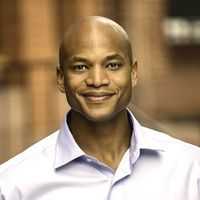
TheGovernor of the State of Maryland is an elected constitutional officer, the head of the executive branch and the highest state office inMaryland. The governor is popularly elected every four years by a plurality and is limited to two consecutive terms.[1]
Maryland has a Democratictrifecta. The Democratic Party controls the office of governor and both chambers of the state legislature.
Maryland has a Democratictriplex. The Democratic Party controls the offices of governor, secretary of state, and attorney general.
Current officeholder
The current Governor of Maryland isWes Moore (D). Moore assumed office in 2023.
Authority
Thestate Constitution addresses the office of the governor inArticle II, the Executive Department.[2]
Under Article II, Section I:
The executive power of the State shall be vested in a Governor...[2] |
Qualifications
A candidate for the governor's chair must be:[2]
- at least 30 years old
- a U.S. citizen
- a resident and registered voter in Maryland for the five years preceding the election
Elections
Maryland elects governors in the midterm elections, that is, even years that are not presidential election years. For Maryland, 2018, 2022, 2026, 2030, and 2034 are all gubernatorial election years. Legally, the gubernatorial inauguration is always set for the third Wednesday in the January following an election.
In the event of a tie, the state Senate and House of Delegates shall meet and cast ballots to choose the governor and the lieutenant governor.
Term limits
Maryland governors are restricted to two consecutive terms in office, after which they must wait one term before being eligible to run again.[2]
Maryland Constitution, Article II, Section 1
| a person who has served two consecutive popular elective terms of office as Governor shall be ineligible to succeed himself as Governor for the term immediately following the second of said two consecutive popular elective terms.[2] |
Partisan composition
The chart below shows the partisan breakdown of Maryland governors from 1992 to 2013.
Election results
See also: Maryland gubernatorial and lieutenant gubernatorial election, 2030
There are noofficial candidates yet for this election.
See also: Maryland gubernatorial and lieutenant gubernatorial election, 2026
General election
The primary will occur on June 23, 2026. The general election will occur on November 3, 2026. General election candidates will be added here following the primary.
General election for Governor of Maryland
Andy Ellis (G) is running in the general election for Governor of Maryland on November 3, 2026.
Candidate | ||
| Andy Ellis (G) | ||

| There are noincumbents in this race. | |||
 = candidate completed theBallotpedia Candidate Connection survey. = candidate completed theBallotpedia Candidate Connection survey. | ||||
| If you are a candidate and would like to tell readers and voters more about why they should vote for you,complete the Ballotpedia Candidate Connection Survey. | ||||
Do you want a spreadsheet of this type of data?Contact our sales team. | ||||
Democratic primary
Democratic primary for Governor of Maryland
IncumbentWes Moore (D) is running in the Democratic primary for Governor of Maryland on June 23, 2026.
Candidate | ||
 | Wes Moore | |
| Incumbents arebolded and underlined. | |||
| = candidate completed theBallotpedia Candidate Connection survey. | ||||
| If you are a candidate and would like to tell readers and voters more about why they should vote for you,complete the Ballotpedia Candidate Connection Survey. | ||||
Do you want a spreadsheet of this type of data?Contact our sales team. | ||||
Republican primary
Republican primary for Governor of Maryland
Dan Cox (R),Ed Hale (R), andJohn Myrick (R) are running in the Republican primary for Governor of Maryland on June 23, 2026.

| There are noincumbents in this race. | |||
| = candidate completed theBallotpedia Candidate Connection survey. | ||||
| If you are a candidate and would like to tell readers and voters more about why they should vote for you,complete the Ballotpedia Candidate Connection Survey. | ||||
Do you want a spreadsheet of this type of data?Contact our sales team. | ||||
See also: Maryland gubernatorial and lieutenant gubernatorial election, 2022
General election
General election for Governor of Maryland
The following candidates ran in the general election for Governor of Maryland on November 8, 2022.
Candidate | % | Votes | ||
| ✔ | | Wes Moore (D) | 64.5 | 1,293,944 |
 | Dan Cox (R) | 32.1 | 644,000 | |
 | David Lashar (L) | 1.5 | 30,101 | |
 | David Harding (Working Class Party) | 0.9 | 17,154 | |
 | Nancy Wallace (G) | 0.7 | 14,580 | |
 | Kyle Sefcik (Independent) (Write-in) | 0.0 | 596 | |
| Other/Write-in votes | 0.2% | 4,848 | ||
| There were noincumbents in this race. The results have been certified. Source | Total votes: 2,005,223 | ||
| = candidate completed theBallotpedia Candidate Connection survey. | ||||
| If you are a candidate and would like to tell readers and voters more about why they should vote for you,complete the Ballotpedia Candidate Connection Survey. | ||||
Do you want a spreadsheet of this type of data?Contact our sales team. | ||||
Democratic primary
Democratic primary for Governor of Maryland
The following candidates ran in the Democratic primary for Governor of Maryland on July 19, 2022.
Candidate | % | Votes | ||
| ✔ | | Wes Moore | 32.4 | 217,524 |
 | Tom Perez | 30.1 | 202,175 | |
 | Peter Franchot | 21.1 | 141,586 | |
 | Rushern Baker III(Withdrew, still on ballot) | 4.0 | 26,594 | |
 | Douglas F. Gansler | 3.8 | 25,481 | |
 | John B. King Jr. | 3.7 | 24,882 | |
 | Ashwani Jain | 2.1 | 13,784 | |
 | Jon Baron | 1.8 | 11,880 | |
 | Jerry Segal | 0.6 | 4,276 | |
 | Ralph Jaffe | 0.4 | 2,978 | |
| There were noincumbents in this race. The results have been certified. Source | Total votes: 671,160 | ||
| = candidate completed theBallotpedia Candidate Connection survey. | ||||
| If you are a candidate and would like to tell readers and voters more about why they should vote for you,complete the Ballotpedia Candidate Connection Survey. | ||||
Do you want a spreadsheet of this type of data?Contact our sales team. | ||||
Withdrawn or disqualified candidates
- Laura Neuman (D)
- Mike Rosenbaum (D)
Republican primary
Republican primary for Governor of Maryland
Dan Cox (R) defeatedKelly Schulz (R),Robin Ficker (R), andJoe Werner (R) in the Republican primary for Governor of Maryland on July 19, 2022.
Candidate | % | Votes | ||
| ✔ | | Dan Cox | 52.0 | 153,423 |
 | Kelly Schulz | 43.5 | 128,302 | |
 | Robin Ficker | 2.8 | 8,268 | |
 | Joe Werner | 1.7 | 5,075 | |
| There were noincumbents in this race. The results have been certified. Source | Total votes: 295,068 | ||
| = candidate completed theBallotpedia Candidate Connection survey. | ||||
| If you are a candidate and would like to tell readers and voters more about why they should vote for you,complete the Ballotpedia Candidate Connection Survey. | ||||
Do you want a spreadsheet of this type of data?Contact our sales team. | ||||
See also: Maryland gubernatorial and lieutenant gubernatorial election, 2018
General election
General election for Governor of Maryland
IncumbentLarry Hogan (R) defeatedBen Jealous (D),Shawn Quinn (L), andIan Schlakman (G) in the general election for Governor of Maryland on November 6, 2018.
Candidate | % | Votes | ||
| ✔ |  | Larry Hogan (R) | 55.4 | 1,275,644 |
 | Ben Jealous (D) | 43.5 | 1,002,639 | |
 | Shawn Quinn (L) | 0.6 | 13,241 | |
 | Ian Schlakman (G) | 0.5 | 11,175 | |
| Other/Write-in votes | 0.1% | 1,813 | ||
| Incumbents arebolded and underlined. The results have been certified. Source | Total votes: 2,304,5120 | ||
| = candidate completed theBallotpedia Candidate Connection survey. | ||||
| If you are a candidate and would like to tell readers and voters more about why they should vote for you,complete the Ballotpedia Candidate Connection Survey. | ||||
Do you want a spreadsheet of this type of data?Contact our sales team. | ||||
Democratic primary
Democratic primary for Governor of Maryland
The following candidates ran in the Democratic primary for Governor of Maryland on June 26, 2018.
Candidate | % | Votes | ||
| ✔ | | Ben Jealous | 40.9 | 231,895 |
| Rushern Baker III | 30.3 | 171,697 | |
| Jim Shea | 8.6 | 48,647 | ||
 | Krishanti Vignarajah | 8.5 | 48,042 | |
 | Richard Madaleno | 6.0 | 34,184 | |
| Alec Ross | 2.4 | 13,780 | ||
| Ralph Jaffe | 1.7 | 9,405 | |
| James Jones | 1.6 | 9,188 | ||
| There were noincumbents in this race. The results have been certified. | Total votes: 566,838 | ||
| = candidate completed theBallotpedia Candidate Connection survey. | ||||
| If you are a candidate and would like to tell readers and voters more about why they should vote for you,complete the Ballotpedia Candidate Connection Survey. | ||||
Do you want a spreadsheet of this type of data?Contact our sales team. | ||||
Republican primary
Republican primary for Governor of Maryland
IncumbentLarry Hogan (R) advanced from the Republican primary for Governor of Maryland on June 26, 2018.
Candidate | % | Votes | ||
| ✔ | | Larry Hogan | 100.0 | 210,935 |
| Incumbents arebolded and underlined. The results have been certified. | Total votes: 210,935 | ||
| = candidate completed theBallotpedia Candidate Connection survey. | ||||
| If you are a candidate and would like to tell readers and voters more about why they should vote for you,complete the Ballotpedia Candidate Connection Survey. | ||||
Do you want a spreadsheet of this type of data?Contact our sales team. | ||||

Vacancies

Details of vacancy appointments are addressed underArticle II, Sections 6 and 7.
Regarding the governor-elect, if that individual dies or resigns, the lieutenant governor shall become the governor for the full term. If the governor-elect fails to take office for any other reason, the lieutenant governor shall take over with the title of 'Acting Governor' only until the vacancy is permanently filled.
When the governor is temporarily unable to discharge the office, whether or not he or she is able to communicate that in writing to the lieutenant governor, the latter shall become the acting governor. Before resuming her or his duties, the governor must inform the lieutenant governor in writing of the fact.
At any time, by a three-fifths vote, the General Assembly may declare the governor, or the lieutenant governor, mentally or physically unfit to hold the office. For purposes of taking such a vote, a member of the Assembly may call both chambers into a joint session. If such a resolution concerning the governor's fitness for office is adopted, it shall be delivered to a Maryland Court of Appeals, which shall, in turn, make a decision. The same process applies to a governor-elect or a lieutenant governor-elect.
If the governor's seat becomes otherwise vacant, the lieutenant governor shall assume the office and complete the term. After the lieutenant governor, the President of the Senate is next to succeed. He or she shall, as acting governor, retain the title of 'Senate President', but the Senate shall nominate another member to execute the actual tasks of that office.
Under circumstances when the governor-elect fails to take office, theMaryland Court of Appeals has exclusive jurisdiction in settling disputes and issues that arise from that situation.
With respect to Article III, Section 26 of the Constitution, the legislature may remove and impeach the governor or the lieutenant governor.
Duties

Because of the extent of his or her constitutional powers, thegovernor of Maryland has been ranked among the most powerful governors in the United States.
The governor is the commander-in-chief of all Maryland's naval and militia forces, though he or she may not take direct command without the consent of the legislature.
With the consent of the Senate, the governor nominates and appoints all civil and military officers whose manner of appointment is not otherwise provided in law. However, under §10 and 10A, "lame duck" governors lose that privilege. Specifically, a governor who has lost a primary or a general election in a re-election bid in the span between the election he lost and the inauguration loses appointment prerogatives. The same applies to a term-limited governor in the span between Election Day and Inauguration Day. The only exception is for emergencies, which require the governor to file a statement of emergency with theMaryland Secretary of State; such appointments may be revoked by the succeeding governor.
At his or her pleasure, the governor may remove any appointee for incompetence or misconduct. Rare among governors, Maryland's chief executive may also suspend any military officer and may, further, initiate a court martial. (§ 15)
At least twice each year, the governor must, under oath, examine thetreasurer and theComptroller of Maryland, and review the state's books. (§ 18) Under § 19, the governor also gives a periodic address to the legislature on the condition of the state and makes recommendations.[2]
Other duties and privileges of the office include:
- Convening extraordinary session of the legislature, or the Senate alone, as well as moving the location of the legislature's meeting under special circumstances (§ 16)
- Vetoing all bills from the legislature, including appropriations bills, subject to a legislative override (§ 17)
- Granting pardons and reprieves, saves in cases in impeachment, and forfeiting fines, provided he follows a certain protocol for notifying lawmakers and citizens of such action (§ 20)
- Reorganizing the Executive Branch, including establishing and abolishing entire departments, offices, and agencies (§ 24)
Divisions
Note:Ballotpedia's state executive officials project researches state official websites for information that describes the divisions (if any exist) of a state executive office. That information for the Governor of Maryland has not yet been added. After extensive research we were unable to identify any relevant information on state official websites. If you have any additional information about this office for inclusion on this section and/or page, pleaseemail us.
Role in state budget
- See also:Maryland state budget and finances
The state operates on an annual budget cycle. The sequence of key events in the budget process is as follows:[3]
- Budget instructions are sent to state agencies inJune of the year preceding the start of the new fiscal year.
- State agencies submit their budget requests to thegovernor betweenAugust and October.
- The governor submits his or her proposed budget to thestate legislature on thethird Wednesday in January.
- The legislature typically adopts a budget by the83rd day of the session. A simple majority is required to pass a budget. The fiscal year beginsJuly 1.
Maryland is one of 44 states in which the governor hasline item veto authority.[3][4][5][6]
The governor is constitutionally required to submit a balanced budget proposal. Likewise, the legislature is required to adopt a balanced budget.[3]
Governor's office budget
The Office of the Governor's budget for fiscal year 2025 was $20,354,298.[7]
Compensation
The salaries of the governor and lieutenant governor are decided upon by the Governor’s Salary Commission, a seven-member commission created by a 1976 amendment inSection 21A of theMaryland Constitution. The commission includes three members appointed by the President of the Senate, and three members appointed by the Speaker of the House of Delegates. Appointees serve a four-year term.[2]
The commission may not recommend, and the legislature may not amend, the salary to be lower than that most recently received by the incumbent governor. Whatever the outcome, the decided-upon salary takes effect with the beginning of the next gubernatorial term. If either the commission or the Assembly fails to take action, the same salary already in place applies.[8]
Maryland Constitution, Article II Section 21A
| (c) Within 10 days after the commencement of the regular session of the General Assembly in 1978, and within 10 days after the commencement of the regular session of the General Assembly each fourth year thereafter, the commission shall make a written recommendation to the Governor, Lieutenant Governor, and other members of the General Assembly as to the salary of the Governor and Lieutenant Governor. (e) The commission may not recommend salaries lower than that received by the incumbent Governor at the time the recommendation is made.[2] |
2023
In 2023, the officer's salary was $184,000, according to theCouncil of State Governments.[9]
2022
In 2022, the officer's salary was $180,000, according to theCouncil of State Governments.[10]
2021
In 2021, the governor received a salary of $180,000, according to theCouncil of State Governments.[11]
2020
In 2020, the governor’s salary was increased to $170,000, according to theCouncil of State Governments.[12]
2019
In 2019, the governor’s salary was increased to $170,000, according to theCouncil of State Governments.[13]
2018
In 2018, the governor’s salary was increased to $170,000, according to theCouncil of State Governments.[14]
2017
In 2017, the governor’s salary was increased to $170,000, according to theCouncil of State Governments.[15]
2016
In 2016, the governor’s salary was increased to $170,000, according to theCouncil of State Governments.[16]
2015
In 2015, the governor received a salary was $150,000, according to theCouncil of State Governments.[17]
2014
In 2014, the governor earned a salary of $150,000, according to theCouncil of State Governments.[18]
2013
In 2013, the governor's salary remained at $150,000, according to theCouncil of State Governments.[19]
2010
In 2010, the governor was paid$150,000 a year, the 11th highest gubernatorial salary in America.
Gubernatorial residence
Pursuant to Section 20, Maryland is one of the few states where the state's Constitution actually requires that the sitting governor reside at the official residence.
Historical officeholders
There have been 63 Governors of Maryland since 1777. Of the 63 officeholders, 10 were Republican and 36 were Democratic at one time.[20]
| List of officeholders from 1777-present | |||||
|---|---|---|---|---|---|
| # | Name | Tenure | Party | ||
| 1 | Thomas Johnson | 1777 - 1779 | Federalist | ||
| 2 | Thomas Sim Lee | 1779 - 1782 | Federalist | ||
| 3 | William Paca | 1782 - 1785 | Anti-Federalist | ||
| 4 | William Smallwood | 1785 - 1788 | Unknown | ||
| 5 | John Eager Howard | 1788 - 1791 | Federalist | ||
| 6 | George Plater | 1791 - 1792 | Federalist | ||
| James Brice | 1792 | Federalist | |||
| 2 | Thomas Sim Lee | 1792 - 1794 | Federalist | ||
| 7 | John Hoskins Stone | 1794 - 1797 | Federalist | ||
| 8 | John Henry | 1797 - 1798 |  Democratic Democratic | ||
| 9 | Benjamin Ogle | 1798 - 1801 | Federalist | ||
| 10 | John Francis Mercer | 1801 - 1803 | Democratic-Republican | ||
| 11 | Robert Bowie | 1803 - 1806 | Democratic-Republican | ||
| 12 | Robert Wright | 1806 - 1809 | Democratic | ||
| 13 | Edward Lloyd | 1809 - 1811 | Democratic-Republican | ||
| 11 | Robert Bowie | 1811 - 1812 | Democratic-Republican | ||
| 14 | Levin Winder | 1812 - 1816 | Federalist | ||
| 15 | Charles Carnan Ridgely | 1816 - 1819 | Federalist | ||
| 16 | Charles Goldsborough | 1819 | Federalist | ||
| 17 | Samuel Sprigg | 1819 - 1822 | Democratic, Whig | ||
| 18 | Samuel Stevens | 1822 - 1826 | Democratic | ||
| 19 | Joseph Kent | 1826 - 1829 |  Republican Republican | ||
| 20 | Daniel Martin | 1829 - 1830 | Whig | ||
| 21 | Thomas King Carroll | 1830 - 1831 | Democratic | ||
| 20 | Daniel Martin | 1831 | Whig | ||
| 22 | George Howard | 1831 - 1833 | Whig | ||
| 23 | James Thomas | 1833 - 1836 | Whig | ||
| 24 | Thomas Ward Veazey | 1836 - 1839 | Whig | ||
| 25 | William Grason | 1839 - 1842 | Federalist; anti-Jackson Democrat by 1828 | ||
| 26 | Francis Thomas | 1842 - 1845 | Democratic; Unionist;Republican | ||
| 27 | Thomas George Pratt | 1845 - 1848 | Whig;Democratic | ||
| 28 | Phillip Francis Thomas | 1848 - 1851 | Democratic | ||
| 29 | Enoch Louis Lowe | 1851 - 1854 | Democratic | ||
| 30 | Thomas Watkins Ligon | 1854 - 1858 | Democratic | ||
| 31 | Thomas Holliday Hicks | 1858 - 1862 | Know-Nothing Party | ||
| 32 | Augustus Williamson Bradford | 1862 - 1866 | Whig; Unionist;Democratic | ||
| 33 | Thomas Swann | 1866 - 1869 | American; Unionist;Republican | ||
| 34 | Oden Bowie | 1869 - 1872 | Democratic | ||
| 35 | William Pinkney Whyte | 1872 - 1874 | Democratic | ||
| 36 | James Black Groome | 1874 - 1876 | Democratic | ||
| 37 | John Lee Carroll | 1876 - 1880 | Democratic | ||
| 38 | William Thomas Hamilton | 1880 - 1884 | Democratic | ||
| 39 | Robert Milligan McLane | 1884 - 1885 | Democratic | ||
| 40 | Henry Lloyd | 1885 - 1888 | Democratic | ||
| 41 | Elihu Emory Jackson | 1888 - 1892 | Democratic | ||
| 42 | Frank Brown | 1892 - 1896 | Democratic | ||
| 43 | Lloyd Lowndes | 1896 - 1900 | Republican | ||
| 44 | John Walter Smith | 1900 - 1904 | Democratic | ||
| 45 | Edwin Warfield | 1904 - 1908 | Democratic | ||
| 46 | Austin Lane Crothers | 1908 - 1912 | Democratic | ||
| 47 | Phillips Lee Goldsborough | 1912 - 1916 | Republican | ||
| 48 | Emerson Columbus Harrington | 1916 - 1920 | Democratic | ||
| 49 | Albert Cabell Ritchie | 1920 - 1935 | Democratic | ||
| 50 | Harry Whinna Nice | 1935 - 1939 | Republican | ||
| 51 | Herbert Romulus O'Conor | 1939 - 1947 | Democratic | ||
| 52 | William Preston Lane | 1947 - 1951 | Democratic | ||
| 53 | Theodore Roosevelt McKeldin | 1951 - 1959 | Republican | ||
| 54 | J. Millard Tawes | 1959 - 1967 | Democratic | ||
| 55 | Spiro Theodore Agnew | 1967 - 1969 | Republican | ||
| 56 | Marvin Mandel | 1969 - 1979 | Democratic | ||
| Blair Lee | 1977 - 1979 | Democratic | |||
| 57 | Harry Roe Hughes | 1979 - 1987 | Democratic | ||
| 58 | William Donald Schaefer | 1987 - 1995 | Democratic | ||
| 59 | Parris N. Glendening | 1995 - 2003 | Democratic | ||
| 60 | Robert L. Ehrlich, Jr. | 2003 - 2007 | Republican | ||
| 61 | Martin O'Malley | 2007 - 2015 | Democratic | ||
| 62 | Larry Hogan | 2015-2023 | Republican | ||
| 63 | Wes Moore | 2023-Present | Democratic | ||
History
Partisan balance 1992-2013


From 1992 to 2013, in Maryland there were Democratic governors in office for 18 years while there were Republican governors in office for four years, including the last seven. Maryland is one of seven states that were run by a Democratic governor for more than 80 percent of the years between 1992-2013. Maryland was under Democratictrifectas for the last seven years of the study period.
Across the country, there were 493 years of Democratic governors (44.82%) and 586 years of Republican governors (53.27%) from 1992 to 2013.
Over the course of the 22-year study, state governments became increasingly more partisan. At the outset of the study period (1992), 18 of the 49 states with partisan legislatures had single-party trifectas and 31 states had divided governments. In 2013, only 13 states had divided governments, while single-party trifectas held sway in 36 states, the most in the 22 years studied.
The chart below shows the partisan composition of theOffice of the Governor of Maryland, theMaryland State Senate and theMaryland House of Delegates from 1992 to 2013.
.PNG)
SQLI and partisanship
The chart below depicts the partisanship of the Maryland state government and the state's SQLI ranking for the years studied. For the SQLI, the states were ranked from 1-50, with 1 being the best and 50 the worst. Maryland experienced two long periods of Democratic trifectas, between 1992 and 2002 and again between 2007 and 2013. The state cracked the top-10 in the SQLI ranking in three separate years (2002, 2006, and 2008), twice under a Democratic trifecta and once under divided government. Maryland ranked lowest on the SQLI ranking in two separate years (1992 and 1995), in which the state placed 25th under a Democratic trifecta. Maryland has never had a Republican trifecta.
- SQLI average with Democratic trifecta: 16.35
- SQLI average with Republican trifecta: N/A
- SQLI average with divided government: 10.75

State profile
| Demographic data for Maryland | ||
|---|---|---|
| Maryland | U.S. | |
| Total population: | 5,994,983 | 316,515,021 |
| Land area (sq mi): | 9,707 | 3,531,905 |
| Race and ethnicity** | ||
| White: | 57.6% | 73.6% |
| Black/African American: | 29.5% | 12.6% |
| Asian: | 6% | 5.1% |
| Native American: | 0.3% | 0.8% |
| Pacific Islander: | 0% | 0.2% |
| Two or more: | 3% | 3% |
| Hispanic/Latino: | 9% | 17.1% |
| Education | ||
| High school graduation rate: | 89.4% | 86.7% |
| College graduation rate: | 37.9% | 29.8% |
| Income | ||
| Median household income: | $74,551 | $53,889 |
| Persons below poverty level: | 10.7% | 11.3% |
| Source:U.S. Census Bureau, "American Community Survey" (5-year estimates 2010-2015) Clickhere for more information on the 2020 census andhere for more on its impact on the redistricting process in Maryland. **Note: Percentages for race and ethnicity may add up to more than 100 percent because respondents may report more than one race and the Hispanic/Latino ethnicity may be selected in conjunction with any race. Read more about race and ethnicity in the censushere. | ||
Presidential voting pattern
Marylandvoted for the Democratic candidate in all seven presidential elections between 2000 and 2024.
More Maryland coverage on Ballotpedia
- Elections in Maryland
- United States congressional delegations from Maryland
- Public policy in Maryland
- Endorsers in Maryland
- Maryland fact checks
- More...
Contact information
100 State Circle
Annapolis, Maryland 21401
Phone:(410) 974-3901
Toll Free:1-800-811-8336
See also
External links
Footnotes
- ↑Office of the Maryland Governor, "Governor of Larry Hogan," accessed January 18, 2021
- ↑2.02.12.22.32.42.52.62.7Maryland Manual On-Line, "Constitution of Maryland," accessed January 18, 2021
- ↑3.03.13.2National Association of State Budget Officers, "Budget Processes in the States, Spring 2021," accessed January 24, 2023
- ↑National Conference of State Legislatures, "Separation of Powers: Executive Veto Powers," accessed January 26, 2024
- ↑Maryland Secretary of State, "Ballot Question Summaries," accessed January 26, 2024
- ↑Maryland State Board of Elections, "Official 2020 Presidential General Election results for All State Questions," accessed January 26, 2024
- ↑Maryland General Assembly, "Senate Bill 360," accessed January 17, 2025
- ↑Report of the Governor’s Salary Commission, "Governor’s Salary Commission," January 2014
- ↑Council of State Governments, "Book of the States 2023 Table 4.11: Selected State Administrative Officials: Annual Salaries," accessed January 15, 2025
- ↑Council of State Governments, "Book of the States 2022 Table 4.11: Selected State Administrative Officials: Annual Salaries," provided to Ballotpedia by CSG personnel
- ↑Issuu, "The Book of the States 2021," accessed September 22, 2022
- ↑Council of State Governments, "Selected State Administrative Officials: Annual Salaries, 2020," accessed January 18, 2021
- ↑Council of State Governments, "Selected State Administrative Officials: Annual Salaries, 2019," accessed January 18, 2021
- ↑Council of State Governments, "Selected State Administrative Officials: Annual Salaries, 2018," accessed January 18, 2021
- ↑Council of State Governments, "Selected State Administrative Officials: Annual Salaries, 2017," accessed January 18, 2021
- ↑Council of State Governments, "Selected State Administrative Officials: Annual Salaries, 2016," accessed August 27, 2016
- ↑Council of State Governments, "Selected State Administrative Officials: Annual Salaries, 2015," accessed August 27, 2016
- ↑Council of State Governments, "Selected State Administrative Officials: Annual Salaries," accessed November 25, 2014
- ↑Council of State Governments, "CSG Releases 2013 Governor Salaries," June 25, 2013
- ↑National Governors Association, "Former Maryland Governors," accessed January 18, 2021


