

Free Enterprise Fund v. Public Company Accounting Oversight Board
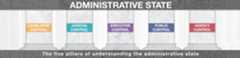
- The Administrative State
- Administrative State Index
- Ballotpedia's Five Pillars
- Educational opportunities related to the administrative state
- The Checks and Balances Newsletter
- January 2026
- December 2025
- November 2025
- October 2025
- September 2025
- August 2025
- July 2025
- June 2025
- May 2025
- April 2025
- March 2025
- February 2025
- January 2025
- December 2024
- November 2024
- October 2024
- September 2024
- August 2024
- July 2024
- June 2024
- May 2024
- April 2024
- March 2024
- February 2024
- January 2024
- December 2023
- November 2023
- October 2023
- September 2023
- August 2023
- July 2023
- June 2023
- May 2023
- April 2023
- March 2023
- February 2023
- January 2023
- December 2022
- November 2022
- October 2022
- September 2022
- August 2022
- July 2022
- June 2022
- May 2022
- April 2022
- March 2022
- February 2022
- January 2022
- December 2021
- November 2021
- October 2021
- September 2021
- August 2021
- July 2021
- June 2021
- May 2021
- April 2021
- March 2021
- February 2021
- January 2021
- December 2020
- November 2020
- October 2020
- September 2020
- August 2020
- July 2020
- June 2020
- May 2020
- April 2020
- March 2020
- February 2020
- January 2020
- December 2019
- November 2019
- October 2019
- September 2019
- August 2019
- July 2019
- June 2019
- May 2019
- April 2019
- March 2019
- February 2019
- January 2019
- December 2018
- November 2018
- October 2018
- September 2018
- August 2018
- July 2018
- June 2018
- May 2018
- April 2018
- Tracking
- Terms and definitions
- Glossary of administrative state terms
- Deference
- Rulemaking
- Formal rulemaking
- Informal rulemaking
- Hybrid rulemaking
- Proposed rule
- Final rule
- Comment period
- Ex parte communications
- Judicial review
- Nondelegation doctrine
- Adjudication
- Administrative law judge
- Due process
- Federalism
- Guidance
- Executive agency
- Independent federal agency
- More terms and definitions
- Laws and statutes
- Executive orders
- Jimmy Carter
- Ronald Reagan
- Bill Clinton
- George W. Bush
- Barack Obama
- Donald Trump (first term)
- Presidential Executive Order 13765 (Donald Trump, 2017)
- Presidential Executive Order 13771 (Donald Trump, 2017)
- Presidential Executive Order 13772 (Donald Trump, 2017)
- Presidential Executive Order 13777 (Donald Trump, 2017)
- Presidential Executive Order 13781 (Donald Trump, 2017)
- Presidential Executive Order 13783 (Donald Trump, 2017)
- Presidential Executive Order 13789 (Donald Trump, 2017)
- Presidential Executive Order 13836 (Donald Trump, 2018)
- Presidential Executive Order 13837 (Donald Trump, 2018)
- Presidential Executive Order 13839 (Donald Trump, 2018)
- Presidential Executive Order 13843 (Donald Trump, 2018)
- Joseph Biden
- Donald Trump (second term)
- Executive Order: Exclusions From Federal Labor-Management Relations Programs (Donald Trump, 2025)
- Executive Order: Stopping Waste, Fraud, and Abuse by Eliminating Information Silos (Donald Trump, 2025)
- Executive Order: Eliminating Waste and Saving Taxpayer Dollars by Consolidating Procurement (Donald Trump, 2025)
- Executive Order: Continuing the Reduction of the Federal Bureaucracy (Donald Trump, 2025)
- Executive Order: Implementing the President's "Department of Government Efficiency" Cost Efficiency Initiative (Donald Trump, 2025)
- Executive Order: Ensuring Lawful Governance and Implementing the President's "Department of Government Efficiency" Deregulatory Initiative (Donald Trump, 2025)
- Executive Order: Commencing the Reduction of the Federal Bureaucracy (Donald Trump, 2025)
- Executive Order: Ensuring Accountability for All Agencies (Donald Trump, 2025)
- Executive Order: Implementing The President’s “Department of Government Efficiency” Workforce Optimization Initiative (Donald Trump, 2025)
- Executive Order: Unleashing Prosperity Through Deregulation (Donald Trump, 2025)
- Executive Order: Eliminating the Federal Executive Institute (Donald Trump, 2025)
- Executive Order: Council To Assess The Federal Emergency Management Agency (Donald Trump, 2025)
- Executive Order: Ending Radical And Wasteful Government DEI Programs And Preferencing (Donald Trump, 2025)
- Executive Order: Reforming The Federal Hiring Process And Restoring Merit To Government Service (Donald Trump, 2025)
- Executive Order: Establishing And Implementing The President’s “Department Of Government Efficiency” (Donald Trump, 2025)
- Executive Order: Restoring Accountability to Policy-Influencing Positions Within the Federal Workforce (Donald Trump, 2025)
- More executive orders
- Agencies
- Executive departments
- Dept. of State
- Dept. of Defense
- Dept. of Justice
- Dept. of the Treasury
- Dept. of Homeland Security
- Dept. of Education
- Dept. of Health and Human Services
- Dept. of Labor
- Dept. of Veterans Affairs
- Dept. of Transportation
- Dept. of Energy
- Dept. of Housing and Urban Development
- Dept. of the Interior
- Dept. of Agriculture
- Dept. of Commerce
- Executive agencies
- Independent agencies
- Executive departments
- Court cases
- Administrative state legislation tracker
- Research
 | |
| Free Enterprise Fund et al. v. Public Company Accounting Oversight Board et al. | |
| Term: 2009 | |
| Important Dates | |
| Argument: December 7, 2009 Decided: June 28, 2010 | |
| Outcome | |
| D.C. Circuit affirmed in part, reversed in part and remanded | |
| Majority | |
| Chief Justice John G. Roberts •Clarence Thomas •Anthony Kennedy •Samuel Alito •Antonin Scalia | |
| Dissenting | |
| Stephen Breyer •Sonia Sotomayor •Ruth Bader Ginsburg •John Paul Stevens | |
Free Enterprise Fund et al. v. Public Company Accounting Oversight Board et al. was aUnited States Supreme Court case that said the for-cause limitation on the removal of members of a board was an unconstitutional violation of theseparation of powers. The case was argued on December 7, 2009, as part of the Supreme Court's October 2009 term. The case came on awrit ofcertiorari to theUnited States Court of Appeals for the District of Columbia Circuit.[1]
Why it matters: The Supreme Court's ruling inFree Enterprise Fund v. Public Company Accounting Oversight Board set a limit on the ability of Congress to create agencies insulated from presidential control.[1][2]
You can review thelower court's opinionhere.[3]
Background
| Administrative State |
|---|
 |
| Five Pillars of the Administrative State |
| •Judicial deference •Nondelegation •Executive control •Procedural rights •Agency dynamics |
| Click here for more coverage of theadministrative state on Ballotpedia |
What is separation of powers?
Separation of powers refers to a system of government that distributes the powers and functions of government among separate and independent entities. In the United States, the federal government is divided into three branches: executive, legislative and judicial. TheUnited States Constitution assigns each of these branches distinct powers and responsibilities. The separation of powers is sometimes referred to as a system of checks and balances because the Constitution provides each branch with certain powers over the other two branches.[4][5][6][7][8]
Case background
The Sarbanes-Oxley Act of 2002, passed after the accounting scandals at Enron and other companies, created the Public Company Accounting Oversight Board (PCAOB) to regulate firms that audit public companies. The PCAOB was a five-member board appointed and removable by a majority vote of theSecurities and Exchange Commission (SEC). Congress intentionally tried to reduce the amount of political influence over the PCAOB, which led to the dispute. PCAOB members were only removable for cause after a vote of the SEC and the operations of the PCAOB were also largely independent of SEC oversight. The Free Enterprise Fund and Beckstead and Watts were firms subject to the PCAOB's authority and they sued to challenge the structure of the board.[9]
Both the district court and D.C. Circuit Court of Appeals ruled in favor of the PCAOB.[10]
Panel opinion
TheUnited States Court of Appeals for the District of Columbia Circuit affirmed the district court. The court held that Title I of the Sarbanes-Oxley Act of 2002 did not violate theAppointments Clause of the U.S. Constitution or theseparation of powers. The ruling said that the Public Company Accounting Oversight Board (PCAOB) was under total control of theSecurities and Exchange Commission, which gives presidents an acceptable amount of authority.[3]
| “ | In appellants' view this statutory scheme vests Board members "with far reaching executive power while completely stripping the President of the authority to appoint or remove those members or otherwise supervise or control their exercise of that power." But their facial challenge ignores the entirety of the statutory scheme and runs afoul of the Supreme Court's instruction regarding the nature of the President's constitutional relationship with independent administrative agencies. Supreme Court precedent as we have it does not support appellants' singular focus on removal powers as the be-all and end-all of Executive authority, but rather compels a more nuanced approach that examines the myriad means of Executive control.
| ” |
Petitioner's challenge
Thepetitioner, Free Enterprise Fund, challenged the holding of theUnited States Court of Appeals for the District of Columbia Circuit arguing that the Public Company Accounting Oversight Board (PCAOB) wielded broad regulatory and enforcement authority without presidential oversight. Moreover, the petition claimed that the DC Circuit opinion contradictedprecedent regarding separation of powers and Appointments Clause cases.[10]
Certiorari granted
On January 5, 2009, thepetitioner initiated proceedings in theSupreme Court of the United States in filing a petition for awrit ofcertiorari to theUnited States Court of Appeals for the District of Columbia Circuit.[13]
TheU.S. Supreme Court granted the petitioner's request for certiorari on May 18, 2009. The case was argued on December 7, 2009.[2]
Questions presented
| Questions presented: "1) Does the Sarbanes-Oxley Act violate the separation of powers doctrine by giving broad powers to the Board while simultaneously preventing the President of the power to appoint or remove Board members? 2) Did the court of appeals correctly hold that the Board members were inferior officers under the direct supervision of the SEC even though the SEC cannot supervise those members individually and can only remove them for just cause? 3) Does the Sarbanes-Oxley Act violate the Appointments Clause even if the Board's members are inferior because the SEC is not an official department or because the commissioners are not the head of the SEC?"[2] |
Audio
- You can find audio of the oral argumenthere.
Transcript
- Transcript of oral argument:[14]
Decision
The Supreme Court held 5-4 to partly affirm, partly reverse and remand the decision of theUnited States Court of Appeals for the District of Columbia Circuit. The majority opinion was written by Chief JusticeJohn G. Roberts and joined by JusticesAntonin Scalia,Anthony Kennedy,Clarence Thomas andSamuel Alito. JusticeStephen Breyer, joined by JusticesRuth Bader Ginsburg,Sonia Sotomayor andJohn Paul Stevens filed an opinion dissenting in the judgment.[1]
Opinions
Opinion of the court
- See also:Lucia v. SEC
The majority held that the five members of the PCAOB were inferior officers of the United States who exercise significant authority under the laws. Those officers were not removable by the SEC at will and the SEC members themselves were not removable at will by the president. The Court ruled that the double-layer of tenure protection between members of the PCAOB and the president amounted to an unconstitutional violation ofseparation of powers. CitingArticle II of the U.S. Constitution, the Court said:[1]
| “ | Where this Court has upheld limited restrictions on the President’s removal power, only one level of protected tenure separated the President from an officer exercising executive power. The President—or a subordinate he could remove at will—decided whether the officer’s conduct merited removal under the good-cause standard. Here, the Act not only protects Board members from removal except for good cause, but withdraws from the President any decision on whether that good cause exists. That decision is vested in other tenured officers—the Commissioners—who are not subject to the President’s direct control. Because the Commission cannot remove a Board member at will, the President cannot hold the Commission fully accountable for the Board’s conduct. He can only review the Commissioner’s determination of whether the Act’s rigorous good-cause standard is met. And if the President disagrees with that determination, he is powerless to intervene—unless the determination is so unreasonable as to constitute “ ‘inefficiency, neglect of duty, or malfeasance in office.’”
| ” |
Moving from the structure of the PCAOB to the way members were appointed, the majority held that their appointment method was consistent with the Constitution because the first part of the ruling makes Board members removable by the SEC at will. The Court also ruled that the multi-member body that composed the SEC was in effect the head of the department, which satisfied the remaining question about the way PCAOB members were appointed.[1]
Dissenting opinions
JusticeStephen Breyer, joined by JusticesRuth Bader Ginsburg,Sonia Sotomayor, andJohn Paul Stevens filed an opinion dissenting from the judgment. Breyer agreed with the majority that the members of the PCAOB were inferior officers, but he did not think the Sarbanes-Oxley Act interfered with the executive power in an unconstitutional way. He was also concerned that the majority opinion would "disrupt severely the fair and efficient administration of the laws." He reasoned:[1][2]
| “ | The upshot is that today vast numbers of statutes governing vast numbers of subjects, concerned with vast numbers of different problems, provide for, or foresee, their execution or administration through the work of administrators organized within many different kinds of administrative structures, exercising different kinds of administrative authority, to achieve their legislatively mandated objectives. And, given the nature of the Government’s work, it is not surprising that administrative units come in many different shapes and sizes.
| ” |
Text of the opinion
See also


Footnotes
- ↑1.01.11.21.31.41.51.61.71.8United States Supreme Court, "Free Enterprise Fund et al. v. Public Company Accounting Oversight Board Opinion," June 28, 2010
- ↑2.02.12.22.32.4Oyez, "Free Enterprise Fund v. Public Company Oversight Board," accessed August 23, 2018
- ↑3.03.13.2United States Court of Appeals for the District of Columbia, "Free Enterprise Fund and Beckstead and Watts, LLP v. Public Company Accounting Oversight Board et al." Opinion, August 22, 2008
- ↑Legal Information Institute, "Separation of powers," accessed September 20, 2017
- ↑National Conference of State Legislatures, "Separation of Powers - An Overview," accessed September 21, 2017
- ↑Stanford Encyclopedia of Philosophy, "Baron de Montesquieu, Charles-Louis de Secondat," April 2, 2014
- ↑US Legal, "Separation of Powers Law and Legal Definition," accessed September 20, 2017
- ↑Dictionary.com, "Separation of powers," accessed September 25, 2017
- ↑Cite error: Invalid
<ref>tag; no text was provided for refs namedpetition - ↑10.010.1Supreme Court of the United States, "Petition for a Writ of Certiorari," January 5, 2009
- ↑Internal citations and quotations have been omitted.
- ↑12.012.112.2Note: This text is quoted verbatim from the original source. Any inconsistencies are attributable to the original source.
- ↑SCOTUSblog, "Free Enterprise Fund and Beckstead and Watts, LLP v. Public Company Accounting Oversight Board," accessed August 23, 2018
- ↑Supreme Court of the United States,Free Enterprise Fund and Beckstead and Watts, LLP v. Public Company Accounting Oversight Board, argued December 7, 2009
- ↑Internal citations and quotations have been omitted.
- ↑Internal citations and quotations have been omitted.

| ||||||||||||||||||||||||||||

- TASP GA
- United States Supreme Court
- Court cases related to the administrative state
- Noteworthy cases, federal cases
- Noteworthy cases, SCOTUS
- Noteworthy cases, Securities and Exchange Commission
- Noteworthy cases, governmental powers cases
- Noteworthy cases, upholding or expanding presidential control over agency officials


