

Charlotte, North Carolina

| Charlotte, North Carolina | |
 | |
| General information | |
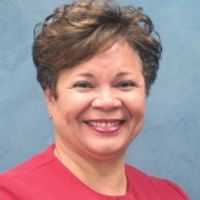
Mayor of Charlotte Vi Alexander Lyles | |
| Last mayoral election: | 2025 |
| Next mayoral election: | 2027 |
| Last city council election: | 2025 |
| Next city council election: | 2027 |
| City council seats: | 12[1] |
| City website | |
| Composition data | |
| Population: | 874,579 |
| Race: | White 41.7% African American 33.1% Asian 7.1% Native American 0.6% Pacific Islander 0.1% Multiple 7.9% |
| Ethnicity: | Hispanic or Latino origin 16.3% |
| Median household income: | $78,438 |
| High school graduation rate: | 89.6% |
| College graduation rate: | 47.4% |
| Source: U.S. Census Bureau,2020 census and2023 ACS data. Percentages are rounded to the nearest 0.1%. | |
| Related Charlotte offices | |
| North Carolina Congressional Delegation North Carolina State Legislature North Carolina state executive offices | |
Charlotte is a city inMecklenburg County, North Carolina. The city's population was 874,579 as of 2020, according to theUnited States Census Bureau.
Click on the links below to learn more about the city's...
- Mayor
- City council
- Other elected officials
- Elections
- Census information
- Budget
- Contact information
- Ballot measures
- County government
City government
- See also:Council-manager government
Since 1929, the city of Charlotte has utilized a council-manager system. In this form of municipal government, an elected city council, which includes the mayor and serves as the city's primary legislative body, appoints an executive called a city manager to oversee day-to-day municipal operations and implement the council's policy and legislative initiatives.[2]
Mayor
The mayor is a member of the city council. He or she presides over city council meetings and official city ceremonies. The mayor also represents the city at the state, national, and international levels.[2] The current Mayor of Charlotte isVi Alexander Lyles (D). Lyles assumed office in 2017.
City manager
The city manager is the city's chief operating officer. The responsibilities of the city manager include overseeing the city's day-to-day operations, planning and implementing the city's operating budget, carrying out council policies, and hiring most city government employees.[2][3]
City council
The Charlotte City Council is the city's primary legislative body. It is responsible for approving and adopting the city budget, levying taxes, appointing the city manager and other city officials, and making or amending city laws, policies, and ordinances.[2]
The city council is made up of 12 members, including the mayor. While the mayor and four members are elected at large, the other seven members are elected by one of the city's seven districts.[2]
The widget below automatically displays information about city council meetings. The topic list contains a sampling of keywords thatVoterheads, a local government monitoring service, found in each meeting agenda. Click the meeting link to see more info and the full agenda:
Other elected officials
Ballotpedia does not cover any additional city officials in Charlotte, North Carolina.
Mayoral partisanship
Charlotte has a Democratic mayor. As of February 2026, 67 mayors in thelargest 100 cities by population are affiliated with theDemocratic Party, 22 are affiliated with theRepublican Party, one is affiliated with theLibertarian Party, three are independents, five identify as nonpartisan or unaffiliated, and two mayors' affiliations are unknown.Click here for a list of the 100 largest cities' mayors and their partisan affiliations.
Mayoral elections are officially nonpartisan in most of the nation's largest cities. However, many officeholders are affiliated with political parties. Ballotpedia uses one or more of the following sources to identify each officeholder's partisan affiliation: (1) direct communication from the officeholder, (2) current or previous candidacy for partisan office, or (3) identification of partisan affiliation by multiple media outlets.
Elections
2025
The city ofCharlotte, North Carolina, held general elections for mayor and city council on November 4, 2025. A primary was scheduled for September 9, 2025. A primary runoff was scheduled for October 7, 2025. The filing deadline for this election was July 18, 2025.
2023
The city ofCharlotte, North Carolina, held general elections for mayor and city council on November 7, 2023. A primary was scheduled for September 12, 2023. A primary runoff was scheduled for October 10, 2023. The filing deadline for this election was July 21, 2023.
2022
The city ofCharlotte, North Carolina, held general elections for mayor and city council on July 26, 2022. A primary was scheduled for May 17, 2022. The filing deadline for this election was March 4, 2022.
The offices were originally scheduled to be on the ballot in 2021. They were moved to 2022 due to redistricting delays.[4][5]
On Dec. 8, 2021, the Supreme Court of North Carolina ordered that the state's 2022 primary election be postponed from March 8 to May 17. The postponement applied to all primaries originally scheduled for March 8, 2022. The court suspended candidate filing, which had been scheduled to close on Dec. 17. The court issued the order in response to two separate lawsuits challenging North Carolina's newly enacted congressional and state legislative district plans. The court cited "great public interest in the subject matter of these cases, the importance of the issues to the constitutional jurisprudence of this State, and the need for urgency in reaching a final resolution on the merits" as its rationale for ordering the postponement.[6]
2019
2017
The city ofCharlotte, North Carolina, held elections for mayor and city council on November 7, 2017. A primary was held on September 12, 2017. A primary runoff was held on October 10, 2017, for the district 5 race. A candidate needed to receive over 40% of the vote in order to avoid a runoff election. All 11 seats on the city council were up for election. The filing deadline for candidates who wished to run in this election was July 21, 2017.
2015
The city ofCharlotte, North Carolina, held elections formayor and city council onNovember 3, 2015. A primary took place on September 15, 2015. A primary runoff took place on October 6, 2015. The filing deadline for candidates who wished to run in this election was July 17, 2015. All 11 city council seats were up for election.
Census information
The table below shows demographic information about the city.
| Demographic Data for Charlotte | |
|---|---|
| Charlotte | |
| Population | 874,579 |
| Land area (sq mi) | 310 |
| Race and ethnicity** | |
| White | 41.5% |
| Black/African American | 34.1% |
| Asian | 6.4% |
| Native American | 0.4% |
| Pacific Islander | 0.3% |
| Other (single race) | 8.8% |
| Multiple | 8.9% |
| Hispanic/Latino | 17% |
| Education | |
| High school graduation rate | 89.6% |
| College graduation rate | 47.4% |
| Income | |
| Median household income | $78,438 |
| Persons below poverty level | 11.7% |
| Source: population provided by U.S. Census Bureau,"Decennial Census" (2020). Other figures provided by U.S. Census Bureau,"American Community Survey" (5-year estimates 2018-2023). | |
| **Note: Percentages for race and ethnicity may add up to more than 100 percent because respondents may report more than one race and the Hispanic/Latino ethnicity may be selected in conjunction with any race. Read more about race and ethnicity in the censushere. | |
Budget
The city's budget process operates by fiscal years running from July 1 through June 30 of the next year. The city manager is responsible for proposing the budget to the city council. The city council will hold public hearings to allow for public input in the budget process. The city council then reviews and adopts the budget.[7]
Fiscally standardized cities data
The fiscally standardized cities (FiSC) data below was compiled by theLincoln Institute of Land Policy to make municipal budgets comparable across cities in the United States.[8]
| “ | FiSCs are constructed by adding revenues and expenditures of each central city municipal government to a portion of the revenues and expenditures of overlying governments, including counties, independent school districts, and special districts. The allocations to FiSCs are estimates of the revenues collected from and services provided to central city residents and businesses by these overlying independent governments. Thus FiSCs provides a full picture of revenues raised from city residents and businesses and spending on their behalf, whether done by the city government or a separate overlying government.[9] | ” |
| —Lincoln Institute of Land Policy[10] | ||
The tables below show estimated finances within city limits. As such, the revenue and expenses listed may differ from the actual city budget.
|
| ||||||||||||||||||||||||||||||||||||||||||||||||||
Historical total revenue and expenditure
To see the historical total revenue or expenditures as a rounded amount in this city, hover over the bars.[8]
Charlotte, North Carolina, salaries and pensions over $95,000
Below is a map of the nationwide salaries and pensions in this city over $95,000. To search a different ZIP code, enter it in the search bar within the map.
Contact information
Mayor's office
600 E. Fourth St.
Charlotte, NC 28202
Phone: 704-336-2241
City Clerk's office
600 E. Fourth St., 7th floor
Charlotte, NC 28202
Phone: 704-336-2248
Clickhere for city council contact information.
Ballot measures
Charlotte is inMecklenburg County. A list of ballot measures in Mecklenburg County is availablehere.
Noteworthy events
2020: Events and activity following the death of George Floyd
During the weekend of May 29-31, 2020, demonstrations and protests took place in cities nationwide, including Charlotte, following the death of George Floyd. Events inCharlotte, North Carolina, began on Friday, May 29, 2020, at the Charlotte-Mecklenburg Metro police station.[11] On May 31, Gov.Roy Cooper (D) announced he was deploying the North Carolina National Guard to Charlotte. The city of Charlotte disputed the governor's announcement, tweeting, "The National Guard has been in [Charlotte] assisting with COVID-19 response. There are no plans at this time to deploy the National Guard in response to demonstrations."[12] No curfews were issued.
2015: Study on city's nondiscrimination laws
In July 2015, theMovement Advancement Project described Charlotte, North Carolina, as a city or county that did not prohibit discrimination in employment on the basis of sexual orientation or gender identity via ordinances that apply to public and private employers. At that time, a total of71 ofAmerica's largest 100 cities prohibited private employers from discriminating on the basis of sexual orientation, while69 of those cities also prohibited discrimination based on gender identity. This did not include those jurisdictions that prohibited discrimination based on sexual orientation or gender identity for government employees.[13]
Nondiscrimination laws can cover a variety of areas, including public employment, private employment, housing, and public accommodations. Such laws may be enacted at the state, county, or city level.
See also
- Cities in North Carolina
- Mecklenburg County, North Carolina
- Largest cities in the United States by population
External links
Footnotes
- ↑The mayor is included in this number as one of the city council members.
- ↑2.02.12.22.32.4City of Charlotte, "About Charlotte City Council," accessed August 26, 2014
- ↑City of Charlotte, "Office of the City Manager," accessed September 9, 2021
- ↑North Carolina Legislature, "Senate Bill 722," accessed July 7, 2021
- ↑Mecklenburg County, "Election Information," accessed July 7, 2021
- ↑Reuters, "North Carolina Supreme Court delays primary elections until May 2022," December 9, 2021
- ↑City of Charlotte, "Budget Development," accessed August 23, 2023
- ↑8.08.1Lincoln Institute of Land Policy, "Fiscally Standardized Cities database," accessed August 23, 2023
- ↑Note: This text is quoted verbatim from the original source. Any inconsistencies are attributable to the original source.
- ↑Lincoln Institute of Land Policy, "Fiscally Standardized Cities," accessed August 23, 2023
- ↑ABC 11, "Charlotte city councilman among several arrested after George Floyd protest turns violent," May 30, 2020
- ↑WSOC-TV, "Protesters, police clash in uptown during 4th night of protests in Charlotte," June 2, 2020
- ↑Movement Advancement Project, "Local Employment Non-Discrimination Ordinances," accessed July 7, 2015
| |||||||||||||||||


