

California Controller election, 2022
- Congress elections
- State elections
- Local elections
- Voter information
2026→ ←2018 |
| California Controller |
|---|
 |
| Election details |
| Filing deadline: March 11, 2022 |
| Primary: June 7, 2022 General: November 8, 2022 Pre-election incumbent(s): Betty Yee (Democratic) |
| How to vote |
| Poll times: 7 a.m. to 8 p.m. Voting in California |
| Ballotpedia analysis |
| Federal and state primary competitiveness State executive elections in 2022 Impact of term limits in 2022 State government trifectas State government triplexes Ballotpedia's Election Analysis Hub, 2022 |
| California executive elections |
| Governor Lieutenant Governor |
Malia Cohen (D) defeatedLanhee Chen (R) in the race forCalifornia controller onNovember 8, 2022. IncumbentBetty Yee (D) was not able to file for re-election due toterm limits.
Cohen was elected to theCalifornia State Board of Equalization in 2018, representingDistrict 2. Her professional experience included working for Power Forward Consulting and the Corporate Strategy and Communications team for the Federal Reserve Bank of San Francisco.[1] Cohen emphasizedequity and diversity, saying she would "ensure that addressing equity is a cornerstone priority of [my] office." She added, "I think that we need to have more diversity, I think we need to have more conversations about equity, what that looks like in the distribution of tax dollars."[2][3]
Chen's career experience included working as a Stanford University professor and researcher at the Hoover Institution.[4] Chen was nominated by PresidentBarack Obama (D) and confirmed by the United States Senate in 2013 to serve as a member of the Social Security Advisory Board.[5] Chen said, "For too long, the Controller has been a Sacramento insider, valuing partisanship over competence." She added, "We need a check on the Sacramento politicians who spend first and ask questions later."[6]
According to the final fundraising report before the election, Chen led infundraising, receiving $4.8 million in contributions to Cohen's $2.7 million. According to theLos Angeles Times, "Most of Chen’s funds have gone toward campaign consultants, office expenses and campaign workers’ salaries," while the "vast majority of Cohen’s spending, more than $1.1 million, has been on TV or cable airtime and production."[7]
At the time of the election, California had had a Democratic controller since 1975. In the2018 election, Yee defeatedKonstantinos Roditis (R) 65.5%-34.5%.
The controller serves on the Board of Equalization and the Franchise Tax Board. The areas of government audited and reviewed by the controller include school districts, the California State Lottery, oil and gas lease royalties, state agencies, and a multitude of local governments.
Malia Cohen (D) andLanhee Chen (R) completedBallotpedia's Candidate Connection survey. To read those survey responses,click here.
Malia Cohen won election in the general election for California Controller.
Candidates and election results
General election
General election for California Controller
Malia Cohen defeatedLanhee Chen in the general election for California Controller on November 8, 2022.
Candidate | % | Votes | ||
| ✔ |  | Malia Cohen (D)  | 55.3 | 5,936,856 |
 | Lanhee Chen (R) | 44.7 | 4,789,345 | |
| There were noincumbents in this race. The results have been certified. Source | Total votes: 10,726,201 | ||
| = candidate completed theBallotpedia Candidate Connection survey. | ||||
| If you are a candidate and would like to tell readers and voters more about why they should vote for you,complete the Ballotpedia Candidate Connection Survey. | ||||
Do you want a spreadsheet of this type of data?Contact our sales team. | ||||
Nonpartisan primary election
Nonpartisan primary for California Controller
The following candidates ran in the primary for California Controller on June 7, 2022.
Candidate | % | Votes | ||
| ✔ | | Lanhee Chen (R) | 37.2 | 2,533,305 |
| ✔ | | Malia Cohen (D) | 22.7 | 1,542,397 |
 | Yvonne Yiu (D) | 15.1 | 1,024,707 | |
 | Steve Glazer (D) | 11.1 | 756,518 | |
 | Ron Galperin (D) | 10.1 | 690,484 | |
 | Laura Wells (G) | 3.8 | 258,053 | |
| There were noincumbents in this race. The results have been certified. Source | Total votes: 6,805,464 | ||
| = candidate completed theBallotpedia Candidate Connection survey. | ||||
| If you are a candidate and would like to tell readers and voters more about why they should vote for you,complete the Ballotpedia Candidate Connection Survey. | ||||
Do you want a spreadsheet of this type of data?Contact our sales team. | ||||
Pre-election analysis and commentary
What was at stake
- KQED's "California Voter Guide" described the duties of the controller as follows: "The controller is California's chief fiscal officer with responsibility for overseeing and evaluating the state’s finances. The controller pays the state’s bills, issuing checks to vendors, state employees and retirees, local governments and others. The controller has the power to audit state agencies and federal programs in California, and also sits on 70 state boards and commissions."[8]
- CalMatters' Sameea Kamal said that Chen would be "trying to break a 16-year losing streak for Republicans for statewide offices. Their last victory was in 2006, when Republican Steve Poizner was elected insurance commissioner and Arnold Schwarzenegger was reelected governor."[9]
Messaging and strategy
- KQED's "California Voter Guide" summarized the candidate's positions on how they would use the authority of the office. According to the guide, Chen "wants more frequent and rigorous 'systemic audits.' He sees audits as key to promoting transparency, accountability and fiscal responsibility, and promises a 'non-ideological' approach to audits and fiscal responsibility. His key audit targets are K-12 spending and homeless programs, along with the Employment Development Department and the High-Speed Rail Authority." Cohen, meanwhile, would "use audits to promote fairness and “redistribute resources” in the name of equity for underserved communities where necessary. She supports performance audits to make sure programs aimed at issues such as homelessness and affordable housing are being used efficiently."[8]
Fundraising and spending
- TheLos Angeles Times' Gabrielle LaMarr LeMee, Sandhya Kambhampati, and Iris Lee said, "The two candidates on the November ballot for controller have raised a combined $8 million for their candidate committees. About 56% of that amount went to Lanhee Chen." The authors also said, "Chen has received 1,610 donations averaging $2,800 each," while "Cohen has received 1,095 donations averaging $3,260 each."[10]
Voting information
- See also:Voting in California
Election information inCalifornia: Nov. 8, 2022, election.
What was the voter registration deadline?
- In-person: Oct. 24, 2022
- By mail: Postmarked by Oct. 24, 2022
- Online: Oct. 24, 2022
Was absentee/mail-in voting available to all voters?
What was the absentee/mail-in ballot request deadline?
- In-person: Nov. 8, 2022
- By mail: Received by Nov. 1, 2022
- Online: N/A
What was the absentee/mail-in ballot return deadline?
- In-person: Nov. 8, 2022
- By mail: Postmarked by Nov. 8, 2022
Was early voting available to all voters?
What were the early voting start and end dates?
Were all voters required to present ID at the polls? If so, was a photo or non-photo ID required?
When were polls open on Election Day?
Candidate comparison
Candidate profiles
This section includes candidate profiles that may be created in one of two ways: either the candidate completedBallotpedia's Candidate Connection survey, or Ballotpedia staff may compile a profile based on campaign websites, advertisements, and public statements after identifying the candidate as noteworthy. For more on how we select candidates to include, clickhere.
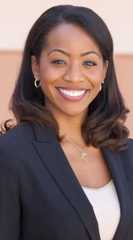



Party:Democratic Party
Incumbent: No
Submitted Biography: "I was born and raised in San Francisco and attended public schools in the City. I earned a BA from Fisk University and a Master’s in Public Policy and Management from Carnegie Mellon University. In 2010, I was elected to the San Francisco Board of Supervisors where I served on the Budget and Finance Committee. I was elected to the State Board of Equalization in 2018 and serve as Chair overseeing over $80 billion in property taxes. I've served as President of the San Francisco Police Commission and as President of the San Francisco Employee Retirement System. I'm currently running for Controller to build a fairer, more equitable California for all."

Key Messages
To read this candidate's full survey responses,click here.
I plan to be a watchdog over California's tax dollars to ensure that communities across the state are getting the funding they deserve. I have the experience needed to do this job having served as the Budget and Finance Chair for the San Francisco Employees Retirement System, Chair of the San Francisco Board of Supervisor's Budget and Finance Committee, and Chair of the State Board of Equalization. I want to work to reduce fraud and waste in the system while also modernizing our state's technological infrastructure.
I want to bring equity and justice to the State Controller's office to reduce historic inequalities. The Controller has the ability to spotlight issues and can produce data to inform policymakers on important decisions. I have done this throughout my career. While on the Board of Supervisors, I passed legislation requiring the San Francisco Police Department to produce quarterly reports on the use of force. I've also worked to make the San Francisco budgeting process more transparent to end political payouts that hinder the process. I am committed to transparency and making decisions that help build a California where everyone thrives.
I have the values to do this job. While overseeing the San Francisco Employees Retirement System, I divested the City's pension fund from fossil fuels to reaffirm our commitment to fighting climate change. While on the board of supervisors, I cracked down on fake health centers spreading false information relating to women's reproductive health. While on the Board of Equalization, I have emphasized affordable housing and tax incentives that help minority homeowners. I am the only candidate in the race that has the values that reflect California voters.

This information was current as of the candidate's run for California Controller in 2022.


Party:Republican Party
Incumbent: No
Submitted Biography: "I am a leader, problem-solver and educator. I’ve built my career on tackling some of California and America’s biggest fiscal policy challenges. I was raised in Southern California and am the son of immigrants from Taiwan. After earning four degrees from Harvard University, including a law degree and doctorate in political science, I served in senior roles in both Republican and Democratic presidential administrations.Today, I teach at Stanford University, where I also conduct research at the Hoover Institution, a public policy think tank. I have helped leaders in California and around the country develop policies to address some of our society’s most pressing problems—like improving our health care system, saving Social Security, and growing our economy. My writings have appeared in America’s biggest newspapers and I have frequently shared my ideas on television news programs across America.I built my own small business, which provides advice on fiscal and other policy issues to leaders in the public and private sectors. I am an investor who works with entrepreneurs to help them grow their businesses and create jobs. I am currently the Chair of the Board of Directors of El Camino Health, a health care system in my community."
Key Messages
To read this candidate's full survey responses,click here.
The Controller is California’s independent fiscal watchdog. That means that I won’t need the legislature or governor’s permission to audit state and local agencies and programs. As Controller, I will use my audit authority aggressively and frequently, particularly in examining state programs that may be ripe for fraud and abuse. Medi-Cal, California’s Medicaid program, is just one example. The number of Californians enrolled in the program has increased by about 50 percent since 2014, but the Controller’s Office has only periodically reviewed its operations. And that’s just one example. There are many others, from high-speed rail to California’s fraud-ridden unemployment insurance program, that taxpayers deserve to know more about.
As Controller, I will hold policy makers accountable for keeping the promises they make. For too long, the one-party monopoly in Sacramento has resulted in politicians protecting one another rather than being accountable to taxpayers. This is particularly important as we consider the challenges that we faced during the recent pandemic. California taxpayers deserve answers to questions like how tens of billions of dollars in federal assistance during the pandemic were spent. And whether school districts are actually using the funding they’ve received to help get our kids back into the classroom safely. These are the sorts of questions that, as Controller, I will answer on behalf of taxpayers.
The Controller’s Office was unable to disclose to the public where each one of the roughly 50 million payments it made—totaling over $300 billion in 2018 alone—went. The state’s comprehensive financial reporting system, FI$Cal, was supposed to be finished already, but is over-budget, late, and expected to lack some of the functions that were originally promised. As Controller, I will put an end to the Sacramento excuses and produce results. I will leverage the innovation and technology we have in our state to ensure that taxpayers have access to a best-in-class system to see these payments and understand exactly how their money is being spent.
This information was current as of the candidate's run for California Controller in 2022.
Ballotpedia's Candidate Connection survey responses
Ballotpedia asks all federal, state, and local candidates to complete a survey and share what motivates them on political and personal levels. The section below shows responses from candidates in this race who completedBallotpedia's Candidate Connection survey. Candidates are asked three required questions for this survey, but they may answer additional optional questions as well.

Survey responses from candidates in this race
Click on a candidate's name to visit their Ballotpedia page.
Note: Ballotpedia reserves the right to edit Candidate Connection survey responses. Any edits made by Ballotpedia will be clearly marked with [brackets] for the public. If the candidate disagrees with an edit, he or she may request the full removal of the survey response from Ballotpedia.org. Ballotpedia does not edit or correct typographical errors unless the candidate's campaign requests it.
Expand all |Collapse all
Lanhee Chen (R)
As Controller, I will hold policy makers accountable for keeping the promises they make. For too long, the one-party monopoly in Sacramento has resulted in politicians protecting one another rather than being accountable to taxpayers. This is particularly important as we consider the challenges that we faced during the recent pandemic. California taxpayers deserve answers to questions like how tens of billions of dollars in federal assistance during the pandemic were spent. And whether school districts are actually using the funding they’ve received to help get our kids back into the classroom safely. These are the sorts of questions that, as Controller, I will answer on behalf of taxpayers.
The Controller’s Office was unable to disclose to the public where each one of the roughly 50 million payments it made—totaling over $300 billion in 2018 alone—went. The state’s comprehensive financial reporting system, FI$Cal, was supposed to be finished already, but is over-budget, late, and expected to lack some of the functions that were originally promised. As Controller, I will put an end to the Sacramento excuses and produce results. I will leverage the innovation and technology we have in our state to ensure that taxpayers have access to a best-in-class system to see these payments and understand exactly how their money is being spent.
Malia Cohen (D)
I want to bring equity and justice to the State Controller's office to reduce historic inequalities. The Controller has the ability to spotlight issues and can produce data to inform policymakers on important decisions. I have done this throughout my career. While on the Board of Supervisors, I passed legislation requiring the San Francisco Police Department to produce quarterly reports on the use of force. I've also worked to make the San Francisco budgeting process more transparent to end political payouts that hinder the process. I am committed to transparency and making decisions that help build a California where everyone thrives.
I have the values to do this job. While overseeing the San Francisco Employees Retirement System, I divested the City's pension fund from fossil fuels to reaffirm our commitment to fighting climate change. While on the board of supervisors, I cracked down on fake health centers spreading false information relating to women's reproductive health. While on the Board of Equalization, I have emphasized affordable housing and tax incentives that help minority homeowners. I am the only candidate in the race that has the values that reflect California voters.
Lanhee Chen (R)
Malia Cohen (D)
Lanhee Chen (R)
Lanhee Chen (R)
My approach is decidedly non-ideological, and pragmatic, while my personal background demonstrates success in working with leaders from all parts of the political spectrum. I have experience leading large teams across multiple sectors. I believe in leading by example, delegating where appropriate, and working closely with experts within and outside of government to ensure we are instituting best practices. I do not believe in silos on the teams I lead, and will foster an inclusive and respectful environment in the State Controller’s office. I lead by example, demonstrate the work ethic I expect of those who work with me, and keep my team organized and on the same page. At the same time, I find the strengths in my team members and give everyone an opportunity to thrive in their individual roles.
Lanhee Chen (R)
Lanhee Chen (R)
Lanhee Chen (R)
Lanhee Chen (R)
Lanhee Chen (R)
I currently teach at Stanford University, where I have also conducted research at the Hoover Institution, a public policy think tank. I built my own small business, which focuses on providing advice on fiscal and other public policy issues to leaders in both the public and private sectors. I have been a private equity and venture capital investor who works with entrepreneurs to help them grow their businesses and create new jobs. I am currently the Chairman and serve on the Compliance and Audit Committee of the Board of Directors of El Camino Health, a Northern California health care system.
Not only do these experiences uniquely qualify me for this office, but they are a necessary expertise for a successful California Controller to have.Campaign advertisements
This section includes a selection of up to three campaign advertisements per candidate released in this race, as well as links to candidates' YouTube, Vimeo, and/or Facebook video pages. If you are aware of other links that should be included, pleaseemail us.
 Malia Cohen
Have a link to Malia Cohen's campaign ads on YouTube?Email us.
 Lanhee Chen
View more ads here:
Election competitiveness
Polls
We provide results for polls that are included in polling aggregation fromFiveThirtyEight andRealClearPolitics, when available. No polls were available for this election. To notify us of polls published in this election, pleaseemail us.
Endorsements
Click the links below to see official endorsement lists published on candidate campaign websites for any candidates that make that information available. If you are aware of a website that should be included, pleaseemail us.
Election spending
Campaign finance
General election
Primary election
Satellite spending
- See also:Satellite spending
Satellite spending describes political spending not controlled by candidates or their campaigns; that is, any political expenditures made by groups or individuals that are not directly affiliated with a candidate. This includes spending by political party committees,super PACs, trade associations, and501(c)(4)nonprofit groups.[11][12][13]
If available, this section includes links to online resources tracking satellite spending in this election. To notify us of a resource to add,email us.
| By candidate | By election |
|---|---|
Election analysis
Click the tabs below to view information about demographics, past elections, and partisan control of the state.
- Presidential elections - Information about presidential elections in the state.
- Statewide elections - Information about recent U.S. Senate and gubernatorial elections in the state.
- State partisanship - The partisan makeup of the state's congressional delegation and state government.
- Demographics - Information about the state's demographics and how they compare to the country as a whole.
Presidential elections
Cook PVI by congressional district


2020 presidential results by 2022 congressional district lines
2012-2020
How a state's counties vote in a presidential election and the size of those counties can provide additional insights into election outcomes at other levels of government including statewide and congressional races. Below, four categories are used to describe each county's voting pattern over the 2012, 2016, and 2020 presidential elections:Solid,Trending,Battleground, andNew. Click [show] on the table below for examples:
| County-level voting pattern categories | |||||||
|---|---|---|---|---|---|---|---|
| Democratic | |||||||
| Status | 2012 | 2016 | 2020 | ||||
| Solid Democratic | D | D | D | ||||
| Trending Democratic | R | D | D | ||||
| Battleground Democratic | D | R | D | ||||
| New Democratic | R | R | D | ||||
| Republican | |||||||
| Status | 2012 | 2016 | 2020 | ||||
| Solid Republican | R | R | R | ||||
| Trending Republican | D | R | R | ||||
| Battleground Republican | R | D | R | ||||
| New Republican | D | D | R | ||||
Following the 2020 presidential election,83.3% of Californians lived in one of the state's31 Solid Democratic counties, which voted for the Democratic presidential candidate in every election from 2012 to 2020, and8.3% lived in one oftwo Trending Democratic counties:Nevada andOrange. Overall, California wasSolid Democratic, having voted forBarack Obama (D) in 2012,Hillary Clinton (D) in 2016, andJoe Biden (D) in 2020. Use the table below to view the total number of each type of county in California following the 2020 election as well as the overall percentage of the state population located in each county type.
| California county-level statistics, 2020 | |||||||
|---|---|---|---|---|---|---|---|
| Solid Democratic | 31 | 83.3% | |||||
| Trending Democratic | 2 | 8.3% | |||||
| Solid Republican | 23 | 7.8% | |||||
| New Democratic | 2 | 0.6% | |||||
| Total voted Democratic | 35 | 92.2% | |||||
| Total voted Republican | 23 | 7.8% | |||||
Historical voting trends
California presidential election results (1900-2020)
- 15Democratic wins
- 15Republican wins
- 1other win
| Year | 1900 | 1904 | 1908 | 1912 | 1916 | 1920 | 1924 | 1928 | 1932 | 1936 | 1940 | 1944 | 1948 | 1952 | 1956 | 1960 | 1964 | 1968 | 1972 | 1976 | 1980 | 1984 | 1988 | 1992 | 1996 | 2000 | 2004 | 2008 | 2012 | 2016 | 2020 |
|---|---|---|---|---|---|---|---|---|---|---|---|---|---|---|---|---|---|---|---|---|---|---|---|---|---|---|---|---|---|---|---|
| Winning Party | R | R | R | P[15] | D | R | R | R | D | D | D | D | D | R | R | R | D | R | R | R | R | R | R | D | D | D | D | D | D | D | D |
Statewide elections
This section details the results of the five most recent U.S. Senate and gubernatorial elections held in the state.
U.S. Senate elections
The table below details the vote in the five most recent U.S. Senate races in California.
| U.S. Senate election results in California | ||
|---|---|---|
| Race | Winner | Runner up |
| 2018 | 54.2% | 45.8% |
| 2016 | 61.8% | 38.2% |
| 2012 | 62.5% | 37.5% |
| 2010 | 52.1% | 42.5% |
| 2006 | 59.4% | 35.2% |
| Average | 58.0 | 39.8 |
Gubernatorial elections
- See also:Governor of California
The table below details the vote in the five most recent gubernatorial elections in California.
| Gubernatorial election results in California | ||
|---|---|---|
| Race | Winner | Runner up |
| 2018 | 61.9% | 38.1% |
| 2014 | 60.0% | 40.0% |
| 2010 | 53.8% | 40.9% |
| 2006 | 55.9% | 38.9% |
| 2003 | 48.6% | 31.5% |
| Average | 56.0 | 37.9 |
State partisanship
Congressional delegation
The table below displays the partisan composition of California's congressional delegation as of November 2022.
| Congressional Partisan Breakdown from California, November 2022 | |||
|---|---|---|---|
| Party | U.S. Senate | U.S. House | Total |
| Democratic | 2 | 42 | 44 |
| Republican | 0 | 11 | 11 |
| Independent | 0 | 0 | 0 |
| Vacancies | 0 | 0 | 0 |
| Total | 2 | 53 | 55 |
State executive
The table below displays the officeholders in California's top four state executive offices as of November 2022.
| State executive officials in California, November 2022 | |
|---|---|
| Office | Officeholder |
| Governor | Gavin Newsom |
| Lieutenant Governor | Eleni Kounalakis |
| Secretary of State | Shirley Weber |
| Attorney General | Rob Bonta |
State legislature
The tables below highlight the partisan composition of theCalifornia State Legislature as of November 2022.
California State Senate
| Party | As of November 2022 | |
|---|---|---|
| Democratic Party | 31 | |
| Republican Party | 9 | |
| Vacancies | 0 | |
| Total | 40 | |
California State Assembly
| Party | As of November 2022 | |
|---|---|---|
| Democratic Party | 60 | |
| Republican Party | 19 | |
| Independent | 1 | |
| Vacancies | 0 | |
| Total | 80 | |
Trifecta control
As of November 2022, California was aDemocratic trifecta, with majorities in both chambers of the state legislature and control of the governorship. The table below displays the historical trifecta status of the state.
California Party Control: 1992-2022
Seventeen years of Democratic trifectas • No Republican trifectas
Scroll left and right on the table below to view more years.
Demographics
The table below details demographic data in California and compares it to the broader United States as of 2019.
| Demographic Data for California | ||
|---|---|---|
| California | United States | |
| Population | 39,538,223 | 331,449,281 |
| Land area (sq mi) | 155,857 | 3,531,905 |
| Race and ethnicity** | ||
| White | 56.1% | 70.4% |
| Black/African American | 5.7% | 12.6% |
| Asian | 14.8% | 5.6% |
| Native American | 0.8% | 0.8% |
| Pacific Islander | 0.4% | 0.2% |
| Other (single race) | 14.3% | 5.1% |
| Multiple | 7.9% | 5.2% |
| Hispanic/Latino | 39.1% | 18.2% |
| Education | ||
| High school graduation rate | 83.9% | 88.5% |
| College graduation rate | 34.7% | 32.9% |
| Income | ||
| Median household income | $78,672 | $64,994 |
| Persons below poverty level | 12.6% | 12.8% |
| Source: population provided by U.S. Census Bureau,"Decennial Census" (2020). Other figures provided by U.S. Census Bureau,"American Community Survey" (5-year estimates 2015-2020). | ||
| **Note: Percentages for race and ethnicity may add up to more than 100 percent because respondents may report more than one race and the Hispanic/Latino ethnicity may be selected in conjunction with any race. Read more about race and ethnicity in the censushere. | ||
Election context
Environmental, social, and corporate governance (ESG)
| Environmental, social, and corporate governance |
|---|
 |
| Select a topic from the dropdown below to learn more. |
In the context of public policy, environmental, social, and corporate governance (ESG) refers to the use of non-financial factors in the creation of policy and management of public funds. In considering ESG, public fund managers might require investing only in companies that support certain standards with respect to renewable energy, natural resources, pollution, carbon emissions, and biodiversity; social positions like diversity, equity and inclusion; and diversity in governing bodies.[16]
ESG investing stands in contrast to an investment approach based on the likely maximization of financial returns to the investor.[17]
Although ESG is an approach to investing, it has political overtones. Politicians, particularly from theRepublican Party, argue that large ESG-oriented financial firms are abusing their power in order to advance a liberal political agenda in the areas of climate change, social justice, and diversity.[18] Opponents have also characterized ESG investing as "...investment designed not to maximize financial returns but to impose a leftist social and economic agenda that cannot otherwise be implemented through the ballot box."[19] Opponents also argue that focusing on ESG factors has led to "lackluster financial results" that have had a harmful impact on the rate of return to beneficiaries ofstate public pension plans.[20]Click here to read more about opposition to ESG.
Supporters of ESG investing argue that in the long run, ESG investing will lead to acceptable financial returns.[21] ESG advocates say that ESG and profit are not mutually exclusive.[21] Supporters of ESG also argue that corporations should adopt ESG philosophies and approaches to achieve what they view as positive outcomes.[22]Click here to read more about support for ESG.
ESG issues in this election
Malia Cohen (D) andLanhee Chen (R), who ran forCalifornia controller, made the following statements on ESG-related issues in this election. Below are samples of quotes from candidates in this election on issues relevant to ESG and state government. If you are aware of a statement that should be included, pleaseemail us.
- Climate change and carbon emissions (click to expand)The statements below relate to climate change and carbon emissions.
- Chen said his views on climate change “developed and matured.” Chen said, “The more that I have looked at the issue, the more that I have read about it, the more that I have understood the issue, the more I see we do have a role to play in this state,” he said. “While I don’t agree with 100% of what the state has done over the years, I do think that that’s an area where I have become, in my view, much more of the perspective that we can and should move the needle where we can.”[3]
- Equity (click to expand)The statements below relate to equity, or policies relating to equity in the government's allocation of services and resources or the treatment of individuals under the law.
- Cohen said, “I think that we need to have more diversity, I think we need to have more conversations about equity, what that looks like in the distribution of tax dollars….I don’t want to see strong programs, child care programs, educational programs after-school programs, food programs not get funded because they don’t have a lobbyist, they don’t have an advocate.”[23]
- Financial and accounting transparency (click to expand)The statements below relate to financial and accounting transparency.
- Cohen said she would "make sure that big corporations like Amazon don’t snake through loopholes and that they’re paying their fair share when it comes to property taxes,” adding, “I say making sure that corporations like PG&E…[are] paying their fair share in taxes. Small taxpayers, people who own their homes, they’re paying their taxes, and we want to be very fair and very consistent and also transparent.”[23]
- Chen said, "As Controller, I will fight to ensure that our state’s public pension funds, CalPERS and CalSTRS, clearly tell taxpayers how much they will owe once retirement benefits for current and former government employees come due."[24]
Ballot access requirements
 See statutes:8020-8028 andSection 8100-8107 of the California Elections Code
Before accepting or spending money related to campaigning for office, a candidate for state office must file a candidate intention statement with theCalifornia Secretary of State. Note that this requirement does not apply to candidates for congressional office; federal campaign finance requirements apply to candidates for federal office. Candidates may qualify to run for office either by paying a filing fee or by submitting a petition in lieu of the filing fee.[25][26][25]
In addition to the candidate intention statement, a candidate is required to file nomination forms with his or her home county. These forms become available as early as the 113th day prior to the primary election and must be filed no later than the 88th day prior to the primary election.[27][28]
Nomination forms include a statement of economic interests, a declaration of candidacy, and nomination papers. Nomination papers require a certain number of signatures from registered voters. If a candidate qualifies by submitting an in-lieu-of-filing-fee petition, the signatures on that petition will be counted towards the requirement for the nomination paper. Registered voters may sign both the in-lieu-of-filing-fee petition and the nomination paper, unless the candidate is using the signatures on the in-lieu-of-filing-fee petition to count toward the nomination paper requirement. If that is the case, a registered voter can sign only one of the documents.[28]
The number of signatures required for nomination papers are as follows:[28][29][30]
- 65-100 for candidates seeking the office of United States Senator or a state executive office
- 40-60 for candidates seeking the office of United States Representative, state senator, or state assembly member
If an individual is running as a write-in candidate, the only nomination forms required are the nomination papers and a statement of write-in candidacy. These forms should be filed in the candidate's home county.[25]
Qualifying by payment of fee
The filing fee for a candidate seeking a seat in the United States Senate or a state executive office (e.g.,governor ortreasurer) is 2 percent of the first year's salary for that office. The filing fee for a candidate seeking the office of United States Representative, state senator, or state assembly member is 1 percent of the first year's salary for that office. The fee is paid to theCalifornia Secretary of State through the candidate's home county election office.[28]
Qualifying by petition in lieu of filing fee
Instead of paying a filing fee, a candidate may submit a petition. Signatures may be collected to cover all or any prorated portion of the filing fee.[25]
A candidate seeking the office of state assembly member must file signatures from 1,000 registered voters. Those seeking the office of state senator or United States Representative must file 2,000 signatures, and those seeking statewide office must file 7,000 signatures.[28][31][32]
If the number of registered voters in the district in which the candidate seeks nomination is less than 2,000, a candidate may submit a petition containing four signatures for each dollar of the filing fee, or 20 percent of the total number of registered voters in the district in which he or she seeks nomination, whichever is less.[28]
Completed petitions must be submitted 15 days before the end of the qualifying period to the counties in which the signers reside.[28]
Election history
2018
- See also:California Controller election, 2018
General election
General election for California Controller
IncumbentBetty Yee defeatedKonstantinos Roditis in the general election for California Controller on November 6, 2018.
Candidate | % | Votes | ||
| ✔ |  | Betty Yee (D) | 65.5 | 8,013,067 |
 | Konstantinos Roditis (R) | 34.5 | 4,229,480 | |
| Incumbents arebolded and underlined. The results have been certified. Source | Total votes: 12,242,547 (100.00% precincts reporting) | ||
| = candidate completed theBallotpedia Candidate Connection survey. | ||||
| If you are a candidate and would like to tell readers and voters more about why they should vote for you,complete the Ballotpedia Candidate Connection Survey. | ||||
Do you want a spreadsheet of this type of data?Contact our sales team. | ||||
Nonpartisan primary election
Nonpartisan primary for California Controller
IncumbentBetty Yee andKonstantinos Roditis defeatedMary Lou Finley in the primary for California Controller on June 5, 2018.
Candidate | % | Votes | ||
| ✔ | | Betty Yee (D) | 62.1 | 4,033,197 |
| ✔ | | Konstantinos Roditis (R) | 33.9 | 2,200,926 |
 | Mary Lou Finley (Peace and Freedom Party) | 4.0 | 261,876 | |
| Incumbents arebolded and underlined. The results have been certified. | Total votes: 6,495,999 | ||
| = candidate completed theBallotpedia Candidate Connection survey. | ||||
| If you are a candidate and would like to tell readers and voters more about why they should vote for you,complete the Ballotpedia Candidate Connection Survey. | ||||
Do you want a spreadsheet of this type of data?Contact our sales team. | ||||
2014
| California Controller, 2014 | ||||
|---|---|---|---|---|
| Party | Candidate | Vote % | Votes | |
| Democratic |  Betty Yee Betty Yee | 54% | 3,810,304 | |
| Republican | Ashley Swearengin | 46% | 3,249,668 | |
| Total Votes | 7,059,972 | |||
| Election results viaCalifornia Secretary of State | ||||
2022 battleground elections
- See also:Battlegrounds
This election was abattleground race. Other 2022 battleground elections included:
- Alaska gubernatorial and lieutenant gubernatorial election, 2022 (August 16 top-four primary)
- Missouri Auditor election, 2022
- Nevada's 1st Congressional District election, 2022
- South Carolina's 7th Congressional District election, 2022 (June 14 Republican primary)
- United States Senate election in Missouri, 2022 (August 2 Republican primary)
See also


External links
Footnotes
- ↑Malia Cohen, "About," accessed September 26, 2022
- ↑Malia Cohen, "Issues," accessed September 26, 2022
- ↑3.03.1CalMatters, "What would Lanhee Chen do as California controller?" April 27, 2022
- ↑Chen for California, "Meet Lanhee," accessed September 26, 2022
- ↑The White House, "President Obama Announces Another Key Administration Post," September 30, 2013
- ↑Chen for California, "Issues," accessed September 26, 2022
- ↑Los Angeles Times, "Track the money flowing into the race for Controller," November 18, 2022
- ↑8.08.1KQED, "Controller," accessed September 30, 2022
- ↑CalMatters, "Chen controls California controller race, but for how long?" June 10, 2022
- ↑Los Angeles Times, "Track the money flowing into the California controller's race," September 28, 2022
- ↑OpenSecrets.org, "Outside Spending," accessed December 12, 2021
- ↑OpenSecrets.org, "Total Outside Spending by Election Cycle, All Groups," accessed December 12, 2021
- ↑National Review.com, "Why the Media Hate Super PACs," December 12, 2021
- ↑Daily Kos, "Daily Kos Elections' presidential results by congressional district for 2020, 2016, and 2012," accessed September 9, 2022
- ↑Progressive Party
- ↑Baker Tilly, "ESG matters: an ESG primer for state and local government leaders," February 3, 2022
- ↑Wall Street Journal, "ESG and the ‘Long-Run Interests’ Dodge", September 29, 2022
- ↑NPR, "How ESG investing got tangled up in America's culture wars", September 12, 2022
- ↑Washington Examiner, "‘ESG investing’ is a leftist power grab by another name", July 11, 2022
- ↑Wall Street Journal, "An ESG Champion Stumbles: The California Public Employees’ Retirement System posts a decade of lackluster returns.", September 22, 2022
- ↑21.021.1CNBC, "Lauren Taylor Wolfe says it’s just too risky for investors to ignore ESG amid recent pushback", September 23, 2022
- ↑CNBC, "There’s an ESG backlash inside the executive ranks at top corporations", September 29, 2022
- ↑23.023.1CalMatters, "What would Malia Cohen do as California controller?" May 2, 2022
- ↑Chen for California, "Issues," accessed September 26, 2022
- ↑25.025.125.225.3California Secretary of State, "Candidate Checklist," accessed February 25, 2025
- ↑California Government Code, "Section 85100-85802," accessed February 25, 2025
- ↑Ballotpedia, "Phone call with Office of the California Secretary of State," October 9, 2013
- ↑28.028.128.228.328.428.528.6California Elections Code, "Section 8000-8700," accessed February 25, 2025
- ↑California Secretary of State, "Summary of Qualifications and Requirements for the Office of United States Senator," February 25, 2025
- ↑California Secretary of State, "Summary of Qualifications and Requirements for the Office of State Senate," accessed February 25, 2025
- ↑California Legislative Information, "AB 469," accessed February 25, 2025
- ↑Ballot Access News, "California Reduces Number of Signatures Needed on Petitions in Lieu of Filing Fee," October 16, 2017


