DOI:10.1152/AJPREGU.1984.246.2.R133 - Corpus ID: 30351411
Properties and metabolism of the aqueous cytoplasm and its boundaries.
@article{Clegg1984PropertiesAM, title={Properties and metabolism of the aqueous cytoplasm and its boundaries.}, author={James S. Clegg}, journal={The American journal of physiology}, year={1984}, volume={246 2 Pt 2}, pages={ R133-51 }, url={https://api.semanticscholar.org/CorpusID:30351411}}- J. Clegg
- Published inAmerican Journal of…1 February 1984
- Biology
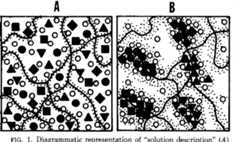
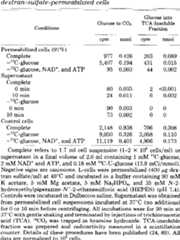
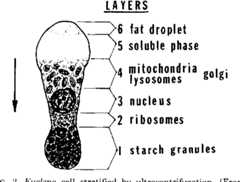
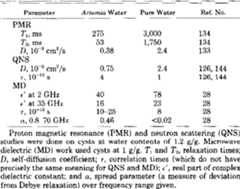
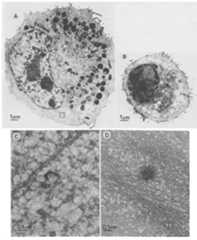
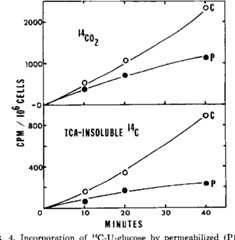
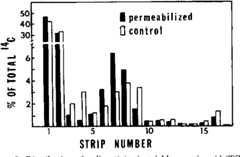
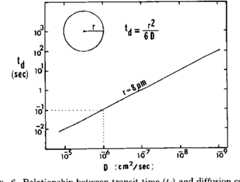
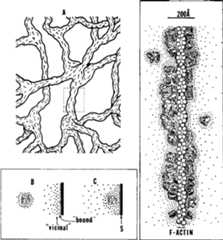
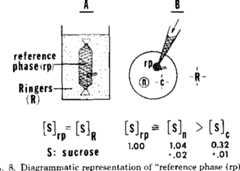
It is shown that living cells exhibit an organization far greater than the current teachings of cell biology reveal, and the roles of cell water will be discussed, notably as they relate to metabolism and cell ultrastructure.
Figures and Tables from this paper
304 Citations
The “Cytosol”: A Neglected and Poorly Understood Compartment of Eukaryotic Cells
- J. CleggM. B. Barrios
- 1988
Biology
The study of cellular components obtained by cell fractionation has been a very profitable approach to the study of cell structure and function, but these tactics have provided no reliable information about the physical properties and metabolic activities of the "aqueous compartments" of animal cells: nucleoplasm, the fluid interiors of cytoplasmic membrane bound organelles, and the intervening “cytosol.”
Cytoarchitecture and physical properties of cytoplasm: volume, viscosity, diffusion, intracellular surface area.
- K. Luby‐Phelps
- 2000
Biology, Physics
Intracellular water and the cytomatrix: some methods of study and current views
- J. Clegg
- 1984
Biology, Chemistry
Some of the evidence for at least a large fraction of intracellular water are altered by interactions with cell ultrastructure, notably the cytomatrix and some of their potential consequences with regard to cellular structure and function are considered.
The Interactions of Water and Proteins in Cellular Function
- J. G. Watterson
- 1991
Biology, Chemistry
Observations demonstrate that intracellular proteins in their native conformations are able to gel a large proportion of cellular water and prevent its flow.
Cytoplasmic Organisation and the Properties of Cell Water: Speculations on Animal Cell Cryopreservation
- J. Clegg
- 1987
Biology, Environmental Science
This brief essay will summarise some of the principal reasons to believe that cytoplasmic organisation may extend to the level of individual macromolecules, and that the “crowded solution paradigm” is largely an assumption based upon cell disruption metholodolgy.
Cell Volume Regulation
- J. R. Sachs
- 1996
Biology
The basic strategy of all cells—enclosing macromolecules within a space surrounded by a phospholipid bilayer membrane suspended in a solution of ions and small organic solutes—poses a daunting threat to their survival.
Microcompartmentation, metabolic channelling and carbohydrate metabolism.
- M. Al-Habori
- 1995
Biology, Chemistry
On the Physical Properties and Potential Roles of Intracellular Water
- J. Clegg
- 1986
Chemistry, Environmental Science
Water is an indispensable component of virtually all macromolecules, a substrate or product of many metabolic reactions, and obviously provides a dielectric continuum for diffusion and other translocation processes.
...
111 References
Stabilization and the cytoplasmic ground substance in detergent-opened cells and a structural and biochemical analysis of its composition.
- Manfred SchliwaJ. BlerkomK. Porter
- 1981
Biology, Chemistry
It is concluded that a metastable association of various proteins of the cytoplasmic ground substance exists whose morphological integrity is maintained, at lest temporarily, after removal of the plasmalemma in solutions containing Brij 58.
Intracellular monosaccharide and amino acid concentrations and activities and the mechanisms of insulin action
- Samuel B. HorowitzTerry W. Pearson
- 1981
Biology, Medicine
Results indicated that concentration data are a misleading measure of cellular amino acid and monosaccharide activity; a model is proposed in which cell water has reduced solvent capacity or is compartmentalized and is susceptible to physiological modulation.
INTERACTIONS BETWEEN SOLUBLE ENZYMES AND SUBCELLULAR STRUCTURE
- C. Masters
- 1981
Biology, Chemistry
Research in this area is moving into a second phase, with the emphasis no longer being focused on demonstrations of the biological reality of these interactions, but directed more towards quantitative aspects of binding, the determination of the characteristics of binding domains, and the theoretical basis of regulatory involvements.
Study of metabolite compartmentation in erythrocyte glycolysis
- P. FriedrichVeronika A. Apró-KovácsM. Solti
- 1977
Biology, Chemistry
Cellular and molecular consequences of reduced cell water content.
- J. MansellJ. Clegg
- 1983
Biology, Environmental Science
Limitation of Metabolite Concentrations and the Conservation of Solvent Capacity in the Living Cell
- D. E. Atkinson
- 1969
Biology, Chemistry
A possible mechanism for the Ca-ATPase of sarcoplasmic reticulum.
- P. Wiggins
- 1982
Chemistry, Biology
...
Related Papers
Showing 1 through 3 of 0 Related Papers