DOI:10.1242/dev.011171 - Corpus ID: 25819221
Heparanase cleavage of perlecan heparan sulfate modulates FGF10 activity during ex vivo submandibular gland branching morphogenesis
@inproceedings{Patel2007HeparanaseCO, title={Heparanase cleavage of perlecan heparan sulfate modulates FGF10 activity during ex vivo submandibular gland branching morphogenesis}, author={Vaishali N Patel and Sarah M. Knox and Karen M Likar and Colin A Lathrop and Rydhwana Hossain and Siavash Eftekhari and John M. Whitelock and Michael Elkin and Israel Vlodavsky and Matthew P. Hoffman}, booktitle={Development}, year={2007}, url={https://api.semanticscholar.org/CorpusID:25819221}}- V. PatelSarah M. KnoxM. Hoffman
- Published inDevelopment1 December 2007
- Biology, Medicine
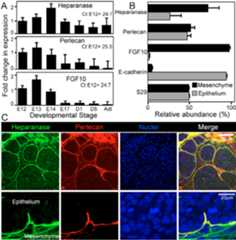
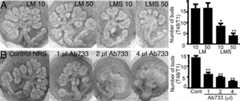
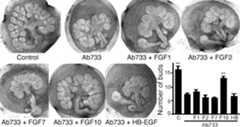
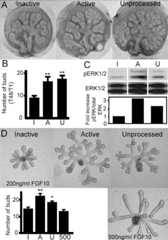
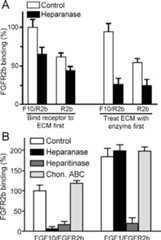
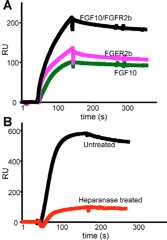
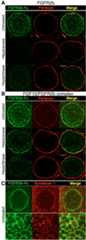
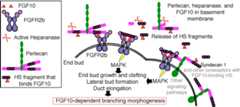
Results show heparanase releases FGF10 from perlecan HS in the basement membrane, increasing MAPK signaling, epithelial clefting, and lateral branch formation, which results in increased branching morphogenesis.
158 Citations
Divergent Roles of Heparan Sulfate in Regulation of FGF Signaling During Mammalian Embryogenesis
- I. MatsuoChiharu Kimura-YoshidaKayo Shimokawa
- 2014
Biology, Medicine
This chapter highlights the essential and cell nonautonomous roles of the cell-surface HS in activation of FGF signaling during mouse extra-embryonic ectoderm development.
Specific Heparan Sulfate Structures Modulate FGF10-mediated Submandibular Gland Epithelial Morphogenesis and Differentiation*
- V. PatelKaren M LikarM. Hoffman
- 2008
Biology, Medicine
Findings show that the size and sulfate patterns of HS modulate specific FGF10-mediated events, such as proliferation, duct elongation, end bud expansion, and differentiation, and provide mechanistic insight as to how the developmental localization of specific HS structures in tissues influences FGF 10-mediated morphogenesis and differentiation.
Differential Interactions of FGFs with Heparan Sulfate Control Gradient Formation and Branching Morphogenesis
- H. MakarenkovaM. HoffmanM. Mohammadi
- 2009
Biology
Differences in the binding of fibroblast growth factor 7 (FGF7) and FGF10 to heparan sulfate (HS) underlie the formation of different gradients that dictate distinct activities during branching morphogenesis, which may provide a general model for understanding how binding to HS regulates other morphogenetic gradients.
Tumorigenic and adhesive properties of heparanase.
- F. Levy-AdamN. IlanI. Vlodavsky
- 2010
Biology, Medicine
Extracellular modulation of Fibroblast Growth Factor signaling through heparan sulfate proteoglycans in mammalian development.
- I. MatsuoChiharu Kimura-Yoshida
- 2013
Biology, Medicine
Extracellular distribution of diffusible growth factors controlled by heparan sulfate proteoglycans during mammalian embryogenesis
- I. MatsuoChiharu Kimura-Yoshida
- 2014
Biology, Medicine
Philosophical Transactions of the Royal Society B…
This review is focused on the current understanding of the extracellular distribution of multiple growth factors controlled by HSPGs in mammalian development.
Control of binding and movement of fibroblast growth factors by heparan sulfate in extracellular matrix
- Changye Sun
- 2015
Biology, Medicine
The results support the idea that the specificity and selectivity of the interactions between FGFs and HS have been driven by the same selection pressures that led to the diversification of the FGF family and to their binding selectivity for isoforms of their receptor tyrosine kinase.
Syndecan Heparan Sulfate Proteoglycans: Regulation, Signaling and Impact on Tumor Biology
- A. GomesD. SinkeviciuteH. MulthauptA. YonedaJ. Couchman
- 2016
Biology, Medicine
How the assembly of heparan sulfate, the anabolic process, encodes information related to ligand binding and signaling is discussed, and how, in partial catabolic processes, new roles for HSPGs emerge that affect cell behavior is discussed.
The function of heparan sulfate during branching morphogenesis.
- V. PatelDallas L. PinedaM. Hoffman
- 2017
Biology, Medicine
Mammary Branching Morphogenesis Requires Reciprocal Signaling by Heparanase and MMP‐14
- A. GomesR. BhatM. Bissell
- 2015
Biology, Medicine
Using three‐dimensional (3D) organotypic cultures, it is shown that heparanase expression and activity are required for mammary epithelial invasion/branching within dense collagen I gels and uncovered a reciprocal association between levels of heParanase and MMP14, a membrane‐bound MMP, shedding further light on how branching occurs within developing mammary glands.
...
65 References
Heparanase Uptake Is Mediated by Cell Membrane Heparan Sulfate Proteoglycans*
- Svetlana Gingis-VelitskiA. ZetserN. Ilan
- 2004
Biology, Medicine
Evidence is provided that heparanase resides in the endosomal/lysosomal compartment for a relatively long period of time and is likely to play a role in the normal turnover of HS, and co-localization studies and cell fractionation following heparinase addition identify syndecan family members as candidate molecules responsible for heparAnase uptake.
Heparan sulfate-FGF10 interactions during lung morphogenesis.
- K. IzvolskyDeana ShoykhetYu YangQiang YuM. NugentW. Cardoso
- 2003
Biology, Medicine
Heparanase regulates murine hair growth.
- E. ZchariaD. PhilpM. Elkin
- 2005
Biology, Medicine
Heparan sulfates expressed in the distal lung are required for Fgf10 binding to the epithelium and for airway branching.
- K. IzvolskyLin ZhongLin WeiQiang YuM. NugentW. Cardoso
- 2003
Biology, Medicine
American journal of physiology. Lung cellular and…
It is shown that altering endogenous gradients of HS sulfation with sodium chlorate or over-O-sulfated synthetic heparin in lung organ cultures dramatically decreases Fgf10 binding, and that under these conditions epithelial binding is not improved by providing exogenous FGF10, and the data suggest that, not only ligand availability, but also the presence of specific patterns of HS modification in the distal lung epithelium are critical determinants of FgF10 binding
Molecular properties and involvement of heparanase in cancer progression and normal development.
- I. VlodavskyO. GoldshmidtY. Friedmann
- 2001
Biology, Medicine
Heparanase Degrades Syndecan-1 and Perlecan Heparan Sulfate
- J. ReilandR. SandersonD. Marchetti
- 2004
Biology, Medicine
It is demonstrated that cell-surface syndecan-1 and ECM perlecan are degradative targets of HPSE-1, and syndeca-1 regulates HPSe-1 biological activity, which suggest that expression of syndecans-1 on the melanoma cell surface and its degradation by HPS e-1 are important determinants in the control of tumor cell invasion and metastasis.
Role of heparan sulfate as a tissue-specific regulator of FGF-4 and FGF receptor recognition
- B. L. AllenM. FillaA. Rapraeger
- 2001
Biology, Medicine
It is suggested that FGF and FR recognition of specific HS sulfation patterns is critical for the activation of FGF signaling, and that synthesis of these patterns is regulated during embryonic development.
Activation, processing and trafficking of extracellular heparanase by primary human fibroblasts.
It is shown that primary human fibroblasts are capable of binding and converting the 65 kDa heparanase precursor into its highly active 50 kDa form, concomitantly with its cytoplasmic accumulation.
Enzymatic remodeling of heparan sulfate proteoglycans within the tumor microenvironment: Growth regulation and the prospect of new cancer therapies
- R. SandersonYang YangT. KellyV. MacleodYuemeng DaiA. Theus
- 2005
Biology, Medicine
This review focuses on remodeling of HSPGs by three distinct mechanisms that occur in vivo; shedding of proteoglycan extracellular domains from cell surfaces, fragmentation of heparan sulfate chains byHeparanase, and removal of sulfates from the 6‐O position of heParan sulfates chains by ext racellular sulfatases.
Not all Perlecans are Created Equal: Interactions with Fibroblast Growth Factor 2 and FGF receptors
- Sarah KnoxaCatherine MerrybSally StringerbJames MelrosecJohn Whitelocka
- 2002
Biology, Medicine
It is shown that the bioactivity of HS decorating a single PG is dependent on its cell source and that subtle changes in structure including secondary interactions have a profound effect on biological activity.
...
Related Papers
Showing 1 through 3 of 0 Related Papers