
Ateles
spider monkeys
Features

Scientific Classification
| Rank | Scientific Name |
|---|---|
| Kingdom | Animalia animals |
| Phylum | Chordata chordates |
| Subphylum | Vertebrata vertebrates |
| Class | Mammalia mammals |
| Order | Primates primates |
| Family | Atelidae howler and prehensile tailed monkeys |
| Genus | Ateles spider monkeys |
Diversity
The genus Ateles is made up of 7 extant species of spider monkeys, and includes numerous subspecies. Spider monkeys cover a broad range of Central and South American rainforests. The species are very similar to one another in terms of behavior and physical appearance, and the exact phylogeny is still being worked out among them. Spider monkeys are culturally significant to humans, and every species of them is threatened with extinction.
Geographic Range
Spider monkeys range from the northern part of Mexico all the way through to northern Bolivia. They are commonly found in the Amazon rainforest. Each of the seven species lives in their own region, without much overlap between them. However, habitat loss and fragmentation have played a major role in decreasing their distribution.
- Biogeographic Regions
- neotropical
Habitat
Spider monkeys live in tropical rainforests, where they have wide home ranges in order to find an abundance of fruit. Some species do live in semi-deciduous forests. Spider monkeys choose their range based on water resources, climate, their ability to defend the area, and predation risk. They primarily live in the tree canopy of many types of trees, where they are off the ground to avoid some predation, and where there is an abundance of fruit. They have been known to be on the ground in order to travel, eat, drink, and play for short periods of time.
- Habitat Regions
- tropical
- terrestrial
- Terrestrial Biomes
- rainforest
Systematic and Taxonomic History
Genus Ateles has 7 extant species, with many subspecies. It is most closely related to Brachyteles and Lagothrix , which are woolly monkeys. The genus was originally named Ameranthropoides in 1799, but the name was changed to Ateles in 1806. There is much debate about how the 7 species evolved from one another, and if some of them should be combined into one species. They were originally grouped based off of morphological characteristics, such as pelage color and hair length. Over time, researchers have grouped them based off of other factors, such as genetic data and phylogenetic analysis. Each of these methods led to different results, but most approaches agree that Ateles paniscus is the basal taxon of the genus. However, even this is still up for debate.
- Synonyms
- Ameranthropoides
- Montaneia
- Paniscus
- Sapajou
- Synapomorphies
- Genetic data of cytochrome b
- Pelage color
Physical Description
Spider monkeys have short faces, and small heads. They have a long, thin tail and limbs, with a larger torso. Their fingers are long and hooked for grabbing, and their long tails are used for suspensory locomotion. Spider monkeys are typically black, and have pale eye patches. There is evidence in Ateles paniscus of sexual dimorphism, where the females are larger than the males, but there isn't evidence of this in the other species.
- Other Physical Features
- endothermic
- bilateral symmetry
- Sexual Dimorphism
- sexes alike
Reproduction
Females and males both use grooming as a method of attracting a mate. Males typically look at and smell female genitalia to initiate copulation, and females seek out a male partner at certain times during their ovarian cycles. Most of the mating is done with one high-ranking male, but females can have multiple partners. It just depends on the specific group of males. In order to secure mates, male groups guard certain territories from other male groups if that is where individual female home ranges are.
- Mating System
- polygynous
- polygynandrous (promiscuous)
Spider monkeys reach sexual maturity between 4 and 5 years old. Their gestation period lasts between 7 to 7.5 months, and weaning occurs between 1 and 2 years of age. The number of offspring per breeding season can vary, and they can breed at any point during the year. Typically, they only mate once every 2 to 4 years.
- Key Reproductive Features
- iteroparous
- year-round breeding
- gonochoric/gonochoristic/dioecious (sexes separate)
- sexual
- fertilization
- viviparous
Spider monkey offspring are cared for by the female. The mother and her children live in a separate home range from the males. Offspring typically stay with the mother until two years old, when males find their own groups and females find their own territory.
- Parental Investment
- female parental care
- pre-hatching/birth
- provisioning
- female
- protecting
- female
- provisioning
- pre-weaning/fledging
- provisioning
- female
- protecting
- female
- provisioning
- pre-independence
- provisioning
- female
- protecting
- female
- provisioning
- extended period of juvenile learning
Lifespan/Longevity
There is some uncertainty about spider monkey lifespan in the wild, but it seems to range between 20 and 25 years. They live about 40 years in captivity.
Behavior
Spider monkeys are very social animals. Males live in large groups with some hierarchy. The males spend more time with each other than with females, so the hierarchy is necessary to prevent disagreements. Males also stay in the same group that they were born in, but females leave their groups and spend most of their lives on their own or with offspring. The home ranges of different groups overlap, and encounters between groups can be aggressive. In general, spider monkeys are most active in the morning and evening, and rest during the afternoon and night. There is some evidence that spider monkeys, specifically Ateles geoffroyi , use tools for body care. Spider monkeys also use their tails in order to get food that may be out of reach otherwise. There is evidence in Ateles fusciceps that their tail use is lateralized, meaning that they favor using their tail to one side over the other.
Communication and Perception
Spider monkeys have a wide range of vocalizations that they use to communicate with one another. They have an alarm call that sounds like a dog bark to warn for predators, and other longer distance calls to communicate. To communicate with other members of their group, they have "chuckles." They also rely on touch, such as grooming one another, to create social bonds. Spider monkeys also have a stronger sense of smell than people usually believe. They can use smell to pick out ripe fruits. Research was done that demonstrated that even with smells meant to distract from the ripeness, spider monkeys were still able to detect which fruits were ripe and which were not. However, most of their perception of their environment still comes from sight.
Food Habits
Spider monkeys are herbivores, so they eat predominantly leaves and fruits. They consume from plants that are abundant in their habitat, so there is not one kind of leaves or fruit that they eat. They do have some preferences, which leads them to move to different parts of their home ranges during different times of the year depending on what plants are most abundant in what area. This behavior has been studied in Ateles geoffroyi and Ateles chamek .
Predation
Spider monkey's are mainly predated on by humans for their meat and body parts. Due to their large size, being off the ground, and forming subgroups, it is difficult for other animals to predate on them. However, there have been known instances of predation on spider monkeys by pumas ( Puma concolor ), jaguars( Panthera onca ), crested eagles( Morphus guianensis ), and harpy eagles( Harpia harpyja ). Spider monkeys use a bark call to alert their groups to a predator's presence, and to tell the predator that they have been seen. Due to their low predation risk, a lot of their other possible predator avoidance behaviors haven't been observed.
- Known Predators
- Humans
- Pumas
- Jaguars
- Crested Eagles
- Harpy Eagles
Ecosystem Roles
Due to spider monkeys being herbivorous and having large ranges, they play a large role in seed dispersal in their habitats. This allows for plants to travel to different areas for growth, and for plant diversity to be maintained. When spider monkeys defecate, the seeds typically come out whole, which is important for the growth and spread of large seeded trees. They also eat fruit from a variety of different trees, which helps with the spread of tree diversity. A research study found that the trees and plants they consume from and disperse the most are Chrysochlamys membranacea , Pourouma minor , Pseudolmedia rigida , Tetragas-tris varians , and genus Ossaea .
- Ecosystem Impact
- disperses seeds
- creates habitat
Economic Importance for Humans: Positive
Spider monkeys are important to the cultures of the people who live in their habitat, such as in their artwork and stories. They are also a source of meat, and their body parts have been used for making clothing and accessories.
Economic Importance for Humans: Negative
Spider monkeys typically try to stay away from humans as much as possible, so there aren't many instances of negative interaction. Spider monkeys can carry diseases, but there isn't much evidence of transmittance to humans because of the low amount of interaction.
- Negative Impacts
- injures humans
- causes or carries domestic animal disease
Conservation Status
The populations of all spider monkey species are in decline, and range from vulnerable to critically endangered. They have been victims of habitat fragmentation, habitat destruction(roads, houses, etc), deforestation, and hunting. These events also trigger a stress response, which leads to decreased individual animal health and lower population viability. There is a lot of action being taken to try to stop the population decline, such as establishing nature reserves and putting protections in place, but there is a lack of funding and commitment so efforts are slow.
- IUCN Red List [Link]
- Not Evaluated
Additional Links
Contributors
Bri Hinchliffe (author), Colorado State University, Audrey Bowman (editor), Colorado State University.
- Neotropical
living in the southern part of the New World. In other words, Central and South America.
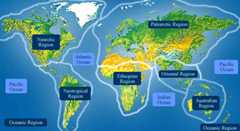
- native range
the area in which the animal is naturally found, the region in which it is endemic.
- tropical
the region of the earth that surrounds the equator, from 23.5 degrees north to 23.5 degrees south.
- terrestrial
Living on the ground.
- rainforest
rainforests, both temperate and tropical, are dominated by trees often forming a closed canopy with little light reaching the ground. Epiphytes and climbing plants are also abundant. Precipitation is typically not limiting, but may be somewhat seasonal.
- polygynous
having more than one female as a mate at one time
- polygynandrous
the kind of polygamy in which a female pairs with several males, each of which also pairs with several different females.
- iteroparous
offspring are produced in more than one group (litters, clutches, etc.) and across multiple seasons (or other periods hospitable to reproduction). Iteroparous animals must, by definition, survive over multiple seasons (or periodic condition changes).
- year-round breeding
breeding takes place throughout the year
- sexual
reproduction that includes combining the genetic contribution of two individuals, a male and a female
- fertilization
union of egg and spermatozoan
- viviparous
reproduction in which fertilization and development take place within the female body and the developing embryo derives nourishment from the female.
- female parental care
parental care is carried out by females
- arboreal
Referring to an animal that lives in trees; tree-climbing.
- diurnal
- active during the day, 2. lasting for one day.
- motile
having the capacity to move from one place to another.
- nomadic
generally wanders from place to place, usually within a well-defined range.
- social
associates with others of its species; forms social groups.
- colonial
used loosely to describe any group of organisms living together or in close proximity to each other - for example nesting shorebirds that live in large colonies. More specifically refers to a group of organisms in which members act as specialized subunits (a continuous, modular society) - as in clonal organisms.
- dominance hierarchies
ranking system or pecking order among members of a long-term social group, where dominance status affects access to resources or mates
- tactile
uses touch to communicate
- acoustic
uses sound to communicate
- visual
uses sight to communicate
- tactile
uses touch to communicate
- chemical
uses smells or other chemicals to communicate
- pet trade
the business of buying and selling animals for people to keep in their homes as pets.
- food
A substance that provides both nutrients and energy to a living thing.
- causes disease in humans
an animal which directly causes disease in humans. For example, diseases caused by infection of filarial nematodes (elephantiasis and river blindness).
- causes or carries domestic animal disease
either directly causes, or indirectly transmits, a disease to a domestic animal
- herbivore
An animal that eats mainly plants or parts of plants.
- folivore
an animal that mainly eats leaves.
- frugivore
an animal that mainly eats fruit
- endothermic
animals that use metabolically generated heat to regulate body temperature independently of ambient temperature. Endothermy is a synapomorphy of the Mammalia, although it may have arisen in a (now extinct) synapsid ancestor; the fossil record does not distinguish these possibilities. Convergent in birds.
- bilateral symmetry
having body symmetry such that the animal can be divided in one plane into two mirror-image halves. Animals with bilateral symmetry have dorsal and ventral sides, as well as anterior and posterior ends. Synapomorphy of the Bilateria.
References
Busia, L., S. Smith-Aguilar, F. Aureli, C. Schaffner, G. Ramos-Fernandez. 2018. Predation Attacks on Wild Spider Monkeys. Folia Primatologica , 89/5: 341-346. Accessed April 24, 2022 at https://www-webofscience-com.ezproxy2.library.colostate.edu/wos/zoorec/full-record/ZOOREC:ZOOR15502010126 .
Calle-Rendon, B., M. Peck, S. Bennett, C. Morelos-Juarez, F. Alfonso. 2016. Comparison of forest regeneration in two sites with different primate abundances in Northwestern Ecuador. Revista de Biologia Tropical , 64/2: 493-506. Accessed April 24, 2022 at https://revistas.ucr.ac.cr/index.php/rbt/article/view/18415/24486 .
Campbell, C. 2008. Spider Monkeys: behavior, ecology and evolution of the genus Ateles . Cambridge University: Cambridge University Press.
Collins, A., J. Dubach. 2001. Nuclear DNA Variation in Spider Monkeys(Ateles). Molecular Phylogenetics and Evolution , 19/1: 67-75. Accessed February 04, 2022 at https://www-sciencedirect-com.ezproxy2.library.colostate.edu/science/article/pii/S1055790300909175?via%3Dihub .
Eisenberg, J. 1973. Reproduction in Two Species of Spider Monkeys. Journal of Mammology , 54: 955-957. Accessed February 24, 2022 at https://www.jstor.org/stable/1379089?casa_token=IaiBhMr3X5AAAAAA%3AwnXMBnOyS4pCGemK8O_h8qneWa7Y-CRa2dyRNYB576OlOWioYzS1RNk6wRvN-XFRqT12_nYBWndS29_2wVmFCKD3P7nRw3cR0VGMYIOLcfyKGIWAsQuh&seq=1#metadata_info_tab_contents .
Fedigan, L., M. Baxter. 1984. Sex differences and social organization in free-ranging spider monkeys(Ateles geoffroyi). Primates , 25/3: 279-294. Accessed February 04, 2022 at https://link-springer-com.ezproxy2.library.colostate.edu/article/10.1007%2FBF02382267 .
IUCN, 2022. "IUCN Red List of Threatened Species" (On-line). Accessed March 09, 2022 at https://www.iucnredlist.org/search?query=ateles&searchType=species .
Izawa, K., K. Kimura, A. Nieto. 1979. Grouping of the wild spider monkey. Primates , 20: 503-512. Accessed February 24, 2022 at https://link.springer.com/article/10.1007/BF02373432 .
Lindshield, S., M. Rodrigues. 2009. Tool use in wild spider monkeys (Ateles geoffroyi). Primates , 50/3: 269-272. Accessed February 04, 2022 at https://link-springer-com.ezproxy2.library.colostate.edu/article/10.1007%2Fs10329-009-0144-3 .
Link, A., A. de Luna, F. Alfonso, P. Giraldo-Beltran, F. Ramirez. 2010. Initial effects of fragmentation on the density of three neotropical primate species in two lowland forests of Colombia. Endangered Species Research , 13/1: 41-50. Accessed February 04, 2022 at http://www.int-res.com.ezproxy2.library.colostate.edu/abstracts/esr/v13/n1/p41-50/ .
Masataka, N. 1986. Rudimentary representational vocal signaling of fellow group members in spider monkeys. Behaviour , 96/1-2: 49-61. Accessed February 04, 2022 at https://brill-com.ezproxy2.library.colostate.edu/view/journals/beh/96/1-2/article-p49_4.xml .
Morales-Jimenez, L., T. Disotell, A. Di Fiore. 2015. Revisiting the phylogenetic relationships, biogeography, and taxonomy of spider monkeys (genus Ateles) in light of new molecular data. Molecular Phylogenetics and Evolution , 82/B: 467-483. Accessed February 04, 2022 at https://www-sciencedirect-com.ezproxy2.library.colostate.edu/science/article/pii/S105579031400339X .
Nelson, E., G. Kendall. 2018. Goal-Directed Tail Use in Colombian Spider Monkeys (Ateles fusciceps rufiventris) Is Highly Lateralized. Journal of Comparative Psychology , 132/1: 40-47. Accessed February 04, 2022 at https://web-s-ebscohost-com.ezproxy2.library.colostate.edu/ehost/detail/detail?vid=0&sid=cb62c0f4-3cfb-4339-add9-295b305bb778%40redis&bdata=JkF1dGhUeXBlPWNvb2tpZSxpcCx1cmwsY3BpZCZjdXN0aWQ9czQ2NDA3OTImc2l0ZT1laG9zdC1saXZl#AN=2017-55925-001&db=pdh .
Nevo, O., R. Garri, L. Salazar, S. Schulz, E. Heymann, M. Ayasse, M. Laska. 2015. "Chemical recognition of fruit ripeness in spider monkeys (Ateles geoffroyi)" (On-line). Scientific Reports. Accessed April 24, 2022 at https://www-nature-com.ezproxy2.library.colostate.edu/articles/srep14895 .
Rimbach, R., A. Link, M. Heistermann, C. Gomez-Posada, N. Galvis, E. Heymann. 2013. "Effects of logging, hunting, and forest fragment size on physiological stress levels of two sympatric ateline primates in Colombia" (On-line). National Library of Medicine. Accessed April 24, 2022 at https://www.ncbi.nlm.nih.gov/pmc/articles/PMC4806612/ .
Scherbaum, C., A. Estrada. 2013. Selectivity in feeding preferences and ranging patterns in spider monkeys Ateles geoffroyi yucatanensis of northeastern Yucatan peninsula, Mexico. Current Zoology , 59/1: 125-134. Accessed February 04, 2022 at https://academic-oup-com.ezproxy2.library.colostate.edu/cz/article/59/1/125/1811494 .
Strier, K. 2004. Grzimek's Animal Life Encyclopedia . Gale eBooks: Gale. Accessed February 27, 2022 at https://link.gale.com/apps/doc/CX3406700873/GVRL?u=coloradosu&sid=bookmark-GVRL&xid=972bc1af .
Wallace, R. 2008. Towing the party line: territoriality, risky boundaries and male group size in spider monkey fission-fusion societies. American Journal of Primatology , 70/3: 271-281. Accessed February 04, 2022 at https://onlinelibrary-wiley-com.ezproxy2.library.colostate.edu/doi/10.1002/ajp.20484 .
2020. "Catalogue of Life" (On-line). Accessed March 27, 2022 at https://www.catalogueoflife.org/data/taxon/34V3 .
To cite this page: Hinchliffe, B. 2022. "Ateles" (On-line), Animal Diversity Web. Accessed {%B %d, %Y} at https://animaldiversity.org/accounts/Ateles/
Last updated: 2022-27-22 / Generated: 2025-11-24 02:43