
Ahotsak.eus - Basque Oral Archive
Programme for the collection and diffusion of Basque oral heritage and Basque dialects
TheBadihardugu Association launched theEuskal Herriko Ahotsak (Voices of the Basque Country) project in 2003. The aim of the project is to collect and transmit Basque oral heritage as well as the different dialects of euskara, the Basque language. The project aims to confront the issue of the imminent disappearance of the Basque oral tradition, a process which has been taking place over recent generations and which is negatively affecting both of the abovementioned issues: the passing on ofcultural heritage (traditions, rites, traditional trades and crafts, etc.) and the survival of the differentdialects of Basque, which have been undergoing a process of standardization over the past 50 years due to linguistic normalisation in favour ofBatua, the standard variety of Basque. This is resulting in cultural and linguistic reduction and the loss of an irreplaceable legacy.
Therefore, our collection and dissemination efforts focus on two types of oral transmission: one is strictlylinguistic, wherein we gather information about the dialects in all the Basque territories, and the other centres onlocal history and historical memory.
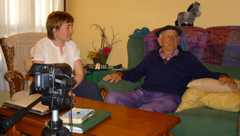
To do this, we video record interviews with people over the age of 75 and collect their testimonies about life and customs in the Basque Country in the first half of the 20th century. Everything is catalogued and made available to the general public and researchers on our web page,www.ahotsak.eus.
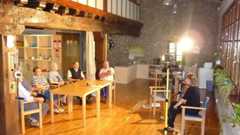
Since beginning the project, we have collected testimonies from over 6,000 people (and more than 7,000interviews) from all corners of the Basque region and covering all dialects of euskara (Gipuzkoa, Biscay, Alava and Navarre in Spain; Labourd, Lower Navarre and Soule in France). Our goal is to gather testimonies from each and every Basque town (and we are also interested in the basque diaspora). The project is supported by theBasque Government, theProvincial Council of Gipuzkoa, theKutxa Foundation, and more than 60 Basque municipalities.
Facts and figures of interest
- The project collects information and testimonies from all of the Basque territories.
- Access to and use of the material is public and free.
- The project is open to all who wish to participate.
- The project gathers information and recordings from dozens of researchers and projects from all over the Basque Country.
- A systematic and rigorous methodology is used.
- Information can be found by topic or by town.
- The site is for all types of users: researchers, scholars, university students, family members, philologists, historians, anthropologists, etc.
Both the project and the web page Ahotsak.eus are being run by the Badihardugu Association, but the project's philosophy is to create a meeting point for all those who have an interest in the oral and non-material cultural heritage of the Basque Country. In fact, several dozen municipalities, associations and researchers are working alongside us to create the largest and strongest project possible.
Methodology and Project Phases
The project consists of seven phases:
- Surveys and video interviews are conducted with people over the age of 80, after sampling speakers from each town to find the best informants. In addition, older material is collected from other projects and sources (analogue tapes, minidiscs, etc.)
- All material is digitized and copied.
- The material is catalogued in a MySQL database and a Django management system: each tape is tagged and catalogued with information about the interviewee, the interviewer, the recording, the project, etc.
- The interviews are coded by identifying the information contained in the video and adding the codes (time, theme, and other qualitative features) necessary to aid in further work and in the dissemination phase. This involves identifying and coding the extracts from each recording.
- Selected extracts are transcribed.
- The videos are edited (semi-automatic editing in Linux, edited MTS or AVI files are converted to HTML5 and MP4 and uploaded to the web server).
- Material is disseminated throughwww.ahotsak.eus.
The work available is scattered over time and depends on each town and project. While there are some towns or tapes where all phases of the project have been completed, there are others where only the basic interview information (about the informant and the recording) is available. Nevertheless, all project work done each day is directly uploaded into the web site's database so the web page is continually updated and always shows the latest project information.
For any other question, please contact us atahotsak@ahotsak.eus.
Euskal Herriko Ahotsak proiektua babestu nahi?
Ahotsak diruz lagundu nahi baduzu, egin zure dohaintza txikia. Mila esker!

Markeskua Jauregia, Otaola Hiribidea • 20600 Eibar • Gipuzkoa
Tel.: 943 121 775 • Kontaktua
CODESYNTAX-ek garatua


