
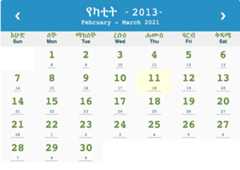
Have you ever wondered why Ethiopia has 13 months in its calendar instead of the conventional 12? This unique aspect of the Ethiopian calendar can be attributed to the “13th month of the year,” known as Pagume month. In the Ethiopian calendar, which closely follows the ancient Coptic calendar, the additional month is essential to align with the solar year more accurately. The 13-month calendar allows for a seven- to eight-year cycle that accounts for the difference between the lunar and solar calendars. So, next time you hear about the Ethiopian calendar, remember the fascinating inclusion of the 13th month called Pagume.
The Ethiopian calendar has its origins in the ancient Coptic calendar, which was used by the Coptic Orthodox Church. The Coptic calendar itself was derived from the Julian calendar, used during the Roman Empire. The adaptation and slight modifications led to the current Ethiopian calendar used today.
The Ethiopian calendar was created during the reign of the Kingdom of Aksum, an ancient civilization in northern Ethiopia and Eritrea. This calendar is seven to eight years behind the Gregorian calendar because it calculates the birth of Jesus differently.
The Ethiopian calendar is also closely linked with the Ethiopian Orthodox Church. This church has played a significant role in maintaining the calendar and ensuring its continuous use. The Ethiopian leap year, which occurs every four years, includes six days in a leap month, unlike the Gregorian calendar, which adds an extra day every four years.
Ethiopia follows a unique calendar system, unlike the Gregorian calendar with its 12 months of varying lengths, the Ethiopian calendar has 12 months of 30 days each. The 13th month, called Pagumē, has five days in a common year and six days in a leap year. This 13-month calendar system ensures that each year has either 365 or 366 days, aligning it with the solar cycle.
The additional month, Pagumē, is a fascinating aspect of the Ethiopian calendar. It serves as an intercalary month, which means it is added to keep the calendar year synchronized with the solar year. This extra month ensures that important dates, such as religious holidays and agricultural seasons, remain consistent each year.
In Ethiopia, the 13th month is calledPagumē (sometimes spelledPagume). This special month comes at the end of the Ethiopian year and has5 or 6 days, depending on whether it is a leap year.
Pagumē is a time fortransition and reflection, as it marks the closing of the old year and prepares people for the Ethiopian New Year, known asEnkutatash.
The namePagumē comes from the Greek word“epagomene”, meaning“additional days”, because it adds the extra days needed to complete the Ethiopian calendar cycle.
While it is a short month, Pagumē holds cultural importance, and many people use this time for rest, spiritual reflection, and preparation for new beginnings.
Leap years in the Ethiopian calendar are calculated differently from those in the Gregorian calendar. In the Ethiopian calendar, a leap year occurs every four years. During a leap year, the 13th month, Pagumē, has six days instead of five. This adjustment ensures that the calendar year remains in harmony with the solar cycle, just like the Gregorian calendar, which adds an extra day every four years.
The method for determining a leap year in the Ethiopian calendar is straightforward. If the year is divisible by four, it is a leap year. This calculation keeps the calendar aligned with the solar year and prevents the gradual drift of dates that would otherwise occur.
The Ethiopian leap year system reflects the calendar’s ancient roots and its connection to the Coptic calendar. This alignment with the solar cycle is crucial for maintaining the accuracy and reliability of the Ethiopian calendar.
In the Ethiopian calendar, the new year falls on September 11. This is a significant difference from the Gregorian calendar, where the new year starts on January 1. The Ethiopian New Year, also known as Enkutatash, marks the end of the rainy season and the beginning of the spring season in Ethiopia. It is a time of celebration, with many Ethiopians participating in traditional festivities and religious ceremonies.
The choice of September 11 for the Ethiopian New Year is rooted in ancient traditions and historical events. According to the Ethiopian calendar, Jesus was born in 7 BC, making the Ethiopian calendar seven to eight years behind the Gregorian calendar. This calculation results in a unique alignment of months and significant dates, such as the new year.
The Ethiopian calendar has strong ties to the ancient Coptic calendar. Both calendars share similarities, including their structure and calculation methods. The ancient Coptic calendar, used by the Coptic Orthodox Church, was adapted and modified to create the Ethiopian calendar. This adaptation has allowed Ethiopia to maintain its unique calendar system, which includes 13 months in a year.
The first 12 months of the Ethiopian calendar each have 30 days, while the 13th month, Pagumē, has five or six days depending on whether it’s a leap year. This system ensures that the Ethiopian calendar year has either 365 or 366 days, matching the solar cycle. This close connection to the ancient Coptic calendar highlights the deep-rooted traditions and religious influences in Ethiopia’s calendar system.
The Ethiopian calendar is not the only unique calendar system in the world. Other cultures and religions also use calendars that differ from the Gregorian calendar. For example, the Jewish calendar is a lunisolar calendar that includes leap months to stay in sync with the solar cycle. The Islamic calendar, on the other hand, is a purely lunar calendar, with months that shift each year relative to the Gregorian calendar.
While these calendars have their own unique features and purposes, the Ethiopian calendar stands out due to its 13-month structure and its close ties to the ancient Coptic calendar. This unique calendar system reflects Ethiopia’s rich cultural and religious heritage, making it a fascinating subject for those interested in learning more about the country.
Ethiopia’s unique 13-month calendar offers a fascinating glimpse into the country’s rich cultural heritage and deep-rooted traditions. Originating from the ancient Coptic calendar and influenced by the Ethiopian Orthodox Tewahedo Church, this calendar system stands out for its 12 months of 30 days each, plus a 13th month called Pagumē, ensuring a year that aligns with the solar cycle. This distinctive calendar, which is seven to eight years behind the Gregorian calendar, not only reflects Ethiopia’s historical and religious legacy but also underscores the nation’s commitment to preserving its unique identity. Understanding this calendar provides insight into how Ethiopians celebrate significant events and maintain their cultural continuity in a modern world.
Ethiopia follows a 13-month calendar, which is seven to eight years behind the rest of the world. This calendar has 12 months with 30 days each and a 13th month with 5 or 6 days in a leap year.
The Ethiopian calendar has 13 months, with 12 months of 30 days each and a 13th month called Pagumē, which has 5 days in a regular year and 6 days in a leap year. Therefore, in a leap year, the Ethiopian calendar has 366 days. This extra day is added to the 13th month, making it a unique feature of the Ethiopian calendar system.
The 13th month in Ethiopia is called Pagumē.
The Ethiopian calendar is about 7 to 8 years behind the Gregorian calendar because it follows the ancient Ge’ez calendar, which has a different calculation of the year of the Annunciation (the announcement by the angel Gabriel to the Virgin Mary that she would conceive and become the mother of Jesus). While the Gregorian calendar places this event at 1 AD, the Ethiopian calendar places it about 7 to 8 years later, around the year 7 or 8 AD. This discrepancy results in the Ethiopian calendar being several years behind the Gregorian calendar.
Yes, the Ethiopian calendar has a leap year every four years, similar to the Gregorian calendar.
All months in the Ethiopian calendar have 30 days each.
Yes, Ethiopia is eight years behind the rest of the world in terms of the Gregorian calendar.
Yes, Ethiopia uses the Coptic calendar for its religious festivals and the Ethiopian New Year, being seven years behind the Gregorian calendar.
In the Ethiopian calendar, a year has 13 months, while the Gregorian calendar has 12 months. Additionally, the Ethiopian calendar is 7 to 8 years behind the Gregorian calendar.


