
Listen to this achiever onWhat It Takes
What It Takes is an audio podcast produced by the American Academy of Achievement featuring intimate, revealing conversations with influential leaders in the diverse fields of endeavor: public service, science and exploration, sports, technology, business, arts and humanities, and justice.
I really try every day to be individual, and not just in my style or my look or my music, but in my approach to life.
Queen of Hip Hop
Lauryn Noelle Hill was born in East Orange, New Jersey, and grew up in nearby South Orange. From an early age, Lauryn was fascinated by music. Her father, a computer consultant, and her mother, a teacher, were both musical, and her older brother, Malaney, played a number of instruments. The young Lauryn Hill enjoyed school, sports and other activities, but music was an exceptional passion. She spent hours on end listening to records in her room, absorbing the classic soul music of the ’60s and ’70s. She performed at every opportunity; at age 13 she appeared as a contestant onShowtime at the Apollo. With the support of her parents, she pursued singing and acting professionally in her early teens, appearing on local television and auditioning for film roles in nearby New York City.
In high school she met two young immigrants from Haiti, Pras Michel and Wyclef Jean, who invited her to join the hip hop group they were forming called the Fugees (short for refugees). Lauryn became one of the group’s songwriters, as well as a rapper and vocalist. The Fugees performed around the New York area while submitting demo recordings to the major record companies.
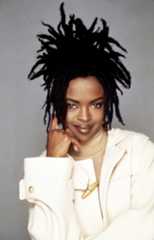
Lauryn Hill continued to pursue her acting career. At age 17, she played a recurring role on the daytime television dramaAs the World Turns. The following year, she appeared in a prominent singing role in the feature filmSister Act 2: Back in the Habit, starring Whoopi Goldberg. Hill’s performance inSister Act 2 won considerable attention, and she followed it with roles in a number of films, includingKing of the Hill. She had not neglected her studies either, and earned admission to Columbia University. At first, she tried to balance her studies with her professional work, but in her freshman year, the Fugees signed a record contract and Lauryn Hill left university to concentrate on her performing career.
The first Fugees album,Blunted by Reality, was released in 1994. It attracted some positive reviews but failed to establish the group as a major presence on the hip hop scene. For their second album, they varied their sound, incorporating elements of reggae and old school R&B, and sharpened their lyrics as well, introducing more explicit social commentary than on their first outing. When it was released in 1996,The Score was an immediate sensation, winning rave reviews and shooting to the top of the Billboard 200 and the R&B charts. The album included three hit singles; the biggest was Lauryn Hill’s version of “Killing Me Softly with His Song,” a ballad made famous in the 1970s by singer Roberta Flack. The song went to Number 2 on the U.S. Singles chart (Number 1 in Britain), and brought the group a Grammy Award for Best R&B Performance of the Year. In its first year of release,The Score sold six million copies. The Fugees were now one of the biggest acts on the scene, with a hectic touring schedule that put a strain on their collaboration and their friendship.
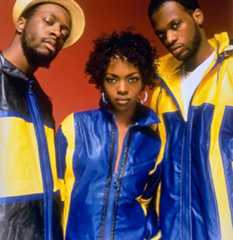
After a turbulent relationship with her bandmate Wyclef Jean, Lauryn Hill met and fell in love with Rohan Marley, son of reggae legend Bob Marley. While Hill and Marley were expecting their first child, she began writing songs for a solo album. After the birth of her son, Zion David, she went back to work producing and recording her solo debut,The Miseducation of Lauryn Hill. The music was even more varied than that ofThe Score, drawing on her love of old school soul and R&B, while her lyrics treated all the challenges that sudden fame posed for a young woman deeply committed to her own artistic and spiritual values.

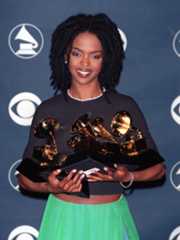
Released in 1998, the album topped the Billboard 200 chart for four weeks, and the Billboard R&B Album charts for six weeks. Of the five singles released from the album, “Doo Wop (That Thing)” debuted at Number 1 on the Billboard charts.Miseducation received delirious reviews and sold 19 million copies. At the 1999 Grammy Awards, Hill broke a number of records, becoming the first woman to be nominated in ten categories in a single year, and the first woman to win five trophies in one night: Album of the Year, Best R&B Album, Best R&B Song, Best Female R&B Vocal Performance and Best New Artist. Magazines contended to put Lauryn Hill on their cover, and she was deluged with lucrative film offers, but she chose to concentrate on her music. By the end of 1999, two years into her solo career, her record sales and touring had earned her an estimated $25 million. In addition to her own performing schedule, she served as co-producer of Carlos Santana’sSupernatural, and won a second Grammy Award for Album of the Year. She is the only female artist to win the Album of the Year award in two consecutive years.
At the height of her success, Lauryn Hill surprised the music world with her decision to withdraw from performing and seclude herself with her growing family. She continued to write songs, and in 2001, she recorded a live performance of her new, more contemplative material for MTV, accompanying herself on acoustic guitar. The performance was broadcast the following year. The live recording was released asUnplugged No. 2.0. AlthoughUnplugged received mixed reviews, it debuted at Number 3 on the Billboard charts, and sold over a million copies in the first four weeks.

Hill agreed to appear in a 2003 Christmas concert at the Vatican, where she shocked the audience by reading a prepared statement denouncing the Catholic Church’s secretive treatment of sexual abuse by members of the clergy. In 2004, Hill rejoined the Fugees at an outdoor festival in the Bedford-Stuyvesant section of Brooklyn, New York. The performance was captured in the concert filmDave Chappelle’s Block Party, and includes her rendition of “Killing Me Softly.” Hill and the other Fugees performed again at the 2005 BET Music Awards and embarked on a month-long European tour, but old tensions resurfaced and the group disbanded for good.
In 2007, Lauryn Hill released a compilation of old and new recordings,Ms. Hill, featuring selections fromMiseducation, as well as her contributions to film soundtracks and other new songs. She attempted a European tour in Spring 2009 but was forced to cancel after the first two shows due to ill health. By January 2010, she was well enough to resume live performances, playing festivals in New York, California and Florida, and touring New Zealand, Australia and Brazil. A number of her previously unreleased songs were released on the Internet during this period, and an unofficial compilation of her recent material appeared under the titleKhulani Phase. The following year, she performed at music festivals in New Orleans, Las Vegas and Washington, and with hip hop band The Roots in Philadelphia.

In 2012, the IRS sued Lauryn Hill for back taxes. She pled guilty to three counts of tax evasion for failing to file income tax returns for the years 2005 through 2007, and agreed to pay a reported a $1.5 million in back taxes and penalties. Following this judgment, she resumed a more intense performing schedule, appearing with rapper Nas on the “Life Is Good/Black Rage” tour. In May 2013, she was sentenced to three months in prison and three months of home confinement with electronic monitoring. She was released from prison in Connecticut in October 2013, after serving slightly less than three months. Her time in prison was reduced based on a number of factors, including good behavior. On the eve of her return from prison, she released a new recording, “Consumerism,” which featured her characteristic high-speed rapping.

In September 2023, Lauryn Hill and the iconic group, the Fugees, reunited for the annual Global Citizen Festival in New York’s Central Park. This significant reunion supported the global initiative to address the hunger crisis. Hill performed some of her classics, and was later joined by Wyclef Jean and Michel, delivering memorable hits. In October, Lauryn Hill embarks on her 25th-anniversary tour commemoratingThe Miseducation of Lauryn Hill. The Fugees are slated to make select appearances throughout the tour, which is set to conclude in November in Seattle, signaling that the Global Citizen Festival was not the sole opportunity for fans to see the ’90s rap icons perform together.
In May 2024, Apple Music honored Lauryn Hill’s groundbreaking 1998 album The Miseducation of Lauryn Hill as one of the greatest albums of all time. This accolade further solidified her profound influence in the music industry. This recognition is a testament to the enduring impact and timeless quality of her work, affirming her legacy as a trailblazer in the world of music.
Over the years, Lauryn Hill has maintained homes in Florida and the Caribbean, while preserving close ties to her childhood home in New Jersey. A mother of six, she may continue to write and perform at her own pace, but she has long made it clear that she will always put family first.

- Career
- Date of Birth
- May 25, 1975
Lauryn Hill is an internationally acclaimed singer, songwriter and record producer. A musically precocious child from South Orange, New Jersey, she was only 13 when she joined the innovative hip hop group the Fugees. Academically accomplished as well as musically gifted, she took time off from her musical career to attend Columbia University. The worldwide success of the Fugees’ albumThe Score thrust Lauryn Hill into the international spotlight.
She exceeded her admirers’ most ambitious expectations with her debut solo album,The Miseducation of Lauryn Hill. Writing, arranging or producing nearly every track on the album, Hill created a brilliant collection of songs, embracing rap, soul, reggae, old school R&B and Motown styles in a modern hip hop context. Songs from the album, including “Doo Wop (That Thing)” and “Every Ghetto, Every City” ruled the airwaves for months. Hill also dominated the 1999 Grammy Awards, taking home five trophies — a record for a female artist — including Best New Artist and Album of the Year.
Following the success ofMiseducation, Lauryn Hill stepped away from the spotlight to concentrate on raising her growing family. In 2002, she releasedMTV Unplugged No. 2.0, a collection of live performances featuring quieter, more contemplative songs, accompanying herself on acoustic guitar. In 2010, the music industry celebrated the 12th anniversary of the release ofThe Miseducation, and Lauryn Hill, now a mother of six, embarked on a national tour, her first in years.
Queen of Hip Hop
Early in your career with the Fugees, critics began to talk about the possibility of your having a solo career. How did you decide to leave the group and make a go of it on your own?
Lauryn Hill: I think everything happens in time. There’s a time for everything. There’s a time to be in a group, and there’s a time to be solo. At least there was for me. If I had had it my way, I would have been in the group forever. I enjoyed the group atmosphere. I thought it was so good to have two guys on stage backing you up. But the interesting thing about entertainment is that when you’re struggling, everybody goes in with the same goals. Somewhere along the success area, you start to look at everyone around you and go, “Wait a minute. Where are you going? Where are you heading? Because I’m going this way. What happened? I thought we were all on the…” and sometimes success can do that. Sometimes it really illuminates creative differences, spiritual differences, emotional differences. Just like a young person would think that, “My fifth grade friends are going to be my friends forever, throughout high school, throughout…” and it’s not that they cease being your friends, but sometimes you just mature to a place and some people get there faster, some people don’t. Hopefully, ultimately everyone catches up. But it’s really interesting, because I didn’t actually make a decision to be solo. It really just happened. I promise you that. It’s hard to explain, but I had intended to be in the group forever, until I found myself in circumstances where I felt the inner desire to express myself, freely and openly without any constraint, without anybody saying, “Hey, you can’t say that. That’s not fly. You can’t say that. People won’t…” You know what I mean? So you know the only way I could have done that was in doing a solo release.

It’s one thing to go solo, but producing your first album yourself must be quite a challenge.
Lauryn Hill: The good part about it is I think that God surrounded me with the right team, with the team that I needed to help me exercise all of my ideas. You need that. You need that army, you need that force. You know what I mean? No man is an island. So I refused to take all of the praise for that, because they were talented musicians, they were talented engineers, they were talented production assistants who really, really were there. And if I had an idea, I was able to express it, and made them stay and work diligently until it was expressed. I appreciate the fact that if there’s a will there’s a way.
You called that albumThe Miseducation of Lauryn Hill. It’s a provocative title. Tell us about the word “miseducation.” People can put a lot onto it.
“Miseducation,” every day it means something more to me, actually. People automatically thought, “Maybe her teachers didn’t teach anything.” But that wasn’t it. The meaning behind it was really sort of a catch in me, learning that when I thought I was my most wise, was really not wise at all, and when my humility and innermost places that most people wouldn’t expect a lesson to come from — that’s where I learned so much. I term the phrase “miseducation,” not because it was a miseducationper se, but just because it was sort of contrary to what the world says is education. This education that came from life and experience, and not necessarily all academic but related to living.
That album was very personal, wasn’t it?
Lauryn Hill: It was personal. That’s probably the only reason I put my name in the title.
I had gone through a lot, a huge emotional and spiritual battle prior to the creation of that album. And the funny thing is that while I was going in the battle, I couldn’t see my hand to spite my face. I mean, I really couldn’t see anything, because I was so emotionally entangled in everything that I’ve gone through. But it was like, once I was delivered from that situation, and once I got the perspective — was able to look back at heartache, and look back at pain and disappointment — for some reason it all was so clear. It was just like the picture started to form itself. The songs started to create themselves. I was able to look back and be a narrator of my own situation. But the interesting thing was that it couldn’t happen while I was in the middle of the confusion.
What was so confusing?
Lauryn Hill: It was about a young woman in the music industry, and the pitfalls, the snares, the traps, and they don’t stop. They keep coming, they don’t stop, they keep coming. They don’t stop. I think that because I grew up in such a loving family structure, I thought that everybody did. Therefore I thought that everybody reaped the benefit of that love. Pretty naïve way to think. And so I learned very important lessons about people and their voids, and how when you have voids — like a black hole just sucks and consumes everything into it. And I met a lot of those people. Here I was this ship, I just want to love, but a lot of black holes, a lot of people with a lot of deep, deep painful voids who found it easy to take advantage, and to manipulate and to deceive someone. With me who just — all I want to do is love.
And you were young.
Lauryn Hill: Very young, very young.
I had to learn from those things, painfully, but even now I thank God for correction. I even thank Him for hardship, because it shows me exactly where I am, where I was, and where I need to be. So it was important, it was a very important record. Interestingly enough, that record was all about what I feel, and it’s going to be interesting to see what the next record becomes, because that will probably be about what I think, as opposed to what I feel, everything that I feel. It will be what I feel still, but it’s also going to be something conscious. A lot of that was unconscious creation, unconscious creativity, because I was so overwhelmingly emotional. It was just like I couldn’t… I just had to write about this.
Are you saying that the “miseducation” was a feeling?
Lauryn Hill: I don’t know if I really want to continue with that thought and I’ll tell you why.
Every time that God navigates my ship, there’s nothing cerebral going on. There’s very little thought. It’s almost as if I have the directions. Every time I try to do it myself, I’m conjuring up my own concoction and trying. It’s a little more difficult to do it that way, because it takes a lot of thought and it takes a lot of energy. But it’s like, when I’m led, it kind of really is just, it’s all there and it’s clear. “These are your orders. Just go forth and carry them out.” So I was going to say that this album gets to be what I think, but I don’t know. Who knows? Who knows what that will be? Because I think that what I’ve consciously decided to do was be patient and wait for those instructions again, as opposed to the instructions from the record company. Unfortunately, I can’t fulfill their needs. I can’t, because it’s devoid of all feeling. You know what I mean? I have to make sure that what I create, I never want to condescend. There are a lot of people who condescend to the audience. They just think, “They’ll like anything. Just throw a beat on it and put your voice on it.” But if it doesn’t move me, then I don’t think it’s worthy enough to put out there and move someone else. You know what I mean? It has to be something that is — personally — is something that I need personally. That’s my barometer for whether or not it’s good for the people. Not just anything. “Just make a beat. It’s hot, throw it out there.” I can’t use that barometer. That doesn’t work with me.

Do you feel pressure from the record company to produce a more commercial product?
Lauryn Hill: I personally don’t feel the pressure. The pressure is out there but I don’t feel it. I really, really don’t. It does exist. I’ve seen people, “Hey, where’s that record company? You can’t leave us hanging like that. We need something else….” or the record company, the window of opportunity is almost closed. But I just don’t think that those rules apply to me. And not because of me, but I just think that it’s something spiritual, or something bigger. I think that if you respond to the needs of the people that’s timeless. There’s not a window of opportunity for people’s needs.
You’ve also talked about needing to live life in order to create.
Lauryn Hill: Yes, that was crucial. My whole life at a certain point was studio, hotel, stage, hotel, stage, studio, stage, hotel, studio, stage. I was expressing everything from my past, everything that I had experienced prior to that studio stage time, and it was like you have to go back to the well, in order to give someone something to drink. I felt like a cistern, dried up and like there was nothing more. And it was so beautiful, because normalcy, I returned to a normal situation with my children running around screaming, and it was wonderful. I walked down the street and I went grocery shopping and I loved it. Every minute of it I love. I find, even though it’s raining, I just go outside. I look outside and I’m just so blessed to see it and to experience it, because for such a long time I was just indoors.
Sometimes, when success is really huge, one can become entrapped by it.
Lauryn Hill: The whole concept of success, to me, is a little bit warped, because what are you being successful at in your house trapped? That’s not successfully living. I don’t buy into that whole concept of success that I have this mountain with this moat around it and then I get into my big car and drive to my destination and never see people. That’s not my concept of success. My concept of successful living is escaping the matrix, as we’ve talked about. It has very little to do with what people think success is. I actually feel successful right now, even though I don’t have an album out, or a video or a song on the radio, because I’m trying to be obedient to His will. I’m trying to be a loving and caring mother, a loving and caring wife-to-be, a loving and caring daughter, a loving and caring friend, a responsible person. And every day is another opportunity for me to be successful at that. The other stuff, I think it will come. I think — I don’t think, I know — there are certain gifts that each of us have. The gifts you don’t have to worry about so much, because God gave them to us. It’s the living, it’s the life, it’s the now. Wisdom without understanding, what is it? You’re so wise, you’re so intelligent, but how do you apply that to your life? Is your life in turmoil?
You grew up in South Orange, didn’t you? Were you born there?
I was born in East Orange. I lived in Newark for a brief time, moved to New York for a short period of time, and then moved to South Orange. South Orange was interesting because it was this very diverse — and I can’t just say South Orange, I have to say the area surrounding South Orange — because Newark is the city and the Oranges are the suburbs. Okay? And I lived in a suburb where it was, I’d say 50 percent, maybe 40 percent black, 60 percent Jewish. And I grew up with this very eclectic, just interesting exposure to all these different cultures. And of course Manhattan is right there, so from the time I was very young, exposed to the Jewish community, the Asian community, the West Indian community, the Cuban community, the Latin, just a myriad of cultures in this one area.
Were you interested in school?
My mother was a teacher. She’s an educator. But even if she wasn’t, I really think I had a love for — I don’t know if it was necessarily for academics, more than it just was for achieving, period. If it was academics, if it was sports, if it was music, if it was dance, whatever it was, I was always driven to do a lot in whatever field or whatever area I was focusing on at the moment. So I did well in school, but learned a lot from that too, learned a lot from the school, the school atmosphere, the school setting. But so much of my experiences came around school, not so much in the classroom, but what took place outside the classroom. A lot of those life lessons were attained outside. Inside as well, but outside also.
It sounds like a very colorful environment.
Lauryn Hill: Oh, it was colorful all right.
Are there experiences you recall that led you into music?
Lauryn Hill: Definitely. My parents had a love for music. There were so many records, so much music constantly being played. My mother played piano, my father sang, and we were always surrounded in music. One of my earliest memories was in a house in East Orange. Saturdays we would clean the house, and my mother would play Stevie Wonder’sSongs in the Key of Life, the whole album. I just remember hearing “Isn’t She Lovely” and pretending to iron. So from a very young age there was a lot of music.
When I was nine years old, or something around that age, I found a 45 record in the basement that belonged to my mother, and I had one of those little record players that you carry in a little suitcase, and that was the only record that would fit in my personal record player, so I played it. Whatever the song was it touched me, it moved me, and I realized that I wanted to find more of those little records. That’s what I used to call them. “Where are the little records? I want to find these little records,” and went into the basement and just unearthed tons and tons of these records from my mother’s childhood and her youth. So here I am eight, nine years old, everybody else was listening to New Edition and whatever current group is on the radio. And I’m listening to Shep and the Limelites, and Gladys Knight and the Pips, and all these older groups, and really loving it and becoming — just doused myself, doused myself in all this music and all this musical history. They really were my teachers, my musical teachers. I didn’t go to Juilliard, or I wasn’t classically trained, but by listening — you know what I mean — I grew an appreciation for certain musical philosophies and ideas and concepts. I understood what drums and bass and all different types of instrumentation were, just by virtue of my exposure to this music. I would fall asleep to it. You always talk about how students who don’t want to study put your book under the pillow and sleep, but I literally fell asleep with the music. And I think there’s so much of that I soaked up even in my dreams.
What would you put on to fall asleep?
Lauryn Hill:What’s Going On, Marvin Gaye. I just remember playing the first side over and over again. It was one of those old record players. After I moved up from the little suitcase record player there was a bigger record player that my grandmother had given to me, and it was one of those old arms that —grrr — when you pressed the repeat, it turned and went down. I used to play my records aloud until one night my mother was like, “This is too loud. I’m not having it,” and so I put on headphones. But in order for me to listen to the records, the headphones didn’t stretch all the way to my bed from the record player, so I had to sleep on the floor in order to hear the records. And that’s where I slept until college. I slept on the floor right next to the record player until I was probably 19 years old, really. I just started sleeping on a bed again because my records, that was their space, the bed. I just stayed on the floor listening to this music from morning ’til night.
Do you still need music to go to sleep?
Lauryn Hill: Actually, to be very honest with you, I don’t listen to a lot of music at all anymore — anymore at all. I think that’s very bizarre too, because it was such a comfort zone for me. But I don’t know if I had my fill, but I don’t listen to a lot of music anymore, because I’m creating it now. Everything takes place in a season. There was a season when that’s all I did was listen. Now I’m just in a place where I don’t listen, I create. And if I do listen there are specific things that I listen to, and for specific reasons. I’m no longer listening for the — I won’t say “I no longer…” but I rarely listen for the sheer pleasure. I’m listening for the tool, I’m listening for the instrument, I’m listening for the art. I’m listening for, “Boy, that was crazy what they just did! Boy, that changed…” You know what I mean? It’s very weird.
Do you miss listening to music just for pleasure?
Lauryn Hill: I do. I think that part of that is why I’m making music now, is to make it for other people to listen to for pleasure. And hopefully, later on maybe they’ll listen to it and go, “That bass line, boy, did you hear the way those drums interacted with that?” Or, “That change…” You know what I mean? So I think we all have a certain corner to hold. Earlier this year Curtis Mayfield passed away, and there was a memorial, and they asked me to sing at the memorial. And I was realizing that what Curtis represented in the ’60s and ’70s… it’s like there’s a season, and it’s not really about the messengerper se, it’s more about the message. And how he had a time where he had to hold it. Because a lot of people were singing love songs and other things. He had a very political, spiritual message. Even though it was entertaining, you enjoyed it and you could dance to it, there was this very heavy value. And as I listened to his eulogy, and I listened to the music — music that I grew up listening to — it just dawned on me that our generation’s no different. Someone has to hold it. Everyone else is being indulgent, doing whatever they want to do. Someone has to be responsible so that that music reaches and touches a specific core. That may not be me. I might lose my mind tomorrow. But it’s got to be somebody.
What other people inspired you growing up?
Lauryn Hill: Family. There’s no cliché behind that. I’m in a very close-knit, very, very tight family. My grandmother had 13 kids, so we had a lot of family — like 50, 60 grandchildren — and we all lived in Jersey, relatively in the same area. So every time there was something, my entire family was there. And I just believed everybody’s family was like that. We were always there for each other. There was a lot of love.
How many siblings do you have?
Lauryn Hill: I only have one. I have a brother. My grandmother was such a matriarch that through her children, and then their children, this love, this family structure, this close-knit family structure was implanted in all of us. It really helped to give me the confidence. To know that you have family to go back to is a help. It doesn’t always happen biologically. Sometimes God gives you family in other forms, but I was very blessed. I have a very strong biological family.
Is your brother older?
Lauryn Hill: Yeah, he’s older, Malaney.
Are you close?
Lauryn Hill: Yes, we are. My brother’s so funny. Every day I remember a lot of the things we did growing up. As a matter of fact, he was my first group. We were a music group together. We had a song called “Let’s Be Friends.” He played the acoustic and I sang. It was a pretty bad song, but those early seeds are planted. They were planted, definitely.
Were there books that were important to you when you were growing up?
Lauryn Hill: Honestly, not very many. I would get my books via my mother’s reading. I would sit there, she’d read certain books, and I’d go, “Ma, tell me about it.” And I’m sorry I didn’t pick them up myself. I didn’t do that until a little bit later. I think as a child I was intoRamona Quimby by Beverly Cleary. Yes,Ramona Quimby Age 8, things like that. But I was never an extensive reader until later.
I try not to have a day pass where I don’t read something from the Bible, for example. It’s like my sustenance to me. If the entire week is a battlefield, it’s sort of like that parachute with the box of reserves that come in the middle of the war: food and water and the toothbrush and toilet paper. It’s like, “Thank you!” You know? So my reading is definitely… I was very active. I was always all over the place trying to do a million things, just into this activity. If you asked me when I was 14 what I wanted to be: “Activist, first, is my occupation. I am an activist.” After it was activist, it was, “I need to be a doctor,” and then, “I’m going to minor in law,” and this double major. Until I got into college and I was like, “Whoa, wait a minute. This is… wait! I haven’t even picked a major yet and this responsibility, and perhaps I should focus.” Every day is a lesson in focus for me, and not buying into the world’s concept of what you have to be. I really try every day to be individual and not just in my style or my look or my music, but in my approach to life. I don’t want to be religious, I want to be spiritual. Anybody can be religious. Some people jog religiously. You don’t want to be that, you want to be spiritual. You want to have a relationship with God as opposed to doing what everyone else does. It’s about having that unique approach and finding out what works for you. What works for you may not work for someone else, but that’s exciting.
You began to perform in public at an early age. Were you encouraged by your parents?
Lauryn Hill: Definitely, definitely, definitely encouraged, definitely! When they could have easily said no or, “We have no interest. We’re not going to drive you to this audition. We’re not going to allow you guys to practice and play the music in the living room.” When they could have easily done that, they didn’t. And just very, very meaningful. My parents really took a heavy, very serious interest in my creativity from the time I was very young. And not for the sake of — they didn’t know what would come of it, just because I enjoyed it. To me that’s a reflection of love, when someone can see you enjoying yourself, and want to participate, or want to encourage, or want to help you to do something that you enjoy. It wasn’t about “making her a star,” it was just, “Hey she likes to do this, let’s support it.”
Did acting come before music?
Lauryn Hill: Actually the music came before the acting. But while I was doing music I found myself meeting people who acted, and they exposed me to that field. And I was kind of like, “Hey, all right, I’ll try it,” always thinking, “Well, music is my first love.” And I just stumbled — I know when I tell you I stumbled upon all this, actually I didn’t stumble, because there are no accidents. But I didn’t have that intense ambition to be a musician or an actress. I just enjoyed it, and if there was an opportunity, hey, I’ll go. And by enjoying it, because I loved it, it enabled me to get better at what I was doing, because there was a love behind it. It wasn’t like, “I’ve got to do this.” It wasn’t just naked ambition. I really enjoyed what I was doing. And all the while that I enjoyed it, I was happy doing it. I was content doing it, whether it was for three squirrels in the park or with three acorns as compensation. It didn’t matter to me. Because we loved it so much, I think that that was a reflection to others, I think that they saw that. That, to me, penetrated the minds and the hearts of people more than, “Hey, look how well we can play.” It was something else that was communicated, by the music and by the artistry. And that created opportunity.
It sounds like you were pretty sophisticated at a young age. Were you a ham?
Lauryn Hill: Definitely. But I don’t think very sophisticated. I think that was just some straight ghetto singing into the hairbrush in the mirror. There was nothing sophisticated about it at all. Where I grew up, everyone was like that. Especially in my family, there was not an abundance of wealth, but there was an abundance of love. So there was always humor, and there was joy and there was comfort and there was this environment just to have a good time.
In having a good time, sometimes — oh! — you stumble upon a talent. Wow, like, say I’m going to sing this song. “Hey, you can sing, did you know that, girl?” “I can? Let me take this a little more seriously.” But it was just something that we all did. It really was the performance part of humanity. I think I was just acting out on my humanity, on this gift that God gave me, and just being a kid. Really being a kid. And if I became sophisticated while I was doing it, if that took place, then I didn’t know about it, because I certainly wasn’t trying to. I just tried to sing that song just like Whitney Houston. You know what I mean? That really was the goal at that point. But if you love something, if you love something and if you’re committed and diligent — the things that happen! Some people who are blessed with gifts — but then there are other people who can work toward — even with the gift that I have now, I mean, I’ve leaned on God for so long. “Hey, God, you just gave me this gift, and I’m just going to go out there and sing.” But it’s only now that I’m realizing how much larger and how expansive my gift becomes when I actually pay attention to it and try to practice and try to perfect it. “I’m not going to warm up, I’m just going to go in the studio and I’m going to sing this song and inspiration will take me…” and yes, that’s true, we are inspired to do things and definitely. But now I’m understanding that — like in the Bible, for example, when it talked about David, it always said that David was a skillful player. He played cunningly. So that took practice. And I’m not afraid of that anymore. That’s exciting to me.
What kind of work was your dad in?
Lauryn Hill: Boy, that’s an interesting question. My mother’s an educator, but I didn’t know what my father did for the first 15 years of my life. Everybody who asked me I would say he works with computers or something, because he was a consultant and consulting is such a vague term. But my father, he was a computer consultant, and only now that I do some consulting sometimes I understand exactly what consulting means. But my father, he was brilliant, because he was just exposed to so much culture and he exposed us to so much culture. I remember being seven years old, wanting to go to International House of Pancakes on Saturday, and my father takes us to Dim Sum, which is like a Chinese breakfast, and me being like, “What?” but really learning and enjoying and appreciating culture that wasn’t just my own from a very young age.
Is he still around?
Lauryn Hill: Yes, definitely still around.
How have your parents reacted to your phenomenal success?
Lauryn Hill: They, like everyone else, have just been carried away. I’m only kidding! They’ve lost it completely. No, my parents are very humble, very real. My mother’s always very honest with me. And I’m thankful for that, because I need that. You need someone who just can penetrate the façade and say, “I knew you when, and let’s go back there right now.” So they’ve definitely handled it well.
How old were you when you started performing professionally?
Lauryn Hill: I probably was about 13. I guess “professionally” would be the first time I entered into a studio, or film, and maybe television, and performed for money. It was probably 13, 14 years old, something like that. Once again, all these opportunities were just presented. I did not go out and pursue them, and I was always surprised. I was always very surprised at how people received what I did. I was always like, “Really? I said those lines okay?” I think there was a certain amount of seriousness. From a child, I understood that. I think that my work ethic — I think the work ethic that was established in my family — was also something very important. If you plant the seed, if you sow sparingly and reap sparingly. If you sow in abundance you’ll reap in abundance. So that was always sort of in us from very young. So even the things that I love, I tried to put a couple seeds, a bunch of seeds in the ground and see what sprung up. Sometimes it was acting and sometimes it was music. But whatever it was I continued to plant.
You talked about having a spiritual sandwich from your mom.
Lauryn Hill: Yeah. Actually a friend of mine brought that to my attention. She (my mother) gave me a piece of bread, which was love and encouragement. The correction was the meat, the substance. And then she would sandwich that, sandwich that with another piece of bread, which was love and encouragement. That was very important in shaping and molding our morality, our understanding of ourselves, making sure that we didn’t think we were better than or less than anyone, feeling no more worthy or no less worthy than anyone else. All that was really, really crucial and prepared me for what I am now. That is very important preparation.
How did it feel to win your first Grammy Award?
Lauryn Hill: The first Grammy I won was with the Fugees. Oh boy, I’m not good at these answers, because I don’t know the response for that one. I guess I was honored. You know what I mean? But the honor to me has less to do with the award. You know what I’m saying? To me that translates in the relationship that I have with the audience, and if my music is helpful to them, that’s the award. If I never won a Grammy, I would be satisfied, if in fact I could help people, because it’s really, really not about that. I don’t say that because it sounds like something cool to say, really. If those NARAS (National Academy of Recording Arts and Sciences) knew how we’re treating them! I’m only kidding!
Lauryn Hill: My mother has all the awards and stuff, because if I walked downstairs every day and saw all my achievements it would be so easy to become complacent. “I’ve got all these and those! I don’t need to do anything else.” But life is continued work. It’s constant learning. I don’t even — the whole concept of retirement I don’t even buy into. We should constantly be working. Maybe not physically working, but we could be spiritually — emotionally — working toward bettering ourselves and bettering the lives of others around us. So I get really afraid of those little comforts, those things that make us feel like we did something great, because I’ve done nothing. I’ve done nothing. I mean that sincerely.
I think it was Kahlil Gibran who said, “Work is love made visible.”
Lauryn Hill: “Faith without works is dead.”
So in other words, the work is a constant.
Lauryn Hill: It’s constant. There’s a time for rest, but I don’t believe in getting comfortable just because everyone says you’ve arrived. That’s not what it’s all about. Once you compromise yourself in one way, you compromise yourself in another way. And you’ve just opened the door to compromise, mediocrity, settling. I don’t mean — when I say mediocrity I don’t mean — I mean, that we should constantly be aspiring to reach higher and higher and higher. We should never be comfortable where we are. We should always be aspiring to know more, and to better ourselves, and to improve ourselves. To improve ourselves, because that’s how we improve the world around us, by working within us. You improve yourself, light up the corner that you live on. You may not touch a gazillion lives, but you can light up your own space, light up your home.
Do you remember the movieChariots of Fire? The young runner is called to be a missionary, but he says, “When I run, I feel His pleasure.” Can you relate to that?
Lauryn Hill: Certainly the race that we’re running is not given to the fastest, but the one who endures.
When you compose, when you sing, do you feel that?
Lauryn Hill: Without question. As long as I remember that the glory is His and not my own. When I confuse that, I get in trouble. When I remember the proper hierarchy, because we have it all wrong. We think that we glorify ourselves, and the object is to glorify God first, and in doing that you become glorified, you get glorified. There are certain times when, of late especially, that God has shown me, “Just be quiet…” — because I started to feel like I always had to expound and say something profound — is to stop thinking. Or if I could tell you that I was totally unprepared, I can’t prepare anything because I always just — I just drop it, because it’s just too cerebral. And what I’m feeling in here, I have all this boiling energy inside, and it just doesn’t work, with my intellectual mind. The two are like…crshhh! So one has to take control, and you have to suppress that spirit, or suppress my brain. It usually works out the best when I suppress and — not kill, not destroy — but just suppress, allow my spirit to navigate the rest of my devices, instead of allowing those things to have control over my spirit. Because I have a considerable amount of confidence, but it’s not in me. It’s the work that God’s doing in me that makes me confident.
Do you have a conception of the American Dream? Do you have a take on that?
Lauryn Hill: I don’t have an American Dream. I have a dream, because my dream relates to the entire world, to be honest with you. That is that the entire world find — have — salvation. That the entire world have joy. That the entire world know God, and have peace, and have His rest and His happiness. For me to limit that and say that’s an American Dream, that would be far too limiting. That’s a dream for this entire world, that we really all have the presence of God in our lives, because I can’t give anyone anything more. God showed me I can sing songs about love. I can sing songs about me, and there are people that enjoy those songs. But when they’re desperately, desperately in need of help, what will my music do? How will it help them? Will it redeem them? Will it save them? Will it fight that battle for them? It’s just a song.
You can get amazing solace from hearing that someone else has suffered too.
Lauryn Hill: That’s the point, you see. It’s not about self-promotion. It’s about reality, and the fact that I’m not more worthy or less worthy than anyone else.
We’re in this together.
Lauryn Hill: We’re in this together. Someone wrote me a letter the other day, and there was a quote in it and it said, “Be careful how you speak to people. Because everyone is in a battle.”
Thank you so much for a great interview.
Lauryn Hill: Okay, thank you.
- 10 photos