
Listen to this achiever onWhat It Takes
What It Takes is an audio podcast produced by the American Academy of Achievement featuring intimate, revealing conversations with influential leaders in the diverse fields of endeavor: public service, science and exploration, sports, technology, business, arts and humanities, and justice.
Whatever is the scariest is almost always what I end up choosing, because I figure that’s where there’s something to be learned.
The Angelic Voice
Audra McDonald was born in Berlin, Germany, where her father, Stanley McDonald, Jr., was stationed with the U.S. Army. Following his military service, the family settled in Fresno, California. Both of Audra McDonald’s parents were educators. Her father, after serving as a high school teacher and principal, became assistant superintendent of human resources for the Fresno Unified School District. Her mother, Anna McDonald, later became an administrator at California Polytechnic University in San Luis Obispo. Both parents played piano and came from highly musical families.

The older of two daughters, Audra was a rambunctious, hyperactive child. Rather than medicate her, her parents sought an outlet for her prodigious energy. When a local theater group, the Good Company Players, announced the formation of a children’s musical theater group, her parents took her to audition, with her father acting as accompanist. The theater became the center of young Audra’s life. The company’s director, Dan Pessano, taught her the basics of stagecraft and theater etiquette. She became a favorite with local audiences, playing roles such as Dorothy inThe Wiz.

On graduating from the performing arts magnet program at Theodore Roosevelt High School, she auditioned for the Juilliard School of Music in New York City. The school has a highly regarded actor training program, but young Audra, who had had little formal voice training, was accepted into the classical voice program. Although her heart was already set on the Broadway theater, she spent the next years singing classical music rather than acting. She eventually chafed at the discipline and took a year off, landing a spot in the chorus of the Broadway musicalThe Secret Garden. She stayed with the show on its national tour before returning to Juilliard to graduate in 1993.

The following year, she landed her breakthrough role, New England mill worker Carrie Pipperidge in a revival of Rodgers and Hammerstein’s classicCarousel. Even critics who were skeptical about the colorblind casting of the show were enthusiastic about McDonald’s soaring voice and sly comedic skills. In this, her first featured role on the New York Stage, she won Drama Desk and Critics Circle awards, and a Tony Award for Best Perfromance by a Featured Actress in a Musical.
In 1995, McDonald won a role in the playMaster Class by Terence McNally. McDonald was cast as a young voice student who survives a grueling lesson with the legendary opera singer Maria Callas, portrayed by the British actress Zöe Caldwell. AlthoughMaster Class was a straight dramatic play, rather than a musical, the action required McDonald’s character to sing a notoriously difficult aria from Verdi’sMacbeth — a far cry from the comic numbers she sang inCarousel. Her performance drew universal praise, not only from the drama critics, but from opera lovers drawn to the play’s subject matter. McDonald won a second Tony Award for her performance, this time for Best Performance by a Featured Actress in a Play.
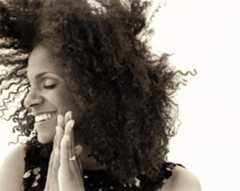
She followed this with her feature film debut in the filmSeven Servants. Meanwhile, playwright McNally was at work on a script that would give McDonald her first chance to originate a role in a Broadway musical. In McNally’s musical adaptation of E.L. Doctorow’s novelRagtime, McDonald played the tragic role of Sarah, a doomed working woman in turn-of-the-20th century New York. The show opened in Toronto, where it ran for a year before transferring to Broadway. Prior to the Broadway opening, the original cast album featuring McDonald was released. The show flourished on Broadway, and once again, McDonald was honored with a Tony Award for Best Performance by a Featured Actress in a Musical.
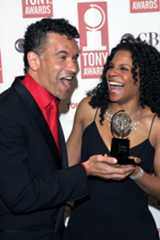
In 1998, McDonald released her debut recording as a solo artist,Way Back to Paradise, a collection of songs by contemporary composers. The same year, she made her Carnegie Hall debut, a season-opening concert with the San Francisco Symphony, broadcast live on PBS. The following year she starred in an original Broadway musical,Marie Christine, retelling the classical tragedy of Medea against a setting of 19th century New Orleans and Chicago. The show closed in the second month of its run, but McDonald’s performance was nominated for a Tony Award for Best Performance by a Leading Actress in a Musical, her first nomination for a starring performance.
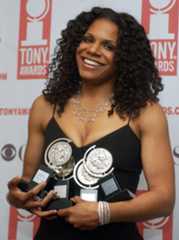
In 1998 and 1999, McDonald appeared in the filmsThe Object of My Affection andThe Cradle Will Rock. The year 1999 also marked the beginning of a distinguished television career for McDonald with a leading role inHaving Our Say: The Delany Sisters’ First 100 Years. She followed this with appearances in the television remake of the musicalAnnie, the HBO film of the playWit, a recurring role inLaw and Order: Special Victims Unit, and a regular role in the seriesMister Sterling. McDonald made more feature films as well, includingIt Runs in the Family andThe Best Thief in the World. In the year 2000, Audra McDonald married musician Peter Donovan. The couple would have one child.
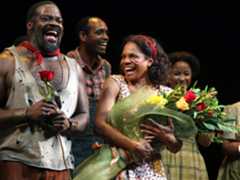
Audra McDonald returned to Broadway in the 2004 revival of the classic American dramaA Raisin the Sun, starring opposite Sean “Diddy” Combs in his Broadway debut. McDonald received a fourth Tony Award for her performance. She assumed her first major Shakespearean role in a New York production ofHenry IV in 2004. She made an even more daring leap in 2006, leaving the world of Broadway musicals and drama altogether to make her opera debut at the Houston Grand Opera. In a single evening, she performed Francis Poulenc’s one-woman opera, La voix humaine, and the world premiere of another one-act opera,Send, byMarie Christine composer Michael John LaChiusa. In the same season, she was seen by television audiences inThe Bedford Diaries andKidnapped.
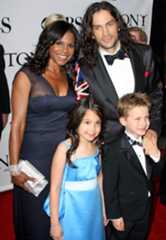
The following year, McDonald appeared at the Los Angeles Opera inMahagonny by Bertolt Brecht and Kurt Weill. The recording of this production received Grammy Awards for Best Opera Recording and for Best Classical Album. Later in 2007, McDonald starred in the Broadway revival of110 in the Shade, a lesser-known work of Tom Jones and Harvey Schmidt, the team behind the long-running off-Broadway showThe Fantasticks. During the run of110 in the Shade, McDonald received word that her father, an experienced pilot, had died in a flying accident. Following her Broadway run in110 in the Shade, McDonald moved to Los Angeles to work in movies and television. For the next three seasons, she appeared as Dr. Naomi Bennett in the primetime network seriesPrivate Practice. In 2008, she reprised her Tony Award-winning dramatic role in a television film ofA Raisin in the Sun. Her marriage to Peter Donovan ended in 2009. She continued to appear in feature films as well, including the 2012 police dramaRampart, with Woody Harrelson.

In 2012, McDonald returned to the Broadway stage for one of the greatest challenges of her career, Bess, in George and Ira Gershwin’s American operaPorgy and Bess. First produced in 1935,Porgy and Bess has been subject to previous reinterpretations and revisions. The 2012 revival, billed asThe Gershwins’ Porgy and Bess, with a script revised by playwrightSuzan Lori-Parks, went further than ever before in reconciling George Gershwin’s operatic ambitions to the limits and freedoms of the Broadway stage. In McDonald’s hands, the role of Bess, often stereotyped as a heartless “loose woman,” emerged as a distinctly injured and uniquely human character. The production was a sensation and earned Audra McDonald a fifth Tony Award, this time for Best Performance by a Leading Actress in a Musical.
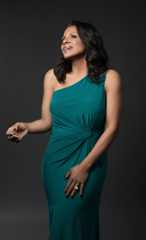
Between starring roles in the theater and on television, Audra McDonald appears in concert with America’s greatest orchestras, and hosts television programs such as the PBS seriesLive From Lincoln Center. Her bestselling record albums includeHow Glory Goes andBuild a Bridge. In October 2012, she married actor Will Swenson. Their blended family includes their three children from previous marriages. In 2014, Audra McDonald took the role of jazz singer Billie Holliday in a Broadway revival of the playLady Day at Emerson’s Bar & Grill. Once again she received rave reviews and won the year’s Tony Award for Best Actress in a dramatic role. This unprecedented sixth Tony makes her the most honored actress in the history of the award.

- Date of Birth
- July 3, 1970
Many young girls dream of stardom on the Broadway stage. The few who achieve it share talent, dedication, and a consuming passion for their art, but for one of that rare company to stand out among all the others requires something more. More than a luminous stage presence, more than a luscious voice and impeccable musicianship, Audra McDonald brings to every song and every role, old or new, the deeper insight that finds the human being inside the character, and pierces the heart of all who hear her.
As a little girl in Fresno, California, her parents encouraged her to join a theater group to channel her hyperactive energy. She became a local favorite and went on to study classical singing at New York’s Juilliard School. She made her Broadway debut before graduating, and had won three Tony Awards before the age of 30.
Equally at home in dramas and musicals, she has won six Tonys to date — an all-time record — for her performances in the musicalsCarousel,Ragtime, andPorgy and Bess, and in the dramatic playsMaster Class,A Raisin in the Sun andLady Day at Emerson’s Bar & Grill. In addition to dominating the Broadway stage, Audra McDonald has made successful forays into grand opera. She enjoys a successful career in film and television, and as a recording artist, and regularly appears in concert with America’s greatest orchestras.
The Angelic Voice
You’ve had such a great career as a musical theater performer. But you’re also a concert artist, a recording artist, and a dramatic actress on stage and films and television. Is there one medium that you prefer? How are they different for you?
Audra McDonald: I think in the end there is one ultimate goal with all of them, and that is, as a performing artist, you want to explore the deepest, most truthful way to express a point of view, or whatever the character is thinking, or whatever emotion you’re trying to convey. I think with the different media it’s just about what muscles you use to express that.
Obviously, if you’re doing something in the theater, what you’re doing has to be on a large enough scale that everybody in the theater can experience it. You have to hit the back wall, as they say. You have to be able to make sure, if you’re experiencing some incredible thing on stage but no one can hear you, then you might as well not be on stage. However, if you were to be that big on television or in film, you’d look grotesque. It would look odd and weird, because the camera is right in your face, so you just have to learn how to exercise different muscles, but still going for the same goal, which is the most truthful way that you can express a character or an emotion. So for me it’s just about staying within that truth, and then learning about the different techniques. And then the same thing with concertizing too. You have no script. You’ve got no fourth wall. There’s nothing, really, no character to hide behind. So for me it was about learning how to communicate with the audience, and be comfortable with who I am is enough, and then slip into character for each song. But in between each song, you have to be honest and be comfortable with who you are. So that was also another sort of thing for me to learn. It’s trial by error. I fell on my face many times, figuratively and literally. I have fallen on my face in concert. But someone said to me once — a lady I was doing my first national tour with, Mary Fogarty. She had done a million plays by this point. She was about 70 years old, she’s passed away now. But I said, “Where did you study acting?” She said, “The stage, honey. I learned on the stage.” I said, “You didn’t go to college? “She said, “No, no, no, no. I had to get on stage to figure out what I was doing wrong, and the stage will teach you.” And I’ve never forgotten that either.

In 2012, you starred inThe Gershwins’ Porgy and Bess on Broadway. In some ways, this staging was a departure from previous productions ofPorgy and Bess. How would you describe it?
Audra McDonald: I’ve seen many productions ofPorgy and Bess, and there have been so many different interpretations over the years, even within the few years that George Gershwin was alive, from the time that he first wrote it until the time he passed away, and then again in Ira Gershwin’s lifetime too. Many different permutations. One that everybody talks about is the uncut version that was brought back in the ’70s by Houston Grand Opera and made very popular. How our production differed from that is we cut out a good deal of the repetitive stuff within, like repetitive choruses, or instead of five verses of something we would do maybe three verses of something. And we added a little more dialogue. We weren’t the first ones to do that. That was done right after Gershwin died, when it was brought back to Broadway, the first revival by Cheryl Crawford, with Ira Gershwin’s blessing. He actually did some of the work on that as well.
Because we were doing it on a Broadway stage, we were not doing the big operatic version that you usually see at the Met, or many opera houses across the world. We wanted to make ours a more intimate experience, so we looked at it more like a play or a piece of musical theater than necessarily an opera. I guess that’s the main difference. But I think the other difference is, usually, when you see productions ofPorgy and Bess done in an opera house, they’ll do about 15 performances total. We did over 250, 260 performances of that. No, 300! We made it to 300, because we were doing it eight times a week. So there’s a chance to really get into those characters and explore in a way that you might not necessarily get a chance to do. You meet up with a company, you work for a couple of months. You do 15 performances and then everybody goes off to do maybe another version ofPorgy and Bess or whatever, but you don’t get that cohesive sort of day in and day out, month in and month out, I think, that we were lucky enough to get with that long, long run.
Did you try to approach anything differently in the character of Bess?
Audra McDonald: My goal in taking the role wasn’t “I’m going to do something completely different than what everyone else has done.” That wasn’t it. For me it was, “I know this piece. I love this piece. I’ve seen it and I’ve memorized it. I want to understand Bess. I want to understand why she makes the choices she makes. What is her history that has led her to these choices?” You don’t just all of a sudden appear somewhere. You’ve got to have history that takes you there. What has happened in her life that has led her to this point? And even with every time I’ve seen the production, I think, “Oh, gosh. Why does she… …he’s so wonderful.” And I think the whole audience thinks that. It’s part of the tragedy of it. Why does she go away at the end? Look at what a great guy Porgy is. Why does she leave that? Why does she succumb? So I really, really wanted to understand. I wanted to get as deep inside her head as I possibly could. So I went back to the original book — because that’s the wellspring, that’s where these characters were first born — to DuBose Heyward. I wanted to see. Because obviously you can’t put everything that’s in the book in an opera.

Fascinatingly enough, a lot of the book is in the opera. DuBose Heyward wrote many more lyrics than I think he’s perhaps credited with. A lot of the lyrics are credited to Ira Gershwin, but if you read it, they’re lifted right out of the book, right into the score. Many, many of the passages.
So I went back to the book, which has a little more detail about Bess, and then I studied women of that era. I studied African American women of that era. I studied cocaine usage. I studied the effect it has on the body. I studied opportunities that would have been available to women of that time if you didn’t have a job or a husband, and you were addicted to drugs. You don’t have many choices nowadays, but certainly not then. And all that helped me just to understand her a little better. I also wanted to get down to the core of her, which for me was she’s an addict. Once I understood this is someone who is an addict, I was able to understand her choices a little better. She goes from being addicted to Crown to being addicted to Porgy, and then gets sucked in by Crown again, and then once Porgy and Crown are both gone, she gets addicted to some sort of comfort again, which is the cocaine. But that addictive personality helped me make more sense of who Bess was. That’s something that probably hadn’t really occurred to me before. Everybody else used to say, “Oh, what. She just loves life. She’s a fast woman, that’s all. She’s just a fast woman who loves life.” Well, that’s not true. That’s surely what she projects, but that’s not what’s going on underneath. And that’s what I wanted to get to, what’s going on underneath.
Does winning awards, like a Tony Award, change your life?
Audra McDonald: Yes and no. I think in other people’s eyes your life changes. You become identified with it. You’re a Tony winner. You’re not just Audra McDonald, you’re a Tony winner, a two-time — whatever — Tony winner. That’s a wonderful thing, and there’s a lot of prestige that comes with that, and the gratitude.
Winning a Tony completely surpassed my dreams. I just wanted to be on Broadway. That’s all I wanted. So winning one Tony, I thought I was done. So what’s happened is just hard for me to fathom. So I don’t think about it all that much. So to answer your question, no. It doesn’t change my life all that much, because I’m still me. I’m still an artist who’s searching, trying to evolve, an artist who — nine times out of ten — is dissatisfied with her work, and beats herself, and goes out there and tries again and again, and falls on her face and looks for new challenges. I think the Tony says, “Okay. Great job. Keep going.” But it doesn’t bring money. Maybe Oscars do, but Tonys do not. Theater doesn’t bring money in general. That’s not why you do it. If you go into theater for money then you’ve really gone into the wrong business. What’s the joke? “I want to tell you how to make a million dollars. Invest $10 million in a show! That’s how you make it.” I never felt any different on the inside. So I guess, no, it didn’t change my life, but outwardly it did. Does that make sense? I don’t know.
Let’s go back to the very beginning. You grew up in Fresno, California, but you were actually born in Berlin, Germany. How old were you when you moved?
Audra McDonald: We left Berlin when I was I about eight weeks old. My mother and I went to Lawrenceville, Virginia, which is her hometown, and then my dad went off to Vietnam. Once he finished his tour of duty in Vietnam, we moved to Fresno, which is where he’s from. I think I was nine months old. My parents made the trip across country in a dark green Volkswagen station wagon.
Was there a musical tradition in your family? Were other members musical?
Audra McDonald: My family’s very musical. My grandmother, my maternal grandmother, was a music major in — I guess it would have been the ’30s in Mississippi — went to college, and she was a piano teacher after that. My mother played the piano as a result. And then on my dad’s side, his mother was a piano teacher and the organist at their church, and all of his sisters sang. My dad played. My dad ended up being a music major in college as well, and he played the marimba and the trombone and the trumpet and the piano and the drums. So music was all over my house, and all over literally my genetic house, and my house in the literal sense. So I kind of couldn’t avoid it.
You began to study acting when you were very young. And how did that happen?
Audra McDonald: I was in the church choir, and I was doing dance lessons, and when I was about nine years old we had gotten a pool in our backyard, which is a very California thing to do. Everybody in Fresno had one, and I felt like we were the last people in Fresno to get one, but we finally got one. My sister was afraid of diving, and my parents were really trying to push her to overcome her fear, and she finally overcame her fear one summer and they got her a trophy as a result. And I remember being so jealous, because I wanted a trophy. And they were like, “You have to do something. You have to do some sort of accomplishment. This was an accomplishment for your sister.” So one day my mom said, “You know, they’re having auditions for this little dinner theater, for this little junior company troupe. Why don’t you go and audition and see how well you do? Then maybe we’ll talk about getting you a trophy.” So I went and I auditioned, and my dad played the piano for me, and I sang “Edelweiss,” and I got in. And that sort of started me on my journey. I ended up being with that dinner theater and that theater group until I was 18 years old.
Who is Dan Pessano and what role did he play in your life?
Audra McDonald: Dan Pessano was the managing director of Good Company Players, which was the theater company that occupied the dinner theater. When I first auditioned, when I was nine years old, Dan Pessano was the managing director. He was the one that hired me. And I was a hyper mess, you know. I was a bundle of energy and a very loud voice. But I didn’t know what I was doing at all, and Dan was the one who basically taught me all of my basics about theater, like the fundamental stuff that you need to know about beingin the theater and beingaround the theater. Not only learning your lines and how to act and how to portray the character, but also how to be a good audience member. I remember one time watching a show, I must have been about ten. It was a big show that they were doing at the theater. I don’t remember what it was, maybe Brigadoon or something like that. And I chose to get up and go to the bathroom at some point. It’s a small theater. It seats about maybe 300 people, and I got up during a very quiet moment and went to the bathroom. I was clueless. I didn’t know. He took me aside the next day and said, “You never do that. You can wait until intermission, or you find a moment that’s not going to disrupt the actors on stage. But you were very disruptive in doing that and that’s something you need to know that’s very disruptive. The actors can hear you and it breaks their concentration.” I’ll never forget that lesson. And as a result I am hyper-aware of… I get to a theater on time or I won’t… I mean, it’s the one thing that I refuse to do as an audience member. And that’s because he taught me that. He taught me you have to be quiet backstage, be on time, be a good colleague, take your work seriously. I learned all that, as well as what it meant to be on stage. So I credit him with sort of everything for me, as far as getting into theater.
What do you think he saw in you? What do you think drew him to you?
Audra McDonald: I think he saw your raw talent. I think he saw that I possessed sort of a natural desire to express myself through music and stage work. He just saw something that needed a lot of molding. He’s a great director. He’s a great actor. He’s a very funny man. But he’s a teacher first. He had taught at Fresno State for many years, and had the ambition to start a theater company, a community theater company in Fresno, California, at a time when theater wasn’t the main export of Fresno, California. It was raisins and what not, and agriculture. So not only, I think, did he see someone that could grow if they just had the right sort of mentorship, but I think he just couldn’t help himself. I’m not the only person that has that story when it comes to Dan Pessano. There are many people that came out of Fresno that have that exact same story. Dan Pessano was their mentor. It’s because of his love of theater, his love of the craft and his love of talent. So I don’t know. Maybe that’s what he saw. I possessed all that.
What was the process that took you from this theater troupe to going to Juilliard as a classical voice major? When did you start singing seriously?
Audra McDonald: It’s an interesting trajectory. The theater group, Good Company Players at Roger Rocka’s Music Theater, became a big deal in Fresno. It was kind of one of the only games in town as far as theater’s concerned. They did ten productions a year, and they had a junior company troupe that I was a part of, and we would do a little pre-show cabaret before each show. You had to audition for this junior company, even if you were in already. Every three months you had to audition again. So the talent pool got kind of bigger and bigger the more popular it got.
It was at the time that they were trying to stop forced busing with schools in Fresno, so they started to develop all of these magnet schools around Fresno. So instead of being forced to another part of town just to diversify the schools, you went to the school according to what you were interested in. That was happening right as I was going into high school. So Computech, which was a computer school, popped up. There was a poli-sci school that popped up. These were all high school. And a performing arts school popped up. Many of the teachers that populated — my freshman year was the first year that school opened — many of the teachers that populated that school were people who had worked at Good Company Players. In fact, one of the ladies that became the principal of that school was a great lady named Clytee Ramsey, who had starred in many shows at Good Company Players. She was Dolly inHello, Dolly! and Mame inMame. So I ended up going to a performing arts high school as well as still doing shows at Good Company Players. So by the time it was time for me to audition for Juilliard, I had spent my whole life basically on the stage, in my high school productions and in my dinner theater productions. We had a TV show, a weekly TV show for the junior company. So auditioning wasn’t scary to me. It’s something that I’d grown up doing. And a girl in the year — in the class before me — had gone and auditioned for Juilliard for the dance department. And then another girl in our dinner theater had gone and auditioned for the vocal department. I knew I wanted to move to New York. I knew I wanted to be on Broadway. I knew that very shortly after I started working at Good Company Players. I knew that’s what I wanted to do.
So I told my parents I wanted to move to New York, and they said, “You have to go to school. You absolutely have to go to school. You can’t just run off to New York. You’ve got to get an education. ” They were educators. “You have to have that to fall back on,” they said, “so audition everywhere you can.” My mom took me to New York and I auditioned for Juilliard.
Ellen Faull was your voice teacher there. What did you learn from her?
Audra McDonald: Ellen Faull was a great, great lady, a great teacher. I happened to catch her at her last two years of teaching at Juilliard. Her daughter had moved to the West Coast, and she was wanting to go be near her, so her time teaching at Juilliard was coming to a close. She was the one teacher, when I went in and did my final audition for Juilliard, that made me feel comfortable. They were all sitting up in the mezzanine section of the Juilliard Theater, and they said, “Okay, sing your first number,” this aria, and I did. I didn’t know anything about classical music. That wasn’t what I was studying at school, but I had learned an aria and I sang it, and I told them that I was a lyric soprano, and then I proceeded to sing a mezzo soprano song — so it was obvious that I didn’t know what I was doing — a Samuel Barber song. And then I sang something fromLe nozze de Figaro, and at the end I did this really kind of high crazy embellishment, which you’re not really supposed to do with Mozart, and I did, and she — the rest of them were a little bit like that, but I forget — watching Ms. Faull giggle. And then when I was done she said, “How old are you?” I said, “I’m 17.” And she said, “Okay,” and then she just kind of had a twinkle in her eye. So when they accepted me, I was shocked. I remember leaving the audition thinking, “Oh well, I blew that! I’m not going to Juilliard. I blew that.” And then when I got to Juilliard, she had picked me as a student.
A lot of students would go in, and they knew who they wanted as a teacher, and they went to Juilliard to study with them. But I had no idea, and so she picked me. She was a fascinating teacher, because she had — in the same way that Dan Pessano — she had a lot to have to mold, because I was just so raw. I didn’t know anything about classical music, and I was still wanting to be on Broadway, but here I was studying classical music. So she kind of had to keep keeping my head in the game, and trying to keep me focused on classical music, and trying to keep me convinced that regardless of what I ended up doing with it, it was the right thing to pursue for now, just to get the technique. Whereas maybe other teachers at the school got a little frustrated with me, she understood that I was young and a bit wild, but that there was talent there. So she was a great supporter of mine at a time when I think maybe some of the other teachers might have just given up on me. She didn’t.
Do you think creative people, people in the arts, see things differently, in their approach to life?
Audra McDonald: I guess my answer would be yes, but I also know people that are incredibly creative within their own professions. I think it just comes down to the type of personality that the performing arts seem to attract. And that’s outgoing, very sensitive — sometimes incredibly insecure — people, that for some reason need a lot of validation. They have a lot that they have to get out, and they choose one of the hardest professions in the world in which to exist, being as sensitive as you need to be.
It’s so interesting. In the performing arts you have to have thick, thick, thick skin, because of all the rejection you face on a daily basis, and the fact that work never lasts for very long. But you need thin, thin, thin skin in order to access all of your emotions and your creativity so that you can express it. You can’t be dead inside. Otherwise you’ve got nothing to give. So it’s a paradox, that we have to exist in both planes in order to do what we do. So there’s, I guess, a certain sort of personality that’s drawn to it. As a result, I think they’re more open in the world too, because I think it’s just being that, the personality that is drawn to the type of work that performing artists do. But I do think that they tend to be a little more open-minded, because they have to be. Maybe another reason is a lot of times they’ve got to walk in a lot of different shoes. I’ve had to play characters who I absolutely disagree with, as far as their politics, as far as their religion, and their stance on certain social issues, I completely disagree with them. But I have to go in and find who they are and get to their core, into their truth, and have absolute faith and believe in that, in order to portray it. So you have to walk in a lot of different shoes, in that you can’t help but have your mind open as a result of that.
Turning to the broader theme of creativity, as well as being a performer, where do you think creativity comes from?
Audra McDonald: I would take it back to evolution. Man’s desire to evolve. I think a part of evolution is the desire to know yourself, and know the world you live in, and discover everything you can about the world you live in. That world can be the microcosm of your own emotions, or a society, or the cosmos. There’s this constant desire for knowledge. I think creativity comes in how we go about seeking that knowledge, whether it’s self-awareness or what makes the earth the earth. You look at a baby and you see their creativity too. You give them a block, and they look at the block and they’re like, “What is that?” So they’ll pound it or put it in their mouth. From that it can turn into something like, “Oh, this is something that can be a projectile. This is pretty and I like the color.” But it’s all out of this desire to know more about it, and from there, I think, comes creativity.
How important is it for somebody else to encourage creativity in early life? Who encouraged yours?
Audra McDonald: I think it’s absolutely essential to encourage creativity. I think we come in as these wide-eyed sponges, ready to create and absorb and evolve, and I think more often than not we are squashed, the older we get. What’s the quote? I read the other day someone said, “You spend the first year of your life learning how to stand up and walk, and then from then on everybody tells you to sit down.” Anyway, so I think encouragement of that encourages the mind to develop. To think that we only use five percent of our brains, when there’s so much more that we could be using. Hopefully we, as a race, will continue to evolve, so that maybe some millennia down the line we’ll use more. So it absolutely has to be encouraged.
I was encouraged in an interesting way, in that I came in with all of this hyperactivity, and all of this energy, and I came in very musical. It was just part of my family, so I came in that way. But the hyperactivity was becoming a bit of a detriment. So my parents, instead of medicating my hyperactivity — which some parents might have chosen, and I don’t judge, I think there’s different solutions, many different solutions to the problem — but my parents decided let’s channel it. She loves to sing. They found the theater for me to audition for. I was someone who was considered very over-dramatic, you know? I would freak out at a thunderstorm, thinking the world was coming to an end, would sob really hard — more than most kids — atBambi, or something like that. Everything affected me greatly emotionally. So they said, “Let’s find a place to put this energy where she can channel it in a good way, and learn and do something productive with it.” So instead of squashing it, they found ways to nurture it. And I think had they not done that, I might have been sort of an overmedicated kid.
Do you think creativity can be taught? Or is it something that is really just innate in different levels within different people?
Audra McDonald: I think it’s innate. Different levels in different people. I think some sort of creativity is within everybody; I think that’s just a part of the human spirit. I think there’s no human being on earth who is not creative in some way, because I think it’s just a part of our genetic makeup. So I think it can only be encouraged. I don’t think it can necessarily be taught.
Do you ever worry that there’s a point where creativity stagnates?
Audra McDonald: For me, I am constantly forcing myself to evolve, because, I think, to stagnate creatively — there’s a certain death that happens with that. Because if you’re not moving forward and you’re not evolving, you’re devolving, and I don’t want to go backwards. I want to be better at what I do tomorrow than I am today. I don’t want to be worse. It may be in a different way, or maybe I’ve turned a corner and tried a different part of a career, or maybe I’ll take my big mouth and maybe do something at a more political level somewhere down the road, or teach or something like that. But it has to be a constant sense of evolution. Yeah, I equate it with death.
How do you personally try to maintain your creativity? Are there things that you do or ways that you seek to refresh it?
Audra McDonald: I don’t know that for me it has to necessarily be a conscious choice. I think it was Agnes DeMille — I can’t think of the exact quote — who said there’s a dissatisfaction that’s always there as an artist.
For me, the best way for me to maintain the concept of evolution and creativity is to constantly find something that’s a challenge. When I’m being offered something, or I’ve got to put food on the table — I’ve got a family, I’ve got to put food on the table — but this is what I do as a living, and it’s my calling. Whatever So for me it’s like, “What is going to challenge me?” I’ll have a couple of options, and whatever is the scariest is almost always what I end up choosing, because I figure that’s where there’s something to be learned. And where there’s something to be learned there’s evolution. So I’m always looking for a challenge.
How does that work? What does that do for you personally?
Audra McDonald: The fear of failure. It’s as simple as that. You don’t want to fall in your face, and you know that you probably will. But if you do somehow get through that challenge, look at what you’re going to have learned, and look at what you’re going to know. I was scared to death to do Bess inPorgy and Bess, and I thought I wouldn’t survive it. I thought I’d kill myself vocally. I thought — especially because we were attempting to put it in a more musical theater genre again as opposed to the operatic — I knew the slings and arrows that were headed our way, and I thought, “And I left a really healthy television show in California to do this.” I came back to go home, and left a really healthy paycheck and all that, to not only be with my family, but then also to pursue thisPorgy and Bess. Because it scared the bejesus out of me, and because I knew that if I get past this, or even if I am just the slightest bit better as an actress — or even a singer, or even a classical singer — for having done this, it will be worth it. So there you go.
What does it feel like to cross that boundary where you’re afraid of falling on your face? What’s it like when you actually make it over to the other side?
Audra McDonald: I guess you can look at it sort of like when you look at an Olympic runner and they cross the finish line. It’s the same thing, I think, working and training to get to that moment. Sometimes it’s less definitive with a Broadway show or in theater. I guess there’s the opening night, if you get to the opening night. But it’s like crossing a finish line. You have the moment of awareness of what’s just happened, and awareness of, “Okay. That’s a goal that I wanted to reach, and I’ve reached it, but you can’t tell me that Usain Bolt isn’t thinking, “Okay, now I gotta be faster.” So you have a moment, which may last a week, it may last 30 seconds, it may last a year, and then the goal gets put all the way across the other side of the world again. Then there you go running towards that one. For me anyway, that’s how it is always.
Do you believe in the existence of a muse?
Audra McDonald: I do, but only because I love Greek myths. Yes, of course, but I wouldn’t be able to tell you what a muse is. Mine is sort of an ethereal thing that I’ve not ever been able to put my finger on. I know that’s not necessarily the case for other people. But I couldn’t tell you what my muse is.
Have you incorporated your own life experience into the creative process? How much do you draw on your own life or other things that you’ve observed?
Audra McDonald: Well, everything is going to be filtered through you, so you have to. It’s not whether or not I will draw on my own life experiences. You have no choice. You’re the vessel. So your life experiences will be there regardless. To answer the questionhow much do I draw on my own experience? It’s everything. It’s not all that there is, but I find too that sometimes you put so much of you… Like for Bess, that was a long year-and-a-half of going through Bess’s junk, which is a lot. There’s enough sadness in my own life that I can at least touch and sort of simulate, emulate, but even though it was Bess’s experiences you were seeing on stage, I had to filter it through what has happened in my own life. After a while you have to fill up again. I know that oncePorgy and Bess ended, for the first month or so there was not much for me to do. Because I hit that goal and made it, but then it was like, “I got to fill up again,” because I don’t have anything to give right now. So I needed to live life for a minute, so that I would have something to then give over, because you do empty out quite a bit. You excavate everything.
Is it cathartic when you take on a character that is as complex as Bess, and expel and expend all of this emotion?
Audra McDonald: It’s absolutely a cathartic thing to be able to — if you’re playing a role as complex and emotional as Bess, say you’re a little frustrated with how your day was going. You’ve got a great way to express it all without going to jail. Yes, it’s absolutely wonderful. Actually for me, I find — my ex-husband used to say this all the time — when I wasn’t doing a show he’d be like, “Oh, you need to do a show. You need to do a show because you’re performing at home. Too much of the energy is coming out here and we need to get you into something, because…” So for me it’s absolutely a cathartic experience. You’re exhausted too. Even if you’re doing a show that’s not necessarily physically demanding — which Bess was, because just all the physical things that happened to her — but emotionally, you’re exhausted, because it takes a lot to get up to that state that you can get on that moving train and then get out there and blow, blow, blow, blow, blow, and then… But you do. You excavate your soul and you throw it out there on that stage. So when I would come home at night, I was a bit of a shell. There wasn’t a lot left. But it felt good to do it.
After you’ve completed an experience like that, how do you replenish the well? Is it just going back and kind of living life for a little while? Is it looking for an opposite type of role?
Audra McDonald: There’s a little bit of all that. I certainly don’t want to pigeonhole myself as, “All she plays is drug addicts.” For a while people were like, “Are you ever going to do a show where you’re nice to a child?” I did the musical version ofMedea, and then I didRagtime. And even inRaisin in the Sun she’s threatening to have an abortion. It was like, “My gosh, be nice to kids!” So yes, you look for different types of roles and experiences to play and explore. But also, for me, it’s going back home and filling up, just with family or going up and filling up on art that I’m not involved in too, going… And regardless though…
Even if I do go out to, whether it’s the Philharmonic or I go to see a great singer — like I saw Ray LaMontagne in concert recently at Carnegie Hall, and it was so… I love him and I was so moved by it. Or I see other shows. I can fill up that way, but I’m still observing as a student as well. My mind’s still at work, and processing, processing and learning and learning and learning and learning. Maria Callas talked about the fact that even the least talented student can teach you something. And not to say that the Philharmonic or Ray LaMontagne — I mean, they’re inspirational, incredible. But I am very aware of the fact that my mind and my soul, or whatever, are processing all of this, and storing it to then be used at a later date when I get out there. And I actually find that I — and I was talking to my husband about this, who is also an actor too — that when we’re watching other shows, other Broadway shows, we feel muscle twitches. Even though you’re just sitting back and this isJulius Caesar. What part would I play inJulius Caesar? I couldn’t possibly play a part inJulius Caesar, and yet I’m twitching with them.
How would you explain to someone who has no experience with performance and music what is so exciting about this process for you?
Audra McDonald: It’s an incredible rush, especially the live aspect of it. It’s easy to spend — especially in this day and age — to spend your time not being in the present. It’s very easy to be way ahead. What’s tomorrow and the day after that? Or fixated on something in the past, or virtually somewhere else. Whatever, watching a football game online, whatever, just not being. And the one thing about live performance and what makes it so scary is all you have is that moment. You must be in that moment. You cannot be ahead of it, you cannot be behind it. You can be making sure you’re aware of what you have to do next, but regardless, that moment forces you to be in the present. And that’s a rush. It’s something that a lot of people run from, because it can be scary. But that’s also where life happens, I think. And so for me it’s — maybe I’m an addict. I’m addicted to that rush. I’m also addicted to those moments when you’re on stage and the audience is so quiet you could hear a pin drop and you realize that you’re in communion. That’s an incredible experience. That’s a cosmic experience, as far as I’m concerned, without getting way out there. But you feel the communion of the collective consciousness in that moment when you’re on stage doing something and the audience is absolutely with you. And the audience becomes a collective entity as well. They come in from separate places and socio-economic backgrounds, and places across the world and days that they’ve had, and then they come together and they become one collective thing, and experience something in a collective way. That’s a powerful, powerful thing to experience. So I’m definitely addicted to that, too.
How difficult is it to maintain a family life in this field?
Audra McDonald: Oh, God. It’s so hard. Family life is difficult anyway. You know, raising children and everybody works now. In terms of you’re struggling to put food on the table, and even if the work is at home, being the person who’s staying home and being the CEO of the house, regardless, it’s difficult. So you add on top of that a career that basically is always, “What have you done for me lately?” A doctor can be a doctor today and they will be a doctor tomorrow. But an actor, well you’re not working at anything right now, whereas the doctor is going to have their job tomorrow, for the most part. So there’s the insecurity of that, and then having to go where the work is, which almost nine times out of ten — unless you’re very, very lucky and you can say, “No, I will only work in this city, and if there is no work here then I just won’t work, because my family….” You have to go where the work is. I think Renée Fleming is the one who says, “When they do pay us a lot of money, you’re not being paid…” or she thinks of it as not being paid to sing and perform because it’s what she loves to do. She’s being paid for the time that she has to be away from her family. And I agree with that.
You’re thrown into these instant families, all of a sudden. I have a family, and I’ve got a kid, and a husband, and stepchildren, and I’ve got my life at home, and then at night running off and falling in love with Norm Lewis and getting raped and beaten up by Phillip Boykin. You know, you’re living this whole other life with these people that you’re going through these deep emotional things with. So you form a bond, and then you shake that off and go home to real life. I think for a lot of people that are in performing arts, it’s easy to fall into the trap of starting to confuse what’s real life and what’s not, because to your body it’s all real. I had to fall in love with Norm every night, so physiologically speaking that’s what my body’s doing. Emotionally, your body doesn’t know the difference. So you have to rely on your brain to go, “Okay, that’s not real life. This is real life. So I think that’s where the challenge comes in.
What do you think will be the next great challenge for you career-wise? If you were setting your next set of goals, what would they be?
Audra McDonald: They’d be all over the place. I want to do it all. This sounds like terrible grammar, but I want todo. I want todo the singing, I want todo the acting, I want todo the concertizing. I want to do the plays. I want to do the musicals. I want to become a great artist. This sounds really cheesy, but if ever there was an award that I would want to win some day, it would be like a Kennedy Center honor. That would mean to me that I’ve amassed a body of work that has not only sort of affected the arts and made an impact on the arts, but that’s a large enough body of work and a varied enough body of work and a lengthy enough body of work that it deserves an honor. That to me is like, that would be a great goal. But if that were to happen someday, which would be amazing if it did, then next day I would still be like, “Okay, cool. Now, I’ve never been able to sing this note really comfortably. I should figure out how to really…” You know what I mean? There’s always more to learn.
This is also a business where, especially for women, there’s such a consciousness of age and aging. There’s such a limited span that’s artificially set up. Do you think that that’s going to change? Is it something that you worry about?
Audra McDonald: Of course it’s something I worry about. I can say, on one hand, that’s never going to change. Then I can say, on the other hand, that I think I’ve seen signs of it starting to change. We certainly have more women in positions of power nowadays. We have more women that are making the decisions about what’s being done on television. We have women creating their own shows and running their own shows, which is certainly something we did not have even 30 years ago, like we do now.
So I do see change. But at the end, in this entertainment business, especially in film and television — although there are the independent films where you can sort of do what you want — but they are still a slave to the almighty dollar. Is your film going to get made? “Okay, well it’s not going to get made unless you get this name, and this person is actually not really right for the part, but she’s a starlet and she’s young and pretty, even though it calls for a woman who’s supposed to be 45. Well, we’ll make her look like that.” So there’s still that out there. But there’s enough people who I think also — like you and I would roll our eyes and go, “But that’s not right for the part!”
And like I said, there are more women in positions of power to change that. Look at someone like Kathryn Bigelow, what she’s done with the great movies that she’s made, and Shonda Rhimes, what she’s done and revolutionized television. And even the Julie Taymors of the world. I just feel like we’re able to create our story a little more than we would have been some time ago. So hopefully, it will change at a faster pace. It will just take time. A generation or two more, I think.
What do you know, understand and appreciate about achievement now, that you didn’t when you were younger?
Audra McDonald: What I know about achievement is that it takes a village. What I understand about achievement is that it does not come easy. What was the other one?
What do you appreciate?
Audra McDonald: What I appreciate about achievement is that — any sort of achievement — that in the end, if you were truest to yourself, that is what’s going to put it over into the edge into that achievement. Which means all it takes is a true acknowledgement of your own self, of your own worth, of your own dream that you can write your own story, and then with the village and the hard work and the opportunity, you can achieve. So I guess what I know now that I definitely didn’t know as a child, is that being truest to yourself is the greatest weapon in the war to achieve. But that sounds really negative, but in conquering or achieving something. I think, as a child, I thought I had to be somebody else. What I tell kids all the time now, and students that want to perform and, “What do I do? Who do I study? How do I… ?” Find out who you are. It sounds cheesy, it sounds cliché, but it’s cliché for a reason. Because that’s what’s most special. That’s where the gold is. We don’t need another Barbra Streisand. We don’t need another Judy Garland. We needyou.
What does the American Dream mean to you?
Audra McDonald: I think every human being has a dream. I think what’s special about the American Dream is that it implies, given everything that’s happened with the history of America, that there is the opportunity to make your dream come true. So I think America signifies opportunity. I don’t think we necessarily have cornered the market on dreams. That’s a human thing. But I think opportunity is what the American Dream is about.
Great. Thank you so much for speaking with us.
- 15 photos