
The State
of the World’s Midwifery 2021
Why midwives?
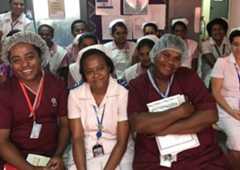
Midwives can meet about 90 per cent of the need for essential sexual, reproductive, maternal, newborn and adolescent health interventions.
The world is still lacking one-third of the midwives needed.
The impact of midwives
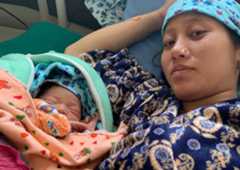
Midwives strengthen the health and well-being of women, adolescents and newborns and put safe and effective care within the reach of more people.
Midwives would save a projected4.3 million per year by 2035.
The global shortage of midwives
There is aglobal shortage of 1.1 million sexual, reproductive, maternal, newborn and adolescent health-care providers -900,000 are midwives.
The shortage is most severe in low-income countries and in Africa with a potential shortage of 750,000 midwives by 2030.
Why the shortage?
There isinsufficient investment in the health workforce as a whole and midwives in particular, despite recentLancet Global Health data showing that midwives have an enormous impact on improving health and preventing death.
Global shortage of midwives
TheState of the World’s Midwifery 2021 estimates a global shortage of 900,000 midwives,projected to fall to 750,000 by 2030 if all countries continue on their current trajectory. The following visualization shows how this evolution is projected to vary by region. Most of the global improvement is projected to occur in the Asia and Pacific region.
Size of midwife shortage
Source: Projections on the global midwives shortage from SoWMy 2021
Number of deaths averted with midwife shortage covered
Source: Projections on percentage deaths averted fromThe Lancet impact of midwives paper
Why invest in midwives?
A larger, fully enabled midwifery workforce can increase women’s, children’s and adolescents’ access to health care. And a healthier population can build a stronger economy.
Investing in midwives will strengthen the primary health-care system and provide a pathway to universal health coverage.
Investing in midwives will foster a more equitable world for all
An equitable health system lacks constraints to receiving care. With more trained midwives available, there is a greater percentage of care providers available to provide care.
Improving sexual, reproductive, maternal, newborn and adolescent health requires increased commitment to and investment in midwives.
The road to 2035
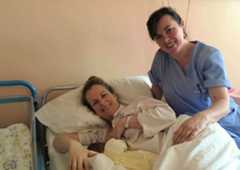
TheState of the World’s Midwifery 2021 calls for a strong focus on universal access to essential sexual, reproductive, maternal, newborn and adolescent health services, addressing equity at all levels and leaving no one behind.
These investments should be considered at country, regional and global levels by governments, policymakers, regulatory authorities, educational institutions, professional associations, international organizations, global partnerships, donor agencies, civil society organizations and researchers.
Four Areas of Investment
For midwives to achieve their potential, greater investment is needed in four key areas

Health workforce
Strengthen health workforce data systems for more effective decision making
Focus on primary health care that allows midwives to provide the full scope of SRMNAH interventions

Education and training
Ensure that midwife educators are fully equipped with both knowledge and skills for teaching
Design curricula that include interdisciplinary modules and encourage teamwork and respectful care in all settings

Midwife-led service delivery
Treat midwives as equal and respected partners at all levels
Encourage an enabling work environment where midwife-led continuity of care can flourish and recognise midwives’ capacity to contribute to a wide range of SRMNAH services along the life-course

Midwifery leadership and governance
Engage midwives in policy and planning decisions at all levels of the health system
Improve institutional capacity to help midwives be leaders and advocates for high quality respectful maternity care
Impact of investing in midwives
Puts safe and effective sexual and reproductivehealth care within the reach of more people
Midwives contribute to positive birth experiences and by delivering about 90 per cent of essential sexual, reproductive, maternal, newborn and adolescent health interventions, improve health outcomes
Impact of investing in midwives
It could savemillions of lives each year
An estimated 4.2 million lives can be saved annually by 2035 through quality midwifery care and midwifery support for safe, comprehensive abortion services
Impact of investing in midwives
Itcontributes to national and localeconomies
Investing in midwives can boost the willingness of governments and others to pay for health care, thus increasing employment of health workers and stimulating economic growth
Impact of investing in midwives
It contributes to women’s empowerment andgender equality
More midwife-led interventions contributes to healthier families, productive communities and a health system that can deliver comprehensive services for all
Impact of COVID-19
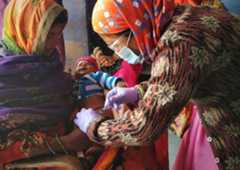
The COVID-19 pandemic has highlighted the importance of investing in midwives as essential parts of the primary health-care system. Midwives were able to provide a wide range of clinical interventions and contribute to broader health goals.
Unfortunately, in the midst of the pandemic,midwifery learning was disrupted, midwives were denied personal protective equipment, lost their salaries and some, their lives, yet they continue to provide care to women giving birth.
Midwives per 10,000 population
- 10+
- 4 - 9.99
- 3 - 3.99
- 2 - 2.99
- 1 - 1.99
- 0 - 0.99
- not reported
View how to read Country Profiles
nr = not reported
Last update date: 3 May 2021
The estimates shown for the key SRMNAH indicators were those available in mid-2020 and used for the modelling of the estimates for other indicators in this report. More recent updates to these data sources are not captured. A dispute exists between the Governments of Argentina and the United Kingdom of Great Britain and Northern Ireland concerning sovereignty over the Falkland Islands (Malvinas). The boundaries and names shown and the designations used on this map do not imply official endorsement or acceptance by the United Nations.
Data sources:
Midwives per 10,000 population, number of midwives:National Health Workforce Accounts, 2020 update
Pregnancies: Live births fromWorld Population Prospects 2019 revision with a multiplier based onTatem et al. 2014
Births attended by skilled health personnel:SDG indicator database
Maternal mortality ratio:WHO, UNICEF, UNFPA, World Bank Group and UN Population Division, 2019
Neonatal mortality rateUN Inter-Agency Group for Child Mortality estimation, 2020
Explore Country Data
You can search countries here. Please click a country on the list of results to zoom the map into that country.
- Afghanistan
- Albania
- Algeria
- Andorra
- Angola
- Antigua and Barbuda
- Argentina
- Armenia
- Australia
- Austria
- Azerbaijan
- Bahamas
- Bahrain
- Bangladesh
- Barbados
- Belarus
- Belgium
- Belize
- Benin
- Bhutan
- Bolivia, Plurinational State of
- Bosnia and Herzegovina
- Botswana
- Brazil
- Brunei Darussalam
- Bulgaria
- Burkina Faso
- Burundi
- Cabo Verde
- Cambodia
- Cameroon
- Canada
- Central African Republic
- Chad
- Chile
- China
- Colombia
- Comoros
- Congo, Republic of the
- Congo, Democratic Republic of the
- Cook Islands
- Costa Rica
- Croatia
- Cuba
- Cyprus
- Czechia
- Côte d'Ivoire
- Denmark
- Djibouti
- Dominica
- Dominican Republic
- Ecuador
- Egypt
- El Salvador
- Equatorial Guinea
- Eritrea
- Estonia
- Eswatini
- Ethiopia
- Fiji
- Finland
- France
- Gabon
- Gambia
- Georgia
- Germany
- Ghana
- Greece
- Grenada
- Guatemala
- Guinea
- Guinea-Bissau
- Guyana
- Haiti
- Honduras
- Hungary
- Iceland
- India
- Indonesia
- Iran, Islamic Republic of
- Iraq
- Ireland
- Israel
- Italy
- Jamaica
- Japan
- Jordan
- Kazakhstan
- Kenya
- Kiribati
- Korea, Democratic People's Republic
- Republic of Korea
- Kuwait
- Kyrgyzstan
- Lao People's Democratic Republic
- Latvia
- Lebanon
- Lesotho
- Liberia
- Libya
- Lithuania
- Luxembourg
- North Macedonia
- Madagascar
- Malawi
- Malaysia
- Maldives
- Mali
- Malta
- Marshall Islands
- Mauritania
- Mauritius
- Mexico
- Micronesia (Federated States of)
- Moldova, Republic of
- Monaco
- Mongolia
- Montenegro
- Morocco
- Mozambique
- Myanmar
- Namibia
- Nauru
- Nepal
- Netherlands
- New Zealand
- Nicaragua
- Niger
- Nigeria
- Niue
- Norway
- Oman
- Pakistan
- Palau
- Panama
- Papua New Guinea
- Paraguay
- Peru
- Philippines
- Poland
- Portugal
- Qatar
- Romania
- Russian Federation
- Rwanda
- Saint Kitts and Nevis
- Saint Lucia
- Saint Vincent and the Grenadines
- Samoa
- San Marino
- Sao Tome and Principe
- Saudi Arabia
- Senegal
- Serbia
- Seychelles
- Sierra Leone
- Singapore
- Slovakia
- Slovenia
- Solomon Islands
- Somalia
- South Africa
- South Sudan
- Spain
- Sri Lanka
- Sudan
- Suriname
- Sweden
- Switzerland
- Syrian Arab Republic
- Tajikistan
- Tanzania, United Republic of
- Thailand
- Timor-Leste
- Togo
- Tonga
- Trinidad and Tobago
- Tunisia
- Türkiye
- Turkmenistan
- Tuvalu
- Uganda
- Ukraine
- United Arab Emirates
- United Kingdom
- United States of America
- Uruguay
- Uzbekistan
- Vanuatu
- Venezuela, Bolivarian Republic of
- Viet Nam
- Yemen
- Zambia
- Zimbabwe
Resources

The designations employed and the presentation of material on the map do not imply the expression of any opinion whatsoever on the part of UNFPA concerning the legal status of any country, territory, city or area or its authorities, or concerning the delimitation of its frontiers or boundaries. The dotted line represents approximately the Line of Control in Jammu and Kashmir agreed upon by India and Pakistan. The final status of Jammu and Kashmir has not yet been agreed upon by the parties.