 Peace, dignity and equality
on a healthy planet
Maintain International Peace and Security

The United Nations was created in 1945, following the devastation of the Second World War, with one central mission: the maintenance of international peace and security. The UN accomplishes this by working to prevent conflict, helping parties in conflict make peace,deploying peacekeepers, and creating the conditions to allow peace to hold and flourish. These activities often overlap and should reinforce one another, to be effective.
The UN Security Council has the primary responsibility for international peace and security. The General Assembly and the Secretary-General play major, important, and complementary roles, along with other UN offices and bodies.
Security Council
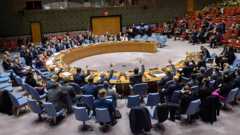
The Security Council unanimously adopting resolution 2497 (2019) extending the mandate of the UN Interim Security Force for Abyei (UNISFA). UN Photo/Loey Felipe
TheSecurity Council takes the lead in determining the existence of a threat to the peace or an act of aggression. It calls upon the parties to a dispute to settle it by peaceful means and recommends methods of adjustment or terms of settlement. UnderChapter VIIof the UN Charter, the Security Council can take enforcement measures to maintain or restore international peace and security. Such measures range fromeconomic sanctions to international military action. The Council also establishesUN Peacekeeping Operations andSpecial Political Missions.
General Assembly
Learn more about the UN General Assembly.
TheGeneral Assembly is the main deliberative, policymaking and representative organ of the UN. Through regular meetings, the General Assembly provides a forum for Member States to express their views to the entire membership and find consensus on difficult issues. It makes recommendations in the form of General Assemblyresolutions. Decisions on important questions, such as those on peace and security, admission of new members and budgetary matters, require a two-thirds majority, but other questions are decided by simple majority.
How does the UN maintain international peace and security?
Preventive Diplomacy and Mediation
The most effective way to diminish human suffering and the massive economic costs of conflicts and their aftermath is to prevent conflicts in the first place. The United Nations plays an important role inconflict prevention, usingdiplomacy,good offices andmediation. Among the tools the Organization uses to bring peace arespecial envoys andpolitical missions in the field.
Special and Personal Representatives, Envoys and Advisers of the Secretary-General
The Secretary-General of the United Nations has Special and Personal Representatives, Envoys and Advisersin many areas of the world.
What is Conflict Prevention?
Peacekeeping
Peacekeeping has proven to be one of the most effective tools available to the UN to assist countries to navigate the difficult path from conflict to peace. Today's multidimensional peacekeeping operations are called upon not only to maintain peace and security, but also to facilitatepolitical processes, protect civilians, assist in thedisarmament, demobilization and reintegration of former combatants; support constitutional processes and the organization of elections, protect and promotehuman rights and assist in restoring therule of law and extending legitimate state authority.
Peacekeeping operations get their mandates from the UN Security Council; their troops and police arecontributed by Members States; and they are managed by theDepartment of Peace Operations and supported by theDepartment of Operational Support at UN Headquarters in New York.
There are11 UN peacekeeping operations currently deployed and there have been a total of 71 deployed since 1948. In 2019, the Secretary-General launched theAction for Peacekeeping Initiative (A4P) to renew mutual political commitment to peacekeeping operations.
Life as a UN Peacekeeper
UN Peacekeeping operations by region
Africa
- United Nations Mission for the Referendum in Western Sahara (MINURSO)
- United Nations Multidimensional Integrated Stabilization Mission in the Central African Republic (MINUSCA)
- United Nations Organization Stabilization Mission in the DR Congo (MONUSCO)
- United Nations Interim Security Force for Abyei (UNISFA)
- United Nations Mission in South Sudan (UNMISS)
Asia and the Pacific
Europe and Central Asia
Peacebuilding
United Nationspeacebuilding activities are aimed at assisting countries emerging from conflict, reducing the risk of relapsing into conflict and laying the foundation for sustainable peace and development.
The UN peacebuilding architecture comprises thePeacebuilding Commission, thePeacebuilding Fund and the Peacebuilding Support Office.
ThePeacebuilding Support Office assists and supports the Peacebuilding Commission with strategic advice and policy guidance, administers the Peacebuilding Fund and serves the Secretary-General in coordinating United Nations agencies in their peacebuilding efforts.
Innovating for Peace
Department of Political and Peacebuilding Affairs (DPPA)
Presence by region
TheDepartment of Political and Peacebuilding Affairs (DPPA)works in Africa, the Americas, Asia and the Pacific, Europe and Central Asia, and the Middle East.
Countering Terrorism
The United Nations is being increasingly called upon to coordinate theglobal fight against terrorism. Eighteen universal instruments against international terrorism have been elaborated within the framework of the United Nations system relating to specific terrorist activities. In September 2006, UN Member States adopted theUnited Nations Global Counter-Terrorism Strategy. This was the first time that Member States agreed to a common strategic and operational framework against terrorism.
Disarmament
The General Assembly and other bodies of the United Nations, supported by theOffice for Disarmament Affairs, work to advance international peace and security through the pursuit of the elimination of nuclear weapons and other weapons of mass destruction and the regulation of conventional arms.
Resources / Services
- Emergency information
- Reporting Wrongdoing
- UN Journal
- Documents
- Guidelines for gender-inclusive language
- Databases
- Library
- UN iLibrary
- UN Chronicle
- UN Yearbook
- Bookshop
- Publications for sale
- Maps
- Media Accreditation
- NGO accreditation at ECOSOC
- NGO accreditation at DGC
- Visitors’ services
- Exhibits
- Procurement
- Employment
- Internships
- Model UN
- Academic Impact
- UN Archives
- UN Audiovisual Library
- How to donate to the UN System
- Information on COVID-19 (Coronavirus)
- Africa Renewal
- Ten ways the UN makes a difference
- GA High-level Week 2025
Issues / Campaigns
- Global Issues
- Observances
- Sustainable Development Goals
- Our Common Agenda
- The Summit of the Future
- Pact for the Future
- Climate Action
- Peace and Security
- Action for Peacekeeping (A4P)
- Global Crisis Response Group
- Call to Action for Human Rights
- Disability Inclusion Strategy
- Fight Racism
- Hate Speech
- LGBTIQ+ People
- Safety of Journalists
- Rule of Law
- Action to Counter Terrorism
- Victims of Terrorism
- Children and Armed Conflict
- Violence Against Children (SRSG)
- Sexual Violence in Conflict
- Refugees and Migrants
- Action Agenda on Internal Displacement
- Spotlight Initiative
- Preventing Sexual Exploitation and Abuse
- Prevention of Genocide and the Responsibility to Protect
- 1994 Genocide against the Tutsi in Rwanda
- The Holocaust
- The Question of Palestine
- The Transatlantic Slave Trade
- Decolonization
- Messengers of Peace
- Roadmap for Digital Cooperation
- Digital Financing Task Force
- Data Strategy
- Information Integrity
- Countering Disinformation
- UN80 Initiative
[8]ページ先頭