 The Essential UN
The
Essential
UN
The United Nations is the only place on Earth where all the world's nations can come together to discuss common problems and find shared solutions that benefit all of humanity.
What we do

Peace
We help warring parties make peace, deploy peacekeepers in conflict regions and create the conditions necessary for peace to take hold and flourish.

Human rights
We believe that all people are born free and equal, and advocate for everyone to have the same basic human rights, regardless of their race, sex, nationality, religion or any other status.

Humanitarian aid
We coordinate humanitarian relief for communities overwhelmed by conflict or disasters when national authorities alone cannot cope.

Development
Sustainable development and climate action are vital to the present and future well-being of humanity. ThePact for the Future points the way towards a safer, more peaceful, sustainable and inclusive world for tomorrow's generations.

International law
Our work is shaped by theUN Charter (the Organization's founding document), multilateral treaties, UN courts and tribunals. TheSecurity Council, which convenes at UN Headquarters in New York, can approve peacekeeping missions, impose sanctions, or authorize the use of force.
Ten ways we make a difference

1.
The United Nationsassists and protects 139 million people fleeing war, famine and persecution
UNHCR
Photo: The UN refugee agency (UNHCR) providing aid to Nicaraguan asylum-seekers in Costa Rica. ©UNHCR/Nicolo Filippo Rosso

2.
The United Nationsprovides food and assistance to more than 123 million people in over 120 countries and territories
WFP
Photo: The UN emergency food relief agency (WFP) feeding vulnerable people in Yemen. ©WFP/Osama Mohamed

3.
The United Nationssupplies vaccines to 45% of the world's children, helps save 3 million lives a year
UNICEF
Photo: Nurses supported by the UN children's agency (UNICEF) vaccinate babies in Côte d'Ivoire. ©UNICEF/UNI316687/Dejongh

4.
The United Nationsworks with 194 nations to keep the global temperature rise below 1.5°C
UNFCCC
Photo: The UN Global Climate Action Awards recognize the world's most innovative, scalable and replicable examples of action to tackle climate change. ©UNFCCC
5.
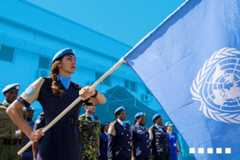
The United Nationskeeps peace with 61,000 peacekeepers in 11 operations around the world
UN Peacekeeping
Photo: Police officers serving with the UN Mission in South Sudan (UNMISS). ©UN Photo/JC McIlwaine

6.
The United Nationstackles the global water crisis affecting over 4 billion people worldwide
UN Water
Photo: UN Water supporting UN Resident Coordinators and UN Country Teams in connecting, coordinating and acting on local initiatives. ©UNHCR/Nicolo Filippo Rosso

7.
The United Nationsprotects and promotes human rights globally and through 80 treaties/declarations
Human Rights
Photo: The UN office on human rights makes sure that human rights standards and principles are integrated within the UN system policies and programmes. ©UNICEF/Rodrigo Mussapp

8.
The United Nationscoordinates US$ 45 billion appeal for the humanitarian needs of 186 million people
UN OCHA
Photo: The UN office for humanitarian affairs (OCHA) coordinating response efforts after the devastating 2023 earthquake in Türkiye. ©OCHA/L1006320 Barbaros Kayan

9.
The United Nationsuses diplomacy to prevent conflict: assists some 50 countries a year with their elections
UN DPPA
Photo: The UN provides international assistance to elections, a vital part of the democratic process. ©UNDP

10.
The United Nationsprotects over 22.5 million people with life-saving sexual and reproductive healthcare
UNFPA
Photo: The UN sexual and reproductive health agency (UNFPA) works to ensure sexual and reproductive health and rights remain at the very centre of development. ©UNFPA/Doan Bau Chau
Building our future together
In 2024, world leaders adopted the most wide-ranging international agreement in many years: the Pact for the Future.
The Pact is the culmination of an inclusive, multi-year process to adapt international cooperation to the realities of today and the challenges of tomorrow. The Pact covers entirely new areas, as well as issues on which agreement had not been possible in decades. The Pact aims to ensure that international institutions can deliver in the face of a world that has changed dramatically since they were created.
Photo: ©UN Photo/Rick Bajornas
Get involved

Join the UN
There are many ways to join the United Nations and get involved. You can apply to become a staff member, volunteer or intern, affiliate your NGO with the UN or ask your company to join the UN Global Compact.

Advocate for UN causes
You can join Act Now, the global campaign for a better, more peaceful and sustainable future, based on the 17Sustainable Development Goals, a blueprint for a better world. Tens of millions of citizens have already taken part in this movement for positive change, by volunteering in their local community, taking part in local decision-making or simply changing their personal habits to live more environmentally responsible lives.
FAQs
Many, if not all, of the questions you might have about the UN can be answered by theDag Hammarskjöld Library. Located at UN Headquarters in New York, the Library provides research, archival, and information services to support the participation of Member States at the United Nations and also in service to the general public. All answers are verified with reference to original sources.

You canput your own questions to the Library, by using theAsk DAG online tool.
Examples of frequently asked questions
How do I start research on UN topics?
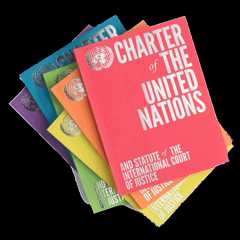
Visit ourmain website, where you can learn about theUN's history, read our founding document, theUN Charter, and explore some of theglobal issues the UN is engaged in.
Where can I find a chart of the UN System?
Here is anofficial chart showing the principal organs of the United Nations and other parts of the UN System.
Does the UN have an army?
The UN has no standing army or police force of its own.Member States are asked tocontribute military and police personnel required for Peacekeeping operations. Peacekeepers wear their countries' uniform and are identified as UN peacekeepers only by a UN blue helmet or beret and a badge.
What is the UN doing to combat racism and racial discrimination?
Throughout its history, the United Nations has worked forhuman rights and for theeradication of racism and racial discrimination around the world. TheInternational Convention on the Elimination of All Forms of Racial Discrimination was the first of the major international agreements on human rights adopted by theUN General Assembly, its implementation is monitored by theCommittee on the Elimination of Racial Discrimination.
How is the Secretary-General of the UN appointed?
TheSecretary-General, the UN's chief administrative officer, is appointed by theGeneral Assembly upon the recommendation of theSecurity Council. Most of the negotiations on this matter take place behind the scenes and the official documents rarely reflect the process, just the outcome.
Who are the current members of the UN?
There are currently 193 UN Member States. Member States are countries that have signed onto theUN Charter. Each of the Member States of the United Nations has one seat in the General Assembly. Information aboutcurrent members,growth of membership since 1945, and the procedure ofhow a country becomes a member is available on the UN website and theModel UN website.
Are UN resolutions binding?
Resolutions and decisions are formal expressions of the opinion or will of UN organs. The nature of the resolution determines if it is considered binding on States. In general,resolutions adopted by the Security Council are considered binding.
[8]ページ先頭