


New Taipei City Mayor Eric Chu (朱立倫) yesterday reiterated a proposal that would put a possible constitutional amendment on improving government accountability to a referendum in 2016, in tandem with a national election.
Chu, the sole candidate for the Chinese Nationalist Party’s (KMT) chairmanship election next month, said that many people are dissatisfied with a system of governmental power that they say lacks accountability, and advocated having more young adults and civic groups participate in the political process.
As for which political system should be adopted: “Of course, a parliamentary system is the one favored by most people at present,” Chu said, adding that if the amendment were approved in a referendum, it could take effect during the presidential election cycle in 2020.
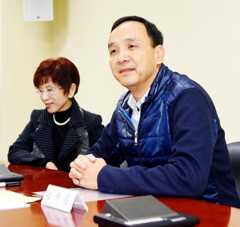
Photo: Chien Jung-fong, Taipei Times
On the KMT’s controversial assets, Chu reiterated that the party must return any ill-gotten assets to the nation, but that assets obtained through normal, legal channels should be used to nurture talent.
The real issue is to make the party’s finances and assets transparent, and let all stakeholders monitor them together, he said.
In response to reporters’ questions about a potential meeting between him and Chinese President Xi Jinping (習近平), Chu said: “I will talk about this only after I have been elected party chairman,” adding that he had not given any thought to the idea before now.
Chu registered to run for party chairman at the KMT headquarters in Taipei yesterday afternoon. He brought more than 106,000 signatures from KMT members backing his bid.
The KMT is scheduled to hold a vote on Jan. 17 to elect a new chairman, following President Ma Ying-jeou’s (馬英九) resignation from the post on Dec. 3 in the wake of the party’s raft of defeats in the Nov. 29 nine-in-one elections.
Democratic Progressive Party (DPP) Legislator Tsai Chi-chang (蔡其昌) characterized Chu’s remarks on questionable KMT assets as a “beautiful — but empty — promise,” urging Chu to support legislation on the KMT’s illegitimate party assets if he is sincere.
Tsai said that a large part of the KMT’s assets should be returned to the nation and the government as an important step in transitional justice.
Tsai added that the KMT should try to solve the assets issue to allow fair interparty competition in the nation, saying that Chu should take concrete action on the issue.
Otherwise, he would be “just another Ma,” who vowed more than 100 times to take care of the party assets issue, Tsai said.
“If the issue remains unsolved, there would always be unfair competition between political parties and the KMT would always be a target of public criticism,” Tsai said.
Taiwan Solidarity Union Legislator Lai Chen-chan (賴振昌) agreed, calling Chu’s promise merely campaign propaganda, as he never showed any concern for the issue — even during his tenure as one of the KMT’s vice chairmen.
Lai also disagreed with Chu’s proposal to “donate” the party assets in question to the nation or charity, “because the assets were national properties and should be ‘returned’ to the state, instead.”
Conversely, KMT Legislator Lu Hsueh-chang (呂學樟) said he would not support legislation regarding “illegitimate party assets,” because the title of the legislative proposal is targeting the KMT.
“Who decides what is legitimate and what is not?” Lu asked. “However, I would support drafting a political party act (政黨法) that applies to all political parties.”
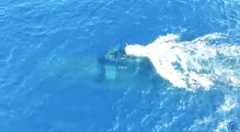
CSBC Corp, Taiwan (台灣國際造船) yesterday released the first video documenting the submerged sea trials of Taiwan’s indigenous defense submarine prototype, the Hai Kun (海鯤), or Narwhal, showing underwater navigation and the launch of countermeasures.The footage shows the vessel’s first dive, steering and control system tests, and the raising and lowering of the periscope and antenna masts.It offered a rare look at the progress in the submarine’s sea acceptance tests.The Hai Kun carried out its first shallow-water diving trial late last month and has since completed four submerged tests, CSBC said.The newly released video compiles images recorded from Jan. 29 to
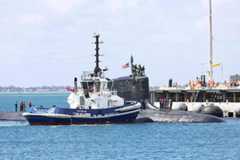
Washington and partners hope demonstrations of force would convince Beijing that military action against Taiwan would carry high costs The US is considering using HMAS Stirling in Western Australia as a forward base to strengthen its naval posture in a potential conflict with China, particularly over Taiwan, the Wall Street Journal reported on Saturday. As part of its Indo-Pacific strategy, Washington plans to deploy up to four nuclear-powered submarines at Stirling starting in 2027, providing a base near potential hot spots such as Taiwan and the South China Sea. The move also aims to enhance military integration with Pacific allies under the Australia-UK-US trilateral security partnership, the report said. Currently, US submarines operate from Guam, but the island could
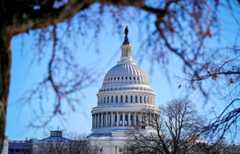
Should China’s actions pose any threat to Taiwan’s security, economic or social systems, China would be excluded from major financial institutions, the bill says The US House of Representatives on Monday passed the PROTECT Taiwan Act, which states that Washington would exclude China from participating in major global financial organizations if its actions directly threaten Taiwan’s security.The bill, proposed by Republican Representative Frank Lucas, passed with 395 votes in favor and two against.It stipulates that if China’s actions pose any threat to Taiwan’s security, economic or social systems, the US would, “to the maximum extent practicable,” exclude Beijing from international financial institutions, including the G20, the Bank for International Settlements and the Financial Stability Board.The bill makes it clear that China must be prepared
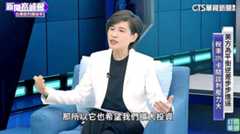
Taiwanese trade negotiators told Washington that Taipei would not relocate 40 percent of its semiconductor production to the US, and that its most advanced technologies would remain in the nation, Vice Premier Cheng Li-chiun (鄭麗君) said on Sunday.“I told the US side very clearly — that’s impossible,” Cheng, who led the negotiation team, said in an interview that aired on Sunday night on Chinese Television System. Cheng was referring to remarks last month by US Secretary of Commerce Howard Lutnick, in which he said his goal was to bring 40 percent of Taiwan’s chip supply chain to the USTaiwan’s almost


 RSS
RSS