


Russia Halts Proton Rocket Launches After Explosive Crash
When you purchase through links on our site, we may earn an affiliate commission.Here’s how it works.
Breaking space news, the latest updates on rocket launches, skywatching events and more!
You are now subscribed
Your newsletter sign-up was successful
Want to add more newsletters?
Delivered daily
Daily Newsletter
Breaking space news, the latest updates on rocket launches, skywatching events and more!

Once a month
Watch This Space
Sign up to our monthly entertainment newsletter to keep up with all our coverage of the latest sci-fi and space movies, tv shows, games and books.

Once a week
Night Sky This Week
Discover this week's must-see night sky events, moon phases, and stunning astrophotos. Sign up for our skywatching newsletter and explore the universe with us!

Twice a month
Strange New Words
Space.com's Sci-Fi Reader's Club. Read a sci-fi short story every month and join a virtual community of fellow science fiction fans!
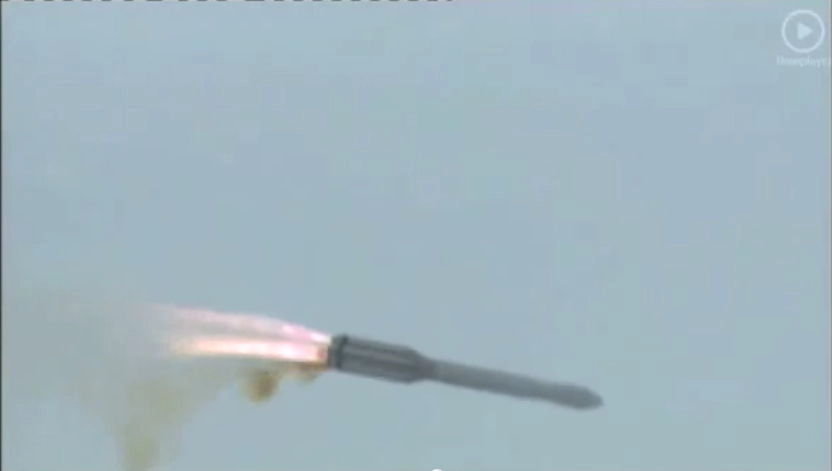
Russia has temporarily suspended upcoming launches of its Proton-M rocket in the wake of Monday's high-profile mishap, according to media reports.
An unmannedProton-M crashed shortly after blasting off on Monday (July 1), destroying three navigation satellites worth a total of nearly $200 million. The incident marked the fifth major Proton launch failure since December 2010.
You may like



The rocket was carrying 600 tons of toxic heptyl, amyl and kerosene fuel. Rain has helped keep the burning fuel's poisonous smoke in check, but officials say this smoke could continue to drift, Ria Novosti reported.
However, contamination will likely suspend activities at Baikonur Cosmodrome for two or three months, Ria Novosti reported, citing an unnamed source within the Russian space industry. The launch of a robotic Progress cargo ship to the International Space Station from Baikonur, currently scheduled for July 27, will probably be delayed as a result, according to this source.
Breaking space news, the latest updates on rocket launches, skywatching events and more!

The next manned launch from Baikonur is Soyuz 36, which is slated to blast off on Sept. 25 to take three new crewmembers to the International Space Station.
The next Proton-M launch on the docket is currently set to take place July 20 and deliver the Astra 2E communications satellite to orbit. That mission will likely be significantly delayed while the Proton investigation is underway.
The three satellites that crashed Monday were supposed to join theGlonass navigation system, Russia's homegrown alternative to the United States' Global Positioning System.
You may like
Monday's mishap continues a string of recent problems for Glonass. Three other satellites bound for the constellation were lost after another Proton crash in December 2010, for example, and the Glonass network's chief designer was let go last year amid accusations of corruption.
The Proton-M that went down yesterday was insured for 6 billion rubles ($182 million) with the Russian Insurance Center, Ria Novosti reported.
Editor's note: A previous version of this story referred to the Glonass system as being in development. In actuality, Glonass has been operational since the 1990s.
Follow Mike Wall on Twitter @michaeldwall and Google+. Follow us@Spacedotcom,Facebook orGoogle+. Originally published on SPACE.com.

Michael Wall is a Senior Space Writer with Space.com and joined the team in 2010. He primarily covers exoplanets, spaceflight and military space, but has been known to dabble in the space art beat. His book about the search for alien life, "Out There," was published on Nov. 13, 2018. Before becoming a science writer, Michael worked as a herpetologist and wildlife biologist. He has a Ph.D. in evolutionary biology from the University of Sydney, Australia, a bachelor's degree from the University of Arizona, and a graduate certificate in science writing from the University of California, Santa Cruz. To find out what his latest project is, you can follow Michael on Twitter.


