Spaceflight Bad for Astronauts' Vision, Study Suggests
When you purchase through links on our site, we may earn an affiliate commission.Here’s how it works.
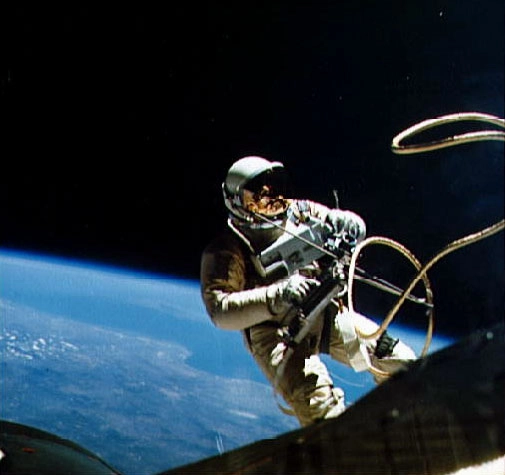
Scientists have long known that extended spaceflight is bad for astronauts' bones and muscles. Now evidence is building that it may cause vision problems as well.
In a new study, researchers used magnetic resonance imaging (MRI) to study the eyes and brains of 27 astronauts who spent an average of 108 days in space aboard NASA's space shuttle and/or theInternational Space Station. They found optical abnormalities similar to those that can occur in patients with intracranial hypertension, a potentially serious condition in which pressure builds up inside the skull.
"The MRI findings revealed various combinations of abnormalities following both short- and long-term cumulative exposure to microgravity also seen with idiopathic intracranial hypertension," lead author Larry Kramer, professor of diagnostic and interventional imaging at The University of Texas Medical School in Houston, said in a statement.
"These changes that occur duringexposure to microgravity may help scientists to better understand the mechanisms responsible for intracranial hypertension in non-space traveling patients," he added.
These abnormalities are similar to those observed with idiopathic intracranial hypertension — cases in which no cause can be determined for the increased pressure around the brain, researchers said. This pressure causes swelling of the juncture between the optic nerve and the eyeball, sometimes leading to visual problems.
Breaking space news, the latest updates on rocket launches, skywatching events and more!
Astronauts have known for a while that their six-month stints aboard the space station can causebone mineral loss and muscle atrophy; indeed, they exercise vigorously on orbit to stave off the worst of these effects. But the new study, and others like it, suggest that spaceflyers' eyes and brains may be at risk as well.
"Microgravity-induced intracranial hypertension represents a hypothetical risk factor and a potential limitation tolong-duration space travel," Kramer said.
NASA medical officials have noted vision changes in some space station astronauts, though nothing serious enough yet to ground any spaceflyers. They're not sure if intracranial hypertension is to blame, researchers said, but they're looking into it.
"NASA has placed this problem high on its list of human risks, has initiated a comprehensive program to study its mechanisms and implications and will continue to closely monitor the situation," said William Tarver, chief of the flight medicine clinic at NASA's Johnson Space Center in Houston.
Follow SPACE.com for the latest in space science and exploration news on Twitter@Spacedotcom and onFacebook.

Space.com is the premier source of space exploration, innovation and astronomy news, chronicling (and celebrating) humanity's ongoing expansion across the final frontier. Originally founded in 1999, Space.com is, and always has been, the passion of writers and editors who are space fans and also trained journalists. Our current news team consists of Editor-in-Chief Tariq Malik; Editor Hanneke Weitering, Senior Space Writer Mike Wall; Senior Writer Meghan Bartels; Senior Writer Chelsea Gohd, Senior Writer Tereza Pultarova and Staff Writer Alexander Cox, focusing on e-commerce. Senior Producer Steve Spaleta oversees our space videos, with Diana Whitcroft as our Social Media Editor.


