
by Professor Revilo P. Oliver
(Published in one volume with Francis Parker Yockey'sThe Enemy ofEurope, Liberty Bell Publications, November 1981)
DEDICATED TO THE MEMORY OF
THE FOUNDER OF THE FRANCIS PARKER YOCKEY SOCIETY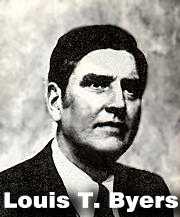
AN ARYAN OF THE ARYANS
WHO ALSO FOUGHT A GOOD FIGHT TO ITS TRAGIC END
22 OCTOBER 1981
CONTENTS
THE ENEMY OF OUR ENEMIES
PART I
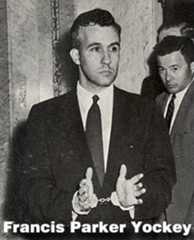 WHENFrancis Parker Yockey completed and publishedImperium in 1948,he wrote a comparatively short sequel or pendant to his major work. Thissequel, which he later entitledThe Enemy of Europe, is now lost,but he had his manuscript with him when he was in Germany in 1953, and,after revising two passages to take account of events since 1948, he hadit translated into German and printed at Frankfurt-am-Main in an editionof two hundred copies. Yockey's work displeased the Jews, who accordinglyordered their henchmen to raid the printing plant, punish the printer,smash the types, and destroy all copies of the book. Yockey escaped andfortunately had already sent several copies abroad, and it is from a photocopyof one of these that Mr. Francis has tried to restore Yockey's Englishtext, so far as possible.
The Enemy of Europe is a work of great philosophical, historical,and political significance because
1) In it Yockey applies to the contemporary situation of the world thephilosophy of history that he elaborated inImperium, much as SpenglerinDie Jahr der Entscheidung applied to the world of 1933 the philosophicaltheory he had expounded in hisUntergang des Abendlandes.
2) It is the earliest coherent expression of a political attitude inEurope which first became manifest to Americans in the late 1950s and whichat the present time largely determines the conduct of the various Europeannations in their relations with the United States and the Soviet Union.This attitude, which is generally misunderstood because, for the most part,Europeans cautiously use in public only equivocal or vague terms to intimateor disguise what Yockey said explicitly and without diplomatic subterfuge,was quickly imitated in other parts of the world and is commonly designatedby such terms as 'neutralism,' 'uncommitted nations,' and 'The Third World.'
3) Yockey's analysis of the situation when he wrote poses today themost urgent question before intelligent Americans and, indeed, all othermembers of our race--a question of political fact that each of us mustsolve, at least provisionally, before he can estimate the chances thatour species will survive on this globe.
It will be proper, therefore, to examine, as summarily as possible,each of these three aspects ofThe Enemy of Europe. Before we doso, however, it behooves us to say something about the only text in whichYockey's work is now available.
THE RETROVERSION
Yockey's manuscript, as I have said, has disappeared and must be presumedlost. (1) We may conjecture that it was in Frankfurt when the subjugatedGermans' Thought Police (2) burned, as they thought, all copies of theGerman edition, and that they found and burned it at the same time. Sofar as I know, the identity of the translator, who did the work for a smallfee, (3) is now unknown, possibly even to the Jews, who, despite the efficiencyof their espionage service, which is by far the finest and most formidablein the entire world, seem not to have known that a few copies ofDerFeind Europas escaped the destruction they had ordered.
The Jews are almost invariably accurate in statements of verifiablefact that they include in the data compiled for the use of the cowboyswho ride herd on their Aryan cattle. I note that in one such compilation,dated May 1969, they boast that Yockey's "pamphlet for distribution inthe United States" was evidently printed but "confiscated by the Federalauthorities," and that the manuscript of his unfinished book,The AmericanDestiny, was seized when he was arrested by their Federal Agents. (4)Then follows, in the list of writings of the hatedgoy, this oddentry:
Enemy of Europe (completed book but never published as manuscriptwas to be translated into German).
It would appear, therefore, that they were satisfied that all vestigesof the printed edition had been successfully effaced.
I remark in passing that American "Liberals" are wont to yap about "bookburning," but that is merely characteristic hypocrisy. Everyone knows thatwell-conditioned "intellectuals," their little minds sodden with the degradingsuperstitions that are injected into white children in the public boob-hatcheries,like well-trained dogs, never bark when their masters have enjoined silence.It is hard to believe, however, that the "intellectuals," unlike the dogs,never perceive the inconsistency of their conduct--not even when they refrainfrom complaining about the total destruction of books that are disapprovedby Jews.
From a photocopy of one surviving copy of the German book an attemptto restore Yockey's English text has been made by Mr. Francis whom I knowonly through some correspondence and conversations over the telephone.No one will expect the retroversion to be precisely what Yockey wrote,but we must specifically note that Mr. Francis has acquitted himself ofa very difficult task.
All that remains of Yockey's original are five paragraphs that do notappear in the German translation. It seems that when he sent his book topress, he extracted those paragraphs from his own "Introductory Note" andplanned to have them printed as a preface signed by a friend who was goingto contribute half of the cost of printing. (5) The friend evidently declinedthe honor: he may have been unwilling to expose himself to punishment bythe Jews or he may have decided not to remit the $210.00 that Yockey believedhe had promised. (6) Mr. Francis has restored these paragraphs to theirlogical place in Yockey's introduction. For all the rest of the book, hehad to work from the German translation.
I cannot believe that German was the translator's native language. Hisoccasional errors in syntax are not what one would expect of a young personwhose education had been interrupted by the European catastrophe, and whilesome of the awkwardness of his version suggests the sloppiness of the worstGerman journalism, they correspond much more closely to the paraphrasesand circumlocutions in which we indulge when we are speaking a foreignlanguage in which we have not learned to think, cannot call to mind a preciseequivalent of an English expression, and try to make our meaning clearas best we may. And we may be certain that Yockey's command of German wasnot adequate to enable him to revise and polish a translation that is alwayspedestrian and sometimes worse. He could doubtless speak German sufficientlyfor ordinary conversation and to write short letters, but it is significantthat he read and quoted Spengler in the English translation by CharlesFrancis Atkinson. It is true that Atkinson was a great translator whoseversions from Spengler and Friedell accurately represent the German inEnglish so impeccable, fluidly idiomatic, and, on occasion, eloquent thatthey set a standard that few translators from one language to another canhope to approach; but nevertheless, it is hard to believe that Yockey wouldnot at least have read the original texts, had he felt at home in literaryand philosophical German. That he did not do so may reasonably be inferredfrom the fact that, as Mr. Francis discovered, in the manuscript that Yockeygave to the German translator, he quoted Spengler in Atkinson's translation,and the translator, instead of supplying the corresponding text from Spengler'sGerman, simply retranslated Atkinson's English into German, somewhat distortingthe meaning in a way that gives us no high estimate in his competence ineither language. (7)
Mr. Francis's retroversion is the accomplishment of an arduous task.He had to decide where the German translator was content to approximatethe meaning of the English before him rather than render it precisely oreven altered a logical sequence of ideas to shirk the labor of transferringthe argument from one language into another in which the normal order ofwords and clauses is quite different. A comparison of some passages ofthe retroversion with the corresponding German satisfies me that Mr. Francishas approximated Yockey's original as closely as is possible in the presentcircumstances. In what follows here, my reference will be to pages of hiswork.
HISTORIONOMY
I need not remark that the formulation, or the criticism, of a philosophyof history is a task suited only to the comparatively rare minds, probablyfound only in our race, who can attain a perfectly dispassionate and relentlessobjective attitude of intellectual detachment from their personal wishes,sympathies, and even instinctive loyalties, at least during their considerationof the problems involved. Persons who have psychic fixations on gods orother praeternatural powers in whose existence they find it comfortingto believe, or who feel an uncontrollable impulse to eulogize the "greatestnation on earth" or some ideological savior, or whose vanity must be salvedby faith in the immortal excellence of their race, caste, or clique, shouldbe advised not to disturb their glands with reading that cannot fail toaffect adversely their equanimity and their blood pressure.
It is less obvious, perhaps, that every man who tries to elicit naturallaws from the records of human history willinevitably make errorsin matters of detail that need not impugn the validity of his general theory.A synoeretical view of human history or of the history of our race mustbe based in large part on secondary sources, since no man can learn allof the relevant languages or find time, in the short span of human life,to read and ponder all of the practically innumerable archaeological andphilological reports and studies that may (or may not) in some way alterour understanding of the past. To demand of a vast theoretical and philosophicalconstruction absolute accuracy in all details, as the little men who havelong been barking at Spengler's heels would have us do, is as absurd asto demand that every square centimeter of St. Peter's in Rome or WestministerAbbey be finished with the accuracy of well-cut diamond. Even if a manis not betrayed,humanitus, by the lability of his own memory whenit is charged with almost infinite details, he must, for a large part ofhis survey, depend on scholars who are reputed to be experts in the historyof some particular region or culture and whose summaries and interpretationsof data may not be endorsed by contemporaries of equal reputation in thesame field, so that, as often as not, a man must acquire a very considerableknowledge of each subject before he can decide whose authority is to betrusted, even provisionally. Furthermore, in many areas of history andpre-history our knowledge is so fragmentary that the conclusions generallyaccepted today may become obsolete tomorrow as the result of some new discovery(as, for example, the discovery that solar radiation has fluctuated evenso recently as during the past ten thousand years, which made it necessaryto calibrate chronological determinations made from the radioactive isotopeof carbon) or even detection of the spuriousness of evidence previouslyaccepted (as in the example fromThe Enemy of Europe that I shallmention below). (8)
When I reviewed the American edition ofImperium in 1963, I calledattention to a startling slip of memory. Yockey says (p. 288):
'When Charles of Anjou beheaded Conradin, the last HohenstaufenEmperor, in 1267[October 1268], Germany disappeared from Westernhistory, as a unit of political significance, for 500 years.... Duringthese centuries, the high history of Europe was made by other powers mostlywith their own blood. This meant that--in comparison with the vast expenditureof blood over the generations of the others--Germany wasspared.'Yockey, writing from memory (hence the trivial error in the date) and perceivingthe significance of the eclipse of the Holy Roman Empire as a Europeanpower, made a sweeping generalization, forgetting at the moment the ThirtyYears' War (1618-1648), in which, according to the best estimates of cautioushistorians,two-thirds of the population of Germany perished andmuch of the country was made a waste land over which Protestants and Catholicsfought, each to exterminate the other for the glory of God and the profitof the Jews.
The Enemy of Europe contains (p. 80) a compound error that is both obviousand an excellent illustration of what I have said above.
Aside from the superficial reference to Egyptian culture as petrified,which could be defended only with reference to a much later period in Egypt'shistory, there are two errors. The first of these is clearly a slip ofYockey's memory: he has confused the successive invasions of Egypt in thethirteenth century B.C. by the "Peoples of the Sea," who were predominantlyNordic (and who were defeated and expelled, finally by Ramses III in thefollowing century), with the earlier take-over of Egypt in the seventeenthcentury (9) by the "Hyksos," who were predominantly Semitic--a confusionfacilitated by the speculations of some historians who tried to reconcileconflicting evidence by postulating that the "Hyksos" were the Hittites,who were classified as Aryan (10) because they were ruled by an aristocracy(which evidently came from the east to invade and conquer the country)and their official language was based on Indo-European.
'In the 16th century B.C., Northern[nordische] barbarians invadedthe Egyptians culture-petrifact, to enact the chapter of history that iscalled the "Hyksos" era.'
The second error in that statement was not an error in 1948 in the sensethat Yockey's assumption that the "Hyksos" conquered Egypt could have beensupported by references to the works of some of the most distinguishedEgyptologists of the time, although grave misgivings about the supposedconquest had been accumulating since 1892 (and perhaps earlier), as thediscrepancies between the one long-known account (the late Egyptian historian,Manetho, as quoted and interpreted by Josephus) on the one hand and theEgyptian inscriptions and the archaeological evidence on the other becameever more glaring. It is now established that there was no conquest byforce of arms--no sudden invasion by barbarians of any race. (11) Whathappened was that Asiatics, (12) most or all of whom bore Semitic namesand came from the region in Asia Minor that is now called Palestine, bygradual immigration across the Sinai peninsula infiltrated Egypt and used,consciously or instinctively, the techniques of subversion, inciting orexacerbating class-warfare, regional differences, and the greed or ambitionof discontented Egyptians until the nation was reduced to a revolutionarychaos, fragmented under numerous local rulers, many of whom were nativeEgyptian puppets, and then again consolidated under Semitic overlords towhom the various provinces paid tribute. The Asiatics ruled Egypt for morethan a century until a native tributary dared to revolt, and the Egyptianscalled their Semitic masters, whom many Egyptians revered willingly andfor profit, their 'alien rulers'--in the modern transliteration of hieroglyphics,which ignores unwritten vowels, the ________ [unable to render--Ed.] whencethe long-misunderstood term 'Hyksos.' So much is now certain, althoughmany details remain obscure, and we note the irony that Yockey, by a fewyears, missed an historical determination that would have been of the utmostvalue in the formulation of his own theory--the first clear example ofconquest by immigration and subversion. (13)
A philosophy of history is not invalidated by such oversights, any morethan Copernican astronomy was invalidated by its author's inadequate andlargely erroneous knowledge of planetary orbits.
The analogy incidentally reminds us that the English word most commonlyapplied to efforts to formulate laws of history, historionomy, is misleading,since it suggests a possibility of determinations and predictions as preciseand certain as in astronomy. That is manifestly absurd, and the Frenchterm,m‚tahistoire, with its implied analogy to the notoriouslyspeculative and vaporous doctrines of metaphysics, is preferable, althoughit may conversely exaggerate the degree of uncertainty and insubstantiality.Whatever the name given to this comparatively new domain of inquiry, (14)it must be regarded as a philosophy, not as a science in the strict senseof that word. There is therefore a great difference between philosophicaltheory and practical perception of contemporary realities, although thetwo are combined in the work of every writer on the subject. The theoryis neither strengthened nor impaired by the accompanying view of contemporaryevents.
The still great prestige of Spengler today does not depend on the morphologyof history that he elaborated inThe Decline of the West, for whileit would be premature to make a final judgment before 2000 or even 2100,it is apparent that the course of our own civilization has drasticallydeparted from what his theory predicted. (14a) Indeed, unless there isa total and epochal reversal of present tendencies in the next two decades,it will be possible to reconcile the facts to his theory only by claimingthat Faustian civilization was, like the Inca culture of Peru, cut offand destroyed before it reached maturity--a claim excluded by Spengler'sown analysis of historical forces. For the time being, at least, the Spengleriantheory seems to have been fallacious and to be memorable only as a vastintellectual construction, comparable to Kant's philosophy, respectableas a monument of intellectual power, though mistaken in its conclusions,and as prime datum concerning the historical period in which it was constructed.But even if we flatly reject Spengler's historionomy, we must neverthelessacknowledge and admire the sagacity of a mind that perceived contemporaryrealities much more clearly than did the reputedly wisest of his contemporaries,as is evidenced by numerous observations madeobiter in his majorwork (15) and, above all, byThe Hour of Decision, in which he,in 1932, saw, with a clarity and accuracy that is now indubitable, thegrim realities of the world at that time and the imminent dangers to ourcivilization of which virtually no one was then aware. The essential accuracyof his prevision is made obvious by the disasters that have fallen so terriblyupon us. (16)
The theory of history that Yockey elaborated inImperium, whichis essentially a revision of Spengler in the light of subsequent eventsand his own reading and observations, is separable from his estimate ofthe world situation, and it is not impossible that his reputation in ourproblematical future will depend more onThe Enemy of Europe thaton his major work.
AlthoughThe Enemy of Europe is formally presented as a pendenttoImperium, we must be certain that Yockey's perception of thepresent was not deduced from historical theory. He was a man of acute anddiscerning mind, as he proved in an article published in 1939, when hewas twenty-one. (17) At that early age he saw much that was hidden fromvirtually all of his contemporaries, however experienced or learned theywere. He perceived that the so-called "Economic Depression," which so effectivelyscared the American and made them docile, had been contrived by our enemiesby use of the Federal Reserve System, which had been foisted on this nationin a campaign engineered by a Warburg, imported from Germany in 1902, whilehis kin remained at home to ensure the defeat of that nation in the Europeanwar that began, no doubt on schedule, in 1914. He foresaw--and this, mindyou, before hostilities began in Europe in 1939--that the "Depression,"which was being cunningly prolonged to subjugate the American people, "breaktheir spirits," and "make the greatest possible number dependent on theGovernment," would culminate in a planned war in which "American youthby the millions will be conscripted into armies to be sent to Asia andEurope to fight the battle of world Communism." (That, remember, was twoand one-third years before our great War Criminal was able to stampedeAmerican cattle into the war that he and his masters had instigated inEurope.) Yockey understood--as many individuals do not, even today--thatthe gradual imposition of Communist slavery on the Americans began whenWarburg, Baruch, and other Jewish herdsmen cozened the boobs into thrustingtheir necks into the yoke of the White Slave Act, officially called theSixteenth Amendment, which imposed the admittedly Marxist device of anincome tax. He perceived, as did few men of supposed financial acumen,that the bonds issued by the alien government in Washington were fraudulentand would never be redeemed for their face value in real money, althoughtheir owners might be given some counterfeit currency printed by the Treasuryin Washington and progressively depreciated. And he also perceived thatvirtually the whole of the educational system had come under the controlof typical American "educators" and "intellectuals," who will say anythingfor a fast buck, while the press, including both most of the newspapersand the popular periodicals, was even more directly controlled and oftenowned by the aliens, who were using it to defile and pervert the mindsof the young and prepare them for use as expendable animals abroad or asobedient zombies at home.
All that is obvious now--except to the verbosely "intellectual" parrotswho learn from theNew York Times and its subsidiaries what lineof chatter will keep them fashionable and hopeful aspirants tobakhshishfrom their masters--but if we can recapture in our minds the climate ofopinion when he wrote, we cannot but be mightily impressed by the perspicacityof an adolescent of twenty-one. I will frankly admit that in the summerof 1939, although I was older than Yockey and had carried my studies intomany areas of human history that he never had the leisure to investigate,and although I had no illusions about the fetid mass of traitors, enemyaliens, and looters in Washington, I grossly underestimated the power andeven the racial solidarity of the Jews. And I knew of no one who estimateour plight more accurately. Had I read Yockey's article when it was published,I should have dismissed it as an alarmed apprehension of unlikely futurecontingencies rather than a description of what had already happened.
For the acuity of perception that he then evinced, Yockey had no needof an historical theory. But sinceThe Enemy of Europe is writtenin terms of history, it will be necessary briefly to examine that philosophicalstructure.
CYCLICAL HISTORY
Imperium, as I have said, is based onThe Decline of the West.In large part, its premises are Spengler's conclusions. A critique of thephilosophy of history that the two works have in common would require alarge tome; it will suffice here to indicate some considerations that arecrucial to an estimate of it.
That history is cyclical in the sense that nations and empires riseand fall by some strange fatality in constant succession, has been a commonplacesince the first rational study of human societies and was specificallystated by Herodotus. The opinion that the fatality is quasi-biological--thatcivilized societies are themselves organisms that necessarily pass throughthe life-cycle of all living things, being born, growing to maturity, andineluctably progressing to senility and death--is doubtless much olderthan the elder Seneca, to whom we owe the first clear statement of it.(18)
That the several human species have produced more than one civilizationis indubitable. There have been numerous organized and powerful societies(e.g., the Huns) that we may classify as barbarous rather than civilized,but, no matter how strict our standards, we must at least recognize thecultures of Sumeria-Babylonia, Egypt, China, and India as civilizationsin the full sense of that word, and also as civilizations separated fromour own by an impassable abyss: we can observe their deeds, so far as thefacts can be ascertained from written records or by archaeological research,and we can read what is preserved of their literatures, but we must observethose peoples from the outside, and the greater our knowledge of theircultures, the greater our awareness that we are studying the operationof minds and instincts fundamentally different from our own. (19) To besure, we can observe their behavior and even account for it, as,mutatismutandis, we study the behavior of elephants or baboons, but we canno more establish a rapport with the inner consciousness of those peoplethan we can with the consciousness of the animals, except by such a flightof sentimental imagination as enabled James Oliver Curwood to report sovividly the thoughts of wolves.
Given the plurality of civilizations and the biological analogy, itremained for Spengler to identify a number of discrete civilizations andpostulate that each went through a life-cycle that could be defined chronologically,just as we know with fair exactitude at what age a human being will becomeadolescent, will reach maturity, and will become senile. The synchronismsthat Spengler established between the various civilizations have been thesubject of endless discussion and controversy, but we need consider hereonly the one of his premises on which the entire structure rests and bywhich that structure must stand or fall.
Spengler identifies as two entirely separate and discrete civilizationsthe Classical ("Apollonian"), c. 1100 B.C.--A.D. 300, and the Western ("Faustian"),c. A.D. 900--2200. These are the two for which we have the fullest information,and between them Spengler establishes some of his most brilliant synchronisms(e.g., Alexander the Great corresponds to Napoleon). Even a century ago,this dichotomy would have seemed almost mad, for everyone knew and tookfor granted that whatever might be true of alien cultures, our own wasa continuation, or, at least, revival of the Classical. Spengler's denialof that continuity was the most radical and startling aspect of his historicalsynthesis, but so great has been his overshadowing influence that it hasbeen accepted by a majority of the many subsequent writers on the philosophyof history, of whom we may mention here only Toynbee, Raven, Bagby, andBrown. (20) The Classical, we are told, was a civilization like the Egyptian,now dead and gone and with no organic connection with our own.
Spengler (whom Brown especially follows in this respect) supports hisdrastic dichotomy by impressively contrasting Graeco-Roman mathematicsand technology with our own; from that contrast he deduces differencesin the perception of space and time, exhibited particularly in music, andreaches the conclusion that the ClassicalWeltanschauung was essentiallystatic, desiring and recognizing only a strictly delimited and familiarworld, whereas ours is dynamic and exhibits a passionate yearning for theinfinite and the unknown. One can advance various objections to the generalizationsI have so curtly and inadequately summarized (e.g., is the difference inoutlook really greater than that between the "classical" literature ofEighteenth-Century Europe and the Romanticism of the following era?), butthe crucial point is whether the differences, which belong to the orderthat we must call spiritual for want of a better term, (21) are fundamentalor epiphenomenal.
The fortunate preservation of vestiges of Classical culture during theDark and Middle Ages may be explained in various ways, but our Westernculture today is admittedly the product of the Renaissance, which was sonamed because it was from the first believed to be a rebirth of the Classical.In all the civilized nations of Europe the best minds of our racespontaneouslyturned to Graeco-Roman antiquity for models in literature, the fine arts,politics, philosophy, and the art of living, (22) and sought to model thewhole of European society on the great ages of Greece and Rome, so faras that was feasible without inciting the revolutionary violence of massmovements, which they instinctively feared. What is most significant isthat their admiration and emulation was not indiscriminately directed towardthe whole of the Classical in Spengler's loose use of that word as a synonymfor the whole of Graeco-Roman history, but exclusively to the chronologicallysmall part of that history which they esteemed as classical in the strictsense which they gave to that word: essentially the flowering of Athensin Greece, and of Rome in the last centuries of the Republic and the Augustanperiod, i.e., the periods in which the strictly pagan civilization of antiquityreached its apogee. For the great heaps of theological trash accumulatedin both Greek and Latin before the fall of the Roman Empire, they had noreal respect, and they likewise rejected the non-Christian works of thelong decadence of the Roman Empire, except insofar as those ages of dwindlingintelligence preserved fragments of, or information about, the great eras.In other words, the best minds of the Renaissance rejected the ages ofGreek and Roman history in which the populations were mongrelized and theculture contaminated by the Orientals who became its representatives--andthis rejection was aninstinctive aversion, for I have found noindication that any scholar of the Renaissance was aware of the racialmutation in the populations of antiquity.
So strong was this spontaneous esteem for the great ages of pagan antiquitythat it prevailed over the opposition of both Church and secular rulers.The more alert ecclesiastics did not fail to perceive that the rebirthof pagan antiquity was bad for their business, but the wiser ones perceivedthat the intellectual enthusiasm could not be successfully repressed andelected to join what they could not defeat. Many rulers of the time weredoubtless embarrassed. We can imagine the sentiments of the first Sforza,a peasant become a duke, as he watched comedies performed in Latin andpretended to appreciate humor that depended on linguistic subtleties. Weowe a good phrase to the first James of England, who warned his sons thatbase-born men might speak better Latin, but no one could criticize theKing's English. He thus differed from Lord Chesterfield, who complacentlyremarked to his son that gentlemen are apt to speak better Latin than professionalscholars, for gentlemen study only the real classics, whereas the scholarsmust read large quantities of decadent stuff in search of historical information.So great, you see, was the attraction of the true classics, so great wasthe affinity that our race instinctively felt for the great ages of Antiquity,that for five centuries the greater part of the youth of all educated menwas devoted to mastering the modalities of ancient thought so completelythat they could write Latin verse and prose of classical purity and oftenGreek with equal facility and classical accuracy.
This devotion to the great ages of Greece and Rome produced, in spiteof economic and religious considerations, a stupendous educational effortthat is without precedent or parallel in the accumulated history of mankind,(23) and ended only with the fissuring of our civilization by recrudescentbarbarism and cultural sabotage. All this, Spengler and Yockey would haveus dismiss as "pseudo-morphosis," as a young civilization's respect fora predecessor--in sum, as an hallucination--an hallucination, furthermore,of an intensity and persistence that makesunique our civilization,no matter how it is explained.
My purpose here is merely to indicate a few cogent objections to theSpenglerian historionomy, not to propose solutions of the difficultiesthus indicated, which would be tantamount to formulating a new philosophyof history. I turn therefore to other considerations that preclude, I think,an uncritical and merely enthusiastic acceptance of the cyclical hypothesis.
Spengler and Brown particularly insist on the deficiencies of ancientmathematics, which they both exaggerate, (24) but if there is a dominantcharacteristic of our civilization, it is the capacity (in good minds)for rigorously objective observation of nature and strictly rational inferencesand deductions therefrom--the mentality that has made possible our scienceand technology. This is the type of mentality that Professor Haas, whomI mentioned above, calls 'philosophical' to distinguish it from other types,and if we look through recorded history and insist on something more thanthe invention of simple devices, such as wheels or bows and arrows or permanentbuildings, we find the first manifestation of this mentality in the Ionianphilosophers, who sought to explain the universe without invoking magicand a mythology about praeterhuman beings. That is the real substance ofGraeco-Roman philosophy, and we should take especial notice of the NewAcademy,from which comes the basic method of modern science, which depends on anice calculation of probabilities. If we look for this rational view ofthe world in other civilizations, we find no trace of it in the Egyptianor the Sumerian-Babylonian, for in both of these, so far as we know, theworld was always thought of as the work of gods and its phenomena attributedto magic, not to the regularity of natural laws. In the Arabian ("Magian")civilization, we find only a few individuals, such as Averro‰s and IbnKhald�n, who, on the basis of a knowledge of Aristotle and other Greekauthors, rise above the gross superstitions of Islam and appear as mereeccentrics in a culture on which they had no influence, and we have onlyto read them to see how far their mentality differs from the objectiveuse of reason that distinguishes what we may, with Haas, call the philosophicalmind. In India, we find the Lok yata, of which we know through scatteredreferences in extant literature, but this rationalism seems to have flourishedonly briefly and during the period before Aryan dominance was seriouslythreatened, after which the 'philousian' mentality so prevailed in theconglomerate population of India that the Hindus provide Haas with hisneatest example of it, and faith in the supernatural made the physicalworld seem nugatory and even illusory. In China, although the nocturnesof Confucius and Mencius are relatively free of gross superstition, andthe Fa Chia, a pragmatism confined to a ruling ‚lite, considered societyin implacably realistic terms, there is no evidence of a truly philosophicalattempt to ascertain the laws of nature. We find, therefore, in our civilizationa type of mentality paralleled only in Graeco-Roman antiquity, where, significantly,it is the mentality of men of our race.
The cardinal flaw in the historical theories of Spengler and Yockeyis an almost perverse equivocation about the biological reality of race.Both strive to make race more or less independent of genetics, althoughthey do not go so far as does Alexander Raven, who would reduce civilizationto a "super-organic" idea. InThe Enemy of Europe (p. 43), Yockeyinsists that "the idea of vertical [= linear, i.e., hereditary] race isdead.... The race one feels in oneself is everything, the anatomico-geographicgroup whence one comes means nothing," and he even deplores the racialpolicy of the National Socialist r‚gime as "an enormous tragedy." (25)It is true that Yockey, following Spengler, had the strange notion thatthe physical characteristics of race, such as the cephalic index, weredetermined by the landscape and soil, not be genes, in proof whereof "long-headedJews from Sicily, and short-headed ones from Germany, produced offspringwith the same average head measurement, the specifically American one."(26) Spengler was taken in by some of the propaganda for an American "meltingpot" and especially by the hoax contrived by Franz Boas, a twisted littleJew, who popped into the United States, was, for undisclosed reasons, madeProfessor of Anthropology in Columbia University, and founded a schoolof fiction-writing called "social anthropology," (27) It is also true thatSpengler and Yockey, unlike Raven, do not categorically deny that racein the accepted meaning of that word does determine the outlook of a peopleand hence the quality of their civilization, but they create some confusionby using 'race' and 'thoroughbred' to designate a high degree of excellencein individuals who, it seems, are largely the product of the soil of theregion in which they reside. They simply ignore the vast amount of scientificevidence that the potentiality of every individual is unalterably determinedby his heredity, although obviously his development will be affected bynutrition and other environmental factors and, of course, by sheer accident,which may terminate his life at any stage.
This attempt to minimize the biological nature of men is paradoxicalin writers who not only recognize that the greater part of human conductis determined by instincts and tropisms that are largely subconscious,but so restrict the function of reason as to make it virtually withouteffect on the course of history. We are told--and the proposition is illustratedby examples drawn from the history of our race--that great men, who determineevents rather that chatter or write about them, have a 'tact' or instinctthat enables them to make correct decisions with so little reliance ontheir rational powers that they may not know why they took the action thatmade them victorious or successful in a given undertaking. Their strengthcomes, not from superior powers of cognition and cogitation, but from afaith in their own destiny. The psychological problem cannot be analyzedhere, (28) but if we accept the claim that even the greatest men are basicallyirrational, we thereby attribute to heredity an absolute power over humanconduct, of which it becomes the sole determinant, since it is beyond questionthat in all mammals, including men, instincts are innate and geneticallytransmitted. The logical conclusion to be drawn from Spengler's psychology,therefore, is that biological race is supremely important. Granting that"the race one feels in oneself" is what counts, what one feels (as distinctfrom what one may simulate) is genetically determined.
Yockey's denunciation of "materialistic race-thinking" does have somebasis in the lamentably elementary state of our present knowledge of racialgenetics, which may be compared to the state of chemical science at thedeath of Lavoisier. The natural laws that determine the inheritance ofphysiological characteristics, such as color of eyes or olfactory sensitivity,are fairly well ascertained, but we are far from being able to identifyracialgenotypes. The problem is of enormous complexity, and is further complicatedby the migratory and adventurous proclivities of our own race. Everyoneknows, for example, that the Chinese are Mongolians, but few know thateven as relatively late as the Fourth Century there was at least one ChineseEmperor (Ming) who was evidently a Nordic, having blue eyes, blond hair,and a flowing yellow beard. Even these distinctive traits are not necessarilyunited--everyone has seen persons with blue eyes and black hair, for example--andno one should be astonished that we find in China portraits of men in whom"the flat face is Mongoloid, but the wide open eyes are Europoid." (29)There are many hybrids and racial traits often inextricable confused--afact which greatly impresses thoughtless "intellectuals," who, if theyhad lived in the time of Lavoisier, would doubtless have clamored for legislationto forbid discrimination on the grounds that the four recognized elements,earth, air, fire, and water, are not found in a pure state, whence it followsthat it is wicked to recognize differences between them and to bathe inwater rather than in mud or a bonfire.
Although we can, within limits, determine the transmission and inheritanceof physical traits, and although we know that intellectual capacity, asshown by intelligence tests, is genetically determined, we know virtuallynothing about the biological mechanism that transmit the almost infinitelycomplex elements of human consciousness and subconscious being. In certaininstances, at least, the psychic elements may be independent of the strictlyphysiological. No anthropologist or geneticist can explain the fact thatthere are Jews, members of Yahweh's Master Race, who exhibit the physicalcharacteristics of other races. The Jews in China, for example, seem toWestern eyes, at least, indistinguishable from the Mongolians among whomthey reside, although they are spiritually and mentally full members ofthe Self-Chosen People. We must assume that the Jews, who have preservedtheir racial identity and cohesion through so many centuries, have an empiricalknowledge of genetics much greater than our own, butour knowledgeis so limited that we can neither confirm nor disprove Dr. Alfred Nossig'sterrifying boast, "A single little drop of Jewish blood influences thementality of entire families, even through a long series of generations."(30)
There is one great difference between Spengler's concept of race andYockey's. Although Spengler recognizes the Jews as a Magian people imbuedwith a Magian world-outlook and so instinctively different from us (andtherefore at the limit incomprehensible to us), and although he knows thatthis alien body, this international nation, is today, as it was for centuriesbefore the Christian Era, lodged in all the nations of the world that itcan profitably exploit, he regards the natural antagonism between Jewsand their hosts as basically not determined by biological race, but ratherby the phase of civilization, the Jews representing a Magian culture thatis much older than ours and now petrified. (Hence, of course, Toynbee'sdescription of the Jews as a "fossil people," despite the absurdity ofapplying such a phrase to a species that is so active and powerful and,quite possibly, has a vitality much greater than our own.) Spengler askedhis readers to believe that the Jews are a dwindling and disintegratingpeople, a negligible force in world politics and the struggle for power.I have always thought the Jews' aspersions of Spengler's memory a goodexample of their habitual ingratitude toward their most effective apologists.
Yockey, educated by events that Spengler did not live to see, regardsthe Jews as the dominant force in the world of 1952. He has very littleto say, however, about their unvarying activity through all the centuriessince they first appear in history, and he focuses his attention entirelyon the present. We must therefore postpone consideration of it to a latersection, and conclude our discussion of historical theory with notice ofone crucial deficiency in both writers.
Cont'd inSection 2

For reprint information please write toLiberty Bell Publications,Post Office Box 21, Reedy WV 25270 USA.
Copyright ©1999 Kevin Alfred Strom. Backto Revilo P. Oliver Index