أوغاريت
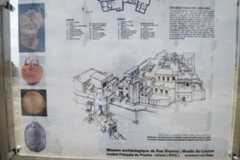
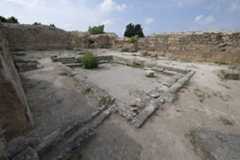
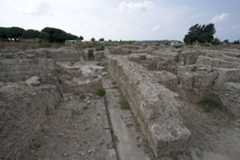
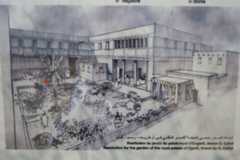
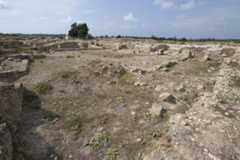
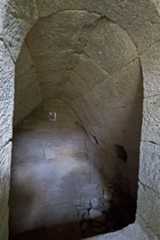
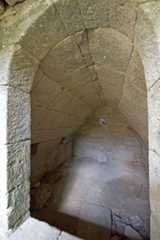
Click here to link to a list of my many ancient site in Turkey, Syria and Jordan.From the Enc. Britt.: “ancient city lying in a large artificial mound called Ras Shamra (Ra's Shamrah), 6 miles (10 km) north of Al-Lâdhiqîyah (Latakia) on the Mediterranean coast of northern Syria. Its ruins, about half a mile from the shore, were first uncovered by the plow of a peasant at Al-Bayḍâ Bay. The most prosperous and the best-documented age in Ugarit's history, dated from about 1450 to about 1200 BC, produced great royal palaces and temples and shrines, with a high priests' library and other libraries on the acropolis. Some of the family vaults built under the stone houses show strong Mycenaean influence. Mycenaean and Cypriot pottery in great amounts has also been found. After the discovery of the temple library, which revealed a hitherto unknown cuneiform alphabetic script as well as an entirely new mythological and religious literature, several other palatial as well as private libraries were found, along with archives dealing with all aspects of the city's political, social, economic, and cultural life. The art of Ugarit in its golden age is best illustrated by a golden cup and patera (bowl) ornamented with incised Ugaritic scenes; by carved stone stelae and bronze statuettes and ceremonial axes; by carved ivory panels depicting royal activities; and by other fine-carved ivories. Despite Egyptian influence, Ugaritic art exhibits a Syrian style of its own. Soon after 1200 BC Ugarit came to an end. Its fall coincided with the invasion of the Northern and Sea Peoples and certainly with earthquakes and famines. In the Iron Age and during the 6th–4th century BC, there were small settlements on the site (Leukos Limen).”
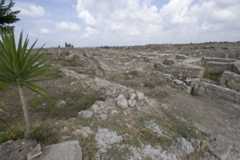
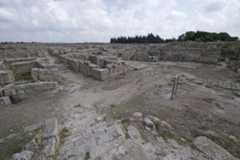
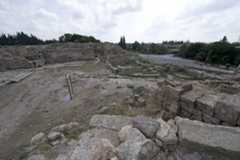
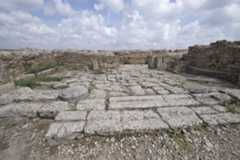
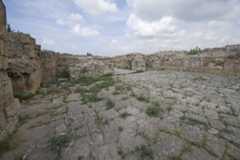
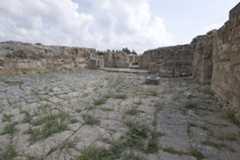
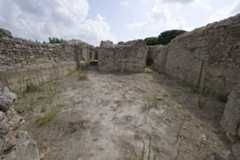
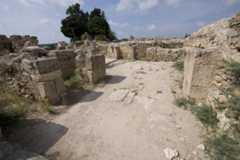
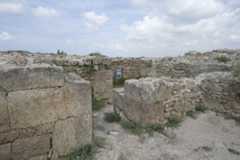
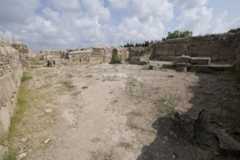
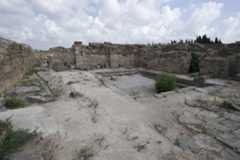
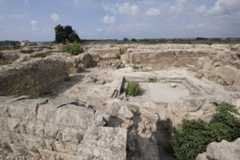
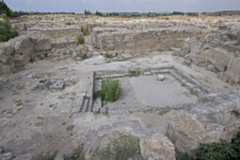
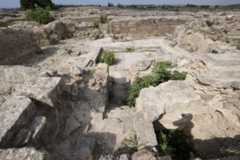
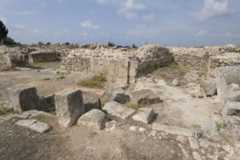
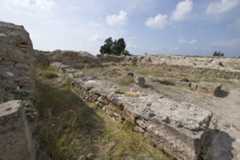
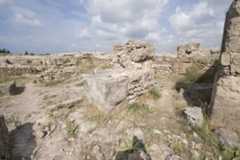
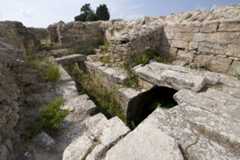
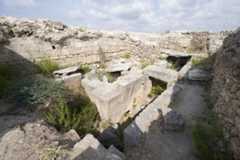
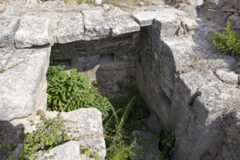
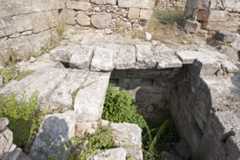
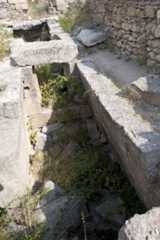
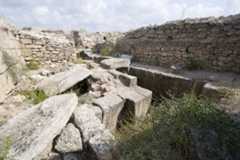
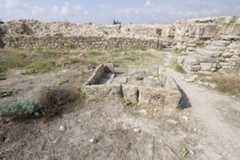
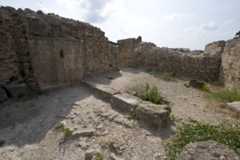
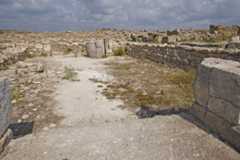
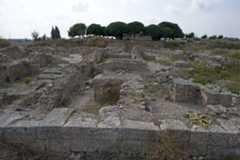
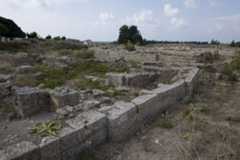
It is very hard to get an impression of what things were like, I can well imagine the pictures do no credit to site. Ugarit is almost a suburb of
Latakia, so if you're there, go and see for yourself.