Movatterモバイル変換
[0]ホーム
The Oneida Community
THE SHAKERS / ONEIDA COMMUNITY
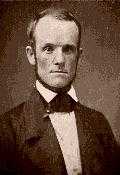 The founder ofthe Oneida Community was John Humphrey Noyes. He was born in Brattleboro,Vermont, in 1811. John Humphrey came from a well established home where hisfather, also named John, was a congressman and Dartmouth graduate. His motherPolly was sixteen years younger than his father and was a very strong- willedand deeply religious woman. She always taught her children "to fear theLord." She even prayed before John Humphrey's birth that someday he mightbecome a devoted minister of the gospel. Up until John Humphery's conversion,he was known as a rebel who had little interest in theology or in his studies. He entered Dartmouth in 1826, the year that revival had hit its peak underCharles Finney. But to no avail, John was not affected by it and looked atreligion with great cynicism. Five years later though, at the request of hismother, John attended a four-day revival meeting in Putney, Vermont, again underthe ministry of Charles Finney. At first he was not moved by what he heard, "butafter the meeting he suffered a feverish cold which led him to think of death,and to humble himself before God." He vigorously embraced the faith andthe expectation of the beginning of the Millennial Kingdom. Later he studied atAndover and Yale Divinity School with a vision of going into the ministry.
While at Yale, Noyes came to a new understanding of the way of salvationwhich he labeled as Perfectionism. This view did not hold to total depravity asdid the Calvinists' view, but it saw man as reaching a state of perfection orsinlessness at conversion. When Noyes asserted this doctrine of completerelease from sin at conversion while studying at Yale Divinity School, he wasdenied ordination. It is said that one of the reasons that Noyes adopted thisdoctrine was the fact that he could not believe that he was a sinner, since hecould not summon up from within any feeling of deep guilt and despair. Forwhatever reason he adopted this doctrine, it was the underlying foundation ofhis future endeavors.
History of the Movement
In 1834, John Humphrey Noyes started developing the theories that wouldlater become the foundation of truth in the Oneida Community. Over the nextthree years, John canvassed New York state and New England trying to make newconverts with no avail. Finally, after a tough three-week period in New YorkCity, he reached the verge of a complete mental and emotional breakdown. To topthings off, his first and most faithful follower, Abigail Merwin, left him tomarry another man.
Shortly after these events, Noyes started writing articles which werepublished in a new periodical called the "Battle- Axe". His firstarticle was on the denunciation of the institution of marriage. Also, inSeptember of this year (1837), part of a letter written by Noyes to a friend wasanonymously published by the editor in the Battle-Axe. This letter stated thatNoyes felt from his interpretation of a biblical prophecy, that he was clearlyconvinced he was God's agent on earth. This article did not bring as muchoutrage by the people as did a later article that outlined his beliefs on sexualrelationships in the spiritual world and that would prevail in the millennialkingdom (Whitworth 95).
Through the writing of these articles, a woman by the name of HarrietHolton, the granddaughter of the Lieutenant-Governor of the state, becameinterested in Noyes and his work. She started to financially support him, andlater, after Noyes realized that he would never get Abigail Merwin back, slowlycame to the point where he realized that Harriet was filling the void thatAbigail had left. In June of 1838, Noyes wrote Harriet a letter in which heproposed in a very careful way. He explained to her that their marriage wouldbe a spiritual one, even though for that time period it would be a carnal orearthly marriage. But, he felt that the marriage would benefit both of them andthat they, according to his teachings, would not selfishly possess one another.
One of his main reasons for getting married was that he felt the marriagewould advance the work of God in which he was engaged. Also, it showed otherswho were criticizing him of his celibate state that he was not for celibacy, aswere the Shakers. Noyes also said that, "By this marriage, besidesherself, and a good social position, which she held as belonging to the firstfamilies of Vermont, I obtained money enough to buy a house and printing-office,and to buy a press and type." The press was then used to propagate Noyes'teachings through a publication called "The Witness," which he had todiscontinue due to a lack of funds. So this marriage seems to have been basedmainly on convenience.
After his marriage, Noyes then helped to arrange the marriages of hissisters to two of his closest followers, John L. Skinner and John R. Miller, whowere students from his Bible institute which he had started in 1836 in Putney. He also gained the loyalty of his younger brother George and later, due to muchpressure, his own mother who had been previously very upset by the way in whichhe had been using up the family estate to finance his religious endeavors. Soat this point, John and George Noyes, Skinner, Miller, and a later addition ofGeorge Cragin became the center of an informal governing group of the movement.
Finally, in 1840, "the Putney Association came into being - as a purelyreligious body.". Then, in 1844, the group formally adopted communism bywhich to live. This communism "included all property of family living andassociations." At this time there were approximately thirty-seven membersthat were involved. They lived in three houses, maintained a store, andworshiped together in a small chapel. They also ran two farms at this time, andbecause of the death of Noyes' father who left $20,000 each to four members whowere in the community, they were able to support themselves.
Two years later, in 1846, the community adopted Noyes' teachings of "MutualCriticism," "Complex Marriage" and "Male Continence". At this time in the groups history, these practices were only practiced on asmall scale among leadership, and not until 1848 in Oneida, New York, wouldthese be practiced by the whole community. Because of these practices, thecommunity came under much persecution, even to the point where Noyes wasindicted for adultery. Noyes, not wanting to become a useless martyr, and whoby this time was viewed by the group as the Moses of the new dispensation whowas going to lead them to the promised land, quickly purchased twenty-threeacres of land that contained some buildings in Oneida, New York.
 Their"Promised Land" was near the Canadian border which would be veryconvenient in case of future persecution. Then in 1847, the Putney group agreed"that the Kingdom of God had come." . The community could believethis because of two of Noyes' teachings: one being that Christ's second comingtook place in A.D. 70, and the other being that they could bring in themillennial kingdom themselves. Forty-five of his followers from Putney followedNoyes to Oneida and by the end of 1848, their membership grew to eighty-seven.
The economic base of the Oneida Community was agricultural and industrial. They had approximately forty acres of partially cleared land on which to farmand an Indian sawmill in which to produce lumber. Over the next year, thecommunity purchased and cultivated additional land, established a variety ofminor craft industries, built a communal dwelling house [now a museum,pictured above], appointed administrative committees and set up a pattern ofdaily living which the community followed for the next thirty years.
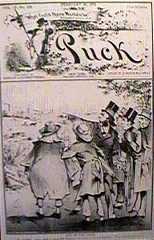 As statedearlier, Noyes' teachings were practiced here by the community. The mainteaching which received the most criticism was that of "Complex Marriage." In Complex Marriage, every man was married to every woman and vice versa. Thispractice was to stay only within the community and had to stay within two mainguidelines. The first was that before the man and woman could cohabit, they hadto obtain each other's consent through a third person or persons. Secondly, notwo people could have exclusive attachment with each other because it would beselfish and idolatrous. Any two people found in any such situation would beseparated and not allowed to see each other for a certain length of time.
Another teaching practiced at the Oneida Community was that of "MaleContinence," which was a type of birth control. In the practice of MaleContinence, "a couple would engage in sexual congress without the man everejaculating, either during intercourse or after withdrawal." Noyesjustified this practice because his wife Harriet in the first six years of theirmarriage had five difficult childbirths, four of which were premature andresulted in the deaths of the children. Noyes came to the conclusion that wherean unwanted pregnancy occurred, there was a waste of the man's seed and that itwas no different in practice to masturbation. With the implementation of MaleContinence, which lasted from 1848 to 1868, some forty children were born in thecommunity of about two hundred and fifty people.
Another teaching practiced along these same lines was that of "AscendingFellowship." Ascending Fellowship was set up to properly introduce thevirgins into Complex Marriage. This practice also worked to prevent the youngmembers from falling in love with each other and from limiting their range ofaffection to just the younger members. The main people picked to care for thevirgins were people who were considered to be closer to God. These people wereof course older and had a special title which was that of Central Member. TheseCentral Members were allowed their pick of a partner over which they would havethe responsibility of spiritual guidance. It usually worked that the maleCentral Member would pick any female virgin of his choice. Due to her lowerorder, she was compelled to accept. In the case of the female Central Member,they were usually past the age of menopause, and when they chose their malevirgin, they were obligated to honor the request. The reason women pastmenopause were chosen was so that as they taught the younger men MaleContinence, they would not have to worry about unwanted pregnancies.
The forth major teaching practiced was that of "Mutual Criticism." Mutual Criticism was established to assure the integrity of the community byconformity to Noyes' morality. The way in which Mutual Criticism worked wasthat a member, under communal control, was subjected to criticisms of either acommittee or the whole community. The criticisms were usually directed towardthe "member's bad traits (those thoughts or acts that detracted from familyunity), and an individual could be put through a shameful, humiliatingexperience." Only Noyes himself would not go through this unless hedecided to, because he felt that a group should not criticize their leader.
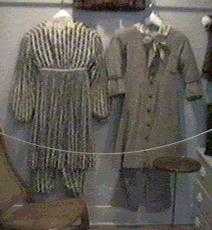 Inthe area of government of the Oneida Community there were "twenty-onestanding committees and forty-eight administrative departments. Thisorganization covered every conceivable activity and interest from hair-cuttingand dentistry to education and silk- manufacture." The Oneida Communityhad no definite rules restricting a member's time of rising in the morning forwork, but they had very few problems with people taking advantage of it. Alsoat Oneida, the women had equality with the men and served on these committeesand shared in all activities.
In 1849, a small branch community started at Brooklyn, and others followed"at Wallingford, Newark, Putney, Cambridge, and Manlius. But in 1855, some ofthese communities were abandoned so that a concentration of members would takeplace at Oneida and Wallingford." By this time, "relative tranquilityhad been achieved and almost all the theories and practices that would makeOneida one of the most distinctive of all American ventures in religious andsocial reorganization had been at least provisionally established."
The Oneida Community never did become very large. In January of 1849 thecommunity had 87 members; 172 members by February of 1850, and by February of1851 the number rose to approximately 205 members. The records show that in1875 there were 298 members, and by 1878, the beginning year of the breakup,there were 306 members. From the original 87 members at Oneida in 1849, thetotals from that year on were group totals from all of the communities combined.
Over the years from 1849 to 1879, "the community remained true to itsoriginal ideals." Problems started to occur in 1876 when Noyes tried tohand over leadership to his son, Dr. Theodore Noyes, who was an agnostic. Notonly was the fact that he was an agnostic bad enough, but he ran the communitywith a tight fist which was resented by the people. It got so bad that JohnHumphrey Noyes himself had to come back from Wallingford where he was living toput things back in order. By then it was too late, factions within thecommunity had already formed, some even with the opposition on the outside. Andthen in 1879, due to the opposition and hostility from the surroundingcommunities, Noyes, who had already withdrawn from active leadership, feltcompelled to abandon the system of Complex Marriage. Even though Noyes wantedto keep the community together after this, some living married and otherscelibate (not preferred), problems occurred.
Many of the members quickly got married, but since Complex Marriage was suchan integrated part of their lives, the community could not settle down to theirnormal style of living. In 1880, a committee was appointed "to considerthe advisability of re-organizing upon a joint-stock basis." In January of1881 the joint-stock company, called the "Oneida Community, Limited,"was set up and the Oneida Community was abandoned.
Noyes did not see the necessity of observing the Sabbath (Whitworth 104). They did have a Sunday chapel meeting in which outsiders were allowed in. Afterwork in the evening they would sing and pray and be taught such languages asHebrew, Greek and Latin. Not much else is written on the topic.
Doctrines
(1) COMPLEX MARRIAGE - This is where every man and every woman is married toeach other. They could engage in sexual intercourse, but could not be attachedto each other as stated earlier.
(2) MALE CONTINENCE - This was a form of birth control where during andafter sexual intercourse the man could not ejaculate.
(3) ASCENDING FELLOWSHIP - This is where the young virgins in the communitywere brought into the practice of Complex Marriage. The older godly members whowere in a special group and were called Central Members would pick a virgin tobe spiritually responsible for. This took place when the young people wereabout fourteen years old.
(4) MUTUAL CRITICISM - In Mutual Criticism, each member of the communitythat was being reprimanded was taken in front of either a committee or sometimesthe whole community to be criticized for their action.
(5) CONFESSION - The members of the community, according to Noyes, weresinless after conversion, so no confession would be needed.
(6) REGENERATION - That Christ's death was not for the sins of man, but wasthe first blow to Satan. But that by believing in the death of Christ, one wasreleased from sin, because Christ destroyed the central cause of sin. Bybelieving then, one is regenerated (Whitworth 101-102).
(7) SEPARATION - The members did separate into a community, but their mainseparation was to be a sexual one.
(8) REVELATION - Noyes never said that he received special revelation,though he did have some twisted interpretations. Noyes once wrote an article in"The Berean" and emphasized the credibility of scripture and denouncedthose who denied the validity and relevance of scripture.
(9) EQUALITY OF THE SEXES - The Oneida Community believed in equality of thesexes as stated earlier.
(10) MILLENNIAL KINGDOM - That the Millennial Kingdom had been introduced inA.D. 70 at which time Noyes thought Christ had made His Second Coming (Hudson186).
The full, unannotated and footnoted text of this articleis found at:http://www.webzonecom.com/ccn/cults/othr09b.txt
[8]ページ先頭