 |     |
| |

 KumudiniLakhia - Kiran Rajagopalan, Chennai e-mail: kiran.rajagopalan@gmail.com December 13,2009 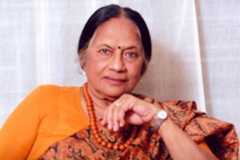 Witha lifetime of devotion to Kathak dance, Kumudini Lakhia's imaginative explorationof the Kathak form for choreography has taken Kathak beyond a specificstyle into a universe of artistic value. No other Indian classical dancerhas created the number of compositions based on classical dance as thosecreated by Kumudini Lakhia. She was one of the first amongst the Kathakdancers to visualize this particular dance style in a contemporary context. Some of herwell-known choreographic pieces such as 'Dhabkar,' 'Atah Kim' and 'TheCoat' are landmarks in the annals of Indian dance. She has participatedin numerous dance seminars, given lecture - demonstrations and conductedmaster classes in many dance centres all over the world. She establishedKadamb Centre for Dance and Music in 1967 in Ahmedabad, and has trainedmany excellent dancers. How difficultwas it to initially break away from traditional practice and performanceof Kathak and to then develop your own vision of the art? I never didbreak away from the traditional form of Kathak. Training in a traditionalform not only gives you the source, but also the strength to think beyondthe accepted format. I always knew that there was much more to Kathak thanmet the eye. It was because the performer who played to the applause fromthe audience, which came only from chakkars and foot work, that Kathakvocabulary started to look limited. What isyour teaching style like? How should gurus nurture young dancersinto becoming discerning choreographers and/or performers in their ownright? In the teachingof Kathak, I tried to incorporate much of the Kathak vocabulary which Ihad learnt from my Gurus. It was also important to make the learningeasily understood and to make the learning experience more enjoyable asstudents today are stressed with their academic performance which has becomevery competitive. Not all studentswant to take up dance as a career, but for those who want to, special attentionis required. Of all my students, those who have become professionalin the dance field have a holistic approach to life and have shown a keeninterest not only in dance but in the general progress of their environment. The eminentGujarati composer Atul Desai has been associated with Kadamb, your institutein Ahmedabad, for five decades! What are the advantages of workingwith one composer for such a long time? How did his music evolveas he composed for your works over the years? Atul Desaiis an extremely sensitive artist. His strength has been in his interestin literature from which he gets a variety of information and which hashelped him in maintaining a high standard of values and aesthetics. Hestarted to appreciate dance by watching it closely. He felt the pulse ofthe dance through which he was able to transform any theme, situation,or mood into a musical experience. Our association has lasted for 50 yearsbecause Atul Desai's music brought a special artistic experience to oneand all at Kadamb. What isyour favorite holiday or festival celebrated in India and why? India hasmany festivals and holidays. Different states of India have theirown way of celebrations. In Gujarat it is kite-flying, in Maharashtrait is Ganapati, in UP it is Holi, in Bengal it is Durga Puja, in the Southit is Pongal, and so on. Diwali is the common festival everywherebecause a light is the symbol of knowledge. Contact:kadamb@vsnl.net |
