 Live Science Plus





Get the world’s most fascinating discoveries delivered straight to your inbox.
You are now subscribed
Your newsletter sign-up was successful
Want to add more newsletters?

Delivered Daily
Daily Newsletter
Sign up for the latest discoveries, groundbreaking research and fascinating breakthroughs that impact you and the wider world direct to your inbox.

Once a week
Life's Little Mysteries
Feed your curiosity with an exclusive mystery every week, solved with science and delivered direct to your inbox before it's seen anywhere else.

Once a week
How It Works
Sign up to our free science & technology newsletter for your weekly fix of fascinating articles, quick quizzes, amazing images, and more

Delivered daily
Space.com Newsletter
Breaking space news, the latest updates on rocket launches, skywatching events and more!

Once a month
Watch This Space
Sign up to our monthly entertainment newsletter to keep up with all our coverage of the latest sci-fi and space movies, tv shows, games and books.

Once a week
Night Sky This Week
Discover this week's must-see night sky events, moon phases, and stunning astrophotos. Sign up for our skywatching newsletter and explore the universe with us!
Join the club
Get full access to premium articles, exclusive features and a growing list of member rewards.
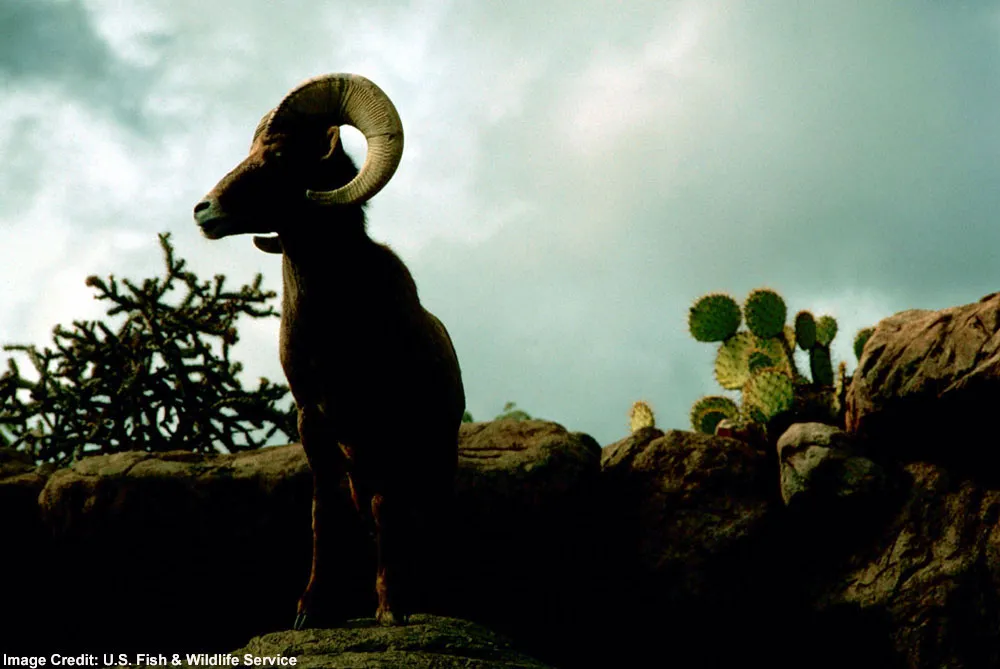
Rams are male bighorn sheep, animals that live in the mountains and often settle arguments with fights that include ramming their heads into others. Not to be confused with mountain goats, rams can be identified by their long, curved horns, long fur, and split hooves. Bighorn sheep are bovines and are related to antelopes, bison, buffalo, cattle and goats.
Size
Habitat
Bighorn sheep live in the Rocky Mountain region of North America, ranging from Mexico, northward across the western United States and into Canada. They live in the rocky areas, balancing on the boulders with their hooves, which are rough on the bottom to give the sheep more traction. Thanks to their amazing balance, bighorn sheep can stand on ledges that are only 2 inches (5 centimeters) wide. They can also jump 20 feet (6 m) and can go up a mountain at a brisk 15 mph (24 km/h). The only better mountain climbers in the animal world are mountain goats.



Desert bighorn sheep, a subspecies, live in Death Valley, California, as well as Nevada, Texas and northern Mexico. They can live on desert mountains as high as 4,000 feet (1,200 m). They get most of their water from eating plants to survive, according to theNatural History Museum of Los Angeles.

Habits
Bighorn sheep have very good eyesight, which allows them to judge distances accurately when jumping, according to the University of Michgan'sAnimal Diversity Web (ADW). They also watch animals as far as a mile away.
Herds are separated by gender. Females live in nursery herds, with five to 100 members, which include adult females and lambs of both genders. Male-only bachelor herds usually contain five to 50 rams at one time, and they sometimes engage in homosexual activity, according to ADW.
Rams fight to decide who will be the dominant male in their group. During the fight, the males will face each other, rear up on their back legs and crash their huge horns into each other. Sometimes they charge as fast as 40 mph (64 km/h). Eventually, one of the rams ends up submitting and the winner is the new leader. This process can take hours.
Get the world’s most fascinating discoveries delivered straight to your inbox.
Diet
Rams are herbivores. They typically eat seeds, grass and plants. Their diet changes depending on the season, though. In the summer, they eat grasses or sedges and in the winter, bighorns eat woody plants, such as sage, willow and rabbit brush, according toDefenders of Wildlife. What they eat also depends on the type of bighorn. For example, desert bighorns eat plants found in their location, such as desert holly and desert cactus.
One swallow of food isn't enough for these animals. They will regurgitate their food into their mouths. This regurgitated food is called cud. Then, they will rechew the food and swallow it once again. This is part of their digestion process.
Offspring
The dominant ram earns the right to mate with the females. Mating season, called the rut, is in the autumn. Males are not usually strong enough to mate until they are at least 3 years old.
You may like
Female bighorns are pregnant for about 175 days, or about 25 weeks. They usually have only one lamb at a time. In the spring, the young are born on high ledges that protect them from predators.
Lambs are dependent on their mothers for the first four to six months of their lives, though they can walk almost as soon as they are born. The mortality rate for lambs is quite high. On average, 5 to 30 percent of lambs don't make it to adulthood, according to ADW, though sometimes the death rate can be as high as 80 percent.
Rams typically don't mate until they are around 7 years old. They can live from 10 to 19 years in the wild.
Classification/taxonomy
The taxonomy of bighorn sheep, according to theIntegrated Taxonomic Information System (ITIS), is:
Kingdom: AnimaliaSubkingdom: BilateriaInfrakingdom: DeuterostomiaPhylum: ChordataSubphylum: VertebrataInfraphylum: GnathostomataSuperclass: TetrapodaClass: MammaliaSubclass: TheriaInfraclass: EutheriaOrder: ArtiodactylaFamily: BovidaeSubfamily: CaprinaeGenus:OvisSpecies:Ovis canadensisSubspecies:
- Ovis canadensis auduboni(Badlands bighorn or Audubon's bighorn sheep — extinct)
- Ovis canadensis californiana (California bighorn sheep)
- Ovis canadensis canadensis (Rocky Mountain bighorn sheep)
- Ovis canadensis cremnobates (Peninsular bighorn sheep)
- Ovis canadensis mexicana (desert bighorn sheep)
- Ovis canadensis nelsoni (Nelson's bighorn sheep)
- Ovis canadensis weemsi (Weems' bighorn sheep)
Conservation status
TheInternational Union for Conservation of Nature lists bighorn sheep as Least Concern, saying their population is widespread and not declining at any rate close enough to qualify for a listing in a threatened category. It is estimated that there are 15,500 to 15,700 bighorn sheep in Canada and more than 42,000 in the United States. It is believed that there could be several thousand bighorns in Mexico. Almost all bighorn populations are increasing or stable.
However, the U.S. Fish & Wildlife Service does list thePeninsular bighorn sheep and theCalifornia bighorn sheep (listed as a subpopulation of Sierra Nevada bighorns) as endangered.
Other resources


