 istoryworld


More than 1,000,000 words on world
history in linked narratives
More than 10,000 events from world history to search for timelines
The Lancastrian kings
Henry V, succeeding his father in 1413, concerns himself mainly with English claims in France. His campaigns across the channel bring him great prestige. The first, in the autumn of 1415, results in two great successes - the capture of Harfleur (the scene of the famous speech 'Once more into the breach, dear friends, once more' in Shakespeare's Henry V) and the resounding victory at Agincourt. These years see England's most sustained effort in the Hundred Years' War. Henry's tactic is to take towns and ...
Read More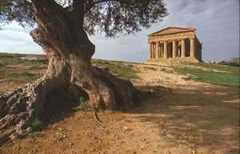
Greek architecture in the colonies
The last of the temples of Paestum, dating from about 460 BC, coincides with the greatest period of Greek architecture. In the mid-5th century the Greeks in Sicily build magnificent temples at Segesta, Selinus (now Selinunte), Agrigentum and Syracuse. At Syracuse the shrine to Athena is now the city's cathedral. But the summit of Greek architectural achievement comes at this time with the rebuilding of Athens.
The Wealth of Nations
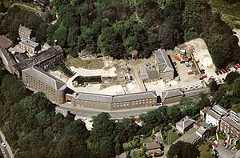
During the second half of the 18th century visible changes are occurring in Britain as a result of the developing Industrial Revolution. Where previously land has been the traditional source of wealth, and the purchase of land the natural investment for anyone with a spare fortune, money is now being put into manufacturing enterprises. In 1771 the greatest of the new entrepreneurs, Richard Arkwright, opens the first custom-built and water-powered cloth mill at Cromford. In the same decade the investment of another entrepreneur, Matthew Boulton, ...
Read More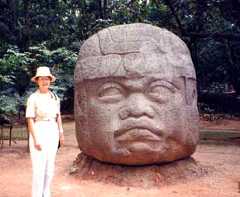
American sculpture
The sculpture of the American continent makes a powerful start. The style is primitive but the scale is monumental. Figures of this kind, introduced by America's first civilization (that of the Olmecs at San Lorenzo and La Venta) will have a lasting influence through 2000 years of central American culture.
Spanish Armada
The encounter between the Spanish Armada and the English fleet in the Channel in August 1588 is the first of a new kind of naval battle, and one in which the English tactics suggest the way forward. The Spanish have been accustomed to fighting at sea with galleys, as at Lepanto only seventeen years previously. A galley imposes a certain pattern on a battle. Guns can only point forward from the bow, where the main weapon, the ram, is also located. Assault consists in rowing ...
Read More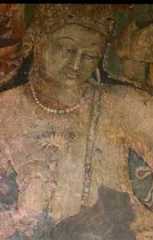
Ajanta, Ellora and Elephanta
India is the country with the greatest tradition of rock-cut temples, and all the region's three indigenous religions are involved. The earliest site is Ajanta, where elaborate pillared halls are carved into the rock - from an almost vertical cliff face - from about the 1st century BC to the 8th century AD. The Ajanta caves are chiefly famous for their Buddhist murals, surviving from at least the 5th century AD. But the chaityas or meeting places are equally impressive, with their rows of carved ...
Read More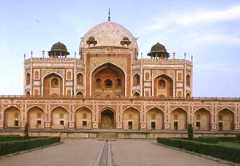
Moghul domes
The first dome of this kind surmounts the tomb of Humayun in Delhi, built between 1564 and 1573. The style is then overlooked for a while - no doubt because of Akbar's preference for Hindu architecture, as in Fatehpur Sikri - until Shah Jahan, the greatest builder of the dynasty, develops it in the 17th century with vigour and sophistication. His first attempt in this line is also his masterpiece - a building which has become the most famous in the world, for its beauty ...
Read More
Mary in Scotland
Darnley is handsome and charming, and his royal lineage means that any child of Mary's and his will have an enhanced claim to the English throne (Henry VII's daughter Margaret Tudor is grandmother to Mary by her first marriage and to Darnley by her second). But these turn out to be Darnley's only merits. Idle, deceitful and unscrupulous, he soon earns Mary's hatred. The combination of his defects and her impulsiveness prompts a spiral of disaster. The first significant event is the murder, with Darnley's ...
Read More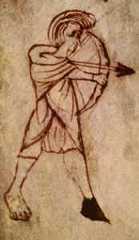
The longbow
The longbow, probably developed in Wales during the 12th century, derives its range, accuracy and power of penetration from two characteristics. It is about 6 feet long, giving a much greater acceleration to the released arrow than is possible from a shorter conventional bow. And the craftsmen make it from strips of yew cut where the hardened heart of the tree joins the sap wood. The different qualities of the two types of wood complement each other, combining tension and compression as in a composite ...
Read More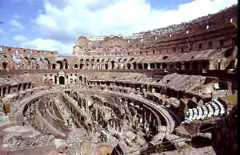
The Flavian emperors
Vespasian has the great advantage, on coming to power, of having two adult sons. The elder of the two, Titus, already has considerable military experience. For the first time, in almost a century since the beginning of the empire, the question of the succession need not be a pressing affair of state. In the event both sons follow Vespasian on the throne, the three of them being known (from their family name of Flavius) as the Flavian emperors. While frugal in his own life, and ...
Read More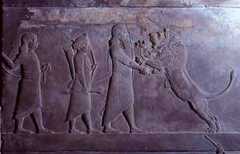
Nimrud and Nineveh
Layard continues to dig at Nimrud, finding many more reliefs (Assyrian kings decorate their palace rooms and even their corridors in this way, as freely as lesser mortals apply wallpaper). He also extends his searches to another site by the name of Kuyunjik. This turns out to be the last great Assyrian capital, Nineveh. Here he discovers the superb cuneiform library of Ashurbanipal. Layard leaves Mesopotamia in 1851, but his assistant Hormuzd Rassam continues at Nineveh. In December 1853 he uncovers the palace built by ...
Read More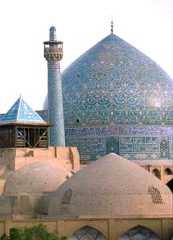
Isfahan
Isfahan is already a city of ancient history and considerable wealth when Shah Abbas decides, in 1598, to turn it into a magnificent capital. It has a Masjid-i-Jami, or Friday Mosque, dating from the Seljuk period (11th-12th century), still surviving today and noted for its fine patterned brickwork. And it has a thriving school of craftsmen skilled in the making of polychrome ceramic tiles. Shah Abbas favours in architecture what comes to seem almost the theme of his city - gently curving domes covered in ...
Read More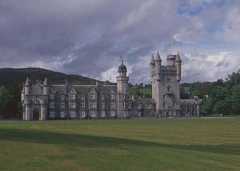
Romantic Scotland
Scott surpasses himself in the cause of romantic Scotland when he organizes the festivities, in 1822, for the first visit of a British monarch to Edinburgh since the union of 1707. A year after his coronation in Westminster, George IV travels to the north of his realm. The ageing reprobate appears in the role of a Scottish chieftain, wearing tartan (banned until quite recently) and thus launching the 19th-century craze for Highland dress.The nation's love affair with romantic Scotland reaches its climax in 1856, when ...
Read More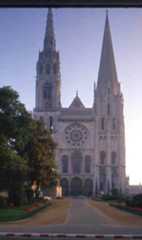
St Denis and Chartres
Fifty years later this pious effort at Chartres seems to be divinely rewarded. When the rest of the old cathedral is destroyed in a fire of 1194, the west façade - with its two great towers, and the triple entrance flanked by superb sculptures - miraculously survives (as does the Virgin's tunic). The cathedral authorities, gathering in the funds of the faithful, are inspired to build behind this façade an entire new cathedral in the Gothic style. The soaring interior, with its vertical lines unbroken ...
Read More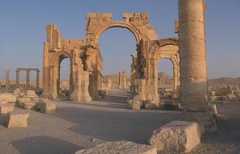
Palmyra
The other great staging post on the route to Antioch is also an important site, and today a much more visible one. It is Palmyra, famous as one of the great ruined classical cities. From Doura-Europus, on the Euphrates, the caravans strike west through the desert to the Mediterranean coast. Palmyra is an oasis half way across this difficult terrain. Its wealth derives from its position on the east-west axis from Persia to the coast, in addition to being on the older routes up from ...
Read More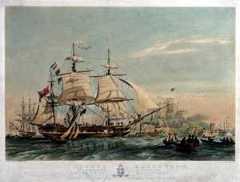
The First Fleet
On January 21 Phillip sails a few miles north and finds the great natural harbour of Port Jackson. Here he selects an inlet with a good water supply as the site for the new colony. He names the place Sydney Cove in honour of the home secretary, Viscount Sydney.A prefabricated house of wood and canvas, designed in London for the governor, is erected at the centre of the settlement. Tents are put up for the marines and the convicts, with a separate encampment a little ...
Read More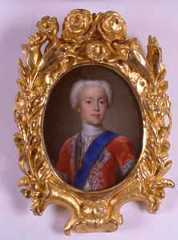
The Forty-Five
Charles Edward Stuart seems to be offered an unrepeatable opportunity when France declares war on Britain in 1744, during the War of the Austrian Succession. He participates in early French plans for invasion of Britain. These are soon abandoned, but events in 1745 - with Britain losing to France in the campaign on the continent - convince the young prince that he stands a chance of success in Scotland even without foreign support.Charles lands in the Hebrides early in August 1745. The Jacobite Highland clans ...
Read More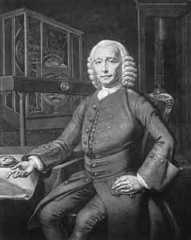
Chronometer
The terms are demanding. To win the prize a chronometer (a solemnly scientific term for a clock, first used in a document of this year) must be sufficiently accurate to calculate longitude within thirty nautical miles at the end of a journey to the West Indies. This means that in rough seas, damp salty conditions and sudden changes of temperature the instrument must lose or gain not more than three seconds a day - a level of accuracy unmatched at this time by the best ...
Read More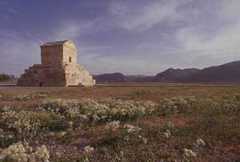
Cyrus the Great
Cyrus dies in 530, campaigning against nomadic tribesmen in the northeast, near the Oxus and Jaxartes rivers. He is buried in the place which he has made his capital, Pasagardae. His tomb, massive but superbly simple, stands today as an impressive monument to the emperor - though now in parched surroundings where once everything was well watered, in an early version of a Persian garden. Its interior, in which the body lies in a gold sarcophagus on a gold couch, is broken into and stripped ...
Read More
Balaklava and Inkerman
A British and French army lands near Sebastopol in September 1854. During the next eight weeks there are three battles with Russian forces, at the river Alma in September, at the allies' supply port of Balaklava in October and at Inkerman on the heights just outside Sebastopol in November.Alma is an allied victory but brings little advantage in the central purpose of seizing the fortified port of Sebastopol. The other two battles are inconclusive, with very heavy casualties - Balaklava also being famous in British ...
Read More