US6694492B1 - Method and apparatus for optimizing production yield and operational performance of integrated circuits - Google Patents
Method and apparatus for optimizing production yield and operational performance of integrated circuitsDownload PDFInfo
- Publication number
- US6694492B1 US6694492B1US09/540,456US54045600AUS6694492B1US 6694492 B1US6694492 B1US 6694492B1US 54045600 AUS54045600 AUS 54045600AUS 6694492 B1US6694492 B1US 6694492B1
- Authority
- US
- United States
- Prior art keywords
- performance
- integrated circuit
- integrated circuits
- operating
- operating voltage
- Prior art date
- Legal status (The legal status is an assumption and is not a legal conclusion. Google has not performed a legal analysis and makes no representation as to the accuracy of the status listed.)
- Expired - Lifetime
Links
Images
Classifications
- H10P74/23—
- H—ELECTRICITY
- H01—ELECTRIC ELEMENTS
- H01L—SEMICONDUCTOR DEVICES NOT COVERED BY CLASS H10
- H01L22/00—Testing or measuring during manufacture or treatment; Reliability measurements, i.e. testing of parts without further processing to modify the parts as such; Structural arrangements therefor
- H01L22/20—Sequence of activities consisting of a plurality of measurements, corrections, marking or sorting steps
- G—PHYSICS
- G01—MEASURING; TESTING
- G01R—MEASURING ELECTRIC VARIABLES; MEASURING MAGNETIC VARIABLES
- G01R31/00—Arrangements for testing electric properties; Arrangements for locating electric faults; Arrangements for electrical testing characterised by what is being tested not provided for elsewhere
- G01R31/28—Testing of electronic circuits, e.g. by signal tracer
- G01R31/317—Testing of digital circuits
- G01R31/3172—Optimisation aspects, e.g. using functional pin as test pin, pin multiplexing
- G—PHYSICS
- G01—MEASURING; TESTING
- G01R—MEASURING ELECTRIC VARIABLES; MEASURING MAGNETIC VARIABLES
- G01R31/00—Arrangements for testing electric properties; Arrangements for locating electric faults; Arrangements for electrical testing characterised by what is being tested not provided for elsewhere
- G01R31/28—Testing of electronic circuits, e.g. by signal tracer
- G01R31/317—Testing of digital circuits
- G01R31/31721—Power aspects, e.g. power supplies for test circuits, power saving during test
- G—PHYSICS
- G01—MEASURING; TESTING
- G01R—MEASURING ELECTRIC VARIABLES; MEASURING MAGNETIC VARIABLES
- G01R31/00—Arrangements for testing electric properties; Arrangements for locating electric faults; Arrangements for electrical testing characterised by what is being tested not provided for elsewhere
- G01R31/28—Testing of electronic circuits, e.g. by signal tracer
- G01R31/317—Testing of digital circuits
- G01R31/31727—Clock circuits aspects, e.g. test clock circuit details, timing aspects for signal generation, circuits for testing clocks
Definitions
- the inventionrelates generally to semiconductor integrated circuits and more specifically to management of performance parameters of integrated circuits.
- semiconductor manufacturing processeswould produce perfectly identical semiconductor devices.
- impurities and process variationsresult in semiconductors devices, even those from the same wafer, having different characteristics.
- An example of the different characteristicsinclude differences in timing characteristics. Variations in timing characteristics result in different operating speeds for the components.
- Integrated circuit producerstypically grade integrated circuits in different speed categories, or “bins,” and sell them as different components at different prices. The high-speed parts are typically sold at a higher price.
- Computer manufacturersbuy different “bin” CPUs at different prices and offer them in models with different price points, e.g., PCs based on PENTIUM III 550 MHz CPUs are sold at a higher price than the ones based on PENTIUM III 500 MHz CPUs.
- a clock generator on the motherboardgenerates a fixed frequency clock that is fed to the CPU.
- the CPUhas an internal register that determines a multiplier ratio between the external clock frequency and the CPU core frequency.
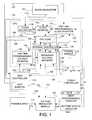
- FIG. 1is a block diagram illustrating an embodiment of the present invention.
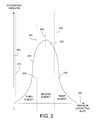
- FIG. 2is a graph illustrating a distribution of maximum operating rates for integrated circuits.
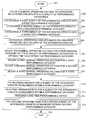
- FIG. 3is a flow diagram illustrating a method according to one embodiment of the present invention.
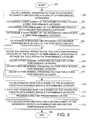
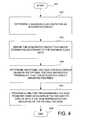
- FIG. 4is a flow diagram illustrating a method according to an embodiment of the present invention.
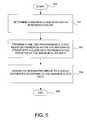
- FIG. 5is a flow diagram illustrating a method according to an embodiment of the present invention.
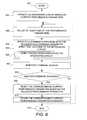
- FIG. 6is a flow diagram illustrating a method according to an embodiment of the present invention.
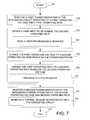
- FIG. 7is a flow diagram illustrating a method according to an embodiment of the present invention.
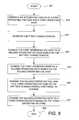
- FIG. 8is a flow diagram illustrating a method according to an embodiment of the present invention.
- a method and apparatus for optimizing production yield and operational performance of integrated circuitsis provided in accordance with the invention.
- a nominal operating voltageis used to categorize integrated circuits into a plurality of performance categories, and the nominal operating voltage is adjusted for each performance category to optimize the yield within that performance category.
- Integrated circuitsmay be operated at different operating rates according to their performance categories.
- the operating rate of an integrated circuitmay be controlled by programming a clock register for the integrated circuit. Correct programming of the clock register may be assured by programming a one-time-programmable device.
- a one-time-programmable devicemay also be used to program the nominal operating voltage once the optimal nominal operating voltage has been determined.
- the inventionmay be used in conjunction with a diagnostic program to select optimum performance parameters for an integrated circuit.
- a diagnostic programto select optimum performance parameters for an integrated circuit.
- one of the performance parametersis changed, test vectors are applied to the integrated circuit core, and responses from the integrated circuit core are verified.
- Changes in power dissipation and operation within thermal parametersmay be determined by monitoring a thermal sensor.
- Testingmay be performed in a temperature-controlled environment or in the operational environment of a system.
- a test controllermay be used to implement the testing, or the test controller may be incorporated within an integrated circuit.
- the inventionmay be used to control power dissipation of an integrated circuit.
- the power dissipationmay be controlled to limit power consumption, for example, to extend battery life, or to prevent an integrated circuit from overheating.
- Power dissipationmay be determined by monitoring a thermal sensor, for example, a diode junction, incorporated into the integrated circuit.
- the operating voltage of the integrated circuitmay be changed based on the power dissipation.
- the operating voltagemay be changed by programming a new value into an operating voltage register.
- the operating rate of the integrated circuitmay be changed based on the change in operating voltage.
- the operating ratemay be changed by programming a new value into a clock register.
- User inputmay be obtained to determine the desired operating rate, for example by reading a user-programmable register.
- the user-programmable registermay be programmed by an application according to an application program interface to indicate to the system the desired performance and power dissipation level.
- battery characteristicsfor example, the battery voltage
- the operating voltage and operating rate of the integrated circuitchanged according to the monitored battery characteristics.
- configuration of an integrated circuitmay be performed automatically, both avoiding additional steps in the configuration process and preventing misrepresentation of component ratings.
- Computer manufacturersmay use a single motherboard for different CPU “bins,” and, when a CPU is inserted in the CPU socket, the CPU core will automatically run at its rated clock speed. This removes the manual steps required by computer manufacturers as well as completely eliminates the over-clocking problem.
- One way to provide the desired benefitsis for the CPU to incorporate a one-time-programmable clock register and/or a one-time-programmable voltage register.
- the clock generator on the motherboardprovides a clock signal to the one-time-programmable clock register.
- An output of the one-time-programmable clock registerprovides an adjusted clock signal to the CPU core.
- the one-time-programmable voltage registercommunicates the desired core voltage value to an external voltage regulator module, which supplies an appropriate core voltage to the CPU core.
- Fusible linksmay be used to implement the one-time-programmable clock register and/or the one-time programmable voltage register.
- the registeris programmed at the time the CPU die is tested. CPU dies are tested for their functionality during the final stages of manufacturing process. One of the steps performed during the final stages is to correct the internal SRAMs by blowing fuses. In accordance with the invention, additional steps may be performed.
- the diemay be “speed-binned” (i.e., categorized into one of several bins according to the maximum operating speed of which it is capable) before the SRAM correction process. Based on the “speed bin” of the die, the appropriate one-time-programmable clock register fuses and/or one-time-programmable voltage register fuses are blown during the SRAM correction process.
- This stepwill fix the clock multiplier to the correct value resulting in the CPU core being fixed to operate at its rated core clock frequency.
- This stepwill also fix the operating voltage indication provided to the voltage regulator module to a value that will result in the appropriate voltage being applied to the CPU core. Consequently, when a CPU is plugged into a motherboard, the CPU core will automatically run at the rated frequency and the appropriate voltage.
- the values programmed in the one-time-programmable clock register and/or the one-time-programmable voltage registermay be selected to provide the optimum yield in the production of CPUs. This technique may also be applied to devices other than CPUs.
- An embodiment of the inventionmay be used to optimize operational performance of integrated circuits.
- an internal controllermay be incorporated within an integrated circuit to adjust an operational voltage of the integrated circuit, adjust an operating rate of the integrated circuit, apply test vectors to the integrated circuit, and assess the response of the integrated circuit to the test vectors.
- the test vectorsmay include input signals, input data, program code, or other inputs to the integrated circuit intended to result in a predictable response from the integrated circuit. If the integrated circuit responds appropriately to the test vectors, proper operation of the integrated circuit can be verified. Multiple test vectors may be applied to test multiple functions or sub-components of the integrated circuit. Multiple tests may be conducted to assess the characteristics of the integrated circuit under varying conditions.
- a thermal sensormay be used to monitor thermal parameters of the integrated circuit, with the thermal parameters being used to adjust the operational voltage or operating rate of the integrated circuit or to assess the response of the integrated circuit to test vectors.
- Thermal managementmay be effected by adjusting the operational voltage and/or operating rate of an integrated circuit to control thermal parameters, thereby obviating the need for traditional cooling devices, such as heat sinks, fans, and/or thermoelectric devices.
- An embodiment of the inventionmay be used to optimize power consumption of integrated circuits.
- the inventionmay be applied to battery-operated systems to extend useful battery life.
- the remaining charge of the batterymay be determined, for example, by measuring the battery voltage or by integrating the discharge rate over time.
- an embodiment of the inventionmay be used to adjust operating parameters, for example, the operating voltage and/or operating rate of devices in the system to reduce the power consumption of the devices.
- a thermal sensormay be used to monitor the power dissipation of a device and provide feedback in the control of the power consumption.
- operating parameters that provide proper operation of devicemay be stored in memory, for example, in a look-up table, and subsequently used without the need for verification of proper operation.
- a look-up tablemay be provided at that time.
- the look-up tablemay include additional information, for example, information to help select the optimal value from the look-up table for a particular set of operating conditions.
- the look-up tablemay be stored in any suitable type of memory, for example, read-only memory (ROM), one-time-programmable memory, non-volatile memory, or volatile memory.
- ROMread-only memory
- the memorymay be included within an integrated circuit or external to the integrated circuit.
- FIG. 1is a block diagram illustrating an embodiment of the present invention.
- This embodiment of the inventionincludes a clock generator 101 , a central processing unit 102 , a power controller 108 , a test controller 110 , a voltage regulator module 109 , a power supply 112 , a user-programmable register 137 , and a battery status indicator 148 .
- the clock generator 101is coupled to the central processing unit 102 .
- the central processing unit 102includes a one-time-programmable clock register 103 , a clock register 104 , a clock multiplier 105 , a central processing unit core 106 , an internal controller 130 , a one-time programmable voltage register 149 , an operating voltage register 133 , and a thermal sensor (for example, a diode junction) 107 .
- Clock generator 101provides a clock signal 113 to clock multiplier 105 .
- One-time-programmable clock register 103provides a value 114 to clock register 104 .
- Clock register 104may be programmed using the value 114 from one-time-programmable clock register 103 or from another source.
- the value 115 stored in clock register 104is provided to clock multiplier 105 and controls the multiplication factor of clock multiplier 105 .
- clock multiplier 105converts the clock signal 113 to a core clock signal 116 that controls the operating rate of central processing unit core 106 .
- a voltage regulator module 109is coupled to the central processing unit 102 .
- the central processing unit 102includes an operating voltage register 133 .
- the operating voltage register 133provides an operating voltage indication to voltage regulator module 109 .
- the operating voltage indication 122is provided from central processing unit 102 to voltage regulator module 109 . This may be accomplished by bringing the operating voltage register values out on pins of the integrated circuit package. Alternatively, the pins may be strapped in a configuration to provide the desired operating voltage indication.
- Voltage regulator module 109sets a correct operating voltage based on the operating voltage indication 122 and converts an input voltage 121 from power supply 112 to the correct operating voltage 123 provided to central processing unit core 106 or other circuits of central processing unit 102 .
- a power controller 108is coupled to the central processing unit 102 , the voltage regulator module 109 , to a user-programmable register 137 , and to battery status indicator 148 .
- the thermal sensor 107 in the central processing unit 102provides an output 117 to the power controller 108 .
- a user-programmable register 137provides an output 136 to power controller 108 .
- Power controller 108uses outputs 117 , 136 , and 147 from the thermal sensor 107 , user-programmable register 137 , and battery status indicator 148 , respectively, to provide a voltage control signal 120 to voltage regulator module 109 and an operating rate control signal 118 to clock register 104 .
- the power controller 108can use the operating voltage control signal 120 to control the operating voltage 123 supplied to central processing unit core 106 .
- Power controller 108can use the operating rate control signal 118 to control the operating rate of central processing unit 102 , including the operating rate of central processing unit core 106 .
- the operating voltage and operating rate of the central processing unit 102may be controlled in response to power dissipation determined by monitoring thermal sensor 107 or based on an external user input using user-programmable register 137 .
- Power controller 108may also be coupled to one-time programmable clock register 103 to program a value 119 and to a one-time programmable voltage register 149 to program a value 150 .
- the power controller 108may program the one-time-programmable clock register 103 and/or the one-time-programmable voltage register 149 .
- Power controller 108can program operating voltage register 133 with a value 134 .
- the value 134can be used to alter the operating voltage indication 122 provided to voltage regulator module 109 . Consequently, voltage regulator module 109 responds by changing the operating voltage 123 applied to central processing unit core 106 .
- a test controller 110including a test monitor 111 may be coupled to central processing unit 102 and voltage regulator module 109 .
- the test controller 110provides a operating rate control signal 126 to clock register 104 or a value 127 to one-time programmable clock register 103 .
- the test controller 110provides an operating voltage control signal 125 to voltage regulator module 109 .
- the test controller 110applies test vectors 128 to central processing unit core 106 .
- the test monitorreceives responses 129 from central processing unit core 106 and verifies that the responses are proper.
- Test controller 110can verify proper operation of central processing unit core 106 by applying test vectors 128 and receiving verification from test monitor 111 as to the accuracy of responses 129 .
- Test controller 110may also monitor a signal 124 from thermal sensor 107 to assess thermal characteristics of central processing unit 102 .
- Test controller 110may be coupled to operating voltage register 133 of central processing unit 102 to program an appropriate operating voltage indication 135 for central processing unit 102 .
- Test controller 110may program a value 144 into a one-time-programmable voltage register 149 .
- the value 143 stored in one-time-programmable voltage register 149can be loaded into operating voltage register 133 to determine the operating voltage indication 122 provided to voltage regulator module 109 .
- Test controller 110can program operating voltage register 133 with a value 135 .
- the value 135can be used to alter the operating voltage indication 122 provided to voltage regulator module 109 . Consequently, voltage regulator module 109 responds by changing the operating voltage 123 applied to central processing unit core 106 .
- Central processing unit 102may also include an internal controller 130 .
- Internal controller 130may receive an output 138 from thermal sensor 107 .
- Internal controller 130may receive an input 145 from battery status indicator 148 .
- Internal controller 130may receive an input 146 from user-programmable register 137 .
- the internal controller 130may apply test vectors 131 controlled by a diagnostic program to central processing unit core 106 .
- the internal controller 130may use the diagnostic program to verify responses 132 from central processing unit 106 .
- the internal controller 130can program clock register 104 with a value 140 or, optionally, can program one-time programmable clock register 103 with a value 141 .
- the internal controller 130can also program an operating voltage indication 139 into operating voltage register 133 , or, optionally, can program one-time-programmable voltage register 149 with a value 142 .
- Internal controller 130may perform these programming functions in response to user input to user-programmable register 137 , in response to battery status from battery status indicator 148 , and/or in response to other inputs or conditions.
- the diagnostic programmay be on the integrated circuit or stored externally.
- FIG. 2is a graph illustrating a distribution of maximum operating rates for integrated circuits. Since semiconductor process variations prevent every integrated circuit produced from being exactly identical, some integrated circuits are capable of operating at higher rates than other integrated circuits. While some integrated circuits may operate at the average operating rate 209 , others may operate at a higher maximum operating rate or a lower maximum operating rate, as illustrated by curve 201 . The maximum operating rate is illustrated along axis 202 , and the number of integrated circuits is illustrated along axis 203 .
- the integrated circuitsmay be binned into several performance categories, for example, to increase the number of usable integrated circuits produced or to increase the yield for higher performance circuits.
- a first subset 206 of the integrated circuitsmay be categorized in a first performance category, while a second subset 207 of the integrated circuits may be categorized in a second performance category, and a third subset 208 of the integrated circuits may be categorized in a third performance category. Since the first subset of integrated circuits all have a maximum operating rate greater than or equal to operating rate 205 , the first subset 206 of integrated circuits may be designated to be operated at operating rate 205 .
- the second subset 207 of integrated circuitsmay be designated to operate at operating rate 204 .
- the third subset 208 of integrated circuitsmay be designated to operate at operating rate 210 .
- FIG. 3is a flow diagram illustrating a method according to one embodiment of the present invention.
- the methodbegins in step 301 and continues to step 302 .
- a nominal operating voltageis utilized to categorize the integrated circuits into a plurality of performance categories.
- a set of nominal operating voltagesmay be used for this categorization.
- Specific values of other operating parametersfor example, clock rate, current, set-up time, hold time, clock jitter, noise, etc., may be associated with each of the nominal operating voltages in the set of nominal operating voltages.
- Step 302may include steps 303 , 304 , and 305 .
- step 302may include step 306 .
- the nominal voltageis utilized to categorize a first subset of the integrated circuits into a first performance category, wherein the integrated circuits categorized in the first performance category are capable of operating at a first performance category specified operating rate.
- the nominal operating voltageis utilized to categorize a second subset of the integrated circuits into a second performance category, wherein the integrated circuits categorized in the second performance category are capable of operating at a second performance category specified operating rate.
- certain operating ratesare specified for certain integrated circuits. If, for example, the second performance category specified operating rate is specified for an integrated circuit, the first performance category specified operating rate may be higher than the second performance category specified operating rate and may allow the integrated circuit to operate at an operating rate greater than the operating rate specified for the integrated circuit.
- the nominal voltageis utilized to categorize the third subset of the integrated circuits into a third performance category, wherein the integrated circuits categorized in the third performance category are capable of operating at a third performance category specified operating rate.
- the third performance category specified operating ratemay be lower than the second performance category specified operating rate. Thus, it may require the integrated circuit to operate at an operating rate lower than the operating rate specified for the integrated circuit.
- Integrated circuitsmay be categorized into additional performance categories beyond the first, second, and third performance categories, if desired.
- the nominal operating voltageis utilized to categorize the integrated circuits into a plurality of performance categories based on a maximum operating rate of each of the integrated circuits.
- the maximum operating ratemay be an absolute maximum operating rate that is the upper limit of operating rates that provide proper operation of the integrated circuit, or it may be a lower operating rate to provide a safety margin to ensure proper operation of the integrated circuit even when other influences on the integrated circuit would tend to further constrain the operating rate.
- step 307the nominal operating voltage is adjusted for a performance category of the plurality of performance categories to optimize the yield within that performance category.
- Step 307may include steps 308 , 309 and 310 .
- a first nominal operating voltageis adjusted for a first performance category.
- a second nominal operating voltageis adjusted for a second performance category.
- a third nominal operating voltageis adjusted for a third performance category.
- step 315an operating rate is fixed for a subset of the integrated circuits categorized within a performance category.
- the subsetmay include all of the integrated circuits categorized within a performance category or fewer.
- Step 315may includes steps 311 and 313 .
- a first operating rateis fixed for the first subset of the integrated circuits categorized within a first performance category of the plurality of performance categories.
- Step 311may include step 312 .
- a one-time programmable devicefor example, a one-time-programmable clock register, is programmed according to the first operating rate.
- a one-time-programmable voltage registermay also be programmed to provide operation at a voltage compatible with the first operating rate.
- the processcontinues to step 313 .
- a second operating rateis fixed for a second subset of the integrated circuits categorized within a second performance category of the plurality of performance categories. Additional operating rates for the additional subsets of the integrated circuits may also be fixed.
- the processends in step 314 .
- the set of nominal operating voltages used, along with the operating rates,may be based on statistical analysis of actual yields and performance measurements of integrated circuits for a particular process used and a particular design. Thus, for example, if a particular operating voltage is statistically identified to maximize the yield of integrated circuits categorized into the second performance category, that particular operating voltage may be used as the nominal operating voltage for categorizing additional integrated circuits into the second performance category.
- FIG. 4is a flow diagram illustrating a method according to an embodiment of the present invention.
- the methodbegins in step 401 and continues in step 402 .
- a maximum clock rateis determined for an integrated circuit.
- the integrated circuitis assigned to a group designated according to the maximum clock rate.
- an optimal voltageis determined for each group, wherein the optimal voltage maximizes a probability that the integrated circuit operates properly. It is usually desirable to use an optimal voltage that ensures that the integrated circuit operates properly.
- a one-time programmable voltage register fabricated within the integrated circuitis programmed with a voltage representation indicative of the optimal voltage. The process ends in step 406 .
- FIG. 5is a flow diagram illustrating a method according to an embodiment of the present invention.
- the methodbegins in step 501 and continues to step 502 .
- a maximum clock rateis determined for an integrated circuit.
- a one-time-programmable clock register fabricated within the integrated circuitis programmed with a clock rate representation indicative of the maximum clock rate.
- the integrated circuitis assigned to a group designated according to the maximum clock rate. The method ends in step 505 .
- FIG. 6is a flow diagram illustrating a method according to an embodiment of the present invention.
- the methodbegins in step 601 and continues to step 602 .
- step 602an integrated circuit is operated based on current performance parameters.
- step 603at least one of the performance parameters is adjusted. This adjustment may occur from time to time or in response to an event, for example, an indication that the user wishes to initiate the adjustment, a change in battery status, or an indication from an application.
- the user-programmable register 137may be used to request such an adjustment.
- the adjustmentmay be performed with or without reference to a look-up table stored in memory containing values for performance parameters.
- the look-up tablemay include values stored in step 610 during previous iterations of the process or may include other values, for example, pre-programmed values.
- the processmay be performed iteratively until the desired results are achieved.
- a diagnostic programis executed with at least one of the performance parameters having been adjusted.
- the diagnostic programmay be an internal diagnostic program or an externally administered diagnostic program.
- the diagnostic programmay be executed while the integrated circuit is in a temperature-controlled environment or in an operational environment.
- Step 604may also include steps 605 and steps 606 .
- steps 605test vectors are applied to a central processing unit core.
- steps 606responses from the CPU core are verified.
- step 604may be omitted.
- step 607a thermal sensor is monitored. By monitoring the thermal sensor, changes in power dissipation may be determined, which may be used to determine whether the performance of the integrated circuit was enhanced. The thermal sensor may be monitored to ensure that the integrated circuit is operating within a specified temperature range.
- step 608a determination is made as to whether the performance of the integrated circuit was enhanced with the adjusted performance parameter. Enhancement of the performance may be determined by comparing the performance with the adjusted performance parameter to the previous performance or to desired performance criteria. For example, if reduced power dissipation is desired, enhanced performance may be indicated by a reduction in power dissipation. If the performance was not enhanced, the process returns to step 603 . If the performance was enhanced, the process continues to step 609 .
- step 609the corresponding current performance parameter is reset based on the adjusted performance parameter.
- step 610the corresponding current performance parameter reset in step 609 is stored in memory for future use.
- the other current performance parameters non reset in step 609may also be stored for future use.
- the processends in step 611 or, alternatively, the process returns to step 603 .
- Performance enhancement examplesinclude increasing the operating rate, decreasing the operating rate, decreasing power dissipation, etc.
- FIG. 7is a flow diagram illustrating a method according to an embodiment of the present invention.
- the methodbegins in step 701 and continues at step 702 .
- step 702a first power dissipation of an integrated circuit operating in a first operating voltage and a first operating rate is monitored.
- step 703a user input is obtained to determine a second operating rate.
- Step 703may include step 704 .
- step 704a user programmable register is read.
- the methodcontinues in step 705 .
- the first operating voltageis changed to a second operating voltage based on the power dissipation.
- step 706the first operating rate is changed to a second operating rate based on the operating voltage.
- Step 706may include step 707 .
- a clock registeris programmed.
- step 708a second power dissipation of the integrated circuit is monitored with the integrated circuit operating at the second operating voltage and the second operating rate.
- Step 708may include step 709 .
- a thermal sensorsuch as a diode junction, incorporated into the integrated circuit is monitored. The thermal sensor may be used to determine the power dissipation.
- step 710the process ends or, alternatively, the process may continue to adjust the operating voltage and operating rate in response to the monitored power dissipation or other criteria.
- steps 705 and 706may be performed in reverse order. Performing step 706 prior to step 705 may be particularly useful if the operating rate of the integrated circuit is being reduced. Since a particular operating voltage may be needed to support a particular operating rate, reducing the operating voltage prior to reducing the operating rate may lead to a temporary condition where the operating voltage is insufficient to support the pre-existing operating rate. By first reducing the operating rate, then reducing the operating voltage, this problem is avoided.
- FIG. 8is a flow diagram illustrating a method according to an embodiment of the present invention.
- the methodbegins in step 801 .
- step 802an integrated circuit is operated at a first operating voltage and a first operating rate.
- step 803a battery characteristic representative of battery life, for example, battery voltage, is monitored.
- step 804the first operating voltage is changed to a second operating voltage based on the monitored battery characteristic.
- step 805the first operating rate is changed to a second operating rate based on the second operating voltage.
- the second operating voltageis changed to a third operating voltage as the monitored battery characteristic continues to change.
- step 807the second operating rate is changed to a third operating rate based on a third operating voltage.
- step 808the method ends or, alternatively, the operating voltage and operating rate may continue to be adjusted.
- the order of the stepsmay be changed, for example, the order of steps 804 and 805 may be reversed, and the order of steps 806 and 807 may be reversed.
Landscapes
- Engineering & Computer Science (AREA)
- General Engineering & Computer Science (AREA)
- Physics & Mathematics (AREA)
- General Physics & Mathematics (AREA)
- Manufacturing & Machinery (AREA)
- Computer Hardware Design (AREA)
- Microelectronics & Electronic Packaging (AREA)
- Power Engineering (AREA)
- Semiconductor Integrated Circuits (AREA)
Abstract
Description
Claims (9)
Priority Applications (1)
| Application Number | Priority Date | Filing Date | Title |
|---|---|---|---|
| US09/540,456US6694492B1 (en) | 2000-03-31 | 2000-03-31 | Method and apparatus for optimizing production yield and operational performance of integrated circuits |
Applications Claiming Priority (1)
| Application Number | Priority Date | Filing Date | Title |
|---|---|---|---|
| US09/540,456US6694492B1 (en) | 2000-03-31 | 2000-03-31 | Method and apparatus for optimizing production yield and operational performance of integrated circuits |
Publications (1)
| Publication Number | Publication Date |
|---|---|
| US6694492B1true US6694492B1 (en) | 2004-02-17 |
Family
ID=31188815
Family Applications (1)
| Application Number | Title | Priority Date | Filing Date |
|---|---|---|---|
| US09/540,456Expired - LifetimeUS6694492B1 (en) | 2000-03-31 | 2000-03-31 | Method and apparatus for optimizing production yield and operational performance of integrated circuits |
Country Status (1)
| Country | Link |
|---|---|
| US (1) | US6694492B1 (en) |
Cited By (18)
| Publication number | Priority date | Publication date | Assignee | Title |
|---|---|---|---|---|
| US20030154450A1 (en)* | 2002-02-08 | 2003-08-14 | Samuel Naffziger | Method and apparatus for improving yield by decommissioning optional units on a CPU due to manufactruing defects |
| US20040156226A1 (en)* | 2002-11-18 | 2004-08-12 | Jochen Hoffmann | Externally clocked electrical fuse programming with asynchronous fuse selection |
| US20040236534A1 (en)* | 2003-05-19 | 2004-11-25 | Wheless Thomas Omega | Integrated circuit with configuration based on parameter measurement |
| US20050040810A1 (en)* | 2003-08-20 | 2005-02-24 | Poirier Christopher A. | System for and method of controlling a VLSI environment |
| US20060069903A1 (en)* | 2004-09-30 | 2006-03-30 | Fischer Stephen A | Method and apparatus for establishing safe processor operating points |
| US20060083095A1 (en)* | 2004-10-14 | 2006-04-20 | Broadcom Corporation | Integrated circuit chip having non-volatile on-chip memories for providing programmable functions and features |
| US20070061599A1 (en)* | 2005-09-09 | 2007-03-15 | Mentzer Ray A | System and method for managing power consumption |
| WO2007046945A3 (en)* | 2005-10-14 | 2007-06-21 | Advanced Micro Devices Inc | Product-related feedback for process control |
| US20080320292A1 (en)* | 2007-06-21 | 2008-12-25 | Daren Croxford | Self programming slave device controller |
| US20090094446A1 (en)* | 2005-12-15 | 2009-04-09 | Capps Jr Louis Bennie | Integrated circuit environment initialization according to information stored within the integrated circuit |
| US20090312848A1 (en)* | 2008-06-16 | 2009-12-17 | International Business Machines Corporation | Self-Learning of the Optimal Power or Performance Operating Point of a Computer Chip Based on Instantaneous Feedback of Present Operating Environment |
| US7707438B1 (en)* | 2006-06-30 | 2010-04-27 | Globalfoundries Inc. | Integrated circuit having after market modifiable performance |
| US20100115475A1 (en)* | 2008-10-30 | 2010-05-06 | Buonpane Michael S | Integrated Circuit Performance Enhancement Using On-Chip Adaptive Voltage Scaling |
| US20100333057A1 (en)* | 2009-06-29 | 2010-12-30 | Robin Tang | Parametric Data-Based Process Monitoring for Adaptive Body Bias Control |
| US9772374B2 (en) | 2012-10-04 | 2017-09-26 | International Business Machines Corporation | Selective voltage binning leakage screen |
| US9824773B1 (en)* | 2008-05-29 | 2017-11-21 | Microsemi Storage Solutions, Inc. | Apparatus and method to adjust power and performance of integrated circuits |
| US20190129463A1 (en)* | 2017-10-26 | 2019-05-02 | Advanced Micro Devices, Inc. | Fine-grained speed binning in an accelerated processing device |
| WO2021108031A1 (en)* | 2019-11-26 | 2021-06-03 | Mythic, Inc. | Systems and methods for implementing operational transformations for restricted computations of a mixed-signal integrated circuit |
Citations (12)
| Publication number | Priority date | Publication date | Assignee | Title |
|---|---|---|---|---|
| US4295149A (en)* | 1978-12-29 | 1981-10-13 | International Business Machines Corporation | Master image chip organization technique or method |
| US5696694A (en)* | 1994-06-03 | 1997-12-09 | Synopsys, Inc. | Method and apparatus for estimating internal power consumption of an electronic circuit represented as netlist |
| US5838947A (en)* | 1996-04-02 | 1998-11-17 | Synopsys, Inc. | Modeling, characterization and simulation of integrated circuit power behavior |
| US5987086A (en)* | 1996-11-01 | 1999-11-16 | Motorola Inc. | Automatic layout standard cell routing |
| US6141632A (en)* | 1997-09-26 | 2000-10-31 | International Business Machines Corporation | Method for use in simulation of an SOI device |
| US6272666B1 (en)* | 1998-12-30 | 2001-08-07 | Intel Corporation | Transistor group mismatch detection and reduction |
| US6397170B1 (en)* | 1998-08-18 | 2002-05-28 | International Business Machines Corporation | Simulation based power optimization |
| US20020073388A1 (en)* | 1999-12-07 | 2002-06-13 | Orshansky Michael E. | Methodology to improve the performance of integrated circuits by exploiting systematic process non-uniformity |
| US20020073394A1 (en)* | 1999-12-07 | 2002-06-13 | Milor Linda Susan | Methodology for increasing yield, manufacturability, and performance of integrated circuits through correction of photolithographic masks |
| US6415423B1 (en)* | 1998-11-30 | 2002-07-02 | Matsushita Electric Industrial Co., Ltd. | LSI design system |
| US6434704B1 (en)* | 1999-08-16 | 2002-08-13 | International Business Machines Corporation | Methods for improving the efficiency of clock gating within low power clock trees |
| US6549880B1 (en)* | 1999-09-15 | 2003-04-15 | Mcgraw Edison Company | Reliability of electrical distribution networks |
- 2000
- 2000-03-31USUS09/540,456patent/US6694492B1/ennot_activeExpired - Lifetime
Patent Citations (14)
| Publication number | Priority date | Publication date | Assignee | Title |
|---|---|---|---|---|
| US4295149A (en)* | 1978-12-29 | 1981-10-13 | International Business Machines Corporation | Master image chip organization technique or method |
| US6345379B1 (en)* | 1994-06-03 | 2002-02-05 | Synopsys, Inc. | Method and apparatus for estimating internal power consumption of an electronic circuit represented as netlist |
| US5696694A (en)* | 1994-06-03 | 1997-12-09 | Synopsys, Inc. | Method and apparatus for estimating internal power consumption of an electronic circuit represented as netlist |
| US5838947A (en)* | 1996-04-02 | 1998-11-17 | Synopsys, Inc. | Modeling, characterization and simulation of integrated circuit power behavior |
| US5987086A (en)* | 1996-11-01 | 1999-11-16 | Motorola Inc. | Automatic layout standard cell routing |
| US6141632A (en)* | 1997-09-26 | 2000-10-31 | International Business Machines Corporation | Method for use in simulation of an SOI device |
| US6397170B1 (en)* | 1998-08-18 | 2002-05-28 | International Business Machines Corporation | Simulation based power optimization |
| US6415423B1 (en)* | 1998-11-30 | 2002-07-02 | Matsushita Electric Industrial Co., Ltd. | LSI design system |
| US20020162080A1 (en)* | 1998-11-30 | 2002-10-31 | Matsushita Electric Industrial Co., Ltd. | LSI design system |
| US6272666B1 (en)* | 1998-12-30 | 2001-08-07 | Intel Corporation | Transistor group mismatch detection and reduction |
| US6434704B1 (en)* | 1999-08-16 | 2002-08-13 | International Business Machines Corporation | Methods for improving the efficiency of clock gating within low power clock trees |
| US6549880B1 (en)* | 1999-09-15 | 2003-04-15 | Mcgraw Edison Company | Reliability of electrical distribution networks |
| US20020073388A1 (en)* | 1999-12-07 | 2002-06-13 | Orshansky Michael E. | Methodology to improve the performance of integrated circuits by exploiting systematic process non-uniformity |
| US20020073394A1 (en)* | 1999-12-07 | 2002-06-13 | Milor Linda Susan | Methodology for increasing yield, manufacturability, and performance of integrated circuits through correction of photolithographic masks |
Non-Patent Citations (2)
| Title |
|---|
| Bamji et al., "Enhanced network flow algorithm for yield optimization", Proceedings of 1996 33rd Design Automation Conferenc Jun. 3, 1996, pp. 746-751.** |
| Meehan, "Understanding and maximising yield thorugh design centering [microwave circuits]", IEE Colloquium on Computer Based Tools for Microwave Engineers, Oct. 15, 1991, pp. 6/1-6/4.* |
Cited By (39)
| Publication number | Priority date | Publication date | Assignee | Title |
|---|---|---|---|---|
| US7051242B2 (en)* | 2002-02-08 | 2006-05-23 | Hewlett-Packard Development Company, L.P. | Method and apparatus for improving yield by decommissioning optional units on a CPU due to manufacturing defects |
| US20030154450A1 (en)* | 2002-02-08 | 2003-08-14 | Samuel Naffziger | Method and apparatus for improving yield by decommissioning optional units on a CPU due to manufactruing defects |
| US20040156226A1 (en)* | 2002-11-18 | 2004-08-12 | Jochen Hoffmann | Externally clocked electrical fuse programming with asynchronous fuse selection |
| US7031218B2 (en)* | 2002-11-18 | 2006-04-18 | Infineon Technologies Ag | Externally clocked electrical fuse programming with asynchronous fuse selection |
| US20040236534A1 (en)* | 2003-05-19 | 2004-11-25 | Wheless Thomas Omega | Integrated circuit with configuration based on parameter measurement |
| US7107362B2 (en)* | 2003-05-19 | 2006-09-12 | Avago Technologies General Ip (Singapore) Pte. Ltd. | Integrated circuit with configuration based on parameter measurement |
| US20050040810A1 (en)* | 2003-08-20 | 2005-02-24 | Poirier Christopher A. | System for and method of controlling a VLSI environment |
| US8850178B2 (en) | 2004-09-30 | 2014-09-30 | Intel Corporation | Method and apparatus for establishing safe processor operating points |
| US8892861B2 (en) | 2004-09-30 | 2014-11-18 | Intel Corporation | Method and apparatus for establishing safe processor operating points |
| US20060069903A1 (en)* | 2004-09-30 | 2006-03-30 | Fischer Stephen A | Method and apparatus for establishing safe processor operating points |
| US8131989B2 (en) | 2004-09-30 | 2012-03-06 | Intel Corporation | Method and apparatus for establishing safe processor operating points |
| US7370189B2 (en)* | 2004-09-30 | 2008-05-06 | Intel Corporation | Method and apparatus for establishing safe processor operating points in connection with a secure boot |
| US20080215875A1 (en)* | 2004-09-30 | 2008-09-04 | Stephen Anthony Fischer | Method and apparatus for establishing safe processor operating points |
| US7499353B2 (en) | 2004-10-14 | 2009-03-03 | Broadcom Corporation | Integrated circuit chip having non-volatile on-chip memories for providing programmable functions and features |
| US20080037351A1 (en)* | 2004-10-14 | 2008-02-14 | Broadcom Corporation | Integrated circuit chip having non-volatile on-chip memories for providing programmable functions and features |
| US20060083095A1 (en)* | 2004-10-14 | 2006-04-20 | Broadcom Corporation | Integrated circuit chip having non-volatile on-chip memories for providing programmable functions and features |
| US7263027B2 (en) | 2004-10-14 | 2007-08-28 | Broadcom Corporation | Integrated circuit chip having non-volatile on-chip memories for providing programmable functions and features |
| EP1657722A1 (en)* | 2004-10-14 | 2006-05-17 | Broadcom Corporation | Integrated circuit chip having non-volatile on-chip memories for providing programmable functions and features |
| US7539880B2 (en)* | 2005-09-09 | 2009-05-26 | Avago Technologies General Ip (Singapore) Pte. Ltd. | System and method for managing power consumption |
| US20070061599A1 (en)* | 2005-09-09 | 2007-03-15 | Mentzer Ray A | System and method for managing power consumption |
| WO2007046945A3 (en)* | 2005-10-14 | 2007-06-21 | Advanced Micro Devices Inc | Product-related feedback for process control |
| US7657339B1 (en) | 2005-10-14 | 2010-02-02 | GlobalFoundries, Inc. | Product-related feedback for process control |
| GB2445503A (en)* | 2005-10-14 | 2008-07-09 | Advanced Micro Devices Inc | Product-related feedback for process control |
| US20090094446A1 (en)* | 2005-12-15 | 2009-04-09 | Capps Jr Louis Bennie | Integrated circuit environment initialization according to information stored within the integrated circuit |
| US7996693B2 (en)* | 2005-12-15 | 2011-08-09 | International Business Machines Corporation | Integrated circuit environment initialization according to information stored within the integrated circuit |
| US7707438B1 (en)* | 2006-06-30 | 2010-04-27 | Globalfoundries Inc. | Integrated circuit having after market modifiable performance |
| US20080320292A1 (en)* | 2007-06-21 | 2008-12-25 | Daren Croxford | Self programming slave device controller |
| US8122232B2 (en)* | 2007-06-21 | 2012-02-21 | Arm Limited | Self programming slave device controller |
| US9824773B1 (en)* | 2008-05-29 | 2017-11-21 | Microsemi Storage Solutions, Inc. | Apparatus and method to adjust power and performance of integrated circuits |
| US20090312848A1 (en)* | 2008-06-16 | 2009-12-17 | International Business Machines Corporation | Self-Learning of the Optimal Power or Performance Operating Point of a Computer Chip Based on Instantaneous Feedback of Present Operating Environment |
| US7962887B2 (en)* | 2008-06-16 | 2011-06-14 | International Business Machines Corporation | Self-learning of the optimal power or performance operating point of a computer chip based on instantaneous feedback of present operating environment |
| US20100115475A1 (en)* | 2008-10-30 | 2010-05-06 | Buonpane Michael S | Integrated Circuit Performance Enhancement Using On-Chip Adaptive Voltage Scaling |
| US8161431B2 (en)* | 2008-10-30 | 2012-04-17 | Agere Systems Inc. | Integrated circuit performance enhancement using on-chip adaptive voltage scaling |
| US8181147B2 (en)* | 2009-06-29 | 2012-05-15 | Lsi Corporation | Parametric data-based process monitoring for adaptive body bias control |
| US20100333057A1 (en)* | 2009-06-29 | 2010-12-30 | Robin Tang | Parametric Data-Based Process Monitoring for Adaptive Body Bias Control |
| US9772374B2 (en) | 2012-10-04 | 2017-09-26 | International Business Machines Corporation | Selective voltage binning leakage screen |
| US20190129463A1 (en)* | 2017-10-26 | 2019-05-02 | Advanced Micro Devices, Inc. | Fine-grained speed binning in an accelerated processing device |
| US11061429B2 (en)* | 2017-10-26 | 2021-07-13 | Advanced Micro Devices, Inc. | Fine-grained speed binning in an accelerated processing device |
| WO2021108031A1 (en)* | 2019-11-26 | 2021-06-03 | Mythic, Inc. | Systems and methods for implementing operational transformations for restricted computations of a mixed-signal integrated circuit |
Similar Documents
| Publication | Publication Date | Title |
|---|---|---|
| US6694492B1 (en) | Method and apparatus for optimizing production yield and operational performance of integrated circuits | |
| US6957163B2 (en) | Integrated circuits having post-silicon adjustment control | |
| US7447602B1 (en) | System and method for sorting processors based on thermal design point | |
| US6006169A (en) | Method and apparatus for trimming an integrated circuit | |
| US8442784B1 (en) | Adaptive power control based on pre package characterization of integrated circuits | |
| JP2662345B2 (en) | Internal power supply voltage generation circuit | |
| US5838578A (en) | Method and apparatus for programmable thermal sensor for an integrated circuit | |
| US6959258B2 (en) | Methods and structure for IC temperature self-monitoring | |
| TWI417705B (en) | Apparatus and method to optimize multi-core microprocessor performance using voltage offsets | |
| US7941675B2 (en) | Adaptive power control | |
| US7356426B2 (en) | Calibration of thermal sensors for semiconductor dies | |
| US20110231678A1 (en) | Adaptive power control based on post package characterization of integrated circuits | |
| USRE47250E1 (en) | Controllably adjusting voltage for operating an integrated circuit within specified limits | |
| JP2006133228A (en) | Integrated circuit die with temperature detection circuit and temperature detection circuit calibration system and method | |
| KR100873917B1 (en) | Improved integrated circuit burn-in method and apparatus | |
| US7581120B1 (en) | System and method for providing multi-point calibration of an adaptive voltage scaling system | |
| US20080191681A1 (en) | Power supply voltage adjusting device | |
| CN1985232B (en) | Adaptive Voltage Scaling | |
| US20070045825A1 (en) | Dynamic voltage and power management by temperature monitoring | |
| US8051304B2 (en) | Power supply apparatus with system controller | |
| US20070006006A1 (en) | System and method of managing clock speed in an electronic device | |
| US5654895A (en) | Process monitor usig impedance controlled I/O controller | |
| CN101221456A (en) | Electronic device | |
| US6691242B1 (en) | System test and method for checking processor over-clocking by retrieving an assigned speed from an register internal to the processor, comparing with running speed, and displaying caution message to user | |
| CN110286707A (en) | The automatic calibrating method and its calibration circuit of chip core voltage |
Legal Events
| Date | Code | Title | Description |
|---|---|---|---|
| AS | Assignment | Owner name:ATI INTERNATIONAL, SRL, BARBADOS Free format text:ASSIGNMENT OF ASSIGNORS INTEREST;ASSIGNOR:SHAKKARWAR, RAJESH G.;REEL/FRAME:010718/0082 Effective date:20000330 | |
| STCF | Information on status: patent grant | Free format text:PATENTED CASE | |
| FPAY | Fee payment | Year of fee payment:4 | |
| AS | Assignment | Owner name:ATI TECHNOLOGIES ULC, CANADA Free format text:ASSIGNMENT OF ASSIGNORS INTEREST;ASSIGNOR:ATI INTERNATIONAL SRL;REEL/FRAME:023574/0593 Effective date:20091118 Owner name:ATI TECHNOLOGIES ULC,CANADA Free format text:ASSIGNMENT OF ASSIGNORS INTEREST;ASSIGNOR:ATI INTERNATIONAL SRL;REEL/FRAME:023574/0593 Effective date:20091118 | |
| FPAY | Fee payment | Year of fee payment:8 | |
| FPAY | Fee payment | Year of fee payment:12 | |
| AS | Assignment | Owner name:FULLBRITE CAPITAL PARTNERS, MICHIGAN Free format text:ASSIGNMENT OF ASSIGNORS INTEREST;ASSIGNOR:ADVANCED MICRO DEVICES, INC.;REEL/FRAME:055766/0735 Effective date:20190508 Owner name:VANTAGE MICRO LLC, DELAWARE Free format text:ASSIGNMENT OF ASSIGNORS INTEREST;ASSIGNOR:FULLBRITE CAPITAL PARTNERS;REEL/FRAME:055766/0820 Effective date:20190508 Owner name:VANTAGE MICRO LLC, DELAWARE Free format text:CONDITIONAL ASSIGNMENT;ASSIGNOR:ATI TECHNOLOGIES ULC;REEL/FRAME:055768/0848 Effective date:20200106 | |
| AS | Assignment | Owner name:VANTAGE MICRO LLC, DELAWARE Free format text:CORRECTIVE ASSIGNMENT TO CORRECT THE NATURE OF CONVEYANCE PREVIOUSLY RECORDED AT REEL: 055768 FRAME: 0848. ASSIGNOR(S) HEREBY CONFIRMS THE ASSIGNMENT;ASSIGNOR:ATI TECHNOLOGIES ULC;REEL/FRAME:055844/0134 Effective date:20200106 |