










A state legislator,governor, and U.S. congressman, Thomas Hardwick served Georgia over a long political and legal career.
Thomas William Hardwick was born on December 9, 1872, inThomasville to Zemula Schley Matthews and Robert W. Hardwick. In 1892 he graduated fromMercer University inMacon. A year later he left theUniversity of Georgia’s Lumpkin Law School with a law degree and was admitted to the Georgia bar. In 1894 he married Maude Perkins, and together they had one daughter, Mary. His wife died in 1937, and the following year Hardwick married Sallie Warren West.
Hardwick ran his ownlaw practice from 1893 to 1895, when he became theWashington County prosecutor. In 1897 he ran for theGeorgia House of Representatives and served as a legislator for the next four years, until he won a seat in the U.S. House, where he served his district until 1914.
When U.S. senator Augustus O. Bacon died in office, Hardwick took his seat in a special election in 1914 and stayed for five years in the U.S. Senate, where he became known for his opposition to U.S. presidentWoodrow Wilson’s war-preparedness legislation. William J. Harris subsequently defeated Hardwick in the 1918 Democratic primary.
In spring 1919 Hardwick, along with several other national politicians and judges, as well as severalCatholic churches, was the target of a mail bomb. He was not injured, but his housekeeper, who opened the package, was maimed. The U.S. attorney general, A. Mitchell Palmer, ordered the detention of 4,000 suspectedCommunists (mainly immigrants from the Soviet Union) in what was called the Palmer Raids. They were held without bail, and many were deported without trials. The raids continued throughout the year and extended to union halls, homes, and anywhere socialist sympathizers or revolutionaries were thought to be gathered. In all, around 10,000 people were rounded up before the raids ended in 1920.
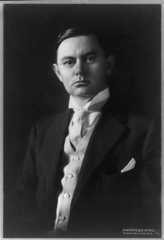
Courtesy of Library of Congress, Prints and Photographs Division
In 1921 Hardwick rebounded to win the Georgia governor’s office, a position he held until 1923. Although he had led efforts to disenfranchise Black Georgians at the turn of the twentieth century, as governor Hardwick proved to be somewhat more progressive. He opposed the rise of the newKu Klux Klan and advocated prison reform, issuing an executive order that ended the common practice of flogging inmates.
Hardwick also passed Georgia’s first gas tax to build new roads and pushed for a graduated state income tax, which would not be adopted until 1931. Yet he was most noted for selectingRebecca Latimer Felton as the first woman to the U.S. Senate. Motivated partly for selfish reasons, Hardwick made the appointment afterThomas E. Watson died in office. He wanted to run for Watson’s seat and hoped that appointing a woman, who would not even serve in office due to the fact that Congress was out of session, would make his road back to the Senate easier by winning him women’s votes. Instead, Hardwick lost the election toWalter F. George, who waited to take his new seat so that Felton could be sworn in as the first female senator, even though her term lasted only twenty-four hours.
In the 1922 gubernatorial campaign,Clifford Walker, a supporter of the Ku Klux Klan, defeated Hardwick. Hardwick spent the following year as a special assistant to the U.S. attorney general. In 1924 Hardwick again lost a Senate election, and in 1932 he lost his bid for governor in the Democratic primary. Later, he provided legal representation to the Soviet ambassador to the United States and urged the U.S. government to recognize the Soviet Union.
Hardwick maintained a law practice inAtlanta, Sandersville, and Washington, D.C., until his death from a heart attack on January 31, 1944. He was buried in the Old City Cemetery in Sandersville, where a state historical marker stands in his honor at the courthouse square.
Cite this Article
Luckett, Robert. "Thomas Hardwick." New Georgia Encyclopedia, last modified Aug 25, 2020. https://www.georgiaencyclopedia.org/articles/government-politics/thomas-hardwick-1872-1944/
Luckett, R. E. (2006). Thomas Hardwick. InNew Georgia Encyclopedia. Retrieved Aug 25, 2020, from https://www.georgiaencyclopedia.org/articles/government-politics/thomas-hardwick-1872-1944/
Luckett, Robert. "Thomas Hardwick."New Georgia Encyclopedia, 04 August 2006, https://www.georgiaencyclopedia.org/articles/government-politics/thomas-hardwick-1872-1944/.
Article Feedback
Share this Article

Thomas Hardwick
A state legislator, governor, and U.S. congressman, Thomas Hardwick served Georgia over a long political and legal career. Thomas William Hardwick was born on December…
Share this Snippet
Thomas Hardwick
A state legislator, governor, and U.S. congressman, Thomas Hardwick served Georgia over a long political and legal career. Thomas William Hardwick was born on December…