Get the latest news and updates from Dawn
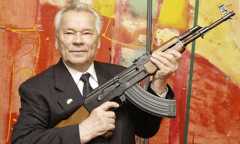
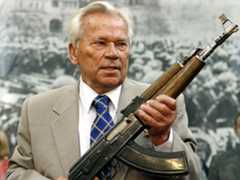
On the 24th of December, Mikhail Kalashnikov, a Russian gun designer, died at the ripe old age of 91.
The rifle that he invented, the Kalashnikov/AK-47, in 1946, went on to become one of the most popular rifles in the 20th century, especially among militants, terrorists and guerrilla fighters on both sides of the conventional ideological divide.
The AK-47 also became a permanent feature across various militaristic, criminal and militant sections of Pakistan. The weapon of choice during student movements, ethnic and sectarian clashes, kidnappings, bank heists and militant uprisings, the AK-47 continues to feature in most acts of violence committed in this country. And yet up until the late 1970s the AK-47 was actually a scarce entity in Pakistan.
The first burst
It is believed that some of the militant Baloch nationalists who were fighting an insurgency against the Pakistan Army in the remote mountains of the arid province of Balochistan in the 1970s had acquired a couple of AK-47s from Iraq, whose ruling Ba’ath Socialist Party was allegedly supporting the insurgency.
In 1973 the Pakistan government under the leadership of the populist, left-leaning prime minister, Zulfikar Ali Bhutto, claimed to have confiscated a cache of arms and ammunition that included up to 300 AK-47s from the Iraqi attaché’s house in Islamabad.
The cache, the government claimed, was destined for Balochistan. In fact, some of the guns, it was believed, had already reached Baloch militants.
Despite the government’s claims, there are very few reported incidents where the fighters of the leading Baloch militant organisation of the time, the Baloch Liberation Front (BLF), or its youth wing, the Baloch Students Organisation (BSO), were said to have used AK-47s in their battles against the heavily armed Pakistan Army.
Instead, the Kalashnikov is reported to have first appeared in Pakistan on university campuses in Karachi and Lahore.
However, sophisticated weapons were hardly available or used by the youth in campus violence during the 1960s and 1970s. The brawling students usually used bare fists, chains, knuckle-dusters and knives.
For example, in all the reported cases of campus clashes between the left-wing National Students Federation (NSF) and the fundamentalist Islami Jamiat Tulaba (IJT) in the 1960s, there is no mention at all of students ever using any firearms.
Similarly in the early and mid 1970s as well, when NSF and BSO frequently clashed with right-wing student groups like IJT, there are only two reported cases of firing: One at the University of Karachi (in 1974) and the other at Lahore’s Punjab University (in 1975). On both occasions old pistols were used, and that too for aerial firing only.
The AK-47 largely remained an elusive and somewhat unknown weapon on the campuses of Pakistan, even though some IJT militants who met future Afghan warlord, Gulbuddin Hekmatyar, in Peshawar in 1975, brought back tails of this “amazing weapon that was easy to use and twice as effective.”
Hekmatyar had been a leader of Afghanistan’s radical Muslim Youth organisation at the Kabul University in the early 1970s. First arrested in 1970 after he had killed a Maoist student leader, Hekmatyar was released when nationalist Pashtun leader, Daoud Khan, toppled the Afghan monarchy in 1974. Hekmatyar soon turned against Daoud as well and in 1975 escaped to Peshawar.
Here he was approached by the Zulfikar Ali Bhutto regime and Pakistan’s intelligence agency (the ISI) that financed and armed his group of Islamist renegades for an insurgency in Afghanistan against the Daoud regime that had been calling for uniting Pakistan’s Khyber Pakhtunkhwa province (KP) with Afghanistan as part of Daoud’s plan for the creation of a ‘Greater Pashtunistan.’
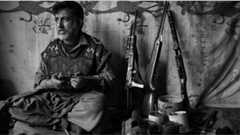
Hekmatyar also managed to get his hands on a couple of AK-47s, bought with Pakistani money in Afghanistan’s illegal weapons market. Even though his group of insurgents comprised disgruntled young Afghan Islamists, some IJT members claim to have met him in Peshawar in 1975, and offered their services.
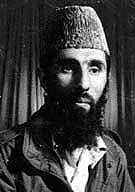
The insurgency was a complete failure and was easily crushed by Daoud. Hundreds of Hekmatyar’s men were killed and arrested. Nevertheless, Hekmatyar escaped arrest and returned to Peshawar where under the patronage of the Bhutto regime he formed the Hizb-i-Islami and started planning another insurgency against the secular Daoud government.
The Klashnikov arrives
Things for the failed Islamist guerrilla changed dramatically when, in 1978, Daoud was toppled in a communist coup led by the People's Democratic Party of Afghanistan (PDPA), and its supporters in the Afghan military. Soon after, when the Soviet Union occupied Afghanistan in Dec 1979, the CIA showed interest in helping Islamist groups stationed in Peshawar.
At the start of the CIA-ISI backed anti-Soviet ‘jihad’ in Afghanistan in 1980, Hekmatyar’s Hizb-i-Islami was the biggest anti-Soviet group in Peshawar. It was also one of the first groups of Afghan jihadists to receive arms and aid from the CIA, ISI and Saudi Arabia.
When in July 1977 General Ziaul Haq overthrew the elected government of Bhutto and the Pakistan Peoples Party (PPP), he invited the staunchly anti-PPP Jamaat-i-Islami (JI) to join his first cabinet.
By 1980, the JI was vowing to help Zia bolster public support for the ‘Afghan jihad’ and expunge all leftist and pro-Soviet elements in Pakistan’s intelligentsia, journalistic circles and campuses. The JI also developed strong links with Hekmatyar opening up channels of regular contact between IJT and him.
As the first batches of Afghan refugees started to cross into Pakistan from war-torn Afghanistan, with them also came black marketers dealing in AK-47s and heroin.
By early 1980s, markets in the tribal regions of Pakistan were flooded with AK-47s and heroin. The Afghans trading in these items were profitably escorted by assorted Pakistanis looking to make a fast buck. These included military personnel, tribal leaders, pro-Zia politicians and some enterprising civilians.
The AK-47 first made its proper introduction in Pakistan in mid-1979 when the then leader of the IJT in Karachi and president of the student union at the University of Karachi, appeared on the campus with ‘bodyguards’ armed with AK-47s.
The bodyguards were led by Rana Javed, the notorious leader of IJT’s militant wing, the ‘Thunder Squad’ — a violent group formed at the University of Karachi and Punjab University to “curb immoral activities on campuses.”
NSF, BSO, the Peoples Students Federation (PSF) — the student-wing of the PPP — and the Liberal Students Organisation (LSO) had a history of regularly clashing with IJT and its moral squad.
In 1979, the Thunder Squad demonstrated the first (recorded) usage of an AK-47 in Pakistan when it fired upon a gathering of progressive students at Karachi University.
There were no deaths, but the incident left anti-IJT forces badly shaken but awakened to the reality of an enemy that was fast changing its tactics.
Rana and his men had come into contact with a Pakistani middle-man who had gotten them in touch with an Afghan gun dealer in Peshawar. Funds were raised by the IJT in Karachi (accommodated by the JI and its connections with Hekmatyar), and a group of IJT men travelled to Peshawar to buy their first cache of AK-47s.
The guns were stashed under the beds of the hostel rooms occupied by IJT members at the Karachi University and the NED University. These guns were once again used in April 1980 during a clash between NSF and IJT in which one NSF student was killed, shot in the stomach by a burst of an AK-47. This is reported to be the first casualty witnessed in a clash at the university.
Alarmed by the rapid arming of the IJT — allegedly a part of Zia and JI’s plan to push out ‘pro-Soviet students’ from campuses — the PPP’s student-wing, the PSF, and the Baloch nationalist BSO, were the first two non-IJT organisations to acquire AK-47s.
Already put under tremendous pressure by constant arrests, torture and jailing by the dictatorship, the PSF in Karachi grew a more militant wing, led by Salamullah Tipu.
Tipu, who came from a lower-middle-class Urdu-speaking family of Karachi, had been a member of the NSF in 1974-75 and was considered ‘a terror’ by the IJT. He switched to the PSF sometime in 1977 and soon became the leading member of PSF’s somewhat anarchic militant wing. This wing was not under the direct control of the PPP.
Soon after the death of the NSF member at Karachi University, Tipu and a few members of the BSO travelled to Peshawar. There they got in touch with a Pakistani middle-man who drove them to the open weapons and drugs markets in the tribal areas of KP.
These markets were now brimming with smuggled AK-47s and drugs arriving from war zones in Afghanistan. Many of the guns were also pinched away for private sale by Pakistani administrators handling the arming of Afghan jihadists.
There, Tipu and BSO activists were unable to get the AK-47s because their contact there was arrested. Back in Karachi, Tipu and some members of the United Students Movement (USM) — an anti-Zia progressive students’ alliance at Karachi University — consequently raided a van carrying AK-47s for IJT members in Karachi’s Shah Faisal Colony, and got away with a number of rifles.
A few days later, the progressive students’ alliance held a violent demonstration at the Karachi University against the Zia regime and set an army major's jeep on fire.
The demonstration was attacked by IJT activists who helped the police apprehend some progressive students. One of them was a dear friend of Tipu.
In early 1981, Tipu, along with at least three other PSF members, entered the Karachi University in a white vehicle. He started shouting pro-Bhutto and anti-IJT slogans in front of an IJT camp on the campus. To the IJT members’ surprise, he whipped out an AK-47 and started to fire at the camp. No one was hurt.
Tipu then sped forward in his car and looking at a senior IJT leader, Hafiz Shahid, strolling outside the university’s library, started to shout anti-Zia and anti-IJT slogans mixed with a barrage of choice Urdu abuses, all the while waving his brand new AK-47.
Incensed by the commotion, Shahid pulled out a pistol and fired in the air. He is reported to have fired at least three shots. Tipu jumped out from his car and fired a burst from his AK-47 at Shahid, who was hit in the chest and head. He soon succumbed to his injuries at a hospital. He became the first IJT man to be downed by the same gun his own organisation had introduced on the campus two years earlier.
After the killing, Tipu and his group of PSF militants escaped to Peshawar, and with the help of some members of a small pro-Soviet party in KP, tracked across the tribal areas into Kabul, where they joined Murtaza Bhutto’s left-wing urban guerrilla outfit, the Al-Zulfikar Organisation (AZO).
AZO was formed by Bhutto's sons, Murtaza and Shahnawaz, with the help of the radical regimes of Syria and Libya. The outfit was initially armed by the Palestine Liberation Organisation (PLO) and allowed to set base in Kabul by the Soviet-backed regime there.
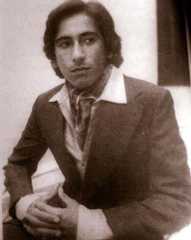
With temperatures rising, IJT members now started distributing AK-47s to Thunder Squad personnel in Punjab as well. Distressed by IJT’s violent growth there, leftist militant students formed the Black Eagles. Outside the IJT, the Eagles were the first student group to acquire AK-47s in Lahore.
In mid-1981, the AK-47 claimed its third victim at the University of Karachi when IJT members mowed down Shaukat Cheema, a member of the USM.
In 1977, IJT had successfully campaigned to have a mosque built on the campus. But by 1980, the organisation was using the mosque to stash its pistols and AK-47s. And it was near the same mosque that Cheema was ambushed and downed by a hail of bullets from an AK-47.
In reaction to Cheema's killing, USM brought in two notorious young militants, BSO’s Boro (a Baloch) and PSF’s Shirin Khan (a Pashtun), on the day of the 1981 student union elections.
Boro and Shirin entered the University of Karachi from the neighbouring NED University with AK-47s.
They positioned themselves on the roof of the university's student union office and began firing at IJT members standing outside the Chemistry Department. Soon an intense gun fight ensued in which one IJT member, Danish, was killed.
Boro, Shirin Khan and IJT's Rana Javed would all die violent deaths. Boro was killed in an encounter with the police in 1984 as was Rana Javed. Both had become criminals. Shirin Khan who returned to his village in KP after quitting Karachi University was gunned down by an Afghan insurgent in the late 1980s.
By 1982, IJT, PSF, PkSF, BSO, USM and the Black Eagles all had caches of AK-47s stashed in their hostel rooms. Universities and colleges in Karachi and Lahore were now sitting on a volcano.
The volcano erupts
In March 1981, Tipu had re-entered Pakistan from Kabul (as a card-carrying member of Al-Zulfikar), and along with at least three more PSF militants, hijacked a Peshawar-bound PIA flight and forced it to land at the Kabul Airport.
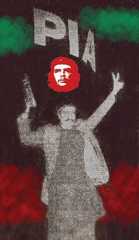
The hijackers were first reported carrying pistols and grenades, but by the time the plane touched down in Kabul, Tipu was seen brandishing an AK-47 from the cockpit of the hijacked plane.
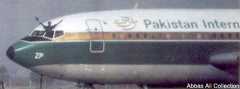
The hijackers demanded an end to Zia’s military rule and the imposition of socialism. They also handed a list of 55 political prisoners cramped inside various Pakistani jails that they wanted the Zia regime to release.
The list included arrested members of the PPP, PSF, BSO, NSF, some radical journalists as well as some members of small communist and regional parties, all picked up by the police between 1977 and 1980.
Tipu shot dead one of the passengers when the Zia regime stalled. The unfortunate victim was a young Pakistani diplomat. He was accused by Tipu and Murtaza of being a Zia agent. He wasn't. In fact, he had been an attaché of Murtaza's father, Z A Bhutto!
Zia didn't budge. He refused to release the prisoners. The PPP's young co-chairperson, Benazir Bhutto, who was in jail at the time, denounced the hijackers and criticised them for hurting the democratic movement against Zia.
After the merciless killing of the diplomat, the Kabul authorities (under pressure from an embarrassed Soviet regime), asked Tipu to leave or they would storm the plane.
The plane was flown to Syria's capital, Damascus, where the passengers were finally allowed to go. This happened when Tipu again began waving his AK-47 from the cockpit and threatened to kill the 11 American passengers on board the plane. This threat worked. Zia at once capitulated and agreed to release the 55 political prisoners as demanded by the hijackers.
The released prisoners were flown to Damascus. Many stayed there as exiles and some were given asylum in Libya. A few flew with Tipu to Kabul where they joined the AZO. However, in 1984 Tipu began challenging Murtaza's leadership and threatened to form his own group. As Murtaza flew out to Damascus, Tipu led AZO in Kabul. But in the process he killed an Afghan who was close to the Afghan intelligence agency.
He was arrested and sentenced to death. He was shot dead by a firing squad and buried in an unmarked grave in Afghanistan. He was 28 years old.
It is interesting to note that until 1982, the AK-47 was only used by pro-Zia student organisations such as the IJT and subsequently by anti-Zia student militants. It had yet to fall into the hands of organised gangs involved in theft, kidnapping and other crimes.
However, it is believed that the first time the AK-47 was used in a robbery in Pakistan was in 1981, during a bank heist in Karachi on the I I Chundrigarh Road.
But this heist too was planned and executed by Al-Zulfikar men, to raise money for their anti-Zia operations. These men then used the same AK-47s to assassinate three pro-Zia politicians the same year, two in Karachi and one in Lahore.
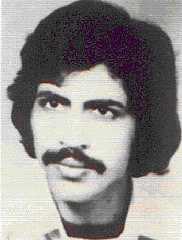
A change of hands
During the 1983 PPP-led MRD movement in Sindh, many young activists from PPP, PSF and Sindhi nationalist groups like the Jeay Sindh Students Federation (JSSF), managed to escape arrest and disappeared into the thick forests near the dusty Sindh towns of Dadu and Moro. These forests were already infested with dacoits.
After the MRD action subsided, leaving behind a trail of destruction and thousands of arrests, many of the dacoits and their new comrades came into contact with separatist Sindhi elements who had direct links with Afghans and Pakistanis involved in the booming gun-running trade in KP.
By early 1984, most of these dacoits had armed themselves with AK-47s, using them for murder, highway robberies and kidnappings.
Meanwhile, in 1984, the Zia dictatorship used the growing violence in student politics as a pretext to ban student unions across the country. The same year, a major battle in which the AK-47 was prominent took place at Karachi University between USM militants and the police that was sent to clear hostels after the student union ban.
The battle lasted for over 10 hours, during which time USM students armed with pistols and AK-47s fought the police from the rooftop and windows of the hostel building. The police responded with pistol and rifle fire and teargas. Scores of policemen and students were injured before the hostel was finally taken by the cops.
By 1985, an AK-47 was easily available in Karachi and its usage extended beyond university and college campuses; organised criminal gangs were now armed with them as well.
The major reason behind the weapon’s widespread availability was the influx of Afghan refugees, who in the early 1980s had started moving into the shanty towns of Karachi.
With them came gun and drug runners. Compared to the 1970s, crime in Karachi almost quadrupled in the 1980s, and Karachi soon had the second-biggest population of heroin addicts in the world.
Almost 51 per cent of the city's population was Mohajir (Urdu-speakers), and their anger towards Afghan gun-runners and drug peddlers (most of whom were Pashto-speaking) metamorphosed into agitation against the city’s Pashtuns, who had migrated from KP in the 1960s.
The tension between the two communities erupted into deadly riots and pitched battles. This violence eventually saw the APMSO give rise to the Mohajir Qaumi Movement (MQM).
In the bloody 1986 riots between the Mohajirs and the Pashtuns — the latter had used AK-47s, while the former had to make do with crude homemade weapons — especially those prepared by the Biharis from Karachi’s poverty-stricken Orangi area.
These Biharis had migrated to former East Pakistan (now Bangladesh) during the 1947 partition, where they saw militant Bengali separatists make home-made weapons to use against the Pakistan Army in 1971. Many of them escaped to West Pakistan after East Pakistan separated from the rest of the country.
Baptised by fire and bloodied by the AK-47s of the enraged Afghans of the city, the MQM became desperate for modern weaponry.
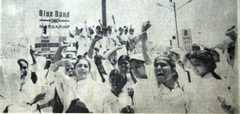
An APMSO delegation met with PSF militants and asked to buy AK-47s from them. But on the behest of the PPP, the PSF refused. However, in late 1986, another group of APMSO leaders was advised by a PSF member in Karachi to travel to Hyderabad and meet with the leaders of the JSSF at Sindh University, who would be interested in selling them arms. The APMSO bought three AK-47s from the JSSF and managed to secure a link with contacts also operating as middle-men for Afghan gun-runners.
By 1987, the APMSO was flush with AK-47s. It began supplying the MQM with militants. At this point, a separate militant wing of the party called ‘Black Tigers’ was also formed.
It was also sometime in 1987 that the AK-47 started to be called ‘Klashni’ (a word coined by APMSO militants) and the phrase “Kalashnikov culture” started to appear in the press.
In Punjab, too, the AK-47 became the weapon of choice for criminals. Most of these deadly rifles were now brought into the city by members of Afghan jihad outfits and sold to nascent sectarian outfits that had started to appear in Punjab during the peak of the Zia regime.
Many of these organisations, which also became involved in various crimes, started to stockpile AK-47s and other weapons.
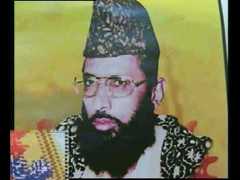
One of the most violent sectarian organisations was the Sipah-i-Sahaba Pakistan (SSP), formed in 1985 in the city of Jhang in Punjab. The SSP’s first action was fomenting anti-Shia riots in Lahore in 1986.
Back for more
By the time Zia’s C-130 military aircraft crashed over Bahawalpur on Aug 18, 1988, the Kalashnikov culture had been ingrained in Pakistani society.
This culture was defined by violence, corruption and intolerance, and caused the bullet to replace the ballot in the national political arena as well as on campuses.
It was not surprising, then, that within a year of Benazir Bhutto’s election as PM in Nov 1988, violence erupted in Karachi, especially between APMSO and PSF. Both organisations now had strong militant tendencies and were well-equipped with AK-47s.
MQM had swept the polls in Karachi and was part of the PPP coalition government at the centre and in Sindh. However, there were some radical elements in PPP and PSF who had opposed an alliance with the MQM, terming it “an anti-Sindhi party created by General Ziaul Haq”. While friction grew between the two parties, its student wings clashed on university and college campuses of Karachi.
The APMSO had become an important player in the student politics of Karachi, successfully sidelining the IJT. PSF too was a resurgent force on Karachi campuses after years of harassment and repression by the Zia regime and IJT violence. The PSF was being led in Karachi by Najib Ahmed, who was a leading voice opposing an alliance with the MQM.
After the gun battles between the two student organisations at the University of Karachi, Urdu College and Sindh Medical College killed activists from both sides, an ugly round of kidnappings began in which both organisations kidnapped, tortured and then killed their opponents.
Meanwhile, Punjab was facing political challenges as well. The province was being run by the staunchly anti-PPP (and ‘Ziaist’) Nawaz Sharif of the Pakistan Muslim League (PML). The PML’s student-wing, the Muslim Students Federation (MSF), had heavily armed itself and tried to dislodge the IJT from various universities and colleges in Punjab. Meanwhile, in Jhang, regular riots and clashes between the SSP and various Shia groups exploded in which both sides used sophisticated firearms.
If the 1980s was a violent decade in Pakistan, the 1990s were worse.
During Sharif’s reign in 1991, violence between student groups shifted from Karachi to Punjab’s campuses, where the MSF and IJT fought deadly gun battles, enough for IJT’s mother party, the JI, to quit Sharif’s coalition government at the centre.
The JI also accused Sharif of not implementing shariah laws as promised by him before the 1990 general election.
Back in Sindh, Sharif’s chief minister Jam Sadiq Ali courted support for the Sharif government from the MQM. In the process, Jam also used MQM and APMSO’s militant muscle in his battle of ego against the PPP.
Jam had been a PPP man until the mid-1980s when he had a falling out with Benazir Bhutto and was expelled from the party. He further armed MQM and APMSO to tackle ‘terrorists’ whom he claimed belonged to the Al-Zulfikar Organisation and were “disturbing peace in Sindh”.
However, during the summer of 1991, two high-ranking members of the MQM, Afaq Ahmad and Amir Khan, were expelled by the party chief, Altaf Hussain, on charges of corruption.
Both were also leading members of MQM’s militant wing, the Black Tigers. They at once formed the breakaway MQM - Haqiqi (MQM - H), allegedly patronised by the Pakistani security agencies.
Then, in June 1992, the Pakistani army intervened in a government-initiated military crackdown code-named Operation Clean-up, in order to quell the chronic ethnic unrest and rising cases of kidnapping and murder in Sindh.
It soon became obvious, though, that MQM militants were the main target of the military operation.
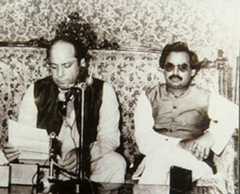
Jam’s tactics had become increasingly controversial and the way he was using the MQM started to alarm the intelligence agencies and the army, both of whom advised Sharif to take action.
Hundreds of MQM and APMSO militants were killed and arrested in the operation. A large number of AK-47s and pistols were recovered.
In 1994, the second Benazir Bhutto government began a fresh operation against the MQM, convinced that the first operation had failed to break the party’s back. Clashes and gun fights between MQM and MQM-H increased, as MQM tried to secure the control of areas snatched from it by MQM-H.
Hundreds of MQM, APMSO, MQM-H activists and members of paramilitary forces and policemen fell in violent battles during the three-year operation. It saw the infrastructure and the economy of Karachi collapse and dozens of businessmen and industrialists moving their families, money and businesses to Punjab. The operation and violence continued until the fall of the second Sharif government in 1999.
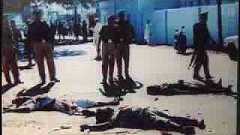
While violence between MQM, MQM-H and paramilitary forces was taking place, it created an opening for various Islamist and sectarian organisations to eventually move from KP and Punjab and set up shop in Karachi. Some of these Islamists posing as ‘scholars’ and clerics moved openly with bodyguards armed with the now ubiquitous AK-47s. Karachi was also a city where it was easier to make quick money and hide.
With the government busy in trying to reign in the MQM by force, many of the Islamist groups in Karachi started taking over mosques and madrassahs.
Many of these Karachi-based Islamists were instrumental in helping the Pakistani government and intelligence agencies in the indoctrination, support and creation of the Taliban in Afghanistan who took power in Kabul in 1996.
Abruptly, with the coming of Pakistan’s fourth military dictator Pervez Musharraf in Oct 1999, ethnic violence in Sindh came to a sudden and surprising halt.
The operation against the MQM was stopped, Sharif and the PML-N’s vendetta against the PPP was suspended.
Heavenly fire
The Kalashnikov culture was well ingrained by the time Pakistan entered the new millennium. By now, the AK-47 was also pulled out in times of celebration. This tradition began in the mid-1980s, but became widespread in the early 1990s. Since then, the sound of the AK-47 rings out the loudest when thousands of guns are let loose on New Year’s Eve. The AK-47 is also fired during weddings.
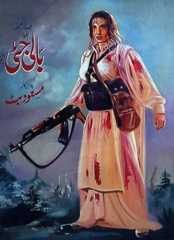
During the Musharraf regime, gun battles on campuses and in urban areas decreased, and the AK-47 was primarily seen in the hands of private security guards and bodyguards.
However, militants from various Islamist organisations also began to carry arms openly, especially as a reaction to the Musharraf regime’s operation against them after Sept 11, 2001. Unlike the student militants of yore, none of these organisations had to struggle for their share of AK-47s.
A number of clerics and Islamic scholars (both Shia and Sunni) assassinated in the last 10 years have been gunned down by AK-47s. During Islamabad's Lal Masjid debacle in 2007, most of the militants operating in the radical mosque and madrassah in Islamabad could be seen brandishing AK-47s long before the government decided to take its haphazard and much-delayed action against them.
In May 2007, protests against Musharraf’s decision to depose now former chief justice, Iftikhar Chaudhry, had not gone down well with the general’s allies in Karachi, the MQM.
And when Chaudhry and his supporters in the PPP, PML-N, ANP, JI and the lawyers’ community brought their movement to Karachi, mayhem ensued.
Shortly before Chaudhry landed in Karachi, militants belonging to the PSF, APMSO, PkSF and IJT could be seen with AK-47s taking up positions along Shahrah-i-Faisal, Bandar Road, Guru Mandir and Golimar. The truth behind the clashes that took the lives of dozens of men was drowned in accusations and counter-accusations that the involved parties pitted against one another.
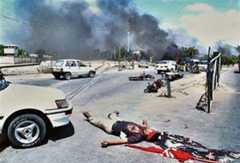
That incident, one of the deadliest battles on the streets of Karachi, shows that the AK-47 had remained the weapon of choice.
However, since 2005, gun battles involving the ubiquitous Klashni have seemed softer events compared to the rising number of suicide attacks, bomb blasts and insurgencies perpetuated by terrorist groups in Pakistan.
The AK-47's price (on the black market), has come significantly down, as the country's gun culture began fattening itself with American pistols and rifles stolen from Nato trucks that load weapons and other products for Nato soldiers in Afghanistan from the Karachi port.
These trucks are then driven from Karachi all the way up north into Afghanistan. On the way, some of their merchandise is stolen or nicked away by corrupt officials and then sold in the black market.
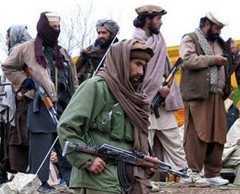
Observers have thus noticed that the demand for rifles and pistols stolen from Nato trucks has risen and that of the AK-47 has fallen. More lethal weaponry is used by Islamist and sectarian organisations, whereas US-made rifles and pistols have now become the weapons of choice of gangsters and assassins.
Nevertheless, the fall in the AK-47's usage has not meant the receding of Pakistan's gun culture. Quite the contrary, actually.
References
Jongman, Albert., Schmid, Alex: (2005) Political Terrorism: A New Guide to Actors, Authors, Concepts, Data Bases, Theories, and Literature. New Brunswick: Transaction Books
Yusuf, M. (2002) Afghanistan the Bear Trap. South Yorkshire: Pen & Sword
Waseem, M. (1987) Pakistan Under Martial Law. Lahore: Progressive
Nasr, S. (1994) The Vanguard of the Islamic Revolution. Berkeley: University of California Press
Anwar, R. (1997) The Terrorist Prince. London: Verso
Andrew, C., Mitrokhin,V. (2005) The World Was Going Our Way. New York: Basic Books
Abbas,H. (2004) Pakistan’s Drift into Extremism. New York: M.E Sharpe
Sahito.I. (2005) Decade of the Dacoits. Karachi: Oxford University Press
Ahmar, M. (1996) ‘Ethnicity and State Power in Pakistan: The Karachi Crisis’, South Asian Survey, 36(10): 1031-1048
Gayer, L. (2003) A Divided City. Available fromwww.ceri-sciencespo.com/archive/mai03/artlg.pd
Gayer, L. (2007) ‘Guns, Slums and Yellow Devils’, Modern Asian Studies, 41(3): 515-544
Verkaaik, O. (2004) Migrants & Militants: Fun and Urban Violence in Pakistan. Princeton: Princeton University press
Sareen, S. (2005) The Jihad Factory. New Delhi: Hindustan Publishing Corporation
Delong-Bas,N. (2004) Wahabbi Islam: From Revival and Reform to Global Jihad. New York: Oxford University Press USA
Haqqani, H. (2005) Pakistan: Between Mosque And Military. Lahore, Vanguard Books
Carr, C (2008) Kalashnikov Culture: Small Arms Proliferation and Irregular Warfare. Westport: Praeger Security International
Baixes, L. (2008) Thematic Chronology of Mass Violence in Pakistan, 1947-2007. Available fromhttp://www.massviolence.org/Thematic-Chronology-of-Mass-Violence-in-Pakistan-1947-2007Rashid, A. (2009) Descent into Chaos. London, Penguin
Coll, S (2004) Ghost Wars: The Secret History of the CIA, Afghanistan and Bin Laden. London: Penguin
Bergen, Peter.(2002) Holy War Inc: Inside the Secret World of Osama Bin Laden. London: Phoenix
Nayar, N. (2003) Wall at Wagah. New Delhi: Gyan Publishing House
Roul, A. (2005) ‘Sipah-e-Sahaba: Fomenting Sectarian Violence in Pakistan’, Terrorism Monitor Volume, 3(2)
Gauhar, A. (1997) ‘How Intelligence Agencies Run Our Politics’, The Nation, 17/08/1997: 4
Ehtisham, S. Akhtar. Student Movement in Pakistan.
Nadeem F. Paracha is a researcher and senior columnist for Dawn Newspaper and Dawn.com. He is also the author of ten books on the social and political history of Pakistan.
He tweets@NadeemfParacha