Movatterモバイル変換
[0]ホーム
 | Allan Brigham is a local historian & Blue Badge Guide. He regularly speaks and writes about Cambridge. He is well-known for walking tours around Cambridge.Click here for details of the tours. The following was published as part of 'Bringing it all back home:Changes in Housing and Society 1966-2006' Chartered Institute of Housing. in 2006. |
A community in transition - Romsey Town Cambridge 1966-2006
ACKNOWLEDGEMENTS
With very many thanks to the staff at the Cambridgeshire Collection; to Penny Hird and others at Cambridge City Council forinformation on the GIA, and to the Cambridge Evening News for use of photographs. My special thanks to Sallie Purkiss forthe inter-war background researched in her MA dissertation 'Over the Bridge: Another Cambridge Between the Wars (1982).'
This could not have been written without the help of many Romsey residents past and present. Thank you.
Note: Some names have been changed.
CHAPTER 1: Romsey Town - a short history
'It was said that one could be born and die in Romsey Town and haveeverything you needed in between without ever leaving Mill Road' - Wendy MaskellKing's College Chapel rises cathedral-likeover Cambridge, a unique buildingrenowned around the world for its music atChristmas. It is the symbol of the City. Manypeople believe that the University createdCambridge but the town existed long beforethe University arrived in 1284. 'Town' isolder than 'gown'.
If you walk from the city centre acrossParker's Piece, one of the most magnificenturban spaces in England, you will come to alegendary central lamp upon which iswritten "Reality Checkpoint". This is wheregown ends and the town begins. Walk tothe far corner of the Piece and follow MillRoad with its multi ethnic shops and after afew minutes you will come to a railwaybridge. Over the bridge is Romsey Town - adense community of narrow streets wheremany front doors open onto the pavement.
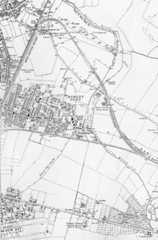
Romsey Town had its origins in the EnclosureActs of the 1800s, which dismantled theopen fields that had hemmed in the townfor centuries (its first green belt). The smallstrips of land were re-assembled and manywere sold for housing. The railway arrived inthe mid nineteenth century and most of thehouses were built between 1885 and 1895with the street pattern following the oldfield boundaries. It was the era of highEmpire, reflected in the names of the publichouses - The Jubilee, The Empress - and instreet names - Malta, Cyprus, Suez, andHobart. The parallel rows of streets endedto the north in footpaths that led to theuninhabited Coldhams Lane and theempty Coldhams Common where coproliteswere mined.
The railway divided Romsey Town from thecity. The area grew as a distinct and selfsupportingcommunity with its own shops,churches and leisure facilities. This createda sense of cohesion and community. It wasa local, not a global world where workand leisure had to be within easy reach,where personal transport was limited tothe bicycle, and television was in the distantfuture.
There were fine gradations within theterraces, and some streets had a betterreputation than others. Width mattered - afrontage of 13 ft meant the front dooropened into the front room, while 15 ftwould give you a hallway and privacy. Mosthouses had three bedrooms, but in someaccess to the rear bedroom would bethrough the middle bedroom. Most toiletswere outside, and the bathroom was a tubon the living-room floor once a week. Thelarger terraces - often home to the localelite, the engine drivers - had bay windowsand front gardens. Nearly all had longgardens, not the small yards of centralCambridge.
As the side streets were cul de sacs mostjourneys were via Mill Road, and on foot,which led to a familiarity amongstneighbours. Mill Road was the centralmeeting point where residents would meeton their way to work, to the shops, or toschool. By 1921 Romsey had a populationof 7,000 and between the bridge andthe end of Mill Road there were butchers,sausage-makers, fishmongers, bakers, atimber merchant, grocers, householdfurnishers, hardware stores, drapers,hairdressers, boot repairers, milliners, and acycle shop. Other corner shops could befound in the side streets.
This was a self-contained world 'overthe bridge'.
"Red Russia"
'This was always a Labour community and when they started singing The Red Flag, that was sort of connected with Romsey Town. This was called little Russia over here.'Most early residents of Romsey workedeither in the building industry or on therailways. The railway companies were thelargest employers. They did not buildRomsey, but an army of railway servantsmoved there - drivers, guards, boilermakers,platelayers, fitters, firemen, and clerks.With a guaranteed wage with chances ofpromotion, and a successful strike in 1919,they had a self-assurance that distinguishedthem from many of the traditional residentsof Cambridge. Romsey was always morethan a community of railway workers, butthey came to define the area.
The sense of being a separate communitywas reinforced by Romsey's politicalidentification with the Labour party. By 1921the last Liberal councillors were defeatedand Labour held all the local council seats.Voters on the town side of the bridge werefar more deferential towards authority asmany relied on work at the colleges wherelow wages were supplemented with perksand where union membership was banned.But Romsey's railwaymen and buildingtradesmen were heavily unionised, and thisgave them a sense of solidarity, togetherwith a belief in communal self help ratherthan dependence on handouts.
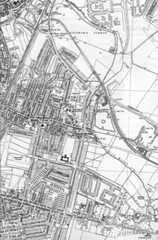
Romsey Town 1904 | Romsey Town 1950 |
|---|
 |  |
In 1926 4,000 Cambridge workers came outto support the national General Strike. AConservative Councillor led a team ofvolunteer undergraduates to keep the trainsrunning, while the railwaymen weredescribed by the Master of Christ's Collegeas a Bolshevik threat. The strike confirmedRomsey as 'Red' in the eyes of the rest ofCambridge, although family bonds werestronger than political affiliation. Romseybecame known as 'Little Russia' and localresidents adopted the name with pride as amark of their independence from thepaternalistic and conservative university. 'Red Russia they used to call it - Over here it was nearly all railway workers,more than 70% I should say. You no longer see the driver walking up the streetand over the bridge in his smart uniform with his little black box. They were bigmen like the engines they drove. They wore small donkey coats, well washedoveralls and black horse skin caps.' M Nicholls | 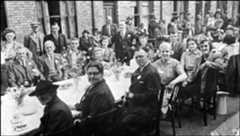
Photo: Cambridgeshire Collection. Cambridge Libraries. |
CHAPTER 2: Into the sixties
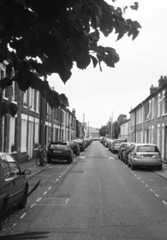
The 1926 General Strike seems part ofhistory. The sixties seem (just) part of moderntimes, repeatedly hailed by culturalcommentators as the years that broke themould. Before, the images are black andwhite. After is the start of colour.In Cambridge the population had doubledagain since the turn of the century, with newjobs in light engineering and public servicesbringing a gentle prosperity.
Romsey Town was different but still familiar.The railway tracks still marked a clear dividefrom central Cambridge but the nownationalised railway no longer dominatedthe area as it had before the war, and therewas a greater spread of employment. Rowsof terraces still greeted anyone crossing thebridge, although houses that families hadmoved into sixty years earlier were beginningto look small and dated.
But in the twenties and thirties new councilestates were built around Romsey, hemmingit in and making it feel like part of the innercity. The side streets now extended towardsnew arterial roads, while small terraces withtheir front door opening onto the pavementsuddenly gave way to bay-windowed councilhouses set back behind front gardens.
Bill Briggs, railwayman and Romsey Labourcouncillor, had forcefully demanded that thecouncil houses should be built with threerooms downstairs (the 'parlour debate') orthey would become the slums of the future.He argued as one who had lived in a nonparlourhouse and echoed the sentiments ofthe local Trades Council who believed "thatsuch houses retard the moral and socialadvancement of the occupants."
The new inter-war housing diluted some ofthe cohesion within Romsey. The councilhouses had been filled with young families,upsetting the generational balance that hadbeen established over the previous thirtyyears. Many came from the poorest parts ofCambridge, and some of the older residentssaw the Council houses as "rough", filledwith slum dwellers.
These distinctions remained in 1960, yearsafter these estates had been built. But ifRomsey was no longer clearly defined on themap, or by purely local employment, thenthe catchment area of the local schools andthe pull of Mill Road continued to help localresidents identify with the area where theylived. Shopping at the Co-op, playing onRomsey Rec, drinking in the ConservativeSalisbury or the Labour Club still providedshared points of contact, while Mill Roadbridge and the memory of 'Red Russia'remained a clear boundary between Romseyand the rest of Cambridge.
Romsey in the sixties: Sue's story
"The women had time to stand and gossip, and spend hours along MillRoad, everybody knew everybody's business." - SueSue was born in 1959. She lived in a smallterraced house in Great Eastern Street,named after the neighbouring railway line.Still only in her forties today, her childhood inthe sixties seems part of another era. Hermother was from Romsey Town, and workedfrom the day she left school just over thebridge as an auxiliary at the MaternityHospital.
Her father was Welsh, and after he met hermother at a Mill Road dancehall the youngcouple moved in with Sue's grandfather. Helived and worked in Romsey as a milkman fora nearby dairy, and this proximity ofemployment, leisure and home repeated thepattern of earlier generations. So too did thefamily support mechanisms which were partof the traditional Romsey working- classculture. These were born of necessity andnourished by custom, and while they couldbe strengths they could also be the cause ofmuch tension. Sue's parents could not get onwith her grandfather and 'his rules', and theywere threatening to separate when her othergrandfather lent them �60. This became thedeposit on the �625 price of the smallterrace where Sue was born. Her memoriesof the house in the sixties are stark:"The first things I can remember about ourhouse was nothing! We didn't have anythingmuch. The kitchen was very stark, we had acooker, and one of those cabinets, everyonehad a cabinet, with a fold down flap, andthat was yellow, you made your sandwichesand everything on that."
There was a kitchen, a 'middle room' wherethey ate, and a front room. Upstairs werethree bedrooms, one for her parents, one forher two brothers, and her small room at theback. The strongest memories are of thekitchen and the middle room (described as'not the posh room') of the house becausethat was where the family lived. The TVwhich her parents watched in the evenings(no daytime TV then) was in this room. Theback door was the main entrance to thehouse. The front door was unused. It openedstraight off the street into the front room,'the tidy room', which was reserved forimportant events.
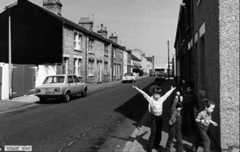
Facilities were basic, although "we had a gasfridge, that's something else that really sticksin my mind, we had a gas cooker and a gasfridge, because I've never seen a gas fridgesince."Her mother did all the laundry by hand,hanging it up to dry over a pulley above thecoal fire in the middle room. "We didn't havea washing machine, there was a Butler sink,and I can remember being out the back withmy mum and she would get me to turn thehandle on a mangle."
The toilet was out the back too: "If we wentto the loo in the night we had a potty. I thinkwe emptied it, or maybe Mum did when wewere little. It was a brick toilet, painted blackand white with just a loo in it."Nor was there a bath. "The bath tub hungup on a hook out the back, and sometimesmy mum used to do the sheets in it. Bathstwice a week. The water was heated with anAscot. I remember it was a big old whitething... I had two elder brothers, so I alwaysgot the clean water, that's another thing Ican remember. I always got first, because Iwas the girl, and they had to go in after,together."
"We used to go over the bridge to the Baths,when I was older. You'd go there on aSunday. There was a woman there, and youhad a little individual cubicle, and you couldshout if you wanted more water, I think shesupplied soap and a towel. It's awful; it's hardto believe! Scabby kids! Nobody else had itany different to how we did, it's how it was."
"I remember a woman down the road calledHilda, she got this little square washingmachine, and that's all it was, a squarewashing machine, and it had a mangle, anautomatic mangle on the top...I can seemyself pushing this square washing machinefrom Hilda's to our house so that we couldborrow it. And that was amazing, it had aseparate spinner, so the clothes werewashed, and there was this automaticmangle on the top, then you spun them outafterwards."
"We always played in the road, you got up inthe morning and you had breakfast and youjust went out to play. You probably wentback at lunch time, but there was no 'Whereyou going?', nobody needed to know whereyou were because you just went off to play."Romsey Town still felt distinct. There wasonly one car in the road, and only onetelephone, most journeys were still on footand face to face contacts with neighboursand nearby family - love them or loathethem - were still very much part of everydaylife: "You knew everybody, and everybodyknew everybody."
With few labour saving gadgets houseworkwas woman's work, and a full time job. Sue'smother did the washing, cleaning, shoppingand cooking, and would then go out to workwhen her father returned home. She wasalso the prime carer, looking after the threechildren, and walking daily down Mill Roadto help her wheelchair-bound mother.The house and the street were the women'spreserve during the daytime: "They werealways in each other's, everybody was alwaysin our house, all the women. And as soon asmy dad came home from work they used togo, always. Dozens of kids everywhere. It'shard to believe we all got in that little room."Beyond the street, Mill Road continued to bea wider focal point. It was a daily destinationin an age before freezers, or supermarketswhen meals still consisted of meat and twoveg, everybody 'bought fresh' and 'nobodyhad a car to go any further.'
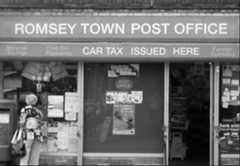
On Mill Road were vegetable shops, anelectrical shop, a haberdashery, a furnitureshop, an ironmongers, a barbers, a cycleshop, a bakers, butchers and the Co-op, thebiggest store ("I can still remember thenumber, isn't it funny - 49509. Don't forgetyour divi number!"). Christmas wasmemorable for toys from the toy shop whereher mother saved all year at the ChristmasClub, while across the road at theContinental Shop run by post-war easternEuropean refugees there would be a bigbarrel of live eels: 'I remember that so well.'It was a world of trust: "A family moved indown the road, I can't remember their name,and they had a small baby. And the next dayme and this girl Deborah, we went andknocked on the door, and we said 'Can wetake the baby for a walk?' and she gave usher baby! Can you imagine it now! 'Bring itback at 12.00 for dinner'. 'OK'. We got aclean nappy and a pair of rubbers, and youjust pushed this baby about quite happily. Itwould never happen now. But then peoplelet you do it, they trusted you to do it."It was a world where children were naughtybut 'you didn't pinch anything short ofCorona bottles' (for the 3d deposit), and'anything you did wrong it was 'Oh, I'll tellyour mum.' And you were frightened of her.She had a stick. And we got it!'
But although Sue's memories of Romseyin the sixties are of 'good times', sherecognises: "they can say it was happier, butI'm sure it must have been much harder. Youwouldn't do that now, I wouldn't want to! Itwas hard, I'm sure it was very hard for mymum... people just wouldn't go back to itwould they?"
CHAPTER 3: Home Improvements: Into the seventies
Ralph and Maureen's Story:
"He was playing football on the Rec, I'd got my little cousin on the swings, hewaved at me, and I waved back, and that was sort of it. I was 15, he was 20!We were engaged when I was 16 and married when I was 21." Maureen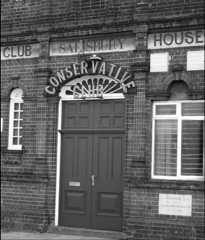
Ralph was brought up in one of the 19thcentury terraces near the RecreationGround. On the day that he was playingfootball - 'I was sport mad' - his future wifeMaureen had been looking after her youngcousin. She decided to walk to the swingsfrom the council houses where she lived onthe other side of Mill Road. Today no parentwould let their child venture so far fromhome, or risk crossing Mill Road with itssteady stream of traffic.
Ralph and Maureen were married in theearly sixties. Ralph's was a traditionalRomsey railway family. His parents hadmoved to the area from another railwaytown, March, when his father had beenpromoted to Works Inspector: "Romseyitself was called Railway Town, Railway City,Red Russia was another name it got. Theair's lovely and fresh, but you used to justget that sulphur smell too." They bought ahouse in the street next to where he hadbeen brought up. "We wanted to buy. Myfather rented privately, Maureen's father wasin a Council house, but my father alwayssaid 'You don't want to rent, it will never beyour own'. But on the other side of the coinpeople used to say 'Oh, you ought to get aCouncil house, they do all your repairs foryou'. But we went with my parents, we gota mortgage."
Getting a mortgage wasn't easy as Ralphonly earned �11-6-0 (�11.30) a week andthe house cost �2,375. He could just aboutafford it because he supplemented hiswages with Sunday work, but most BuildingSocieties would not take overtime earningsinto consideration. One did, although it stillinsisted on the minimum 10% deposit thatwas then normal, and they were able to buythe superior terrace with a bay window andsmall front garden in one of the mostsought-after streets in Romsey.
When they moved in they had very fewpossessions: "We didn't have a carpet. Wehad bare boards and a little bit of lino.We had people come round one night andwe had to sit on the floor, we only had twolittle fireside chairs. We had Mum's secondhandcooker in the kitchen, and a spin drier,no washing machine, everything had to bedone by hand, sheets and everything."
The house needed modernising, andthrough the sixties and seventies Ralphslowly improved and adapted it. Thebathroom and toilet had been accessedthrough a sliding door from the kitchenand one of the first things they did was toknock the bathroom out and move itupstairs. He did this by sub dividing the backbedroom, which left them a small thirdbedroom so that his two children could eachhave their own room (unlike in many earliergenerations where large families often ledto two or even three children sharing untilthey left home).
In the seventies he knocked out the dividingwall between the two downstairs rooms tocreate a larger living area, and put in centralheating to heat the bigger space. Later headded an extension to the rear of thekitchen. It was a street of families many ofwhom were also improving their homes, andthey helped each other out: "We wereneighbourly. I didn't do John's for money, Ihelped him do it. We put windows in John'splace, put fences up. Same as when I builtmy extension. My mates all lived round here,if you knew a plumber, I'd go round and dotheir brickwork and they'd come round todo my plumbing. Ralph has carried the values of respect andneighbourliness through his adult life, butno longer feels that these are shared bythose who are moving into the area. He isnow more at ease down in Norfolk wherethey spend much of the summer in theircaravan: "I've got to say this, people inCambridge today only talk to you if theywant something. You go down to Norfolkand they're so obliging. If you run for a busin Cambridge it keeps going, if you run for abus in Norfolk it stops, and if it's pouringwith rain they'll stop outside the oldlady's house."
It was self-help that recognised the benefitsof exchanging labour and skills, rooted in asense of belonging to a local community:"You never mentioned money. Everybodykept to their promise, they didn't let youhelp them and then not turn up at yours.That's how it was."
Family was important too. Ralph's mothercontinued to live in the next street where hecould keep an eye on her until she was 80:"I used to walk the dog through the Rec,walk up Ross Street, see if my mum wasalright, then come round the block, andthen to work. The neighbourly thing wasgood, you can see a big gap."
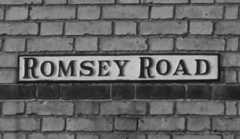
Ralph still walks around the Rec where heplayed football as a teenager and where hemet Maureen. It had been the centre of hisleisure activities as a child, where he bondedwith his mates who remained friends asadults, and where he learnt to respect notdisregard the police: "I preach this to thekids today when you hear them swearingand blinding, our Coppers, Coppers in thosedays, they'd come on the Rec and we'd beplaying, and off would come the tunic topand they'd be in goal. We respected themall, and they respected us. We never hadno trouble."
Ralph has carried the values of respect andneighbourliness through his adult life, butno longer feels that these are shared bythose who are moving into the area. He isnow more at ease down in Norfolk wherethey spend much of the summer in theircaravan: "I've got to say this, people inCambridge today only talk to you if theywant something. You go down to Norfolkand they're so obliging. If you run for a busin Cambridge it keeps going, if you run for abus in Norfolk it stops, and if it's pouringwith rain they'll stop outside the oldlady's house."
CHAPTER 4: Improving the Area: The seventies and eighties
Ralph wasn't the only one altering hishouse. During the seventies Sue's fatherknocked out the dividing wall between therooms downstairs, ending the segregationbetween a 'tidy' front room and a livingroom at the rear. He also built a 'lean-to' atthe back of the house for storage, andinstalled a bathroom in the kitchen wherethe outside toilet had been. A neighbourhelped with the 'lean-to', her brother whowas training to be a plumber helped withthe bathroom. Like Ralph, the labour andskills of neighbours and family madealterations affordable.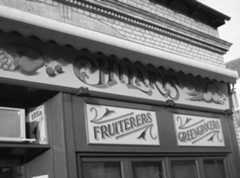
By the mid-seventies Romsey was beginningto look old fashioned to many, 'likeCoronation Street.' For every house that wasimproved, there was another that wasbecoming unfit for habitation. Amongst theproblems were the bad condition of some ofthe thirties council houses, and the numberof older terraces that were privately rentedby landlords with little incentive, or littlecapital, to modernise their properties -about one in four were privately rentedin 1977.
Nor could any home improvements comparewith the facilities of the new houses thatwere being built across Cambridge and inthe outlying villages on council and privateestates. With rising incomes and increasingcar ownership there was no longer any needto live within walking distance of work, or ofthe shops. Post-war planning policies led toa surge of house building in the villagesbeyond the Green Belt rather than in thecity. Older residents stayed, and theirchildren might stay too. But Romsey was nolonger an area for an aspirational youngcouple to start a family home.
Sue's father didn't move to the countryside,but he bought his first car in 1971. At first itstood proudly and nearly alone in the street.But slowly the elderly who didn't drive orcould not afford a car died, and werereplaced by those for whom a car was anessential part of late 20th century life. Thecul de sac where Sue had played as a childbecame choked with parked cars, and inother once quiet through streets residentsfound themselves living in 'rat runs'. Evenworse, as they became dependent on cars,or found that they had no choice but to bedependent on cars, they found they couldn'tpark THEIR car outside THEIR house. Slowlythe absence of garages or off street parkingin terrace houses that abutted the pavementbecame as big an issue as the absence ofbathrooms or inside toilets.
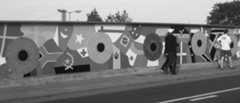
A General Improvement Area (GIA): The eighties
If Romsey had always felt it had a separateidentity, it was starting to become anidentity based on neglect and a feeling ofdeprivation rather than pride. A survey of1,871 Romsey houses in 1977 revealednearly one in three (583) still lacking one ormore basic amenity, and one in five (343) asbeing unfit for habitation.
The City Council proposed creating aGeneral Improvement Area (GIA) as thesolution and the Romsey GIA was declaredin 1981. This marked a recognition that theearlier policy of total clearance of olderproperties was neither appropriate noraffordable. It recognised that rehabilitationwas a better option and that withimprovements the life span of the Romseyhouses could be extended by thirty years ormore. It also recognised that in the processcommunities were not broken up, and thatcommunities were more than the housespeople lived in. GIAs were not magic wands,but for the first time they offered help toimprove not just houses but the wider localinfrastructure.
Merryn's Story: The Middle Classes Move in
"There are three aspects of generally improving the older housing areas, of whichthe General Improvement Areas are intended under the terms of the Housing Act(1969). Two aspects are obvious, being the improvement of the houses themselvesand of the environment in which they stand. The third is the involvement of thepeople living in the houses." - Cambridge General Improvement Areas (Cambridge City Council)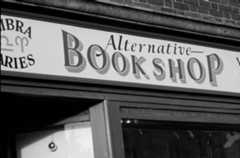 Merryn burst into tears on her first night inRomsey. She had moved to the area fromLondon in February 1980 with her husbandand two-year-old child. It was cold, therewas no central heating, they couldn't walkon the kitchen floor because it had beenre-concreted, and the boiler burst the firsttime they turned it on. But, "I alsoremember that I instantly felt at home bothin the house and in the area."
The next day she went shopping and was"struck by how friendly and chatty theshopkeepers were. We liked the idea thatwe were living in Romsey Town - separatefrom Cambridge, with its own particularcharacter." Their first months in anotherpart of the city had been disheartening:"That part of Cambridge felt bleak to me. Italso felt like it could have been anywhere -any suburban development on the outskirtsof any English town. Romsey had a totallydifferent feel to it. It had "character". Theold Cambridge brick houses were huddledtogether in a way which made you feel itwould be impossible not to be neighbourlyhere." Affordability was an issue too. Whenthey had asked the estate agent why asimilar house on the other side of the bridgewas more expensive he had replied thatRomsey was 'not the most favoured areaof Cambridge'.
Merryn moved to Romsey for many of thereasons that the children of olderinhabitants were leaving. Where she saw'character' in the old terraces and narrowstreets, they saw tiny houses and no parkingspaces. She saw Victorian features"including a lovely open fire-place withpicture tiles, the original wood panelleddoors (which we lovingly stripped by handover the years, leaving them with a warmgolden glow) and a nicely patterned tiledfloor in the porch." For others these wereold-fashioned relics that should be thrownout.
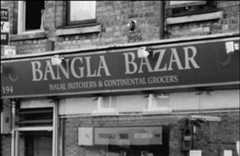
She "discovered a lot of young familiesrather like ourselves moving into the area -teachers, social workers, universityresearchers - educated, middle class, leftishwing, with houses full of books and musicalinstruments, but not a lot of money." Otherssaw this as an alien takeover by a differentclass with different values. It was the start ofwhat is now called gentrification.
Merryn recognised the problems of being'incomers': "We were well aware of the factthat there was already an establishedcommunity here into which - by reason ofeducation, interests and lifestyle - we didnot really fit and who probably resented thefact that they and their families were beingpriced out. At the same time, it was thisfeeling of community that we particularlyvalued in Romsey and we were anxious tobe an accepted part of it."
Merryn was probably typical of the firstmiddle-class incomers. She was new toCambridge, wanted to meet other familieswith young children and shared interests,and wanted to be part of the widercommunity. So with other 'incomerhousewives' she joined 'RomseyNeighbours', visiting new families whomoved into the area and helping elderlyresidents with shopping, gardening orredecorating. In turn the GIA officervisited her.
Minimal consultation during the firstCambridge GIA had sparked a protest. Toavoid a similar response in Romsey aresidents consultative group was seen as apriority and one of the proposed mediumsfor engaging as many as possible was alocal newsletter. Merryn was enthused: "Iimmediately thought, "Yes! I could do this."I had the time, I enjoyed writing andit would give me a chance to get outand about and meet local people."The Newsletter was called 'Over the Bridge',and Merryn became its Editor.
She found Romsey in the early eightiesa-buzz with community groups, few ofwhich would have been found in the sixties:"the local political parties, (Labour andLiberal - not many Conservatives about)were very active, there was CND, Mums &Toddlers, Babysitting Circles, a toy libraryand a 'skills swap' scheme. It's true that yougenerally saw the same faces everywhereyou went, but they were not all middle-classincomers. The residents of Ross Street(thirties council housing) set up a group andorganised a street party to celebrate theCharles/Diana wedding."
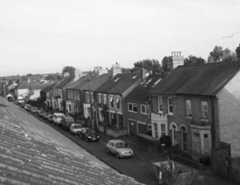
'Over the Bridge' publicised these activities,along with details of proposedimprovements. The lack of greenery wasaddressed. The problem of large trucksusing the narrow streets as through-roadswas raised, and the noise from localbusinesses was discussed. All these issuescame together in 1986 with the 'RomseyLocal Plan', designed to "protect andenhance the quality of life in Romsey." Thisled in the 1990s to traffic calming measuresin the side streets designed to discouragetheir use as 'rat- runs'.
One of the significant differences between1980 and 2006 is that then Romsey houseswere still affordable on one middle-classincome. With universal child care dreamedof only by a few Merryn had little option -and accepted and could afford - her role ashousewife. Despite being a middle-classincomer she was tied to the home. Shelooked to the immediate neighbourhood ina way very similar to older working-classresidents, and very different from someoneof her class today. These bonds are loosernow because most couples, even those withchildren, are working. They see the homeonly in the evenings where it is a haven torelax rather than a base from which to goout and meet others in the broader localcommunity.
"Small wafers of shedding pine, cheerful gingham patchwork quilts andthe tap of mallet on lintel were an immediate reminder that summer isthe season of rebirth for Romsey's cottage industries. It is true that nearlyeveryone in Romsey lives in a terraced house yet everyone is busy everyhour that the local Labour Party spends trying to restore their residencesto what they never were in the first place: hence Romsey's main cottageindustry is cottages." From: Over the Bridge (1985)
CHAPTER 5: Towards the 21st century
"We chose Romsey because it was cheap, the Council rates were lowand there were grants available for improvements " - Jeanette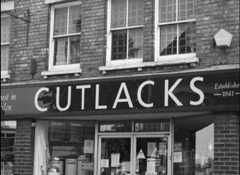 Jeanette and her husband bought theirfirst home together in Romsey in 1979.Cambridge born, they were drawn toRomsey not because of family connectionsbut because it was affordable andhad potential. At 24 she was apharmacy technician, her husband, 30, aphotographer.
"The house was in a poor state, we had tohave a new damp-proof course, timbertreatment, much of the flooring was rotten.The bathroom was downstairs and openedinto the kitchen so that had to be changed.We also had to have central heating put in,a new roof and loft insulation, all of whichwe received grants for (not the heating)."Eight years later (1987) they added one ofthe first loft conversions in the area. Thereare many others now.
As a young mother Jeanette found "thelocal facilities were great, school at the endof the road, shops near by, playgroups. Iattended the GIA meetings and wasinvolved with the 'Over the Bridge',delivering and contributing. I was aGovernor at St. Philip's school for nine yearsand was heavily involved with theplaygroup." The availability of improvementgrants had drawn them to Romsey, andinvolvement with the GIA helped to bondthem into the area.
At the same time that Jeanette saw in theolder terraces - with tax funded subsidies -a chance to buy a family home, Steve, livingin a council house next to the Common, alsobecame an owner occupier - with the taxfunded subsidies of 'Right to Buy': "Mymother had died and they said I had to moveout and we were offered a flat, but I was asingle parent, and I liked Romsey, and myson grew up there and wanted to stay there,so I took advantage of the right to buy. Butit was a fear, going into the unknown."
Twenty-five years earlier Steve's family hadbeen able to move to Romsey close to hisgrandparents because of the large stock ofCouncil houses in the area. But with everyCouncil house that was sold, keeping thetraditional extended family networkstogether that had made up the 'community'that Merryn found so attractive becamemore difficult.
With a diminishing stock of housing andever more stringent requirements on whomthey had to house, Council housing in theeighties and nineties became the preserve ofthose with greatest need and - often - thegreatest problems. Despite wanting to stayin Romsey Steve found himself cominghome from work to noisy neighbours. Thearea had always had high housing densities,but both the formal and informal socialcontrols now seemed to be slipping away.Unable to relax, 'on edge all the time', hemoved away in 1990 to a private housingestate: "I can go home and I've gotwonderful neighbours all around me, I gohome and there is peace."
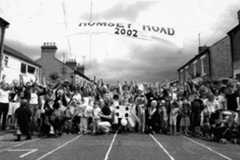
Romsey Road Street Party. Photo: Cambridge Evening News
CHAPTER 6: Romsey Town in 2006 - The Ugly, the Bad, and the Good
Steve found the community that he grew upin dissolving, and left. He was not alone.Others could not leave, and are resentful.Ralph blames the prevalence of 'Buy to Let',with many houses now rented out on shortleases to students or young single people:"As soon as you got the student lets it's justgone down. The signs are abandonedrubbish sacks, wheelie bins left on thepavement, uncared for back gardens."Gardens are seen as important in areas ofhigh-density terraced housing. Often thelargest space in the home, they are a placefor children to play, for adults to relaxoutside in privacy or for families to meetaround barbecues. Ralph had 'a nice lawn,but it never got the sun because thestudents next door let their garden becomeovergrown, so I took it all up and put a patiodown. It is not nearly so nice.'
Ralph finds the deterioration of parts of thephysical environment threatening and feelsunsupported by the local Councillors.Neither he nor his wife were directlyinvolved in politics, but they remember aformer Labour councillor as "'a people'sman, not like they are today", and Maureenfondly recalls that when she started work ata University department the boss said: "Oh,Red Russia girl!" Lib Dems, not Labour, nowwin elections in Romsey. Their priorities maynot be very different from Ralph's, but hefeels no connection.
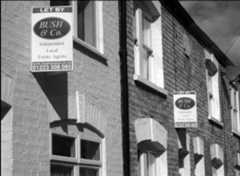
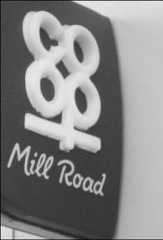
Ralph is not alone. Roy and Sandra are intheir fifties, and moved back to Romseytwenty eight years ago after a brief spell ona distant council estate. They missed Romseybecause "if you went to the Co-op andcame back it took you an hour because youjust knew everybody and you just chatted! Itwas a village, it was families." But now,"we know our own generation that's stillhere, but there's more students now, its notgot the same atmosphere. We're trying torun a Residents Association and get peopleto join in, but it's really hard because a lot ofthe people who live here don't have acommitment."
Roy, like Ralph, blames absent ownerlandlords: "They don't see what it looks like,they don't care what it looks like, they're notreally bothered, they're just in it for makingmoney. So you go around and it just looksscruffy. It doesn't bother them. But WE haveto live with it."
Complaints are not just from traditionalresidents either:
Ellen, 30, moved to Bury St Edmunds indespair at the failure of her (resident-abroad)landlord to maintain her rentedhouse, problems with neighbours and latenightdrug raids down the street.
Ian moved into the area in the nineties, withhis wife and young family, but moved outfive years later "due to the amount ofhouses rented to students. Various noisyneighbours made life miserable and withmuch sadness we left to get some peace."With similar disappointment the daughter ofone of the eighties middle-class incomershad bought a house in the area but "nolonger feels that it would be a good place tobring up children. Too many of the houseshave been given out for rent and she hasconcerns about the purposes to which someof these houses have been put." Recentwell-publicised raids on brothels confirmher fears.
Being in the catchment area of a failingsecondary school for the last decade hasalso had an impact. This may now beimproving, but Bridget with two children atthe local primary school, sees friendsfighting to obtain places in feeder schoolsfor the secondary school in the town centre:"This undermines the sense of community. Ithink residents would get to know eachother better if their children went to thesame school. The secondary school situationhas not benefited Romsey, and this is thereason some parents leave the area. But I amreally pleased to see the local secondaryschool is on the way up at last."
And the Good!
In contrast many residents are far morepositive.
Andy was bought up in a Romsey Councilhouse in the sixties. When he was firstmarried they lived on another council estate:"The people over there are appalling, drugs,burglaries, theft of vehicles, it's totallydifferent. I wouldn't live there if you paidme." He requested a transfer back toRomsey: "Oh the difference is chalk andcheese. Everything is on top of you inRomsey. Mill Road, excellent for shopping.You've got Sainsburys, Asda, and the newTesco, everything within ten minutes. Thetown centre, the bus station, the rail station,everything is close by. I wouldn't move outof Romsey Town."
Andy may now be in a minority but at 45 hislifestyle is not very different from that ofprevious generations of Romsey residents.His father came to Cambridge as arailwayman; he lives around the corner fromthe street where his parents still live and ismarried to the girl he knew as a teenagerand he enjoys having shops and serviceswithin easy reach. Perhaps one of the biggerdifferences is that also around the corner livea number of Asian families and that nearly9% of Romsey inhabitants are described inthe 2001 census as 'non-white'.Elizabeth lives with her husband and twochildren five minutes walk from Andy'shouse. An editor for a local publisher shemoved to Romsey in 1992 because it wasaffordable and because she liked theVictorian houses.
In 2005 Elizabeth knocked down the sidewall of her terraced kitchen and extended itacross what was the patio to give moreliving space. Unlike Sue's childhood in the1960s "there aren't many children in ourstreet. It would be nice if the kids could gomore freely between houses of people verynear, but there aren't many." But thecontrast with her earlier life in the suburbsremains stark: "People in the street say'hello'. Also, it always feels safe. I like it thatthere are always people on the streets atmidnight. What a contrast to my previoushome in Stapleford, where you didn't see asoul after 8pm!"
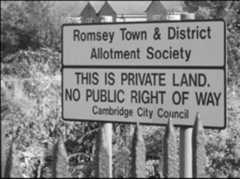
Elizabeth has an allotment nearby, and sodoes Heather who moved to Romsey fromLondon in 2003. They wanted somewhereaffordable and close to a railway station:"We moved from a very small flat in Londonto what seemed like a palace - a twobedroomed house in Romsey. The garden issmall but the allotment provides space: Weuse it a lot for getting together with friends,we have a fire here, we have barbecues,picnics, and the kids run around here a lot,we've got a little paddling pool. We love it.I'm a keen gardener, so I enjoy just beingable to get my hands in the soil."
Bridget likes the convenience of being ableto walk and cycle 'to town, to the shops, tothe school, to the station, to the cinema,pubs and swimming pool. The streets feelsecure and the children can visit friends bythemselves and have more independencethan many children the same age. We canlive our daily lives without having to rely onthe car.'
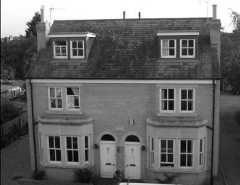
Others like the buzz of Mill Road. Mary"chose to live in Romsey Town because weimmediately fell in love with the house andits proximity to the multicultural buzz of MillRoad. The house, a three-bedroom end ofterrace had previously housed three malestudents who had littered the garden withbeer cans and bottles and painted life-sizeddrawings of naked women on the walls. Wepulled out the pink bathroom suite, sandedthe floors and painted the house from top totoe. I love sitting in my garden watching theworld go by, saying hello to my neighbours.We're connected by our gardens, ourwheelie bin routes and the walls of ourhouses. We borrow chairs, feed each other'scats and share stories of our lives. I love thefact we live on the right side of the bridge -I feel that it's edgier than the other side - notquite so smug, prim and proper. There'snothing that I like more than the fact thatI'm known in a few shops - they know whatpaper I read, the content of my favouritesandwich and that I like an extra shot inmy coffee. I take great pleasure in chattingto my neighbours - it all adds up to feelinglike I have a sense of belonging. It feelslike home."
For Ralph and Mary, Andy and Roy muchdepends on their immediate experience inthe street around them, rather in the wider'Romsey Town'. Perhaps that is the chiefdistinction between 1966 and today. Theymay have friends nearby but their horizonsextend over the bridge and beyond thetight networks of family and sharedworkplace of earlier residents. Even Ralphnow drives to shop at a superstore, and hasanother 'community' around his caravan sitein Norfolk.
Advancing into the Past
Iain and Gillian moved to Romsey in2000.
"We were both well into our careersand our thirties before we could affordwhat might have been considered in thepast a starter home. The other night Iwas flicking through a book of memoriesof 'Old Cambridge' and a subtitlegrabbed my eye. It said, "In those daysmany houses had open fires..." I foundthis funny because as part of ourredecoration of our semi-detachedVictorian house in Romsey, were-opened the fire in the front room.Again, this room was recreated by usputting a wall back in place that hadbeen removed, probably in the seventies.The open fire is not really an affectation:because we chose the bare floorboardsfashionable in houses today, in winterthe house can be genuinely cold evenwith the central heating system on fulland the fire seems necessary. Sometimeswe advance into the past."
CHAPTER 7: Summing Up
Len's Story: 1960-2006
Len's journey seems to sum up the changesthat have taken place in Romsey over thepast forty years.
"In terms of money, up until about 1960people always lived from hand to mouth.There were no bank accounts in my family.And now both my children have got bankaccounts, they seem to have savings, they'vefinished college - they went to college, like40% of people now."
"What an enormous revolution it's been forsomeone like me. From an outside tap andan outside toilet to a house which hasheating, hot water, shower, bath, and somesavings. I don't have to worry about moneylike I did. That's amazing. And two toilets!"Len's story reflects the social changes thathave happened in Romsey since 1960. Bornduring the Second World War his childhoodwas spent amongst his extended workingclassfamily. When he lived with hisgrandmother he accepted the outside tapand the outside toilet, coal fires and gaslighting as normal: "It worked. So though itseems a great hardship I don't think it wasreally." There was no electricity: "Until I was13 I didn't live in a house with electricity.And I can remember being in a house, andswitching on the light, and switching it off,and just being absolutely amazed by thisthing, this simple act that you could turn alight on and off."
As a teenager in the early sixties he movedin with his Uncle and Aunt a few minuteswalk from where he now lives. There was nobathroom and washing was done either inthe kitchen sink, or, like Sue, over Mill Roadbridge at the public baths. The kitchen wastiny, and the family lived and ate in the backroom. Money was always scarce: "The mainproblem was lack of money to buy things, soif you wanted new shoes you had to saveup, or else you'd get them on the tick, butthat was unusual."
The upbringing was typical of earlier Romseygenerations. But Len was a beneficiary ofthe sixties expansion of higher education.He went to college, got a degree, became aresearch assistant at Cambridge University,and finally an electronics lecturer. It gavehim enough money to buy his own houseand he moved back to Romsey in 1978.He still lives in the detached house hebought. Built at the same time as thesurrounding terraces, it was once afarmhouse for the local dairy. Len hasmodernised and extended it to provide acontemporary family home where he and hiswife have bought up their two children.There is a big living room and a kitchen youcan eat in. His children each had separatebedrooms, and there is a bathroom: "Someof the greatest times actually were bathingthe kids, putting them in the bath, lettingthem splash around, plastic ducks...we'vegot two loos. How ridiculous is that! We'vegot one downstairs and one upstairs. In myuncle's house there was one outside. Oncold winters night you got hardened to it,but it was not as comfortable as the choiceof not even having to go downstairs, I cango to the toilet upstairs! What luxuries theyare in comparison."
At the rear of the house some of thecow-sheds have been converted intoaccommodation, and the remaining openbarn recently hosted a group of Peruvianchildren playing brass instruments. At thefront of the house overlooking the gardenhe has recently built a conservatory wherethey now eat most days.
Len has become middle class. So has muchof Romsey. It is part of the story of the lastforty years. The hidden story is the fate ofthose children of the traditional workingclass residents who remained in manualjobs. Some still live in the area. But manymore are dispersed to distant villages wherehouses are cheaper because facilities areinferior. Providing the labour to service thebooming Cambridge economy, they areexcluded from its benefits.
CHAPTER 8: Conclusions
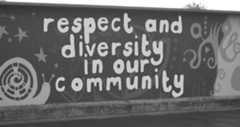
Romsey Town has only existed for 120 years.It was a new community that quickly forgeda clear sense of identity. In part physical andin part social and political, this identity wasstrong enough to survive the inter-warexpansion and into the sixties. It remainstoday as an historic memory that helps todistinguish the area from other parts ofCambridge.
Forty years ago much of Romsey could havejoined the redevelopment programme thatsaw streets of Victorian terraces demolishedelsewhere in the city. Instead the boost ofbeing declared a General Improvement Areacoupled with the success of the Cambridgeeconomy gave the area a new life. Existingresidents like Ralph adapted their houses tomodern standards. Young middle-classcouples like Jeanette or Merryn and theirhusbands, aspiring to be owner-occupiers,moved in. Both groups accepted smallerhouses than their contemporaries who weremoving to surrounding villages in exchangefor the convenience of local facilities andproximity to the city centre.
Romsey looks very similar today to the wayit looked in the sixties. But the socialcomposition of the area has changeddramatically. The last forty years have seenthe traditional working-class residents inretreat. But those living in council houseshave a security of tenure that gives themstability and they remain a significant part ofthe community. Ironically the successfulregeneration of the area has made owner-occupationunaffordable on manual wageswhile the 'right to buy', although benefitingthose who took it up, leaves a diminishednumber of family houses to rent.The first middle class incomers were publicsector workers. They moved to Romseybecause it was run down and cheaper thanany other part of Cambridge. Few of themcould afford to buy their own houses todayif they were beginning again on theirpresent incomes. Rising house pricesencouraged by the local housing shortageand easy access to the railway station, aremaking Romsey home to a new class ofyoung, higher paid professionals, oftenLondon commuters.
As expectations and incomes have escalatedterraces have been adapted with bathroomsand toilets. Central heating has made morerooms habitable and given privacyundreamed of when everyone clustered in'the middle room'. Small terraces that wereonce full of children are now home tochildless couples, while loft conversions andextensions, workshops and garden 'offices'have made other houses suitable for 21stcentury families with all their possessions.Victorian fireplaces and pine-panelled doorshave been restored. Wooden sash windowshave replaced the aluminium windows thatreplaced the original sash windows. Thehouses reflect the changing values of theirinhabitants.
Romsey retains a street pattern, aneighbourhood shopping centre basedaround Mill Road, and a clear greenboundary at Coldhams Common that makeit unique in Cambridge. It has a clearphysical identity and many points of contact- pubs, clubs, two community centres,allotments, two primary schools, pre-schoolnurseries and after-school clubs. One of themost important meeting places remains the'Rec', where dog walkers, joggers andbasketball players rub shoulders withteenagers 'hanging out' or playing football.On the route to and from the primary schoolit is also where parents and children pauseto chat.

But the social cohesion of forty years agohas been weakened by increased mobility,rising prices and the peculiarities of theCambridge housing market that haveencouraged landlords to buy former familyhomes and transform them into bedsits fora transient population of young people. Theyoung people provide the 'buzz' andmaintain the shops, pubs and cafes on MillRoad that make the area so attractive tomany newcomers. But if their numbers, carsand parties overwhelm the traditionalresidents or the middle-class professionals,or absorb too many houses that could befamily homes, then the delicate balance willbe destroyed.
Yet although the balance is under pressure,where it works the streets of Romsey canprovide the same sense of community thatthey did for Sue forty years ago. Charlie is ateacher, and he says:
"It has an absolutely wonderful sense ofcommunity and certainly for our childrenthey've formed amazing good friendshipson the street. There are kids down the road,kids up the road. I particularly like the longhot summer days and evenings when all thekids are on the pavement. There isn't muchtraffic on the road at all. Not just thechildren, when we first moved in we wereasked across to an open house party for thestreet. It seemed to typify the atmosphere,it's a very warm, welcoming atmosphere.""We looked for a house in a number ofvillages. But our kids were adamant thatthey wanted to stay round here. Before wemoved here we were told a lot about thewonderful community feel, and at thetime I thought 'Everybody talks like thatabout where they live', but it has proved tobe true."
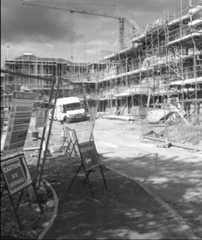
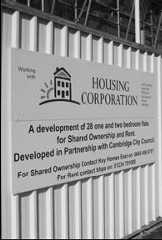
The last land for a major developmentopportunity in Romsey has recently come onthe market. Roy and the Community Groupwould like to see family houses and greenspaces: "You need green spaces. I don'tknow what it is about it, but when you seegreen open spaces it is just different, a niceatmosphere." Others would like to repeatthe tall, barrack-like blocks of flats that havealready been built by the railway.In reality there is a need for family housing,and for housing for single people - rentedand private. How this land is developedwill impact on the whole area and helpshape 21st century Romsey. Will it be thecommunity of the past, communities oftoday, or simply a service area for youngpeople passing through Cambridge, witha few families clinging on while othersare forced to live even further from thetown centre?
Allan Brigham November 2006
Return to index
[8]ページ先頭