
|





| Hurricanes are tropical cyclones with winds that exceed 64 knots (74 mi/hr) and circulate counter-clockwise about their centers in the Northern Hemisphere (clockwise in the Southern Hemisphere). | 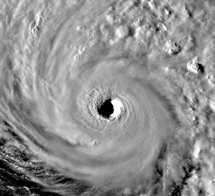 |
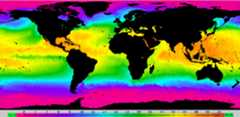
Hurricanes are formed from simple complexes ofthunderstorms. However, these thunderstorms can only grow to hurricane strength with cooperation from both the ocean and the atmosphere. First of all, the ocean water itself must be warmer than 26.5 degrees Celsius (81°F). The heat and moisture from this warm water is ultimately the source of energy for hurricanes. Hurricanes will weaken rapidly when they travel over land or colder ocean waters -- locations with insufficient heat and/or moisture.
 | |
Related to having warm ocean water, highrelative humidities in the lower and middle troposphere are also required for hurricane development. These high humidities reduce the amount ofevaporation inclouds and maximizes thelatent heat released because there is moreprecipitation. The concentration of latent heat is critical to driving the system.
The vertical wind shear in a tropical cyclone's environment is also important.Wind shear is defined as the amount of change in the wind's direction or speed with increasing altitude. The video below shows how wind shear plays a role in hurricane formation.
When the wind shear is weak, the storms that are part of the cyclone grow vertically, and thelatent heat fromcondensation is released into the air directly above the storm, aiding in development. When there is stronger wind shear, this means that the storms become more slanted and the latent heat release is dispersed over a much larger area.
 |  |