- java.lang.Object
- io.reactivex.Flowable<T>
- Type Parameters:
T- the type of the items emitted by the Flowable
- All Implemented Interfaces:
- Publisher<T>
- Direct Known Subclasses:
- ConnectableFlowable,FlowableProcessor,GroupedFlowable
public abstract classFlowable<T>extendsObjectimplementsPublisher<T>
The Flowable class that implements theReactive Streams Pattern and offers factory methods, intermediate operators and the ability to consume reactive dataflows.Reactive Streams operates with
Publishers whichFlowableextends. Many operators therefore accept generalPublishers directly and allow direct interoperation with other Reactive Streams implementations.The Flowable hosts the default buffer size of 128 elements for operators, accessible via
bufferSize(), that can be overridden globally via the system parameterrx2.buffer-size. Most operators, however, have overloads that allow setting their internal buffer size explicitly.The documentation for this class makes use of marble diagrams. The following legend explains these diagrams:
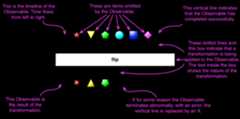
The
Flowablefollows the protocol
where the stream can be disposed through theonSubscribe onNext* (onError | onComplete)?Subscriptioninstance provided to consumers throughSubscriber.onSubscribe(Subscription). Unlike theObservable.subscribe()of version 1.x,subscribe(Subscriber)does not allow external cancellation of a subscription and theSubscriberinstance is expected to expose such capability if needed.Flowables support backpressure and require
Subscribers to signal demand viaSubscription.request(long).Example:
Disposable d = Flowable.just("Hello world!") .delay(1, TimeUnit.SECONDS) .subscribeWith(new DisposableSubscriber<String>() { @Override public void onStart() { System.out.println("Start!"); request(1); } @Override public void onNext(String t) { System.out.println(t); request(1); } @Override public void onError(Throwable t) { t.printStackTrace(); } @Override public void onComplete() { System.out.println("Done!"); } }); Thread.sleep(500); // the sequence can now be cancelled via dispose() d.dispose();The Reactive Streams specification is relatively strict when defining interactions between
Publishers andSubscribers, so much so that there is a significant performance penalty due certain timing requirements and the need to prepare for invalid request amounts viaSubscription.request(long). Therefore, RxJava has introduced theFlowableSubscriberinterface that indicates the consumer can be driven with relaxed rules. All RxJava operators are implemented with these relaxed rules in mind. If the subscribingSubscriberdoes not implement this interface, for example, due to it being from another Reactive Streams compliant library, the Flowable will automatically apply a compliance wrapper around it.Flowableis an abstract class, but it is not advised to implement sources and custom operators by extending the class directly due to the large amounts ofReactive Streams rules to be followed to the letter. Seethe wiki for some guidance if such custom implementations are necessary.The recommended way of creating custom
Flowables is by using thecreate(FlowableOnSubscribe, BackpressureStrategy)factory method:Flowable<String> source = Flowable.create(new FlowableOnSubscribe<String>() { @Override public void subscribe(FlowableEmitter<String> emitter) throws Exception { // signal an item emitter.onNext("Hello"); // could be some blocking operation Thread.sleep(1000); // the consumer might have cancelled the flow if (emitter.isCancelled() { return; } emitter.onNext("World"); Thread.sleep(1000); // the end-of-sequence has to be signaled, otherwise the // consumers may never finish emitter.onComplete(); } }, BackpressureStrategy.BUFFER); System.out.println("Subscribe!"); source.subscribe(System.out::println); System.out.println("Done!");RxJava reactive sources, such as
Flowable, are generally synchronous and sequential in nature. In the ReactiveX design, the location (thread) where operators run isorthogonal to when the operators can work with data. This means that asynchrony and parallelism has to be explicitly expressed via operators such assubscribeOn(Scheduler),observeOn(Scheduler)andparallel(). In general, operators featuring aSchedulerparameter are introducing this type of asynchrony into the flow.For more information see theReactiveX documentation.
Constructor Summary
Constructors Constructor and Description Flowable()
Method Summary
All Methods Static Methods Instance Methods Abstract Methods Concrete Methods Deprecated Methods Modifier and Type Method and Description Single<Boolean>all(Predicate<? superT> predicate)Returns a Single that emits a Boolean that indicates whether all of the items emitted by the source Publisher satisfy a condition.static <T> Flowable<T>amb(Iterable<? extendsPublisher<? extends T>> sources)Mirrors the one Publisher in an Iterable of several Publishers that first either emits an item or sends a termination notification.static <T> Flowable<T>ambArray(Publisher<? extends T>... sources)Mirrors the one Publisher in an array of several Publishers that first either emits an item or sends a termination notification.Flowable<T>ambWith(Publisher<? extendsT> other)Mirrors the Publisher (current or provided) that first either emits an item or sends a termination notification.Single<Boolean>any(Predicate<? superT> predicate)Returns a Single that emitstrueif any item emitted by the source Publisher satisfies a specified condition, otherwisefalse.<R> Ras(FlowableConverter<T,? extends R> converter)Calls the specified converter function during assembly time and returns its resulting value.TblockingFirst()Returns the first item emitted by thisFlowable, or throwsNoSuchElementExceptionif it emits no items.TblockingFirst(T defaultItem)Returns the first item emitted by thisFlowable, or a default value if it emits no items.voidblockingForEach(Consumer<? superT> onNext)Consumes the upstreamFlowablein a blocking fashion and invokes the givenConsumerwith each upstream item on thecurrent thread until the upstream terminates.Iterable<T>blockingIterable()Converts thisFlowableinto anIterable.Iterable<T>blockingIterable(int bufferSize)Converts thisFlowableinto anIterable.TblockingLast()Returns the last item emitted by thisFlowable, or throwsNoSuchElementExceptionif thisFlowableemits no items.TblockingLast(T defaultItem)Returns the last item emitted by thisFlowable, or a default value if it emits no items.Iterable<T>blockingLatest()Returns anIterablethat returns the latest item emitted by thisFlowable, waiting if necessary for one to become available.Iterable<T>blockingMostRecent(T initialItem)Returns anIterablethat always returns the item most recently emitted by thisFlowable.Iterable<T>blockingNext()Returns anIterablethat blocks until thisFlowableemits another item, then returns that item.TblockingSingle()If thisFlowablecompletes after emitting a single item, return that item, otherwise throw aNoSuchElementException.TblockingSingle(T defaultItem)If thisFlowablecompletes after emitting a single item, return that item; if it emits more than one item, throw anIllegalArgumentException; if it emits no items, return a default value.voidblockingSubscribe()Runs the source Flowable to a terminal event, ignoring any values and rethrowing any exception.voidblockingSubscribe(Consumer<? superT> onNext)Subscribes to the source and calls the given callbackson the current thread.voidblockingSubscribe(Consumer<? superT> onNext,Consumer<? superThrowable> onError)Subscribes to the source and calls the given callbackson the current thread.voidblockingSubscribe(Consumer<? superT> onNext,Consumer<? superThrowable> onError,Action onComplete)Subscribes to the source and calls the given callbackson the current thread.voidblockingSubscribe(Consumer<? superT> onNext,Consumer<? superThrowable> onError,Action onComplete, int bufferSize)Subscribes to the source and calls the given callbackson the current thread.voidblockingSubscribe(Consumer<? superT> onNext,Consumer<? superThrowable> onError, int bufferSize)Subscribes to the source and calls the given callbackson the current thread.voidblockingSubscribe(Consumer<? superT> onNext, int bufferSize)Subscribes to the source and calls the given callbackson the current thread.voidblockingSubscribe(Subscriber<? superT> subscriber)Subscribes to the source and calls theSubscribermethodson the current thread.<B> Flowable<List<T>>buffer(Callable<? extendsPublisher<B>> boundaryIndicatorSupplier)Returns a Flowable that emits buffers of items it collects from the source Publisher.<B,U extendsCollection<? superT>>
Flowable<U>buffer(Callable<? extendsPublisher<B>> boundaryIndicatorSupplier,Callable<U> bufferSupplier)Returns a Flowable that emits buffers of items it collects from the source Publisher.<TOpening,TClosing>
Flowable<List<T>>buffer(Flowable<? extends TOpening> openingIndicator,Function<? super TOpening,? extendsPublisher<? extends TClosing>> closingIndicator)Returns a Flowable that emits buffers of items it collects from the source Publisher.<TOpening,TClosing,U extendsCollection<? superT>>
Flowable<U>buffer(Flowable<? extends TOpening> openingIndicator,Function<? super TOpening,? extendsPublisher<? extends TClosing>> closingIndicator,Callable<U> bufferSupplier)Returns a Flowable that emits buffers of items it collects from the source Publisher.Flowable<List<T>>buffer(int count)Returns a Flowable that emits buffers of items it collects from the source Publisher.<U extendsCollection<? superT>>
Flowable<U>buffer(int count,Callable<U> bufferSupplier)Returns a Flowable that emits buffers of items it collects from the source Publisher.Flowable<List<T>>buffer(int count, int skip)Returns a Flowable that emits buffers of items it collects from the source Publisher.<U extendsCollection<? superT>>
Flowable<U>buffer(int count, int skip,Callable<U> bufferSupplier)Returns a Flowable that emits buffers of items it collects from the source Publisher.Flowable<List<T>>buffer(long timespan, long timeskip,TimeUnit unit)Returns a Flowable that emits buffers of items it collects from the source Publisher.Flowable<List<T>>buffer(long timespan, long timeskip,TimeUnit unit,Scheduler scheduler)Returns a Flowable that emits buffers of items it collects from the source Publisher.<U extendsCollection<? superT>>
Flowable<U>buffer(long timespan, long timeskip,TimeUnit unit,Scheduler scheduler,Callable<U> bufferSupplier)Returns a Flowable that emits buffers of items it collects from the source Publisher.Flowable<List<T>>buffer(long timespan,TimeUnit unit)Returns a Flowable that emits buffers of items it collects from the source Publisher.Flowable<List<T>>buffer(long timespan,TimeUnit unit, int count)Returns a Flowable that emits buffers of items it collects from the source Publisher.Flowable<List<T>>buffer(long timespan,TimeUnit unit,Scheduler scheduler)Returns a Flowable that emits buffers of items it collects from the source Publisher.Flowable<List<T>>buffer(long timespan,TimeUnit unit,Scheduler scheduler, int count)Returns a Flowable that emits buffers of items it collects from the source Publisher.<U extendsCollection<? superT>>
Flowable<U>buffer(long timespan,TimeUnit unit,Scheduler scheduler, int count,Callable<U> bufferSupplier, boolean restartTimerOnMaxSize)Returns a Flowable that emits buffers of items it collects from the source Publisher.<B> Flowable<List<T>>buffer(Publisher<B> boundaryIndicator)Returns a Flowable that emits non-overlapping buffered items from the source Publisher each time the specified boundary Publisher emits an item.<B,U extendsCollection<? superT>>
Flowable<U>buffer(Publisher<B> boundaryIndicator,Callable<U> bufferSupplier)Returns a Flowable that emits non-overlapping buffered items from the source Publisher each time the specified boundary Publisher emits an item.<B> Flowable<List<T>>buffer(Publisher<B> boundaryIndicator, int initialCapacity)Returns a Flowable that emits non-overlapping buffered items from the source Publisher each time the specified boundary Publisher emits an item.static intbufferSize()Returns the default internal buffer size used by most async operators.Flowable<T>cache()Returns a Flowable that subscribes to this Publisher lazily, caches all of its events and replays them, in the same order as received, to all the downstream subscribers.Flowable<T>cacheWithInitialCapacity(int initialCapacity)Returns a Flowable that subscribes to this Publisher lazily, caches all of its events and replays them, in the same order as received, to all the downstream subscribers.<U> Flowable<U>cast(Class<U> clazz)Returns a Flowable that emits the items emitted by the source Publisher, converted to the specified type.<U> Single<U>collect(Callable<? extends U> initialItemSupplier,BiConsumer<? super U,? superT> collector)Collects items emitted by the finite source Publisher into a single mutable data structure and returns a Single that emits this structure.<U> Single<U>collectInto(U initialItem,BiConsumer<? super U,? superT> collector)Collects items emitted by the finite source Publisher into a single mutable data structure and returns a Single that emits this structure.static <T,R> Flowable<R>combineLatest(Function<? superObject[],? extends R> combiner,Publisher<? extends T>... sources)Combines a collection of source Publishers by emitting an item that aggregates the latest values of each of the source Publishers each time an item is received from any of the source Publishers, where this aggregation is defined by a specified function.static <T,R> Flowable<R>combineLatest(Iterable<? extendsPublisher<? extends T>> sources,Function<? superObject[],? extends R> combiner)Combines a collection of source Publishers by emitting an item that aggregates the latest values of each of the source Publishers each time an item is received from any of the source Publishers, where this aggregation is defined by a specified function.static <T,R> Flowable<R>combineLatest(Iterable<? extendsPublisher<? extends T>> sources,Function<? superObject[],? extends R> combiner, int bufferSize)Combines a collection of source Publishers by emitting an item that aggregates the latest values of each of the source Publishers each time an item is received from any of the source Publishers, where this aggregation is defined by a specified function.static <T,R> Flowable<R>combineLatest(Publisher<? extends T>[] sources,Function<? superObject[],? extends R> combiner)Combines a collection of source Publishers by emitting an item that aggregates the latest values of each of the source Publishers each time an item is received from any of the source Publishers, where this aggregation is defined by a specified function.static <T,R> Flowable<R>combineLatest(Publisher<? extends T>[] sources,Function<? superObject[],? extends R> combiner, int bufferSize)Combines a collection of source Publishers by emitting an item that aggregates the latest values of each of the source Publishers each time an item is received from any of the source Publishers, where this aggregation is defined by a specified function.static <T1,T2,R> Flowable<R>combineLatest(Publisher<? extends T1> source1,Publisher<? extends T2> source2,BiFunction<? super T1,? super T2,? extends R> combiner)Combines two source Publishers by emitting an item that aggregates the latest values of each of the source Publishers each time an item is received from either of the source Publishers, where this aggregation is defined by a specified function.static <T1,T2,T3,R>
Flowable<R>combineLatest(Publisher<? extends T1> source1,Publisher<? extends T2> source2,Publisher<? extends T3> source3,Function3<? super T1,? super T2,? super T3,? extends R> combiner)Combines three source Publishers by emitting an item that aggregates the latest values of each of the source Publishers each time an item is received from any of the source Publishers, where this aggregation is defined by a specified function.static <T1,T2,T3,T4,R>
Flowable<R>combineLatest(Publisher<? extends T1> source1,Publisher<? extends T2> source2,Publisher<? extends T3> source3,Publisher<? extends T4> source4,Function4<? super T1,? super T2,? super T3,? super T4,? extends R> combiner)Combines four source Publishers by emitting an item that aggregates the latest values of each of the source Publishers each time an item is received from any of the source Publishers, where this aggregation is defined by a specified function.static <T1,T2,T3,T4,T5,R>
Flowable<R>combineLatest(Publisher<? extends T1> source1,Publisher<? extends T2> source2,Publisher<? extends T3> source3,Publisher<? extends T4> source4,Publisher<? extends T5> source5,Function5<? super T1,? super T2,? super T3,? super T4,? super T5,? extends R> combiner)Combines five source Publishers by emitting an item that aggregates the latest values of each of the source Publishers each time an item is received from any of the source Publishers, where this aggregation is defined by a specified function.static <T1,T2,T3,T4,T5,T6,R>
Flowable<R>combineLatest(Publisher<? extends T1> source1,Publisher<? extends T2> source2,Publisher<? extends T3> source3,Publisher<? extends T4> source4,Publisher<? extends T5> source5,Publisher<? extends T6> source6,Function6<? super T1,? super T2,? super T3,? super T4,? super T5,? super T6,? extends R> combiner)Combines six source Publishers by emitting an item that aggregates the latest values of each of the source Publishers each time an item is received from any of the source Publishers, where this aggregation is defined by a specified function.static <T1,T2,T3,T4,T5,T6,T7,R>
Flowable<R>combineLatest(Publisher<? extends T1> source1,Publisher<? extends T2> source2,Publisher<? extends T3> source3,Publisher<? extends T4> source4,Publisher<? extends T5> source5,Publisher<? extends T6> source6,Publisher<? extends T7> source7,Function7<? super T1,? super T2,? super T3,? super T4,? super T5,? super T6,? super T7,? extends R> combiner)Combines seven source Publishers by emitting an item that aggregates the latest values of each of the source Publishers each time an item is received from any of the source Publishers, where this aggregation is defined by a specified function.static <T1,T2,T3,T4,T5,T6,T7,T8,R>
Flowable<R>combineLatest(Publisher<? extends T1> source1,Publisher<? extends T2> source2,Publisher<? extends T3> source3,Publisher<? extends T4> source4,Publisher<? extends T5> source5,Publisher<? extends T6> source6,Publisher<? extends T7> source7,Publisher<? extends T8> source8,Function8<? super T1,? super T2,? super T3,? super T4,? super T5,? super T6,? super T7,? super T8,? extends R> combiner)Combines eight source Publishers by emitting an item that aggregates the latest values of each of the source Publishers each time an item is received from any of the source Publishers, where this aggregation is defined by a specified function.static <T1,T2,T3,T4,T5,T6,T7,T8,T9,R>
Flowable<R>combineLatest(Publisher<? extends T1> source1,Publisher<? extends T2> source2,Publisher<? extends T3> source3,Publisher<? extends T4> source4,Publisher<? extends T5> source5,Publisher<? extends T6> source6,Publisher<? extends T7> source7,Publisher<? extends T8> source8,Publisher<? extends T9> source9,Function9<? super T1,? super T2,? super T3,? super T4,? super T5,? super T6,? super T7,? super T8,? super T9,? extends R> combiner)Combines nine source Publishers by emitting an item that aggregates the latest values of each of the source Publishers each time an item is received from any of the source Publishers, where this aggregation is defined by a specified function.static <T,R> Flowable<R>combineLatestDelayError(Function<? superObject[],? extends R> combiner, int bufferSize,Publisher<? extends T>... sources)Combines a collection of source Publishers by emitting an item that aggregates the latest values of each of the source Publishers each time an item is received from any of the source Publisher, where this aggregation is defined by a specified function and delays any error from the sources until all source Publishers terminate.static <T,R> Flowable<R>combineLatestDelayError(Function<? superObject[],? extends R> combiner,Publisher<? extends T>... sources)Combines a collection of source Publishers by emitting an item that aggregates the latest values of each of the source Publishers each time an item is received from any of the source Publishers, where this aggregation is defined by a specified function and delays any error from the sources until all source Publishers terminate.static <T,R> Flowable<R>combineLatestDelayError(Iterable<? extendsPublisher<? extends T>> sources,Function<? superObject[],? extends R> combiner)Combines a collection of source Publishers by emitting an item that aggregates the latest values of each of the source Publishers each time an item is received from any of the source Publishers, where this aggregation is defined by a specified function and delays any error from the sources until all source Publishers terminate.static <T,R> Flowable<R>combineLatestDelayError(Iterable<? extendsPublisher<? extends T>> sources,Function<? superObject[],? extends R> combiner, int bufferSize)Combines a collection of source Publishers by emitting an item that aggregates the latest values of each of the source Publishers each time an item is received from any of the source Publishers, where this aggregation is defined by a specified function and delays any error from the sources until all source Publishers terminate.static <T,R> Flowable<R>combineLatestDelayError(Publisher<? extends T>[] sources,Function<? superObject[],? extends R> combiner)Combines a collection of source Publishers by emitting an item that aggregates the latest values of each of the source Publishers each time an item is received from any of the source Publishers, where this aggregation is defined by a specified function.static <T,R> Flowable<R>combineLatestDelayError(Publisher<? extends T>[] sources,Function<? superObject[],? extends R> combiner, int bufferSize)Combines a collection of source Publishers by emitting an item that aggregates the latest values of each of the source Publishers each time an item is received from any of the source Publishers, where this aggregation is defined by a specified function and delays any error from the sources until all source Publishers terminate.<R> Flowable<R>compose(FlowableTransformer<? superT,? extends R> composer)Transform a Publisher by applying a particular Transformer function to it.static <T> Flowable<T>concat(Iterable<? extendsPublisher<? extends T>> sources)Concatenates elements of each Publisher provided via an Iterable sequence into a single sequence of elements without interleaving them.static <T> Flowable<T>concat(Publisher<? extendsPublisher<? extends T>> sources)Returns a Flowable that emits the items emitted by each of the Publishers emitted by the source Publisher, one after the other, without interleaving them.static <T> Flowable<T>concat(Publisher<? extendsPublisher<? extends T>> sources, int prefetch)Returns a Flowable that emits the items emitted by each of the Publishers emitted by the source Publisher, one after the other, without interleaving them.static <T> Flowable<T>concat(Publisher<? extends T> source1,Publisher<? extends T> source2)Returns a Flowable that emits the items emitted by two Publishers, one after the other, without interleaving them.static <T> Flowable<T>concat(Publisher<? extends T> source1,Publisher<? extends T> source2,Publisher<? extends T> source3)Returns a Flowable that emits the items emitted by three Publishers, one after the other, without interleaving them.static <T> Flowable<T>concat(Publisher<? extends T> source1,Publisher<? extends T> source2,Publisher<? extends T> source3,Publisher<? extends T> source4)Returns a Flowable that emits the items emitted by four Publishers, one after the other, without interleaving them.static <T> Flowable<T>concatArray(Publisher<? extends T>... sources)Concatenates a variable number of Publisher sources.static <T> Flowable<T>concatArrayDelayError(Publisher<? extends T>... sources)Concatenates a variable number of Publisher sources and delays errors from any of them till all terminate.static <T> Flowable<T>concatArrayEager(int maxConcurrency, int prefetch,Publisher<? extends T>... sources)Concatenates an array of Publishers eagerly into a single stream of values.static <T> Flowable<T>concatArrayEager(Publisher<? extends T>... sources)Concatenates an array of Publishers eagerly into a single stream of values.static <T> Flowable<T>concatArrayEagerDelayError(int maxConcurrency, int prefetch,Publisher<? extends T>... sources)Concatenates an array ofPublishers eagerly into a single stream of values and delaying any errors until all sources terminate.static <T> Flowable<T>concatArrayEagerDelayError(Publisher<? extends T>... sources)Concatenates an array ofPublishers eagerly into a single stream of values and delaying any errors until all sources terminate.static <T> Flowable<T>concatDelayError(Iterable<? extendsPublisher<? extends T>> sources)Concatenates the Iterable sequence of Publishers into a single sequence by subscribing to each Publisher, one after the other, one at a time and delays any errors till the all inner Publishers terminate.static <T> Flowable<T>concatDelayError(Publisher<? extendsPublisher<? extends T>> sources)Concatenates the Publisher sequence of Publishers into a single sequence by subscribing to each inner Publisher, one after the other, one at a time and delays any errors till the all inner and the outer Publishers terminate.static <T> Flowable<T>concatDelayError(Publisher<? extendsPublisher<? extends T>> sources, int prefetch, boolean tillTheEnd)Concatenates the Publisher sequence of Publishers into a single sequence by subscribing to each inner Publisher, one after the other, one at a time and delays any errors till the all inner and the outer Publishers terminate.static <T> Flowable<T>concatEager(Iterable<? extendsPublisher<? extends T>> sources)Concatenates a sequence of Publishers eagerly into a single stream of values.static <T> Flowable<T>concatEager(Iterable<? extendsPublisher<? extends T>> sources, int maxConcurrency, int prefetch)Concatenates a sequence of Publishers eagerly into a single stream of values.static <T> Flowable<T>concatEager(Publisher<? extendsPublisher<? extends T>> sources)Concatenates a Publisher sequence of Publishers eagerly into a single stream of values.static <T> Flowable<T>concatEager(Publisher<? extendsPublisher<? extends T>> sources, int maxConcurrency, int prefetch)Concatenates a Publisher sequence of Publishers eagerly into a single stream of values.<R> Flowable<R>concatMap(Function<? superT,? extendsPublisher<? extends R>> mapper)Returns a new Flowable that emits items resulting from applying a function that you supply to each item emitted by the source Publisher, where that function returns a Publisher, and then emitting the items that result from concatenating those resulting Publishers.<R> Flowable<R>concatMap(Function<? superT,? extendsPublisher<? extends R>> mapper, int prefetch)Returns a new Flowable that emits items resulting from applying a function that you supply to each item emitted by the source Publisher, where that function returns a Publisher, and then emitting the items that result from concatenating those resulting Publishers.CompletableconcatMapCompletable(Function<? superT,? extendsCompletableSource> mapper)Maps the upstream items intoCompletableSources and subscribes to them one after the other completes.CompletableconcatMapCompletable(Function<? superT,? extendsCompletableSource> mapper, int prefetch)Maps the upstream items intoCompletableSources and subscribes to them one after the other completes.CompletableconcatMapCompletableDelayError(Function<? superT,? extendsCompletableSource> mapper)Maps the upstream items intoCompletableSources and subscribes to them one after the other terminates, delaying all errors till both thisFlowableand all innerCompletableSources terminate.CompletableconcatMapCompletableDelayError(Function<? superT,? extendsCompletableSource> mapper, boolean tillTheEnd)Maps the upstream items intoCompletableSources and subscribes to them one after the other terminates, optionally delaying all errors till both thisFlowableand all innerCompletableSources terminate.CompletableconcatMapCompletableDelayError(Function<? superT,? extendsCompletableSource> mapper, boolean tillTheEnd, int prefetch)Maps the upstream items intoCompletableSources and subscribes to them one after the other terminates, optionally delaying all errors till both thisFlowableand all innerCompletableSources terminate.<R> Flowable<R>concatMapDelayError(Function<? superT,? extendsPublisher<? extends R>> mapper)Maps each of the items into a Publisher, subscribes to them one after the other, one at a time and emits their values in order while delaying any error from either this or any of the inner Publishers till all of them terminate.<R> Flowable<R>concatMapDelayError(Function<? superT,? extendsPublisher<? extends R>> mapper, int prefetch, boolean tillTheEnd)Maps each of the items into a Publisher, subscribes to them one after the other, one at a time and emits their values in order while delaying any error from either this or any of the inner Publishers till all of them terminate.<R> Flowable<R>concatMapEager(Function<? superT,? extendsPublisher<? extends R>> mapper)Maps a sequence of values into Publishers and concatenates these Publishers eagerly into a single Publisher.<R> Flowable<R>concatMapEager(Function<? superT,? extendsPublisher<? extends R>> mapper, int maxConcurrency, int prefetch)Maps a sequence of values into Publishers and concatenates these Publishers eagerly into a single Publisher.<R> Flowable<R>concatMapEagerDelayError(Function<? superT,? extendsPublisher<? extends R>> mapper, boolean tillTheEnd)Maps a sequence of values into Publishers and concatenates these Publishers eagerly into a single Publisher.<R> Flowable<R>concatMapEagerDelayError(Function<? superT,? extendsPublisher<? extends R>> mapper, int maxConcurrency, int prefetch, boolean tillTheEnd)Maps a sequence of values into Publishers and concatenates these Publishers eagerly into a single Publisher.<U> Flowable<U>concatMapIterable(Function<? superT,? extendsIterable<? extends U>> mapper)Returns a Flowable that concatenate each item emitted by the source Publisher with the values in an Iterable corresponding to that item that is generated by a selector.<U> Flowable<U>concatMapIterable(Function<? superT,? extendsIterable<? extends U>> mapper, int prefetch)Returns a Flowable that concatenate each item emitted by the source Publisher with the values in an Iterable corresponding to that item that is generated by a selector.<R> Flowable<R>concatMapMaybe(Function<? superT,? extendsMaybeSource<? extends R>> mapper)Maps the upstream items intoMaybeSources and subscribes to them one after the other succeeds or completes, emits their success value if available or terminates immediately if either thisFlowableor the current innerMaybeSourcefail.<R> Flowable<R>concatMapMaybe(Function<? superT,? extendsMaybeSource<? extends R>> mapper, int prefetch)Maps the upstream items intoMaybeSources and subscribes to them one after the other succeeds or completes, emits their success value if available or terminates immediately if either thisFlowableor the current innerMaybeSourcefail.<R> Flowable<R>concatMapMaybeDelayError(Function<? superT,? extendsMaybeSource<? extends R>> mapper)Maps the upstream items intoMaybeSources and subscribes to them one after the other terminates, emits their success value if available and delaying all errors till both thisFlowableand all innerMaybeSources terminate.<R> Flowable<R>concatMapMaybeDelayError(Function<? superT,? extendsMaybeSource<? extends R>> mapper, boolean tillTheEnd)Maps the upstream items intoMaybeSources and subscribes to them one after the other terminates, emits their success value if available and optionally delaying all errors till both thisFlowableand all innerMaybeSources terminate.<R> Flowable<R>concatMapMaybeDelayError(Function<? superT,? extendsMaybeSource<? extends R>> mapper, boolean tillTheEnd, int prefetch)Maps the upstream items intoMaybeSources and subscribes to them one after the other terminates, emits their success value if available and optionally delaying all errors till both thisFlowableand all innerMaybeSources terminate.<R> Flowable<R>concatMapSingle(Function<? superT,? extendsSingleSource<? extends R>> mapper)Maps the upstream items intoSingleSources and subscribes to them one after the other succeeds, emits their success values or terminates immediately if either thisFlowableor the current innerSingleSourcefail.<R> Flowable<R>concatMapSingle(Function<? superT,? extendsSingleSource<? extends R>> mapper, int prefetch)Maps the upstream items intoSingleSources and subscribes to them one after the other succeeds, emits their success values or terminates immediately if either thisFlowableor the current innerSingleSourcefail.<R> Flowable<R>concatMapSingleDelayError(Function<? superT,? extendsSingleSource<? extends R>> mapper)Maps the upstream items intoSingleSources and subscribes to them one after the other succeeds or fails, emits their success values and delays all errors till both thisFlowableand all innerSingleSources terminate.<R> Flowable<R>concatMapSingleDelayError(Function<? superT,? extendsSingleSource<? extends R>> mapper, boolean tillTheEnd)Maps the upstream items intoSingleSources and subscribes to them one after the other succeeds or fails, emits their success values and optionally delays all errors till both thisFlowableand all innerSingleSources terminate.<R> Flowable<R>concatMapSingleDelayError(Function<? superT,? extendsSingleSource<? extends R>> mapper, boolean tillTheEnd, int prefetch)Maps the upstream items intoSingleSources and subscribes to them one after the other succeeds or fails, emits their success values and optionally delays errors till both thisFlowableand all innerSingleSources terminate.Flowable<T>concatWith(CompletableSource other)Returns aFlowablethat emits items from thisFlowableand when it completes normally, the otherCompletableSourceis subscribed to and the returnedFlowableemits its terminal events.Flowable<T>concatWith(MaybeSource<? extendsT> other)Returns aFlowablethat emits the items from thisFlowablefollowed by the success item or terminal events of the otherMaybeSource.Flowable<T>concatWith(Publisher<? extendsT> other)Returns a Flowable that emits the items emitted from the current Publisher, then the next, one after the other, without interleaving them.Flowable<T>concatWith(SingleSource<? extendsT> other)Returns aFlowablethat emits the items from thisFlowablefollowed by the success item or error event of the otherSingleSource.Single<Boolean>contains(Object item)Returns a Single that emits a Boolean that indicates whether the source Publisher emitted a specified item.Single<Long>count()Returns a Single that counts the total number of items emitted by the source Publisher and emits this count as a 64-bit Long.static <T> Flowable<T>create(FlowableOnSubscribe<T> source,BackpressureStrategy mode)Provides an API (via a cold Flowable) that bridges the reactive world with the callback-style, generally non-backpressured world.<U> Flowable<T>debounce(Function<? superT,? extendsPublisher<U>> debounceIndicator)Returns a Flowable that mirrors the source Publisher, except that it drops items emitted by the source Publisher that are followed by another item within a computed debounce duration.Flowable<T>debounce(long timeout,TimeUnit unit)Returns a Flowable that mirrors the source Publisher, except that it drops items emitted by the source Publisher that are followed by newer items before a timeout value expires.Flowable<T>debounce(long timeout,TimeUnit unit,Scheduler scheduler)Returns a Flowable that mirrors the source Publisher, except that it drops items emitted by the source Publisher that are followed by newer items before a timeout value expires on a specified Scheduler.Flowable<T>defaultIfEmpty(T defaultItem)Returns a Flowable that emits the items emitted by the source Publisher or a specified default item if the source Publisher is empty.static <T> Flowable<T>defer(Callable<? extendsPublisher<? extends T>> supplier)Returns a Flowable that calls a Publisher factory to create a Publisher for each new Subscriber that subscribes.<U> Flowable<T>delay(Function<? superT,? extendsPublisher<U>> itemDelayIndicator)Returns a Flowable that delays the emissions of the source Publisher via another Publisher on a per-item basis.Flowable<T>delay(long delay,TimeUnit unit)Returns a Flowable that emits the items emitted by the source Publisher shifted forward in time by a specified delay.Flowable<T>delay(long delay,TimeUnit unit, boolean delayError)Returns a Flowable that emits the items emitted by the source Publisher shifted forward in time by a specified delay.Flowable<T>delay(long delay,TimeUnit unit,Scheduler scheduler)Returns a Flowable that emits the items emitted by the source Publisher shifted forward in time by a specified delay.Flowable<T>delay(long delay,TimeUnit unit,Scheduler scheduler, boolean delayError)Returns a Flowable that emits the items emitted by the source Publisher shifted forward in time by a specified delay.<U,V> Flowable<T>delay(Publisher<U> subscriptionIndicator,Function<? superT,? extendsPublisher<V>> itemDelayIndicator)Returns a Flowable that delays the subscription to and emissions from the source Publisher via another Publisher on a per-item basis.Flowable<T>delaySubscription(long delay,TimeUnit unit)Returns a Flowable that delays the subscription to the source Publisher by a given amount of time.Flowable<T>delaySubscription(long delay,TimeUnit unit,Scheduler scheduler)Returns a Flowable that delays the subscription to the source Publisher by a given amount of time, both waiting and subscribing on a given Scheduler.<U> Flowable<T>delaySubscription(Publisher<U> subscriptionIndicator)Returns a Flowable that delays the subscription to this Publisher until the other Publisher emits an element or completes normally.<T2> Flowable<T2>dematerialize()Deprecated.in 2.2.4; inherently type-unsafe as it overrides the output generic type. Usedematerialize(Function)instead.<R> Flowable<R>dematerialize(Function<? superT,Notification<R>> selector)Returns a Flowable that reverses the effect ofmaterializeby transforming theNotificationobjects extracted from the source items via a selector function into their respectiveSubscribersignal types.Flowable<T>distinct()Returns a Flowable that emits all items emitted by the source Publisher that are distinct based onObject.equals(Object)comparison.<K> Flowable<T>distinct(Function<? superT,K> keySelector)Returns a Flowable that emits all items emitted by the source Publisher that are distinct according to a key selector function and based onObject.equals(Object)comparison of the objects returned by the key selector function.<K> Flowable<T>distinct(Function<? superT,K> keySelector,Callable<? extendsCollection<? super K>> collectionSupplier)Returns a Flowable that emits all items emitted by the source Publisher that are distinct according to a key selector function and based onObject.equals(Object)comparison of the objects returned by the key selector function.Flowable<T>distinctUntilChanged()Returns a Flowable that emits all items emitted by the source Publisher that are distinct from their immediate predecessors based onObject.equals(Object)comparison.Flowable<T>distinctUntilChanged(BiPredicate<? superT,? superT> comparer)Returns a Flowable that emits all items emitted by the source Publisher that are distinct from their immediate predecessors when compared with each other via the provided comparator function.<K> Flowable<T>distinctUntilChanged(Function<? superT,K> keySelector)Returns a Flowable that emits all items emitted by the source Publisher that are distinct from their immediate predecessors, according to a key selector function and based onObject.equals(Object)comparison of those objects returned by the key selector function.Flowable<T>doAfterNext(Consumer<? superT> onAfterNext)Calls the specified consumer with the current item after this item has been emitted to the downstream.Flowable<T>doAfterTerminate(Action onAfterTerminate)Flowable<T>doFinally(Action onFinally)Calls the specified action after this Flowable signals onError or onCompleted or gets canceled by the downstream.Flowable<T>doOnCancel(Action onCancel)Calls the cancelActionif the downstream cancels the sequence.Flowable<T>doOnComplete(Action onComplete)Modifies the source Publisher so that it invokes an action when it callsonComplete.Flowable<T>doOnEach(Consumer<? superNotification<T>> onNotification)Modifies the source Publisher so that it invokes an action for each item it emits.Flowable<T>doOnEach(Subscriber<? superT> subscriber)Modifies the source Publisher so that it notifies a Subscriber for each item and terminal event it emits.Flowable<T>doOnError(Consumer<? superThrowable> onError)Modifies the source Publisher so that it invokes an action if it callsonError.Flowable<T>doOnLifecycle(Consumer<? superSubscription> onSubscribe,LongConsumer onRequest,Action onCancel)Calls the appropriate onXXX method (shared between all Subscribers) for the lifecycle events of the sequence (subscription, cancellation, requesting).Flowable<T>doOnNext(Consumer<? superT> onNext)Modifies the source Publisher so that it invokes an action when it callsonNext.Flowable<T>doOnRequest(LongConsumer onRequest)Modifies the sourcePublisherso that it invokes the given action when it receives a request for more items.Flowable<T>doOnSubscribe(Consumer<? superSubscription> onSubscribe)Modifies the sourcePublisherso that it invokes the given action when it is subscribed from its subscribers.Flowable<T>doOnTerminate(Action onTerminate)Modifies the source Publisher so that it invokes an action when it callsonCompleteoronError.Maybe<T>elementAt(long index)Returns a Maybe that emits the single item at a specified index in a sequence of emissions from this Flowable or completes if this Flowable sequence has fewer elements than index.Single<T>elementAt(long index,T defaultItem)Returns a Single that emits the item found at a specified index in a sequence of emissions from this Flowable, or a default item if that index is out of range.Single<T>elementAtOrError(long index)Returns a Single that emits the item found at a specified index in a sequence of emissions from this Flowable or signals aNoSuchElementExceptionif this Flowable has fewer elements than index.static <T> Flowable<T>empty()Returns a Flowable that emits no items to theSubscriberand immediately invokes itsonCompletemethod.static <T> Flowable<T>error(Callable<? extendsThrowable> supplier)Returns a Flowable that invokes aSubscriber'sonErrormethod when the Subscriber subscribes to it.static <T> Flowable<T>error(Throwable throwable)Returns a Flowable that invokes aSubscriber'sonErrormethod when the Subscriber subscribes to it.Flowable<T>filter(Predicate<? superT> predicate)Filters items emitted by a Publisher by only emitting those that satisfy a specified predicate.Single<T>first(T defaultItem)Returns a Single that emits only the very first item emitted by this Flowable, or a default item if this Flowable completes without emitting anything.Maybe<T>firstElement()Returns a Maybe that emits only the very first item emitted by this Flowable or completes if this Flowable is empty.Single<T>firstOrError()Returns a Single that emits only the very first item emitted by this Flowable or signals aNoSuchElementExceptionif this Flowable is empty.<R> Flowable<R>flatMap(Function<? superT,? extendsPublisher<? extends R>> mapper)Returns a Flowable that emits items based on applying a function that you supply to each item emitted by the source Publisher, where that function returns a Publisher, and then merging those resulting Publishers and emitting the results of this merger.<R> Flowable<R>flatMap(Function<? superT,? extendsPublisher<? extends R>> mapper, boolean delayErrors)Returns a Flowable that emits items based on applying a function that you supply to each item emitted by the source Publisher, where that function returns a Publisher, and then merging those resulting Publishers and emitting the results of this merger.<R> Flowable<R>flatMap(Function<? superT,? extendsPublisher<? extends R>> mapper, boolean delayErrors, int maxConcurrency)Returns a Flowable that emits items based on applying a function that you supply to each item emitted by the source Publisher, where that function returns a Publisher, and then merging those resulting Publishers and emitting the results of this merger, while limiting the maximum number of concurrent subscriptions to these Publishers.<R> Flowable<R>flatMap(Function<? superT,? extendsPublisher<? extends R>> mapper, boolean delayErrors, int maxConcurrency, int bufferSize)Returns a Flowable that emits items based on applying a function that you supply to each item emitted by the source Publisher, where that function returns a Publisher, and then merging those resulting Publishers and emitting the results of this merger, while limiting the maximum number of concurrent subscriptions to these Publishers.<R> Flowable<R>flatMap(Function<? superT,? extendsPublisher<? extends R>> onNextMapper,Function<? superThrowable,? extendsPublisher<? extends R>> onErrorMapper,Callable<? extendsPublisher<? extends R>> onCompleteSupplier)Returns a Flowable that applies a function to each item emitted or notification raised by the source Publisher and then flattens the Publishers returned from these functions and emits the resulting items.<R> Flowable<R>flatMap(Function<? superT,? extendsPublisher<? extends R>> onNextMapper,Function<Throwable,? extendsPublisher<? extends R>> onErrorMapper,Callable<? extendsPublisher<? extends R>> onCompleteSupplier, int maxConcurrency)Returns a Flowable that applies a function to each item emitted or notification raised by the source Publisher and then flattens the Publishers returned from these functions and emits the resulting items, while limiting the maximum number of concurrent subscriptions to these Publishers.<R> Flowable<R>flatMap(Function<? superT,? extendsPublisher<? extends R>> mapper, int maxConcurrency)Returns a Flowable that emits items based on applying a function that you supply to each item emitted by the source Publisher, where that function returns a Publisher, and then merging those resulting Publishers and emitting the results of this merger, while limiting the maximum number of concurrent subscriptions to these Publishers.<U,R> Flowable<R>flatMap(Function<? superT,? extendsPublisher<? extends U>> mapper,BiFunction<? superT,? super U,? extends R> combiner)Returns a Flowable that emits the results of a specified function to the pair of values emitted by the source Publisher and a specified collection Publisher.<U,R> Flowable<R>flatMap(Function<? superT,? extendsPublisher<? extends U>> mapper,BiFunction<? superT,? super U,? extends R> combiner, boolean delayErrors)Returns a Flowable that emits the results of a specified function to the pair of values emitted by the source Publisher and a specified collection Publisher.<U,R> Flowable<R>flatMap(Function<? superT,? extendsPublisher<? extends U>> mapper,BiFunction<? superT,? super U,? extends R> combiner, boolean delayErrors, int maxConcurrency)Returns a Flowable that emits the results of a specified function to the pair of values emitted by the source Publisher and a specified collection Publisher, while limiting the maximum number of concurrent subscriptions to these Publishers.<U,R> Flowable<R>flatMap(Function<? superT,? extendsPublisher<? extends U>> mapper,BiFunction<? superT,? super U,? extends R> combiner, boolean delayErrors, int maxConcurrency, int bufferSize)Returns a Flowable that emits the results of a specified function to the pair of values emitted by the source Publisher and a specified collection Publisher, while limiting the maximum number of concurrent subscriptions to these Publishers.<U,R> Flowable<R>flatMap(Function<? superT,? extendsPublisher<? extends U>> mapper,BiFunction<? superT,? super U,? extends R> combiner, int maxConcurrency)Returns a Flowable that emits the results of a specified function to the pair of values emitted by the source Publisher and a specified collection Publisher, while limiting the maximum number of concurrent subscriptions to these Publishers.CompletableflatMapCompletable(Function<? superT,? extendsCompletableSource> mapper)Maps each element of the upstream Flowable into CompletableSources, subscribes to them and waits until the upstream and all CompletableSources complete.CompletableflatMapCompletable(Function<? superT,? extendsCompletableSource> mapper, boolean delayErrors, int maxConcurrency)Maps each element of the upstream Flowable into CompletableSources, subscribes to them and waits until the upstream and all CompletableSources complete, optionally delaying all errors.<U> Flowable<U>flatMapIterable(Function<? superT,? extendsIterable<? extends U>> mapper)Returns a Flowable that merges each item emitted by the source Publisher with the values in an Iterable corresponding to that item that is generated by a selector.<U,V> Flowable<V>flatMapIterable(Function<? superT,? extendsIterable<? extends U>> mapper,BiFunction<? superT,? super U,? extends V> resultSelector)Returns a Flowable that emits the results of applying a function to the pair of values from the source Publisher and an Iterable corresponding to that item that is generated by a selector.<U,V> Flowable<V>flatMapIterable(Function<? superT,? extendsIterable<? extends U>> mapper,BiFunction<? superT,? super U,? extends V> resultSelector, int prefetch)Returns a Flowable that merges each item emitted by the source Publisher with the values in an Iterable corresponding to that item that is generated by a selector, while limiting the number of concurrent subscriptions to these Publishers.<U> Flowable<U>flatMapIterable(Function<? superT,? extendsIterable<? extends U>> mapper, int bufferSize)Returns a Flowable that merges each item emitted by the source Publisher with the values in an Iterable corresponding to that item that is generated by a selector.<R> Flowable<R>flatMapMaybe(Function<? superT,? extendsMaybeSource<? extends R>> mapper)Maps each element of the upstream Flowable into MaybeSources, subscribes to all of them and merges their onSuccess values, in no particular order, into a single Flowable sequence.<R> Flowable<R>flatMapMaybe(Function<? superT,? extendsMaybeSource<? extends R>> mapper, boolean delayErrors, int maxConcurrency)Maps each element of the upstream Flowable into MaybeSources, subscribes to at mostmaxConcurrencyMaybeSources at a time and merges their onSuccess values, in no particular order, into a single Flowable sequence, optionally delaying all errors.<R> Flowable<R>flatMapSingle(Function<? superT,? extendsSingleSource<? extends R>> mapper)Maps each element of the upstream Flowable into SingleSources, subscribes to all of them and merges their onSuccess values, in no particular order, into a single Flowable sequence.<R> Flowable<R>flatMapSingle(Function<? superT,? extendsSingleSource<? extends R>> mapper, boolean delayErrors, int maxConcurrency)Maps each element of the upstream Flowable into SingleSources, subscribes to at mostmaxConcurrencySingleSources at a time and merges their onSuccess values, in no particular order, into a single Flowable sequence, optionally delaying all errors.DisposableforEach(Consumer<? superT> onNext)Subscribes to thePublisherand receives notifications for each element.DisposableforEachWhile(Predicate<? superT> onNext)Subscribes to thePublisherand receives notifications for each element until the onNext Predicate returns false.DisposableforEachWhile(Predicate<? superT> onNext,Consumer<? superThrowable> onError)Subscribes to thePublisherand receives notifications for each element and error events until the onNext Predicate returns false.DisposableforEachWhile(Predicate<? superT> onNext,Consumer<? superThrowable> onError,Action onComplete)Subscribes to thePublisherand receives notifications for each element and the terminal events until the onNext Predicate returns false.static <T> Flowable<T>fromArray(T... items)Converts an Array into a Publisher that emits the items in the Array.static <T> Flowable<T>fromCallable(Callable<? extends T> supplier)Returns a Flowable that, when a Subscriber subscribes to it, invokes a function you specify and then emits the value returned from that function.static <T> Flowable<T>fromFuture(Future<? extends T> future)Converts aFutureinto a Publisher.static <T> Flowable<T>fromFuture(Future<? extends T> future, long timeout,TimeUnit unit)Converts aFutureinto a Publisher, with a timeout on the Future.static <T> Flowable<T>fromFuture(Future<? extends T> future, long timeout,TimeUnit unit,Scheduler scheduler)Converts aFutureinto a Publisher, with a timeout on the Future.static <T> Flowable<T>fromFuture(Future<? extends T> future,Scheduler scheduler)static <T> Flowable<T>fromIterable(Iterable<? extends T> source)Converts anIterablesequence into a Publisher that emits the items in the sequence.static <T> Flowable<T>fromPublisher(Publisher<? extends T> source)Converts an arbitrary Reactive Streams Publisher into a Flowable if not already a Flowable.static <T,S> Flowable<T>generate(Callable<S> initialState,BiConsumer<S,Emitter<T>> generator)Returns a cold, synchronous, stateful and backpressure-aware generator of values.static <T,S> Flowable<T>generate(Callable<S> initialState,BiConsumer<S,Emitter<T>> generator,Consumer<? super S> disposeState)Returns a cold, synchronous, stateful and backpressure-aware generator of values.static <T,S> Flowable<T>generate(Callable<S> initialState,BiFunction<S,Emitter<T>,S> generator)Returns a cold, synchronous, stateful and backpressure-aware generator of values.static <T,S> Flowable<T>generate(Callable<S> initialState,BiFunction<S,Emitter<T>,S> generator,Consumer<? super S> disposeState)Returns a cold, synchronous, stateful and backpressure-aware generator of values.static <T> Flowable<T>generate(Consumer<Emitter<T>> generator)Returns a cold, synchronous, stateless and backpressure-aware generator of values.<K> Flowable<GroupedFlowable<K,T>>groupBy(Function<? superT,? extends K> keySelector)Groups the items emitted by aPublisheraccording to a specified criterion, and emits these grouped items asGroupedFlowables.<K> Flowable<GroupedFlowable<K,T>>groupBy(Function<? superT,? extends K> keySelector, boolean delayError)Groups the items emitted by aPublisheraccording to a specified criterion, and emits these grouped items asGroupedFlowables.<K,V> Flowable<GroupedFlowable<K,V>>groupBy(Function<? superT,? extends K> keySelector,Function<? superT,? extends V> valueSelector)Groups the items emitted by aPublisheraccording to a specified criterion, and emits these grouped items asGroupedFlowables.<K,V> Flowable<GroupedFlowable<K,V>>groupBy(Function<? superT,? extends K> keySelector,Function<? superT,? extends V> valueSelector, boolean delayError)Groups the items emitted by aPublisheraccording to a specified criterion, and emits these grouped items asGroupedFlowables.<K,V> Flowable<GroupedFlowable<K,V>>groupBy(Function<? superT,? extends K> keySelector,Function<? superT,? extends V> valueSelector, boolean delayError, int bufferSize)Groups the items emitted by aPublisheraccording to a specified criterion, and emits these grouped items asGroupedFlowables.<K,V> Flowable<GroupedFlowable<K,V>>groupBy(Function<? superT,? extends K> keySelector,Function<? superT,? extends V> valueSelector, boolean delayError, int bufferSize,Function<? superConsumer<Object>,? extendsMap<K,Object>> evictingMapFactory)Groups the items emitted by aPublisheraccording to a specified criterion, and emits these grouped items asGroupedFlowables.<TRight,TLeftEnd,TRightEnd,R>
Flowable<R>groupJoin(Publisher<? extends TRight> other,Function<? superT,? extendsPublisher<TLeftEnd>> leftEnd,Function<? super TRight,? extendsPublisher<TRightEnd>> rightEnd,BiFunction<? superT,? superFlowable<TRight>,? extends R> resultSelector)Returns a Flowable that correlates two Publishers when they overlap in time and groups the results.Flowable<T>hide()Hides the identity of this Flowable and its Subscription.CompletableignoreElements()Ignores all items emitted by the source Publisher and only callsonCompleteoronError.staticFlowable<Long>interval(long initialDelay, long period,TimeUnit unit)Returns a Flowable that emits a0Lafter theinitialDelayand ever-increasing numbers after eachperiodof time thereafter.staticFlowable<Long>interval(long initialDelay, long period,TimeUnit unit,Scheduler scheduler)Returns a Flowable that emits a0Lafter theinitialDelayand ever-increasing numbers after eachperiodof time thereafter, on a specifiedScheduler.staticFlowable<Long>interval(long period,TimeUnit unit)Returns a Flowable that emits a sequential number every specified interval of time.staticFlowable<Long>interval(long period,TimeUnit unit,Scheduler scheduler)Returns a Flowable that emits a sequential number every specified interval of time, on a specified Scheduler.staticFlowable<Long>intervalRange(long start, long count, long initialDelay, long period,TimeUnit unit)Signals a range of long values, the first after some initial delay and the rest periodically after.staticFlowable<Long>intervalRange(long start, long count, long initialDelay, long period,TimeUnit unit,Scheduler scheduler)Signals a range of long values, the first after some initial delay and the rest periodically after.Single<Boolean>isEmpty()Returns a Single that emitstrueif the source Publisher is empty, otherwisefalse.<TRight,TLeftEnd,TRightEnd,R>
Flowable<R>join(Publisher<? extends TRight> other,Function<? superT,? extendsPublisher<TLeftEnd>> leftEnd,Function<? super TRight,? extendsPublisher<TRightEnd>> rightEnd,BiFunction<? superT,? super TRight,? extends R> resultSelector)Correlates the items emitted by two Publishers based on overlapping durations.static <T> Flowable<T>just(T item)Returns a Flowable that signals the given (constant reference) item and then completes.static <T> Flowable<T>just(T item1, T item2)Converts two items into a Publisher that emits those items.static <T> Flowable<T>just(T item1, T item2, T item3)Converts three items into a Publisher that emits those items.static <T> Flowable<T>just(T item1, T item2, T item3, T item4)Converts four items into a Publisher that emits those items.static <T> Flowable<T>just(T item1, T item2, T item3, T item4, T item5)Converts five items into a Publisher that emits those items.static <T> Flowable<T>just(T item1, T item2, T item3, T item4, T item5, T item6)Converts six items into a Publisher that emits those items.static <T> Flowable<T>just(T item1, T item2, T item3, T item4, T item5, T item6, T item7)Converts seven items into a Publisher that emits those items.static <T> Flowable<T>just(T item1, T item2, T item3, T item4, T item5, T item6, T item7, T item8)Converts eight items into a Publisher that emits those items.static <T> Flowable<T>just(T item1, T item2, T item3, T item4, T item5, T item6, T item7, T item8, T item9)Converts nine items into a Publisher that emits those items.static <T> Flowable<T>just(T item1, T item2, T item3, T item4, T item5, T item6, T item7, T item8, T item9, T item10)Converts ten items into a Publisher that emits those items.Single<T>last(T defaultItem)Returns a Single that emits only the last item emitted by this Flowable, or a default item if this Flowable completes without emitting any items.Maybe<T>lastElement()Returns a Maybe that emits the last item emitted by this Flowable or completes if this Flowable is empty.Single<T>lastOrError()Returns a Single that emits only the last item emitted by this Flowable or signals aNoSuchElementExceptionif this Flowable is empty.<R> Flowable<R>lift(FlowableOperator<? extends R,? superT> lifter)This method requires advanced knowledge about building operators, please consider other standard composition methods first; Returns aFlowablewhich, when subscribed to, invokes theapply(Subscriber)method of the providedFlowableOperatorfor each individual downstreamSubscriberand allows the insertion of a custom operator by accessing the downstream'sSubscriberduring this subscription phase and providing a newSubscriber, containing the custom operator's intended business logic, that will be used in the subscription process going further upstream.Flowable<T>limit(long count)Limits both the number of upstream items (after which the sequence completes) and the total downstream request amount requested from the upstream to possibly prevent the creation of excess items by the upstream.<R> Flowable<R>map(Function<? superT,? extends R> mapper)Returns a Flowable that applies a specified function to each item emitted by the source Publisher and emits the results of these function applications.Flowable<Notification<T>>materialize()Returns a Flowable that represents all of the emissionsand notifications from the source Publisher into emissions marked with their original types withinNotificationobjects.static <T> Flowable<T>merge(Iterable<? extendsPublisher<? extends T>> sources)Flattens an Iterable of Publishers into one Publisher, without any transformation.static <T> Flowable<T>merge(Iterable<? extendsPublisher<? extends T>> sources, int maxConcurrency)Flattens an Iterable of Publishers into one Publisher, without any transformation, while limiting the number of concurrent subscriptions to these Publishers.static <T> Flowable<T>merge(Iterable<? extendsPublisher<? extends T>> sources, int maxConcurrency, int bufferSize)Flattens an Iterable of Publishers into one Publisher, without any transformation, while limiting the number of concurrent subscriptions to these Publishers.static <T> Flowable<T>merge(Publisher<? extendsPublisher<? extends T>> sources)Flattens a Publisher that emits Publishers into a single Publisher that emits the items emitted by those Publishers, without any transformation.static <T> Flowable<T>merge(Publisher<? extendsPublisher<? extends T>> sources, int maxConcurrency)Flattens a Publisher that emits Publishers into a single Publisher that emits the items emitted by those Publishers, without any transformation, while limiting the maximum number of concurrent subscriptions to these Publishers.static <T> Flowable<T>merge(Publisher<? extends T> source1,Publisher<? extends T> source2)Flattens two Publishers into a single Publisher, without any transformation.static <T> Flowable<T>merge(Publisher<? extends T> source1,Publisher<? extends T> source2,Publisher<? extends T> source3)Flattens three Publishers into a single Publisher, without any transformation.static <T> Flowable<T>merge(Publisher<? extends T> source1,Publisher<? extends T> source2,Publisher<? extends T> source3,Publisher<? extends T> source4)Flattens four Publishers into a single Publisher, without any transformation.static <T> Flowable<T>mergeArray(int maxConcurrency, int bufferSize,Publisher<? extends T>... sources)Flattens an Iterable of Publishers into one Publisher, without any transformation, while limiting the number of concurrent subscriptions to these Publishers.static <T> Flowable<T>mergeArray(Publisher<? extends T>... sources)Flattens an Array of Publishers into one Publisher, without any transformation.static <T> Flowable<T>mergeArrayDelayError(int maxConcurrency, int bufferSize,Publisher<? extends T>... sources)Flattens an array of Publishers into one Publisher, in a way that allows a Subscriber to receive all successfully emitted items from each of the source Publishers without being interrupted by an error notification from one of them, while limiting the number of concurrent subscriptions to these Publishers.static <T> Flowable<T>mergeArrayDelayError(Publisher<? extends T>... sources)Flattens an array of Publishers into one Flowable, in a way that allows a Subscriber to receive all successfully emitted items from each of the source Publishers without being interrupted by an error notification from one of them.static <T> Flowable<T>mergeDelayError(Iterable<? extendsPublisher<? extends T>> sources)Flattens an Iterable of Publishers into one Publisher, in a way that allows a Subscriber to receive all successfully emitted items from each of the source Publishers without being interrupted by an error notification from one of them.static <T> Flowable<T>mergeDelayError(Iterable<? extendsPublisher<? extends T>> sources, int maxConcurrency)Flattens an Iterable of Publishers into one Publisher, in a way that allows a Subscriber to receive all successfully emitted items from each of the source Publishers without being interrupted by an error notification from one of them, while limiting the number of concurrent subscriptions to these Publishers.static <T> Flowable<T>mergeDelayError(Iterable<? extendsPublisher<? extends T>> sources, int maxConcurrency, int bufferSize)Flattens an Iterable of Publishers into one Publisher, in a way that allows a Subscriber to receive all successfully emitted items from each of the source Publishers without being interrupted by an error notification from one of them, while limiting the number of concurrent subscriptions to these Publishers.static <T> Flowable<T>mergeDelayError(Publisher<? extendsPublisher<? extends T>> sources)Flattens a Publisher that emits Publishers into one Publisher, in a way that allows a Subscriber to receive all successfully emitted items from all of the source Publishers without being interrupted by an error notification from one of them.static <T> Flowable<T>mergeDelayError(Publisher<? extendsPublisher<? extends T>> sources, int maxConcurrency)Flattens a Publisher that emits Publishers into one Publisher, in a way that allows a Subscriber to receive all successfully emitted items from all of the source Publishers without being interrupted by an error notification from one of them, while limiting the number of concurrent subscriptions to these Publishers.static <T> Flowable<T>mergeDelayError(Publisher<? extends T> source1,Publisher<? extends T> source2)Flattens two Publishers into one Publisher, in a way that allows a Subscriber to receive all successfully emitted items from each of the source Publishers without being interrupted by an error notification from one of them.static <T> Flowable<T>mergeDelayError(Publisher<? extends T> source1,Publisher<? extends T> source2,Publisher<? extends T> source3)Flattens three Publishers into one Publisher, in a way that allows a Subscriber to receive all successfully emitted items from all of the source Publishers without being interrupted by an error notification from one of them.static <T> Flowable<T>mergeDelayError(Publisher<? extends T> source1,Publisher<? extends T> source2,Publisher<? extends T> source3,Publisher<? extends T> source4)Flattens four Publishers into one Publisher, in a way that allows a Subscriber to receive all successfully emitted items from all of the source Publishers without being interrupted by an error notification from one of them.Flowable<T>mergeWith(CompletableSource other)Relays the items of this Flowable and completes only when the other CompletableSource completes as well.Flowable<T>mergeWith(MaybeSource<? extendsT> other)Merges the sequence of items of this Flowable with the success value of the other MaybeSource or waits for both to complete normally if the MaybeSource is empty.Flowable<T>mergeWith(Publisher<? extendsT> other)Flattens this and another Publisher into a single Publisher, without any transformation.Flowable<T>mergeWith(SingleSource<? extendsT> other)Merges the sequence of items of this Flowable with the success value of the other SingleSource.static <T> Flowable<T>never()Returns a Flowable that never sends any items or notifications to aSubscriber.Flowable<T>observeOn(Scheduler scheduler)Modifies a Publisher to perform its emissions and notifications on a specifiedScheduler, asynchronously with a bounded buffer ofbufferSize()slots.Flowable<T>observeOn(Scheduler scheduler, boolean delayError)Modifies a Publisher to perform its emissions and notifications on a specifiedScheduler, asynchronously with a bounded buffer and optionally delays onError notifications.Flowable<T>observeOn(Scheduler scheduler, boolean delayError, int bufferSize)Modifies a Publisher to perform its emissions and notifications on a specifiedScheduler, asynchronously with a bounded buffer of configurable size and optionally delays onError notifications.<U> Flowable<U>ofType(Class<U> clazz)Filters the items emitted by a Publisher, only emitting those of the specified type.Flowable<T>onBackpressureBuffer()Instructs a Publisher that is emitting items faster than its Subscriber can consume them to buffer these items indefinitely until they can be emitted.Flowable<T>onBackpressureBuffer(boolean delayError)Instructs a Publisher that is emitting items faster than its Subscriber can consume them to buffer these items indefinitely until they can be emitted.Flowable<T>onBackpressureBuffer(int capacity)Instructs a Publisher that is emitting items faster than its Subscriber can consume them to buffer up to a given amount of items until they can be emitted.Flowable<T>onBackpressureBuffer(int capacity,Action onOverflow)Instructs a Publisher that is emitting items faster than its Subscriber can consume them to buffer up to a given amount of items until they can be emitted.Flowable<T>onBackpressureBuffer(int capacity, boolean delayError)Instructs a Publisher that is emitting items faster than its Subscriber can consume them to buffer up to a given amount of items until they can be emitted.Flowable<T>onBackpressureBuffer(int capacity, boolean delayError, boolean unbounded)Instructs a Publisher that is emitting items faster than its Subscriber can consume them to buffer up to a given amount of items until they can be emitted.Flowable<T>onBackpressureBuffer(int capacity, boolean delayError, boolean unbounded,Action onOverflow)Instructs a Publisher that is emitting items faster than its Subscriber can consume them to buffer up to a given amount of items until they can be emitted.Flowable<T>onBackpressureBuffer(long capacity,Action onOverflow,BackpressureOverflowStrategy overflowStrategy)Instructs a Publisher that is emitting items faster than its Subscriber can consume them to buffer up to a given amount of items until they can be emitted.Flowable<T>onBackpressureDrop()Instructs a Publisher that is emitting items faster than its Subscriber can consume them to discard, rather than emit, those items that its Subscriber is not prepared to observe.Flowable<T>onBackpressureDrop(Consumer<? superT> onDrop)Instructs a Publisher that is emitting items faster than its Subscriber can consume them to discard, rather than emit, those items that its Subscriber is not prepared to observe.Flowable<T>onBackpressureLatest()Instructs a Publisher that is emitting items faster than its Subscriber can consume them to hold onto the latest value and emit that on request.Flowable<T>onErrorResumeNext(Function<? superThrowable,? extendsPublisher<? extendsT>> resumeFunction)Instructs a Publisher to pass control to another Publisher rather than invokingonErrorif it encounters an error.Flowable<T>onErrorResumeNext(Publisher<? extendsT> next)Instructs a Publisher to pass control to another Publisher rather than invokingonErrorif it encounters an error.Flowable<T>onErrorReturn(Function<? superThrowable,? extendsT> valueSupplier)Instructs a Publisher to emit an item (returned by a specified function) rather than invokingonErrorif it encounters an error.Flowable<T>onErrorReturnItem(T item)Instructs a Publisher to emit an item (returned by a specified function) rather than invokingonErrorif it encounters an error.Flowable<T>onExceptionResumeNext(Publisher<? extendsT> next)Flowable<T>onTerminateDetach()Nulls out references to the upstream producer and downstream Subscriber if the sequence is terminated or downstream cancels.ParallelFlowable<T>parallel()Parallelizes the flow by creating multiple 'rails' (equal to the number of CPUs) and dispatches the upstream items to them in a round-robin fashion.ParallelFlowable<T>parallel(int parallelism)Parallelizes the flow by creating the specified number of 'rails' and dispatches the upstream items to them in a round-robin fashion.ParallelFlowable<T>parallel(int parallelism, int prefetch)Parallelizes the flow by creating the specified number of 'rails' and dispatches the upstream items to them in a round-robin fashion and uses the defined per-'rail' prefetch amount.ConnectableFlowable<T>publish()Returns aConnectableFlowable, which is a variety of Publisher that waits until itsconnectmethod is called before it begins emitting items to thoseSubscribers that have subscribed to it.<R> Flowable<R>publish(Function<? superFlowable<T>,? extendsPublisher<? extends R>> selector, int prefetch)Returns a Flowable that emits the results of invoking a specified selector on items emitted by aConnectableFlowablethat shares a single subscription to the underlying sequence.<R> Flowable<R>publish(Function<? superFlowable<T>,? extendsPublisher<R>> selector)Returns a Flowable that emits the results of invoking a specified selector on items emitted by aConnectableFlowablethat shares a single subscription to the underlying sequence.ConnectableFlowable<T>publish(int bufferSize)Returns aConnectableFlowable, which is a variety of Publisher that waits until itsconnectmethod is called before it begins emitting items to thoseSubscribers that have subscribed to it.staticFlowable<Integer>range(int start, int count)Returns a Flowable that emits a sequence of Integers within a specified range.staticFlowable<Long>rangeLong(long start, long count)Returns a Flowable that emits a sequence of Longs within a specified range.Flowable<T>rebatchRequests(int n)Requestsninitially from the upstream and then 75% ofnsubsequently after 75% ofnvalues have been emitted to the downstream.Maybe<T>reduce(BiFunction<T,T,T> reducer)Returns a Maybe that applies a specified accumulator function to the first item emitted by a source Publisher, then feeds the result of that function along with the second item emitted by the source Publisher into the same function, and so on until all items have been emitted by the finite source Publisher, and emits the final result from the final call to your function as its sole item.<R> Single<R>reduce(R seed,BiFunction<R,? superT,R> reducer)Returns a Single that applies a specified accumulator function to the first item emitted by a source Publisher and a specified seed value, then feeds the result of that function along with the second item emitted by a Publisher into the same function, and so on until all items have been emitted by the finite source Publisher, emitting the final result from the final call to your function as its sole item.<R> Single<R>reduceWith(Callable<R> seedSupplier,BiFunction<R,? superT,R> reducer)Returns a Single that applies a specified accumulator function to the first item emitted by a source Publisher and a seed value derived from calling a specified seedSupplier, then feeds the result of that function along with the second item emitted by a Publisher into the same function, and so on until all items have been emitted by the finite source Publisher, emitting the final result from the final call to your function as its sole item.Flowable<T>repeat()Returns a Flowable that repeats the sequence of items emitted by the source Publisher indefinitely.Flowable<T>repeat(long times)Returns a Flowable that repeats the sequence of items emitted by the source Publisher at mostcounttimes.Flowable<T>repeatUntil(BooleanSupplier stop)Returns a Flowable that repeats the sequence of items emitted by the source Publisher until the provided stop function returns true.Flowable<T>repeatWhen(Function<? superFlowable<Object>,? extendsPublisher<?>> handler)Returns a Flowable that emits the same values as the source Publisher with the exception of anonComplete.ConnectableFlowable<T>replay()Returns aConnectableFlowablethat shares a single subscription to the underlying Publisher that will replay all of its items and notifications to any futureSubscriber.<R> Flowable<R>replay(Function<? superFlowable<T>,? extendsPublisher<R>> selector)Returns a Flowable that emits items that are the results of invoking a specified selector on the items emitted by aConnectableFlowablethat shares a single subscription to the source Publisher.<R> Flowable<R>replay(Function<? superFlowable<T>,? extendsPublisher<R>> selector, int bufferSize)Returns a Flowable that emits items that are the results of invoking a specified selector on items emitted by aConnectableFlowablethat shares a single subscription to the source Publisher, replayingbufferSizenotifications.<R> Flowable<R>replay(Function<? superFlowable<T>,? extendsPublisher<R>> selector, int bufferSize, long time,TimeUnit unit)Returns a Flowable that emits items that are the results of invoking a specified selector on items emitted by aConnectableFlowablethat shares a single subscription to the source Publisher, replaying no more thanbufferSizeitems that were emitted within a specified time window.<R> Flowable<R>replay(Function<? superFlowable<T>,? extendsPublisher<R>> selector, int bufferSize, long time,TimeUnit unit,Scheduler scheduler)Returns a Flowable that emits items that are the results of invoking a specified selector on items emitted by aConnectableFlowablethat shares a single subscription to the source Publisher, replaying no more thanbufferSizeitems that were emitted within a specified time window.<R> Flowable<R>replay(Function<? superFlowable<T>,? extendsPublisher<R>> selector, int bufferSize,Scheduler scheduler)Returns a Flowable that emits items that are the results of invoking a specified selector on items emitted by aConnectableFlowablethat shares a single subscription to the source Publisher, replaying a maximum ofbufferSizeitems.<R> Flowable<R>replay(Function<? superFlowable<T>,? extendsPublisher<R>> selector, long time,TimeUnit unit)Returns a Flowable that emits items that are the results of invoking a specified selector on items emitted by aConnectableFlowablethat shares a single subscription to the source Publisher, replaying all items that were emitted within a specified time window.<R> Flowable<R>replay(Function<? superFlowable<T>,? extendsPublisher<R>> selector, long time,TimeUnit unit,Scheduler scheduler)Returns a Flowable that emits items that are the results of invoking a specified selector on items emitted by aConnectableFlowablethat shares a single subscription to the source Publisher, replaying all items that were emitted within a specified time window.<R> Flowable<R>replay(Function<? superFlowable<T>,? extendsPublisher<R>> selector,Scheduler scheduler)Returns a Flowable that emits items that are the results of invoking a specified selector on items emitted by aConnectableFlowablethat shares a single subscription to the source Publisher.ConnectableFlowable<T>replay(int bufferSize)Returns aConnectableFlowablethat shares a single subscription to the source Publisher that replays at mostbufferSizeitems emitted by that Publisher.ConnectableFlowable<T>replay(int bufferSize, long time,TimeUnit unit)Returns aConnectableFlowablethat shares a single subscription to the source Publisher and replays at mostbufferSizeitems that were emitted during a specified time window.ConnectableFlowable<T>replay(int bufferSize, long time,TimeUnit unit,Scheduler scheduler)Returns aConnectableFlowablethat shares a single subscription to the source Publisher and that replays a maximum ofbufferSizeitems that are emitted within a specified time window.ConnectableFlowable<T>replay(int bufferSize,Scheduler scheduler)Returns aConnectableFlowablethat shares a single subscription to the source Publisher and replays at mostbufferSizeitems emitted by that Publisher.ConnectableFlowable<T>replay(long time,TimeUnit unit)Returns aConnectableFlowablethat shares a single subscription to the source Publisher and replays all items emitted by that Publisher within a specified time window.ConnectableFlowable<T>replay(long time,TimeUnit unit,Scheduler scheduler)Returns aConnectableFlowablethat shares a single subscription to the source Publisher and replays all items emitted by that Publisher within a specified time window.ConnectableFlowable<T>replay(Scheduler scheduler)Returns aConnectableFlowablethat shares a single subscription to the source Publisher that will replay all of its items and notifications to any futureSubscriberon the givenScheduler.Flowable<T>retry()Returns a Flowable that mirrors the source Publisher, resubscribing to it if it callsonError(infinite retry count).Flowable<T>retry(BiPredicate<? superInteger,? superThrowable> predicate)Returns a Flowable that mirrors the source Publisher, resubscribing to it if it callsonErrorand the predicate returns true for that specific exception and retry count.Flowable<T>retry(long count)Returns a Flowable that mirrors the source Publisher, resubscribing to it if it callsonErrorup to a specified number of retries.Flowable<T>retry(long times,Predicate<? superThrowable> predicate)Retries at most times or until the predicate returns false, whichever happens first.Flowable<T>retry(Predicate<? superThrowable> predicate)Retries the current Flowable if the predicate returns true.Flowable<T>retryUntil(BooleanSupplier stop)Retries until the given stop function returns true.Flowable<T>retryWhen(Function<? superFlowable<Throwable>,? extendsPublisher<?>> handler)Returns a Flowable that emits the same values as the source Publisher with the exception of anonError.voidsafeSubscribe(Subscriber<? superT> s)Subscribes to the current Flowable and wraps the given Subscriber into a SafeSubscriber (if not already a SafeSubscriber) that deals with exceptions thrown by a misbehaving Subscriber (that doesn't follow the Reactive Streams specification).Flowable<T>sample(long period,TimeUnit unit)Returns a Flowable that emits the most recently emitted item (if any) emitted by the source Publisher within periodic time intervals.Flowable<T>sample(long period,TimeUnit unit, boolean emitLast)Returns a Flowable that emits the most recently emitted item (if any) emitted by the source Publisher within periodic time intervals and optionally emit the very last upstream item when the upstream completes.Flowable<T>sample(long period,TimeUnit unit,Scheduler scheduler)Returns a Flowable that emits the most recently emitted item (if any) emitted by the source Publisher within periodic time intervals, where the intervals are defined on a particular Scheduler.Flowable<T>sample(long period,TimeUnit unit,Scheduler scheduler, boolean emitLast)Returns a Flowable that emits the most recently emitted item (if any) emitted by the source Publisher within periodic time intervals, where the intervals are defined on a particular Scheduler and optionally emit the very last upstream item when the upstream completes.<U> Flowable<T>sample(Publisher<U> sampler)Returns a Flowable that, when the specifiedsamplerPublisher emits an item or completes, emits the most recently emitted item (if any) emitted by the source Publisher since the previous emission from thesamplerPublisher.<U> Flowable<T>sample(Publisher<U> sampler, boolean emitLast)Returns a Flowable that, when the specifiedsamplerPublisher emits an item or completes, emits the most recently emitted item (if any) emitted by the source Publisher since the previous emission from thesamplerPublisher and optionally emit the very last upstream item when the upstream or other Publisher complete.Flowable<T>scan(BiFunction<T,T,T> accumulator)Returns a Flowable that applies a specified accumulator function to the first item emitted by a source Publisher, then feeds the result of that function along with the second item emitted by the source Publisher into the same function, and so on until all items have been emitted by the source Publisher, emitting the result of each of these iterations.<R> Flowable<R>scan(R initialValue,BiFunction<R,? superT,R> accumulator)Returns a Flowable that applies a specified accumulator function to the first item emitted by a source Publisher and a seed value, then feeds the result of that function along with the second item emitted by the source Publisher into the same function, and so on until all items have been emitted by the source Publisher, emitting the result of each of these iterations.<R> Flowable<R>scanWith(Callable<R> seedSupplier,BiFunction<R,? superT,R> accumulator)Returns a Flowable that applies a specified accumulator function to the first item emitted by a source Publisher and a seed value, then feeds the result of that function along with the second item emitted by the source Publisher into the same function, and so on until all items have been emitted by the source Publisher, emitting the result of each of these iterations.static <T> Single<Boolean>sequenceEqual(Publisher<? extends T> source1,Publisher<? extends T> source2)Returns a Single that emits a Boolean value that indicates whether two Publisher sequences are the same by comparing the items emitted by each Publisher pairwise.static <T> Single<Boolean>sequenceEqual(Publisher<? extends T> source1,Publisher<? extends T> source2,BiPredicate<? super T,? super T> isEqual)Returns a Single that emits a Boolean value that indicates whether two Publisher sequences are the same by comparing the items emitted by each Publisher pairwise based on the results of a specified equality function.static <T> Single<Boolean>sequenceEqual(Publisher<? extends T> source1,Publisher<? extends T> source2,BiPredicate<? super T,? super T> isEqual, int bufferSize)Returns a Single that emits a Boolean value that indicates whether two Publisher sequences are the same by comparing the items emitted by each Publisher pairwise based on the results of a specified equality function.static <T> Single<Boolean>sequenceEqual(Publisher<? extends T> source1,Publisher<? extends T> source2, int bufferSize)Returns a Single that emits a Boolean value that indicates whether two Publisher sequences are the same by comparing the items emitted by each Publisher pairwise.Flowable<T>serialize()Forces a Publisher's emissions and notifications to be serialized and for it to obeythe Publisher contract in other ways.Flowable<T>share()Single<T>single(T defaultItem)Returns a Single that emits the single item emitted by the source Publisher, if that Publisher emits only a single item, or a default item if the source Publisher emits no items.Maybe<T>singleElement()Returns a Maybe that completes if this Flowable is empty, signals one item if this Flowable signals exactly one item or signals anIllegalArgumentExceptionif this Flowable signals more than one item.Single<T>singleOrError()Returns a Single that emits the single item emitted by this Flowable, if this Flowable emits only a single item, otherwise if this Flowable completes without emitting any items aNoSuchElementExceptionwill be signaled and if this Flowable emits more than one item, anIllegalArgumentExceptionwill be signaled.Flowable<T>skip(long count)Returns a Flowable that skips the firstcountitems emitted by the source Publisher and emits the remainder.Flowable<T>skip(long time,TimeUnit unit)Returns a Flowable that skips values emitted by the source Publisher before a specified time window elapses.Flowable<T>skip(long time,TimeUnit unit,Scheduler scheduler)Returns a Flowable that skips values emitted by the source Publisher before a specified time window on a specifiedSchedulerelapses.Flowable<T>skipLast(int count)Returns a Flowable that drops a specified number of items from the end of the sequence emitted by the source Publisher.Flowable<T>skipLast(long time,TimeUnit unit)Returns a Flowable that drops items emitted by the source Publisher during a specified time window before the source completes.Flowable<T>skipLast(long time,TimeUnit unit, boolean delayError)Returns a Flowable that drops items emitted by the source Publisher during a specified time window before the source completes.Flowable<T>skipLast(long time,TimeUnit unit,Scheduler scheduler)Returns a Flowable that drops items emitted by the source Publisher during a specified time window (defined on a specified scheduler) before the source completes.Flowable<T>skipLast(long time,TimeUnit unit,Scheduler scheduler, boolean delayError)Returns a Flowable that drops items emitted by the source Publisher during a specified time window (defined on a specified scheduler) before the source completes.Flowable<T>skipLast(long time,TimeUnit unit,Scheduler scheduler, boolean delayError, int bufferSize)Returns a Flowable that drops items emitted by the source Publisher during a specified time window (defined on a specified scheduler) before the source completes.<U> Flowable<T>skipUntil(Publisher<U> other)Returns a Flowable that skips items emitted by the source Publisher until a second Publisher emits an item.Flowable<T>skipWhile(Predicate<? superT> predicate)Returns a Flowable that skips all items emitted by the source Publisher as long as a specified condition holds true, but emits all further source items as soon as the condition becomes false.Flowable<T>sorted()Returns a Flowable that emits the events emitted by source Publisher, in a sorted order.Flowable<T>sorted(Comparator<? superT> sortFunction)Returns a Flowable that emits the events emitted by source Publisher, in a sorted order based on a specified comparison function.Flowable<T>startWith(Iterable<? extendsT> items)Returns a Flowable that emits the items in a specifiedIterablebefore it begins to emit items emitted by the source Publisher.Flowable<T>startWith(Publisher<? extendsT> other)Returns a Flowable that emits the items in a specifiedPublisherbefore it begins to emit items emitted by the source Publisher.Flowable<T>startWith(T value)Returns a Flowable that emits a specified item before it begins to emit items emitted by the source Publisher.Flowable<T>startWithArray(T... items)Returns a Flowable that emits the specified items before it begins to emit items emitted by the source Publisher.Disposablesubscribe()Subscribes to a Publisher and ignoresonNextandonCompleteemissions.Disposablesubscribe(Consumer<? superT> onNext)Subscribes to a Publisher and provides a callback to handle the items it emits.Disposablesubscribe(Consumer<? superT> onNext,Consumer<? superThrowable> onError)Subscribes to a Publisher and provides callbacks to handle the items it emits and any error notification it issues.Disposablesubscribe(Consumer<? superT> onNext,Consumer<? superThrowable> onError,Action onComplete)Subscribes to a Publisher and provides callbacks to handle the items it emits and any error or completion notification it issues.Disposablesubscribe(Consumer<? superT> onNext,Consumer<? superThrowable> onError,Action onComplete,Consumer<? superSubscription> onSubscribe)Subscribes to a Publisher and provides callbacks to handle the items it emits and any error or completion notification it issues.voidsubscribe(FlowableSubscriber<? superT> s)Establish a connection between this Flowable and the given FlowableSubscriber and start streaming events based on the demand of the FlowableSubscriber.voidsubscribe(Subscriber<? superT> s)protected abstract voidsubscribeActual(Subscriber<? superT> s)Operator implementations (both source and intermediate) should implement this method that performs the necessary business logic and handles the incomingSubscribers.Flowable<T>subscribeOn(Scheduler scheduler)Asynchronously subscribes Subscribers to this Publisher on the specifiedScheduler.Flowable<T>subscribeOn(Scheduler scheduler, boolean requestOn)<E extendsSubscriber<? superT>>
EsubscribeWith(E subscriber)Subscribes a given Subscriber (subclass) to this Flowable and returns the given Subscriber as is.Flowable<T>switchIfEmpty(Publisher<? extendsT> other)Returns a Flowable that emits the items emitted by the source Publisher or the items of an alternate Publisher if the source Publisher is empty.<R> Flowable<R>switchMap(Function<? superT,? extendsPublisher<? extends R>> mapper)Returns a new Publisher by applying a function that you supply to each item emitted by the source Publisher that returns a Publisher, and then emitting the items emitted by the most recently emitted of these Publishers.<R> Flowable<R>switchMap(Function<? superT,? extendsPublisher<? extends R>> mapper, int bufferSize)Returns a new Publisher by applying a function that you supply to each item emitted by the source Publisher that returns a Publisher, and then emitting the items emitted by the most recently emitted of these Publishers.CompletableswitchMapCompletable(Function<? superT,? extendsCompletableSource> mapper)Maps the upstream values intoCompletableSources, subscribes to the newer one while disposing the subscription to the previousCompletableSource, thus keeping at most one activeCompletableSourcerunning.CompletableswitchMapCompletableDelayError(Function<? superT,? extendsCompletableSource> mapper)Maps the upstream values intoCompletableSources, subscribes to the newer one while disposing the subscription to the previousCompletableSource, thus keeping at most one activeCompletableSourcerunning and delaying any main or inner errors until all of them terminate.<R> Flowable<R>switchMapDelayError(Function<? superT,? extendsPublisher<? extends R>> mapper)Returns a new Publisher by applying a function that you supply to each item emitted by the source Publisher that returns a Publisher, and then emitting the items emitted by the most recently emitted of these Publishers and delays any error until all Publishers terminate.<R> Flowable<R>switchMapDelayError(Function<? superT,? extendsPublisher<? extends R>> mapper, int bufferSize)Returns a new Publisher by applying a function that you supply to each item emitted by the source Publisher that returns a Publisher, and then emitting the items emitted by the most recently emitted of these Publishers and delays any error until all Publishers terminate.<R> Flowable<R>switchMapMaybe(Function<? superT,? extendsMaybeSource<? extends R>> mapper)Maps the upstream items intoMaybeSources and switches (subscribes) to the newer ones while disposing the older ones (and ignoring their signals) and emits the latest success value of the current one if available while failing immediately if thisFlowableor any of the active innerMaybeSources fail.<R> Flowable<R>switchMapMaybeDelayError(Function<? superT,? extendsMaybeSource<? extends R>> mapper)Maps the upstream items intoMaybeSources and switches (subscribes) to the newer ones while disposing the older ones (and ignoring their signals) and emits the latest success value of the current one if available, delaying errors from thisFlowableor the innerMaybeSources until all terminate.<R> Flowable<R>switchMapSingle(Function<? superT,? extendsSingleSource<? extends R>> mapper)Maps the upstream items intoSingleSources and switches (subscribes) to the newer ones while disposing the older ones (and ignoring their signals) and emits the latest success value of the current one while failing immediately if thisFlowableor any of the active innerSingleSources fail.<R> Flowable<R>switchMapSingleDelayError(Function<? superT,? extendsSingleSource<? extends R>> mapper)Maps the upstream items intoSingleSources and switches (subscribes) to the newer ones while disposing the older ones (and ignoring their signals) and emits the latest success value of the current one, delaying errors from thisFlowableor the innerSingleSources until all terminate.static <T> Flowable<T>switchOnNext(Publisher<? extendsPublisher<? extends T>> sources)Converts a Publisher that emits Publishers into a Publisher that emits the items emitted by the most recently emitted of those Publishers.static <T> Flowable<T>switchOnNext(Publisher<? extendsPublisher<? extends T>> sources, int bufferSize)Converts a Publisher that emits Publishers into a Publisher that emits the items emitted by the most recently emitted of those Publishers.static <T> Flowable<T>switchOnNextDelayError(Publisher<? extendsPublisher<? extends T>> sources)Converts a Publisher that emits Publishers into a Publisher that emits the items emitted by the most recently emitted of those Publishers and delays any exception until all Publishers terminate.static <T> Flowable<T>switchOnNextDelayError(Publisher<? extendsPublisher<? extends T>> sources, int prefetch)Converts a Publisher that emits Publishers into a Publisher that emits the items emitted by the most recently emitted of those Publishers and delays any exception until all Publishers terminate.Flowable<T>take(long count)Returns a Flowable that emits only the firstcountitems emitted by the source Publisher.Flowable<T>take(long time,TimeUnit unit)Returns a Flowable that emits those items emitted by source Publisher before a specified time runs out.Flowable<T>take(long time,TimeUnit unit,Scheduler scheduler)Returns a Flowable that emits those items emitted by source Publisher before a specified time (on a specified Scheduler) runs out.Flowable<T>takeLast(int count)Returns a Flowable that emits at most the lastcountitems emitted by the source Publisher.Flowable<T>takeLast(long count, long time,TimeUnit unit)Returns a Flowable that emits at most a specified number of items from the source Publisher that were emitted in a specified window of time before the Publisher completed.Flowable<T>takeLast(long count, long time,TimeUnit unit,Scheduler scheduler)Returns a Flowable that emits at most a specified number of items from the source Publisher that were emitted in a specified window of time before the Publisher completed, where the timing information is provided by a given Scheduler.Flowable<T>takeLast(long count, long time,TimeUnit unit,Scheduler scheduler, boolean delayError, int bufferSize)Returns a Flowable that emits at most a specified number of items from the source Publisher that were emitted in a specified window of time before the Publisher completed, where the timing information is provided by a given Scheduler.Flowable<T>takeLast(long time,TimeUnit unit)Returns a Flowable that emits the items from the source Publisher that were emitted in a specified window of time before the Publisher completed.Flowable<T>takeLast(long time,TimeUnit unit, boolean delayError)Returns a Flowable that emits the items from the source Publisher that were emitted in a specified window of time before the Publisher completed.Flowable<T>takeLast(long time,TimeUnit unit,Scheduler scheduler)Returns a Flowable that emits the items from the source Publisher that were emitted in a specified window of time before the Publisher completed, where the timing information is provided by a specified Scheduler.Flowable<T>takeLast(long time,TimeUnit unit,Scheduler scheduler, boolean delayError)Returns a Flowable that emits the items from the source Publisher that were emitted in a specified window of time before the Publisher completed, where the timing information is provided by a specified Scheduler.Flowable<T>takeLast(long time,TimeUnit unit,Scheduler scheduler, boolean delayError, int bufferSize)Returns a Flowable that emits the items from the source Publisher that were emitted in a specified window of time before the Publisher completed, where the timing information is provided by a specified Scheduler.Flowable<T>takeUntil(Predicate<? superT> stopPredicate)Returns a Flowable that emits items emitted by the source Publisher, checks the specified predicate for each item, and then completes when the condition is satisfied.<U> Flowable<T>takeUntil(Publisher<U> other)Returns a Flowable that emits the items emitted by the source Publisher until a second Publisher emits an item.Flowable<T>takeWhile(Predicate<? superT> predicate)Returns a Flowable that emits items emitted by the source Publisher so long as each item satisfied a specified condition, and then completes as soon as this condition is not satisfied.TestSubscriber<T>test()Creates a TestSubscriber that requests Long.MAX_VALUE and subscribes it to this Flowable.TestSubscriber<T>test(long initialRequest)Creates a TestSubscriber with the given initial request amount and subscribes it to this Flowable.TestSubscriber<T>test(long initialRequest, boolean cancel)Creates a TestSubscriber with the given initial request amount, optionally cancels it before the subscription and subscribes it to this Flowable.Flowable<T>throttleFirst(long windowDuration,TimeUnit unit)Returns a Flowable that emits only the first item emitted by the source Publisher during sequential time windows of a specified duration.Flowable<T>throttleFirst(long skipDuration,TimeUnit unit,Scheduler scheduler)Returns a Flowable that emits only the first item emitted by the source Publisher during sequential time windows of a specified duration, where the windows are managed by a specified Scheduler.Flowable<T>throttleLast(long intervalDuration,TimeUnit unit)Returns a Flowable that emits only the last item emitted by the source Publisher during sequential time windows of a specified duration.Flowable<T>throttleLast(long intervalDuration,TimeUnit unit,Scheduler scheduler)Returns a Flowable that emits only the last item emitted by the source Publisher during sequential time windows of a specified duration, where the duration is governed by a specified Scheduler.Flowable<T>throttleLatest(long timeout,TimeUnit unit)Throttles items from the upstreamFlowableby first emitting the next item from upstream, then periodically emitting the latest item (if any) when the specified timeout elapses between them.Flowable<T>throttleLatest(long timeout,TimeUnit unit, boolean emitLast)Throttles items from the upstreamFlowableby first emitting the next item from upstream, then periodically emitting the latest item (if any) when the specified timeout elapses between them.Flowable<T>throttleLatest(long timeout,TimeUnit unit,Scheduler scheduler)Throttles items from the upstreamFlowableby first emitting the next item from upstream, then periodically emitting the latest item (if any) when the specified timeout elapses between them.Flowable<T>throttleLatest(long timeout,TimeUnit unit,Scheduler scheduler, boolean emitLast)Throttles items from the upstreamFlowableby first emitting the next item from upstream, then periodically emitting the latest item (if any) when the specified timeout elapses between them.Flowable<T>throttleWithTimeout(long timeout,TimeUnit unit)Returns a Flowable that mirrors the source Publisher, except that it drops items emitted by the source Publisher that are followed by newer items before a timeout value expires.Flowable<T>throttleWithTimeout(long timeout,TimeUnit unit,Scheduler scheduler)Returns a Flowable that mirrors the source Publisher, except that it drops items emitted by the source Publisher that are followed by newer items before a timeout value expires on a specified Scheduler.Flowable<Timed<T>>timeInterval()Returns a Flowable that emits records of the time interval between consecutive items emitted by the source Publisher.Flowable<Timed<T>>timeInterval(Scheduler scheduler)Returns a Flowable that emits records of the time interval between consecutive items emitted by the source Publisher, where this interval is computed on a specified Scheduler.Flowable<Timed<T>>timeInterval(TimeUnit unit)Returns a Flowable that emits records of the time interval between consecutive items emitted by the source Publisher.Flowable<Timed<T>>timeInterval(TimeUnit unit,Scheduler scheduler)Returns a Flowable that emits records of the time interval between consecutive items emitted by the source Publisher, where this interval is computed on a specified Scheduler.<V> Flowable<T>timeout(Function<? superT,? extendsPublisher<V>> itemTimeoutIndicator)Returns a Flowable that mirrors the source Publisher, but notifies Subscribers of aTimeoutExceptionif an item emitted by the source Publisher doesn't arrive within a window of time after the emission of the previous item, where that period of time is measured by a Publisher that is a function of the previous item.<V> Flowable<T>timeout(Function<? superT,? extendsPublisher<V>> itemTimeoutIndicator,Flowable<? extendsT> other)Returns a Flowable that mirrors the source Publisher, but that switches to a fallback Publisher if an item emitted by the source Publisher doesn't arrive within a window of time after the emission of the previous item, where that period of time is measured by a Publisher that is a function of the previous item.Flowable<T>timeout(long timeout,TimeUnit timeUnit)Returns a Flowable that mirrors the source Publisher but applies a timeout policy for each emitted item.Flowable<T>timeout(long timeout,TimeUnit timeUnit,Publisher<? extendsT> other)Returns a Flowable that mirrors the source Publisher but applies a timeout policy for each emitted item.Flowable<T>timeout(long timeout,TimeUnit timeUnit,Scheduler scheduler)Returns a Flowable that mirrors the source Publisher but applies a timeout policy for each emitted item, where this policy is governed by a specified Scheduler.Flowable<T>timeout(long timeout,TimeUnit timeUnit,Scheduler scheduler,Publisher<? extendsT> other)Returns a Flowable that mirrors the source Publisher but applies a timeout policy for each emitted item using a specified Scheduler.<U,V> Flowable<T>timeout(Publisher<U> firstTimeoutIndicator,Function<? superT,? extendsPublisher<V>> itemTimeoutIndicator)Returns a Flowable that mirrors the source Publisher, but notifies Subscribers of aTimeoutExceptionif either the first item emitted by the source Publisher or any subsequent item doesn't arrive within time windows defined by other Publishers.<U,V> Flowable<T>timeout(Publisher<U> firstTimeoutIndicator,Function<? superT,? extendsPublisher<V>> itemTimeoutIndicator,Publisher<? extendsT> other)Returns a Flowable that mirrors the source Publisher, but switches to a fallback Publisher if either the first item emitted by the source Publisher or any subsequent item doesn't arrive within time windows defined by other Publishers.staticFlowable<Long>timer(long delay,TimeUnit unit)Returns a Flowable that emits0Lafter a specified delay, and then completes.staticFlowable<Long>timer(long delay,TimeUnit unit,Scheduler scheduler)Returns a Flowable that emits0Lafter a specified delay, on a specified Scheduler, and then completes.Flowable<Timed<T>>timestamp()Returns a Flowable that emits each item emitted by the source Publisher, wrapped in aTimedobject.Flowable<Timed<T>>timestamp(Scheduler scheduler)Returns a Flowable that emits each item emitted by the source Publisher, wrapped in aTimedobject whose timestamps are provided by a specified Scheduler.Flowable<Timed<T>>timestamp(TimeUnit unit)Returns a Flowable that emits each item emitted by the source Publisher, wrapped in aTimedobject.Flowable<Timed<T>>timestamp(TimeUnit unit,Scheduler scheduler)Returns a Flowable that emits each item emitted by the source Publisher, wrapped in aTimedobject whose timestamps are provided by a specified Scheduler.<R> Rto(Function<? superFlowable<T>,R> converter)Calls the specified converter function during assembly time and returns its resulting value.Future<T>toFuture()Returns aFuturerepresenting the only value emitted by thisFlowable.Single<List<T>>toList()Returns a Single that emits a single item, a list composed of all the items emitted by the finite upstream source Publisher.<U extendsCollection<? superT>>
Single<U>toList(Callable<U> collectionSupplier)Returns a Single that emits a single item, a list composed of all the items emitted by the finite source Publisher.Single<List<T>>toList(int capacityHint)Returns a Single that emits a single item, a list composed of all the items emitted by the finite source Publisher.<K> Single<Map<K,T>>toMap(Function<? superT,? extends K> keySelector)Returns a Single that emits a single HashMap containing all items emitted by the finite source Publisher, mapped by the keys returned by a specifiedkeySelectorfunction.<K,V> Single<Map<K,V>>toMap(Function<? superT,? extends K> keySelector,Function<? superT,? extends V> valueSelector)Returns a Single that emits a single HashMap containing values corresponding to items emitted by the finite source Publisher, mapped by the keys returned by a specifiedkeySelectorfunction.<K,V> Single<Map<K,V>>toMap(Function<? superT,? extends K> keySelector,Function<? superT,? extends V> valueSelector,Callable<? extendsMap<K,V>> mapSupplier)Returns a Single that emits a single Map, returned by a specifiedmapFactoryfunction, that contains keys and values extracted from the items emitted by the finite source Publisher.<K> Single<Map<K,Collection<T>>>toMultimap(Function<? superT,? extends K> keySelector)Returns a Single that emits a single HashMap that contains an ArrayList of items emitted by the finite source Publisher keyed by a specifiedkeySelectorfunction.<K,V> Single<Map<K,Collection<V>>>toMultimap(Function<? superT,? extends K> keySelector,Function<? superT,? extends V> valueSelector)Returns a Single that emits a single HashMap that contains an ArrayList of values extracted by a specifiedvalueSelectorfunction from items emitted by the finite source Publisher, keyed by a specifiedkeySelectorfunction.<K,V> Single<Map<K,Collection<V>>>toMultimap(Function<? superT,? extends K> keySelector,Function<? superT,? extends V> valueSelector,Callable<? extendsMap<K,Collection<V>>> mapSupplier,Function<? super K,? extendsCollection<? super V>> collectionFactory)Returns a Single that emits a single Map, returned by a specifiedmapFactoryfunction, that contains a custom collection of values, extracted by a specifiedvalueSelectorfunction from items emitted by the finite source Publisher, and keyed by thekeySelectorfunction.<K,V> Single<Map<K,Collection<V>>>toMultimap(Function<? superT,? extends K> keySelector,Function<? superT,? extends V> valueSelector,Callable<Map<K,Collection<V>>> mapSupplier)Returns a Single that emits a single Map, returned by a specifiedmapFactoryfunction, that contains an ArrayList of values, extracted by a specifiedvalueSelectorfunction from items emitted by the finite source Publisher and keyed by thekeySelectorfunction.Observable<T>toObservable()Converts the current Flowable into a non-backpressuredObservable.Single<List<T>>toSortedList()Returns a Single that emits a list that contains the items emitted by the finite source Publisher, in a sorted order.Single<List<T>>toSortedList(Comparator<? superT> comparator)Returns a Single that emits a list that contains the items emitted by the finite source Publisher, in a sorted order based on a specified comparison function.Single<List<T>>toSortedList(Comparator<? superT> comparator, int capacityHint)Returns a Single that emits a list that contains the items emitted by the finite source Publisher, in a sorted order based on a specified comparison function.Single<List<T>>toSortedList(int capacityHint)Returns a Flowable that emits a list that contains the items emitted by the finite source Publisher, in a sorted order.static <T> Flowable<T>unsafeCreate(Publisher<T> onSubscribe)Create a Flowable by wrapping a Publisherwhich has to be implemented according to the Reactive Streams specification by handling backpressure and cancellation correctly; no safeguards are provided by the Flowable itself.Flowable<T>unsubscribeOn(Scheduler scheduler)Modifies the source Publisher so that subscribers will cancel it on a specifiedScheduler.static <T,D> Flowable<T>using(Callable<? extends D> resourceSupplier,Function<? super D,? extendsPublisher<? extends T>> sourceSupplier,Consumer<? super D> resourceDisposer)Constructs a Publisher that creates a dependent resource object which is disposed of on cancellation.static <T,D> Flowable<T>using(Callable<? extends D> resourceSupplier,Function<? super D,? extendsPublisher<? extends T>> sourceSupplier,Consumer<? super D> resourceDisposer, boolean eager)Constructs a Publisher that creates a dependent resource object which is disposed of just before termination if you have setdisposeEagerlytotrueand cancellation does not occur before termination.<B> Flowable<Flowable<T>>window(Callable<? extendsPublisher<B>> boundaryIndicatorSupplier)Returns a Flowable that emits windows of items it collects from the source Publisher.<B> Flowable<Flowable<T>>window(Callable<? extendsPublisher<B>> boundaryIndicatorSupplier, int bufferSize)Returns a Flowable that emits windows of items it collects from the source Publisher.Flowable<Flowable<T>>window(long count)Returns a Flowable that emits windows of items it collects from the source Publisher.Flowable<Flowable<T>>window(long count, long skip)Returns a Flowable that emits windows of items it collects from the source Publisher.Flowable<Flowable<T>>window(long count, long skip, int bufferSize)Returns a Flowable that emits windows of items it collects from the source Publisher.Flowable<Flowable<T>>window(long timespan, long timeskip,TimeUnit unit)Returns a Flowable that emits windows of items it collects from the source Publisher.Flowable<Flowable<T>>window(long timespan, long timeskip,TimeUnit unit,Scheduler scheduler)Returns a Flowable that emits windows of items it collects from the source Publisher.Flowable<Flowable<T>>window(long timespan, long timeskip,TimeUnit unit,Scheduler scheduler, int bufferSize)Returns a Flowable that emits windows of items it collects from the source Publisher.Flowable<Flowable<T>>window(long timespan,TimeUnit unit)Returns a Flowable that emits windows of items it collects from the source Publisher.Flowable<Flowable<T>>window(long timespan,TimeUnit unit, long count)Returns a Flowable that emits windows of items it collects from the source Publisher.Flowable<Flowable<T>>window(long timespan,TimeUnit unit, long count, boolean restart)Returns a Flowable that emits windows of items it collects from the source Publisher.Flowable<Flowable<T>>window(long timespan,TimeUnit unit,Scheduler scheduler)Returns a Flowable that emits windows of items it collects from the source Publisher.Flowable<Flowable<T>>window(long timespan,TimeUnit unit,Scheduler scheduler, long count)Returns a Flowable that emits windows of items it collects from the source Publisher.Flowable<Flowable<T>>window(long timespan,TimeUnit unit,Scheduler scheduler, long count, boolean restart)Returns a Flowable that emits windows of items it collects from the source Publisher.Flowable<Flowable<T>>window(long timespan,TimeUnit unit,Scheduler scheduler, long count, boolean restart, int bufferSize)Returns a Flowable that emits windows of items it collects from the source Publisher.<B> Flowable<Flowable<T>>window(Publisher<B> boundaryIndicator)Returns a Flowable that emits non-overlapping windows of items it collects from the source Publisher where the boundary of each window is determined by the items emitted from a specified boundary-governing Publisher.<B> Flowable<Flowable<T>>window(Publisher<B> boundaryIndicator, int bufferSize)Returns a Flowable that emits non-overlapping windows of items it collects from the source Publisher where the boundary of each window is determined by the items emitted from a specified boundary-governing Publisher.<U,V> Flowable<Flowable<T>>window(Publisher<U> openingIndicator,Function<? super U,? extendsPublisher<V>> closingIndicator)Returns a Flowable that emits windows of items it collects from the source Publisher.<U,V> Flowable<Flowable<T>>window(Publisher<U> openingIndicator,Function<? super U,? extendsPublisher<V>> closingIndicator, int bufferSize)Returns a Flowable that emits windows of items it collects from the source Publisher.<R> Flowable<R>withLatestFrom(Iterable<? extendsPublisher<?>> others,Function<? superObject[],R> combiner)Combines the value emission from this Publisher with the latest emissions from the other Publishers via a function to produce the output item.<R> Flowable<R>withLatestFrom(Publisher<?>[] others,Function<? superObject[],R> combiner)Combines the value emission from this Publisher with the latest emissions from the other Publishers via a function to produce the output item.<U,R> Flowable<R>withLatestFrom(Publisher<? extends U> other,BiFunction<? superT,? super U,? extends R> combiner)Merges the specified Publisher into this Publisher sequence by using theresultSelectorfunction only when the source Publisher (this instance) emits an item.<T1,T2,R> Flowable<R>withLatestFrom(Publisher<T1> source1,Publisher<T2> source2,Function3<? superT,? super T1,? super T2,R> combiner)Combines the value emission from this Publisher with the latest emissions from the other Publishers via a function to produce the output item.<T1,T2,T3,R>
Flowable<R>withLatestFrom(Publisher<T1> source1,Publisher<T2> source2,Publisher<T3> source3,Function4<? superT,? super T1,? super T2,? super T3,R> combiner)Combines the value emission from this Publisher with the latest emissions from the other Publishers via a function to produce the output item.<T1,T2,T3,T4,R>
Flowable<R>withLatestFrom(Publisher<T1> source1,Publisher<T2> source2,Publisher<T3> source3,Publisher<T4> source4,Function5<? superT,? super T1,? super T2,? super T3,? super T4,R> combiner)Combines the value emission from this Publisher with the latest emissions from the other Publishers via a function to produce the output item.static <T,R> Flowable<R>zip(Iterable<? extendsPublisher<? extends T>> sources,Function<? superObject[],? extends R> zipper)Returns a Flowable that emits the results of a specified combiner function applied to combinations of items emitted, in sequence, by an Iterable of other Publishers.static <T,R> Flowable<R>zip(Publisher<? extendsPublisher<? extends T>> sources,Function<? superObject[],? extends R> zipper)Returns a Flowable that emits the results of a specified combiner function applied to combinations ofn items emitted, in sequence, by then Publishers emitted by a specified Publisher.static <T1,T2,R> Flowable<R>zip(Publisher<? extends T1> source1,Publisher<? extends T2> source2,BiFunction<? super T1,? super T2,? extends R> zipper)Returns a Flowable that emits the results of a specified combiner function applied to combinations of two items emitted, in sequence, by two other Publishers.static <T1,T2,R> Flowable<R>zip(Publisher<? extends T1> source1,Publisher<? extends T2> source2,BiFunction<? super T1,? super T2,? extends R> zipper, boolean delayError)Returns a Flowable that emits the results of a specified combiner function applied to combinations of two items emitted, in sequence, by two other Publishers.static <T1,T2,R> Flowable<R>zip(Publisher<? extends T1> source1,Publisher<? extends T2> source2,BiFunction<? super T1,? super T2,? extends R> zipper, boolean delayError, int bufferSize)Returns a Flowable that emits the results of a specified combiner function applied to combinations of two items emitted, in sequence, by two other Publishers.static <T1,T2,T3,R>
Flowable<R>zip(Publisher<? extends T1> source1,Publisher<? extends T2> source2,Publisher<? extends T3> source3,Function3<? super T1,? super T2,? super T3,? extends R> zipper)Returns a Flowable that emits the results of a specified combiner function applied to combinations of three items emitted, in sequence, by three other Publishers.static <T1,T2,T3,T4,R>
Flowable<R>zip(Publisher<? extends T1> source1,Publisher<? extends T2> source2,Publisher<? extends T3> source3,Publisher<? extends T4> source4,Function4<? super T1,? super T2,? super T3,? super T4,? extends R> zipper)Returns a Flowable that emits the results of a specified combiner function applied to combinations of four items emitted, in sequence, by four other Publishers.static <T1,T2,T3,T4,T5,R>
Flowable<R>zip(Publisher<? extends T1> source1,Publisher<? extends T2> source2,Publisher<? extends T3> source3,Publisher<? extends T4> source4,Publisher<? extends T5> source5,Function5<? super T1,? super T2,? super T3,? super T4,? super T5,? extends R> zipper)Returns a Flowable that emits the results of a specified combiner function applied to combinations of five items emitted, in sequence, by five other Publishers.static <T1,T2,T3,T4,T5,T6,R>
Flowable<R>zip(Publisher<? extends T1> source1,Publisher<? extends T2> source2,Publisher<? extends T3> source3,Publisher<? extends T4> source4,Publisher<? extends T5> source5,Publisher<? extends T6> source6,Function6<? super T1,? super T2,? super T3,? super T4,? super T5,? super T6,? extends R> zipper)Returns a Flowable that emits the results of a specified combiner function applied to combinations of six items emitted, in sequence, by six other Publishers.static <T1,T2,T3,T4,T5,T6,T7,R>
Flowable<R>zip(Publisher<? extends T1> source1,Publisher<? extends T2> source2,Publisher<? extends T3> source3,Publisher<? extends T4> source4,Publisher<? extends T5> source5,Publisher<? extends T6> source6,Publisher<? extends T7> source7,Function7<? super T1,? super T2,? super T3,? super T4,? super T5,? super T6,? super T7,? extends R> zipper)Returns a Flowable that emits the results of a specified combiner function applied to combinations of seven items emitted, in sequence, by seven other Publishers.static <T1,T2,T3,T4,T5,T6,T7,T8,R>
Flowable<R>zip(Publisher<? extends T1> source1,Publisher<? extends T2> source2,Publisher<? extends T3> source3,Publisher<? extends T4> source4,Publisher<? extends T5> source5,Publisher<? extends T6> source6,Publisher<? extends T7> source7,Publisher<? extends T8> source8,Function8<? super T1,? super T2,? super T3,? super T4,? super T5,? super T6,? super T7,? super T8,? extends R> zipper)Returns a Flowable that emits the results of a specified combiner function applied to combinations of eight items emitted, in sequence, by eight other Publishers.static <T1,T2,T3,T4,T5,T6,T7,T8,T9,R>
Flowable<R>zip(Publisher<? extends T1> source1,Publisher<? extends T2> source2,Publisher<? extends T3> source3,Publisher<? extends T4> source4,Publisher<? extends T5> source5,Publisher<? extends T6> source6,Publisher<? extends T7> source7,Publisher<? extends T8> source8,Publisher<? extends T9> source9,Function9<? super T1,? super T2,? super T3,? super T4,? super T5,? super T6,? super T7,? super T8,? super T9,? extends R> zipper)Returns a Flowable that emits the results of a specified combiner function applied to combinations of nine items emitted, in sequence, by nine other Publishers.static <T,R> Flowable<R>zipArray(Function<? superObject[],? extends R> zipper, boolean delayError, int bufferSize,Publisher<? extends T>... sources)Returns a Flowable that emits the results of a specified combiner function applied to combinations of items emitted, in sequence, by an array of other Publishers.static <T,R> Flowable<R>zipIterable(Iterable<? extendsPublisher<? extends T>> sources,Function<? superObject[],? extends R> zipper, boolean delayError, int bufferSize)Returns a Flowable that emits the results of a specified combiner function applied to combinations of items emitted, in sequence, by an Iterable of other Publishers.<U,R> Flowable<R>zipWith(Iterable<U> other,BiFunction<? superT,? super U,? extends R> zipper)Returns a Flowable that emits items that are the result of applying a specified function to pairs of values, one each from the source Publisher and a specified Iterable sequence.<U,R> Flowable<R>zipWith(Publisher<? extends U> other,BiFunction<? superT,? super U,? extends R> zipper)Returns a Flowable that emits items that are the result of applying a specified function to pairs of values, one each from the source Publisher and another specified Publisher.<U,R> Flowable<R>zipWith(Publisher<? extends U> other,BiFunction<? superT,? super U,? extends R> zipper, boolean delayError)Returns a Flowable that emits items that are the result of applying a specified function to pairs of values, one each from the source Publisher and another specified Publisher.<U,R> Flowable<R>zipWith(Publisher<? extends U> other,BiFunction<? superT,? super U,? extends R> zipper, boolean delayError, int bufferSize)Returns a Flowable that emits items that are the result of applying a specified function to pairs of values, one each from the source Publisher and another specified Publisher.
Method Detail
amb
@CheckReturnValue@NonNull@BackpressureSupport(value=PASS_THROUGH)@SchedulerSupport(value="none")public static <T> Flowable<T> amb(Iterable<? extendsPublisher<? extends T>> sources)
Mirrors the one Publisher in an Iterable of several Publishers that first either emits an item or sends a termination notification.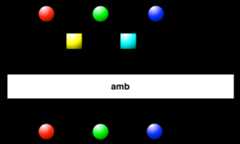
- Backpressure:
- The operator itself doesn't interfere with backpressure which is determined by the winning
Publisher's backpressure behavior. - Scheduler:
ambdoes not operate by default on a particularScheduler.
- Type Parameters:
T- the common element type- Parameters:
sources- an Iterable of Publishers sources competing to react first. A subscription to each Publisher will occur in the same order as in this Iterable.- Returns:
- a Flowable that emits the same sequence as whichever of the source Publishers first emitted an item or sent a termination notification
- See Also:
- ReactiveX operators documentation: Amb
ambArray
@CheckReturnValue@NonNull@BackpressureSupport(value=PASS_THROUGH)@SchedulerSupport(value="none")public static <T> Flowable<T> ambArray(Publisher<? extends T>... sources)
Mirrors the one Publisher in an array of several Publishers that first either emits an item or sends a termination notification.- Backpressure:
- The operator itself doesn't interfere with backpressure which is determined by the winning
Publisher's backpressure behavior. - Scheduler:
ambArraydoes not operate by default on a particularScheduler.
- Type Parameters:
T- the common element type- Parameters:
sources- an array of Publisher sources competing to react first. A subscription to each Publisher will occur in the same order as in this Iterable.- Returns:
- a Flowable that emits the same sequence as whichever of the source Publishers first emitted an item or sent a termination notification
- See Also:
- ReactiveX operators documentation: Amb
bufferSize
public static int bufferSize()
Returns the default internal buffer size used by most async operators.The value can be overridden via system parameter
rx2.buffer-sizebefore the Flowable class is loaded.- Returns:
- the default internal buffer size.
combineLatest
@SchedulerSupport(value="none")@CheckReturnValue@BackpressureSupport(value=FULL)public static <T,R> Flowable<R> combineLatest(Publisher<? extends T>[] sources,Function<? superObject[],? extends R> combiner)
Combines a collection of source Publishers by emitting an item that aggregates the latest values of each of the source Publishers each time an item is received from any of the source Publishers, where this aggregation is defined by a specified function.Note on method signature: since Java doesn't allow creating a generic array with
new T[], the implementation of this operator has to create anObject[]instead. Unfortunately, aFunction<Integer[], R>passed to the method would trigger aClassCastException.If any of the sources never produces an item but only terminates (normally or with an error), the resulting sequence terminates immediately (normally or with all the errors accumulated until that point). If that input source is also synchronous, other sources after it will not be subscribed to.
If the provided array of source Publishers is empty, the resulting sequence completes immediately without emitting any items and without any calls to the combiner function.
- Backpressure:
- The returned
Publisherhonors backpressure from downstream. The sourcePublishers are requested in a bounded manner, however, their backpressure is not enforced (the operator won't signalMissingBackpressureException) and may lead toOutOfMemoryErrordue to internal buffer bloat. - Scheduler:
combineLatestdoes not operate by default on a particularScheduler.
- Type Parameters:
T- the common base type of source valuesR- the result type- Parameters:
sources- the collection of source Publisherscombiner- the aggregation function used to combine the items emitted by the source Publishers- Returns:
- a Flowable that emits items that are the result of combining the items emitted by the source Publishers by means of the given aggregation function
- See Also:
- ReactiveX operators documentation: CombineLatest
combineLatest
@SchedulerSupport(value="none")@CheckReturnValue@BackpressureSupport(value=FULL)public static <T,R> Flowable<R> combineLatest(Function<? superObject[],? extends R> combiner,Publisher<? extends T>... sources)
Combines a collection of source Publishers by emitting an item that aggregates the latest values of each of the source Publishers each time an item is received from any of the source Publishers, where this aggregation is defined by a specified function.Note on method signature: since Java doesn't allow creating a generic array with
new T[], the implementation of this operator has to create anObject[]instead. Unfortunately, aFunction<Integer[], R>passed to the method would trigger aClassCastException.If any of the sources never produces an item but only terminates (normally or with an error), the resulting sequence terminates immediately (normally or with all the errors accumulated until that point). If that input source is also synchronous, other sources after it will not be subscribed to.
If there are no source Publishers provided, the resulting sequence completes immediately without emitting any items and without any calls to the combiner function.
- Backpressure:
- The returned
Publisherhonors backpressure from downstream. The sourcePublishers are requested in a bounded manner, however, their backpressure is not enforced (the operator won't signalMissingBackpressureException) and may lead toOutOfMemoryErrordue to internal buffer bloat. - Scheduler:
combineLatestdoes not operate by default on a particularScheduler.
- Type Parameters:
T- the common base type of source valuesR- the result type- Parameters:
sources- the collection of source Publisherscombiner- the aggregation function used to combine the items emitted by the source Publishers- Returns:
- a Flowable that emits items that are the result of combining the items emitted by the source Publishers by means of the given aggregation function
- See Also:
- ReactiveX operators documentation: CombineLatest
combineLatest
@SchedulerSupport(value="none")@CheckReturnValue@NonNull@BackpressureSupport(value=FULL)public static <T,R> Flowable<R> combineLatest(Publisher<? extends T>[] sources,Function<? superObject[],? extends R> combiner, int bufferSize)
Combines a collection of source Publishers by emitting an item that aggregates the latest values of each of the source Publishers each time an item is received from any of the source Publishers, where this aggregation is defined by a specified function.Note on method signature: since Java doesn't allow creating a generic array with
new T[], the implementation of this operator has to create anObject[]instead. Unfortunately, aFunction<Integer[], R>passed to the method would trigger aClassCastException.If any of the sources never produces an item but only terminates (normally or with an error), the resulting sequence terminates immediately (normally or with all the errors accumulated until that point). If that input source is also synchronous, other sources after it will not be subscribed to.
If the provided array of source Publishers is empty, the resulting sequence completes immediately without emitting any items and without any calls to the combiner function.
- Backpressure:
- The returned
Publisherhonors backpressure from downstream. The sourcePublishers are requested in a bounded manner, however, their backpressure is not enforced (the operator won't signalMissingBackpressureException) and may lead toOutOfMemoryErrordue to internal buffer bloat. - Scheduler:
combineLatestdoes not operate by default on a particularScheduler.
- Type Parameters:
T- the common base type of source valuesR- the result type- Parameters:
sources- the collection of source Publisherscombiner- the aggregation function used to combine the items emitted by the source PublishersbufferSize- the internal buffer size and prefetch amount applied to every source Flowable- Returns:
- a Flowable that emits items that are the result of combining the items emitted by the source Publishers by means of the given aggregation function
- See Also:
- ReactiveX operators documentation: CombineLatest
combineLatest
@SchedulerSupport(value="none")@CheckReturnValue@BackpressureSupport(value=FULL)public static <T,R> Flowable<R> combineLatest(Iterable<? extendsPublisher<? extends T>> sources,Function<? superObject[],? extends R> combiner)
Combines a collection of source Publishers by emitting an item that aggregates the latest values of each of the source Publishers each time an item is received from any of the source Publishers, where this aggregation is defined by a specified function.Note on method signature: since Java doesn't allow creating a generic array with
new T[], the implementation of this operator has to create anObject[]instead. Unfortunately, aFunction<Integer[], R>passed to the method would trigger aClassCastException.If any of the sources never produces an item but only terminates (normally or with an error), the resulting sequence terminates immediately (normally or with all the errors accumulated until that point). If that input source is also synchronous, other sources after it will not be subscribed to.
If the provided iterable of source Publishers is empty, the resulting sequence completes immediately without emitting any items and without any calls to the combiner function.
- Backpressure:
- The returned
Publisherhonors backpressure from downstream. The sourcePublishers are requested in a bounded manner, however, their backpressure is not enforced (the operator won't signalMissingBackpressureException) and may lead toOutOfMemoryErrordue to internal buffer bloat. - Scheduler:
combineLatestdoes not operate by default on a particularScheduler.
- Type Parameters:
T- the common base type of source valuesR- the result type- Parameters:
sources- the collection of source Publisherscombiner- the aggregation function used to combine the items emitted by the source Publishers- Returns:
- a Flowable that emits items that are the result of combining the items emitted by the source Publishers by means of the given aggregation function
- See Also:
- ReactiveX operators documentation: CombineLatest
combineLatest
@SchedulerSupport(value="none")@CheckReturnValue@NonNull@BackpressureSupport(value=FULL)public static <T,R> Flowable<R> combineLatest(Iterable<? extendsPublisher<? extends T>> sources,Function<? superObject[],? extends R> combiner, int bufferSize)
Combines a collection of source Publishers by emitting an item that aggregates the latest values of each of the source Publishers each time an item is received from any of the source Publishers, where this aggregation is defined by a specified function.Note on method signature: since Java doesn't allow creating a generic array with
new T[], the implementation of this operator has to create anObject[]instead. Unfortunately, aFunction<Integer[], R>passed to the method would trigger aClassCastException.If any of the sources never produces an item but only terminates (normally or with an error), the resulting sequence terminates immediately (normally or with all the errors accumulated until that point). If that input source is also synchronous, other sources after it will not be subscribed to.
If the provided iterable of source Publishers is empty, the resulting sequence completes immediately without emitting any items and without any calls to the combiner function.
- Backpressure:
- The returned
Publisherhonors backpressure from downstream. The sourcePublishers are requested in a bounded manner, however, their backpressure is not enforced (the operator won't signalMissingBackpressureException) and may lead toOutOfMemoryErrordue to internal buffer bloat. - Scheduler:
combineLatestdoes not operate by default on a particularScheduler.
- Type Parameters:
T- the common base type of source valuesR- the result type- Parameters:
sources- the collection of source Publisherscombiner- the aggregation function used to combine the items emitted by the source PublishersbufferSize- the internal buffer size and prefetch amount applied to every source Flowable- Returns:
- a Flowable that emits items that are the result of combining the items emitted by the source Publishers by means of the given aggregation function
- See Also:
- ReactiveX operators documentation: CombineLatest
combineLatestDelayError
@SchedulerSupport(value="none")@CheckReturnValue@BackpressureSupport(value=FULL)public static <T,R> Flowable<R> combineLatestDelayError(Publisher<? extends T>[] sources,Function<? superObject[],? extends R> combiner)
Combines a collection of source Publishers by emitting an item that aggregates the latest values of each of the source Publishers each time an item is received from any of the source Publishers, where this aggregation is defined by a specified function.Note on method signature: since Java doesn't allow creating a generic array with
new T[], the implementation of this operator has to create anObject[]instead. Unfortunately, aFunction<Integer[], R>passed to the method would trigger aClassCastException.If any of the sources never produces an item but only terminates (normally or with an error), the resulting sequence terminates immediately (normally or with all the errors accumulated until that point). If that input source is also synchronous, other sources after it will not be subscribed to.
If the provided array of source Publishers is empty, the resulting sequence completes immediately without emitting any items and without any calls to the combiner function.
- Backpressure:
- The returned
Publisherhonors backpressure from downstream. The sourcePublishers are requested in a bounded manner, however, their backpressure is not enforced (the operator won't signalMissingBackpressureException) and may lead toOutOfMemoryErrordue to internal buffer bloat. - Scheduler:
combineLatestDelayErrordoes not operate by default on a particularScheduler.
- Type Parameters:
T- the common base type of source valuesR- the result type- Parameters:
sources- the collection of source Publisherscombiner- the aggregation function used to combine the items emitted by the source Publishers- Returns:
- a Flowable that emits items that are the result of combining the items emitted by the source Publishers by means of the given aggregation function
- See Also:
- ReactiveX operators documentation: CombineLatest
combineLatestDelayError
@SchedulerSupport(value="none")@CheckReturnValue@BackpressureSupport(value=FULL)public static <T,R> Flowable<R> combineLatestDelayError(Function<? superObject[],? extends R> combiner,Publisher<? extends T>... sources)
Combines a collection of source Publishers by emitting an item that aggregates the latest values of each of the source Publishers each time an item is received from any of the source Publishers, where this aggregation is defined by a specified function and delays any error from the sources until all source Publishers terminate.Note on method signature: since Java doesn't allow creating a generic array with
new T[], the implementation of this operator has to create anObject[]instead. Unfortunately, aFunction<Integer[], R>passed to the method would trigger aClassCastException.If any of the sources never produces an item but only terminates (normally or with an error), the resulting sequence terminates immediately (normally or with all the errors accumulated until that point). If that input source is also synchronous, other sources after it will not be subscribed to.
If there are no source Publishers provided, the resulting sequence completes immediately without emitting any items and without any calls to the combiner function.
- Backpressure:
- The returned
Publisherhonors backpressure from downstream. The sourcePublishers are requested in a bounded manner, however, their backpressure is not enforced (the operator won't signalMissingBackpressureException) and may lead toOutOfMemoryErrordue to internal buffer bloat. - Scheduler:
combineLatestDelayErrordoes not operate by default on a particularScheduler.
- Type Parameters:
T- the common base type of source valuesR- the result type- Parameters:
sources- the collection of source Publisherscombiner- the aggregation function used to combine the items emitted by the source Publishers- Returns:
- a Flowable that emits items that are the result of combining the items emitted by the source Publishers by means of the given aggregation function
- See Also:
- ReactiveX operators documentation: CombineLatest
combineLatestDelayError
@SchedulerSupport(value="none")@CheckReturnValue@BackpressureSupport(value=FULL)public static <T,R> Flowable<R> combineLatestDelayError(Function<? superObject[],? extends R> combiner, int bufferSize,Publisher<? extends T>... sources)
Combines a collection of source Publishers by emitting an item that aggregates the latest values of each of the source Publishers each time an item is received from any of the source Publisher, where this aggregation is defined by a specified function and delays any error from the sources until all source Publishers terminate.Note on method signature: since Java doesn't allow creating a generic array with
new T[], the implementation of this operator has to create anObject[]instead. Unfortunately, aFunction<Integer[], R>passed to the method would trigger aClassCastException.If any of the sources never produces an item but only terminates (normally or with an error), the resulting sequence terminates immediately (normally or with all the errors accumulated until that point). If that input source is also synchronous, other sources after it will not be subscribed to.
If there are no source Publishers provided, the resulting sequence completes immediately without emitting any items and without any calls to the combiner function.
- Backpressure:
- The returned
Publisherhonors backpressure from downstream. The sourcePublishers are requested in a bounded manner, however, their backpressure is not enforced (the operator won't signalMissingBackpressureException) and may lead toOutOfMemoryErrordue to internal buffer bloat. - Scheduler:
combineLatestDelayErrordoes not operate by default on a particularScheduler.
- Type Parameters:
T- the common base type of source valuesR- the result type- Parameters:
sources- the collection of source Publisherscombiner- the aggregation function used to combine the items emitted by the source PublishersbufferSize- the internal buffer size and prefetch amount applied to every source Publisher- Returns:
- a Flowable that emits items that are the result of combining the items emitted by the source Publishers by means of the given aggregation function
- See Also:
- ReactiveX operators documentation: CombineLatest
combineLatestDelayError
@SchedulerSupport(value="none")@CheckReturnValue@NonNull@BackpressureSupport(value=FULL)public static <T,R> Flowable<R> combineLatestDelayError(Publisher<? extends T>[] sources,Function<? superObject[],? extends R> combiner, int bufferSize)
Combines a collection of source Publishers by emitting an item that aggregates the latest values of each of the source Publishers each time an item is received from any of the source Publishers, where this aggregation is defined by a specified function and delays any error from the sources until all source Publishers terminate.Note on method signature: since Java doesn't allow creating a generic array with
new T[], the implementation of this operator has to create anObject[]instead. Unfortunately, aFunction<Integer[], R>passed to the method would trigger aClassCastException.If any of the sources never produces an item but only terminates (normally or with an error), the resulting sequence terminates immediately (normally or with all the errors accumulated until that point). If that input source is also synchronous, other sources after it will not be subscribed to.
If the provided array of source Publishers is empty, the resulting sequence completes immediately without emitting any items and without any calls to the combiner function.
- Backpressure:
- The returned
Publisherhonors backpressure from downstream. The sourcePublishers are requested in a bounded manner, however, their backpressure is not enforced (the operator won't signalMissingBackpressureException) and may lead toOutOfMemoryErrordue to internal buffer bloat. - Scheduler:
combineLatestDelayErrordoes not operate by default on a particularScheduler.
- Type Parameters:
T- the common base type of source valuesR- the result type- Parameters:
sources- the collection of source Publisherscombiner- the aggregation function used to combine the items emitted by the source PublishersbufferSize- the internal buffer size and prefetch amount applied to every source Flowable- Returns:
- a Flowable that emits items that are the result of combining the items emitted by the source Publishers by means of the given aggregation function
- See Also:
- ReactiveX operators documentation: CombineLatest
combineLatestDelayError
@SchedulerSupport(value="none")@CheckReturnValue@BackpressureSupport(value=FULL)public static <T,R> Flowable<R> combineLatestDelayError(Iterable<? extendsPublisher<? extends T>> sources,Function<? superObject[],? extends R> combiner)
Combines a collection of source Publishers by emitting an item that aggregates the latest values of each of the source Publishers each time an item is received from any of the source Publishers, where this aggregation is defined by a specified function and delays any error from the sources until all source Publishers terminate.Note on method signature: since Java doesn't allow creating a generic array with
new T[], the implementation of this operator has to create anObject[]instead. Unfortunately, aFunction<Integer[], R>passed to the method would trigger aClassCastException.If any of the sources never produces an item but only terminates (normally or with an error), the resulting sequence terminates immediately (normally or with all the errors accumulated until that point). If that input source is also synchronous, other sources after it will not be subscribed to.
If the provided iterable of source Publishers is empty, the resulting sequence completes immediately without emitting any items and without any calls to the combiner function.
- Backpressure:
- The returned
Publisherhonors backpressure from downstream. The sourcePublishers are requested in a bounded manner, however, their backpressure is not enforced (the operator won't signalMissingBackpressureException) and may lead toOutOfMemoryErrordue to internal buffer bloat. - Scheduler:
combineLatestDelayErrordoes not operate by default on a particularScheduler.
- Type Parameters:
T- the common base type of source valuesR- the result type- Parameters:
sources- the collection of source Publisherscombiner- the aggregation function used to combine the items emitted by the source Publishers- Returns:
- a Flowable that emits items that are the result of combining the items emitted by the source Publishers by means of the given aggregation function
- See Also:
- ReactiveX operators documentation: CombineLatest
combineLatestDelayError
@SchedulerSupport(value="none")@CheckReturnValue@BackpressureSupport(value=FULL)public static <T,R> Flowable<R> combineLatestDelayError(Iterable<? extendsPublisher<? extends T>> sources,Function<? superObject[],? extends R> combiner, int bufferSize)
Combines a collection of source Publishers by emitting an item that aggregates the latest values of each of the source Publishers each time an item is received from any of the source Publishers, where this aggregation is defined by a specified function and delays any error from the sources until all source Publishers terminate.Note on method signature: since Java doesn't allow creating a generic array with
new T[], the implementation of this operator has to create anObject[]instead. Unfortunately, aFunction<Integer[], R>passed to the method would trigger aClassCastException.If any of the sources never produces an item but only terminates (normally or with an error), the resulting sequence terminates immediately (normally or with all the errors accumulated until that point). If that input source is also synchronous, other sources after it will not be subscribed to.
If the provided iterable of source Publishers is empty, the resulting sequence completes immediately without emitting any items and without any calls to the combiner function.
- Backpressure:
- The returned
Publisherhonors backpressure from downstream. The sourcePublishers are requested in a bounded manner, however, their backpressure is not enforced (the operator won't signalMissingBackpressureException) and may lead toOutOfMemoryErrordue to internal buffer bloat. - Scheduler:
combineLatestDelayErrordoes not operate by default on a particularScheduler.
- Type Parameters:
T- the common base type of source valuesR- the result type- Parameters:
sources- the collection of source Publisherscombiner- the aggregation function used to combine the items emitted by the source PublishersbufferSize- the internal buffer size and prefetch amount applied to every source Flowable- Returns:
- a Flowable that emits items that are the result of combining the items emitted by the source Publishers by means of the given aggregation function
- See Also:
- ReactiveX operators documentation: CombineLatest
combineLatest
@CheckReturnValue@BackpressureSupport(value=FULL)@SchedulerSupport(value="none")public static <T1,T2,R> Flowable<R> combineLatest(Publisher<? extends T1> source1,Publisher<? extends T2> source2,BiFunction<? super T1,? super T2,? extends R> combiner)
Combines two source Publishers by emitting an item that aggregates the latest values of each of the source Publishers each time an item is received from either of the source Publishers, where this aggregation is defined by a specified function.If any of the sources never produces an item but only terminates (normally or with an error), the resulting sequence terminates immediately (normally or with all the errors accumulated until that point). If that input source is also synchronous, other sources after it will not be subscribed to.
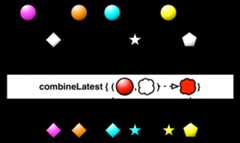
- Backpressure:
- The returned
Publisherhonors backpressure from downstream. The sourcePublishers are requested in a bounded manner, however, their backpressure is not enforced (the operator won't signalMissingBackpressureException) and may lead toOutOfMemoryErrordue to internal buffer bloat. - Scheduler:
combineLatestdoes not operate by default on a particularScheduler.
- Type Parameters:
T1- the element type of the first sourceT2- the element type of the second sourceR- the combined output type- Parameters:
source1- the first source Publishersource2- the second source Publishercombiner- the aggregation function used to combine the items emitted by the source Publishers- Returns:
- a Flowable that emits items that are the result of combining the items emitted by the source Publishers by means of the given aggregation function
- See Also:
- ReactiveX operators documentation: CombineLatest
combineLatest
@CheckReturnValue@NonNull@BackpressureSupport(value=FULL)@SchedulerSupport(value="none")public static <T1,T2,T3,R> Flowable<R> combineLatest(Publisher<? extends T1> source1,Publisher<? extends T2> source2,Publisher<? extends T3> source3,Function3<? super T1,? super T2,? super T3,? extends R> combiner)
Combines three source Publishers by emitting an item that aggregates the latest values of each of the source Publishers each time an item is received from any of the source Publishers, where this aggregation is defined by a specified function.If any of the sources never produces an item but only terminates (normally or with an error), the resulting sequence terminates immediately (normally or with all the errors accumulated until that point). If that input source is also synchronous, other sources after it will not be subscribed to.
- Backpressure:
- The returned
Publisherhonors backpressure from downstream. The sourcePublishers are requested in a bounded manner, however, their backpressure is not enforced (the operator won't signalMissingBackpressureException) and may lead toOutOfMemoryErrordue to internal buffer bloat. - Scheduler:
combineLatestdoes not operate by default on a particularScheduler.
- Type Parameters:
T1- the element type of the first sourceT2- the element type of the second sourceT3- the element type of the third sourceR- the combined output type- Parameters:
source1- the first source Publishersource2- the second source Publishersource3- the third source Publishercombiner- the aggregation function used to combine the items emitted by the source Publishers- Returns:
- a Flowable that emits items that are the result of combining the items emitted by the source Publishers by means of the given aggregation function
- See Also:
- ReactiveX operators documentation: CombineLatest
combineLatest
@CheckReturnValue@NonNull@BackpressureSupport(value=FULL)@SchedulerSupport(value="none")public static <T1,T2,T3,T4,R> Flowable<R> combineLatest(Publisher<? extends T1> source1,Publisher<? extends T2> source2,Publisher<? extends T3> source3,Publisher<? extends T4> source4,Function4<? super T1,? super T2,? super T3,? super T4,? extends R> combiner)
Combines four source Publishers by emitting an item that aggregates the latest values of each of the source Publishers each time an item is received from any of the source Publishers, where this aggregation is defined by a specified function.If any of the sources never produces an item but only terminates (normally or with an error), the resulting sequence terminates immediately (normally or with all the errors accumulated until that point). If that input source is also synchronous, other sources after it will not be subscribed to.
- Backpressure:
- The returned
Publisherhonors backpressure from downstream. The sourcePublishers are requested in a bounded manner, however, their backpressure is not enforced (the operator won't signalMissingBackpressureException) and may lead toOutOfMemoryErrordue to internal buffer bloat. - Scheduler:
combineLatestdoes not operate by default on a particularScheduler.
- Type Parameters:
T1- the element type of the first sourceT2- the element type of the second sourceT3- the element type of the third sourceT4- the element type of the fourth sourceR- the combined output type- Parameters:
source1- the first source Publishersource2- the second source Publishersource3- the third source Publishersource4- the fourth source Publishercombiner- the aggregation function used to combine the items emitted by the source Publishers- Returns:
- a Flowable that emits items that are the result of combining the items emitted by the source Publishers by means of the given aggregation function
- See Also:
- ReactiveX operators documentation: CombineLatest
combineLatest
@CheckReturnValue@NonNull@BackpressureSupport(value=FULL)@SchedulerSupport(value="none")public static <T1,T2,T3,T4,T5,R> Flowable<R> combineLatest(Publisher<? extends T1> source1,Publisher<? extends T2> source2,Publisher<? extends T3> source3,Publisher<? extends T4> source4,Publisher<? extends T5> source5,Function5<? super T1,? super T2,? super T3,? super T4,? super T5,? extends R> combiner)
Combines five source Publishers by emitting an item that aggregates the latest values of each of the source Publishers each time an item is received from any of the source Publishers, where this aggregation is defined by a specified function.If any of the sources never produces an item but only terminates (normally or with an error), the resulting sequence terminates immediately (normally or with all the errors accumulated until that point). If that input source is also synchronous, other sources after it will not be subscribed to.
- Backpressure:
- The returned
Publisherhonors backpressure from downstream. The sourcePublishers are requested in a bounded manner, however, their backpressure is not enforced (the operator won't signalMissingBackpressureException) and may lead toOutOfMemoryErrordue to internal buffer bloat. - Scheduler:
combineLatestdoes not operate by default on a particularScheduler.
- Type Parameters:
T1- the element type of the first sourceT2- the element type of the second sourceT3- the element type of the third sourceT4- the element type of the fourth sourceT5- the element type of the fifth sourceR- the combined output type- Parameters:
source1- the first source Publishersource2- the second source Publishersource3- the third source Publishersource4- the fourth source Publishersource5- the fifth source Publishercombiner- the aggregation function used to combine the items emitted by the source Publishers- Returns:
- a Flowable that emits items that are the result of combining the items emitted by the source Publishers by means of the given aggregation function
- See Also:
- ReactiveX operators documentation: CombineLatest
combineLatest
@CheckReturnValue@NonNull@BackpressureSupport(value=FULL)@SchedulerSupport(value="none")public static <T1,T2,T3,T4,T5,T6,R> Flowable<R> combineLatest(Publisher<? extends T1> source1,Publisher<? extends T2> source2,Publisher<? extends T3> source3,Publisher<? extends T4> source4,Publisher<? extends T5> source5,Publisher<? extends T6> source6,Function6<? super T1,? super T2,? super T3,? super T4,? super T5,? super T6,? extends R> combiner)
Combines six source Publishers by emitting an item that aggregates the latest values of each of the source Publishers each time an item is received from any of the source Publishers, where this aggregation is defined by a specified function.If any of the sources never produces an item but only terminates (normally or with an error), the resulting sequence terminates immediately (normally or with all the errors accumulated until that point). If that input source is also synchronous, other sources after it will not be subscribed to.
- Backpressure:
- The returned
Publisherhonors backpressure from downstream. The sourcePublishers are requested in a bounded manner, however, their backpressure is not enforced (the operator won't signalMissingBackpressureException) and may lead toOutOfMemoryErrordue to internal buffer bloat. - Scheduler:
combineLatestdoes not operate by default on a particularScheduler.
- Type Parameters:
T1- the element type of the first sourceT2- the element type of the second sourceT3- the element type of the third sourceT4- the element type of the fourth sourceT5- the element type of the fifth sourceT6- the element type of the sixth sourceR- the combined output type- Parameters:
source1- the first source Publishersource2- the second source Publishersource3- the third source Publishersource4- the fourth source Publishersource5- the fifth source Publishersource6- the sixth source Publishercombiner- the aggregation function used to combine the items emitted by the source Publishers- Returns:
- a Flowable that emits items that are the result of combining the items emitted by the source Publishers by means of the given aggregation function
- See Also:
- ReactiveX operators documentation: CombineLatest
combineLatest
@CheckReturnValue@NonNull@BackpressureSupport(value=FULL)@SchedulerSupport(value="none")public static <T1,T2,T3,T4,T5,T6,T7,R> Flowable<R> combineLatest(Publisher<? extends T1> source1,Publisher<? extends T2> source2,Publisher<? extends T3> source3,Publisher<? extends T4> source4,Publisher<? extends T5> source5,Publisher<? extends T6> source6,Publisher<? extends T7> source7,Function7<? super T1,? super T2,? super T3,? super T4,? super T5,? super T6,? super T7,? extends R> combiner)
Combines seven source Publishers by emitting an item that aggregates the latest values of each of the source Publishers each time an item is received from any of the source Publishers, where this aggregation is defined by a specified function.If any of the sources never produces an item but only terminates (normally or with an error), the resulting sequence terminates immediately (normally or with all the errors accumulated until that point). If that input source is also synchronous, other sources after it will not be subscribed to.
- Backpressure:
- The returned
Publisherhonors backpressure from downstream. The sourcePublishers are requested in a bounded manner, however, their backpressure is not enforced (the operator won't signalMissingBackpressureException) and may lead toOutOfMemoryErrordue to internal buffer bloat. - Scheduler:
combineLatestdoes not operate by default on a particularScheduler.
- Type Parameters:
T1- the element type of the first sourceT2- the element type of the second sourceT3- the element type of the third sourceT4- the element type of the fourth sourceT5- the element type of the fifth sourceT6- the element type of the sixth sourceT7- the element type of the seventh sourceR- the combined output type- Parameters:
source1- the first source Publishersource2- the second source Publishersource3- the third source Publishersource4- the fourth source Publishersource5- the fifth source Publishersource6- the sixth source Publishersource7- the seventh source Publishercombiner- the aggregation function used to combine the items emitted by the source Publishers- Returns:
- a Flowable that emits items that are the result of combining the items emitted by the source Publishers by means of the given aggregation function
- See Also:
- ReactiveX operators documentation: CombineLatest
combineLatest
@CheckReturnValue@NonNull@BackpressureSupport(value=FULL)@SchedulerSupport(value="none")public static <T1,T2,T3,T4,T5,T6,T7,T8,R> Flowable<R> combineLatest(Publisher<? extends T1> source1,Publisher<? extends T2> source2,Publisher<? extends T3> source3,Publisher<? extends T4> source4,Publisher<? extends T5> source5,Publisher<? extends T6> source6,Publisher<? extends T7> source7,Publisher<? extends T8> source8,Function8<? super T1,? super T2,? super T3,? super T4,? super T5,? super T6,? super T7,? super T8,? extends R> combiner)
Combines eight source Publishers by emitting an item that aggregates the latest values of each of the source Publishers each time an item is received from any of the source Publishers, where this aggregation is defined by a specified function.If any of the sources never produces an item but only terminates (normally or with an error), the resulting sequence terminates immediately (normally or with all the errors accumulated until that point). If that input source is also synchronous, other sources after it will not be subscribed to.
- Backpressure:
- The returned
Publisherhonors backpressure from downstream. The sourcePublishers are requested in a bounded manner, however, their backpressure is not enforced (the operator won't signalMissingBackpressureException) and may lead toOutOfMemoryErrordue to internal buffer bloat. - Scheduler:
combineLatestdoes not operate by default on a particularScheduler.
- Type Parameters:
T1- the element type of the first sourceT2- the element type of the second sourceT3- the element type of the third sourceT4- the element type of the fourth sourceT5- the element type of the fifth sourceT6- the element type of the sixth sourceT7- the element type of the seventh sourceT8- the element type of the eighth sourceR- the combined output type- Parameters:
source1- the first source Publishersource2- the second source Publishersource3- the third source Publishersource4- the fourth source Publishersource5- the fifth source Publishersource6- the sixth source Publishersource7- the seventh source Publishersource8- the eighth source Publishercombiner- the aggregation function used to combine the items emitted by the source Publishers- Returns:
- a Flowable that emits items that are the result of combining the items emitted by the source Publishers by means of the given aggregation function
- See Also:
- ReactiveX operators documentation: CombineLatest
combineLatest
@CheckReturnValue@NonNull@BackpressureSupport(value=FULL)@SchedulerSupport(value="none")public static <T1,T2,T3,T4,T5,T6,T7,T8,T9,R> Flowable<R> combineLatest(Publisher<? extends T1> source1,Publisher<? extends T2> source2,Publisher<? extends T3> source3,Publisher<? extends T4> source4,Publisher<? extends T5> source5,Publisher<? extends T6> source6,Publisher<? extends T7> source7,Publisher<? extends T8> source8,Publisher<? extends T9> source9,Function9<? super T1,? super T2,? super T3,? super T4,? super T5,? super T6,? super T7,? super T8,? super T9,? extends R> combiner)
Combines nine source Publishers by emitting an item that aggregates the latest values of each of the source Publishers each time an item is received from any of the source Publishers, where this aggregation is defined by a specified function.If any of the sources never produces an item but only terminates (normally or with an error), the resulting sequence terminates immediately (normally or with all the errors accumulated until that point). If that input source is also synchronous, other sources after it will not be subscribed to.
- Backpressure:
- The returned
Publisherhonors backpressure from downstream. The sourcePublishers are requested in a bounded manner, however, their backpressure is not enforced (the operator won't signalMissingBackpressureException) and may lead toOutOfMemoryErrordue to internal buffer bloat. - Scheduler:
combineLatestdoes not operate by default on a particularScheduler.
- Type Parameters:
T1- the element type of the first sourceT2- the element type of the second sourceT3- the element type of the third sourceT4- the element type of the fourth sourceT5- the element type of the fifth sourceT6- the element type of the sixth sourceT7- the element type of the seventh sourceT8- the element type of the eighth sourceT9- the element type of the ninth sourceR- the combined output type- Parameters:
source1- the first source Publishersource2- the second source Publishersource3- the third source Publishersource4- the fourth source Publishersource5- the fifth source Publishersource6- the sixth source Publishersource7- the seventh source Publishersource8- the eighth source Publishersource9- the ninth source Publishercombiner- the aggregation function used to combine the items emitted by the source Publishers- Returns:
- a Flowable that emits items that are the result of combining the items emitted by the source Publishers by means of the given aggregation function
- See Also:
- ReactiveX operators documentation: CombineLatest
concat
@CheckReturnValue@NonNull@BackpressureSupport(value=FULL)@SchedulerSupport(value="none")public static <T> Flowable<T> concat(Iterable<? extendsPublisher<? extends T>> sources)
Concatenates elements of each Publisher provided via an Iterable sequence into a single sequence of elements without interleaving them.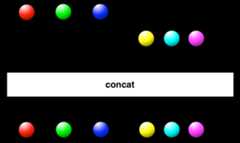
- Backpressure:
- The operator honors backpressure from downstream. The
Publishersources are expected to honor backpressure as well. If any of the sourcePublishers violate this, itmay throw anIllegalStateExceptionwhen the sourcePublishercompletes. - Scheduler:
concatdoes not operate by default on a particularScheduler.
- Type Parameters:
T- the common value type of the sources- Parameters:
sources- the Iterable sequence of Publishers- Returns:
- the new Flowable instance
concat
@CheckReturnValue@BackpressureSupport(value=FULL)@SchedulerSupport(value="none")public static <T> Flowable<T> concat(Publisher<? extendsPublisher<? extends T>> sources)
Returns a Flowable that emits the items emitted by each of the Publishers emitted by the source Publisher, one after the other, without interleaving them.- Backpressure:
- The operator honors backpressure from downstream. Both the outer and inner
Publishersources are expected to honor backpressure as well. If the outer violates this, aMissingBackpressureExceptionis signaled. If any of the innerPublishers violates this, itmay throw anIllegalStateExceptionwhen an innerPublishercompletes. - Scheduler:
concatdoes not operate by default on a particularScheduler.
- Type Parameters:
T- the common element base type- Parameters:
sources- a Publisher that emits Publishers- Returns:
- a Flowable that emits items all of the items emitted by the Publishers emitted by
Publishers, one after the other, without interleaving them - See Also:
- ReactiveX operators documentation: Concat
concat
@CheckReturnValue@BackpressureSupport(value=FULL)@SchedulerSupport(value="none")public static <T> Flowable<T> concat(Publisher<? extendsPublisher<? extends T>> sources, int prefetch)
Returns a Flowable that emits the items emitted by each of the Publishers emitted by the source Publisher, one after the other, without interleaving them.- Backpressure:
- The operator honors backpressure from downstream. Both the outer and inner
Publishersources are expected to honor backpressure as well. If the outer violates this, aMissingBackpressureExceptionis signaled. If any of the innerPublishers violates this, itmay throw anIllegalStateExceptionwhen an innerPublishercompletes. - Scheduler:
concatdoes not operate by default on a particularScheduler.
- Type Parameters:
T- the common element base type- Parameters:
sources- a Publisher that emits Publishersprefetch- the number of Publishers to prefetch from the sources sequence.- Returns:
- a Flowable that emits items all of the items emitted by the Publishers emitted by
Publishers, one after the other, without interleaving them - See Also:
- ReactiveX operators documentation: Concat
concat
@CheckReturnValue@NonNull@BackpressureSupport(value=FULL)@SchedulerSupport(value="none")public static <T> Flowable<T> concat(Publisher<? extends T> source1,Publisher<? extends T> source2)
Returns a Flowable that emits the items emitted by two Publishers, one after the other, without interleaving them.- Backpressure:
- The operator honors backpressure from downstream. The
Publishersources are expected to honor backpressure as well. If any of the sourcePublishers violate this, itmay throw anIllegalStateExceptionwhen the sourcePublishercompletes. - Scheduler:
concatdoes not operate by default on a particularScheduler.
- Type Parameters:
T- the common element base type- Parameters:
source1- a Publisher to be concatenatedsource2- a Publisher to be concatenated- Returns:
- a Flowable that emits items emitted by the two source Publishers, one after the other, without interleaving them
- See Also:
- ReactiveX operators documentation: Concat
concat
@CheckReturnValue@NonNull@BackpressureSupport(value=FULL)@SchedulerSupport(value="none")public static <T> Flowable<T> concat(Publisher<? extends T> source1,Publisher<? extends T> source2,Publisher<? extends T> source3)
Returns a Flowable that emits the items emitted by three Publishers, one after the other, without interleaving them.- Backpressure:
- The operator honors backpressure from downstream. The
Publishersources are expected to honor backpressure as well. If any of the sourcePublishers violate this, itmay throw anIllegalStateExceptionwhen the sourcePublishercompletes. - Scheduler:
concatdoes not operate by default on a particularScheduler.
- Type Parameters:
T- the common element base type- Parameters:
source1- a Publisher to be concatenatedsource2- a Publisher to be concatenatedsource3- a Publisher to be concatenated- Returns:
- a Flowable that emits items emitted by the three source Publishers, one after the other, without interleaving them
- See Also:
- ReactiveX operators documentation: Concat
concat
@CheckReturnValue@NonNull@BackpressureSupport(value=FULL)@SchedulerSupport(value="none")public static <T> Flowable<T> concat(Publisher<? extends T> source1,Publisher<? extends T> source2,Publisher<? extends T> source3,Publisher<? extends T> source4)
Returns a Flowable that emits the items emitted by four Publishers, one after the other, without interleaving them.- Backpressure:
- The operator honors backpressure from downstream. The
Publishersources are expected to honor backpressure as well. If any of the sourcePublishers violate this, itmay throw anIllegalStateExceptionwhen the sourcePublishercompletes. - Scheduler:
concatdoes not operate by default on a particularScheduler.
- Type Parameters:
T- the common element base type- Parameters:
source1- a Publisher to be concatenatedsource2- a Publisher to be concatenatedsource3- a Publisher to be concatenatedsource4- a Publisher to be concatenated- Returns:
- a Flowable that emits items emitted by the four source Publishers, one after the other, without interleaving them
- See Also:
- ReactiveX operators documentation: Concat
concatArray
@CheckReturnValue@BackpressureSupport(value=FULL)@SchedulerSupport(value="none")public static <T> Flowable<T> concatArray(Publisher<? extends T>... sources)
Concatenates a variable number of Publisher sources.Note: named this way because of overload conflict with concat(Publisher<Publisher>).
- Backpressure:
- The operator honors backpressure from downstream. The
Publishersources are expected to honor backpressure as well. If any of the sourcePublishers violate this, itmay throw anIllegalStateExceptionwhen the sourcePublishercompletes. - Scheduler:
concatArraydoes not operate by default on a particularScheduler.
- Type Parameters:
T- the common base value type- Parameters:
sources- the array of sources- Returns:
- the new Publisher instance
- Throws:
NullPointerException- if sources is null
concatArrayDelayError
@CheckReturnValue@BackpressureSupport(value=FULL)@SchedulerSupport(value="none")public static <T> Flowable<T> concatArrayDelayError(Publisher<? extends T>... sources)
Concatenates a variable number of Publisher sources and delays errors from any of them till all terminate.- Backpressure:
- The operator honors backpressure from downstream. The
Publishersources are expected to honor backpressure as well. If any of the sourcePublishers violate this, itmay throw anIllegalStateExceptionwhen the sourcePublishercompletes. - Scheduler:
concatArrayDelayErrordoes not operate by default on a particularScheduler.
- Type Parameters:
T- the common base value type- Parameters:
sources- the array of sources- Returns:
- the new Flowable instance
- Throws:
NullPointerException- if sources is null
concatArrayEager
@CheckReturnValue@BackpressureSupport(value=FULL)@SchedulerSupport(value="none")public static <T> Flowable<T> concatArrayEager(Publisher<? extends T>... sources)
Concatenates an array of Publishers eagerly into a single stream of values.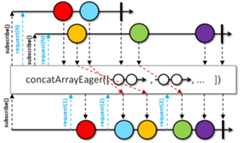
Eager concatenation means that once a subscriber subscribes, this operator subscribes to all of the source Publishers. The operator buffers the values emitted by these Publishers and then drains them in order, each one after the previous one completes.
- Backpressure:
- The operator honors backpressure from downstream. The
Publishersources are expected to honor backpressure as well. If any of the sourcePublishers violate this, the operator will signal aMissingBackpressureException. - Scheduler:
- This method does not operate by default on a particular
Scheduler.
- Type Parameters:
T- the value type- Parameters:
sources- an array of Publishers that need to be eagerly concatenated- Returns:
- the new Publisher instance with the specified concatenation behavior
- Since:
- 2.0
concatArrayEager
@CheckReturnValue@NonNull@BackpressureSupport(value=FULL)@SchedulerSupport(value="none")public static <T> Flowable<T> concatArrayEager(int maxConcurrency, int prefetch,Publisher<? extends T>... sources)
Concatenates an array of Publishers eagerly into a single stream of values.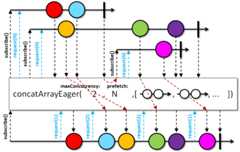
Eager concatenation means that once a subscriber subscribes, this operator subscribes to all of the source Publishers. The operator buffers the values emitted by these Publishers and then drains them in order, each one after the previous one completes.
- Backpressure:
- The operator honors backpressure from downstream. The
Publishersources are expected to honor backpressure as well. If any of the sourcePublishers violate this, the operator will signal aMissingBackpressureException. - Scheduler:
- This method does not operate by default on a particular
Scheduler.
- Type Parameters:
T- the value type- Parameters:
sources- an array of Publishers that need to be eagerly concatenatedmaxConcurrency- the maximum number of concurrent subscriptions at a time, Integer.MAX_VALUE is interpreted as an indication to subscribe to all sources at onceprefetch- the number of elements to prefetch from each Publisher source- Returns:
- the new Publisher instance with the specified concatenation behavior
- Since:
- 2.0
concatArrayEagerDelayError
@CheckReturnValue@SchedulerSupport(value="none")@BackpressureSupport(value=FULL)public static <T> Flowable<T> concatArrayEagerDelayError(Publisher<? extends T>... sources)
Concatenates an array ofPublishers eagerly into a single stream of values and delaying any errors until all sources terminate.
Eager concatenation means that once a subscriber subscribes, this operator subscribes to all of the source
Publishers. The operator buffers the values emitted by thesePublishers and then drains them in order, each one after the previous one completes.- Backpressure:
- The operator honors backpressure from downstream. The
Publishersources are expected to honor backpressure as well. If any of the sourcePublishers violate this, the operator will signal aMissingBackpressureException. - Scheduler:
- This method does not operate by default on a particular
Scheduler.
- Type Parameters:
T- the value type- Parameters:
sources- an array ofPublishers that need to be eagerly concatenated- Returns:
- the new Flowable instance with the specified concatenation behavior
- Since:
- 2.2.1 - experimental
concatArrayEagerDelayError
@CheckReturnValue@SchedulerSupport(value="none")@BackpressureSupport(value=FULL)public static <T> Flowable<T> concatArrayEagerDelayError(int maxConcurrency, int prefetch,Publisher<? extends T>... sources)
Concatenates an array ofPublishers eagerly into a single stream of values and delaying any errors until all sources terminate.
Eager concatenation means that once a subscriber subscribes, this operator subscribes to all of the source
Publishers. The operator buffers the values emitted by thesePublishers and then drains them in order, each one after the previous one completes.- Backpressure:
- The operator honors backpressure from downstream. The
Publishersources are expected to honor backpressure as well. If any of the sourcePublishers violate this, the operator will signal aMissingBackpressureException. - Scheduler:
- This method does not operate by default on a particular
Scheduler.
- Type Parameters:
T- the value type- Parameters:
sources- an array ofPublishers that need to be eagerly concatenatedmaxConcurrency- the maximum number of concurrent subscriptions at a time, Integer.MAX_VALUE is interpreted as indication to subscribe to all sources at onceprefetch- the number of elements to prefetch from eachPublishersource- Returns:
- the new Flowable instance with the specified concatenation behavior
- Since:
- 2.2.1 - experimental
concatDelayError
@CheckReturnValue@NonNull@BackpressureSupport(value=FULL)@SchedulerSupport(value="none")public static <T> Flowable<T> concatDelayError(Iterable<? extendsPublisher<? extends T>> sources)
Concatenates the Iterable sequence of Publishers into a single sequence by subscribing to each Publisher, one after the other, one at a time and delays any errors till the all inner Publishers terminate.- Backpressure:
- The operator honors backpressure from downstream. Both the outer and inner
Publishersources are expected to honor backpressure as well. If the outer violates this, aMissingBackpressureExceptionis signaled. If any of the innerPublishers violates this, itmay throw anIllegalStateExceptionwhen an innerPublishercompletes. - Scheduler:
concatDelayErrordoes not operate by default on a particularScheduler.
- Type Parameters:
T- the common element base type- Parameters:
sources- the Iterable sequence of Publishers- Returns:
- the new Publisher with the concatenating behavior
concatDelayError
@CheckReturnValue@BackpressureSupport(value=FULL)@SchedulerSupport(value="none")public static <T> Flowable<T> concatDelayError(Publisher<? extendsPublisher<? extends T>> sources)
Concatenates the Publisher sequence of Publishers into a single sequence by subscribing to each inner Publisher, one after the other, one at a time and delays any errors till the all inner and the outer Publishers terminate.- Backpressure:
concatDelayErrorfully supports backpressure.- Scheduler:
concatDelayErrordoes not operate by default on a particularScheduler.
- Type Parameters:
T- the common element base type- Parameters:
sources- the Publisher sequence of Publishers- Returns:
- the new Publisher with the concatenating behavior
concatDelayError
@CheckReturnValue@BackpressureSupport(value=FULL)@SchedulerSupport(value="none")public static <T> Flowable<T> concatDelayError(Publisher<? extendsPublisher<? extends T>> sources, int prefetch, boolean tillTheEnd)
Concatenates the Publisher sequence of Publishers into a single sequence by subscribing to each inner Publisher, one after the other, one at a time and delays any errors till the all inner and the outer Publishers terminate.- Backpressure:
concatDelayErrorfully supports backpressure.- Scheduler:
concatDelayErrordoes not operate by default on a particularScheduler.
- Type Parameters:
T- the common element base type- Parameters:
sources- the Publisher sequence of Publishersprefetch- the number of elements to prefetch from the outer PublishertillTheEnd- if true exceptions from the outer and all inner Publishers are delayed to the end if false, exception from the outer Publisher is delayed till the current Publisher terminates- Returns:
- the new Publisher with the concatenating behavior
concatEager
@CheckReturnValue@BackpressureSupport(value=FULL)@SchedulerSupport(value="none")public static <T> Flowable<T> concatEager(Publisher<? extendsPublisher<? extends T>> sources)
Concatenates a Publisher sequence of Publishers eagerly into a single stream of values.Eager concatenation means that once a subscriber subscribes, this operator subscribes to all of the emitted source Publishers as they are observed. The operator buffers the values emitted by these Publishers and then drains them in order, each one after the previous one completes.
- Backpressure:
- Backpressure is honored towards the downstream and both the outer and inner Publishers are expected to support backpressure. Violating this assumption, the operator will signal
MissingBackpressureException. - Scheduler:
- This method does not operate by default on a particular
Scheduler.
- Type Parameters:
T- the value type- Parameters:
sources- a sequence of Publishers that need to be eagerly concatenated- Returns:
- the new Publisher instance with the specified concatenation behavior
- Since:
- 2.0
concatEager
@CheckReturnValue@NonNull@BackpressureSupport(value=FULL)@SchedulerSupport(value="none")public static <T> Flowable<T> concatEager(Publisher<? extendsPublisher<? extends T>> sources, int maxConcurrency, int prefetch)
Concatenates a Publisher sequence of Publishers eagerly into a single stream of values.Eager concatenation means that once a subscriber subscribes, this operator subscribes to all of the emitted source Publishers as they are observed. The operator buffers the values emitted by these Publishers and then drains them in order, each one after the previous one completes.
- Backpressure:
- Backpressure is honored towards the downstream and both the outer and inner Publishers are expected to support backpressure. Violating this assumption, the operator will signal
MissingBackpressureException. - Scheduler:
- This method does not operate by default on a particular
Scheduler.
- Type Parameters:
T- the value type- Parameters:
sources- a sequence of Publishers that need to be eagerly concatenatedmaxConcurrency- the maximum number of concurrently running inner Publishers; Integer.MAX_VALUE is interpreted as all inner Publishers can be active at the same timeprefetch- the number of elements to prefetch from each inner Publisher source- Returns:
- the new Publisher instance with the specified concatenation behavior
- Since:
- 2.0
concatEager
@CheckReturnValue@BackpressureSupport(value=FULL)@SchedulerSupport(value="none")public static <T> Flowable<T> concatEager(Iterable<? extendsPublisher<? extends T>> sources)
Concatenates a sequence of Publishers eagerly into a single stream of values.Eager concatenation means that once a subscriber subscribes, this operator subscribes to all of the source Publishers. The operator buffers the values emitted by these Publishers and then drains them in order, each one after the previous one completes.
- Backpressure:
- Backpressure is honored towards the downstream and the inner Publishers are expected to support backpressure. Violating this assumption, the operator will signal
MissingBackpressureException. - Scheduler:
- This method does not operate by default on a particular
Scheduler.
- Type Parameters:
T- the value type- Parameters:
sources- a sequence of Publishers that need to be eagerly concatenated- Returns:
- the new Publisher instance with the specified concatenation behavior
- Since:
- 2.0
concatEager
@CheckReturnValue@NonNull@BackpressureSupport(value=FULL)@SchedulerSupport(value="none")public static <T> Flowable<T> concatEager(Iterable<? extendsPublisher<? extends T>> sources, int maxConcurrency, int prefetch)
Concatenates a sequence of Publishers eagerly into a single stream of values.Eager concatenation means that once a subscriber subscribes, this operator subscribes to all of the source Publishers. The operator buffers the values emitted by these Publishers and then drains them in order, each one after the previous one completes.
- Backpressure:
- Backpressure is honored towards the downstream and both the outer and inner Publishers are expected to support backpressure. Violating this assumption, the operator will signal
MissingBackpressureException. - Scheduler:
- This method does not operate by default on a particular
Scheduler.
- Type Parameters:
T- the value type- Parameters:
sources- a sequence of Publishers that need to be eagerly concatenatedmaxConcurrency- the maximum number of concurrently running inner Publishers; Integer.MAX_VALUE is interpreted as all inner Publishers can be active at the same timeprefetch- the number of elements to prefetch from each inner Publisher source- Returns:
- the new Publisher instance with the specified concatenation behavior
- Since:
- 2.0
create
@CheckReturnValue@NonNull@BackpressureSupport(value=SPECIAL)@SchedulerSupport(value="none")public static <T> Flowable<T> create(FlowableOnSubscribe<T> source,BackpressureStrategy mode)
Provides an API (via a cold Flowable) that bridges the reactive world with the callback-style, generally non-backpressured world.Example:
Flowable.<Event>create(emitter -> { Callback listener = new Callback() { @Override public void onEvent(Event e) { emitter.onNext(e); if (e.isLast()) { emitter.onComplete(); } } @Override public void onFailure(Exception e) { emitter.onError(e); } }; AutoCloseable c = api.someMethod(listener); emitter.setCancellable(c::close); }, BackpressureStrategy.BUFFER);You should call the FlowableEmitter onNext, onError and onComplete methods in a serialized fashion. The rest of its methods are thread-safe.
- Backpressure:
- The backpressure behavior is determined by the
modeparameter. - Scheduler:
createdoes not operate by default on a particularScheduler.
- Type Parameters:
T- the element type- Parameters:
source- the emitter that is called when a Subscriber subscribes to the returnedFlowablemode- the backpressure mode to apply if the downstream Subscriber doesn't request (fast) enough- Returns:
- the new Flowable instance
- See Also:
FlowableOnSubscribe,BackpressureStrategy,Cancellable
defer
@CheckReturnValue@NonNull@BackpressureSupport(value=PASS_THROUGH)@SchedulerSupport(value="none")public static <T> Flowable<T> defer(Callable<? extendsPublisher<? extends T>> supplier)
Returns a Flowable that calls a Publisher factory to create a Publisher for each new Subscriber that subscribes. That is, for each subscriber, the actual Publisher that subscriber observes is determined by the factory function.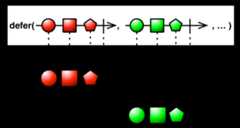
The defer Subscriber allows you to defer or delay emitting items from a Publisher until such time as a Subscriber subscribes to the Publisher. This allows a
Subscriberto easily obtain updates or a refreshed version of the sequence.- Backpressure:
- The operator itself doesn't interfere with backpressure which is determined by the
Publisherreturned by thesupplier. - Scheduler:
deferdoes not operate by default on a particularScheduler.
- Type Parameters:
T- the type of the items emitted by the Publisher- Parameters:
supplier- the Publisher factory function to invoke for eachSubscriberthat subscribes to the resulting Publisher- Returns:
- a Flowable whose
Subscribers' subscriptions trigger an invocation of the given Publisher factory function - See Also:
- ReactiveX operators documentation: Defer
empty
@CheckReturnValue@BackpressureSupport(value=PASS_THROUGH)@SchedulerSupport(value="none")public static <T> Flowable<T> empty()
Returns a Flowable that emits no items to theSubscriberand immediately invokes itsonCompletemethod.
- Backpressure:
- This source doesn't produce any elements and effectively ignores downstream backpressure.
- Scheduler:
emptydoes not operate by default on a particularScheduler.
- Type Parameters:
T- the type of the items (ostensibly) emitted by the Publisher- Returns:
- a Flowable that emits no items to the
Subscriberbut immediately invokes theSubscriber'sonCompletemethod - See Also:
- ReactiveX operators documentation: Empty
error
@CheckReturnValue@NonNull@BackpressureSupport(value=PASS_THROUGH)@SchedulerSupport(value="none")public static <T> Flowable<T> error(Callable<? extendsThrowable> supplier)
Returns a Flowable that invokes aSubscriber'sonErrormethod when the Subscriber subscribes to it.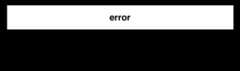
- Backpressure:
- This source doesn't produce any elements and effectively ignores downstream backpressure.
- Scheduler:
errordoes not operate by default on a particularScheduler.
- Type Parameters:
T- the type of the items (ostensibly) emitted by the Publisher- Parameters:
supplier- a Callable factory to return a Throwable for each individual Subscriber- Returns:
- a Flowable that invokes the
Subscriber'sonErrormethod when the Subscriber subscribes to it - See Also:
- ReactiveX operators documentation: Throw
error
@CheckReturnValue@NonNull@BackpressureSupport(value=PASS_THROUGH)@SchedulerSupport(value="none")public static <T> Flowable<T> error(Throwable throwable)
Returns a Flowable that invokes aSubscriber'sonErrormethod when the Subscriber subscribes to it.- Backpressure:
- This source doesn't produce any elements and effectively ignores downstream backpressure.
- Scheduler:
errordoes not operate by default on a particularScheduler.
- Type Parameters:
T- the type of the items (ostensibly) emitted by the Publisher- Parameters:
throwable- the particular Throwable to pass toonError- Returns:
- a Flowable that invokes the
Subscriber'sonErrormethod when the Subscriber subscribes to it - See Also:
- ReactiveX operators documentation: Throw
fromArray
@CheckReturnValue@NonNull@BackpressureSupport(value=FULL)@SchedulerSupport(value="none")public static <T> Flowable<T> fromArray(T... items)
Converts an Array into a Publisher that emits the items in the Array.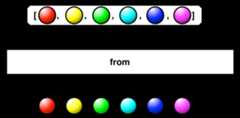
- Backpressure:
- The operator honors backpressure from downstream and iterates the given
arrayon demand (i.e., when requested). - Scheduler:
fromArraydoes not operate by default on a particularScheduler.
- Type Parameters:
T- the type of items in the Array and the type of items to be emitted by the resulting Publisher- Parameters:
items- the array of elements- Returns:
- a Flowable that emits each item in the source Array
- See Also:
- ReactiveX operators documentation: From
fromCallable
@CheckReturnValue@NonNull@BackpressureSupport(value=FULL)@SchedulerSupport(value="none")public static <T> Flowable<T> fromCallable(Callable<? extends T> supplier)
Returns a Flowable that, when a Subscriber subscribes to it, invokes a function you specify and then emits the value returned from that function.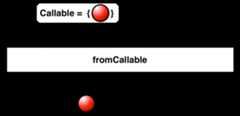
This allows you to defer the execution of the function you specify until a Subscriber subscribes to the Publisher. That is to say, it makes the function "lazy."
- Backpressure:
- The operator honors backpressure from downstream.
- Scheduler:
fromCallabledoes not operate by default on a particularScheduler.- Error handling:
- If the
Callablethrows an exception, the respectiveThrowableis delivered to the downstream viaSubscriber.onError(Throwable), except when the downstream has canceled thisFlowablesource. In this latter case, theThrowableis delivered to the global error handler viaRxJavaPlugins.onError(Throwable)as anUndeliverableException.
- Type Parameters:
T- the type of the item emitted by the Publisher- Parameters:
supplier- a function, the execution of which should be deferred;fromCallablewill invoke this function only when a Subscriber subscribes to the Publisher thatfromCallablereturns- Returns:
- a Flowable whose
Subscribers' subscriptions trigger an invocation of the given function - Since:
- 2.0
- See Also:
defer(Callable)
fromFuture
@CheckReturnValue@NonNull@BackpressureSupport(value=FULL)@SchedulerSupport(value="none")public static <T> Flowable<T> fromFuture(Future<? extends T> future)
Converts aFutureinto a Publisher.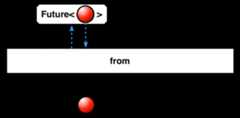
You can convert any object that supports the
Futureinterface into a Publisher that emits the return value of theFuture.get()method of that object by passing the object into thefrommethod.Important note: This Publisher is blocking on the thread it gets subscribed on; you cannot cancel it.
Unlike 1.x, canceling the Flowable won't cancel the future. If necessary, one can use composition to achieve the cancellation effect:
futurePublisher.doOnCancel(() -> future.cancel(true));.- Backpressure:
- The operator honors backpressure from downstream.
- Scheduler:
fromFuturedoes not operate by default on a particularScheduler.
- Type Parameters:
T- the type of object that theFuturereturns, and also the type of item to be emitted by the resulting Publisher- Parameters:
future- the sourceFuture- Returns:
- a Flowable that emits the item from the source
Future - See Also:
- ReactiveX operators documentation: From
fromFuture
@CheckReturnValue@NonNull@BackpressureSupport(value=FULL)@SchedulerSupport(value="none")public static <T> Flowable<T> fromFuture(Future<? extends T> future, long timeout,TimeUnit unit)
Converts aFutureinto a Publisher, with a timeout on the Future.You can convert any object that supports the
Futureinterface into a Publisher that emits the return value of theFuture.get()method of that object by passing the object into thefromFuturemethod.Unlike 1.x, canceling the Flowable won't cancel the future. If necessary, one can use composition to achieve the cancellation effect:
futurePublisher.doOnCancel(() -> future.cancel(true));.Important note: This Publisher is blocking on the thread it gets subscribed on; you cannot cancel it.
- Backpressure:
- The operator honors backpressure from downstream.
- Scheduler:
fromFuturedoes not operate by default on a particularScheduler.
- Type Parameters:
T- the type of object that theFuturereturns, and also the type of item to be emitted by the resulting Publisher- Parameters:
future- the sourceFuturetimeout- the maximum time to wait before callinggetunit- theTimeUnitof thetimeoutargument- Returns:
- a Flowable that emits the item from the source
Future - See Also:
- ReactiveX operators documentation: From
fromFuture
@CheckReturnValue@NonNull@BackpressureSupport(value=FULL)@SchedulerSupport(value="custom")public static <T> Flowable<T> fromFuture(Future<? extends T> future, long timeout,TimeUnit unit,Scheduler scheduler)
Converts aFutureinto a Publisher, with a timeout on the Future.You can convert any object that supports the
Futureinterface into a Publisher that emits the return value of theFuture.get()method of that object by passing the object into thefrommethod.Unlike 1.x, canceling the Flowable won't cancel the future. If necessary, one can use composition to achieve the cancellation effect:
futurePublisher.doOnCancel(() -> future.cancel(true));.Important note: This Publisher is blocking; you cannot cancel it.
- Backpressure:
- The operator honors backpressure from downstream.
- Scheduler:
fromFuturedoes not operate by default on a particularScheduler.
- Type Parameters:
T- the type of object that theFuturereturns, and also the type of item to be emitted by the resulting Publisher- Parameters:
future- the sourceFuturetimeout- the maximum time to wait before callinggetunit- theTimeUnitof thetimeoutargumentscheduler- theSchedulerto wait for the Future on. Use a Scheduler such asSchedulers.io()that can block and wait on the Future- Returns:
- a Flowable that emits the item from the source
Future - See Also:
- ReactiveX operators documentation: From
fromFuture
@CheckReturnValue@NonNull@BackpressureSupport(value=FULL)@SchedulerSupport(value="custom")public static <T> Flowable<T> fromFuture(Future<? extends T> future,Scheduler scheduler)
Converts aFuture, operating on a specifiedScheduler, into a Publisher.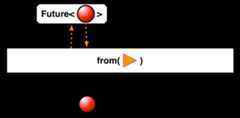
You can convert any object that supports the
Futureinterface into a Publisher that emits the return value of theFuture.get()method of that object by passing the object into thefrommethod.Unlike 1.x, canceling the Flowable won't cancel the future. If necessary, one can use composition to achieve the cancellation effect:
futurePublisher.doOnCancel(() -> future.cancel(true));.- Backpressure:
- The operator honors backpressure from downstream.
- Scheduler:
- You specify which
Schedulerthis operator will use.
- Type Parameters:
T- the type of object that theFuturereturns, and also the type of item to be emitted by the resulting Publisher- Parameters:
future- the sourceFuturescheduler- theSchedulerto wait for the Future on. Use a Scheduler such asSchedulers.io()that can block and wait on the Future- Returns:
- a Flowable that emits the item from the source
Future - See Also:
- ReactiveX operators documentation: From
fromIterable
@CheckReturnValue@NonNull@BackpressureSupport(value=FULL)@SchedulerSupport(value="none")public static <T> Flowable<T> fromIterable(Iterable<? extends T> source)
Converts anIterablesequence into a Publisher that emits the items in the sequence.- Backpressure:
- The operator honors backpressure from downstream and iterates the given
iterableon demand (i.e., when requested). - Scheduler:
fromIterabledoes not operate by default on a particularScheduler.
- Type Parameters:
T- the type of items in theIterablesequence and the type of items to be emitted by the resulting Publisher- Parameters:
source- the sourceIterablesequence- Returns:
- a Flowable that emits each item in the source
Iterablesequence - See Also:
- ReactiveX operators documentation: From
fromPublisher
@CheckReturnValue@NonNull@BackpressureSupport(value=PASS_THROUGH)@SchedulerSupport(value="none")public static <T> Flowable<T> fromPublisher(Publisher<? extends T> source)
Converts an arbitrary Reactive Streams Publisher into a Flowable if not already a Flowable.The
Publishermust follow theReactive Streams specification. Violating the specification may result in undefined behavior.If possible, use
create(FlowableOnSubscribe, BackpressureStrategy)to create a source-likeFlowableinstead.Note that even though
Publisherappears to be a functional interface, it is not recommended to implement it through a lambda as the specification requires state management that is not achievable with a stateless lambda.- Backpressure:
- The operator is a pass-through for backpressure and its behavior is determined by the backpressure behavior of the wrapped publisher.
- Scheduler:
fromPublisherdoes not operate by default on a particularScheduler.
- Type Parameters:
T- the value type of the flow- Parameters:
source- the Publisher to convert- Returns:
- the new Flowable instance
- Throws:
NullPointerException- if thesourcePublisheris null- See Also:
create(FlowableOnSubscribe, BackpressureStrategy)
generate
@CheckReturnValue@NonNull@BackpressureSupport(value=FULL)@SchedulerSupport(value="none")public static <T> Flowable<T> generate(Consumer<Emitter<T>> generator)
Returns a cold, synchronous, stateless and backpressure-aware generator of values.Note that the
Emitter.onNext(T),Emitter.onError(java.lang.Throwable)andEmitter.onComplete()methods provided to the function via theEmitterinstance should be called synchronously, never concurrently and only while the function body is executing. Calling them from multiple threads or outside the function call is not supported and leads to an undefined behavior.- Backpressure:
- The operator honors downstream backpressure.
- Scheduler:
generatedoes not operate by default on a particularScheduler.
- Type Parameters:
T- the generated value type- Parameters:
generator- the Consumer called whenever a particular downstream Subscriber has requested a value. The callback then should callonNext,onErrororonCompleteto signal a value or a terminal event. Signaling multipleonNextin a call will make the operator signalIllegalStateException.- Returns:
- the new Flowable instance
generate
@CheckReturnValue@NonNull@BackpressureSupport(value=FULL)@SchedulerSupport(value="none")public static <T,S> Flowable<T> generate(Callable<S> initialState,BiConsumer<S,Emitter<T>> generator)
Returns a cold, synchronous, stateful and backpressure-aware generator of values.Note that the
Emitter.onNext(T),Emitter.onError(java.lang.Throwable)andEmitter.onComplete()methods provided to the function via theEmitterinstance should be called synchronously, never concurrently and only while the function body is executing. Calling them from multiple threads or outside the function call is not supported and leads to an undefined behavior.- Backpressure:
- The operator honors downstream backpressure.
- Scheduler:
generatedoes not operate by default on a particularScheduler.
- Type Parameters:
S- the type of the per-Subscriber stateT- the generated value type- Parameters:
initialState- the Callable to generate the initial state for each Subscribergenerator- the Consumer called with the current state whenever a particular downstream Subscriber has requested a value. The callback then should callonNext,onErrororonCompleteto signal a value or a terminal event. Signaling multipleonNextin a call will make the operator signalIllegalStateException.- Returns:
- the new Flowable instance
generate
@CheckReturnValue@NonNull@BackpressureSupport(value=FULL)@SchedulerSupport(value="none")public static <T,S> Flowable<T> generate(Callable<S> initialState,BiConsumer<S,Emitter<T>> generator,Consumer<? super S> disposeState)
Returns a cold, synchronous, stateful and backpressure-aware generator of values.Note that the
Emitter.onNext(T),Emitter.onError(java.lang.Throwable)andEmitter.onComplete()methods provided to the function via theEmitterinstance should be called synchronously, never concurrently and only while the function body is executing. Calling them from multiple threads or outside the function call is not supported and leads to an undefined behavior.- Backpressure:
- The operator honors downstream backpressure.
- Scheduler:
generatedoes not operate by default on a particularScheduler.
- Type Parameters:
S- the type of the per-Subscriber stateT- the generated value type- Parameters:
initialState- the Callable to generate the initial state for each Subscribergenerator- the Consumer called with the current state whenever a particular downstream Subscriber has requested a value. The callback then should callonNext,onErrororonCompleteto signal a value or a terminal event. Signaling multipleonNextin a call will make the operator signalIllegalStateException.disposeState- the Consumer that is called with the current state when the generator terminates the sequence or it gets canceled- Returns:
- the new Flowable instance
generate
@CheckReturnValue@BackpressureSupport(value=FULL)@SchedulerSupport(value="none")public static <T,S> Flowable<T> generate(Callable<S> initialState,BiFunction<S,Emitter<T>,S> generator)
Returns a cold, synchronous, stateful and backpressure-aware generator of values.Note that the
Emitter.onNext(T),Emitter.onError(java.lang.Throwable)andEmitter.onComplete()methods provided to the function via theEmitterinstance should be called synchronously, never concurrently and only while the function body is executing. Calling them from multiple threads or outside the function call is not supported and leads to an undefined behavior.- Backpressure:
- The operator honors downstream backpressure.
- Scheduler:
generatedoes not operate by default on a particularScheduler.
- Type Parameters:
S- the type of the per-Subscriber stateT- the generated value type- Parameters:
initialState- the Callable to generate the initial state for each Subscribergenerator- the Function called with the current state whenever a particular downstream Subscriber has requested a value. The callback then should callonNext,onErrororonCompleteto signal a value or a terminal event and should return a (new) state for the next invocation. Signaling multipleonNextin a call will make the operator signalIllegalStateException.- Returns:
- the new Flowable instance
generate
@CheckReturnValue@NonNull@BackpressureSupport(value=FULL)@SchedulerSupport(value="none")public static <T,S> Flowable<T> generate(Callable<S> initialState,BiFunction<S,Emitter<T>,S> generator,Consumer<? super S> disposeState)
Returns a cold, synchronous, stateful and backpressure-aware generator of values.Note that the
Emitter.onNext(T),Emitter.onError(java.lang.Throwable)andEmitter.onComplete()methods provided to the function via theEmitterinstance should be called synchronously, never concurrently and only while the function body is executing. Calling them from multiple threads or outside the function call is not supported and leads to an undefined behavior.- Backpressure:
- The operator honors downstream backpressure.
- Scheduler:
generatedoes not operate by default on a particularScheduler.
- Type Parameters:
S- the type of the per-Subscriber stateT- the generated value type- Parameters:
initialState- the Callable to generate the initial state for each Subscribergenerator- the Function called with the current state whenever a particular downstream Subscriber has requested a value. The callback then should callonNext,onErrororonCompleteto signal a value or a terminal event and should return a (new) state for the next invocation. Signaling multipleonNextin a call will make the operator signalIllegalStateException.disposeState- the Consumer that is called with the current state when the generator terminates the sequence or it gets canceled- Returns:
- the new Flowable instance
interval
@CheckReturnValue@BackpressureSupport(value=ERROR)@SchedulerSupport(value="io.reactivex:computation")public static Flowable<Long> interval(long initialDelay, long period,TimeUnit unit)
Returns a Flowable that emits a0Lafter theinitialDelayand ever-increasing numbers after eachperiodof time thereafter.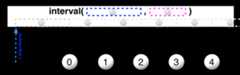
- Backpressure:
- The operator generates values based on time and ignores downstream backpressure which may lead to
MissingBackpressureExceptionat some point in the chain. Consumers should consider applying one of theonBackpressureXXXoperators as well. - Scheduler:
intervaloperates by default on thecomputationScheduler.
- Parameters:
initialDelay- the initial delay time to wait before emitting the first value of 0Lperiod- the period of time between emissions of the subsequent numbersunit- the time unit for bothinitialDelayandperiod- Returns:
- a Flowable that emits a 0L after the
initialDelayand ever-increasing numbers after eachperiodof time thereafter - Since:
- 1.0.12
- See Also:
- ReactiveX operators documentation: Interval
interval
@CheckReturnValue@NonNull@BackpressureSupport(value=ERROR)@SchedulerSupport(value="custom")public static Flowable<Long> interval(long initialDelay, long period,TimeUnit unit,Scheduler scheduler)
Returns a Flowable that emits a0Lafter theinitialDelayand ever-increasing numbers after eachperiodof time thereafter, on a specifiedScheduler.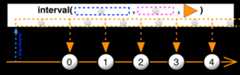
- Backpressure:
- The operator generates values based on time and ignores downstream backpressure which may lead to
MissingBackpressureExceptionat some point in the chain. Consumers should consider applying one of theonBackpressureXXXoperators as well. - Scheduler:
- You specify which
Schedulerthis operator will use.
- Parameters:
initialDelay- the initial delay time to wait before emitting the first value of 0Lperiod- the period of time between emissions of the subsequent numbersunit- the time unit for bothinitialDelayandperiodscheduler- the Scheduler on which the waiting happens and items are emitted- Returns:
- a Flowable that emits a 0L after the
initialDelayand ever-increasing numbers after eachperiodof time thereafter, while running on the given Scheduler - Since:
- 1.0.12
- See Also:
- ReactiveX operators documentation: Interval
interval
@CheckReturnValue@BackpressureSupport(value=ERROR)@SchedulerSupport(value="io.reactivex:computation")public static Flowable<Long> interval(long period,TimeUnit unit)
Returns a Flowable that emits a sequential number every specified interval of time.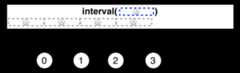
- Backpressure:
- The operator signals a
MissingBackpressureExceptionif the downstream is not ready to receive the next value. - Scheduler:
intervaloperates by default on thecomputationScheduler.
- Parameters:
period- the period size in time units (see below)unit- time units to use for the interval size- Returns:
- a Flowable that emits a sequential number each time interval
- See Also:
- ReactiveX operators documentation: Interval
interval
@CheckReturnValue@BackpressureSupport(value=ERROR)@SchedulerSupport(value="custom")public static Flowable<Long> interval(long period,TimeUnit unit,Scheduler scheduler)
Returns a Flowable that emits a sequential number every specified interval of time, on a specified Scheduler.
- Backpressure:
- The operator generates values based on time and ignores downstream backpressure which may lead to
MissingBackpressureExceptionat some point in the chain. Consumers should consider applying one of theonBackpressureXXXoperators as well. - Scheduler:
- You specify which
Schedulerthis operator will use.
- Parameters:
period- the period size in time units (see below)unit- time units to use for the interval sizescheduler- the Scheduler to use for scheduling the items- Returns:
- a Flowable that emits a sequential number each time interval
- See Also:
- ReactiveX operators documentation: Interval
intervalRange
@CheckReturnValue@BackpressureSupport(value=ERROR)@SchedulerSupport(value="io.reactivex:computation")public static Flowable<Long> intervalRange(long start, long count, long initialDelay, long period,TimeUnit unit)
Signals a range of long values, the first after some initial delay and the rest periodically after.The sequence completes immediately after the last value (start + count - 1) has been reached.
- Backpressure:
- The operator signals a
MissingBackpressureExceptionif the downstream can't keep up. - Scheduler:
intervalRangeby default operates on thecomputationScheduler.
- Parameters:
start- that start value of the rangecount- the number of values to emit in total, if zero, the operator emits an onComplete after the initial delay.initialDelay- the initial delay before signaling the first value (the start)period- the period between subsequent valuesunit- the unit of measure of the initialDelay and period amounts- Returns:
- the new Flowable instance
intervalRange
@CheckReturnValue@NonNull@BackpressureSupport(value=ERROR)@SchedulerSupport(value="custom")public static Flowable<Long> intervalRange(long start, long count, long initialDelay, long period,TimeUnit unit,Scheduler scheduler)
Signals a range of long values, the first after some initial delay and the rest periodically after.The sequence completes immediately after the last value (start + count - 1) has been reached.
- Backpressure:
- The operator signals a
MissingBackpressureExceptionif the downstream can't keep up. - Scheduler:
- you provide the
Scheduler.
- Parameters:
start- that start value of the rangecount- the number of values to emit in total, if zero, the operator emits an onComplete after the initial delay.initialDelay- the initial delay before signaling the first value (the start)period- the period between subsequent valuesunit- the unit of measure of the initialDelay and period amountsscheduler- the target scheduler where the values and terminal signals will be emitted- Returns:
- the new Flowable instance
just
@CheckReturnValue@NonNull@BackpressureSupport(value=FULL)@SchedulerSupport(value="none")public static <T> Flowable<T> just(T item)
Returns a Flowable that signals the given (constant reference) item and then completes.
Note that the item is taken and re-emitted as is and not computed by any means by
just. UsefromCallable(Callable)to generate a single item on demand (whenSubscribers subscribe to it).See the multi-parameter overloads of
justto emit more than one (constant reference) items one after the other. UsefromArray(Object...)to emit an arbitrary number of items that are known upfront.To emit the items of an
Iterablesequence (such as aList), usefromIterable(Iterable).- Backpressure:
- The operator honors backpressure from downstream.
- Scheduler:
justdoes not operate by default on a particularScheduler.
- Type Parameters:
T- the type of that item- Parameters:
item- the item to emit- Returns:
- a Flowable that emits
valueas a single item and then completes - See Also:
- ReactiveX operators documentation: Just,
just(Object, Object),fromCallable(Callable),fromArray(Object...),fromIterable(Iterable)
just
@CheckReturnValue@NonNull@BackpressureSupport(value=FULL)@SchedulerSupport(value="none")public static <T> Flowable<T> just(T item1, T item2)
Converts two items into a Publisher that emits those items.
- Backpressure:
- The operator honors backpressure from downstream and signals each value on-demand (i.e., when requested).
- Scheduler:
justdoes not operate by default on a particularScheduler.
- Type Parameters:
T- the type of these items- Parameters:
item1- first itemitem2- second item- Returns:
- a Flowable that emits each item
- See Also:
- ReactiveX operators documentation: Just
just
@CheckReturnValue@NonNull@BackpressureSupport(value=FULL)@SchedulerSupport(value="none")public static <T> Flowable<T> just(T item1, T item2, T item3)
Converts three items into a Publisher that emits those items.- Backpressure:
- The operator honors backpressure from downstream and signals each value on-demand (i.e., when requested).
- Scheduler:
justdoes not operate by default on a particularScheduler.
- Type Parameters:
T- the type of these items- Parameters:
item1- first itemitem2- second itemitem3- third item- Returns:
- a Flowable that emits each item
- See Also:
- ReactiveX operators documentation: Just
just
@CheckReturnValue@NonNull@BackpressureSupport(value=FULL)@SchedulerSupport(value="none")public static <T> Flowable<T> just(T item1, T item2, T item3, T item4)
Converts four items into a Publisher that emits those items.- Backpressure:
- The operator honors backpressure from downstream and signals each value on-demand (i.e., when requested).
- Scheduler:
justdoes not operate by default on a particularScheduler.
- Type Parameters:
T- the type of these items- Parameters:
item1- first itemitem2- second itemitem3- third itemitem4- fourth item- Returns:
- a Flowable that emits each item
- See Also:
- ReactiveX operators documentation: Just
just
@CheckReturnValue@NonNull@BackpressureSupport(value=FULL)@SchedulerSupport(value="none")public static <T> Flowable<T> just(T item1, T item2, T item3, T item4, T item5)
Converts five items into a Publisher that emits those items.- Backpressure:
- The operator honors backpressure from downstream and signals each value on-demand (i.e., when requested).
- Scheduler:
justdoes not operate by default on a particularScheduler.
- Type Parameters:
T- the type of these items- Parameters:
item1- first itemitem2- second itemitem3- third itemitem4- fourth itemitem5- fifth item- Returns:
- a Flowable that emits each item
- See Also:
- ReactiveX operators documentation: Just
just
@CheckReturnValue@NonNull@BackpressureSupport(value=FULL)@SchedulerSupport(value="none")public static <T> Flowable<T> just(T item1, T item2, T item3, T item4, T item5, T item6)
Converts six items into a Publisher that emits those items.- Backpressure:
- The operator honors backpressure from downstream and signals each value on-demand (i.e., when requested).
- Scheduler:
justdoes not operate by default on a particularScheduler.
- Type Parameters:
T- the type of these items- Parameters:
item1- first itemitem2- second itemitem3- third itemitem4- fourth itemitem5- fifth itemitem6- sixth item- Returns:
- a Flowable that emits each item
- See Also:
- ReactiveX operators documentation: Just
just
@CheckReturnValue@NonNull@BackpressureSupport(value=FULL)@SchedulerSupport(value="none")public static <T> Flowable<T> just(T item1, T item2, T item3, T item4, T item5, T item6, T item7)
Converts seven items into a Publisher that emits those items.- Backpressure:
- The operator honors backpressure from downstream and signals each value on-demand (i.e., when requested).
- Scheduler:
justdoes not operate by default on a particularScheduler.
- Type Parameters:
T- the type of these items- Parameters:
item1- first itemitem2- second itemitem3- third itemitem4- fourth itemitem5- fifth itemitem6- sixth itemitem7- seventh item- Returns:
- a Flowable that emits each item
- See Also:
- ReactiveX operators documentation: Just
just
@CheckReturnValue@NonNull@BackpressureSupport(value=FULL)@SchedulerSupport(value="none")public static <T> Flowable<T> just(T item1, T item2, T item3, T item4, T item5, T item6, T item7, T item8)
Converts eight items into a Publisher that emits those items.- Backpressure:
- The operator honors backpressure from downstream and signals each value on-demand (i.e., when requested).
- Scheduler:
justdoes not operate by default on a particularScheduler.
- Type Parameters:
T- the type of these items- Parameters:
item1- first itemitem2- second itemitem3- third itemitem4- fourth itemitem5- fifth itemitem6- sixth itemitem7- seventh itemitem8- eighth item- Returns:
- a Flowable that emits each item
- See Also:
- ReactiveX operators documentation: Just
just
@CheckReturnValue@NonNull@BackpressureSupport(value=FULL)@SchedulerSupport(value="none")public static <T> Flowable<T> just(T item1, T item2, T item3, T item4, T item5, T item6, T item7, T item8, T item9)
Converts nine items into a Publisher that emits those items.- Backpressure:
- The operator honors backpressure from downstream and signals each value on-demand (i.e., when requested).
- Scheduler:
justdoes not operate by default on a particularScheduler.
- Type Parameters:
T- the type of these items- Parameters:
item1- first itemitem2- second itemitem3- third itemitem4- fourth itemitem5- fifth itemitem6- sixth itemitem7- seventh itemitem8- eighth itemitem9- ninth item- Returns:
- a Flowable that emits each item
- See Also:
- ReactiveX operators documentation: Just
just
@CheckReturnValue@NonNull@BackpressureSupport(value=FULL)@SchedulerSupport(value="none")public static <T> Flowable<T> just(T item1, T item2, T item3, T item4, T item5, T item6, T item7, T item8, T item9, T item10)
Converts ten items into a Publisher that emits those items.- Backpressure:
- The operator honors backpressure from downstream and signals each value on-demand (i.e., when requested).
- Scheduler:
justdoes not operate by default on a particularScheduler.
- Type Parameters:
T- the type of these items- Parameters:
item1- first itemitem2- second itemitem3- third itemitem4- fourth itemitem5- fifth itemitem6- sixth itemitem7- seventh itemitem8- eighth itemitem9- ninth itemitem10- tenth item- Returns:
- a Flowable that emits each item
- See Also:
- ReactiveX operators documentation: Just
merge
@CheckReturnValue@BackpressureSupport(value=FULL)@SchedulerSupport(value="none")public static <T> Flowable<T> merge(Iterable<? extendsPublisher<? extends T>> sources, int maxConcurrency, int bufferSize)
Flattens an Iterable of Publishers into one Publisher, without any transformation, while limiting the number of concurrent subscriptions to these Publishers.
You can combine the items emitted by multiple Publishers so that they appear as a single Publisher, by using the
mergemethod.- Backpressure:
- The operator honors backpressure from downstream. The source
Publishers are expected to honor backpressure; if violated, the operatormay signalMissingBackpressureException. - Scheduler:
mergedoes not operate by default on a particularScheduler.- Error handling:
- If any of the source
Publishers signal aThrowableviaonError, the resultingFlowableterminates with thatThrowableand all other sourcePublishers are canceled. If more than onePublishersignals an error, the resultingFlowablemay terminate with the first one's error or, depending on the concurrency of the sources, may terminate with aCompositeExceptioncontaining two or more of the various error signals.Throwables that didn't make into the composite will be sent (individually) to the global error handler viaRxJavaPlugins.onError(Throwable)method asUndeliverableExceptionerrors. Similarly,Throwables signaled by source(s) after the returnedFlowablehas been canceled or terminated with a (composite) error will be sent to the same global error handler. UsemergeDelayError(Iterable, int, int)to merge sources and terminate only when all sourcePublishers have completed or failed with an error.
- Type Parameters:
T- the common element base type- Parameters:
sources- the Iterable of PublishersmaxConcurrency- the maximum number of Publishers that may be subscribed to concurrentlybufferSize- the number of items to prefetch from each inner Publisher- Returns:
- a Flowable that emits items that are the result of flattening the items emitted by the Publishers in the Iterable
- Throws:
IllegalArgumentException- ifmaxConcurrencyis less than or equal to 0- See Also:
- ReactiveX operators documentation: Merge,
mergeDelayError(Iterable, int, int)
mergeArray
@CheckReturnValue@BackpressureSupport(value=FULL)@SchedulerSupport(value="none")public static <T> Flowable<T> mergeArray(int maxConcurrency, int bufferSize,Publisher<? extends T>... sources)
Flattens an Iterable of Publishers into one Publisher, without any transformation, while limiting the number of concurrent subscriptions to these Publishers.You can combine the items emitted by multiple Publishers so that they appear as a single Publisher, by using the
mergemethod.- Backpressure:
- The operator honors backpressure from downstream. The source
Publishers are expected to honor backpressure; if violated, the operatormay signalMissingBackpressureException. - Scheduler:
mergeArraydoes not operate by default on a particularScheduler.- Error handling:
- If any of the source
Publishers signal aThrowableviaonError, the resultingFlowableterminates with thatThrowableand all other sourcePublishers are canceled. If more than onePublishersignals an error, the resultingFlowablemay terminate with the first one's error or, depending on the concurrency of the sources, may terminate with aCompositeExceptioncontaining two or more of the various error signals.Throwables that didn't make into the composite will be sent (individually) to the global error handler viaRxJavaPlugins.onError(Throwable)method asUndeliverableExceptionerrors. Similarly,Throwables signaled by source(s) after the returnedFlowablehas been canceled or terminated with a (composite) error will be sent to the same global error handler. UsemergeArrayDelayError(int, int, Publisher[])to merge sources and terminate only when all sourcePublishers have completed or failed with an error.
- Type Parameters:
T- the common element base type- Parameters:
sources- the array of PublishersmaxConcurrency- the maximum number of Publishers that may be subscribed to concurrentlybufferSize- the number of items to prefetch from each inner Publisher- Returns:
- a Flowable that emits items that are the result of flattening the items emitted by the Publishers in the Iterable
- Throws:
IllegalArgumentException- ifmaxConcurrencyis less than or equal to 0- See Also:
- ReactiveX operators documentation: Merge,
mergeArrayDelayError(int, int, Publisher...)
merge
@CheckReturnValue@BackpressureSupport(value=FULL)@SchedulerSupport(value="none")public static <T> Flowable<T> merge(Iterable<? extendsPublisher<? extends T>> sources)
Flattens an Iterable of Publishers into one Publisher, without any transformation.You can combine the items emitted by multiple Publishers so that they appear as a single Publisher, by using the
mergemethod.- Backpressure:
- The operator honors backpressure from downstream. The source
Publishers are expected to honor backpressure; if violated, the operatormay signalMissingBackpressureException. - Scheduler:
mergedoes not operate by default on a particularScheduler.- Error handling:
- If any of the source
Publishers signal aThrowableviaonError, the resultingFlowableterminates with thatThrowableand all other sourcePublishers are canceled. If more than onePublishersignals an error, the resultingFlowablemay terminate with the first one's error or, depending on the concurrency of the sources, may terminate with aCompositeExceptioncontaining two or more of the various error signals.Throwables that didn't make into the composite will be sent (individually) to the global error handler viaRxJavaPlugins.onError(Throwable)method asUndeliverableExceptionerrors. Similarly,Throwables signaled by source(s) after the returnedFlowablehas been canceled or terminated with a (composite) error will be sent to the same global error handler. UsemergeDelayError(Iterable)to merge sources and terminate only when all sourcePublishers have completed or failed with an error.
- Type Parameters:
T- the common element base type- Parameters:
sources- the Iterable of Publishers- Returns:
- a Flowable that emits items that are the result of flattening the items emitted by the Publishers in the Iterable
- See Also:
- ReactiveX operators documentation: Merge,
mergeDelayError(Iterable)
merge
@CheckReturnValue@BackpressureSupport(value=FULL)@SchedulerSupport(value="none")public static <T> Flowable<T> merge(Iterable<? extendsPublisher<? extends T>> sources, int maxConcurrency)
Flattens an Iterable of Publishers into one Publisher, without any transformation, while limiting the number of concurrent subscriptions to these Publishers.You can combine the items emitted by multiple Publishers so that they appear as a single Publisher, by using the
mergemethod.- Backpressure:
- The operator honors backpressure from downstream. The source
Publishers are expected to honor backpressure; if violated, the operatormay signalMissingBackpressureException. - Scheduler:
mergedoes not operate by default on a particularScheduler.- Error handling:
- If any of the source
Publishers signal aThrowableviaonError, the resultingFlowableterminates with thatThrowableand all other sourcePublishers are canceled. If more than onePublishersignals an error, the resultingFlowablemay terminate with the first one's error or, depending on the concurrency of the sources, may terminate with aCompositeExceptioncontaining two or more of the various error signals.Throwables that didn't make into the composite will be sent (individually) to the global error handler viaRxJavaPlugins.onError(Throwable)method asUndeliverableExceptionerrors. Similarly,Throwables signaled by source(s) after the returnedFlowablehas been canceled or terminated with a (composite) error will be sent to the same global error handler. UsemergeDelayError(Iterable, int)to merge sources and terminate only when all sourcePublishers have completed or failed with an error.
- Type Parameters:
T- the common element base type- Parameters:
sources- the Iterable of PublishersmaxConcurrency- the maximum number of Publishers that may be subscribed to concurrently- Returns:
- a Flowable that emits items that are the result of flattening the items emitted by the Publishers in the Iterable
- Throws:
IllegalArgumentException- ifmaxConcurrencyis less than or equal to 0- See Also:
- ReactiveX operators documentation: Merge,
mergeDelayError(Iterable, int)
merge
@CheckReturnValue@BackpressureSupport(value=FULL)@SchedulerSupport(value="none")public static <T> Flowable<T> merge(Publisher<? extendsPublisher<? extends T>> sources)
Flattens a Publisher that emits Publishers into a single Publisher that emits the items emitted by those Publishers, without any transformation.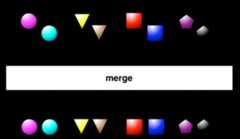
You can combine the items emitted by multiple Publishers so that they appear as a single Publisher, by using the
mergemethod.- Backpressure:
- The operator honors backpressure from downstream. The outer
Publisheris consumed in unbounded mode (i.e., no backpressure is applied to it). The innerPublishers are expected to honor backpressure; if violated, the operatormay signalMissingBackpressureException. - Scheduler:
mergedoes not operate by default on a particularScheduler.- Error handling:
- If any of the source
Publishers signal aThrowableviaonError, the resultingFlowableterminates with thatThrowableand all other sourcePublishers are canceled. If more than onePublishersignals an error, the resultingFlowablemay terminate with the first one's error or, depending on the concurrency of the sources, may terminate with aCompositeExceptioncontaining two or more of the various error signals.Throwables that didn't make into the composite will be sent (individually) to the global error handler viaRxJavaPlugins.onError(Throwable)method asUndeliverableExceptionerrors. Similarly,Throwables signaled by source(s) after the returnedFlowablehas been canceled or terminated with a (composite) error will be sent to the same global error handler. UsemergeDelayError(Publisher)to merge sources and terminate only when all sourcePublishers have completed or failed with an error.
- Type Parameters:
T- the common element base type- Parameters:
sources- a Publisher that emits Publishers- Returns:
- a Flowable that emits items that are the result of flattening the Publishers emitted by the
sourcePublisher - See Also:
- ReactiveX operators documentation: Merge,
mergeDelayError(Publisher)
merge
@CheckReturnValue@BackpressureSupport(value=FULL)@SchedulerSupport(value="none")public static <T> Flowable<T> merge(Publisher<? extendsPublisher<? extends T>> sources, int maxConcurrency)
Flattens a Publisher that emits Publishers into a single Publisher that emits the items emitted by those Publishers, without any transformation, while limiting the maximum number of concurrent subscriptions to these Publishers.You can combine the items emitted by multiple Publishers so that they appear as a single Publisher, by using the
mergemethod.- Backpressure:
- The operator honors backpressure from downstream. Both the outer and inner
Publishers are expected to honor backpressure; if violated, the operatormay signalMissingBackpressureException. - Scheduler:
mergedoes not operate by default on a particularScheduler.- Error handling:
- If any of the source
Publishers signal aThrowableviaonError, the resultingFlowableterminates with thatThrowableand all other sourcePublishers are canceled. If more than onePublishersignals an error, the resultingFlowablemay terminate with the first one's error or, depending on the concurrency of the sources, may terminate with aCompositeExceptioncontaining two or more of the various error signals.Throwables that didn't make into the composite will be sent (individually) to the global error handler viaRxJavaPlugins.onError(Throwable)method asUndeliverableExceptionerrors. Similarly,Throwables signaled by source(s) after the returnedFlowablehas been canceled or terminated with a (composite) error will be sent to the same global error handler. UsemergeDelayError(Publisher, int)to merge sources and terminate only when all sourcePublishers have completed or failed with an error.
- Type Parameters:
T- the common element base type- Parameters:
sources- a Publisher that emits PublishersmaxConcurrency- the maximum number of Publishers that may be subscribed to concurrently- Returns:
- a Flowable that emits items that are the result of flattening the Publishers emitted by the
sourcePublisher - Throws:
IllegalArgumentException- ifmaxConcurrencyis less than or equal to 0- Since:
- 1.1.0
- See Also:
- ReactiveX operators documentation: Merge,
mergeDelayError(Publisher, int)
mergeArray
@CheckReturnValue@BackpressureSupport(value=FULL)@SchedulerSupport(value="none")public static <T> Flowable<T> mergeArray(Publisher<? extends T>... sources)
Flattens an Array of Publishers into one Publisher, without any transformation.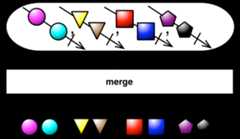
You can combine items emitted by multiple Publishers so that they appear as a single Publisher, by using the
mergemethod.- Backpressure:
- The operator honors backpressure from downstream. The source
Publishers are expected to honor backpressure; if violated, the operatormay signalMissingBackpressureException. - Scheduler:
mergeArraydoes not operate by default on a particularScheduler.- Error handling:
- If any of the source
Publishers signal aThrowableviaonError, the resultingFlowableterminates with thatThrowableand all other sourcePublishers are canceled. If more than onePublishersignals an error, the resultingFlowablemay terminate with the first one's error or, depending on the concurrency of the sources, may terminate with aCompositeExceptioncontaining two or more of the various error signals.Throwables that didn't make into the composite will be sent (individually) to the global error handler viaRxJavaPlugins.onError(Throwable)method asUndeliverableExceptionerrors. Similarly,Throwables signaled by source(s) after the returnedFlowablehas been canceled or terminated with a (composite) error will be sent to the same global error handler. UsemergeArrayDelayError(Publisher...)to merge sources and terminate only when all sourcePublishers have completed or failed with an error.
- Type Parameters:
T- the common element base type- Parameters:
sources- the array of Publishers- Returns:
- a Flowable that emits all of the items emitted by the Publishers in the Array
- See Also:
- ReactiveX operators documentation: Merge,
mergeArrayDelayError(Publisher...)
merge
@CheckReturnValue@NonNull@BackpressureSupport(value=FULL)@SchedulerSupport(value="none")public static <T> Flowable<T> merge(Publisher<? extends T> source1,Publisher<? extends T> source2)
Flattens two Publishers into a single Publisher, without any transformation.You can combine items emitted by multiple Publishers so that they appear as a single Publisher, by using the
mergemethod.- Backpressure:
- The operator honors backpressure from downstream. The source
Publishers are expected to honor backpressure; if violated, the operatormay signalMissingBackpressureException. - Scheduler:
mergedoes not operate by default on a particularScheduler.- Error handling:
- If any of the source
Publishers signal aThrowableviaonError, the resultingFlowableterminates with thatThrowableand all other sourcePublishers are canceled. If more than onePublishersignals an error, the resultingFlowablemay terminate with the first one's error or, depending on the concurrency of the sources, may terminate with aCompositeExceptioncontaining two or more of the various error signals.Throwables that didn't make into the composite will be sent (individually) to the global error handler viaRxJavaPlugins.onError(Throwable)method asUndeliverableExceptionerrors. Similarly,Throwables signaled by source(s) after the returnedFlowablehas been canceled or terminated with a (composite) error will be sent to the same global error handler. UsemergeDelayError(Publisher, Publisher)to merge sources and terminate only when all sourcePublishers have completed or failed with an error.
- Type Parameters:
T- the common element base type- Parameters:
source1- a Publisher to be mergedsource2- a Publisher to be merged- Returns:
- a Flowable that emits all of the items emitted by the source Publishers
- See Also:
- ReactiveX operators documentation: Merge,
mergeDelayError(Publisher, Publisher)
merge
@CheckReturnValue@NonNull@BackpressureSupport(value=FULL)@SchedulerSupport(value="none")public static <T> Flowable<T> merge(Publisher<? extends T> source1,Publisher<? extends T> source2,Publisher<? extends T> source3)
Flattens three Publishers into a single Publisher, without any transformation.You can combine items emitted by multiple Publishers so that they appear as a single Publisher, by using the
mergemethod.- Backpressure:
- The operator honors backpressure from downstream. The source
Publishers are expected to honor backpressure; if violated, the operatormay signalMissingBackpressureException. - Scheduler:
mergedoes not operate by default on a particularScheduler.- Error handling:
- If any of the source
Publishers signal aThrowableviaonError, the resultingFlowableterminates with thatThrowableand all other sourcePublishers are canceled. If more than onePublishersignals an error, the resultingFlowablemay terminate with the first one's error or, depending on the concurrency of the sources, may terminate with aCompositeExceptioncontaining two or more of the various error signals.Throwables that didn't make into the composite will be sent (individually) to the global error handler viaRxJavaPlugins.onError(Throwable)method asUndeliverableExceptionerrors. Similarly,Throwables signaled by source(s) after the returnedFlowablehas been canceled or terminated with a (composite) error will be sent to the same global error handler. UsemergeDelayError(Publisher, Publisher, Publisher)to merge sources and terminate only when all sourcePublishers have completed or failed with an error.
- Type Parameters:
T- the common element base type- Parameters:
source1- a Publisher to be mergedsource2- a Publisher to be mergedsource3- a Publisher to be merged- Returns:
- a Flowable that emits all of the items emitted by the source Publishers
- See Also:
- ReactiveX operators documentation: Merge,
mergeDelayError(Publisher, Publisher, Publisher)
merge
@CheckReturnValue@NonNull@BackpressureSupport(value=FULL)@SchedulerSupport(value="none")public static <T> Flowable<T> merge(Publisher<? extends T> source1,Publisher<? extends T> source2,Publisher<? extends T> source3,Publisher<? extends T> source4)
Flattens four Publishers into a single Publisher, without any transformation.You can combine items emitted by multiple Publishers so that they appear as a single Publisher, by using the
mergemethod.- Backpressure:
- The operator honors backpressure from downstream. The source
Publishers are expected to honor backpressure; if violated, the operatormay signalMissingBackpressureException. - Scheduler:
mergedoes not operate by default on a particularScheduler.- Error handling:
- If any of the source
Publishers signal aThrowableviaonError, the resultingFlowableterminates with thatThrowableand all other sourcePublishers are canceled. If more than onePublishersignals an error, the resultingFlowablemay terminate with the first one's error or, depending on the concurrency of the sources, may terminate with aCompositeExceptioncontaining two or more of the various error signals.Throwables that didn't make into the composite will be sent (individually) to the global error handler viaRxJavaPlugins.onError(Throwable)method asUndeliverableExceptionerrors. Similarly,Throwables signaled by source(s) after the returnedFlowablehas been canceled or terminated with a (composite) error will be sent to the same global error handler. UsemergeDelayError(Publisher, Publisher, Publisher, Publisher)to merge sources and terminate only when all sourcePublishers have completed or failed with an error.
- Type Parameters:
T- the common element base type- Parameters:
source1- a Publisher to be mergedsource2- a Publisher to be mergedsource3- a Publisher to be mergedsource4- a Publisher to be merged- Returns:
- a Flowable that emits all of the items emitted by the source Publishers
- See Also:
- ReactiveX operators documentation: Merge,
mergeDelayError(Publisher, Publisher, Publisher, Publisher)
mergeDelayError
@CheckReturnValue@BackpressureSupport(value=FULL)@SchedulerSupport(value="none")public static <T> Flowable<T> mergeDelayError(Iterable<? extendsPublisher<? extends T>> sources)
Flattens an Iterable of Publishers into one Publisher, in a way that allows a Subscriber to receive all successfully emitted items from each of the source Publishers without being interrupted by an error notification from one of them.This behaves like
merge(Publisher)except that if any of the merged Publishers notify of an error viaonError,mergeDelayErrorwill refrain from propagating that error notification until all of the merged Publishers have finished emitting items.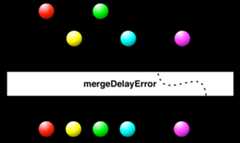
Even if multiple merged Publishers send
onErrornotifications,mergeDelayErrorwill only invoke theonErrormethod of its Subscribers once.- Backpressure:
- The operator honors backpressure from downstream. All inner
Publishers are expected to honor backpressure; if violated, the operatormay signalMissingBackpressureException. - Scheduler:
mergeDelayErrordoes not operate by default on a particularScheduler.
- Type Parameters:
T- the common element base type- Parameters:
sources- the Iterable of Publishers- Returns:
- a Flowable that emits items that are the result of flattening the items emitted by the Publishers in the Iterable
- See Also:
- ReactiveX operators documentation: Merge
mergeDelayError
@CheckReturnValue@BackpressureSupport(value=FULL)@SchedulerSupport(value="none")public static <T> Flowable<T> mergeDelayError(Iterable<? extendsPublisher<? extends T>> sources, int maxConcurrency, int bufferSize)
Flattens an Iterable of Publishers into one Publisher, in a way that allows a Subscriber to receive all successfully emitted items from each of the source Publishers without being interrupted by an error notification from one of them, while limiting the number of concurrent subscriptions to these Publishers.This behaves like
merge(Publisher)except that if any of the merged Publishers notify of an error viaonError,mergeDelayErrorwill refrain from propagating that error notification until all of the merged Publishers have finished emitting items.Even if multiple merged Publishers send
onErrornotifications,mergeDelayErrorwill only invoke theonErrormethod of its Subscribers once.- Backpressure:
- The operator honors backpressure from downstream. All inner
Publishers are expected to honor backpressure; if violated, the operatormay signalMissingBackpressureException. - Scheduler:
mergeDelayErrordoes not operate by default on a particularScheduler.
- Type Parameters:
T- the common element base type- Parameters:
sources- the Iterable of PublishersmaxConcurrency- the maximum number of Publishers that may be subscribed to concurrentlybufferSize- the number of items to prefetch from each inner Publisher- Returns:
- a Flowable that emits items that are the result of flattening the items emitted by the Publishers in the Iterable
- See Also:
- ReactiveX operators documentation: Merge
mergeArrayDelayError
@CheckReturnValue@BackpressureSupport(value=FULL)@SchedulerSupport(value="none")public static <T> Flowable<T> mergeArrayDelayError(int maxConcurrency, int bufferSize,Publisher<? extends T>... sources)
Flattens an array of Publishers into one Publisher, in a way that allows a Subscriber to receive all successfully emitted items from each of the source Publishers without being interrupted by an error notification from one of them, while limiting the number of concurrent subscriptions to these Publishers.This behaves like
merge(Publisher)except that if any of the merged Publishers notify of an error viaonError,mergeDelayErrorwill refrain from propagating that error notification until all of the merged Publishers have finished emitting items.Even if multiple merged Publishers send
onErrornotifications,mergeDelayErrorwill only invoke theonErrormethod of its Subscribers once.- Backpressure:
- The operator honors backpressure from downstream. All source
Publishers are expected to honor backpressure; if violated, the operatormay signalMissingBackpressureException. - Scheduler:
mergeArrayDelayErrordoes not operate by default on a particularScheduler.
- Type Parameters:
T- the common element base type- Parameters:
sources- the array of PublishersmaxConcurrency- the maximum number of Publishers that may be subscribed to concurrentlybufferSize- the number of items to prefetch from each inner Publisher- Returns:
- a Flowable that emits items that are the result of flattening the items emitted by the Publishers in the Iterable
- See Also:
- ReactiveX operators documentation: Merge
mergeDelayError
@CheckReturnValue@BackpressureSupport(value=FULL)@SchedulerSupport(value="none")public static <T> Flowable<T> mergeDelayError(Iterable<? extendsPublisher<? extends T>> sources, int maxConcurrency)
Flattens an Iterable of Publishers into one Publisher, in a way that allows a Subscriber to receive all successfully emitted items from each of the source Publishers without being interrupted by an error notification from one of them, while limiting the number of concurrent subscriptions to these Publishers.This behaves like
merge(Publisher)except that if any of the merged Publishers notify of an error viaonError,mergeDelayErrorwill refrain from propagating that error notification until all of the merged Publishers have finished emitting items.Even if multiple merged Publishers send
onErrornotifications,mergeDelayErrorwill only invoke theonErrormethod of its Subscribers once.- Backpressure:
- The operator honors backpressure from downstream. All inner
Publishers are expected to honor backpressure; if violated, the operatormay signalMissingBackpressureException. - Scheduler:
mergeDelayErrordoes not operate by default on a particularScheduler.
- Type Parameters:
T- the common element base type- Parameters:
sources- the Iterable of PublishersmaxConcurrency- the maximum number of Publishers that may be subscribed to concurrently- Returns:
- a Flowable that emits items that are the result of flattening the items emitted by the Publishers in the Iterable
- See Also:
- ReactiveX operators documentation: Merge
mergeDelayError
@CheckReturnValue@BackpressureSupport(value=FULL)@SchedulerSupport(value="none")public static <T> Flowable<T> mergeDelayError(Publisher<? extendsPublisher<? extends T>> sources)
Flattens a Publisher that emits Publishers into one Publisher, in a way that allows a Subscriber to receive all successfully emitted items from all of the source Publishers without being interrupted by an error notification from one of them.This behaves like
merge(Publisher)except that if any of the merged Publishers notify of an error viaonError,mergeDelayErrorwill refrain from propagating that error notification until all of the merged Publishers have finished emitting items.Even if multiple merged Publishers send
onErrornotifications,mergeDelayErrorwill only invoke theonErrormethod of its Subscribers once.- Backpressure:
- The operator honors backpressure from downstream. The outer
Publisheris consumed in unbounded mode (i.e., no backpressure is applied to it). The innerPublishers are expected to honor backpressure; if violated, the operatormay signalMissingBackpressureException. - Scheduler:
mergeDelayErrordoes not operate by default on a particularScheduler.
- Type Parameters:
T- the common element base type- Parameters:
sources- a Publisher that emits Publishers- Returns:
- a Flowable that emits all of the items emitted by the Publishers emitted by the
sourcePublisher - See Also:
- ReactiveX operators documentation: Merge
mergeDelayError
@CheckReturnValue@BackpressureSupport(value=FULL)@SchedulerSupport(value="none")public static <T> Flowable<T> mergeDelayError(Publisher<? extendsPublisher<? extends T>> sources, int maxConcurrency)
Flattens a Publisher that emits Publishers into one Publisher, in a way that allows a Subscriber to receive all successfully emitted items from all of the source Publishers without being interrupted by an error notification from one of them, while limiting the number of concurrent subscriptions to these Publishers.This behaves like
merge(Publisher)except that if any of the merged Publishers notify of an error viaonError,mergeDelayErrorwill refrain from propagating that error notification until all of the merged Publishers have finished emitting items.Even if multiple merged Publishers send
onErrornotifications,mergeDelayErrorwill only invoke theonErrormethod of its Subscribers once.- Backpressure:
- The operator honors backpressure from downstream. Both the outer and inner
Publishers are expected to honor backpressure; if violated, the operatormay signalMissingBackpressureException. - Scheduler:
mergeDelayErrordoes not operate by default on a particularScheduler.
- Type Parameters:
T- the common element base type- Parameters:
sources- a Publisher that emits PublishersmaxConcurrency- the maximum number of Publishers that may be subscribed to concurrently- Returns:
- a Flowable that emits all of the items emitted by the Publishers emitted by the
sourcePublisher - Since:
- 2.0
- See Also:
- ReactiveX operators documentation: Merge
mergeArrayDelayError
@CheckReturnValue@BackpressureSupport(value=FULL)@SchedulerSupport(value="none")public static <T> Flowable<T> mergeArrayDelayError(Publisher<? extends T>... sources)
Flattens an array of Publishers into one Flowable, in a way that allows a Subscriber to receive all successfully emitted items from each of the source Publishers without being interrupted by an error notification from one of them.This behaves like
merge(Publisher)except that if any of the merged Publishers notify of an error viaonError,mergeDelayErrorwill refrain from propagating that error notification until all of the merged Publishers have finished emitting items.Even if multiple merged Publishers send
onErrornotifications,mergeDelayErrorwill only invoke theonErrormethod of its Subscribers once.- Backpressure:
- The operator honors backpressure from downstream. Both the outer and inner
Publishers are expected to honor backpressure; if violated, the operatormay signalMissingBackpressureException. - Scheduler:
mergeArrayDelayErrordoes not operate by default on a particularScheduler.
- Type Parameters:
T- the common element base type- Parameters:
sources- the Iterable of Publishers- Returns:
- a Flowable that emits items that are the result of flattening the items emitted by the Publishers in the Iterable
- See Also:
- ReactiveX operators documentation: Merge
mergeDelayError
@CheckReturnValue@NonNull@BackpressureSupport(value=FULL)@SchedulerSupport(value="none")public static <T> Flowable<T> mergeDelayError(Publisher<? extends T> source1,Publisher<? extends T> source2)
Flattens two Publishers into one Publisher, in a way that allows a Subscriber to receive all successfully emitted items from each of the source Publishers without being interrupted by an error notification from one of them.This behaves like
merge(Publisher, Publisher)except that if any of the merged Publishers notify of an error viaonError,mergeDelayErrorwill refrain from propagating that error notification until all of the merged Publishers have finished emitting items.Even if both merged Publishers send
onErrornotifications,mergeDelayErrorwill only invoke theonErrormethod of its Subscribers once.- Backpressure:
- The operator honors backpressure from downstream. The source
Publishers are expected to honor backpressure; if violated, the operatormay signalMissingBackpressureException. - Scheduler:
mergeDelayErrordoes not operate by default on a particularScheduler.
- Type Parameters:
T- the common element base type- Parameters:
source1- a Publisher to be mergedsource2- a Publisher to be merged- Returns:
- a Flowable that emits all of the items that are emitted by the two source Publishers
- See Also:
- ReactiveX operators documentation: Merge
mergeDelayError
@CheckReturnValue@NonNull@BackpressureSupport(value=FULL)@SchedulerSupport(value="none")public static <T> Flowable<T> mergeDelayError(Publisher<? extends T> source1,Publisher<? extends T> source2,Publisher<? extends T> source3)
Flattens three Publishers into one Publisher, in a way that allows a Subscriber to receive all successfully emitted items from all of the source Publishers without being interrupted by an error notification from one of them.This behaves like
merge(Publisher, Publisher, Publisher)except that if any of the merged Publishers notify of an error viaonError,mergeDelayErrorwill refrain from propagating that error notification until all of the merged Publishers have finished emitting items.Even if multiple merged Publishers send
onErrornotifications,mergeDelayErrorwill only invoke theonErrormethod of its Subscribers once.- Backpressure:
- The operator honors backpressure from downstream. The source
Publishers are expected to honor backpressure; if violated, the operatormay signalMissingBackpressureException. - Scheduler:
mergeDelayErrordoes not operate by default on a particularScheduler.
- Type Parameters:
T- the common element base type- Parameters:
source1- a Publisher to be mergedsource2- a Publisher to be mergedsource3- a Publisher to be merged- Returns:
- a Flowable that emits all of the items that are emitted by the source Publishers
- See Also:
- ReactiveX operators documentation: Merge
mergeDelayError
@CheckReturnValue@NonNull@BackpressureSupport(value=FULL)@SchedulerSupport(value="none")public static <T> Flowable<T> mergeDelayError(Publisher<? extends T> source1,Publisher<? extends T> source2,Publisher<? extends T> source3,Publisher<? extends T> source4)
Flattens four Publishers into one Publisher, in a way that allows a Subscriber to receive all successfully emitted items from all of the source Publishers without being interrupted by an error notification from one of them.This behaves like
merge(Publisher, Publisher, Publisher, Publisher)except that if any of the merged Publishers notify of an error viaonError,mergeDelayErrorwill refrain from propagating that error notification until all of the merged Publishers have finished emitting items.Even if multiple merged Publishers send
onErrornotifications,mergeDelayErrorwill only invoke theonErrormethod of its Subscribers once.- Backpressure:
- The operator honors backpressure from downstream. The source
Publishers are expected to honor backpressure; if violated, the operatormay signalMissingBackpressureException. - Scheduler:
mergeDelayErrordoes not operate by default on a particularScheduler.
- Type Parameters:
T- the common element base type- Parameters:
source1- a Publisher to be mergedsource2- a Publisher to be mergedsource3- a Publisher to be mergedsource4- a Publisher to be merged- Returns:
- a Flowable that emits all of the items that are emitted by the source Publishers
- See Also:
- ReactiveX operators documentation: Merge
never
@CheckReturnValue@BackpressureSupport(value=PASS_THROUGH)@SchedulerSupport(value="none")public static <T> Flowable<T> never()
Returns a Flowable that never sends any items or notifications to aSubscriber.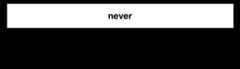
This Publisher is useful primarily for testing purposes.
- Backpressure:
- This source doesn't produce any elements and effectively ignores downstream backpressure.
- Scheduler:
neverdoes not operate by default on a particularScheduler.
- Type Parameters:
T- the type of items (not) emitted by the Publisher- Returns:
- a Flowable that never emits any items or sends any notifications to a
Subscriber - See Also:
- ReactiveX operators documentation: Never
range
@CheckReturnValue@BackpressureSupport(value=FULL)@SchedulerSupport(value="none")public static Flowable<Integer> range(int start, int count)
Returns a Flowable that emits a sequence of Integers within a specified range.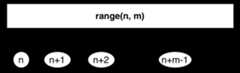
- Backpressure:
- The operator honors backpressure from downstream and signals values on-demand (i.e., when requested).
- Scheduler:
rangedoes not operate by default on a particularScheduler.
- Parameters:
start- the value of the first Integer in the sequencecount- the number of sequential Integers to generate- Returns:
- a Flowable that emits a range of sequential Integers
- Throws:
IllegalArgumentException- ifcountis less than zero, or ifstart+count− 1 exceedsInteger.MAX_VALUE- See Also:
- ReactiveX operators documentation: Range
rangeLong
@CheckReturnValue@BackpressureSupport(value=FULL)@SchedulerSupport(value="none")public static Flowable<Long> rangeLong(long start, long count)
Returns a Flowable that emits a sequence of Longs within a specified range.- Backpressure:
- The operator honors backpressure from downstream and signals values on-demand (i.e., when requested).
- Scheduler:
rangeLongdoes not operate by default on a particularScheduler.
- Parameters:
start- the value of the first Long in the sequencecount- the number of sequential Longs to generate- Returns:
- a Flowable that emits a range of sequential Longs
- Throws:
IllegalArgumentException- ifcountis less than zero, or ifstart+count− 1 exceedsLong.MAX_VALUE- See Also:
- ReactiveX operators documentation: Range
sequenceEqual
@CheckReturnValue@BackpressureSupport(value=FULL)@SchedulerSupport(value="none")public static <T> Single<Boolean> sequenceEqual(Publisher<? extends T> source1,Publisher<? extends T> source2)
Returns a Single that emits a Boolean value that indicates whether two Publisher sequences are the same by comparing the items emitted by each Publisher pairwise.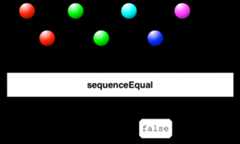
- Backpressure:
- This operator honors downstream backpressure and expects both of its sources to honor backpressure as well. If violated, the operator will emit a MissingBackpressureException.
- Scheduler:
sequenceEqualdoes not operate by default on a particularScheduler.
- Type Parameters:
T- the type of items emitted by each Publisher- Parameters:
source1- the first Publisher to comparesource2- the second Publisher to compare- Returns:
- a Flowable that emits a Boolean value that indicates whether the two sequences are the same
- See Also:
- ReactiveX operators documentation: SequenceEqual
sequenceEqual
@CheckReturnValue@BackpressureSupport(value=FULL)@SchedulerSupport(value="none")public static <T> Single<Boolean> sequenceEqual(Publisher<? extends T> source1,Publisher<? extends T> source2,BiPredicate<? super T,? super T> isEqual)
Returns a Single that emits a Boolean value that indicates whether two Publisher sequences are the same by comparing the items emitted by each Publisher pairwise based on the results of a specified equality function.- Backpressure:
- The operator honors backpressure from downstream. The source
Publishers are expected to honor backpressure; if violated, the operator signals aMissingBackpressureException. - Scheduler:
sequenceEqualdoes not operate by default on a particularScheduler.
- Type Parameters:
T- the type of items emitted by each Publisher- Parameters:
source1- the first Publisher to comparesource2- the second Publisher to compareisEqual- a function used to compare items emitted by each Publisher- Returns:
- a Single that emits a Boolean value that indicates whether the two Publisher sequences are the same according to the specified function
- See Also:
- ReactiveX operators documentation: SequenceEqual
sequenceEqual
@CheckReturnValue@NonNull@BackpressureSupport(value=FULL)@SchedulerSupport(value="none")public static <T> Single<Boolean> sequenceEqual(Publisher<? extends T> source1,Publisher<? extends T> source2,BiPredicate<? super T,? super T> isEqual, int bufferSize)
Returns a Single that emits a Boolean value that indicates whether two Publisher sequences are the same by comparing the items emitted by each Publisher pairwise based on the results of a specified equality function.- Backpressure:
- The operator honors backpressure from downstream. The source
Publishers are expected to honor backpressure; if violated, the operator signals aMissingBackpressureException. - Scheduler:
sequenceEqualdoes not operate by default on a particularScheduler.
- Type Parameters:
T- the type of items emitted by each Publisher- Parameters:
source1- the first Publisher to comparesource2- the second Publisher to compareisEqual- a function used to compare items emitted by each PublisherbufferSize- the number of items to prefetch from the first and second source Publisher- Returns:
- a Single that emits a Boolean value that indicates whether the two Publisher sequences are the same according to the specified function
- See Also:
- ReactiveX operators documentation: SequenceEqual
sequenceEqual
@CheckReturnValue@BackpressureSupport(value=FULL)@SchedulerSupport(value="none")public static <T> Single<Boolean> sequenceEqual(Publisher<? extends T> source1,Publisher<? extends T> source2, int bufferSize)
Returns a Single that emits a Boolean value that indicates whether two Publisher sequences are the same by comparing the items emitted by each Publisher pairwise.- Backpressure:
- This operator honors downstream backpressure and expects both of its sources to honor backpressure as well. If violated, the operator will emit a MissingBackpressureException.
- Scheduler:
sequenceEqualdoes not operate by default on a particularScheduler.
- Type Parameters:
T- the type of items emitted by each Publisher- Parameters:
source1- the first Publisher to comparesource2- the second Publisher to comparebufferSize- the number of items to prefetch from the first and second source Publisher- Returns:
- a Single that emits a Boolean value that indicates whether the two sequences are the same
- See Also:
- ReactiveX operators documentation: SequenceEqual
switchOnNext
@CheckReturnValue@BackpressureSupport(value=FULL)@SchedulerSupport(value="none")public static <T> Flowable<T> switchOnNext(Publisher<? extendsPublisher<? extends T>> sources, int bufferSize)
Converts a Publisher that emits Publishers into a Publisher that emits the items emitted by the most recently emitted of those Publishers.
switchOnNextsubscribes to a Publisher that emits Publishers. Each time it observes one of these emitted Publishers, the Publisher returned byswitchOnNextbegins emitting the items emitted by that Publisher. When a new Publisher is emitted,switchOnNextstops emitting items from the earlier-emitted Publisher and begins emitting items from the new one.The resulting Publisher completes if both the outer Publisher and the last inner Publisher, if any, complete. If the outer Publisher signals an onError, the inner Publisher is canceled and the error delivered in-sequence.
- Backpressure:
- The operator honors backpressure from downstream. The outer
Publisheris consumed in an unbounded manner (i.e., without backpressure) and the innerPublishers are expected to honor backpressure but it is not enforced; the operator won't signal aMissingBackpressureExceptionbut the violationmay lead toOutOfMemoryErrordue to internal buffer bloat. - Scheduler:
switchOnNextdoes not operate by default on a particularScheduler.
- Type Parameters:
T- the item type- Parameters:
sources- the source Publisher that emits PublishersbufferSize- the number of items to prefetch from the inner Publishers- Returns:
- a Flowable that emits the items emitted by the Publisher most recently emitted by the source Publisher
- See Also:
- ReactiveX operators documentation: Switch
switchOnNext
@CheckReturnValue@BackpressureSupport(value=FULL)@SchedulerSupport(value="none")public static <T> Flowable<T> switchOnNext(Publisher<? extendsPublisher<? extends T>> sources)
Converts a Publisher that emits Publishers into a Publisher that emits the items emitted by the most recently emitted of those Publishers.switchOnNextsubscribes to a Publisher that emits Publishers. Each time it observes one of these emitted Publishers, the Publisher returned byswitchOnNextbegins emitting the items emitted by that Publisher. When a new Publisher is emitted,switchOnNextstops emitting items from the earlier-emitted Publisher and begins emitting items from the new one.The resulting Publisher completes if both the outer Publisher and the last inner Publisher, if any, complete. If the outer Publisher signals an onError, the inner Publisher is canceled and the error delivered in-sequence.
- Backpressure:
- The operator honors backpressure from downstream. The outer
Publisheris consumed in an unbounded manner (i.e., without backpressure) and the innerPublishers are expected to honor backpressure but it is not enforced; the operator won't signal aMissingBackpressureExceptionbut the violationmay lead toOutOfMemoryErrordue to internal buffer bloat. - Scheduler:
switchOnNextdoes not operate by default on a particularScheduler.
- Type Parameters:
T- the item type- Parameters:
sources- the source Publisher that emits Publishers- Returns:
- a Flowable that emits the items emitted by the Publisher most recently emitted by the source Publisher
- See Also:
- ReactiveX operators documentation: Switch
switchOnNextDelayError
@CheckReturnValue@BackpressureSupport(value=FULL)@SchedulerSupport(value="none")public static <T> Flowable<T> switchOnNextDelayError(Publisher<? extendsPublisher<? extends T>> sources)
Converts a Publisher that emits Publishers into a Publisher that emits the items emitted by the most recently emitted of those Publishers and delays any exception until all Publishers terminate.switchOnNextsubscribes to a Publisher that emits Publishers. Each time it observes one of these emitted Publishers, the Publisher returned byswitchOnNextbegins emitting the items emitted by that Publisher. When a new Publisher is emitted,switchOnNextstops emitting items from the earlier-emitted Publisher and begins emitting items from the new one.The resulting Publisher completes if both the main Publisher and the last inner Publisher, if any, complete. If the main Publisher signals an onError, the termination of the last inner Publisher will emit that error as is or wrapped into a CompositeException along with the other possible errors the former inner Publishers signaled.
- Backpressure:
- The operator honors backpressure from downstream. The outer
Publisheris consumed in an unbounded manner (i.e., without backpressure) and the innerPublishers are expected to honor backpressure but it is not enforced; the operator won't signal aMissingBackpressureExceptionbut the violationmay lead toOutOfMemoryErrordue to internal buffer bloat. - Scheduler:
switchOnNextDelayErrordoes not operate by default on a particularScheduler.
- Type Parameters:
T- the item type- Parameters:
sources- the source Publisher that emits Publishers- Returns:
- a Flowable that emits the items emitted by the Publisher most recently emitted by the source Publisher
- Since:
- 2.0
- See Also:
- ReactiveX operators documentation: Switch
switchOnNextDelayError
@CheckReturnValue@BackpressureSupport(value=FULL)@SchedulerSupport(value="none")public static <T> Flowable<T> switchOnNextDelayError(Publisher<? extendsPublisher<? extends T>> sources, int prefetch)
Converts a Publisher that emits Publishers into a Publisher that emits the items emitted by the most recently emitted of those Publishers and delays any exception until all Publishers terminate.switchOnNextsubscribes to a Publisher that emits Publishers. Each time it observes one of these emitted Publishers, the Publisher returned byswitchOnNextbegins emitting the items emitted by that Publisher. When a new Publisher is emitted,switchOnNextstops emitting items from the earlier-emitted Publisher and begins emitting items from the new one.The resulting Publisher completes if both the main Publisher and the last inner Publisher, if any, complete. If the main Publisher signals an onError, the termination of the last inner Publisher will emit that error as is or wrapped into a CompositeException along with the other possible errors the former inner Publishers signaled.
- Backpressure:
- The operator honors backpressure from downstream. The outer
Publisheris consumed in an unbounded manner (i.e., without backpressure) and the innerPublishers are expected to honor backpressure but it is not enforced; the operator won't signal aMissingBackpressureExceptionbut the violationmay lead toOutOfMemoryErrordue to internal buffer bloat. - Scheduler:
switchOnNextDelayErrordoes not operate by default on a particularScheduler.
- Type Parameters:
T- the item type- Parameters:
sources- the source Publisher that emits Publishersprefetch- the number of items to prefetch from the inner Publishers- Returns:
- a Flowable that emits the items emitted by the Publisher most recently emitted by the source Publisher
- Since:
- 2.0
- See Also:
- ReactiveX operators documentation: Switch
timer
@CheckReturnValue@BackpressureSupport(value=ERROR)@SchedulerSupport(value="io.reactivex:computation")public static Flowable<Long> timer(long delay,TimeUnit unit)
Returns a Flowable that emits0Lafter a specified delay, and then completes.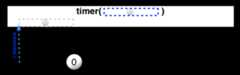
- Backpressure:
- This operator does not support backpressure as it uses time. If the downstream needs a slower rate it should slow the timer or use something like
onBackpressureDrop(). - Scheduler:
timeroperates by default on thecomputationScheduler.
- Parameters:
delay- the initial delay before emitting a single0Lunit- time units to use fordelay- Returns:
- a Flowable that emits
0Lafter a specified delay, and then completes - See Also:
- ReactiveX operators documentation: Timer
timer
@CheckReturnValue@NonNull@BackpressureSupport(value=ERROR)@SchedulerSupport(value="custom")public static Flowable<Long> timer(long delay,TimeUnit unit,Scheduler scheduler)
Returns a Flowable that emits0Lafter a specified delay, on a specified Scheduler, and then completes.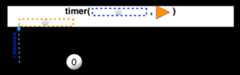
- Backpressure:
- This operator does not support backpressure as it uses time. If the downstream needs a slower rate it should slow the timer or use something like
onBackpressureDrop(). - Scheduler:
- You specify which
Schedulerthis operator will use.
- Parameters:
delay- the initial delay before emitting a single 0Lunit- time units to use fordelayscheduler- theSchedulerto use for scheduling the item- Returns:
- a Flowable that emits
0Lafter a specified delay, on a specified Scheduler, and then completes - See Also:
- ReactiveX operators documentation: Timer
unsafeCreate
@CheckReturnValue@NonNull@BackpressureSupport(value=NONE)@SchedulerSupport(value="none")public static <T> Flowable<T> unsafeCreate(Publisher<T> onSubscribe)
Create a Flowable by wrapping a Publisherwhich has to be implemented according to the Reactive Streams specification by handling backpressure and cancellation correctly; no safeguards are provided by the Flowable itself.- Backpressure:
- This operator is a pass-through for backpressure and the behavior is determined by the provided Publisher implementation.
- Scheduler:
unsafeCreateby default doesn't operate on any particularScheduler.
- Type Parameters:
T- the value type emitted- Parameters:
onSubscribe- the Publisher instance to wrap- Returns:
- the new Flowable instance
- Throws:
IllegalArgumentException- ifonSubscribeis a subclass ofFlowable; such instances don't need conversion and is possibly a port remnant from 1.x or one should usehide()instead.
using
@CheckReturnValue@BackpressureSupport(value=PASS_THROUGH)@SchedulerSupport(value="none")public static <T,D> Flowable<T> using(Callable<? extends D> resourceSupplier,Function<? super D,? extendsPublisher<? extends T>> sourceSupplier,Consumer<? super D> resourceDisposer)
Constructs a Publisher that creates a dependent resource object which is disposed of on cancellation.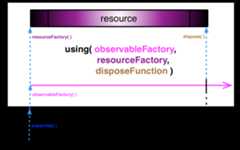
- Backpressure:
- The operator is a pass-through for backpressure and otherwise depends on the backpressure support of the Publisher returned by the
resourceFactory. - Scheduler:
usingdoes not operate by default on a particularScheduler.
- Type Parameters:
T- the element type of the generated PublisherD- the type of the resource associated with the output sequence- Parameters:
resourceSupplier- the factory function to create a resource object that depends on the PublishersourceSupplier- the factory function to create a PublisherresourceDisposer- the function that will dispose of the resource- Returns:
- the Publisher whose lifetime controls the lifetime of the dependent resource object
- See Also:
- ReactiveX operators documentation: Using
using
@CheckReturnValue@NonNull@BackpressureSupport(value=PASS_THROUGH)@SchedulerSupport(value="none")public static <T,D> Flowable<T> using(Callable<? extends D> resourceSupplier,Function<? super D,? extendsPublisher<? extends T>> sourceSupplier,Consumer<? super D> resourceDisposer, boolean eager)
Constructs a Publisher that creates a dependent resource object which is disposed of just before termination if you have setdisposeEagerlytotrueand cancellation does not occur before termination. Otherwise, resource disposal will occur on cancellation. Eager disposal is particularly appropriate for a synchronous Publisher that reuses resources.disposeActionwill only be called once per subscription.- Backpressure:
- The operator is a pass-through for backpressure and otherwise depends on the backpressure support of the Publisher returned by the
resourceFactory. - Scheduler:
usingdoes not operate by default on a particularScheduler.
- Type Parameters:
T- the element type of the generated PublisherD- the type of the resource associated with the output sequence- Parameters:
resourceSupplier- the factory function to create a resource object that depends on the PublishersourceSupplier- the factory function to create a PublisherresourceDisposer- the function that will dispose of the resourceeager- iftruethen disposal will happen either on cancellation or just before emission of a terminal event (onCompleteoronError).- Returns:
- the Publisher whose lifetime controls the lifetime of the dependent resource object
- Since:
- 2.0
- See Also:
- ReactiveX operators documentation: Using
zip
@CheckReturnValue@NonNull@BackpressureSupport(value=FULL)@SchedulerSupport(value="none")public static <T,R> Flowable<R> zip(Iterable<? extendsPublisher<? extends T>> sources,Function<? superObject[],? extends R> zipper)
Returns a Flowable that emits the results of a specified combiner function applied to combinations of items emitted, in sequence, by an Iterable of other Publishers.zipapplies this function in strict sequence, so the first item emitted by the new Publisher will be the result of the function applied to the first item emitted by each of the source Publishers; the second item emitted by the new Publisher will be the result of the function applied to the second item emitted by each of those Publishers; and so forth.The resulting
Publisher<R>returned fromzipwill invokeonNextas many times as the number ofonNextinvocations of the source Publisher that emits the fewest items.The operator subscribes to its sources in the order they are specified and completes eagerly if one of the sources is shorter than the rest while canceling the other sources. Therefore, it is possible those other sources will never be able to run to completion (and thus not calling
doOnComplete()). This can also happen if the sources are exactly the same length; if source A completes and B has been consumed and is about to complete, the operator detects A won't be sending further values and it will cancel B immediately. For example:zip(Arrays.asList(range(1, 5).doOnComplete(action1), range(6, 5).doOnComplete(action2)), (a) -> a)action1will be called butaction2won't.
To work around this termination property, usedoOnCancel(Action)as well or useusing()to do cleanup in case of completion or cancellation.
- Backpressure:
- The operator expects backpressure from the sources and honors backpressure from the downstream. (I.e., zipping with
interval(long, TimeUnit)may result in MissingBackpressureException, use one of theonBackpressureXto handle similar, backpressure-ignoring sources. - Scheduler:
zipdoes not operate by default on a particularScheduler.
- Type Parameters:
T- the common value typeR- the zipped result type- Parameters:
sources- an Iterable of source Publisherszipper- a function that, when applied to an item emitted by each of the source Publishers, results in an item that will be emitted by the resulting Publisher- Returns:
- a Flowable that emits the zipped results
- See Also:
- ReactiveX operators documentation: Zip
zip
@CheckReturnValue@NonNull@BackpressureSupport(value=FULL)@SchedulerSupport(value="none")public static <T,R> Flowable<R> zip(Publisher<? extendsPublisher<? extends T>> sources,Function<? superObject[],? extends R> zipper)
Returns a Flowable that emits the results of a specified combiner function applied to combinations ofn items emitted, in sequence, by then Publishers emitted by a specified Publisher.zipapplies this function in strict sequence, so the first item emitted by the new Publisher will be the result of the function applied to the first item emitted by each of the Publishers emitted by the source Publisher; the second item emitted by the new Publisher will be the result of the function applied to the second item emitted by each of those Publishers; and so forth.The resulting
Publisher<R>returned fromzipwill invokeonNextas many times as the number ofonNextinvocations of the source Publisher that emits the fewest items.The operator subscribes to its sources in the order they are specified and completes eagerly if one of the sources is shorter than the rest while cancel the other sources. Therefore, it is possible those other sources will never be able to run to completion (and thus not calling
doOnComplete()). This can also happen if the sources are exactly the same length; if source A completes and B has been consumed and is about to complete, the operator detects A won't be sending further values and it will cancel B immediately. For example:zip(just(range(1, 5).doOnComplete(action1), range(6, 5).doOnComplete(action2)), (a) -> a)action1will be called butaction2won't.
To work around this termination property, usedoOnCancel(Action)as well or useusing()to do cleanup in case of completion or cancellation.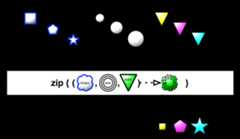
- Backpressure:
- The operator expects backpressure from the sources and honors backpressure from the downstream. (I.e., zipping with
interval(long, TimeUnit)may result in MissingBackpressureException, use one of theonBackpressureXto handle similar, backpressure-ignoring sources. - Scheduler:
zipdoes not operate by default on a particularScheduler.
- Type Parameters:
T- the value type of the inner PublishersR- the zipped result type- Parameters:
sources- a Publisher of source Publisherszipper- a function that, when applied to an item emitted by each of the Publishers emitted byws, results in an item that will be emitted by the resulting Publisher- Returns:
- a Flowable that emits the zipped results
- See Also:
- ReactiveX operators documentation: Zip
zip
@CheckReturnValue@NonNull@BackpressureSupport(value=FULL)@SchedulerSupport(value="none")public static <T1,T2,R> Flowable<R> zip(Publisher<? extends T1> source1,Publisher<? extends T2> source2,BiFunction<? super T1,? super T2,? extends R> zipper)
Returns a Flowable that emits the results of a specified combiner function applied to combinations of two items emitted, in sequence, by two other Publishers.zipapplies this function in strict sequence, so the first item emitted by the new Publisher will be the result of the function applied to the first item emitted byo1and the first item emitted byo2; the second item emitted by the new Publisher will be the result of the function applied to the second item emitted byo1and the second item emitted byo2; and so forth.The resulting
Publisher<R>returned fromzipwill invokeonNextas many times as the number ofonNextinvocations of the source Publisher that emits the fewest items.The operator subscribes to its sources in the order they are specified and completes eagerly if one of the sources is shorter than the rest while canceling the other sources. Therefore, it is possible those other sources will never be able to run to completion (and thus not calling
doOnComplete()). This can also happen if the sources are exactly the same length; if source A completes and B has been consumed and is about to complete, the operator detects A won't be sending further values and it will cancel B immediately. For example:zip(range(1, 5).doOnComplete(action1), range(6, 5).doOnComplete(action2), (a, b) -> a + b)action1will be called butaction2won't.
To work around this termination property, usedoOnCancel(Action)as well or useusing()to do cleanup in case of completion or cancellation.- Backpressure:
- The operator expects backpressure from the sources and honors backpressure from the downstream. (I.e., zipping with
interval(long, TimeUnit)may result in MissingBackpressureException, use one of theonBackpressureXto handle similar, backpressure-ignoring sources. - Scheduler:
zipdoes not operate by default on a particularScheduler.
- Type Parameters:
T1- the value type of the first sourceT2- the value type of the second sourceR- the zipped result type- Parameters:
source1- the first source Publishersource2- a second source Publisherzipper- a function that, when applied to an item emitted by each of the source Publishers, results in an item that will be emitted by the resulting Publisher- Returns:
- a Flowable that emits the zipped results
- See Also:
- ReactiveX operators documentation: Zip
zip
@CheckReturnValue@NonNull@BackpressureSupport(value=FULL)@SchedulerSupport(value="none")public static <T1,T2,R> Flowable<R> zip(Publisher<? extends T1> source1,Publisher<? extends T2> source2,BiFunction<? super T1,? super T2,? extends R> zipper, boolean delayError)
Returns a Flowable that emits the results of a specified combiner function applied to combinations of two items emitted, in sequence, by two other Publishers.zipapplies this function in strict sequence, so the first item emitted by the new Publisher will be the result of the function applied to the first item emitted byo1and the first item emitted byo2; the second item emitted by the new Publisher will be the result of the function applied to the second item emitted byo1and the second item emitted byo2; and so forth.The resulting
Publisher<R>returned fromzipwill invokeonNextas many times as the number ofonNextinvocations of the source Publisher that emits the fewest items.The operator subscribes to its sources in the order they are specified and completes eagerly if one of the sources is shorter than the rest while canceling the other sources. Therefore, it is possible those other sources will never be able to run to completion (and thus not calling
doOnComplete()). This can also happen if the sources are exactly the same length; if source A completes and B has been consumed and is about to complete, the operator detects A won't be sending further values and it will cancel B immediately. For example:zip(range(1, 5).doOnComplete(action1), range(6, 5).doOnComplete(action2), (a, b) -> a + b)action1will be called butaction2won't.
To work around this termination property, usedoOnCancel(Action)as well or useusing()to do cleanup in case of completion or cancellation.- Backpressure:
- The operator expects backpressure from the sources and honors backpressure from the downstream. (I.e., zipping with
interval(long, TimeUnit)may result in MissingBackpressureException, use one of theonBackpressureXto handle similar, backpressure-ignoring sources. - Scheduler:
zipdoes not operate by default on a particularScheduler.
- Type Parameters:
T1- the value type of the first sourceT2- the value type of the second sourceR- the zipped result type- Parameters:
source1- the first source Publishersource2- a second source Publisherzipper- a function that, when applied to an item emitted by each of the source Publishers, results in an item that will be emitted by the resulting PublisherdelayError- delay errors from any of the source Publishers till the other terminates- Returns:
- a Flowable that emits the zipped results
- See Also:
- ReactiveX operators documentation: Zip
zip
@CheckReturnValue@NonNull@BackpressureSupport(value=FULL)@SchedulerSupport(value="none")public static <T1,T2,R> Flowable<R> zip(Publisher<? extends T1> source1,Publisher<? extends T2> source2,BiFunction<? super T1,? super T2,? extends R> zipper, boolean delayError, int bufferSize)
Returns a Flowable that emits the results of a specified combiner function applied to combinations of two items emitted, in sequence, by two other Publishers.zipapplies this function in strict sequence, so the first item emitted by the new Publisher will be the result of the function applied to the first item emitted byo1and the first item emitted byo2; the second item emitted by the new Publisher will be the result of the function applied to the second item emitted byo1and the second item emitted byo2; and so forth.The resulting
Publisher<R>returned fromzipwill invokeonNextas many times as the number ofonNextinvocations of the source Publisher that emits the fewest items.The operator subscribes to its sources in the order they are specified and completes eagerly if one of the sources is shorter than the rest while canceling the other sources. Therefore, it is possible those other sources will never be able to run to completion (and thus not calling
doOnComplete()). This can also happen if the sources are exactly the same length; if source A completes and B has been consumed and is about to complete, the operator detects A won't be sending further values and it will cancel B immediately. For example:zip(range(1, 5).doOnComplete(action1), range(6, 5).doOnComplete(action2), (a, b) -> a + b)action1will be called butaction2won't.
To work around this termination property, usedoOnCancel(Action)as well or useusing()to do cleanup in case of completion or cancellation.- Backpressure:
- The operator expects backpressure from the sources and honors backpressure from the downstream. (I.e., zipping with
interval(long, TimeUnit)may result in MissingBackpressureException, use one of theonBackpressureXto handle similar, backpressure-ignoring sources. - Scheduler:
zipdoes not operate by default on a particularScheduler.
- Type Parameters:
T1- the value type of the first sourceT2- the value type of the second sourceR- the zipped result type- Parameters:
source1- the first source Publishersource2- a second source Publisherzipper- a function that, when applied to an item emitted by each of the source Publishers, results in an item that will be emitted by the resulting PublisherdelayError- delay errors from any of the source Publishers till the other terminatesbufferSize- the number of elements to prefetch from each source Publisher- Returns:
- a Flowable that emits the zipped results
- See Also:
- ReactiveX operators documentation: Zip
zip
@CheckReturnValue@NonNull@BackpressureSupport(value=FULL)@SchedulerSupport(value="none")public static <T1,T2,T3,R> Flowable<R> zip(Publisher<? extends T1> source1,Publisher<? extends T2> source2,Publisher<? extends T3> source3,Function3<? super T1,? super T2,? super T3,? extends R> zipper)
Returns a Flowable that emits the results of a specified combiner function applied to combinations of three items emitted, in sequence, by three other Publishers.zipapplies this function in strict sequence, so the first item emitted by the new Publisher will be the result of the function applied to the first item emitted byo1, the first item emitted byo2, and the first item emitted byo3; the second item emitted by the new Publisher will be the result of the function applied to the second item emitted byo1, the second item emitted byo2, and the second item emitted byo3; and so forth.The resulting
Publisher<R>returned fromzipwill invokeonNextas many times as the number ofonNextinvocations of the source Publisher that emits the fewest items.The operator subscribes to its sources in the order they are specified and completes eagerly if one of the sources is shorter than the rest while canceling the other sources. Therefore, it is possible those other sources will never be able to run to completion (and thus not calling
doOnComplete()). This can also happen if the sources are exactly the same length; if source A completes and B has been consumed and is about to complete, the operator detects A won't be sending further values and it will cancel B immediately. For example:zip(range(1, 5).doOnComplete(action1), range(6, 5).doOnComplete(action2), ..., (a, b, c) -> a + b)action1will be called butaction2won't.
To work around this termination property, usedoOnCancel(Action)as well or useusing()to do cleanup in case of completion or cancellation.- Backpressure:
- The operator expects backpressure from the sources and honors backpressure from the downstream. (I.e., zipping with
interval(long, TimeUnit)may result in MissingBackpressureException, use one of theonBackpressureXto handle similar, backpressure-ignoring sources. - Scheduler:
zipdoes not operate by default on a particularScheduler.
- Type Parameters:
T1- the value type of the first sourceT2- the value type of the second sourceT3- the value type of the third sourceR- the zipped result type- Parameters:
source1- the first source Publishersource2- a second source Publishersource3- a third source Publisherzipper- a function that, when applied to an item emitted by each of the source Publishers, results in an item that will be emitted by the resulting Publisher- Returns:
- a Flowable that emits the zipped results
- See Also:
- ReactiveX operators documentation: Zip
zip
@CheckReturnValue@NonNull@BackpressureSupport(value=FULL)@SchedulerSupport(value="none")public static <T1,T2,T3,T4,R> Flowable<R> zip(Publisher<? extends T1> source1,Publisher<? extends T2> source2,Publisher<? extends T3> source3,Publisher<? extends T4> source4,Function4<? super T1,? super T2,? super T3,? super T4,? extends R> zipper)
Returns a Flowable that emits the results of a specified combiner function applied to combinations of four items emitted, in sequence, by four other Publishers.zipapplies this function in strict sequence, so the first item emitted by the new Publisher will be the result of the function applied to the first item emitted byo1, the first item emitted byo2, the first item emitted byo3, and the first item emitted by04; the second item emitted by the new Publisher will be the result of the function applied to the second item emitted by each of those Publishers; and so forth.The resulting
Publisher<R>returned fromzipwill invokeonNextas many times as the number ofonNextinvocations of the source Publisher that emits the fewest items.The operator subscribes to its sources in the order they are specified and completes eagerly if one of the sources is shorter than the rest while canceling the other sources. Therefore, it is possible those other sources will never be able to run to completion (and thus not calling
doOnComplete()). This can also happen if the sources are exactly the same length; if source A completes and B has been consumed and is about to complete, the operator detects A won't be sending further values and it will cancel B immediately. For example:zip(range(1, 5).doOnComplete(action1), range(6, 5).doOnComplete(action2), ..., (a, b, c, d) -> a + b)action1will be called butaction2won't.
To work around this termination property, usedoOnCancel(Action)as well or useusing()to do cleanup in case of completion or cancellation.- Backpressure:
- The operator expects backpressure from the sources and honors backpressure from the downstream. (I.e., zipping with
interval(long, TimeUnit)may result in MissingBackpressureException, use one of theonBackpressureXto handle similar, backpressure-ignoring sources. - Scheduler:
zipdoes not operate by default on a particularScheduler.
- Type Parameters:
T1- the value type of the first sourceT2- the value type of the second sourceT3- the value type of the third sourceT4- the value type of the fourth sourceR- the zipped result type- Parameters:
source1- the first source Publishersource2- a second source Publishersource3- a third source Publishersource4- a fourth source Publisherzipper- a function that, when applied to an item emitted by each of the source Publishers, results in an item that will be emitted by the resulting Publisher- Returns:
- a Flowable that emits the zipped results
- See Also:
- ReactiveX operators documentation: Zip
zip
@CheckReturnValue@NonNull@BackpressureSupport(value=FULL)@SchedulerSupport(value="none")public static <T1,T2,T3,T4,T5,R> Flowable<R> zip(Publisher<? extends T1> source1,Publisher<? extends T2> source2,Publisher<? extends T3> source3,Publisher<? extends T4> source4,Publisher<? extends T5> source5,Function5<? super T1,? super T2,? super T3,? super T4,? super T5,? extends R> zipper)
Returns a Flowable that emits the results of a specified combiner function applied to combinations of five items emitted, in sequence, by five other Publishers.zipapplies this function in strict sequence, so the first item emitted by the new Publisher will be the result of the function applied to the first item emitted byo1, the first item emitted byo2, the first item emitted byo3, the first item emitted byo4, and the first item emitted byo5; the second item emitted by the new Publisher will be the result of the function applied to the second item emitted by each of those Publishers; and so forth.The resulting
Publisher<R>returned fromzipwill invokeonNextas many times as the number ofonNextinvocations of the source Publisher that emits the fewest items.The operator subscribes to its sources in the order they are specified and completes eagerly if one of the sources is shorter than the rest while canceling the other sources. Therefore, it is possible those other sources will never be able to run to completion (and thus not calling
doOnComplete()). This can also happen if the sources are exactly the same length; if source A completes and B has been consumed and is about to complete, the operator detects A won't be sending further values and it will cancel B immediately. For example:zip(range(1, 5).doOnComplete(action1), range(6, 5).doOnComplete(action2), ..., (a, b, c, d, e) -> a + b)action1will be called butaction2won't.
To work around this termination property, usedoOnCancel(Action)as well or useusing()to do cleanup in case of completion or cancellation.- Backpressure:
- The operator expects backpressure from the sources and honors backpressure from the downstream. (I.e., zipping with
interval(long, TimeUnit)may result in MissingBackpressureException, use one of theonBackpressureXto handle similar, backpressure-ignoring sources. - Scheduler:
zipdoes not operate by default on a particularScheduler.
- Type Parameters:
T1- the value type of the first sourceT2- the value type of the second sourceT3- the value type of the third sourceT4- the value type of the fourth sourceT5- the value type of the fifth sourceR- the zipped result type- Parameters:
source1- the first source Publishersource2- a second source Publishersource3- a third source Publishersource4- a fourth source Publishersource5- a fifth source Publisherzipper- a function that, when applied to an item emitted by each of the source Publishers, results in an item that will be emitted by the resulting Publisher- Returns:
- a Flowable that emits the zipped results
- See Also:
- ReactiveX operators documentation: Zip
zip
@CheckReturnValue@NonNull@BackpressureSupport(value=FULL)@SchedulerSupport(value="none")public static <T1,T2,T3,T4,T5,T6,R> Flowable<R> zip(Publisher<? extends T1> source1,Publisher<? extends T2> source2,Publisher<? extends T3> source3,Publisher<? extends T4> source4,Publisher<? extends T5> source5,Publisher<? extends T6> source6,Function6<? super T1,? super T2,? super T3,? super T4,? super T5,? super T6,? extends R> zipper)
Returns a Flowable that emits the results of a specified combiner function applied to combinations of six items emitted, in sequence, by six other Publishers.zipapplies this function in strict sequence, so the first item emitted by the new Publisher will be the result of the function applied to the first item emitted by each source Publisher, the second item emitted by the new Publisher will be the result of the function applied to the second item emitted by each of those Publishers, and so forth.The resulting
Publisher<R>returned fromzipwill invokeonNextas many times as the number ofonNextinvocations of the source Publisher that emits the fewest items.The operator subscribes to its sources in the order they are specified and completes eagerly if one of the sources is shorter than the rest while canceling the other sources. Therefore, it is possible those other sources will never be able to run to completion (and thus not calling
doOnComplete()). This can also happen if the sources are exactly the same length; if source A completes and B has been consumed and is about to complete, the operator detects A won't be sending further values and it will cancel B immediately. For example:zip(range(1, 5).doOnComplete(action1), range(6, 5).doOnComplete(action2), ..., (a, b, c, d, e, f) -> a + b)action1will be called butaction2won't.
To work around this termination property, usedoOnCancel(Action)as well or useusing()to do cleanup in case of completion or cancellation.- Backpressure:
- The operator expects backpressure from the sources and honors backpressure from the downstream. (I.e., zipping with
interval(long, TimeUnit)may result in MissingBackpressureException, use one of theonBackpressureXto handle similar, backpressure-ignoring sources. - Scheduler:
zipdoes not operate by default on a particularScheduler.
- Type Parameters:
T1- the value type of the first sourceT2- the value type of the second sourceT3- the value type of the third sourceT4- the value type of the fourth sourceT5- the value type of the fifth sourceT6- the value type of the sixth sourceR- the zipped result type- Parameters:
source1- the first source Publishersource2- a second source Publishersource3- a third source Publishersource4- a fourth source Publishersource5- a fifth source Publishersource6- a sixth source Publisherzipper- a function that, when applied to an item emitted by each of the source Publishers, results in an item that will be emitted by the resulting Publisher- Returns:
- a Flowable that emits the zipped results
- See Also:
- ReactiveX operators documentation: Zip
zip
@CheckReturnValue@NonNull@BackpressureSupport(value=FULL)@SchedulerSupport(value="none")public static <T1,T2,T3,T4,T5,T6,T7,R> Flowable<R> zip(Publisher<? extends T1> source1,Publisher<? extends T2> source2,Publisher<? extends T3> source3,Publisher<? extends T4> source4,Publisher<? extends T5> source5,Publisher<? extends T6> source6,Publisher<? extends T7> source7,Function7<? super T1,? super T2,? super T3,? super T4,? super T5,? super T6,? super T7,? extends R> zipper)
Returns a Flowable that emits the results of a specified combiner function applied to combinations of seven items emitted, in sequence, by seven other Publishers.zipapplies this function in strict sequence, so the first item emitted by the new Publisher will be the result of the function applied to the first item emitted by each source Publisher, the second item emitted by the new Publisher will be the result of the function applied to the second item emitted by each of those Publishers, and so forth.The resulting
Publisher<R>returned fromzipwill invokeonNextas many times as the number ofonNextinvocations of the source Publisher that emits the fewest items.The operator subscribes to its sources in the order they are specified and completes eagerly if one of the sources is shorter than the rest while canceling the other sources. Therefore, it is possible those other sources will never be able to run to completion (and thus not calling
doOnComplete()). This can also happen if the sources are exactly the same length; if source A completes and B has been consumed and is about to complete, the operator detects A won't be sending further values and it will cancel B immediately. For example:zip(range(1, 5).doOnComplete(action1), range(6, 5).doOnComplete(action2), ..., (a, b, c, d, e, f, g) -> a + b)action1will be called butaction2won't.
To work around this termination property, usedoOnCancel(Action)as well or useusing()to do cleanup in case of completion or cancellation.- Backpressure:
- The operator expects backpressure from the sources and honors backpressure from the downstream. (I.e., zipping with
interval(long, TimeUnit)may result in MissingBackpressureException, use one of theonBackpressureXto handle similar, backpressure-ignoring sources. - Scheduler:
zipdoes not operate by default on a particularScheduler.
- Type Parameters:
T1- the value type of the first sourceT2- the value type of the second sourceT3- the value type of the third sourceT4- the value type of the fourth sourceT5- the value type of the fifth sourceT6- the value type of the sixth sourceT7- the value type of the seventh sourceR- the zipped result type- Parameters:
source1- the first source Publishersource2- a second source Publishersource3- a third source Publishersource4- a fourth source Publishersource5- a fifth source Publishersource6- a sixth source Publishersource7- a seventh source Publisherzipper- a function that, when applied to an item emitted by each of the source Publishers, results in an item that will be emitted by the resulting Publisher- Returns:
- a Flowable that emits the zipped results
- See Also:
- ReactiveX operators documentation: Zip
zip
@CheckReturnValue@NonNull@BackpressureSupport(value=FULL)@SchedulerSupport(value="none")public static <T1,T2,T3,T4,T5,T6,T7,T8,R> Flowable<R> zip(Publisher<? extends T1> source1,Publisher<? extends T2> source2,Publisher<? extends T3> source3,Publisher<? extends T4> source4,Publisher<? extends T5> source5,Publisher<? extends T6> source6,Publisher<? extends T7> source7,Publisher<? extends T8> source8,Function8<? super T1,? super T2,? super T3,? super T4,? super T5,? super T6,? super T7,? super T8,? extends R> zipper)
Returns a Flowable that emits the results of a specified combiner function applied to combinations of eight items emitted, in sequence, by eight other Publishers.zipapplies this function in strict sequence, so the first item emitted by the new Publisher will be the result of the function applied to the first item emitted by each source Publisher, the second item emitted by the new Publisher will be the result of the function applied to the second item emitted by each of those Publishers, and so forth.The resulting
Publisher<R>returned fromzipwill invokeonNextas many times as the number ofonNextinvocations of the source Publisher that emits the fewest items.The operator subscribes to its sources in the order they are specified and completes eagerly if one of the sources is shorter than the rest while canceling the other sources. Therefore, it is possible those other sources will never be able to run to completion (and thus not calling
doOnComplete()). This can also happen if the sources are exactly the same length; if source A completes and B has been consumed and is about to complete, the operator detects A won't be sending further values and it will cancel B immediately. For example:zip(range(1, 5).doOnComplete(action1), range(6, 5).doOnComplete(action2), ..., (a, b, c, d, e, f, g, h) -> a + b)action1will be called butaction2won't.
To work around this termination property, usedoOnCancel(Action)as well or useusing()to do cleanup in case of completion or cancellation.- Backpressure:
- The operator expects backpressure from the sources and honors backpressure from the downstream. (I.e., zipping with
interval(long, TimeUnit)may result in MissingBackpressureException, use one of theonBackpressureXto handle similar, backpressure-ignoring sources. - Scheduler:
zipdoes not operate by default on a particularScheduler.
- Type Parameters:
T1- the value type of the first sourceT2- the value type of the second sourceT3- the value type of the third sourceT4- the value type of the fourth sourceT5- the value type of the fifth sourceT6- the value type of the sixth sourceT7- the value type of the seventh sourceT8- the value type of the eighth sourceR- the zipped result type- Parameters:
source1- the first source Publishersource2- a second source Publishersource3- a third source Publishersource4- a fourth source Publishersource5- a fifth source Publishersource6- a sixth source Publishersource7- a seventh source Publishersource8- an eighth source Publisherzipper- a function that, when applied to an item emitted by each of the source Publishers, results in an item that will be emitted by the resulting Publisher- Returns:
- a Flowable that emits the zipped results
- See Also:
- ReactiveX operators documentation: Zip
zip
@CheckReturnValue@NonNull@BackpressureSupport(value=FULL)@SchedulerSupport(value="none")public static <T1,T2,T3,T4,T5,T6,T7,T8,T9,R> Flowable<R> zip(Publisher<? extends T1> source1,Publisher<? extends T2> source2,Publisher<? extends T3> source3,Publisher<? extends T4> source4,Publisher<? extends T5> source5,Publisher<? extends T6> source6,Publisher<? extends T7> source7,Publisher<? extends T8> source8,Publisher<? extends T9> source9,Function9<? super T1,? super T2,? super T3,? super T4,? super T5,? super T6,? super T7,? super T8,? super T9,? extends R> zipper)
Returns a Flowable that emits the results of a specified combiner function applied to combinations of nine items emitted, in sequence, by nine other Publishers.zipapplies this function in strict sequence, so the first item emitted by the new Publisher will be the result of the function applied to the first item emitted by each source Publisher, the second item emitted by the new Publisher will be the result of the function applied to the second item emitted by each of those Publishers, and so forth.The resulting
Publisher<R>returned fromzipwill invokeonNextas many times as the number ofonNextinvocations of the source Publisher that emits the fewest items.The operator subscribes to its sources in the order they are specified and completes eagerly if one of the sources is shorter than the rest while canceling the other sources. Therefore, it is possible those other sources will never be able to run to completion (and thus not calling
doOnComplete()). This can also happen if the sources are exactly the same length; if source A completes and B has been consumed and is about to complete, the operator detects A won't be sending further values and it will cancel B immediately. For example:zip(range(1, 5).doOnComplete(action1), range(6, 5).doOnComplete(action2), ..., (a, b, c, d, e, f, g, h, i) -> a + b)action1will be called butaction2won't.
To work around this termination property, usedoOnCancel(Action)as well or useusing()to do cleanup in case of completion or cancellation.- Backpressure:
- The operator expects backpressure from the sources and honors backpressure from the downstream. (I.e., zipping with
interval(long, TimeUnit)may result in MissingBackpressureException, use one of theonBackpressureXto handle similar, backpressure-ignoring sources. - Scheduler:
zipdoes not operate by default on a particularScheduler.
- Type Parameters:
T1- the value type of the first sourceT2- the value type of the second sourceT3- the value type of the third sourceT4- the value type of the fourth sourceT5- the value type of the fifth sourceT6- the value type of the sixth sourceT7- the value type of the seventh sourceT8- the value type of the eighth sourceT9- the value type of the ninth sourceR- the zipped result type- Parameters:
source1- the first source Publishersource2- a second source Publishersource3- a third source Publishersource4- a fourth source Publishersource5- a fifth source Publishersource6- a sixth source Publishersource7- a seventh source Publishersource8- an eighth source Publishersource9- a ninth source Publisherzipper- a function that, when applied to an item emitted by each of the source Publishers, results in an item that will be emitted by the resulting Publisher- Returns:
- a Flowable that emits the zipped results
- See Also:
- ReactiveX operators documentation: Zip
zipArray
@CheckReturnValue@NonNull@BackpressureSupport(value=FULL)@SchedulerSupport(value="none")public static <T,R> Flowable<R> zipArray(Function<? superObject[],? extends R> zipper, boolean delayError, int bufferSize,Publisher<? extends T>... sources)
Returns a Flowable that emits the results of a specified combiner function applied to combinations of items emitted, in sequence, by an array of other Publishers.zipapplies this function in strict sequence, so the first item emitted by the new Publisher will be the result of the function applied to the first item emitted by each of the source Publishers; the second item emitted by the new Publisher will be the result of the function applied to the second item emitted by each of those Publishers; and so forth.The resulting
Publisher<R>returned fromzipwill invokeonNextas many times as the number ofonNextinvocations of the source Publisher that emits the fewest items.The operator subscribes to its sources in the order they are specified and completes eagerly if one of the sources is shorter than the rest while canceling the other sources. Therefore, it is possible those other sources will never be able to run to completion (and thus not calling
doOnComplete()). This can also happen if the sources are exactly the same length; if source A completes and B has been consumed and is about to complete, the operator detects A won't be sending further values and it will cancel B immediately. For example:zip(new Publisher[]{range(1, 5).doOnComplete(action1), range(6, 5).doOnComplete(action2)}, (a) -> a)action1will be called butaction2won't.
To work around this termination property, usedoOnCancel(Action)as well or useusing()to do cleanup in case of completion or cancellation.- Backpressure:
- The operator expects backpressure from the sources and honors backpressure from the downstream. (I.e., zipping with
interval(long, TimeUnit)may result in MissingBackpressureException, use one of theonBackpressureXto handle similar, backpressure-ignoring sources. - Scheduler:
zipArraydoes not operate by default on a particularScheduler.
- Type Parameters:
T- the common element typeR- the result type- Parameters:
sources- an array of source Publisherszipper- a function that, when applied to an item emitted by each of the source Publishers, results in an item that will be emitted by the resulting PublisherdelayError- delay errors signaled by any of the source Publisher until all Publishers terminatebufferSize- the number of elements to prefetch from each source Publisher- Returns:
- a Flowable that emits the zipped results
- See Also:
- ReactiveX operators documentation: Zip
zipIterable
@CheckReturnValue@NonNull@BackpressureSupport(value=FULL)@SchedulerSupport(value="none")public static <T,R> Flowable<R> zipIterable(Iterable<? extendsPublisher<? extends T>> sources,Function<? superObject[],? extends R> zipper, boolean delayError, int bufferSize)
Returns a Flowable that emits the results of a specified combiner function applied to combinations of items emitted, in sequence, by an Iterable of other Publishers.zipapplies this function in strict sequence, so the first item emitted by the new Publisher will be the result of the function applied to the first item emitted by each of the source Publishers; the second item emitted by the new Publisher will be the result of the function applied to the second item emitted by each of those Publishers; and so forth.The resulting
Publisher<R>returned fromzipwill invokeonNextas many times as the number ofonNextinvocations of the source Publisher that emits the fewest items.The operator subscribes to its sources in the order they are specified and completes eagerly if one of the sources is shorter than the rest while canceling the other sources. Therefore, it is possible those other sources will never be able to run to completion (and thus not calling
doOnComplete()). This can also happen if the sources are exactly the same length; if source A completes and B has been consumed and is about to complete, the operator detects A won't be sending further values and it will cancel B immediately. For example:zip(Arrays.asList(range(1, 5).doOnComplete(action1), range(6, 5).doOnComplete(action2)), (a) -> a)action1will be called butaction2won't.
To work around this termination property, usedoOnCancel(Action)as well or useusing()to do cleanup in case of completion or cancellation.- Backpressure:
- The operator expects backpressure from the sources and honors backpressure from the downstream. (I.e., zipping with
interval(long, TimeUnit)may result in MissingBackpressureException, use one of theonBackpressureXto handle similar, backpressure-ignoring sources. - Scheduler:
zipIterabledoes not operate by default on a particularScheduler.
- Type Parameters:
T- the common source value typeR- the zipped result type- Parameters:
sources- an Iterable of source Publisherszipper- a function that, when applied to an item emitted by each of the source Publishers, results in an item that will be emitted by the resulting PublisherdelayError- delay errors signaled by any of the source Publisher until all Publishers terminatebufferSize- the number of elements to prefetch from each source Publisher- Returns:
- a Flowable that emits the zipped results
- See Also:
- ReactiveX operators documentation: Zip
all
@CheckReturnValue@NonNull@BackpressureSupport(value=UNBOUNDED_IN)@SchedulerSupport(value="none")public final Single<Boolean> all(Predicate<? superT> predicate)
Returns a Single that emits a Boolean that indicates whether all of the items emitted by the source Publisher satisfy a condition.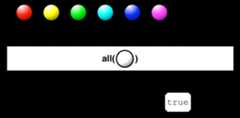
- Backpressure:
- The operator honors backpressure from downstream and consumes the source
Publisherin an unbounded manner (i.e., without applying backpressure). - Scheduler:
alldoes not operate by default on a particularScheduler.
- Parameters:
predicate- a function that evaluates an item and returns a Boolean- Returns:
- a Single that emits
trueif all items emitted by the source Publisher satisfy the predicate; otherwise,false - See Also:
- ReactiveX operators documentation: All
ambWith
@CheckReturnValue@NonNull@BackpressureSupport(value=FULL)@SchedulerSupport(value="none")public final Flowable<T> ambWith(Publisher<? extendsT> other)
Mirrors the Publisher (current or provided) that first either emits an item or sends a termination notification.- Backpressure:
- The operator itself doesn't interfere with backpressure which is determined by the winning
Publisher's backpressure behavior. - Scheduler:
ambWithdoes not operate by default on a particularScheduler.
- Parameters:
other- a Publisher competing to react first. A subscription to this provided Publisher will occur after subscribing to the current Publisher.- Returns:
- a Flowable that emits the same sequence as whichever of the source Publishers first emitted an item or sent a termination notification
- See Also:
- ReactiveX operators documentation: Amb
any
@CheckReturnValue@NonNull@BackpressureSupport(value=UNBOUNDED_IN)@SchedulerSupport(value="none")public final Single<Boolean> any(Predicate<? superT> predicate)
Returns a Single that emitstrueif any item emitted by the source Publisher satisfies a specified condition, otherwisefalse.Note: this always emitsfalseif the source Publisher is empty.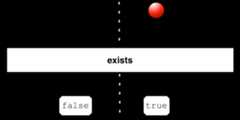
In Rx.Net this is the
anyoperator but we renamed it in RxJava to better match Java naming idioms.- Backpressure:
- The operator honors backpressure from downstream and consumes the source
Publisherin an unbounded manner (i.e., no backpressure applied to it). - Scheduler:
anydoes not operate by default on a particularScheduler.
- Parameters:
predicate- the condition to test items emitted by the source Publisher- Returns:
- a Single that emits a Boolean that indicates whether any item emitted by the source Publisher satisfies the
predicate - See Also:
- ReactiveX operators documentation: Contains
as
@CheckReturnValue@BackpressureSupport(value=SPECIAL)@SchedulerSupport(value="none")public final <R> R as(@NonNullFlowableConverter<T,? extends R> converter)
Calls the specified converter function during assembly time and returns its resulting value.This allows fluent conversion to any other type.
- Backpressure:
- The backpressure behavior depends on what happens in the
converterfunction. - Scheduler:
asdoes not operate by default on a particularScheduler.
History: 2.1.7 - experimental
- Type Parameters:
R- the resulting object type- Parameters:
converter- the function that receives the current Flowable instance and returns a value- Returns:
- the converted value
- Throws:
NullPointerException- if converter is null- Since:
- 2.2
blockingFirst
@CheckReturnValue@BackpressureSupport(value=UNBOUNDED_IN)@SchedulerSupport(value="none")public final T blockingFirst()
Returns the first item emitted by thisFlowable, or throwsNoSuchElementExceptionif it emits no items.- Backpressure:
- The operator consumes the source
Flowablein an unbounded manner (i.e., no backpressure applied to it). - Scheduler:
blockingFirstdoes not operate by default on a particularScheduler.- Error handling:
- If the source signals an error, the operator wraps a checked
ExceptionintoRuntimeExceptionand throws that. Otherwise,RuntimeExceptions andErrors are rethrown as they are.
- Returns:
- the first item emitted by this
Flowable - Throws:
NoSuchElementException- if thisFlowableemits no items- See Also:
- ReactiveX documentation: First
blockingFirst
@CheckReturnValue@BackpressureSupport(value=UNBOUNDED_IN)@SchedulerSupport(value="none")public final T blockingFirst(T defaultItem)
Returns the first item emitted by thisFlowable, or a default value if it emits no items.- Backpressure:
- The operator consumes the source
Flowablein an unbounded manner (i.e., no backpressure applied to it). - Scheduler:
blockingFirstdoes not operate by default on a particularScheduler.- Error handling:
- If the source signals an error, the operator wraps a checked
ExceptionintoRuntimeExceptionand throws that. Otherwise,RuntimeExceptions andErrors are rethrown as they are.
- Parameters:
defaultItem- a default value to return if thisFlowableemits no items- Returns:
- the first item emitted by this
Flowable, or the default value if it emits no items - See Also:
- ReactiveX documentation: First
blockingForEach
@BackpressureSupport(value=UNBOUNDED_IN)@SchedulerSupport(value="none")public final void blockingForEach(Consumer<? superT> onNext)
Consumes the upstreamFlowablein a blocking fashion and invokes the givenConsumerwith each upstream item on thecurrent thread until the upstream terminates.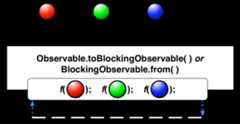
Note: the method will only return if the upstream terminates or the current thread is interrupted.
This method executes the
Consumeron the current thread whilesubscribe(Consumer)executes the consumer on the original caller thread of the sequence.- Backpressure:
- The operator consumes the source
Flowablein an unbounded manner (i.e., no backpressure applied to it). - Scheduler:
blockingForEachdoes not operate by default on a particularScheduler.- Error handling:
- If the source signals an error, the operator wraps a checked
ExceptionintoRuntimeExceptionand throws that. Otherwise,RuntimeExceptions andErrors are rethrown as they are.
- Parameters:
onNext- theConsumerto invoke for each item emitted by theFlowable- Throws:
RuntimeException- if an error occurs- See Also:
- ReactiveX documentation: Subscribe,
subscribe(Consumer)
blockingIterable
@CheckReturnValue@BackpressureSupport(value=FULL)@SchedulerSupport(value="none")public final Iterable<T> blockingIterable()
Converts thisFlowableinto anIterable.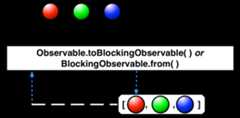
- Backpressure:
- The operator expects the upstream to honor backpressure otherwise the returned Iterable's iterator will throw a
MissingBackpressureException. - Scheduler:
blockingIterabledoes not operate by default on a particularScheduler.
- Returns:
- an
Iterableversion of thisFlowable - See Also:
- ReactiveX documentation: To
blockingIterable
@CheckReturnValue@BackpressureSupport(value=FULL)@SchedulerSupport(value="none")public final Iterable<T> blockingIterable(int bufferSize)
Converts thisFlowableinto anIterable.- Backpressure:
- The operator expects the upstream to honor backpressure otherwise the returned Iterable's iterator will throw a
MissingBackpressureException. - Scheduler:
blockingIterabledoes not operate by default on a particularScheduler.
- Parameters:
bufferSize- the number of items to prefetch from the current Flowable- Returns:
- an
Iterableversion of thisFlowable - See Also:
- ReactiveX documentation: To
blockingLast
@CheckReturnValue@BackpressureSupport(value=UNBOUNDED_IN)@SchedulerSupport(value="none")public final T blockingLast()
Returns the last item emitted by thisFlowable, or throwsNoSuchElementExceptionif thisFlowableemits no items.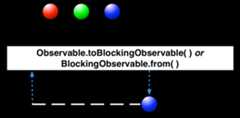
- Backpressure:
- The operator consumes the source
Flowablein an unbounded manner (i.e., no backpressure applied to it). - Scheduler:
blockingLastdoes not operate by default on a particularScheduler.- Error handling:
- If the source signals an error, the operator wraps a checked
ExceptionintoRuntimeExceptionand throws that. Otherwise,RuntimeExceptions andErrors are rethrown as they are.
- Returns:
- the last item emitted by this
Flowable - Throws:
NoSuchElementException- if thisFlowableemits no items- See Also:
- ReactiveX documentation: Last
blockingLast
@CheckReturnValue@BackpressureSupport(value=UNBOUNDED_IN)@SchedulerSupport(value="none")public final T blockingLast(T defaultItem)
Returns the last item emitted by thisFlowable, or a default value if it emits no items.
- Backpressure:
- The operator consumes the source
Flowablein an unbounded manner (i.e., no backpressure applied to it). - Scheduler:
blockingLastdoes not operate by default on a particularScheduler.- Error handling:
- If the source signals an error, the operator wraps a checked
ExceptionintoRuntimeExceptionand throws that. Otherwise,RuntimeExceptions andErrors are rethrown as they are.
- Parameters:
defaultItem- a default value to return if thisFlowableemits no items- Returns:
- the last item emitted by the
Flowable, or the default value if it emits no items - See Also:
- ReactiveX documentation: Last
blockingLatest
@CheckReturnValue@BackpressureSupport(value=UNBOUNDED_IN)@SchedulerSupport(value="none")public final Iterable<T> blockingLatest()
Returns anIterablethat returns the latest item emitted by thisFlowable, waiting if necessary for one to become available.If this
Flowableproduces items faster thanIterator.nexttakes them,onNextevents might be skipped, butonErrororonCompleteevents are not.Note also that an
onNextdirectly followed byonCompletemight hide theonNextevent.- Backpressure:
- The operator consumes the source
Flowablein an unbounded manner (i.e., no backpressure applied to it). - Scheduler:
blockingLatestdoes not operate by default on a particularScheduler.
- Returns:
- an Iterable that always returns the latest item emitted by this
Flowable - See Also:
- ReactiveX documentation: First
blockingMostRecent
@CheckReturnValue@BackpressureSupport(value=UNBOUNDED_IN)@SchedulerSupport(value="none")public final Iterable<T> blockingMostRecent(T initialItem)
Returns anIterablethat always returns the item most recently emitted by thisFlowable.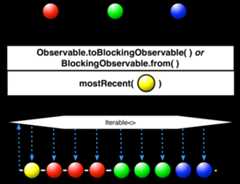
- Backpressure:
- The operator consumes the source
Flowablein an unbounded manner (i.e., no backpressure applied to it). - Scheduler:
blockingMostRecentdoes not operate by default on a particularScheduler.
- Parameters:
initialItem- the initial item that theIterablesequence will yield if thisFlowablehas not yet emitted an item- Returns:
- an
Iterablethat on each iteration returns the item that thisFlowablehas most recently emitted - See Also:
- ReactiveX documentation: First
blockingNext
@CheckReturnValue@BackpressureSupport(value=UNBOUNDED_IN)@SchedulerSupport(value="none")public final Iterable<T> blockingNext()
Returns anIterablethat blocks until thisFlowableemits another item, then returns that item.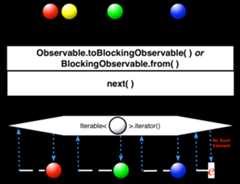
- Backpressure:
- The operator consumes the source
Flowablein an unbounded manner (i.e., no backpressure applied to it). - Scheduler:
blockingNextdoes not operate by default on a particularScheduler.
- Returns:
- an
Iterablethat blocks upon each iteration until thisFlowableemits a new item, whereupon the Iterable returns that item - See Also:
- ReactiveX documentation: TakeLast
blockingSingle
@CheckReturnValue@BackpressureSupport(value=UNBOUNDED_IN)@SchedulerSupport(value="none")public final T blockingSingle()
If thisFlowablecompletes after emitting a single item, return that item, otherwise throw aNoSuchElementException.
- Backpressure:
- The operator consumes the source
Flowablein an unbounded manner (i.e., no backpressure applied to it). - Scheduler:
blockingSingledoes not operate by default on a particularScheduler.- Error handling:
- If the source signals an error, the operator wraps a checked
ExceptionintoRuntimeExceptionand throws that. Otherwise,RuntimeExceptions andErrors are rethrown as they are.
- Returns:
- the single item emitted by this
Flowable - See Also:
- ReactiveX documentation: First
blockingSingle
@CheckReturnValue@BackpressureSupport(value=UNBOUNDED_IN)@SchedulerSupport(value="none")public final T blockingSingle(T defaultItem)
If thisFlowablecompletes after emitting a single item, return that item; if it emits more than one item, throw anIllegalArgumentException; if it emits no items, return a default value.
- Backpressure:
- The operator consumes the source
Flowablein an unbounded manner (i.e., no backpressure applied to it). - Scheduler:
blockingSingledoes not operate by default on a particularScheduler.- Error handling:
- If the source signals an error, the operator wraps a checked
ExceptionintoRuntimeExceptionand throws that. Otherwise,RuntimeExceptions andErrors are rethrown as they are.
- Parameters:
defaultItem- a default value to return if thisFlowableemits no items- Returns:
- the single item emitted by this
Flowable, or the default value if it emits no items - See Also:
- ReactiveX documentation: First
toFuture
@CheckReturnValue@BackpressureSupport(value=UNBOUNDED_IN)@SchedulerSupport(value="none")public final Future<T> toFuture()
Returns aFuturerepresenting the only value emitted by thisFlowable.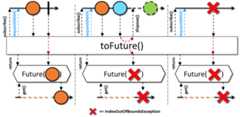
If the
Flowableemits more than one item,Futurewill receive anIndexOutOfBoundsException. If theFlowableis empty,Futurewill receive aNoSuchElementException. TheFlowablesource has to terminate in order for the returnedFutureto terminate as well.If the
Flowablemay emit more than one item, useFlowable.toList().toFuture().- Backpressure:
- The operator consumes the source
Flowablein an unbounded manner (i.e., no backpressure applied to it). - Scheduler:
toFuturedoes not operate by default on a particularScheduler.
- Returns:
- a
Futurethat expects a single item to be emitted by thisFlowable - See Also:
- ReactiveX documentation: To
blockingSubscribe
@BackpressureSupport(value=UNBOUNDED_IN)@SchedulerSupport(value="none")public final void blockingSubscribe()
Runs the source Flowable to a terminal event, ignoring any values and rethrowing any exception.Note that calling this method will block the caller thread until the upstream terminates normally or with an error. Therefore, calling this method from special threads such as the Android Main Thread or the Swing Event Dispatch Thread is not recommended.
- Backpressure:
- The operator consumes the source
Flowablein an unbounded manner (i.e., no backpressure applied to it). - Scheduler:
blockingSubscribedoes not operate by default on a particularScheduler.
blockingSubscribe
@BackpressureSupport(value=UNBOUNDED_IN)@SchedulerSupport(value="none")public final void blockingSubscribe(Consumer<? superT> onNext)
Subscribes to the source and calls the given callbackson the current thread.If the Flowable emits an error, it is wrapped into an
OnErrorNotImplementedExceptionand routed to the RxJavaPlugins.onError handler. Using the overloadsblockingSubscribe(Consumer, Consumer)orblockingSubscribe(Consumer, Consumer, Action)instead is recommended.Note that calling this method will block the caller thread until the upstream terminates normally or with an error. Therefore, calling this method from special threads such as the Android Main Thread or the Swing Event Dispatch Thread is not recommended.
- Backpressure:
- The operator consumes the source
Flowablein an unbounded manner (i.e., no backpressure applied to it). - Scheduler:
blockingSubscribedoes not operate by default on a particularScheduler.
- Parameters:
onNext- the callback action for each source value- Since:
- 2.0
- See Also:
blockingSubscribe(Consumer, Consumer),blockingSubscribe(Consumer, Consumer, Action)
blockingSubscribe
@BackpressureSupport(value=FULL)@SchedulerSupport(value="none")public final void blockingSubscribe(Consumer<? superT> onNext, int bufferSize)
Subscribes to the source and calls the given callbackson the current thread.If the Flowable emits an error, it is wrapped into an
OnErrorNotImplementedExceptionand routed to the RxJavaPlugins.onError handler. Using the overloadsblockingSubscribe(Consumer, Consumer)orblockingSubscribe(Consumer, Consumer, Action)instead is recommended.Note that calling this method will block the caller thread until the upstream terminates normally or with an error. Therefore, calling this method from special threads such as the Android Main Thread or the Swing Event Dispatch Thread is not recommended.
- Backpressure:
- The operator consumes the source
Flowablein an bounded manner (up to bufferSize outstanding request amount for items). - Scheduler:
blockingSubscribedoes not operate by default on a particularScheduler.
History: 2.1.15 - experimental
- Parameters:
onNext- the callback action for each source valuebufferSize- the size of the buffer- Since:
- 2.2
- See Also:
blockingSubscribe(Consumer, Consumer),blockingSubscribe(Consumer, Consumer, Action)
blockingSubscribe
@BackpressureSupport(value=UNBOUNDED_IN)@SchedulerSupport(value="none")public final void blockingSubscribe(Consumer<? superT> onNext,Consumer<? superThrowable> onError)
Subscribes to the source and calls the given callbackson the current thread.Note that calling this method will block the caller thread until the upstream terminates normally or with an error. Therefore, calling this method from special threads such as the Android Main Thread or the Swing Event Dispatch Thread is not recommended.
- Backpressure:
- The operator consumes the source
Flowablein an unbounded manner (i.e., no backpressure applied to it). - Scheduler:
blockingSubscribedoes not operate by default on a particularScheduler.
- Parameters:
onNext- the callback action for each source valueonError- the callback action for an error event- Since:
- 2.0
- See Also:
blockingSubscribe(Consumer, Consumer, Action)
blockingSubscribe
@BackpressureSupport(value=FULL)@SchedulerSupport(value="none")public final void blockingSubscribe(Consumer<? superT> onNext,Consumer<? superThrowable> onError, int bufferSize)
Subscribes to the source and calls the given callbackson the current thread.Note that calling this method will block the caller thread until the upstream terminates normally or with an error. Therefore, calling this method from special threads such as the Android Main Thread or the Swing Event Dispatch Thread is not recommended.
- Backpressure:
- The operator consumes the source
Flowablein an bounded manner (up to bufferSize outstanding request amount for items). - Scheduler:
blockingSubscribedoes not operate by default on a particularScheduler.
History: 2.1.15 - experimental
- Parameters:
onNext- the callback action for each source valueonError- the callback action for an error eventbufferSize- the size of the buffer- Since:
- 2.2
- See Also:
blockingSubscribe(Consumer, Consumer, Action)
blockingSubscribe
@BackpressureSupport(value=UNBOUNDED_IN)@SchedulerSupport(value="none")public final void blockingSubscribe(Consumer<? superT> onNext,Consumer<? superThrowable> onError,Action onComplete)
Subscribes to the source and calls the given callbackson the current thread.Note that calling this method will block the caller thread until the upstream terminates normally or with an error. Therefore, calling this method from special threads such as the Android Main Thread or the Swing Event Dispatch Thread is not recommended.
- Backpressure:
- The operator consumes the source
Flowablein an unbounded manner (i.e., no backpressure applied to it). - Scheduler:
blockingSubscribedoes not operate by default on a particularScheduler.
- Parameters:
onNext- the callback action for each source valueonError- the callback action for an error eventonComplete- the callback action for the completion event.- Since:
- 2.0
blockingSubscribe
@BackpressureSupport(value=FULL)@SchedulerSupport(value="none")public final void blockingSubscribe(Consumer<? superT> onNext,Consumer<? superThrowable> onError,Action onComplete, int bufferSize)
Subscribes to the source and calls the given callbackson the current thread.Note that calling this method will block the caller thread until the upstream terminates normally or with an error. Therefore, calling this method from special threads such as the Android Main Thread or the Swing Event Dispatch Thread is not recommended.
- Backpressure:
- The operator consumes the source
Flowablein an bounded manner (up to bufferSize outstanding request amount for items). - Scheduler:
blockingSubscribedoes not operate by default on a particularScheduler.
History: 2.1.15 - experimental
- Parameters:
onNext- the callback action for each source valueonError- the callback action for an error eventonComplete- the callback action for the completion event.bufferSize- the size of the buffer- Since:
- 2.2
blockingSubscribe
@BackpressureSupport(value=SPECIAL)@SchedulerSupport(value="none")public final void blockingSubscribe(Subscriber<? superT> subscriber)
Subscribes to the source and calls theSubscribermethodson the current thread.Note that calling this method will block the caller thread until the upstream terminates normally, with an error or the
Subscribercancels theSubscriptionit receives viaSubscriber.onSubscribe(Subscription). Therefore, calling this method from special threads such as the Android Main Thread or the Swing Event Dispatch Thread is not recommended.- Backpressure:
- The supplied
Subscriberdetermines how backpressure is applied. - Scheduler:
blockingSubscribedoes not operate by default on a particularScheduler.
- Parameters:
subscriber- the subscriber to forward events and calls to in the current thread- Since:
- 2.0
buffer
@CheckReturnValue@BackpressureSupport(value=FULL)@SchedulerSupport(value="none")public final Flowable<List<T>> buffer(int count)
Returns a Flowable that emits buffers of items it collects from the source Publisher. The resulting Publisher emits connected, non-overlapping buffers, each containingcountitems. When the source Publisher completes, the resulting Publisher emits the current buffer and propagates the notification from the source Publisher. Note that if the source Publisher issues an onError notification the event is passed on immediately without first emitting the buffer it is in the process of assembling.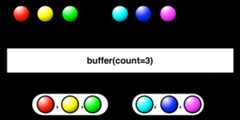
- Backpressure:
- The operator honors backpressure from downstream and expects the source
Publisherto honor it as well, although not enforced; violationmay lead toMissingBackpressureExceptionsomewhere downstream. - Scheduler:
- This version of
bufferdoes not operate by default on a particularScheduler.
- Parameters:
count- the maximum number of items in each buffer before it should be emitted- Returns:
- a Flowable that emits connected, non-overlapping buffers, each containing at most
countitems from the source Publisher - See Also:
- ReactiveX operators documentation: Buffer
buffer
@CheckReturnValue@BackpressureSupport(value=FULL)@SchedulerSupport(value="none")public final Flowable<List<T>> buffer(int count, int skip)
Returns a Flowable that emits buffers of items it collects from the source Publisher. The resulting Publisher emits buffers everyskipitems, each containingcountitems. When the source Publisher completes, the resulting Publisher emits the current buffer and propagates the notification from the source Publisher. Note that if the source Publisher issues an onError notification the event is passed on immediately without first emitting the buffer it is in the process of assembling.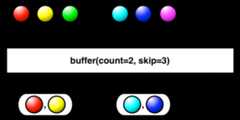
- Backpressure:
- The operator honors backpressure from downstream and expects the source
Publisherto honor it as well, although not enforced; violationmay lead toMissingBackpressureExceptionsomewhere downstream. - Scheduler:
- This version of
bufferdoes not operate by default on a particularScheduler.
- Parameters:
count- the maximum size of each buffer before it should be emittedskip- how many items emitted by the source Publisher should be skipped before starting a new buffer. Note that whenskipandcountare equal, this is the same operation asbuffer(int).- Returns:
- a Flowable that emits buffers for every
skipitem from the source Publisher and containing at mostcountitems - See Also:
- ReactiveX operators documentation: Buffer
buffer
@CheckReturnValue@NonNull@BackpressureSupport(value=FULL)@SchedulerSupport(value="none")public final <U extendsCollection<? superT>> Flowable<U> buffer(int count, int skip,Callable<U> bufferSupplier)
Returns a Flowable that emits buffers of items it collects from the source Publisher. The resulting Publisher emits buffers everyskipitems, each containingcountitems. When the source Publisher completes, the resulting Publisher emits the current buffer and propagates the notification from the source Publisher. Note that if the source Publisher issues an onError notification the event is passed on immediately without first emitting the buffer it is in the process of assembling.- Backpressure:
- The operator honors backpressure from downstream and expects the source
Publisherto honor it as well, although not enforced; violationmay lead toMissingBackpressureExceptionsomewhere downstream. - Scheduler:
- This version of
bufferdoes not operate by default on a particularScheduler.
- Type Parameters:
U- the collection subclass type to buffer into- Parameters:
count- the maximum size of each buffer before it should be emittedskip- how many items emitted by the source Publisher should be skipped before starting a new buffer. Note that whenskipandcountare equal, this is the same operation asbuffer(int).bufferSupplier- a factory function that returns an instance of the collection subclass to be used and returned as the buffer- Returns:
- a Flowable that emits buffers for every
skipitem from the source Publisher and containing at mostcountitems - See Also:
- ReactiveX operators documentation: Buffer
buffer
@CheckReturnValue@BackpressureSupport(value=FULL)@SchedulerSupport(value="none")public final <U extendsCollection<? superT>> Flowable<U> buffer(int count,Callable<U> bufferSupplier)
Returns a Flowable that emits buffers of items it collects from the source Publisher. The resulting Publisher emits connected, non-overlapping buffers, each containingcountitems. When the source Publisher completes, the resulting Publisher emits the current buffer and propagates the notification from the source Publisher. Note that if the source Publisher issues an onError notification the event is passed on immediately without first emitting the buffer it is in the process of assembling.- Backpressure:
- The operator honors backpressure from downstream and expects the source
Publisherto honor it as well, although not enforced; violationmay lead toMissingBackpressureExceptionsomewhere downstream. - Scheduler:
- This version of
bufferdoes not operate by default on a particularScheduler.
- Type Parameters:
U- the collection subclass type to buffer into- Parameters:
count- the maximum number of items in each buffer before it should be emittedbufferSupplier- a factory function that returns an instance of the collection subclass to be used and returned as the buffer- Returns:
- a Flowable that emits connected, non-overlapping buffers, each containing at most
countitems from the source Publisher - See Also:
- ReactiveX operators documentation: Buffer
buffer
@CheckReturnValue@BackpressureSupport(value=ERROR)@SchedulerSupport(value="io.reactivex:computation")public final Flowable<List<T>> buffer(long timespan, long timeskip,TimeUnit unit)
Returns a Flowable that emits buffers of items it collects from the source Publisher. The resulting Publisher starts a new buffer periodically, as determined by thetimeskipargument. It emits each buffer after a fixed timespan, specified by thetimespanargument. When the source Publisher completes, the resulting Publisher emits the current buffer and propagates the notification from the source Publisher. Note that if the source Publisher issues an onError notification the event is passed on immediately without first emitting the buffer it is in the process of assembling.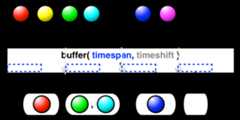
- Backpressure:
- This operator does not support backpressure as it uses time. It requests
Long.MAX_VALUEupstream and does not obey downstream requests. - Scheduler:
- This version of
bufferoperates by default on thecomputationScheduler.
- Parameters:
timespan- the period of time each buffer collects items before it is emittedtimeskip- the period of time after which a new buffer will be createdunit- the unit of time that applies to thetimespanandtimeskiparguments- Returns:
- a Flowable that emits new buffers of items emitted by the source Publisher periodically after a fixed timespan has elapsed
- See Also:
- ReactiveX operators documentation: Buffer
buffer
@CheckReturnValue@BackpressureSupport(value=ERROR)@SchedulerSupport(value="custom")public final Flowable<List<T>> buffer(long timespan, long timeskip,TimeUnit unit,Scheduler scheduler)
Returns a Flowable that emits buffers of items it collects from the source Publisher. The resulting Publisher starts a new buffer periodically, as determined by thetimeskipargument, and on the specifiedscheduler. It emits each buffer after a fixed timespan, specified by thetimespanargument. When the source Publisher completes, the resulting Publisher emits the current buffer and propagates the notification from the source Publisher. Note that if the source Publisher issues an onError notification the event is passed on immediately without first emitting the buffer it is in the process of assembling.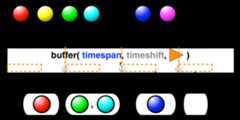
- Backpressure:
- This operator does not support backpressure as it uses time. It requests
Long.MAX_VALUEupstream and does not obey downstream requests. - Scheduler:
- You specify which
Schedulerthis operator will use.
- Parameters:
timespan- the period of time each buffer collects items before it is emittedtimeskip- the period of time after which a new buffer will be createdunit- the unit of time that applies to thetimespanandtimeskipargumentsscheduler- theSchedulerto use when determining the end and start of a buffer- Returns:
- a Flowable that emits new buffers of items emitted by the source Publisher periodically after a fixed timespan has elapsed
- See Also:
- ReactiveX operators documentation: Buffer
buffer
@CheckReturnValue@NonNull@BackpressureSupport(value=ERROR)@SchedulerSupport(value="custom")public final <U extendsCollection<? superT>> Flowable<U> buffer(long timespan, long timeskip,TimeUnit unit,Scheduler scheduler,Callable<U> bufferSupplier)
Returns a Flowable that emits buffers of items it collects from the source Publisher. The resulting Publisher starts a new buffer periodically, as determined by thetimeskipargument, and on the specifiedscheduler. It emits each buffer after a fixed timespan, specified by thetimespanargument. When the source Publisher completes, the resulting Publisher emits the current buffer and propagates the notification from the source Publisher. Note that if the source Publisher issues an onError notification the event is passed on immediately without first emitting the buffer it is in the process of assembling.- Backpressure:
- This operator does not support backpressure as it uses time. It requests
Long.MAX_VALUEupstream and does not obey downstream requests. - Scheduler:
- You specify which
Schedulerthis operator will use.
- Type Parameters:
U- the collection subclass type to buffer into- Parameters:
timespan- the period of time each buffer collects items before it is emittedtimeskip- the period of time after which a new buffer will be createdunit- the unit of time that applies to thetimespanandtimeskipargumentsscheduler- theSchedulerto use when determining the end and start of a bufferbufferSupplier- a factory function that returns an instance of the collection subclass to be used and returned as the buffer- Returns:
- a Flowable that emits new buffers of items emitted by the source Publisher periodically after a fixed timespan has elapsed
- See Also:
- ReactiveX operators documentation: Buffer
buffer
@CheckReturnValue@BackpressureSupport(value=ERROR)@SchedulerSupport(value="io.reactivex:computation")public final Flowable<List<T>> buffer(long timespan,TimeUnit unit)
Returns a Flowable that emits buffers of items it collects from the source Publisher. The resulting Publisher emits connected, non-overlapping buffers, each of a fixed duration specified by thetimespanargument. When the source Publisher completes, the resulting Publisher emits the current buffer and propagates the notification from the source Publisher. Note that if the source Publisher issues an onError notification the event is passed on immediately without first emitting the buffer it is in the process of assembling.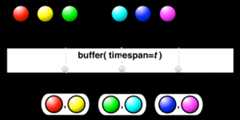
- Backpressure:
- This operator does not support backpressure as it uses time. It requests
Long.MAX_VALUEupstream and does not obey downstream requests. - Scheduler:
- This version of
bufferoperates by default on thecomputationScheduler.
- Parameters:
timespan- the period of time each buffer collects items before it is emitted and replaced with a new bufferunit- the unit of time that applies to thetimespanargument- Returns:
- a Flowable that emits connected, non-overlapping buffers of items emitted by the source Publisher within a fixed duration
- See Also:
- ReactiveX operators documentation: Buffer
buffer
@CheckReturnValue@BackpressureSupport(value=ERROR)@SchedulerSupport(value="io.reactivex:computation")public final Flowable<List<T>> buffer(long timespan,TimeUnit unit, int count)
Returns a Flowable that emits buffers of items it collects from the source Publisher. The resulting Publisher emits connected, non-overlapping buffers, each of a fixed duration specified by thetimespanargument or a maximum size specified by thecountargument (whichever is reached first). When the source Publisher completes, the resulting Publisher emits the current buffer and propagates the notification from the source Publisher. Note that if the source Publisher issues an onError notification the event is passed on immediately without first emitting the buffer it is in the process of assembling.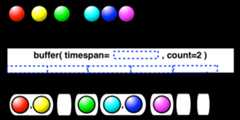
- Backpressure:
- This operator does not support backpressure as it uses time. It requests
Long.MAX_VALUEupstream and does not obey downstream requests. - Scheduler:
- This version of
bufferoperates by default on thecomputationScheduler.
- Parameters:
timespan- the period of time each buffer collects items before it is emitted and replaced with a new bufferunit- the unit of time which applies to thetimespanargumentcount- the maximum size of each buffer before it is emitted- Returns:
- a Flowable that emits connected, non-overlapping buffers of items emitted by the source Publisher, after a fixed duration or when the buffer reaches maximum capacity (whichever occurs first)
- See Also:
- ReactiveX operators documentation: Buffer
buffer
@CheckReturnValue@BackpressureSupport(value=ERROR)@SchedulerSupport(value="custom")public final Flowable<List<T>> buffer(long timespan,TimeUnit unit,Scheduler scheduler, int count)
Returns a Flowable that emits buffers of items it collects from the source Publisher. The resulting Publisher emits connected, non-overlapping buffers, each of a fixed duration specified by thetimespanargument as measured on the specifiedscheduler, or a maximum size specified by thecountargument (whichever is reached first). When the source Publisher completes, the resulting Publisher emits the current buffer and propagates the notification from the source Publisher. Note that if the source Publisher issues an onError notification the event is passed on immediately without first emitting the buffer it is in the process of assembling.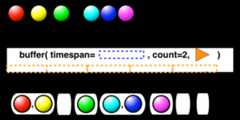
- Backpressure:
- This operator does not support backpressure as it uses time. It requests
Long.MAX_VALUEupstream and does not obey downstream requests. - Scheduler:
- You specify which
Schedulerthis operator will use.
- Parameters:
timespan- the period of time each buffer collects items before it is emitted and replaced with a new bufferunit- the unit of time which applies to thetimespanargumentscheduler- theSchedulerto use when determining the end and start of a buffercount- the maximum size of each buffer before it is emitted- Returns:
- a Flowable that emits connected, non-overlapping buffers of items emitted by the source Publisher after a fixed duration or when the buffer reaches maximum capacity (whichever occurs first)
- See Also:
- ReactiveX operators documentation: Buffer
buffer
@CheckReturnValue@BackpressureSupport(value=ERROR)@SchedulerSupport(value="custom")public final <U extendsCollection<? superT>> Flowable<U> buffer(long timespan,TimeUnit unit,Scheduler scheduler, int count,Callable<U> bufferSupplier, boolean restartTimerOnMaxSize)
Returns a Flowable that emits buffers of items it collects from the source Publisher. The resulting Publisher emits connected, non-overlapping buffers, each of a fixed duration specified by thetimespanargument as measured on the specifiedscheduler, or a maximum size specified by thecountargument (whichever is reached first). When the source Publisher completes, the resulting Publisher emits the current buffer and propagates the notification from the source Publisher. Note that if the source Publisher issues an onError notification the event is passed on immediately without first emitting the buffer it is in the process of assembling.- Backpressure:
- This operator does not support backpressure as it uses time. It requests
Long.MAX_VALUEupstream and does not obey downstream requests. - Scheduler:
- You specify which
Schedulerthis operator will use.
- Type Parameters:
U- the collection subclass type to buffer into- Parameters:
timespan- the period of time each buffer collects items before it is emitted and replaced with a new bufferunit- the unit of time which applies to thetimespanargumentscheduler- theSchedulerto use when determining the end and start of a buffercount- the maximum size of each buffer before it is emittedbufferSupplier- a factory function that returns an instance of the collection subclass to be used and returned as the bufferrestartTimerOnMaxSize- if true the time window is restarted when the max capacity of the current buffer is reached- Returns:
- a Flowable that emits connected, non-overlapping buffers of items emitted by the source Publisher after a fixed duration or when the buffer reaches maximum capacity (whichever occurs first)
- See Also:
- ReactiveX operators documentation: Buffer
buffer
@CheckReturnValue@BackpressureSupport(value=ERROR)@SchedulerSupport(value="custom")public final Flowable<List<T>> buffer(long timespan,TimeUnit unit,Scheduler scheduler)
Returns a Flowable that emits buffers of items it collects from the source Publisher. The resulting Publisher emits connected, non-overlapping buffers, each of a fixed duration specified by thetimespanargument and on the specifiedscheduler. When the source Publisher completes, the resulting Publisher emits the current buffer and propagates the notification from the source Publisher. Note that if the source Publisher issues an onError notification the event is passed on immediately without first emitting the buffer it is in the process of assembling.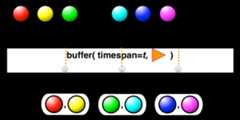
- Backpressure:
- This operator does not support backpressure as it uses time. It requests
Long.MAX_VALUEupstream and does not obey downstream requests. - Scheduler:
- You specify which
Schedulerthis operator will use.
- Parameters:
timespan- the period of time each buffer collects items before it is emitted and replaced with a new bufferunit- the unit of time which applies to thetimespanargumentscheduler- theSchedulerto use when determining the end and start of a buffer- Returns:
- a Flowable that emits connected, non-overlapping buffers of items emitted by the source Publisher within a fixed duration
- See Also:
- ReactiveX operators documentation: Buffer
buffer
@CheckReturnValue@BackpressureSupport(value=ERROR)@SchedulerSupport(value="none")public final <TOpening,TClosing> Flowable<List<T>> buffer(Flowable<? extends TOpening> openingIndicator,Function<? super TOpening,? extendsPublisher<? extends TClosing>> closingIndicator)
Returns a Flowable that emits buffers of items it collects from the source Publisher. The resulting Publisher emits buffers that it creates when the specifiedopeningIndicatorPublisher emits an item, and closes when the Publisher returned fromclosingIndicatoremits an item. If any of the source Publisher,openingIndicatororclosingIndicatorissues an onError notification the event is passed on immediately without first emitting the buffer it is in the process of assembling.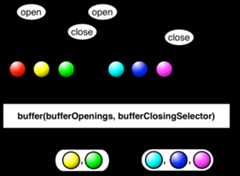
- Backpressure:
- This operator does not support backpressure as it is instead controlled by the given Publishers and buffers data. It requests
Long.MAX_VALUEupstream and does not obey downstream requests. - Scheduler:
- This version of
bufferdoes not operate by default on a particularScheduler.
- Type Parameters:
TOpening- the element type of the buffer-opening PublisherTClosing- the element type of the individual buffer-closing Publishers- Parameters:
openingIndicator- the Publisher that, when it emits an item, causes a new buffer to be createdclosingIndicator- theFunctionthat is used to produce a Publisher for every buffer created. When this Publisher emits an item, the associated buffer is emitted.- Returns:
- a Flowable that emits buffers, containing items from the source Publisher, that are created and closed when the specified Publishers emit items
- See Also:
- ReactiveX operators documentation: Buffer
buffer
@CheckReturnValue@BackpressureSupport(value=ERROR)@SchedulerSupport(value="none")public final <TOpening,TClosing,U extendsCollection<? superT>> Flowable<U> buffer(Flowable<? extends TOpening> openingIndicator,Function<? super TOpening,? extendsPublisher<? extends TClosing>> closingIndicator,Callable<U> bufferSupplier)
Returns a Flowable that emits buffers of items it collects from the source Publisher. The resulting Publisher emits buffers that it creates when the specifiedopeningIndicatorPublisher emits an item, and closes when the Publisher returned fromclosingIndicatoremits an item. If any of the source Publisher,openingIndicatororclosingIndicatorissues an onError notification the event is passed on immediately without first emitting the buffer it is in the process of assembling.- Backpressure:
- This operator does not support backpressure as it is instead controlled by the given Publishers and buffers data. It requests
Long.MAX_VALUEupstream and does not obey downstream requests. - Scheduler:
- This version of
bufferdoes not operate by default on a particularScheduler.
- Type Parameters:
U- the collection subclass type to buffer intoTOpening- the element type of the buffer-opening PublisherTClosing- the element type of the individual buffer-closing Publishers- Parameters:
openingIndicator- the Publisher that, when it emits an item, causes a new buffer to be createdclosingIndicator- theFunctionthat is used to produce a Publisher for every buffer created. When this Publisher emits an item, the associated buffer is emitted.bufferSupplier- a factory function that returns an instance of the collection subclass to be used and returned as the buffer- Returns:
- a Flowable that emits buffers, containing items from the source Publisher, that are created and closed when the specified Publishers emit items
- See Also:
- ReactiveX operators documentation: Buffer
buffer
@CheckReturnValue@BackpressureSupport(value=ERROR)@SchedulerSupport(value="none")public final <B> Flowable<List<T>> buffer(Publisher<B> boundaryIndicator)
Returns a Flowable that emits non-overlapping buffered items from the source Publisher each time the specified boundary Publisher emits an item.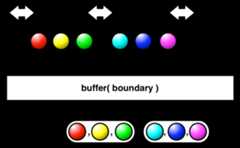
Completion of either the source or the boundary Publisher causes the returned Publisher to emit the latest buffer and complete. If either the source Publisher or the boundary Publisher issues an onError notification the event is passed on immediately without first emitting the buffer it is in the process of assembling.
- Backpressure:
- This operator does not support backpressure as it is instead controlled by the
Publisherboundaryand buffers data. It requestsLong.MAX_VALUEupstream and does not obey downstream requests. - Scheduler:
- This version of
bufferdoes not operate by default on a particularScheduler.
- Type Parameters:
B- the boundary value type (ignored)- Parameters:
boundaryIndicator- the boundary Publisher- Returns:
- a Flowable that emits buffered items from the source Publisher when the boundary Publisher emits an item
- See Also:
buffer(Publisher, int),ReactiveX operators documentation: Buffer
buffer
@CheckReturnValue@BackpressureSupport(value=ERROR)@SchedulerSupport(value="none")public final <B> Flowable<List<T>> buffer(Publisher<B> boundaryIndicator, int initialCapacity)
Returns a Flowable that emits non-overlapping buffered items from the source Publisher each time the specified boundary Publisher emits an item.Completion of either the source or the boundary Publisher causes the returned Publisher to emit the latest buffer and complete. If either the source Publisher or the boundary Publisher issues an onError notification the event is passed on immediately without first emitting the buffer it is in the process of assembling.
- Backpressure:
- This operator does not support backpressure as it is instead controlled by the
Publisherboundaryand buffers data. It requestsLong.MAX_VALUEupstream and does not obey downstream requests. - Scheduler:
- This version of
bufferdoes not operate by default on a particularScheduler.
- Type Parameters:
B- the boundary value type (ignored)- Parameters:
boundaryIndicator- the boundary PublisherinitialCapacity- the initial capacity of each buffer chunk- Returns:
- a Flowable that emits buffered items from the source Publisher when the boundary Publisher emits an item
- See Also:
- ReactiveX operators documentation: Buffer,
buffer(Publisher)
buffer
@CheckReturnValue@BackpressureSupport(value=ERROR)@SchedulerSupport(value="none")public final <B,U extendsCollection<? superT>> Flowable<U> buffer(Publisher<B> boundaryIndicator,Callable<U> bufferSupplier)
Returns a Flowable that emits non-overlapping buffered items from the source Publisher each time the specified boundary Publisher emits an item.Completion of either the source or the boundary Publisher causes the returned Publisher to emit the latest buffer and complete. If either the source Publisher or the boundary Publisher issues an onError notification the event is passed on immediately without first emitting the buffer it is in the process of assembling.
- Backpressure:
- This operator does not support backpressure as it is instead controlled by the
Publisherboundaryand buffers data. It requestsLong.MAX_VALUEupstream and does not obey downstream requests. - Scheduler:
- This version of
bufferdoes not operate by default on a particularScheduler.
- Type Parameters:
U- the collection subclass type to buffer intoB- the boundary value type (ignored)- Parameters:
boundaryIndicator- the boundary PublisherbufferSupplier- a factory function that returns an instance of the collection subclass to be used and returned as the buffer- Returns:
- a Flowable that emits buffered items from the source Publisher when the boundary Publisher emits an item
- See Also:
buffer(Publisher, int),ReactiveX operators documentation: Buffer
buffer
@CheckReturnValue@BackpressureSupport(value=ERROR)@SchedulerSupport(value="none")public final <B> Flowable<List<T>> buffer(Callable<? extendsPublisher<B>> boundaryIndicatorSupplier)
Returns a Flowable that emits buffers of items it collects from the source Publisher. The resulting Publisher emits connected, non-overlapping buffers. It emits the current buffer and replaces it with a new buffer whenever the Publisher produced by the specifiedboundaryIndicatorSupplieremits an item.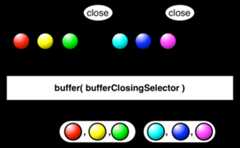
If either the source
Publisheror the boundaryPublisherissues anonErrornotification the event is passed on immediately without first emitting the buffer it is in the process of assembling.- Backpressure:
- This operator does not support backpressure as it is instead controlled by the given Publishers and buffers data. It requests
Long.MAX_VALUEupstream and does not obey downstream requests. - Scheduler:
- This version of
bufferdoes not operate by default on a particularScheduler.
- Type Parameters:
B- the value type of the boundary-providing Publisher- Parameters:
boundaryIndicatorSupplier- aCallablethat produces a Publisher that governs the boundary between buffers. Whenever the suppliedPublisheremits an item,bufferemits the current buffer and begins to fill a new one- Returns:
- a Flowable that emits a connected, non-overlapping buffer of items from the source Publisher each time the Publisher created with the
closingIndicatorargument emits an item - See Also:
- ReactiveX operators documentation: Buffer
buffer
@CheckReturnValue@BackpressureSupport(value=ERROR)@SchedulerSupport(value="none")public final <B,U extendsCollection<? superT>> Flowable<U> buffer(Callable<? extendsPublisher<B>> boundaryIndicatorSupplier,Callable<U> bufferSupplier)
Returns a Flowable that emits buffers of items it collects from the source Publisher. The resulting Publisher emits connected, non-overlapping buffers. It emits the current buffer and replaces it with a new buffer whenever the Publisher produced by the specifiedboundaryIndicatorSupplieremits an item.If either the source
Publisheror the boundaryPublisherissues anonErrornotification the event is passed on immediately without first emitting the buffer it is in the process of assembling.- Backpressure:
- This operator does not support backpressure as it is instead controlled by the given Publishers and buffers data. It requests
Long.MAX_VALUEupstream and does not obey downstream requests. - Scheduler:
- This version of
bufferdoes not operate by default on a particularScheduler.
- Type Parameters:
U- the collection subclass type to buffer intoB- the value type of the boundary-providing Publisher- Parameters:
boundaryIndicatorSupplier- aCallablethat produces a Publisher that governs the boundary between buffers. Whenever the suppliedPublisheremits an item,bufferemits the current buffer and begins to fill a new onebufferSupplier- a factory function that returns an instance of the collection subclass to be used and returned as the buffer- Returns:
- a Flowable that emits a connected, non-overlapping buffer of items from the source Publisher each time the Publisher created with the
closingIndicatorargument emits an item - See Also:
- ReactiveX operators documentation: Buffer
cache
@CheckReturnValue@BackpressureSupport(value=FULL)@SchedulerSupport(value="none")public final Flowable<T> cache()
Returns a Flowable that subscribes to this Publisher lazily, caches all of its events and replays them, in the same order as received, to all the downstream subscribers.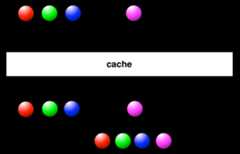
This is useful when you want a Publisher to cache responses and you can't control the subscribe/cancel behavior of all the
Subscribers.The operator subscribes only when the first downstream subscriber subscribes and maintains a single subscription towards this Publisher. In contrast, the operator family of
replay()that return aConnectableFlowablerequire an explicit call toConnectableFlowable.connect().Note: You sacrifice the ability to cancel the origin when you use the
cacheSubscriber so be careful not to use this Subscriber on Publishers that emit an infinite or very large number of items that will use up memory. A possible workaround is to apply `takeUntil` with a predicate or another source before (and perhaps after) the application of cache().
Since the operator doesn't allow clearing the cached values either, the possible workaround is to forget all references to it viaAtomicBoolean shouldStop = new AtomicBoolean(); source.takeUntil(v -> shouldStop.get()) .cache() .takeUntil(v -> shouldStop.get()) .subscribe(...);onTerminateDetach()applied along with the previous workaround:AtomicBoolean shouldStop = new AtomicBoolean(); source.takeUntil(v -> shouldStop.get()) .onTerminateDetach() .cache() .takeUntil(v -> shouldStop.get()) .onTerminateDetach() .subscribe(...);- Backpressure:
- The operator consumes this Publisher in an unbounded fashion but respects the backpressure of each downstream Subscriber individually.
- Scheduler:
cachedoes not operate by default on a particularScheduler.
- Returns:
- a Flowable that, when first subscribed to, caches all of its items and notifications for the benefit of subsequent subscribers
- See Also:
- ReactiveX operators documentation: Replay
cacheWithInitialCapacity
@CheckReturnValue@BackpressureSupport(value=FULL)@SchedulerSupport(value="none")public final Flowable<T> cacheWithInitialCapacity(int initialCapacity)
Returns a Flowable that subscribes to this Publisher lazily, caches all of its events and replays them, in the same order as received, to all the downstream subscribers.This is useful when you want a Publisher to cache responses and you can't control the subscribe/cancel behavior of all the
Subscribers.The operator subscribes only when the first downstream subscriber subscribes and maintains a single subscription towards this Publisher. In contrast, the operator family of
replay()that return aConnectableFlowablerequire an explicit call toConnectableFlowable.connect().Note: You sacrifice the ability to cancel the origin when you use the
cacheSubscriber so be careful not to use this Subscriber on Publishers that emit an infinite or very large number of items that will use up memory. A possible workaround is to apply `takeUntil` with a predicate or another source before (and perhaps after) the application of cache().
Since the operator doesn't allow clearing the cached values either, the possible workaround is to forget all references to it viaAtomicBoolean shouldStop = new AtomicBoolean(); source.takeUntil(v -> shouldStop.get()) .cache() .takeUntil(v -> shouldStop.get()) .subscribe(...);onTerminateDetach()applied along with the previous workaround:AtomicBoolean shouldStop = new AtomicBoolean(); source.takeUntil(v -> shouldStop.get()) .onTerminateDetach() .cache() .takeUntil(v -> shouldStop.get()) .onTerminateDetach() .subscribe(...);- Backpressure:
- The operator consumes this Publisher in an unbounded fashion but respects the backpressure of each downstream Subscriber individually.
- Scheduler:
cacheWithInitialCapacitydoes not operate by default on a particularScheduler.
Note: The capacity hint is not an upper bound on cache size. For that, consider
replay(int)in combination withConnectableFlowable.autoConnect()or similar.- Parameters:
initialCapacity- hint for number of items to cache (for optimizing underlying data structure)- Returns:
- a Flowable that, when first subscribed to, caches all of its items and notifications for the benefit of subsequent subscribers
- See Also:
- ReactiveX operators documentation: Replay
cast
@CheckReturnValue@NonNull@BackpressureSupport(value=PASS_THROUGH)@SchedulerSupport(value="none")public final <U> Flowable<U> cast(Class<U> clazz)
Returns a Flowable that emits the items emitted by the source Publisher, converted to the specified type.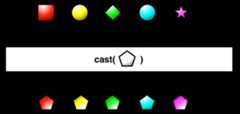
- Backpressure:
- The operator doesn't interfere with backpressure which is determined by the source
Publisher's backpressure behavior. - Scheduler:
castdoes not operate by default on a particularScheduler.
- Type Parameters:
U- the output value type cast to- Parameters:
clazz- the target class type thatcastwill cast the items emitted by the source Publisher into before emitting them from the resulting Publisher- Returns:
- a Flowable that emits each item from the source Publisher after converting it to the specified type
- See Also:
- ReactiveX operators documentation: Map
collect
@CheckReturnValue@NonNull@BackpressureSupport(value=UNBOUNDED_IN)@SchedulerSupport(value="none")public final <U> Single<U> collect(Callable<? extends U> initialItemSupplier,BiConsumer<? super U,? superT> collector)
Collects items emitted by the finite source Publisher into a single mutable data structure and returns a Single that emits this structure.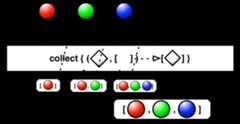
This is a simplified version of
reducethat does not need to return the state on each pass.Note that this operator requires the upstream to signal
onCompletefor the accumulator object to be emitted. Sources that are infinite and never complete will never emit anything through this operator and an infinite source may lead to a fatalOutOfMemoryError.- Backpressure:
- This operator does not support backpressure because by intent it will receive all values and reduce them to a single
onNext. - Scheduler:
collectdoes not operate by default on a particularScheduler.
- Type Parameters:
U- the accumulator and output type- Parameters:
initialItemSupplier- the mutable data structure that will collect the itemscollector- a function that accepts thestateand an emitted item, and modifiesstateaccordingly- Returns:
- a Single that emits the result of collecting the values emitted by the source Publisher into a single mutable data structure
- See Also:
- ReactiveX operators documentation: Reduce
collectInto
@CheckReturnValue@NonNull@BackpressureSupport(value=UNBOUNDED_IN)@SchedulerSupport(value="none")public final <U> Single<U> collectInto(U initialItem,BiConsumer<? super U,? superT> collector)
Collects items emitted by the finite source Publisher into a single mutable data structure and returns a Single that emits this structure.This is a simplified version of
reducethat does not need to return the state on each pass.Note that this operator requires the upstream to signal
onCompletefor the accumulator object to be emitted. Sources that are infinite and never complete will never emit anything through this operator and an infinite source may lead to a fatalOutOfMemoryError.- Backpressure:
- This operator does not support backpressure because by intent it will receive all values and reduce them to a single
onNext. - Scheduler:
collectIntodoes not operate by default on a particularScheduler.
- Type Parameters:
U- the accumulator and output type- Parameters:
initialItem- the mutable data structure that will collect the itemscollector- a function that accepts thestateand an emitted item, and modifiesstateaccordingly- Returns:
- a Single that emits the result of collecting the values emitted by the source Publisher into a single mutable data structure
- See Also:
- ReactiveX operators documentation: Reduce
compose
@CheckReturnValue@BackpressureSupport(value=PASS_THROUGH)@SchedulerSupport(value="none")public final <R> Flowable<R> compose(FlowableTransformer<? superT,? extends R> composer)
Transform a Publisher by applying a particular Transformer function to it.This method operates on the Publisher itself whereas
lift(io.reactivex.FlowableOperator<? extends R, ? super T>)operates on the Publisher's Subscribers or Subscribers.If the operator you are creating is designed to act on the individual items emitted by a source Publisher, use
lift(io.reactivex.FlowableOperator<? extends R, ? super T>). If your operator is designed to transform the source Publisher as a whole (for instance, by applying a particular set of existing RxJava operators to it) usecompose.- Backpressure:
- The operator itself doesn't interfere with the backpressure behavior which only depends on what kind of
Publisherthe transformer returns. - Scheduler:
composedoes not operate by default on a particularScheduler.
- Type Parameters:
R- the value type of the output Publisher- Parameters:
composer- implements the function that transforms the source Publisher- Returns:
- the source Publisher, transformed by the transformer function
- See Also:
- RxJava wiki: Implementing Your Own Operators
concatMap
@CheckReturnValue@BackpressureSupport(value=FULL)@SchedulerSupport(value="none")public final <R> Flowable<R> concatMap(Function<? superT,? extendsPublisher<? extends R>> mapper)
Returns a new Flowable that emits items resulting from applying a function that you supply to each item emitted by the source Publisher, where that function returns a Publisher, and then emitting the items that result from concatenating those resulting Publishers.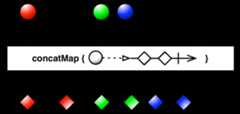
- Backpressure:
- The operator honors backpressure from downstream. Both this and the inner
Publishers are expected to honor backpressure as well. If the sourcePublisherviolates the rule, the operator will signal aMissingBackpressureException. If any of the innerPublishers doesn't honor backpressure, thatmay throw anIllegalStateExceptionwhen thatPublishercompletes. - Scheduler:
concatMapdoes not operate by default on a particularScheduler.
- Type Parameters:
R- the type of the inner Publisher sources and thus the output type- Parameters:
mapper- a function that, when applied to an item emitted by the source Publisher, returns a Publisher- Returns:
- a Flowable that emits the result of applying the transformation function to each item emitted by the source Publisher and concatenating the Publishers obtained from this transformation
- See Also:
- ReactiveX operators documentation: FlatMap
concatMap
@CheckReturnValue@NonNull@BackpressureSupport(value=FULL)@SchedulerSupport(value="none")public final <R> Flowable<R> concatMap(Function<? superT,? extendsPublisher<? extends R>> mapper, int prefetch)
Returns a new Flowable that emits items resulting from applying a function that you supply to each item emitted by the source Publisher, where that function returns a Publisher, and then emitting the items that result from concatenating those resulting Publishers.- Backpressure:
- The operator honors backpressure from downstream. Both this and the inner
Publishers are expected to honor backpressure as well. If the sourcePublisherviolates the rule, the operator will signal aMissingBackpressureException. If any of the innerPublishers doesn't honor backpressure, thatmay throw anIllegalStateExceptionwhen thatPublishercompletes. - Scheduler:
concatMapdoes not operate by default on a particularScheduler.
- Type Parameters:
R- the type of the inner Publisher sources and thus the output type- Parameters:
mapper- a function that, when applied to an item emitted by the source Publisher, returns a Publisherprefetch- the number of elements to prefetch from the current Flowable- Returns:
- a Flowable that emits the result of applying the transformation function to each item emitted by the source Publisher and concatenating the Publishers obtained from this transformation
- See Also:
- ReactiveX operators documentation: FlatMap
concatMapCompletable
@CheckReturnValue@SchedulerSupport(value="none")@BackpressureSupport(value=FULL)public final Completable concatMapCompletable(Function<? superT,? extendsCompletableSource> mapper)
Maps the upstream items intoCompletableSources and subscribes to them one after the other completes.- Backpressure:
- The operator expects the upstream to support backpressure. If this
Flowableviolates the rule, the operator will signal aMissingBackpressureException. - Scheduler:
concatMapCompletabledoes not operate by default on a particularScheduler.
History: 2.1.11 - experimental
- Parameters:
mapper- the function called with the upstream item and should return aCompletableSourceto become the next source to be subscribed to- Returns:
- a new Completable instance
- Since:
- 2.2
- See Also:
concatMapCompletableDelayError(Function)
concatMapCompletable
@CheckReturnValue@NonNull@SchedulerSupport(value="none")@BackpressureSupport(value=FULL)public final Completable concatMapCompletable(Function<? superT,? extendsCompletableSource> mapper, int prefetch)
Maps the upstream items intoCompletableSources and subscribes to them one after the other completes.- Backpressure:
- The operator expects the upstream to support backpressure. If this
Flowableviolates the rule, the operator will signal aMissingBackpressureException. - Scheduler:
concatMapCompletabledoes not operate by default on a particularScheduler.
History: 2.1.11 - experimental
- Parameters:
mapper- the function called with the upstream item and should return aCompletableSourceto become the next source to be subscribed toprefetch- The number of upstream items to prefetch so that fresh items are ready to be mapped when a previousCompletableSourceterminates. The operator replenishes after half of the prefetch amount has been consumed and turned intoCompletableSources.- Returns:
- a new Completable instance
- Since:
- 2.2
- See Also:
concatMapCompletableDelayError(Function, boolean, int)
concatMapCompletableDelayError
@CheckReturnValue@SchedulerSupport(value="none")@BackpressureSupport(value=FULL)public final Completable concatMapCompletableDelayError(Function<? superT,? extendsCompletableSource> mapper)
Maps the upstream items intoCompletableSources and subscribes to them one after the other terminates, delaying all errors till both thisFlowableand all innerCompletableSources terminate.- Backpressure:
- The operator expects the upstream to support backpressure. If this
Flowableviolates the rule, the operator will signal aMissingBackpressureException. - Scheduler:
concatMapCompletableDelayErrordoes not operate by default on a particularScheduler.
History: 2.1.11 - experimental
- Parameters:
mapper- the function called with the upstream item and should return aCompletableSourceto become the next source to be subscribed to- Returns:
- a new Completable instance
- Since:
- 2.2
- See Also:
concatMapCompletable(Function, int)
concatMapCompletableDelayError
@CheckReturnValue@SchedulerSupport(value="none")@BackpressureSupport(value=FULL)public final Completable concatMapCompletableDelayError(Function<? superT,? extendsCompletableSource> mapper, boolean tillTheEnd)
Maps the upstream items intoCompletableSources and subscribes to them one after the other terminates, optionally delaying all errors till both thisFlowableand all innerCompletableSources terminate.- Backpressure:
- The operator expects the upstream to support backpressure. If this
Flowableviolates the rule, the operator will signal aMissingBackpressureException. - Scheduler:
concatMapCompletableDelayErrordoes not operate by default on a particularScheduler.
History: 2.1.11 - experimental
- Parameters:
mapper- the function called with the upstream item and should return aCompletableSourceto become the next source to be subscribed totillTheEnd- Iftrue, errors from thisFlowableor any of the innerCompletableSources are delayed until all of them terminate. Iffalse, an error from thisFlowableis delayed until the current innerCompletableSourceterminates and only then is it emitted to the downstream.- Returns:
- a new Completable instance
- Since:
- 2.2
- See Also:
concatMapCompletable(Function)
concatMapCompletableDelayError
@CheckReturnValue@NonNull@SchedulerSupport(value="none")@BackpressureSupport(value=FULL)public final Completable concatMapCompletableDelayError(Function<? superT,? extendsCompletableSource> mapper, boolean tillTheEnd, int prefetch)
Maps the upstream items intoCompletableSources and subscribes to them one after the other terminates, optionally delaying all errors till both thisFlowableand all innerCompletableSources terminate.- Backpressure:
- The operator expects the upstream to support backpressure. If this
Flowableviolates the rule, the operator will signal aMissingBackpressureException. - Scheduler:
concatMapCompletableDelayErrordoes not operate by default on a particularScheduler.
History: 2.1.11 - experimental
- Parameters:
mapper- the function called with the upstream item and should return aCompletableSourceto become the next source to be subscribed totillTheEnd- Iftrue, errors from thisFlowableor any of the innerCompletableSources are delayed until all of them terminate. Iffalse, an error from thisFlowableis delayed until the current innerCompletableSourceterminates and only then is it emitted to the downstream.prefetch- The number of upstream items to prefetch so that fresh items are ready to be mapped when a previousCompletableSourceterminates. The operator replenishes after half of the prefetch amount has been consumed and turned intoCompletableSources.- Returns:
- a new Completable instance
- Since:
- 2.2
- See Also:
concatMapCompletable(Function, int)
concatMapDelayError
@CheckReturnValue@BackpressureSupport(value=FULL)@SchedulerSupport(value="none")public final <R> Flowable<R> concatMapDelayError(Function<? superT,? extendsPublisher<? extends R>> mapper)
Maps each of the items into a Publisher, subscribes to them one after the other, one at a time and emits their values in order while delaying any error from either this or any of the inner Publishers till all of them terminate.- Backpressure:
- The operator honors backpressure from downstream. Both this and the inner
Publishers are expected to honor backpressure as well. If the sourcePublisherviolates the rule, the operator will signal aMissingBackpressureException. If any of the innerPublishers doesn't honor backpressure, thatmay throw anIllegalStateExceptionwhen thatPublishercompletes. - Scheduler:
concatMapDelayErrordoes not operate by default on a particularScheduler.
- Type Parameters:
R- the result value type- Parameters:
mapper- the function that maps the items of this Publisher into the inner Publishers.- Returns:
- the new Publisher instance with the concatenation behavior
concatMapDelayError
@CheckReturnValue@NonNull@BackpressureSupport(value=FULL)@SchedulerSupport(value="none")public final <R> Flowable<R> concatMapDelayError(Function<? superT,? extendsPublisher<? extends R>> mapper, int prefetch, boolean tillTheEnd)
Maps each of the items into a Publisher, subscribes to them one after the other, one at a time and emits their values in order while delaying any error from either this or any of the inner Publishers till all of them terminate.- Backpressure:
- The operator honors backpressure from downstream. Both this and the inner
Publishers are expected to honor backpressure as well. If the sourcePublisherviolates the rule, the operator will signal aMissingBackpressureException. If any of the innerPublishers doesn't honor backpressure, thatmay throw anIllegalStateExceptionwhen thatPublishercompletes. - Scheduler:
concatMapDelayErrordoes not operate by default on a particularScheduler.
- Type Parameters:
R- the result value type- Parameters:
mapper- the function that maps the items of this Publisher into the inner Publishers.prefetch- the number of elements to prefetch from the current FlowabletillTheEnd- if true, all errors from the outer and inner Publisher sources are delayed until the end, if false, an error from the main source is signaled when the current Publisher source terminates- Returns:
- the new Publisher instance with the concatenation behavior
concatMapEager
@CheckReturnValue@BackpressureSupport(value=FULL)@SchedulerSupport(value="none")public final <R> Flowable<R> concatMapEager(Function<? superT,? extendsPublisher<? extends R>> mapper)
Maps a sequence of values into Publishers and concatenates these Publishers eagerly into a single Publisher.Eager concatenation means that once a subscriber subscribes, this operator subscribes to all of the source Publishers. The operator buffers the values emitted by these Publishers and then drains them in order, each one after the previous one completes.
- Backpressure:
- Backpressure is honored towards the downstream, however, due to the eagerness requirement, sources are subscribed to in unbounded mode and their values are queued up in an unbounded buffer.
- Scheduler:
- This method does not operate by default on a particular
Scheduler.
- Type Parameters:
R- the value type- Parameters:
mapper- the function that maps a sequence of values into a sequence of Publishers that will be eagerly concatenated- Returns:
- the new Publisher instance with the specified concatenation behavior
- Since:
- 2.0
concatMapEager
@CheckReturnValue@NonNull@BackpressureSupport(value=FULL)@SchedulerSupport(value="none")public final <R> Flowable<R> concatMapEager(Function<? superT,? extendsPublisher<? extends R>> mapper, int maxConcurrency, int prefetch)
Maps a sequence of values into Publishers and concatenates these Publishers eagerly into a single Publisher.Eager concatenation means that once a subscriber subscribes, this operator subscribes to all of the source Publishers. The operator buffers the values emitted by these Publishers and then drains them in order, each one after the previous one completes.
- Backpressure:
- Backpressure is honored towards the downstream, however, due to the eagerness requirement, sources are subscribed to in unbounded mode and their values are queued up in an unbounded buffer.
- Scheduler:
- This method does not operate by default on a particular
Scheduler.
- Type Parameters:
R- the value type- Parameters:
mapper- the function that maps a sequence of values into a sequence of Publishers that will be eagerly concatenatedmaxConcurrency- the maximum number of concurrent subscribed Publishersprefetch- hints about the number of expected values from each inner Publisher, must be positive- Returns:
- the new Publisher instance with the specified concatenation behavior
- Since:
- 2.0
concatMapEagerDelayError
@CheckReturnValue@BackpressureSupport(value=FULL)@SchedulerSupport(value="none")public final <R> Flowable<R> concatMapEagerDelayError(Function<? superT,? extendsPublisher<? extends R>> mapper, boolean tillTheEnd)
Maps a sequence of values into Publishers and concatenates these Publishers eagerly into a single Publisher.Eager concatenation means that once a subscriber subscribes, this operator subscribes to all of the source Publishers. The operator buffers the values emitted by these Publishers and then drains them in order, each one after the previous one completes.
- Backpressure:
- Backpressure is honored towards the downstream, however, due to the eagerness requirement, sources are subscribed to in unbounded mode and their values are queued up in an unbounded buffer.
- Scheduler:
- This method does not operate by default on a particular
Scheduler.
- Type Parameters:
R- the value type- Parameters:
mapper- the function that maps a sequence of values into a sequence of Publishers that will be eagerly concatenatedtillTheEnd- if true, all errors from the outer and inner Publisher sources are delayed until the end, if false, an error from the main source is signaled when the current Publisher source terminates- Returns:
- the new Publisher instance with the specified concatenation behavior
- Since:
- 2.0
concatMapEagerDelayError
@CheckReturnValue@NonNull@BackpressureSupport(value=FULL)@SchedulerSupport(value="none")public final <R> Flowable<R> concatMapEagerDelayError(Function<? superT,? extendsPublisher<? extends R>> mapper, int maxConcurrency, int prefetch, boolean tillTheEnd)
Maps a sequence of values into Publishers and concatenates these Publishers eagerly into a single Publisher.Eager concatenation means that once a subscriber subscribes, this operator subscribes to all of the source Publishers. The operator buffers the values emitted by these Publishers and then drains them in order, each one after the previous one completes.
- Backpressure:
- Backpressure is honored towards the downstream, however, due to the eagerness requirement, sources are subscribed to in unbounded mode and their values are queued up in an unbounded buffer.
- Scheduler:
- This method does not operate by default on a particular
Scheduler.
- Type Parameters:
R- the value type- Parameters:
mapper- the function that maps a sequence of values into a sequence of Publishers that will be eagerly concatenatedmaxConcurrency- the maximum number of concurrent subscribed Publishersprefetch- the number of elements to prefetch from each source PublishertillTheEnd- if true, exceptions from the current Flowable and all the inner Publishers are delayed until all of them terminate, if false, exception from the current Flowable is delayed until the currently running Publisher terminates- Returns:
- the new Publisher instance with the specified concatenation behavior
- Since:
- 2.0
concatMapIterable
@CheckReturnValue@BackpressureSupport(value=FULL)@SchedulerSupport(value="none")public final <U> Flowable<U> concatMapIterable(Function<? superT,? extendsIterable<? extends U>> mapper)
Returns a Flowable that concatenate each item emitted by the source Publisher with the values in an Iterable corresponding to that item that is generated by a selector.- Backpressure:
- The operator honors backpressure from downstream. The source
Publishers is expected to honor backpressure as well. If the sourcePublisherviolates the rule, the operator will signal aMissingBackpressureException. - Scheduler:
concatMapIterabledoes not operate by default on a particularScheduler.
- Type Parameters:
U- the type of item emitted by the resulting Publisher- Parameters:
mapper- a function that returns an Iterable sequence of values for when given an item emitted by the source Publisher- Returns:
- a Flowable that emits the results of concatenating the items emitted by the source Publisher with the values in the Iterables corresponding to those items, as generated by
collectionSelector - See Also:
- ReactiveX operators documentation: FlatMap
concatMapIterable
@CheckReturnValue@NonNull@BackpressureSupport(value=FULL)@SchedulerSupport(value="none")public final <U> Flowable<U> concatMapIterable(Function<? superT,? extendsIterable<? extends U>> mapper, int prefetch)
Returns a Flowable that concatenate each item emitted by the source Publisher with the values in an Iterable corresponding to that item that is generated by a selector.- Backpressure:
- The operator honors backpressure from downstream. The source
Publishers is expected to honor backpressure as well. If the sourcePublisherviolates the rule, the operator will signal aMissingBackpressureException. - Scheduler:
concatMapIterabledoes not operate by default on a particularScheduler.
- Type Parameters:
U- the type of item emitted by the resulting Publisher- Parameters:
mapper- a function that returns an Iterable sequence of values for when given an item emitted by the source Publisherprefetch- the number of elements to prefetch from the current Flowable- Returns:
- a Flowable that emits the results of concatenating the items emitted by the source Publisher with the values in the Iterables corresponding to those items, as generated by
collectionSelector - See Also:
- ReactiveX operators documentation: FlatMap
concatMapMaybe
@CheckReturnValue@BackpressureSupport(value=FULL)@SchedulerSupport(value="none")public final <R> Flowable<R> concatMapMaybe(Function<? superT,? extendsMaybeSource<? extends R>> mapper)
Maps the upstream items intoMaybeSources and subscribes to them one after the other succeeds or completes, emits their success value if available or terminates immediately if either thisFlowableor the current innerMaybeSourcefail.- Backpressure:
- The operator expects the upstream to support backpressure and honors the backpressure from downstream. If this
Flowableviolates the rule, the operator will signal aMissingBackpressureException. - Scheduler:
concatMapMaybedoes not operate by default on a particularScheduler.
History: 2.1.11 - experimental
- Type Parameters:
R- the result type of the innerMaybeSources- Parameters:
mapper- the function called with the upstream item and should return aMaybeSourceto become the next source to be subscribed to- Returns:
- a new Flowable instance
- Since:
- 2.2
- See Also:
concatMapMaybeDelayError(Function),concatMapMaybe(Function, int)
concatMapMaybe
@CheckReturnValue@NonNull@BackpressureSupport(value=FULL)@SchedulerSupport(value="none")public final <R> Flowable<R> concatMapMaybe(Function<? superT,? extendsMaybeSource<? extends R>> mapper, int prefetch)
Maps the upstream items intoMaybeSources and subscribes to them one after the other succeeds or completes, emits their success value if available or terminates immediately if either thisFlowableor the current innerMaybeSourcefail.- Backpressure:
- The operator expects the upstream to support backpressure and honors the backpressure from downstream. If this
Flowableviolates the rule, the operator will signal aMissingBackpressureException. - Scheduler:
concatMapMaybedoes not operate by default on a particularScheduler.
History: 2.1.11 - experimental
- Type Parameters:
R- the result type of the innerMaybeSources- Parameters:
mapper- the function called with the upstream item and should return aMaybeSourceto become the next source to be subscribed toprefetch- The number of upstream items to prefetch so that fresh items are ready to be mapped when a previousMaybeSourceterminates. The operator replenishes after half of the prefetch amount has been consumed and turned intoMaybeSources.- Returns:
- a new Flowable instance
- Since:
- 2.2
- See Also:
concatMapMaybe(Function),concatMapMaybeDelayError(Function, boolean, int)
concatMapMaybeDelayError
@CheckReturnValue@BackpressureSupport(value=FULL)@SchedulerSupport(value="none")public final <R> Flowable<R> concatMapMaybeDelayError(Function<? superT,? extendsMaybeSource<? extends R>> mapper)
Maps the upstream items intoMaybeSources and subscribes to them one after the other terminates, emits their success value if available and delaying all errors till both thisFlowableand all innerMaybeSources terminate.- Backpressure:
- The operator expects the upstream to support backpressure and honors the backpressure from downstream. If this
Flowableviolates the rule, the operator will signal aMissingBackpressureException. - Scheduler:
concatMapMaybeDelayErrordoes not operate by default on a particularScheduler.
History: 2.1.11 - experimental
- Type Parameters:
R- the result type of the innerMaybeSources- Parameters:
mapper- the function called with the upstream item and should return aMaybeSourceto become the next source to be subscribed to- Returns:
- a new Flowable instance
- Since:
- 2.2
- See Also:
concatMapMaybe(Function),concatMapMaybeDelayError(Function, boolean)
concatMapMaybeDelayError
@CheckReturnValue@BackpressureSupport(value=FULL)@SchedulerSupport(value="none")public final <R> Flowable<R> concatMapMaybeDelayError(Function<? superT,? extendsMaybeSource<? extends R>> mapper, boolean tillTheEnd)
Maps the upstream items intoMaybeSources and subscribes to them one after the other terminates, emits their success value if available and optionally delaying all errors till both thisFlowableand all innerMaybeSources terminate.- Backpressure:
- The operator expects the upstream to support backpressure and honors the backpressure from downstream. If this
Flowableviolates the rule, the operator will signal aMissingBackpressureException. - Scheduler:
concatMapMaybeDelayErrordoes not operate by default on a particularScheduler.
History: 2.1.11 - experimental
- Type Parameters:
R- the result type of the innerMaybeSources- Parameters:
mapper- the function called with the upstream item and should return aMaybeSourceto become the next source to be subscribed totillTheEnd- Iftrue, errors from thisFlowableor any of the innerMaybeSources are delayed until all of them terminate. Iffalse, an error from thisFlowableis delayed until the current innerMaybeSourceterminates and only then is it emitted to the downstream.- Returns:
- a new Flowable instance
- Since:
- 2.2
- See Also:
concatMapMaybe(Function, int),concatMapMaybeDelayError(Function, boolean, int)
concatMapMaybeDelayError
@CheckReturnValue@NonNull@BackpressureSupport(value=FULL)@SchedulerSupport(value="none")public final <R> Flowable<R> concatMapMaybeDelayError(Function<? superT,? extendsMaybeSource<? extends R>> mapper, boolean tillTheEnd, int prefetch)
Maps the upstream items intoMaybeSources and subscribes to them one after the other terminates, emits their success value if available and optionally delaying all errors till both thisFlowableand all innerMaybeSources terminate.- Backpressure:
- The operator expects the upstream to support backpressure and honors the backpressure from downstream. If this
Flowableviolates the rule, the operator will signal aMissingBackpressureException. - Scheduler:
concatMapMaybeDelayErrordoes not operate by default on a particularScheduler.
History: 2.1.11 - experimental
- Type Parameters:
R- the result type of the innerMaybeSources- Parameters:
mapper- the function called with the upstream item and should return aMaybeSourceto become the next source to be subscribed totillTheEnd- Iftrue, errors from thisFlowableor any of the innerMaybeSources are delayed until all of them terminate. Iffalse, an error from thisFlowableis delayed until the current innerMaybeSourceterminates and only then is it emitted to the downstream.prefetch- The number of upstream items to prefetch so that fresh items are ready to be mapped when a previousMaybeSourceterminates. The operator replenishes after half of the prefetch amount has been consumed and turned intoMaybeSources.- Returns:
- a new Flowable instance
- Since:
- 2.2
- See Also:
concatMapMaybe(Function, int)
concatMapSingle
@CheckReturnValue@BackpressureSupport(value=FULL)@SchedulerSupport(value="none")public final <R> Flowable<R> concatMapSingle(Function<? superT,? extendsSingleSource<? extends R>> mapper)
Maps the upstream items intoSingleSources and subscribes to them one after the other succeeds, emits their success values or terminates immediately if either thisFlowableor the current innerSingleSourcefail.- Backpressure:
- The operator expects the upstream to support backpressure and honors the backpressure from downstream. If this
Flowableviolates the rule, the operator will signal aMissingBackpressureException. - Scheduler:
concatMapSingledoes not operate by default on a particularScheduler.
History: 2.1.11 - experimental
- Type Parameters:
R- the result type of the innerSingleSources- Parameters:
mapper- the function called with the upstream item and should return aSingleSourceto become the next source to be subscribed to- Returns:
- a new Flowable instance
- Since:
- 2.2
- See Also:
concatMapSingleDelayError(Function),concatMapSingle(Function, int)
concatMapSingle
@CheckReturnValue@NonNull@BackpressureSupport(value=FULL)@SchedulerSupport(value="none")public final <R> Flowable<R> concatMapSingle(Function<? superT,? extendsSingleSource<? extends R>> mapper, int prefetch)
Maps the upstream items intoSingleSources and subscribes to them one after the other succeeds, emits their success values or terminates immediately if either thisFlowableor the current innerSingleSourcefail.- Backpressure:
- The operator expects the upstream to support backpressure and honors the backpressure from downstream. If this
Flowableviolates the rule, the operator will signal aMissingBackpressureException. - Scheduler:
concatMapSingledoes not operate by default on a particularScheduler.
History: 2.1.11 - experimental
- Type Parameters:
R- the result type of the innerSingleSources- Parameters:
mapper- the function called with the upstream item and should return aSingleSourceto become the next source to be subscribed toprefetch- The number of upstream items to prefetch so that fresh items are ready to be mapped when a previousSingleSourceterminates. The operator replenishes after half of the prefetch amount has been consumed and turned intoSingleSources.- Returns:
- a new Flowable instance
- Since:
- 2.2
- See Also:
concatMapSingle(Function),concatMapSingleDelayError(Function, boolean, int)
concatMapSingleDelayError
@CheckReturnValue@BackpressureSupport(value=FULL)@SchedulerSupport(value="none")public final <R> Flowable<R> concatMapSingleDelayError(Function<? superT,? extendsSingleSource<? extends R>> mapper)
Maps the upstream items intoSingleSources and subscribes to them one after the other succeeds or fails, emits their success values and delays all errors till both thisFlowableand all innerSingleSources terminate.- Backpressure:
- The operator expects the upstream to support backpressure and honors the backpressure from downstream. If this
Flowableviolates the rule, the operator will signal aMissingBackpressureException. - Scheduler:
concatMapSingleDelayErrordoes not operate by default on a particularScheduler.
History: 2.1.11 - experimental
- Type Parameters:
R- the result type of the innerSingleSources- Parameters:
mapper- the function called with the upstream item and should return aSingleSourceto become the next source to be subscribed to- Returns:
- a new Flowable instance
- Since:
- 2.2
- See Also:
concatMapSingle(Function),concatMapSingleDelayError(Function, boolean)
concatMapSingleDelayError
@CheckReturnValue@BackpressureSupport(value=FULL)@SchedulerSupport(value="none")public final <R> Flowable<R> concatMapSingleDelayError(Function<? superT,? extendsSingleSource<? extends R>> mapper, boolean tillTheEnd)
Maps the upstream items intoSingleSources and subscribes to them one after the other succeeds or fails, emits their success values and optionally delays all errors till both thisFlowableand all innerSingleSources terminate.- Backpressure:
- The operator expects the upstream to support backpressure and honors the backpressure from downstream. If this
Flowableviolates the rule, the operator will signal aMissingBackpressureException. - Scheduler:
concatMapSingleDelayErrordoes not operate by default on a particularScheduler.
History: 2.1.11 - experimental
- Type Parameters:
R- the result type of the innerSingleSources- Parameters:
mapper- the function called with the upstream item and should return aSingleSourceto become the next source to be subscribed totillTheEnd- Iftrue, errors from thisFlowableor any of the innerSingleSources are delayed until all of them terminate. Iffalse, an error from thisFlowableis delayed until the current innerSingleSourceterminates and only then is it emitted to the downstream.- Returns:
- a new Flowable instance
- Since:
- 2.2
- See Also:
concatMapSingle(Function, int),concatMapSingleDelayError(Function, boolean, int)
concatMapSingleDelayError
@CheckReturnValue@NonNull@BackpressureSupport(value=FULL)@SchedulerSupport(value="none")public final <R> Flowable<R> concatMapSingleDelayError(Function<? superT,? extendsSingleSource<? extends R>> mapper, boolean tillTheEnd, int prefetch)
Maps the upstream items intoSingleSources and subscribes to them one after the other succeeds or fails, emits their success values and optionally delays errors till both thisFlowableand all innerSingleSources terminate.- Backpressure:
- The operator expects the upstream to support backpressure and honors the backpressure from downstream. If this
Flowableviolates the rule, the operator will signal aMissingBackpressureException. - Scheduler:
concatMapSingleDelayErrordoes not operate by default on a particularScheduler.
History: 2.1.11 - experimental
- Type Parameters:
R- the result type of the innerSingleSources- Parameters:
mapper- the function called with the upstream item and should return aSingleSourceto become the next source to be subscribed totillTheEnd- Iftrue, errors from thisFlowableor any of the innerSingleSources are delayed until all of them terminate. Iffalse, an error from thisFlowableis delayed until the current innerSingleSourceterminates and only then is it emitted to the downstream.prefetch- The number of upstream items to prefetch so that fresh items are ready to be mapped when a previousSingleSourceterminates. The operator replenishes after half of the prefetch amount has been consumed and turned intoSingleSources.- Returns:
- a new Flowable instance
- Since:
- 2.2
- See Also:
concatMapSingle(Function, int)
concatWith
@CheckReturnValue@NonNull@BackpressureSupport(value=FULL)@SchedulerSupport(value="none")public final Flowable<T> concatWith(Publisher<? extendsT> other)
Returns a Flowable that emits the items emitted from the current Publisher, then the next, one after the other, without interleaving them.- Backpressure:
- The operator honors backpressure from downstream. Both this and the
otherPublishers are expected to honor backpressure as well. If any of then violates this rule, itmay throw anIllegalStateExceptionwhen the sourcePublishercompletes. - Scheduler:
concatWithdoes not operate by default on a particularScheduler.
- Parameters:
other- a Publisher to be concatenated after the current- Returns:
- a Flowable that emits items emitted by the two source Publishers, one after the other, without interleaving them
- See Also:
- ReactiveX operators documentation: Concat
concatWith
@CheckReturnValue@BackpressureSupport(value=FULL)@SchedulerSupport(value="none")public final Flowable<T> concatWith(@NonNullSingleSource<? extendsT> other)
Returns aFlowablethat emits the items from thisFlowablefollowed by the success item or error event of the otherSingleSource.- Backpressure:
- The operator supports backpressure and makes sure the success item of the other
SingleSourceis only emitted when there is a demand for it. - Scheduler:
concatWithdoes not operate by default on a particularScheduler.
History: 2.1.10 - experimental
- Parameters:
other- the SingleSource whose signal should be emitted after thisFlowablecompletes normally.- Returns:
- the new Flowable instance
- Since:
- 2.2
concatWith
@CheckReturnValue@BackpressureSupport(value=FULL)@SchedulerSupport(value="none")public final Flowable<T> concatWith(@NonNullMaybeSource<? extendsT> other)
Returns aFlowablethat emits the items from thisFlowablefollowed by the success item or terminal events of the otherMaybeSource.- Backpressure:
- The operator supports backpressure and makes sure the success item of the other
MaybeSourceis only emitted when there is a demand for it. - Scheduler:
concatWithdoes not operate by default on a particularScheduler.
History: 2.1.10 - experimental
- Parameters:
other- the MaybeSource whose signal should be emitted after this Flowable completes normally.- Returns:
- the new Flowable instance
- Since:
- 2.2
concatWith
@CheckReturnValue@BackpressureSupport(value=PASS_THROUGH)@SchedulerSupport(value="none")public final Flowable<T> concatWith(@NonNullCompletableSource other)
Returns aFlowablethat emits items from thisFlowableand when it completes normally, the otherCompletableSourceis subscribed to and the returnedFlowableemits its terminal events.- Backpressure:
- The operator does not interfere with backpressure between the current Flowable and the downstream consumer (i.e., acts as pass-through). When the operator switches to the
Completable, backpressure is no longer present becauseCompletabledoesn't have items to apply backpressure to. - Scheduler:
concatWithdoes not operate by default on a particularScheduler.
History: 2.1.10 - experimental
- Parameters:
other- theCompletableSourceto subscribe to once the currentFlowablecompletes normally- Returns:
- the new Flowable instance
- Since:
- 2.2
contains
@CheckReturnValue@NonNull@BackpressureSupport(value=UNBOUNDED_IN)@SchedulerSupport(value="none")public final Single<Boolean> contains(Object item)
Returns a Single that emits a Boolean that indicates whether the source Publisher emitted a specified item.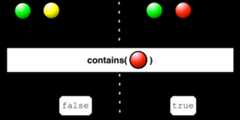
- Backpressure:
- The operator honors backpressure from downstream and consumes the source
Publisherin an unbounded manner (i.e., without applying backpressure). - Scheduler:
containsdoes not operate by default on a particularScheduler.
- Parameters:
item- the item to search for in the emissions from the source Publisher- Returns:
- a Flowable that emits
trueif the specified item is emitted by the source Publisher, orfalseif the source Publisher completes without emitting that item - See Also:
- ReactiveX operators documentation: Contains
count
@CheckReturnValue@BackpressureSupport(value=UNBOUNDED_IN)@SchedulerSupport(value="none")public final Single<Long> count()
Returns a Single that counts the total number of items emitted by the source Publisher and emits this count as a 64-bit Long.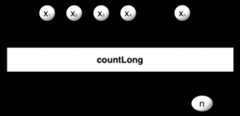
- Backpressure:
- The operator honors backpressure from downstream and consumes the source
Publisherin an unbounded manner (i.e., without applying backpressure). - Scheduler:
countdoes not operate by default on a particularScheduler.
- Returns:
- a Single that emits a single item: the number of items emitted by the source Publisher as a 64-bit Long item
- See Also:
- ReactiveX operators documentation: Count
debounce
@CheckReturnValue@NonNull@BackpressureSupport(value=ERROR)@SchedulerSupport(value="none")public final <U> Flowable<T> debounce(Function<? superT,? extendsPublisher<U>> debounceIndicator)
Returns a Flowable that mirrors the source Publisher, except that it drops items emitted by the source Publisher that are followed by another item within a computed debounce duration.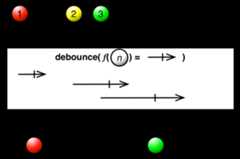
The delivery of the item happens on the thread of the first
onNextoronCompletesignal of the generatedPublishersequence, which if takes too long, a newer item may arrive from the upstream, causing the generated sequence to get cancelled, which may also interrupt any downstream blocking operation (yielding anInterruptedException). It is recommended processing items that may take long time to be moved to another thread viaobserveOn(io.reactivex.Scheduler)applied afterdebounceitself.- Backpressure:
- This operator does not support backpressure as it uses the
debounceSelectorto mark boundaries. - Scheduler:
- This version of
debouncedoes not operate by default on a particularScheduler.
- Type Parameters:
U- the debounce value type (ignored)- Parameters:
debounceIndicator- function to retrieve a sequence that indicates the throttle duration for each item- Returns:
- a Flowable that omits items emitted by the source Publisher that are followed by another item within a computed debounce duration
- See Also:
- ReactiveX operators documentation: Debounce,RxJava wiki: Backpressure
debounce
@CheckReturnValue@BackpressureSupport(value=ERROR)@SchedulerSupport(value="io.reactivex:computation")public final Flowable<T> debounce(long timeout,TimeUnit unit)
Returns a Flowable that mirrors the source Publisher, except that it drops items emitted by the source Publisher that are followed by newer items before a timeout value expires. The timer resets on each emission.Note: If items keep being emitted by the source Publisher faster than the timeout then no items will be emitted by the resulting Publisher.
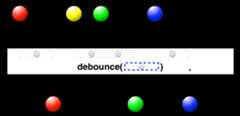
Delivery of the item after the grace period happens on the
computationScheduler'sWorkerwhich if takes too long, a newer item may arrive from the upstream, causing theWorker's task to get disposed, which may also interrupt any downstream blocking operation (yielding anInterruptedException). It is recommended processing items that may take long time to be moved to another thread viaobserveOn(io.reactivex.Scheduler)applied afterdebounceitself.- Backpressure:
- This operator does not support backpressure as it uses time to control data flow.
- Scheduler:
debounceoperates by default on thecomputationScheduler.
- Parameters:
timeout- the length of the window of time that must pass after the emission of an item from the source Publisher in which that Publisher emits no items in order for the item to be emitted by the resulting Publisherunit- the unit of time for the specifiedtimeout- Returns:
- a Flowable that filters out items from the source Publisher that are too quickly followed by newer items
- See Also:
- ReactiveX operators documentation: Debounce,RxJava wiki: Backpressure,
throttleWithTimeout(long, TimeUnit)
debounce
@CheckReturnValue@NonNull@BackpressureSupport(value=ERROR)@SchedulerSupport(value="custom")public final Flowable<T> debounce(long timeout,TimeUnit unit,Scheduler scheduler)
Returns a Flowable that mirrors the source Publisher, except that it drops items emitted by the source Publisher that are followed by newer items before a timeout value expires on a specified Scheduler. The timer resets on each emission.Note: If items keep being emitted by the source Publisher faster than the timeout then no items will be emitted by the resulting Publisher.
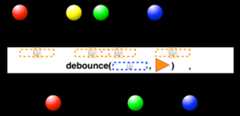
Delivery of the item after the grace period happens on the given
Scheduler'sWorkerwhich if takes too long, a newer item may arrive from the upstream, causing theWorker's task to get disposed, which may also interrupt any downstream blocking operation (yielding anInterruptedException). It is recommended processing items that may take long time to be moved to another thread viaobserveOn(io.reactivex.Scheduler)applied afterdebounceitself.- Backpressure:
- This operator does not support backpressure as it uses time to control data flow.
- Scheduler:
- You specify which
Schedulerthis operator will use.
- Parameters:
timeout- the time each item has to be "the most recent" of those emitted by the source Publisher to ensure that it's not droppedunit- the unit of time for the specifiedtimeoutscheduler- theSchedulerto use internally to manage the timers that handle the timeout for each item- Returns:
- a Flowable that filters out items from the source Publisher that are too quickly followed by newer items
- See Also:
- ReactiveX operators documentation: Debounce,RxJava wiki: Backpressure,
throttleWithTimeout(long, TimeUnit, Scheduler)
defaultIfEmpty
@CheckReturnValue@NonNull@BackpressureSupport(value=FULL)@SchedulerSupport(value="none")public final Flowable<T> defaultIfEmpty(T defaultItem)
Returns a Flowable that emits the items emitted by the source Publisher or a specified default item if the source Publisher is empty.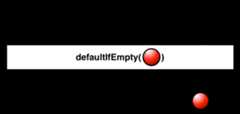
- Backpressure:
- If the source
Publisheris empty, this operator is guaranteed to honor backpressure from downstream. If the sourcePublisheris non-empty, it is expected to honor backpressure as well; if the rule is violated, aMissingBackpressureExceptionmay get signaled somewhere downstream. - Scheduler:
defaultIfEmptydoes not operate by default on a particularScheduler.
- Parameters:
defaultItem- the item to emit if the source Publisher emits no items- Returns:
- a Flowable that emits either the specified default item if the source Publisher emits no items, or the items emitted by the source Publisher
- See Also:
- ReactiveX operators documentation: DefaultIfEmpty
delay
@CheckReturnValue@NonNull@BackpressureSupport(value=FULL)@SchedulerSupport(value="none")public final <U> Flowable<T> delay(Function<? superT,? extendsPublisher<U>> itemDelayIndicator)
Returns a Flowable that delays the emissions of the source Publisher via another Publisher on a per-item basis.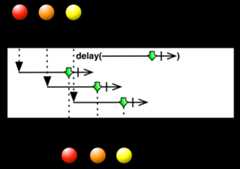
Note: the resulting Publisher will immediately propagate any
onErrornotification from the source Publisher.- Backpressure:
- The operator doesn't interfere with the backpressure behavior which is determined by the source
Publisher. All of the otherPublishers supplied by the function are consumed in an unbounded manner (i.e., no backpressure applied to them). - Scheduler:
- This version of
delaydoes not operate by default on a particularScheduler.
- Type Parameters:
U- the item delay value type (ignored)- Parameters:
itemDelayIndicator- a function that returns a Publisher for each item emitted by the source Publisher, which is then used to delay the emission of that item by the resulting Publisher until the Publisher returned fromitemDelayemits an item- Returns:
- a Flowable that delays the emissions of the source Publisher via another Publisher on a per-item basis
- See Also:
- ReactiveX operators documentation: Delay
delay
@CheckReturnValue@BackpressureSupport(value=FULL)@SchedulerSupport(value="io.reactivex:computation")public final Flowable<T> delay(long delay,TimeUnit unit)
Returns a Flowable that emits the items emitted by the source Publisher shifted forward in time by a specified delay. Error notifications from the source Publisher are not delayed.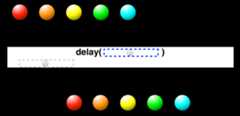
- Backpressure:
- The operator doesn't interfere with the backpressure behavior which is determined by the source
Publisher. - Scheduler:
- This version of
delayoperates by default on thecomputationScheduler.
- Parameters:
delay- the delay to shift the source byunit- theTimeUnitin whichperiodis defined- Returns:
- the source Publisher shifted in time by the specified delay
- See Also:
- ReactiveX operators documentation: Delay
delay
@CheckReturnValue@BackpressureSupport(value=FULL)@SchedulerSupport(value="io.reactivex:computation")public final Flowable<T> delay(long delay,TimeUnit unit, boolean delayError)
Returns a Flowable that emits the items emitted by the source Publisher shifted forward in time by a specified delay. IfdelayErroris true, error notifications will also be delayed.- Backpressure:
- The operator doesn't interfere with the backpressure behavior which is determined by the source
Publisher. - Scheduler:
- This version of
delayoperates by default on thecomputationScheduler.
- Parameters:
delay- the delay to shift the source byunit- theTimeUnitin whichperiodis defineddelayError- if true, the upstream exception is signaled with the given delay, after all preceding normal elements, if false, the upstream exception is signaled immediately- Returns:
- the source Publisher shifted in time by the specified delay
- See Also:
- ReactiveX operators documentation: Delay
delay
@CheckReturnValue@BackpressureSupport(value=FULL)@SchedulerSupport(value="custom")public final Flowable<T> delay(long delay,TimeUnit unit,Scheduler scheduler)
Returns a Flowable that emits the items emitted by the source Publisher shifted forward in time by a specified delay. Error notifications from the source Publisher are not delayed.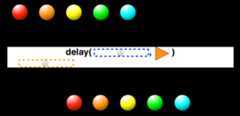
- Backpressure:
- The operator doesn't interfere with the backpressure behavior which is determined by the source
Publisher. - Scheduler:
- You specify which
Schedulerthis operator will use.
- Parameters:
delay- the delay to shift the source byunit- the time unit ofdelayscheduler- theSchedulerto use for delaying- Returns:
- the source Publisher shifted in time by the specified delay
- See Also:
- ReactiveX operators documentation: Delay
delay
@CheckReturnValue@NonNull@BackpressureSupport(value=FULL)@SchedulerSupport(value="custom")public final Flowable<T> delay(long delay,TimeUnit unit,Scheduler scheduler, boolean delayError)
Returns a Flowable that emits the items emitted by the source Publisher shifted forward in time by a specified delay. IfdelayErroris true, error notifications will also be delayed.- Backpressure:
- The operator doesn't interfere with the backpressure behavior which is determined by the source
Publisher. - Scheduler:
- You specify which
Schedulerthis operator will use.
- Parameters:
delay- the delay to shift the source byunit- the time unit ofdelayscheduler- theSchedulerto use for delayingdelayError- if true, the upstream exception is signaled with the given delay, after all preceding normal elements, if false, the upstream exception is signaled immediately- Returns:
- the source Publisher shifted in time by the specified delay
- See Also:
- ReactiveX operators documentation: Delay
delay
@CheckReturnValue@BackpressureSupport(value=FULL)@SchedulerSupport(value="none")public final <U,V> Flowable<T> delay(Publisher<U> subscriptionIndicator,Function<? superT,? extendsPublisher<V>> itemDelayIndicator)
Returns a Flowable that delays the subscription to and emissions from the source Publisher via another Publisher on a per-item basis.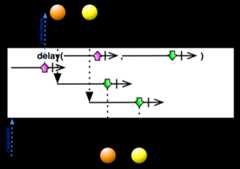
Note: the resulting Publisher will immediately propagate any
onErrornotification from the source Publisher.- Backpressure:
- The operator doesn't interfere with the backpressure behavior which is determined by the source
Publisher. All of the otherPublishers supplied by the functions are consumed in an unbounded manner (i.e., no backpressure applied to them). - Scheduler:
- This version of
delaydoes not operate by default on a particularScheduler.
- Type Parameters:
U- the subscription delay value type (ignored)V- the item delay value type (ignored)- Parameters:
subscriptionIndicator- a function that returns a Publisher that triggers the subscription to the source Publisher once it emits any itemitemDelayIndicator- a function that returns a Publisher for each item emitted by the source Publisher, which is then used to delay the emission of that item by the resulting Publisher until the Publisher returned fromitemDelayemits an item- Returns:
- a Flowable that delays the subscription and emissions of the source Publisher via another Publisher on a per-item basis
- See Also:
- ReactiveX operators documentation: Delay
delaySubscription
@CheckReturnValue@NonNull@BackpressureSupport(value=FULL)@SchedulerSupport(value="none")public final <U> Flowable<T> delaySubscription(Publisher<U> subscriptionIndicator)
Returns a Flowable that delays the subscription to this Publisher until the other Publisher emits an element or completes normally.- Backpressure:
- The operator forwards the backpressure requests to this Publisher once the subscription happens and requests Long.MAX_VALUE from the other Publisher
- Scheduler:
- This method does not operate by default on a particular
Scheduler.
- Type Parameters:
U- the value type of the other Publisher, irrelevant- Parameters:
subscriptionIndicator- the other Publisher that should trigger the subscription to this Publisher.- Returns:
- a Flowable that delays the subscription to this Publisher until the other Publisher emits an element or completes normally.
- Since:
- 2.0
delaySubscription
@CheckReturnValue@BackpressureSupport(value=FULL)@SchedulerSupport(value="io.reactivex:computation")public final Flowable<T> delaySubscription(long delay,TimeUnit unit)
Returns a Flowable that delays the subscription to the source Publisher by a given amount of time.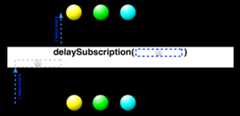
- Backpressure:
- The operator doesn't interfere with the backpressure behavior which is determined by the source
Publisher. - Scheduler:
- This version of
delaySubscriptionoperates by default on thecomputationScheduler.
- Parameters:
delay- the time to delay the subscriptionunit- the time unit ofdelay- Returns:
- a Flowable that delays the subscription to the source Publisher by the given amount
- See Also:
- ReactiveX operators documentation: Delay
delaySubscription
@CheckReturnValue@BackpressureSupport(value=FULL)@SchedulerSupport(value="custom")public final Flowable<T> delaySubscription(long delay,TimeUnit unit,Scheduler scheduler)
Returns a Flowable that delays the subscription to the source Publisher by a given amount of time, both waiting and subscribing on a given Scheduler.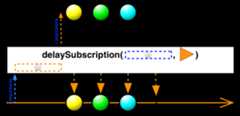
- Backpressure:
- The operator doesn't interfere with the backpressure behavior which is determined by the source
Publisher. - Scheduler:
- You specify which
Schedulerthis operator will use.
- Parameters:
delay- the time to delay the subscriptionunit- the time unit ofdelayscheduler- the Scheduler on which the waiting and subscription will happen- Returns:
- a Flowable that delays the subscription to the source Publisher by a given amount, waiting and subscribing on the given Scheduler
- See Also:
- ReactiveX operators documentation: Delay
dematerialize
@CheckReturnValue@SchedulerSupport(value="none")@BackpressureSupport(value=PASS_THROUGH)@Deprecatedpublic final <T2> Flowable<T2> dematerialize()
Deprecated. in 2.2.4; inherently type-unsafe as it overrides the output generic type. Usedematerialize(Function)instead.Returns a Flowable that reverses the effect ofmaterializeby transforming theNotificationobjects emitted by the source Publisher into the items or notifications they represent.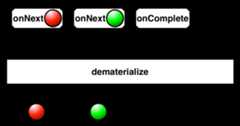
When the upstream signals an
onErrororonCompleteitem, the returned Flowable cancels the flow and terminates with that type of terminal event:
If the upstream signalsFlowable.just(createOnNext(1), createOnComplete(), createOnNext(2)) .doOnCancel(() -> System.out.println("Cancelled!")); .dematerialize() .test() .assertResult(1);onErrororonCompletedirectly, the flow is terminated with the same event.
If this behavior is not desired, the completion can be suppressed by applyingFlowable.just(createOnNext(1), createOnNext(2)) .dematerialize() .test() .assertResult(1, 2);concatWith(Publisher)with anever()source.- Backpressure:
- The operator doesn't interfere with backpressure which is determined by the source
Publisher's backpressure behavior. - Scheduler:
dematerializedoes not operate by default on a particularScheduler.
- Type Parameters:
T2- the output value type- Returns:
- a Flowable that emits the items and notifications embedded in the
Notificationobjects emitted by the source Publisher - See Also:
- ReactiveX operators documentation: Dematerialize,
dematerialize(Function)
dematerialize
@CheckReturnValue@NonNull@SchedulerSupport(value="none")@BackpressureSupport(value=PASS_THROUGH)public final <R> Flowable<R> dematerialize(Function<? superT,Notification<R>> selector)
Returns a Flowable that reverses the effect ofmaterializeby transforming theNotificationobjects extracted from the source items via a selector function into their respectiveSubscribersignal types.The intended use of the
selectorfunction is to perform a type-safe identity mapping (see example) on a source that is already of typeNotification<T>. The Java language doesn't allow limiting instance methods to a certain generic argument shape, therefore, a function is used to ensure the conversion remains type safe.When the upstream signals an
onErrororonCompleteitem, the returned Flowable cancels of the flow and terminates with that type of terminal event:
If the upstream signalsFlowable.just(createOnNext(1), createOnComplete(), createOnNext(2)) .doOnCancel(() -> System.out.println("Canceled!")); .dematerialize(notification -> notification) .test() .assertResult(1);onErrororonCompletedirectly, the flow is terminated with the same event.
If this behavior is not desired, the completion can be suppressed by applyingFlowable.just(createOnNext(1), createOnNext(2)) .dematerialize(notification -> notification) .test() .assertResult(1, 2);concatWith(Publisher)with anever()source.- Backpressure:
- The operator doesn't interfere with backpressure which is determined by the source
Publisher's backpressure behavior. - Scheduler:
dematerializedoes not operate by default on a particularScheduler.
- Type Parameters:
R- the output value type- Parameters:
selector- function that returns the upstream item and should return a Notification to signal the correspondingSubscriberevent to the downstream.- Returns:
- a Flowable that emits the items and notifications embedded in the
Notificationobjects selected from the items emitted by the source Flowable - Since:
- 2.2.4 - experimental
- See Also:
- ReactiveX operators documentation: Dematerialize
distinct
@CheckReturnValue@BackpressureSupport(value=FULL)@SchedulerSupport(value="none")public final Flowable<T> distinct()
Returns a Flowable that emits all items emitted by the source Publisher that are distinct based onObject.equals(Object)comparison.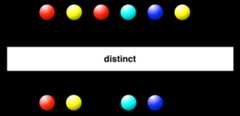
It is recommended the elements' class
Tin the flow overrides the defaultObject.equals()andObject.hashCode()to provide a meaningful comparison between items as the default Java implementation only considers reference equivalence.By default,
distinct()uses an internalHashSetper Subscriber to remember previously seen items and usesSet.add(Object)returningfalseas the indicator for duplicates.Note that this internal
HashSetmay grow unbounded as items won't be removed from it by the operator. Therefore, using very long or infinite upstream (with very distinct elements) may lead toOutOfMemoryError.Customizing the retention policy can happen only by providing a custom
Collectionimplementation to thedistinct(Function, Callable)overload.- Backpressure:
- The operator doesn't interfere with backpressure which is determined by the source
Publisher's backpressure behavior. - Scheduler:
distinctdoes not operate by default on a particularScheduler.
- Returns:
- a Flowable that emits only those items emitted by the source Publisher that are distinct from each other
- See Also:
- ReactiveX operators documentation: Distinct,
distinct(Function),distinct(Function, Callable)
distinct
@CheckReturnValue@BackpressureSupport(value=FULL)@SchedulerSupport(value="none")public final <K> Flowable<T> distinct(Function<? superT,K> keySelector)
Returns a Flowable that emits all items emitted by the source Publisher that are distinct according to a key selector function and based onObject.equals(Object)comparison of the objects returned by the key selector function.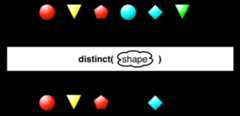
It is recommended the keys' class
Koverrides the defaultObject.equals()andObject.hashCode()to provide a meaningful comparison between the key objects as the default Java implementation only considers reference equivalence.By default,
distinct()uses an internalHashSetper Subscriber to remember previously seen keys and usesSet.add(Object)returningfalseas the indicator for duplicates.Note that this internal
HashSetmay grow unbounded as keys won't be removed from it by the operator. Therefore, using very long or infinite upstream (with very distinct keys) may lead toOutOfMemoryError.Customizing the retention policy can happen only by providing a custom
Collectionimplementation to thedistinct(Function, Callable)overload.- Backpressure:
- The operator doesn't interfere with backpressure which is determined by the source
Publisher's backpressure behavior. - Scheduler:
distinctdoes not operate by default on a particularScheduler.
- Type Parameters:
K- the key type- Parameters:
keySelector- a function that projects an emitted item to a key value that is used to decide whether an item is distinct from another one or not- Returns:
- a Flowable that emits those items emitted by the source Publisher that have distinct keys
- See Also:
- ReactiveX operators documentation: Distinct,
distinct(Function, Callable)
distinct
@CheckReturnValue@BackpressureSupport(value=FULL)@SchedulerSupport(value="none")public final <K> Flowable<T> distinct(Function<? superT,K> keySelector,Callable<? extendsCollection<? super K>> collectionSupplier)
Returns a Flowable that emits all items emitted by the source Publisher that are distinct according to a key selector function and based onObject.equals(Object)comparison of the objects returned by the key selector function.It is recommended the keys' class
Koverrides the defaultObject.equals()andObject.hashCode()to provide a meaningful comparison between the key objects as the default Java implementation only considers reference equivalence.- Backpressure:
- The operator doesn't interfere with backpressure which is determined by the source
Publisher's backpressure behavior. - Scheduler:
distinctdoes not operate by default on a particularScheduler.
- Type Parameters:
K- the key type- Parameters:
keySelector- a function that projects an emitted item to a key value that is used to decide whether an item is distinct from another one or notcollectionSupplier- function called for each individual Subscriber to return a Collection subtype for holding the extracted keys and whose add() method's return indicates uniqueness.- Returns:
- a Flowable that emits those items emitted by the source Publisher that have distinct keys
- See Also:
- ReactiveX operators documentation: Distinct
distinctUntilChanged
@CheckReturnValue@BackpressureSupport(value=FULL)@SchedulerSupport(value="none")public final Flowable<T> distinctUntilChanged()
Returns a Flowable that emits all items emitted by the source Publisher that are distinct from their immediate predecessors based onObject.equals(Object)comparison.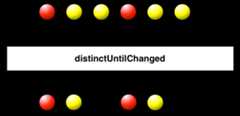
It is recommended the elements' class
Tin the flow overrides the defaultObject.equals()to provide a meaningful comparison between items as the default Java implementation only considers reference equivalence. Alternatively, use thedistinctUntilChanged(BiPredicate)overload and provide a comparison function in case the classTcan't be overridden with customequals()or the comparison itself should happen on different terms or properties of the classT.Note that the operator always retains the latest item from upstream regardless of the comparison result and uses it in the next comparison with the next upstream item.
Note that if element type
Tin the flow is mutable, the comparison of the previous and current item may yield unexpected results if the items are mutated externally. Common cases are mutableCharSequences orLists where the objects will actually have the same references when they are modified anddistinctUntilChangedwill evaluate subsequent items as same. To avoid such situation, it is recommended that mutable data is converted to an immutable one, for example usingmap(CharSequence::toString)ormap(list -> Collections.unmodifiableList(new ArrayList<>(list))).- Backpressure:
- The operator doesn't interfere with backpressure which is determined by the source
Publisher's backpressure behavior. - Scheduler:
distinctUntilChangeddoes not operate by default on a particularScheduler.
- Returns:
- a Flowable that emits those items from the source Publisher that are distinct from their immediate predecessors
- See Also:
- ReactiveX operators documentation: Distinct,
distinctUntilChanged(BiPredicate)
distinctUntilChanged
@CheckReturnValue@BackpressureSupport(value=FULL)@SchedulerSupport(value="none")public final <K> Flowable<T> distinctUntilChanged(Function<? superT,K> keySelector)
Returns a Flowable that emits all items emitted by the source Publisher that are distinct from their immediate predecessors, according to a key selector function and based onObject.equals(Object)comparison of those objects returned by the key selector function.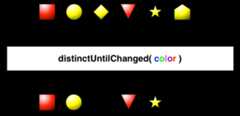
It is recommended the keys' class
Koverrides the defaultObject.equals()to provide a meaningful comparison between the key objects as the default Java implementation only considers reference equivalence. Alternatively, use thedistinctUntilChanged(BiPredicate)overload and provide a comparison function in case the classKcan't be overridden with customequals()or the comparison itself should happen on different terms or properties of the item classT(for which the keys can be derived via a similar selector).Note that the operator always retains the latest key from upstream regardless of the comparison result and uses it in the next comparison with the next key derived from the next upstream item.
Note that if element type
Tin the flow is mutable, the comparison of the previous and current item may yield unexpected results if the items are mutated externally. Common cases are mutableCharSequences orLists where the objects will actually have the same references when they are modified anddistinctUntilChangedwill evaluate subsequent items as same. To avoid such situation, it is recommended that mutable data is converted to an immutable one, for example usingmap(CharSequence::toString)ormap(list -> Collections.unmodifiableList(new ArrayList<>(list))).- Backpressure:
- The operator doesn't interfere with backpressure which is determined by the source
Publisher's backpressure behavior. - Scheduler:
distinctUntilChangeddoes not operate by default on a particularScheduler.
- Type Parameters:
K- the key type- Parameters:
keySelector- a function that projects an emitted item to a key value that is used to decide whether an item is distinct from another one or not- Returns:
- a Flowable that emits those items from the source Publisher whose keys are distinct from those of their immediate predecessors
- See Also:
- ReactiveX operators documentation: Distinct
distinctUntilChanged
@CheckReturnValue@BackpressureSupport(value=FULL)@SchedulerSupport(value="none")public final Flowable<T> distinctUntilChanged(BiPredicate<? superT,? superT> comparer)
Returns a Flowable that emits all items emitted by the source Publisher that are distinct from their immediate predecessors when compared with each other via the provided comparator function.Note that the operator always retains the latest item from upstream regardless of the comparison result and uses it in the next comparison with the next upstream item.
Note that if element type
Tin the flow is mutable, the comparison of the previous and current item may yield unexpected results if the items are mutated externally. Common cases are mutableCharSequences orLists where the objects will actually have the same references when they are modified anddistinctUntilChangedwill evaluate subsequent items as same. To avoid such situation, it is recommended that mutable data is converted to an immutable one, for example usingmap(CharSequence::toString)ormap(list -> Collections.unmodifiableList(new ArrayList<>(list))).- Backpressure:
- The operator doesn't interfere with backpressure which is determined by the source
Publisher's backpressure behavior. - Scheduler:
distinctUntilChangeddoes not operate by default on a particularScheduler.
- Parameters:
comparer- the function that receives the previous item and the current item and is expected to return true if the two are equal, thus skipping the current value.- Returns:
- a Flowable that emits those items from the source Publisher that are distinct from their immediate predecessors
- Since:
- 2.0
- See Also:
- ReactiveX operators documentation: Distinct
doFinally
@CheckReturnValue@BackpressureSupport(value=PASS_THROUGH)@SchedulerSupport(value="none")public final Flowable<T> doFinally(Action onFinally)
Calls the specified action after this Flowable signals onError or onCompleted or gets canceled by the downstream.In case of a race between a terminal event and a cancellation, the provided
onFinallyaction is executed once per subscription.Note that the
onFinallyaction is shared between subscriptions and as such should be thread-safe.- Backpressure:
- The operator doesn't interfere with backpressure which is determined by the source
Publisher's backpressure behavior. - Scheduler:
doFinallydoes not operate by default on a particularScheduler.- Operator-fusion:
- This operator supports normal and conditional Subscribers as well as boundary-limited synchronous or asynchronous queue-fusion.
History: 2.0.1 - experimental
- Parameters:
onFinally- the action called when this Flowable terminates or gets canceled- Returns:
- the new Flowable instance
- Since:
- 2.1
doAfterNext
@CheckReturnValue@BackpressureSupport(value=PASS_THROUGH)@SchedulerSupport(value="none")public final Flowable<T> doAfterNext(Consumer<? superT> onAfterNext)
Calls the specified consumer with the current item after this item has been emitted to the downstream.Note that the
onAfterNextaction is shared between subscriptions and as such should be thread-safe.- Backpressure:
- The operator doesn't interfere with backpressure which is determined by the source
Publisher's backpressure behavior. - Scheduler:
doAfterNextdoes not operate by default on a particularScheduler.- Operator-fusion:
- This operator supports normal and conditional Subscribers as well as boundary-limited synchronous or asynchronous queue-fusion.
History: 2.0.1 - experimental
- Parameters:
onAfterNext- the Consumer that will be called after emitting an item from upstream to the downstream- Returns:
- the new Flowable instance
- Since:
- 2.1
doAfterTerminate
@CheckReturnValue@BackpressureSupport(value=PASS_THROUGH)@SchedulerSupport(value="none")public final Flowable<T> doAfterTerminate(Action onAfterTerminate)
Registers anActionto be called when this Publisher invokes eitheronCompleteoronError.
- Backpressure:
- The operator doesn't interfere with backpressure which is determined by the source
Publisher's backpressure behavior. - Scheduler:
doAfterTerminatedoes not operate by default on a particularScheduler.
- Parameters:
onAfterTerminate- anActionto be invoked when the source Publisher finishes- Returns:
- a Flowable that emits the same items as the source Publisher, then invokes the
Action - See Also:
- ReactiveX operators documentation: Do,
doOnTerminate(Action)
doOnCancel
@CheckReturnValue@BackpressureSupport(value=PASS_THROUGH)@SchedulerSupport(value="none")public final Flowable<T> doOnCancel(Action onCancel)
Calls the cancelActionif the downstream cancels the sequence.The action is shared between subscriptions and thus may be called concurrently from multiple threads; the action must be thread-safe.
If the action throws a runtime exception, that exception is rethrown by the
onCancel()call, sometimes as aCompositeExceptionif there were multiple exceptions along the way.Note that terminal events trigger the action unless the
Publisheris subscribed to viaunsafeSubscribe().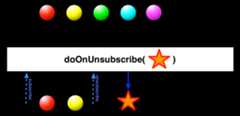
- Backpressure:
doOnCanceldoes not interact with backpressure requests or value delivery; backpressure behavior is preserved between its upstream and its downstream.- Scheduler:
doOnCanceldoes not operate by default on a particularScheduler.
- Parameters:
onCancel- the action that gets called when the sourcePublisher's Subscription is canceled- Returns:
- the source
Publishermodified so as to call this Action when appropriate - See Also:
- ReactiveX operators documentation: Do
doOnComplete
@CheckReturnValue@BackpressureSupport(value=PASS_THROUGH)@SchedulerSupport(value="none")public final Flowable<T> doOnComplete(Action onComplete)
Modifies the source Publisher so that it invokes an action when it callsonComplete.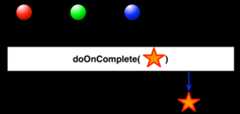
- Backpressure:
- The operator doesn't interfere with backpressure which is determined by the source
Publisher's backpressure behavior. - Scheduler:
doOnCompletedoes not operate by default on a particularScheduler.
- Parameters:
onComplete- the action to invoke when the source Publisher callsonComplete- Returns:
- the source Publisher with the side-effecting behavior applied
- See Also:
- ReactiveX operators documentation: Do
doOnEach
@CheckReturnValue@NonNull@BackpressureSupport(value=PASS_THROUGH)@SchedulerSupport(value="none")public final Flowable<T> doOnEach(Consumer<? superNotification<T>> onNotification)
Modifies the source Publisher so that it invokes an action for each item it emits.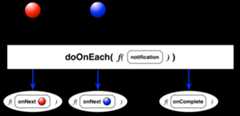
- Backpressure:
- The operator doesn't interfere with backpressure which is determined by the source
Publisher's backpressure behavior. - Scheduler:
doOnEachdoes not operate by default on a particularScheduler.
- Parameters:
onNotification- the action to invoke for each item emitted by the source Publisher- Returns:
- the source Publisher with the side-effecting behavior applied
- See Also:
- ReactiveX operators documentation: Do
doOnEach
@CheckReturnValue@NonNull@BackpressureSupport(value=PASS_THROUGH)@SchedulerSupport(value="none")public final Flowable<T> doOnEach(Subscriber<? superT> subscriber)
Modifies the source Publisher so that it notifies a Subscriber for each item and terminal event it emits.In case the
onErrorof the supplied Subscriber throws, the downstream will receive a composite exception containing the original exception and the exception thrown byonError. If either theonNextor theonCompletemethod of the supplied Subscriber throws, the downstream will be terminated and will receive this thrown exception.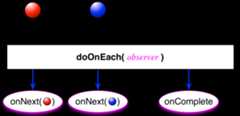
- Backpressure:
- The operator doesn't interfere with backpressure which is determined by the source
Publisher's backpressure behavior. - Scheduler:
doOnEachdoes not operate by default on a particularScheduler.
- Parameters:
subscriber- the Subscriber to be notified about onNext, onError and onComplete events on its respective methods before the actual downstream Subscriber gets notified.- Returns:
- the source Publisher with the side-effecting behavior applied
- See Also:
- ReactiveX operators documentation: Do
doOnError
@CheckReturnValue@BackpressureSupport(value=PASS_THROUGH)@SchedulerSupport(value="none")public final Flowable<T> doOnError(Consumer<? superThrowable> onError)
Modifies the source Publisher so that it invokes an action if it callsonError.In case the
onErroraction throws, the downstream will receive a composite exception containing the original exception and the exception thrown byonError.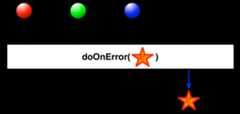
- Backpressure:
- The operator doesn't interfere with backpressure which is determined by the source
Publisher's backpressure behavior. - Scheduler:
doOnErrordoes not operate by default on a particularScheduler.
- Parameters:
onError- the action to invoke if the source Publisher callsonError- Returns:
- the source Publisher with the side-effecting behavior applied
- See Also:
- ReactiveX operators documentation: Do
doOnLifecycle
@CheckReturnValue@NonNull@BackpressureSupport(value=PASS_THROUGH)@SchedulerSupport(value="none")public final Flowable<T> doOnLifecycle(Consumer<? superSubscription> onSubscribe,LongConsumer onRequest,Action onCancel)
Calls the appropriate onXXX method (shared between all Subscribers) for the lifecycle events of the sequence (subscription, cancellation, requesting).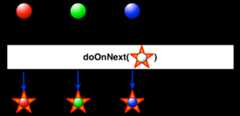
- Backpressure:
- The operator doesn't interfere with backpressure which is determined by the source
Publisher's backpressure behavior. - Scheduler:
doOnLifecycledoes not operate by default on a particularScheduler.
- Parameters:
onSubscribe- a Consumer called with the Subscription sent via Subscriber.onSubscribe()onRequest- a LongConsumer called with the request amount sent via Subscription.request()onCancel- called when the downstream cancels the Subscription via cancel()- Returns:
- the source Publisher with the side-effecting behavior applied
- See Also:
- ReactiveX operators documentation: Do
doOnNext
@CheckReturnValue@BackpressureSupport(value=PASS_THROUGH)@SchedulerSupport(value="none")public final Flowable<T> doOnNext(Consumer<? superT> onNext)
Modifies the source Publisher so that it invokes an action when it callsonNext.- Backpressure:
- The operator doesn't interfere with backpressure which is determined by the source
Publisher's backpressure behavior. - Scheduler:
doOnNextdoes not operate by default on a particularScheduler.
- Parameters:
onNext- the action to invoke when the source Publisher callsonNext- Returns:
- the source Publisher with the side-effecting behavior applied
- See Also:
- ReactiveX operators documentation: Do
doOnRequest
@CheckReturnValue@BackpressureSupport(value=PASS_THROUGH)@SchedulerSupport(value="none")public final Flowable<T> doOnRequest(LongConsumer onRequest)
Modifies the sourcePublisherso that it invokes the given action when it receives a request for more items.Note: This operator is for tracing the internal behavior of back-pressure request patterns and generally intended for debugging use.
- Backpressure:
- The operator doesn't interfere with backpressure which is determined by the source
Publisher's backpressure behavior. - Scheduler:
doOnRequestdoes not operate by default on a particularScheduler.
- Parameters:
onRequest- the action that gets called when a Subscriber requests items from thisPublisher- Returns:
- the source
Publishermodified so as to call this Action when appropriate - Since:
- 2.0
- See Also:
- ReactiveX operators documentation: Do
doOnSubscribe
@CheckReturnValue@BackpressureSupport(value=PASS_THROUGH)@SchedulerSupport(value="none")public final Flowable<T> doOnSubscribe(Consumer<? superSubscription> onSubscribe)
Modifies the sourcePublisherso that it invokes the given action when it is subscribed from its subscribers. Each subscription will result in an invocation of the given action except when the sourcePublisheris reference counted, in which case the sourcePublisherwill invoke the given action for the first subscription.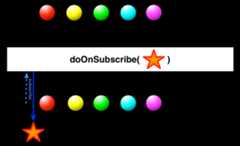
- Backpressure:
- The operator doesn't interfere with backpressure which is determined by the source
Publisher's backpressure behavior. - Scheduler:
doOnSubscribedoes not operate by default on a particularScheduler.
- Parameters:
onSubscribe- the Consumer that gets called when a Subscriber subscribes to the currentFlowable- Returns:
- the source
Publishermodified so as to call this Consumer when appropriate - See Also:
- ReactiveX operators documentation: Do
doOnTerminate
@CheckReturnValue@BackpressureSupport(value=PASS_THROUGH)@SchedulerSupport(value="none")public final Flowable<T> doOnTerminate(Action onTerminate)
Modifies the source Publisher so that it invokes an action when it callsonCompleteoronError.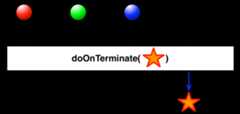
This differs from
doAfterTerminatein that this happensbefore theonCompleteoronErrornotification.- Backpressure:
- The operator doesn't interfere with backpressure which is determined by the source
Publisher's backpressure behavior. - Scheduler:
doOnTerminatedoes not operate by default on a particularScheduler.
- Parameters:
onTerminate- the action to invoke when the source Publisher callsonCompleteoronError- Returns:
- the source Publisher with the side-effecting behavior applied
- See Also:
- ReactiveX operators documentation: Do,
doAfterTerminate(Action)
elementAt
@CheckReturnValue@BackpressureSupport(value=UNBOUNDED_IN)@SchedulerSupport(value="none")public final Maybe<T> elementAt(long index)
Returns a Maybe that emits the single item at a specified index in a sequence of emissions from this Flowable or completes if this Flowable sequence has fewer elements than index.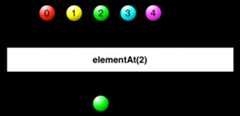
- Backpressure:
- The operator honors backpressure from downstream and consumes the source
Publisherin an unbounded manner (i.e., no backpressure applied to it). - Scheduler:
elementAtdoes not operate by default on a particularScheduler.
- Parameters:
index- the zero-based index of the item to retrieve- Returns:
- a Maybe that emits a single item: the item at the specified position in the sequence of those emitted by the source Publisher
- See Also:
- ReactiveX operators documentation: ElementAt
elementAt
@CheckReturnValue@NonNull@BackpressureSupport(value=UNBOUNDED_IN)@SchedulerSupport(value="none")public final Single<T> elementAt(long index,T defaultItem)
Returns a Single that emits the item found at a specified index in a sequence of emissions from this Flowable, or a default item if that index is out of range.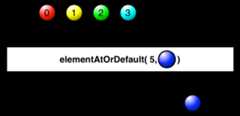
- Backpressure:
- The operator honors backpressure from downstream and consumes the source
Publisherin an unbounded manner (i.e., no backpressure applied to it). - Scheduler:
elementAtdoes not operate by default on a particularScheduler.
- Parameters:
index- the zero-based index of the item to retrievedefaultItem- the default item- Returns:
- a Single that emits the item at the specified position in the sequence emitted by the source Publisher, or the default item if that index is outside the bounds of the source sequence
- Throws:
IndexOutOfBoundsException- ifindexis less than 0- See Also:
- ReactiveX operators documentation: ElementAt
elementAtOrError
@CheckReturnValue@BackpressureSupport(value=UNBOUNDED_IN)@SchedulerSupport(value="none")public final Single<T> elementAtOrError(long index)
Returns a Single that emits the item found at a specified index in a sequence of emissions from this Flowable or signals aNoSuchElementExceptionif this Flowable has fewer elements than index.- Backpressure:
- The operator honors backpressure from downstream and consumes the source
Publisherin an unbounded manner (i.e., no backpressure applied to it). - Scheduler:
elementAtOrErrordoes not operate by default on a particularScheduler.
- Parameters:
index- the zero-based index of the item to retrieve- Returns:
- a Single that emits the item at the specified position in the sequence emitted by the source Publisher, or the default item if that index is outside the bounds of the source sequence
- Throws:
IndexOutOfBoundsException- ifindexis less than 0- See Also:
- ReactiveX operators documentation: ElementAt
filter
@CheckReturnValue@NonNull@BackpressureSupport(value=PASS_THROUGH)@SchedulerSupport(value="none")public final Flowable<T> filter(Predicate<? superT> predicate)
Filters items emitted by a Publisher by only emitting those that satisfy a specified predicate.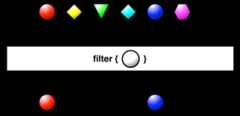
- Backpressure:
- The operator doesn't interfere with backpressure which is determined by the source
Publisher's backpressure behavior. - Scheduler:
filterdoes not operate by default on a particularScheduler.
- Parameters:
predicate- a function that evaluates each item emitted by the source Publisher, returningtrueif it passes the filter- Returns:
- a Flowable that emits only those items emitted by the source Publisher that the filter evaluates as
true - See Also:
- ReactiveX operators documentation: Filter
firstElement
@CheckReturnValue@BackpressureSupport(value=SPECIAL)@SchedulerSupport(value="none")public final Maybe<T> firstElement()
Returns a Maybe that emits only the very first item emitted by this Flowable or completes if this Flowable is empty.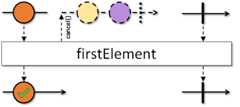
- Backpressure:
- The operator honors backpressure from downstream and consumes the source
Publisherin an unbounded manner (i.e., without applying backpressure). - Scheduler:
firstElementdoes not operate by default on a particularScheduler.
- Returns:
- the new Maybe instance
- See Also:
- ReactiveX operators documentation: First
first
@CheckReturnValue@BackpressureSupport(value=SPECIAL)@SchedulerSupport(value="none")public final Single<T> first(T defaultItem)
Returns a Single that emits only the very first item emitted by this Flowable, or a default item if this Flowable completes without emitting anything.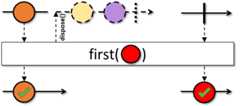
- Backpressure:
- The operator honors backpressure from downstream and consumes the source
Publisherin an unbounded manner (i.e., without applying backpressure). - Scheduler:
firstdoes not operate by default on a particularScheduler.
- Parameters:
defaultItem- the default item to emit if the source Publisher doesn't emit anything- Returns:
- a Single that emits only the very first item from the source, or a default item if the source Publisher completes without emitting any items
- See Also:
- ReactiveX operators documentation: First
firstOrError
@CheckReturnValue@BackpressureSupport(value=SPECIAL)@SchedulerSupport(value="none")public final Single<T> firstOrError()
Returns a Single that emits only the very first item emitted by this Flowable or signals aNoSuchElementExceptionif this Flowable is empty.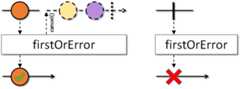
- Backpressure:
- The operator honors backpressure from downstream and consumes the source
Publisherin an unbounded manner (i.e., without applying backpressure). - Scheduler:
firstOrErrordoes not operate by default on a particularScheduler.
- Returns:
- the new Single instance
- See Also:
- ReactiveX operators documentation: First
flatMap
@CheckReturnValue@BackpressureSupport(value=FULL)@SchedulerSupport(value="none")public final <R> Flowable<R> flatMap(Function<? superT,? extendsPublisher<? extends R>> mapper)
Returns a Flowable that emits items based on applying a function that you supply to each item emitted by the source Publisher, where that function returns a Publisher, and then merging those resulting Publishers and emitting the results of this merger.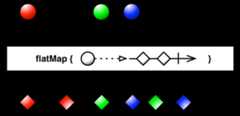
- Backpressure:
- The operator honors backpressure from downstream. The upstream Flowable is consumed in a bounded manner (up to
bufferSize()outstanding request amount for items). The innerPublishers are expected to honor backpressure; if violated, the operatormay signalMissingBackpressureException. - Scheduler:
flatMapdoes not operate by default on a particularScheduler.
- Type Parameters:
R- the value type of the inner Publishers and the output type- Parameters:
mapper- a function that, when applied to an item emitted by the source Publisher, returns a Publisher- Returns:
- a Flowable that emits the result of applying the transformation function to each item emitted by the source Publisher and merging the results of the Publishers obtained from this transformation
- See Also:
- ReactiveX operators documentation: FlatMap
flatMap
@CheckReturnValue@BackpressureSupport(value=FULL)@SchedulerSupport(value="none")public final <R> Flowable<R> flatMap(Function<? superT,? extendsPublisher<? extends R>> mapper, boolean delayErrors)
Returns a Flowable that emits items based on applying a function that you supply to each item emitted by the source Publisher, where that function returns a Publisher, and then merging those resulting Publishers and emitting the results of this merger.- Backpressure:
- The operator honors backpressure from downstream. The upstream Flowable is consumed in a bounded manner (up to
bufferSize()outstanding request amount for items). The innerPublishers are expected to honor backpressure; if violated, the operatormay signalMissingBackpressureException. - Scheduler:
flatMapdoes not operate by default on a particularScheduler.
- Type Parameters:
R- the value type of the inner Publishers and the output type- Parameters:
mapper- a function that, when applied to an item emitted by the source Publisher, returns a PublisherdelayErrors- if true, exceptions from the current Flowable and all inner Publishers are delayed until all of them terminate if false, the first one signaling an exception will terminate the whole sequence immediately- Returns:
- a Flowable that emits the result of applying the transformation function to each item emitted by the source Publisher and merging the results of the Publishers obtained from this transformation
- See Also:
- ReactiveX operators documentation: FlatMap
flatMap
@CheckReturnValue@BackpressureSupport(value=FULL)@SchedulerSupport(value="none")public final <R> Flowable<R> flatMap(Function<? superT,? extendsPublisher<? extends R>> mapper, int maxConcurrency)
Returns a Flowable that emits items based on applying a function that you supply to each item emitted by the source Publisher, where that function returns a Publisher, and then merging those resulting Publishers and emitting the results of this merger, while limiting the maximum number of concurrent subscriptions to these Publishers.- Backpressure:
- The operator honors backpressure from downstream. The upstream Flowable is consumed in a bounded manner (up to
maxConcurrencyoutstanding request amount for items). The innerPublishers are expected to honor backpressure; if violated, the operatormay signalMissingBackpressureException. - Scheduler:
flatMapdoes not operate by default on a particularScheduler.
- Type Parameters:
R- the value type of the inner Publishers and the output type- Parameters:
mapper- a function that, when applied to an item emitted by the source Publisher, returns a PublishermaxConcurrency- the maximum number of Publishers that may be subscribed to concurrently- Returns:
- a Flowable that emits the result of applying the transformation function to each item emitted by the source Publisher and merging the results of the Publishers obtained from this transformation
- Since:
- 2.0
- See Also:
- ReactiveX operators documentation: FlatMap
flatMap
@CheckReturnValue@BackpressureSupport(value=FULL)@SchedulerSupport(value="none")public final <R> Flowable<R> flatMap(Function<? superT,? extendsPublisher<? extends R>> mapper, boolean delayErrors, int maxConcurrency)
Returns a Flowable that emits items based on applying a function that you supply to each item emitted by the source Publisher, where that function returns a Publisher, and then merging those resulting Publishers and emitting the results of this merger, while limiting the maximum number of concurrent subscriptions to these Publishers.- Backpressure:
- The operator honors backpressure from downstream. The upstream Flowable is consumed in a bounded manner (up to
maxConcurrencyoutstanding request amount for items). The innerPublishers are expected to honor backpressure; if violated, the operatormay signalMissingBackpressureException. - Scheduler:
flatMapdoes not operate by default on a particularScheduler.
- Type Parameters:
R- the value type of the inner Publishers and the output type- Parameters:
mapper- a function that, when applied to an item emitted by the source Publisher, returns a PublishermaxConcurrency- the maximum number of Publishers that may be subscribed to concurrentlydelayErrors- if true, exceptions from the current Flowable and all inner Publishers are delayed until all of them terminate if false, the first one signaling an exception will terminate the whole sequence immediately- Returns:
- a Flowable that emits the result of applying the transformation function to each item emitted by the source Publisher and merging the results of the Publishers obtained from this transformation
- Since:
- 2.0
- See Also:
- ReactiveX operators documentation: FlatMap
flatMap
@CheckReturnValue@NonNull@BackpressureSupport(value=FULL)@SchedulerSupport(value="none")public final <R> Flowable<R> flatMap(Function<? superT,? extendsPublisher<? extends R>> mapper, boolean delayErrors, int maxConcurrency, int bufferSize)
Returns a Flowable that emits items based on applying a function that you supply to each item emitted by the source Publisher, where that function returns a Publisher, and then merging those resulting Publishers and emitting the results of this merger, while limiting the maximum number of concurrent subscriptions to these Publishers.- Backpressure:
- The operator honors backpressure from downstream. The upstream Flowable is consumed in a bounded manner (up to
maxConcurrencyoutstanding request amount for items). The innerPublishers are expected to honor backpressure; if violated, the operatormay signalMissingBackpressureException. - Scheduler:
flatMapdoes not operate by default on a particularScheduler.
- Type Parameters:
R- the value type of the inner Publishers and the output type- Parameters:
mapper- a function that, when applied to an item emitted by the source Publisher, returns a PublishermaxConcurrency- the maximum number of Publishers that may be subscribed to concurrentlydelayErrors- if true, exceptions from the current Flowable and all inner Publishers are delayed until all of them terminate if false, the first one signaling an exception will terminate the whole sequence immediatelybufferSize- the number of elements to prefetch from each inner Publisher- Returns:
- a Flowable that emits the result of applying the transformation function to each item emitted by the source Publisher and merging the results of the Publishers obtained from this transformation
- Since:
- 2.0
- See Also:
- ReactiveX operators documentation: FlatMap
flatMap
@CheckReturnValue@NonNull@BackpressureSupport(value=FULL)@SchedulerSupport(value="none")public final <R> Flowable<R> flatMap(Function<? superT,? extendsPublisher<? extends R>> onNextMapper,Function<? superThrowable,? extendsPublisher<? extends R>> onErrorMapper,Callable<? extendsPublisher<? extends R>> onCompleteSupplier)
Returns a Flowable that applies a function to each item emitted or notification raised by the source Publisher and then flattens the Publishers returned from these functions and emits the resulting items.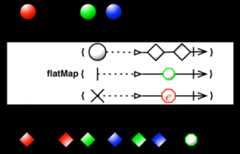
- Backpressure:
- The operator honors backpressure from downstream. The upstream Flowable is consumed in a bounded manner (up to
bufferSize()outstanding request amount for items). The innerPublishers are expected to honor backpressure; if violated, the operatormay signalMissingBackpressureException. - Scheduler:
flatMapdoes not operate by default on a particularScheduler.
- Type Parameters:
R- the result type- Parameters:
onNextMapper- a function that returns a Publisher to merge for each item emitted by the source PublisheronErrorMapper- a function that returns a Publisher to merge for an onError notification from the source PublisheronCompleteSupplier- a function that returns a Publisher to merge for an onComplete notification from the source Publisher- Returns:
- a Flowable that emits the results of merging the Publishers returned from applying the specified functions to the emissions and notifications of the source Publisher
- See Also:
- ReactiveX operators documentation: FlatMap
flatMap
@CheckReturnValue@NonNull@BackpressureSupport(value=FULL)@SchedulerSupport(value="none")public final <R> Flowable<R> flatMap(Function<? superT,? extendsPublisher<? extends R>> onNextMapper,Function<Throwable,? extendsPublisher<? extends R>> onErrorMapper,Callable<? extendsPublisher<? extends R>> onCompleteSupplier, int maxConcurrency)
Returns a Flowable that applies a function to each item emitted or notification raised by the source Publisher and then flattens the Publishers returned from these functions and emits the resulting items, while limiting the maximum number of concurrent subscriptions to these Publishers.- Backpressure:
- The operator honors backpressure from downstream. The upstream Flowable is consumed in a bounded manner (up to
maxConcurrencyoutstanding request amount for items). The innerPublishers are expected to honor backpressure; if violated, the operatormay signalMissingBackpressureException. - Scheduler:
flatMapdoes not operate by default on a particularScheduler.
- Type Parameters:
R- the result type- Parameters:
onNextMapper- a function that returns a Publisher to merge for each item emitted by the source PublisheronErrorMapper- a function that returns a Publisher to merge for an onError notification from the source PublisheronCompleteSupplier- a function that returns a Publisher to merge for an onComplete notification from the source PublishermaxConcurrency- the maximum number of Publishers that may be subscribed to concurrently- Returns:
- a Flowable that emits the results of merging the Publishers returned from applying the specified functions to the emissions and notifications of the source Publisher
- Since:
- 2.0
- See Also:
- ReactiveX operators documentation: FlatMap
flatMap
@CheckReturnValue@BackpressureSupport(value=FULL)@SchedulerSupport(value="none")public final <U,R> Flowable<R> flatMap(Function<? superT,? extendsPublisher<? extends U>> mapper,BiFunction<? superT,? super U,? extends R> combiner)
Returns a Flowable that emits the results of a specified function to the pair of values emitted by the source Publisher and a specified collection Publisher.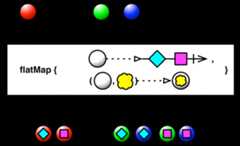
- Backpressure:
- The operator honors backpressure from downstream. The upstream Flowable is consumed in a bounded manner (up to
maxConcurrencyoutstanding request amount for items). The innerPublishers are expected to honor backpressure; if violated, the operatormay signalMissingBackpressureException. - Scheduler:
flatMapdoes not operate by default on a particularScheduler.
- Type Parameters:
U- the type of items emitted by the inner PublishersR- the type of items emitted by the combiner function- Parameters:
mapper- a function that returns a Publisher for each item emitted by the source Publishercombiner- a function that combines one item emitted by each of the source and collection Publishers and returns an item to be emitted by the resulting Publisher- Returns:
- a Flowable that emits the results of applying a function to a pair of values emitted by the source Publisher and the collection Publisher
- See Also:
- ReactiveX operators documentation: FlatMap
flatMap
@CheckReturnValue@BackpressureSupport(value=FULL)@SchedulerSupport(value="none")public final <U,R> Flowable<R> flatMap(Function<? superT,? extendsPublisher<? extends U>> mapper,BiFunction<? superT,? super U,? extends R> combiner, boolean delayErrors)
Returns a Flowable that emits the results of a specified function to the pair of values emitted by the source Publisher and a specified collection Publisher.- Backpressure:
- The operator honors backpressure from downstream. The upstream Flowable is consumed in a bounded manner (up to
bufferSize()outstanding request amount for items). The innerPublishers are expected to honor backpressure; if violated, the operatormay signalMissingBackpressureException. - Scheduler:
flatMapdoes not operate by default on a particularScheduler.
- Type Parameters:
U- the type of items emitted by the inner PublishersR- the type of items emitted by the combiner functions- Parameters:
mapper- a function that returns a Publisher for each item emitted by the source Publishercombiner- a function that combines one item emitted by each of the source and collection Publishers and returns an item to be emitted by the resulting PublisherdelayErrors- if true, exceptions from the current Flowable and all inner Publishers are delayed until all of them terminate if false, the first one signaling an exception will terminate the whole sequence immediately- Returns:
- a Flowable that emits the results of applying a function to a pair of values emitted by the source Publisher and the collection Publisher
- See Also:
- ReactiveX operators documentation: FlatMap
flatMap
@CheckReturnValue@BackpressureSupport(value=FULL)@SchedulerSupport(value="none")public final <U,R> Flowable<R> flatMap(Function<? superT,? extendsPublisher<? extends U>> mapper,BiFunction<? superT,? super U,? extends R> combiner, boolean delayErrors, int maxConcurrency)
Returns a Flowable that emits the results of a specified function to the pair of values emitted by the source Publisher and a specified collection Publisher, while limiting the maximum number of concurrent subscriptions to these Publishers.- Backpressure:
- The operator honors backpressure from downstream. The upstream Flowable is consumed in a bounded manner (up to
maxConcurrencyoutstanding request amount for items). The innerPublishers are expected to honor backpressure; if violated, the operatormay signalMissingBackpressureException. - Scheduler:
flatMapdoes not operate by default on a particularScheduler.
- Type Parameters:
U- the type of items emitted by the inner PublishersR- the type of items emitted by the combiner function- Parameters:
mapper- a function that returns a Publisher for each item emitted by the source Publishercombiner- a function that combines one item emitted by each of the source and collection Publishers and returns an item to be emitted by the resulting PublishermaxConcurrency- the maximum number of Publishers that may be subscribed to concurrentlydelayErrors- if true, exceptions from the current Flowable and all inner Publishers are delayed until all of them terminate if false, the first one signaling an exception will terminate the whole sequence immediately- Returns:
- a Flowable that emits the results of applying a function to a pair of values emitted by the source Publisher and the collection Publisher
- Since:
- 2.0
- See Also:
- ReactiveX operators documentation: FlatMap
flatMap
@CheckReturnValue@NonNull@BackpressureSupport(value=FULL)@SchedulerSupport(value="none")public final <U,R> Flowable<R> flatMap(Function<? superT,? extendsPublisher<? extends U>> mapper,BiFunction<? superT,? super U,? extends R> combiner, boolean delayErrors, int maxConcurrency, int bufferSize)
Returns a Flowable that emits the results of a specified function to the pair of values emitted by the source Publisher and a specified collection Publisher, while limiting the maximum number of concurrent subscriptions to these Publishers.- Backpressure:
- The operator honors backpressure from downstream. The upstream Flowable is consumed in a bounded manner (up to
maxConcurrencyoutstanding request amount for items). The innerPublishers are expected to honor backpressure; if violated, the operatormay signalMissingBackpressureException. - Scheduler:
flatMapdoes not operate by default on a particularScheduler.
- Type Parameters:
U- the type of items emitted by the inner PublishersR- the type of items emitted by the combiner function- Parameters:
mapper- a function that returns a Publisher for each item emitted by the source Publishercombiner- a function that combines one item emitted by each of the source and collection Publishers and returns an item to be emitted by the resulting PublishermaxConcurrency- the maximum number of Publishers that may be subscribed to concurrentlydelayErrors- if true, exceptions from the current Flowable and all inner Publishers are delayed until all of them terminate if false, the first one signaling an exception will terminate the whole sequence immediatelybufferSize- the number of elements to prefetch from the inner Publishers.- Returns:
- a Flowable that emits the results of applying a function to a pair of values emitted by the source Publisher and the collection Publisher
- Since:
- 2.0
- See Also:
- ReactiveX operators documentation: FlatMap
flatMap
@CheckReturnValue@BackpressureSupport(value=FULL)@SchedulerSupport(value="none")public final <U,R> Flowable<R> flatMap(Function<? superT,? extendsPublisher<? extends U>> mapper,BiFunction<? superT,? super U,? extends R> combiner, int maxConcurrency)
Returns a Flowable that emits the results of a specified function to the pair of values emitted by the source Publisher and a specified collection Publisher, while limiting the maximum number of concurrent subscriptions to these Publishers.- Backpressure:
- The operator honors backpressure from downstream. The upstream Flowable is consumed in a bounded manner (up to
bufferSize()outstanding request amount for items). The innerPublishers are expected to honor backpressure; if violated, the operatormay signalMissingBackpressureException. - Scheduler:
flatMapdoes not operate by default on a particularScheduler.
- Type Parameters:
U- the type of items emitted by the inner PublishersR- the type of items emitted by the combiner function- Parameters:
mapper- a function that returns a Publisher for each item emitted by the source Publishercombiner- a function that combines one item emitted by each of the source and collection Publishers and returns an item to be emitted by the resulting PublishermaxConcurrency- the maximum number of Publishers that may be subscribed to concurrently- Returns:
- a Flowable that emits the results of applying a function to a pair of values emitted by the source Publisher and the collection Publisher
- Since:
- 2.0
- See Also:
- ReactiveX operators documentation: FlatMap
flatMapCompletable
@CheckReturnValue@BackpressureSupport(value=UNBOUNDED_IN)@SchedulerSupport(value="none")public final Completable flatMapCompletable(Function<? superT,? extendsCompletableSource> mapper)
Maps each element of the upstream Flowable into CompletableSources, subscribes to them and waits until the upstream and all CompletableSources complete.- Backpressure:
- The operator consumes the upstream in an unbounded manner.
- Scheduler:
flatMapCompletabledoes not operate by default on a particularScheduler.
- Parameters:
mapper- the function that received each source value and transforms them into CompletableSources.- Returns:
- the new Completable instance
flatMapCompletable
@CheckReturnValue@NonNull@BackpressureSupport(value=UNBOUNDED_IN)@SchedulerSupport(value="none")public final Completable flatMapCompletable(Function<? superT,? extendsCompletableSource> mapper, boolean delayErrors, int maxConcurrency)
Maps each element of the upstream Flowable into CompletableSources, subscribes to them and waits until the upstream and all CompletableSources complete, optionally delaying all errors.- Backpressure:
- If
maxConcurrency == Integer.MAX_VALUEthe operator consumes the upstream in an unbounded manner. Otherwise, the operator expects the upstream to honor backpressure. If the upstream doesn't support backpressure the operator behaves as ifmaxConcurrency == Integer.MAX_VALUEwas used. - Scheduler:
flatMapCompletabledoes not operate by default on a particularScheduler.
- Parameters:
mapper- the function that received each source value and transforms them into CompletableSources.delayErrors- if true errors from the upstream and inner CompletableSources are delayed until each of them terminates.maxConcurrency- the maximum number of active subscriptions to the CompletableSources.- Returns:
- the new Completable instance
flatMapIterable
@CheckReturnValue@BackpressureSupport(value=FULL)@SchedulerSupport(value="none")public final <U> Flowable<U> flatMapIterable(Function<? superT,? extendsIterable<? extends U>> mapper)
Returns a Flowable that merges each item emitted by the source Publisher with the values in an Iterable corresponding to that item that is generated by a selector.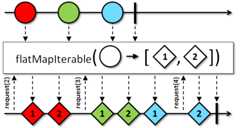
- Backpressure:
- The operator honors backpressure from downstream. The source
Publishers is expected to honor backpressure as well. If the sourcePublisherviolates the rule, the operator will signal aMissingBackpressureException. - Scheduler:
flatMapIterabledoes not operate by default on a particularScheduler.
- Type Parameters:
U- the type of item emitted by the resulting Iterable- Parameters:
mapper- a function that returns an Iterable sequence of values for when given an item emitted by the source Publisher- Returns:
- a Flowable that emits the results of merging the items emitted by the source Publisher with the values in the Iterables corresponding to those items, as generated by
collectionSelector - See Also:
- ReactiveX operators documentation: FlatMap
flatMapIterable
@CheckReturnValue@NonNull@BackpressureSupport(value=FULL)@SchedulerSupport(value="none")public final <U> Flowable<U> flatMapIterable(Function<? superT,? extendsIterable<? extends U>> mapper, int bufferSize)
Returns a Flowable that merges each item emitted by the source Publisher with the values in an Iterable corresponding to that item that is generated by a selector.- Backpressure:
- The operator honors backpressure from downstream. The source
Publishers is expected to honor backpressure as well. If the sourcePublisherviolates the rule, the operator will signal aMissingBackpressureException. - Scheduler:
flatMapIterabledoes not operate by default on a particularScheduler.
- Type Parameters:
U- the type of item emitted by the resulting Iterable- Parameters:
mapper- a function that returns an Iterable sequence of values for when given an item emitted by the source PublisherbufferSize- the number of elements to prefetch from the current Flowable- Returns:
- a Flowable that emits the results of merging the items emitted by the source Publisher with the values in the Iterables corresponding to those items, as generated by
collectionSelector - See Also:
- ReactiveX operators documentation: FlatMap
flatMapIterable
@CheckReturnValue@NonNull@BackpressureSupport(value=FULL)@SchedulerSupport(value="none")public final <U,V> Flowable<V> flatMapIterable(Function<? superT,? extendsIterable<? extends U>> mapper,BiFunction<? superT,? super U,? extends V> resultSelector)
Returns a Flowable that emits the results of applying a function to the pair of values from the source Publisher and an Iterable corresponding to that item that is generated by a selector.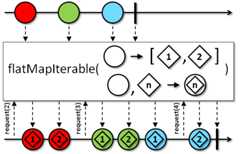
- Backpressure:
- The operator honors backpressure from downstream and the source
Publishers is consumed in an unbounded manner (i.e., no backpressure is applied to it). - Scheduler:
flatMapIterabledoes not operate by default on a particularScheduler.
- Type Parameters:
U- the collection element typeV- the type of item emitted by the resulting Iterable- Parameters:
mapper- a function that returns an Iterable sequence of values for each item emitted by the source PublisherresultSelector- a function that returns an item based on the item emitted by the source Publisher and the Iterable returned for that item by thecollectionSelector- Returns:
- a Flowable that emits the items returned by
resultSelectorfor each item in the source Publisher - See Also:
- ReactiveX operators documentation: FlatMap
flatMapIterable
@CheckReturnValue@NonNull@BackpressureSupport(value=FULL)@SchedulerSupport(value="none")public final <U,V> Flowable<V> flatMapIterable(Function<? superT,? extendsIterable<? extends U>> mapper,BiFunction<? superT,? super U,? extends V> resultSelector, int prefetch)
Returns a Flowable that merges each item emitted by the source Publisher with the values in an Iterable corresponding to that item that is generated by a selector, while limiting the number of concurrent subscriptions to these Publishers.- Backpressure:
- The operator honors backpressure from downstream. The source
Publishers is expected to honor backpressure as well. If the sourcePublisherviolates the rule, the operator will signal aMissingBackpressureException. - Scheduler:
flatMapIterabledoes not operate by default on a particularScheduler.
- Type Parameters:
U- the element type of the inner Iterable sequencesV- the type of item emitted by the resulting Publisher- Parameters:
mapper- a function that returns an Iterable sequence of values for when given an item emitted by the source PublisherresultSelector- a function that returns an item based on the item emitted by the source Publisher and the Iterable returned for that item by thecollectionSelectorprefetch- the number of elements to prefetch from the current Flowable- Returns:
- a Flowable that emits the results of merging the items emitted by the source Publisher with the values in the Iterables corresponding to those items, as generated by
collectionSelector - Since:
- 2.0
- See Also:
- ReactiveX operators documentation: FlatMap
flatMapMaybe
@CheckReturnValue@BackpressureSupport(value=UNBOUNDED_IN)@SchedulerSupport(value="none")public final <R> Flowable<R> flatMapMaybe(Function<? superT,? extendsMaybeSource<? extends R>> mapper)
Maps each element of the upstream Flowable into MaybeSources, subscribes to all of them and merges their onSuccess values, in no particular order, into a single Flowable sequence.- Backpressure:
- The operator consumes the upstream in an unbounded manner.
- Scheduler:
flatMapMaybedoes not operate by default on a particularScheduler.
- Type Parameters:
R- the result value type- Parameters:
mapper- the function that received each source value and transforms them into MaybeSources.- Returns:
- the new Flowable instance
flatMapMaybe
@CheckReturnValue@NonNull@BackpressureSupport(value=UNBOUNDED_IN)@SchedulerSupport(value="none")public final <R> Flowable<R> flatMapMaybe(Function<? superT,? extendsMaybeSource<? extends R>> mapper, boolean delayErrors, int maxConcurrency)
Maps each element of the upstream Flowable into MaybeSources, subscribes to at mostmaxConcurrencyMaybeSources at a time and merges their onSuccess values, in no particular order, into a single Flowable sequence, optionally delaying all errors.- Backpressure:
- If
maxConcurrency == Integer.MAX_VALUEthe operator consumes the upstream in an unbounded manner. Otherwise, the operator expects the upstream to honor backpressure. If the upstream doesn't support backpressure the operator behaves as ifmaxConcurrency == Integer.MAX_VALUEwas used. - Scheduler:
flatMapMaybedoes not operate by default on a particularScheduler.
- Type Parameters:
R- the result value type- Parameters:
mapper- the function that received each source value and transforms them into MaybeSources.delayErrors- if true errors from the upstream and inner MaybeSources are delayed until each of them terminates.maxConcurrency- the maximum number of active subscriptions to the MaybeSources.- Returns:
- the new Flowable instance
flatMapSingle
@CheckReturnValue@BackpressureSupport(value=UNBOUNDED_IN)@SchedulerSupport(value="none")public final <R> Flowable<R> flatMapSingle(Function<? superT,? extendsSingleSource<? extends R>> mapper)
Maps each element of the upstream Flowable into SingleSources, subscribes to all of them and merges their onSuccess values, in no particular order, into a single Flowable sequence.- Backpressure:
- The operator consumes the upstream in an unbounded manner.
- Scheduler:
flatMapSingledoes not operate by default on a particularScheduler.
- Type Parameters:
R- the result value type- Parameters:
mapper- the function that received each source value and transforms them into SingleSources.- Returns:
- the new Flowable instance
flatMapSingle
@CheckReturnValue@NonNull@BackpressureSupport(value=UNBOUNDED_IN)@SchedulerSupport(value="none")public final <R> Flowable<R> flatMapSingle(Function<? superT,? extendsSingleSource<? extends R>> mapper, boolean delayErrors, int maxConcurrency)
Maps each element of the upstream Flowable into SingleSources, subscribes to at mostmaxConcurrencySingleSources at a time and merges their onSuccess values, in no particular order, into a single Flowable sequence, optionally delaying all errors.- Backpressure:
- If
maxConcurrency == Integer.MAX_VALUEthe operator consumes the upstream in an unbounded manner. Otherwise, the operator expects the upstream to honor backpressure. If the upstream doesn't support backpressure the operator behaves as ifmaxConcurrency == Integer.MAX_VALUEwas used. - Scheduler:
flatMapSingledoes not operate by default on a particularScheduler.
- Type Parameters:
R- the result value type- Parameters:
mapper- the function that received each source value and transforms them into SingleSources.delayErrors- if true errors from the upstream and inner SingleSources are delayed until each of them terminates.maxConcurrency- the maximum number of active subscriptions to the SingleSources.- Returns:
- the new Flowable instance
forEach
@CheckReturnValue@BackpressureSupport(value=NONE)@SchedulerSupport(value="none")public final Disposable forEach(Consumer<? superT> onNext)
Subscribes to thePublisherand receives notifications for each element.Alias to
subscribe(Consumer)- Backpressure:
- The operator consumes the source
Publisherin an unbounded manner (i.e., no backpressure is applied to it). - Scheduler:
forEachdoes not operate by default on a particularScheduler.
- Parameters:
onNext-Consumerto execute for each item.- Returns:
- a Disposable that allows canceling an asynchronous sequence
- Throws:
NullPointerException- ifonNextis null- See Also:
- ReactiveX operators documentation: Subscribe
forEachWhile
@CheckReturnValue@BackpressureSupport(value=NONE)@SchedulerSupport(value="none")public final Disposable forEachWhile(Predicate<? superT> onNext)
Subscribes to thePublisherand receives notifications for each element until the onNext Predicate returns false.If the Flowable emits an error, it is wrapped into an
OnErrorNotImplementedExceptionand routed to the RxJavaPlugins.onError handler.- Backpressure:
- The operator consumes the source
Publisherin an unbounded manner (i.e., no backpressure is applied to it). - Scheduler:
forEachWhiledoes not operate by default on a particularScheduler.
- Parameters:
onNext-Predicateto execute for each item.- Returns:
- a
Disposablethat allows canceling an asynchronous sequence - Throws:
NullPointerException- ifonNextis null- See Also:
- ReactiveX operators documentation: Subscribe
forEachWhile
@CheckReturnValue@BackpressureSupport(value=NONE)@SchedulerSupport(value="none")public final Disposable forEachWhile(Predicate<? superT> onNext,Consumer<? superThrowable> onError)
Subscribes to thePublisherand receives notifications for each element and error events until the onNext Predicate returns false.- Backpressure:
- The operator consumes the source
Publisherin an unbounded manner (i.e., no backpressure is applied to it). - Scheduler:
forEachWhiledoes not operate by default on a particularScheduler.
- Parameters:
onNext-Predicateto execute for each item.onError-Consumerto execute when an error is emitted.- Returns:
- a
Disposablethat allows canceling an asynchronous sequence - Throws:
NullPointerException- ifonNextis null, or ifonErroris null- See Also:
- ReactiveX operators documentation: Subscribe
forEachWhile
@CheckReturnValue@NonNull@BackpressureSupport(value=NONE)@SchedulerSupport(value="none")public final Disposable forEachWhile(Predicate<? superT> onNext,Consumer<? superThrowable> onError,Action onComplete)
Subscribes to thePublisherand receives notifications for each element and the terminal events until the onNext Predicate returns false.- Backpressure:
- The operator consumes the source
Publisherin an unbounded manner (i.e., no backpressure is applied to it). - Scheduler:
forEachWhiledoes not operate by default on a particularScheduler.
- Parameters:
onNext-Predicateto execute for each item.onError-Consumerto execute when an error is emitted.onComplete-Actionto execute when completion is signaled.- Returns:
- a
Disposablethat allows canceling an asynchronous sequence - Throws:
NullPointerException- ifonNextis null, or ifonErroris null, or ifonCompleteis null- See Also:
- ReactiveX operators documentation: Subscribe
groupBy
@CheckReturnValue@BackpressureSupport(value=FULL)@SchedulerSupport(value="none")public final <K> Flowable<GroupedFlowable<K,T>> groupBy(Function<? superT,? extends K> keySelector)
Groups the items emitted by aPublisheraccording to a specified criterion, and emits these grouped items asGroupedFlowables. The emittedGroupedPublisherallows only a singleSubscriberduring its lifetime and if thisSubscribercancels before the source terminates, the next emission by the source having the same key will trigger a newGroupedPublisheremission.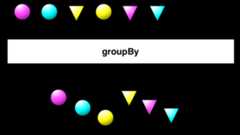
Note: A
GroupedFlowablewill cache the items it is to emit until such time as it is subscribed to. For this reason, in order to avoid memory leaks, you should not simply ignore thoseGroupedPublishers that do not concern you. Instead, you can signal to them that they may discard their buffers by applying an operator likeignoreElements()to them.Note that the
GroupedFlowables should be subscribed to as soon as possible, otherwise, the unconsumed groups may starve other groups due to the internal backpressure coordination of thegroupByoperator. Such hangs can be usually avoided by usingflatMap(Function, int)orconcatMapEager(Function, int, int)and overriding the default maximum concurrency value to be greater or equal to the expected number of groups, possibly usingInteger.MAX_VALUEif the number of expected groups is unknown.- Backpressure:
- Both the returned and its inner
Publishers honor backpressure and the sourcePublisheris consumed in a bounded mode (i.e., requested a fixed amount upfront and replenished based on downstream consumption). Note that both the returned and its innerPublishers use unbounded internal buffers and if the sourcePublisherdoesn't honor backpressure, thatmay lead toOutOfMemoryError. - Scheduler:
groupBydoes not operate by default on a particularScheduler.
- Type Parameters:
K- the key type- Parameters:
keySelector- a function that extracts the key for each item- Returns:
- a
Publisherthat emitsGroupedFlowables, each of which corresponds to a unique key value and each of which emits those items from the source Publisher that share that key value - See Also:
- ReactiveX operators documentation: GroupBy
groupBy
@CheckReturnValue@BackpressureSupport(value=FULL)@SchedulerSupport(value="none")public final <K> Flowable<GroupedFlowable<K,T>> groupBy(Function<? superT,? extends K> keySelector, boolean delayError)
Groups the items emitted by aPublisheraccording to a specified criterion, and emits these grouped items asGroupedFlowables. The emittedGroupedPublisherallows only a singleSubscriberduring its lifetime and if thisSubscribercancels before the source terminates, the next emission by the source having the same key will trigger a newGroupedPublisheremission.Note: A
GroupedFlowablewill cache the items it is to emit until such time as it is subscribed to. For this reason, in order to avoid memory leaks, you should not simply ignore thoseGroupedPublishers that do not concern you. Instead, you can signal to them that they may discard their buffers by applying an operator likeignoreElements()to them.Note that the
GroupedFlowables should be subscribed to as soon as possible, otherwise, the unconsumed groups may starve other groups due to the internal backpressure coordination of thegroupByoperator. Such hangs can be usually avoided by usingflatMap(Function, int)orconcatMapEager(Function, int, int)and overriding the default maximum concurrency value to be greater or equal to the expected number of groups, possibly usingInteger.MAX_VALUEif the number of expected groups is unknown.- Backpressure:
- Both the returned and its inner
Publishers honor backpressure and the sourcePublisheris consumed in a bounded mode (i.e., requested a fixed amount upfront and replenished based on downstream consumption). Note that both the returned and its innerPublishers use unbounded internal buffers and if the sourcePublisherdoesn't honor backpressure, thatmay lead toOutOfMemoryError. - Scheduler:
groupBydoes not operate by default on a particularScheduler.
- Type Parameters:
K- the key type- Parameters:
keySelector- a function that extracts the key for each itemdelayError- if true, the exception from the current Flowable is delayed in each group until that specific group emitted the normal values; if false, the exception bypasses values in the groups and is reported immediately.- Returns:
- a
Publisherthat emitsGroupedFlowables, each of which corresponds to a unique key value and each of which emits those items from the source Publisher that share that key value - See Also:
- ReactiveX operators documentation: GroupBy
groupBy
@CheckReturnValue@BackpressureSupport(value=FULL)@SchedulerSupport(value="none")public final <K,V> Flowable<GroupedFlowable<K,V>> groupBy(Function<? superT,? extends K> keySelector,Function<? superT,? extends V> valueSelector)
Groups the items emitted by aPublisheraccording to a specified criterion, and emits these grouped items asGroupedFlowables. The emittedGroupedPublisherallows only a singleSubscriberduring its lifetime and if thisSubscribercancels before the source terminates, the next emission by the source having the same key will trigger a newGroupedPublisheremission.Note: A
GroupedFlowablewill cache the items it is to emit until such time as it is subscribed to. For this reason, in order to avoid memory leaks, you should not simply ignore thoseGroupedPublishers that do not concern you. Instead, you can signal to them that they may discard their buffers by applying an operator likeignoreElements()to them.Note that the
GroupedFlowables should be subscribed to as soon as possible, otherwise, the unconsumed groups may starve other groups due to the internal backpressure coordination of thegroupByoperator. Such hangs can be usually avoided by usingflatMap(Function, int)orconcatMapEager(Function, int, int)and overriding the default maximum concurrency value to be greater or equal to the expected number of groups, possibly usingInteger.MAX_VALUEif the number of expected groups is unknown.- Backpressure:
- Both the returned and its inner
Publishers honor backpressure and the sourcePublisheris consumed in a bounded mode (i.e., requested a fixed amount upfront and replenished based on downstream consumption). Note that both the returned and its innerPublishers use unbounded internal buffers and if the sourcePublisherdoesn't honor backpressure, thatmay lead toOutOfMemoryError. - Scheduler:
groupBydoes not operate by default on a particularScheduler.
- Type Parameters:
K- the key typeV- the element type- Parameters:
keySelector- a function that extracts the key for each itemvalueSelector- a function that extracts the return element for each item- Returns:
- a
Publisherthat emitsGroupedFlowables, each of which corresponds to a unique key value and each of which emits those items from the source Publisher that share that key value - See Also:
- ReactiveX operators documentation: GroupBy
groupBy
@CheckReturnValue@BackpressureSupport(value=FULL)@SchedulerSupport(value="none")public final <K,V> Flowable<GroupedFlowable<K,V>> groupBy(Function<? superT,? extends K> keySelector,Function<? superT,? extends V> valueSelector, boolean delayError)
Groups the items emitted by aPublisheraccording to a specified criterion, and emits these grouped items asGroupedFlowables. The emittedGroupedPublisherallows only a singleSubscriberduring its lifetime and if thisSubscribercancels before the source terminates, the next emission by the source having the same key will trigger a newGroupedPublisheremission.Note: A
GroupedFlowablewill cache the items it is to emit until such time as it is subscribed to. For this reason, in order to avoid memory leaks, you should not simply ignore thoseGroupedPublishers that do not concern you. Instead, you can signal to them that they may discard their buffers by applying an operator likeignoreElements()to them.Note that the
GroupedFlowables should be subscribed to as soon as possible, otherwise, the unconsumed groups may starve other groups due to the internal backpressure coordination of thegroupByoperator. Such hangs can be usually avoided by usingflatMap(Function, int)orconcatMapEager(Function, int, int)and overriding the default maximum concurrency value to be greater or equal to the expected number of groups, possibly usingInteger.MAX_VALUEif the number of expected groups is unknown.- Backpressure:
- Both the returned and its inner
Publishers honor backpressure and the sourcePublisheris consumed in a bounded mode (i.e., requested a fixed amount upfront and replenished based on downstream consumption). Note that both the returned and its innerPublishers use unbounded internal buffers and if the sourcePublisherdoesn't honor backpressure, thatmay lead toOutOfMemoryError. - Scheduler:
groupBydoes not operate by default on a particularScheduler.
- Type Parameters:
K- the key typeV- the element type- Parameters:
keySelector- a function that extracts the key for each itemvalueSelector- a function that extracts the return element for each itemdelayError- if true, the exception from the current Flowable is delayed in each group until that specific group emitted the normal values; if false, the exception bypasses values in the groups and is reported immediately.- Returns:
- a
Publisherthat emitsGroupedFlowables, each of which corresponds to a unique key value and each of which emits those items from the source Publisher that share that key value - See Also:
- ReactiveX operators documentation: GroupBy
groupBy
@CheckReturnValue@NonNull@BackpressureSupport(value=FULL)@SchedulerSupport(value="none")public final <K,V> Flowable<GroupedFlowable<K,V>> groupBy(Function<? superT,? extends K> keySelector,Function<? superT,? extends V> valueSelector, boolean delayError, int bufferSize)
Groups the items emitted by aPublisheraccording to a specified criterion, and emits these grouped items asGroupedFlowables. The emittedGroupedPublisherallows only a singleSubscriberduring its lifetime and if thisSubscribercancels before the source terminates, the next emission by the source having the same key will trigger a newGroupedPublisheremission.Note: A
GroupedFlowablewill cache the items it is to emit until such time as it is subscribed to. For this reason, in order to avoid memory leaks, you should not simply ignore thoseGroupedPublishers that do not concern you. Instead, you can signal to them that they may discard their buffers by applying an operator likeignoreElements()to them.Note that the
GroupedFlowables should be subscribed to as soon as possible, otherwise, the unconsumed groups may starve other groups due to the internal backpressure coordination of thegroupByoperator. Such hangs can be usually avoided by usingflatMap(Function, int)orconcatMapEager(Function, int, int)and overriding the default maximum concurrency value to be greater or equal to the expected number of groups, possibly usingInteger.MAX_VALUEif the number of expected groups is unknown.- Backpressure:
- Both the returned and its inner
Publishers honor backpressure and the sourcePublisheris consumed in a bounded mode (i.e., requested a fixed amount upfront and replenished based on downstream consumption). Note that both the returned and its innerPublishers use unbounded internal buffers and if the sourcePublisherdoesn't honor backpressure, thatmay lead toOutOfMemoryError. - Scheduler:
groupBydoes not operate by default on a particularScheduler.
- Type Parameters:
K- the key typeV- the element type- Parameters:
keySelector- a function that extracts the key for each itemvalueSelector- a function that extracts the return element for each itemdelayError- if true, the exception from the current Flowable is delayed in each group until that specific group emitted the normal values; if false, the exception bypasses values in the groups and is reported immediately.bufferSize- the hint for how manyGroupedFlowables and element in eachGroupedFlowableshould be buffered- Returns:
- a
Publisherthat emitsGroupedFlowables, each of which corresponds to a unique key value and each of which emits those items from the source Publisher that share that key value - See Also:
- ReactiveX operators documentation: GroupBy
groupBy
@CheckReturnValue@NonNull@BackpressureSupport(value=FULL)@SchedulerSupport(value="none")public final <K,V> Flowable<GroupedFlowable<K,V>> groupBy(Function<? superT,? extends K> keySelector,Function<? superT,? extends V> valueSelector, boolean delayError, int bufferSize,Function<? superConsumer<Object>,? extendsMap<K,Object>> evictingMapFactory)
Groups the items emitted by aPublisheraccording to a specified criterion, and emits these grouped items asGroupedFlowables. The emittedGroupedFlowableallows only a singleSubscriberduring its lifetime and if thisSubscribercancels before the source terminates, the next emission by the source having the same key will trigger a newGroupedPublisheremission. TheevictingMapFactoryis used to create a map that will be used to hold theGroupedFlowables by key. The evicting map created by this factory must notify the providedConsumer<Object>with the entry value (not the key!) when an entry in this map has been evicted. The next source emission will bring about the completion of the evictedGroupedFlowables and the arrival of an item with the same key as a completedGroupedFlowablewill prompt the creation and emission of a newGroupedFlowablewith that key.A use case for specifying an
evictingMapFactoryis where the source is infinite and fast and over time the number of keys grows enough to be a concern in terms of the memory footprint of the internal hash map containing theGroupedFlowables.The map created by an
evictingMapFactorymust be thread-safe.An example of an
evictingMapFactoryusingCacheBuilder from the Guava library is below:Function<Consumer<Object>, Map<Integer, Object>> evictingMapFactory = notify -> CacheBuilder .newBuilder() .maximumSize(3) .removalListener(entry -> { try { // emit the value not the key! notify.accept(entry.getValue()); } catch (Exception e) { throw new RuntimeException(e); } }) .<Integer, Object> build() .asMap(); // Emit 1000 items but ensure that the // internal map never has more than 3 items in it Flowable .range(1, 1000) // note that number of keys is 10 .groupBy(x -> x % 10, x -> x, true, 16, evictingMapFactory) .flatMap(g -> g) .forEach(System.out::println);Note: A
GroupedFlowablewill cache the items it is to emit until such time as it is subscribed to. For this reason, in order to avoid memory leaks, you should not simply ignore thoseGroupedFlowables that do not concern you. Instead, you can signal to them that they may discard their buffers by applying an operator likeignoreElements()to them.Note that the
GroupedFlowables should be subscribed to as soon as possible, otherwise, the unconsumed groups may starve other groups due to the internal backpressure coordination of thegroupByoperator. Such hangs can be usually avoided by usingflatMap(Function, int)orconcatMapEager(Function, int, int)and overriding the default maximum concurrency value to be greater or equal to the expected number of groups, possibly usingInteger.MAX_VALUEif the number of expected groups is unknown.- Backpressure:
- Both the returned and its inner
GroupedFlowables honor backpressure and the sourcePublisheris consumed in a bounded mode (i.e., requested a fixed amount upfront and replenished based on downstream consumption). Note that both the returned and its innerGroupedFlowables use unbounded internal buffers and if the sourcePublisherdoesn't honor backpressure, thatmay lead toOutOfMemoryError. - Scheduler:
groupBydoes not operate by default on a particularScheduler.
History: 2.1.10 - beta
- Type Parameters:
K- the key typeV- the element type- Parameters:
keySelector- a function that extracts the key for each itemvalueSelector- a function that extracts the return element for each itemdelayError- if true, the exception from the current Flowable is delayed in each group until that specific group emitted the normal values; if false, the exception bypasses values in the groups and is reported immediately.bufferSize- the hint for how manyGroupedFlowables and element in eachGroupedFlowableshould be bufferedevictingMapFactory- The factory used to create a map that will be used by the implementation to hold theGroupedFlowables. The evicting map created by this factory must notify the providedConsumer<Object>with the entry value (not the key!) when an entry in this map has been evicted. The next source emission will bring about the completion of the evictedGroupedFlowables. See example above.- Returns:
- a
Publisherthat emitsGroupedFlowables, each of which corresponds to a unique key value and each of which emits those items from the source Publisher that share that key value - Since:
- 2.2
- See Also:
- ReactiveX operators documentation: GroupBy
groupJoin
@CheckReturnValue@NonNull@BackpressureSupport(value=ERROR)@SchedulerSupport(value="none")public final <TRight,TLeftEnd,TRightEnd,R> Flowable<R> groupJoin(Publisher<? extends TRight> other,Function<? superT,? extendsPublisher<TLeftEnd>> leftEnd,Function<? super TRight,? extendsPublisher<TRightEnd>> rightEnd,BiFunction<? superT,? superFlowable<TRight>,? extends R> resultSelector)
Returns a Flowable that correlates two Publishers when they overlap in time and groups the results.There are no guarantees in what order the items get combined when multiple items from one or both source Publishers overlap.
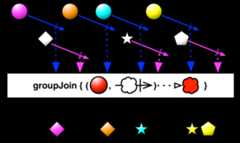
- Backpressure:
- The operator doesn't support backpressure and consumes all participating
Publishers in an unbounded mode (i.e., not applying any backpressure to them). - Scheduler:
groupJoindoes not operate by default on a particularScheduler.
- Type Parameters:
TRight- the value type of the right Publisher sourceTLeftEnd- the element type of the left duration PublishersTRightEnd- the element type of the right duration PublishersR- the result type- Parameters:
other- the other Publisher to correlate items from the source Publisher withleftEnd- a function that returns a Publisher whose emissions indicate the duration of the values of the source PublisherrightEnd- a function that returns a Publisher whose emissions indicate the duration of the values of therightPublisherresultSelector- a function that takes an item emitted by each Publisher and returns the value to be emitted by the resulting Publisher- Returns:
- a Flowable that emits items based on combining those items emitted by the source Publishers whose durations overlap
- See Also:
- ReactiveX operators documentation: Join
hide
@CheckReturnValue@BackpressureSupport(value=PASS_THROUGH)@SchedulerSupport(value="none")public final Flowable<T> hide()
Hides the identity of this Flowable and its Subscription.Allows hiding extra features such as
Processor'sSubscribermethods or preventing certain identity-based optimizations (fusion).- Backpressure:
- The operator is a pass-through for backpressure, the behavior is determined by the upstream's backpressure behavior.
- Scheduler:
hidedoes not operate by default on a particularScheduler.
- Returns:
- the new Flowable instance
- Since:
- 2.0
ignoreElements
@CheckReturnValue@BackpressureSupport(value=UNBOUNDED_IN)@SchedulerSupport(value="none")public final Completable ignoreElements()
Ignores all items emitted by the source Publisher and only callsonCompleteoronError.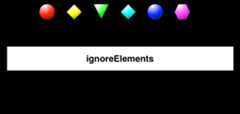
- Backpressure:
- This operator ignores backpressure as it doesn't emit any elements and consumes the source
Publisherin an unbounded manner (i.e., no backpressure is applied to it). - Scheduler:
ignoreElementsdoes not operate by default on a particularScheduler.
- Returns:
- a Completable that only calls
onCompleteoronError, based on which one is called by the source Publisher - See Also:
- ReactiveX operators documentation: IgnoreElements
isEmpty
@CheckReturnValue@BackpressureSupport(value=UNBOUNDED_IN)@SchedulerSupport(value="none")public final Single<Boolean> isEmpty()
Returns a Single that emitstrueif the source Publisher is empty, otherwisefalse.In Rx.Net this is negated as the
anySubscriber but we renamed this in RxJava to better match Java naming idioms.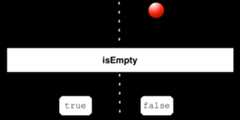
- Backpressure:
- The operator honors backpressure from downstream and consumes the source
Publisherin an unbounded manner (i.e., without applying backpressure). - Scheduler:
isEmptydoes not operate by default on a particularScheduler.
- Returns:
- a Flowable that emits a Boolean
- See Also:
- ReactiveX operators documentation: Contains
join
@CheckReturnValue@NonNull@BackpressureSupport(value=ERROR)@SchedulerSupport(value="none")public final <TRight,TLeftEnd,TRightEnd,R> Flowable<R> join(Publisher<? extends TRight> other,Function<? superT,? extendsPublisher<TLeftEnd>> leftEnd,Function<? super TRight,? extendsPublisher<TRightEnd>> rightEnd,BiFunction<? superT,? super TRight,? extends R> resultSelector)
Correlates the items emitted by two Publishers based on overlapping durations.There are no guarantees in what order the items get combined when multiple items from one or both source Publishers overlap.
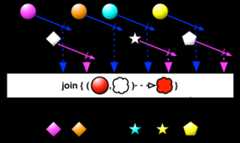
- Backpressure:
- The operator doesn't support backpressure and consumes all participating
Publishers in an unbounded mode (i.e., not applying any backpressure to them). - Scheduler:
joindoes not operate by default on a particularScheduler.
- Type Parameters:
TRight- the value type of the right Publisher sourceTLeftEnd- the element type of the left duration PublishersTRightEnd- the element type of the right duration PublishersR- the result type- Parameters:
other- the second Publisher to join items fromleftEnd- a function to select a duration for each item emitted by the source Publisher, used to determine overlaprightEnd- a function to select a duration for each item emitted by therightPublisher, used to determine overlapresultSelector- a function that computes an item to be emitted by the resulting Publisher for any two overlapping items emitted by the two Publishers- Returns:
- a Flowable that emits items correlating to items emitted by the source Publishers that have overlapping durations
- See Also:
- ReactiveX operators documentation: Join
lastElement
@CheckReturnValue@BackpressureSupport(value=UNBOUNDED_IN)@SchedulerSupport(value="none")public final Maybe<T> lastElement()
Returns a Maybe that emits the last item emitted by this Flowable or completes if this Flowable is empty.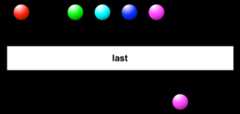
- Backpressure:
- The operator honors backpressure from downstream and consumes the source
Publisherin an unbounded manner (i.e., without applying backpressure). - Scheduler:
lastElementdoes not operate by default on a particularScheduler.
- Returns:
- a new Maybe instance
- See Also:
- ReactiveX operators documentation: Last
last
@CheckReturnValue@NonNull@BackpressureSupport(value=UNBOUNDED_IN)@SchedulerSupport(value="none")public final Single<T> last(T defaultItem)
Returns a Single that emits only the last item emitted by this Flowable, or a default item if this Flowable completes without emitting any items.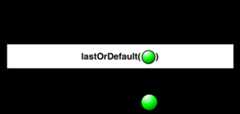
- Backpressure:
- The operator honors backpressure from downstream and consumes the source
Publisherin an unbounded manner (i.e., without applying backpressure). - Scheduler:
lastdoes not operate by default on a particularScheduler.
- Parameters:
defaultItem- the default item to emit if the source Publisher is empty- Returns:
- the new Single instance
- See Also:
- ReactiveX operators documentation: Last
lastOrError
@CheckReturnValue@BackpressureSupport(value=UNBOUNDED_IN)@SchedulerSupport(value="none")public final Single<T> lastOrError()
Returns a Single that emits only the last item emitted by this Flowable or signals aNoSuchElementExceptionif this Flowable is empty.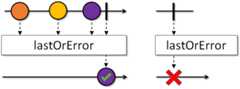
- Backpressure:
- The operator honors backpressure from downstream and consumes the source
Publisherin an unbounded manner (i.e., without applying backpressure). - Scheduler:
lastOrErrordoes not operate by default on a particularScheduler.
- Returns:
- the new Single instance
- See Also:
- ReactiveX operators documentation: Last
lift
@CheckReturnValue@NonNull@BackpressureSupport(value=SPECIAL)@SchedulerSupport(value="none")public final <R> Flowable<R> lift(FlowableOperator<? extends R,? superT> lifter)
This method requires advanced knowledge about building operators, please consider other standard composition methods first; Returns aFlowablewhich, when subscribed to, invokes theapply(Subscriber)method of the providedFlowableOperatorfor each individual downstreamSubscriberand allows the insertion of a custom operator by accessing the downstream'sSubscriberduring this subscription phase and providing a newSubscriber, containing the custom operator's intended business logic, that will be used in the subscription process going further upstream.Generally, such a new
Subscriberwill wrap the downstream'sSubscriberand forwards theonNext,onErrorandonCompleteevents from the upstream directly or according to the emission pattern the custom operator's business logic requires. In addition, such operator can intercept the flow control calls ofcancelandrequestthat would have traveled upstream and perform additional actions depending on the same business logic requirements.Example:
// Step 1: Create the consumer type that will be returned by the FlowableOperator.apply(): public final class CustomSubscriber<T> implements FlowableSubscriber<T>, Subscription { // The downstream's Subscriber that will receive the onXXX events final Subscriber<? super String> downstream; // The connection to the upstream source that will call this class' onXXX methods Subscription upstream; // The constructor takes the downstream subscriber and usually any other parameters public CustomSubscriber(Subscriber<? super String> downstream) { this.downstream = downstream; } // In the subscription phase, the upstream sends a Subscription to this class // and subsequently this class has to send a Subscription to the downstream. // Note that relaying the upstream's Subscription instance directly is not allowed in RxJava @Override public void onSubscribe(Subscription s) { if (upstream != null) { s.cancel(); } else { upstream = s; downstream.onSubscribe(this); } } // The upstream calls this with the next item and the implementation's // responsibility is to emit an item to the downstream based on the intended // business logic, or if it can't do so for the particular item, // request more from the upstream @Override public void onNext(T item) { String str = item.toString(); if (str.length() < 2) { downstream.onNext(str); } else { upstream.request(1); } } // Some operators may handle the upstream's error while others // could just forward it to the downstream. @Override public void onError(Throwable throwable) { downstream.onError(throwable); } // When the upstream completes, usually the downstream should complete as well. @Override public void onComplete() { downstream.onComplete(); } // Some operators have to intercept the downstream's request calls to trigger // the emission of queued items while others can simply forward the request // amount as is. @Override public void request(long n) { upstream.request(n); } // Some operators may use their own resources which should be cleaned up if // the downstream cancels the flow before it completed. Operators without // resources can simply forward the cancellation to the upstream. // In some cases, a canceled flag may be set by this method so that other parts // of this class may detect the cancellation and stop sending events // to the downstream. @Override public void cancel() { upstream.cancel(); } } // Step 2: Create a class that implements the FlowableOperator interface and // returns the custom consumer type from above in its apply() method. // Such class may define additional parameters to be submitted to // the custom consumer type. final class CustomOperator<T> implements FlowableOperator<String> { @Override public Subscriber<? super String> apply(Subscriber<? super T> upstream) { return new CustomSubscriber<T>(upstream); } } // Step 3: Apply the custom operator via lift() in a flow by creating an instance of it // or reusing an existing one. Flowable.range(5, 10) .lift(new CustomOperator<Integer>()) .test() .assertResult("5", "6", "7", "8", "9");Creating custom operators can be complicated and it is recommended one consults theRxJava wiki: Writing operators page about the tools, requirements, rules, considerations and pitfalls of implementing them.
Note that implementing custom operators via this
lift()method adds slightly more overhead by requiring an additional allocation and indirection per assembled flows. Instead, extending the abstractFlowableclass and creating aFlowableTransformerwith it is recommended.Note also that it is not possible to stop the subscription phase in
lift()as theapply()method requires a non-nullSubscriberinstance to be returned, which is then unconditionally subscribed to the upstreamFlowable. For example, if the operator decided there is no reason to subscribe to the upstream source because of some optimization possibility or a failure to prepare the operator, it still has to return aSubscriberthat should immediately cancel the upstream'sSubscriptionin itsonSubscribemethod. Again, using aFlowableTransformerand extending theFlowableis a better option assubscribeActual(org.reactivestreams.Subscriber<? super T>)can decide to not subscribe to its upstream after all.- Backpressure:
- The
Subscriberinstance returned by theFlowableOperatoris responsible to be backpressure-aware or document the fact that the consumer of the returnedPublisherhas to apply one of theonBackpressureXXXoperators. - Scheduler:
liftdoes not operate by default on a particularScheduler, however, theFlowableOperatormay use aSchedulerto support its own asynchronous behavior.
- Type Parameters:
R- the output value type- Parameters:
lifter- theFlowableOperatorthat receives the downstream'sSubscriberand should return aSubscriberwith custom behavior to be used as the consumer for the currentFlowable.- Returns:
- the new Flowable instance
- See Also:
- RxJava wiki: Writing operators,
compose(FlowableTransformer)
limit
@BackpressureSupport(value=SPECIAL)@SchedulerSupport(value="none")@CheckReturnValuepublic final Flowable<T> limit(long count)
Limits both the number of upstream items (after which the sequence completes) and the total downstream request amount requested from the upstream to possibly prevent the creation of excess items by the upstream.The operator requests at most the given
countof items from upstream even if the downstream requests more than that. For example, given alimit(5), if the downstream requests 1, a request of 1 is submitted to the upstream and the operator remembers that only 4 items can be requested now on. A request of 5 at this point will request 4 from the upstream and any subsequent requests will be ignored.Note that requests are negotiated on an operator boundary and
limit's amount may not be preserved further upstream. For example,source.observeOn(Schedulers.computation()).limit(5)will still request the default (128) elements from the givensource.The main use of this operator is with sources that are async boundaries that don't interfere with request amounts, such as certain
Flowable-based network endpoints that relay downstream request amounts unchanged and are, therefore, prone to trigger excessive item creation/transmission over the network.- Backpressure:
- The operator requests a total of the given
countitems from the upstream. - Scheduler:
limitdoes not operate by default on a particularScheduler.
History: 2.1.6 - experimental
- Parameters:
count- the maximum number of items and the total request amount, non-negative. Zero will immediately cancel the upstream on subscription and complete the downstream.- Returns:
- the new Flowable instance
- Since:
- 2.2
- See Also:
take(long),rebatchRequests(int)
map
@CheckReturnValue@NonNull@BackpressureSupport(value=PASS_THROUGH)@SchedulerSupport(value="none")public final <R> Flowable<R> map(Function<? superT,? extends R> mapper)
Returns a Flowable that applies a specified function to each item emitted by the source Publisher and emits the results of these function applications.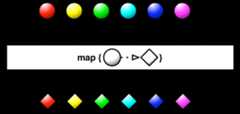
- Backpressure:
- The operator doesn't interfere with backpressure which is determined by the source
Publisher's backpressure behavior. - Scheduler:
mapdoes not operate by default on a particularScheduler.
- Type Parameters:
R- the output type- Parameters:
mapper- a function to apply to each item emitted by the Publisher- Returns:
- a Flowable that emits the items from the source Publisher, transformed by the specified function
- See Also:
- ReactiveX operators documentation: Map
materialize
@CheckReturnValue@BackpressureSupport(value=FULL)@SchedulerSupport(value="none")public final Flowable<Notification<T>> materialize()
Returns a Flowable that represents all of the emissionsand notifications from the source Publisher into emissions marked with their original types withinNotificationobjects.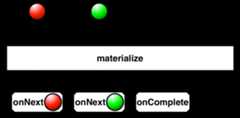
- Backpressure:
- The operator honors backpressure from downstream and expects it from the source
Publisher. If this expectation is violated, the operatormay throw anIllegalStateException. - Scheduler:
materializedoes not operate by default on a particularScheduler.
- Returns:
- a Flowable that emits items that are the result of materializing the items and notifications of the source Publisher
- See Also:
- ReactiveX operators documentation: Materialize,
dematerialize(Function)
mergeWith
@CheckReturnValue@NonNull@BackpressureSupport(value=FULL)@SchedulerSupport(value="none")public final Flowable<T> mergeWith(Publisher<? extendsT> other)
Flattens this and another Publisher into a single Publisher, without any transformation.You can combine items emitted by multiple Publishers so that they appear as a single Publisher, by using the
mergeWithmethod.- Backpressure:
- The operator honors backpressure from downstream. This and the other
Publishers are expected to honor backpressure; if violated, the operatormay signalMissingBackpressureException. - Scheduler:
mergeWithdoes not operate by default on a particularScheduler.
- Parameters:
other- a Publisher to be merged- Returns:
- a Flowable that emits all of the items emitted by the source Publishers
- See Also:
- ReactiveX operators documentation: Merge
mergeWith
@CheckReturnValue@NonNull@BackpressureSupport(value=FULL)@SchedulerSupport(value="none")public final Flowable<T> mergeWith(@NonNullSingleSource<? extendsT> other)
Merges the sequence of items of this Flowable with the success value of the other SingleSource.The success value of the other
SingleSourcecan get interleaved at any point of thisFlowablesequence.- Backpressure:
- The operator honors backpressure from downstream and ensures the success item from the
SingleSourceis emitted only when there is a downstream demand. - Scheduler:
mergeWithdoes not operate by default on a particularScheduler.
History: 2.1.10 - experimental
- Parameters:
other- theSingleSourcewhose success value to merge with- Returns:
- the new Flowable instance
- Since:
- 2.2
mergeWith
@CheckReturnValue@NonNull@BackpressureSupport(value=FULL)@SchedulerSupport(value="none")public final Flowable<T> mergeWith(@NonNullMaybeSource<? extendsT> other)
Merges the sequence of items of this Flowable with the success value of the other MaybeSource or waits for both to complete normally if the MaybeSource is empty.The success value of the other
MaybeSourcecan get interleaved at any point of thisFlowablesequence.- Backpressure:
- The operator honors backpressure from downstream and ensures the success item from the
MaybeSourceis emitted only when there is a downstream demand. - Scheduler:
mergeWithdoes not operate by default on a particularScheduler.
History: 2.1.10 - experimental
- Parameters:
other- theMaybeSourcewhich provides a success value to merge with or completes- Returns:
- the new Flowable instance
- Since:
- 2.2
mergeWith
@CheckReturnValue@NonNull@BackpressureSupport(value=PASS_THROUGH)@SchedulerSupport(value="none")public final Flowable<T> mergeWith(@NonNullCompletableSource other)
Relays the items of this Flowable and completes only when the other CompletableSource completes as well.- Backpressure:
- The operator doesn't interfere with backpressure which is determined by the source
Publisher's backpressure behavior. - Scheduler:
mergeWithdoes not operate by default on a particularScheduler.
History: 2.1.10 - experimental
- Parameters:
other- theCompletableSourceto await for completion- Returns:
- the new Flowable instance
- Since:
- 2.2
observeOn
@CheckReturnValue@BackpressureSupport(value=FULL)@SchedulerSupport(value="custom")public final Flowable<T> observeOn(Scheduler scheduler)
Modifies a Publisher to perform its emissions and notifications on a specifiedScheduler, asynchronously with a bounded buffer ofbufferSize()slots.Note that onError notifications will cut ahead of onNext notifications on the emission thread if Scheduler is truly asynchronous. If strict event ordering is required, consider using the
observeOn(Scheduler, boolean)overload.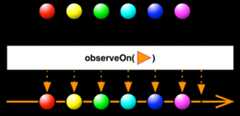
This operator keeps emitting as many signals as it can on the given Scheduler's Worker thread, which may result in a longer than expected occupation of this thread. In other terms, it does not allow per-signal fairness in case the worker runs on a shared underlying thread. If such fairness and signal/work interleaving is preferred, use the delay operator with zero time instead.
- Backpressure:
- This operator honors backpressure from downstream and expects it from the source
Publisher. Violating this expectation will lead toMissingBackpressureException. This is the most common operator where the exception pops up; look for sources up the chain that don't support backpressure, such asinterval,timer, {code PublishSubject} orBehaviorSubjectand apply any of theonBackpressureXXXoperatorsbefore applyingobserveOnitself. - Scheduler:
- You specify which
Schedulerthis operator will use.
- Parameters:
scheduler- theSchedulerto notifySubscribers on- Returns:
- the source Publisher modified so that its
Subscribers are notified on the specifiedScheduler - See Also:
- ReactiveX operators documentation: ObserveOn,RxJava Threading Examples,
subscribeOn(io.reactivex.Scheduler),observeOn(Scheduler, boolean),observeOn(Scheduler, boolean, int),delay(long, TimeUnit, Scheduler)
observeOn
@CheckReturnValue@BackpressureSupport(value=FULL)@SchedulerSupport(value="custom")public final Flowable<T> observeOn(Scheduler scheduler, boolean delayError)
Modifies a Publisher to perform its emissions and notifications on a specifiedScheduler, asynchronously with a bounded buffer and optionally delays onError notifications.This operator keeps emitting as many signals as it can on the given Scheduler's Worker thread, which may result in a longer than expected occupation of this thread. In other terms, it does not allow per-signal fairness in case the worker runs on a shared underlying thread. If such fairness and signal/work interleaving is preferred, use the delay operator with zero time instead.
- Backpressure:
- This operator honors backpressure from downstream and expects it from the source
Publisher. Violating this expectation will lead toMissingBackpressureException. This is the most common operator where the exception pops up; look for sources up the chain that don't support backpressure, such asinterval,timer, {code PublishSubject} orBehaviorSubjectand apply any of theonBackpressureXXXoperatorsbefore applyingobserveOnitself. - Scheduler:
- You specify which
Schedulerthis operator will use.
- Parameters:
scheduler- theSchedulerto notifySubscribers ondelayError- indicates if the onError notification may not cut ahead of onNext notification on the other side of the scheduling boundary. If true a sequence ending in onError will be replayed in the same order as was received from upstream- Returns:
- the source Publisher modified so that its
Subscribers are notified on the specifiedScheduler - See Also:
- ReactiveX operators documentation: ObserveOn,RxJava Threading Examples,
subscribeOn(io.reactivex.Scheduler),observeOn(Scheduler),observeOn(Scheduler, boolean, int),delay(long, TimeUnit, Scheduler, boolean)
observeOn
@CheckReturnValue@NonNull@BackpressureSupport(value=FULL)@SchedulerSupport(value="custom")public final Flowable<T> observeOn(Scheduler scheduler, boolean delayError, int bufferSize)
Modifies a Publisher to perform its emissions and notifications on a specifiedScheduler, asynchronously with a bounded buffer of configurable size and optionally delays onError notifications.This operator keeps emitting as many signals as it can on the given Scheduler's Worker thread, which may result in a longer than expected occupation of this thread. In other terms, it does not allow per-signal fairness in case the worker runs on a shared underlying thread. If such fairness and signal/work interleaving is preferred, use the delay operator with zero time instead.
- Backpressure:
- This operator honors backpressure from downstream and expects it from the source
Publisher. Violating this expectation will lead toMissingBackpressureException. This is the most common operator where the exception pops up; look for sources up the chain that don't support backpressure, such asinterval,timer, {code PublishSubject} orBehaviorSubjectand apply any of theonBackpressureXXXoperatorsbefore applyingobserveOnitself. - Scheduler:
- You specify which
Schedulerthis operator will use.
- Parameters:
scheduler- theSchedulerto notifySubscribers ondelayError- indicates if the onError notification may not cut ahead of onNext notification on the other side of the scheduling boundary. If true a sequence ending in onError will be replayed in the same order as was received from upstreambufferSize- the size of the buffer.- Returns:
- the source Publisher modified so that its
Subscribers are notified on the specifiedScheduler - See Also:
- ReactiveX operators documentation: ObserveOn,RxJava Threading Examples,
subscribeOn(io.reactivex.Scheduler),observeOn(Scheduler),observeOn(Scheduler, boolean),delay(long, TimeUnit, Scheduler, boolean)
ofType
@CheckReturnValue@NonNull@BackpressureSupport(value=PASS_THROUGH)@SchedulerSupport(value="none")public final <U> Flowable<U> ofType(Class<U> clazz)
Filters the items emitted by a Publisher, only emitting those of the specified type.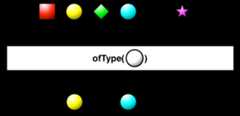
- Backpressure:
- The operator doesn't interfere with backpressure which is determined by the source
Publisher's backpressure behavior. - Scheduler:
ofTypedoes not operate by default on a particularScheduler.
- Type Parameters:
U- the output type- Parameters:
clazz- the class type to filter the items emitted by the source Publisher- Returns:
- a Flowable that emits items from the source Publisher of type
clazz - See Also:
- ReactiveX operators documentation: Filter
onBackpressureBuffer
@CheckReturnValue@BackpressureSupport(value=UNBOUNDED_IN)@SchedulerSupport(value="none")public final Flowable<T> onBackpressureBuffer()
Instructs a Publisher that is emitting items faster than its Subscriber can consume them to buffer these items indefinitely until they can be emitted.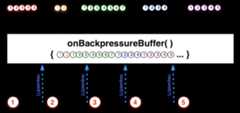
- Backpressure:
- The operator honors backpressure from downstream and consumes the source
Publisherin an unbounded manner (i.e., not applying backpressure to it). - Scheduler:
onBackpressureBufferdoes not operate by default on a particularScheduler.
- Returns:
- the source Publisher modified to buffer items to the extent system resources allow
- See Also:
- ReactiveX operators documentation: backpressure operators
onBackpressureBuffer
@CheckReturnValue@BackpressureSupport(value=UNBOUNDED_IN)@SchedulerSupport(value="none")public final Flowable<T> onBackpressureBuffer(boolean delayError)
Instructs a Publisher that is emitting items faster than its Subscriber can consume them to buffer these items indefinitely until they can be emitted.- Backpressure:
- The operator honors backpressure from downstream and consumes the source
Publisherin an unbounded manner (i.e., not applying backpressure to it). - Scheduler:
onBackpressureBufferdoes not operate by default on a particularScheduler.
- Parameters:
delayError- if true, an exception from the current Flowable is delayed until all buffered elements have been consumed by the downstream; if false, an exception is immediately signaled to the downstream, skipping any buffered element- Returns:
- the source Publisher modified to buffer items to the extent system resources allow
- See Also:
- ReactiveX operators documentation: backpressure operators
onBackpressureBuffer
@CheckReturnValue@BackpressureSupport(value=ERROR)@SchedulerSupport(value="none")public final Flowable<T> onBackpressureBuffer(int capacity)
Instructs a Publisher that is emitting items faster than its Subscriber can consume them to buffer up to a given amount of items until they can be emitted. The resulting Publisher will signal aBufferOverflowExceptionviaonErroras soon as the buffer's capacity is exceeded, dropping all undelivered items, and canceling the source.- Backpressure:
- The operator honors backpressure from downstream and consumes the source
Publisherin an unbounded manner (i.e., not applying backpressure to it). - Scheduler:
onBackpressureBufferdoes not operate by default on a particularScheduler.
- Parameters:
capacity- number of slots available in the buffer.- Returns:
- the source
Publishermodified to buffer items up to the given capacity. - Since:
- 1.1.0
- See Also:
- ReactiveX operators documentation: backpressure operators
onBackpressureBuffer
@CheckReturnValue@BackpressureSupport(value=ERROR)@SchedulerSupport(value="none")public final Flowable<T> onBackpressureBuffer(int capacity, boolean delayError)
Instructs a Publisher that is emitting items faster than its Subscriber can consume them to buffer up to a given amount of items until they can be emitted. The resulting Publisher will signal aBufferOverflowExceptionviaonErroras soon as the buffer's capacity is exceeded, dropping all undelivered items, and canceling the source.- Backpressure:
- The operator honors backpressure from downstream and consumes the source
Publisherin an unbounded manner (i.e., not applying backpressure to it). - Scheduler:
onBackpressureBufferdoes not operate by default on a particularScheduler.
- Parameters:
capacity- number of slots available in the buffer.delayError- if true, an exception from the current Flowable is delayed until all buffered elements have been consumed by the downstream; if false, an exception is immediately signaled to the downstream, skipping any buffered element- Returns:
- the source
Publishermodified to buffer items up to the given capacity. - Since:
- 1.1.0
- See Also:
- ReactiveX operators documentation: backpressure operators
onBackpressureBuffer
@CheckReturnValue@BackpressureSupport(value=SPECIAL)@SchedulerSupport(value="none")public final Flowable<T> onBackpressureBuffer(int capacity, boolean delayError, boolean unbounded)
Instructs a Publisher that is emitting items faster than its Subscriber can consume them to buffer up to a given amount of items until they can be emitted. The resulting Publisher will signal aBufferOverflowExceptionviaonErroras soon as the buffer's capacity is exceeded, dropping all undelivered items, and canceling the source.- Backpressure:
- The operator honors backpressure from downstream and consumes the source
Publisherin an unbounded manner (i.e., not applying backpressure to it). - Scheduler:
onBackpressureBufferdoes not operate by default on a particularScheduler.
- Parameters:
capacity- number of slots available in the buffer.delayError- if true, an exception from the current Flowable is delayed until all buffered elements have been consumed by the downstream; if false, an exception is immediately signaled to the downstream, skipping any buffered elementunbounded- if true, the capacity value is interpreted as the internal "island" size of the unbounded buffer- Returns:
- the source
Publishermodified to buffer items up to the given capacity. - Since:
- 1.1.0
- See Also:
- ReactiveX operators documentation: backpressure operators
onBackpressureBuffer
@CheckReturnValue@NonNull@BackpressureSupport(value=SPECIAL)@SchedulerSupport(value="none")public final Flowable<T> onBackpressureBuffer(int capacity, boolean delayError, boolean unbounded,Action onOverflow)
Instructs a Publisher that is emitting items faster than its Subscriber can consume them to buffer up to a given amount of items until they can be emitted. The resulting Publisher will signal aBufferOverflowExceptionviaonErroras soon as the buffer's capacity is exceeded, dropping all undelivered items, canceling the source, and notifying the producer withonOverflow.- Backpressure:
- The operator honors backpressure from downstream and consumes the source
Publisherin an unbounded manner (i.e., not applying backpressure to it). - Scheduler:
onBackpressureBufferdoes not operate by default on a particularScheduler.
- Parameters:
capacity- number of slots available in the buffer.delayError- if true, an exception from the current Flowable is delayed until all buffered elements have been consumed by the downstream; if false, an exception is immediately signaled to the downstream, skipping any buffered elementunbounded- if true, the capacity value is interpreted as the internal "island" size of the unbounded bufferonOverflow- action to execute if an item needs to be buffered, but there are no available slots. Null is allowed.- Returns:
- the source
Publishermodified to buffer items up to the given capacity - Since:
- 1.1.0
- See Also:
- ReactiveX operators documentation: backpressure operators
onBackpressureBuffer
@CheckReturnValue@BackpressureSupport(value=ERROR)@SchedulerSupport(value="none")public final Flowable<T> onBackpressureBuffer(int capacity,Action onOverflow)
Instructs a Publisher that is emitting items faster than its Subscriber can consume them to buffer up to a given amount of items until they can be emitted. The resulting Publisher will signal aBufferOverflowExceptionviaonErroras soon as the buffer's capacity is exceeded, dropping all undelivered items, canceling the source, and notifying the producer withonOverflow.- Backpressure:
- The operator honors backpressure from downstream and consumes the source
Publisherin an unbounded manner (i.e., not applying backpressure to it). - Scheduler:
onBackpressureBufferdoes not operate by default on a particularScheduler.
- Parameters:
capacity- number of slots available in the buffer.onOverflow- action to execute if an item needs to be buffered, but there are no available slots. Null is allowed.- Returns:
- the source
Publishermodified to buffer items up to the given capacity - Since:
- 1.1.0
- See Also:
- ReactiveX operators documentation: backpressure operators
onBackpressureBuffer
@CheckReturnValue@NonNull@BackpressureSupport(value=SPECIAL)@SchedulerSupport(value="none")public final Flowable<T> onBackpressureBuffer(long capacity,Action onOverflow,BackpressureOverflowStrategy overflowStrategy)
Instructs a Publisher that is emitting items faster than its Subscriber can consume them to buffer up to a given amount of items until they can be emitted. The resulting Publisher will behave as determined byoverflowStrategyif the buffer capacity is exceeded.BackpressureOverflow.Strategy.ON_OVERFLOW_ERROR(default) will callonErrordropping all undelivered items, canceling the source, and notifying the producer withonOverflow.BackpressureOverflow.Strategy.ON_OVERFLOW_DROP_LATESTwill drop any new items emitted by the producer while the buffer is full, without generating anyonError. Each drop will, however, invokeonOverflowto signal the overflow to the producer.BackpressureOverflow.Strategy.ON_OVERFLOW_DROP_OLDESTwill drop the oldest items in the buffer in order to make room for newly emitted ones. Overflow will not generate anonError, but each drop will invokeonOverflowto signal the overflow to the producer.
- Backpressure:
- The operator honors backpressure from downstream and consumes the source
Publisherin an unbounded manner (i.e., not applying backpressure to it). - Scheduler:
onBackpressureBufferdoes not operate by default on a particularScheduler.
- Parameters:
capacity- number of slots available in the buffer.onOverflow- action to execute if an item needs to be buffered, but there are no available slots. Null is allowed.overflowStrategy- how should thePublisherreact to buffer overflows. Null is not allowed.- Returns:
- the source
Flowablemodified to buffer items up to the given capacity - Since:
- 2.0
- See Also:
- ReactiveX operators documentation: backpressure operators
onBackpressureDrop
@CheckReturnValue@BackpressureSupport(value=UNBOUNDED_IN)@SchedulerSupport(value="none")public final Flowable<T> onBackpressureDrop()
Instructs a Publisher that is emitting items faster than its Subscriber can consume them to discard, rather than emit, those items that its Subscriber is not prepared to observe.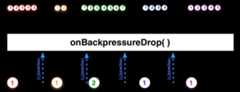
If the downstream request count hits 0 then the Publisher will refrain from calling
onNextuntil the Subscriber invokesrequest(n)again to increase the request count.- Backpressure:
- The operator honors backpressure from downstream and consumes the source
Publisherin an unbounded manner (i.e., not applying backpressure to it). - Scheduler:
onBackpressureDropdoes not operate by default on a particularScheduler.
- Returns:
- the source Publisher modified to drop
onNextnotifications on overflow - See Also:
- ReactiveX operators documentation: backpressure operators
onBackpressureDrop
@CheckReturnValue@NonNull@BackpressureSupport(value=UNBOUNDED_IN)@SchedulerSupport(value="none")public final Flowable<T> onBackpressureDrop(Consumer<? superT> onDrop)
Instructs a Publisher that is emitting items faster than its Subscriber can consume them to discard, rather than emit, those items that its Subscriber is not prepared to observe.If the downstream request count hits 0 then the Publisher will refrain from calling
onNextuntil the Subscriber invokesrequest(n)again to increase the request count.- Backpressure:
- The operator honors backpressure from downstream and consumes the source
Publisherin an unbounded manner (i.e., not applying backpressure to it). - Scheduler:
onBackpressureDropdoes not operate by default on a particularScheduler.
- Parameters:
onDrop- the action to invoke for each item dropped. onDrop action should be fast and should never block.- Returns:
- the source Publisher modified to drop
onNextnotifications on overflow - Since:
- 1.1.0
- See Also:
- ReactiveX operators documentation: backpressure operators
onBackpressureLatest
@CheckReturnValue@BackpressureSupport(value=UNBOUNDED_IN)@SchedulerSupport(value="none")public final Flowable<T> onBackpressureLatest()
Instructs a Publisher that is emitting items faster than its Subscriber can consume them to hold onto the latest value and emit that on request.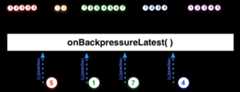
Its behavior is logically equivalent to
blockingLatest()with the exception that the downstream is not blocking while requesting more values.Note that if the upstream Publisher does support backpressure, this operator ignores that capability and doesn't propagate any backpressure requests from downstream.
Note that due to the nature of how backpressure requests are propagated through subscribeOn/observeOn, requesting more than 1 from downstream doesn't guarantee a continuous delivery of onNext events.
- Backpressure:
- The operator honors backpressure from downstream and consumes the source
Publisherin an unbounded manner (i.e., not applying backpressure to it). - Scheduler:
onBackpressureLatestdoes not operate by default on a particularScheduler.
- Returns:
- the source Publisher modified so that it emits the most recently-received item upon request
- Since:
- 1.1.0
onErrorResumeNext
@CheckReturnValue@NonNull@BackpressureSupport(value=FULL)@SchedulerSupport(value="none")public final Flowable<T> onErrorResumeNext(Function<? superThrowable,? extendsPublisher<? extendsT>> resumeFunction)
Instructs a Publisher to pass control to another Publisher rather than invokingonErrorif it encounters an error.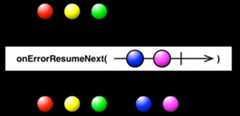
By default, when a Publisher encounters an error that prevents it from emitting the expected item to its
Subscriber, the Publisher invokes its Subscriber'sonErrormethod, and then quits without invoking any more of its Subscriber's methods. TheonErrorResumeNextmethod changes this behavior. If you pass a function that returns a Publisher (resumeFunction) toonErrorResumeNext, if the original Publisher encounters an error, instead of invoking its Subscriber'sonErrormethod, it will instead relinquish control to the Publisher returned fromresumeFunction, which will invoke the Subscriber'sonNextmethod if it is able to do so. In such a case, because no Publisher necessarily invokesonError, the Subscriber may never know that an error happened.You can use this to prevent errors from propagating or to supply fallback data should errors be encountered.
- Backpressure:
- The operator honors backpressure from downstream. This and the resuming
Publishers are expected to honor backpressure as well. If any of them violate this expectation, the operatormay throw anIllegalStateExceptionwhen the sourcePublishercompletes or aMissingBackpressureExceptionis signaled somewhere downstream. - Scheduler:
onErrorResumeNextdoes not operate by default on a particularScheduler.
- Parameters:
resumeFunction- a function that returns a Publisher that will take over if the source Publisher encounters an error- Returns:
- the original Publisher, with appropriately modified behavior
- See Also:
- ReactiveX operators documentation: Catch
onErrorResumeNext
@CheckReturnValue@NonNull@BackpressureSupport(value=FULL)@SchedulerSupport(value="none")public final Flowable<T> onErrorResumeNext(Publisher<? extendsT> next)
Instructs a Publisher to pass control to another Publisher rather than invokingonErrorif it encounters an error.By default, when a Publisher encounters an error that prevents it from emitting the expected item to its
Subscriber, the Publisher invokes its Subscriber'sonErrormethod, and then quits without invoking any more of its Subscriber's methods. TheonErrorResumeNextmethod changes this behavior. If you pass another Publisher (resumeSequence) to a Publisher'sonErrorResumeNextmethod, if the original Publisher encounters an error, instead of invoking its Subscriber'sonErrormethod, it will instead relinquish control toresumeSequencewhich will invoke the Subscriber'sonNextmethod if it is able to do so. In such a case, because no Publisher necessarily invokesonError, the Subscriber may never know that an error happened.You can use this to prevent errors from propagating or to supply fallback data should errors be encountered.
- Backpressure:
- The operator honors backpressure from downstream. This and the resuming
Publishers are expected to honor backpressure as well. If any of them violate this expectation, the operatormay throw anIllegalStateExceptionwhen the sourcePublishercompletes orMissingBackpressureExceptionis signaled somewhere downstream. - Scheduler:
onErrorResumeNextdoes not operate by default on a particularScheduler.
- Parameters:
next- the next Publisher source that will take over if the source Publisher encounters an error- Returns:
- the original Publisher, with appropriately modified behavior
- See Also:
- ReactiveX operators documentation: Catch
onErrorReturn
@CheckReturnValue@NonNull@BackpressureSupport(value=FULL)@SchedulerSupport(value="none")public final Flowable<T> onErrorReturn(Function<? superThrowable,? extendsT> valueSupplier)
Instructs a Publisher to emit an item (returned by a specified function) rather than invokingonErrorif it encounters an error.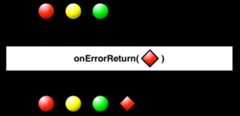
By default, when a Publisher encounters an error that prevents it from emitting the expected item to its
Subscriber, the Publisher invokes its Subscriber'sonErrormethod, and then quits without invoking any more of its Subscriber's methods. TheonErrorReturnmethod changes this behavior. If you pass a function (resumeFunction) to a Publisher'sonErrorReturnmethod, if the original Publisher encounters an error, instead of invoking its Subscriber'sonErrormethod, it will instead emit the return value ofresumeFunction.You can use this to prevent errors from propagating or to supply fallback data should errors be encountered.
- Backpressure:
- The operator honors backpressure from downstream. The source
Publishers is expected to honor backpressure as well. If it this expectation is violated, the operatormay throwIllegalStateExceptionwhen the sourcePublishercompletes orMissingBackpressureExceptionis signaled somewhere downstream. - Scheduler:
onErrorReturndoes not operate by default on a particularScheduler.
- Parameters:
valueSupplier- a function that returns a single value that will be emitted along with a regular onComplete in case the current Flowable signals an onError event- Returns:
- the original Publisher with appropriately modified behavior
- See Also:
- ReactiveX operators documentation: Catch
onErrorReturnItem
@CheckReturnValue@NonNull@BackpressureSupport(value=FULL)@SchedulerSupport(value="none")public final Flowable<T> onErrorReturnItem(T item)
Instructs a Publisher to emit an item (returned by a specified function) rather than invokingonErrorif it encounters an error.By default, when a Publisher encounters an error that prevents it from emitting the expected item to its
Subscriber, the Publisher invokes its Subscriber'sonErrormethod, and then quits without invoking any more of its Subscriber's methods. TheonErrorReturnmethod changes this behavior. If you pass a function (resumeFunction) to a Publisher'sonErrorReturnmethod, if the original Publisher encounters an error, instead of invoking its Subscriber'sonErrormethod, it will instead emit the return value ofresumeFunction.You can use this to prevent errors from propagating or to supply fallback data should errors be encountered.
- Backpressure:
- The operator honors backpressure from downstream. The source
Publishers is expected to honor backpressure as well. If it this expectation is violated, the operatormay throwIllegalStateExceptionwhen the sourcePublishercompletes orMissingBackpressureExceptionis signaled somewhere downstream. - Scheduler:
onErrorReturnItemdoes not operate by default on a particularScheduler.
- Parameters:
item- the value that is emitted along with a regular onComplete in case the current Flowable signals an exception- Returns:
- the original Publisher with appropriately modified behavior
- See Also:
- ReactiveX operators documentation: Catch
onExceptionResumeNext
@CheckReturnValue@NonNull@BackpressureSupport(value=FULL)@SchedulerSupport(value="none")public final Flowable<T> onExceptionResumeNext(Publisher<? extendsT> next)
Instructs a Publisher to pass control to another Publisher rather than invokingonErrorif it encounters anException.This differs from
onErrorResumeNext(io.reactivex.functions.Function<? super java.lang.Throwable, ? extends org.reactivestreams.Publisher<? extends T>>)in that this one does not handleThrowableorErrorbut lets those continue through.
By default, when a Publisher encounters an exception that prevents it from emitting the expected item to its
Subscriber, the Publisher invokes its Subscriber'sonErrormethod, and then quits without invoking any more of its Subscriber's methods. TheonExceptionResumeNextmethod changes this behavior. If you pass another Publisher (resumeSequence) to a Publisher'sonExceptionResumeNextmethod, if the original Publisher encounters an exception, instead of invoking its Subscriber'sonErrormethod, it will instead relinquish control toresumeSequencewhich will invoke the Subscriber'sonNextmethod if it is able to do so. In such a case, because no Publisher necessarily invokesonError, the Subscriber may never know that an exception happened.You can use this to prevent exceptions from propagating or to supply fallback data should exceptions be encountered.
- Backpressure:
- The operator honors backpressure from downstream. This and the resuming
Publishers are expected to honor backpressure as well. If any of them violate this expectation, the operatormay throw anIllegalStateExceptionwhen the sourcePublishercompletes orMissingBackpressureExceptionis signaled somewhere downstream. - Scheduler:
onExceptionResumeNextdoes not operate by default on a particularScheduler.
- Parameters:
next- the next Publisher that will take over if the source Publisher encounters an exception- Returns:
- the original Publisher, with appropriately modified behavior
- See Also:
- ReactiveX operators documentation: Catch
onTerminateDetach
@CheckReturnValue@BackpressureSupport(value=PASS_THROUGH)@SchedulerSupport(value="none")public final Flowable<T> onTerminateDetach()
Nulls out references to the upstream producer and downstream Subscriber if the sequence is terminated or downstream cancels.- Backpressure:
- The operator doesn't interfere with backpressure which is determined by the source
Publisher's backpressure behavior. - Scheduler:
onTerminateDetachdoes not operate by default on a particularScheduler.
- Returns:
- a Flowable which nulls out references to the upstream producer and downstream Subscriber if the sequence is terminated or downstream cancels
- Since:
- 2.0
parallel
@BackpressureSupport(value=FULL)@SchedulerSupport(value="none")@CheckReturnValuepublic final ParallelFlowable<T> parallel()
Parallelizes the flow by creating multiple 'rails' (equal to the number of CPUs) and dispatches the upstream items to them in a round-robin fashion.Note that the rails don't execute in parallel on their own and one needs to apply
ParallelFlowable.runOn(Scheduler)to specify the Scheduler where each rail will execute.To merge the parallel 'rails' back into a single sequence, use
ParallelFlowable.sequential().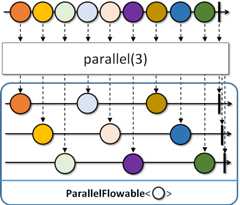
- Backpressure:
- The operator requires the upstream to honor backpressure and each 'rail' honors backpressure as well.
- Scheduler:
paralleldoes not operate by default on a particularScheduler.
History: 2.0.5 - experimental; 2.1 - beta
- Returns:
- the new ParallelFlowable instance
- Since:
- 2.2
parallel
@BackpressureSupport(value=FULL)@SchedulerSupport(value="none")@CheckReturnValuepublic final ParallelFlowable<T> parallel(int parallelism)
Parallelizes the flow by creating the specified number of 'rails' and dispatches the upstream items to them in a round-robin fashion.Note that the rails don't execute in parallel on their own and one needs to apply
ParallelFlowable.runOn(Scheduler)to specify the Scheduler where each rail will execute.To merge the parallel 'rails' back into a single sequence, use
ParallelFlowable.sequential().- Backpressure:
- The operator requires the upstream to honor backpressure and each 'rail' honors backpressure as well.
- Scheduler:
paralleldoes not operate by default on a particularScheduler.
History: 2.0.5 - experimental; 2.1 - beta
- Parameters:
parallelism- the number of 'rails' to use- Returns:
- the new ParallelFlowable instance
- Since:
- 2.2
parallel
@BackpressureSupport(value=FULL)@SchedulerSupport(value="none")@CheckReturnValuepublic final ParallelFlowable<T> parallel(int parallelism, int prefetch)
Parallelizes the flow by creating the specified number of 'rails' and dispatches the upstream items to them in a round-robin fashion and uses the defined per-'rail' prefetch amount.Note that the rails don't execute in parallel on their own and one needs to apply
ParallelFlowable.runOn(Scheduler)to specify the Scheduler where each rail will execute.To merge the parallel 'rails' back into a single sequence, use
ParallelFlowable.sequential().- Backpressure:
- The operator requires the upstream to honor backpressure and each 'rail' honors backpressure as well.
- Scheduler:
paralleldoes not operate by default on a particularScheduler.
History: 2.0.5 - experimental; 2.1 - beta
- Parameters:
parallelism- the number of 'rails' to useprefetch- the number of items each 'rail' should prefetch- Returns:
- the new ParallelFlowable instance
- Since:
- 2.2
publish
@CheckReturnValue@BackpressureSupport(value=FULL)@SchedulerSupport(value="none")public final ConnectableFlowable<T> publish()
Returns aConnectableFlowable, which is a variety of Publisher that waits until itsconnectmethod is called before it begins emitting items to thoseSubscribers that have subscribed to it.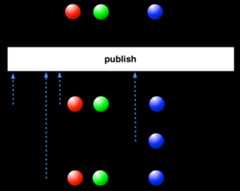
- Backpressure:
- The returned
ConnectableFlowablehonors backpressure for each of itsSubscribers and expects the sourcePublisherto honor backpressure as well. If this expectation is violated, the operator will signal aMissingBackpressureExceptionto itsSubscribers and disconnect. - Scheduler:
publishdoes not operate by default on a particularScheduler.
- Returns:
- a
ConnectableFlowablethat upon connection causes the source Publisher to emit items to itsSubscribers - See Also:
- ReactiveX operators documentation: Publish
publish
@CheckReturnValue@BackpressureSupport(value=FULL)@SchedulerSupport(value="none")public final <R> Flowable<R> publish(Function<? superFlowable<T>,? extendsPublisher<R>> selector)
Returns a Flowable that emits the results of invoking a specified selector on items emitted by aConnectableFlowablethat shares a single subscription to the underlying sequence.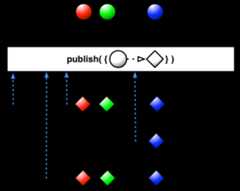
- Backpressure:
- The operator expects the source
Publisherto honor backpressure and if this expectation is violated, the operator will signal aMissingBackpressureExceptionthrough thePublisherprovided to the function. Since thePublisherreturned by theselectormay be independent of the providedPublisherto the function, the output's backpressure behavior is determined by this returnedPublisher. - Scheduler:
publishdoes not operate by default on a particularScheduler.
- Type Parameters:
R- the type of items emitted by the resulting Publisher- Parameters:
selector- a function that can use the multicasted source sequence as many times as needed, without causing multiple subscriptions to the source sequence. Subscribers to the given source will receive all notifications of the source from the time of the subscription forward.- Returns:
- a Flowable that emits the results of invoking the selector on the items emitted by a
ConnectableFlowablethat shares a single subscription to the underlying sequence - See Also:
- ReactiveX operators documentation: Publish
publish
@CheckReturnValue@NonNull@BackpressureSupport(value=FULL)@SchedulerSupport(value="none")public final <R> Flowable<R> publish(Function<? superFlowable<T>,? extendsPublisher<? extends R>> selector, int prefetch)
Returns a Flowable that emits the results of invoking a specified selector on items emitted by aConnectableFlowablethat shares a single subscription to the underlying sequence.- Backpressure:
- The operator expects the source
Publisherto honor backpressure and if this expectation is violated, the operator will signal aMissingBackpressureExceptionthrough thePublisherprovided to the function. Since thePublisherreturned by theselectormay be independent of the providedPublisherto the function, the output's backpressure behavior is determined by this returnedPublisher. - Scheduler:
publishdoes not operate by default on a particularScheduler.
- Type Parameters:
R- the type of items emitted by the resulting Publisher- Parameters:
selector- a function that can use the multicasted source sequence as many times as needed, without causing multiple subscriptions to the source sequence. Subscribers to the given source will receive all notifications of the source from the time of the subscription forward.prefetch- the number of elements to prefetch from the current Flowable- Returns:
- a Flowable that emits the results of invoking the selector on the items emitted by a
ConnectableFlowablethat shares a single subscription to the underlying sequence - See Also:
- ReactiveX operators documentation: Publish
publish
@CheckReturnValue@BackpressureSupport(value=FULL)@SchedulerSupport(value="none")public final ConnectableFlowable<T> publish(int bufferSize)
Returns aConnectableFlowable, which is a variety of Publisher that waits until itsconnectmethod is called before it begins emitting items to thoseSubscribers that have subscribed to it.- Backpressure:
- The returned
ConnectableFlowablehonors backpressure for each of itsSubscribers and expects the sourcePublisherto honor backpressure as well. If this expectation is violated, the operator will signal aMissingBackpressureExceptionto itsSubscribers and disconnect. - Scheduler:
publishdoes not operate by default on a particularScheduler.
- Parameters:
bufferSize- the number of elements to prefetch from the current Flowable- Returns:
- a
ConnectableFlowablethat upon connection causes the source Publisher to emit items to itsSubscribers - See Also:
- ReactiveX operators documentation: Publish
rebatchRequests
@CheckReturnValue@BackpressureSupport(value=FULL)@SchedulerSupport(value="none")public final Flowable<T> rebatchRequests(int n)
Requestsninitially from the upstream and then 75% ofnsubsequently after 75% ofnvalues have been emitted to the downstream.This operator allows preventing the downstream to trigger unbounded mode via
request(Long.MAX_VALUE)or compensate for the per-item overhead of small and frequent requests.- Backpressure:
- The operator expects backpressure from upstream and honors backpressure from downstream.
- Scheduler:
rebatchRequestsdoes not operate by default on a particularScheduler.
- Parameters:
n- the initial request amount, further request will happen after 75% of this value- Returns:
- the Publisher that rebatches request amounts from downstream
- Since:
- 2.0
reduce
@CheckReturnValue@NonNull@BackpressureSupport(value=UNBOUNDED_IN)@SchedulerSupport(value="none")public final Maybe<T> reduce(BiFunction<T,T,T> reducer)
Returns a Maybe that applies a specified accumulator function to the first item emitted by a source Publisher, then feeds the result of that function along with the second item emitted by the source Publisher into the same function, and so on until all items have been emitted by the finite source Publisher, and emits the final result from the final call to your function as its sole item.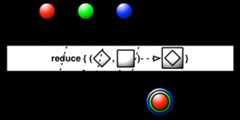
This technique, which is called "reduce" here, is sometimes called "aggregate," "fold," "accumulate," "compress," or "inject" in other programming contexts. Groovy, for instance, has an
injectmethod that does a similar operation on lists.Note that this operator requires the upstream to signal
onCompletefor the accumulator object to be emitted. Sources that are infinite and never complete will never emit anything through this operator and an infinite source may lead to a fatalOutOfMemoryError.- Backpressure:
- The operator honors backpressure of its downstream consumer and consumes the upstream source in unbounded mode.
- Scheduler:
reducedoes not operate by default on a particularScheduler.
- Parameters:
reducer- an accumulator function to be invoked on each item emitted by the source Publisher, whose result will be used in the next accumulator call- Returns:
- a Maybe that emits a single item that is the result of accumulating the items emitted by the source Flowable
- See Also:
- ReactiveX operators documentation: Reduce,Wikipedia: Fold (higher-order function)
reduce
@CheckReturnValue@NonNull@BackpressureSupport(value=UNBOUNDED_IN)@SchedulerSupport(value="none")public final <R> Single<R> reduce(R seed,BiFunction<R,? superT,R> reducer)
Returns a Single that applies a specified accumulator function to the first item emitted by a source Publisher and a specified seed value, then feeds the result of that function along with the second item emitted by a Publisher into the same function, and so on until all items have been emitted by the finite source Publisher, emitting the final result from the final call to your function as its sole item.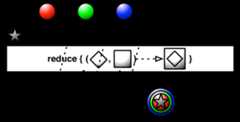
This technique, which is called "reduce" here, is sometimes called "aggregate," "fold," "accumulate," "compress," or "inject" in other programming contexts. Groovy, for instance, has an
injectmethod that does a similar operation on lists.Note that the
seedis shared among all subscribers to the resulting Publisher and may cause problems if it is mutable. To make sure each subscriber gets its own value, defer the application of this operator viadefer(Callable):Publisher<T> source = ... Single.defer(() -> source.reduce(new ArrayList<>(), (list, item) -> list.add(item))); // alternatively, by using compose to stay fluent source.compose(o -> Flowable.defer(() -> o.reduce(new ArrayList<>(), (list, item) -> list.add(item)).toFlowable()) ).firstOrError(); // or, by using reduceWith instead of reduce source.reduceWith(() -> new ArrayList<>(), (list, item) -> list.add(item)));Note that this operator requires the upstream to signal
onCompletefor the accumulator object to be emitted. Sources that are infinite and never complete will never emit anything through this operator and an infinite source may lead to a fatalOutOfMemoryError.- Backpressure:
- The operator honors backpressure of its downstream consumer and consumes the upstream source in unbounded mode.
- Scheduler:
reducedoes not operate by default on a particularScheduler.
- Type Parameters:
R- the accumulator and output value type- Parameters:
seed- the initial (seed) accumulator valuereducer- an accumulator function to be invoked on each item emitted by the source Publisher, the result of which will be used in the next accumulator call- Returns:
- a Single that emits a single item that is the result of accumulating the output from the items emitted by the source Publisher
- See Also:
- ReactiveX operators documentation: Reduce,Wikipedia: Fold (higher-order function),
reduceWith(Callable, BiFunction)
reduceWith
@CheckReturnValue@NonNull@BackpressureSupport(value=UNBOUNDED_IN)@SchedulerSupport(value="none")public final <R> Single<R> reduceWith(Callable<R> seedSupplier,BiFunction<R,? superT,R> reducer)
Returns a Single that applies a specified accumulator function to the first item emitted by a source Publisher and a seed value derived from calling a specified seedSupplier, then feeds the result of that function along with the second item emitted by a Publisher into the same function, and so on until all items have been emitted by the finite source Publisher, emitting the final result from the final call to your function as its sole item.This technique, which is called "reduce" here, is sometimes called "aggregate," "fold," "accumulate," "compress," or "inject" in other programming contexts. Groovy, for instance, has an
injectmethod that does a similar operation on lists.Note that this operator requires the upstream to signal
onCompletefor the accumulator object to be emitted. Sources that are infinite and never complete will never emit anything through this operator and an infinite source may lead to a fatalOutOfMemoryError.- Backpressure:
- The operator honors backpressure of its downstream consumer and consumes the upstream source in unbounded mode.
- Scheduler:
reduceWithdoes not operate by default on a particularScheduler.
- Type Parameters:
R- the accumulator and output value type- Parameters:
seedSupplier- the Callable that provides the initial (seed) accumulator value for each individual Subscriberreducer- an accumulator function to be invoked on each item emitted by the source Publisher, the result of which will be used in the next accumulator call- Returns:
- a Single that emits a single item that is the result of accumulating the output from the items emitted by the source Publisher
- See Also:
- ReactiveX operators documentation: Reduce,Wikipedia: Fold (higher-order function)
repeat
@CheckReturnValue@BackpressureSupport(value=FULL)@SchedulerSupport(value="none")public final Flowable<T> repeat()
Returns a Flowable that repeats the sequence of items emitted by the source Publisher indefinitely.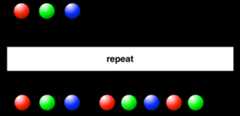
- Backpressure:
- The operator honors downstream backpressure and expects the source
Publisherto honor backpressure as well. If this expectation is violated, the operatormay throw anIllegalStateException. - Scheduler:
repeatdoes not operate by default on a particularScheduler.
- Returns:
- a Flowable that emits the items emitted by the source Publisher repeatedly and in sequence
- See Also:
- ReactiveX operators documentation: Repeat
repeat
@CheckReturnValue@BackpressureSupport(value=FULL)@SchedulerSupport(value="none")public final Flowable<T> repeat(long times)
Returns a Flowable that repeats the sequence of items emitted by the source Publisher at mostcounttimes.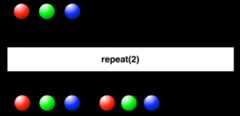
- Backpressure:
- The operator honors downstream backpressure and expects the source
Publisherto honor backpressure as well. If this expectation is violated, the operatormay throw anIllegalStateException. - Scheduler:
repeatdoes not operate by default on a particularScheduler.
- Parameters:
times- the number of times the source Publisher items are repeated, a count of 0 will yield an empty sequence- Returns:
- a Flowable that repeats the sequence of items emitted by the source Publisher at most
counttimes - Throws:
IllegalArgumentException- ifcountis less than zero- See Also:
- ReactiveX operators documentation: Repeat
repeatUntil
@CheckReturnValue@NonNull@BackpressureSupport(value=FULL)@SchedulerSupport(value="none")public final Flowable<T> repeatUntil(BooleanSupplier stop)
Returns a Flowable that repeats the sequence of items emitted by the source Publisher until the provided stop function returns true.- Backpressure:
- The operator honors downstream backpressure and expects the source
Publisherto honor backpressure as well. If this expectation is violated, the operatormay throw anIllegalStateException. - Scheduler:
repeatUntildoes not operate by default on a particularScheduler.
- Parameters:
stop- a boolean supplier that is called when the current Flowable completes and unless it returns false, the current Flowable is resubscribed- Returns:
- the new Flowable instance
- Throws:
NullPointerException- ifstopis null- See Also:
- ReactiveX operators documentation: Repeat
repeatWhen
@CheckReturnValue@NonNull@BackpressureSupport(value=FULL)@SchedulerSupport(value="none")public final Flowable<T> repeatWhen(Function<? superFlowable<Object>,? extendsPublisher<?>> handler)
Returns a Flowable that emits the same values as the source Publisher with the exception of anonComplete. AnonCompletenotification from the source will result in the emission of avoiditem to the Publisher provided as an argument to thenotificationHandlerfunction. If that Publisher callsonCompleteoronErrorthenrepeatWhenwill callonCompleteoronErroron the child subscription. Otherwise, this Publisher will resubscribe to the source Publisher.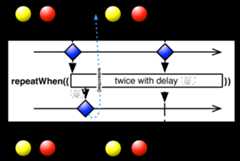
- Backpressure:
- The operator honors downstream backpressure and expects the source
Publisherto honor backpressure as well. If this expectation is violated, the operatormay throw anIllegalStateException. - Scheduler:
repeatWhendoes not operate by default on a particularScheduler.
- Parameters:
handler- receives a Publisher of notifications with which a user can complete or error, aborting the repeat.- Returns:
- the source Publisher modified with repeat logic
- See Also:
- ReactiveX operators documentation: Repeat
replay
@CheckReturnValue@BackpressureSupport(value=FULL)@SchedulerSupport(value="none")public final ConnectableFlowable<T> replay()
Returns aConnectableFlowablethat shares a single subscription to the underlying Publisher that will replay all of its items and notifications to any futureSubscriber. A Connectable Publisher resembles an ordinary Publisher, except that it does not begin emitting items when it is subscribed to, but only when itsconnectmethod is called.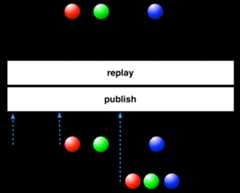
- Backpressure:
- This operator supports backpressure. Note that the upstream requests are determined by the child Subscriber which requests the largest amount: i.e., two child Subscribers with requests of 10 and 100 will request 100 elements from the underlying Publisher sequence.
- Scheduler:
- This version of
replaydoes not operate by default on a particularScheduler.
- Returns:
- a
ConnectableFlowablethat upon connection causes the source Publisher to emit its items to itsSubscribers - See Also:
- ReactiveX operators documentation: Replay
replay
@CheckReturnValue@NonNull@BackpressureSupport(value=FULL)@SchedulerSupport(value="none")public final <R> Flowable<R> replay(Function<? superFlowable<T>,? extendsPublisher<R>> selector)
Returns a Flowable that emits items that are the results of invoking a specified selector on the items emitted by aConnectableFlowablethat shares a single subscription to the source Publisher.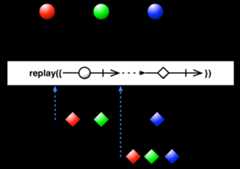
- Backpressure:
- This operator supports backpressure. Note that the upstream requests are determined by the child Subscriber which requests the largest amount: i.e., two child Subscribers with requests of 10 and 100 will request 100 elements from the underlying Publisher sequence.
- Scheduler:
- This version of
replaydoes not operate by default on a particularScheduler.
- Type Parameters:
R- the type of items emitted by the resulting Publisher- Parameters:
selector- the selector function, which can use the multicasted sequence as many times as needed, without causing multiple subscriptions to the Publisher- Returns:
- a Flowable that emits items that are the results of invoking the selector on a
ConnectableFlowablethat shares a single subscription to the source Publisher - See Also:
- ReactiveX operators documentation: Replay
replay
@CheckReturnValue@NonNull@BackpressureSupport(value=FULL)@SchedulerSupport(value="none")public final <R> Flowable<R> replay(Function<? superFlowable<T>,? extendsPublisher<R>> selector, int bufferSize)
Returns a Flowable that emits items that are the results of invoking a specified selector on items emitted by aConnectableFlowablethat shares a single subscription to the source Publisher, replayingbufferSizenotifications.Note that due to concurrency requirements,
replay(bufferSize)may hold strong references to more thanbufferSizesource emissions.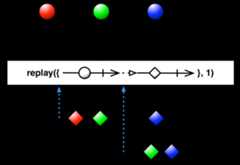
- Backpressure:
- This operator supports backpressure. Note that the upstream requests are determined by the child Subscriber which requests the largest amount: i.e., two child Subscribers with requests of 10 and 100 will request 100 elements from the underlying Publisher sequence.
- Scheduler:
- This version of
replaydoes not operate by default on a particularScheduler.
- Type Parameters:
R- the type of items emitted by the resulting Publisher- Parameters:
selector- the selector function, which can use the multicasted sequence as many times as needed, without causing multiple subscriptions to the PublisherbufferSize- the buffer size that limits the number of items the connectable Publisher can replay- Returns:
- a Flowable that emits items that are the results of invoking the selector on items emitted by a
ConnectableFlowablethat shares a single subscription to the source Publisher replaying no more thanbufferSizeitems - See Also:
- ReactiveX operators documentation: Replay
replay
@CheckReturnValue@BackpressureSupport(value=FULL)@SchedulerSupport(value="io.reactivex:computation")public final <R> Flowable<R> replay(Function<? superFlowable<T>,? extendsPublisher<R>> selector, int bufferSize, long time,TimeUnit unit)
Returns a Flowable that emits items that are the results of invoking a specified selector on items emitted by aConnectableFlowablethat shares a single subscription to the source Publisher, replaying no more thanbufferSizeitems that were emitted within a specified time window.Note that due to concurrency requirements,
replay(bufferSize)may hold strong references to more thanbufferSizesource emissions.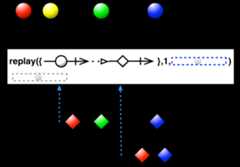
- Backpressure:
- This operator supports backpressure. Note that the upstream requests are determined by the child Subscriber which requests the largest amount: i.e., two child Subscribers with requests of 10 and 100 will request 100 elements from the underlying Publisher sequence.
- Scheduler:
- This version of
replayoperates by default on thecomputationScheduler.
- Type Parameters:
R- the type of items emitted by the resulting Publisher- Parameters:
selector- a selector function, which can use the multicasted sequence as many times as needed, without causing multiple subscriptions to the PublisherbufferSize- the buffer size that limits the number of items the connectable Publisher can replaytime- the duration of the window in which the replayed items must have been emittedunit- the time unit oftime- Returns:
- a Flowable that emits items that are the results of invoking the selector on items emitted by a
ConnectableFlowablethat shares a single subscription to the source Publisher, and replays no more thanbufferSizeitems that were emitted within the window defined bytime - See Also:
- ReactiveX operators documentation: Replay
replay
@CheckReturnValue@NonNull@BackpressureSupport(value=FULL)@SchedulerSupport(value="custom")public final <R> Flowable<R> replay(Function<? superFlowable<T>,? extendsPublisher<R>> selector, int bufferSize, long time,TimeUnit unit,Scheduler scheduler)
Returns a Flowable that emits items that are the results of invoking a specified selector on items emitted by aConnectableFlowablethat shares a single subscription to the source Publisher, replaying no more thanbufferSizeitems that were emitted within a specified time window.Note that due to concurrency requirements,
replay(bufferSize)may hold strong references to more thanbufferSizesource emissions.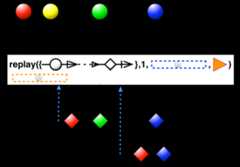
- Backpressure:
- This operator supports backpressure. Note that the upstream requests are determined by the child Subscriber which requests the largest amount: i.e., two child Subscribers with requests of 10 and 100 will request 100 elements from the underlying Publisher sequence.
- Scheduler:
- You specify which
Schedulerthis operator will use.
- Type Parameters:
R- the type of items emitted by the resulting Publisher- Parameters:
selector- a selector function, which can use the multicasted sequence as many times as needed, without causing multiple subscriptions to the PublisherbufferSize- the buffer size that limits the number of items the connectable Publisher can replaytime- the duration of the window in which the replayed items must have been emittedunit- the time unit oftimescheduler- the Scheduler that is the time source for the window- Returns:
- a Flowable that emits items that are the results of invoking the selector on items emitted by a
ConnectableFlowablethat shares a single subscription to the source Publisher, and replays no more thanbufferSizeitems that were emitted within the window defined bytime - Throws:
IllegalArgumentException- ifbufferSizeis less than zero- See Also:
- ReactiveX operators documentation: Replay
replay
@CheckReturnValue@NonNull@BackpressureSupport(value=FULL)@SchedulerSupport(value="custom")public final <R> Flowable<R> replay(Function<? superFlowable<T>,? extendsPublisher<R>> selector, int bufferSize,Scheduler scheduler)
Returns a Flowable that emits items that are the results of invoking a specified selector on items emitted by aConnectableFlowablethat shares a single subscription to the source Publisher, replaying a maximum ofbufferSizeitems.Note that due to concurrency requirements,
replay(bufferSize)may hold strong references to more thanbufferSizesource emissions.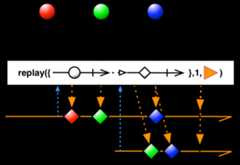
- Backpressure:
- This operator supports backpressure. Note that the upstream requests are determined by the child Subscriber which requests the largest amount: i.e., two child Subscribers with requests of 10 and 100 will request 100 elements from the underlying Publisher sequence.
- Scheduler:
- You specify which
Schedulerthis operator will use.
- Type Parameters:
R- the type of items emitted by the resulting Publisher- Parameters:
selector- a selector function, which can use the multicasted sequence as many times as needed, without causing multiple subscriptions to the PublisherbufferSize- the buffer size that limits the number of items the connectable Publisher can replayscheduler- the Scheduler on which the replay is observed- Returns:
- a Flowable that emits items that are the results of invoking the selector on items emitted by a
ConnectableFlowablethat shares a single subscription to the source Publisher, replaying no more thanbufferSizenotifications - See Also:
- ReactiveX operators documentation: Replay
replay
@CheckReturnValue@BackpressureSupport(value=FULL)@SchedulerSupport(value="io.reactivex:computation")public final <R> Flowable<R> replay(Function<? superFlowable<T>,? extendsPublisher<R>> selector, long time,TimeUnit unit)
Returns a Flowable that emits items that are the results of invoking a specified selector on items emitted by aConnectableFlowablethat shares a single subscription to the source Publisher, replaying all items that were emitted within a specified time window.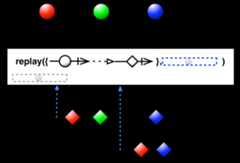
- Backpressure:
- This operator supports backpressure. Note that the upstream requests are determined by the child Subscriber which requests the largest amount: i.e., two child Subscribers with requests of 10 and 100 will request 100 elements from the underlying Publisher sequence.
- Scheduler:
- This version of
replayoperates by default on thecomputationScheduler.
- Type Parameters:
R- the type of items emitted by the resulting Publisher- Parameters:
selector- a selector function, which can use the multicasted sequence as many times as needed, without causing multiple subscriptions to the Publishertime- the duration of the window in which the replayed items must have been emittedunit- the time unit oftime- Returns:
- a Flowable that emits items that are the results of invoking the selector on items emitted by a
ConnectableFlowablethat shares a single subscription to the source Publisher, replaying all items that were emitted within the window defined bytime - See Also:
- ReactiveX operators documentation: Replay
replay
@CheckReturnValue@NonNull@BackpressureSupport(value=FULL)@SchedulerSupport(value="custom")public final <R> Flowable<R> replay(Function<? superFlowable<T>,? extendsPublisher<R>> selector, long time,TimeUnit unit,Scheduler scheduler)
Returns a Flowable that emits items that are the results of invoking a specified selector on items emitted by aConnectableFlowablethat shares a single subscription to the source Publisher, replaying all items that were emitted within a specified time window.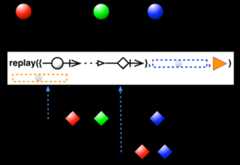
- Backpressure:
- This operator supports backpressure. Note that the upstream requests are determined by the child Subscriber which requests the largest amount: i.e., two child Subscribers with requests of 10 and 100 will request 100 elements from the underlying Publisher sequence.
- Scheduler:
- You specify which
Schedulerthis operator will use.
- Type Parameters:
R- the type of items emitted by the resulting Publisher- Parameters:
selector- a selector function, which can use the multicasted sequence as many times as needed, without causing multiple subscriptions to the Publishertime- the duration of the window in which the replayed items must have been emittedunit- the time unit oftimescheduler- the scheduler that is the time source for the window- Returns:
- a Flowable that emits items that are the results of invoking the selector on items emitted by a
ConnectableFlowablethat shares a single subscription to the source Publisher, replaying all items that were emitted within the window defined bytime - See Also:
- ReactiveX operators documentation: Replay
replay
@CheckReturnValue@NonNull@BackpressureSupport(value=FULL)@SchedulerSupport(value="custom")public final <R> Flowable<R> replay(Function<? superFlowable<T>,? extendsPublisher<R>> selector,Scheduler scheduler)
Returns a Flowable that emits items that are the results of invoking a specified selector on items emitted by aConnectableFlowablethat shares a single subscription to the source Publisher.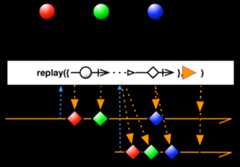
- Backpressure:
- This operator supports backpressure. Note that the upstream requests are determined by the child Subscriber which requests the largest amount: i.e., two child Subscribers with requests of 10 and 100 will request 100 elements from the underlying Publisher sequence.
- Scheduler:
- You specify which
Schedulerthis operator will use.
- Type Parameters:
R- the type of items emitted by the resulting Publisher- Parameters:
selector- a selector function, which can use the multicasted sequence as many times as needed, without causing multiple subscriptions to the Publisherscheduler- the Scheduler where the replay is observed- Returns:
- a Flowable that emits items that are the results of invoking the selector on items emitted by a
ConnectableFlowablethat shares a single subscription to the source Publisher, replaying all items - See Also:
- ReactiveX operators documentation: Replay
replay
@CheckReturnValue@BackpressureSupport(value=FULL)@SchedulerSupport(value="none")public final ConnectableFlowable<T> replay(int bufferSize)
Returns aConnectableFlowablethat shares a single subscription to the source Publisher that replays at mostbufferSizeitems emitted by that Publisher. A Connectable Publisher resembles an ordinary Publisher, except that it does not begin emitting items when it is subscribed to, but only when itsconnectmethod is called.Note that due to concurrency requirements,
replay(bufferSize)may hold strong references to more thanbufferSizesource emissions.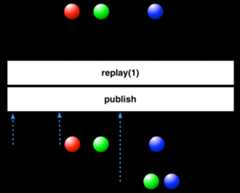
- Backpressure:
- This operator supports backpressure. Note that the upstream requests are determined by the child Subscriber which requests the largest amount: i.e., two child Subscribers with requests of 10 and 100 will request 100 elements from the underlying Publisher sequence.
- Scheduler:
- This version of
replaydoes not operate by default on a particularScheduler.
- Parameters:
bufferSize- the buffer size that limits the number of items that can be replayed- Returns:
- a
ConnectableFlowablethat shares a single subscription to the source Publisher and replays at mostbufferSizeitems emitted by that Publisher - See Also:
- ReactiveX operators documentation: Replay
replay
@CheckReturnValue@BackpressureSupport(value=FULL)@SchedulerSupport(value="io.reactivex:computation")public final ConnectableFlowable<T> replay(int bufferSize, long time,TimeUnit unit)
Returns aConnectableFlowablethat shares a single subscription to the source Publisher and replays at mostbufferSizeitems that were emitted during a specified time window. A Connectable Publisher resembles an ordinary Publisher, except that it does not begin emitting items when it is subscribed to, but only when itsconnectmethod is called.Note that due to concurrency requirements,
replay(bufferSize)may hold strong references to more thanbufferSizesource emissions.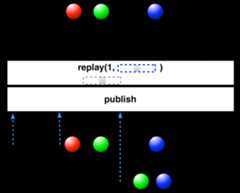
- Backpressure:
- This operator supports backpressure. Note that the upstream requests are determined by the child Subscriber which requests the largest amount: i.e., two child Subscribers with requests of 10 and 100 will request 100 elements from the underlying Publisher sequence.
- Scheduler:
- This version of
replayoperates by default on thecomputationScheduler.
- Parameters:
bufferSize- the buffer size that limits the number of items that can be replayedtime- the duration of the window in which the replayed items must have been emittedunit- the time unit oftime- Returns:
- a
ConnectableFlowablethat shares a single subscription to the source Publisher and replays at mostbufferSizeitems that were emitted during the window defined bytime - See Also:
- ReactiveX operators documentation: Replay
replay
@CheckReturnValue@BackpressureSupport(value=FULL)@SchedulerSupport(value="custom")public final ConnectableFlowable<T> replay(int bufferSize, long time,TimeUnit unit,Scheduler scheduler)
Returns aConnectableFlowablethat shares a single subscription to the source Publisher and that replays a maximum ofbufferSizeitems that are emitted within a specified time window. A Connectable Publisher resembles an ordinary Publisher, except that it does not begin emitting items when it is subscribed to, but only when itsconnectmethod is called.Note that due to concurrency requirements,
replay(bufferSize)may hold strong references to more thanbufferSizesource emissions.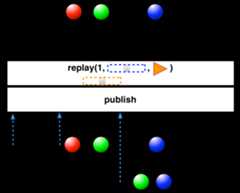
- Backpressure:
- This operator supports backpressure. Note that the upstream requests are determined by the child Subscriber which requests the largest amount: i.e., two child Subscribers with requests of 10 and 100 will request 100 elements from the underlying Publisher sequence.
- Scheduler:
- You specify which
Schedulerthis operator will use.
- Parameters:
bufferSize- the buffer size that limits the number of items that can be replayedtime- the duration of the window in which the replayed items must have been emittedunit- the time unit oftimescheduler- the scheduler that is used as a time source for the window- Returns:
- a
ConnectableFlowablethat shares a single subscription to the source Publisher and replays at mostbufferSizeitems that were emitted during the window defined bytime - Throws:
IllegalArgumentException- ifbufferSizeis less than zero- See Also:
- ReactiveX operators documentation: Replay
replay
@CheckReturnValue@BackpressureSupport(value=FULL)@SchedulerSupport(value="custom")public final ConnectableFlowable<T> replay(int bufferSize,Scheduler scheduler)
Returns aConnectableFlowablethat shares a single subscription to the source Publisher and replays at mostbufferSizeitems emitted by that Publisher. A Connectable Publisher resembles an ordinary Publisher, except that it does not begin emitting items when it is subscribed to, but only when itsconnectmethod is called.Note that due to concurrency requirements,
replay(bufferSize)may hold strong references to more thanbufferSizesource emissions.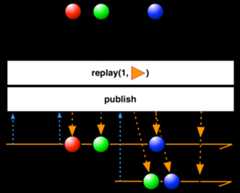
- Backpressure:
- This operator supports backpressure. Note that the upstream requests are determined by the child Subscriber which requests the largest amount: i.e., two child Subscribers with requests of 10 and 100 will request 100 elements from the underlying Publisher sequence.
- Scheduler:
- You specify which
Schedulerthis operator will use.
- Parameters:
bufferSize- the buffer size that limits the number of items that can be replayedscheduler- the scheduler on which the Subscribers will observe the emitted items- Returns:
- a
ConnectableFlowablethat shares a single subscription to the source Publisher and replays at mostbufferSizeitems that were emitted by the Publisher - See Also:
- ReactiveX operators documentation: Replay
replay
@CheckReturnValue@BackpressureSupport(value=FULL)@SchedulerSupport(value="io.reactivex:computation")public final ConnectableFlowable<T> replay(long time,TimeUnit unit)
Returns aConnectableFlowablethat shares a single subscription to the source Publisher and replays all items emitted by that Publisher within a specified time window. A Connectable Publisher resembles an ordinary Publisher, except that it does not begin emitting items when it is subscribed to, but only when itsconnectmethod is called.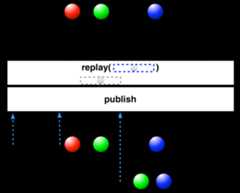
- Backpressure:
- This operator supports backpressure. Note that the upstream requests are determined by the child Subscriber which requests the largest amount: i.e., two child Subscribers with requests of 10 and 100 will request 100 elements from the underlying Publisher sequence.
- Scheduler:
- This version of
replayoperates by default on thecomputationScheduler.
- Parameters:
time- the duration of the window in which the replayed items must have been emittedunit- the time unit oftime- Returns:
- a
ConnectableFlowablethat shares a single subscription to the source Publisher and replays the items that were emitted during the window defined bytime - See Also:
- ReactiveX operators documentation: Replay
replay
@CheckReturnValue@BackpressureSupport(value=FULL)@SchedulerSupport(value="custom")public final ConnectableFlowable<T> replay(long time,TimeUnit unit,Scheduler scheduler)
Returns aConnectableFlowablethat shares a single subscription to the source Publisher and replays all items emitted by that Publisher within a specified time window. A Connectable Publisher resembles an ordinary Publisher, except that it does not begin emitting items when it is subscribed to, but only when itsconnectmethod is called.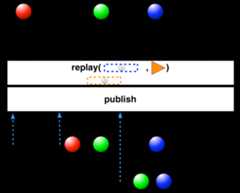
- Backpressure:
- This operator supports backpressure. Note that the upstream requests are determined by the child Subscriber which requests the largest amount: i.e., two child Subscribers with requests of 10 and 100 will request 100 elements from the underlying Publisher sequence.
- Scheduler:
- You specify which
Schedulerthis operator will use.
- Parameters:
time- the duration of the window in which the replayed items must have been emittedunit- the time unit oftimescheduler- the Scheduler that is the time source for the window- Returns:
- a
ConnectableFlowablethat shares a single subscription to the source Publisher and replays the items that were emitted during the window defined bytime - See Also:
- ReactiveX operators documentation: Replay
replay
@CheckReturnValue@BackpressureSupport(value=FULL)@SchedulerSupport(value="custom")public final ConnectableFlowable<T> replay(Scheduler scheduler)
Returns aConnectableFlowablethat shares a single subscription to the source Publisher that will replay all of its items and notifications to any futureSubscriberon the givenScheduler. A Connectable Publisher resembles an ordinary Publisher, except that it does not begin emitting items when it is subscribed to, but only when itsconnectmethod is called.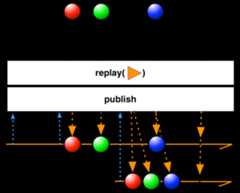
- Backpressure:
- This operator supports backpressure. Note that the upstream requests are determined by the child Subscriber which requests the largest amount: i.e., two child Subscribers with requests of 10 and 100 will request 100 elements from the underlying Publisher sequence.
- Scheduler:
- You specify which
Schedulerthis operator will use.
- Parameters:
scheduler- the Scheduler on which the Subscribers will observe the emitted items- Returns:
- a
ConnectableFlowablethat shares a single subscription to the source Publisher that will replay all of its items and notifications to any futureSubscriberon the givenScheduler - See Also:
- ReactiveX operators documentation: Replay
retry
@CheckReturnValue@BackpressureSupport(value=FULL)@SchedulerSupport(value="none")public final Flowable<T> retry()
Returns a Flowable that mirrors the source Publisher, resubscribing to it if it callsonError(infinite retry count).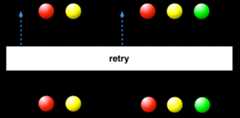
If the source Publisher calls
Subscriber.onError(java.lang.Throwable), this method will resubscribe to the source Publisher rather than propagating theonErrorcall.Any and all items emitted by the source Publisher will be emitted by the resulting Publisher, even those emitted during failed subscriptions. For example, if a Publisher fails at first but emits
[1, 2]then succeeds the second time and emits[1, 2, 3, 4, 5]then the complete sequence of emissions and notifications would be[1, 2, 1, 2, 3, 4, 5, onComplete].- Backpressure:
- The operator honors downstream backpressure and expects the source
Publisherto honor backpressure as well. If this expectation is violated, the operatormay throw anIllegalStateException. - Scheduler:
retrydoes not operate by default on a particularScheduler.
- Returns:
- the source Publisher modified with retry logic
- See Also:
- ReactiveX operators documentation: Retry
retry
@CheckReturnValue@NonNull@BackpressureSupport(value=FULL)@SchedulerSupport(value="none")public final Flowable<T> retry(BiPredicate<? superInteger,? superThrowable> predicate)
Returns a Flowable that mirrors the source Publisher, resubscribing to it if it callsonErrorand the predicate returns true for that specific exception and retry count.- Backpressure:
- The operator honors downstream backpressure and expects the source
Publisherto honor backpressure as well. If this expectation is violated, the operatormay throw anIllegalStateException. - Scheduler:
retrydoes not operate by default on a particularScheduler.
- Parameters:
predicate- the predicate that determines if a resubscription may happen in case of a specific exception and retry count- Returns:
- the source Publisher modified with retry logic
- See Also:
retry(),ReactiveX operators documentation: Retry
retry
@CheckReturnValue@BackpressureSupport(value=FULL)@SchedulerSupport(value="none")public final Flowable<T> retry(long count)
Returns a Flowable that mirrors the source Publisher, resubscribing to it if it callsonErrorup to a specified number of retries.If the source Publisher calls
Subscriber.onError(java.lang.Throwable), this method will resubscribe to the source Publisher for a maximum ofcountresubscriptions rather than propagating theonErrorcall.Any and all items emitted by the source Publisher will be emitted by the resulting Publisher, even those emitted during failed subscriptions. For example, if a Publisher fails at first but emits
[1, 2]then succeeds the second time and emits[1, 2, 3, 4, 5]then the complete sequence of emissions and notifications would be[1, 2, 1, 2, 3, 4, 5, onComplete].- Backpressure:
- The operator honors downstream backpressure and expects the source
Publisherto honor backpressure as well. If this expectation is violated, the operatormay throw anIllegalStateException. - Scheduler:
retrydoes not operate by default on a particularScheduler.
- Parameters:
count- the number of times to resubscribe if the current Flowable fails- Returns:
- the source Publisher modified with retry logic
- See Also:
- ReactiveX operators documentation: Retry
retry
@CheckReturnValue@NonNull@BackpressureSupport(value=FULL)@SchedulerSupport(value="none")public final Flowable<T> retry(long times,Predicate<? superThrowable> predicate)
Retries at most times or until the predicate returns false, whichever happens first.- Backpressure:
- The operator honors downstream backpressure and expects the source
Publisherto honor backpressure as well. If this expectation is violated, the operatormay throw anIllegalStateException. - Scheduler:
retrydoes not operate by default on a particularScheduler.
- Parameters:
times- the number of times to resubscribe if the current Flowable failspredicate- the predicate called with the failure Throwable and should return true to trigger a retry.- Returns:
- the new Flowable instance
retry
@CheckReturnValue@BackpressureSupport(value=FULL)@SchedulerSupport(value="none")public final Flowable<T> retry(Predicate<? superThrowable> predicate)
Retries the current Flowable if the predicate returns true.- Backpressure:
- The operator honors downstream backpressure and expects the source
Publisherto honor backpressure as well. If this expectation is violated, the operatormay throw anIllegalStateException. - Scheduler:
retrydoes not operate by default on a particularScheduler.
- Parameters:
predicate- the predicate that receives the failure Throwable and should return true to trigger a retry.- Returns:
- the new Flowable instance
retryUntil
@CheckReturnValue@NonNull@BackpressureSupport(value=FULL)@SchedulerSupport(value="none")public final Flowable<T> retryUntil(BooleanSupplier stop)
Retries until the given stop function returns true.- Backpressure:
- The operator honors downstream backpressure and expects the source
Publisherto honor backpressure as well. If this expectation is violated, the operatormay throw anIllegalStateException. - Scheduler:
retryUntildoes not operate by default on a particularScheduler.
- Parameters:
stop- the function that should return true to stop retrying- Returns:
- the new Flowable instance
retryWhen
@CheckReturnValue@NonNull@BackpressureSupport(value=FULL)@SchedulerSupport(value="none")public final Flowable<T> retryWhen(Function<? superFlowable<Throwable>,? extendsPublisher<?>> handler)
Returns a Flowable that emits the same values as the source Publisher with the exception of anonError. AnonErrornotification from the source will result in the emission of aThrowableitem to the Publisher provided as an argument to thenotificationHandlerfunction. If that Publisher callsonCompleteoronErrorthenretrywill callonCompleteoronErroron the child subscription. Otherwise, this Publisher will resubscribe to the source Publisher.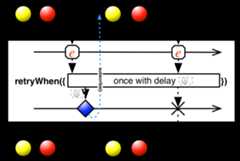
Example: This retries 3 times, each time incrementing the number of seconds it waits.
Output is:Flowable.create((FlowableEmitter<? super String> s) -> { System.out.println("subscribing"); s.onError(new RuntimeException("always fails")); }, BackpressureStrategy.BUFFER).retryWhen(attempts -> { return attempts.zipWith(Flowable.range(1, 3), (n, i) -> i).flatMap(i -> { System.out.println("delay retry by " + i + " second(s)"); return Flowable.timer(i, TimeUnit.SECONDS); }); }).blockingForEach(System.out::println);subscribing delay retry by 1 second(s) subscribing delay retry by 2 second(s) subscribing delay retry by 3 second(s) subscribingNote that the inner
Publisherreturned by the handler function should signal eitheronNext,onErrororonCompletein response to the receivedThrowableto indicate the operator should retry or terminate. If the upstream to the operator is asynchronous, signaling onNext followed by onComplete immediately may result in the sequence to be completed immediately. Similarly, if this innerPublishersignalsonErrororonCompletewhile the upstream is active, the sequence is terminated with the same signal immediately.The following example demonstrates how to retry an asynchronous source with a delay:
Flowable.timer(1, TimeUnit.SECONDS) .doOnSubscribe(s -> System.out.println("subscribing")) .map(v -> { throw new RuntimeException(); }) .retryWhen(errors -> { AtomicInteger counter = new AtomicInteger(); return errors .takeWhile(e -> counter.getAndIncrement() != 3) .flatMap(e -> { System.out.println("delay retry by " + counter.get() + " second(s)"); return Flowable.timer(counter.get(), TimeUnit.SECONDS); }); }) .blockingSubscribe(System.out::println, System.out::println);- Backpressure:
- The operator honors downstream backpressure and expects both the source and inner
Publishers to honor backpressure as well. If this expectation is violated, the operatormay throw anIllegalStateException. - Scheduler:
retryWhendoes not operate by default on a particularScheduler.
- Parameters:
handler- receives a Publisher of notifications with which a user can complete or error, aborting the retry- Returns:
- the source Publisher modified with retry logic
- See Also:
- ReactiveX operators documentation: Retry
safeSubscribe
@BackpressureSupport(value=PASS_THROUGH)@SchedulerSupport(value="none")public final void safeSubscribe(Subscriber<? superT> s)
Subscribes to the current Flowable and wraps the given Subscriber into a SafeSubscriber (if not already a SafeSubscriber) that deals with exceptions thrown by a misbehaving Subscriber (that doesn't follow the Reactive Streams specification).- Backpressure:
- This operator leaves the reactive world and the backpressure behavior depends on the Subscriber's behavior.
- Scheduler:
safeSubscribedoes not operate by default on a particularScheduler.
- Parameters:
s- the incoming Subscriber instance- Throws:
NullPointerException- if s is null
sample
@CheckReturnValue@BackpressureSupport(value=ERROR)@SchedulerSupport(value="io.reactivex:computation")public final Flowable<T> sample(long period,TimeUnit unit)
Returns a Flowable that emits the most recently emitted item (if any) emitted by the source Publisher within periodic time intervals.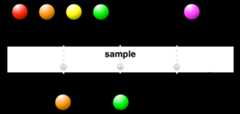
- Backpressure:
- This operator does not support backpressure as it uses time to control data flow.
- Scheduler:
sampleoperates by default on thecomputationScheduler.
- Parameters:
period- the sampling rateunit- theTimeUnitin whichperiodis defined- Returns:
- a Flowable that emits the results of sampling the items emitted by the source Publisher at the specified time interval
- See Also:
- ReactiveX operators documentation: Sample,RxJava wiki: Backpressure,
throttleLast(long, TimeUnit)
sample
@CheckReturnValue@BackpressureSupport(value=ERROR)@SchedulerSupport(value="io.reactivex:computation")public final Flowable<T> sample(long period,TimeUnit unit, boolean emitLast)
Returns a Flowable that emits the most recently emitted item (if any) emitted by the source Publisher within periodic time intervals and optionally emit the very last upstream item when the upstream completes.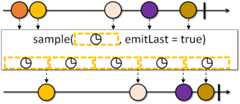
- Backpressure:
- This operator does not support backpressure as it uses time to control data flow.
- Scheduler:
sampleoperates by default on thecomputationScheduler.
History: 2.0.5 - experimental
- Parameters:
period- the sampling rateunit- theTimeUnitin whichperiodis definedemitLast- if true and the upstream completes while there is still an unsampled item available, that item is emitted to downstream before completion if false, an unsampled last item is ignored.- Returns:
- a Flowable that emits the results of sampling the items emitted by the source Publisher at the specified time interval
- Since:
- 2.1
- See Also:
- ReactiveX operators documentation: Sample,RxJava wiki: Backpressure,
throttleLast(long, TimeUnit)
sample
@CheckReturnValue@NonNull@BackpressureSupport(value=ERROR)@SchedulerSupport(value="custom")public final Flowable<T> sample(long period,TimeUnit unit,Scheduler scheduler)
Returns a Flowable that emits the most recently emitted item (if any) emitted by the source Publisher within periodic time intervals, where the intervals are defined on a particular Scheduler.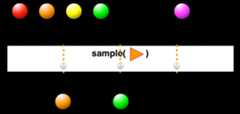
- Backpressure:
- This operator does not support backpressure as it uses time to control data flow.
- Scheduler:
- You specify which
Schedulerthis operator will use.
- Parameters:
period- the sampling rateunit- theTimeUnitin whichperiodis definedscheduler- theSchedulerto use when sampling- Returns:
- a Flowable that emits the results of sampling the items emitted by the source Publisher at the specified time interval
- See Also:
- ReactiveX operators documentation: Sample,RxJava wiki: Backpressure,
throttleLast(long, TimeUnit, Scheduler)
sample
@CheckReturnValue@NonNull@BackpressureSupport(value=ERROR)@SchedulerSupport(value="custom")public final Flowable<T> sample(long period,TimeUnit unit,Scheduler scheduler, boolean emitLast)
Returns a Flowable that emits the most recently emitted item (if any) emitted by the source Publisher within periodic time intervals, where the intervals are defined on a particular Scheduler and optionally emit the very last upstream item when the upstream completes.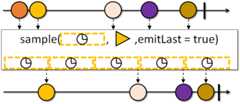
- Backpressure:
- This operator does not support backpressure as it uses time to control data flow.
- Scheduler:
- You specify which
Schedulerthis operator will use.
History: 2.0.5 - experimental
- Parameters:
period- the sampling rateunit- theTimeUnitin whichperiodis definedscheduler- theSchedulerto use when samplingemitLast- if true and the upstream completes while there is still an unsampled item available, that item is emitted to downstream before completion if false, an unsampled last item is ignored.- Returns:
- a Flowable that emits the results of sampling the items emitted by the source Publisher at the specified time interval
- Since:
- 2.1
- See Also:
- ReactiveX operators documentation: Sample,RxJava wiki: Backpressure,
throttleLast(long, TimeUnit, Scheduler)
sample
@CheckReturnValue@NonNull@BackpressureSupport(value=ERROR)@SchedulerSupport(value="none")public final <U> Flowable<T> sample(Publisher<U> sampler)
Returns a Flowable that, when the specifiedsamplerPublisher emits an item or completes, emits the most recently emitted item (if any) emitted by the source Publisher since the previous emission from thesamplerPublisher.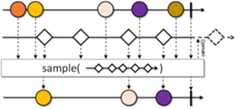
- Backpressure:
- This operator does not support backpressure as it uses the emissions of the
samplerPublisher to control data flow. - Scheduler:
- This version of
sampledoes not operate by default on a particularScheduler.
- Type Parameters:
U- the element type of the sampler Publisher- Parameters:
sampler- the Publisher to use for sampling the source Publisher- Returns:
- a Flowable that emits the results of sampling the items emitted by this Publisher whenever the
samplerPublisher emits an item or completes - See Also:
- ReactiveX operators documentation: Sample,RxJava wiki: Backpressure
sample
@CheckReturnValue@NonNull@BackpressureSupport(value=ERROR)@SchedulerSupport(value="none")public final <U> Flowable<T> sample(Publisher<U> sampler, boolean emitLast)
Returns a Flowable that, when the specifiedsamplerPublisher emits an item or completes, emits the most recently emitted item (if any) emitted by the source Publisher since the previous emission from thesamplerPublisher and optionally emit the very last upstream item when the upstream or other Publisher complete.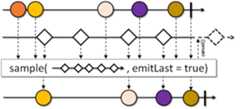
- Backpressure:
- This operator does not support backpressure as it uses the emissions of the
samplerPublisher to control data flow. - Scheduler:
- This version of
sampledoes not operate by default on a particularScheduler.
History: 2.0.5 - experimental
- Type Parameters:
U- the element type of the sampler Publisher- Parameters:
sampler- the Publisher to use for sampling the source PublisheremitLast- if true and the upstream completes while there is still an unsampled item available, that item is emitted to downstream before completion if false, an unsampled last item is ignored.- Returns:
- a Flowable that emits the results of sampling the items emitted by this Publisher whenever the
samplerPublisher emits an item or completes - Since:
- 2.1
- See Also:
- ReactiveX operators documentation: Sample,RxJava wiki: Backpressure
scan
@CheckReturnValue@NonNull@BackpressureSupport(value=FULL)@SchedulerSupport(value="none")public final Flowable<T> scan(BiFunction<T,T,T> accumulator)
Returns a Flowable that applies a specified accumulator function to the first item emitted by a source Publisher, then feeds the result of that function along with the second item emitted by the source Publisher into the same function, and so on until all items have been emitted by the source Publisher, emitting the result of each of these iterations.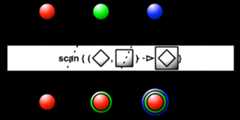
This sort of function is sometimes called an accumulator.
- Backpressure:
- The operator honors downstream backpressure and expects the source
Publisherto honor backpressure as well. Violating this expectation, aMissingBackpressureExceptionmay get signaled somewhere downstream. - Scheduler:
scandoes not operate by default on a particularScheduler.
- Parameters:
accumulator- an accumulator function to be invoked on each item emitted by the source Publisher, whose result will be emitted toSubscribers viaonNextand used in the next accumulator call- Returns:
- a Flowable that emits the results of each call to the accumulator function
- See Also:
- ReactiveX operators documentation: Scan
scan
@CheckReturnValue@NonNull@BackpressureSupport(value=FULL)@SchedulerSupport(value="none")public final <R> Flowable<R> scan(R initialValue,BiFunction<R,? superT,R> accumulator)
Returns a Flowable that applies a specified accumulator function to the first item emitted by a source Publisher and a seed value, then feeds the result of that function along with the second item emitted by the source Publisher into the same function, and so on until all items have been emitted by the source Publisher, emitting the result of each of these iterations.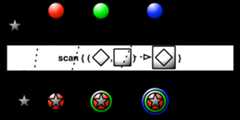
This sort of function is sometimes called an accumulator.
Note that the Publisher that results from this method will emit
initialValueas its first emitted item.Note that the
initialValueis shared among all subscribers to the resulting Publisher and may cause problems if it is mutable. To make sure each subscriber gets its own value, defer the application of this operator viadefer(Callable):Publisher<T> source = ... Flowable.defer(() -> source.scan(new ArrayList<>(), (list, item) -> list.add(item))); // alternatively, by using compose to stay fluent source.compose(o -> Flowable.defer(() -> o.scan(new ArrayList<>(), (list, item) -> list.add(item))) );- Backpressure:
- The operator honors downstream backpressure and expects the source
Publisherto honor backpressure as well. Violating this expectation, aMissingBackpressureExceptionmay get signaled somewhere downstream. - Scheduler:
scandoes not operate by default on a particularScheduler.
- Type Parameters:
R- the initial, accumulator and result type- Parameters:
initialValue- the initial (seed) accumulator itemaccumulator- an accumulator function to be invoked on each item emitted by the source Publisher, whose result will be emitted toSubscribers viaonNextand used in the next accumulator call- Returns:
- a Flowable that emits
initialValuefollowed by the results of each call to the accumulator function - See Also:
- ReactiveX operators documentation: Scan
scanWith
@CheckReturnValue@NonNull@BackpressureSupport(value=FULL)@SchedulerSupport(value="none")public final <R> Flowable<R> scanWith(Callable<R> seedSupplier,BiFunction<R,? superT,R> accumulator)
Returns a Flowable that applies a specified accumulator function to the first item emitted by a source Publisher and a seed value, then feeds the result of that function along with the second item emitted by the source Publisher into the same function, and so on until all items have been emitted by the source Publisher, emitting the result of each of these iterations.This sort of function is sometimes called an accumulator.
Note that the Publisher that results from this method will emit the value returned by the
seedSupplieras its first item.- Backpressure:
- The operator honors downstream backpressure and expects the source
Publisherto honor backpressure as well. Violating this expectation, aMissingBackpressureExceptionmay get signaled somewhere downstream. - Scheduler:
scanWithdoes not operate by default on a particularScheduler.
- Type Parameters:
R- the initial, accumulator and result type- Parameters:
seedSupplier- a Callable that returns the initial (seed) accumulator item for each individual Subscriberaccumulator- an accumulator function to be invoked on each item emitted by the source Publisher, whose result will be emitted toSubscribers viaonNextand used in the next accumulator call- Returns:
- a Flowable that emits
initialValuefollowed by the results of each call to the accumulator function - See Also:
- ReactiveX operators documentation: Scan
serialize
@CheckReturnValue@BackpressureSupport(value=PASS_THROUGH)@SchedulerSupport(value="none")public final Flowable<T> serialize()
Forces a Publisher's emissions and notifications to be serialized and for it to obeythe Publisher contract in other ways.It is possible for a Publisher to invoke its Subscribers' methods asynchronously, perhaps from different threads. This could make such a Publisher poorly-behaved, in that it might try to invoke
onCompleteoronErrorbefore one of itsonNextinvocations, or it might callonNextfrom two different threads concurrently. You can force such a Publisher to be well-behaved and sequential by applying theserializemethod to it.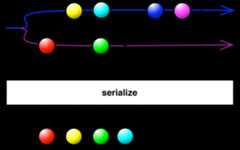
- Backpressure:
- The operator doesn't interfere with backpressure which is determined by the source
Publisher's backpressure behavior. - Scheduler:
serializedoes not operate by default on a particularScheduler.
- Returns:
- a
Publisherthat is guaranteed to be well-behaved and to make only serialized calls to its Subscribers - See Also:
- ReactiveX operators documentation: Serialize
share
@CheckReturnValue@BackpressureSupport(value=FULL)@SchedulerSupport(value="none")public final Flowable<T> share()
Returns a newPublisherthat multicasts (and shares a single subscription to) the originalPublisher. As long as there is at least oneSubscriberthisPublisherwill be subscribed and emitting data. When all subscribers have canceled it will cancel the sourcePublisher.This is an alias for
publish().refCount().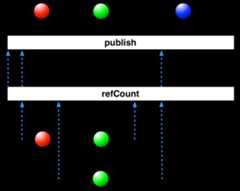
- Backpressure:
- The operator honors backpressure and expects the source
Publisherto honor backpressure as well. If this expectation is violated, the operator will signal aMissingBackpressureExceptionto itsSubscribers. - Scheduler:
sharedoes not operate by default on a particularScheduler.
- Returns:
- a
Publisherthat upon connection causes the sourcePublisherto emit items to itsSubscribers - See Also:
- ReactiveX operators documentation: RefCount
singleElement
@CheckReturnValue@BackpressureSupport(value=UNBOUNDED_IN)@SchedulerSupport(value="none")public final Maybe<T> singleElement()
Returns a Maybe that completes if this Flowable is empty, signals one item if this Flowable signals exactly one item or signals anIllegalArgumentExceptionif this Flowable signals more than one item.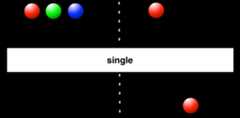
- Backpressure:
- The operator honors backpressure from downstream and consumes the source
Publisherin an unbounded manner (i.e., without applying backpressure). - Scheduler:
singleElementdoes not operate by default on a particularScheduler.
- Returns:
- a Maybe that emits the single item emitted by the source Publisher
- See Also:
- ReactiveX operators documentation: First
single
@CheckReturnValue@NonNull@BackpressureSupport(value=UNBOUNDED_IN)@SchedulerSupport(value="none")public final Single<T> single(T defaultItem)
Returns a Single that emits the single item emitted by the source Publisher, if that Publisher emits only a single item, or a default item if the source Publisher emits no items. If the source Publisher emits more than one item, anIllegalArgumentExceptionis signaled instead.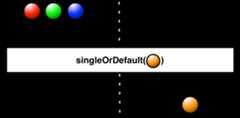
- Backpressure:
- The operator honors backpressure from downstream and consumes the source
Publisherin an unbounded manner (i.e., without applying backpressure). - Scheduler:
singledoes not operate by default on a particularScheduler.
- Parameters:
defaultItem- a default value to emit if the source Publisher emits no item- Returns:
- a Single that emits the single item emitted by the source Publisher, or a default item if the source Publisher is empty
- See Also:
- ReactiveX operators documentation: First
singleOrError
@CheckReturnValue@BackpressureSupport(value=UNBOUNDED_IN)@SchedulerSupport(value="none")public final Single<T> singleOrError()
Returns a Single that emits the single item emitted by this Flowable, if this Flowable emits only a single item, otherwise if this Flowable completes without emitting any items aNoSuchElementExceptionwill be signaled and if this Flowable emits more than one item, anIllegalArgumentExceptionwill be signaled.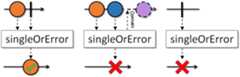
- Backpressure:
- The operator honors backpressure from downstream and consumes the source
Publisherin an unbounded manner (i.e., without applying backpressure). - Scheduler:
singleOrErrordoes not operate by default on a particularScheduler.
- Returns:
- the new Single instance
- See Also:
- ReactiveX operators documentation: First
skip
@CheckReturnValue@BackpressureSupport(value=FULL)@SchedulerSupport(value="none")public final Flowable<T> skip(long count)
Returns a Flowable that skips the firstcountitems emitted by the source Publisher and emits the remainder.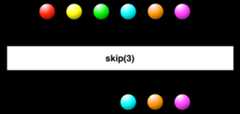
- Backpressure:
- The operator doesn't interfere with backpressure which is determined by the source
Publisher's backpressure behavior. - Scheduler:
- This version of
skipdoes not operate by default on a particularScheduler.
- Parameters:
count- the number of items to skip- Returns:
- a Flowable that is identical to the source Publisher except that it does not emit the first
countitems that the source Publisher emits - See Also:
- ReactiveX operators documentation: Skip
skip
@CheckReturnValue@BackpressureSupport(value=FULL)@SchedulerSupport(value="none")public final Flowable<T> skip(long time,TimeUnit unit)
Returns a Flowable that skips values emitted by the source Publisher before a specified time window elapses.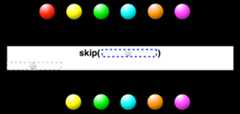
- Backpressure:
- The operator doesn't support backpressure as it uses time to skip an arbitrary number of elements and thus has to consume the source
Publisherin an unbounded manner (i.e., no backpressure applied to it). - Scheduler:
skipdoes not operate on any particular scheduler but uses the current time from thecomputationScheduler.
- Parameters:
time- the length of the time window to skipunit- the time unit oftime- Returns:
- a Flowable that skips values emitted by the source Publisher before the time window defined by
timeelapses and the emits the remainder - See Also:
- ReactiveX operators documentation: Skip
skip
@CheckReturnValue@BackpressureSupport(value=FULL)@SchedulerSupport(value="custom")public final Flowable<T> skip(long time,TimeUnit unit,Scheduler scheduler)
Returns a Flowable that skips values emitted by the source Publisher before a specified time window on a specifiedSchedulerelapses.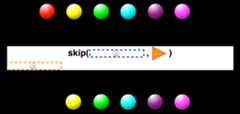
- Backpressure:
- The operator doesn't support backpressure as it uses time to skip an arbitrary number of elements and thus has to consume the source
Publisherin an unbounded manner (i.e., no backpressure applied to it). - Scheduler:
- You specify which
Schedulerthis operator will use for the timed skipping
- Parameters:
time- the length of the time window to skipunit- the time unit oftimescheduler- theScheduleron which the timed wait happens- Returns:
- a Flowable that skips values emitted by the source Publisher before the time window defined by
timeandschedulerelapses, and then emits the remainder - See Also:
- ReactiveX operators documentation: Skip
skipLast
@CheckReturnValue@BackpressureSupport(value=FULL)@SchedulerSupport(value="none")public final Flowable<T> skipLast(int count)
Returns a Flowable that drops a specified number of items from the end of the sequence emitted by the source Publisher.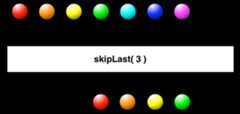
This Subscriber accumulates a queue long enough to store the first
countitems. As more items are received, items are taken from the front of the queue and emitted by the returned Publisher. This causes such items to be delayed.- Backpressure:
- The operator doesn't interfere with backpressure which is determined by the source
Publisher's backpressure behavior. - Scheduler:
- This version of
skipLastdoes not operate by default on a particularScheduler.
- Parameters:
count- number of items to drop from the end of the source sequence- Returns:
- a Flowable that emits the items emitted by the source Publisher except for the dropped ones at the end
- Throws:
IndexOutOfBoundsException- ifcountis less than zero- See Also:
- ReactiveX operators documentation: SkipLast
skipLast
@CheckReturnValue@BackpressureSupport(value=UNBOUNDED_IN)@SchedulerSupport(value="none")public final Flowable<T> skipLast(long time,TimeUnit unit)
Returns a Flowable that drops items emitted by the source Publisher during a specified time window before the source completes.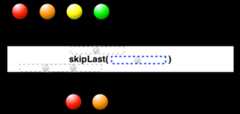
Note: this action will cache the latest items arriving in the specified time window.
- Backpressure:
- The operator doesn't support backpressure as it uses time to skip an arbitrary number of elements and thus has to consume the source
Publisherin an unbounded manner (i.e., no backpressure applied to it). - Scheduler:
skipLastdoes not operate on any particular scheduler but uses the current time from thecomputationScheduler.
- Parameters:
time- the length of the time windowunit- the time unit oftime- Returns:
- a Flowable that drops those items emitted by the source Publisher in a time window before the source completes defined by
time - See Also:
- ReactiveX operators documentation: SkipLast
skipLast
@CheckReturnValue@BackpressureSupport(value=UNBOUNDED_IN)@SchedulerSupport(value="none")public final Flowable<T> skipLast(long time,TimeUnit unit, boolean delayError)
Returns a Flowable that drops items emitted by the source Publisher during a specified time window before the source completes.Note: this action will cache the latest items arriving in the specified time window.
- Backpressure:
- The operator doesn't support backpressure as it uses time to skip an arbitrary number of elements and thus has to consume the source
Publisherin an unbounded manner (i.e., no backpressure applied to it). - Scheduler:
skipLastdoes not operate on any particular scheduler but uses the current time from thecomputationScheduler.
- Parameters:
time- the length of the time windowunit- the time unit oftimedelayError- if true, an exception signaled by the current Flowable is delayed until the regular elements are consumed by the downstream; if false, an exception is immediately signaled and all regular elements dropped- Returns:
- a Flowable that drops those items emitted by the source Publisher in a time window before the source completes defined by
time - See Also:
- ReactiveX operators documentation: SkipLast
skipLast
@CheckReturnValue@BackpressureSupport(value=UNBOUNDED_IN)@SchedulerSupport(value="custom")public final Flowable<T> skipLast(long time,TimeUnit unit,Scheduler scheduler)
Returns a Flowable that drops items emitted by the source Publisher during a specified time window (defined on a specified scheduler) before the source completes.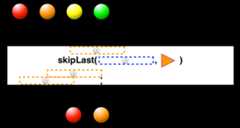
Note: this action will cache the latest items arriving in the specified time window.
- Backpressure:
- The operator doesn't support backpressure as it uses time to skip an arbitrary number of elements and thus has to consume the source
Publisherin an unbounded manner (i.e., no backpressure applied to it). - Scheduler:
- You specify which
Schedulerthis operator will use for tracking the current time
- Parameters:
time- the length of the time windowunit- the time unit oftimescheduler- the scheduler used as the time source- Returns:
- a Flowable that drops those items emitted by the source Publisher in a time window before the source completes defined by
timeandscheduler - See Also:
- ReactiveX operators documentation: SkipLast
skipLast
@CheckReturnValue@BackpressureSupport(value=UNBOUNDED_IN)@SchedulerSupport(value="custom")public final Flowable<T> skipLast(long time,TimeUnit unit,Scheduler scheduler, boolean delayError)
Returns a Flowable that drops items emitted by the source Publisher during a specified time window (defined on a specified scheduler) before the source completes.Note: this action will cache the latest items arriving in the specified time window.
- Backpressure:
- The operator doesn't support backpressure as it uses time to skip an arbitrary number of elements and thus has to consume the source
Publisherin an unbounded manner (i.e., no backpressure applied to it). - Scheduler:
- You specify which
Schedulerthis operator will use to track the current time
- Parameters:
time- the length of the time windowunit- the time unit oftimescheduler- the scheduler used as the time sourcedelayError- if true, an exception signaled by the current Flowable is delayed until the regular elements are consumed by the downstream; if false, an exception is immediately signaled and all regular elements dropped- Returns:
- a Flowable that drops those items emitted by the source Publisher in a time window before the source completes defined by
timeandscheduler - See Also:
- ReactiveX operators documentation: SkipLast
skipLast
@CheckReturnValue@NonNull@BackpressureSupport(value=UNBOUNDED_IN)@SchedulerSupport(value="custom")public final Flowable<T> skipLast(long time,TimeUnit unit,Scheduler scheduler, boolean delayError, int bufferSize)
Returns a Flowable that drops items emitted by the source Publisher during a specified time window (defined on a specified scheduler) before the source completes.Note: this action will cache the latest items arriving in the specified time window.
- Backpressure:
- The operator doesn't support backpressure as it uses time to skip an arbitrary number of elements and thus has to consume the source
Publisherin an unbounded manner (i.e., no backpressure applied to it). - Scheduler:
- You specify which
Schedulerthis operator will use.
- Parameters:
time- the length of the time windowunit- the time unit oftimescheduler- the scheduler used as the time sourcedelayError- if true, an exception signaled by the current Flowable is delayed until the regular elements are consumed by the downstream; if false, an exception is immediately signaled and all regular elements droppedbufferSize- the hint about how many elements to expect to be skipped- Returns:
- a Flowable that drops those items emitted by the source Publisher in a time window before the source completes defined by
timeandscheduler - See Also:
- ReactiveX operators documentation: SkipLast
skipUntil
@CheckReturnValue@NonNull@BackpressureSupport(value=FULL)@SchedulerSupport(value="none")public final <U> Flowable<T> skipUntil(Publisher<U> other)
Returns a Flowable that skips items emitted by the source Publisher until a second Publisher emits an item.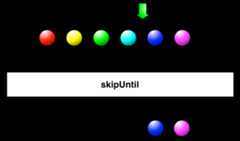
- Backpressure:
- The operator doesn't interfere with backpressure which is determined by the source
Publisher's backpressure behavior. - Scheduler:
skipUntildoes not operate by default on a particularScheduler.
- Type Parameters:
U- the element type of the other Publisher- Parameters:
other- the second Publisher that has to emit an item before the source Publisher's elements begin to be mirrored by the resulting Publisher- Returns:
- a Flowable that skips items from the source Publisher until the second Publisher emits an item, then emits the remaining items
- See Also:
- ReactiveX operators documentation: SkipUntil
skipWhile
@CheckReturnValue@NonNull@BackpressureSupport(value=FULL)@SchedulerSupport(value="none")public final Flowable<T> skipWhile(Predicate<? superT> predicate)
Returns a Flowable that skips all items emitted by the source Publisher as long as a specified condition holds true, but emits all further source items as soon as the condition becomes false.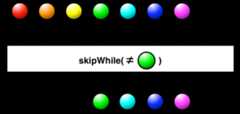
- Backpressure:
- The operator doesn't interfere with backpressure which is determined by the source
Publisher's backpressure behavior. - Scheduler:
skipWhiledoes not operate by default on a particularScheduler.
- Parameters:
predicate- a function to test each item emitted from the source Publisher- Returns:
- a Flowable that begins emitting items emitted by the source Publisher when the specified predicate becomes false
- See Also:
- ReactiveX operators documentation: SkipWhile
sorted
@CheckReturnValue@BackpressureSupport(value=FULL)@SchedulerSupport(value="none")public final Flowable<T> sorted()
Returns a Flowable that emits the events emitted by source Publisher, in a sorted order. Each item emitted by the Publisher must implementComparablewith respect to all other items in the sequence.If any item emitted by this Flowable does not implement
Comparablewith respect to all other items emitted by this Flowable, no items will be emitted and the sequence is terminated with aClassCastException.Note that calling
sortedwith long, non-terminating or infinite sources might causeOutOfMemoryError- Backpressure:
- The operator honors backpressure from downstream and consumes the source
Publisherin an unbounded manner (i.e., without applying backpressure to it). - Scheduler:
sorteddoes not operate by default on a particularScheduler.
- Returns:
- a Flowable that emits the items emitted by the source Publisher in sorted order
sorted
@CheckReturnValue@NonNull@BackpressureSupport(value=FULL)@SchedulerSupport(value="none")public final Flowable<T> sorted(Comparator<? superT> sortFunction)
Returns a Flowable that emits the events emitted by source Publisher, in a sorted order based on a specified comparison function.Note that calling
sortedwith long, non-terminating or infinite sources might causeOutOfMemoryError- Backpressure:
- The operator honors backpressure from downstream and consumes the source
Publisherin an unbounded manner (i.e., without applying backpressure to it). - Scheduler:
sorteddoes not operate by default on a particularScheduler.
- Parameters:
sortFunction- a function that compares two items emitted by the source Publisher and returns an Integer that indicates their sort order- Returns:
- a Flowable that emits the items emitted by the source Publisher in sorted order
startWith
@CheckReturnValue@BackpressureSupport(value=FULL)@SchedulerSupport(value="none")public final Flowable<T> startWith(Iterable<? extendsT> items)
Returns a Flowable that emits the items in a specifiedIterablebefore it begins to emit items emitted by the source Publisher.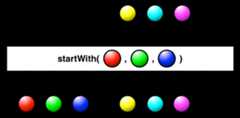
- Backpressure:
- The operator honors backpressure from downstream. The source
Publisheris expected to honor backpressure as well. If it violates this rule, itmay throw anIllegalStateExceptionwhen the sourcePublishercompletes. - Scheduler:
startWithdoes not operate by default on a particularScheduler.
- Parameters:
items- an Iterable that contains the items you want the modified Publisher to emit first- Returns:
- a Flowable that emits the items in the specified
Iterableand then emits the items emitted by the source Publisher - See Also:
- ReactiveX operators documentation: StartWith
startWith
@CheckReturnValue@NonNull@BackpressureSupport(value=FULL)@SchedulerSupport(value="none")public final Flowable<T> startWith(Publisher<? extendsT> other)
Returns a Flowable that emits the items in a specifiedPublisherbefore it begins to emit items emitted by the source Publisher.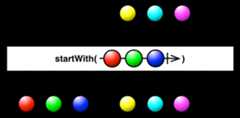
- Backpressure:
- The operator honors backpressure from downstream. Both this and the
otherPublishers are expected to honor backpressure as well. If any of then violates this rule, itmay throw anIllegalStateExceptionwhen the sourcePublishercompletes. - Scheduler:
startWithdoes not operate by default on a particularScheduler.
- Parameters:
other- a Publisher that contains the items you want the modified Publisher to emit first- Returns:
- a Flowable that emits the items in the specified
Publisherand then emits the items emitted by the source Publisher - See Also:
- ReactiveX operators documentation: StartWith
startWith
@CheckReturnValue@NonNull@BackpressureSupport(value=FULL)@SchedulerSupport(value="none")public final Flowable<T> startWith(T value)
Returns a Flowable that emits a specified item before it begins to emit items emitted by the source Publisher.- Backpressure:
- The operator honors backpressure from downstream. The source
Publisheris expected to honor backpressure as well. If it violates this rule, itmay throw anIllegalStateExceptionwhen the sourcePublishercompletes. - Scheduler:
startWithdoes not operate by default on a particularScheduler.
- Parameters:
value- the item to emit first- Returns:
- a Flowable that emits the specified item before it begins to emit items emitted by the source Publisher
- See Also:
- ReactiveX operators documentation: StartWith
startWithArray
@CheckReturnValue@BackpressureSupport(value=FULL)@SchedulerSupport(value="none")public final Flowable<T> startWithArray(T... items)
Returns a Flowable that emits the specified items before it begins to emit items emitted by the source Publisher.- Backpressure:
- The operator honors backpressure from downstream. The source
Publisheris expected to honor backpressure as well. If it violates this rule, itmay throw anIllegalStateExceptionwhen the sourcePublishercompletes. - Scheduler:
startWithArraydoes not operate by default on a particularScheduler.
- Parameters:
items- the array of values to emit first- Returns:
- a Flowable that emits the specified items before it begins to emit items emitted by the source Publisher
- See Also:
- ReactiveX operators documentation: StartWith
subscribe
@BackpressureSupport(value=UNBOUNDED_IN)@SchedulerSupport(value="none")public final Disposable subscribe()
Subscribes to a Publisher and ignoresonNextandonCompleteemissions.If the Flowable emits an error, it is wrapped into an
OnErrorNotImplementedExceptionand routed to the RxJavaPlugins.onError handler.- Backpressure:
- The operator consumes the source
Publisherin an unbounded manner (i.e., no backpressure is applied to it). - Scheduler:
subscribedoes not operate by default on a particularScheduler.
- Returns:
- a
Disposablereference with which the caller can stop receiving items before the Publisher has finished sending them - See Also:
- ReactiveX operators documentation: Subscribe
subscribe
@CheckReturnValue@BackpressureSupport(value=UNBOUNDED_IN)@SchedulerSupport(value="none")public final Disposable subscribe(Consumer<? superT> onNext)
Subscribes to a Publisher and provides a callback to handle the items it emits.If the Flowable emits an error, it is wrapped into an
OnErrorNotImplementedExceptionand routed to the RxJavaPlugins.onError handler.- Backpressure:
- The operator consumes the source
Publisherin an unbounded manner (i.e., no backpressure is applied to it). - Scheduler:
subscribedoes not operate by default on a particularScheduler.
- Parameters:
onNext- theConsumer<T>you have designed to accept emissions from the Publisher- Returns:
- a
Disposablereference with which the caller can stop receiving items before the Publisher has finished sending them - Throws:
NullPointerException- ifonNextis null- See Also:
- ReactiveX operators documentation: Subscribe
subscribe
@CheckReturnValue@BackpressureSupport(value=UNBOUNDED_IN)@SchedulerSupport(value="none")public final Disposable subscribe(Consumer<? superT> onNext,Consumer<? superThrowable> onError)
Subscribes to a Publisher and provides callbacks to handle the items it emits and any error notification it issues.- Backpressure:
- The operator consumes the source
Publisherin an unbounded manner (i.e., no backpressure is applied to it). - Scheduler:
subscribedoes not operate by default on a particularScheduler.
- Parameters:
onNext- theConsumer<T>you have designed to accept emissions from the PublisheronError- theConsumer<Throwable>you have designed to accept any error notification from the Publisher- Returns:
- a
Disposablereference with which the caller can stop receiving items before the Publisher has finished sending them - Throws:
NullPointerException- ifonNextis null, or ifonErroris null- See Also:
- ReactiveX operators documentation: Subscribe
subscribe
@CheckReturnValue@BackpressureSupport(value=UNBOUNDED_IN)@SchedulerSupport(value="none")public final Disposable subscribe(Consumer<? superT> onNext,Consumer<? superThrowable> onError,Action onComplete)
Subscribes to a Publisher and provides callbacks to handle the items it emits and any error or completion notification it issues.- Backpressure:
- The operator consumes the source
Publisherin an unbounded manner (i.e., no backpressure is applied to it). - Scheduler:
subscribedoes not operate by default on a particularScheduler.
- Parameters:
onNext- theConsumer<T>you have designed to accept emissions from the PublisheronError- theConsumer<Throwable>you have designed to accept any error notification from the PublisheronComplete- theActionyou have designed to accept a completion notification from the Publisher- Returns:
- a
Disposablereference with which the caller can stop receiving items before the Publisher has finished sending them - Throws:
NullPointerException- ifonNextis null, or ifonErroris null, or ifonCompleteis null- See Also:
- ReactiveX operators documentation: Subscribe
subscribe
@CheckReturnValue@NonNull@BackpressureSupport(value=SPECIAL)@SchedulerSupport(value="none")public final Disposable subscribe(Consumer<? superT> onNext,Consumer<? superThrowable> onError,Action onComplete,Consumer<? superSubscription> onSubscribe)
Subscribes to a Publisher and provides callbacks to handle the items it emits and any error or completion notification it issues.- Backpressure:
- The operator consumes the source
Publisherin an unbounded manner (i.e., no backpressure is applied to it). - Scheduler:
subscribedoes not operate by default on a particularScheduler.
- Parameters:
onNext- theConsumer<T>you have designed to accept emissions from the PublisheronError- theConsumer<Throwable>you have designed to accept any error notification from the PublisheronComplete- theActionyou have designed to accept a completion notification from the PublisheronSubscribe- theConsumerthat receives the upstream's Subscription- Returns:
- a
Disposablereference with which the caller can stop receiving items before the Publisher has finished sending them - Throws:
NullPointerException- ifonNextis null, or ifonErroris null, or ifonCompleteis null, or ifonSubscribeis null- See Also:
- ReactiveX operators documentation: Subscribe
subscribe
@BackpressureSupport(value=SPECIAL)@SchedulerSupport(value="none")public final void subscribe(Subscriber<? superT> s)
subscribe
@BackpressureSupport(value=SPECIAL)@SchedulerSupport(value="none")public final void subscribe(FlowableSubscriber<? superT> s)
Establish a connection between this Flowable and the given FlowableSubscriber and start streaming events based on the demand of the FlowableSubscriber.This is a "factory method" and can be called multiple times, each time starting a new
Subscription.Each
Subscriptionwill work for only a singleFlowableSubscriber.If the same
FlowableSubscriberinstance is subscribed to multipleFlowables and/or the sameFlowablemultiple times, it must ensure the serialization over itsonXXXmethods manually.If the
Flowablerejects the subscription attempt or otherwise fails it will signal the error viaSubscriber.onError(Throwable).This subscribe method relaxes the following Reactive Streams rules:
- §1.3: onNext should not be called concurrently until onSubscribe returns.FlowableSubscriber.onSubscribe should make sure a sync or async call triggered by request() is safe.
- §2.3: onError or onComplete must not call cancel.Calling request() or cancel() is NOP at this point.
- §2.12: onSubscribe must be called at most once on the same instance.FlowableSubscriber reuse is not checked and if happens, it is the responsibility of the FlowableSubscriber to ensure proper serialization of its onXXX methods.
- §3.9: negative requests should emit an onError(IllegalArgumentException).Non-positive requests signal via RxJavaPlugins.onError and the stream is not affected.
- Backpressure:
- The backpressure behavior/expectation is determined by the supplied
FlowableSubscriber. - Scheduler:
subscribedoes not operate by default on a particularScheduler.
History: 2.0.7 - experimental; 2.1 - beta
- Parameters:
s- the FlowableSubscriber that will consume signals from this Flowable- Since:
- 2.2
subscribeActual
protected abstract void subscribeActual(Subscriber<? superT> s)
Operator implementations (both source and intermediate) should implement this method that performs the necessary business logic and handles the incomingSubscribers.There is no need to call any of the plugin hooks on the current
Flowableinstance or theSubscriber; all hooks and basic safeguards have been applied bysubscribe(Subscriber)before this method gets called.- Parameters:
s- the incoming Subscriber, never null
subscribeWith
@CheckReturnValue@BackpressureSupport(value=SPECIAL)@SchedulerSupport(value="none")public final <E extendsSubscriber<? superT>> E subscribeWith(E subscriber)
Subscribes a given Subscriber (subclass) to this Flowable and returns the given Subscriber as is.Usage example:
Flowable<Integer> source = Flowable.range(1, 10); CompositeDisposable composite = new CompositeDisposable(); ResourceSubscriber<Integer> rs = new ResourceSubscriber<>() { // ... }; composite.add(source.subscribeWith(rs));- Backpressure:
- The backpressure behavior/expectation is determined by the supplied
Subscriber. - Scheduler:
subscribeWithdoes not operate by default on a particularScheduler.
- Type Parameters:
E- the type of the Subscriber to use and return- Parameters:
subscriber- the Subscriber (subclass) to use and return, not null- Returns:
- the input
subscriber - Throws:
NullPointerException- ifsubscriberis null- Since:
- 2.0
subscribeOn
@CheckReturnValue@NonNull@BackpressureSupport(value=PASS_THROUGH)@SchedulerSupport(value="custom")public final Flowable<T> subscribeOn(@NonNullScheduler scheduler)
Asynchronously subscribes Subscribers to this Publisher on the specifiedScheduler.If there is a
create(FlowableOnSubscribe, BackpressureStrategy)type source up in the chain, it is recommended to usesubscribeOn(scheduler, false)instead to avoid same-pool deadlock because requests may pile up behind an eager/blocking emitter.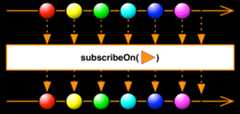
- Backpressure:
- The operator doesn't interfere with backpressure which is determined by the source
Publisher's backpressure behavior. - Scheduler:
- You specify which
Schedulerthis operator will use.
- Parameters:
scheduler- theSchedulerto perform subscription actions on- Returns:
- the source Publisher modified so that its subscriptions happen on the specified
Scheduler - See Also:
- ReactiveX operators documentation: SubscribeOn,RxJava Threading Examples,
observeOn(io.reactivex.Scheduler),subscribeOn(Scheduler, boolean)
subscribeOn
@CheckReturnValue@NonNull@BackpressureSupport(value=PASS_THROUGH)@SchedulerSupport(value="custom")public final Flowable<T> subscribeOn(@NonNullScheduler scheduler, boolean requestOn)
Asynchronously subscribes Subscribers to this Publisher on the specifiedScheduleroptionally reroutes requests from other threads to the sameSchedulerthread.If there is a
create(FlowableOnSubscribe, BackpressureStrategy)type source up in the chain, it is recommended to haverequestOnfalse to avoid same-pool deadlock because requests may pile up behind an eager/blocking emitter.- Backpressure:
- The operator doesn't interfere with backpressure which is determined by the source
Publisher's backpressure behavior. - Scheduler:
- You specify which
Schedulerthis operator will use.
History: 2.1.1 - experimental
- Parameters:
scheduler- theSchedulerto perform subscription actions onrequestOn- if true, requests are rerouted to the given Scheduler as well (strong pipelining) if false, requests coming from any thread are simply forwarded to the upstream on the same thread (weak pipelining)- Returns:
- the source Publisher modified so that its subscriptions happen on the specified
Scheduler - Since:
- 2.2
- See Also:
- ReactiveX operators documentation: SubscribeOn,RxJava Threading Examples,
observeOn(io.reactivex.Scheduler)
switchIfEmpty
@CheckReturnValue@NonNull@BackpressureSupport(value=FULL)@SchedulerSupport(value="none")public final Flowable<T> switchIfEmpty(Publisher<? extendsT> other)
Returns a Flowable that emits the items emitted by the source Publisher or the items of an alternate Publisher if the source Publisher is empty.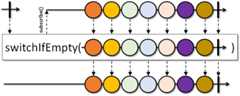
- Backpressure:
- If the source
Publisheris empty, the alternatePublisheris expected to honor backpressure. If the sourcePublisheris non-empty, it is expected to honor backpressure as instead. In either case, if violated, aMissingBackpressureExceptionmay get signaled somewhere downstream. - Scheduler:
switchIfEmptydoes not operate by default on a particularScheduler.
- Parameters:
other- the alternate Publisher to subscribe to if the source does not emit any items- Returns:
- a Publisher that emits the items emitted by the source Publisher or the items of an alternate Publisher if the source Publisher is empty.
- Since:
- 1.1.0
switchMap
@CheckReturnValue@BackpressureSupport(value=FULL)@SchedulerSupport(value="none")public final <R> Flowable<R> switchMap(Function<? superT,? extendsPublisher<? extends R>> mapper)
Returns a new Publisher by applying a function that you supply to each item emitted by the source Publisher that returns a Publisher, and then emitting the items emitted by the most recently emitted of these Publishers.The resulting Publisher completes if both the upstream Publisher and the last inner Publisher, if any, complete. If the upstream Publisher signals an onError, the inner Publisher is canceled and the error delivered in-sequence.
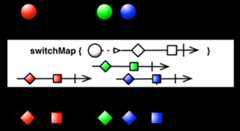
- Backpressure:
- The operator honors backpressure from downstream. The outer
Publisheris consumed in an unbounded manner (i.e., without backpressure) and the innerPublishers are expected to honor backpressure but it is not enforced; the operator won't signal aMissingBackpressureExceptionbut the violationmay lead toOutOfMemoryErrordue to internal buffer bloat. - Scheduler:
switchMapdoes not operate by default on a particularScheduler.
- Type Parameters:
R- the element type of the inner Publishers and the output- Parameters:
mapper- a function that, when applied to an item emitted by the source Publisher, returns a Publisher- Returns:
- a Flowable that emits the items emitted by the Publisher returned from applying
functo the most recently emitted item emitted by the source Publisher - See Also:
- ReactiveX operators documentation: FlatMap,
switchMapDelayError(Function)
switchMap
@CheckReturnValue@BackpressureSupport(value=FULL)@SchedulerSupport(value="none")public final <R> Flowable<R> switchMap(Function<? superT,? extendsPublisher<? extends R>> mapper, int bufferSize)
Returns a new Publisher by applying a function that you supply to each item emitted by the source Publisher that returns a Publisher, and then emitting the items emitted by the most recently emitted of these Publishers.The resulting Publisher completes if both the upstream Publisher and the last inner Publisher, if any, complete. If the upstream Publisher signals an onError, the inner Publisher is canceled and the error delivered in-sequence.
- Backpressure:
- The operator honors backpressure from downstream. The outer
Publisheris consumed in an unbounded manner (i.e., without backpressure) and the innerPublishers are expected to honor backpressure but it is not enforced; the operator won't signal aMissingBackpressureExceptionbut the violationmay lead toOutOfMemoryErrordue to internal buffer bloat. - Scheduler:
switchMapdoes not operate by default on a particularScheduler.
- Type Parameters:
R- the element type of the inner Publishers and the output- Parameters:
mapper- a function that, when applied to an item emitted by the source Publisher, returns a PublisherbufferSize- the number of elements to prefetch from the current active inner Publisher- Returns:
- a Flowable that emits the items emitted by the Publisher returned from applying
functo the most recently emitted item emitted by the source Publisher - See Also:
- ReactiveX operators documentation: FlatMap,
switchMapDelayError(Function, int)
switchMapCompletable
@CheckReturnValue@NonNull@BackpressureSupport(value=UNBOUNDED_IN)@SchedulerSupport(value="none")public final Completable switchMapCompletable(@NonNullFunction<? superT,? extendsCompletableSource> mapper)
Maps the upstream values intoCompletableSources, subscribes to the newer one while disposing the subscription to the previousCompletableSource, thus keeping at most one activeCompletableSourcerunning.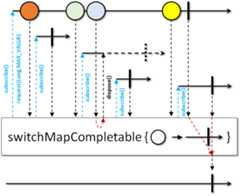
Since a
CompletableSourcedoesn't produce any items, the resulting reactive type of this operator is aCompletablethat can only indicate successful completion or a failure in any of the innerCompletableSources or the failure of the currentFlowable.- Backpressure:
- The operator consumes the current
Flowablein an unbounded manner and otherwise does not have backpressure in its return type because no items are ever produced. - Scheduler:
switchMapCompletabledoes not operate by default on a particularScheduler.- Error handling:
- If either this
Flowableor the activeCompletableSourcesignals anonError, the resultingCompletableis terminated immediately with thatThrowable. Use theswitchMapCompletableDelayError(Function)to delay such inner failures until every innerCompletableSources and the mainFlowableterminates in some fashion. If they fail concurrently, the operator may combine theThrowables into aCompositeExceptionand signal it to the downstream instead. If any inactivated (switched out)CompletableSourcesignals anonErrorlate, theThrowables will be signaled to the global error handler viaRxJavaPlugins.onError(Throwable)method asUndeliverableExceptionerrors.
History: 2.1.11 - experimental
- Parameters:
mapper- the function called with each upstream item and should return aCompletableSourceto be subscribed to and awaited for (non blockingly) for its terminal event- Returns:
- the new Completable instance
- Since:
- 2.2
- See Also:
switchMapCompletableDelayError(Function)
switchMapCompletableDelayError
@CheckReturnValue@NonNull@BackpressureSupport(value=UNBOUNDED_IN)@SchedulerSupport(value="none")public final Completable switchMapCompletableDelayError(@NonNullFunction<? superT,? extendsCompletableSource> mapper)
Maps the upstream values intoCompletableSources, subscribes to the newer one while disposing the subscription to the previousCompletableSource, thus keeping at most one activeCompletableSourcerunning and delaying any main or inner errors until all of them terminate.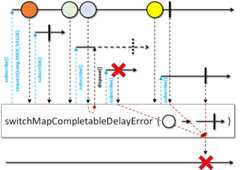
Since a
CompletableSourcedoesn't produce any items, the resulting reactive type of this operator is aCompletablethat can only indicate successful completion or a failure in any of the innerCompletableSources or the failure of the currentFlowable.- Backpressure:
- The operator consumes the current
Flowablein an unbounded manner and otherwise does not have backpressure in its return type because no items are ever produced. - Scheduler:
switchMapCompletableDelayErrordoes not operate by default on a particularScheduler.- Error handling:
- Errors of this
Flowableand all theCompletableSources, who had the chance to run to their completion, are delayed until all of them terminate in some fashion. At this point, if there was only one failure, the respectiveThrowableis emitted to the downstream. If there was more than one failure, the operator combines allThrowables into aCompositeExceptionand signals that to the downstream. If any inactivated (switched out)CompletableSourcesignals anonErrorlate, theThrowables will be signaled to the global error handler viaRxJavaPlugins.onError(Throwable)method asUndeliverableExceptionerrors.
History: 2.1.11 - experimental
- Parameters:
mapper- the function called with each upstream item and should return aCompletableSourceto be subscribed to and awaited for (non blockingly) for its terminal event- Returns:
- the new Completable instance
- Since:
- 2.2
- See Also:
switchMapCompletable(Function)
switchMapDelayError
@CheckReturnValue@BackpressureSupport(value=SPECIAL)@SchedulerSupport(value="none")public final <R> Flowable<R> switchMapDelayError(Function<? superT,? extendsPublisher<? extends R>> mapper)
Returns a new Publisher by applying a function that you supply to each item emitted by the source Publisher that returns a Publisher, and then emitting the items emitted by the most recently emitted of these Publishers and delays any error until all Publishers terminate.The resulting Publisher completes if both the upstream Publisher and the last inner Publisher, if any, complete. If the upstream Publisher signals an onError, the termination of the last inner Publisher will emit that error as is or wrapped into a CompositeException along with the other possible errors the former inner Publishers signaled.
- Backpressure:
- The operator honors backpressure from downstream. The outer
Publisheris consumed in an unbounded manner (i.e., without backpressure) and the innerPublishers are expected to honor backpressure but it is not enforced; the operator won't signal aMissingBackpressureExceptionbut the violationmay lead toOutOfMemoryErrordue to internal buffer bloat. - Scheduler:
switchMapDelayErrordoes not operate by default on a particularScheduler.
- Type Parameters:
R- the element type of the inner Publishers and the output- Parameters:
mapper- a function that, when applied to an item emitted by the source Publisher, returns a Publisher- Returns:
- a Flowable that emits the items emitted by the Publisher returned from applying
functo the most recently emitted item emitted by the source Publisher - Since:
- 2.0
- See Also:
- ReactiveX operators documentation: FlatMap,
switchMap(Function)
switchMapDelayError
@CheckReturnValue@BackpressureSupport(value=SPECIAL)@SchedulerSupport(value="none")public final <R> Flowable<R> switchMapDelayError(Function<? superT,? extendsPublisher<? extends R>> mapper, int bufferSize)
Returns a new Publisher by applying a function that you supply to each item emitted by the source Publisher that returns a Publisher, and then emitting the items emitted by the most recently emitted of these Publishers and delays any error until all Publishers terminate.The resulting Publisher completes if both the upstream Publisher and the last inner Publisher, if any, complete. If the upstream Publisher signals an onError, the termination of the last inner Publisher will emit that error as is or wrapped into a CompositeException along with the other possible errors the former inner Publishers signaled.
- Backpressure:
- The operator honors backpressure from downstream. The outer
Publisheris consumed in an unbounded manner (i.e., without backpressure) and the innerPublishers are expected to honor backpressure but it is not enforced; the operator won't signal aMissingBackpressureExceptionbut the violationmay lead toOutOfMemoryErrordue to internal buffer bloat. - Scheduler:
switchMapDelayErrordoes not operate by default on a particularScheduler.
- Type Parameters:
R- the element type of the inner Publishers and the output- Parameters:
mapper- a function that, when applied to an item emitted by the source Publisher, returns a PublisherbufferSize- the number of elements to prefetch from the current active inner Publisher- Returns:
- a Flowable that emits the items emitted by the Publisher returned from applying
functo the most recently emitted item emitted by the source Publisher - Since:
- 2.0
- See Also:
- ReactiveX operators documentation: FlatMap,
switchMap(Function, int)
switchMapMaybe
@CheckReturnValue@NonNull@BackpressureSupport(value=UNBOUNDED_IN)@SchedulerSupport(value="none")public final <R> Flowable<R> switchMapMaybe(@NonNullFunction<? superT,? extendsMaybeSource<? extends R>> mapper)
Maps the upstream items intoMaybeSources and switches (subscribes) to the newer ones while disposing the older ones (and ignoring their signals) and emits the latest success value of the current one if available while failing immediately if thisFlowableor any of the active innerMaybeSources fail.- Backpressure:
- The operator honors backpressure from downstream. The main
Flowableis consumed in an unbounded manner (i.e., without backpressure). - Scheduler:
switchMapMaybedoes not operate by default on a particularScheduler.- Error handling:
- This operator terminates with an
onErrorif thisFlowableor any of the innerMaybeSources fail while they are active. When this happens concurrently, their individualThrowableerrors may get combined and emitted as a singleCompositeException. Otherwise, a late (i.e., inactive or switched out)onErrorfrom thisFlowableor from any of the innerMaybeSources will be forwarded to the global error handler viaRxJavaPlugins.onError(Throwable)asUndeliverableException
History: 2.1.11 - experimental
- Type Parameters:
R- the output value type- Parameters:
mapper- the function called with the current upstream event and should return aMaybeSourceto replace the current active inner source and get subscribed to.- Returns:
- the new Flowable instance
- Since:
- 2.2
- See Also:
switchMapMaybe(Function),switchMapMaybeDelayError(Function)
switchMapMaybeDelayError
@CheckReturnValue@NonNull@BackpressureSupport(value=UNBOUNDED_IN)@SchedulerSupport(value="none")public final <R> Flowable<R> switchMapMaybeDelayError(@NonNullFunction<? superT,? extendsMaybeSource<? extends R>> mapper)
Maps the upstream items intoMaybeSources and switches (subscribes) to the newer ones while disposing the older ones (and ignoring their signals) and emits the latest success value of the current one if available, delaying errors from thisFlowableor the innerMaybeSources until all terminate.- Backpressure:
- The operator honors backpressure from downstream. The main
Flowableis consumed in an unbounded manner (i.e., without backpressure). - Scheduler:
switchMapMaybeDelayErrordoes not operate by default on a particularScheduler.
History: 2.1.11 - experimental
- Type Parameters:
R- the output value type- Parameters:
mapper- the function called with the current upstream event and should return aMaybeSourceto replace the current active inner source and get subscribed to.- Returns:
- the new Flowable instance
- Since:
- 2.2
- See Also:
switchMapMaybe(Function)
switchMapSingle
@CheckReturnValue@NonNull@BackpressureSupport(value=UNBOUNDED_IN)@SchedulerSupport(value="none")public final <R> Flowable<R> switchMapSingle(@NonNullFunction<? superT,? extendsSingleSource<? extends R>> mapper)
Maps the upstream items intoSingleSources and switches (subscribes) to the newer ones while disposing the older ones (and ignoring their signals) and emits the latest success value of the current one while failing immediately if thisFlowableor any of the active innerSingleSources fail.- Backpressure:
- The operator honors backpressure from downstream. The main
Flowableis consumed in an unbounded manner (i.e., without backpressure). - Scheduler:
switchMapSingledoes not operate by default on a particularScheduler.- Error handling:
- This operator terminates with an
onErrorif thisFlowableor any of the innerSingleSources fail while they are active. When this happens concurrently, their individualThrowableerrors may get combined and emitted as a singleCompositeException. Otherwise, a late (i.e., inactive or switched out)onErrorfrom thisFlowableor from any of the innerSingleSources will be forwarded to the global error handler viaRxJavaPlugins.onError(Throwable)asUndeliverableException
History: 2.1.11 - experimental
- Type Parameters:
R- the output value type- Parameters:
mapper- the function called with the current upstream event and should return aSingleSourceto replace the current active inner source and get subscribed to.- Returns:
- the new Flowable instance
- Since:
- 2.2
- See Also:
switchMapSingleDelayError(Function)
switchMapSingleDelayError
@CheckReturnValue@NonNull@BackpressureSupport(value=UNBOUNDED_IN)@SchedulerSupport(value="none")public final <R> Flowable<R> switchMapSingleDelayError(@NonNullFunction<? superT,? extendsSingleSource<? extends R>> mapper)
Maps the upstream items intoSingleSources and switches (subscribes) to the newer ones while disposing the older ones (and ignoring their signals) and emits the latest success value of the current one, delaying errors from thisFlowableor the innerSingleSources until all terminate.- Backpressure:
- The operator honors backpressure from downstream. The main
Flowableis consumed in an unbounded manner (i.e., without backpressure). - Scheduler:
switchMapSingleDelayErrordoes not operate by default on a particularScheduler.
History: 2.1.11 - experimental
- Type Parameters:
R- the output value type- Parameters:
mapper- the function called with the current upstream event and should return aSingleSourceto replace the current active inner source and get subscribed to.- Returns:
- the new Flowable instance
- Since:
- 2.2
- See Also:
switchMapSingle(Function)
take
@CheckReturnValue@BackpressureSupport(value=SPECIAL)@SchedulerSupport(value="none")public final Flowable<T> take(long count)
Returns a Flowable that emits only the firstcountitems emitted by the source Publisher. If the source emits fewer thancountitems then all of its items are emitted.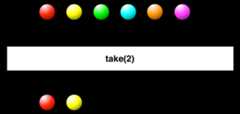
This method returns a Publisher that will invoke a subscribing
Subscriber'sonNextfunction a maximum ofcounttimes before invokingonComplete.- Backpressure:
- The operator doesn't interfere with backpressure which is determined by the source
Publisher's backpressure behavior in case the first request is smaller than thecount. Otherwise, the sourcePublisheris consumed in an unbounded manner (i.e., without applying backpressure to it). - Scheduler:
- This version of
takedoes not operate by default on a particularScheduler.
- Parameters:
count- the maximum number of items to emit- Returns:
- a Flowable that emits only the first
countitems emitted by the source Publisher, or all of the items from the source Publisher if that Publisher emits fewer thancountitems - See Also:
- ReactiveX operators documentation: Take
take
@CheckReturnValue@BackpressureSupport(value=PASS_THROUGH)@SchedulerSupport(value="io.reactivex:computation")public final Flowable<T> take(long time,TimeUnit unit)
Returns a Flowable that emits those items emitted by source Publisher before a specified time runs out.If time runs out before the
Flowablecompletes normally, theonCompleteevent will be signaled on the defaultcomputationScheduler.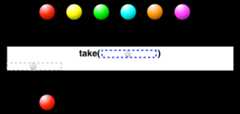
- Backpressure:
- The operator doesn't interfere with backpressure which is determined by the source
Publisher's backpressure behavior. - Scheduler:
- This version of
takeoperates by default on thecomputationScheduler.
- Parameters:
time- the length of the time windowunit- the time unit oftime- Returns:
- a Flowable that emits those items emitted by the source Publisher before the time runs out
- See Also:
- ReactiveX operators documentation: Take
take
@CheckReturnValue@BackpressureSupport(value=PASS_THROUGH)@SchedulerSupport(value="custom")public final Flowable<T> take(long time,TimeUnit unit,Scheduler scheduler)
Returns a Flowable that emits those items emitted by source Publisher before a specified time (on a specified Scheduler) runs out.If time runs out before the
Flowablecompletes normally, theonCompleteevent will be signaled on the providedScheduler.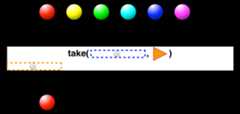
- Backpressure:
- The operator doesn't interfere with backpressure which is determined by the source
Publisher's backpressure behavior. - Scheduler:
- You specify which
Schedulerthis operator will use.
- Parameters:
time- the length of the time windowunit- the time unit oftimescheduler- the Scheduler used for time source- Returns:
- a Flowable that emits those items emitted by the source Publisher before the time runs out, according to the specified Scheduler
- See Also:
- ReactiveX operators documentation: Take
takeLast
@CheckReturnValue@BackpressureSupport(value=FULL)@SchedulerSupport(value="none")public final Flowable<T> takeLast(int count)
Returns a Flowable that emits at most the lastcountitems emitted by the source Publisher. If the source emits fewer thancountitems then all of its items are emitted.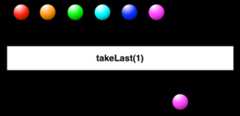
- Backpressure:
- The operator honors backpressure from downstream if the
countis non-zero; ignores backpressure if thecountis zero as it doesn't signal any values. - Scheduler:
- This version of
takeLastdoes not operate by default on a particularScheduler.
- Parameters:
count- the maximum number of items to emit from the end of the sequence of items emitted by the source Publisher- Returns:
- a Flowable that emits at most the last
countitems emitted by the source Publisher - Throws:
IndexOutOfBoundsException- ifcountis less than zero- See Also:
- ReactiveX operators documentation: TakeLast
takeLast
@CheckReturnValue@BackpressureSupport(value=FULL)@SchedulerSupport(value="none")public final Flowable<T> takeLast(long count, long time,TimeUnit unit)
Returns a Flowable that emits at most a specified number of items from the source Publisher that were emitted in a specified window of time before the Publisher completed.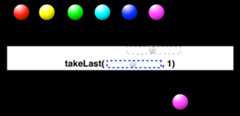
- Backpressure:
- The operator honors backpressure from downstream and consumes the source
Publisherin an unbounded manner (i.e., no backpressure is applied to it). - Scheduler:
takeLastdoes not operate on any particular scheduler but uses the current time from thecomputationScheduler.
- Parameters:
count- the maximum number of items to emittime- the length of the time windowunit- the time unit oftime- Returns:
- a Flowable that emits at most
countitems from the source Publisher that were emitted in a specified window of time before the Publisher completed - See Also:
- ReactiveX operators documentation: TakeLast
takeLast
@CheckReturnValue@BackpressureSupport(value=FULL)@SchedulerSupport(value="custom")public final Flowable<T> takeLast(long count, long time,TimeUnit unit,Scheduler scheduler)
Returns a Flowable that emits at most a specified number of items from the source Publisher that were emitted in a specified window of time before the Publisher completed, where the timing information is provided by a given Scheduler.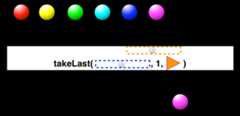
- Backpressure:
- The operator honors backpressure from downstream and consumes the source
Publisherin an unbounded manner (i.e., no backpressure is applied to it). - Scheduler:
- You specify which
Schedulerthis operator will use for tracking the current time
- Parameters:
count- the maximum number of items to emittime- the length of the time windowunit- the time unit oftimescheduler- theSchedulerthat provides the timestamps for the observed items- Returns:
- a Flowable that emits at most
countitems from the source Publisher that were emitted in a specified window of time before the Publisher completed, where the timing information is provided by the givenscheduler - Throws:
IndexOutOfBoundsException- ifcountis less than zero- See Also:
- ReactiveX operators documentation: TakeLast
takeLast
@CheckReturnValue@NonNull@BackpressureSupport(value=FULL)@SchedulerSupport(value="custom")public final Flowable<T> takeLast(long count, long time,TimeUnit unit,Scheduler scheduler, boolean delayError, int bufferSize)
Returns a Flowable that emits at most a specified number of items from the source Publisher that were emitted in a specified window of time before the Publisher completed, where the timing information is provided by a given Scheduler.- Backpressure:
- The operator honors backpressure from downstream and consumes the source
Publisherin an unbounded manner (i.e., no backpressure is applied to it). - Scheduler:
- You specify which
Schedulerthis operator will use for tracking the current time
- Parameters:
count- the maximum number of items to emittime- the length of the time windowunit- the time unit oftimescheduler- theSchedulerthat provides the timestamps for the observed itemsdelayError- if true, an exception signaled by the current Flowable is delayed until the regular elements are consumed by the downstream; if false, an exception is immediately signaled and all regular elements droppedbufferSize- the hint about how many elements to expect to be last- Returns:
- a Flowable that emits at most
countitems from the source Publisher that were emitted in a specified window of time before the Publisher completed, where the timing information is provided by the givenscheduler - Throws:
IndexOutOfBoundsException- ifcountis less than zero- See Also:
- ReactiveX operators documentation: TakeLast
takeLast
@CheckReturnValue@BackpressureSupport(value=FULL)@SchedulerSupport(value="io.reactivex:computation")public final Flowable<T> takeLast(long time,TimeUnit unit)
Returns a Flowable that emits the items from the source Publisher that were emitted in a specified window of time before the Publisher completed.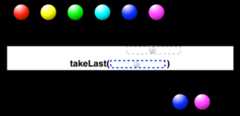
- Backpressure:
- The operator honors backpressure from downstream and consumes the source
Publisherin an unbounded manner (i.e., no backpressure is applied to it) but note that thismay lead toOutOfMemoryErrordue to internal buffer bloat. Consider usingtakeLast(long, long, TimeUnit)in this case. - Scheduler:
- This version of
takeLastoperates by default on thecomputationScheduler.
- Parameters:
time- the length of the time windowunit- the time unit oftime- Returns:
- a Flowable that emits the items from the source Publisher that were emitted in the window of time before the Publisher completed specified by
time - See Also:
- ReactiveX operators documentation: TakeLast
takeLast
@CheckReturnValue@BackpressureSupport(value=FULL)@SchedulerSupport(value="io.reactivex:computation")public final Flowable<T> takeLast(long time,TimeUnit unit, boolean delayError)
Returns a Flowable that emits the items from the source Publisher that were emitted in a specified window of time before the Publisher completed.- Backpressure:
- The operator honors backpressure from downstream and consumes the source
Publisherin an unbounded manner (i.e., no backpressure is applied to it) but note that thismay lead toOutOfMemoryErrordue to internal buffer bloat. Consider usingtakeLast(long, long, TimeUnit)in this case. - Scheduler:
- This version of
takeLastoperates by default on thecomputationScheduler.
- Parameters:
time- the length of the time windowunit- the time unit oftimedelayError- if true, an exception signaled by the current Flowable is delayed until the regular elements are consumed by the downstream; if false, an exception is immediately signaled and all regular elements dropped- Returns:
- a Flowable that emits the items from the source Publisher that were emitted in the window of time before the Publisher completed specified by
time - See Also:
- ReactiveX operators documentation: TakeLast
takeLast
@CheckReturnValue@BackpressureSupport(value=FULL)@SchedulerSupport(value="custom")public final Flowable<T> takeLast(long time,TimeUnit unit,Scheduler scheduler)
Returns a Flowable that emits the items from the source Publisher that were emitted in a specified window of time before the Publisher completed, where the timing information is provided by a specified Scheduler.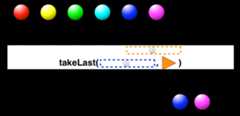
- Backpressure:
- The operator honors backpressure from downstream and consumes the source
Publisherin an unbounded manner (i.e., no backpressure is applied to it) but note that thismay lead toOutOfMemoryErrordue to internal buffer bloat. Consider usingtakeLast(long, long, TimeUnit, Scheduler)in this case. - Scheduler:
- You specify which
Schedulerthis operator will use.
- Parameters:
time- the length of the time windowunit- the time unit oftimescheduler- the Scheduler that provides the timestamps for the Observed items- Returns:
- a Flowable that emits the items from the source Publisher that were emitted in the window of time before the Publisher completed specified by
time, where the timing information is provided byscheduler - See Also:
- ReactiveX operators documentation: TakeLast
takeLast
@CheckReturnValue@BackpressureSupport(value=FULL)@SchedulerSupport(value="custom")public final Flowable<T> takeLast(long time,TimeUnit unit,Scheduler scheduler, boolean delayError)
Returns a Flowable that emits the items from the source Publisher that were emitted in a specified window of time before the Publisher completed, where the timing information is provided by a specified Scheduler.- Backpressure:
- The operator honors backpressure from downstream and consumes the source
Publisherin an unbounded manner (i.e., no backpressure is applied to it) but note that thismay lead toOutOfMemoryErrordue to internal buffer bloat. Consider usingtakeLast(long, long, TimeUnit, Scheduler)in this case. - Scheduler:
- You specify which
Schedulerthis operator will use.
- Parameters:
time- the length of the time windowunit- the time unit oftimescheduler- the Scheduler that provides the timestamps for the Observed itemsdelayError- if true, an exception signaled by the current Flowable is delayed until the regular elements are consumed by the downstream; if false, an exception is immediately signaled and all regular elements dropped- Returns:
- a Flowable that emits the items from the source Publisher that were emitted in the window of time before the Publisher completed specified by
time, where the timing information is provided byscheduler - See Also:
- ReactiveX operators documentation: TakeLast
takeLast
@CheckReturnValue@BackpressureSupport(value=FULL)@SchedulerSupport(value="custom")public final Flowable<T> takeLast(long time,TimeUnit unit,Scheduler scheduler, boolean delayError, int bufferSize)
Returns a Flowable that emits the items from the source Publisher that were emitted in a specified window of time before the Publisher completed, where the timing information is provided by a specified Scheduler.- Backpressure:
- The operator honors backpressure from downstream and consumes the source
Publisherin an unbounded manner (i.e., no backpressure is applied to it) but note that thismay lead toOutOfMemoryErrordue to internal buffer bloat. Consider usingtakeLast(long, long, TimeUnit, Scheduler)in this case. - Scheduler:
- You specify which
Schedulerthis operator will use.
- Parameters:
time- the length of the time windowunit- the time unit oftimescheduler- the Scheduler that provides the timestamps for the Observed itemsdelayError- if true, an exception signaled by the current Flowable is delayed until the regular elements are consumed by the downstream; if false, an exception is immediately signaled and all regular elements droppedbufferSize- the hint about how many elements to expect to be last- Returns:
- a Flowable that emits the items from the source Publisher that were emitted in the window of time before the Publisher completed specified by
time, where the timing information is provided byscheduler - See Also:
- ReactiveX operators documentation: TakeLast
takeUntil
@CheckReturnValue@NonNull@BackpressureSupport(value=PASS_THROUGH)@SchedulerSupport(value="none")public final Flowable<T> takeUntil(Predicate<? superT> stopPredicate)
Returns a Flowable that emits items emitted by the source Publisher, checks the specified predicate for each item, and then completes when the condition is satisfied.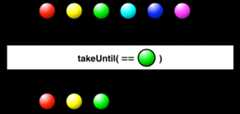
The difference between this operator and
takeWhile(Predicate)is that here, the condition is evaluatedafter the item is emitted.- Backpressure:
- The operator is a pass-through for backpressure; the backpressure behavior is determined by the upstream source and the downstream consumer.
- Scheduler:
takeUntildoes not operate by default on a particularScheduler.
- Parameters:
stopPredicate- a function that evaluates an item emitted by the source Publisher and returns a Boolean- Returns:
- a Flowable that first emits items emitted by the source Publisher, checks the specified condition after each item, and then completes when the condition is satisfied.
- Since:
- 1.1.0
- See Also:
- ReactiveX operators documentation: TakeUntil,
takeWhile(Predicate)
takeUntil
@CheckReturnValue@NonNull@BackpressureSupport(value=PASS_THROUGH)@SchedulerSupport(value="none")public final <U> Flowable<T> takeUntil(Publisher<U> other)
Returns a Flowable that emits the items emitted by the source Publisher until a second Publisher emits an item.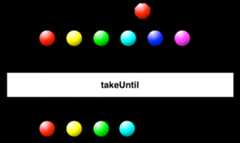
- Backpressure:
- The operator doesn't interfere with backpressure which is determined by the source
Publisher's backpressure behavior. - Scheduler:
takeUntildoes not operate by default on a particularScheduler.
- Type Parameters:
U- the type of items emitted byother- Parameters:
other- the Publisher whose first emitted item will causetakeUntilto stop emitting items from the source Publisher- Returns:
- a Flowable that emits the items emitted by the source Publisher until such time as
otheremits its first item - See Also:
- ReactiveX operators documentation: TakeUntil
takeWhile
@CheckReturnValue@NonNull@BackpressureSupport(value=PASS_THROUGH)@SchedulerSupport(value="none")public final Flowable<T> takeWhile(Predicate<? superT> predicate)
Returns a Flowable that emits items emitted by the source Publisher so long as each item satisfied a specified condition, and then completes as soon as this condition is not satisfied.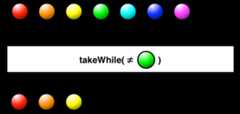
- Backpressure:
- The operator doesn't interfere with backpressure which is determined by the source
Publisher's backpressure behavior. - Scheduler:
takeWhiledoes not operate by default on a particularScheduler.
- Parameters:
predicate- a function that evaluates an item emitted by the source Publisher and returns a Boolean- Returns:
- a Flowable that emits the items from the source Publisher so long as each item satisfies the condition defined by
predicate, then completes - See Also:
- ReactiveX operators documentation: TakeWhile,
takeUntil(Predicate)
throttleFirst
@CheckReturnValue@BackpressureSupport(value=ERROR)@SchedulerSupport(value="io.reactivex:computation")public final Flowable<T> throttleFirst(long windowDuration,TimeUnit unit)
Returns a Flowable that emits only the first item emitted by the source Publisher during sequential time windows of a specified duration.This differs from
throttleLast(long, java.util.concurrent.TimeUnit)in that this only tracks the passage of time whereasthrottleLast(long, java.util.concurrent.TimeUnit)ticks at scheduled intervals.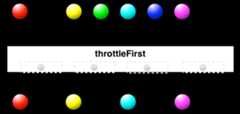
- Backpressure:
- This operator does not support backpressure as it uses time to control data flow.
- Scheduler:
throttleFirstoperates by default on thecomputationScheduler.
- Parameters:
windowDuration- time to wait before emitting another item after emitting the last itemunit- the unit of time ofwindowDuration- Returns:
- a Flowable that performs the throttle operation
- See Also:
- ReactiveX operators documentation: Sample,RxJava wiki: Backpressure
throttleFirst
@CheckReturnValue@NonNull@BackpressureSupport(value=ERROR)@SchedulerSupport(value="custom")public final Flowable<T> throttleFirst(long skipDuration,TimeUnit unit,Scheduler scheduler)
Returns a Flowable that emits only the first item emitted by the source Publisher during sequential time windows of a specified duration, where the windows are managed by a specified Scheduler.This differs from
throttleLast(long, java.util.concurrent.TimeUnit)in that this only tracks the passage of time whereasthrottleLast(long, java.util.concurrent.TimeUnit)ticks at scheduled intervals.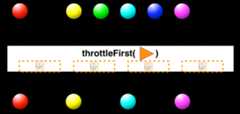
- Backpressure:
- This operator does not support backpressure as it uses time to control data flow.
- Scheduler:
- You specify which
Schedulerthis operator will use.
- Parameters:
skipDuration- time to wait before emitting another item after emitting the last itemunit- the unit of time ofskipDurationscheduler- theSchedulerto use internally to manage the timers that handle timeout for each event- Returns:
- a Flowable that performs the throttle operation
- See Also:
- ReactiveX operators documentation: Sample,RxJava wiki: Backpressure
throttleLast
@CheckReturnValue@BackpressureSupport(value=ERROR)@SchedulerSupport(value="io.reactivex:computation")public final Flowable<T> throttleLast(long intervalDuration,TimeUnit unit)
Returns a Flowable that emits only the last item emitted by the source Publisher during sequential time windows of a specified duration.This differs from
throttleFirst(long, java.util.concurrent.TimeUnit)in that this ticks along at a scheduled interval whereasthrottleFirst(long, java.util.concurrent.TimeUnit)does not tick, it just tracks the passage of time.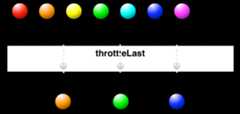
- Backpressure:
- This operator does not support backpressure as it uses time to control data flow.
- Scheduler:
throttleLastoperates by default on thecomputationScheduler.
- Parameters:
intervalDuration- duration of windows within which the last item emitted by the source Publisher will be emittedunit- the unit of time ofintervalDuration- Returns:
- a Flowable that performs the throttle operation
- See Also:
- ReactiveX operators documentation: Sample,RxJava wiki: Backpressure,
sample(long, TimeUnit)
throttleLast
@CheckReturnValue@BackpressureSupport(value=ERROR)@SchedulerSupport(value="custom")public final Flowable<T> throttleLast(long intervalDuration,TimeUnit unit,Scheduler scheduler)
Returns a Flowable that emits only the last item emitted by the source Publisher during sequential time windows of a specified duration, where the duration is governed by a specified Scheduler.This differs from
throttleFirst(long, java.util.concurrent.TimeUnit)in that this ticks along at a scheduled interval whereasthrottleFirst(long, java.util.concurrent.TimeUnit)does not tick, it just tracks the passage of time.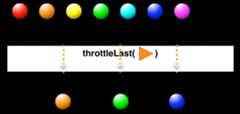
- Backpressure:
- This operator does not support backpressure as it uses time to control data flow.
- Scheduler:
- You specify which
Schedulerthis operator will use.
- Parameters:
intervalDuration- duration of windows within which the last item emitted by the source Publisher will be emittedunit- the unit of time ofintervalDurationscheduler- theSchedulerto use internally to manage the timers that handle timeout for each event- Returns:
- a Flowable that performs the throttle operation
- See Also:
- ReactiveX operators documentation: Sample,RxJava wiki: Backpressure,
sample(long, TimeUnit, Scheduler)
throttleLatest
@CheckReturnValue@BackpressureSupport(value=ERROR)@SchedulerSupport(value="io.reactivex:computation")public final Flowable<T> throttleLatest(long timeout,TimeUnit unit)
Throttles items from the upstreamFlowableby first emitting the next item from upstream, then periodically emitting the latest item (if any) when the specified timeout elapses between them.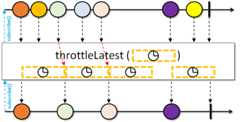
Unlike the option with
throttleLatest(long, TimeUnit, boolean), the very last item being held back (if any) is not emitted when the upstream completes.If no items were emitted from the upstream during this timeout phase, the next upstream item is emitted immediately and the timeout window starts from then.
- Backpressure:
- This operator does not support backpressure as it uses time to control data flow. If the downstream is not ready to receive items, a
MissingBackpressureExceptionwill be signaled. - Scheduler:
throttleLatestoperates by default on thecomputationScheduler.
History: 2.1.14 - experimental
- Parameters:
timeout- the time to wait after an item emission towards the downstream before trying to emit the latest item from upstream againunit- the time unit- Returns:
- the new Flowable instance
- Since:
- 2.2
- See Also:
throttleLatest(long, TimeUnit, boolean),throttleLatest(long, TimeUnit, Scheduler)
throttleLatest
@CheckReturnValue@BackpressureSupport(value=ERROR)@SchedulerSupport(value="io.reactivex:computation")public final Flowable<T> throttleLatest(long timeout,TimeUnit unit, boolean emitLast)
Throttles items from the upstreamFlowableby first emitting the next item from upstream, then periodically emitting the latest item (if any) when the specified timeout elapses between them.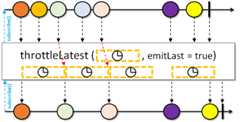
If no items were emitted from the upstream during this timeout phase, the next upstream item is emitted immediately and the timeout window starts from then.
- Backpressure:
- This operator does not support backpressure as it uses time to control data flow. If the downstream is not ready to receive items, a
MissingBackpressureExceptionwill be signaled. - Scheduler:
throttleLatestoperates by default on thecomputationScheduler.
History: 2.1.14 - experimental
- Parameters:
timeout- the time to wait after an item emission towards the downstream before trying to emit the latest item from upstream againunit- the time unitemitLast- Iftrue, the very last item from the upstream will be emitted immediately when the upstream completes, regardless if there is a timeout window active or not. Iffalse, the very last upstream item is ignored and the flow terminates.- Returns:
- the new Flowable instance
- Since:
- 2.2
- See Also:
throttleLatest(long, TimeUnit, Scheduler, boolean)
throttleLatest
@CheckReturnValue@BackpressureSupport(value=ERROR)@SchedulerSupport(value="custom")public final Flowable<T> throttleLatest(long timeout,TimeUnit unit,Scheduler scheduler)
Throttles items from the upstreamFlowableby first emitting the next item from upstream, then periodically emitting the latest item (if any) when the specified timeout elapses between them.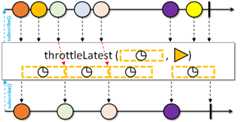
Unlike the option with
throttleLatest(long, TimeUnit, Scheduler, boolean), the very last item being held back (if any) is not emitted when the upstream completes.If no items were emitted from the upstream during this timeout phase, the next upstream item is emitted immediately and the timeout window starts from then.
- Backpressure:
- This operator does not support backpressure as it uses time to control data flow. If the downstream is not ready to receive items, a
MissingBackpressureExceptionwill be signaled. - Scheduler:
- You specify which
Schedulerthis operator will use.
History: 2.1.14 - experimental
- Parameters:
timeout- the time to wait after an item emission towards the downstream before trying to emit the latest item from upstream againunit- the time unitscheduler- theSchedulerwhere the timed wait and latest item emission will be performed- Returns:
- the new Flowable instance
- Since:
- 2.2
- See Also:
throttleLatest(long, TimeUnit, Scheduler, boolean)
throttleLatest
@CheckReturnValue@NonNull@BackpressureSupport(value=ERROR)@SchedulerSupport(value="custom")public final Flowable<T> throttleLatest(long timeout,TimeUnit unit,Scheduler scheduler, boolean emitLast)
Throttles items from the upstreamFlowableby first emitting the next item from upstream, then periodically emitting the latest item (if any) when the specified timeout elapses between them.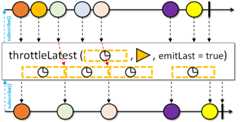
If no items were emitted from the upstream during this timeout phase, the next upstream item is emitted immediately and the timeout window starts from then.
- Backpressure:
- This operator does not support backpressure as it uses time to control data flow. If the downstream is not ready to receive items, a
MissingBackpressureExceptionwill be signaled. - Scheduler:
- You specify which
Schedulerthis operator will use.
History: 2.1.14 - experimental
- Parameters:
timeout- the time to wait after an item emission towards the downstream before trying to emit the latest item from upstream againunit- the time unitscheduler- theSchedulerwhere the timed wait and latest item emission will be performedemitLast- Iftrue, the very last item from the upstream will be emitted immediately when the upstream completes, regardless if there is a timeout window active or not. Iffalse, the very last upstream item is ignored and the flow terminates.- Returns:
- the new Flowable instance
- Since:
- 2.2
throttleWithTimeout
@CheckReturnValue@BackpressureSupport(value=ERROR)@SchedulerSupport(value="io.reactivex:computation")public final Flowable<T> throttleWithTimeout(long timeout,TimeUnit unit)
Returns a Flowable that mirrors the source Publisher, except that it drops items emitted by the source Publisher that are followed by newer items before a timeout value expires. The timer resets on each emission (alias todebounce(long, TimeUnit)).Note: If items keep being emitted by the source Publisher faster than the timeout then no items will be emitted by the resulting Publisher.
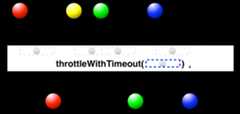
- Backpressure:
- This operator does not support backpressure as it uses time to control data flow.
- Scheduler:
throttleWithTimeoutoperates by default on thecomputationScheduler.
- Parameters:
timeout- the length of the window of time that must pass after the emission of an item from the source Publisher in which that Publisher emits no items in order for the item to be emitted by the resulting Publisherunit- the unit of time for the specifiedtimeout- Returns:
- a Flowable that filters out items from the source Publisher that are too quickly followed by newer items
- See Also:
- ReactiveX operators documentation: Debounce,RxJava wiki: Backpressure,
debounce(long, TimeUnit)
throttleWithTimeout
@CheckReturnValue@BackpressureSupport(value=ERROR)@SchedulerSupport(value="custom")public final Flowable<T> throttleWithTimeout(long timeout,TimeUnit unit,Scheduler scheduler)
Returns a Flowable that mirrors the source Publisher, except that it drops items emitted by the source Publisher that are followed by newer items before a timeout value expires on a specified Scheduler. The timer resets on each emission (alias todebounce(long, TimeUnit, Scheduler)).Note: If items keep being emitted by the source Publisher faster than the timeout then no items will be emitted by the resulting Publisher.
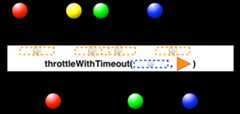
- Backpressure:
- This operator does not support backpressure as it uses time to control data flow.
- Scheduler:
- You specify which
Schedulerthis operator will use.
- Parameters:
timeout- the length of the window of time that must pass after the emission of an item from the source Publisher in which that Publisher emits no items in order for the item to be emitted by the resulting Publisherunit- the unit of time for the specifiedtimeoutscheduler- theSchedulerto use internally to manage the timers that handle the timeout for each item- Returns:
- a Flowable that filters out items from the source Publisher that are too quickly followed by newer items
- See Also:
- ReactiveX operators documentation: Debounce,RxJava wiki: Backpressure,
debounce(long, TimeUnit, Scheduler)
timeInterval
@CheckReturnValue@BackpressureSupport(value=PASS_THROUGH)@SchedulerSupport(value="none")public final Flowable<Timed<T>> timeInterval()
Returns a Flowable that emits records of the time interval between consecutive items emitted by the source Publisher.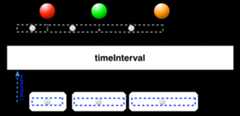
- Backpressure:
- The operator doesn't interfere with backpressure which is determined by the source
Publisher's backpressure behavior. - Scheduler:
timeIntervaldoes not operate on any particular scheduler but uses the current time from thecomputationScheduler.
- Returns:
- a Flowable that emits time interval information items
- See Also:
- ReactiveX operators documentation: TimeInterval
timeInterval
@CheckReturnValue@BackpressureSupport(value=PASS_THROUGH)@SchedulerSupport(value="none")public final Flowable<Timed<T>> timeInterval(Scheduler scheduler)
Returns a Flowable that emits records of the time interval between consecutive items emitted by the source Publisher, where this interval is computed on a specified Scheduler.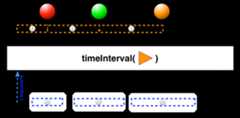
- Backpressure:
- The operator doesn't interfere with backpressure which is determined by the source
Publisher's backpressure behavior. - Scheduler:
- The operator does not operate on any particular scheduler but uses the current time from the specified
Scheduler.
- Parameters:
scheduler- theSchedulerused to compute time intervals- Returns:
- a Flowable that emits time interval information items
- See Also:
- ReactiveX operators documentation: TimeInterval
timeInterval
@CheckReturnValue@BackpressureSupport(value=PASS_THROUGH)@SchedulerSupport(value="none")public final Flowable<Timed<T>> timeInterval(TimeUnit unit)
Returns a Flowable that emits records of the time interval between consecutive items emitted by the source Publisher.- Backpressure:
- The operator doesn't interfere with backpressure which is determined by the source
Publisher's backpressure behavior. - Scheduler:
timeIntervaldoes not operate on any particular scheduler but uses the current time from thecomputationScheduler.
- Parameters:
unit- the time unit for the current time- Returns:
- a Flowable that emits time interval information items
- See Also:
- ReactiveX operators documentation: TimeInterval
timeInterval
@CheckReturnValue@BackpressureSupport(value=PASS_THROUGH)@SchedulerSupport(value="none")public final Flowable<Timed<T>> timeInterval(TimeUnit unit,Scheduler scheduler)
Returns a Flowable that emits records of the time interval between consecutive items emitted by the source Publisher, where this interval is computed on a specified Scheduler.- Backpressure:
- The operator doesn't interfere with backpressure which is determined by the source
Publisher's backpressure behavior. - Scheduler:
- The operator does not operate on any particular scheduler but uses the current time from the specified
Scheduler.
- Parameters:
unit- the time unit for the current timescheduler- theSchedulerused to compute time intervals- Returns:
- a Flowable that emits time interval information items
- See Also:
- ReactiveX operators documentation: TimeInterval
timeout
@CheckReturnValue@BackpressureSupport(value=PASS_THROUGH)@SchedulerSupport(value="none")public final <V> Flowable<T> timeout(Function<? superT,? extendsPublisher<V>> itemTimeoutIndicator)
Returns a Flowable that mirrors the source Publisher, but notifies Subscribers of aTimeoutExceptionif an item emitted by the source Publisher doesn't arrive within a window of time after the emission of the previous item, where that period of time is measured by a Publisher that is a function of the previous item.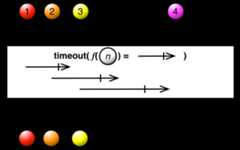
Note: The arrival of the first source item is never timed out.
- Backpressure:
- The operator honors backpressure from downstream. The
Publishersources are expected to honor backpressure as well. If any of the sourcePublishers violate this, itmay throw anIllegalStateExceptionwhen the sourcePublishercompletes. - Scheduler:
- This version of
timeoutoperates by default on theimmediateScheduler.
- Type Parameters:
V- the timeout value type (ignored)- Parameters:
itemTimeoutIndicator- a function that returns a Publisher for each item emitted by the source Publisher and that determines the timeout window for the subsequent item- Returns:
- a Flowable that mirrors the source Publisher, but notifies Subscribers of a
TimeoutExceptionif an item emitted by the source Publisher takes longer to arrive than the time window defined by the selector for the previously emitted item - See Also:
- ReactiveX operators documentation: Timeout
timeout
@CheckReturnValue@NonNull@BackpressureSupport(value=FULL)@SchedulerSupport(value="none")public final <V> Flowable<T> timeout(Function<? superT,? extendsPublisher<V>> itemTimeoutIndicator,Flowable<? extendsT> other)
Returns a Flowable that mirrors the source Publisher, but that switches to a fallback Publisher if an item emitted by the source Publisher doesn't arrive within a window of time after the emission of the previous item, where that period of time is measured by a Publisher that is a function of the previous item.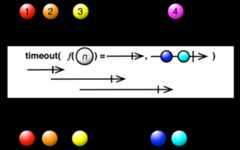
Note: The arrival of the first source item is never timed out.
- Backpressure:
- The operator honors backpressure from downstream. The
Publishersources are expected to honor backpressure as well. If any of the sourcePublishers violate this, itmay throw anIllegalStateExceptionwhen the sourcePublishercompletes. - Scheduler:
- This version of
timeoutoperates by default on theimmediateScheduler.
- Type Parameters:
V- the timeout value type (ignored)- Parameters:
itemTimeoutIndicator- a function that returns a Publisher, for each item emitted by the source Publisher, that determines the timeout window for the subsequent itemother- the fallback Publisher to switch to if the source Publisher times out- Returns:
- a Flowable that mirrors the source Publisher, but switches to mirroring a fallback Publisher if an item emitted by the source Publisher takes longer to arrive than the time window defined by the selector for the previously emitted item
- See Also:
- ReactiveX operators documentation: Timeout
timeout
@CheckReturnValue@BackpressureSupport(value=PASS_THROUGH)@SchedulerSupport(value="io.reactivex:computation")public final Flowable<T> timeout(long timeout,TimeUnit timeUnit)
Returns a Flowable that mirrors the source Publisher but applies a timeout policy for each emitted item. If the next item isn't emitted within the specified timeout duration starting from its predecessor, the resulting Publisher terminates and notifies Subscribers of aTimeoutException.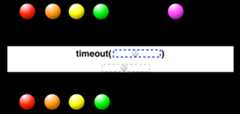
- Backpressure:
- The operator doesn't interfere with backpressure which is determined by the source
Publisher's backpressure behavior. - Scheduler:
- This version of
timeoutoperates by default on thecomputationScheduler.
- Parameters:
timeout- maximum duration between emitted items before a timeout occurstimeUnit- the unit of time that applies to thetimeoutargument.- Returns:
- the source Publisher modified to notify Subscribers of a
TimeoutExceptionin case of a timeout - See Also:
- ReactiveX operators documentation: Timeout
timeout
@CheckReturnValue@NonNull@BackpressureSupport(value=FULL)@SchedulerSupport(value="io.reactivex:computation")public final Flowable<T> timeout(long timeout,TimeUnit timeUnit,Publisher<? extendsT> other)
Returns a Flowable that mirrors the source Publisher but applies a timeout policy for each emitted item. If the next item isn't emitted within the specified timeout duration starting from its predecessor, the source Publisher is disposed and resulting Publisher begins instead to mirror a fallback Publisher.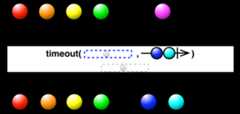
- Backpressure:
- The operator honors backpressure from downstream. The
Publishersources are expected to honor backpressure as well. If any of the sourcePublishers violate this, itmay throw anIllegalStateExceptionwhen the sourcePublishercompletes. - Scheduler:
- This version of
timeoutoperates by default on thecomputationScheduler.
- Parameters:
timeout- maximum duration between items before a timeout occurstimeUnit- the unit of time that applies to thetimeoutargumentother- the fallback Publisher to use in case of a timeout- Returns:
- the source Publisher modified to switch to the fallback Publisher in case of a timeout
- See Also:
- ReactiveX operators documentation: Timeout
timeout
@CheckReturnValue@NonNull@BackpressureSupport(value=FULL)@SchedulerSupport(value="custom")public final Flowable<T> timeout(long timeout,TimeUnit timeUnit,Scheduler scheduler,Publisher<? extendsT> other)
Returns a Flowable that mirrors the source Publisher but applies a timeout policy for each emitted item using a specified Scheduler. If the next item isn't emitted within the specified timeout duration starting from its predecessor, the source Publisher is disposed and resulting Publisher begins instead to mirror a fallback Publisher.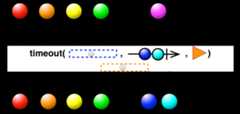
- Backpressure:
- The operator honors backpressure from downstream. The
Publishersources are expected to honor backpressure as well. If any of the sourcePublishers violate this, itmay throw anIllegalStateExceptionwhen the sourcePublishercompletes. - Scheduler:
- You specify which
Schedulerthis operator will use.
- Parameters:
timeout- maximum duration between items before a timeout occurstimeUnit- the unit of time that applies to thetimeoutargumentscheduler- theSchedulerto run the timeout timers onother- the Publisher to use as the fallback in case of a timeout- Returns:
- the source Publisher modified so that it will switch to the fallback Publisher in case of a timeout
- See Also:
- ReactiveX operators documentation: Timeout
timeout
@CheckReturnValue@BackpressureSupport(value=PASS_THROUGH)@SchedulerSupport(value="custom")public final Flowable<T> timeout(long timeout,TimeUnit timeUnit,Scheduler scheduler)
Returns a Flowable that mirrors the source Publisher but applies a timeout policy for each emitted item, where this policy is governed by a specified Scheduler. If the next item isn't emitted within the specified timeout duration starting from its predecessor, the resulting Publisher terminates and notifies Subscribers of aTimeoutException.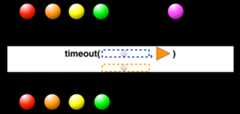
- Backpressure:
- The operator doesn't interfere with backpressure which is determined by the source
Publisher's backpressure behavior. - Scheduler:
- You specify which
Schedulerthis operator will use.
- Parameters:
timeout- maximum duration between items before a timeout occurstimeUnit- the unit of time that applies to thetimeoutargumentscheduler- the Scheduler to run the timeout timers on- Returns:
- the source Publisher modified to notify Subscribers of a
TimeoutExceptionin case of a timeout - See Also:
- ReactiveX operators documentation: Timeout
timeout
@CheckReturnValue@NonNull@BackpressureSupport(value=PASS_THROUGH)@SchedulerSupport(value="none")public final <U,V> Flowable<T> timeout(Publisher<U> firstTimeoutIndicator,Function<? superT,? extendsPublisher<V>> itemTimeoutIndicator)
Returns a Flowable that mirrors the source Publisher, but notifies Subscribers of aTimeoutExceptionif either the first item emitted by the source Publisher or any subsequent item doesn't arrive within time windows defined by other Publishers.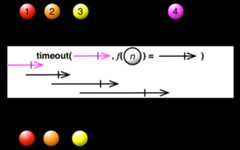
- Backpressure:
- The operator honors backpressure from downstream. Both this and the returned
Publishers are expected to honor backpressure as well. If any of then violates this rule, itmay throw anIllegalStateExceptionwhen thePublishercompletes. - Scheduler:
timeoutdoes not operate by default on anyScheduler.
- Type Parameters:
U- the first timeout value type (ignored)V- the subsequent timeout value type (ignored)- Parameters:
firstTimeoutIndicator- a function that returns a Publisher that determines the timeout window for the first source itemitemTimeoutIndicator- a function that returns a Publisher for each item emitted by the source Publisher and that determines the timeout window in which the subsequent source item must arrive in order to continue the sequence- Returns:
- a Flowable that mirrors the source Publisher, but notifies Subscribers of a
TimeoutExceptionif either the first item or any subsequent item doesn't arrive within the time windows specified by the timeout selectors - See Also:
- ReactiveX operators documentation: Timeout
timeout
@CheckReturnValue@NonNull@BackpressureSupport(value=FULL)@SchedulerSupport(value="none")public final <U,V> Flowable<T> timeout(Publisher<U> firstTimeoutIndicator,Function<? superT,? extendsPublisher<V>> itemTimeoutIndicator,Publisher<? extendsT> other)
Returns a Flowable that mirrors the source Publisher, but switches to a fallback Publisher if either the first item emitted by the source Publisher or any subsequent item doesn't arrive within time windows defined by other Publishers.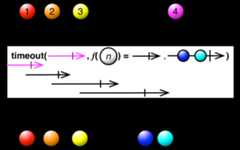
- Backpressure:
- The operator honors backpressure from downstream. The
Publishersources are expected to honor backpressure as well. If any of the sourcePublishers violate this, itmay throw anIllegalStateExceptionwhen the sourcePublishercompletes. - Scheduler:
timeoutdoes not operate by default on anyScheduler.
- Type Parameters:
U- the first timeout value type (ignored)V- the subsequent timeout value type (ignored)- Parameters:
firstTimeoutIndicator- a function that returns a Publisher which determines the timeout window for the first source itemitemTimeoutIndicator- a function that returns a Publisher for each item emitted by the source Publisher and that determines the timeout window in which the subsequent source item must arrive in order to continue the sequenceother- the fallback Publisher to switch to if the source Publisher times out- Returns:
- a Flowable that mirrors the source Publisher, but switches to the
otherPublisher if either the first item emitted by the source Publisher or any subsequent item doesn't arrive within time windows defined by the timeout selectors - Throws:
NullPointerException- ifitemTimeoutIndicatoris null- See Also:
- ReactiveX operators documentation: Timeout
timestamp
@CheckReturnValue@BackpressureSupport(value=PASS_THROUGH)@SchedulerSupport(value="none")public final Flowable<Timed<T>> timestamp()
Returns a Flowable that emits each item emitted by the source Publisher, wrapped in aTimedobject.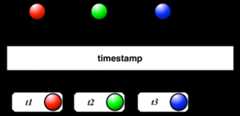
- Backpressure:
- The operator doesn't interfere with backpressure which is determined by the source
Publisher's backpressure behavior. - Scheduler:
timestampdoes not operate on any particular scheduler but uses the current time from thecomputationScheduler.
- Returns:
- a Flowable that emits timestamped items from the source Publisher
- See Also:
- ReactiveX operators documentation: Timestamp
timestamp
@CheckReturnValue@BackpressureSupport(value=PASS_THROUGH)@SchedulerSupport(value="none")public final Flowable<Timed<T>> timestamp(Scheduler scheduler)
Returns a Flowable that emits each item emitted by the source Publisher, wrapped in aTimedobject whose timestamps are provided by a specified Scheduler.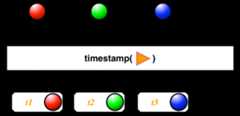
- Backpressure:
- The operator doesn't interfere with backpressure which is determined by the source
Publisher's backpressure behavior. - Scheduler:
- This operator does not operate on any particular scheduler but uses the current time from the specified
Scheduler.
- Parameters:
scheduler- theSchedulerto use as a time source- Returns:
- a Flowable that emits timestamped items from the source Publisher with timestamps provided by the
scheduler - See Also:
- ReactiveX operators documentation: Timestamp
timestamp
@CheckReturnValue@BackpressureSupport(value=PASS_THROUGH)@SchedulerSupport(value="none")public final Flowable<Timed<T>> timestamp(TimeUnit unit)
Returns a Flowable that emits each item emitted by the source Publisher, wrapped in aTimedobject.- Backpressure:
- The operator doesn't interfere with backpressure which is determined by the source
Publisher's backpressure behavior. - Scheduler:
timestampdoes not operate on any particular scheduler but uses the current time from thecomputationScheduler.
- Parameters:
unit- the time unit for the current time- Returns:
- a Flowable that emits timestamped items from the source Publisher
- See Also:
- ReactiveX operators documentation: Timestamp
timestamp
@CheckReturnValue@NonNull@BackpressureSupport(value=PASS_THROUGH)@SchedulerSupport(value="none")public final Flowable<Timed<T>> timestamp(TimeUnit unit,Scheduler scheduler)
Returns a Flowable that emits each item emitted by the source Publisher, wrapped in aTimedobject whose timestamps are provided by a specified Scheduler.- Backpressure:
- The operator doesn't interfere with backpressure which is determined by the source
Publisher's backpressure behavior. - Scheduler:
- This operator does not operate on any particular scheduler but uses the current time from the specified
Scheduler.
- Parameters:
unit- the time unit for the current timescheduler- theSchedulerto use as a time source- Returns:
- a Flowable that emits timestamped items from the source Publisher with timestamps provided by the
scheduler - See Also:
- ReactiveX operators documentation: Timestamp
to
@CheckReturnValue@BackpressureSupport(value=SPECIAL)@SchedulerSupport(value="none")public final <R> R to(Function<? superFlowable<T>,R> converter)
Calls the specified converter function during assembly time and returns its resulting value.This allows fluent conversion to any other type.
- Backpressure:
- The backpressure behavior depends on what happens in the
converterfunction. - Scheduler:
todoes not operate by default on a particularScheduler.
- Type Parameters:
R- the resulting object type- Parameters:
converter- the function that receives the current Flowable instance and returns a value- Returns:
- the value returned by the function
toList
@CheckReturnValue@BackpressureSupport(value=UNBOUNDED_IN)@SchedulerSupport(value="none")public final Single<List<T>> toList()
Returns a Single that emits a single item, a list composed of all the items emitted by the finite upstream source Publisher.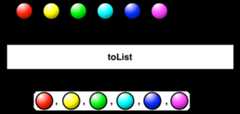
Normally, a Publisher that returns multiple items will do so by invoking its
Subscriber'sonNextmethod for each such item. You can change this behavior, instructing the Publisher to compose a list of all of these items and then to invoke the Subscriber'sonNextfunction once, passing it the entire list, by calling the Publisher'stoListmethod prior to calling itssubscribe()method.Note that this operator requires the upstream to signal
onCompletefor the accumulated list to be emitted. Sources that are infinite and never complete will never emit anything through this operator and an infinite source may lead to a fatalOutOfMemoryError.- Backpressure:
- The operator honors backpressure from downstream and consumes the source
Publisherin an unbounded manner (i.e., without applying backpressure to it). - Scheduler:
toListdoes not operate by default on a particularScheduler.
- Returns:
- a Single that emits a single item: a List containing all of the items emitted by the source Publisher
- See Also:
- ReactiveX operators documentation: To
toList
@CheckReturnValue@BackpressureSupport(value=UNBOUNDED_IN)@SchedulerSupport(value="none")public final Single<List<T>> toList(int capacityHint)
Returns a Single that emits a single item, a list composed of all the items emitted by the finite source Publisher.Normally, a Publisher that returns multiple items will do so by invoking its
Subscriber'sonNextmethod for each such item. You can change this behavior, instructing the Publisher to compose a list of all of these items and then to invoke the Subscriber'sonNextfunction once, passing it the entire list, by calling the Publisher'stoListmethod prior to calling itssubscribe()method.Note that this operator requires the upstream to signal
onCompletefor the accumulated list to be emitted. Sources that are infinite and never complete will never emit anything through this operator and an infinite source may lead to a fatalOutOfMemoryError.- Backpressure:
- The operator honors backpressure from downstream and consumes the source
Publisherin an unbounded manner (i.e., without applying backpressure to it). - Scheduler:
toListdoes not operate by default on a particularScheduler.
- Parameters:
capacityHint- the number of elements expected from the current Flowable- Returns:
- a Flowable that emits a single item: a List containing all of the items emitted by the source Publisher
- See Also:
- ReactiveX operators documentation: To
toList
@CheckReturnValue@BackpressureSupport(value=UNBOUNDED_IN)@SchedulerSupport(value="none")public final <U extendsCollection<? superT>> Single<U> toList(Callable<U> collectionSupplier)
Returns a Single that emits a single item, a list composed of all the items emitted by the finite source Publisher.Normally, a Publisher that returns multiple items will do so by invoking its
Subscriber'sonNextmethod for each such item. You can change this behavior, instructing the Publisher to compose a list of all of these items and then to invoke the Subscriber'sonNextfunction once, passing it the entire list, by calling the Publisher'stoListmethod prior to calling itssubscribe()method.Note that this operator requires the upstream to signal
onCompletefor the accumulated collection to be emitted. Sources that are infinite and never complete will never emit anything through this operator and an infinite source may lead to a fatalOutOfMemoryError.- Backpressure:
- The operator honors backpressure from downstream and consumes the source
Publisherin an unbounded manner (i.e., without applying backpressure to it). - Scheduler:
toListdoes not operate by default on a particularScheduler.
- Type Parameters:
U- the subclass of a collection of Ts- Parameters:
collectionSupplier- the Callable returning the collection (for each individual Subscriber) to be filled in- Returns:
- a Single that emits a single item: a List containing all of the items emitted by the source Publisher
- See Also:
- ReactiveX operators documentation: To
toMap
@CheckReturnValue@NonNull@BackpressureSupport(value=UNBOUNDED_IN)@SchedulerSupport(value="none")public final <K> Single<Map<K,T>> toMap(Function<? superT,? extends K> keySelector)
Returns a Single that emits a single HashMap containing all items emitted by the finite source Publisher, mapped by the keys returned by a specifiedkeySelectorfunction.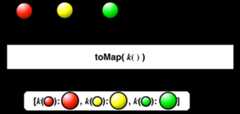
If more than one source item maps to the same key, the HashMap will contain the latest of those items.
Note that this operator requires the upstream to signal
onCompletefor the accumulated map to be emitted. Sources that are infinite and never complete will never emit anything through this operator and an infinite source may lead to a fatalOutOfMemoryError.- Backpressure:
- The operator honors backpressure from downstream and consumes the source
Publisherin an unbounded manner (i.e., without applying backpressure to it). - Scheduler:
toMapdoes not operate by default on a particularScheduler.
- Type Parameters:
K- the key type of the Map- Parameters:
keySelector- the function that extracts the key from a source item to be used in the HashMap- Returns:
- a Single that emits a single item: a HashMap containing the mapped items from the source Publisher
- See Also:
- ReactiveX operators documentation: To
toMap
@CheckReturnValue@NonNull@BackpressureSupport(value=UNBOUNDED_IN)@SchedulerSupport(value="none")public final <K,V> Single<Map<K,V>> toMap(Function<? superT,? extends K> keySelector,Function<? superT,? extends V> valueSelector)
Returns a Single that emits a single HashMap containing values corresponding to items emitted by the finite source Publisher, mapped by the keys returned by a specifiedkeySelectorfunction.If more than one source item maps to the same key, the HashMap will contain a single entry that corresponds to the latest of those items.
Note that this operator requires the upstream to signal
onCompletefor the accumulated map to be emitted. Sources that are infinite and never complete will never emit anything through this operator and an infinite source may lead to a fatalOutOfMemoryError.- Backpressure:
- The operator honors backpressure from downstream and consumes the source
Publisherin an unbounded manner (i.e., without applying backpressure to it). - Scheduler:
toMapdoes not operate by default on a particularScheduler.
- Type Parameters:
K- the key type of the MapV- the value type of the Map- Parameters:
keySelector- the function that extracts the key from a source item to be used in the HashMapvalueSelector- the function that extracts the value from a source item to be used in the HashMap- Returns:
- a Single that emits a single item: a HashMap containing the mapped items from the source Publisher
- See Also:
- ReactiveX operators documentation: To
toMap
@CheckReturnValue@NonNull@BackpressureSupport(value=UNBOUNDED_IN)@SchedulerSupport(value="none")public final <K,V> Single<Map<K,V>> toMap(Function<? superT,? extends K> keySelector,Function<? superT,? extends V> valueSelector,Callable<? extendsMap<K,V>> mapSupplier)
Returns a Single that emits a single Map, returned by a specifiedmapFactoryfunction, that contains keys and values extracted from the items emitted by the finite source Publisher.Note that this operator requires the upstream to signal
onCompletefor the accumulated map to be emitted. Sources that are infinite and never complete will never emit anything through this operator and an infinite source may lead to a fatalOutOfMemoryError.- Backpressure:
- The operator honors backpressure from downstream and consumes the source
Publisherin an unbounded manner (i.e., without applying backpressure to it). - Scheduler:
toMapdoes not operate by default on a particularScheduler.
- Type Parameters:
K- the key type of the MapV- the value type of the Map- Parameters:
keySelector- the function that extracts the key from a source item to be used in the MapvalueSelector- the function that extracts the value from the source items to be used as value in the MapmapSupplier- the function that returns a Map instance to be used- Returns:
- a Flowable that emits a single item: a Map that contains the mapped items emitted by the source Publisher
- See Also:
- ReactiveX operators documentation: To
toMultimap
@CheckReturnValue@BackpressureSupport(value=UNBOUNDED_IN)@SchedulerSupport(value="none")public final <K> Single<Map<K,Collection<T>>> toMultimap(Function<? superT,? extends K> keySelector)
Returns a Single that emits a single HashMap that contains an ArrayList of items emitted by the finite source Publisher keyed by a specifiedkeySelectorfunction.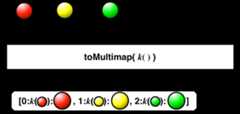
Note that this operator requires the upstream to signal
onCompletefor the accumulated map to be emitted. Sources that are infinite and never complete will never emit anything through this operator and an infinite source may lead to a fatalOutOfMemoryError.- Backpressure:
- This operator does not support backpressure as by intent it is requesting and buffering everything.
- Scheduler:
toMultimapdoes not operate by default on a particularScheduler.
- Type Parameters:
K- the key type of the Map- Parameters:
keySelector- the function that extracts the key from the source items to be used as key in the HashMap- Returns:
- a Single that emits a single item: a HashMap that contains an ArrayList of items mapped from the source Publisher
- See Also:
- ReactiveX operators documentation: To
toMultimap
@CheckReturnValue@BackpressureSupport(value=UNBOUNDED_IN)@SchedulerSupport(value="none")public final <K,V> Single<Map<K,Collection<V>>> toMultimap(Function<? superT,? extends K> keySelector,Function<? superT,? extends V> valueSelector)
Returns a Single that emits a single HashMap that contains an ArrayList of values extracted by a specifiedvalueSelectorfunction from items emitted by the finite source Publisher, keyed by a specifiedkeySelectorfunction.Note that this operator requires the upstream to signal
onCompletefor the accumulated map to be emitted. Sources that are infinite and never complete will never emit anything through this operator and an infinite source may lead to a fatalOutOfMemoryError.- Backpressure:
- The operator honors backpressure from downstream and consumes the source
Publisherin an unbounded manner (i.e., without applying backpressure to it). - Scheduler:
toMultimapdoes not operate by default on a particularScheduler.
- Type Parameters:
K- the key type of the MapV- the value type of the Map- Parameters:
keySelector- the function that extracts a key from the source items to be used as key in the HashMapvalueSelector- the function that extracts a value from the source items to be used as value in the HashMap- Returns:
- a Single that emits a single item: a HashMap that contains an ArrayList of items mapped from the source Publisher
- See Also:
- ReactiveX operators documentation: To
toMultimap
@CheckReturnValue@NonNull@BackpressureSupport(value=UNBOUNDED_IN)@SchedulerSupport(value="none")public final <K,V> Single<Map<K,Collection<V>>> toMultimap(Function<? superT,? extends K> keySelector,Function<? superT,? extends V> valueSelector,Callable<? extendsMap<K,Collection<V>>> mapSupplier,Function<? super K,? extendsCollection<? super V>> collectionFactory)
Returns a Single that emits a single Map, returned by a specifiedmapFactoryfunction, that contains a custom collection of values, extracted by a specifiedvalueSelectorfunction from items emitted by the finite source Publisher, and keyed by thekeySelectorfunction.Note that this operator requires the upstream to signal
onCompletefor the accumulated map to be emitted. Sources that are infinite and never complete will never emit anything through this operator and an infinite source may lead to a fatalOutOfMemoryError.- Backpressure:
- The operator honors backpressure from downstream and consumes the source
Publisherin an unbounded manner (i.e., without applying backpressure to it). - Scheduler:
toMultimapdoes not operate by default on a particularScheduler.
- Type Parameters:
K- the key type of the MapV- the value type of the Map- Parameters:
keySelector- the function that extracts a key from the source items to be used as the key in the MapvalueSelector- the function that extracts a value from the source items to be used as the value in the MapmapSupplier- the function that returns a Map instance to be usedcollectionFactory- the function that returns a Collection instance for a particular key to be used in the Map- Returns:
- a Single that emits a single item: a Map that contains the collection of mapped items from the source Publisher
- See Also:
- ReactiveX operators documentation: To
toMultimap
@CheckReturnValue@BackpressureSupport(value=UNBOUNDED_IN)@SchedulerSupport(value="none")public final <K,V> Single<Map<K,Collection<V>>> toMultimap(Function<? superT,? extends K> keySelector,Function<? superT,? extends V> valueSelector,Callable<Map<K,Collection<V>>> mapSupplier)
Returns a Single that emits a single Map, returned by a specifiedmapFactoryfunction, that contains an ArrayList of values, extracted by a specifiedvalueSelectorfunction from items emitted by the finite source Publisher and keyed by thekeySelectorfunction.Note that this operator requires the upstream to signal
onCompletefor the accumulated map to be emitted. Sources that are infinite and never complete will never emit anything through this operator and an infinite source may lead to a fatalOutOfMemoryError.- Backpressure:
- The operator honors backpressure from downstream and consumes the source
Publisherin an unbounded manner (i.e., without applying backpressure to it). - Scheduler:
toMultimapdoes not operate by default on a particularScheduler.
- Type Parameters:
K- the key type of the MapV- the value type of the Map- Parameters:
keySelector- the function that extracts a key from the source items to be used as the key in the MapvalueSelector- the function that extracts a value from the source items to be used as the value in the MapmapSupplier- the function that returns a Map instance to be used- Returns:
- a Single that emits a single item: a Map that contains a list items mapped from the source Publisher
- See Also:
- ReactiveX operators documentation: To
toObservable
@CheckReturnValue@BackpressureSupport(value=UNBOUNDED_IN)@SchedulerSupport(value="none")public final Observable<T> toObservable()
Converts the current Flowable into a non-backpressuredObservable.- Backpressure:
- Observables don't support backpressure thus the current Flowable is consumed in an unbounded manner (by requesting Long.MAX_VALUE).
- Scheduler:
toObservabledoes not operate by default on a particularScheduler.
- Returns:
- the new Observable instance
- Since:
- 2.0
toSortedList
@CheckReturnValue@BackpressureSupport(value=UNBOUNDED_IN)@SchedulerSupport(value="none")public final Single<List<T>> toSortedList()
Returns a Single that emits a list that contains the items emitted by the finite source Publisher, in a sorted order. Each item emitted by the Publisher must implementComparablewith respect to all other items in the sequence.If any item emitted by this Flowable does not implement
Comparablewith respect to all other items emitted by this Flowable, no items will be emitted and the sequence is terminated with aClassCastException.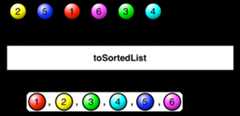
Note that this operator requires the upstream to signal
onCompletefor the accumulated list to be emitted. Sources that are infinite and never complete will never emit anything through this operator and an infinite source may lead to a fatalOutOfMemoryError.- Backpressure:
- The operator honors backpressure from downstream and consumes the source
Publisherin an unbounded manner (i.e., without applying backpressure to it). - Scheduler:
toSortedListdoes not operate by default on a particularScheduler.
- Returns:
- a Single that emits a list that contains the items emitted by the source Publisher in sorted order
- See Also:
- ReactiveX operators documentation: To
toSortedList
@CheckReturnValue@NonNull@BackpressureSupport(value=UNBOUNDED_IN)@SchedulerSupport(value="none")public final Single<List<T>> toSortedList(Comparator<? superT> comparator)
Returns a Single that emits a list that contains the items emitted by the finite source Publisher, in a sorted order based on a specified comparison function.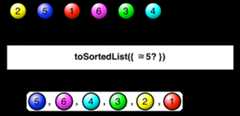
Note that this operator requires the upstream to signal
onCompletefor the accumulated list to be emitted. Sources that are infinite and never complete will never emit anything through this operator and an infinite source may lead to a fatalOutOfMemoryError.- Backpressure:
- The operator honors backpressure from downstream and consumes the source
Publisherin an unbounded manner (i.e., without applying backpressure to it). - Scheduler:
toSortedListdoes not operate by default on a particularScheduler.
- Parameters:
comparator- a function that compares two items emitted by the source Publisher and returns an Integer that indicates their sort order- Returns:
- a Single that emits a list that contains the items emitted by the source Publisher in sorted order
- See Also:
- ReactiveX operators documentation: To
toSortedList
@CheckReturnValue@NonNull@BackpressureSupport(value=UNBOUNDED_IN)@SchedulerSupport(value="none")public final Single<List<T>> toSortedList(Comparator<? superT> comparator, int capacityHint)
Returns a Single that emits a list that contains the items emitted by the finite source Publisher, in a sorted order based on a specified comparison function.Note that this operator requires the upstream to signal
onCompletefor the accumulated list to be emitted. Sources that are infinite and never complete will never emit anything through this operator and an infinite source may lead to a fatalOutOfMemoryError.- Backpressure:
- The operator honors backpressure from downstream and consumes the source
Publisherin an unbounded manner (i.e., without applying backpressure to it). - Scheduler:
toSortedListdoes not operate by default on a particularScheduler.
- Parameters:
comparator- a function that compares two items emitted by the source Publisher and returns an Integer that indicates their sort ordercapacityHint- the initial capacity of the ArrayList used to accumulate items before sorting- Returns:
- a Single that emits a list that contains the items emitted by the source Publisher in sorted order
- Since:
- 2.0
- See Also:
- ReactiveX operators documentation: To
toSortedList
@CheckReturnValue@BackpressureSupport(value=UNBOUNDED_IN)@SchedulerSupport(value="none")public final Single<List<T>> toSortedList(int capacityHint)
Returns a Flowable that emits a list that contains the items emitted by the finite source Publisher, in a sorted order. Each item emitted by the Publisher must implementComparablewith respect to all other items in the sequence.If any item emitted by this Flowable does not implement
Comparablewith respect to all other items emitted by this Flowable, no items will be emitted and the sequence is terminated with aClassCastException.Note that this operator requires the upstream to signal
onCompletefor the accumulated list to be emitted. Sources that are infinite and never complete will never emit anything through this operator and an infinite source may lead to a fatalOutOfMemoryError.- Backpressure:
- The operator honors backpressure from downstream and consumes the source
Publisherin an unbounded manner (i.e., without applying backpressure to it). - Scheduler:
toSortedListdoes not operate by default on a particularScheduler.
- Parameters:
capacityHint- the initial capacity of the ArrayList used to accumulate items before sorting- Returns:
- a Flowable that emits a list that contains the items emitted by the source Publisher in sorted order
- Since:
- 2.0
- See Also:
- ReactiveX operators documentation: To
unsubscribeOn
@CheckReturnValue@NonNull@BackpressureSupport(value=PASS_THROUGH)@SchedulerSupport(value="custom")public final Flowable<T> unsubscribeOn(Scheduler scheduler)
Modifies the source Publisher so that subscribers will cancel it on a specifiedScheduler.- Backpressure:
- The operator doesn't interfere with backpressure which is determined by the source
Publisher's backpressure behavior. - Scheduler:
- You specify which
Schedulerthis operator will use.
- Parameters:
scheduler- theSchedulerto perform cancellation actions on- Returns:
- the source Publisher modified so that its cancellations happen on the specified
Scheduler - See Also:
- ReactiveX operators documentation: SubscribeOn
window
@CheckReturnValue@BackpressureSupport(value=FULL)@SchedulerSupport(value="none")public final Flowable<Flowable<T>> window(long count)
Returns a Flowable that emits windows of items it collects from the source Publisher. The resulting Publisher emits connected, non-overlapping windows, each containingcountitems. When the source Publisher completes or encounters an error, the resulting Publisher emits the current window and propagates the notification from the source Publisher.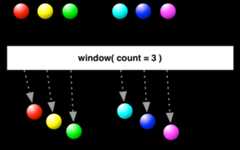
- Backpressure:
- The operator honors backpressure of its inner and outer subscribers, however, the inner Publisher uses an unbounded buffer that may hold at most
countelements. - Scheduler:
- This version of
windowdoes not operate by default on a particularScheduler.
- Parameters:
count- the maximum size of each window before it should be emitted- Returns:
- a Flowable that emits connected, non-overlapping windows, each containing at most
countitems from the source Publisher - Throws:
IllegalArgumentException- if either count is non-positive- See Also:
- ReactiveX operators documentation: Window
window
@CheckReturnValue@BackpressureSupport(value=FULL)@SchedulerSupport(value="none")public final Flowable<Flowable<T>> window(long count, long skip)
Returns a Flowable that emits windows of items it collects from the source Publisher. The resulting Publisher emits windows everyskipitems, each containing no more thancountitems. When the source Publisher completes or encounters an error, the resulting Publisher emits the current window and propagates the notification from the source Publisher.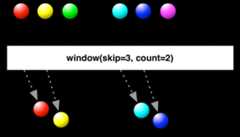
- Backpressure:
- The operator honors backpressure of its inner and outer subscribers, however, the inner Publisher uses an unbounded buffer that may hold at most
countelements. - Scheduler:
- This version of
windowdoes not operate by default on a particularScheduler.
- Parameters:
count- the maximum size of each window before it should be emittedskip- how many items need to be skipped before starting a new window. Note that ifskipandcountare equal this is the same operation aswindow(long).- Returns:
- a Flowable that emits windows every
skipitems containing at mostcountitems from the source Publisher - Throws:
IllegalArgumentException- if either count or skip is non-positive- See Also:
- ReactiveX operators documentation: Window
window
@CheckReturnValue@BackpressureSupport(value=FULL)@SchedulerSupport(value="none")public final Flowable<Flowable<T>> window(long count, long skip, int bufferSize)
Returns a Flowable that emits windows of items it collects from the source Publisher. The resulting Publisher emits windows everyskipitems, each containing no more thancountitems. When the source Publisher completes or encounters an error, the resulting Publisher emits the current window and propagates the notification from the source Publisher.- Backpressure:
- The operator honors backpressure of its inner and outer subscribers, however, the inner Publisher uses an unbounded buffer that may hold at most
countelements. - Scheduler:
- This version of
windowdoes not operate by default on a particularScheduler.
- Parameters:
count- the maximum size of each window before it should be emittedskip- how many items need to be skipped before starting a new window. Note that ifskipandcountare equal this is the same operation aswindow(long).bufferSize- the capacity hint for the buffer in the inner windows- Returns:
- a Flowable that emits windows every
skipitems containing at mostcountitems from the source Publisher - Throws:
IllegalArgumentException- if either count or skip is non-positive- See Also:
- ReactiveX operators documentation: Window
window
@CheckReturnValue@BackpressureSupport(value=ERROR)@SchedulerSupport(value="io.reactivex:computation")public final Flowable<Flowable<T>> window(long timespan, long timeskip,TimeUnit unit)
Returns a Flowable that emits windows of items it collects from the source Publisher. The resulting Publisher starts a new window periodically, as determined by thetimeskipargument. It emits each window after a fixed timespan, specified by thetimespanargument. When the source Publisher completes or Publisher completes or encounters an error, the resulting Publisher emits the current window and propagates the notification from the source Publisher.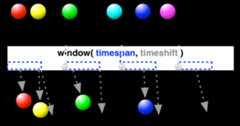
- Backpressure:
- The operator consumes the source
Publisherin an unbounded manner. The returnedPublisherdoesn't support backpressure as it uses time to control the creation of windows. The returned innerPublishers honor backpressure but have an unbounded inner buffer thatmay lead toOutOfMemoryErrorif left unconsumed. - Scheduler:
- This version of
windowoperates by default on thecomputationScheduler.
- Parameters:
timespan- the period of time each window collects items before it should be emittedtimeskip- the period of time after which a new window will be createdunit- the unit of time that applies to thetimespanandtimeskiparguments- Returns:
- a Flowable that emits new windows periodically as a fixed timespan elapses
- See Also:
- ReactiveX operators documentation: Window
window
@CheckReturnValue@BackpressureSupport(value=ERROR)@SchedulerSupport(value="custom")public final Flowable<Flowable<T>> window(long timespan, long timeskip,TimeUnit unit,Scheduler scheduler)
Returns a Flowable that emits windows of items it collects from the source Publisher. The resulting Publisher starts a new window periodically, as determined by thetimeskipargument. It emits each window after a fixed timespan, specified by thetimespanargument. When the source Publisher completes or Publisher completes or encounters an error, the resulting Publisher emits the current window and propagates the notification from the source Publisher.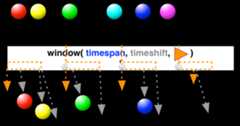
- Backpressure:
- The operator consumes the source
Publisherin an unbounded manner. The returnedPublisherdoesn't support backpressure as it uses time to control the creation of windows. The returned innerPublishers honor backpressure but have an unbounded inner buffer thatmay lead toOutOfMemoryErrorif left unconsumed. - Scheduler:
- You specify which
Schedulerthis operator will use.
- Parameters:
timespan- the period of time each window collects items before it should be emittedtimeskip- the period of time after which a new window will be createdunit- the unit of time that applies to thetimespanandtimeskipargumentsscheduler- theSchedulerto use when determining the end and start of a window- Returns:
- a Flowable that emits new windows periodically as a fixed timespan elapses
- See Also:
- ReactiveX operators documentation: Window
window
@CheckReturnValue@NonNull@BackpressureSupport(value=ERROR)@SchedulerSupport(value="custom")public final Flowable<Flowable<T>> window(long timespan, long timeskip,TimeUnit unit,Scheduler scheduler, int bufferSize)
Returns a Flowable that emits windows of items it collects from the source Publisher. The resulting Publisher starts a new window periodically, as determined by thetimeskipargument. It emits each window after a fixed timespan, specified by thetimespanargument. When the source Publisher completes or Publisher completes or encounters an error, the resulting Publisher emits the current window and propagates the notification from the source Publisher.- Backpressure:
- The operator consumes the source
Publisherin an unbounded manner. The returnedPublisherdoesn't support backpressure as it uses time to control the creation of windows. The returned innerPublishers honor backpressure but have an unbounded inner buffer thatmay lead toOutOfMemoryErrorif left unconsumed. - Scheduler:
- You specify which
Schedulerthis operator will use.
- Parameters:
timespan- the period of time each window collects items before it should be emittedtimeskip- the period of time after which a new window will be createdunit- the unit of time that applies to thetimespanandtimeskipargumentsscheduler- theSchedulerto use when determining the end and start of a windowbufferSize- the capacity hint for the buffer in the inner windows- Returns:
- a Flowable that emits new windows periodically as a fixed timespan elapses
- See Also:
- ReactiveX operators documentation: Window
window
@CheckReturnValue@BackpressureSupport(value=ERROR)@SchedulerSupport(value="io.reactivex:computation")public final Flowable<Flowable<T>> window(long timespan,TimeUnit unit)
Returns a Flowable that emits windows of items it collects from the source Publisher. The resulting Publisher emits connected, non-overlapping windows, each of a fixed duration specified by thetimespanargument. When the source Publisher completes or encounters an error, the resulting Publisher emits the current window and propagates the notification from the source Publisher.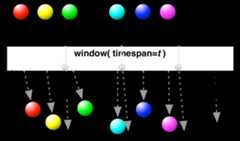
- Backpressure:
- The operator consumes the source
Publisherin an unbounded manner. The returnedPublisherdoesn't support backpressure as it uses time to control the creation of windows. The returned innerPublishers honor backpressure and may hold up tocountelements at most. - Scheduler:
- This version of
windowoperates by default on thecomputationScheduler.
- Parameters:
timespan- the period of time each window collects items before it should be emitted and replaced with a new windowunit- the unit of time that applies to thetimespanargument- Returns:
- a Flowable that emits connected, non-overlapping windows representing items emitted by the source Publisher during fixed, consecutive durations
- See Also:
- ReactiveX operators documentation: Window
window
@CheckReturnValue@BackpressureSupport(value=ERROR)@SchedulerSupport(value="io.reactivex:computation")public final Flowable<Flowable<T>> window(long timespan,TimeUnit unit, long count)
Returns a Flowable that emits windows of items it collects from the source Publisher. The resulting Publisher emits connected, non-overlapping windows, each of a fixed duration as specified by thetimespanargument or a maximum size as specified by thecountargument (whichever is reached first). When the source Publisher completes or encounters an error, the resulting Publisher emits the current window and propagates the notification from the source Publisher.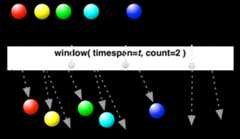
- Backpressure:
- The operator consumes the source
Publisherin an unbounded manner. The returnedPublisherdoesn't support backpressure as it uses time to control the creation of windows. The returned innerPublishers honor backpressure and may hold up tocountelements at most. - Scheduler:
- This version of
windowoperates by default on thecomputationScheduler.
- Parameters:
timespan- the period of time each window collects items before it should be emitted and replaced with a new windowunit- the unit of time that applies to thetimespanargumentcount- the maximum size of each window before it should be emitted- Returns:
- a Flowable that emits connected, non-overlapping windows of items from the source Publisher that were emitted during a fixed duration of time or when the window has reached maximum capacity (whichever occurs first)
- See Also:
- ReactiveX operators documentation: Window
window
@CheckReturnValue@BackpressureSupport(value=ERROR)@SchedulerSupport(value="io.reactivex:computation")public final Flowable<Flowable<T>> window(long timespan,TimeUnit unit, long count, boolean restart)
Returns a Flowable that emits windows of items it collects from the source Publisher. The resulting Publisher emits connected, non-overlapping windows, each of a fixed duration as specified by thetimespanargument or a maximum size as specified by thecountargument (whichever is reached first). When the source Publisher completes or encounters an error, the resulting Publisher emits the current window and propagates the notification from the source Publisher.- Backpressure:
- The operator consumes the source
Publisherin an unbounded manner. The returnedPublisherdoesn't support backpressure as it uses time to control the creation of windows. The returned innerPublishers honor backpressure and may hold up tocountelements at most. - Scheduler:
- This version of
windowoperates by default on thecomputationScheduler.
- Parameters:
timespan- the period of time each window collects items before it should be emitted and replaced with a new windowunit- the unit of time that applies to thetimespanargumentcount- the maximum size of each window before it should be emittedrestart- if true, when a window reaches the capacity limit, the timer is restarted as well- Returns:
- a Flowable that emits connected, non-overlapping windows of items from the source Publisher that were emitted during a fixed duration of time or when the window has reached maximum capacity (whichever occurs first)
- See Also:
- ReactiveX operators documentation: Window
window
@CheckReturnValue@BackpressureSupport(value=ERROR)@SchedulerSupport(value="custom")public final Flowable<Flowable<T>> window(long timespan,TimeUnit unit,Scheduler scheduler)
Returns a Flowable that emits windows of items it collects from the source Publisher. The resulting Publisher emits connected, non-overlapping windows, each of a fixed duration as specified by thetimespanargument. When the source Publisher completes or encounters an error, the resulting Publisher emits the current window and propagates the notification from the source Publisher.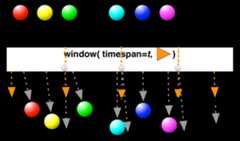
- Backpressure:
- The operator consumes the source
Publisherin an unbounded manner. The returnedPublisherdoesn't support backpressure as it uses time to control the creation of windows. The returned innerPublishers honor backpressure but have an unbounded inner buffer thatmay lead toOutOfMemoryErrorif left unconsumed. - Scheduler:
- You specify which
Schedulerthis operator will use.
- Parameters:
timespan- the period of time each window collects items before it should be emitted and replaced with a new windowunit- the unit of time which applies to thetimespanargumentscheduler- theSchedulerto use when determining the end and start of a window- Returns:
- a Flowable that emits connected, non-overlapping windows containing items emitted by the source Publisher within a fixed duration
- See Also:
- ReactiveX operators documentation: Window
window
@CheckReturnValue@BackpressureSupport(value=ERROR)@SchedulerSupport(value="custom")public final Flowable<Flowable<T>> window(long timespan,TimeUnit unit,Scheduler scheduler, long count)
Returns a Flowable that emits windows of items it collects from the source Publisher. The resulting Publisher emits connected, non-overlapping windows, each of a fixed duration specified by thetimespanargument or a maximum size specified by thecountargument (whichever is reached first). When the source Publisher completes or encounters an error, the resulting Publisher emits the current window and propagates the notification from the source Publisher.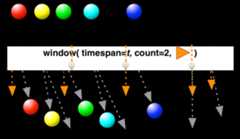
- Backpressure:
- The operator consumes the source
Publisherin an unbounded manner. The returnedPublisherdoesn't support backpressure as it uses time to control the creation of windows. The returned innerPublishers honor backpressure and may hold up tocountelements at most. - Scheduler:
- You specify which
Schedulerthis operator will use.
- Parameters:
timespan- the period of time each window collects items before it should be emitted and replaced with a new windowunit- the unit of time which applies to thetimespanargumentcount- the maximum size of each window before it should be emittedscheduler- theSchedulerto use when determining the end and start of a window- Returns:
- a Flowable that emits connected, non-overlapping windows of items from the source Publisher that were emitted during a fixed duration of time or when the window has reached maximum capacity (whichever occurs first)
- See Also:
- ReactiveX operators documentation: Window
window
@CheckReturnValue@BackpressureSupport(value=ERROR)@SchedulerSupport(value="custom")public final Flowable<Flowable<T>> window(long timespan,TimeUnit unit,Scheduler scheduler, long count, boolean restart)
Returns a Flowable that emits windows of items it collects from the source Publisher. The resulting Publisher emits connected, non-overlapping windows, each of a fixed duration specified by thetimespanargument or a maximum size specified by thecountargument (whichever is reached first). When the source Publisher completes or encounters an error, the resulting Publisher emits the current window and propagates the notification from the source Publisher.- Backpressure:
- The operator consumes the source
Publisherin an unbounded manner. The returnedPublisherdoesn't support backpressure as it uses time to control the creation of windows. The returned innerPublishers honor backpressure and may hold up tocountelements at most. - Scheduler:
- You specify which
Schedulerthis operator will use.
- Parameters:
timespan- the period of time each window collects items before it should be emitted and replaced with a new windowunit- the unit of time which applies to thetimespanargumentcount- the maximum size of each window before it should be emittedscheduler- theSchedulerto use when determining the end and start of a windowrestart- if true, when a window reaches the capacity limit, the timer is restarted as well- Returns:
- a Flowable that emits connected, non-overlapping windows of items from the source Publisher that were emitted during a fixed duration of time or when the window has reached maximum capacity (whichever occurs first)
- See Also:
- ReactiveX operators documentation: Window
window
@CheckReturnValue@NonNull@BackpressureSupport(value=ERROR)@SchedulerSupport(value="custom")public final Flowable<Flowable<T>> window(long timespan,TimeUnit unit,Scheduler scheduler, long count, boolean restart, int bufferSize)
Returns a Flowable that emits windows of items it collects from the source Publisher. The resulting Publisher emits connected, non-overlapping windows, each of a fixed duration specified by thetimespanargument or a maximum size specified by thecountargument (whichever is reached first). When the source Publisher completes or encounters an error, the resulting Publisher emits the current window and propagates the notification from the source Publisher.- Backpressure:
- The operator consumes the source
Publisherin an unbounded manner. The returnedPublisherdoesn't support backpressure as it uses time to control the creation of windows. The returned innerPublishers honor backpressure and may hold up tocountelements at most. - Scheduler:
- You specify which
Schedulerthis operator will use.
- Parameters:
timespan- the period of time each window collects items before it should be emitted and replaced with a new windowunit- the unit of time which applies to thetimespanargumentcount- the maximum size of each window before it should be emittedscheduler- theSchedulerto use when determining the end and start of a windowrestart- if true, when a window reaches the capacity limit, the timer is restarted as wellbufferSize- the capacity hint for the buffer in the inner windows- Returns:
- a Flowable that emits connected, non-overlapping windows of items from the source Publisher that were emitted during a fixed duration of time or when the window has reached maximum capacity (whichever occurs first)
- See Also:
- ReactiveX operators documentation: Window
window
@CheckReturnValue@BackpressureSupport(value=ERROR)@SchedulerSupport(value="none")public final <B> Flowable<Flowable<T>> window(Publisher<B> boundaryIndicator)
Returns a Flowable that emits non-overlapping windows of items it collects from the source Publisher where the boundary of each window is determined by the items emitted from a specified boundary-governing Publisher.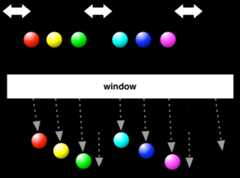
- Backpressure:
- The outer Publisher of this operator does not support backpressure as it uses a
boundaryPublisher to control data flow. The inner Publishers honor backpressure and buffer everything until the boundary signals the next element. - Scheduler:
- This version of
windowdoes not operate by default on a particularScheduler.
- Type Parameters:
B- the window element type (ignored)- Parameters:
boundaryIndicator- a Publisher whose emitted items close and open windows- Returns:
- a Flowable that emits non-overlapping windows of items it collects from the source Publisher where the boundary of each window is determined by the items emitted from the
boundaryPublisher - See Also:
- ReactiveX operators documentation: Window
window
@CheckReturnValue@NonNull@BackpressureSupport(value=ERROR)@SchedulerSupport(value="none")public final <B> Flowable<Flowable<T>> window(Publisher<B> boundaryIndicator, int bufferSize)
Returns a Flowable that emits non-overlapping windows of items it collects from the source Publisher where the boundary of each window is determined by the items emitted from a specified boundary-governing Publisher.- Backpressure:
- The outer Publisher of this operator does not support backpressure as it uses a
boundaryPublisher to control data flow. The inner Publishers honor backpressure and buffer everything until the boundary signals the next element. - Scheduler:
- This version of
windowdoes not operate by default on a particularScheduler.
- Type Parameters:
B- the window element type (ignored)- Parameters:
boundaryIndicator- a Publisher whose emitted items close and open windowsbufferSize- the capacity hint for the buffer in the inner windows- Returns:
- a Flowable that emits non-overlapping windows of items it collects from the source Publisher where the boundary of each window is determined by the items emitted from the
boundaryPublisher - See Also:
- ReactiveX operators documentation: Window
window
@CheckReturnValue@BackpressureSupport(value=ERROR)@SchedulerSupport(value="none")public final <U,V> Flowable<Flowable<T>> window(Publisher<U> openingIndicator,Function<? super U,? extendsPublisher<V>> closingIndicator)
Returns a Flowable that emits windows of items it collects from the source Publisher. The resulting Publisher emits windows that contain those items emitted by the source Publisher between the time when thewindowOpeningsPublisher emits an item and when the Publisher returned byclosingSelectoremits an item.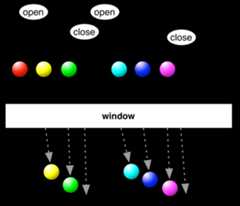
- Backpressure:
- The outer Publisher of this operator doesn't support backpressure because the emission of new inner Publishers are controlled by the
windowOpeningsPublisher. The inner Publishers honor backpressure and buffer everything until the associated closing Publisher signals or completes. - Scheduler:
- This version of
windowdoes not operate by default on a particularScheduler.
- Type Parameters:
U- the element type of the window-opening PublisherV- the element type of the window-closing Publishers- Parameters:
openingIndicator- a Publisher that, when it emits an item, causes another window to be createdclosingIndicator- aFunctionthat produces a Publisher for every window created. When this Publisher emits an item, the associated window is closed and emitted- Returns:
- a Flowable that emits windows of items emitted by the source Publisher that are governed by the specified window-governing Publishers
- See Also:
- ReactiveX operators documentation: Window
window
@CheckReturnValue@NonNull@BackpressureSupport(value=ERROR)@SchedulerSupport(value="none")public final <U,V> Flowable<Flowable<T>> window(Publisher<U> openingIndicator,Function<? super U,? extendsPublisher<V>> closingIndicator, int bufferSize)
Returns a Flowable that emits windows of items it collects from the source Publisher. The resulting Publisher emits windows that contain those items emitted by the source Publisher between the time when thewindowOpeningsPublisher emits an item and when the Publisher returned byclosingSelectoremits an item.- Backpressure:
- The outer Publisher of this operator doesn't support backpressure because the emission of new inner Publishers are controlled by the
windowOpeningsPublisher. The inner Publishers honor backpressure and buffer everything until the associated closing Publisher signals or completes. - Scheduler:
- This version of
windowdoes not operate by default on a particularScheduler.
- Type Parameters:
U- the element type of the window-opening PublisherV- the element type of the window-closing Publishers- Parameters:
openingIndicator- a Publisher that, when it emits an item, causes another window to be createdclosingIndicator- aFunctionthat produces a Publisher for every window created. When this Publisher emits an item, the associated window is closed and emittedbufferSize- the capacity hint for the buffer in the inner windows- Returns:
- a Flowable that emits windows of items emitted by the source Publisher that are governed by the specified window-governing Publishers
- See Also:
- ReactiveX operators documentation: Window
window
@CheckReturnValue@BackpressureSupport(value=ERROR)@SchedulerSupport(value="none")public final <B> Flowable<Flowable<T>> window(Callable<? extendsPublisher<B>> boundaryIndicatorSupplier)
Returns a Flowable that emits windows of items it collects from the source Publisher. The resulting Publisher emits connected, non-overlapping windows. It emits the current window and opens a new one whenever the Publisher produced by the specifiedclosingSelectoremits an item.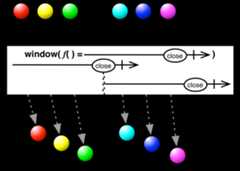
- Backpressure:
- The operator consumes the source
Publisherin an unbounded manner. The returnedPublisherdoesn't support backpressure as it uses theclosingSelectorto control the creation of windows. The returned innerPublishers honor backpressure but have an unbounded inner buffer thatmay lead toOutOfMemoryErrorif left unconsumed. - Scheduler:
- This version of
windowdoes not operate by default on a particularScheduler.
- Type Parameters:
B- the element type of the boundary Publisher- Parameters:
boundaryIndicatorSupplier- aCallablethat returns aPublisherthat governs the boundary between windows. When the sourcePublisheremits an item,windowemits the current window and begins a new one.- Returns:
- a Flowable that emits connected, non-overlapping windows of items from the source Publisher whenever
closingSelectoremits an item - See Also:
- ReactiveX operators documentation: Window
window
@CheckReturnValue@NonNull@BackpressureSupport(value=ERROR)@SchedulerSupport(value="none")public final <B> Flowable<Flowable<T>> window(Callable<? extendsPublisher<B>> boundaryIndicatorSupplier, int bufferSize)
Returns a Flowable that emits windows of items it collects from the source Publisher. The resulting Publisher emits connected, non-overlapping windows. It emits the current window and opens a new one whenever the Publisher produced by the specifiedclosingSelectoremits an item.- Backpressure:
- The operator consumes the source
Publisherin an unbounded manner. The returnedPublisherdoesn't support backpressure as it uses theclosingSelectorto control the creation of windows. The returned innerPublishers honor backpressure but have an unbounded inner buffer thatmay lead toOutOfMemoryErrorif left unconsumed. - Scheduler:
- This version of
windowdoes not operate by default on a particularScheduler.
- Type Parameters:
B- the element type of the boundary Publisher- Parameters:
boundaryIndicatorSupplier- aCallablethat returns aPublisherthat governs the boundary between windows. When the sourcePublisheremits an item,windowemits the current window and begins a new one.bufferSize- the capacity hint for the buffer in the inner windows- Returns:
- a Flowable that emits connected, non-overlapping windows of items from the source Publisher whenever
closingSelectoremits an item - See Also:
- ReactiveX operators documentation: Window
withLatestFrom
@CheckReturnValue@NonNull@BackpressureSupport(value=PASS_THROUGH)@SchedulerSupport(value="none")public final <U,R> Flowable<R> withLatestFrom(Publisher<? extends U> other,BiFunction<? superT,? super U,? extends R> combiner)
Merges the specified Publisher into this Publisher sequence by using theresultSelectorfunction only when the source Publisher (this instance) emits an item.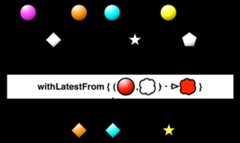
- Backpressure:
- The operator is a pass-through for backpressure: the backpressure support depends on the upstream and downstream's backpressure behavior. The other Publisher is consumed in an unbounded fashion.
- Scheduler:
- This operator, by default, doesn't run any particular
Scheduler.
- Type Parameters:
U- the element type of the other PublisherR- the result type of the combination- Parameters:
other- the other Publishercombiner- the function to call when this Publisher emits an item and the other Publisher has already emitted an item, to generate the item to be emitted by the resulting Publisher- Returns:
- a Flowable that merges the specified Publisher into this Publisher by using the
resultSelectorfunction only when the source Publisher sequence (this instance) emits an item - Since:
- 2.0
- See Also:
- ReactiveX operators documentation: CombineLatest
withLatestFrom
@CheckReturnValue@NonNull@BackpressureSupport(value=PASS_THROUGH)@SchedulerSupport(value="none")public final <T1,T2,R> Flowable<R> withLatestFrom(Publisher<T1> source1,Publisher<T2> source2,Function3<? superT,? super T1,? super T2,R> combiner)
Combines the value emission from this Publisher with the latest emissions from the other Publishers via a function to produce the output item.Note that this operator doesn't emit anything until all other sources have produced at least one value. The resulting emission only happens when this Publisher emits (and not when any of the other sources emit, unlike combineLatest). If a source doesn't produce any value and just completes, the sequence is completed immediately.
- Backpressure:
- This operator is a pass-through for backpressure behavior between the source
Publisherand the downstream Subscriber. The otherPublishers are consumed in an unbounded manner. - Scheduler:
- This operator does not operate by default on a particular
Scheduler.
- Type Parameters:
T1- the first other source's value typeT2- the second other source's value typeR- the result value type- Parameters:
source1- the first other Publishersource2- the second other Publishercombiner- the function called with an array of values from each participating Publisher- Returns:
- the new Publisher instance
- Since:
- 2.0
withLatestFrom
@CheckReturnValue@NonNull@BackpressureSupport(value=PASS_THROUGH)@SchedulerSupport(value="none")public final <T1,T2,T3,R> Flowable<R> withLatestFrom(Publisher<T1> source1,Publisher<T2> source2,Publisher<T3> source3,Function4<? superT,? super T1,? super T2,? super T3,R> combiner)
Combines the value emission from this Publisher with the latest emissions from the other Publishers via a function to produce the output item.Note that this operator doesn't emit anything until all other sources have produced at least one value. The resulting emission only happens when this Publisher emits (and not when any of the other sources emit, unlike combineLatest). If a source doesn't produce any value and just completes, the sequence is completed immediately.
- Backpressure:
- This operator is a pass-through for backpressure behavior between the source
Publisherand the downstream Subscriber. The otherPublishers are consumed in an unbounded manner. - Scheduler:
- This operator does not operate by default on a particular
Scheduler.
- Type Parameters:
T1- the first other source's value typeT2- the second other source's value typeT3- the third other source's value typeR- the result value type- Parameters:
source1- the first other Publishersource2- the second other Publishersource3- the third other Publishercombiner- the function called with an array of values from each participating Publisher- Returns:
- the new Publisher instance
- Since:
- 2.0
withLatestFrom
@CheckReturnValue@NonNull@BackpressureSupport(value=PASS_THROUGH)@SchedulerSupport(value="none")public final <T1,T2,T3,T4,R> Flowable<R> withLatestFrom(Publisher<T1> source1,Publisher<T2> source2,Publisher<T3> source3,Publisher<T4> source4,Function5<? superT,? super T1,? super T2,? super T3,? super T4,R> combiner)
Combines the value emission from this Publisher with the latest emissions from the other Publishers via a function to produce the output item.Note that this operator doesn't emit anything until all other sources have produced at least one value. The resulting emission only happens when this Publisher emits (and not when any of the other sources emit, unlike combineLatest). If a source doesn't produce any value and just completes, the sequence is completed immediately.
- Backpressure:
- This operator is a pass-through for backpressure behavior between the source
Publisherand the downstream Subscriber. The otherPublishers are consumed in an unbounded manner. - Scheduler:
- This operator does not operate by default on a particular
Scheduler.
- Type Parameters:
T1- the first other source's value typeT2- the second other source's value typeT3- the third other source's value typeT4- the fourth other source's value typeR- the result value type- Parameters:
source1- the first other Publishersource2- the second other Publishersource3- the third other Publishersource4- the fourth other Publishercombiner- the function called with an array of values from each participating Publisher- Returns:
- the new Publisher instance
- Since:
- 2.0
withLatestFrom
@CheckReturnValue@NonNull@BackpressureSupport(value=PASS_THROUGH)@SchedulerSupport(value="none")public final <R> Flowable<R> withLatestFrom(Publisher<?>[] others,Function<? superObject[],R> combiner)
Combines the value emission from this Publisher with the latest emissions from the other Publishers via a function to produce the output item.Note that this operator doesn't emit anything until all other sources have produced at least one value. The resulting emission only happens when this Publisher emits (and not when any of the other sources emit, unlike combineLatest). If a source doesn't produce any value and just completes, the sequence is completed immediately.
- Backpressure:
- This operator is a pass-through for backpressure behavior between the source
Publisherand the downstream Subscriber. The otherPublishers are consumed in an unbounded manner. - Scheduler:
- This operator does not operate by default on a particular
Scheduler.
- Type Parameters:
R- the result value type- Parameters:
others- the array of other sourcescombiner- the function called with an array of values from each participating Publisher- Returns:
- the new Publisher instance
- Since:
- 2.0
withLatestFrom
@CheckReturnValue@NonNull@BackpressureSupport(value=PASS_THROUGH)@SchedulerSupport(value="none")public final <R> Flowable<R> withLatestFrom(Iterable<? extendsPublisher<?>> others,Function<? superObject[],R> combiner)
Combines the value emission from this Publisher with the latest emissions from the other Publishers via a function to produce the output item.Note that this operator doesn't emit anything until all other sources have produced at least one value. The resulting emission only happens when this Publisher emits (and not when any of the other sources emit, unlike combineLatest). If a source doesn't produce any value and just completes, the sequence is completed immediately.
- Backpressure:
- This operator is a pass-through for backpressure behavior between the source
Publisherand the downstream Subscriber. The otherPublishers are consumed in an unbounded manner. - Scheduler:
- This operator does not operate by default on a particular
Scheduler.
- Type Parameters:
R- the result value type- Parameters:
others- the iterable of other sourcescombiner- the function called with an array of values from each participating Publisher- Returns:
- the new Publisher instance
- Since:
- 2.0
zipWith
@CheckReturnValue@NonNull@BackpressureSupport(value=FULL)@SchedulerSupport(value="none")public final <U,R> Flowable<R> zipWith(Iterable<U> other,BiFunction<? superT,? super U,? extends R> zipper)
Returns a Flowable that emits items that are the result of applying a specified function to pairs of values, one each from the source Publisher and a specified Iterable sequence.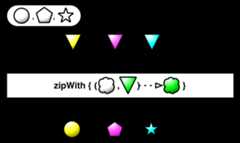
Note that the
otherIterable is evaluated as items are observed from the source Publisher; it is not pre-consumed. This allows you to zip infinite streams on either side.- Backpressure:
- The operator expects backpressure from the sources and honors backpressure from the downstream. (I.e., zipping with
interval(long, TimeUnit)may result in MissingBackpressureException, use one of theonBackpressureXto handle similar, backpressure-ignoring sources. - Scheduler:
zipWithdoes not operate by default on a particularScheduler.
- Type Parameters:
U- the type of items in theotherIterableR- the type of items emitted by the resulting Publisher- Parameters:
other- the Iterable sequencezipper- a function that combines the pairs of items from the Publisher and the Iterable to generate the items to be emitted by the resulting Publisher- Returns:
- a Flowable that pairs up values from the source Publisher and the
otherIterable sequence and emits the results ofzipFunctionapplied to these pairs - See Also:
- ReactiveX operators documentation: Zip
zipWith
@CheckReturnValue@NonNull@BackpressureSupport(value=FULL)@SchedulerSupport(value="none")public final <U,R> Flowable<R> zipWith(Publisher<? extends U> other,BiFunction<? superT,? super U,? extends R> zipper)
Returns a Flowable that emits items that are the result of applying a specified function to pairs of values, one each from the source Publisher and another specified Publisher.The operator subscribes to its sources in the order they are specified and completes eagerly if one of the sources is shorter than the rest while canceling the other sources. Therefore, it is possible those other sources will never be able to run to completion (and thus not calling
doOnComplete()). This can also happen if the sources are exactly the same length; if source A completes and B has been consumed and is about to complete, the operator detects A won't be sending further values and it will cancel B immediately. For example:range(1, 5).doOnComplete(action1).zipWith(range(6, 5).doOnComplete(action2), (a, b) -> a + b)action1will be called butaction2won't.
To work around this termination property, usedoOnCancel(Action)as well or useusing()to do cleanup in case of completion or cancellation.- Backpressure:
- The operator expects backpressure from the sources and honors backpressure from the downstream. (I.e., zipping with
interval(long, TimeUnit)may result in MissingBackpressureException, use one of theonBackpressureXto handle similar, backpressure-ignoring sources. - Scheduler:
zipWithdoes not operate by default on a particularScheduler.
- Type Parameters:
U- the type of items emitted by theotherPublisherR- the type of items emitted by the resulting Publisher- Parameters:
other- the other Publisherzipper- a function that combines the pairs of items from the two Publishers to generate the items to be emitted by the resulting Publisher- Returns:
- a Flowable that pairs up values from the source Publisher and the
otherPublisher and emits the results ofzipFunctionapplied to these pairs - See Also:
- ReactiveX operators documentation: Zip
zipWith
@CheckReturnValue@BackpressureSupport(value=FULL)@SchedulerSupport(value="none")public final <U,R> Flowable<R> zipWith(Publisher<? extends U> other,BiFunction<? superT,? super U,? extends R> zipper, boolean delayError)
Returns a Flowable that emits items that are the result of applying a specified function to pairs of values, one each from the source Publisher and another specified Publisher.The operator subscribes to its sources in the order they are specified and completes eagerly if one of the sources is shorter than the rest while canceling the other sources. Therefore, it is possible those other sources will never be able to run to completion (and thus not calling
doOnComplete()). This can also happen if the sources are exactly the same length; if source A completes and B has been consumed and is about to complete, the operator detects A won't be sending further values and it will cancel B immediately. For example:range(1, 5).doOnComplete(action1).zipWith(range(6, 5).doOnComplete(action2), (a, b) -> a + b)action1will be called butaction2won't.
To work around this termination property, usedoOnCancel(Action)as well or useusing()to do cleanup in case of completion or cancellation.- Backpressure:
- The operator expects backpressure from the sources and honors backpressure from the downstream. (I.e., zipping with
interval(long, TimeUnit)may result in MissingBackpressureException, use one of theonBackpressureXto handle similar, backpressure-ignoring sources. - Scheduler:
zipWithdoes not operate by default on a particularScheduler.
- Type Parameters:
U- the type of items emitted by theotherPublisherR- the type of items emitted by the resulting Publisher- Parameters:
other- the other Publisherzipper- a function that combines the pairs of items from the two Publishers to generate the items to be emitted by the resulting PublisherdelayError- if true, errors from the current Flowable or the other Publisher is delayed until both terminate- Returns:
- a Flowable that pairs up values from the source Publisher and the
otherPublisher and emits the results ofzipFunctionapplied to these pairs - Since:
- 2.0
- See Also:
- ReactiveX operators documentation: Zip
zipWith
@CheckReturnValue@BackpressureSupport(value=FULL)@SchedulerSupport(value="none")public final <U,R> Flowable<R> zipWith(Publisher<? extends U> other,BiFunction<? superT,? super U,? extends R> zipper, boolean delayError, int bufferSize)
Returns a Flowable that emits items that are the result of applying a specified function to pairs of values, one each from the source Publisher and another specified Publisher.The operator subscribes to its sources in the order they are specified and completes eagerly if one of the sources is shorter than the rest while canceling the other sources. Therefore, it is possible those other sources will never be able to run to completion (and thus not calling
doOnComplete()). This can also happen if the sources are exactly the same length; if source A completes and B has been consumed and is about to complete, the operator detects A won't be sending further values and it will cancel B immediately. For example:range(1, 5).doOnComplete(action1).zipWith(range(6, 5).doOnComplete(action2), (a, b) -> a + b)action1will be called butaction2won't.
To work around this termination property, usedoOnCancel(Action)as well or useusing()to do cleanup in case of completion or cancellation.- Backpressure:
- The operator expects backpressure from the sources and honors backpressure from the downstream. (I.e., zipping with
interval(long, TimeUnit)may result in MissingBackpressureException, use one of theonBackpressureXto handle similar, backpressure-ignoring sources. - Scheduler:
zipWithdoes not operate by default on a particularScheduler.
- Type Parameters:
U- the type of items emitted by theotherPublisherR- the type of items emitted by the resulting Publisher- Parameters:
other- the other Publisherzipper- a function that combines the pairs of items from the two Publishers to generate the items to be emitted by the resulting PublisherbufferSize- the capacity hint for the buffer in the inner windowsdelayError- if true, errors from the current Flowable or the other Publisher is delayed until both terminate- Returns:
- a Flowable that pairs up values from the source Publisher and the
otherPublisher and emits the results ofzipFunctionapplied to these pairs - Since:
- 2.0
- See Also:
- ReactiveX operators documentation: Zip
test
@CheckReturnValue@BackpressureSupport(value=UNBOUNDED_IN)@SchedulerSupport(value="none")public final TestSubscriber<T> test()
Creates a TestSubscriber that requests Long.MAX_VALUE and subscribes it to this Flowable.- Backpressure:
- The returned TestSubscriber consumes this Flowable in an unbounded fashion.
- Scheduler:
testdoes not operate by default on a particularScheduler.
- Returns:
- the new TestSubscriber instance
- Since:
- 2.0
test
@CheckReturnValue@BackpressureSupport(value=FULL)@SchedulerSupport(value="none")public final TestSubscriber<T> test(long initialRequest)
Creates a TestSubscriber with the given initial request amount and subscribes it to this Flowable.- Backpressure:
- The returned TestSubscriber requests the given
initialRequestamount upfront. - Scheduler:
testdoes not operate by default on a particularScheduler.
- Parameters:
initialRequest- the initial request amount, positive- Returns:
- the new TestSubscriber instance
- Since:
- 2.0
test
@CheckReturnValue@BackpressureSupport(value=FULL)@SchedulerSupport(value="none")public final TestSubscriber<T> test(long initialRequest, boolean cancel)
Creates a TestSubscriber with the given initial request amount, optionally cancels it before the subscription and subscribes it to this Flowable.- Backpressure:
- The returned TestSubscriber requests the given
initialRequestamount upfront. - Scheduler:
testdoes not operate by default on a particularScheduler.
- Parameters:
initialRequest- the initial request amount, positivecancel- should the TestSubscriber be canceled before the subscription?- Returns:
- the new TestSubscriber instance
- Since:
- 2.0