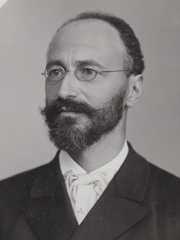
Capital and Interest: A Critical History of Economic Theory
- Eugen von Böhm-Bawerk (author)
- William A. Smart (translator)
Ludwig von Mises described this as a “monumental work” which “is the most eminent contribution to economic theory”. He further stated that “a man not perfectly familiar with all the ideas advanced in theses three volumes has no claim whatever to the appellation of an economist”. It is a work which made the modern intertemporal theory of interest rates possible.
- EBook PDFThis text-based PDF or EBook was created from the HTML version of this book and is part of the Portable Library of Liberty.
- ePubePub standard file for your iPad or any e-reader compatible with that format
- Facsimile PDFThis is a facsimile or image-based PDF made from scans of the original book.
- Facsimile PDF smallThis is a compressed facsimile or image-based PDF made from scans of the original book.
- KindleThis is an E-book formatted for Amazon Kindle devices.
Citation
Capital and Interest: A Critical History of Economic Theory, trans. William A. Smart (London: Macmillan, 1890).
Copyright
The text is in the public domain.
Category:
Related Collections:
Related People
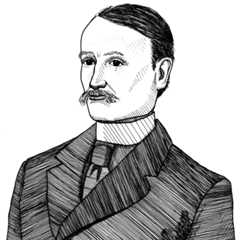
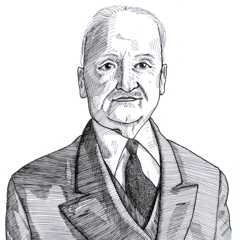
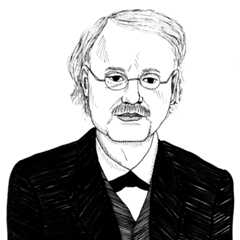
Critical Responses
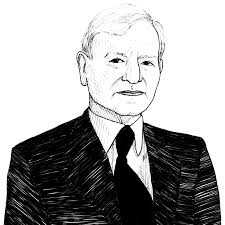
Journal Article
Interest Theories, Old and NewFrank Fetter
A critical essay that challenges Böhm-Bawerk, particularly his “roundaboutness” theory, while defending a purer time-preference view of interest. This piece shows how American economists engaged with and reshaped his ideas.
Book
Lectures on Political EconomyKnut Wicksell
Critiques Böhm-Bawerk’s “average period” concept and develops natural rate theory.
Connected Readings

Liberty Matters
Assessing Böhm-Bawerk’s Contribution to Economics after a Hundred YearsRichard Ebeling, Joseph T. Salerno, Roger W. Garrison, and Peter Lewin
Offers modern interpretations and assessments of Böhm‑Bawerk’s influence on capital theory, Austrian economics, and public policy.
Book
Interest and PricesKnut Wicksell
Introduces the concept of the “natural rate of interest,” a development that extends Böhm-Bawerk’s intertemporal focus into monetary theory. Together, they frame the debate that influenced Mises and Hayek’s Austrian Business Cycle Theory.
Book
Human Action: A Treatise on Economics, in 4 vols. (LF ed.)Ludwig von Mises
Mises described Capital and Interest as indispensable. In Human Action, he extends Böhm-Bawerk’s time-preference theory of interest into his system of praxeology, making the connection between capital theory and broader economic science explicit.
Book
Prices and ProductionFriedrich Hayek
Hayek explicitly fuses Böhm-Bawerk’s theory of capital with Wicksell’s natural rate framework to build Austrian Business Cycle Theory. This work demonstrates how Böhm-Bawerk’s insights were transformed into a monetary-macro theory of booms and busts.