(and our other authors) or get HELP Reading, Downloading and Converting files)
or
SEARCHthe entire site withGoogle Site Search
| BROWSEthe site for other works by this author (and our other authors) or get HELP Reading, Downloading and Converting files) or SEARCHthe entire site withGoogle Site Search |
STRANGE it must appear that the account of perhaps the most celebratedand, certainly to the English nation, the most momentous voyage ofdiscovery that has ever taken place—for it practically gave birth to thegreat Australasian Colonies—has never before been given to the world inthe very words of its great leader. It has fallen out in this wise.
After the return of the Endeavour it was decided that a full andcomprehensive account of the voyage should be compiled. COOK'S JOURNALdealt with matters from the point of view of the seaman, the explorer,and the head of the expedition, responsible for life, and for its generalsuccess. The Journals of Mr. Banks and Dr. Solander looked from thescientific side on all that presented itself to their enthusiasticobservation.
What could be better than to combine these accounts, and make up acomplete narrative from them all?
The result, however, according to our nineteenth-century ideas, was notaltogether happy. Dr. Hawkesworth, into whose hands the Journals wereput, not only interspersed reflections of his own, but managed to imposehis own ponderous style upon many of the extracts from the unitedJournals; and, moreover, as they are all jumbled together, the wholebeing put into Cook's mouth, it is impossible to know whether we arereading Cook, Banks, Solander, or Hawkesworth himself.
The readers of the day were not, however, critical. Hawkesworth's book,*(* "Hawkesworth's Voyages" 3 volumes quarto 1773.) which undoubtedlycontains all the most generally interesting passages of the threewriters, gave a clear description of the events of the voyage in aconnected manner, and was accepted as sufficient; and in the excitementof devouring the pages which introduced so many new lands and peoples,probably few wished for more, and the Journals were put away as dealtwith.
Since that time it has been on several occasions in contemplation topublish Mr. (after Sir Joseph) Banks' Journal; but this has never beenaccomplished.
Cook's Journal was in triplicate. The Admiralty Orders of the dayenjoined that the captain should keep a journal of proceedings, a copy ofwhich was to be forwarded to the Admiralty every six months, or as soonafter as possible. In the case of this voyage the ship was two and a halfyears from England before any opportunity of sending this copy occurred.The ship was the whole of this time in new and savage lands. When Bataviawas reached the duplicate of Cook's Journal was sent home, and six monthslater, when the ship arrived in England, the full Journal of the voyagewas deposited at the Admiralty.
The Secretary of the Admiralty, Sir Philip Stephens, a personal friendand appreciator of Cook, appears to have appropriated the Bataviaduplicate, as we find it in the hands of his descendants, and passingthence by sale, first to Mr. Cosens in 1868, and then in 1890 to Mr. JohnCorner.
The other and complete copy is still in possession of the Admiralty,though in some unexplained manner it was absent for some years, and wasonly recovered by the exertions of Mr. W. Blakeney, R.N.
A third copy of the Journal also terminates a few days before reachingBatavia. It is in the possession of Her Majesty the Queen, and from itsappearance was kept for, and probably presented to, George III, who tookgreat interest in the voyage.
Neither private possessors nor the Admiralty have felt moved to publishthis interesting document until Mr. Corner acquired his copy, when, beingan enthusiastic admirer of Captain Cook, he determined to do so, and wasmaking preliminary arrangements, when he suddenly died, after a fewhours' illness. His son, anxious to carry out his father's wishes, whichincluded the devotion of any proceeds to the restoration of HinderwellChurch—the parish church of Staithes, whence Cook ran away to sea—hascompleted these arrangements, and the present volume is the result.
The text is taken from Mr. Corner's copy so far as it goes, paragraphsfrom the Admiralty copy, which do not appear in the former, being added,with a notation of their source.
The last portion, from October 23rd, 1770, which is only given in theAdmiralty copy, is necessarily taken from it.
The three copies are, practically, identical, except for the periodAugust 13th to 19th, 1770, during which the wording is often different,though the events are the same.
It is not very difficult to account for this.
The two first-mentioned Journals are in the handwriting of an amanuensis,Mr. Orton, the clerk. No autograph journal is, so far as is known, inexistence, but some rough original must have been kept, as both copiesbear internal evidence of having been written up after the lapse of aninterval after the events described.
This is markedly the case in the Australian part of the Journal.
It is known that Botany Bay was at first called by Cook, Stingray Bay, onaccount of the number of rays caught there; but after Banks had examinedhis collection, and found all his plants new to science, Cook determinedto call it Botany Bay. It is, however, called Botany Bay from the firstin the Journals.
The name, "New South Wales," was not bestowed without much consideration,and apparently at one stage New Wales was the appellation fixed upon, forin Mr. Corner's copy it is so called throughout, whereas the Admiraltycopy has "New South Wales."
It would therefore seem that about the period of the discrepant accountsMr. Corner's copy was first made, and that Cook, in the Admiralty copy,which for this part is fuller, revised the wording of his description ofthis very critical portion of the voyage.
The Queen's Copy has been written with especial care, and by severaldifferent hands. It was evidently the last in point of time.
In reading COOK'S JOURNAL of his First Voyage it must be remembered thatit was not prepared for publication. Though no doubt the fair copies wepossess were revised with the care that characterises the man, and whichis evidenced by the interlineations and corrections in his own hand withwhich the pages are dotted, it may be supposed, from the example we havein the published account of his Second Voyage, which was edited byhimself, that further alterations and additions would have been made, tomake the story more complete, had he contemplated its being printed.
This does not, however, in any way detract from the interest of atranscript of his record on the spot; and though many circumstancesrecorded in Hawkesworth, from Banks or others, will not be found, it isprobable that an exact copy of the great navigator's own impressions, andthe disentanglement of them from the other interpolated matter, will bewelcome.
In printing this Journal the only alterations that have been made are thebreaking-up into chapters, with modern headings; the addition ofpunctuation; and in the form of the insertion of the daily record ofwind, weather, and position of the ship. These in the original are on theleft hand page in log form. To save space they have been placed at theend of every day's transactions.
The eccentricities in the spelling have been preserved. A good many ofthese would seem to be due to Mr. Orton, the transcriber, as Cook's ownletters are generally correct in their orthography. The use of thecapital letter was usual at the time.
References will be found to sketches and plans which have not beenreproduced.
Cook's knack of finding names for localities was peculiarly happy. Thosewho have had to do this, know the difficulty. Wherever he was able toascertain the native name, he adopts it; but in the many cases where thiswas impossible, he manages to find a descriptive and distinctiveappellation for each point, bay, or island.
He seems to have kept these names very much to himself, as it is seldomthe officers' logs know anything of them; and original plans, still inexistence, in many cases bear different names to those finally pitchedupon.
Cook's names have rarely been altered, and New Zealand and Australianplaces will probably for all time bear those which he bestowed.
In the orthography of his native names he was not so successful. Theconstant addition of a redundant "o" has altered many native sounds, suchas Otaheite for Tahiti, Ohwhyhee for Hawaii; while his spelling generallyhas been superseded by more simple forms. This is a matter, however, inwhich great difficulties are found to the present day by Englishmen,whose language presents no certain laws for rendering any given soundinto a fixed combination of letters.
Cook's language is unvarnished and plain, as a sailor's should be. Hisincidents, though often related with circumstance, are withoutexaggeration; indeed if any fault is to be found, it is that he takesoccurrences involving much labour and hardship as such matters of course,that it is not easy for the reader, especially if he be a landsman, torealise what they really entail.
Cook was assiduous in obtaining observations to ascertain the Variationof the compass—i.e., the difference between the direction shown by themagnetic needle and the true north. He is constantly puzzled by thediscrepancies in these observations made at short intervals. These arosefrom the different positions of the ship's head, whereby the iron withina certain distance of the compass is placed in different positions asregards the needle working the compass card, the result being that theneedle is attracted from its correct direction in varying degree. This isknown as the Deviation of the compass. The cause of this, and of the lawswhich govern it, were only discovered by Captain Flinders in 1805.Happily for the navigators of those days, little iron entered into theconstruction of ships, and the amount of the Deviation was not large,though enough to cause continual disquiet and wonderment.
Cook's longitudes in this voyage are all given as west of Greenwich, notdivided into east and west, as is usual at this day. The latter systemagain has only been adopted universally since his time.
Though Cook himself gives, at the beginning of the Journal, a note of themethod of reckoning days adopted, it may not be amiss to give furtherexplanation here.
It was the usual custom on board ships to keep what was known as Shiptime—i.e., the day began at noon BEFORE the civil reckoning, in whichthe day commences at midnight. Thus, while January 1st, as ordinarilyreckoned, is from midnight to midnight, in ship time it began at noon onDecember 31st and ended at noon January 1st, this period being calledJanuary 1st. Hence the peculiarity all through the Journal of the p.m.coming before the a.m. It results that any events recorded as occurringin the p.m. of January 1st in the log, would, if translated into theordinary system, be given as happening in the p.m. of December 31st;while occurrences in the a.m. of January 1st would be equally in the a.m.of January 1st in both systems.
This puzzling mode of keeping the day at sea continued to a late period,and was common to seamen of all nations.
The astronomical day, again, begins at noon AFTER the midnight at whichthe civil day begins, and hence is a whole day later than the ship's day.This does not enter into Cook's Journal, but one of the logs of theEndeavour, extant, that of Mr. Green the astronomer, was kept in thistime, and the events of say Thursday, June 24th, of Cook's Journal, aretherein given as happening on Wednesday, June 23rd. These differences ofreckoning have been a fertile source of confusion in dates in manyvoyages.
Besides Cook's Journals there are other Journals and Logs of the voyageextant. Perhaps it may be necessary to state that a Log is the officialdocument in which the progress of the ship from hour to hour is recorded,with such official notes as the alteration in sail carried, expenditureof provisions and stores, etc. A Journal contains this information in acondensed form, with such observations as the officer keeping it may feelinclined to insert.
The ship's Log Book of the Endeavour is in the British Museum. Mr. R.M.Hudson of Sunderland possesses Cook's own log, not autograph however,presented by Cook to Sir Hugh Palliser, the ancestor of his wife.
The Journals of all the officers of the Endeavour are preserved at thePublic Record Office. There is, however, nothing to be got out of them,as they are mainly copies one of the other, founded on the ship's log.
The portion of Mr. Molineux's, the Master's, Log that exists (at theAdmiralty) is a most beautifully kept and written document, enriched withcharts and sketches that attest the accuracy of Cook's remark, that hewas a "young man of good parts."
The log kept by Mr. Green, however, does contain a few original remarks,some of which have been made use of. This book contains a mass ofastronomical observations, and witnesses to the zeal of this gentleman inhis especial duty.
He records in one place, when far away from land, his disgust that theofficers were unwilling to aid him in lunar observations. No doubt theysaw no particular use in them when there was no coast to fix; but thereis ample proof that he received every aid when Cook thought it necessary.
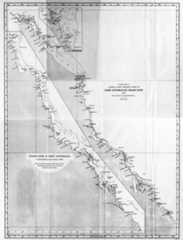
Sufficient charts have been placed in this book to enable the reader tofollow the more interesting parts of the voyage; some being reproductionsof Cook's own charts, others modern publications. In the case of thecoast of East Australia, the coast-line as laid down by Cook, and as nowknown, are given side by side for comparison.
It must be understood, that although this book is styled CAPTAIN COOK'SJOURNAL, he was on this voyage only a Lieutenant in Command, andtherefore only Captain by courtesy.
W.J.L. WHARTON.
FLORYS, WIMBLEDON PARK,
April 7th, 1893.
SKETCH OF CAPTAIN COOK'S LIFE.
LIST OF PERSONS WHO LEFT ENGLAND IN H.M.S. ENDEAVOUR, 26TH AUGUST, 1768.
CHAPTER 1. ENGLAND TO RIO JANEIRO.
CHAPTER 2. RIO JANEIRO TO TAHITI.
CHAPTER 4. TAHITI TO NEW ZEALAND.
CHAPTER 5. EXPLORATION OF NEW ZEALAND.
CHAPTER 6. EXPLORATION OF MIDDLE ISLAND OF NEW ZEALAND.
CHAPTER 7. PASSAGE FROM NEW ZEALAND TO NEW HOLLAND.
CHAPTER 8. EXPLORATION OF EAST COAST OF AUSTRALIA.
CHAPTER 9. FROM TORRES STRAIT TO BATAVIA.
CHAPTER 10. BATAVIA TO CAPE OF GOOD HOPE.
CHAPTER 11. CAPE OF GOOD HOPE TO ENGLAND.
1. PORTRAIT OF CAPTAIN JAMES COOK WITH A FACSIMILE OF HIS SIGNATURE.COLLOTYPE, WATERLOW & SONS LTD.
2. MODERN CHART OF SOUTH PACIFIC OCEAN SHOWING TRACK OF H.M.S. ENDEAVOUR, 1769 TO 1770.
3. FACSIMILE OF SATURDAY, 3RD JUNE, 1769.
8. TRACK OF ENDEAVOUR FROM TORRES STRAIT TO JAVA. AUGUST AND SEPTEMBER 1770.
9. FACSIMILE OF TUESDAY, 23RD OCTOBER, 1770.
CAPTAIN COOK'S life, or the account of so much of it as is recoverable,has been so often recounted that there is no occasion to insert more inthis publication than is necessary as a reference to the reader, toenable him to realise the career and character of the man.
Cook's first biographer, Andrew Kippis, wrote in 1788, and his work hasrecently been republished.* (* "A Narrative of the Voyage round theWorld, performed by Captain James Cook, with an Account of His Life" byA. Kippis, D.D., F.R.S. London: Bickers & Son 1889.)
The latest and best life is by Walter Besant,* (* "Captain Cook" byWalter Besant: "English Men of Action" London, Macmillan & Co. 1890.)whose graceful pen has given us a fascinating, interesting, and, as faras is possible, complete picture of this great Englishman. Many detailsof Cook's private life are lost, but enough has been collected by Mr.Besant to place our hero vividly before us, and a perusal of his work isstrongly recommended.
Many things in the following sketch are taken from Mr. Besant, to whom Iwish to tender my acknowledgments.
James Cook rose from nearly the lowest ranks. The second son of JamesCook, a Yorkshire labourer, and Grace his wife, he was born on the edgeof the Cleveland Hills on February 27th, 1728, in the little village ofMarton, which lies about four miles south-south-east of Middlesborough,and five miles west of the well-known hill and landmark, RoseberryTopping. Eight years later his father removed to Great Ayton, which liesclose under Roseberry Topping.
At the age of thirteen Cook, who, it is recorded, had had some elementaryschooling both at Marton and Great Ayton, was apprenticed to oneSanderson, a draper and grocer of Staithes, a fishing village on thecoast, about fourteen miles from Ayton and nine north-west of Whitby.
A year later Cook went, or ran away, to sea, shipping at Whitby on boardthe Freelove, a collier belonging to the brothers Walker.
In this hard school Cook learnt his sailor duties. No better trainingcould have been found for his future responsibilities. Here he learnt toendure the utmost rigours of the sea. Constant fighting with North Seagales, bad food, and cramped accommodation, taught him to regard with theindifference that afterwards distinguished him, all the hardships that hehad to encounter, and led him to endure and persevere where others, lessdetermined or more easily daunted by difficulties, would have hurried on,and left their work incomplete.
All details of Cook's life during his thirteen years in the merchantservice are lost: what voyages he made, how he fared, whether he advancedin general knowledge, all is gone. The only fact known is that in May1755, when Cook was twenty-seven years of age, and mate of a vessel ofMessrs. Walker, then in the Thames, he, to avoid the press, then activeon account of the outbreak of the war with France, volunteered on boardH.M.S. Eagle, of 60 guns, as an able seaman.
Captain Hugh Palliser, who succeeded to the command of this ship inOctober, was certainly Cook's warmest patron, and it would appear thatCook did work superior to that of an able seaman in the Eagle. Be that asit may, all that is absolutely known is that that ship took her share ofthe fighting at the taking of Louisbourg and elsewhere on the NorthAmerican and West Indian Station, and returned to England in 1759.
By Palliser's interest Cook was now appointed master of the Mercury. Itis therefore evident that his qualifications as a navigator recommendedthemselves to Palliser.
The Mercury went to North America, and here Cook did his first goodservice recorded, namely, taking soundings in the St. Lawrence, to enablethe fleet then attacking Quebec to take up safe positions in covering thearmy under Wolfe. This he accomplished with great skill, under manydifficulties, in the face of the enemy, much of it being done at night.He was immediately employed in making a survey of the intricate channelsof the river below Quebec, and for many years his chart was the guide fornavigation. Cook was indeed a born surveyor. Before his day charts wereof the crudest description, and he must have somehow acquired aconsiderable knowledge of trigonometry, and possessed an intuitivefaculty for practically applying it, to enable him to originate, as itmay truly be said he did, the art of modern marine surveying.
The expedition to Quebec concluded, Cook was appointed master of theNorthumberland, bearing Admiral Lord Colville's flag, and during thatship's winter at Halifax he applied himself to further study ofmathematics and astronomy.
In 1762, the Northumberland being at Newfoundland during the capture ofthat island from the French, Cook again was employed in surveys. Thisattracted the attention of Captain Graves, the Governor, who conceived ahigh opinion of his abilities in this respect.
In the latter part of 1762 Cook returned to England and married ElizabethBatts, daughter of a man in business at Wapping; but a few monthsafterwards he was called upon by Captain Graves to go again toNewfoundland to make marine surveys.
In this important work he was engaged until 1767, Captain Palliser, whosucceeded Captain Graves as Governor, being only too glad to availhimself of Cook's services.
The charts he made during these years in the schooner Grenville wereadmirable. The best proof of their excellence is that they are not yetwholly superseded by the more detailed surveys of modern times. Like allfirst surveys of a practically unknown shore, and especially when thatshore abounds in rocks and shoals, and is much indented with bays andcreeks, they are imperfect, in the sense of having many omissions; butwhen the amount of the ground covered, and the impediments of fogs andbad weather on that coast is considered, and that Cook had at the mostonly one assistant, their accuracy is truly astonishing. The originals ofthese surveys form part of the most precious possessions of theHydrographic Office of the Admiralty.
We now approach the crowning achievements of Cook's life.
After many years' neglect the exploration of the Pacific was awakinginterest. This great ocean, which very few, even to this day, realiseoccupies nearly one half of the surface of the globe, had been, since thefirst voyage of Magellan, crossed by many a vessel.
Notwithstanding, very little was known of the islands occupying itscentral portion.
For this there were two reasons. First, the comparatively small areacovered by islands; secondly, the fact that nearly all who traversed ithad followed Magellan's track, or, if they started, as many did, fromCentral America, they made straight for Magellan's discovery, the LadroneIslands. For this, again, there was a reason.
Few sailed for the purpose of exploration pure and simple; and even thosewho started with that view found, when embarked on that vast expanse,that prudence dictated that they should have a moderate certainty of, bya certain time, falling in with a place of sure refreshment. Theprovisions they carried were bad at starting, and by the time they hadfought their way through the Straits of Magellan were already worse;water was limited, and would not hold out more than a given number ofdays. Every voyage that is pursued tells the same story—short of water,and eagerly looking out for an opportunity of replenishing it. The windswere found to blow in fixed directions, and each voyager was fearful ofdeviating from the track on which it was known they would be fair, forfear of delays. And ever present in each captain's mind was the dread ofthe terrible scourge, scurvy. Every expedition suffered from it. Eachhoped they would be exempt, and each in turn was reduced to impotencefrom its effects.
It was the great consideration for every leader of a protractedexpedition, How can I obviate this paralyzing influence? And one afteranother had to confess his failure.
It is yearly becoming more difficult for us to realise these obstacles.
The prevailing winds and currents in each part of the ocean are wellknown to us: the exact distance and bearing from one point to another arelaid down in the chart; steam bridges over calm areas, and in many casesconducts us on our entire journey at a speed but little inferior to thatof land travelling by railroad; modern science preserves fresh andpalatable food for an indefinite period; and, in a word, all thedifficulties and most of the dangers of long voyages have disappeared.
Take one element alone in long voyages—the time required. The averageprogress of a ship in the eighteenth century was not more than fiftymiles a day. Nowadays we may expect as much as four hundred miles in afull powered steamer, and not less than one hundred and fifty in awell-fitted sailing ship.
But navigation, and more especially the navigation of the unknownPacific, was very different in Cook's days, when all the obstacles abovementioned impeded the explorers, and impelled them to follow a commontrack.
There were a few who had deviated from the common track.
The Spaniards, Mendana, Quiros, Torres, in the latter part of thesixteenth century, starting first from their colonies in Peru, hadventured along the central line of the Pacific, discovering theMarquesas, certain small coral islands, the Northern New Hebrides, andthe Solomon Islands; but their voyages, mainly for fear of Drake and hissuccessors, were kept so secret that no one quite knew where theseislands lay.
Abel Tasman, in 1642, coming across the Indian Ocean from the westward,had touched at Tasmania, or, as he called it, Van Diemen's Land, hadskirted the western coast of the north island of New Zealand withoutlanding, and had stretched away to the north-east, and found the TongaGroup.
The English Buccaneers were not among these discoverers; Dampier, WoodsRogers, and others, all went from Acapulco to the Ladrones, looking outfor the valuable Spanish galleons fromManila, and they added little or nothing to the knowledge of the Pacificand what it contained.
It was not therefore strange that the imagination of geographers ran riotamongst the great unknown areas. They were impressed, as they looked atthe globes of the day, with the fact that, while the northern hemispherecontained much land, the southern showed either water or blank spaces;and starting with the ill-founded idea that the solid land in eitherhemisphere should balance, they conceived that there must be a greatunknown continent in the southern part of the Pacific to make up thedeficiency. This was generally designated Terra Australis Incognita, andmany is the ancient chart that shows it, sketched with a free anduncontrolled hand, around the South Pole. It was held by many that Tasmanhad touched it in New Zealand; that Quiros had seen it near his island ofEncarnacion, and again at Espiritu Santo (New Hebrides), but no one hadbeen to see.
In George III's reign the desire to know more of this unknown ocean arosein England. The king himself took great interest in it, and for the firsttime since Queen Elizabeth's age, when Davis, Frobisher, Drake,Narborough, and others, had gone on voyages of discovery, the pursuit wasrenewed.
In 1764 the Dolphin and Tamor, under the command of Commodore Byron andCaptain Mouat, sailed on a voyage round the world. They spent some time,as ordered, in exploring the Falkland Islands, and, after a two months'passage through Magellan Strait, they stood across the Pacific. They,however, also followed near the well-beaten track, and passing north ofthe Paumotus, of which they sighted a few small islands, they too madefor the Ladrones. As usual, they suffered much from scurvy, and the oneidea was to get to a known place to recover. Byron returned in May 1766,having added but little to the knowledge of the Pacific, and the Dolphinwas again sent in the August of the same year, with the Swallow, underthe command of Captains Wallis and Carteret, on a similar voyage.
They did somewhat better. After the usual struggle through the long andnarrow Strait of Magellan, against the strong and contrary winds thatcontinually blow, and which occupied four months, they got into thePacific.
As they passed out they separated, the Dolphin outsailing the Swallow,and a dispassionate reader cannot well escape the conclusion that thesenior officers unnecessarily parted company.
The Dolphin kept a little south of the usual route, fell in with some ofthe Paumotu Group, and finally discovered Tahiti, where she anchored atRoyal Bay, after grounding on a reef at its entrance, with her people, asusual, decimated by scurvy. They were almost immediately attacked by thenatives, who, however, received such a reception that they speedily madefriends, and fast friends too. The remainder of the month of the Dolphinstay was marked with the most friendly intercourse, and she sailed with ahigh opinion of Tahiti and the Tahitians; the Queen, Cook's Obereia,being especially well disposed to them. Their communication with thenatives must, however, have been limited, as they remained too short atime to learn the language, and we gather little of the manners andcustoms from the account of the voyage.
After sailing from Tahiti we hear the same tale—sickness, want of water,doubt of what was before them. After sailing by several small islands,and an attempt to water at one, course was steered as before for theLadrones. Let Wallis tell his own story. He says:—
"I considered that watering here would be tedious and attended with greatfatigue; that it was now the depth of winter in the southern hemisphere;that the ship was leaky, that the rudder shook in the stern very much,and that what other damage she might have received in her bottom couldnot be known. That for these reasons she was very unfit for the badweather which she would certainly meet with, either in going round CapeHorn or through the Streight of Magellan; that if she should get safelythrough the streight or round the Cape, it would be absolutely necessaryto refresh in some port; but in that case no port would be in her reach.I therefore determined to make the best of my way to Tinian, Batavia, andso to Europe by the Cape of Good Hope.
"By this rout, as far as we could judge, we should sooner be at home; andif the ship should prove not to be in a condition to make the wholevoyage, we should still save our lives, as from this place to Batavia weshould probably have a calm sea, and be not far from a port."
These are scarcely the sentiments of a bold explorer, and we shall lookin vain for any similar ideas on the part of Cook. Here was a ship just ayear from England, just come from a convenient and friendly island, whereevery refreshment and opportunity for refit were to be found, and theonly thought is how to get home again!
It was the vastly different conduct of Cook's voyages; the determinationthat nothing should stop the main object of the expedition; his resourcein every difficulty and danger; that caused, and rightly caused, him tobe hailed as a born leader of such expeditions.
Wallis followed nearly on Byron's track: went from the Ladrones, throughthe China Sea, to Batavia, and so home, arriving in May 1768.
The Swallow, under Captain Carteret, was navigated in a different spirit.She was badly fitted out for such a voyage, had not even a forge, and allthe articles for trade were on board the Dolphin. But Carteret was noteasily daunted. He might, under the circumstances, when he found himselfalone, have abandoned the voyage; but he boldly went forward. Passingfrom the Strait of Magellan, he touched at Juan Fernandez, and steeringsomewhat south of Wallis's line, he passed south of Tahiti, discoveringPitcairn's Island on his way, and some of the islands south of thePaumotus.
By this time his people were severely afflicted with scurvy, and his shipin a bad state; but Carteret only thought of getting to some place ofrefreshment, from which he might afterwards pass on his voyage towardsthe south, in the hope of falling in with the great southern Continent.
In this he was not fortunate. Missing all other islands, he fell acrossthe Santa Cruz Group, and hoping that he had found what he wanted, heanchored and tried to water. The party were, however, attacked by thenatives, and several, including the master, were wounded and died bypoisoned arrows. All hope of a quiet refit was over, and his ship'scompany being in a wretched condition, no forge or tools on board toenable him to effect his many repairs, Carteret, who was himself veryill, was obliged to give up all intention of exploration to thesouthward. He got enough water to last him, and sailed on toward theSolomon Islands. These he also just missed, but fell in with New Britain,and passing between it and New Ireland, demonstrated for the first timethat these two large islands were not one, as had been supposed. He heremanaged to do something to repair his leaky vessel, heeling and caulkingher, but got little but fruit for his scurvy-stricken crew. He wasattacked by the fierce islanders, and was altogether unable to do as muchas he evidently earnestly desired towards examining the islands.
Thence they struggled on by Mindanao to Makassar in Celebes, delayed bycontrary winds, disappointed of refreshments at every place they tried,and losing men from scurvy. At Makassar they met with but an inhospitablereception from the Dutch, who refused to permit them to receiverefreshments there, and after waiting at Bonthain, a place in Celebes,several months, for the monsoon to change, they at last arrived atBatavia, the only port in the Dutch Indies really open to ships, in June1768. Thence, after heaving down and a thorough repair, they reachedhome, via the Cape, on March 20th, 1769.
Of all the voyages before Cook's, Carteret's showed most determinationand true spirit of enterprise; and had his ship been better supplied, andmore suited to the exigencies of such a long cruise, he would, but forone thing, have accomplished far more. This was the fatal disease, whichno captain had as yet succeeded in warding off, and which hampered anddefeated the efforts of the most enthusiastic. No man could go beyond acertain point in disregarding the health of his crew.
These, then, were the kind of voyages, with their scanty fruits, to whichthe English people were getting accustomed, and they were not such as toencourage repetition.
In all the years that had elapsed since the Spaniards first sailed on thePacific, but little real knowledge of the lands in it had been gained.
Let us attempt to give a picture of what was known.
The Marquesas and Santa Cruz Group were known to exist; but of theSolomons grave doubts were felt, as no man had seen them but Mendana, andthey were, if placed on a map at all, shown in very different longitudes.
Several voyagers had sighted different members of the extensive PaumotuGroup, but the varying positions caused great confusion.
Tahiti had been found by Wallis.
Tasman had laid down the south point of Tasmania, the western coast ofthe North Island of New Zealand, and the Tonga Islands. Dampier andCarteret had shown that New Britain and New Ireland were separateislands, lying north-east of New Guinea. Quiros had found the northernisland of the New Hebrides.
But of none of these lands was anything really known. Those who hadvisited them had merely touched. In no case had they gone round them, orascertained their limits, and their descriptions, founded on briefexperience, were bald and much exaggerated.
Let us turn to what was unknown.
This comprises the whole of the east coast of Australia, or New Holland,and whether it was joined to Tasmania on the south, and New Guinea to thenorth; the dimensions of New Zealand; New Caledonia and the New Hebrides,with the exception of the fact that the northern island of the latterexisted; the Fiji Islands; Sandwich Islands; the Phoenix, Union, Ellice,Gilbert, and Marshall Groups, with innumerable small islands scatteredhere and there; the Cook Islands, and all the Society Islands exceptTahiti. The majority of the Paumotu Group. The coast of North Americanorth of 45 degrees north was unknown, and there was the great,undefined, and imaginary southern Continent to disprove.
Whether other voyages of exploration would have been undertaken onecannot say; but in 1768 the Royal Society put in a word.
A transit of Venus over the sun's disc was to occur in 1769, andastronomers were anxious to take advantage of it, the object of theobservation being to ascertain the distance of the earth from the sun,the fundamental base line in all astronomical measurements, and which wasvery imperfectly known.
The Central Pacific afforded a favourable position, and the Royal Societymemorialised the king to send a ship for the purpose. The request wasgranted, and at first Alexander Dalrymple, who had conducted marinesurveys in the East Indies, and was known as a scientific geographer, wasselected as observer. As, however, it was found that he also expected tocommand the ship, the Admiralty positively refused to have anything to dowith him, and after some discussion James Cook was selected.
This says volumes for Cook's reputation at the time. To have risenabsolutely from the ranks was a great deal, but to be chosen as a master,to command a ship, and undertake a scientific observation of thisimportance, was a most exceptional occurrence, and speaks well for thejudgment of those who had the selection.
It seems that Mr. Stephens, the Secretary to the Admiralty, had much todo with it. How Stephens had become acquainted with Cook history does notrelate, but doubtless his personal visits to the Admiralty in connectionwith the completion of his charts of Newfoundland, from which he returnedevery winter, had brought him into contact with the Secretary, who hadclearly formed a high opinion of him.
Cook, we may be sure, jumped at the chance, and his pride must have beengreat when he found he was to receive a commission as Lieutenant.
This in itself was a most unusual step. The occasions on which a masterhad been transferred to the executive line of the Royal Navy were veryrare, and many an admiral used his influence in favour of some deservingofficer in vain.
This was not without good reason, as the whole training of the Master ofthose days was unfavourable to success in command of ships or men. Theexception was, however, in this case amply justified.
Cook was allowed to choose his vessel, and bearing in mind the dangers ofgrounding in unknown seas, he pitched upon his old friends, thestoutly-built, full-bottomed colliers of the North Sea trade.
His ship, the Endeavour, was a Whitby built vessel of three hundred andseventy tons, and was known as H.M. Bark Endeavour, there being anothervessel, a cutter, of the same name in the Royal Navy. She was brought tothe dockyard at Deptford to fit out. Her appearance was, of course,wholly different from that of a vessel built as a man-of-war, and weshall see that this caused trouble at Rio Janeiro, where the combinationof merchant build and officers in uniform in an armed ship, arousedsuspicions in the mind of the Portuguese Viceroy.
It is nowhere directly stated whether the Endeavour was sheathed withcopper or not; but as Cook in the account of his second voyage expresseshimself as adverse to this method of protecting ships' bottoms, and theoperation is recorded of heeling and boot topping, which was cleaning andgreasing the part of the ship just below waterline, it may be concludedthat her sheathing was wood.
She proved a most suitable vessel. The log states she was a little crank,but an admirable sea-boat. Her rate of sailing was of course, with herbuild, slow, but her strength and flat bottom stood her in good steadwhen she made acquaintance with a coral reef.
She mounted ten small carriage guns and twelve swivels.
Mr. Banks, a scientific botanist, afterwards well known as Sir JosephBanks, and for a long time President of the Royal Society, a gentleman ofprivate means, volunteered to accompany Cook, and took with him a staffof his own, of artists and others.
He also induced Dr. Solander, a Swedish naturalist, afterwards attachedto the British Museum, to accompany him.
Mr. Charles Green, one of the assistants at the Royal Observatory atGreenwich, was sent as astronomer.
This scientific staff added much to the success of the expedition.
Banks and Solander, both men of observation, were able to collectspecimens of natural history, and study the manners and customs of thenatives with whom they came in contact, which neither the time at Cook'sdisposal nor his training enabled him to undertake; and though theJournal of the former has never yet been published, and cannot at thepresent time be traced, many interesting remarks were extracted by Dr.Hawkesworth from it and went far to make his account of the voyagecomplete.
Mr. Green also demands special notice.
One great question of the day amongst seamen and geographers was thediscovering of some ready and sure method of ascertaining the longitude.Half the value of the explorations made up to this time had been lostfrom this want. The recognised means of finding longitude was by theobservation of lunars; that is, accurately measuring the angular distancebetween the centres of the moon and of the sun, or of the moon and somestar.
The motion of the moon is so rapid that this angular distance changesfrom second to second, and thereby, by previous astronomical calculation,the time at Greenwich at which its distance from any body is a certainnumber of degrees can be ascertained and recorded.
By well-known calculations the local time at any spot can be obtained,and when this is ascertained, at the precise moment that the angulardistance of sun and moon is observed, the difference gives the longitude.
This seems simple enough, but there is a good deal of calculation to gothrough before the result is reached, and neither the observation nor thecalculation is easy, especially with the astronomical tables of thosedays, and there were very few sailors who were capable of, or patientenough to make them, nor was the result, as a rule, very accurate. Forone thing, the motions of the moon, which are extremely complicated, werenot enough known to allow her calculated position in the heavens to bevery accurate, and a very small error in this position considerablyaffects the time, and therefore the longitude.
Luckily for Cook, the Nautical Almanac had just been started, andcontained tables of the moon which had not previously been available, andwhich much lightened the calculations.
The great invention of the chronometer, that is, a watch that can betrusted to keep a steady rate for long periods, was at this timecompleted by Harrison; but very few had been manufactured, andastronomers and sailors were slow to believe in the efficacy of thismethod of carrying time about with a ship. Thus Cook had no chronometersupplied to him.
Green had accompanied Mr. Maskelyne, afterwards Astronomer Royal, toBarbados in 1763 in H.M.S. Princess Louisa, in order to test Harrison'stimekeeper, and also a complicated chair, from which it was supposedobservations of Jupiter's satellites could be observed on board ship; andas this trial afforded the final triumph of the new method, one wouldhave thought that on a voyage of circumnavigation he would have madeevery effort to get one of these watches.
Be this as it may, the Endeavour had no chronometer, and lunars were themainstay of the expedition.
In these observations Green was indefatigable. Cook, an excellentobserver himself frequently took part in them; but it was Green'sespecial business, and no doubt to him is due the major part of thedeterminations of accurate longitude, which is one of the very remarkablepoints of this voyage.
Green's log, which is extant, is filled with lunar observations, and theextraordinary coincidence between different observations attests the carewith which they were made. I dwell upon this because, while full ofadmiration for Cook's knowledge, and his untiring zeal in every detail ofhis expedition, it is evident, from a study of the original documents,that without Green many opportunities of getting longitude would havebeen lost, Cook having no time to spare to make use of them. Let us givehonour to whom honour is due.
The final results of the observations are not equally good, but thisarises from the errors, before referred to, in the moon's place in theheavens as given in the almanac, which would vary with her position, andaffect the longitude accordingly. The astonishing thing is, not that somelongitudes are considerably in error, but that the majority of them areso near the truth.
The Endeavour sailed from the Thames on June 30th, 1768, and was inPlymouth Sound from July 14th to the 26th, when she finally sailed, Banksand the scientific staff having joined here.
She carried a complement, all told, of ninety-four, and very closestowage it must have been.
A list is given in this book, immediately before the "Journal," of everyperson on board when the ship sailed from Plymouth.
The draught of the ship was 13 feet 6 inches, and her provisions werecalculated to last eighteen months. The original intention had been thatthe transit of Venus should be observed at the Marquesas; but theDolphin's return before Cook sailed, with the news of the discovery ofTahiti and its friendly inhabitants, caused this island to be finallyselected.
The exact text of Cook's orders cannot be given. They were secret orders;but, curiously enough, while the covering letter, which enjoined him toshow them to nobody, which is dated July 30th, 1768, is duly entered inAdmiralty Records, the orders themselves, which should follow in theletter book, are omitted. They have never been published. Nevertheless,we can gather what they were.
Cook, in the published account of his Second Voyage, says he hadinstructions to proceed directly to Tahiti, and afterwards to prosecutethe design of making discoveries in the Pacific by proceeding southwardto the latitude of 40 degrees, and if he did not find land to continuehis voyage to the west till he fell in with New Zealand, which he wasdirected to explore, and thence to return to England by such route as heshould judge most convenient.
Precautions against the terrible scourge, scurvy, had not been forgotten.
Besides the supply of all anti-scorbutics then known, a special letterwas written to Cook directing him to take a quantity of malt to sea, forthe purpose of being made into wort, as a cure for scorbutic disorders,as recommended by Dr. McBride.
The directions for its use were as follows:—
"The malt must be ground under the direction of the surgeon, and madeinto wort, fresh every day, in the following manner:—
"1. Take one quart of ground malt, and pour on it three quarts of boilingwater. Stir them well, and let the mixture stand close covered up forthree or four hours, after which strain off the liquor.
"2. The wort, so prepared, is then to be boiled into a panada, with seabiscuit or dried fruits generally carried to sea.
"3. The patient must make at least two meals a day of the said panada,and should drink a quart or more of the fresh infusion as it may agreewith him, every twenty-four hours.
"4. The surgeon is to keep an exact account of its effects."
Though it is somewhat anticipating events, it is convenient to recordhere the result of these efforts to defeat the hitherto unconquerableenemy. Mr. Perry's report at the termination of the voyage is asfollows:—
"Sour krout, mustard, vinegar, wheat, inspissated orange and lemonjuices, saloup, portable soup, sugar, molasses, vegetables (at all timeswhen they could be got) were, some in constant, others in occasional use.These were of such infinite service to the people in preserving them froma scorbutic taint, that the use of the malt was (with respect tonecessity) almost entirely precluded.
"Again cold bathing was encouraged and enforced by example; the allowanceof salt beef and pork was abridged from nearly the beginning of thevoyage, and the sailors' usual custom of mixing the salt beef fat withtheir flour, etc., was strictly forbad.
"Upon our leaving England, also, a stop was put to our issuing butter andcheese, and throughout the voyage raisins were served with the flourinstead of pickled suet. At Tierra del Fuego we collected wild celery,and every morning our breakfast was made with this herb, with groundwheat and portable soup.
"We passed Cape Horn, all our men as free from scurvy as on our sailingfrom Plymouth.
"Three slight cases of scorbutic disorders occurred before arriving atOtaheite. Wort was given, with apparently good effect, and the symptomsdisappeared.
"No other cases occurred during the voyage, but the wort was served outat sea as a regular article of diet."
To this it may be added, that no opportunity was, as appears by theJournal, ever lost of getting wild celery and any other wild herb thatpresented itself.
The personal washing is mentioned by Mr. Perry, and the tradition in theNavy is, that the men's deck was more constantly scrubbed than had thenbeen usual; in fact, that unusual attention was paid to cleanliness.Stoves were used to dry the decks below even in hot weather.
As this voyage forms the subject of this book, its events may be passedover briefly.
Calling at Madeira—where the log records that the Endeavour was firedupon by the fort on the Loo Rock through some misapprehension whileshifting berth, though Cook passes this by in silence—and Rio Janeiro,Cook proceeded to double Cape Horn. His predecessors had struggledthrough the Strait of Magellan, losing much time and wearing out theirmen with the continual anchoring and weighing in that long and narrowpassage, rendered necessary by the constant foul and strong winds thatprevail. The idea was to avoid the heavy seas and gales of the open sea;but Cook's action was amply justified by a more rapid passage without anydanger. Discovering several of the low coral atolls of the Paumotu Group,he arrived at Tahiti on April 13th, 1769.
On July 13th, the transit of Venus having been observed under favourableconditions on June 1st, he left Tahiti, exploring and mapping the SocietyIslands immediately to the westward, never before visited, and then stoodto the southward. It may here be mentioned that it is only during thelast decade that Cook's charts of the Society Group have been supersededby more elaborate surveys by the French.
Cook went to 40 degrees south, discovering one of the Austral Group onhis way, when, finding no sign of the hypothetical southern Continent,and getting into very dirty weather, he first gained a more northernlatitude and favourable winds, and then stood for New Zealand.
On October 7th he arrived at Poverty Bay, and during the next six monthshe completely circumnavigated and mapped the islands of New Zealand. Hehad received on board at Tahiti a native, one Tupia, formerly the highpriest, and a man of much intelligence. Tupia proved to be of the utmostservice, as, to their astonishment and delight, they found that thelanguages were sufficiently identical to enable him to act as a mostefficient interpreter; which made it possible to obtain information, andestablish relations with the New Zealanders which they could never havesucceeded in doing without him.
Cook now, after consideration, determined to explore the unknown eastcoast of New Holland. The health of his ship's company, and the goodorder on board, permitted him to make this good use of his time, insteadof hurrying on to a civilised port, as all his forerunners had had to do.
He struck Australia at its south-east point, and followed the whole coastto the northward, mapping it as he went.
When nearing the northern end the voyage nearly came to a prematureconclusion by the ship grounding on a coral reef, twenty miles from theland. Cook's seamanship was, however, equal to the occasion. The ship wasgot off, much damaged and leaking severely, and carried into a littleport they discovered not far off. Here she was cleared out and laid uponthe ground, the tide sufficing to dry enough of her bottom to let thecarpenters repair it.
The wisdom of Cook's choice of a ship of the build of the Endeavour washere very apparent. It was not every ship that could be safely beached inthis way without danger of falling over. After long delay she proceededon her voyage, and soon had a second narrow escape. The long line ofcoral reefs that front the northern part of Eastern Australia, for adistance of 1200 miles, approach the coast about the place where the shiphad grounded. The passage between the outer reef and the land is strewnwith shoals, and finding his further progress much impeded by them, andfearful of a repetition of his disaster, Cook with some difficulty founda channel to seaward, and gained the open ocean. He was, however, yetdetermined to follow the land he was exploring, and more especially tosolve the great question as to whether Australia was joined to New Guineaor no; and three days after his escape from the line of reefs he foundhimself with a light wind, embayed on the outer side of them, with thereefs close to him, and the ship drifting slowly but surely on them, theheavy swell of the great ocean breaking mountains high on their outeredge.
Here again calmness and promptitude saved him, and the ship was pushedthrough a narrow channel in these terrible reefs into the smooth, thoughreef-dotted, waters within. No event in the voyage is more dramaticallynarrated, though without any exaggeration, than this hair-breadth escape.
With the caution born of recent dangers, Cook now slowly found his waythrough the maze of reefs, by a route that no one has again followed, tothe northern point of Australia, and was rewarded for his pertinacity byfinding the channel now known as Torres Strait, which led him between NewGuinea and Australia.
Thus far Cook's enthusiasm in adventure and desire to explore had beenfully shared by his companions; but it is apparent that at this pointthey fell short of his high standard. Cook, having secured his directpassage to Batavia, and having still a little provision left, was anxiousto do still more in the way of discovery, and stood over to thelittle-known New Guinea shore. It is evident, however, from Cook'sexpressions, though he does not complain, that his people were pining forfresh food and civilisation. Australia had produced them little butoccasional fish and a few turtle. The salt provisions of those days weremost unpalatable, and the effect of their continued hard work andinadequate food for so long, for they were now over two years fromEngland, with no communication of any kind with the outer world, weretelling on them, though they were still free from scurvy.
Cook, therefore, after landing once in New Guinea, unwillingly turned hisship's head towards Batavia.
The complaints grew louder as he passed by Timor without attempting tocommunicate, and falling in with the island of Savu, he yielded toimportunity, and touched there to get refreshments.
Thence he went by the south shore of the chain of islands to Sunda Straitand Batavia.
So far all had gone well. It was undoubtedly far the most successfulvoyage ever made. Much had been done—more than his orders directed—toexplore unknown lands, and the dire enemy of seamen, scurvy, had beenconquered.
But his luck was not to last.
It was absolutely necessary to remain some time at Batavia, while theroughly repaired damage to the ship was made good in the Dutch dockyard.
Two months and a half in the sickly climate of Batavia, during a bad timeof the year, wrought a sad change in his ship's company. The port they somuch desired proved but the door of the grave to many of them, and Cooksailed for England on December 27th, 1770, with dysentery pervading theship. The surgeon had already died of it; so had the poor Tahitian,Tupia, with two seamen, and one of Mr. Banks' artists.
Worse was, however, to follow. Day by day, as the ship slowly found herway over the Indian Ocean towards the Cape, against the wet and unhealthynorth-west monsoon, the sick list grew larger. Man after man succumbed,and before half the distance to Capetown was traversed twenty-two morewere carried off. Green, the astronomer, two more of Banks' staff, twomidshipmen, the boatswain and carpenter were among the number. The crewwas more than decimated.
The ship touched at the Cape, and war with France being expected, theEndeavour joined the East India convoy, under H.M.S. Portland, at St.Helena. The heavy-sailing, collier-built craft was not, however, when theships had crossed the line and got upon a wind, able to keep up withthem, and she once more found herself alone on her way.
Two more officers, the First Lieutenant, Mr. Hicks, and the Master, Mr.Molineux, died after leaving the Cape, but not of dysentery, and the shipfinally reached England on June 12th, 1771.
Ninety-four persons left England in the Endeavour, of whom fifty-fourreturned. Thirty-eight died on the voyage, out of which number thirty-onedied after reaching Batavia, most of them from fever and dysenterycontracted at that place.
After paying off in August 1771, the Endeavour was sold in 1775, and formany years sailed as a collier in the North Sea.
This voyage gave a new impetus to discovery, and the immediate thoughtwas to resume it, under this heaven-born leader.
Cook was given little leisure, as it was nearly at once decided to sendhim out again, and he was appointed to command the Resolution on November28th, 1771, the interval having been occupied in considering what shipsshould be employed.
Cook's experience of the qualities of the Endeavour caused him to upholdthe selection of similar vessels, for there were to be two, and theResolution and Adventure, of 462 and 336 tons respectively, both Whitbybuilt colliers, were bought for the voyage. Cook was promoted toCommander, and Tobias Furnaux, in the Adventure, was placed under hiscommand. It was not, however, until April 1772 that they sailed.
It was originally intended that Banks should again accompany Cook, andwith a view to his better accommodation a poop was added to theResolution. The short trip, however, from Deptford to Sheerness proved toCook that the ship was dangerously over-weighted, and the poop wasremoved, with the consequence that Banks did not sail. The alterationdelayed final departure until June 22nd from Sheerness, and July 13thfrom Plymouth.
The naturalists on this voyage were two Forsters, Germans, father andson; and as astronomers Mr. Wales sailed in the Resolution, and Mr.Bayley in the Adventure. Two of Cook's former companions sailed asLieutenants: Clerke, who was Lieutenant, and Pickersgill, who was masterof the Endeavour when she reached England. This witnesses to theconfidence and enthusiasm that Cook inspired amongst those under him.There were also other Endeavours amongst the junior officers.
The main object of the voyage was the settlement of the great question ofthe southern Continent. Cook was directed to explore the whole regionabout the South Pole, starting from the Cape of Good Hope, and workingeastward. The winter of the southern hemisphere was to be employed asCook thought fit.
This voyage brought Cook's qualities as a seaman and commander moreprominently to view even than the former. The conditions were verydifferent. Instead of mapping coasts and islands, the principal duty wasexploration of tempestuous seas in high latitudes, amongst ice, searchingin vain for the illusive southern land.
Cook carried it out thoroughly. No gales, no temperatures deterred himfrom searching wherever the ships would safely sail, and it was only icein dense masses that turned him back.
What his people thought of it we do not know, but the Forsters have givena piteous account of the privations and hardships of an exploration thatgave them little chance of exercising their special knowledge.
Cook was better provided with instruments for the determination oflongitude than before, and the ships carried four chronometrictimekeepers; but the proper method of making use of them was scarcely yetrealised, and the course of his voyage did not permit them to be of muchservice.
Mindful of his former success in combating scurvy, and making use of hisexperience, Cook carried with him all his former anti-scorbutics, andredoubled his general precautions as to cleanliness, both of person andship. The result was complete immunity from more than symptoms of scurvy.He was able to say, when he returned, that no man had died not only ofthis disease, but of any other, due to the exposures of the voyage. Threelost by accidents, and one from a complaint contracted before leavingEngland, were the sole losses on a voyage lasting three years, and duringwhich the exposure to heat, cold, rain, and all the hardships of a sealife was probably never surpassed.
Leaving the Cape on November 22nd, Cook stood at once to the southward,intending to pass over a spot in latitude 54 degrees South, where in 1739M. Bouvet sighted land that was generally supposed to be a part of theSouthern Continent, and which he had been especially directed to examine.Gales, however, drove him from his course, and to this day Bouvet'sIslands (for Cook proved they could be nothing else) are doubtfully shownupon charts.* (* They were again reported in 1825 by the Sprightly, anEnglish whaler, but Sir James Ross searched for them in 1840 withoutsuccess.) Cook soon got into the ice, and fought with it and gales ofwind, in snow and sleet and fog, working gradually eastwards from thelongitude of the Cape for four months. The ship penetrated to 67 degreesSouth at one point, and kept as high a latitude as ice permittedeverywhere, but without discovering any land. Cook found to his great joythat the ice yielded good fresh water, and replenished his water casks inthis manner, without any fear of falling short. With all his power ofcommunicating his enthusiasm to others, it may be doubted if they sharedhis pleasure at finding that the search in these inclement regions neednot be curtailed from lack of this necessary.
At last, in the longitude of Tasmania, Cook hauled to the northward, andheaded for New Zealand, where, after sailing over eleven thousand milessince leaving the Cape without once sighting land, he anchored in DuskyBay on March 26th, 1774, with the Resolution only, the Adventure havingparted company in thick weather on February 9th. Moving on to QueenCharlotte's Sound, his old anchorage at the north end of Middle Island,he found the Adventure there on May 18th. Captain Furneaux had, aftervainly searching for his consort, run for Tasmania, and explored the eastcoast. He did not, however, clear up the point for which he states hevisited this coast, namely, whether it joined New Holland or not, asstrong winds from the eastward made him fearful of closing what hethought was a deep bay, though really the Strait, and he sailed for therendezvous in New Zealand under the impression that Tasmania andAustralia were one.
The ships left New Zealand on June 7th, 1773, and, after making a widecircuit to the south and east in search of land, arrived at Tahiti onAugust 16th. A good many of the Adventure's people were ill with scurvy,and Cook is much puzzled to know the reason why they were attacked whilehis own crew were free. He puts it down to the greater trouble he hadtaken to make all his men use wild celery and other herbs in New Zealand,and no doubt this had its effect; but one cannot but suspect that theconstant care on his part to keep the ship clean and sweet below had muchto do with it. The Adventure had the same anti-scorbutics, and Cookespecially mentions that they were in use; but the personal efforts ofthe captain in the direction of general sanitary precautions were, weknow, exercised in one case, while we know nothing of the other.
After a month's stay at Tahiti and the Society Islands, where the crewswere much benefited by fresh provisions, the ships sailed for theFriendly Islands, never visited since Tasrnan's time, and touched at Eoaand Tongatabu, or, as Tasman had called them, Middleburg and Amsterdam.These were finally left on October 7th for New Zealand, which was made onthe 21st, and from this day to November 2nd the time was spent infruitless endeavours to get into Cook's Strait. Gale succeeded gale—nouncommon thing here—and in one of them the Adventure parted companynever again to rejoin. Cook anchored in Queen Charlotte's Sound onNovember 2nd, and waited until the 25th for his consort in vain. Whilsthere they gained further and indisputable proof of the cannibalistictendencies of the Maoris, some of the natives eating human flesh beforethem. Cook has been much blamed for permitting this scene, which tookplace on board; but there had been so much disputing in England as to thepossibility of the fact, that he could not resist the opportunity ofputting it beyond a doubt.
It was, however, to be shortly proved in a much more horrible manner, forthe Adventure, which only arrived at Queen Charlotte's Sound after theResolution left, had a boat's crew attacked, overpowered, and eaten bythe natives. The circumstances were never wholly known, as not a manescaped; but the cooked remains were found, the natives decamping as thesearch-party approached.
Cook sailed south on November 25th, 1773, and was soon again battlingwith the ice, into which he pushed as far as was safe with as muchhardihood as if he had still had the second ship with him. He gained thelatitude of 67 degrees south, and worked eastward, searching religiouslyfor land—which, needless to say, he never found—his ropes frozen, andsails like, as he says, plates of metal. Whatever the feelings of otherson board were, Cook never flinched from every effort to get south,penetrating in one place to 71 degrees south, where he was stopped bydense pack, until he found himself nearly in the longitude of Tierra delFuego, when, satisfied that no Southern Continent existed in the Pacific,he, on February 6th, steered north, to continue exploration in moregenial weather and more profitable latitudes. All this time there was noscurvy, and very little sickness of any kind; an indisputable proof ofthe untiring supervision Cook exercised over the health of his men. Theobject of his voyage, so far as the Southern Pacific was concerned, wasnow accomplished, and Cook might have rounded Cape Horn, and made for theCape of Good Hope, completing his tour of the world in southernlatitudes; but such was not his idea of his duty. His own nervous wordswill explain his feelings best:—
"We undoubtedly might have reached the Cape of Good Hope in April, and sohave put an end to the expedition so far as related to the finding of acontinent, which indeed was the first object of the voyage; but for me atthis time to have quitted this Southern Pacific Ocean with a good shipexpressly sent out on discoveries, a healthy crew, and not in want eitherof stores or provisions, would have betrayed not only a want ofperseverance, but of judgment, in supposing the South Pacific Ocean to beso well explored that nothing remained to be done in it. This, however,was not my opinion; for, although I had proved there was no continent butwhat must lie far to the south, there remained, nevertheless, room forvery large islands in places wholly unexamined, and many of those whichwere formerly discovered are but imperfectly explored, and theirsituation as imperfectly known. I was, besides, of opinion that myremaining in this sea some time longer would be productive ofimprovements in navigation and geography, as well as other sciences."
Cook mentions that, on communicating his intentions to his officers, theyall heartily concurred; and he adds, "Under such circumstances it ishardly necessary to say that the seamen were always obedient and alert,and they were so far from wishing the voyage at an end that they rejoicedat the prospect of its being prolonged another year." This, be itremembered, without a prospect of news from home or contact withcivilisation, for Cook's design was to pass again through the breadth ofthe Pacific searching for islands as far as Quiros' discovery of EspirituSanto, which lay due north of New Zealand, and then to return through thetempestuous regions they were now quitting to Cape Horn. Perhaps thecharms of Tahiti reconciled them.
This design Cook triumphantly carried out; though shortly after leavingsouthern latitudes he was so ill of what he describes as a biliouscholic, that his life was despaired of. He first searched for, andvisited, Davis' discovery of Easter Island, where he examined anddescribed the wonderful colossal, though rude, statues there found. Hethen went to the Marquesas, a group but little known, where, after theusual attempt of the natives to appropriate sundry articles, and theconsequent necessity of firing upon them, peaceful relations wereestablished, and a brisk trade in much-wanted refreshments was set up.This did not last long, however, as the market was spoiled by some redfeathers, obtained at the Friendly Islands, being given for a pig; afterwhich nothing would buy provisions but these same red feathers, and thesebeing scarce, trade ceased. Cook therefore sailed once more for Tahiti.
On his way he touched at some of the coral atolls of the innumerablePaumotu Group, and arrived at Matavai on April 22nd, again with not asick man on board.
Three weeks were spent here with much satisfaction to all. Provisionswere in plenty, the king and people very friendly, and all went well. Theislanders were preparing for an attack on Eimeo, a neighbouring island,and a gathering of the fleets gave Cook an opportunity of learning muchof their naval power and manner of conducting war. He observed that thegeneral prosperity of Tahiti seemed to be at a much higher point than onhis former visit.
After another three weeks' stay at Huaheine, and Ulietea, also amongstold friends, the Resolution sailed on June 4th to the west.
Discovering Palmerston and Savage Islands on the way, she called atNamuka, one of the Friendly Group, thus extending the knowledge of thoseislands gained the year before. Thence Cook sailed west, discoveringTurtle Island, but just passing out of sight to the southward of thelarge Fiji Group, and thus lost the chance of adding them to his otherfinds.
He was now bound for the New Hebrides, of which the northern island hadbeen discovered by Quiros. Bougainville, the French explorer, had, in1768, passed just south of Quiros' Island, and named one or two others hesighted, but had made no stay, and knew nothing of the extent of theGroup.
This was not Cook's fashion. He explored and circumnavigated the wholeGroup, which extends in a long line for three hundred and fifty miles. Hetouched first at Mallicolo, where, after a temporary disagreement,friendship was formed. Passing Sandwich Island, Erromanga was landedupon; but the suspicion of the natives here impelled them to attack theboats, and no intercourse was established.
The ship then anchored in the convenient harbour of Resolution Bay in theisland of Tanna, and remained a fortnight, wooding and watering.Observations on the hot springs that gush from the side of the volcanobordering the harbour were made, and the relations with the natives werealtogether friendly. Sighting Anityeum, the southern member of the NewHebrides, and making sure there was nothing beyond it, Cook returnedalong the west side of the islands, passing eastward of them again,between Mallicolo and Espiritu Santo. The latter island was closelyfollowed round its whole extent, and Quiros' Bay of St. Philip and St.James identified in the great inlet in the northern side. Having laiddown the whole of this extensive group of islands, and very accuratelyfixed the longitude by many lunar observations, Cook, on August 31st,sailed to the westward to search for more lands.
His chart of the New Hebrides is still, for some of the islands, the onlyone; and wherever superseded by more recent surveys the general accuracyof his work, both in outline and position, is very remarkable. On severaloccasions up to the present year (1893) Cook's recorded positions havesaved the adoption of so-called amendments reported by passing ships,which would have been anything but amendments in reality.
Four days after leaving the New Hebrides Cook discovered New Caledonia.He explored the whole of the eastern side of this large island, which isthree hundred miles in length, anchoring in one harbour inside the reefswhich border it, and making friends with the natives. Other attempts toget inside the reefs were, however, unsuccessful, and after severalnarrow escapes from shipwreck Cook gave up, to his regret, a completecircumnavigation of the island. The summer approaching, he wished torefit and recruit in New Zealand before once more standing south.
Norfolk Island was discovered and landed upon on the way, and QueenCharlotte's Sound was once more reached on October 19th.
The Adventure's visit was ascertained from the Maoris, but Cook was muchpuzzled by incompletely understood accounts of white men having beenkilled. As far as could be gathered a ship had been lost on the coast,and Cook was led to believe that this disaster had no reference to theAdventure.
It was found that pigs and fowls left here on the former visit were stillin existence, and presumably thriving. It may here be mentioned, thatwherever Cook touched he invariably, so far as his stock allowed, leftanimals to stock the country, and that New Zealand was, when the settlerseventually came, found to be well supplied with pigs.
After a stay of three weeks the Resolution sailed, on November 10th, forCape Horn. She kept farther north than on the last occasion, the objectbeing to pass over new ground, and more completely disprove the existenceof any land.
The western part of Tierra del Fuego being reached, Cook followed theshore to the south-east, mapping the outside of this dangerous andinhospitable archipelago. On December 20th he put in to what heafterwards called Christmas Sound, where large numbers of kelp geese wereobtained, giving the crew what Cook describes as a dainty Christmasfeast, though the flesh of these birds is as tough, fishy, andunpalatable as can well be imagined; on this occasion, however, theseamen seemed to have concurred in the verdict of their omnivorouscommander, to whom nothing ever came amiss. Be it remembered, however,how long they had been on salt provisions, and that the South SeaIslands, though pleasant in many respects, produced but little solidfood—no beef, mutton, or flesh of any quadruped but pigs, and those innot very great plenty—while New Zealand gave them nothing but fish.
Rounding Cape Horn, he passed through the Strait Le Maire, and followedthe north shore of Staten Island, anchoring at one place to obtain sealsand birds.
Whilst praising the flavour of a young seal cub, Cook is compelled toadmit that the flesh of an old sea lion is abominable; a remarkablestatement as coming from him.
Leaving Staten Island, Cook steered east and discovered South Georgia,named after the king. He followed the north coast of this desolate andice-clad island, obtaining more refreshment in the shape of seals,penguins, and shags—unpalatable, but welcome food to men who had so longsubsisted on bad salt meat. From South Georgia the ship's head was oncemore turned southwards, and before many days ice was again encountered.In stormy and thick weather the Resolution made her way, disproving theexistence of a great tract of land laid down by speculative geographers,until January 31st, 1775, when Sandwich Land was discovered in aboutlatitude 60 degrees south. This ice-covered group of islands was sketchedunder great difficulties from gales, fogs, snow, and numerous icebergs;and Cook then bore away along their parallel, to seek once more forBouvet's Islands to the eastward.
He found nothing, and on February 26th steered for the Cape of Good Hope,even he being glad to leave this trying, tempestuous latitude. On March23rd he anchored in Table Bay, having learnt from some vessels outside ofthe safe arrival of the Adventure in England the year before, and of herboat's crew having been eaten by the Maoris, which cleared up the mysteryof the wrecked ship.
The Resolution finally arrived at Spithead on July 29th, 1775, after anabsence of three years and eighteen days.
Captain Furneaux had, on leaving New Zealand, sailed straight for CapeHorn, the Cape of Good Hope, and England, arriving just a year before theResolution.
Cook speaks most warmly of Captain Furneaux; but one cannot helpcontrasting his action with Cook's. Left, by the separation, his ownmaster, he might have continued exploration, as did Cook. His ship wasstaunch, his provisions in much the same condition as the Resolution's;but he went straight home. His crew had suffered from scurvy, whereasCook's had not; but he says not one word of this, nor does he give anyreason why he gave up any further thought of the objects of the voyage,except a search for Bouvet's Islands, which he also looked for on hisway.
It was the indomitable perseverance that led Cook to act so differentlythat raised his reputation so far above all other leaders.
Thus ended this very remarkable voyage. Never was a ship's crew exposedto more continual hardships, with so little to keep up interest andexcitement, as the people of the Resolution; and yet Cook is able torecord, with allowable pride, that only four lives had been lost, andonly one by a sickness contracted before leaving England.
Once more the scurvy was defeated; and, without a doubt, owing to theintelligent action and untiring supervision of the captain. He gives afull description of the measures adopted, and while giving fullacknowledgment to the anti-scorbutics with which he was supplied, he isof opinion that the general sanitary precautions formed the bestprevention. Cleanliness of persons, bedding, clothes, and ship, werecontinually enforced. All these were foreign to the sailors of the time,and extraordinary it is that it was a man born in the lower rank of life,and brought up in a collier, who had the sense to perceive that in theselay the surest preventatives against this paralysing scourge.
Cook was promoted to captain—a proud position for the collier boy—andelected a Fellow of the Royal Society; perhaps even a greater distinctionfor a man of his bringing up. He contributed papers on his methods ofpreventing scurvy, and on the tides of the Pacific.
He also employed himself in publishing the account of his recent voyage,the only one which he himself edited.
He was not, however, long at rest. The Admiralty wished to send anexpedition to explore the north-western coasts of North America, and toexamine the Polar Sea from the Bering Straits side, with a view of thediscovery of a north-west passage. Cook seems to have volunteered for thecommand without being actually asked, and, needless to say, was at onceaccepted.
In February he once more received his commission to command theResolution, this time accompanied by the Discovery, a vessel very similarto the Adventure, his consort during the last voyage. Clerke, a master'smate in the Endeavour, and second lieutenant in the Resolution, wasappointed as commander to the Discovery. He, like Cook, was fated not toreturn from this third journey to the great Pacific.
Others who had sailed with Cook before were ready to accompany him, oncemore to encounter privations and find new lands.
Cook's orders were long and detailed, but were to the effect that he wasto proceed by way of the Cape of Good Hope to search in the Indian Oceanfor the land recently seen by M. Kerguelen; thence via Tahiti, on to thecoast of North America in about latitude 45 degrees, which he was tofollow to latitude 65 degrees, searching especially for any channel whichmight lead to the north-east, as it was supposed there might be a passagecommunicating with Hudson's Bay. He was further to look for any passagenorth of North America to the Atlantic, and to make such otherexplorations as might seem fit to him. A money reward of 20,000 poundswas also offered in case of success in finding such a passage.
Chronometers were again carried, and more confidence in them being felt,more use was made of them.
Cook took with him Omai, a young Society islander, who had inducedCaptain Furneaux to take him to England, and whom Cook now engaged toreturn to his native country.
The ships sailed on July 11th, 1776, and arrived at Table Bay on October18th.
Sailing thence on November 30th, he passed and roughly mapped PrinceEdward's, Marion, and Croset's Islands, all of which had been discoveredby Marion de Fresne. He then struck Kerguelen's Land, spent Christmas Dayin one of its harbours, and mapped the eastern side of this large butdesolate island. He was unaware that Kerguelen had visited this island asecond time, and had gained much more information about it than he did inhis first voyage.
Cook had taken on board at the Cape as many cattle, horses, bulls, cows,goats, and sheep as he could stow, with a view of landing them at Tahitior elsewhere, and it is without surprise that we learn that after severalweeks in these stormy seas a good many of them had died. When we considerthe size of the ships the wonder is where they found room for theseanimals.
On January 26th the ships arrived in Tasmania, and anchored in AdventureBay, principally with a view of getting fodder for the remaining cattle.Pigs were left here, according to Cook's usual custom.
After four days the ships sailed, and arrived in Queen Charlotte's Sound,New Zealand, on February 12th, 1777. Here Cook learnt the history of theattack on the Adventure's boat's crew from the chief who led it, but madeno attempt at reprisals, although urged by many other natives to killhim. He seems to have been guided by the consideration that, as relatedby the natives, it was a dishonest act of barter on the part of one ofthe sailors which commenced the disturbance; and that occurring so longbefore, no good purpose would be served by punishment. It says much forhis humane treatment of natives.
On leaving this, Cook records that he had at different times left about adozen pigs in New Zealand. These increased, and stocked the whole islandby the time the English settlers arrived.
On the way to Tahiti Cook fell across several islands belonging to whatwas afterwards called after him, the Cook Group. He visited Mangaia,Atiu, Takutea,* (* Spelt by Cook Mangeea, Wateeo, and Otakootaia.) andthe Hervey Islands. Relations were established with the natives, and Cookwas much interested at finding on Atiu three natives of the SocietyIslands, the survivors of twelve, who had been blown away in a canoe, andlanded on this island, five hundred miles distant. As he remarks, thisthrows great light on the manner in which the different islands of thePacific have been peopled.
Cook now made up his mind that he was too late to prosecute discoverythis year on the American Continent, it being well into April, and beinganxious to save the remaining cattle that he wished to land at Tahiti,and which had been taken on board especially for this purpose, the islandbeing still far to windward, he bore away for the Friendly Islands forfodder and refreshments. He landed on Palmerston on the way—an islanddiscovered last voyage—and arrived at Namuka* (* Cook's Anamooka.) onMay 1st, with not a sick man in the ships.
The ships remained in the Friendly Group for two months and a half,visiting and mapping the different islands, and learning much of themanners of this interesting race, seeing their great concerted dances,and the ceremonies of coming of age of the heir to the throne. Cook herefirst became acquainted with the mysterious rite of Tabu, which wasclosely connected with his own death. A selection of useful animals,including horses, were left at Tongatabu.
While at the Friendly Islands Cook heard of the Fiji Group, and saw someof the natives, who had come over in a canoe. The intelligence he wasable to gather concerning them was imperfect, and he saw no reason tojustify a long detour to leeward to search for them, when his object wasto stock the Society Islands with the animals he had. Had he known theirsize and importance, his course might possibly have been different. As itwas, he sailed for Tahiti, and discovering Tubuai, one of the AustralGroup, on his passage, arrived there on August 13th, 1777.
Six weeks were spent here, and the old friendships further cemented.Bulls and cows and other animals were presented to the king. Cook alsoattended at several ceremonies consequent on war being declared againstEimeo, which included the offering of the dead body of a man, previouslykilled for the purpose, to the war god. He positively refused to aid inthis war, which very shortly came to an end.
Eimeo was next visited, and here the theft of a goat, which Cook intendedto land at Huaheine, induced him to take severe measures to get it back.Several war canoes and houses were destroyed before it was returned. AtHuaheine, Omai was established, with many valuable European articles inhis possession. Here again Cook acted with considerable severity in thecase of a thief cutting off his ears, and confining him on board. Hisaction has been questioned, but considering his humane character, and thejudgment that he always displayed in these questions, we are justified inbelieving that he had good reason for departing from his ordinary customof mild treatment of natives. At Ulietea, or Raiatea, next visited, amidshipman and a seaman of the Discovery deserted. Cook took his usualstep of confining some natives of importance, and informing theirrelatives that they would be retained until the deserters were returned.In this case he impounded the king's son and daughter, with the desiredeffect, as the stragglers were soon brought back from Bolabola, whitherthey had gone; but both Cook and Captain Clerke were nearly captured bythe natives when on shore in the interval.
It is only surprising that more of Cook's people did not attempt toremain in these pleasant islands. The hardships of the sea press much oncertain natures, and the allurements of the easy and careless life of atropical island offered such a contrast, that it scarcely required thedesire of the natives to get white men with their superior knowledge, andabove all superior arms, to remain with them, to induce them to desert.This last, however, made desertion more easy, and had not Cook takenstrong measures, no doubt the epidemic would have spread.
After visiting Bolabola, Cook sailed north, to prosecute the main objectof his voyage, the exploration of the north-west coast of America. OnDecember 24th he fell in with Christmas Island, which he so named fromthe season. After mapping it, and getting many turtle, he continued hiscourse to the north, and discovered Atooi or Kauai, the western island ofthe Sandwich Group.
Communicating with this island and another, he finally left on February3rd, 1778, and on March 7th made the coast of North America, a littlesouth of the Columbia River. Gales ensued, and Cook missed the entranceof Juan de Fuca Strait, making the land again a little north of it.
Anchoring first in Nootka Sound in Vancouver Island—though Cook did notknow it was an island—the ships continued their exploration to thenorth-west, skirting the coast as near as stormy weather permitted them,and calling at various places until the north-west extremity of theAlaska Peninsula was reached. In one place, afterwards called Cook'sRiver, it was hoped that the desired passage eastward was found; but itwas soon discovered that it was merely an inlet.
Passing through the Aleutian Chain, east of Unalaska, Cook visited thatisland, and continued his voyage through the Bering Sea, clinging to theland as much as possible, and finally got into Bering Strait. Here he hadboth continents in sight, and communicated with both sides.
Standing further north, he, in latitude 70 degrees 30 minutes north, cameacross the icy barrier of the Arctic Sea. After vainly trying for apassage in fog and strong wind, surrounded by loose ice, and aftermapping a good deal of the shores on both sides, the ships again turnedsouth at the end of August, exploring as they went first on the Asiaticside, and afterwards on the American, especially examining Norton Sound.In the beginning of October they once more arrived at Unalaska, and theResolution having sprung a dangerous leak, the opportunity was taken tostop it.
On October 26th the ships sailed for the Sandwich Islands, where Cook haddetermined to winter, for the double purpose of refreshing his crew,gaining more knowledge of the Group, and being in a convenient positionfor resuming his exploration in the spring.
The voyage just accomplished was very remarkable, whether for the amountof coast mapped, which extended for between three and four thousandmiles, or for the determination with which it was prosecuted intempestuous and thick weather, on a most dangerous and inhospitablecoast, part of the time in ice. The crews were perfectly healthy, with nosign of scurvy, and he brought both his ships off without any damage.
Maui, another of the Sandwich Group, was made on November 26th, and aftercommunicating, the ships stood over to Owhyhee (Hawaii). Wind was againstthem, and it was not until January 17th that the two ships, having passedalong the north side of the island to the eastward, at last anchored inKealakekua Bay, on the south-west side.
The events which followed the arrival of the ships at Hawaii, whichterminated in Captain Cook's death, were not understood at the time, buthave been elucidated by the inquiries of the early missionaries, whichthrow much light upon the beliefs of the islanders.
It appears that a tradition existed that a chief of earlier times, oneRono, Orono, or Lono (the R and the L in the Pacific languages are almostinterchangeable), had, after killing his wife, become frantically insane,and after travelling through the islands boxing and wrestling with all hemet, had departed in a canoe, prophesying that he would some day returnin an island with trees, hogs, and dogs. He was deified, and templeserected in his honour.
When Cook's ships arrived it was believed that the prophecy wasfulfilled. Rono had returned as he had said, and the natives flocked todo him honour. When Cook landed he was received with adoration, thecrowds prostrating themselves, and the priests escorting him with muchceremony. Led to a temple, he was clothed with red cloth, had pigsoffered to him, and was generally treated in a manner which, thoughsatisfactory as showing the friendly feelings of the natives, waspuzzling to the Europeans. This continued throughout their stay, presentsof all kinds being showered upon them. The officers, however, observedthat the warrior chiefs were not so enthusiastic as the priests andcommon people. The death of a seaman, who was buried on shore in thepresence of a large concourse, would seem to have been the firstcircumstance that threw doubts upon the godlike character of thevisitors; but the ready way in which the fence of a Morai or sacredinclosure, which included various images, was granted for fuel, showsthat the priests still held to their idea. The king, Taraiopu (orTerreooboo, as his name was written by Captain King), arrived shortlyafter the ships anchored, and showed himself to be as much impressed withthe public belief as any of his subjects.
Thus matters continued during the eighteen days the ships remained; buttowards the end of this time the natives began to show anxiety that theyshould be gone. The drain of hogs and other provisions, which were pouredupon the visitors, doubtless led to anxious thoughts as to how long thiswas to last; and probably those members of the community who were lessamenable to the influence of the priests, and were jealous of their ownauthority, were by no means so certain that the popular opinion of thesupernatural nature of the white men was correct.
The ships sailed on February 4th, but, as ill-luck had it, the Resolutionsprung her foremast in a gale, and Cook resolved to return to KealakekuaBay for repairs. Here they again anchored on the 11th.
Their reception was, however, very different.
No crowd of canoes round the ship; no enthusiastic mass of natives onshore. Everything was silence.
What had happened was that the king had departed, leaving the bay under"tabu," i.e., a sacred interdict.
The priests, however, received them with as much friendliness as before,and the Morai was given up to them as a place of repairs for the damagedmast.
The king hurried back on hearing of the return of the ships, and removedthe tabu; but the native disposition was changed. Some of the party onshore had persuaded women to break the tabu.
Whether this affected relations is uncertain, but the inhabitantsgenerally exhibited considerable hostility, and headed by some chiefs,showed an inclination to attack a watering party. Thefts followed, andthe capture of a canoe as a reprisal caused a scuffle on the beach, inwhich the Englishmen were worsted by the crowd, though a friendly chiefsoon restored order.
Instructions were now given to the party on shore at the Morai to permitno natives to approach in the night, and a musket was fired at one ofthem who came near.
On the morning of February 14th the Discovery's cutter was found to havebeen stolen.
Cook at once decided to have recourse to his usual practice, and geteither the king or some principal chief on board, as a hostage till itwas returned. He at the same time gave orders to prevent any canoes fromleaving the bay, in order that he might, if necessary, seize them, andsent his boats to carry this out. Guns were fired from the ships at twolarge canoes that attempted to pass. Cook himself landed with a smallarmed force, and went in search of the king, who at once consented tocome on board. The conduct of Taraiopu throughout showed that he hadperfect confidence in Cook, and was entirely friendly, whether he stillbelieved in the Rono theory or not.
While walking down to the boat, the natives, who were momentarilyincreasing in numbers, implored the king not to go. His wife joined herentreaties. Taraiopu hesitated. At this moment a man ran up and cried,"It is war; they have killed a chief!" One of the guard boats had, infact, fired at a canoe attempting to leave the bay, and killed a man. Thenatives at once ran to arms, and Cook, seeing his intentions frustrated,walked towards the boat. A native attacked him with a spear, and Cookshot him with his gun. Still, no further attack was made, but the men inthe boats hearing Cook's shot, and seeing the excited crowd, commenced tofire without orders. Cook still moved to the shore, calling to his men tocease firing; but whilst so doing, and with his back to the exasperatednatives, he was stabbed in the back with a dagger, and fell with his facein the water.
There was then general confusion. The boats were a little way from thebeach, and several of the marines were also killed, before they couldreach them. Cook's body was at once dragged off by the natives.
The boats returned on board amid general consternation, and it ismentioned that a general silence reigned on board when it was known thattheir beloved commander had fallen.
The party at the Morai were shortly after attacked, but beat off theassailants, and reinforcements were sent from the ships. Lieutenant King,a favourite officer of Cook's, behaved with great discretion, andassisted by some of the priests, made a truce, during which the mast andother articles on shore for repairs were got off.
The sailors were mad for reprisals, but Captain Clerke, on whom thecommand devolved, decided on pacific measures, and every attempt was madeto recover Cook's body. All that was obtained, however, were some of hisbones, which were brought down with much solemnity by a chief, anddelivered wrapped up in new cloth and red feathers.
It was known in after years that Cook's body had been instantly cut up;the flesh was burnt, as was the custom with great chiefs and many of thebones were preserved with great honour in a Morai dedicated to Rono.
It seems clear that Cook's death was due to a revulsion of feeling on thepart of some of the natives, who no longer believed in his divinecharacter, but that many regarded the outrage with horror. When the firstEuropeans came to reside on the island, and learnt the story from thenative side, they found universal regret prevailing at this untowardoccurrence.
Cook left officers imbued with his own noble sentiments. No generalattack was made in revenge for what they saw was the result ofmisunderstanding, although they were ignorant of the exact circumstanceswhich led, first to the uncommon and extraordinary veneration with whichhe had been treated, and then to the sudden change in the nativebehaviour.
It was found necessary to fire on the natives who prevented the wateringparty from working, and some of the sailors on this duty burnt somehouses; but before the ships left, friendly relations were againestablished, and many natives visited them.
After Cook's remains had been committed to the sea, the prosecution ofthe voyage was determined upon, although Captain Clerke was in the laststage of consumption, and as soon as the Resolution's mast could berepaired, the two vessels once more departed, on February 22nd, 1779.
Cook's intentions were carried out as if he had still been in command.The remainder of the Sandwich Group was mapped, and the ships proceededonce more to the north. Calling at Petropavlovsk in Avatcha Bay,Kamtchatka, they again passed through Bering Strait, and sought in vainfor a passage either to the north-east or north-west, being everywherebaffled by dense masses of ice. Captain Clerke at last abandoned thestruggle, and repassed Bering Strait on his way south on August 1st.
On August 22nd Captain Clerke died.
This officer had accompanied Captain Cook in all his voyages, and hadalso circumnavigated the globe in the Dolphin with Captain Byron before.No man had seen more of the Pacific, and he proved himself, during hisshort period of command, a worthy successor of Cook.
Captain Gore, who had been with Cook on his First Voyage, now succeeded,King being put as Commander into the Discovery, and the two ships madethe best of their way home, via Macao and the Straits of Sunda, arrivingat the Nore on October 4th, 1780, after an absence of four years and twomonths. During the whole of this voyage not the slightest symptom ofscurvy appeared in either ship, so completely were Cook's precautionssuccessful.
Cook had six children. Three died young. Of the others, all boys, theeldest, James, entered the Navy, and lived to be a Commander, when, in1794, he was drowned. The second, Nathaniel, also in the Navy, was lostin a hurricane in 1780. The third died when at Cambridge. They none ofthem lived to be married, and no descendant of the great navigator hasperpetuated his race.
Of Cook's private life during his brief intervals at home we knownothing. A man rising from the ranks, and of his reserved character,would have but few friends, when he had such short time to make them inhis new sphere. He lived at Mile End when at home, but after his deathhis widow removed to Clapham, living there for forty years, at first withher cousin, Isaac Smith, who had served with Cook in the Endeavour andResolution. She died in 1835, at the great age of ninety-three.
Of Cook's character, none could be a better judge than Captain King, whowrites as follows, after describing his death:—
"Thus fell our great and excellent commander. After a life of so muchdistinguished and successful enterprise, his death, as far as regardshimself, cannot be considered premature, since he lived to finish thegreat work for which he seems to have been designed. How sincerely hisloss was felt and lamented, by those who had so long found their generalsecurity in his skill and conduct, and every consolation in theirhardships in his tenderness and humanity, it is neither necessary norpossible for me to describe. The constitution of his body was robust,inured to labour, and capable of undergoing the severest hardships. Hisstomach bore without difficulty the coarsest and most ungrateful food.Indeed, temperance with him was scarcely a virtue, so great was theindifference with which he submitted to every kind of self-denial. Thequalities of his mind were of the same hardy, vigorous kind with those ofhis body. His understanding was strong and perspicacious. His judgment inwhatever related to the service he was engaged in quick and sure. Hisdesigns were bold and manly, and both in the conception and in the modeof execution bore evident marks of a great original genius. His couragewas cool and determined, and accompanied by an admirable presence of mindin the moment of danger. His manners were plain and unaffected. Histemper might, perhaps, have been justly blamed as subject to haughtinessand passion, had not these been disarmed by a disposition the mostbenevolent and humane. Those intervals of recreation, which sometimesunavoidably occurred, and were looked for by us with a longing thatpersons who have experienced the fatigues of service will readily excuse,were submitted to by him with a certain impatience whenever they couldnot be employed in making further provision for the more effectualprosecution of his designs."
This is a pretty complete picture, and of a great man; a man who hadbefore him continually his duty, and who had in an eminent degree thecapacity to carry it out.
Though, under his determination to do this, he drove his people hard;though he tried them with his irascibility; their conviction of hisgreatness, their confidence in his leadership and in his justice, ledthem to love him. He had no sympathy with the ordinary foibles andweaknesses of his men. The charms of Tahiti, the paradise of the sailor,were no charms for him; he hardly notices the attractive ladies of thatisland; the attractions of the place to him were the abundance ofprovisions, as a means of fitting his expedition for further explorationand hardship. The strongest proof of his capacity as a commander is thedevotion of his officers. Those who know the Navy know how difficult itis for any man who rises from the ranks to be successful in command. ButCook was a gentleman born; he had the intuition of great minds forfitting themselves to every position to which they may rise, and there isnever a whisper of disinclination to submit to the rule of the oncecollier boy, the son of a labourer.
His intelligence is remarkably shown in his greatest triumph, thesuppression of scurvy. That it should be left to a man of littleeducation to discern the combination of means by which this enemy of longvoyages could be conquered, is the most remarkable thing about thisremarkable man. He himself notices the disinclination of the sailor toany new article of food, especially when not particularly palatable; buthe soon found the means to induce them to understand that their livesgreatly depended upon these rather nasty messes. Sour krout; theunsavoury portable soups of that day; the strange greens that Cookinsisted on hunting up at every land he visited, and boiling with theirordinary food; the constant washing between decks; the drying below withstoves, even in the hottest weather; the personal baths; the change ofwet clothing; the airing of bedding, were all foreign and repugnant tothe notions of the seamen of the day, and it required constantsupervision and wise management to enforce the adoption of these oddfoods and customs.
It is evident that it is to Cook's personal action the success was due.Wallis and Byron had anti-scorbutics, but they suffered from scurvy;Furneaux, sailing with Cook in the second voyage, under precisely similarcircumstances, suffered from scurvy. It was only in Cook's ships, and inthe Discovery, commanded and officered by men who had sailed with Cook,and seen his methods, that exemption occurred.
Cook did more, incomparably more, than any other navigator to discovernew lands. This was only accomplished by dint of hard work; and yet hismen suffered less than in any ships, British or foreign, or similarexpeditions. Though his tracks were in new and unknown waters, we neverhear of starvation; he always manages to have an abundant supply ofwater.
The completeness and accuracy of his accounts and charts are no lessremarkable.
M. de La Perouse, one of the foremost of the great French navigators,told Captain Phillip, the founder of the Colony of New South Wales, that"Cook had left him nothing but to admire." This was all but literallytrue; wherever Cook went he finished his work, according to therequirements of navigation of his time. He never sighted a land but hedetermined its dimensions, its shape, its position, and left true guidesfor his successors. His charts are still for some parts unsuperseded, andhis recorded observations still save us from hasty and incorrectalterations desired by modern navigators.
Well may Englishmen be proud that this greatest of navigators was theircountryman.
IT is necessary to premise by way of explanation, that in this Journal(except while we lay at George's Island) the day is supposed to begin andend at noon, as for instance, Friday the 27th May, began at noon onThursday 26th, and ended the following noon according to the natural day,and all the courses and bearings are the true courses and bearingsaccording to the Globe, and not by Compass. The longitude is counted Westfrom the meridian of Greenwich where no other place is particularlymentioned. The proportional length of the log-line to the half minuteglass, by which the ships run was measured, is as thirty seconds is tothirty feet.
While the ship lay in port or was coasting in sight of land, or sailingin narrow seas, this Journal is not kept in the usual form, but thedegrees of Latitude and Longitude the ship passes over are put down atthe top of each page, by which together with the notes in the margin* aneasy reference will be had to the Chart. (* These notes in the marginhave not been printed. ED.)
[May to July 1768.]
RIVER THAMES, Friday, May 27th, to Friday, July 29th. Moderate and fairweather; at 11 a.m. hoisted the Pendant, and took charge of the Ship,agreeable to my Commission of the 25th instant, she lying in the Bason inDeptford Yard. From this day to the 21st of July we were constantlyemployed in fitting the Ship, taking on board Stores and Provisions, etc.The same day we sailed from Deptford and anchored in Gallions reach, werewe remained until the 30th. The transactions of Each Day, both while welay here and at Deptford, are inserted in the Log Book, and as theycontain nothing but common Occurrences, it was thought not necessary toinsert them here.
[July to August 1768.]
July 30th to August 7th. Saturday, July 30th, Weighed from Gallions, andmade sail down the River, the same day Anchored at Gravesend, and thenext Morning weighed from thence, and atNoon Anchored at the Buoy of the Fairway. On Wednesday, 3rd of August,Anchored in the Downs in 9 fathoms of water, Deal Castle North-West byWest. On Sunday, 7th, I joined the Ship, discharged the Pilot, and thenext day saild for Plymouth.
Monday, 8th. Fresh Breezes and Cloudy weather the most part of these 24hours. At 10 a.m. weighed and came to sail; at Noon the South Forelandbore North-East 1/2 North, distant 6 or 7 Miles. Wind West by North,North-West.
Tuesday, 9th. Gentle breezes and Cloudy weather. At 7 p.m. the Tide beingagainst us, Anchored in 13 fathoms of Water; Dungeness South-West byWest. At 11 a.m. Weighed and made Sail down Channel; at Noon, BeachyHead, North by East 1/2 East, distant 6 Leagues, Latitude observed 50degrees 30 minutes North. Wind North-West to North.
Wednesday, 10th. Variable: light Airs and Clear weather. At 8 p.m. BeachyHead North-East by East, distant 4 Leagues, and at 8 a.m. it boreNorth-East by North, 9 Leagues. Found the Variation of the Compass to be23 degrees West; at Noon the Isle of Wight North-West by North. Wind Westby North, North-East by East.
Thursday, 11th. Light Airs and Clear weather. At 8 p.m. Dunnose North byWest 5 Leagues, and at 4 a.m. it bore North-North-East 1/2 East, distant5 Leagues. Wind Variable.
Wednesday, 12th. Light Airs and Calms all these 24 Hours. At Noon theBill of Portland bore North-West 1/2 West, distant 3 Leagues. LatitudeObserved 50 degrees 24 minutes North. Wind Easterly.
Thursday, 13th. Ditto weather. At Noon the Start Point West 7 or 8 miles.Latitude Observed 50 degrees 12 minutes North, which must be the Latitudeof the Start, as it bore West.* (* This is correct.) Wind Variable.
Sunday, 14th. Fine breezes and Clear weather. At 1/2 past 8 p.m. Anchoredin the Entrance of Plymouth Sound in 9 fathoms water. At 4 a.m. weighedand worked into proper Anchoring ground, and Anchored in 6 fathoms, theMewstone South-East, Mount Batten North-North-East 1/2 East, and Drake'sIsland North by West. Dispatched an Express to London for Mr. Banks andDr. Solander to join the Ship, their Servants and Baggage being alreadyon board. Wind North-Easterly.
Monday, 15th. First and latter parts Moderate breezes and fair; Middlesqually, with heavy showers of rain. I this day received an order toAugment the Ship's Company to 85 Men, which before was but 70. Receivedon board fresh Beef for the Ship's Company. Wind South-West toSouth-East.
Tuesday, 16th. First part moderate and Hazey; Middle hard Squalls withrain; the Latter moderate and fair. Received on board a supply of Bread,Beer, and Water. A Sergeant, Corporal, Drummer, and 9 Private Marines aspart of the Complement. Wind South-South-East to North-East.
Wednesday, 17th. Little wind and Hazey weather. Sent some Cordage to theYard in order to be Exchanged for Smaller. Several Shipwrights andJoiners from the Yard Employed on board refitting the Gentlemen's Cabins,and making a Platform over the Tiller, etc. Wind South-East to East bySouth.
Thursday, 18th. Little wind and Cloudy. Struck down 4 guns into the Hold.Received on board 4 More, with 12 Barrels of Powder and several otherStores. Shipwrights and Joiners Employed on board. Wind Easterly.
Friday, 19th. Former part little wind with rain; remainder fair weather;a.m. Read to the Ship's Company the Articles of War and the Act ofParliament, they likewise were paid two Months' Wages in advance. I alsotold them that they were to Expect no additional pay for the performanceof our intended Voyage; they were well satisfied, and Expressed greatCheerfulness and readiness to prosecute the Voyage. Received on boardanother Supply of Provisions, Rum, etc. Wind North-West to South-West.
Saturday, 20th. First part little wind with rain; remainder fresh Galesand thick rainy weather. Employed making ready for Sea. WindWest-South-West.
Sunday, 21st. Fresh Gales and Ditto Weather. The Shipwrights havingfinished their Work, intended to have sailed, instead of which wasobliged to let go another Anchor. Wind South-West, West-South-West.
Monday, 22nd. Fresh Gales, with heavy squalls of Wind and Rain all this24 hours. Wind South-West.
Tuesday, 23rd. Ditto weather. Struck Yards and Topmasts; Anchored betweenthe Island and the Main His Majesty's Ship Gibraltar. Wind West by South.
Wednesday, 24th. Fresh Gales and Hazey weather; a.m. hove up the SmallBower Anchor and got Topmasts and Yards. Wind West by South.
Thursday, 25th. Moderate and Cloudy weather; a.m. received on Board asupply of Beer and Water, and returned all our Empty Casks. Loosed theTopsails as a Signal for Sailing. Wind West, North by West, North-West byWest.
[Sailed from Plymouth.]
Friday, 26th. First part fresh Breezes and Cloudy, remainder little windand Clear. At 2 p.m. got under Sail and put to Sea, having on board 94Persons, including Officers, Seamen, Gentlemen, and their Servants; near18 Months' Provisions, 10 Carriage Guns, 12 Swivels, with good Store ofAmmunition and Stores of all kinds. At 8 the Dodman PointWest-North-West, distant 4 or 5 Leagues; at 6 a.m. the Lizard boreWest-North-West 1/2 West, 5 or 6 Leagues distant. At Noon Sounded and had50 fathoms, Grey sand with small Stones and broken Shells. Wind North byWest, North-West, West by South; course South 21 degrees East; distance23 miles; latitude 49 degrees 30 minutes North, longitude 5 degrees 52minutes West; at noon, Lizard North 21 degrees West distant 23 miles.
Saturday, 27th. First part Light Airs and Clear weather, remainder freshbreezes and Cloudy. Berthed the Ship's Company, Mustered the Chests andStove all that were unnecessary. Wind North-West, North-East, South-East;course South-West; distance 77 miles; latitude 48 degrees 42 minutesNorth, longitude 6 degrees 49 minutes West; at noon, Lizard North 29degrees East, 80 miles.
Sunday, 28th. Former part fresh Gales and Hazey with rain; remainder aModerate breeze and Cloudy. Wind Easterly; course South 48 degrees West;distance 130 miles; latitude 47 degrees 16 minutes North, longitude 9degrees 7 minutes West; at noon Lizard North 40 degrees 5 minutes East;69 leagues.
Monday, 29th. Light Airs and Hazey the Most part of these 24 hours withsome Rain. Wind North-Westerly; course South 21 degrees West; distance 41miles; latitude 46 degrees 38 minutes North, longitude 9 degrees 29minutes West; at noon, Lizard North 37 degrees 45 minutes East, 86leagues.
Tuesday, 30th. Fresh Gales all these 24 Hours. At 1/2 past 1 p.m. Spokewith His Majesty's Ship Guardaloupe; at 6 Close Reeft the Topsails, andgot down the Top Gallant Yards. Wind Westerly; course South 27 degreesWest; distance 33 miles; latitude 46 degrees 9 minutes North, longitude 9degrees 52 minutes West; at noon, Lizard North 36 degrees East, 96leagues.
Wednesday, 31st. First and Middle parts, Moderate breezes and Clear;Latter, fresh Gales and Cloudy. At 6 p.m. loosed the 2nd Reef out of theTopsails, and at 8 a.m. took them in again; at Noon Tacked and stood tothe North-West, having stood before to the Southward. Wind West toSouth-West; course South 36 degrees East; distance 82 miles; latitude 45degrees 3 minutes North, longitude 8 degrees 43 minutes West; at noon,Lizard North-North-East, 105 leagues.
[September 1768. Plymouth to Madeira.]
Thursday, September 1st. Very hard gales, with some heavy showers ofRain, the most part of these 24 Hours, which brought us under our twoCourses, Broke one of our Main Topmast phuttock Plates, washed overboarda small Boat belonging to the Boatswain, and drowned between 3 and 4Dozen of our Poultry, which was worst of all. Towards Noon it moderated,so that we could bear our Maintopsail close Reefd. At Midnight wore andstood to the Southward. Wind Westerly; course South 70 degrees West;distance 20 miles; latitude 44 degrees 56 minutes North, longitude 9degrees 9 minutes West; at noon, Lizard North 28 degrees 15 minutes West,109 leagues.
Friday, 2nd. Fresh Gales and Cloudy the most part of these 24 hours. P.M.got up the spare Mainsail to dry, it being Wet by the Water getting intothe Sail room, occasioned by the Ship being very Leakey in her upperworks. At 5 a.m. loosed 2 Reefs out of each Topsail, and saw the Land,which we judged to be Cape Finister and Cape Ortugal. At 10 Tackt, beingabout 4 miles off Shore, and stood to the North-West; at Noon, CapeOrtugal bore East by South, distance about 8 Leagues. Wind North by West,West, South-West, West-South-West; course South by West; distance 64miles; latitude 43 degrees 53 minutes North, longitude 9 degrees 26minutes West; at noon, Lizard North-North-East, 130 leagues.
Saturday, 3rd. First part little wind and Hazey, with rain; remainderstrong Gales with hard squalls, which brought us under our close ReeftTopsails, and obliged us to strike Topgallant Yards. At 8 a.m. wore shipand stood to the Southward. Wind South-West and West; course South 68degrees 45 minutes West; distance 44 miles; latitude 44 degrees 9 minutesNorth, longitude 10 degrees 20 minutes West; at noon, Lizard North 29 1/2degrees East, 138 leagues.
Sunday, 4th. Fore part fresh Gales and Clear; remainder light Airs andCalm. At 6 a.m. Cape Finister bore South by West 1/2 West, distance 10 or11 leagues. Loosed all the Reefs out of the Topsails, and got TopgallantYards across. Wind Westerly, Calm; at noon, Island of Cyserga,* (*Sisarga, near Coruna.) East-South-East 3 leagues.
Monday, 5th. Light breezes and Calm all these 24 hours. At 2 p.m. had anObservation of the Sun and Moon, which gave the Longitude 8 degrees 42minutes West from Greenwich. At 6 Cape Finister bore South by West 1/2West, 6 Leagues. Variation of the Compass per Azimuth 18 degrees 42minutes West. At Noon, Cape Finister South by East, distant 4 leagues;latitude observed 43 degrees 4 minutes, therefore Cape Finister must layin latitude 42 degrees 53 minutes North.* (* This is correct.) WindWesterly, North-West, Calm.
Tuesday, 6th. Moderate breezes and Clear weather these 24 Hours. A.M.found the Variation by the Mean of 5 Azimuth to be 21 degrees 40 minutesWest, 3 Degrees more than what it was found Yesterday, which I cannotaccount for,* (* Cook, as all other navigators of his time, was unawareof the deviation of the compass caused by the iron of the ship.) as bothObservations appeared to me to be equally well made. At 10.28 had anObservation of the sun and moon, which gave the Longitude 9 degrees 40minutes West from Greenwich. By this Observation Cape Finister must layin 8 degrees 52 minutes, and by that made yesterday in 8 degrees 40minutes. The Mean of the two is 8 degrees 46 minutes West of Greenwichthe Longitude of the Cape,* (* The correct longitude is 9 degrees 15minutes West.) its latitude being 42 degrees 53 minutes North. WindNorth-West; course South 42 degrees West; distance 70 miles; latitude 42degrees 1 minute North, longitude 9 degrees 50 minutes West; at noon,Cape Finister North 42 degrees East, 70 miles.
Wednesday, 7th. Moderate breezes and Clear weather; found the Variationto be 21 degrees 4 minutes West. Wind West-North-West; course South byWest; distance 92 miles; latitude 40 degrees 29 minutes North, longitude10 degrees 11 minutes West; at noon, Cape Finister North 13 degrees East,49 leagues.
Thursday, 8th. Fresh Gales and Cloudy weather. A.M. Past by 2 Sail, whichwere standing to the North-East. Wind West-North-West to West by South;course South 4 degrees East; distance 111 miles; latitude 38 degrees 33minutes North, longitude 10 degrees West; at noon, Cape Finister North 12degrees East, 88 leagues.
Friday, 9th. First part fresh Gales; remainder moderate breezes and fine,Clear weather. Set up the Topmast rigging, and found the Variation to be19 degrees 50 minutes West. Wind West by North to North-East; courseSouth 40 degrees West; distance 116 miles; latitude 37 degrees 4 minutesNorth, longitude 11 degrees 33 minutes West; at noon, Cape Finister North20 degrees East, 124 leagues.
Saturday, 10th. A steady, fresh breeze and fine Clear weather. Found theVariation of the Compys by the Evening and Morning Amplitude and by 2Azimuth to be 20 degrees 59 minutes West. Wind North-East by East; courseSouth 36 minutes West; distance 130 miles; latitude 35 degrees 20 minutesNorth, longitude 13 degrees 28 minutes West; at noon, Cape Finister North24 degrees East, 166 leagues.
Sunday, 11th. The same Winds and weather Continue. Found the Variation tobe this Evening 18 degrees 54 minutes, and in the Morning 17 degrees 58minutes West, they both being the mean result of several goodObservations. Wind North-East by East, North by East; course South 32degrees West; distance 94 miles; latitude 34 degrees 1 minute North,longitude 14 degrees 29 minutes West; at noon, Cape Finister North 26 1/2degrees East, 198 leagues.
Monday, 12th. Moderate breezes and fine Clear weather. At 6 a.m. theIsland of Porto Santo bore North-West by West, distance 9 or 10 leagues.Hauld the Wind to the westward at noon, the Deserters extending fromWest-South-West to South-West by South, the Body of Madeira West 1/2South, and Porto Santo North-North-West 1/2 West. Wind North-North-West;course South 40 degrees West; distance 102 miles; latitude 32 degrees 43minutes North, longitude 15 degrees 53 minutes West.
Tuesday, 13th. Fresh breezes and clear weather. At 8 p.m. anchored inFunchal Road in 22 fathoms. Found here His Majesty's Ship Rose andseveral Merchants' Vessels. In the Morning new berthed the Ship, andMoor'd with the Stream Anchor, half a Cable on the Best Bower and aHawser and a half on the Stream Wind North-West.
MOORED IN FUNCHAL ROAD, MADEIRA, Wednesday, 14th. First part fine, Clearweather, remainder Cloudy, with Squals from the land, attended withShowers of rain. In the Night the Bend of the Hawsers of the StreamAnchor Slip'd owing to the Carelessness of the Person who made it fast.In the Morning hove up the Anchor in the Boat and carried it out to theSouthward. In heaving the Anchor out of the Boat Mr. Weir, Master's Mate,was carried overboard by the Buoy rope and to the Bottom with the Anchor.Hove up the Anchor by the Ship as soon as possible, and found his Bodyintangled in the Buoy rope. Moor'd the Ship with the two Bowers in 22fathoms Water; the Loo Rock West and the Brazen Head East. Saild HisMajesty's Ship Rose. The Boats employed carrying the Casks a Shore forWine, and the Caulkers caulking the Ship Sides. Wind Easterly.
Thursday, 15th. Squals of Wind from the Land, with rain the most part ofthese 24 Hours. Received on board fresh Beef and Greens for the Ship'sCompany, and sent on shore all our Casks for Wine and Water, having aShore Boat employed for that purpose. Wind North-East to South-East.
Friday, 16th. The most part fine, Clear weather. Punished Henry Stevens,Seaman, and Thomas Dunster, Marine, with 12 lashes each, for refusing totake their allowance of Fresh Beef. Employed taking on board Wine andWater. Wind Easterly.
Saturday, 17th. Little wind, and fine Clear weather. Issued to the wholeShip's Company 20 pounds of Onions per Man. Employed as Yesterday. WindWesterly.
Sunday, 18th. Ditto Weather. P.M. received on board 270 pounds of freshBeef, and a Live Bullock charged 613 pounds. Compleated our Wine andWater, having received of the former 3032 Gallons, of the Latter 10 Tuns.A.M. unmoor'd and prepar'd for Sailing. Funchall, in the Island ofMadeira, by Observations made here by Dr. Eberton, F.R.S., lies in thelatitude of 32 degrees 33 minutes 33 seconds North and longitude Westfrom Greenwich 16 degrees 49 minutes,* (* Modern determination is 32degrees 38 minutes North, 16 degrees 54 minutes West.) the Variation ofthe Compass 15 degrees 30 minutes West, decreasing as he says, which Imuch doubt;* (* Cook was right: the variation was increasing.) neitherdoes this Variation agree with our own Observations. The Tides flow full,and Change North and South, and rise Perpendicular 7 feet at Spring Tidesand 4 feet at Niep tides. We found the North point of the Diping Needle,belonging to the Royal Society, to Dip 77 degrees 18 minutes. TheRefreshments for Shipping to be got at this place are Wine, Water, Fruitof Several Sorts, and Onions in Plenty, and some Sweatmeats; but FreshMeat and Poultry are very Dear, and not to be had at any rate withoutLeave from the Governour. Wind southerly, East-South-East, South-West.
[Sailed from Madeira.]
Monday, 19th. Light breezes and fine Clear weather. At Midnight Sailedfrom Funchall. At 8 a.m. the high land over it bore North 1/2 East.Unbent the Cables, stow'd the Anchors, and issued to the Ship's Company10 pounds of Onions per Man. Ship's Draught of Water, Fore 14 feet 8inches; Aft 15 feet 1 inch. Wind East-South-East; latitude 31 degrees 43minutes North; at noon, High land over Funchall North 7 degrees East, 49miles.
Tuesday, 20th. Light Airs and Clear weather. P.M. took several Azimuth,which gave the Variation 16 degrees 30 minutes West. Put the Ship'sCompany to three Watches. Wind variable; course South 21 degrees 30minutes West; distance 28 miles; latitude 31 degrees 17 minutes,longitude 17 degrees 19 minutes West; at noon, Funchall, Island ofMadeira, North 13 degrees East, 76 miles.
Wednesday, 21st. First part light Airs, remainder fresh Breezes and Clearweather. Served Hooks and Lines to the Ship's Company, and employed themin the day in making Matts, etc., for the Rigging. Wind South-West toSouth-West by West; course South 60 degrees East; distance 60 miles;latitude 30 degrees 46 minutes North, longitude 16 degrees 8 minutesSouth; at noon, Funchall North 10 degrees West, 113 miles.
Thursday, 22nd. Genteel breezes and Clear weather. At 4 p.m. saw theSalvages bearing South; at 6, the Body of the Island bore South 1/2 West,distant about 5 leagues. Found the Variation of the Compass by an Azimuthto be 17 degrees 50 minutes West. At 10 the Isles of Salvages bore Westby South 1/2 South, distance 2 leagues. I make those Islands to be inlatitude 30 degrees 11 minutes South, and South 16 degrees East, 58leagues from Funchall, Madeira. Wind South-West; course South 35 degrees30 minutes East; distance 73 miles; latitude 29 degrees 40 minutes North,longitude 15 degrees 31 minutes West; at noon, Funchall North 21 degreesWest, 62 leagues.
Friday, 23rd. Light breezes and Clear weather. At 6 a.m. saw the Peak ofTeneriff bearing West by South 1/2 South, and the Grand Canaries South1/2 West. The Variation of the Compass from 17 degrees 22 minutes to 16degrees 30 minutes, Wind South-West, North-East; course South 26 degreesWest; distance 54 miles; latitude 28 degrees 51 minutes North, longitude15 degrees 50 minutes West; at noon, Funchal North 12 degrees 45 minutesWest, 77 leagues.
Saturday, 24th. A fresh Breeze and Clear weather the most part of these24 Hours. I take this to be the North-East Trade we have now got into. At6 p.m. the North-East end of the Island of Teneriff West by North,distance 3 or 4 Leagues. Off this North-East point lies some Rocks highabove the water. The highest is near the point, and very remarkable. Byour run from Yesterday at Noon this end of the Island must lie in thelatitude of 28 degrees 27 minutes and South 7 degrees 45 minutes East,distance 83 leagues from Funchal, and South 18 degrees West, 98 milesfrom the Salvages. At 1 a.m. the Peak of Teneriff bore West-North-West.Found the Variation to be this morning 16 degrees 14 minutes West. ThePeak of Teneriff (from which I now take my departure) is a very highMountain upon the Island of the same name—one of the Canary Islands. Itsperpendicular higth from Actual Measurement is said to be 15,396 feet.*(* The received height is 12,180 feet. Latitude 28 degrees 16 minutesNorth, Longitude 16 degrees 38 minutes West.) It lies in the Latitude of28 degrees 13 minutes North, and Longitude 16 degrees 32 minutes fromGreenwich. Its situation in this respect is allowed to be pretty welldetermined. Wind North-East by East; latitude 27 degrees 10 minutesNorth; at noon Peak of Teneriff North 18 degrees 45 minutes, 74 miles.
Sunday, 25th. A Steady Trade Wind and Clear Weather. The Variation by theAmplitude this Evening was 14 degrees 58 minutes West. Wind East byNorth, East-North-East; course South 41 degrees West; distance 126 miles;latitude 25 degrees 36 minutes North; at noon Peak of Teneriff North 33degrees 15 minutes East, 61 leagues.
Monday, 26th. Fresh breezes and somewhat Hazey. Variation by this EveningAmplitude 15 degrees 1 minute West. Wind North-East by East; course South22 degrees 15 minutes West; distance 122 miles; latitude 23 degrees 43minutes North; at noon Peak of Teneriff North 29 degrees East, 317 miles.
Tuesday, 27th. Ditto weather. Served Wine to the Ship's Company, the Beerbeing all Expended but 2 Casks, which I intend to keep some time Longer,as the whole has proved very good to the last Cask. At Noon found theShip by Observation 10 miles a Head of the Log, which I suppose may beowing to a Current setting in the same direction of the Trade Wind. WindNorth-East; course South 19 degrees West; distance 145 miles; latitude 21degrees 26 minutes North; at noon, Peak of Teneriff, North 26 degreesEast, 154 leagues.
Wednesday, 28th. A Fresh Trade wind and Hazey weather. The Variation ofthe Compass by the mean of Several Azimuth taken this Evening 12 degrees46 minutes, and in the Morning by the same Method 12 degrees 43 minutesWest. This day's Log and Observed Latitude agree, which is notreconcilable to Yesterday. Exercised the People at Small Arms. WindNorth-East, East-North-East; course South 12 degrees 30 minutes West;distance 150 miles; latitude 18 degrees 59 minutes North; at noon, Peakof Teneriff North 23 degrees 15 minutes East, 204 leagues.
Thursday, 29th. Fresh breezes and Hazey weather. The Variation 12 degrees33 minutes West; the Observed Latitude ahead of that given by the Log 10miles. Wind North-East by North; course South 14 degrees West; distance90 miles; latitude 17 degrees 32 minutes North; at noon Peak of Teneriff,North 33 degrees East, 236 leagues.
[Off Cape de Verd Islands.]
Friday, 30th. A Steady breeze and Pleasant weather. At 6 a.m. saw theIsland of Bonavista (one of the Cape de Verd islands), Extending fromSouth by East to South-West by South, distance 3 or 4 Leagues. Ranged theEast side of this Island at the Distance of 3 or 4 miles from the Shore,until we were obliged to Haul Off to avoid a Ledge of Rocks whichstretched out South-West by West from the Body or South-East Point of theIsland 1 1/2 leagues. Had no ground with 40 fathoms a Mile without thisLedge. The Island of Bonavista is in Extent from North to South about 5leagues, is of a very uneven and hilly Surface, with low sandy beaches onthe East side. The South-East part of the Island, from which I take myDeparture, by an Observation this day at Noon lies in the latitude of 16degrees North, and according to our run from Madeira in the longitude of21 degrees 51 minutes West from Greenwich, and South 21 degrees West; 260leagues from Tenerriff. Drawings Numbers 1 and 2 represent the appearanceof the East side of this Island, where (2) is the South-East point, withthe hill over it, which is high, of a round Figure, and the southermoston the Island. Wind North-East; course South 12 degrees 30 minutes West;distance 97 miles; latitude 15 degrees 37 minutes North per observation;Teneriffe, North 20 degrees 43 minutes East, 262 1/3 leagues; at noon thehill on the South-East Point of the Island Bonavista North 69 degreesWest, distant from the shore 3 leagues.
[October 1768.]
Saturday, October 1st. A steady gale and somewhat Hazey. Variation byvery good Azimuths this Evening 10 degrees 37 minutes, and by the same inthe Morning 10 degrees 0 minutes West; at Noon found the ship a Head ofthe Log 5 Miles. Wind North, North-North-East; course South 12 degrees 12minutes West; distance 114 miles; latitude 14 degrees 6 minutes North,longitude 22 degrees 10 minutes West; at noon Island of Bonavista,South-East point, North 9 degrees West, 116 miles.
Sunday, 2nd. First part a Steady breeze and pleasant weather, remainderlight breezes and Cloudy. At noon found the Ship by Observation ahead ofthe Log 7 miles. Wind North by East, North-North-West; course South 1degree West; distance 92 miles; latitude 12 degrees 34 minutes North,longitude 22 degrees 10 minutes West; at noon Bonavista, South-Eastpoint, North 5 degrees 45 minutes East, 69 leagues.
Monday, 3rd. Cloudy weather, with light winds and Calms. Variation bythis Evening Amplitude South 8 degrees 49 minutes West. A.M. hoisted outa Boat to try if there was any Current; found one setting to theSouth-East at the rate of 3/4 of a Mile per hour. Wind North, calm,South-South-West 1/2 West; course South 3 degrees 30 minutes East;distance 20 miles; latitude 12 degrees 14 minutes North, longitude 22degrees 10 minutes West; at noon, Bonavista, South-East point, North 5degrees East, 76 leagues.
Tuesday, 4th. Calm for the Greatest part of the 24 Hours. By anObservation we had this Morning of the Sun and Moon found our Selves inthe Longitude of 22 degrees 32 minutes 30 seconds West from Greenwich;that by account is 21 degrees 58 minutes, the Difference being 34 milesWesterly, which does not agree with the Setting of the Current, forhaving try'd it twice to-day and found it set to the East-South-East 1Mile per Hour, and at the same time found the Ship to the Southward ofthe Log by the Noon Observation 10 miles. Served Portable soup and Sourkroutt to the Ship's Company. Wind variable; course South 53 degreesWest; distance 17 miles; latitude 11 degrees 53 minutes North, longitude22 degrees 33 minutes West; at noon, Bonavista, South-East point, North 2degrees East, 82 leagues.
Wednesday, 5th. Light breezes of Wind, sometimes Clear and sometimesCloudy weather. Variation 6 degrees 10 minutes West by an Amplitude andAzimuth this evening. At noon found the Ship by the Observed Latitude 7Miles to the Southward of the Log, and by the Observed Longitude 30degrees to the Eastward of Yesterday's Observations; and as theseObservations for finding the Longitude (if carefully observed with goodInstrument) will generally come within 10 or 15 Miles of each other, andvery often much nearer, it therefore can be no longer in Doubt but thatthere is a Current setting to the Eastward;* (* This was the CounterEquatorial Current.) yet we cannot have had this Current long, becausethe Longitude by account and that by Observation agree to-day, butYesterday she was 28 miles to the Westward of the Observation. Wind calm,North-East, East; course South 29 degrees East; distance 57 miles;latitude 10 degrees 56 minutes North, longitude 22 degrees 3 minutesWest; at noon, Bonavista, South-East point, North 2 degrees East, 101leagues.
Thursday, 6th. First part light Breezes and Cloudy; Middle frequent heavySqualls, with rain, till towards Noon when we had again little wind.Found the Variation by the mean of 3 Azimuth, taken this Morning, to be 8degrees 52 minutes West, which makes the Variation found Yesterdaydoubtful. Wind North-East, South-East, Southerly; course South 10 degrees30 minutes West; distance 77 miles; latitude 9 degrees 40 minutes North,longitude 22 degrees 28 minutes West; at noon, Bonavista, South-Eastpoint, North 4 degrees East, 128 leagues.
Friday, 7th. Variable light Airs and Calm all these 24 Hours. At Noonfound the Current to set South-East 1/4 South one Mile per hour, and yetby Observation at Noon I find the Ship 12 Miles to the Northward ofAccount, a Circumstance that hath not hapned for many days, and which Ibelieve to be owing to the heavy Squalls we had Yesterday from theSouth-East, which obliged us to put frequently before the Wind. WindSoutherly, calm, Northerly; course South 5 degrees West; distance 10miles; latitude 9 degrees 42 minutes North, longitude 22 degrees 19minutes West; at noon, Bonavista, South-East point, North 4 degrees East,127 leagues.
[Between Cape de Verd Islands and Equator.]
Saturday, 8th. First part, light Airs and Clear weather; Middle, Squally,with Thunder and Lightning all round; latter part, Moderate breezes andClear weather. Had several Azimuths both in the Evening and Morning,which gave the Variation South 8 degrees 30 minutes West. At Noon foundby Observation that the Ship had outrun the Log 20 Miles, a Proof thatthere is a Current setting to the Southward. Wind North-East by North toEast-South-East; course South by East; distance 78 miles; latitude 8degrees 25 minutes North, longitude 22 degrees 4 minutes West; at noon,Bonavista, South-East point, North 1 degree 45 minutes East, 152 leagues.
Sunday, 9th. Light Airs and fine Clear weather. Found the Variation by agreat Number of Azimuth made this Afternoon to be 8 degrees 21 minutes 30seconds West, and by the Morning Amplitude 7 degrees 48 minutes. At Noontry'd the Current, and found it set North-North-West 3/4 West, 1 1/8miles per hour. The Shifting of the Current was conformed by the ObservedLatitude Wind East-South-East; course South 16 degrees West; distance 29miles; latitude 7 degrees 58 minutes North, longitude 22 degrees 13minutes West; at noon, Bonavista, South-East point, North 2 degrees 40minutes, 161 leagues.
Monday, 10th. First part, light breezes and Clear weather; Middle,squally, with heavy Showers of Rain; latter, Variable, light Airs andCalm and dark gloomy weather. At 3 p.m. found the Current to setNorth-North-East 1/4 East, 1 1/4 Mile per Hour, and at Noon found it toset North-East 3/4 North at the same rate, and the Variation to be 8degrees 39 minutes West by the Mean of Several Azimuth. Wind South-Eastby East, Southerly; course South; distance 10 miles; latitude 7 degrees48 minutes North; longitude 22 degrees 13 minutes West; at noon,Bonavista, South-East point, North 3 degrees East, 164 leagues.
Tuesday, 11th. Very Variable weather, with frequent Squalls rain, andLightning. By the Observed Latitude at Noon I find the Ship hath onlymade 22 Miles Southing since the last Observation two days ago, whereasthe Log gives 55 Miles, a Proof that there is a Current setting to theNorthward. Wind South-East; course South 52 degrees West; distance 18miles; latitude 7 degrees 36 minutes North, longitude 22 degrees 8minutes West; at noon, Bonavista, South-East point, North 3 degrees East,168 leagues.
Wednesday, 12th. Much the same weather as Yesterday the first part, theremainder mostly Calm and cloudy weather. A.M. try'd the Current andfound it set South by West 1/4 West, 1/2 Mile per Hour, which is notagreeable to yesterday's remark. Wind variable; course South 33 degrees30 minutes West; distance 20 miles; latitude 7 degrees 21 minutes North,longitude 22 degrees 39 minutes West; at noon Bonavista North 5 degreesEast, 174 leagues.
Thursday, 13th. Light Airs of Wind, with some heavy showers of rain.Variation by Azimuth and Amplitude this Evening 8 degrees 46 minutesWest. At Noon try'd the Current, and found it set South 3/4 East, 1/3 ofa Mile per Hour; but finding the Observation and Log agree, I aminclinable to think it hath had no effect upon the Ship. Wind South-West,West-South-West; course South 16 degrees 45 minutes East; distance 21miles; latitude 7 degrees 1 minute North, longitude 22 degrees 32 minutesWest; at noon, Bonavista, South-East point, North 5 degrees East, 181leagues.
Friday, 14th. Dark, gloomy weather, with much rain, the Wind Variablefrom West-South-West to South-South-East, sometimes on one Tack andsometimes on the other. Wind West-South-West to South-South-East; courseSouth 5 degrees East; distance 24 miles; latitude 6 degrees 38 minutesNorth, longitude 22 degrees 30 minutes West; at noon, Bonavista,South-East point, North 3 degrees 15 minutes, 188 leagues.
Saturday, 15th. First part, little wind and Cloudy; Middle, Squally, withrain; latter part, light Airs and Clear weather. A little before Noontook several Observations of the sun and moon, the mean result of whichgave the Longitude to be 23 degrees 46 minutes West from Greenwich, whichis 1 degree 22 minutes more Westerly than that by account carried on fromthe last Observation; and the Observed Latitude is 24 Miles moreNortherly than the Log since the Last Observation 2 days ago, all ofwhich shows that the North-Westerly Current hath prevailed for this someDays past. Wind South-South-West to South-East; course South 30 degreesEast per log; distance 12 miles; latitude 6 degrees 50 minutes North;longitude 22 degrees 23 minutes West per account, 23 degrees 46 minutesper sun and moon; at noon, Bonavista, South-East point, North by East,187 leagues.
Sunday, 16th. First part Calm, the remainder Gentle breezes and fine,Pleasant weather. At 3 hours 30 minutes 39 seconds Apparent time p.m. theobserved distance of the sun and moon's nearest Limb was 52 degrees 42minutes 30 seconds; the Altitude of the sun's lower limb 32 degrees 39minutes; the Altitude of the moon's lower limb 58 degrees 36 minutes; thelongitude of the Ship from the aforegoing Observations 23 degrees 33minutes 33 seconds West from Greenwich, differing 13 minutes from thosemade this Morning or Yesterday, the Ship laying all the time becalmed.Variation of the Compass 8 degrees 45 minutes West. Wind South-East,variable, North-East; course South 2 degrees East; distance 72 miles;latitude 5 degrees 38 minutes North, longitude 23 degrees 45 minutesWest; at noon, Bonavista, South-East point, North 5 degrees 15 minutesEast, 208 leagues.
Monday, 17th. Variable, light Airs and Calm clear weather. 1/2 past 1p.m. took two Distances of the sun and moon, the first of which gave theLongitude 23 degrees 45 minutes 56 seconds, and the last 23 degrees 44minutes West, the difference being not quite two miles, which shows hownear to one another these observations can be made. Wind South,South-East, variable; course South by West 1/2 West; distance 11 miles;latitude 5 degrees 17 minutes North, longitude 23 degrees 47 minutesWest; at noon, Bonavista, South-East point, North 5 degrees 15 minutesEast, 212 leagues.
Tuesday, 18th. Sometimes little wind, sometimes Squally, with rain andLightning. Wind South to East-South-East; course South 48 degrees West;distance 45 miles; latitude 4 degrees 47 Minutes North, longitude 24degrees 23 minutes West; at noon, Bonavista, South-East point, North 12degrees East, 229 leagues.
Wednesday, 19th. Fresh breezes and Cloudy weather. The Observed Latitudeto the Northward of that given by the Log 9 miles, which I suppose mustbe owing to a Current. Wind South by East to South-East by South; courseSouth 42 degrees West; distance 88 miles; latitude 3 degrees 44 minutesNorth, longitude 25 degrees 23 minutes West; at noon, Bonavista,South-East point, North 14 degrees East, 253 leagues.
Thursday, 20th. A Genteel gale and Clear weather. At a little before 5p.m. had an Observation of the sun and moon, which gave the Longitude 25degrees 46 minutes West from Greenwich, which is more Westerly than thatby account carried on from the last Observation; and the Observedlatitude being again to the Northward shows that there must be a currentsetting between the North and West. Wind South by East to South-East bySouth; course South 52 degrees West; distance 48 miles; latitude 3degrees 16 minutes North, longitude 26 degrees 20 minutes West; at noon,Bonavista, North 18 degrees 30 minutes East, 270 leagues.
[Crossing Equator.]
Friday, 21st. A moderate breeze, and for the most part clear weather.Longitude per the Mean of 2 Observations of the sun and moon made at 4hours 45 minutes and at 4 hours 54 minutes p.m., 26 degrees 33 minutesWest. Variation of the Compass 4 degrees 7 minutes West, and the ObservedLatitude at Noon to the Northward of the Log 7 Miles. Wind South-East toSouth-South-East; course South 58 degrees West; distance 57 miles;latitude 2 degrees 46 minutes North, longitude 27 degrees 11 minutesWest; at noon, Bonavista South-East point, North 21 degrees East, 281leagues.
Saturday, 22nd. Moderate breezes and fine, pleasant weather. Variation 3degrees 17 minutes West. Wind South-East by South; course South 43degrees 15 minutes West; distance 87 miles; latitude 1 degree 40 minutesNorth, longitude 28 degrees 12 minutes West; at noon, Bonavista,South-East point, North 23 degrees East, 312 leagues.
Sunday, 23rd. A moderate, Steady breeze and fine Clear weather. The Shipby Observation at Noon is 8 Miles to the Northward of the Log. WindSouth-South-East; course South; distance 5 miles; latitude 1 degree 40minutes North, longitude 28 degrees 12 West; at noon, Bonavista,South-East point, North 23 degrees East, 312 leagues.
Monday, 24th. First part ditto weather; remainder fresh Breezes andCloudy, with some flying Showers of rain. Variation per Azimuth thismorning 3 degrees West. At Noon by Observation found the Ship 11 Milesahead of the Log. Wind South by East to South-East by South; course South49 degrees West; distance 50 miles; latitude 1 degree 7 minutes North;longitude 28 degrees 50 minutes West; at noon, Bonavista, South-Eastpoint, North 25 degrees East, 328 leagues.
Tuesday, 25th. A Genteel breeze and Clear weather, with a Moist Air. Soonafter sunrise found the Variation of the Compass to be 2 degrees 24minutes West, being the Mean result of several very good Azimuths. Thiswas just before we crossed the Line in the Longitude of 29 degrees 29minutes West from Greenwich. We also try'd the Diping Needle belonging tothe Royal Society, and found the North point to Dip 26 degrees below theHorizon; but this Instrument cannot be used at Sea to any great degree ofaccuracy on account of the Motion of the Ship, which hinders the Needlefrom resting. However, as the Ship was pretty steady, and by means of aSwinging Table I had made for that purpose, we could be Certain of theDip to two Degrees at most. The Observed Latitude and that by accountnearly Agree. Wind South-East to South-East by East; course South 30degrees West; distance 95 miles; latitude 0 degrees 15 minutes South,longitude 29 degrees 30 minutes West; at noon, Bonavista, South-Eastpoint, North 26 degrees East, 358 leagues.
Wednesday, 26th. First part light Airs and Cloudy weather, the remaindera Moderate Breeze and Cloudy. After we had got an observation, and it wasno longer Doubted that we were to the Southward of the Line, the Ceremonyon this occasion practis'd by all Nations was not Omitted. Every one thatcould not prove upon the Sea Chart that he had before Crossed the Linewas either to pay a Bottle of Rum or be Duck'd in the Sea, which formercase was the fate of by far the Greatest part on board; and as several ofthe Men chose to be Duck'd, and the weather was favourable for thatpurpose, this Ceremony was performed on about 20 or 30, to the no smallDiversion of the Rest. Wind South-East to South-South-East; course South31 degrees West; distance 77 miles; latitude 1 degree 21 minutes South,longitude 30 degrees 18 minutes West; at noon, Bonavista, South-Eastpoint, North 25 degrees 30 minutes East, 385 leagues.
Thursday, 27th. Fresh Gales and Close Cloudy weather. Variation 2 degrees48 minutes West. Wind South-South-East to South-East; course South 38degrees 15 minutes West; distance 79 miles; latitude 2 degrees 23 minutesSouth, longitude 31 degrees 7 minutes West; at noon, Bonavista,South-East point, North 26 degrees East, 410 leagues.
Friday, 28th. Fresh Breeze and fine Clear weather. At a little past 1a.m. Longitude in by the 3 following Observations—viz., by the Moon andthe star Arietis, 32 degrees 27 minutes; by the Moon and Pollux, 32degrees 0 minutes 15 seconds; by ditto, 31 degrees 48 minutes 32 seconds;the mean of the whole is 32 degrees 5 minutes 16 seconds West fromGreenwich, which is 31 minutes more Westerly than the longitude byaccount carried on since the last Observation. The two first observationswere made and computed by Mr. Green, and the last by myself. The starArietis was on one side of the Moon and Pollux on the other. This day atNoon, being nearly in the latitude of the Island Ferdinand Noronha, tothe Westward of it by some Charts and to the Eastward by others, was inExpectation of seeing it or some of those Shoals that are laid down inmost Charts between it and the Main; but we saw neither one nor a Nother.We certainly passed to the Eastward of the Island, and as to the Shoals,I don't think they Exhist, grounding this my Opinion on the Journal ofsome East India Ships I have seen who were detain'd by Contrary windsbetween this Island and the Main, and being 5 or 6 Ships in Company,doubtless must have seen some of them did they lay as Marked in theCharts.* (* There is a very dangerous reef, As Rocas, 80 miles west ofFernando Noronha. The Endeavour passed 60 miles east of latter.) WindSouth-East to South-East by East; course South 33 degrees West; distance93 miles, latitude 3 degrees 41 minutes South, longitude 32 degrees 29minutes West.
Saturday, 29th. Fresh Breezes and pleasant weather. Variation of theCompass 2 degrees 25 minutes West. Wind East-South-East; course South byWest; distance 101 miles; latitude 5 degrees 25 minutes South, longitude32 degrees 48" West.
Sunday, 30th. A Steady breeze, and for the most part close cloudyweather. Variation by several Azimuths 1 degree 31 minutes West. At noonthe observed latitude 7 miles southward of account. Wind East-South-East;course South 3/4 West; distance 107 miles; latitude 7 degrees 8 minutesSouth, longitude 33 degrees 4 minutes West.
Monday, 31st. A Fresh breeze and Clear weather. Variation 0 degrees 15minutes West. Observed Latitude again to the Southward of the Log. WindEast to East-South-East; course, South 1/2 West; distance 114 miles;latitude 9 degrees 1 minute South, longitude 33 degrees 16 minutes West.
[November 1768. Between Equator and Rio.]
Tuesday, November 1st. Moderate breezes, for the most part Cloudy.Variation by the mean of Several Azimuths 0 degrees 58 minutes West inthe Evening, and in the Morning found it to be 0 degrees 18 minutes West.Wind East-South-East; course South 3/4 West; distance 98 miles; latitude10 degrees 38 minutes South.
Wednesday, 2nd. A Steady breeze and fine pleasant weather. ThisAfternoon, by the mean of Several Azimuths and the Amplitude, found theVariation to be 0 degrees 34 minutes East, from which it appears thatabout the aforegoing Noon we have Crossed the Line of no Variation in theLatitude of 10 degrees 38 minutes South, and, according to the followingObservations, in 32 degrees 0 minutes West longitude from Greenwich. At 5hours 5 minutes 0 seconds Apparent time a.m. the longitude of the Shipand the Observation of the moon and the star Aldebaran was found to be 32degrees 0 minutes 45 seconds; at 8 hours 17 minutes 0 seconds, per sunand moon, 32 degrees 25 minutes 0 seconds; and at 9 hours 0 minutes 16seconds, 32 degrees 19 minutes 0 seconds. The mean of the three is 32degrees 14 minutes 55 seconds. And again at 7 hours 12 minutes 52seconds, per sun and moon, 32 degrees 10 minutes 4 seconds; and at 7hours 19 minutes 42 seconds, per sun and moon, 32 degrees 15 minutes 20seconds. The mean of these two is 32 degrees 12 minutes 42 seconds, andthe mean of the whole is 32 degrees 13 minutes 43 seconds West fromGreenwich, which is less by a whole Degree than that by account, which isa Considerable Error to be made in 5 Days in these low Latitudes. Onewould think from this that we must have had a Current setting to theEastward, which is not likely that it should set against the settledtrade wind. The 3 first of these Observations were made by Mr. Green, andthe 2 last by myself. Wind East-South-East, South; course South by West;distance 132 miles; latitude 12 degrees 48 minutes South, longitude 32degrees 20 minutes West per Observation.
Thursday, 3rd. A Fresh Trade wind and fair weather. Variation per Azimuththis Evening 0 degrees 47 minutes East, and at a little past 9 a.m.longitude in per sun and moon 33 degrees 0 minutes West of Greenwich.Wind East by South-East; course South 15 degrees West; distance 128miles; latitude 14 degrees 51 minutes South, longitude 33 degrees 7minutes West.
Friday, 4th. A Steady Gale and fair weather. P.M. Variation per Azimuth 1degree 29 minutes West, ditto 1 degree 28 minutes West, and by theAmplitude 1 degree 12 minutes West; mean 1 degree 23 minutes West, bywhich it appears that we have again Crossed the Line of no Variation. At1/2 past 9 a.m. the longitude of the Ship, per Observation of the sun andmoon, 33 degrees 26 minutes 30 seconds. Wind East by South; course South19 degrees 30 minutes West; distance 125 miles; latitude 16 degrees 49minutes South, longitude 33 degrees 37 minutes West.
Saturday, 5th. Fine pleasant weather. Variation per Azimuth this morning3 degrees 21 minutes East, which makes me Doubtful of the Variation foundyesterday, tho' at the time I had not the least room to doubt of theAccuracy of the Observations. Longitude per Observation 34 degrees 43minutes 30 seconds West. Wind East to North-East; course South 30 degrees35 minutes West; distance 109 miles; latitude 18 degrees 22 minutesSouth, longitude 34 degrees 50 minutes West.
Sunday, 6th. First and Latter part squally, with heavy Showers of rain;middle moderate and fair. I now determined to put into Rio de Janeiro inpreferance to any other port in Brazil or Falkland Islands, for at thisplace I knew we could recruit our Stock of Provisions, several Articlesof which I found we should in time be in want of, and at the same timeprocure Live Stock and refreshment for the People; and from the receptionformer Ships had met with here I doubted not but we should be wellreceived. Wind North-North-East, variable, South; course South 55 degreesWest; distance 74 miles; latitude 19 degrees 3 minutes South, longitude35 degrees 50 minutes West.
Monday, 7th. Moderate breezes and Clear weather. P.M. found the Variationto be 4 degrees 49 minutes East. At 6 Sounded and had 32 fathoms Water;the Bottom Coral Rocks, fine Sand and Shells, which Soundings we carriedupon a South-West 1/2 West Course 9 or 10 leagues, and then had no groundwith 100 fathom. We were by our account and per run afterwards 54 LeaguesEast from the Coast of Brazil and to the Southward of the Shoals calledAbrollos, as they are laid down in Most Charts. Wind South-East toNorth-East; course South 58 degrees West; distance 68 miles; latitude 19degrees 46 minutes South, longitude 36 degrees 50 minutes West.
Tuesday, 8th. Fresh breezes and Cloudy weather. P.M. variation by theMean of 12 Azimuths 5 degrees 26 minutes East, and by an Amplitude in theMorning 7 degrees 52 minutes. At 6 a.m. saw the Land of Brazil bearingNorth-West 1/2 North, distance 8 or 10 leagues. At 8 Sounded, had 37fathoms, Coarse Sand, broken Shells, and Coral Rocks. At 9 brought tooand Spoke with a Fishing Boat, who informed us that the land in sight layto the Southward of Santo Espiritu. It appears high and Mountainous; thedrawing Number (3) exhibits a View of this Land as it appeared from theShip (A), being near to Santo Espiritu, and a remarkable hill (B) boreNorth-West 1/2 North, distance 7 or 8 leagues. Made Sail in Shore, thewind being Southerly. Had from the above Depth to 14 fathoms the samesort of Bottom. Found the Ship at Noon by Observation 10 Miles to theSouthward of account, which I suppose to be occasioned by a Currentsetting between the South and West. Wind North-North-East, North by West,South-South-West to South by West; course South 50 degrees West; distance140 miles; latitude 21 degrees 16 minutes South, longitude 37 degrees 35minutes West.
Wednesday, 9th. First and Latter part Hazey, with a Moderate Breeze;Middle, fresh Gales, with Thunder, Lightning, and rain. At 3 p.m. tack'tin 16 fathoms, distance from the Shore 5 Leagues, the land Extending fromthe North-West by West to North-East. At 5 took the 2nd Reef in theTopsails and got down Topgallant Yards, stood to the South-East untilMidnight, then tack'd, Sounding from 16 to 55 fathoms. At 8 a.m. Loosedthe Reefs out of the Topsails and got Topgallant Yards a Cross; unstowedthe Anchors and bent the Cables. At Noon Latitude Observed 21 degrees 29minutes South, the Land Extending from South-West by South toNorth-North-West, distance 4 leagues, Soundings from 55 to 10 fathoms.Wind South-South-East, South-South-West, South; course South 62 degrees15 minutes West; distance 28 miles; latitude 21 degrees 29 minutes South.
[Nearing Rio Janeiro.]
Thursday, 10th. Moderate breezes and Hazey upon the Land. Stood in forthe Shore South-West 1/2 West. Depth of water from 10 to 9 fathoms andfrom 9 to 16 fathoms, being then 4 Leagues from the Land. From 16 fathomsit shoalded gradually to 5 fathoms; then we tacked, being about 1 1/2Leagues from the Shore. The extreams of the Land to the Southward, whichwe took for Cape St. Thomas, bore South 3/4 West, distance 4 leagues. TheLand from Cape St. Thomas to the Northward lies North by East 1/2 East.Along the Shore is low land covered with Wood and Sandy Beaches, butinland are very high Mountains, the greatest part of them being hid inthe Clouds. Stood off until 5 in the Morning East and East by South.Depth of Water 10, 20, 16, 23, and 30 fathoms. At Noon Latitude Observed21 degrees 30 minutes; Depth of Water 14 fathoms; Grey sand with blackSpecks. Extreams of the Land from South-West by West to North-North-West;distance 12 or 14 leagues. Wind South-South-East, South-East by South,South by East; course East 1/4 South; distance 17 miles; latitude 21degrees 30 minutes South, longitude 37 degrees 43 minutes West peraccount.
Friday, 11th. First and Latter parts, moderate breezes and fair, butCloudy and Hazey over the Land; middle, a fresh breeze and Cloudy. At 8tack'd and Stood to the North-East. Extream of the Land to the southward,which we took for Cape St. Thomas, South-West 1/2 South; distance 5 or 6leagues; Depth of Water 13 fathoms, Grey sand. At 11 a.m. tack'd in 14fathoms and Stood to the South-South-East, and at 3 a.m. Stood over aShoal or Bank of 6 fathoms, afterwards the Depth increased to 30 fathoms,at Noon in 36 fathoms. Latitude Observed 22 degrees 37 minutes South,which is 10 miles to the Southward of the Log. No Land in sight. WindSouth-East to East; course South 5 degrees West; distance 67 miles;latitude 23 degrees 37 minutes South, longitude 37 degrees 49 minutesWest.
Saturday, 12th. Genteel breezes and fine Clear weather. At 2 p.m.Sounded, but had no ground with 38 fathoms, and soon after sounded andhad none at 50 fathoms, from which it appears that we are to theSouthward of the Bank we have been upon this 2 days past. It Extends offfrom the Land between the Latitude 21 degrees and 22 degrees nor lessthan 18 or 20 Leagues, How much farther I know not. Standing in from Sea,the Depth of Water very soon diminisheth from 30 to 20 and 17 fathoms,afterwards gradually from 9, 8 and even to 6 fathoms; but between thisShoal Water and the Main, which is 6 or 7 leagues, you will have 10, 12and even 16 fathoms, till you come within 2 or 3 leagues of the Shore.The Bottom is of Various kinds, sometimes Coral Rocks, Coral Rocks andbroken Shells, Coarse sand and broken Shells, Small Stones and at othertimes fine Sand varying at almost every Cast of the Lead. At 5 p.m. sawthe Land bearing North-West by West 1/2 West, distance 10 or 12 leagues,which proved to be the Island of Cape Frio; it appeared in two Hillocks,and from the Deck looked like two Islands. Took several Azimuth of theSun, which gave the Variation 6 degrees 40 minutes East. At 8 a.m. theIsle of Cape Frio bore West by North 4 leagues. This Island is situatedin the Latitude of 23 degrees 2 minutes South, and according to ourReckoning in the Longitude of 38 degrees 45 minutes West from Greenwich,but from many Circumstances I have good reason to think that ourreckoning is wrong and that it lies in the Longitude 41 degrees 10minutes West. It is not of a Large Circuit, but Tolerable high, with ahollow in the Middle, which makes it look like 2 Islands when it firstmakes its appearance out of the Water. It lays not far from the Main,which with the Island forms a right Angle, one side trending North andthe other West. To the northward of the Island and between it and theMain there appears to lay several smaller Islands near each other. TheMain land on the Sea Coast appears to be low, but inland are highMountains. Drawing Number 4 exhibits a View of this Island when it boreWest-North-West, distance 4 leagues. Wind North-East, East-North-East;course South 60 degrees 30 minutes West; distance 59 miles; latitude 23degrees 6 minutes South; Isle of Cape Frio North 60 degrees East, 4leagues.
Sunday, 13th. First and Latter parts a Genteel Sea breeze and Clearweather, the Middle Calm. P.M. standing along Shore for Rio De Janeiroobserved that the land on the Sea Coast is high and Mountainous, and theshore forms some small Bays or Coves wherein are Sandy Beaches. At 8Shortned Sail; the Sugar Loaf Hill at the West Entrance to Rio De JaneiroWest-North-West, distant 4 or 5 leagues, at the same time was abreast of2 Small rocky Islands, that lie about 4 Miles from the Shore. At 9 a.m.Sprung up a light breeze at South-East, at which time we made Sail forthe Harbour, and sent the Pinnace with a Lieutenant before us up to thecity of Rio De Janeiro, to acquaint the Vice Roy with the reason thatinduced us to put in here, which was to procure Water and otherrefreshments, and to desire the Assistance of a Pilot to bring us intoproper Anchoring ground; at Noon Standing in for the Harbour.
[At Rio Janeiro.]
ARRIVAL AT RIO DE JANEIRO, Monday, 14th. Moderate Sea and Low breezes andfine pleasant weather. At 5 p.m. Anchored in 5 fathoms just above theIsle of Cobras, which lies before the City of Rio De Janeiro. A littlebefore we Anchor'd the Pinnace return'd and informed me that the Vice Royhad thought proper to detain the Officer until I went ashore. Soon afterwe Anchored a Boat came on board bringing several of the Vice Roy'sOfficers, who asked many Questions in respect to the Ship: Cargo, fromwhence she came, Number of Guns, Men, etc., all of which was Answered totheir satisfaction. They told me it was the Custom of the Port to Detainthe first Officer that came from any Ship on her first Arrival until aBoat from the Vice Roy had Visited her; that my Officer would be sent onboard as soon as they got on shore, which was accordingly done. Aboutthis time a Boat filled with Soldiers kept rowing about the Ship, whichhad orders, as I afterwards understood, not to Suffer any one of theOfficers or Gentlemen, except myself, to go out of the Ship. In theMorning I waited upon the Vice Roy and obtained leave to purchaseProvisions, Refreshments, etc., for the Ship, but obliged me to employ aperson to buy them for me under a pretence that it was the Custom of thePlace, and he likewise insisted (notwithstanding all I could say to thecontrary), on putting a Soldier into the Boats that brought anything toor from the Ship, alledging that it was the Orders of his Court, and theywere such as he could not Dispence with, and this indignity I was obligedto submit to, otherwise I could not have got the supplys I wanted; beingwilling, as much as in me lay, to avoid all manner of Disputes that mightcause the least delay, and at the same time to Convince him that we didnot come here to Trade, as I believe he imagined—for he Certainly didnot believe a word about our being bound to the Southward to observe theTransit of Venus, but looked upon it only as an invented story to coversome other design we must be upon, for he could form no other Idea ofthat Phenomenon (after I had explained it to him), than the North StarPassing through the South Pole; these were his own words. He would notpermit the Gentlemen to reside ashore during our Stay here, nor permitMr. Banks to go into the country to gather plants, etc.; but not theleast hint was given me at this time that no one of the Gentlemen was tocome out of the Ship but myself, or that I was to be put under a Guardwhen I did come; but this I was soon Convinced of after I took my leaveof His Excellency and found that an Officer was to attend upon mewhereever I went, which at first the Vice Roy pretended was only meant asa Complement, and to order me all the Assistance I wanted. This day thePeople were Employed in unbending the Sails, in fitting and rigging theSpare Topmasts in the room of the others, and getting on shore EmptyWater Casks.
Tuesday, 15th. Fine pleasant weather. Received on board fresh Beef andGreens for the Ship's Company, with which they was served every DayDuring our Stay here. Got all the Empty Casks on shore, and set theCoopers to Work to repair them; Heeld and Boot Topt the Starboard side.
Wednesday, 16th. Set up the Forge to repair the Iron Work; the Peopleemployed in Heeling and Boot Topping the Larboard side, Blacking theYards, etc.
Thursday, 17th. Set some People to repair the Sails and the Caulkers toCaulk the Ship; the rest of the People employed in the Hold and about theRigging. For 3 days past I have remonstrated to the Vice Roy and hisOfficers against his putting a Guard into my Boat, thinking I could notAnswer it to the Admiralty the tamely submitting to such a Custom, which,when practiced in its full force, must bring Disgrace to the BritishFlag. On the other hand, I was loath to enter into Disputes, seeing howmuch I was like to be delay'd and imbarrassed in getting the supplys Iwanted, for it was with much difficulty that I obtained leave for one ofmy People to attend the Market to buy necessaries for my Table and toassist the Agent to buy the things for the Ship. Having gained this Pointand settled everything with the Agent in regard to what was wanting forthe Ship, I resolved, rather than be made a Prisoner in my own Boat, notto go any more ashore unless I could do it without having a Soldier putinto the Boat, as had hitherto been done; and thinking that the Vice Roymight lay under some Mistake, which on proper Application might beclear'd up, I therefore drew up a Memorial stating the whole case andsent to the Vice Roy this afternoon; and thus a Paper War commencedbetween me and His Excellency, wherein I had no other Advantage than theracking his invention to find reasons for treating us in the manner hedid, for he never would relax the least from any one point.
Friday, 18th. This day I received an Answer to my Memorial, wherein hetells me, amongst other things, that if I think it hard submitting to theCustoms of this Port I may leave it when I please; but this did not suitmy purpose at present, but I resolved to make my stay as short aspossible. I must own that the Memorial of the Vice Roy's was well drawnup and very much to the Purpose, which is more than I can say of any ofthe subsequent ones.
Saturday, 19th. Close cloudy weather. Employed getting aboard Rum, Water,and other necessaries. Caulking and refitting the Ship. Punished JohnThurman, Seaman, with 12 Lashes for refusing to assist the Sailmaker inrepairing the Sails.
Sunday, 20th. First part cloudy weather; the Middle very hard Storms ofWind and Rain; the Latter moderate, with rain. This Afternoon sentLieutenant Hicks in the Pinnace with an Answer to the Vice Roy'sMemorial, with orders not to Suffer a Soldier to be put into the Boat;upon which the Guard Boat attended him to the Landing Place and reportedit to the Vice Roy, who refused to receive the Memorial, and ordered Mr.Hicks on board Again; but in the Meantime they had put a Guard into theBoat, which Mr. Hicks insisted should be order'd out, that he mightreturn on board in the same manner as he came, without a Guard; and uponhis refusing to return other way, all the Crew were by Arm'd force takenout of the Boat (though they gave no provocation nor made the leastresistance) and hurried to Prison, where they remained until the nextday. Mr. Hicks was then put into one of their Boats, and brought on boardunder the Custody of a Guard. Immediately upon my hearing of this I wroteto the Vice Roy demanding my Boat and Crew and his Excellency's reasonfor detaining her, and inclosed the Memorial he had before refused toreceive. This I sent by a petty Officer, as I had never objected againsta Guard being put into any of my Boats wherein was no CommissionedOfficer. He was admitted ashore and delivered the Letter, and was told anAnswer would be sent the next day. This evening, between 8 and 9 o'Clock,came on an Excessive hard storm of Wind and Rain, the Longboat coming onboard the same time with 4 Pipes of Rum in her. The rope they got hold ofbroke, and she went a Drift. The Yawl was immediately sent after her; butthe Longboat filling with Water, they brought her to a Grapnel and lefther, and the Yawl with the People got on board about 3 in the morning.Early this Morning I sent to the Vice Roy to acquaint him with the lossof our Boat, to desire leave and the Assistance of a Shore Boat to lookafter her, and at the same time to demand the Pinnace and her Crew. Aftersome time the whole was granted, and we was so fortunate as to find theLongboat the same Day, and likewise the 4 Pipes of Rum; but every otherthing that was in her was lost.
Monday, 21st. This Morning I received his Excellency's Answer to my lastMemorial and Letter. In his Letter he owns there was some indecency inDetaining the Boat, but lays the Blame to my Officer, who only Executedthe orders I gave him with Spirit. In one part of his Memorial he saysthat from the Built of the Ship and other Circumstances he Doubts thatshe is the King's. This I thought proper to Answer in Writing by tellinghis Excellency that I was ready to produce my Commission. Rain the mostpart of this Day.
Tuesday, 22nd. Moderate breezes, with frequent Showers of Rain. Employedgetting on board Water, Provisions, etc. Caulking the Ship and repairingthe Sails.
Wednesday, 23rd. Fine pleasant weather. Employed as before and setting upthe Rigging. This day I received from the Vice-Roy an Answer to my lastMemorial, wherein he still keeps up his Doubts that she is not a King'sShip, and accuseth my people of Smuggling, a thing I am very Certain theywere not guilty of, and for which his Excellency could produce no proof,notwithstanding many Artful means were made use of to tempt such of ourPeople as were admitted ashore to Trade by the Very Officers that wereunder His Excellency's own Roof. I thought it incumbent on me to Answerthis Memorial, in which I desir'd His Excellency to take into Custody anyone of my People that should be found trading even if it amounted to nomore than one of the Sailors selling his Cloaths from off his Back for aBottle of Rum—for what His Excellency called smuggling I was verycertain amounted to no more, and even this was only Suspicions of my own.
Thursday, 24th. This day a Spanish Packet (a Small Brig) from BuenosAyres put in here in her way to Spain. This Vessel belonged to hisCatholic Majesty, and notwithstanding the Vice-Roy had all alongpretended that the orders he had respecting Foreign Vessels were General,yet this Vessel meet with very Different Treatment from us. No Guard wasput over her, and her Officers and Crew went wherever they pleased.* (*The build and general appearance of the Endeavour not being that of aman-of-war, the Portuguese authorities entertained suspicions regardingher true character, which is not altogether surprising, considering thetimes; but we can well understand Cook's indignation.)
Friday, 25th, Saturday, 26th. Employed getting on board Water as fast asthe Coopers could set up and repair the Casks, setting up the rigging andCaulking the Ship's sides.
Sunday, 27th. Bent the Sails and Cleaned the Ship Fore and Aft.
Monday, 28th. Fine pleasant weather. The Caulkers having finished thesides, paid them with Tar. This day I unexpectedly received an Answerfrom my last Memorial, wherein were only a few weak Arguments to supportHis Excellency's Suspicions that the Ship did not belong to the King, andthat my People Smugled. This Memorial I answered.
Tuesday, 29th. Employed Lashing the Casks that were on the upper Deck andbetween Decks and making ready for Sea.
Wednesday, 30th. Punished Robert Anderson, Seaman, and William Judge,Marine, with 12 Lashes Each, the former for leaving his Duty ashore andattempting to desert from the Ship, and the latter for using abusivelanguage to the Officer of the Watch, and John Reading, Boatswain's Mate,with 12 lashes for not doing his Duty in punishing the above two Men.Sent a Shore to the Vice-Roy for a Pilot to Carry us to Sea, who sent oneon board together with a Large Boat, which I did not want, but it is theCustom in this Port for the Pilots to have such a Boat to attend upon theShip they Pilot out, and for which you must pay 10 shillings per day,besides the Pilot's fees, which is Seven pounds four Shillings Sterling.
[December 1768.]
Thursday, 1st December. Wind at South-East, which hinder'd us fromSailing as we intended. Received on board a large Quantity of fresh Beef,Greens and Yams for the Ship's Company.
Friday, 2nd. This morning sent a Packet for the Secretary of theAdmiralty on board the Spanish Pacquet, containing copies of all theMemorials and Letters that have passed between the Vice-Roy and me, andlikewise another Packet containing Duplicates thereof I left with theVice-Roy to be by him forwarded to Lisbon. At 9 Weighed and came to Sailand turned down the Bay. Peter Flower, Seaman, fell overboard, and beforeany Assistance could be given him was drowned; in his room we got aPortugue.
Saturday, 3rd. First part, moderate breezes at South-East; remainder,fresh Gales at South with Rain. At 1 p.m. Anchored in 18 fathoms Water inthe Great Road (see Plan).
Sunday, 4th. Fore and Middle parts fresh Gales at South-South-East withheavy rain; Latter, Variable Light Airs and fair weather. Hoisted in theLong-boat and secured her.
Monday, 5th. First part, little wind and Cloudy; Middle, Thunder,Lightning and Rain; latter, little wind at South-West and fair. At 4 a.m.Weighed and tow'd down the Bay (being Calm) with an intent to go to Sea,but having 2 Shott fired at us from Santa Cruze Fort was obliged to cometo an Anchor and to send a Boat to the Fort to know the Reason of theirfiring, who it seems had no orders to let us pass, without which no Shipcan go to Sea. This surprized me not a little, as I had but this verymorning received a very Polite Letter from the Vice-Roy (in answer to oneI had wrote some days ago), wherein he wishes me a good voyage. Iimmediately dispatched a petty Officer to the Vice-Roy to know the reasonwhy we was not permitted to pass the Fort; the Boat very soon return'dwith an order to the Captain of the Fort to let us pass, which Order hadbeen wrote some Days Ago, but either by Design or neglect had not beensent. At 11 weighed in order to put to Sea, but before we could heave upthe Anchor, it got hold of a Rock, where it held fast in spite of all ourendeavours to Clear it until the Sea Breeze set in.
Tuesday, 6th. The Sea breeze continued all this day. At 2 p.m. the Shiptended to the Wind, which cleared the Anchor. Hove it up and run higherup the Bay and Anchored in 15 fathoms, a little below the Isle or Churchof Bon Voyage; found the cable very much rubbed several fathoms from theAnchor.
Wednesday, 7th. First and latter part a Genteel breeze at South-East andEast; the Middle, Calm. At 5 a.m. weighed and tow'd out of the Bay; at 8Discharged the Pilot and his Boat. A breeze of Wind Springing up Easterlymade Sail out to Sea, and sent a boat to one of the Islands laying beforethe Bay to cut Brooms, a thing we was not permitted to do while we lay inthe Harbour; the Guard Boat which had constantly attended all the time welay in the Bay and Harbour did not leave us until the Pilot wasdischarged. At noon the Sugar Loaf at the west Entrance of the Bay boreNorth by West 1/2 West, distance, 8 or 9 miles.
[Description of Rio Janeiro.]
A DESCRIPTION OF THE BAY OR RIVER OF RIO DE JANEIRO.
The few days' delay we met with in getting out of Rio de Janeiro gave mean opportunity of Drawing a Plan or Sketch of great part of the Bay, butthe Strict watch that was kept over us during our whole stay hinder'd mefrom taking so accurate a Survey as I wisht to have done, and all theObservations I could make was taken from on board the Ship. This Planhath no pretensions to accuracy, yet it will give a very good idea of theplace, differing not much from the truth in what is Essential.
The Bay of Rio de Janeiro, by some called a River—which its NameSignifies—but this I think is improper, it being nothing more than aDeep inlet of the Sea, into which no considerable fresh water RiverEmptys itself that I could hear of. Be this as it will, it is Capaciousand Capable of Containing a vast Number of Shipping where they may ridein perfect Security. The Entrance is Situated West by North 18 Leaguesfrom Cape Frio, and may be known by a remarkable Hill in the Form of aSugar Loaf, at the West Entrance of the Bay; but as all the Coast isexceeding high, terminating at the top in Peaked Hills, it is much betterknown by the Islands laying before it, one of which (called Rodonda) ishigh and round in form of a Hay Stack, and lies South by West 2 1/2leagues from the Sugar Loaf or Entrance of the Bay. A little without theEast Entrance of the Bay, and near the shore, lay 2 Islands near eachother: 3 leagues from the Eastward and 4 miles from the Shore are 2 lowRocky Islands, which are the first you meet with in coming from theEastward or from Cape Frio.
To sail into Rio de Janeiro there is not the least Danger until you arethe length of the Fort of Santa Cruze, which stands on the point thatforms the East Entrance of the Bay or River; on the West Entrance is FortLorio, built upon a Rock which lies close to the Main Land, the distancefrom one Fort to the other is 3/4 of a mile East and West, but theChannel for Shipping is not quite so broad by reason of Sunken Rockslaying off each of the Forts; these rocks may not be properly placed inthe plan, being only laid down from the information of the Pilot. TheNarrowness of the Channell here causeth the Tides both Flood and Ebb torun pretty strong, insomuch that you cannot Stem it without a freshbreeze of Wind, nor is it safe Anchoring because the bottom is foul andRocky. By keeping in the Middle of the Channell you will not only avoidbeing forced to come to an Anchor, but all other Dangers. Being gotwithin the entrance your Course up the Bay is North by West 1/2 West andNorth-North-West something more than one League; this brings you thelength of the great Road, and North-West and West-North-West one leaguemore carrys you the length of the Ilha dos Cobras, which lies before theCity. Keep the North side of this Island close on board and Anchor aboveit in 5 fathoms of water, where you see most Convenient before theMonastery of Benedictines, which stands upon a hill at the North-West Endof the City. Small Ships and Vessels generally lay between the Town andthe Ilha dos Cobras, but in order to get there they must come round theNorth side of the Island.
I shall now give the best description I can of the Different Forts thatare Erected for the Defence of the Bay. The first you meet with coming infrom Sea is a Battery of 22 Guns, seated in the Bottom of a sandy Bay,which is on the South side of the Sugar Loaf, and can be designed for noother use than to hinder an Enemy from landing in that valley, fromwhence I suppose they may March up to the Town or round by the West sideof the Sugar Loaf to attack the Forts that are on that side of theEntrance into the Bay, the first of which is Seated under the foot of theSugar Loaf on a low Isthmus which joyns the Peninsula or point of the Baywith the Land of the Sugar Loaf. It appears to be a square of Stone Workwithout a Ditch, with Bastions and furnished with Cannon. A little withinthis fort are 2 battrys of 5 or 6 Guns each. They are designed to playupon Shipping, but neither these battrys or the Fort are out of reach ofa Ship's Cannon. Hard by these batterys stands Fort Logie. It is anirregular hexagon, built of Stone upon a Small Rock standing at the westEntrance of the Bay, and is surrounded on all Sides by the Sea. It ismounted with 14 or 15 guns, which are placed so as to play upon Shippinggoing in and out of the Harbour. There is only one way to go into it,which is by Steps Leading up to a Sally Port on the North-West side.Opposite this is the Fort of Santa Cruze, built upon a low rocky pointthat forms the East Entrance of the Bay. It hath the Appearance of aRegular Fortification of Stone Work built upon the Slope of the Rock, onwhich account there are in some places 2 Tier of Guns. It hath no Ditchbut on the Land side, where it is cut out of the Rock; in every otherpart the Sea washes up to its Walls. It seems everywhere to be wellMounted with Cannon Except on the land side, where none are wanting,because they could be of no use, the land being so very high above it.Yet, after all, neither this Fort nor those on the opposite shore do notappear to be of any great Strength, even against Shipping, for which theyare wholly design'd, being the key of the Bay. They lay low, and Shipsmay come so near as to have them entirely within the reach of their Guns;but it would require 5 or 6 Sail of the line to insure Success. Between 2and 3 Miles within the Entrance of the Bay, on the West Side, is the IsleBorghleone, upon the east point of which is Erected a Battry of Stone,and Mounted with 17 pieces of Cannon. Besides this, on the highest partof the Island, is a Battry of 6 Guns mounted on an Open Platform. Thesebattrys are designed to play upon Shipping in the Bay, and seems not illdesigned for that purpose; yet they would be Obliged to Submit to theAttack of Shipping or that of a Land force, there being nothing to hinderthe latter from Landing on the Island behind the Battrys. Opposite tothis Island, on the low point on the east side of the Bay, is the Battryof St. Dominica of 7 Guns. A little without this Battry, on the East sideof the Bay, is a small but high Island, close to the Shore, on the Top ofwhich is the Church of Bonn Voyage, about half-way down the Cliff. Belowthe Church is a Battry of 3 Guns. Neither the one nor the other of thesebattry's are of much Consequence. They serve, indeed, to force Shippingcoming into the Bay between 2 Fires, and hinder them from Anchoring onthat side until they are silenced. The next fortification is that on theIlha dos Cobras, the east point and North side of which consists of aRampart Bastion and a Parrapet faced with Stones and mounted with Cannon,but no Ditch, which is not much wanting, as the works are built on theEdge of the rising Ground. The other side next the Town hath no otherinclosure but a plain wall without any Guns. It is said that the works onthis Island are in bad repair, on account of being so Extensive that theywould take more men to Defend them than they could spare, and, placing noDependancy on their Strength, let them go to decay. The ground on whichthe Monastry of Benedictines Stands Commands the Works on the Island.Over the South end of the City stands the Castle of St. Sebastian; it isSeated upon a Hill, and Commands the whole Town; and this is all I knowof it, only that it is not counted a place of any great Strength. For theDefence of these Forts and the Town the King of Portugal Maintains 7Regiments of Regular Troops. Those I saw were well cloathed and in goodCondition; but this, as I was told, was not the Case with the whole.Besides these Troops are 3 Regiments of Militia, 2 of Horse and one offoot. These consist of the principal inhabitants of the place, who servewithout pay, Muster and Exercise in turns nine Months in the year, onwhich account they rank with the Regular Troops.
The City of Rio de Janeiro is in the Latitude of 22 degrees 50 minutesSouth and Longitude 42 degrees 15 minutes West from Greenwich.* (* Moderndetermination, 22 degrees 54 minutes South, 43 degrees 10 minutes West.)According to Observations made at Sea it is Seated on a plain close tothe Shore on the West side of the Bay, at the foot of Several highMountains. It is neither ill designed nor ill built. The Houses aremostly stone, generally one and two Storys high, with Balconys to most ofthem. The Streets are of a Convenient breadth, and Cross each other atright Angles, and the whole City may be about 3 miles in Compass. It isGovern'd by a Governor appointed by the King. The present Governor is DonAnto Mendoyaz Fastada, who is no Friend to the English. It likewise isthe Residence of the Vice-Roy and Captain General of the States ofBrazil, who is as absolute as any Monarch on Earth, and the people to allappearance as much Slaves. This City and Adjacent parts about the Bay aresaid to contain 100,000 Souls; but not above a twentieth part are Whites.The rest are blacks, many of whom are free, and seem to live in tolerableCircumstances.
The city of Rio de Janeiro is supplied with Water from 2 Different partsof the Adjacent Mountains. That which comes from the Southward isConvey'd a Cross a Deep Valley by an Acquiduct, which Consists of a greatNumber of Arches placed in 2 Rows, one upon the other; from thence inpipes to a fountain which stands in the Middle of the Square before theVice-Roy's Palace. At another part of the City is a Reservoir, to whichthe water is conveyed much in the same manner. From these 2 places, butmostly from the former, the inhabitants fetch all they want, where thereis always a Centinel to keep order: and it is likewise here that theShips Water. They land their Casks upon a Smooth sandy beach about 100yards from the Fountain, and upon application to the Vice-Roy you have aCentinel to look after them and to clear the way for to come to thefountain to fill water. Upon the whole, Rio de Janeiro is not a bad placefor Ships to put in at that want refreshments, not only because theHarbour is safe and Commodious, but that Provision and all manner ofRefreshments may be had in tolerable plenty. Bread and Flour are,however, Scarce and Dear, being brought hither from Europe, and are neverthe better for that Passage. In lieu of these are to be had Yams andCasada. All sorts of Grain—though it may be the produce of thisCountry—is Dear. Fresh Beef (tho' bad) is to be had in plenty at about 21/4 pence per pound, and Jurked Beef about the same price. This is curedwith Salt, and dryd in the shade, the bones being taken out, and the Meatcut into large but very thin slices. It eats very well, and if kept in adry place will remain good a long time at Sea. Rum, Sugar, and Molassesare all good and Cheap. Tobacco is Cheap, but not good. Mutton they havevery little. Hogs and all sorts of Poultry are to be got, tho' in nogreat plenty, and of Course rather dear. Garden Stuff and Fruit inplenty, but none that will keep long at Sea except Pumpkins.
They have a Yard for building Shipping and a small Hulk for heaving downby, there being no other method to come at a Ship's bottom, as the Tidesdoth not rise above 6 or 7 feet. At the New and full Moon it is highWater at that time about 8 o'clock, when the Land and Sea breezes areregular, but when they are not the Course of Tides are alter'd. The Seabreeze begins to blow about 10 or 12 o'clock, and continues until sunset,when it dies away and is succeeded by the land breeze, which continuesmost part of the night. From a little after sunrise until the Sea breezesets in it is generally Calm, and is then the Hotest and mostDisagreeable part of the whole day.
[December 1768. Rio to Strait Le Maire.]
THURSDAY, December 8th. Fore and Middle parts Moderate breezes andCloudy; remainder, little wind and Clear weather. At 3 p.m. the Boatreturned from the Island; hoisted her in and made Sail at 6. The SugarLoaf at the west Entrance of Rio de Janeiro bore North 1/2 East, distance7 leagues; it lies from the City of Rio de Janeiro, from which I take myDeparture, South-West 4 miles. Wind East-North-East, North-East, North byEast; course South 7 degrees 30 minutes West; distance 85 miles; latitude24 degrees 17 minutes South, longitude 42 degrees 29 minutes West.
Friday, 9th. Genteel light breezes and Clear weather. At 3 a.m. the Foretop-gallant Mast broke short by the Cap; the Carpenter employed makinganother. Wind North, North-East, South-South-West; course South 22degrees East; distance 32 miles; latitude 24 degrees 46 minutes South,longitude 42 degrees 16 minutes West.
Saturday, 10th. Moderate breezes with some flying showers of Rain thefirst part. Wind southerly; course, South-East 1/2 East; distance 75miles; latitude 25 degrees 34 minutes South, longitude 41 degrees 12minutes West.
Sunday, 11th. Little wind and Clear weather the Most part of this day.Serv'd Slops* (* Slops are materials for making clothes.) to the People.Wind southerly; course South 20 degrees East; distance 9 miles; latitude25 degrees 43 minutes South, longitude 41 degrees 8 minutes West.
Monday, 12th. First part, light Airs; remainder, Genteel breezes andClear weather. Found the variation of the Compass by the EveningAmplitude and an Azimuth in the Morning to be 8 degrees 30 minutes East,and the Observed Latitude at Noon to be short of that given by the Log 10Miles. Exercised the People at Great Guns and Small Arms. Wind variable;course South-South-West; distance 34 miles; latitude 26 degrees 14minutes South, longitude 41 degrees 23 minutes West.
Tuesday, 13th. First part Gentle breezes and Clear, remainder a SteadyGale. The weather a little hazey. Variation 8 degrees 23 minutes East.Wind North-East and North-North-East; course South 19 degrees 40 minutesWest; distance 113 miles; latitude 28 degrees 0 minutes South, longitude42 degrees 6 minutes West.
Wednesday, 14th. First and latter parts, fresh breezes and Cloudy;middle, little wind, with Thunder, Lightning and Rain. The Caulkersemployed Caulking the Ship's Decks. Wind, North-West, West, South byWest; course South 16 degrees East; distance 87 miles; latitude 29degrees 24 minutes South, longitude 41 degrees 55 minutes West.
Thursday, 15th. The first part a fresh Gale and dark Cloudy weather;Remainder, little wind and clear; a large swell from South-West. WindSouth-West by South, South, East-South-East; course South 14 degrees 15minutes East; distance 45 miles; latitude 30 degrees 8 minutes South,longitude 41 degrees 39 minutes West.
Friday, 16th. Genteel breezes and Clear weather. Variation 9 degrees 36minutes East. Wind East-North-East, North-West, North-East; course South32 degrees West: distance 86 miles; latitude 31 degrees 21 minutes South,longitude 42 degrees 32 minutes West.
Saturday, 17th. Hazey with frequent Showers of Rain all the Fore andMiddle part; latter, Clear weather with a Gentle breeze of wind. Wind,variable from North-West, South-West, to South-South-East; course South14 degrees West; distance 56 miles; latitude 32 degrees 15 minutes South,longitude 42 degrees 48 minutes West.
Sunday, 18th. First part, light winds; remainder, fresh breezes and Clearweather. Variation 11 degrees 3 minutes East. Wind, South-East toNorth-East; course South 51 West; distance 43 miles; latitude 32 degrees42 minutes South, longitude 43 degrees 27 minutes West.
Monday, 19th. A steady fresh breeze and fair weather. At half-past 5 p.m.Longitude in per Observation of the sun and moon 43 degrees 38 minutesWest from Greenwich. Variation 11 degrees 3 minutes East. The ObservedLatitude exceeds that given by the Log 7 Miles. Wind northerly; courseSouth-West; distance 116 miles; latitude 34 degrees 4 minutes South,longitude 45 degrees 6 minutes West.
Tuesday, 20th. A fresh breeze of Wind and hazey. Variation 13 degrees 44minutes East. Observed Latitude exceeds that given by the Log 11 miles.Wind north; course South-West 1/4 South; distance 160 miles; latitude 36degrees 2 minutes South, longitude 47 degrees 14 minutes West.
Wednesday, 21st. Wind and weather Variable. Saw several black sheerWaters. Sounded twice this 24 Hours but found no ground with 90 fathoms.The Observed Latitude again ahead of the Log 16 miles. Wind variable;course South 42 degrees 45 minutes West; distance 90 miles; latitude 37degrees 8 minutes South, longitude 48 degrees 30 minutes West.
Thursday, 22nd. Little wind the most part of this day. Variation 15degrees 30 minutes East. Bent a New Suit of Sails. Wind southerly; courseWest; distance 40 miles; latitude 37 degrees 8 minutes South, longitude49 degrees 1 minute West.
Friday, 23rd. Light Airs and Clear weather. Saw some Turtle upon theWater but could not catch any. Sounded no ground with 200 fathoms.Variation 15 degrees 40 minutes East. Wind southerly; course North 48degrees West; distance 33 miles; latitude 36 degrees 46 minutes South,longitude 49 degrees 32 minutes West.
Saturday, 24th. First part Calm; remainder a Genteel breeze and fineClear weather. This night had 2 Sets of Observations of the Moon and theStar Aldebaran, which gave the Longitude49 degrees 54 minutes 15 seconds West; the first sett gave 49 degrees 55minutes 15 seconds, and the Second 49 degrees 53 minutes 15 seconds. Windcalm, north-easterly; course South 50 degrees West; distance 39 miles;latitude 37 degrees 11 minutes South, longitude 50 degrees 32 minutesWest.
Sunday, 25th. Fresh breezes and fine Clear weather. Wind North-East byNorth to North; course South 50 degrees West; distance 116 miles;latitude 38 degrees 37 minutes South, longitude 52 degrees 5 minutesWest.
Monday, 26th. A Fresh breeze of Wind and Cloudy weather; passed by someRock Weed. At noon the Observed latitude 26 Miles to the Southward of theLog, which I believe is chiefly owing to her being Generally steer'd tothe Southward of her Course. Yesterday being Christmas Day the peoplewere none of the Soberest. Wind North; course South-West; distance 158miles; latitude 40 degrees 19 minutes South, longitude 54 degrees 30minutes West.
Tuesday, 27th. Fresh breezes and Hazey with Squalls which Obliged usduring the Night to take in the small Sails and 2 reefs in the Topsailswhich were let out in the Morning. Wind northerly; course South 50degrees West; distance 123 miles; latitude 41 degrees 38 minutes South,longitude 56 degrees 15 minutes West.
Wednesday, 28th. First part Strong Gales and Cloudy, which Obliged us toget down Top-Gallant Yards. At 8 p.m. it blew a Storm of Wind with Rainwhich brought us under our Mainsail with her Head to the Westward.Sounded 50 fathoms, fine brown Sand; at midnight had 40 fathoms, the samebottom. At 4 a.m. had 46 fathoms Coral Rock. The weather being moreModerate, made Sail under the Courses and Set the Topsails with 2 Reefsin. Wind South-East to South; latitude 40 degrees 49 minutes South,longitude 58 degrees 29 minutes West.
Thursday, 29th. First part moderate breezes and Cloudy; remainder freshbreezes and Clear. P.M. loosed all the Reefs out, and got TopgallantYards a Cross. Variation per Azimuth 16 degrees 12 minutes, per Amplitude16 degrees 32 minutes; Mean of the Two 16 degrees 22 minutes East.Between 9 and 10 a.m. took 7 sets of Observations between the sun andmoon to find the Longitude of the Ship. Each set Consists of threeObservations; the Mean of the whole gave 59 degrees 18 minutes 34 secondsWest of Greenwich. The result of each set was as follows: viz., 1st set,59 degrees 8 minutes; Second, 59 degrees 21 minutes; Third, 59 degrees 34minutes; Fourth, 59 degrees 17 minutes; Fifth, 59 degrees 11 minutes 45seconds; Sixth, 59 degrees 19 minutes 30 seconds; and the Seventh, 59degrees 20 minutes 45 seconds. The greatest differance between anytwo—viz., the first and third—is but 26 minutes, and the mean of thesetwo differ from the mean of the whole only 2 minutes 26 seconds. Thisshews to what degree of accuracy these observations can be made even byDifferent Persons, for four of these were made and computed by Mr. Greenand the rest by myself. The Longitude given by the Ship, reckoning fromthe last Observation 5 Days ago, differs only 8 Miles from theObservation, which shews that we have not been in any Currents. Soundingsfrom 40 to 47. Wind North-Easterly; course South 46 degrees 30 minutesWest; distance 81 miles; latitude 41 degrees 45 minutes South, longitude59 degrees 37 minutes West.
Friday, 30th. Little wind, and sometimes Calm; the first part Clearweather, remainder Foggy and Hazey. Soundings from 44 to 49 fathoms; Greysandy Bottom. Caught both this Morning and last Night a great Number ofinsects. Some were upon the Wing, but the greater part were upon thewater, and many of these alive and of such sort as cannot fly far; andyet at this Time we could not be less than 30 Leagues from Land. Windvariable; course South 30 degrees West; distance 54 miles; latitude 42degrees 32 minutes South, longitude 60 degrees 15 minutes West.
Saturday, 31st. Cloudy weather, with some Lightning and a few showers ofrain. Variation 18 degrees 36 minutes East. Soundings from 46 to 50fathoms; fine dark sand. Wind South-Easterly; course South 18 degreesWest; distance 43 miles; latitude 43 degrees 14 minutes South, longitude60 degrees 26 minutes West.
[January 1769.]
Sunday, January 1st, 1769. First and Latter part, fresh breezes and Clearweather; in the Middle, light Airs and Calm. At Noon, longitude in per 4Sets of Observations between the sun and moon 61 degrees 8 minutes 28seconds west. The Difference between the least and Greatest of these setswas 8 minutes, and the mean of 2 differs from the Mean of the whole but32 seconds. The Longitude by account carried on from the lastObservations exactly agree with these Observations. Saw a great number ofsmall Whales about the Ship. Wind South to West-South-West; course South36 degrees West; distance 39 miles; latitude 43 degrees 35 minutes South;longitude 61 degrees 8 minutes 28 seconds West.
Monday, January 2nd. The first part of this day a Genteel gale and Clearweather; middle, Squally, with Lightning and rain, and some showers ofLarge Hail Stones; towards Noon a Steady fresh breeze and Clear weather.At noon longitude in by 3 sets of Observations between the sun and moon61 degrees 7 minutes 45 seconds, which is 43 seconds to the Eastward ofyesterday's Observations. The Ship by the Log has made 4 minutes East.Wind Westerly; course South 2 degrees East; distance 92 miles; latitude45 degrees 17 minutes South, longitude 61 degrees 7 minutes 45 secondsWest.
Tuesday, 3rd. Fresh gales and clear weather; under Single Reef Topsails.P.M. Saw some Whales and Porpoises and small red Crawfish, some of whichwe Caught. At Noon saw several Birds of a light Grey Colour, likePidgeons, but smaller; these are of the Mother Carey's kind. Longitudeper Observation 61 degrees 29 minutes 45 seconds, which is 22 minutes tothe westward of Yesterday, but the ship hath made 41 minutes,Consequently there is an Error of 19 minutes, which is not to be supposedto be in the Log in one Day's run; but, be it which way it will, it isnot great. Wind West, Southerly; course South 11 degrees; distance 122miles; latitude 47 degrees 17 minutes South, longitude 61 degrees 29minutes 45 seconds West.
Wednesday, 4th. First part, genteel breeze and Clear; latter, freshgales, with heavy squalls of wind and rain, which brought us under ourcourses and main topsails close reefed. Soon after noon saw theappearance of Land to the Eastward, and being in the Latitude of PeypesIsland, as it is lay'd down in some Charts, imagined it might be it.* (*Pepys' Island, placed on charts, from a report by Captain Cowley in 1683,about 230 miles north of Falkland Islands, and long imagined to exist. Itwas eventually recognised, after the discovery of Cowley's manuscriptJournal, that Cowley had sighted the Falklands.) Bore down to be Certain,and at 1/2 past 2 p.m. discovered our Mistake, and hauld the Wind again.At 6 sounded, and had 72 fathoms black sand and mud. Variation 19 degrees45 minutes East. Wind West-North-West to South-West by South; courseSouth 30 degrees East; distance 76 miles; latitude 48 degrees 28 minutesSouth, longitude 60 degrees 51 minutes West.
[Nearing Terra del Fuego.]
Thursday, 5th. Fore part, fresh Gales and Clear; Middle, light Airs;remainder, fresh Gales and a little hazey. P.M. found the Variation to be20 degrees 4 minutes East; Soundings 75 and 73 fathoms. A great Number ofWater Fowl about the Ship. Wind South-West, North-East, North-North-East;course South 28 degrees West; distance 92 miles; latitude 49 degrees 49minutes South, longitude 61 degrees 67 minutes West.
Friday, 6th. Fresh gales, the Air very Sharp and Cold; frequent showersof rain and Squalls. Soundings 75 fathoms. Saw some Penguins. Gave toeach of the People a Fearnought Jacket and a pair of Trowsers, afterwhich I never heard one Man Complain of Cold, not but that the weatherwas cold enough. Wind West, Southerly; course South 8 degrees 45 minutesWest; distance 92 miles; latitude 51 degrees 20 minutes South, longitude62 degrees 19 minutes West.
Saturday, 7th. First part, Strong Gales, with excessive hard Squals, withrain. At 9 p.m. wore and brought too, her head to the Westward under theMainsail, and Reef'd the Foresail for the first time. The Storm continuedwith a little intermission until a little towards Noon, when it abated,so we could set the Topsails close Reefed. Saw many Penguins and someSeals. Wind southerly: course South 62 degrees East; distance 14 miles;latitude 51 degrees 26 minutes South, longitude 61 degrees 59 minutesWest.
Sunday, 8th. Wind and weather both Variable, but for the most part littlewind. P.M. loosed the Reef out of the Foresail and 2 Reefs out of EachTopsail. A.M. got Top gallant Yards aCross and loosed all the Reefs out.Soundings from 80 to 75 fathoms. Wind South, South-West, West,North-West; course North 72 degrees West; distance 33 miles; latitude 51degrees 16 minutes South; longitude 62 degrees 50 minutes West.
Monday, 9th. First and Latter parts, a moderate breeze and Clear weather;Middle, squally with rain. P.M. found the Variation by several azimuthsto be 22 degrees 24 minutes East. Saw a great Number of Penguins andSeals.
Tuesday, 10th. Moderate breezes and fine clear weather. At 2 p.m. Sounded86 fathoms; black sand and Small stones. Variation 21 degrees 57 minutesEast. At 1/2 past 10 Tackt having Stood south 12 Leagues. After standingto the Westward 14 Miles, sounded, and had 80 fathoms black grey sand; 3Leagues farther 76, coarse black sand; Tack'd, and at noon had 70 fathomsblack gravel and Small Stones of different Colours. Saw several flightsof black Sheerwaters. Wind West-South-West, South-West; course South 18degrees West; distance 38 miles; latitude 52 degrees 54 minutes South,longitude 63 degrees 10 minutes West.
Wednesday, 11th. A Steady Genteel breeze and clear weather. P.M. afterstanding 13 Leagues South-South-West Sounded 64 fathoms Gravel and smallStones; Standing South-West by South 11 leagues farther, had 46 fathoms,the same sort of bottom. At 8 a.m. saw the land of Terra del Fuego,extending from the west to the South-East by South, distance off shorebetween 3 and 4 Leagues; sounded and had 35 fathoms small, soft, SlateStones. Variation 23 degrees 30 minutes East. In ranging along shore tothe South-East at the distance of 2 or 3 leagues, had 27 and 26 fathomsmuddy bottom. Saw some of the natives, who made a Smook in severalplaces, which must have been done as a Signal to us as they did notcontinue it after we passed. By our Longitude we ought not to have beenso far to the Westward as Statenland, as it is laid down in the Charts;but it appeared from Subsequent Observations that the Ship had got near aDegree of Longitude to the Westward of the Log, which is 35 Miles inthese Latitudes. Probably this in part may be owing to a Small Currentsetting to the Westward, occasioned by the Westerly Current which comesround Cape Horn and through Strait La Maire, and the inDraught of theStreights of Magellan. Wind westerly; course South 30 degrees West;distance, 100 miles; latitude 54 degrees 20 minutes South, longitude 64degrees 35 minutes West per log.
Thursday, 12th. First part, moderate breezes and Cloudy; remaindersometimes a fresh breeze, sometimes Calm, Hazey weather with rain. At 5the wind coming to the Northward obliged us to Tack and StoodNorth-Westward, being then about 5 Miles from the Shore, and had 23fathoms, sandy Bottom. At Midnight Tackt and Stood to the Eastward. AtNoon the Land over the Entrance of Straits La Maire, East-North-East,distance, 7 leagues; Soundings from 28 to 38 fathoms. Wind North,North-North-East, variable, West-South-West; latitude 54 degrees 34minutes South per observation.
Friday, 13th. The greatest part of this day little wind and Cloudy. At 8p.m., Cape St. Diego, at the west entrance of Straits La Maire, East,distance about 5 leagues. Keept under an easey Sail until daylight, atwhich time we were abreast of Cape St. Diego, and then put into theStraits, but the Tide soon turned against us and obliged us to haul underthe Cape again and wait until 9 a.m. when it shifted in our favour. Putinto the Straits again with a Moderate breeze at South-West, which soongrew Boisterous with very heavy Squalls, with rain and hail, and obligedus to Close reef our Topsails. Wind North-East by East, West-South-West,South-West; latitude 54 degrees 39 minutes South; at noon, Cape St. DiegoNorth 2 leagues.
[In Strait of Le Maire.]
Saturday, 14th. First part Strong Gales, and very heavy squalls with Hailand Rain; remainder more moderate but unsettled, sometimes a fresh breezeand Squally, and sometimes little wind. Kept plying in the Straits until1/2 past 4 p.m., at which time the Tide had made strong against us, andthe wind not abating, bore away, intending to have hauled under Cape St.Diego, but was prevented by the force of the Tide, which carried us pastthat Cape with surprising rapidity, at the same time caused a very greatsea. At 6, the weather being Clear, took 9, or 3 sets of, Observations ofthe sun and moon in order to find the Longitude of the place, and as theyperhaps are the first Observations of this kind that were ever made sonear to the Extremity of South America, I have inserted them below justas they were taken, that everybody may judge for themselves.
COLUMN 1: NAME OF SET.COLUMN 2: TIME BY THE WATCH IN HOURS, MINUTES AND SECONDS.COLUMN 3: APPARENT TIME COMPUTED FROM IN HOURS, MINUTES AND SECONDS.COLUMN 4: OBSERVED DISTANCE. SUN AND MOON'S NEAREST LIMB IN DEGREES,MINUTES AND SECONDS.COLUMN 5: OBSERVED ALTITUDE. SUN'S LOWER LIMB IN DEGREES, MINUTES ANDSECONDS.COLUMN 6: OBSERVED ALTITUDE. MOON'S UPPER LIMB IN DEGREES, MINUTES ANDSECONDS.COLUMN 7: CORRECT ALTITUDE. SUN'S CENTER IN DEGREES, MINUTES AND SECONDS.COLUMN 8: CORRECT ALTITUDE. MOON'S CENTER IN DEGREES, MINUTES ANDSECONDS.COLUMN 9: THE LONGITUDE RESULTING FROM BOTH SETS OF OBSERVATIONS INDEGREES, MINUTES AND SECONDS.
-- : 8 27 15 : -- : 71 26 0 : 15 36 0 : 24 13 0 : -- : -- : --.-- : 8 30 30 : -- : 71 28 0 : 15 11 0 : 24 8 0 : -- : -- : --.-- : 8 32 15 : -- : 71 29 0 : 14 56 0 : 23 57 0 : -- : -- : --.-------------------------------------------------- : 25 30 00 : -- : - 83 0 : 45 43 0 : 72 18 0 : -- : -- : --.------------------------------------------------1st set : 8 30 0 : 6 12 53 : 71 27 40 : 15 14 20 : 24 6 0 : 15 22 39 : 2343 0 : 66 7 45.------------------------------------------------------------------------------------------- : 8 33 50 : -- : 71 30 0 : 14 43 0 : 23 38 0 : -- : -- : --.-- : 8 35 39 : -- : - 31 0 : 14 25 0 : 23 42 0 : -- : -- : --.-- : 8 37 46 : -- : - 30 30 : 14 10 0 : 23 32 0 : -- : -- : --.--------------------------------------------------- : 8 107 15 : -- : - 91 30 : 43 18 0 : 23 112 0 : -- : -- : --.-------------------------------------------------2nd set : 8 35 45 : 6 18 41 : 71 30 30 : 14 26 0 : 23 37 20 : 14 34 00 :23 14 0 : 66 19 45.---------------------------------------------------------------------------------------------- : 8 39 10 : -- : 71 31 30 : 13 56 0 : 23 26 0 : -- : -- : --.-- : 8 41 20 : -- : - 32 00 : 13 40 0 : 23 20 0 : -- : -- : --.-- : 8 43 49 : -- : - 33 00 : 13 18 0 : 23 6 0 : -- : -- : --.--------------------------------------------------- : 8 124 19 : -- : - 96 30 : - 114 0 : - 52 0 : -- : -- : --.-------------------------------------------------3rd set : 8 41 26 : 6 24 26 : 71 32 10 : 13 38 0 : 23 17 20 : 13 46 0 :22 55 0 : 66 0 45.--------------------------------------------------------------------------------------------
N.B. The mean of the three sets is 66 degrees 9 minutes 25 seconds, andthe mean of Mr. Green's Computations from the same Observations was 66degrees 14 minutes 0 seconds, and the mean of his computations and minewill be 66 degrees 11 minutes 32 seconds, and therefore the Longitude ofCape St. Diego or the North-West entrance of Strait Le Maire will be 66degrees 0 minutes 0 seconds West from Greenwich, and its Latitude 54degrees 39 minutes South.* (* Modern determination is 54 degrees 40minutes South, 65 degrees 8 minutes West.)
Note: The distance of the sun and moon was taken by Mr. Green alone, myQuadrant being out of Order.
Cape St. Diego bore at this time South by East about 4 Leagues Distant.At 1/2 past 7 Tackt and Stood to the South-East, Cape St. Diego bearingSouth by East, distance 5 Leagues. At 1 a.m., Squally, wore Ship, StatenLand extending from North to East. At 4, Moderate Weather, loosed a Reefout of each Topsail, the Cape of Good Success West by South, and Cape St.Diego North-North-West, being now in the Strait, but the Tide turningagainst us soon carried us out. The Violence of the Tide of Ebb rose sucha Sea off Cape St. Diego, that it looked as if it was breaking Violentlyon the ledge of Rocks, and would be taken for such by any who know'd notthe true cause. When the Ship was in this Torrent she frequently Pitchedher Bowsprit in the Water. By Noon we got under the Land between Cape St.Diego and Cape St. Vincent, where I thought to have Anchored, but foundthe Bottom every where hard and Rocky; the Depth of Water from 30 to 12fathoms. Sent the Master to Examine a small Cove which appeared to ourView a little to the Eastward of Cape St. Vincent. Wind South-South-Westand South-West by South.
Sunday, 15th. Moderate breezes at South and South-East, and cloudyweather, the greater part of this day. At 2 p.m. the Master return'd withan account that there was Anchorage in 4 fathoms Water and a good bottomclose to the Eastward of the first black bluff point which is on the Eastside of Cape St. Vincent, at the very Entrance of the Cove we saw fromthe Ship (which I named Vincent Bay). Before this Anchoring ground layseveral Rocky Ledges covered with Sea Weed: on these Ledges I wasinformed was not less than 8 or 9 fathoms, but in standing in with theShip the first we came upon had only 4 fathoms upon it. I thereforethought that Anchoring here would be attended with some Risk, and that itwould be better to Endeavour to find some Port in the Strait, and thereCompleat our Wood and Water. However, I sent an Officer with a Boat onshore to attend to Mr. Banks and people who was very desirous of being onshore at any rate, while I keept plying as near the shore as possiblewith the Ship. At 9 they return'd on board bringing with them severalPlants, Flowers, etc., most of them unknown in Europe, and in that Aloneconsisted their whole Value; they saw none of the Natives, but meet withseveral of their old Hutts. Hoisted the Boat in and made Sail into theStraits and at 3 a.m. Anchord in 12 1/2 fathoms Water (the bottom Coralrocks) before a small Cove which we took for Port Maurice, and near 1/2 aMile from the shore Cape St. Diego South-South-West, and Cape St.Bartholomew (which is the south point of Staten Land) East-South-East.
Port Maurice appeared to afford so little Shelter for Shipping that I didnot think it worth while to hoist a Boat out to Examine it; we saw here 2of the Natives come down to the Shore, who stay'd sometime, then retir'dinto the Woods againe. At 10 o'Clock got under Sail, Wind at South-East,and plyed to Windward.
[In Success Bay.]
Monday, 16th. A Fresh breeze of Wind at South and South-West, withfrequent showers of Rain and Snow. At 2 p.m. Anchored in the Bay ofSuccess in 9 fathoms, the bottom Owse and sand.* (* The Endeavour wasthree days and a half in getting through the Strait of Le Maire, as faras Success Bay. It is a difficult passage for a sailing vessel even inthe present day, as the tides are strong and winds generally contrary,but experience has enabled good directions to be given as to the best wayto pass the Strait. Cook himself gives capital advice farther on.) Thesouth point of the Bay bore South-East and the north pointEast-North-East. This Bay I shall describe when I come to speake of therest of the Coast. Hoisted out the Boats and moor'd with the StreamAnchor. While this was doing I went ashore accompanyed by Mr. Banks andDr. Solander to look for a Watering place and to speak with the Natives,who were assembled on the Beach at the Head of the Bay to the Number of30 or 40. They were so far from being afraid or surprised at our comingamongst them that three of them came on board without the leasthesitation. They are something above the Middle size, of a Dark CopperColour with long black hair; they paint their Bodies in Streakes, mostlyRed and Black. Their Cloathing consists wholy in a Guanacoe Skin or thatof a Seal, in the same form as it came from the Animal's back.
The Women Wear a Piece of Skin over their Privy Parts, but the Menobserve no such decency. Their Hutts are made like a behive, and open onone side where they have their fires; they are made of small Sticks andcovered with branches of trees, long Grass, etc., in such a manner thatthey are neither Proof against Wind, Hail, rain or Snow, a sufficientproof that these People must be a very hardy race. They live chiefly onshell fish, such as Muscels, which they gather from off the Rocks alongthe Sea Shore, and this seems to be the Work of the Women. Their Arms areBows and Arrows neatly made; their Arrows are bearded, some with glassand others with fine flint; several Pieces of the former we saw amongstthem with other European things, such as rings, Buttons, Cloth, Canvas,etc., which I think proves that they must sometimes travel to theNorthward, as we know of no Ship that hath been in these parts for manyYears; besides, they were not at all surprised at our Fire Arms; on theContrary, they seemed to know the use of them, by making signs to us tofire at Seals or Birds that might come in the way. They have no Boatsthat we saw or anything to go upon the Water with; their number doth notExceed 50 or 60 young and old, and there are fewer Women than Men. Theyare Extreamly fond of any Red thing, and seemed to set more Value onBeads than anything we could give them; in this Consists their wholePride, few, either Men or Women, are without a Necklace or String ofBeads made of Small Shells or bones about their Necks. They would nottaste any strong Liquor, neither did they seem fond of our Provisions. Wecould not discover that they had any Head or Chief or Form of Government,neither have they any useful or necessary Utensil except it be a Bag orBasket to gather their Muscels into. In a word they are perhaps asMiserable a sett of People as are this day upon Earth.* (* Cook'sdescription of the natives of Tierra del Fuego is good to the presentday, except that those who live farther westward are still more wretched.Those of the main island, in which the Bay of Good Success lies, are ableto kill guanaco, and enjoy a better climate. They, as Cook observed,never go on the water, whereas those westward practically live incanoes.) Having found a convenient place on the south side of the Bay toWood and Water at, we set about that Work in the Morning, and Mr. Bankswith a Party went into the Country to gather Plants, etc.
Tuesday, 17th. Fresh Gales at South-South-West and West-South-West withrain and Snow, and, of Course, very cold weather; notwithstanding we keptgeting on board Wood and Water, and finished the Survey of the Bay. Mr.Banks and his Party not returning this Evening as I expected, gave megreat uneasiness, as they were not prepared for Staying out the Night.However, about Noon they returned in no very Comfortable Condition, andwhat was still worse 2 blacks, servants to Mr. Banks, had perished in theNight with Cold. Great part of the day they landed was spent before theygot through the Woods, after which they advanced so far into the Countrythat they were so far from being able to return that night, and with muchdifficulty they got to a place of Tolerable Shelter where they could makea fire: these 2 men being Intrusted with great part of the Liquor (thatwas for the whole party) had made too free with it, and Stupifiedthemselves to that degree that they either could or would not Travel, butlaid themselves down in a place where there was not the least thing toShelter them from the inclemency of the night. This was about 1/4 of aMile from where the rest took up their Quarters, and notwithstandingtheir repeated Endeavours, they could not get them to move one Stepfarther, and the bad travelling made it impossible for any one to Carrythem, so that they were Obliged to leave them, and the next morning theywere both found dead.
Wednesday, 18th. All the Middle and Latter parts of this day it blow'dvery strong from the South-South-West and South-West, attended with Snow,Hail and Rain, and brought such a Sea into the Bay, which rose the Surfto such a Height that no Boat could land. The same Stormy weather andSurf continued all
Thursday, 19th. All this time the Ship road very easy with her Broad sideto the swell. The great Surf that always will be upon the Shore when thewind blows hard from the Southward makes Wooding and Watering tedious,notwithstanding there are great plenty of both close to high water Mark.
Friday, 20th. Moderate gales and Cloudy with frequent Showers of rain allthis day. This Evening the Surf abated, and at 2 a.m. sent the People onshore to Wood and Water and cut Brooms, all of which we Completed thisday. In this Service we lost our small Kedge Anchor, it having been laidoff the Watering Place to ride the Long-boat by, and the Gale had brokeaway the Hawser and Buoy rope, and perhaps buried the Anchor in the Sand,for notwithstanding our utmost Endeavours we were not able to Hook it.Took up the Stream Anchor and made ready for Sailing.
[Sailed from Success Bay.]
Saturday, 21st. Wind from South-South-West to South-West; moderatebreezes the first part; latter, fresh Gales with Showers of Rain. P.M.hoisted in the Boats, and made ready for Sailing; at 2 a.m. weighed andmade Sail out of the Bay. At 1/2 past 4 the Cape of good Success boreWest, and Cape Bartholomew East. Variation per Azimuth, 24 degrees 9minutes East; at Noon the Cape of good Success bore North 36 degreesWest; distance, 11 leagues.
Sunday, 22nd. Wind between the South and the West first and Latter part,fresh Gales and Squally, with rain; the Middle, little wind and rain.A.M. found the Variation by several Azimuths to be 20 degrees 4 minutesEast. Unbent the Cables and Stowed the Anchors. At Noon, Latitudeobserved 56 degrees 7 minutes South, longitude, made from the Cape ofGood Success, 42 minutes East.
Monday, 23rd. Winds variable from South-East round by the South-West toNorth-West. First part, a fresh breeze and Squally, the remaindermoderate breezes and sometimes Calm and clear weather, which is more thanwe have had for several days past. At 4 a.m. saw the Land in theSouth-West Quarter, and a small Island bearing West; from this Time until9 it was Calm, at which time the Ship drove very fast to the North-Eastby North. At 9 Sprung up a light breeze at North, loos'd all the Reefsout, and set the Steering sails. The Cape of good Success bore North-Eastby North; Staten land seen from the Deck bearing North-East; the SugarLoaf on Terra Del Fuego North-North-East, and is the same Hill as is seenfrom the North-East side of the Land; it appears to stand but a littleway in Land from the Shore; and the Mainland and Islands on the Coastextending from the Cape of good Success to the South by West. The CountryMountainous, of an indifferent height; the Tops were covered with Snow,which had lately fell, as it did not lay long. There appeared to beseveral Bays and inlets and Islands laying along the Coast; the 3rd viewin the Chart exhibits the appearance of this Coast where g is new Island,c the Sugar Loaf, and h the Cape of good Success. At noon the West End ofNew Island bore North-West by West, 5 leagues. Latitude observed 55degrees 25 minutes South, this Island I named New Island because it isnot laid down in any Chart.* (* This island is still so called in thecharts.)
Tuesday, 24th. The fore and Middle parts of these 24 Hours Moderate Galesand Cloudy with some Showers of Rain; the Latter, fresh gales with flyingShowers. At 7 p.m. New Island bore North-West by North, and a smallIsland laying to the Westward of it bore West by North. Variation perSeveral Azimuths 21 degrees 0 minutes East, which is much less than wehave yet found it upon this Coast; yet I am satisfied with the Goodnessof the Observations. At 1/2 past 1 a.m. the Wind Shifted fromSouth-South-West to East-South-East. Tackt and stood South-West; at 6 Sawthe Land to the Westward making like several Islands. At 8 two SmallIslands laying off a low Point of Land bore West by South, distant 3Leagues, and the small Island we saw last night bore North-North-West.This I take to be the Island of Evouts, it is about one League inCircuit, and of a Moderate height and lies 4 Leagues from the Main. Nearthe South Point of it are some Peaked rocks pretty high above Water; thewind coming to the Southward we did but just weather this Island; inpassing it, sounded and had 40 fathoms Water, sand, and broken Shells. AtNoon it bore North-East distance one League, and the low point of landbefore mentioned South 17 degrees West distant 4 or 5 Leagues. Tackt andStood to the South-East, wind at South-South-West. From this low Pointthe land trends to the North-West, about 4 Leagues, where it ends in alow point round which to the Westward appears to be a Deep Bay, unlessthis land should prove to be an Island or Islands, which is most likely.It rises into high Craggy hills, and the Shore seems to form severalBays; if so, they must afford good Shelter for Shipping against Southerlyand Westerly winds.
[Off Cape Horn.]
Wednesday, 25th. Winds from the South to the West-North-West, the firstpart fresh Gales and Squally with some Rain; Middle, little wind withHail and Rain; latter, fresh Gales and Hazey, with Showers of Rain. At 8p.m. the Island of Evouts North-West, distant 3 or 4 miles. Variation,per morning Amplitude 21 degrees 16 minutes East. At 8 a.m. theSouthermost low point of land seen Yesterday Bore South 74 degrees West,and a remarkable Peaked Hill to the Southward of it South-West; and soonafter we discovered that the land which we took Yesterday to be a part ofthe Main or an Island, was three Islands, which I take to be Hermites. AtNoon the South Point of the Southermost Island bore North-West by Westdistant 3 leagues, having then 58 fathoms Peble Stones. This Point ispretty high and consists of Peaked Craggy rocks, and not far from it layseveral others high above Water. It lies in the Latitude of 55 degrees 53minutes South and South-West 26 Leagues from Straits La Mair, and by someon board thought to be Cape Horn; but I was of another Opinion, and withgood reason, because we saw land to the Southward of it about 3 or 4leagues. It appeared not unlike an Island with a very high round Hummockupon it; this I believe to be Cape Horn, for after we had stood about 3Leagues the weather cleared up for about a quarter of an hour, which gaveus a sight of the land bearing West-South-West, but we could see no landto the southward or Westward of it, and therefore conclude that it mustbe the Cape, but whether it be an Island of itself, a part of theSouthermost of Hermits Islands, or a part of Terra del Fuego, I am notable to determine. However, this is of very little Consequence toNavigation: I only wished to be Certain whether or no it was theSouthermost Land on or near to Terra del Fuego; but the thick foggyweather and the westerly winds which Carried us from the land preventedme from satisfying my Curiosity in this point, but from its Latitude andthe reasons before given I think it must, and if so it must be Cape Horn,and lies in the latitude of 55 degrees 53 minutes South and Longitude 68degrees 13 minutes West from the Meridian of Greenwich,* (* No doubt thiswas Cape Horn, but it lies in 55 degrees 58 minutes South, 67 degrees 16minutes West.) being the Mean result of Several Observations of the sunand moon made the day after we left the land, and which agreed with thosemade at Straits Le Mair, allowing for the distance between one place andthe other, which I found means very accurately to determine. As we arenow about taking our departure from the Land, which we are not likely tofall in with again, I shall give a more full Description of such parts ofthe Coasts of Terra del Fuego as hath fallen under my inspection.
We fell in with this Coast 21 Leagues to the Westward of Straits Le Mair,and ranged the coast from thence to the Strait within 2 or 3 Leagues ofthe Land, and had soundings all the way from 40 to 20 fathoms, a Gravellyand Sandy Bottom. The land near the Shore is in general low but hilly,the face of the Country appears Green and Woody, but in land are CraggyMountains; they appeared to be of no great height, nor were they Coveredwith Snow. The most remarkable land on Terra Del Fuego is a high Mountainin form of a Sugar Loaf, situated not far from the sea on the South-Westside of the Land, and 3 hills called the 3 Brothers. They lay near theShore and nine Miles to the Westward of Cape St. Diego, which is a lowpoint that forms the North-West Entrance of Strait Le Mair, and areContiguous to Each other. The Sugar Loaf lies from these HillsSouth-South-West, and when it was in this situation the Appearances ofthe Land is represented in the first View in the Chart, but it must beobserved that from this point of View the Three Brothers appear far moreConspicuous than from any other; these land Marks are by some Voyagersthought very necessary to know Strait Le Mair by, but whoever coastsTerra Del Fuego within sight of land cannot possibly miss the Strait, itbeing of itself so very Conspicuous; and Staten Land, which forms theEast side, is still more so from its very rugged appearance. One Leagueand a half to the Westward of Cape St. Diego lies Cape St. Vincent,between these two Capes lies Vincent's Bay,* (* Now called Thetis Bay, itis a very poor anchorage.) a Small Cove wherein is Wood and Water, andbefore which a Ship might Anchor with a Southerly or South-West wind, butthe ground is none of the best, unless you go into the very Mouth of theCove, which is on the East side of the first Bluff point from Cape St.Vincent, where there is Anchorage in 4 fathoms, a Sandy Bottom. In goingin keep clear of the Sea Weed, and send a Boat Ahead to sound, and atbest this is but a bad place for Shipping, and only recommended to suchas are in want of Wood and Water, and have no Opportunity to put into theStrait, which in Prudence ought not to be attempted but with a fair windor Moderate weather, and upon the very first of the Tide of Flood, whichhapens here at the full and Change of the Moon about 1 or 2 o'clock, andthen to keep as near to Terra Del Fuego Shore as the winds will permit.By using these Precautions you will be sure of either getting quitethrough the Straits in one Tide or to the Southward of Success Bay; andit may be more Prudent to put in there should the wind be Southerly, thanto attempt to weather Staten Land with a Lee Wind and Current, for Ibelieve this to be the Chief reason why Ships have run a Risk of beingdrove on that Island.
Strait Le Maire is formed on the West by part of Terra Del Fuego, and onthe East by the West end of Staten Land or Island; its Length and Breadthis about 5 Leagues each; about the Middle of the Strait is Success Bay,on Terra Del Fuego side, and about a 1/4 of a League more to theNorthwards is Port Maurice, a little Cove, before which we Anchored in 12fathoms.
[Description of Strait of Le Maire.]
The Bay of Success is discovered immediately upon entring the Strait fromthe Northward; there is likewise a good Land Mark near the South head toknow it by, which is a Mark on the land like a lane or broad road leadingup from the Sea into the Country; this Bay is 1/2 a League Wide at theEntrance, and lies in West 2 1/2 Miles, and hath good Anchorage in everypart of it, in 10, 8, and 7 fathoms clear ground, and affords plenty ofexceeding good Wood and Water. The Wood is of the Birch kind, but of adiffrent Quality to that in England or North America; here are likewiseof the Winter Bark tree and some few others, Wild Selary, some Berryslike Cranberrys, but growing on Bushes, very few Wild Fowls of any Sort,and no Fish Except Shell Fish, such as Muscels, Limpets, etc.; and whatwe saw of the interior parts of the Country is still more barren of thenecessaries of Life than the Sea. The few days we stay'd here we hadconstant bad weather, the Winds from the South-West and West-South-Westwith rain, Hail and Snow. Snow generally fell on the Hills everywherewith these winds when we had rain in the Bay or upon the Sea Coast. Iobserved the same in respect to Staten Land, but as it never froze it didnot lay long; yet it must render the Country Cold and barren, and unfitfor Cultivation. The Tides in Success Bay flows at the full and Change ofthe Moon, about 4 or 5 o'Clock, and riseth between 5 and 6 feetPerpendicular, but in the Strait the flood runs 2 or 3 Hours longer, andthere the Ebb or Southerly Current runs near Double the strength of theFlood or Northerly Current.
Staten Island lies nearest East and West, and from what I could see andjudge of it may be about 12 Leagues in length and 5 in breadth. On theNorth side are the appearances of Bays or Harbours, and the land is notdestitute of Wood and Verdure, nor covered with Snow any more than Terradel Fuego.
On the South-West side of the Cape of good Success (which forms theSouth-West entrance of Strait Le Mair, and is known by some rocks off it)lies Valentine's Bay, the entrance of which we only saw. From this Baythe land Trends to the West-South-West; for 20 or 30 Leagues it appearsHigh and Mountainous, and forms several Bays and inlets South-West 1/2South 14 Leagues from the Cape of good Success, and 2 or 3 Leagues fromthe Shore lies New Island; it is 2 leagues in length, North-East andSouth-West, the North-East end is terminated by a remarkable Hillock.South-West 7 Leagues from New Island lies the Isle Evouts, and South, alittle Westerly from this island, lies Barnevelts, two small flattIslands close to each other; they are partly Environ'd with rocks ofDifferent height above water, and lay South-West 24 leagues from Straitle Mair. From Barnevelts Island to the South-East point of Hermitesisland is South-West by South, distance 3 Leagues. These Islands laySouth-East and North-West, and are pretty high, and will, from mostpoints of view, be taken for one Island or a part of the Main; from theSouth-East point of Hermites Isles to Cape Horn, the Course is South-Westby South, distance 3 Leagues. The Appearance of this Cape and HermitesIslands is represented in the last View in the chart which I have drawnof this Coast from our first making the land unto Cape Horn, in which isincluded Strait Le Mair and part of Staten Land. In this chart I havelaid down no land nor figured out any Shore, but what I saw myself andthus far the Chart may be depended upon. The Bays and inlets are leftvoide, the openings of which we only see from the Ship. It cannot bedoubted but what there is Anchorage, Wood and Water in those Bays, and itmust have been in some of them that the Dutch Squadron commanded byHermites put into in the year 1624. It was the Vice Admiral Chapenham, ofthis Squadron, who first discovered that the land of Cape Horn wasconsisted of a Number of Islands, but the account they have given ofthose parts is very short and imperfect, and that of Schouton and LeMaire still worse, that it is no wonder that the Charts hithertopublished should be found incorrect, not only in laying down the Land,but in the Latitude and Longitude of the places they contain, but I cannow venture to Assert that the Longitude of few parts of the World arebetter Ascertained than that of Strait Le Maire and Cape Horn, beingdetermined by several Observations of the Sun and moon made both bymyself and Mr. Green, the Astronomer.
We found the Variation of the Compass on this Coast to be from 23 to 25degrees east, except near Barnevelts Islands and Cape Horn, where wefound it less and unsettled; it is likely that it is here disturbed bythe land, as the Dutch Squadron before mentioned found in this very placeall their Compasses to differ from each other. The declination of theSouth point of the Dipping Needle when set up ashore in Success Bay was68 degrees 15 minutes below the horizon. Between Strait Le Maire and CapeHorn we found a Current setting generally pretty strong to the North-Eastwhen we were in with the Shore, but when 15 or 20 Leagues off we were notsencible of any.
REMARKABLE OCCURRENCES IN JANUARY 1769. SOUTH SEAS.
[Off Cape Horn.]
Thursday, 26th. Fresh Gales and thick Hazey weather, with small rain. At2 p.m., the weather clearing up a little, saw Cape Horn bearingWest-South-West, distance about 6 leagues, and from which I take mydeparture. Its Latitude and Longitude have before been taken notice of.Wind South-West by West to West-North-West; course South 15 degrees West;distance, 63 miles; latitude 56 degrees 57 minutes South; longitude 68degrees 13 minutes West; at noon, Cape Horn North, 58 miles.
Friday, 27th. First part, moderate breezes and thick Hazey weather; theMiddle, fair and Cloudy; and the Latter, fresh Gales with some rain. At 8a.m. took two Setts of Observations of the sun and moon; the first gave68 degrees 15 minutes; the second, 68 degrees 9 minutes; the Mean of the2 is 68 degrees 12 minutes West. The Longitude of the Ship at Noon bythese Observations is 68 degrees 42 minutes less 14 minutes, theLongitude made from Cape Horn, equal to 68 degrees 28 minutes, thelongitude of Cape Horn according to the Observation. A Great many largeAlbetrosses about the Ship. Wind, South-West, West and North; course,South and West; distance, 32 miles; latitude 57 degrees 2 minutes South,longitude 68 degrees 27 minutes West.
Saturday, 28th. Fresh Gales the most part of this day; first and Middleparts cloudy; latter, clear with a Sharp cold air. At 2 p.m. saw theland, bearing North, distant about 8 Leagues; it made in 2 Hummocks, andappeared to be an Island, which I take to be the Isle of Diego Ramirez.It lays in the Latitude of 56 degrees 38 minutes South and Longitude 68degrees 47 minutes West from Greenwich.* (* Diego Ramirez is in 56degrees 31 minutes South, 68 degrees 43 minutes West.) Found theVariation this Evening to be 22 degrees East. A.M. had 3 sets ofObservations of the sun and moon, which gave the Longitude 69 degrees 7minutes 15 seconds West. The Longitude of the Ship at Noon by theObservation is 69 degrees 24 minutes, from which take 1 degree 48minutes, the longitude made from Cape Horn, the remainder is 67 degrees36 minutes, the Longitude of the Cape, which is 52 minutes less than theresult of Yesterday's Observations.* (* This was the best observation.)This difference may arise partly from the Observations and partly fromthe Ship's runs; the mean of the 2 gives 68 degrees 2 minutes and 68degrees 24 minutes, the Longitude of the Cape from the Observations takenat Strait Maire 136 degrees 26 minutes/2 = 68 degrees 13 minutes Westfrom Greenwich. The Longitude of Cape Horn being deduced from no lessthan 24 Observations taken at no very great distance from the Cape, andon both sides of it, and when the Sun was both to the East and West ofthe Moon; for in this case the Errors arising from the Observations aremost likely to Correct one another. Wind, North and West by North toNorth-West by West; course, South 39 degrees West; distance, 80 miles;latitude 58 degrees 4 minutes South, longitude 70 degrees 1 minute West.
Sunday, 29th. First and Latter parts, fresh Gales and Squally, withflying Showers of rain and Hail; the Middle, strong Gales with heavySqualls and showers of rain. At 8 p.m. took 2nd Reef Topsails, at 6 a.m.Close reefd the Foretopsails and took in the Mizen Topsl, and at 10 setit again and let the reef out of the Fore top-sails. Wind, WestNortherly; course South-West; distance, 79 miles; latitude 59 degrees 0minutes South, longitude 72 degrees 48 minutes West.
Monday, 30th. Fore part, fresh Gales and Squally with Hail and rain,remainder moderate and Cloudy. At 6 a.m. loosed the 2nd reef out of theTopsails and set Top-gallant Sails. At 11 Longitude per 3 sets ofObservations of the sun and moon, 1st set 73 degrees 38 minutes 15seconds; second set 73 degrees 25 minutes 45 seconds; and 3rd, 73 degrees19 minutes 30 seconds; the mean of the whole is 73 degrees 27 minutes 50seconds West, and 35 minutes less than the Longitude by Dead reckoning,which is only 6 Leagues in this Latitude, and therefore not worth takingnotice of. Latitude per Observation 60 degrees 4 minutes South. Wind Westby North and West-North-West; course, South 33 degrees West; distance, 76miles; latitude 60 degrees 4 minutes South, longitude 74 degrees 10minutes West.
Tuesday, 31st. First part moderate and Cloudy, with some rain; in thenight, little wind and Calm; towards Noon, fresh Gales and Cloudy.Between 7 and 8 p.m., being then in the Latitude of 60 degrees 10minutes, which was the farthest south we were, and in the Longitude of 74degrees 30 minutes found the Variation of the Compass by the mean ofAzimuth to be 27 degrees 9 minutes East. At 3 a.m. wind atEast-South-East, and Moderate breeze. Set the Steeringsails, and soonafter 2 Birds like Penguins were seen by the Mate of the Watch. WindWest-North-West, calm, East-South-East, South-South-East; course North 71degrees West; distance, 55 miles; latitude 59 degrees 46 minutes South,longitude 75 degrees 54 minutes West.
[February 1769.]
Wednesday, February 1st. First part, fresh Gales; latter, light Airs andCloudy; P.M. found the Variation by several Azimuth to be 24 degrees 53minutes East. At Noon sounded, but had no ground with 240 fathoms ofline; hoisted a Boat out to try if there was any Current, but found none.The weather was such as to admit Mr. Banks to row round the Ship in aLighterman's Skiff shooting birds. Wind, South-East by East,South-South-East, East; course, North-West by West; distance, 106 miles;latitude 58 degrees 46 minutes South, longitude 78 degrees 42 minutesWest.
Thursday, 2nd. First part, light breezes and Cloudy; remainder, sometimesa fresh breeze and at other times little wind and hazey, rainy, Coldweather. Took in the Steeringsls and a reef in each Topsail. Windvariable, North-North-West, South-West and South; course, West by North;distance, 82 miles; latitude 58 degrees 30 minutes South, longitude 80degrees 58 minutes West.
Friday, 3rd. Calm and Light Airs, and for the most part Cloudy andsometimes drizling rain. Variation 24 degrees 4 minutes East. Wind, Westby North, North-West by West; course South 82 West; distance 30 miles;latitude 58 degrees 33 minutes South, longitude 81 degrees 55 minutesWest.
Saturday, 4th. Fore and Middle parts, little wind and dark cloudyweather; latter, fresh Gales and Cloudy with some rain. P.M. had a Boatout and Shott several sorts of Birds, one of which was an Albetross aslarge as a Goose, whose wings when Extended measured 10 feet 2 inches;this was grey, but there are of them all White except the very tip end oftheir Wings. Another sort, in size between an Albetross and a large Gull,of a grey Colour, with a white Spot above their Tail about the Breadth ofone's hand, and several other sorts. Wind Westerly; course North 13degrees West; distance 48 miles; latitude 57 degrees 45 minutes South,longitude 82 degrees 16 minutes West.
Sunday, 5th. Fresh gales with heavy squalls the first part; remainder,little wind and Cloudy. Very cold weather. Wind, West-South-West, West byNorth and South-West by West; course North; distance 49 miles; latitude56 degrees 46 minutes South, longitude 82 degrees 16 minutes West.
Monday, 6th. A moderate breeze of Wind with some flying showers of hailand rain; close upon a Wind all this day. Wind South-West by West to Westby North; course North 1/4 East; distance 86 miles; latitude 55 degrees20 minutes South, longitude 82 degrees 23 minutes West.
Tuesday, 7th. A fresh breeze and dark cloudy weather, with some showersof rain; the wind, varying from West to North by West, obliged us to Tackseveral times. Wind North-West by West, West by South; course North 20degrees West; distance 46 miles; latitude 54 degrees 40 minutes South,longitude 82 degrees 54 minutes West.
Wednesday, 8th. First part, cloudy with Squalls of wind and Showers ofrain and hail; Latter part thick hazey weather, with frequent Showers.Wind, Westerly, South by West; course North 14 degrees 43 minutes West;distance 58 miles; latitude 53 degrees 36 minutes South, longitude 83degrees 19 minutes West.
Thursday, 9th. Fresh gales all this day, sometimes squally with rain;under Double-reef Topsails in the night, and Single-reeft Topsail in theday. Wind Southerly; course North 55 degrees West: distance 130 miles;latitude 52 degrees 22 minutes South, longitude 86 degrees 17 minutesWest.
Friday, 10th. The former part of this day had fresh breezes and Darkcloudy weather; in the night hard Squalls with rain, and afterwards hazy,rainy weather. Wind Westerly; course North 22 degrees West; distance 67miles; latitude 51 degrees 16 minutes South, longitude 86 degrees 37minutes West.
Saturday, 11th. Former part Light Airs with drizling rain; remainder, aModerate breeze and Cloudy. Wind, variable, southerly; course, North 54degrees West; distance 36 miles; latitude 50 degrees 55 minutes South,longitude 87 degrees 24 minutes West.
Sunday, 12th. First and Middle parts, fresh gales and cloudy; latter,little wind and clear. Having for some time past generally found the Shipby Observation to the Northward of the Log, which is not owing to aCurrent as I at first imagined, but to a wrong Division of the Log line,being 2 1/2 feet in each Knot—but this is now rectified. Wind South-Westby South; course North 48 degrees West; distance 113 miles; latitude 49degrees 41 minutes South, longitude 89 degrees 36 minutes West.
Monday, 13th. The first part of these 24 Hours, moderate breezes andCloudy; remainder, fresh Gales and cloudy. P.M saw a great manyAlbetrosses and other Birds about the Ship; some were all white and aboutthe size of Teal. Took several Observations of the sun and moon, theresult of which gave 90 degrees 13 minutes West Longitude from Greenwich.The Variation of the Compass by the Mean of several Azimuths 17 degreesEast. The Longitude by account is less than that by Observation, 37minutes, which is about 20 Miles in these high Latitudes, and nearlyequal to the Error of the Log line before mentioned. This near Agreementof the 2 Longitudes proves to a Demonstration that we have had no WesternCurrent since we left the Land. Wind West, Northerly; course North 75degrees West; distance 35 miles; latitude 49 degrees 35 minutes,longitude 90 degrees 37 minutes.
[Remarks on Passage round Cape Horn.]
From the Foregoing observations it will appear that we are now advancedabout 12 degrees to the westward of the Strait of Magellan, and 3 1/2degrees to the Northward of it, having been 33* (* N.B. 23 days only fromSuccess Bay.) days in Doubling Cape Horn or the Land of Terra del Fuego,and Arriving into the Degree of Latitude and Longitude we are now in, andwithout being brought once under our close Reef'd Topsails since we leftStrait Le Maire, a Circumstance that perhaps never hapned before to anyship in those Seas so much dreaded for Hard gales of Wind; in so muchthat the doubling of Cape Horn is thought by some to be a mighty thing,and others to this day prefer the Straits of Magellan. As I have neverbeen in those Straits I can only form my Judgement on a CarefullComparison of the Different Ships' Journals that have passed them, andthose that have sail'd round Cape Horn, particularly the Dolphin's twolast Voyages and this of ours, being made at the same season of the Year,when one may reasonable expect the same Winds to prevail. The Dolphin inher last Voyage was three Months in getting through the Straits, notreckoning the time she lay in Port Famine; and I am firmly perswaidedfrom the Winds we have had, that had we come by that Passage we shouldnot have been in these Seas, besides the fatiguing of our People, thedamage we must have done to our Anchors, Cables, Sails, and Rigging, noneof which have suffer'd in our passage round Cape Horn.
From what I have said it will appear that I am no advocate for theStraits of Magellan, but it should be expected that I should saysomething of Strait le Mair, through which we passed, and this is themore incumbant on me as it was by choice and contrary to the Advice givenby Mr. Walter, the ingenious Author of Lord Anson's Voyage, who advisedall Ships not to go through this Strait but to go to the Eastward ofStaten Land, and likewise to stand to the Southward as far as 61 or 62degrees south before any Endeavour is made to get to the Westward. Withrespect to the Passing of Strait le Mair or going round Staten Land, Ilook upon of little Consequence, and either one or the other to bepursued according to Circumstances; for if you happen to fall in with theland to the Westward of the Strait, and the winds favourable for goingthrough, it certainly must be a piece of folly to lose time in goinground Staten Land, for by paying a little Attention to the Directions Ihave already given no ill Consequences can attend; but on the Contrary ifyou should fall in with the land to the eastward of the Straits or thewind should prove Boisterous, or unfavourable, in any of these Cases thegoing to the eastward of Staten Land is the most Advisable. And next, asto running into the Latitude of 61 or 62 degrees South before anyEndeavour is made to get to the Westward, is what I think no man willever do that can avoid it, for it cannot be supposed that anyone willsteer south mearly to get into a high Latitude, when at the same time hecan steer west, for it is not Southing but Westing that is wanting. Butthis way you cannot Steer because the Wind blows almost Constantly fromthat Quarter, so that you have no other Choice but to stand to theSouthward, close upon a Wind, and by keeping upon that Tack you not onlymake Southing but Westing also, and sometimes not a little when the windVaries to the Northward of West; and the farther you advance to theSouthward the better Chance you have of having the Winds from thatQuarter or Easterly, and likewise of meeting with finer weather, both ofwhich we ourselves Experienced. Prudence will direct every man when inthose high Latitudes to make sure of sufficient Westing to double all thelands before he thinks of standing to the Northward. When the winds wasWesterly the Mountains on Terra Del Fuego were generally covered withdense Clouds, formed, as one may reasonably suppose, by WesterlyExhalations and by Vapours brought thither by the Westerly winds. Fromthat Quarter come frequent Showers of rain, hail, and Snow; and after wehad left the land and were standing to the Southward, with the windswesterly, dark dence clouds were Continually forming in the Horizon, androse to about 45 degrees, where they began to dissipate. These weregenerally attended with Showers of Rain, or hail, and Squals of Wind, butas we advanced to the Southward, these Clouds became less dence, and inthe Latitude of 60 degrees 10 minutes, when we got the winds Easterly,the weather was more serene and Milder; again as we advanced to theNorthward we had a constant Clouded sky and dark gloomy weather, thewhole time exceeding Cold.
[Cape Horn to Tahiti.]
Tuesday, 14th. The first part, fresh Gales and Hazey with rain; theremainder moderate and Cloudy, with frequent rain. Wind, Westerly, South;course South-West; distance 32 miles; latitude 49 degrees 6 minutesSouth, longitude 91 degrees 12 minutes West.
Wednesday, 15th. Little wind and Cloudy the most part of this day.Variation per Azimuth in the Evening 12 degrees East, and in the morningboth by an Amplitude and an Azimuth 11 degrees East. A.M. Shifted theMainsail, Mizen, Fore, and Main topsail. Wind, South-South-West,South-West, West by North; course North 46 degrees West; distance 86miles; latitude 48 degrees 27 minutes South, longitude 92 degrees 5minutes West.
Thursday, 16th. The first part of this day had fresh Gales and Cloudy; inthe night thick hazey weather with heavy squalls of wind and rain, whichobliged us to close-reef our Topsails. In the morning and all theforenoon had strong gales and cloudy weather, and very heavy Seas fromthe South-South-West, one of which broke upon the Quarter and carriedaway the Driver Boom. Wind North-West, West, and South; course North 74degrees West; distance 97 miles; latitude 48 degrees 0 minutes South,longitude 94 degrees 25 minutes West.
Friday, 17th. Strong Gales and Cloudy the most part of this day. Splitthe Maintopsail and unbent it, and bent another. Wind South-South-West;course North-West by West 1/2 West; distance 132 miles; latitude 46degrees 48 minutes South, longitude 97 degrees 17 minutes West.
Saturday, 18th. Fresh gales all this day. The weather Variable, sometimesfair and Cloudy, other times hazey, with drizzling rain. Saw some Birdsnearly as big as Albetrosses; they were all black, with Yellow Beaks.Wind South-West by West; course North 32 degrees 30 minutes West;distance 140 miles; latitude 44 degrees 50 minutes South, longitude 99degrees 7 minutes West.
Sunday, 19th. First part, fresh Gales and Hazey; the Middle part, hazey,with drizling rain; the latter, gentle breezes and fine Clear weather,yet the Air is still Cold. Wind South-West by West to West by South;course North-North-West 3/4 West; distance 103 miles; latitude 43 degrees21 minutes South, longitude 100 degrees 21 minutes West.
Monday, 20th. Moderate breezes and fine weather the greater part of thisday, and the Sea very smooth. Found by repeated trials that the Southpoint of the Dipping Needle Dip'd 65 degrees 52 minutes below theHorizon. Wind Westerly; course South 65 degrees West; distance 58 miles;latitude 43 degrees 46 minutes South, longitude 101 degrees 34 minutesWest.
Tuesday, 21st. Fresh breezes and pretty Clear weather. Variation 6degrees 30 minutes East. Wind North-West; course South 62 degrees West;distance 115 miles; latitude 44 degrees 39 minutes South, longitude 103degrees 54 minutes West.
Wednesday, 22nd. Hazey, rainy weather the most part of this Day. WindNorth-Westerly; course South 86 degrees West; distance 91 miles; latitude44 degrees 46 minutes South, longitude 106 degrees 1 minute West.
Thursday, 23rd. Little wind and Calm, and some Lightning, a thing we havenot seen for some time past, and therefore suppose not common in theseSeas in high Latitudes. Variation 5 degrees 34 minutes East. WindNorth-West, calm; course North 30 degrees East; distance 13 miles;latitude 44 degrees 35 minutes South, longitude 105 degrees 52 minutesWest.
Friday, 24th. First part, Calm; Middle, light breezes; latter, freshbreezes and hazey. P.M. had several Azimuths, all of which gave theVariation less than 4 degrees East, but they were a little doubtful onaccount of the Rowling of the Ship. What winds we have had this day hathbeen from the Eastward, and are the first we have had from that Quartersince we left the Latitude 58 degrees 46 minutes. Wind calm,East-North-East and East-South-East; course North 42 degrees 45 minutesWest; distance 79 miles: latitude 43 degrees 37 minutes South, longitude107 degrees 6 minutes West.
Saturday, 25th. First and Middle parts, fresh Gales and Cloudy, with somerain; the Latter, little Wind and Cloudy. Wind South-East by East,South-South-East; course North 48 degrees 30 minutes West; distance 112miles; latitude 42 degrees 23 minutes South, longitude 109 degrees 0minutes West.
Sunday, 26th. First part, Calm and light Airs; remainder, very stronggales and Squally, with Showers of rain, which at length brought us underour two Courses, and close-reefed Maintopsail. Wind calm, North-West andWest-South-West; course North 26 degrees 15 minutes West; distance 88miles; latitude 41 degrees 4 minutes South, longitude 109 degrees 52minutes West.
Monday, 27th. First part, Strong Gales and Cloudy; the remainder, GentleBreezes and clear weather. P.M. set the topsail one Reef out. A largeswell from the South-West. Wind westerly; course North 18 degrees West;distance 85 miles; latitude 39 degrees 43 minutes South, 110 degrees 26minutes West.
Tuesday, 28th. The former part little wind and fine clear weather; theAir full as warm as in the same Degree of North Latitude at theCorrespondent Season of the Year. The South-West swells still keep up,notwithstanding the Gale hath been over about 30 Hours, a proof thatthere is no land near in that Quarter.* (* These are instances of Cook'sobservation and seamanlike perspicacity. The prevailing belief of thetime was in a great southern continent.) The remainder part of this dayfresh breezes and clear. At 9 a.m. took 3 Sets of Observations of the sunand moon in order to find the Longitude of the Ship. Wind West toNorth-West; course North 13 degrees West; distance 42 miles; latitude 39degrees 33 minutes 30 seconds South, longitude 110 degrees 38 minutesWest.
[March 1769.]
Wednesday, March 1st. First part fresh breezes, the remainder moderatebreezes and clear weather. The result of the Forementioned Observationsgives 110 degrees 33 minutes West Longitude from Greenwich, and exactlyagrees with the Longitude given by the Log from Cape Horn. This Agreementof the two Longitudes after a Run of 660 leagues is surprizing, and muchmore than could be expected; but, as it is so, it serves to prove, aswell as the repeated trials we have made when the weather would permit,that we have had no Current that hath Affected the Ship since we cameinto these Seas. This must be a great Sign that we have been near no landof any extent, because near land are generally found Currents. It is wellknown that on the East side of the Continent in the North Sea we meetwith Currents above 100 Leagues from the Land, and even in the Middle ofthe Atlantic Ocean, between Africa and America, are always foundCurrents; and I can see no reason why Currents should not be found inthis Sea, supposing a Continent or lands lay not far West from us, assome have imaggin'd, and if such land was ever seen we cannot be far fromit, as we are now 560 leagues West of the Coast of Chili.* (* These areinstances of Cook's observation and seamanlike perspicacity. Theprevailing belief of the time was in a great southern continent.) WindWest by South; course North 76 degrees West; distance 52 miles; latitude38 degrees 44 minutes South, longitude 111 degrees 43 minutes West; atnoon, Cape Horn South 60 degrees East 660 leagues.
Thursday, 2nd. Former part, fresh gales and hazey, with much rain; theremainder, a Strong fresh gale and pretty clear weather. Wind Westerly;course North by West; distance 87 miles; latitude 37 degrees 16 minutesSouth, longitude 112 degrees 5 minutes West.
Friday, 3rd. First part, moderate breezes; remainder, calm and clearweather. A.M. employed filling salt Water in the Fore Hold and airing allthe Spare Sails. Wind West, calm; course North 17 degrees East; distance31 miles; latitude 36 degrees 49 minutes South, longitude 111 degrees 34minutes West.
Saturday, 4th. First part, Calm; remainder, a fine genteel breeze andclear weather. Variation per Azimuth and Amplitude this Evening 2 degrees26 minutes East. The South-West swell still keeps up, notwithstanding ithath been Calm 24 hours. Wind calm, North-East, North; course North 50degrees West; distance 58 miles; latitude 36 degrees 12 minutes South,longitude 112 degrees 50 minutes West.
Sunday, 5th. First and latter parts, fine Clear weather; the Middle,fresh gales and Hazey, with rain. Wind North-West by North andNorth-West; course South 81 degrees 40 minutes West; distance 64 miles;latitude 36 degrees 21 minutes South, longitude 114 degrees 9 minutesWest.
Monday, 6th. Moderate breezes and Tolerable clear weather all this day.The wind a little Variable, which caused us to Tack several Times. WindNorth-West by North to West-North-West; course South 57 degrees West;distance 20 miles; latitude 36 degrees 32 minutes South, longitude 114degrees 30 minutes West.
Tuesday, 7th. A Moderate steady breeze and clear weather. WindNorth-West; course South 64 degrees 15 minutes West; distance, 83 miles;latitude 37 degrees 8 minutes South, longitude 116 degrees 8 minutesWest.
Wednesday, 8th. The first and Middle parts moderate breezes and Cloudy;the Latter Part Variable winds and much Rain. Wind North-West, variable;course South 78 degrees West; distance, 76 miles; latitude 37 degrees 24minutes South, longitude 117 degrees 41 minutes West.
Thursday, 9th. First part, moderate and Hazey, with Drizling rain; theremainder fresh breezes and clear weather. Variation 4 degrees 41 minuteseast. Wind South-West by West to South by East; course North 38 degreesWest; distance 123 miles; latitude 35 degrees 47 minutes South, longitude119 degrees 18 minutes West.
Friday, 10th. Moderate breezes and fine Pleasant weather. WindSouth-East; course North 40 degrees West; distance 121 miles; latitude 34degrees 14 minutes South, longitude 120 degrees 54 minutes West.
Saturday, 11th. A Steady gale and fine weather. Variation 4 degrees 12minutes East. Wind South-East; course North 46 degrees 15 minutes West;distance 116 miles; latitude 32 degrees 54 minutes South, longitude 122degrees 35 minutes West.
Sunday, 12th. Ditto weather. Variation 4 degrees 12 minutes East. Put theShip's Company to three Watches, they having been at Watch and Watchsince our first arrival on the coast of Terra del Fuego. Wind South-East;course North 49 degrees West; distance 122 miles; latitude 31 degrees 34minutes South, longitude 124 degrees 25 minutes West.
Monday, 13th. First part a Steady, fresh Gale; the remainder, little windand fine Clear weather. Wind South-East; course North 48 degrees 15minutes West; distance 72 miles; latitude 30 degrees 46 minutes South,longitude 125 degrees 28 minutes West.
Tuesday, 14th. Little wind and fine Pleasant weather. At 3 p.m. tookseveral Observations of the sun and moon; the mean result of which gave126 degrees 20 minutes 45 seconds, the Longitude of the Ship West ofGreenwich, and is 47 degrees Longitude West of account carried on fromCape Horn. Wind South, East-South-East, East-North-East; course North 50degrees West; distance 47 miles; latitude 30 degrees 17 minutes South,longitude 126 degrees 10 minutes West.
Wednesday, 15th. Light breezes and clear weather. Variation, p.m. 3degrees 45 minutes East, a.m. 3 degrees 22 minutes East. Saw a TropicBird. Wind, East-North-East and East-South-East; course, North 47 degrees15 minutes West; distance, 50 miles; latitude 29 degrees 43 minutesSouth, longitude 126 degrees 53 minutes West.
Thursday, 16th. Light Airs next to a Calm and clear Weather. Variation bythe mean result of 21 Azimuths, 1 degree 30 minutes East. This eveningobserved an Occultation of h by the [crescent],* (* h is Saturn,[crescent] the Moon.) Immersion at ---- hours ---- minutes and Emersionat ---- hours ---- minutes ---- seconds a.m.* (* Blanks in manuscript.)Variation per several Azimuths 2 degrees East. Wind East-South-East,South-South-East, South-West; course North-North-West; distance 34 miles;latitude 29 degrees 22 minutes South, longitude 127 degrees 8 minutesWest.
Friday, 17th. Little wind and fine Pleasant weather. Variation, p.m. 3degrees 27 minutes East. Wind, South-East by South; course, North 20degrees West; distance, 55 miles; latitude 28 degrees 30 minutes South,longitude 127 degrees 29 minutes West.
Saturday, 18th. First part, little wind and Cloudy; latter, fresh galesand hard Squalls, with much rain. Took 2 Reefs in the Topsails. WindNorth-East North; course North 60 degrees 45 minutes West; distance 78miles; latitude 27 degrees 52 minutes South, longitude 128 degrees 44minutes West.
Sunday, 19th. First part fresh Gales and Squally, with rain; remaindermore moderate and cloudy. Variation, a.m. per Means of several Azimuths,3 degrees 14 minutes East. Loosed the 2d reefs out of the Topsails. Windbetween the North and West; course North 52 degrees West; distance 50miles; latitude 27 degrees 21 minutes South, longitude 129 degrees 28minutes West.
Monday, 20th. A Fine breeze and pleasant weather. Saw several TropicBirds. Wind West; course North; distance 95 miles; latitude 25 degrees 44minutes South, longitude 129 degrees 28 minutes West.
Tuesday, 21st. First part little wind, the remainder Calm. Variation, 3degrees 43 minutes East. Saw some rock weed and a great many TropicBirds. Wind West by North, calm; course North; distance 23 miles;latitude 25 degrees 21 minutes South, longitude 129 degrees 28 minutesWest.
Wednesday, 22nd. First part Calm, in the night Squally, with rain. A.M. afresh breeze and Cloudy. Variation per Amplitude 3 degrees 10 minutesEast. Saw some Egg Birds. Wind North by East to North-North-West; courseWest; distance 57 miles; latitude 25 degrees 21 minutes South, longitude129 degrees 52 minutes West.
Thursday, 23rd. Fresh gales and Squally, with rain, the first part;remainder fresh Gales and Cloudy. P.M. saw some Men-of-War Birds, and EggBirds, and in the Morning saw more Egg Birds and Tropic Birds. TheMan-of-War and Tropic Birds are pretty well known, but the Egg Bird (asit is called in the Dolphin's Journal) requires some discription to knowit by that Name. It is a small slender Bird of the Gull kind, and allwhite, and not much unlike the small white Gulls we have in England, onlynot so big.* (* Terns.) There are also Birds in Newfoundland calledStearings that are of the same shape and Bigness, only they are of aGreyish Colour. These Birds were called by the Dolphin Egg Birds onaccount of their being like those known by that name by Sailors in theGulph of Florida; neither they nor the Man-of-War Birds are ever reckonedto go very far from Land. Wind North by West to West by North: courseNorth 13 degrees West; distance 49 miles; latitude 24 degrees 43 minutesSouth, longitude 130 degrees 8 minutes West.
[Passing Low Archipelago.]
Friday, 24th. Fresh Gales and Cloudy, with some rain in the forepart ofthis day. All the forepart of these 24 hours the Sea was smooth, but at12 at night it was more so, and about 3 in the Morning one of the peoplesaw, or thought he saw, a Log of Wood pass the Ship. This made us thinkthat we were near some land,* (* The Endeavour was now passing to thenorthward of the easternmost islands of the Paumotu or Low Archipelago,though out of sight of them.) but at daylight we saw not the leastappearance of any, and I did not think myself at liberty to spend time insearching for what I was not sure to find, although I thought myself notfar from those Islands discovered by Quiros in 1606; and very probably wewere not, from the birds, etc., we have seen for these 2 or 3 days past.Wind West-North-West to North-West; course North-East by North 1/4 East;distance 99 miles; latitude 22 degrees 23 minutes South, longitude 129degrees 2 minutes West.
Saturday, 25th. First part dark cloudy weather, with rain and a freshbreeze of wind; remainder fair and Cloudy. Wind North-West by North, toWest by North; course North-East 1/2 North; distance 95 miles; latitude22 degrees 11 minutes South, longitude 127 degrees 55 minutes West.
Sunday, 26th. Squally weather, with rain. At 5 p.m. saw some sea Weedpass the Ship, and at 7 William Greenslade, Marine, either by Accident ordesign, went overboard and was Drowned. The following circumstances makesit appear as tho' it was done design'dly. He had been Centinel at theSteerage door between 12 and 4 o'clock, where he had taken part of a SealSkin put under his charge, and which was found upon him. The otherMarines thought themselves hurt by one of their party commiting a crimeof this nature, and he being a raw young fellow, and, as very probable,made him resolve upon commiting this rash Action, for the Serjeant notbeing willing that it should pass over unknown to me, was about 7 o'clockgoing to bring him aft and have it inquired into, when he gave him theSlip between Decks, and was seen to go upon the Forecastle, and from thattime was seen no more. I was neither made acquainted with the Theft orthe Circumstances attending it, until the Man was gone. Wind, North-Westto West; longitude 127 degrees 43 minutes West.
Monday, 27th. Variable winds and weather, with frequent showers of rain.At Noon saw a Bird like a Gannet. Wind variable; course North 1/4 East;distance 30 miles; latitude 21 degrees 2 minutes South, longitude 127degrees 38 minutes West.
Tuesday, 28th. Little wind and Cloudy. Variation per Amplitude 3 degrees56 minutes East. Wind Easterly; course North-North-West; distance 37miles; latitude 20 degrees 38 minutes South, longitude 127 degrees 50minutes West.
Wednesday, 29th. Little winds and Cloudy weather. Variation per Azimuth 2degrees 27 minutes East. Saw a Bird like a Dove and several fish aboutthe Ship. Employed worming the Best Br. Cable, repairing and Painting theBoats. Wind Easterly; course North 75 degrees West; distance 50 miles;latitude 20 degrees 14 minutes South, longitude 129 degrees 27 minutesWest.
Thursday, 30th. First part, Calm and close Cloudy weather; in the nighthad Variable winds and weather, with rain. A.M. Genteel Breezes andCloudy weather. Between 10 and 11 a.m. took several Observations of thesun and moon; the mean result of them gave the Longitude of the Ship atNoon to be 127 degrees 38 minutes, and is 1 degree 49 minutes East of theLongitude given by the Log; but on the 4th Instant the ship byObservation was 47 minutes West of the Log, therefore she must have lost2 degrees 36 minutes of the Log since the last Observation—an Error toogreat to be accounted for. Wind calm, variable, South-South-East; courseNorth 40 degrees West; distance 53 miles; latitude 19 degrees 34 minutesSouth, longitude 129 degrees 27 minutes West.
Friday, 31st. A Steady breeze and fine pleasant weather. A.M. tookseveral Observations of the sun and moon, the mean result of them camewithin 8 Miles of Yesterday's Observations computed both by Mr. Green andmyself, and yet cannot think so great an error can have been committed inthe ship's run in so short a time as these observations seem to pointout, and therefore I shall abide by the Longitude given by the Log unlessfrom subsequent Observations this error should be found to be just. WindSouth; course North 75 degrees 45 minutes West; distance 111 miles;latitude 19 degrees 7 minutes South, longitude 131 degrees 21 minutesWest.
[April 1769.]
Saturday, April 1st. A steady fresh Trade and fine Weather. Variation perseveral Azimuths 2 degrees 32 minutes East. Wind South-East to East 1/2North; course West; distance 122 miles; latitude 19 degrees 7 minutesSouth, longitude 133 degrees 28 minutes West.
Sunday, 2nd. A fresh Trade wind and fine pleasant weather. At Noon saw aLarge flock of Birds; they had brown backs and white Bellies. They flyand make a noise like Stearings, and are shaped like them, only somethinglarger. Saw likewise some black Sheerwaters and Several Man-of-War birds.Wind East; course North 86 degrees 30 minutes West; distance 118 miles;latitude 19 degrees 0 minutes South, longitude 135 degrees 33 minutesWest.
Monday, 3rd. First and Latter parts a steady fresh Breeze and cloudy; theMiddle, sometimes squally with rain, at other times little wind. P.M. saw2 Birds like Albetrosses; they were all white except the Tip of theirwings and Tails. Wind East; course North 82 degrees 45 minutes West;distance 110 miles; latitude 18 degrees 46 minutes South, longitude 137degrees 29 minutes West.
Tuesday, 4th. A Steady fresh Trade and clear weather. At 1/2 past 10 a.m.saw land bearing south, distance 3 or 4 Leagues. Haul'd up for it, andsoon found it to be an Island of about 2 Leagues in Circuit and of anOval form, with a Lagoon in the Middle, for which I named it LagoonIsland. The Border of land Circumscribing this Lagoon is in many placesvery low and narrow, particularly on the south side, where it is mostly aBeach or Reef of rocks; it is the same on the North side in 3 places, andthese disjoins the firm land and make it appear like so many Islandscovered with wood. On the West end of the Island is a large Tree whichlooks like a large Tower, and about the Middle of the Island are twoCocoa Nutt Trees that appears above all the other wood, which as weapproached the Island looked very much like a flag. We approached thenorth side of this Island within a Mile, and found no Bottom with 130fathoms of line, nor did there appear to be Anchorage about it. We sawseveral of the Inhabitants, the most of them men, and these Marched alongthe shore abreast of the Ships with long Clubs in their hands as tho'they meant to oppose our landing. They were all naked except their Privyparts, and were of a Dark Copper Colour with long black Hair, but uponour leaving the Island some of them were seen to put on a Covering, andone or two we saw in the Skirts of the Wood was Cloathed in White; thesewe supposed to be Women. This Island lies in the Latitude of 18 degrees47 minutes and Longitude 139 degrees 28 minutes West from the Meridian ofGreenwich;* (* This island is Vahitahi, one of the Paumotu or LowArchipelago.) variation 2 degrees 54 minutes East. Wind East, East bySouth; course North 88 degrees West; distance 114 miles; latitude 18degrees 42 minutes South, longitude 139 degrees 29 minutes West.
Wednesday, 5th. A fresh steady gale and fine weather. At 1 p.m. made Sailto the Westward, and at 1/2 past 3 saw land to the North-West, which wegot up with at Sun sett and proved to be a low woody Island of a Circularform, and not much above a Mile in Compass. This Island I called ThrumCap* (* Akiaki. It is inhabited.); it lies in the Latitude of 18 degrees35 minutes South and in the Longitude of 139 degrees 48 minutes West fromGreenwich, and North 62 degrees West, 7 Leagues from Lagoon Island. Wesaw no inhabitants, nor the appearance of any, and yet we were within 1/2a Mile of the Shore. I observed by the Shore that it was near low Water,and at Lagoon Island I observed that it was either high Water or elsethere was no Ebbing and flowing of the Sea. From these Circumstances Iinfer that a South by East or South Moon makes high Water. Here we caughta King Fish, being the first fish we have got in these Seas. Wind East;course North 77 degrees 30 minutes West; distance 79 miles; latitude 18degrees 25 minutes South, longitude 140 degrees 51 minutes West.
Thursday, 6th. A fresh Trade and fine Pleasant weather. At 3 p.m. Sawland to the Westward, which proved to be an Island of about 12 or 15Leagues in Compass; is very low and entirely drown'd in the Middle,forming there a large lake, into which there appeared to be no inlet. Theborder of land and Reef surrounding this lake like a wall appeared to beof a Bow-like figure, for which reason I named it Bow Island. The Southside, along which we sail'd, was one continued low narrow Beach or Reeflike a Causeway for 4 Leagues and upwards, and lies East by North andWest by South. The East and West Ends and North side of this Island arewooded-in Groves, and the firm Land appeared disjoined and like a Numberof Islands, and very probably is so. The North-West parts of the Islandwe only saw aCross the Lake, and not very distinct on account of itsgreat extent, and night coming on before we had run the whole length ofthe Island. This description must be imperfect, and the whole Island mayform a Different figure to what I have here described.* (* Hao. It is alarge atoll, thirty miles in length. Cook only saw a portion of it.) Theeast end lies in the Latitude of 18 degrees 23 minutes South, andLongitude 141 degrees 12 minutes West from Greenwich. Variation 5 degrees38 minutes East. This Island is Inhabited; we not only saw smook inDifferent Parts, but people also. At Noon saw Land to the Westward. Windeast; course North 85 degrees West; distance 94 miles; latitude 18degrees 19 minutes South, longitude 142 degrees 29 minutes West.
Friday, 7th. Fresh Gales and Cloudy. At 1/2 past 2 p.m. got up with theEast end of the Land seen yesterday at Noon, and which proved to be anassemblage of Islands join'd together by Reef, and extending themselvesNorth-West by North and South-East by South in 8 or 9 Leagues and ofvarious breadths; but there appeared to be a total Seperation in themiddle by a Channell of half a Mile broad, and on this account they arecalled the two Groups.* (* Marokau and Ravahare. Two atolls closetogether.) The South Eastermost of them lies in the Latitude of 18degrees 12 minutes and Longitude of 142 degrees 42 minutes West fromGreenwich, and West 1/2 North distant 25 Leagues from the West end of BowIsland. We ranged along the South-West side of this Island, and hauledinto a Bay which lies to the North-West of the Southermost point of them,and where there appeared to be Anchorage and the Sea was smooth and notmuch Surf on the Shore; but we found no ground with 100 fathoms 3/4 of aMile from the Shore, and nearer we did not go. Here several of theInhabitants assembled together with their Canoes, with a design, as wethought, to come off to us, as they hauld one of them over the reefseemingly for that purpose; but after waiting near 1/2 an hour, and theynot attempting to come, we bore away and made Sail, and presentley theCanoe put off after us; but, as we did not stop, they soon went backagain. They were in all respects like those we had seen on Lagoon Island,and Armed with Clubs and long Pikes like them. At 1/2 past 6 a.m. Saw asmall Island to the Northward, hauled our wind for it, and soon got closein with it. It is about 3 or 4 Miles in Circuit, and very low, with aPond in the Middle. There is some wood upon it, but no inhabitants butBirds, and for this reason is called Bird Island.* (* Reitoru.) It liesin the latitude 17 degrees 48 minutes and longitude 143 degrees 35minutes West, and West 1/2 North 10 Leagues from the West end of the twoGroups. The birds we saw were Men-of-War Birds and several other sorts.Wind East; course North 66 degrees West; distance 66 miles; latitude 17degrees 48 minutes South, longitude 143 degrees 31 minutes West.
Saturday, 8th. Fresh Trade and pleasant weather, but about noon had a fewflying showers of rain. Variation 6 degrees 32 minutes East. Wind East bySouth and East; course North 87 degrees West; distance 100 miles;latitude 17 degrees 43 minutes South, longitude 145 degrees 16 minutesWest.
Sunday, 9th. A steady fresh gale and pleasant weather. At 2 p.m. saw Landto the Northward, hauld up for it, and found it to be a double range oflow woody islands joined together by reefs, by which means they make oneIsland in form of an Ellipsis or Oval, in the Middle of which is a Saltwater lake. The small Islands and reefs circumscribes or bounds this lakelike a Chain; it is therefore called Chain Island.* (* Anaa.) It is inlength, North-West and South-East, about 5 Leagues, and in breadth about5 Miles. The middle of it lies in the Latitude of 17 degrees 23 minutesSouth, and Longitude 145 degrees 54 minutes West, and West by North 45Leagues from Bird Island. Variation per Several Azimuths 4 degrees 54minutes East. Wind East by North to North by East; course West,Northerly; distance 81 miles; latitude 17 degrees 42 minutes South,longitude 146 degrees 40 minutes West.
Monday, 10th. P.M. moderate breezes and cloudy; in the Night, dark,cloudy, unsettled weather, with very much Thunder, Lightning, and rain.A.M. little wind and fair. P.M. variation per Several Azimuths 5 degrees41 minutes East. At 8 a.m. saw Osnaburg Island* (* Maitea, theeasternmost of the Society Islands, which are all high, and a greatcontrast to the low coral atolls of the Paumotus.) (so called by CaptainWallis, the first discoverer) bearing North-West by West, distance 4 or 5Leagues. It is a high round Island, and appears to be not above a Leaguein Circuit, and when it bears as above it looks like a high Crown'd Hatt,but when it bears North the Top is more like the roof of a House. It liesin the Latitude of 17 degrees 48 minutes South and Longitude 148 degrees10 minutes West, and West by South, 44 Leagues, from Chain Island. WindNorth-North-West, variable, North-West by North; course South 13 degreesWest; distance 67 miles; latitude 18 degrees 00 minutes South, longitude147 degrees 47 minutes West; at noon, Osnaburg Island North by West 1/2West, 5 leagues.
[Arrive at Tahiti.]
Tuesday, 11th. First part, little wind and cloudy; the remainder, littlewind and very Variable; unsettled weather, with some rain. P.M. tookseveral Observations of the sun and moon, which gave the Longitude of theship to be 148 degrees 18 minutes West, and differs but little from thatgiven by the Log. At 6 a.m. saw King George's Island* (* So named byCaptain Wallis. The native name was ascertained by Cook, who spelt itOtaheite. Now known as Tahiti. It is the chief island of the SocietyGroup, and was annexed by the French in 1844.) Extending from West bySouth 1/2 South to West by North 1/2 North. It appeared very high andMountainous. Wind variable; course North 66 degrees West; distance 54miles; latitude 17 degrees 38 minutes South, longitude 148 degrees 39minutes West; Osnaburg Island East 1/2 South, 13 leagues.
Wednesday, 12th. Variable, light Airs all these 24 Hours, and Hot sultryweather. At 5 p.m. King George's Island extending from North-West by Westto South-West, distance 6 or 7 Leagues; and at 6 a.m. it bore fromSouth-South-West to West by North, being little wind with Calms. Severalof the Natives came off to us in their Canoes, but more to look at usthan anything else. We could not prevail with any of them to come onboard, and some would not come near the ship. Wind variable; course West;distance 18 miles; latitude 17 degrees 38 minutes South, longitude 148degrees 58 minutes West; at noon, King George's Island, from South toWest by North, 5 leagues.
Thursday, 13th. The first part Cloudy and Squally, with Showers of rain;remainder, genteel breezes and clear weather. At 4 p.m. the North-Eastpoint of Royal Bay West 1/2 North; run under an easy sail all night, andhad soundings from 22 to 12 fathoms 2 or 3 Miles from the Shore. At 5a.m. made sail for the bay, and at 7 anchored in 13 fathoms.* (* MatavaiBay.) At this time we had but very few men upon the sick list, and thesehad but slite complaints. The Ship's company had in general been veryhealthy, owing in a great measure to the Sour kroutt, Portable Soup andMalt; the two first were served to the People, the one on Beef Days andthe other on Banyan Days. Wort was made of the Malt, and at thediscretion of the Surgeon given to every man that had the least simptomsof Scurvy upon him. By this means, and the Care and Vigilance of Mr.Monkhouse, the Surgeon, this disease was prevented from getting a footingin the Ship. The Sour Kroutt, the Men at first would not eat it, until Iput it in practice—a method I never once Knew to fail with seamen—andthis was to have some of it dressed every day for the Cabin Table, andpermitted all the Officers, without exception, to make use of it, andleft it to the Option of the men either to take as much as they pleasedor none at all; but this practice was not continued above a Week before Ifound it necessary to put every one on board to an allowance; for suchare the Tempers and disposition of Seamen in general that whatever yougive them out of the common way—altho' it be ever so much for theirgood—it will not go down, and you will hear nothing but murmuringsagainst the Man that first invented it; but the moment they see theirsuperiors set a value upon it, it becomes the finest stuff in the worldand the inventor an honest fellow. Wind easterly.
[At Tahiti.]
NOTE. The way of reckoning the day in Sea Journals is from Noon to Noon,but as the most material transaction at this Island must hapen in the Daytime, this method will be attended with ill conveniences in inserting thetransactions of each day; for this reason I shall during our stay at thisIsland, but no longer, reckon the day according to the Civil account thatis to begin and end at Midnight.
We had no sooner come to an Anchor in Royal Bay, as before-mentioned,than a great number of the Natives in their Canoes came off to the Shipand brought with them Cocoa Nuts, etc.; these they seem'd to set a greatvalue upon. Amongst those that came off to the Ship was an elderly manwhose Name was Owhaa, him the Gentlemen that had been here before in theDolphin* (* Lieutenant Gore and Mr. Molineux, the Master.) knew and hadoften spoke of as one that had been of Service to them. This man(together with some others) I took on board and made much of, thinkingthat he might on some occasions be of use to us. As our stay at thisplace was not likely to be very short, I thought it very necessary thatsome order should be observed in Traficking with the Natives, that suchMerchandize as we had on board for that purpose might continue to bear aproper value, and not leave it to everyone's own particular fancy, whichcould not fail to bring on Confusion and Quarrels between us and theNatives, and would infallibly lessen the value of such Articles as we hadto trafick with. In Order to prevent this, the following rules wereordered to be Observed; viz.:—
Rules to be observed by every person in or belonging to His Majesty'sBark the Endeavour for the better Establishing a regular and uniformTrade for Provisions, etc., with the Inhabitants of George's Island:—
1. To endeavour by every fair means to Cultivate a Friendship with theNatives, and to treat them with all imaginable humanity.
2. A Proper Person or Persons will be appointed to Trade with the Nativesfor all manner of Provisions, Fruits, and other Productions of the Earth;and no Officer or Seaman or other person belonging to the Ship, exceptingsuch as are so appointed, shall Trade or offer to Trade for any sort ofProvisions, Fruit or other Productions of the Earth, unless they have myleave so to do.
3. Every Person employ'd on shore on any duty whatsoever is strictly toattend to the same, and if by neglect he looseth any of His Arms orworking Tools, or suffers them to be stole, the full value thereof willbe charged against his pay, according to the Custom of the Navy in suchCases, and he shall receive such further punishment as the nature of theOffence may deserve.
4. The same Penalty will be inflicted upon every person who is found toEmbezzle, Trade, or Offer to Trade with any of the Ship's Stores of whatNature so ever.
5. No sort of Iron or anything that is made of Iron, or any sort of Clothor other useful or necessary Articles, are to be given in Exchange foranything but Provisions.
J.C.
As soon as the Ship was properly secured I went on shore, accompanied byMr. Banks and the other Gentlemen,* (* Cook generally uses this term forthe civilians on board.) with a Party of Men under Arms; we took alongwith us Owhaa—who took us to the place where the Dolphin watered, andmade signs to us as well as we could understand that we might Occupy thatground, but it hapned not to be fit for our purpose. No one of theNatives made the least opposition at our landing, but came to us with allimaginable Marks of Friendship and Submission. We Afterwards made aCircuit through the Woods, and then came on board. We did not find theinhabitants to be numerous, and we imagin'd that several of them had fledfrom their habitations upon our Arrival in the Bay.
Friday, 14th. This morning we had a great many Canoes about the Ship; themost of them came from the Westward, and brought nothing with them but afew Cocoa Nuts, etc. Two that appeared to be Chiefs we had on board,together with several others, for it was a hard matter to keep them outof the Ship, as they Climb like Munkeys; but it was still harder to keepthem from Stealing but everything that came within their reach; in thisthey are Prodigious Expert. I made each of these two Chiefs a present ofa Hatchet, things that they seemed mostly to value. As soon as we hadpartly got clear of these People I took 2 Boats and went to the Westward,all the Gentlemen being along with me. My design was to see if there wasnot a more commodious Harbour, and to try the disposition of the Natives,having along with us the 2 Chiefs above mentioned; the first place welanded at was in great Canoe Harbour (so called by Captain Wallis); herethe Natives Flocked about us in great numbers, and in as friendly amanner as we could wish, only that they show'd a great inclination toPick our Pockets. We were conducted to a Chief, who for distinction sakewe called Hurcules. After staying a short time with him, and distributinga few Presents about us, we proceeded farther, and came to a Chief who Ishall call Lycurgus; this man entertained us with broil'd fish, CocoaNutts, etc., with great Hospitality, and all the time took great care totell us to take care of our Pockets, as a great number of People hadcrowded about us. Notwithstanding the care we took, Dr. Solander and Dr.Monkhouse had each of them their Pockets picked: the one of his spy glassand the other of his snuff Box. As soon as Lycurgus was made acquaintedwith the Theft he dispers'd the people in a moment, and the method hemade use of was to lay hold on the first thing that came in his way andthrow it at them, and happy was he or she that could get first out of hisway. He seem'd very much concern'd for what had hapned, and by way ofrecompence offered us but everything that was in his House; but werefused to accept of anything, and made signs to him that we only wantedthe things again. He had already sent people out after them, and it wasnot long before they were return'd. We found the Natives very numerouswherever we came, and from what we could judge seemed very peacablyinclin'd. About six o'Clock in the evening we return'd on board, verywell satisfied with our little Excursion.
Saturday, 15th. Winds at East during the day, in the Night a light breezeoff the land; and as I apprehend it be usual here for the Trade wind toblow during a great part of the day from the Eastern Board, and to haveit Calm or light breezes from the land that is Southerly during the nightwith fair weather, I shall only mention the wind and weather when theydeviate from this rule. This morning several of the Chiefs we had seenYesterday came on board, and brought with them Hogs, Bread fruit, etc.,and for these we gave them Hatchets, Linnen, and such things as theyvalued. Having not met with yesterday a more Convenient situation forevery purpose we wanted than the place we now are, I therefore, withoutdelay, resolved to pitch upon some spot upon the North-East point of theBay, properly situated for observing the Transit of Venus, and at thesame time under the command of the Ship's Guns, and there to throw up asmall fort for our defence. Accordingly I went ashore with a party ofmen, accompanied by Mr. Banks, Dr. Solander, and Mr. Green. We took alongwith us one of Mr. Banks's Tents, and after we had fix'd upon a place fitfor our purpose we set up the Tent and marked out the ground we intendedto Occupy. By this time a number of the Natives had got collectedtogether about us, seemingly only to look on, as not one of them had anyweapon, either Offensive or defensive. I would suffer none to come withinthe lines I had marked out, excepting one who appeared to be a chief andold Owhaa—to these 2 men we endeavour'd to explain, as well as we could,that we wanted that ground to Sleep upon such a number of nights and thenwe should go away. Whether they understood us or no is uncertain, but noone appeared the least displeased at what we was about; indeed the Groundwe had fixed upon was of no use to them, being part of the sandy Beachupon the shore of the Bay, and not near to any of their Habitations. Itbeing too late in the day to do anything more, a party with a pettyofficer was left to guard the Tent, while we with another party took aWalk into the woods, and with us most of the natives. We had but justcrossed the River when Mr. Banks shott three Ducks at one shott, whichsurprised them so much that most of them fell down as though they hadbeen shott likewise. I was in hopes this would have had some good effect,but the event did not prove it, for we had not been long from the Tentbefore the natives again began to gather about, and one of them moredaring than the rest pushed one of the Centinels down, snatched theMusket out of his hand and made a push at him, and then made off, andwith him all the rest. Immediately upon this the Officer ordered theparty to fire, and the Man who took the musket was shot Dead before hehad got far from the Tent, but the musquet was carried quite off whenthis hapned. I and Mr. Banks with the other party was about half a Mileoff, returning out of the woods, upon hearing the firing of Muskets, andthe Natives leaving us at the same time, we Suspected that something wasthe matter and hastened our march, but before we arrived the whole wasover, and every one of the Natives fled except old Owhaa, who stuck by usthe whole time, and I believe from the first he either knew or had somesuspicion that the People would attempt something at the Tent, as he wasvery much against our going into the Woods out of sight of the Tent.However, he might have other reasons, for Mr. Hicks, being ashore the daybefore, the natives would not permit him to go into the Woods. This mademe resolved to go and see whether they meant to prescribe bounds to us orno. Old Owhaa, as I have said before, was the only one of the Nativesthat stayed by us, and by his means we prevail'd on about 20 of them tocome to the Tent and there sit down with us, and Endeavour'd by everymeans in our power to Convince them that the Man was kill'd for takingaway the Musket, and that we still would be friends with them. At sunsetthey left us seemingly satisfied, and we struck our Tent and went onboard.
Sunday, 16th. This day worked the Ship nearer the Shore and moored her insuch a manner as to command all the shore of the North-East part of theBay, but more particularly the place where we intended to Erect a Fort.Punished Richard Hutchins, seaman, with 12 lashes for disobeyingcommands. Several of the Natives came down to the shore of the Bay, butnot one of them came off to the Ship during the whole day. In the eveningI went on shore with only a Boat's crew and some of the Gentlemen. TheNatives gathered about us to the Number of about 30 or 40, and brought usCocoa Nuts, etc., and seemed as friendly as ever.
Monday, 17th. At two o'Clock this morning, departed this life, Mr. AlexBuchan, Landskip Draftsman to Mr. Banks, a Gentleman well skill'd in hisprofession and one that will be greatly missed in the Course of thisVoyage. He had long been subject to a disorder in his Bowels, which hadmore than once brought him to the very point of Death, and was at onetime subject to fits, of one of which he was taken on Saturday morning;this brought on his former disorder, which put a Period to his life. Mr.Banks thought it not so advisable to Inter the Body ashore in a placewhere we were utter strangers to the Custom of the Natives on suchoccasions; it was therefore sent out to sea and committed to that Elementwith all the decency the Circumstance of the place would admit of. Thismorning several of the Chiefs from the westward made us a Visit: theybrought with them Emblems of Peace, which are Young Plantain Trees. Thesethey put on board the Ship before they would venture themselves. Theybrought us a present of 2 Hogs (an Article we find here very Scarce) andsome Bread Fruit; for these they had Hatchets and other things. In theafternoon we set up one of the Ship's Tents ashore, and Mr. Green andmyself stay'd there the night to observe an eclipse of Jupiter's firstSatilite, which we was hinder'd from seeing by Clouds.
Tuesday, 18th. Cloudy weather with some showers of rain. This morningtook as many people out of the Ship as could possibly be spared, and setabout Erecting a Fort. Some were employ'd in throughing up intrenchment,while others was cutting facines, Picquets, etc. The Natives were so farfrom hindering us that several of them assisted in bringing the Picquetsand facines out of the woods, and seemed quite unconcern'd at what we wasabout. The wood we made use of for this occasion we purchased of them,and we cut no Tree down before we had first obtained their Consent. Bythis time all the Ship's sails were unbent and the Armourer's Forge setup to repair the Ironwork, etc. Served fresh Pork to the Ship's Companyto-day for the first time. This is like to be a very scarce Article withus, but as to Bread fruit, Cocoa Nutts and Plaintains, the Natives supplyus with as much as we can destroy.
Wednesday, 19th. This morning Lycurgus, whose real name isToobouratomita, came with his family from the Westward in order, fromwhat we could understand, to live near us. He brought with him the coverof a House, with several other Materials for building one. We intend torequite the confidence this man seems to put in us by treating him withall imaginable kindness. Got on shore some Empty Casks, which we placedin a double row along the Bank of the River, by way of a breast work onthat side.
Thursday, 20th. Wind at South-East and Squally, with rain. All handsemploy'd on shore, and nothing remarkable, excepting a Hog weighing about90 pound was brought alongside the Ship for Sale, but those who broughtit would not part with it for anything we could offer them but aCarpenter's broad axe, and this was what we could not part with; theycarried it away. Thus we see those very People who but 2 years agoprefer'd a spike Nail to an Axe of any Sort, have so far learnt the useof them that they will not part with a Pig of 10 or 12 pounds weight foranything under a Hatchet, and even those of an inferior or small sort areof no great esteem with them, and small Nails such as 10 penny, 20 penny,or any under 40 penny, are of no value at all; but beads, particularlywhite cut glass beads, are much valued by them. Mr. Banks and Dr.Solander lays ashore to-night for the first time, their Markee's beingset up within the Walls of the Fort and fit for their reception.
Friday, 21st. Got the Copper Oven ashore and fixed it in the bank of thebreastwork. Yesterday, as Mr. Green and Dr. Monkhouse were taking a walk,they happened to meet with the Body of the Man we had shott, as theNatives made them fully understand; the manner in which the body wasinterred being a little extraordinary. I went to-day, with some others,to see it. Close by the House wherein he resided when living was built asmall shed, but whether for the purpose or no I cannot say, for it was inall respects like some of the Sheds or Houses they live in. This shed wasabout 14 or 16 feet long, 10 or 12 broad, and of a proportionable height.One end was wholy open, the other end and two sides was partly inclosedwith a kind of wicker'd work. In this Shed lay the Corps, upon a Bier orframe of wood, with a matted bottom, like a Cott frame used at Sea, andSupported by 4 Posts about 5 feet from the Ground. The body was cover'dwith a Matt, and over that a white Cloth; alongside of the Body lay awooden Club, one of their Weapons of War. The Head of the Corps lay nextthe close end of the Shed, and at this end lay 2 Cocoa Nutt Shells, suchas they sometimes use to carry water in; at the other end of the Shed wasa Bunch of Green leaves, with some dry'd twigs tied all together andstuck in the Ground, and a stone lying by them as big as a Cocoa Nutt.Near to these lay a young Plaintain Tree, such as they use as Emblems ofPeace, and by it lay a stone Axe. At the open end of the Shed was stuckupwright in the ground the Stem of a Plaintain Tree about 5 feet high, onthe Top of which stood a Cocoa Nutt shell full of fresh water, and on theside of the post hung a small Bag, wherein was a few pieces of BreadFruit roasted ready for eating. Some of the pieces were fresh and othersStale. The Natives did not seem to like that we should go near the body,and stood at a little distance themselves while we examin'd thesematters, and appeared to be pleased when we came away. It certainly wasno very agreeable place, for it stunk intollerably, and yet it was notabove 10 yards from the Huts wherein several of the living resided. Thefirst day we landed we saw the Skeleton of a human being laying in thismanner under a shade that was just big enough to cover it, and some daysafter that, when some of the Gentlemen went with a design to examine itmore narrowly, it was gone. It was at this time thought that this mannerof interring their Dead was not common to all ranks of People, as thiswas the first we had seen Except the Skeleton just mentioned; but variouswere the opinions concerning the Provisions, etc., laid about the Dead.Upon the whole, it should seem that these people not only believe in aSupreem being, but in a future state also, and this must be meant eitheras an Offering to some Deitie or for the use of the Dead in the otherworld; but this latter is not very probable, as there appeared to be noPriest Craft in the thing, for whatever Provisions were put there itappeared very plain to us that there it remain'd until it consumed awayof itself. It is most likely that we shall see more of this before weleave the Island, but if it is a Religious ceremony we may not be able tounderstand it, for the Misteries of most Religions are very Dark and noteasily understood, even by those who profess them.
Saturday, 22nd, to Thursday, 27th. Nothing worthy of Note Hapned. Thepeople were Continually at work upon the Fort,* (* Near the site of thisFort is still a Tamarind Tree, planted by Captain Cook. All visitors toTahiti go to see "Cook's Tamarind.") and the Natives were so farreconciled to us that they rather assisted us than not. This day wemounted 6 Swivels at the Fort, which was now nearly finished. This struckthe Natives with some fear, and some fishermen who lived upon the pointmoved farther off, and old Owhaa told us by signs that after 4 days weshould fire Great Guns from the Ship. There were some other Circumstancesco-operated with this man's prophecy, whether an opinion hath prevailedamongst them that after that time we intend to fire upon them, or thatthey intend to Attack us, we know not: the first we do not intend unlessthe latter takes place, which is highly improbable.
Friday, 28th. This morning a great number of the natives came to us intheir Canoes from differant parts of the Island, several of whom we hadnot seen before. One of these was the Woman called by the Dolphins theQueen of this Island; she first went to Mr. Banks's tent at the fort,where she was not known, till the Master, happening to go ashore, whoknew her, and brought her on board with 2 Men and several Women, whoseem'd to be all of her family. I made them all some presents or other,but to Oberiea (for that is this Woman's name) I gave several things, inreturn for which, as soon as I went on shore with her, she gave me a Hogand several Bunches of plaintains. These she caused to be carried fromher Canoes up to the Fort in a kind of Procession, she and I bringing upthe rear. This Woman is about 40 years of Age, and, like most of theother Women, very Masculine. She is head or chief of her own family orTribe, but to all appearance hath no Authority over the rest of theInhabitants, whatever she might have when the Dolphin was here. Hercules,whose real Name is Tootaha, is, to all appearance, the Chief Man of theIsland, and hath generally visited us twice a week since we have beenhere, and came always attended by a number of Canoes and people; and atthose times we were sure to have a supply, more or less, of everythingthe Island afforded, both from himself and from those that came with him,and it is a Chance thing that we get a Hog at any other time. He was withus at this Time, and did not appear very well pleased at the Notice wetook of Oberiea.
Saturday, 29th. This day got the 4 guns out of the Hold, and Mounted 2 ofthem on the Quarter Deck and the other 2 in the Fort on the Bank of theRiver.
Sunday, 30th. This being the day that Owhaa told us that we should fireour Guns, no one of us went from the Fort; however, the day passed overwithout any Visible alteration in the behaviour of any one of theNatives.
[May 1769.]
Monday, 1st May. This morning Tootaha came on board the Ship, and wasvery Desireous of seeing into every Chest and Drawer that was in theCabin. I satisfied his curiosity so far as to open most of those thatbelong'd to me. He saw several things that he took a fancy to, andcollected them together; but at last he Cast his eyes upon the Adze I hadfrom Mr. Stephens* (* The Secretary of the Admiralty.) that was made inimitation of one of their Stone Adzes or Axes.* (* The stone adzes ofTahiti were of excellent workmanship.) The Moment he lays his hands uponit he of his own accord put away everything he had got before, and ask'dme if I would give him that, which I very readily did, and he went awaywithout asking for any one thing more, which I by experience knew was asure sign that he was well pleased with what he had got.
This day one of the Natives, who appeared to be a Chief, dined with us,as he had done some days before; but then there were always some Womenpresent, and one or another of them put the Victuals into his Mouth, butthis day there hapned to be none to Perform that Office. When he washelp'd to victuals and desir'd to eat, he sat in the Chair like aStatute, without once attempting to put a Morsel to his mouth, and wouldcertainly have gone without his dinner if one of the Servants had not fedhim. We have often found the women very officious in feeding us, fromwhich it would seem that it is the Custom on some occasions for them tofeed the Chiefs. However, this is the only instance of that kind we haveseen, or that they could not help themselves as well as any of us.
This afternoon we set up the Observatory and took the AstronomicalQuadrant ashore for the first time, together with some other Instruments,the fort being now finished and made as Tenantable as the time, Nature,and situation of the Ground and Materials we had to work upon would admitof. The North and South parts consisted of a Bank of Earth 4 1/2 feethigh on the inside, and a Ditch without, 10 feet broad and 6 feet deep;on the West side facing the Bay a Bank of Earth 4 feet high, andPalisades upon that, but no Ditch, the works being at high-water mark. Onthe East side upon the Bank of the river was placed a double row ofCasks, and, as this was the weakest side, the 2 four Pounders wereplanted there, and the whole was defended, beside these 2 Guns, with 6Swivels, and generally about 45 Men with small Arms, including theOfficers and Gentlemen who resided ashore. I now thought myself perfectlysecure from anything these people would attempt.
Tuesday, 2nd. This morning, about 9 o'Clock, when Mr. Green and I went toset up the Quadrant, it was not to be found. It had never been taken outof the Packing Case (which was about 18 Inches square) since it came fromMr. Bird, the Maker; and the whole was pretty heavy, so that it was amatter of Astonishment to us all how it could be taken away, as aCentinal stood the whole night within 5 Yards of the door of the Tent,where it was put, together with several other Instruments; but none ofthem was missing but this. However, it was not long before we gotinformation that one of the Natives had taken it away and carried it tothe Eastward. Immediately a resolution was taken to detain all the largeCanoes that were in the Bay, and to seize upon Tootaha and some others ofthe principal people, and keep them in Custody until the Quadrant wasproduced; but this last we did not think proper immediately to put inExecution, as we had only Oberiea in our power, and the detaining of herby force would have alarm'd all the rest. In the meantime, Mr. Banks (whois always very alert upon all occasions wherein the Natives areconcern'd) and Mr. Green went into the Woods to enquire of Toobouratomitawhich way and where the Quadrant was gone. I very soon was inform'd thatthese 3 was gone to the Eastward in quest of it, and some time after Ifollowed myself with a small party of Men; but before I went away I gaveorders that if Tootaha came either to the Ship or the Fort he was not tobe detain'd, for I found he had no hand in taking away the Quadrant, andthat there was almost a Certainty of getting it again. I met Mr. Banksand Mr. Green about 4 miles from the Fort, returning with the Quadrant.This was about Sun set, and we all got back to the Fort about 8 o'Clock,where I found Tootaha in Custody, and a number of the Natives crowdingabout the Gate of the Fort. My going into the Woods with a party of Arm'dmen so alarmed the Natives that in the evening they began to move offwith their Effects, and a Double Canoe putting off from the Bottom of theBay was ohserv'd by the Ship, and a Boat sent after her. In this Canoehapned to be Tootaha, and as soon as our Boat came up with her, he andall the people that were in the Canoe jump'd overboard, and he only wastaken up and brought on board the Ship, together with the Canoe; the restwere permitted to swim to the Shore. From the Ship Tootaha was sent tothe Fort, where Mr. Hicks thought proper to detain him until I return'd.The Scene between Toobouratomita and Tootaha, when the former came intothe Fort and found the latter in Custody, was really moving. They weptover each other for some time. As for Tootaha, he was so far prepossessedwith the thought that he was to be kill'd that he could not be madesencible to the Contrary till he was carried out of the Fort to thepeople, many of whom Expressed their joy by embracing him; and, afterall, he would not go away until he had given us two Hogs, notwithstandingwe did all in our power to hinder him, for it is very certain that theTreatment he had meet with from us did not merit such a reward. However,we had it in our power to make him a present of equal value whenever wepleased.
Wednesday, 3rd. Very early this morning Tootaha sent for the Canoe we haddetained yesterday, and in the Afternoon sent a man for an Axe and aShirt in return for the Hogs he gave us last night; but as this man toldus that Tootaha would not come near us himself in less than 10 days, wethought proper not to send them, to try if he would not come himself forthem sooner.
Thursday, 4th. Some people came to the Fort to-day from York Island; oneof them gave us an account of 22 Islands lying in this Neighbourhood. Setup the 2 Clocks; one in the Tent wherein Mr. Green and I lay, and theother in the Observatory. This evening Tootaha sent a man again for theAxe and Shirt, and we sent him word by the same man that Mr. Banks and Iwould come and see him to-morrow and bring them along with us, for it nowbecame necessary that we should take some steps to reconcile this man tous in order to procure a sufficient supply of Bread fruit, and CocoaNuts, which we have not had for these 2 days past, owing, as weapprehend, to Tootaha not being reconciled to us, or otherwise the peopletake this method to shew their resentment of the Treatment their Chiefmeet with.
Friday, 5th. Early this morning Tootaha sent some of his people to put usin mind of our promise, and these seem'd very uneasy until we set out,which Mr. Banks, Dr. Solander, and myself did about 10 o'clock in thePinnace, having one of these men with us. As soon as we came to Appara,the place where Tootaha resided, we saw a great number of People at thelanding place near his House; one among them, who had a large Turbanabout his Head, and a long white stick in his Hand, drove the others fromthe landing place by beating them with his Stick, and throwing stones atthem, and at the same time directed us whereabouts to land. After we hadlanded he conducted us to the Chief, but in this there was no order,everyone crowded upon us crying out "Tyo Tootaha," this Tootaha was ourFriend. We found the chief setting in the shade under a large Tree, witha Circle of old men round him; he made us set down by him, andimmediately asked for the Axe. I then gave him one, together with anupper Garment made of Broad Cloth after their Fashion, and a Shirt. TheGarment he put on, but the Shirt he gave to the man who first received usat landing, who was now seated by us, and the Chief seemed desirous thatwe should take particular notice of him. By that Time Obaria, and severalother women whom we knew, came and sat down by us. Tootaha did not staylong before he went away, as we thought to show himself to the people inhis new Dress. He was not gone long before he return'd and took his seatagain for a few minutes, then went away again, as we was told, to ordersomething to be got for us to Eat, and at this time we gladly would havegone too, being almost Suffocated with the Crowd that was about us.However, here we remained for about 10 Minutes longer, when word wasbrought us that the Chief wanted us. We were then conducted to our ownBoat, where we found him setting alone under the Awning. He made signs tous to come to him, which we did, and as many with us as the Boat wouldhold. Here he ordered some Bread fruit and Cocoa Nut to be brought, ofboth of which we tasted.
After we had set here sometime, a Message was brought to the Chief, whoimmediately went out of the Boat, and we was desired to follow, and wasconducted to a large Aria or Court Yard on one side of his House, wherewe were entertained with Public wrestling. Tootaha seated himself at oneend of the place, and several of his Principal men sat round him in aSemicircle. We were desir'd to sit down here likewise, but we ratherchose to walk about. Everything being now ready, several men entered theTheater, 8, 10, or 12, sometimes more. These walked about in a StoopingPoster, with their left hand upon their right breast, and with theirRight hand Open struck with a smack their left Arm and fore-arm. In thismanner they walked about until one Challenged another, which was done bymotion and jesture, without speaking one word. The 2 Antagonists wouldthen meet and endeavour to seize each other by the thighs, but if thatfail'd they would seize each other by the Hair of the Head or whereverthey could, and then Wrestle together until by main Strength the one orthe other was thrown on his back. This was always (Except once) followedby three Huzzas from some old men who sat in the House, and at the sametime another Company of men would dance for about a Minute, the Wrestlersall the time continuing their game without taking the least notice ofanything else. The only dexterity the Wrestlers seemed to make use of wasin first seizing each other, for after they had closed it was all decidedby Main strength. It would sometimes happen that neither the one nor theother could throw his Antagonist; in this Case they would either part bymutual consent or were parted by others. The Conqueror never exulted overthe Conquer'd, neither did the Conquer'd ever repine at his ill luck, butthe whole was carried on with great good Humour. There were present,Young and old, near 500 People. The women do not seem to partake of thisdiversion, only some few of the Principal ones were present, and thatappeared to be owing to us being there.
After this was over we were given to understand that we were to go toDinner, and were desired to follow Tootaha, who led us into our own Boat,and soon after came a small Pig ready roasted, with some Bread Fruit andCocoa Nuts. Here we thought we were to have dined, but Tootaha, afterwaiting about 10 Minutes, made signs to us to put off the Boat and go aBoard, which we did, and bring him and Toobouratomida along with us. Assoon as we got on board we all dined on the Cheer the Chief had provided.We soon found the good effects of having made friends with this man, forit was no sooner known to the Natives that he was on board the Ship thanthey brought Bread Fruit, Cocoa Nuts, etc., to the Fort.
Saturday, 6th; Sunday, 7th. Nothing remarkable, only that the Nativessupply us with as much bread fruits and Cocoa Nuts as we can destroy.
Monday, 8th. Early this morning the Master went to the Eastward in thePinnace to try if he could procure some Hogs and Fowls from that Quarter;but he return'd in the evening without success. He saw but very few, andthose the inhabitants pretended belonged to Tootaha; so great is thisman's influence or authority over them that they dare part with nothingwithout his Consent, or otherwise they use his Name to Excuse themselvesfrom parting with the few they have, for it is very certain these thingsare in no great plenty with them.
Tuesday, 9th; Wednesday, 10th; Thursday, 11th. Nothing remarkable hapnedfor these three days. Oberiea, the Dolphin's queen, made us a Visit forthe first time since the Quadrant was Stolen. She introduced herself witha Small Pig, for which she had a Hatchet, and as soon as she got it sheLugg'd out a Broken Axe, and several pieces of Old Iron. These, Ibelieve, she must have had from the Dolphin; the Axe she wanted to bemended, and Axes made of the old iron. I obliged her in the first, butexcused myself in the latter: since the Natives had seen the Forge atwork they have frequently brought pieces of Iron to be made into one sortof Tool or other, which hath generally been done whenever it did nothinder our own work—being willing to Oblige them in everything in mypower. These Pieces of old Iron the Natives must have got from theDolphin, as we know of no other Ship being here;* (* M. de Bougainville,in the French ships La Boudeuse and L'Etoile, had visited Tahiti the yearbefore, after its discovery by the Dolphin. He was unfortunate in hischoice of anchorage, and his ships lost anchors and got into variousdifficulties. The crews were also much afflicted with scurvy.) and veryprobable some from us, for there is no species of Theft they will notcommit to get this Article, and I may say the same of the common Seamenwhen in these parts.
Friday, 12th. Cloudy weather with Showers of rain. This morning a Man and2 Young Women, with some others, came to the Fort, whom we had not seenbefore, and as their manner of introducing themselves was a littleuncommon, I shall insert it. Mr. Banks was as usual at the gate of theFort trading with the people, when he was told that some Strangers werecoming, and therefore stood to receive them. The Company had with themabout a Dozen young Plantain Trees, and some other small Plants, thesethey laid down about 20 feet from Mr. Banks; the people then made a Lanebetween him and them. When this was done the Man (who appeared to be onlya Servant to the two Women) brought the young Plantains singly, togetherwith some of the other plants, and gave them to Mr. Banks, and at thedelivery of each pronounced a Short sentence which we understood not.After he had thus disposed of all his plantain trees, he took severalpieces of Cloth and spread them on the ground. One of the Young womenthen stepp'd upon the Cloth, and with as much innocency as one couldpossibly conceive, exposed herself, entirely naked, from the waistdownwards; in this manner she turn'd herself once or twice round, I amnot certain which, then stepped off the cloth, and dropp'd down herCloaths. More Cloth was then spread upon the former, and she againperformed the same Ceremony. The Cloth was then rowled up and given toMr. Banks, and the two Young women went and Embraced him, which ended theCeremony.
Saturday, 13th. Nothing worthy of Note hapned during the day; in theNight one of the Natives attempted to get into the Fort by Climbing overthe Wall, but, being discovered by the Centinel, he made off. The Ironand Iron Tools daily in use at the Armourer's Forge are Temptations thatthese people cannot possibly withstand.
Sunday, 14th. This day we performed divine Service in one of the Tents inthe fort, where several of the Natives attended and behaved with greatdecency the whole time. This day closed with an odd sceen at the Gate ofthe Fort, where a young Fellow above 6 feet high made love to a littleGirl about 10 or 12 years of Age publickly before several of our peopleand a number of the Natives. What makes me mention this is because itappear'd to be done according to Custom, for there were several womenpresent, particularly Obariea and several others of the better sort, andthese were so far from showing the least disapprobation that theyinstructed the Girl how she should Act her part, who, young as she was,did not seem to want it.
Monday, 15th. Winds variable and cloudy weather. Last Night one of ourWater Casks was taken away from the outside of the Fort, where they stoodfull of water. In the morning there was not one of the Natives but whatknew it was gone; yet, Contrary to what we had always met with on theseOccasions, not one of them would give us any information about it, and Ithought it of too little Consequence to take any methods to Oblige them.In the evening Toobouratomida and his Wife, and a Man belonging toTootaha, would needs lay all Night by the Casks to prevent any more frombeing taken away; but, as we had placed a Centinel there, this care oftheirs became unnecessary, and they were prevailed upon to go home; butbefore they went away they made signs to the Centinel to keep his Eyesopen. From this it should seem that they knew that an attempt would bemade in the night to take away more, which would have been done had notthe Centinel prevented it.
Tuesday, 16th. Winds Westerly. The morning cloudy, with heavy showers ofrain; the Remainder of the day fair weather. From this day nothingremarkable hapned until
Monday, 22nd, which was usher'd in with thick Cloudy weather, andExcessive hard Showers of rain and very much Thunder and Lightning, whichContinued the Greater part of the day.
Tuesday, 23rd. Wind Southerly and fair weather in the Forenoon, but inthe Afternoon Showers. We have had a Scarcity of all sorts of Fruit forthese 2 days past, which we immagine to be owing to the Wet weather.
Wednesday, 24th. Fine clear weather all this day. Having found the Longboat Leakey for these few days past, we hauld her ashore to-day to stopthe leakes, when, to our great surprise, we found her bottom so muchEaten by the Worms that it was necessary to give her a new one, and allthe Carpenters were immediately set to work upon her.
Thursday, 25th. Most part of these 24 hours Cloudy, with frequent Showersof Rain.
Friday, 26th. Some flying showers again. This morning we hauled thepinnace a Shore to examine her bottom, and had the Satisfaction to findthat not one worm had touched it, notwithstanding she hath been in thewater nearly as long as the Long Boat. This must be owing to the WhiteLead with which her bottom is painted, the Long boats being paid withVarnish of Pine, for no other reason can be assign'd why the one shouldbe preserved and the other destroy'd, when they are both built on theSame sort of Wood and have been in equal use. From this Circumstancealone the Bottom of all Boats sent into Countrys where these worms areought to be painted with White Lead, and the Ships supply'd with a goodstock in order to give them a New Coat whenever it's necessary. By thismeans they would be preserved free from these destructive Vermin. TheLong boat's Bottom being so much destroy'd appear'd a littleextraordinary, as the Dolphin's Launch was in the Water at this veryplace full as long, and no such thing happened to her, as the Officersthat were in the Dolphin say.
Saturday, 27th. Winds variable and fair weather.
Sunday, 28th. Winds Southerly and clear weather. This morning myself, Mr.Banks, and Dr. Solander set out in the Pinnace to pay Tootaha a Visit,who had moved from Apparra to the South-West part of the island. Whatinduced us to make him this visit was a Message we had received from himsome days ago importing that if we would go to him he would give usseveral Hogs. We had no great faith in this, yet we were resolved to try,and set out accordingly. It was Night before we reached the place wherehe was, and, as we had left the Boat about half-way behind us, we wereobliged to take up our Quarters with him for the Night. The Chiefreceived us in a Friendly manner, and a Pig was ordered to be killed anddressed for Supper; but we saved his Life for the present, thinking itwould do us more service in another place, and we supped on Fruit andwhat else we could get. Here was, along with the Chief, Obariea and manymore that we knowd. They all seem'd to be travellers like ourselves, forneither the Canoes they had along with them, nor the Houses where theywere, were sufficient to contain the one half of them. We were in all Sixof us, and after supper began to look out for Lodgings. Mr. Banks went toone place, Dr. Solander to another, while I and the other 3 went to athird. We all of us took as much care of the little we had about us aspossible, knowing very well what sort of People we were among; yet,notwithstanding all the care we took, before 12 o'clock the most of ushad lost something or other. For my own part I had my Stockings takenfrom under my head, and yet I am certain that I was not a Sleep the wholetime. Obariea took charge of Mr. Banks's things, and yet they were stol'nfrom her, as she pretended. Tootaha was acquainted with what had hapned,I believe by Obariea herself, and both him and her made some stir aboutit; but this was all meer shew, and ended in nothing. A little time afterthis Tootaha came to the Hutt where I and those that were with me lay,and entertain'd us with a Consort of Musick consisting of 3 Drums, 4Flutes, and Singing. This lasted about an Hour, and then they retir'd.The Music and Singing was so much of a piece that I was very glad when itwas over. We stay'd with them till near noon the next day in hopes ofgetting some of our things again, and likewise some Hogs; but we were atlast obliged to come away with the one we had saved out of the Fire lastNight, and a promise from Tootaha that he would come to the Ship in a Dayor two with more, and bring with him the things that are lost, a promisewe had no reason to expect he would fulfill. Thus ended our Visit, and wegot to the Fort late in the evening.
Tuesday, 30th. We are now very buisey in preparing our Instruments, etc.,for the Observations, and Instructing such Gentlemen in the use of them,as I intend to send to other parts to observe, for fear we should failhere.
Wednesday, 31st. Late this Evening the Carpenters finished the Long boat.
[June 1769.]
Thursday, June 1st. This day I sent Lieutenant Gore in the Long boat toYork Island* (* Eimeo, westward of, and near to Tahiti.) with Dr.Monkhouse and Mr. Sporing (a Gentleman belonging to Mr. Banks) to Observethe Transit of Venus, Mr. Green having furnished them with Instrumentsfor that purpose. Mr. Banks and some of the Natives of this Island wentalong with them.
Friday, 2nd. Very early this morning Lieutenant Hicks, Mr. Clark, Mr.Pickersgill and Mr. Saunders went away in the Pinnace to the Eastward,with orders to fix upon some Convenient situation upon this Island, andthere to Observe the Transit of Venus, they being likewise provided withInstruments for that purpose.
Saturday, 3rd. This day proved as favourable to our purpose as we couldwish. Not a Cloud was to be seen the whole day, and the Air was perfectlyClear, so that we had every advantage we could desire in observing thewhole of the Passage of the planet Venus over the Sun's Disk. We verydistinctly saw an Atmosphere or Dusky shade round the body of the planet,which very much disturbed the times of the Contact, particularly the twointernal ones. Dr. Solander observed as well as Mr. Green and myself, andwe differ'd from one another in Observing the times of the Contact muchmore than could be expected. Mr. Green's Telescope and mine where of thesame Magnifying power, but that of the Doctor was greater than ours. Itwas nearly calm the whole day, and the Thermometer Exposed to the Sunabout the Middle of the day rose to a degree of heat we have not beforemet with.
Sunday, 4th. Punished Archd. Wolf with 2 Dozen lashes for Theft, havingbroken into one of the Storerooms and stol'n from thence a large quantityof Spike Nails; some few of them where found upon him. This evening theGentlemen that were sent to observe the Transit of Venus, return'd withsuccess; those that were sent to York Island were well received by theNatives. That Island appear'd to them not to be very fruitful.
Monday, 5th. Got some of the Bread ashore out of the Bread Room to dryand Clean. Yesterday being His Majesty's birthday, we kept it to-day andhad several of the Chiefs to dine with us.
Tuesday, 6th. This day and for some days past we have been informd byseveral of the Natives that about 10 or 15 months ago Two Ships touchedat this Island and stayed 10 days in a Harbour to the Eastward, calledOhidea, the Commander's name was Tootteraso,* (* M. de Bougainville, wholaid at Hitiaa from April 6th to April 16th, 1768.)—so at least theNatives call him—and that one of the Natives, Brother to the Chief ofOhidea, went away with him. They likewise say these ships brought thevenerial distemper to this Island, where it is now as Common as in anypart of the world, and which the people bear with as little concern as ifthey have been accustom'd to it for Ages past. We had not been here manydays before some of our People got this disease, and as no such thinghapned to any of the Dolphin's people while she was here, that I everheard of, I had reason (notwithstanding the improbability of the thing)to think that we had brought it along with us, which gave me no smalluneasiness, and did all in my power to prevent its progress, but all Icould do was to little purpose, as I was obliged to have the most part ofthe Ship's Company ashore every day to work upon the Fort, and a StrongGuard every Night; and the Women were so very liberal with theirfavours—or else Nails, Shirts, etc., were temptations that they couldnot withstand, that this distemper very soon spread itself over thegreatest part of the Ship's company, but now I have the satisfaction tofind that the Natives all agree that we did not bring it here.
We have several times seen Iron tools and other Articles with thesepeople that we suspected came not from the Dolphin, and these they nowsay they had from these two Ships.
Wednesday, 7th; Thursday, 8th; Friday, 9th. These three days we have beenemploy'd in Careening both sides of the Ship, and paying them with Pitchand Brimstone. We found her Bottom in good order, and that the worm hadnot got into it.
Saturday, 10th. Wind Variable, with very much rain all day and lastnight.
Sunday, 11th. Cloudy, with rain last night and this morning; theremainder of the day fair weather. This day Mr. Banks and I tookToobouratomita on board the Ship and shew'd him the print containing theColours worne by the ships of Diffrent Nations, and very soon made himunderstand that we wanted to know which of them was worn by the shipsthat were at Ohidea. He at once pitched upon the Spanish Flag and wouldby no means admit of any other; this, together with several Articles wehave lately seen amongst these people, such as Jackets, Shirts, etc.,usually worn by Spanish Seamen, proves beyond doubt that they must havebeen Ships of that Nation, and come from some Port on the Coast of SouthAmerica.* (* This was of course a mistake, as the ships were French.)
Monday, 12th. Yesterday Complaint was made to me by some of the Nativesthat John Thurman and James Nicholson, Seamen, had taken by force fromthem several Bows and Arrows and plaited Hair, and the fact being provedupon them they were this day punished with 2 dozen lashes each.
Tuesday, 13th. Some Showers of rain last night, but fair weather the mostpart of the day. Tootaha, whom we have not seen for some time past, paidus a Visit to-Day. He brought with him a Hog and some Bread Fruit, forwhich he was well paid.
Wednesday, 14th. Between 2 and 4 o'clock this morning, one of the Nativesstole out of the Fort an Iron rake, made use of for the Oven. It hapnedto be set up against the Wall, and by that means was Visible from theoutside, and had been seen by them in the evening, as a man had been seenlurking about the Fort some Hours before the thing was Missed. I wasinformed by some others of the Natives that he watch'd an opportunitywhen the Centinel's back was turned, he hooked it with a long crookedstick, and haled it over the Wall. When I came to be informed of thistheft in the Morning I resolved to recover it by some Means or other, andaccordingly went and took possession of all the Canoes of any value Icould meet with, and brought them into the River behind the Fort to thenumber of 22, and told the Natives then present (most of them being theowners of the Canoes) that unless the principal things they had stol'nfrom us were restored I would burn them every one: not that I everintended to put this in execution, and yet I was very much displeasedwith them, as they were daily committing, or attempting to commit, onetheft or other, when at the same time—contrary to the opinion ofeverybody, I would not suffer them to be fir'd upon, for this would havebeen putting it in the power of the Centinels to have fir'd upon themupon the most slitest occasions, as I had before experienced. And I havea great Objection to firing with powder only amongst People who know notthe difference, for by this they would learn to despise fire Arms andthink their own Arms superior, and if ever such an Opinion prevailed theywould certainly attack you, the Event of which might prove asunfavourable to you as them. About Noon the rake was restored us, whenthey wanted to have their Canoes again; but now, as I had them in mypossession, I was resolved to try if they would not redeem them byrestoring what they had stol'n from us before. The Principal things whichwe had lost was the Marine Musquet, a pair of Pistols belonging to Mr.Banks, a Sword belonging to one of the Petty Officers, and a Water Cask,with some other Articles not worth mentioning. Some said that thesethings were not in the Island, others that Tootaha had them, and those ofTootaha's friends laid the whole to Obariea, and I believe the whole wasbetween these two persons.
Thursday, 15th. We have been employed for some Days past in overhaulingall the Sea Provisions, and stowing such as we found in a State of decayto hand, in order to be first expended; but having the people dividedbetween the Ship and the Shore, this work, as well as refitting the Ship,goes on but slowly.
Friday, 16th; Saturday, 17th. Variable winds, with Showers of rain andCloudy weather.
Sunday, 18th. Variable winds and Clear weather. This Night was observedthe Moon totally Eclipsed.
Monday, 19th. Punished James Tunley with 12 lashes for taking Rum out ofthe Cask on the Quarter Deck.
Tuesday, 20th. Got all the Powder aShore to Air, all of which we found ina bad Condition, and the Gunner informs me that it was very little betterwhen it came first on board. Last Night Obariea made us a visit, whom wehave not seen for some time. We were told of her coming, and that shewould bring with her some of the Stol'n things, which we gave Credit tobecause we know'd several of them were in her possession; but we weresurprised to find this Woman put herself wholy in our power, and notbring with her one Article of what we had lost. The Excuse she made wasthat her Gallant, a man that used to be along with her, did Steal them,and she had beat him and turned him away, but she was so Sencible of herown Guilt that she was ready to drop down through fear, and yet she hadresolution Enough to insist upon Sleeping in Mr. Banks's Tent all Night,and was with difficulty prevailed upon to go to her canoe, altho no onetook the least notice of her. In the morning she brought her Canoe, witheverything she had, to the Gate of the Fort, after which we could nothelp admiring her for her Courage and the Confidence she seem'd to placein us, and thought that we could do no less than to receive her intofavour, and except the Present she had brought us, which consisted of aHog, a Dog, some Bread Fruit and Plantains.
We refused to Except of the Dog, as being an Animal we had no use for; atwhich she seemed a little surprised, and told us it was very good eating,and we very soon had an opportunity to find that it was so, for Mr.Banks, having bought a Basket of Fruit in which was the Thigh of a Dogready dressed, of this several of us tasted, and found that it was Meatnot to be despised, and therefore took Obariea's Dog and had himimmediately dressed by some of the Natives in the following manner: Theyfirst made a hole in the Ground about a foot Deep, in which they made afire and heated some small Stones. While this was doing the Dog wasstrangled and the hair got off by laying him frequently on the fire, andas clean as if it had been scalded off with hot water. His Intrails wastaken out, and the whole washed Clean, and as soon as the Stones and Holewas sufficiently heated the fire was put out and part of the Stones wereleft in the bottom of the hole. Upon these stones were laid green leafs,and upon them the Dog, together with the Intrails, these were likewisecovered with leaves, and over them hot stones; and then the hole wasclose cover'd with mould. After he had laid here about 4 Hours, the Oven(for so I must call it) was op'ned, and the dog taken out, whole and welldone, and it was the Opinion of every one who tasted it that they nevereat sweater Meat, therefore we resolved for the future never to dispiseDog's flesh. It is in this manner that the Natives dress and Bake alltheir Victuals that require it—Flesh, fish, and Fruit. I now gave overall thoughts of recovering any of the things the Natives had stol'n fromus, and therefore intend to give them up their Canoes whenever they applyfor them.
Wednesday, 21st. Employed drying the Powder, or getting on board Wood,Water, etc. Confined Robert Anderson, Seaman, for refusing to obey theorders of the Mate when at work in the Hold. This morning a Chief, whoseName is Oamo, and one we had not seen before, came to the Fort. Therecame with him a Boy about 7 Years of Age and a Young Woman of about 18 or20. At the Time of their coming Obariea and several others were in thefort. They went out to meet them, having first uncovered their Heads andBodies as low as their Waists; and the same thing was done by all thosethat were on the outside of the Fort. As we looked upon this as aCeremonial respect, and had not seen it paid to any one before, wethought that this Oamo must be some extraordinary person, and wondered tosee so little notice taken of him after the Ceremony was over. The Youngwoman that came along with him could not be prevailed upon to come intothe Fort, and the Boy was Carried upon a Man's back, altho' he was asable to walk as the Man who carried him. This Lead us to inquire who theywere; and we was informed that the Boy was Heir Apparent to theSovereignty of the Island, and the Young Woman was his Sister, and assuch the respect was paid them which was due to no one else except theArreedehi, which was not Tootaha, from what we could learn, but someother person who we had not seen, or like to do, for they say that he isno Friend of ours, and therefore will not come near us. The Young Boyabove mentioned is son to Oamo by Obariea, but Oamo and Obariea do not atthis time live together as Man and Wife, he not being able to endure withher troublesome disposition. I mention this because it shows thatseperation in the Marriage state is not unknown to these people.* (* Seenote Notes on Tahiti below.)
Thursday, 22nd. This morning I released Robert Anderson from Confinementat the intercession of the Master and a promise of behaving better forthe future.
Friday, 23rd. This morning Emanuel Parreyra, a Portugue, was Missing, andI had some reason to think that he was gone with an intent to stay here.It was not long before I was informed that he was at Apparra withTootaha. The Man who gave us this information was one of Tootaha'sServants. He was Offer'd a Hatchet if he would go to Apparra and bringhim to us. This was perhaps the very thing he came for, for heimmediately set out and return'd with the Man in the Evening. The mansaid in his defence that as he was going to the Boat to go on board lastnight, he was taken away by force by 3 Men, and upon enquiring fartherinto this matter I found it to be so, and that Tootaha wanted to havekept him, only that he was perswaided to the contrary, or perhaps hethought that the Hatchet he would get by returning him would do him moreservice than the Man.
Saturday, 24th, Sunday, 25th. Nothing remarkable.
[Tahiti: Expedition round Island.]
Monday, 26th. Very early this morning I set out in the pinnace,accompanied by Mr. Banks, with an intent to make the Circuit of theIsland in order to Examine and draw a Sketch of the Coast and Harboursthereof. We took our rout to the Eastward, and this night reached theIsthmus, which is a low neck of Land running across the Island, whichdivides it into two districts or Governments wholly independent of eachother as we was informed. The first thing we saw which struck ourattention in this day's rout was a small Pig that had not been roastedabove a Day or 2 laid upon one of their Altars near to a place where laythe Body or Bones of a Dead Person. This Pig must have been put their asan offering to their God, but on what account we know not. The Coast fromRoyal Bay trends East by South and East-South-East 10 miles South by Eastand South 11 miles to the Isthmus. In the first direction the Shore ismostly open to the Sea, but in the last it is cover'd by reefs of rocks;these forms several good Harbours, wherein are safe Anchorage forShipping in 16, 18, 20, and 24 fathoms, with other Conveniences. It wasin one of these Harbours the Spanish Ships before mentioned lay; theNatives shew'd us the place where they Pitched their Tent and the Brookthey water'd at, otherways there was not the least signs of Shippinghaving been there.
Tuesday, 27th. Winds Easterly and fine weather. It was late last nightbefore we reached the Isthmus, and all the Observations I could make thismorning was that it appeared to be a Marshey flatt of about 2 miles inExtent aCross which the Natives Haul their Canoes partly by land andpartly by water. From the Isthmus the land trends East Southerly near 3Leagues, to the South-East point of the Great Bay which lies before theIsthmus. On the west side of this point is a Bay called Ohitepepa, whichis in many respects similar to Royal Bay, and is situated in every bit asfertile and populous part of the Island. There are other places formed bythe Reefs that lay along the Shore between this and the Isthmus, whereShipping can lay in perfect security. The Land then trends South-East andSouth to the South-East part of the Island, which is near 3 Leagues, andcovered all the way by a Reef of Rocks, but no Harbour. We took up ourQuarters at the East part of the Island, being conducted thither by aYoung Chief we had Often seen on board the Ship, and the next morningproceeded round the South-East point of the Island, part of which is notcover'd by any reef, but lies wholy open to the Sea and here the Hillsrise directly from the Shore. At the Southernmost part of the Island theShore is again cover'd by a Reef, and there forms a very good Harbour,and the land about it very fertile. At this place we saw a Goose and aTurkey left at Royal Bay by the Dolphin; they were in possession of aChief who came along with us in the Boat, and remain'd with us theremainder of the day, and conducted us over the Shoals we here meet with;and for this piece of service we lent him a Cloak to Sleep in in thenight, but we had not been laid down above 10 minutes before he thoughtproper to move off with it, but both Mr. Banks and I pursued him so closethat he was obliged to relinquish his prize, and we saw no more of him.When we returned to our Lodging we found the House, in which were notless than 2 or 300 people when we went away, intirely deserted, so thatwe had one of the Largest and best houses on the Island wholy toourselves; but when they found that we meant them no harm the Chief andhis Wife with some others came and Slept by us the remainder of thenight. This place is situated on the South-West side of Tiarreboo,* (*Taiarapu.) the South-East district of the Island, and about 5 milesSouth-East from the Isthmus. Here is a large, safe, and CommodiousHarbour, inferior to none on the whole Island, and the land about it Richin Produce. We found that the people of this district had had little orno communication with us, yet we was everywhere well received by them. Wefound all this part of the Island very fertile and the Natives numerous,and had a great many large Double Canoes built and Ornamented uniformly.They were all halled ashore, and appeared to be going to decay for wantof use. Their Mories or Burial places stood generally upon these pointsof land that projected into the Sea, and were both better built andOrnamented than those about Royal Bay—Tootaha's excepted. In generalthis district appear'd to be in a more flourishing state than the other,although it is not above one fourth part as big and cannot containnothing near the Number of inhabitants.
Thursday, 29th. Squally weather with Showers of rain. This morning weleft Tiaraboo and entered upon that of Opooreonoo, the North-Westdistrict of the Island. The first thing we met with worthy of note was atone of their Mories, where lay the scull bones of 26 Hogs and 6 Dogs.These all lay near to and under one of their Altars. These Animals musthave been offer'd as a Sacrifice to their Gods either all at once or atdifferent times, but on what account we could not learn. The next day wemet with an Effigy or Figure of a Man made of Basket work and coveredwith white and Black feathers placed in such order as to represent theColour of their Hair and Skins when Tattow'd or painted. It was 7 1/2feet high and the whole made in due proportion; on its head were 4 Nobsnot unlike the stumps of Large Horns—3 stood in front and one behind. Wewere not able to learn what use they made of this Monster; it did not atall appear to us that they paid it the least Homage as a God: they werenot the least Scrupulous of letting us examine every part of it. I aminclinable to think that it is only used by way of diversion at theirHevas or public entertainments, as Punch is in a Puppet show.* (* Note byCook in Admiralty copy: "Tupia informs us that this is a representationof one of the Second rank of Eatuas or Gods, called Mauwi, who inhabitedthe Earth upon the Creation of man. He is represented as an immense Giantwho had seven heads, and was indued with immense strength and abilities.Many absurd stories are told of his Feats by Tupia.") We next passedthrough a Harbour, which is the only one on the south side of Opooreonoofit for Shipping. It is situated about 5 Miles to the Westward of theIsthmus between 2 Small Islands that lay near the shore and a Mile fromeach other. In this Harbour is 11 and 12 fathoms of water and goodAnchorage. About a League and a half to the Westward of this Harbour isthe Morie of Oamo or Oberia, for some told us it belong'd to the one andsome to the other; it far Exceeds every thing of this Kind upon the wholeIsland. It is a long square of Stonework built Pyramidically; its base is267 feet by 87 feet; at the Top it is 250 feet by 8 feet. It is built inthe same manner as we do steps leading up to a Sun Dial or fountainerected in the Middle of a Square where there is a flite of steps on eachside. In this building there are 11 of such steps; each step is about 4feet in height and the breadth 4 feet 7 inches, but they decreased bothin height and breadth from the bottom to the Top. On the middle of theTop stood the Image of a Bird carved in Wood, near it lay the broken oneof a Fish carved in stone. There was no hollow or Cavity in the inside,the whole being fill'd up with stones. The outside was faced partly withhewn stones and partly with others, and these were placed in such amanner as to look very agreeable to the Eye. Some of the hewn stones were4 feet 7 inches by 2 feet 4 inches and 15 inches thick, and had beensquared and Polished with some sort of an Edge Tool. On the East side wasenclosed with a stone wall a piece of ground in form of a square, 360feet by 354, in this was growing several Cypress trees and Plantains.Round about this Morie was several smaller ones all going to decay, andon the Beach between them and the Sea lay scatter'd up and down a greatquantity of human bones. Not far from the Great Morie was 2 or 3 prettylarge Altars, where lay the Scull bones of some Hogs and dogs. ThisMonument stands on the south side of Opooreonoo, upon a low point of landabout 100 Yards from the Sea.* (* On map Morai-no te Oamo.) It appearedto have been built many Years, and was in a State of decay, as most oftheir Mories are. From this it would seem that this Island hath been in amore Flourishing state than it is at present, or that Religious Customsare (like most other Nations) by these people less observed. We took upour Quarters near this Morie for the night, and early in the Morningproceeded on our rout, and without meeting with anything remarkable, goton board the Ship on Saturday, the 1st of July, having made the Circuitof the whole Island, which I Estimated at something more than 30Leagues.* (* A remarkably close estimate.) The Plan or Sketch which Ihave drawn, altho' it cannot be very accurate, yet it will be foundsufficient to point out the Situation of the different Bays and Harboursand the true figure of the Island, and I believe is without any Materialerror. For the first 2 or 3 days we was out upon this excursion welabour'd under some difficulty for want of Provisions—particularlybread—an Article we took but little of with us—not doubting that weshould get bread fruit, more than sufficient for a Boat's Crew at everyplace we went to, but, on the Contrary, we found the season for thatfruit wholy over, and not one to be seen on the Trees, and all otherfruit and roots were scarce. The Natives live now on Sour paist—which ismade from bread fruit—and some bread fruit and plantains that they getfrom the Mountains where the season is Later, and on a Nut not unlike achessnut which are now in Perfection; but all these Articles are atpresent very scarce, and therefore it is no wonder that the Natives havenot supply'd us with these things of Late. [At Tahiti.] Upon my return tothe Ship I found that the Provisions had been all examined and the Watergot on board, amounting to 65 Tons. I now determind to get everything offfrom the Shore and leave the Place as soon as possible. The getting theseveral Articles on board, and Scraping and paying the Ship's side, tookus up the following Week without anything remarkable happening until
[July 1769. At Tahiti.]
Sunday, July 9th. When, sometime in the Middle Watch, Clement Webb andSaml. Gibson, both Marines and young Men, found means to get away fromthe Fort (which was now no hard matter to do) and in the morning were notto be found. As it was known to everybody that all hands were to go onboard on the Monday morning, and that the ship would sail in a day ortwo, there was reason to think that these 2 Men intended to stay behind.However I was willing to stay one day to see if they would return beforeI took any step to find them.
Monday, 10th. The 2 Marines not returning this morning, I began toenquire after them, and was inform'd by some of the Natives that theywere gone to the Mountains, and that they had got each of them a Wife andwould not return; but at the same time no one would give us any certainintelligence where they were, upon which a resolution was taken to seizeupon as many of the Chiefs as we could. This was thought to be thereadiest method to induce the other natives to produce the 2 Men. We hadin our custody Obariea, Toobouratomita, and 2 other Chiefs, but that Iknow'd Tootaha would have more weight with the Natives than all these puttogether, I dispatched Lieutenant Hicks away in the Pinnace to the placewhere Tootaha was, to endeavour to decoy him into the Boat and bring himon board, which Mr. Hicks performed without the least disturbance. We hadno sooner taken the other Chiefs into Custody in Mr. Banks's Tent thanthey became as desirous of having the Men brought back has they werebefore of keeping them, and only desir'd that one of our people might besent with some of theirs for them. Accordingly I sent a petty officer andthe Corporal of Marines with 3 or 4 of their People, not doubting butthey would return with the 2 Men in the evening; but they not coming assoon as I expected, I took all the Chiefs on board the ship for greatersafety. About 9 o'Clock in the evening Webb, the Marine, was brought inby some of the natives and sent on board. He informed me that the PettyOfficer and Corporal that had been sent in quest of them were disarm'dand seiz'd upon by the natives, and that Gibson was with them.Immediately upon getting this information I dispatch'd Mr. Hicks away inthe Long boat with a strong party of men to rescue them but before hewent Tootaha and the other Chiefs was made to understand that they mustsend some of their People with Mr. Hicks to shew him the place where ourmen were, and at the same time to send orders for their immediatereleasement, for if any harm came to the men they (the Chiefs) wouldsuffer for it; and I believe at this time they wished as much to see theMen return in safety as I did, for the guides conducted Mr. Hicks to theplace before daylight, and he recovered the men without the leastopposition, and return'd with them about 7 o'Clock in the morning of
Tuesday, 11th. I then told the Chiefs that there remain'd nothing more tobe done to regain their liberty but to deliver up the Arms the People hadtaken from the Petty Officer and Corporal, and these were brought onboard in less than half an Hour, and then I sent them all on shore. Theymade but a short stay with our people there before they went away, andmost of the natives with them: but they first wanted to give us 4 Hogs.These we refused to except of them, as they would take nothing in return.Thus we are likely to leave these people in disgust with our behaviourtowards them, owing wholy to the folly of 2 of our men, for it does notappear that the natives had any hand in inticing them away, and thereforewere not the first Agressors. However, it is very certain that had we nottaken this step we never should have recovered them. The Petty Officerwhom I sent in quest of the deserters told me that the Natives would givehim no intelligence where they were, nor those that went along with him,but, on the contrary, grew very troublesome, and, as they were returningin the evening, they were suddenly seized upon by a number of Armed menthat had hid themselves in the wood for that purpose. This was afterTootaha had been seized upon by us, so that they did this by way ofretaliation in order to recover their Chief; but this method did not meetwith the approbation of them all. A great many condemn'd theseproceedings, and were for having them set at liberty, while others werefor keeping them until Tootaha was releas'd. The dispute went so far thatthey came from words to blows, and our people were several times verynear being set at liberty; but at last the party for keeping themPrevailed, but, as they had still some friends, no insult was offer'dthem. A little while after they brought Webb and Gibson, the twodeserters, to them as Prisoners likewise; but at last they agreed thatWebb should be sent to inform us where the others were. When I came toExamine these 2 Men touching the reasons that induced them to go away, itappeared that an acquaintance they had contracted with 2 Girls, and towhom they had strongly attached themselves, was the Sole reason of theirattempting to stay behind. Yesterday we weighed the small Bower Anchor,the Stock of which was so much eaten by the worms as to break in heavingup, and to-day we hove up the best Bower, and found the Stock in the verysame Condition. This day we got everything off from the Shore, andto-night everybody lays on board.
Wednesday, 12th. The Carpenter employ'd in stocking the Anchors and theSeamen in getting the Ship ready for Sea. This morning we found theStaves of the Cask the Natives stole from us some time ago laying at theWatering place; but they had been Sencible enough to keep the Iron Hoops,and only return what to them was of no use.
[Sail from Tahiti.]
Thursday, 13th. Winds Easterly, a light breeze. This morning we wasvisited by Obariea and several others of our acquaintance, a thing we didnot expect after what had hapned but 2 days ago; but this was in somemeasures owing to Mr. Banks, Dr. Solander, and myself going to Apparralast night, where we so far convinc'd them of our Friendly dispositionthat several of them were in tears at our coming away. Between 11 and 12o'Clock we got under Sail, and took our final leave of these People,after a stay of just three Months, the most part of which time we havebeen upon good terms with them. Some few differences have now and thenhapned owing partly to the want of rightly understanding each other, andpartly to their natural thievish disposition, which we could not at alltimes bear with or guard against; but these have been attended with noill consequence to either side except the first, in which one of them waskill'd, and this I was very sorry for, because from what had hapned tothem by the Dolphin I thought it would have been no hard matter to havegot and keep a footing with them without bloodshed. For some time beforewe left this Island several of the Natives were daily offering themselvesto go away with us; and as it was thought they must be of use to us inour future discoveries we resolved to bring away one whose name is Tupia,a Chief and a Priest. This man had been with us most part of the time wehad been upon the Island, which gave us an opportunity to know somethingof him. We found him to be a very intelligent person, and to know more ofthe Geography of the Islands situated in these Seas, their produce, andthe religion, laws, and Customs of the inhabitants, than any one we hadmet with, and was the likeliest person to answer our Purpose. For thesereasons, and at the request of Mr. Banks, I received him on board,together with a young Boy, his Servant. For the first two Months we wereat this Island the Natives supplied us with as much Bread fruit, CocoaNuts, etc., as we could well dispence with, and now and then a few Hogs,but of these hardly sufficient to give the Ship's company one andsometimes two fresh Meals a week. As to Fowls, I did not see above 3dozen upon the whole Island, and fish they seldom would part with; butduring the last Month we got little refreshment of any sort. Thedetaining of their Canoes broke off Trade at that time, and it neverafter was begun again with any Spirit. However, it was not wholy owing tothis, but to a Scarcity. The Season for Bread fruit was wholy over, andwhat other Fruits they had were hardly sufficient for themselves; atleast, they did not care to part with them. All sorts of Fruits wepurchased with Beads and Nails, not less than 40-penny, for a nail underthat size was of no value; but we could not get a Hog above 10 or 12pounds weight for anything less than a Hatchet, not but that they setgreat value upon Spike Nails; but, as this was an Article many in theShip are provided with, the Women soon found a much easier way at comingat them than by bringing Provisions. Our Traffick with this people wascarried on with as much Order as in the best regulated Market in Europe.It was managed ashore chiefly by Mr. Banks, who took uncommon Pains toprocure from the Natives every kind of refreshment that was to be got.Axes, Hatchets, Spikes, large Nails, looking Glasses, Knives, and Beadsare all highly valued by this People, and nothing more is wanting toTraffick with them for everything they have to dispose of. They arelikewise very fond of fine Linnen Cloth, both White and Printed, but anAxe worth half a Crown will fetch more than a Piece of Cloth worth TwentyShillings.
Upon our arrival at Batavia we had certain information that the two shipsthat were at George's Island some time before our arrival there were bothFrench ships.* (* In Admiralty copy.)
DESCRIPTION OF KING GEORGE'S ISLAND.
This Island is called by the Natives Otaheite, and was first discoveredby Captain Wallis, in His Majesty's ship Dolphin, on June 19th, 1767, andto the Credit of him and his Officers, the Longitude of Royal Bay was bythem settled to within half a degree of the Truth, and the whole figureof the Island not ill described. It is situated between the Latitude of17 degrees 29 minutes and 17 degrees 53 minutes South, and between theLongitude of 149 degrees 10 minutes and 149 degrees 39 minutes West fromthe Meridian of Greenwich.* (* These latitudes are exact. The modernlimits of longitude are 149 degrees 7 minutes to 149 degrees 36 minutes30 seconds.) Point Venus, so called from the Observation being madethere, is the Northern extremity of the Island, and lies in the Longitudeof 149 degrees 30 minutes,* (* Now considered to be 149 degrees 29minutes.) being the mean result of a Great number of Observations madeupon the Spot. The Shores of this Island are mostly guarded from the Seaby reefs of coral rocks, and these form several excellent Bays andHarbours, wherein are room and depth of Water sufficient for the largestShips.
Royal Bay, called by the Natives Matavie,* (* Matavai.) in which we lay,and the Dolphin before us, is not inferior to any on the Island, both inPoint of conveniency and Situation. It may easily be known by aProdigious high Mountain in the middle of the Island, which bears duesouth from Point Venus, which is the Eastern point of the Bay. To sailinto it either keep the West point of the Reefs which lies before PointVenus close on board, or give it a berth of near half a Mile in order toavoid a small Shoal of Coral Rocks, whereon is but 2 1/2 fathoms ofwater. The best Anchoring is on the Eastern side of the Bay in 16 or 14fathoms of water, owsey bottom. The Shore of the bay is all a fine sandybeach, behind which runs a river of Fresh Water, so that any Number ofShips might Water here without discommoding one another. The only woodfor fuel upon the whole Island is fruit Trees, and these must bepurchased of the Natives, if you mean to keep on good Terms with them.There are some Harbours to the Westward of this bay that have not beenmentioned, but as they lay Contiguous to it, and are to be found in theplan, the description of them is unnecessary.
The land of this Island, except what is immediately bordering upon theSea coast, is of a very uneven Surface, and rises in ridges which run upinto the middle of the Island, and there form mountains, that are of aheight Sufficient to be seen at the distance of 20 leagues. Between thefoot of the ridges and the Sea is a border of low Land surrounding thewhole Island, except in a few places where the ridge rises directly fromthe Sea. This low land is of Various Breadths, but nowhere exceeds a Mileand a half. The Soil is rich and fertile, being for the most part wellstock'd with fruit Trees and small Plantations. and well water'd by anumber of small Rivulets of Excellent Water which come from the adjacenthills. It is upon this low Land that the greatest part of the inhabitantslive, not in Towns or Vilages, but dispersed everywhere round the wholeIsland; the Tops of most of the ridges and mountains are Barren and, asit were, burnt up with the sun, yet many parts of some of them are notwithout their produce, and many of the Valleys are fertile and inhabited.
[Produce of Tahiti.]
OF THE PRODUCE.
The produce of this Island is Bread Fruit, Cocoa Nuts, Bonanoes,Plantains, a fruit like an Apple, sweet Potatoes, Yams, a Fruit known bythe name of Eag Melloa, and reck'ned most delicious; Sugar Cane which theinhabitants eat raw; a root of the Salop kind, called by the inhabitantsPea; the root also of a plant called Ether; and a fruit in a pod like aKidney bean, which when roasted eats like a Chestnut, and is called Ahee;the fruit of a Tree which they call Wharra, something like a Pine Apple;the fruit of a Tree called by them Nano; the roots of a Fern and theroots of a plant called Thive. All these Articles the Earth almostSpontaniously produces, or, at least, they are raised with very littleLabour. In the Article of food these people may almost be said to beexempt from the Curse of our Forefathers, scarcely can it be said thatthey Earn their bread with the sweat of their brow; benevolent Naturehath not only Supply'd them with necessarys, but with abundance ofSuperfluities. The Sea coast supplies them with vast Variety of mostExcellent fish, but these they get not without some Trouble andPerseverance. Fish seems to be one of their greatest Luxuries, and theyEat it either raw or Dressed and seem to relish it one way as well as theother. Not only fish but almost everything that comes out of the Sea isEat and Esteem'd by these People; Shell Fish, Lobsters, Crabs, and evensea insects, and what is commonly called blubbers of many kinds, conduceto their support.
For tame Animals they have Hogs, Fowls, and Dogs, the latter of which welearned to Eat from them, and few were there of us but what allow'd thata South Sea dog was next to an English Lamb. One thing in their favour isthat they live intirely upon Vegetables; probably our Dogs would not Eathalf so well. Little can be said in favour of their Fowles, but theirpork is most Excellent, they have no beasts of Prey of any Sort, and WildFowls are scarce and confin'd to a few Species. When any of the Chiefskill a Hog it seems to be almost equally divided among all hisDependents, and as these are generally very numerous, it is but a littlethat come to each person's share, so that their chief food is Vegetables,and of these they eat a large quantity.
Cookery seems to have been but little studied here; they have only 2Methods of applying Fire—broiling and Baking, as we called it; themethod this is done I have before described, and I am of Opinion thatVictuals dressed this way are more juicy and more equally done than byany of our Methods, large Fish in particular, Bread Fruit, Bananoes.Plantains Cooked this way eat like boil'd Potatoes, and was much used byus by way of bread whenever we could get them. Of bread Fruit they make 2or 3 dishes by beating it with a Stone Pestle till it makes a Paste,mixing Water or Cocoa Nut Liquor, or both, with it, and adding ripePlantains, Bananoes, Sour Paste, etc.
This last is made from bread Fruit in the following manner. This fruit,from what I can find, remains in Season only 8 or 9 months in the year,and as it is the Chief support of the inhabitants a reserve of food mustbe made for those months when they are without it. To do this the Fruitis gathered when upon the point of ripening; after the rinde is scrapedoff it is laid in heaps and coverd close with leaves, where it undergoesa fermentation, and becomes soft and disagreeably sweet. The Core is thentaken out, and the rest of the fruit thrown into a Hole dug for thatpurpose, the sides and bottom of which are neatly laid with grass. Thewhole is covered with leaves and heavy stones laid upon them; here itundergoes a second Fermentation and becomes sourish, in which conditionthey say it will keep good 10 or 12 months. As they want to use it theymake it into balls, which they wrap up in leaves and bake in the samemanner as they do the Fruit from the Tree; it is then ready for eatingeither hot or cold, and hath a sour and disagreeable taste. In this lastState it will keep good a Month or 6 Weeks; it is called by them Mahai,and they seldom make a Meal without some of it, one way or another. Tothis plain diet Salt Water is the universal sauce, hardly any one setsdown to a meal without a Cocoa Nut shell full of it standing by them,into which they dip most of what they Eat, especially Fish, drinking atIntervals large sops of it out of their Hands, so that a man may use halfa Pint at a Meal.
It is not common for any 2 to eat together, the better sort hardly ever;and the women never upon any account eat with the Men, but always bythemselves. What can be the reason of so unusual a custom it is hard tosay; especially as they are a people, in every other instance, fond ofSociety and much so of their Women. They were often Asked the reason, butthey never gave no other Answer, but that they did it because it wasright, and Express'd much dislike at the Custom of Men and Women Eatingtogether of the same Victuals. We have often used all the intreatys wewere Masters of to invite the Women to partake of our Victuals at ourTables, but there never was an instance of one of them doing it publick,but they would Often goe 5 or 6 together into the Servants apartments,and there eat very heartily of whatever they could find, nor were theythe least disturbed if any of us came in while they were dining; and ithath sometimes hapned that when a woman was alone in our company shewould eat with us, but always took care that her own people should notknow what she had don, so that whatever may be the reasons for thiscustom, it certainly affects their outward manners more than theirPrinciple.
[Natives of Tahiti.]
PERSON OF THE NATIVES.
With respect to their persons the Men in general are tall, strong-limb'd,and well shaped. One of the tallest we saw measured 6 feet 3 inches and ahalf. The superior women are in every respect as large as Europeans, butthe inferior sort are in General small, owing possibly to their earlyAmours, which they are more addicted to than their superiors. They are ofvarious Colours: those of the inferior sort, who are obliged to be muchexposed to the Sun and air, are of a very Dark brown; the superiorsagain, who spend most of their Time in their Houses under Shelter, arenot browner than people who are born or reside longer in the West Indies;nay, some of the Women are almost as fair as Europeans. Their hair isalmost universally black, thick, and Strong; this the Women wear shortCropt Round their Ears. The Men, on the other hand, wear it differentways: the better sort let it grow long, and sometimes tying it up on theTop of their Heads, or letting it hang loose over their Shoulders; butmany of the inferiors, and such who, in the exercise of theirprofessions, fishing, etc., are obliged to be much upon or in the Water,wear it cropt short like the women. They always pluck out a part of theirbeards, and keep what remains neat and Clean. Both Sexes eradicate everyhair from under their Armpits, and look upon it as a mark ofuncleanliness in us that we do not do the Same.
They have all fine white Teeth, and for the most part short flat Nosesand thick lips; yet their features are agreeable, and their gaitegraceful, and their behavior to strangers and to each other is open,affable, and Courteous, and, from all I could see, free from treachery,only that they are thieves to a man, and would steal but everything thatcame in their way, and that with such dexterity as would shame the mostnoted Pickpocket in Europe. They are very cleanly people, both in theirpersons and diet, always washing their hands and Mouth immediately beforeand after their Meals, and wash or Bathe themselves in fresh Water 3times a day, morning, Noon, and Night.
The only disagreeable thing about them is the Oil with which they anointtheir heads, Monoe, as they call it; this is made of Cocoanutt Oil, inwhich some sweet Herbs or Flowers are infused. The Oil is generally veryrancid, which makes the wearer of it smell not very agreeable.* (* Othervoyagers have, on the contrary, described the odour of this sweetened oilas agreeable.) Another custom they have that is disagreeable toEuropeans, which is eating lice, a pretty good stock of which theygenerally carry about them. However, this custom is not universal; for Iseldom saw it done but among Children and Common People, and I amperswaided that had they the means they would keep themselves as freefrom lice as we do; but the want of Combs in a Hot climate makes thishardly possible. There are some very fine men upon this Island whoseskins are whiter than any European's, but of a Dead Colour, like that ofthe Nose of a White Horse; their Eyes, eyebrows, hair and beards are alsoWhite. Their bodys were cover'd, more or less, with a kind of White down.Their skins are spotted, some parts being much whiter than others. Theyare short-sighted, with their eyes oftimes full of rheum, and alwayslook'd unwholesome, and have neither the Spirit nor the activity of theother Natives. I did not see above 3 or 4 upon the whole Island, andthese were old men; so that I concluded that this difference of colour,etc., was accidental, and did not run in families, for if it did theymust have been more Numerous. The inhabitants of this Island are Troubledwith a sort of Leprosy, or Scab all over their bodys. I have seen Men,Women, and Children, but not many, who have had this distemper to thatdegree as not to be able to walk. This distemper, I believe, runs infamilys, because I have seen both mother and Child have it.
Both sexes paint their Bodys, Tattow, as it is called in their Language.This is done by inlaying the Colour of Black under their skins, in such amanner as to be indelible. Some have ill-design'd figures of men, birds,or dogs; the women generally have this figure Z simply on every joint oftheir fingers and Toes; the men have it likewise, and both have otherdifferant figures, such as Circles, Crescents, etc., which they have ontheir Arms and Legs; in short, they are so various in the application ofthese figures that both the quantity and Situation of them seem to dependintirely upon the humour of each individual, yet all agree in havingtheir buttocks covered with a Deep black. Over this Most have Archesdrawn one over another as high as their short ribs, which are near aQuarter of an inch broad. These Arches seem to be their great pride, asboth men and Women show them with great pleasure.
Their method of Tattowing I shall now describe. The colour they use islamp black, prepar'd from the Smoak of a Kind of Oily nut, used by theminstead of Candles. The instrument for pricking it under the Skin is madeof very thin flatt pieces of bone or Shell, from a quarter of an inch toan inch and a half broad, according to the purpose it is to be used for,and about an inch and a half long. One end is cut into sharp teeth, andthe other fastened to a handle. The teeth are dipped into black Liquor,and then drove, by quick, sharp blows struck upon the handle with a Stickfor that purpose, into the skin so deep that every stroke is followedwith a small quantity of Blood. The part so marked remains sore for somedays before it heals. As this is a painful operation, especially theTattowing their Buttocks, it is perform'd but once in their Life times;it is never done until they are 12 or 14 years of Age.
[Clothing of Tahitians.]
Their Cloathing is either of Cloth or Matting of several different sorts;the dress of both Men and Women are much the same, which is a Piece ofCloth or Matting wrapp'd 2 or 3 times round their waist, and hangs downbelow their Knees, both behind and before, like a Pettycoat; anotherpiece, or sometimes 2 or 3, about 2 yards or 2 1/2 yards long, with ahole in the Middle, through which they put their heads. This hangs overtheir Shoulders down behind and before, and is tied round their waistwith a long piece of thin Cloth, and being open at the sides gives freeliberty to their arms. This is the common dress of all ranks of people,and there are few without such a one except the Children, who go quitenaked, the Boys until they are 6 or 7 years of Age, and the girls until 3or 4. At these Ages they begin to cover what nature teaches them to hide.Besides the dress I have mentioned some of the better sort, such as canafford it, but more especially the Women, will one way or other wrapround them several pieces of Cloth, each 8 or 10 Yards long and 2 or 3broad, so much that I have often wondered how they could bear it in sohot a climate. Again, on the other hand, many of the inferior sort duringthe heat of the Day, go almost naked, the women wearing nothing but thePetticoat aforementioned, and sometimes hardly that. The men wear a pieceof Cloth like a Sack, which goes between their thighs, and brought upbefore and behind, and then wrapped round their waist. This every manwears always without exception, and it is no uncommon thing to see manyof the better sort have nothing else on, as it is reckoned no shame forany part of the body to be exposed to View, except those which allmankind hide.
Both sexes sometimes shade their faces from the Sun with little Bonnetsmade of Cocoa-Nut leaves. Some have them of fine Matting, but this isless common. They sometimes wear Turbands, but their Chief Headdress iswhat they call Tomou, which is human Hair plaited scarce thicker thancommon thread. Of this I can safely affirm that I have seen pieces near amile in length worked upon one end without a Knott. These are made andworn only by the women, 5 or 6 such pieces of which they will sometimeswind round their Heads, the effect of which, if done with taste, is verybecoming. They have Earings by way of Ornament, but wear them only at oneEar. These are made of Shells, Stones, Berries, red pease, and some smallpearls which they wear 3 tied together; but our Beads, Buttons, etc.,very soon supply'd their places.
[Customs of Tahiti.]
MANNERS AND CUSTOMS.
After their meals in the Heat of the day they often Sleep, middle Agedpeople especially, the better sort of whom seem to spend most of theirtime in eating and Sleeping. Diversions they have but few, shooting withthe Bow and Wrestling are the Chief; the first of which is confin'dalmost wholy to the Chiefs; they shoot for distance only, kneeling uponone knee and dropping the Bow the instant of the Arrows parting from it.I have seen one of them shoot an Arrow 274 yards, yet he looked upon itas no Great Shotte.
Musick is little known to them, yet they are very fond of it; they haveonly 2 Instruments—the flute and the Drum. The former is made of hollowBamboo about 15 inches long, in which are 3 Holes; into one of them theyblow with one Nostril, stopping the other with the thumb of the lefthand, the other 2 Holes they stop and unstop with their fingers, and bythis means produce 4 Notes, of which they have made one Tune, whichserves them upon all Occasions, to which they sing a number of songsgenerally consisting of 2 lines and generally in rhime. At any time ofthe day when they are Lazy they amuse themselves by singing theseCouplets, but especially after dark when their candles are lighted, whichare made of the Kernels of a Nutt abounding much in oil; these are stuckupon a Skewer of Wood one upon another, and give a very Tolerable light,which they often keep burning an hour after dark, and if they havestrangers in the House much longer. Their drums are made of a hollowblock of wood covered with Shark's Skin, and instead of Drumsticks theyuse their hands. Of these they make out 5 or 6 tunes and accompany theflutes.
The drums are Chiefly used at their Heivas, which are a set of Musicians,2 or 3 Drums for instance, as many flutes and singers, which go aboutfrom House to House and play, and are always received and rewarded by theMaster of the family, who gives them a Piece of Cloth or whatever he canspare, for which they will stay 3 or 4 hours, during which time his housewill be crowded full, for the people are extravagantly fond of thisdiversion. The Young Girls whenever they can collect 8 or 10 Togetherdance a very indecent Dance, which they call Timorodee, singing mostindecent songs and using most indecent actions, in the practice of whichthey are brought up from their earliest childhood; in doing this theykeep time to a great nicety. This exercise is generally left off as soonas they arrive at Years of Maturity, for as soon as they have form'd aconnection with man they are expected to leave off dancing Timorodee.
One amusement or custom more I must mention, though I confess I do notexpect to be believed, it is founded upon a Custom so inhuman andcontrary to the Principles of human nature. It is this: that more thanone half of the better sort of the inhabitants have enter'd into aresolution of injoying free liberty in Love, without being Troubled ordisturbed by its consequences. These mix and Cohabit together with theutmost freedom, and the Chilldren who are so unfortunate as to be thusbegot are smother'd at the Moment of their Birth; many of these Peoplecontract intimacies and live together as man and wife for years, in thecourse of which the Children that are born are destroy'd. They are so farfrom concealing it that they look upon it as a branch of freedom uponwhich they Value themselves. They are called Arreoys, and have meetingsamong themselves, where the men amuse themselves with Wrestling, etc.,and the Women in dancing the indecent dance before-mentioned, in thecourse of which they give full Liberty to their desires, but I believekeep up to the appearance of decency. I never see one of these meetings;Dr. Monkhouse saw part of one, enough to make him give Credit to what wehad been told.
Both sexes express the most indecent ideas in conversation without theleast emotion, and they delight in such conversation beyond any other.Chastity, indeed, is but little valued, especially among the middlepeople—if a Wife is found guilty of a breach of it her only punishmentis a beating from her husband. The Men will very readily offer the YoungWomen to Strangers, even their own Daughters, and think it very strangeif you refuse them; but this is done merely for the sake of gain.
The Houses or dwellings of these People are admirably calculated for thecontinual warmth of the Climate; they do not build them in Towns orVillages, but seperate each from the other, and always in the Woods, andare without walls, so that the air, cooled by the shade of the Trees, hasfree access in whatever direction it hapens to blow. No country can boastof more delightful walks than this; the whole Plains where the Nativesreside are covered with groves of Bread Fruit and Cocoa Nut Trees,without underwood, and intersected in all directions by the Paths whichgo from House to House, so that nothing can be more grateful in a Climatewhere the sun hath so powerful an influence. They are generally built inform of an Oblong square, the Roofs are supported by 3 Rows of Pillars orposts, and neatly covered with Thatch made of Palm leaves. A middle-siz'dhouse is about 24 feet by 12, extream heigth about 8 or 9, and heigth ofthe Eves 3 1/2 or 4. The floors are cover'd some inches deep with Hay,upon which, here and there, lay matts for the conveniency of sittingdown; few houses has more than one Stool, which is only used by theMaster of the family.
In their houses are no rooms or Partitions, but they all huddle and Sleeptogether; yet in this they generally observe some order, the Marriedpeople laying by themselves, and the unmarried each sex by themselves, atsome small distance from each other. Many of the Eares or Chiefs are moreprivate, having small movable houses in which they Sleep, man and Wife,which, when they go by Water from place to place, are tied upon theirCanoes; these have walls made of Cocoa-Nut leaves, etc. I have said thatthe houses are without walls, but this is only to be understood ingeneral, for many of them are walled with wickering, but not so close butto admit a free circulation of Air. The matts which serve them to situpon in the daytime are also their beds in the night, and the Cloathesthey wear in the day serve for covering, a little wood Stool, block ofwood, or bundle of Cloth for a Pillow. Besides these common houses thereare others much larger, 200 feet long and upwards, 30 broad, and 20 inheigth. There are generally 2 or 3 of these in every district, and seem'dnot only built for the accommodation of the principal people, but commonto all the inhabitants of that district, and raised and kept up by theirjoint Labour; these are always without walls, and have generally a largeArea on one side neatly inclosed with low pallisades, etc.
[Tahitian Canoes.]
Their Canoes or Proes are built all of them very narrow, and some of thelargest are 60 or 70 feet long. These consist of several pieces; thebottom is round and made of large logs hollow'd out to the thickness ofabout 3 Inches, and may consist of 3 or 4 pieces; the sides are of Plankof nearly the same thickness, and are built nearly perpendicular,rounding in a little towards the Gunwale. The pieces on which they arebuilt are well fitted, and fastned or sewed together with strong plattingsomething in the same manner as old China, Wooden Bowls, etc., aremended. The greatest breadth is at the after part, which is generallyabout 18 or 20 Inches, and the fore part about 1/3 Narrower; the heigthfrom the bottom to the Gunwale seldom exceeds 2 1/2 or 3 feet. They buildthem with high curv'd Sterns which are generally ornamented with carvedwork; the head or fore part curves little or nothing. The smaller Canoesare built after the same plan, some out of one, 2, or more treesaccording to their size or the use they are for. In order to prevent themfrom oversetting when in the Water, all those that go single, both greatand Small, have what is called Outriggers, which are Pieces of Woodfastened to the Gunwale and project out on one side about 6, 8, or 10feet, according to the size of the Boat. At the end is fastened in aParrallel direction to the Canoe a long log of wood simply; or some haveit Shaped in the form of a small Boat, but this is not common; this laysin the Water and Balances the Boat. Those that are for sailing haveOutriggers only on the other side abreast of the Mast; these serves tofasten the Shrouds to, and are of use in Trimming the Boat when it blowsfresh; the sailing proes have some one and some 2 masts; the sails are ofMatting and are made narrow at the head and Square at the foot, somethinglike a Shoulder of Mutton Sail, such as are generally used in Man-of-WarBarges, etc.
I have mentioned above that the single Canoes have Outriggers, for thosethat go double—that is 2 together, which is very common—have no need ofany; and it is done in this manner: 2 Canoes are placed in a parralleldirection to each other, about 3 or 4 feet asunder, securing themtogether by small Logs of Wood laid across and lashed to each of theirgunwales; thus the one boat supports the other, and are not in the leastdanger of upsetting, and I believe it is in this manner that all theirlarge Proes are used, some of which will carry a great number of Men, bymeans of a Platform made of Bamboo or other light wood and the wholelength of the Proes and considerably broader, but I never saw but onefitted in this manner upon the whole Island. Upon the Forepart of allthese large double Proes was placed an Oblong Platform about ten ortwelve feet in length, and six or eight in Breadth, and supported about 4feet above the Gunwale by stout Carved Pillars. The use of thesePlatforms, as we were told, are for the Club Men to stand and fight uponin time of Battle, for the large Canoes, from what I could learn, arebuilt most, if not wholly, for war, and their method of fighting is toGraple one another and fight it out with Clubs, spears, and stones. Inever saw but one of these sort of Canoes in the water, the rest was allhauled ashore and seemed to be going to decay, neither were there verymany of them upon the Island.* (* The war canoes of Tahiti exist nolonger. The others are still used, and merit all Cook's encomiums ontheir sailing qualities.)
The Chiefs and better sort of People generally go from one part of theisland to another in small double Canoes which carry a little movableHouse, this not only Skreens them from the Sun by day, but serves them toSleep in in the Night, and this way of Travelling is Extremely commodiousabout such Islands as are inclosed by a reef as this is; for as theseCanoes draw but Little water they can always keep in the Reefs, and bythat means are never in danger.
They have some few other Canoes, Pahees as they call them, which differfrom those above discribed, but of these I saw but 6 upon the wholeIsland, and was told they were not built here. The 2 largest was each 76feet long, and when they had been in use had been fastned together. Theseare built Sharp and Narrow at both Ends and broad in the Middle; thebottom is likewise Sharp, inclining to a Wedge, yet Buldges out very muchand rounds in again very quick just below the Gunwale. They are built ofseveral pieces of thick plank and put together as the others are, onlythese have timbers in the inside, which the others have not. They havehigh Curved Sterns, the head also Curves a little, and both areornamented with the image of a man carved in wood, very little inferiorwork of the like kind done by common Ship Carvers in England.
When one Considers the Tools these people have one cannot help butadmiring their workmanship; these are Adzes and small Hatchets made of ahard Stone, Chizels and Gouges made of human bones, generally the bonesof the Forearm, but Spike Nails have pretty well supplyd the place ofthese. With these ordinary Tools, that a European would expect to breakthe first stroke, I have seen them work surprisingly fast. To plain orpolish their work they rub upon it, with a small stone, Coral Beat smalland Mixed with Water; this is done sometimes by scraping it with Shells,with which alone they perform most of their Small wood work.
Their Proes or Canoes, large and Small, are row'd and Steer'd withPaddles, and, notwithstanding the large ones appear to be very unweildy,they manage them very dexterously, and I believe perform long and distantVoyages in them, otherwise they could not have the knowledge of theIslands in these Seas they seem to have. They wear for Shew or Ornamentat the Mast Head of most of their Sailing Canoes Pendants made ofFeathers.
Having described their fighting Canoes I shall next describe their Armswith which they attack their Enemys, both by Sea and Land. These areClubs, Spears or Lances, Slings and Stones which they throw by hand. TheClubs are made of a hard wood, and are about 8 or 9 feet long; the onehalf is made flatish with 2 Edges, and the other half is round and notthicker than to be easily grasped by the hand. The Lances are of variouslengths, some from 12, 20 or 30 feet, and are generally Arm'd at theSmall end with the Stings of Sting-rays, which makes them very dangerousweapons. Altho' these people have Bows and Arrows—and those none of theworst—we are told that they never use them in their wars, whichdoubtless is very extraordinary and not easily accounted for. They havevery Curious breastplates, made of small wickers, pieces of Matting,etc., and neatly Cover'd with Sharks' teeth, Pearl Oyster shells, birds'feathers, and dogs' hair. Thus much for their Arms, etc.
[Tahitian Cloth.]
I shall now describe their way of making Cloth, which, in my opinion, isthe only Curious manufacture they have. All their Cloth is, I believe,made from the Bark of Trees; the finest is made from a plant which theyCultivate for no other purpose.* (* Broussonetia papyrifera. Themanufacture is common to all Polynesia, and the ordinary name for it inthe Pacific is Tapa. The Tahitians, however, called it Ahu.) Dr. Solanderthinks it is the same plant the bark of which the Chinese make paper of.They let this plant grow till it is about 6 or 8 feet high, the Stem isthen about as thick as one's Thum or thicker; after this they cut it downand lay it a Certain time in water. This makes the Bark strip off easy,the outside of which is scraped off with a rough Shell. After this isdone it looks like long strips of ragged linnen; these they lay together,by means of a fine paist made of some sort of a root, to the Breadth of ayard more or less, and in length 6, 8 or 10 Yards or more according tothe use it is for. After it is thus put together it is beat out to itsproper breadth and fineness, upon a long square piece of wood, withwooden beaters, the Cloth being keept wet all the time. The beaters aremade of hard wood with four square sides, are about 3 or 4 inches broadand cut into grooves of different fineness; this makes the Cloth look atfirst sight as if it was wove with thread, but I believe the principaluse of the Groves is to facilitate the beating it out, in the doing ofwhich they often beat holes in it, or one place thinner than another; butthis is easily repair'd by pasting on small bits, and this they do insuch a manner that the Cloth is not the least injured. The finest sortwhen bleached is very white and comes nearest to fine Cotton. Thickcloth, especially fine, is made by pasting two or more thickness's ofthin cloth, made for that Purpose, together. Coarse thick cloth andordinary thin cloth is made of the Bark of Bread fruit Trees, and I thinkI have been told that it is sometimes made from the Bark of other trees.The making of Cloth is wholy the work of the women, in which all ranksare employ'd. Their common colours are red, brown and yellow, with whichthey dye some pieces just as their fancy leads them. Besides Cloth theymake several different sorts of matting, both better and finer than anywe have in Europe; the stuff they make it on is the Produce of the Palmtree.
This Island produceth 2 or 3 sorts of plants, of which they make the ropethey use in rigging their Canoes, etc.; the finest sort, such as fishinglines, saine twine, etc., is made of the Bark of a Tree, and some fromthe Kind of Silk grass. Their fishing lines and saines are in Point ofgoodness preferable to any of ours. Their fishing Hooks are verycuriously made of Tortoise, Pearl Oyster Shells, etc. They have a sort ofSaine that is made of Coarse broad grass like flags; these are twistedand tied together in a loose manner until the whole is as thick as alarge sack, and 60 or 80 fathoms long. This they haul in Shoal smoothwater; its own weight keeps it so close to the ground that hardly thesmallest fish can escape out.
I have before mentioned that the Island is divided into two districts orkingdoms, which are frequently at war with each other, as hapned about 12Months ago, and each of these are again divided into smaller districts,Whennuas as they call them. Over each of the kingdoms is an Eare dehi, orhead, whom we call a King, and in the Whennuas are Eares, or Chiefs. TheKing's power seems to be but very little; he may be reverenced as afather, but he is neither fear'd nor respected as a monarch, and the samemay be said of the other Chiefs. However, they have a pre-eminence overthe rest of the People, who pay them a kind of a Voluntary Obedience.Upon the whole, these people seem to enjoy liberty in its fullestextent—every man seems to be the sole judge of his own actions and toknow no punishment but death, and this perhaps is never inflicted butupon a public enemy. There are 3 ranks of Men and Women: first, theEares, or chiefs; second, the Manahoonas, or Middling sort; and lastly,the Toutous, which comprehend all the lower-class, and are by far themost numerous. These seem to live in some sort dependent on the Eares,who, together with the Manahoonas, own most, if not all the land. This isHereditary in their families, and the moment the Heir is born he succeedsthe Father, both in title and Estate; at least to the name, for its mostlikely that the latter must have the power during his Son or Daughter'sMinority.
Note by Cook. Upon our arrival at Batavia, we were informed the twoFrench Ships, commanded by the Monsieurs Beaugainvile, touched at thatplace in their way home from the South Seas two years ago. We were heretold many circumstances of these two Ships, all tending to prove thatthey were the same ships that were at George's Island, which we judgedwere Spaniards; being led into this mistake by the Spanish Iron, etc., wesaw among the natives, which is easy accounted for, for we are told thatwhile Beaugainvile in the Frigate was delivering up that part of FalklandIslands possess'd by the French, to the Spaniards, the Store ship wastrading with the Spaniards in the River Plate, where it is very probableshe disposed of all her European goods, and purchased others to tradewith the Islands in the South Seas. To confirm these last circumstanceswe were told that when they arrived at Batavia, the Frigate had on boarda great quantity of Spanish Dollars.
[Religion of Tahiti.]
Having given the best account I can of the manners and Customs of thesepeople, it will be expected that I should give some account of theirreligion, which is a thing I have learned so little of that I hardly dareto touch upon it, and should have passed it over in silence, was it notmy duty as well as inclination to insert in this Journal every and theleast knowledge I may obtain of a People, who for many Centuries havebeen shut up from almost every other part of the world.
They believe that there is one Supreem God whom they call Tane; from himsprung a number of inferior Deities, Eatuas as they call them—these theythink preside over them and intermeddle in their affairs. To these theyoffer Oblations such as Hogs, Dogs, Fish, Fruit, etc., and invoke them onsome particular occasions, as in time of real or Apparent Danger, thesetting out of a long Voyage, sickness's, etc.; but the Ceremony made useof on these occasions I know not. The Mories, which we at first thoughtwere burying places, are wholy built for Places of worship, and for thePerforming of religious ceremonies in.* (* Cook did not apparently learnanything in this voyage of the human sacrifices offered in the Morais onmany occasions, such as before war; at the coronation of the king; etc.The Tahitians were, however, never guilty of cannibalism.) The Viands arelaid upon altars erected 8, 12, or 12 Feet high, by stout Posts, and theTable of the Altar on which the Viands lay, is generally made of Palmleaves; they are not always in the Mories, but very often at someDistance from them. Their Mories, as well as the Tombs of the Dead, theyseem to hold sacred, and the women never enter the former, whatever theymay do the latter. The Viands laid near the Tombs of the Dead are, fromwhat I can learn, not for the deceased, but as an Offering to the Eatuamade upon that Occasion who, if not, would distroy the body and notexcept of the soul—for they believe of a future state of rewards andpunishments; but what their Ideas are of it I know not. We have seen insome few places small Houses set apart on purpose for the Oblationsoffer'd to the Eatua, which consists of small strips of Cloth, Viands,etc. I am of Opinion they offer to the Eatua a Strip or small piece ofevery piece of Cloth they make before they use it themselves, and it isnot unlikely but what they observe the same thing with respect to theirVictuals, but as there are but few of these houses this cannot be acommon Custom; it may only be observ'd by the Priests and such familiesas are more religious than others.
Now I have mentioned Priests, there are men that Exercise that function,of which Numbers Tupia is one. They seem to be in no great repute,neither can they live wholy by their Profession, and this leads me tothink that these People are no bigots to their religion. The Priests onsome occasions do the Office of Physicians, and their prescriptionsconsists in performing some religious ceremony before the sick person.They likewise Crown the Eare dehi, or King, in the performing of which weare told much form and Ceremony is used, after which every one is atliberty to treat and play as many Tricks with the new King as he pleasethduring the remainder of the day.
There is a ceremony which they perform at or after the Funerals of theDead which I had forgot to mention at the time; we hapned to see itsometime before we left the Island. An old Woman, a relation ofToobouratomita's, hapned to die and was interr'd in the Usual manner. Forseveral successive evenings after, one of her relations dressed himselfin a very odd dress, which I cannot tell how to describe or to convey abetter Idea of it than to suppose a man dress'd with plumes of feathers,something in the same manner as those worn by Coaches, Hearses, Horses,etc., at the Funerals in London. It was very neatly made up of black orbrown and white cloth, black and white feathers, and pearl Oyster Shells.It cover'd the head, face, and body, as low as the Calf of the Legs orlower, and not only looked grand but awful likewise. The man thusequip'd, and attended by 2 or 3 more men and Women with their faces andbodys besmear'd with soot, and a Club in their hands, would about sunsettake a Compass of near a mile running here and there, and wherever theycame the People would fly from them as tho' they had been so manyhobgoblins, not one daring to come in their way. I know not the reasonfor their Performing this ceremony, which they call Heiva, a name theygive to most of their divertisements.
They compute time by the Moon, which they call Malama, reckoning 30 daysto each moon, 2 of which they say the moon is Mattee, that is, dead, andthis is at the time of the new moon, when she cannot be seen. The daythey divide into smaller Portions not less than 2 Hours. Theircomputations is by units, tens, and scores, up to ten score, or 200, etc.In counting they generally take hold on their fingers one by one,Shifting from one hand to the other, until they come to the number theywant to express; but if it be a high number, instead of their fingersthey use pieces of Leaves, etc.
In conversation one with another they frequently join signs to theirwords, in which they are so expressive that a stranger will very sooncomprehend their meaning by their actions.
Having now done with the People, I must once more return to the Islandbefore I quit it altogether, which, notwithstanding nature hath been sovery bountiful to it, yet it does not produce any one thing of intrinsickvalue or that can be converted into an Article of Trade; so that thevalue of the discovery consists wholy in the refreshments it will alwaysafford to shipping in their passage through those seas; and in this itmay be greatly improved by transporting hither horned cattle, etc.Pumpkins have got quite a footing here, the seeds of which most probablywere brought here by the Spaniards.* (* Bougainville.) We sowed of theseeds of Water and Musk Mellons, which grew up and throve very fast. Wealso gave of these seeds and the seeds of Pine Apples to several of theNatives, and it cannot be doubted but what they will thrive here, andwill be a great addition to the fruits they already have. Upon our firstarrival we sowed of all sorts of English garden seeds and grain, but nota single thing came up except mustard sallad; but this I know was notowing either to the Soil or Climate, but to the badness of the seeds,which were spoil'd by the length of the Passage.
[Winds at Tahiti.]
Altho' this Island lies within the Tropick of Capricorn, yet the Heat isnot Troublesome, nor do the winds blow constantly from the East, but aresubject to variations, frequently blowing a fresh gale from theSouth-West Quarter for two or three days together, but very seldom fromthe North-West. Whenever these variable winds happen they are alwaysaccompanied with a swell from the South-West or West-South-West, and thesame thing happens whenever it is calm and the Atmosphere at the sametime loaded with Clouds—sure indication that the winds are Variable orWesterly out at Sea, for clear weather generally attends the settledTrade.
The meeting of Westerly winds within the general Limits of the EasterlyTrade is a little extraordinary, and has induced former Navigators, whenthey met with them, to think that they were caused by the nearness ofsome large Tracks of Land: but I rather think they were owing to anotherCause. It hath been found both by the Dolphin and us that the trade windsin those parts of this Sea doth not extend further to the Southward than20 degrees, and without which we generally meet with a wind from thewestward. Now, is it not reasonable to suppose that when these winds blowstrong they must encroach upon and drive back the Easterly winds as tocause the variable winds and South-Westerly swells I have been speakingof? It is well known that the Trade winds blow but faint for somedistance within their limits, and are therefore easily stopt by a windfrom the Contrary direction. It is likewise known that these limits aresubject to vary several degrees, not only at different seasons of theYear, but at one and the same season. Another reason why I think thatthese South-West winds are not caused by the nearness of any large Trackof land, is in their being always accompanied with a large swell from thesame Quarter, and we find a much greater surf beating upon the Shores ofthe South-West sides of the Islands situated just within the Limits ofthe Trade winds than upon any other part of them.
The tides are perhaps as inconsiderable in these Seas as in any part ofthe world. A South or South by West moon makes high water in Royal Bay,but the water does not rise upon a perpendicular above 10 or 12 inches,except on some very Extraordinary occasions.
The variation of the Compass I found to be 4 degrees 46 minutes Easterly,this being the mean result of a great number of Trials made by 4 of Dr.Knight's needles belonging to the Azimuth Compasses, all of which Ijudged to be good ones, and yet when applied to the Meridian line I foundthem not only differ one from another sometimes a degree and a half; butthe same needle would differ from itself more or less, the differencesometimes amounting to half a degree, both at the same time and ondifferant days. This will in a great measure account for the seemingerrors that may, upon a nice examination, appear to have been made inobserving the Variation inserted in the Course of this Journal. Thisvariableness in Magnetick Needles I have many times and in many placesexperienced both ashore and on board of Ships, and I do not remember ofever finding two Needles that would agree exactly together at one and thesame time and place, but I have often found the same Needle agree withitself for several Trials made immediately one after another.* (* Thesediscrepancies result from imperfections in the suspension and mounting ofthe needles, and are only absent in instruments too delicate for ordinarysea service.) However, all this is of no sort of consequence toNavigation, as the Variation of the Compass can always be found to adegree of accuracy more than sufficient for all nautical Purposes.
I have before hinted that these People have an Extensive knowledge of theIslands situated in these Seas. Tupia, as well as several others, hathgiven us an account of upwards of 70; but, as the account they have givenof their situation is so Vague and uncertain, I shall refer giving a listof them until I have learnt from Tupia the Situation of each island witha little more certainty. Four of these islands—viz., Huaheine, Ulietea,Otaha, and Bolabola* (* These islands are now known as Huaheine, Raiatea,Tahaa, and Borabora or Bolabola, and are under French sovereignty.)—wewere informed, lay only one or two days' sail to the Westward of George'sIsland, and that we might there procure Hogs, Fowls, and otherrefreshments, Articles that we have been very sparingly supply'd with atthis last Island, as the Ship's Company (what from the Constant hard dutythey have had at this place, and the two free use of Woman) were in aworse state of health than they were on our first arrival, for by thisTime full half of them had got the Venerial disease, in which Situation Ithought they would be ill able to stand the Cold weather we might expectto meet with to the Southward at this Season of the Year, and thereforeresolved to give them a little time to recover while we ran down to andexplored the Islands before-mentioned.
Tupia informs us that in the Months of November, December, and Januarythey have constant Westerly winds, with rain; also that the whole islandcan muster 6780 Fighting Men, by which some judgment can be formed of thenumber of inhabitants. Each district furnishes a certain number, whichthe chief is obliged to bring into the field when summoned by the Earedehi, or King of the Island, either to make war or repell an invasion.*(* This paragraph is added in Admiralty copy.)
[Historical Notes, Tahiti.]
Notes on Tahiti. The missionaries who came to Tahiti in 1797, in themissionary ship Duff, and settled at Matavai, gathered many details ofthe history and economy of the islands. It appears that the state ofsociety, though in many respects savage, had attained a certain pitch ofcivilisation, especially with regard to government. There was generally ahead chief or king of the whole island, who governed after the feudalmanner by the sub-chiefs. The sovereignty was hereditary, with thispeculiarity, that the eldest son of the king became from his birth thesovereign. The father governed henceforth as regent until the son was ofan age to take the reins in his own hands, when the father retired. Thiswas the idea; but, as may be imagined, it led to various complicationsand difficulties, and wars between the different parts of the island andthe different chiefs were frequent.
When Wallis discovered the island, in June 1767, Amo was king, orArii-rahi (called by Cook Eare-dehi), Bereia (Cook's Obereia) being hiswife. The latter seems to have been a woman of much character, and tohave practically governed the island. The two were separated, inasmuchthat they had mutually contracted other alliances, but, according to thecustom of the country, without affecting their friendship.
On Wallis's appearance the warlike Tahitians at once attacked theDolphin, but were easily defeated, and the guns and small arms with whichthey then for the first time made acquaintance had such an effect uponthem that they speedily made peace, and recognised the superiority ofEuropeans.
The defeat had, however, a great effect on the prestige of Amo, whoseauthority rapidly diminished. Tootaha, Amo's brother, and chief of thedistrict of Matavai, where the Dolphin anchored, was much enriched by hervisit, and became a greater man in the eyes of his compatriots.Bougainville also touched at Tootaha's district; and although his twoships only remained ten days, it was long enough to furnish this chiefwith many more valuable and coveted articles.
In about December 1768, or six months before Cook's visit, war broke outin the island, and Amo was totally defeated by the chief who governed theeastern peninsula. Cook saw at Papara, on the south side of the mainisland, the relics of this battle in the shape of many human bones.Tootaha, who had joined in the war against his brother, became regent forthe son (Pomare) of another brother, Hapai, and was therefore theprincipal man in the island when Cook appeared. Notwithstanding, when Amo(whom Cook calls Oamo), came to visit the Europeans on 21st June,bringing his young son, Temare, with him, the latter was carried on men'sshoulders, which was one of the ceremonial observances due to the Otou,or young king, and the natives present recognised his royal character byuncovering their shoulders.
Tupia (or Tupaia), who left the island with Cook, was the chief priest ofthe island, and had been living with Bereia; but having shortly beforeconspired to kill Tootaha, it is probable that he felt his life wasunsafe in the island.
Frequent wars raged in the island for many years after Cook's firstvisit. Tootaha was killed in one of these, and when Cook again arrived,in 1773, Pomare was king, though Cook only knew him by his title of Otou,which he apparently still retained, though there was no regent.
In 1789 Captain Bligh called at Tahiti in the Bounty, to export youngbread-fruit trees to the West Indies. The delights of Tahiti probably hadtheir part in bringing about the well-known mutiny a few days after theship left; and on the return of the Bounty with her crew of mutineers,sixteen of them remained on the island. These men took a leading part inthe continual dissensions in the island, until, in 1791, they werecarried off by the Pandora, sent with the object of capturing themutineers.
English missionaries came to Tahiti in 1797; but after twelve years'residence, during which they made no progress, and were constantly indanger from the frequent wars, they retreated to Sydney, in New SouthWales, leaving two only of their number in Huahine and Eimeo, two of theSociety Islands. Two years later, on the invitation of Pomare II, whowas, however, then expelled from Tahiti and living in Eimeo, some of themreturned, and Pomare became the first convert. Christianity rapidlyspread, and in 1815, Pomare having returned to Tahiti, he and hisChristian followers were attacked. The battle ended in the completevictory of Pomare, and for the first time in the sanguinary history ofthe island no butchery of the vanquished followed, nor any devastation ofthe country. The principal idols were destroyed; and whether inconsequence of the surprise the natives felt at finding that noretribution followed this sacrilege, or from gratitude at the clemency ofthe victors, opposition to the new religion ceased, the whole island soonbecame Christian, and the customs of the inhabitants were much changed.In 1827 the British Government declined to accede to a request to throwits protectorate over Tahiti.
In 1836 two French priests came to the island with the avowed intentionof proselytising. They were expelled; and after several visits of Frenchmen-of-war, who came to obtain redress for this act, and an assurance offree entrance for French subjects, the island was taken possession of bya French squadron in 1843, and Queen Pomare, daughter of Pomare II, wasde facto deposed. The island has been ever since under the dominion ofFrance. Tahiti is now in a flourishing condition, and exports aconsiderable quantity of cotton, cocoanuts, and vanilla.
The majority of the natives still profess the Protestant religion.
Papiete, a little westward of Matavai, is now the principal port and townof the island, the harbour possessing some advantages over the latter.
The Tahitians are marvellously fond of singing and dancing, and stillretain their primitive and exceedingly free manners, and the custom ofdecorating themselves with flowers.
The beauty of the island, with its neighbouring western group, isprobably unsurpassed, and, considering all the circumstances, it saysmuch for the discipline of the Endeavour that only two of her crewattempted to remain in what seemed a Paradise.
Cook's efforts to make his men deal properly with the natives are wellillustrated by the following extract from Mr. Molineux's Log, of the 29thApril. The incident is not mentioned by Cook.
"Punished Hy. Jeffs, Seaman, with a dozen lashes for ill-behaviour onshore. He had been rude to a man's wife yesterday, of which the Indiancomplained, and Jeffs was confined immediately the Captain had the factplainly proved, and next morning the Captain invited the offended Partieson board, who were ignorant of his intentions. All hands being called,and the Prisoner brought aft, the Captain explained the nature of hisCrime in the most lively manner, and made a very Pathetick speech to theShip's Company during his punishment. The woman was in the greatestagonies, and strongly interceded for him. The man's name was Tuburi andhis wife's name Tamide. I remember them both last Voyage. I should havementioned Tuburi being sorry to see Jeffs punished."
It is evident, from what Cook himself tells us (above), and from what isnow well known of the laxity of Tahitian morals, that this punishmentwould seem excessive to the natives, and especially to the women, whowere accustomed themselves to bear whatever blame was bestowed.
Note. For full description of original Tahitian manners and customs, see"Polynesian Researches," by W. Ellis (London, H.G. Bohn, 1853); "IlesTaiti," par MM. Vincendon-Dumoulin et Chas. Desgraz (Paris, 1844).
[July 1769.]
FRIDAY, July 14th. Gentle breezes at North-East and Clear weather. I havebefore made mention of our departure from Royal Bay on the preceedingforenoon, and likewise that I had determined to run down to Huaheine andUlietea* (* Raiatea.) before we stood to the Southward; but havingdiscovered, from the Hills of George's Island, an Island laying to theNorthward, we first stood that way to take a nearer View of it. ThisIsland is called Tethuroa.* (* Tetiaroa.) It lies North 1/2 West, distant8 Leagues from Point Venus, and is a small, low, uninhabited Island,frequented by the people of George's Island for fish, with which it issaid to abound. At 6 A.M. the Westermost part of York Island boreSouth-East 1/2 South and the body of George's Island East 1/2 South.Punished the 2 Marines who attempted to desert from us at George's Islandwith 2 Dozen lashes each, and then released them from Confinement. AtNoon the body of York Island* (* Eimeo, or Murea.) bore East by South 1/2South, Royal Bay South 70 degrees 45 minutes East, distant 61 Miles; andan Island which we took to be Saunder's Island, discovered by CaptainWallace (called by the Natives Topoamanan),* (* Tubuai Manu.) boreSouth-South-West Latitude observed, 17 degrees 9 minutes South. Saw landbearing North-West 1/2 West, which Tupia calls the Island of Huaheine.
Saturday, 15th. Light airs and Variable between the North andWest-South-West. Clear weather. At 6 p.m. York Island bore South-East,and Huaheine West-North-West, and at 7 a.m. it bore West. Latitudeobserved at Noon 16 degrees 50 minutes South. Royal Bay South 37 degrees30 minutes East, distant 22 Leagues.
[At Huaheine.]
Sunday, 16th. Winds at South and South-South-East. A Gentle Breeze, withsome few showers of rain. At 6 p.m. the Island of Huaheine West 1/2South, distant 7 or 8 leagues. At 8 a.m., being close in with theNorth-West part of the Island, sounded, but had no ground with 80fathoms. Some of the Natives came off to the Ship, but they were very shyof coming near until they discover'd Tupia; but after that they came onboard without hesitation. Among those who came on board was the King ofthe Island, whose name is Oree. He had not been long on board before heand I exchanged Names, and we afterwards address'd each otheraccordingly.* (* The Tahitians called Cook Tootee, which was their ideaof the sound of his name, with a vowel termination, none of their wordsending in a consonant.) At noon the North end of the Island bore South byEast 1/2 East, distant 72 Leagues. Latitude observed, 16 degrees 40minutes South. Three other Islands in sight, namely, Ulietea, Otaha, andBolabola,* (* Tahaa and Borabora.) so called by the Natives.
Monday, 17th. Winds Southerly, fine pleasant weather. At 3 p.m. anchoredin a small Harbour on the West side of the Island called by the NativesOwarhe, in 18 fathoms water, clear ground, and secure from all winds.Soon after, I went on shore, accompanied by Mr. Banks, Dr. Solander, andDr. Monkhouse, Tupia, the King of the Island, and some others of theNatives, who had been on board since the morning. The Moment we landedTupia stripped himself as low as his waist, and desir'd Mr. Monkhouse todo the same. He then sat down before a great number of the Natives thatwere collected together in a large Shed or House, the rest of us, by hisown desire, standing behind; he then begun a long speach or prayer, whichlasted near a Quarter of an Hour, and in the Course of this Speechpresented to the People two Handkerchiefs, a black silk Neckcloth, somebeads, and two very small bunches of Feathers. These things he had beforeprovided for that purpose. At the same time two Chiefs spoke on the otherside in answer to Tupia, as I suppose, in behalf of the People, andpresented us with some young Plantains plants, and 2 small bunches ofFeathers. These were by Tupia order'd to be carried on board the Ship.After the Peace was thus concluded and ratified, every one was at libertyto go where he pleased, and the first thing Tupia did was to go and payhis Oblations at one of the Mories. This seem'd to be a common ceremonywith this people, and I suppose always perform'd upon landing on eachother's Territories in a peaceable manner. It further appear'd that thethings which Tupia gave away was for the God of this People, as they gaveus a Hog and some Cocoanuts for our God, and thus they have certainlydrawn us in to commit sacriledge, for the Hog hath already receivedsentence of Death, and is to be dissected to-morrow. A.M. I set aboutSurveying the Island, and Dr. Monkhouse, with some hands, went ashore toTrade with the Natives, while the Long boat was employ'd compleating ourWater.
Tuesday, 18th. Gentle breezes at South and South-South-West. Clearweather. The Trading party had no Success to-day. The Natives pretendthat they have not had time to collect their provisions from theDifferant parts of the Island, but that on the Morrow we should havesome; and as I had not seen so much of the Island as I desir'd, Iresolved to stay one day longer to see if anything was to be got.
Wednesday, 19th. P.M. Variable light Airs and clear weather. The Tradingparty had better success to-day than Yesterday. A.M. a Gentle breeze atSouth-East. As it was known to the Natives that we intended to sailto-day, Oree, the Chief, and several more, came on board to take theirleave of us. To the Chief was given a small plate on which was Stamp'dthe following inscription—viz., "His Britannick Majesty's Ship,Endeavour, Lieutenant Cook, Commander, 16th July, 1769, Huaheine." Thiswas accompanied with some Medals, or Counters, of the English Coins,struck 1761, together with some other Presents. All these, but moreparticularly the Plate, the Chief promised never to part with. This wethought would prove as lasting a Testimony of our having first discover'dthis Island as any we could leave behind. After this was done they weredismissed, and we began to prepare to leave the place. But as that fallsout on the following day, I shall conclude this with a Discription of theIsland, which is situated in the Latitude of 16 degrees 43 minutes South,and Longitude 150 degrees 52 minutes West from Greenwich and North 58degrees West, distance, 31 leagues, from King George's Island, orOtaheite. It is about 7 Leagues in compass, and of a Hilly and unevensurface. It hath a safe and commodious Harbour, which lies on the Westside, under the Northermost high land and within the North end of theReef which lays along that side of the Island. Into this Harbour are 2inlets, or openings in the Reef, about 1 1/2 Miles from each other. TheSouthermost is the Broadest, on the South side of which is a very smallsandy Island. This Harbour is called by the Natives Ohwarhe. The produceof this Island is in all respects the same as King George's Island, andthe Manner and Customs of the inhabitants much the same, only that theyare not addicted to Stealing; and with respect to colour they are ratherfairer than the natives of George's Island, and the whole more Uniformlyof one Colour.
[At Raiatea.]
Thursday, 20th. Moderate breezes at East and East-North-East. Fairweather. At 1/2 past 2 p.m. weighed and made Sail for the Island ofUlietea, which lies South-West by West, Distance 7 or 8 leagues fromHuaheine. At 1/2 past 6 we were within 3 Leagues of it, then shortenedsail and stood off and on all night, and at daylight made Sail in shore,and soon after discover'd an opening in the Reef that lies along thisside of the Island, within which, Tupia said, was a good Harbour. Uponthis I hoisted out the Pinnace, and sent the Master in to Examine it, whosoon made the Signal for the Ship to follow. Accordingly we stood in andAnchor'd in 22 fathoms, soft ground. Soon after we Anchor'd some of theNatives came on board the Ship with very little invitation.
Friday, 21st. Winds variable, and dark, cloudy weather, with frequentShowers of rain. At 1 p.m. I landed in Company with Mr. Banks and theother gentlemen. The first thing done was the performing of Tupia'sceremony in all respects as at Huaheine. I then hoisted an English jack,and took possession of the Island and those adjacent in the name of HisBritannick Majesty, calling them by the same names as the natives do.A.M. sent the Master in the Long boat to examine the coast of the Southpart of the Island, and one of the Mates in the Yawl to sound the Harbourwhere the Ship lay, while I was employ'd in the Pinnace surveying theNorthern part of the Island, and Mr. Monkhouse went ashore to trade withthe Natives for such refreshments as were to be got.
Saturday, 22nd. P.M. the wind Variable with Showers of rain. A.M. strongGales at South and hazey with rain, and which continued the most part of
Sunday, 23rd, in so much that I did not think it safe to break the Shiploose and put to sea as I intended.
Monday, 24th. Winds variable from South-South-East to North-East. At 8a.m. got under sail and plyed to the Northward within the Reef, in orderto go out at the Northern Channell, it being the broadest; but beinglittle wind and meeting with Shoals we had not before discovered, weturned down but slowly.
Tuesday, 25th. First part, little wind at North-East; in the night calm,A.M. a fresh breeze at West-North-West, fair weather. At 3 p.m. Anchor'din 22 fathoms Muddy bottom, the North Channell open bearing North-East1/2 East, at 5 a.m. a breeze sprung up at North-West, weighed and put toSea, and hauled to the Northward in order to take a View of the Islandand Ataha and Bolabola; but before I proceed farther, I shall describethe Harbour we have been in.* (* It has no particular name, but extendsthe whole of the eastern side of Raiatea.) This Harbour, taken in itsgreatest Extent, is capable of holding any number of Shipping in perfectsecurity, as it extends almost the whole length of this side of theIsland, and is defended from the Sea by a reef of Coral rocks; theSouthermost opening* (* Teava Moa Pass.) in this reef or Channell intothe Harbour, which is not more than a Cable's length wide, is off theEastermost point of the Island, and may be known by a small woody Island,which lies a little to the South-East of it. Between 3 and 4 milesNorth-West from this Island lies 2 other small Islands, and in the samedirection as the reef, of which they are a part. Between these 2 Islandsis another Channell* (* Iriru Pass.) into the Harbour that is a fullQuarter of a Mile broad; still further to the North-West are some othersmall Islands, where, I am informed, is another small inlet, but this Idid not see; but, as to the other 2, we enter'd the Harbour by the oneand came out by the other.
The principal refreshments we have got here consists in Plantains, Cocoanuts, some Yams and a few Hogs and fowls. This side of the Island isneither Populous nor Rich in Produce, if compared to George's Island, oreven Huaheine; however, here is no want of refreshments for a ship whomay put in here and stay but a short time; and wood and water may be goteverywhere, tho' the latter is not very convenient to come at.
[Off Bolabola.]
Wednesday, 26th. Winds at West by North and West by South, but veryVariable towards the Latter part. At 4 p.m. the North End of UlieteaSouth 75 degrees West, distance 2 leagues, and the south end of OtahaNorth 77 degrees West. About a League to the Northward of the South endof Otaha, on the East side of the Island, a mile or more from the Shore,lies 2 Small Islands. Between these Islands Tupia says there is aChannell into a very good harbour which lies within the Reef and it hadall the appearance of such. Keept plying to Windward all night withoutgetting any ground. At Noon the Peak on Bolabola West by South. Latitudeobserved 16 degrees 26 minutes South.
Thursday, 27th. Variable light Airs of wind in the South-West Quarter,and fair weather. Seeing that there is a broad Channell between Otaha andBolabola, I intend to go through that way and not run to the Northward ofall; but as the wind is right an end, and very Variable withall, we getlittle or no ground. Between 5 and 6 o'Clock p.m., as we were standing tothe Northward, we discover'd a small low Island lying North by West orNorth-North-West distant 4 or 5 Leagues from Bolabola. This Island iscalled Tubai. Tupia says it produces nothing but a few Cocoa Nuts, thatthere are only 3 families live upon it, but that the people from theseIslands resort thither to Catch fish. At Noon the peak of Bolabola boreNorth 25 degrees West, and the north end of Otaha North 80 degrees West,distant 3 Leagues. Latitude observed 16 degrees 38 minutes South.
Friday, 28th. Little wind and Variable between the South-West andNorth-West. At 6 a.m., being near the Entrance of the Harbour which lieson the East side of Otaha before mentioned,* (* Hamene Bay.) and findingthat it might be examin'd without loosing time, I sent away the Master inthe Long boat, with orders to sound the Harbour, and if the wind did notshift in our favour to land upon the Island and to Traffick with theNatives for such refreshments as were to be got. Mr. Banks and Dr.Solander went along with him.
Saturday, 29th. Little wind and Variable. Kept plying on and off thisday, waiting for the return of the Long boat. At 1/2 past 5 not seeinganything of her, fir'd a Gun for her to return, and as soon as it wasdark hoisted a light. At 1/2 past 8 heard the report of a musquet, whichwe answered with a Gun; and soon after the Boat came on board with 3small Hogs, a few Fowls, and a large Quantity of Plantains, and someYams. They found the Natives very Sociable and ready to part withanything they had, and the Harbour safe and Commodious, with a goodAnchorage in 25, 20, and 16 fathoms clear ground. As soon as the Boat washoisted in we made Sail to the Northward, and at 8 o'Clock a.m. wereclose under the Peak of Bolabola, but as we could not weather the Island,we Tack'd and stood off until near Noon, then Tack'd again and stood tothe South-West. At Noon the Peak of Bolabola bore South 75 degrees West;we were then distant from the Shore under it 2 or 3 miles, and from thePeak about 5 miles. Latitude observed 16 degrees 29 minutes South.
Sunday, 30th. Wind in the South-East Quarter. At first a Gentle breeze,but afterwards freshned upon us. P.M. made several Trips before we couldweather the South end of Bolabola, which at last we accomplished between7 and 8 o'Clock, and stood off South-South-West until 12 at night, thenTack'd and stood in until 4 a.m., then stood off again; but meeting witha large swell from the Southward, against which the Ship made little orno way, at 8 we tack'd and stood in Shore again. At this time wediscovered an Island which bore from us North 63 degrees West, distantabout 8 Leagues: at the same time the Peak of Bolabola bore North 1/2East, distance 3 or 4 Leagues. This Island Tupia calls Maurua, andaccording to his account it is but small, and surrounded by a Reef ofRocks, and hath no Harbour fit for Shipping. It is inhabited, and itsproduce is the same as the other Islands we have touched at. It riseth ina high round hill in the middle of the Island, which may be seen 10Leagues. At noon the South end of Otaha bore North 80 degrees East,distance 4 Leagues. Latitude observed 16 degrees 39 minutes South.
Monday, 31st. Fresh Gales in the South-East Quarter, and close, cloudyweather. Plying to windward all this day, on the South-West side ofOtaha, without gaining little or anything. In the middle watch wasobliged to double reef our Topsails, but in the morning it fell moderate,and we crowded all the sail we could. At Noon the South end of Otaha boreEast, distance 2 Leagues. Latitude observed 16 degrees 40 minutes South.Tupia told us there was a very good Harbour within the Reef which lies onthis side of Otaha; but this Harbour I shall discribe in another place.
[August 1769. At Raiatea.]
Tuesday, August 1st. A fresh Gale at South-East the most part of thisday. Keept plying to windward all the afternoon and night, and in themorning found ourselves nearly the length of the South end of Ulietea,and to windward of some Harbours that lay on the West side of thisIsland. Into one of them I intended to go with the Ship, in order to stopa Leak in the Powder room, which could not be easily done at Sea, and totake in more Ballast, as I found her too light to carry sail upon a wind.At Noon plying off one of the Harbour's mouth, the wind being right out.
Wednesday, 2nd. Moderate breezes at South-East and East, with someShowers of Rain. At 3 p.m. anchor'd in the Entrance of the Channellleading into the Harbour* (* Rautoanui.) in 14 fathoms water; found atide setting pretty strong out, which was the reason that we could notwork in; carried out the Kedge Anchor in order to warp into the Harbour,but after this was done we could not Trip the Bower Anchor with all thepurchass we could make, and was therefore obliged to lay still all night,but in the morning we did it with Ease, and warped the Ship into a properbirth, and moor'd in 28 fathoms, a sandy bottom. A great many of theNatives came off to us both last night and this morning, and brought withthem Hogs, Fowls, Plaintains, etc., which they parted with at a very easyrate.
Thursday, 3rd. Winds from East-South-East to North-East; very Hot weatherthis afternoon. I went ashore to look for a place to get stones forBallast, and a watering place, both of which I found very convenient; andin the morning sent an Officer a Shore to Superintend the getting off theBallast and Water, and I went in the Pinnace to the Northward to surveythat part of the Island, accompanied by Mr. Banks and Dr. Solander, whilethe Carpenters were employ'd on board stopping the Leaks of the Powderroom and Foresail room.
Friday, 4th. First and Latter parts, moderate breezes, atEast-North-East; in the night, Calm, Hot, and sultry. In our rout to theNorthward this afternoon we were entertained at one place with Musick andDancing. The Musick consisted of 3 Drums, and the Dancing was mostlyperform'd by 2 Young Women and one Man, and this seem'd to be theirprofession. The dress of the women was such as we had not seen before; itwas neat, decent, and well chose, and in many respects not much unlike aEuropean dress; only their Arms, Necks, and Shoulders were bare, andtheir headdress was the Tomow stuck with Flowers. They made very littleuse of their feet and Legs in Dancing, but one part or another of theirbodies were in continual motion and in various postures, as standing,setting, and upon their Hands and knees, making strange Contorsions.Their Arms, hands, and Fingers they moved with great Agility and in avery Extraordinary manner, and altho' they were very exact in observingthe same motion in all their movements, yet neither their Musick orDancing were at all Calculated to please a European. There were likewisesome men, who acted a kind of a Farce; but this was so short that wecould gather nothing from it, only that it shew'd that these People havea Notion of Dramatick performances, and some of our Gentlemen saw themact a Farce the next day, wherein was 4 Acts, and it seem'd to them torepresent a War between the Bolabola men and those of Ulietea, whereinthe former triumph'd over the latter; but what might help them to drawthis Conclusion was the knowing that such a thing has not long ago hapnedbetween these 2 People, and that the Bolabola men at present possess mostof the Lands on this Island. This is their grand Dramatick Heiva, and Ibelieve is occasionally performed in all the Islands. Upon my return tothe Ship in the evening I found that they had got on board 20 Tuns ofBallast, and this I thought would be sufficient. In the morning we sentall our water Casks on shore, and got them all off full by Noon. Thismorning I received a present from Opoony, the Eare dehi of Bolabola, whoat this time was upon this Island. It consisted of 3 Hogs, some pieces ofCloth, Plantains, Cocoa Nuts, etc. These were sent by his Servants, and Iwas told that he would come the next day himself.
Saturday, 5th. This evening we bought as much Fish as the whole Ship'sCompany could destroy while good. In the morning I sent the Master to theNorth End of the Island with the Long boat to Traffick with the Nativesfor Provisions, as they did not bring it to the Ship, as they hadhitherto done; and myself, accompanied by Mr. Banks and Dr. Solander,went in the Pinnace to the Southern part of the Island, partly on thesame account and partly to Examine that part of the Island. In our routwe passed thro' 2 Harbours equally as good as the one in which the Shiplays, but the Country about them is poorer and but thinly inhabited, andwe got no one thing worth bringing home with us, but the Master succeededsomething better.
Sunday, 6th. Variable light Airs and fair weather. A.M. I sent the Masteragain to the Northward to procure refreshments, who return'd notunsuccessfull. Opoony, the Chief, sent some of his people this morning tome to get something in return for the present he sent the other day; henot choosing, as I suppose, to trust himself on board, or perhaps hethought the persons he sent (who were 3 very pretty young Girls) wouldsucceed better than he should do. Be this as it may, they went away verywell satisfied with what they got, altho' I believe that they weredisappointed in some things.
Monday, 7th. Variable light Airs. P.M. some Showers of rain. Beingdesirous to see King Opoony, we made a party this afternoon and I wentashore for that purpose, carrying along with us a small present. Upon ourlanding he did not receive us setting, as all the other Chiefs hadhitherto done, or in any manner of Form; this we attributed to hisStupidity, for such he appeared to be. However, he gave me a Hog inreturn for the present I made him, and this was paying us full as great aComplement. Before we took our leave we let him know that we should go toOtaha in the morning in our Boats, and would be glad to have him alongwith us, and he accordingly promised to accompany us thither.Accordingly, very early in the morning, I set out with both Pinnace andLong boat for Otaha, and some of the Gentlemen along with me; and in ourway called upon Opoony, who was in his Canoe ready to set out. As soon aswe landed on Otaha I made him a present of a Axe; this I thought wouldinduce him to incourage his Subjects to bring us such Provisions as wewanted, but I believe we had already got all they intended us, for afterstaying with him until Noon we were obliged to go away without geting anyone thing.
Tuesday, 8th. After leaving Opoony we proceeded towards the North pointof the Island, and in our way pick'd up half a Dozen Hogs, as many Fowls,and some Plantains and Yams; and I had an opportunity to view and draw aSketch of the Harbour which lies on this Side of the Island, and whichwas the only thing that induced me to make this Excursion. After it wasdark we met with the Longboat, which I had in the morning dispatch'd toanother part of the Island; and we now made the best of our way to theShip and got on board about 10 at night. The Carpenter having finishedstopping the Leaks about the Powder Room and Sailroom I now intend tosail as soon as ever the wind will permit us to get out of the Harbour.
Wednesday, 9th. P.M. had a light breeze of wind at North; in the nighthad much rain. A.M. little wind and Variable, with some Showers of rain.At 11 a.m. a breeze of wind sprung up at East, which carried us out ofthe Harbour, and as soon as the Boats were hoisted in made Sail to theSouthward. Since we have been about these Islands we have expended butlittle of our Sea Provisions, and have at this last place been veryplentifully supply'd with Hogs, Fowls, Plantains, and Yams, which will beof very great use to us in case we should not discover any lands in ourrout to the Southward, the way I now intend to Steer.
[Description of Society Islands.]
DESCRIPTION OF THE ISLANDS, ULIETEA, OTAHA AND BOLABOLA.
So called by the Natives, and it was not thought adviseable to give themany other Names; but these three, with Huaheine, Tuibai, and Maurua, asthey lay contigious to one another, I have named Society Isles.
They are situated between the Latitude of 16 degrees 10 minutes and 16degrees 55 minutes South and between the Longitude 151 degrees 00 minutesand 151 degrees 42 minutes West from the Meridian of Greenwich. Ulieteaand Otaha lay close to each other, and are both inclosed within a Reef ofCoral Rocks; and altho' the distance between the one and the other isnear 2 Miles, yet there is no Passage for Shipping. By means of this reefare form'd several excellent Harbours. The entrance into them are butnarrow, but when a Ship is once in nothing can hurt her. Those on theEast side have been already described. On the West side of Ulietea, whichis the largest Island of the 2, are 3, the Northermost of which, calledOraotanue,* (* Rautoanui.) we lay in, the Channell leading in is a 1/4 ofa Mile wide and lies between 2 low sandy Islands, which are theNorthermost small Islands on this side. You have good Anchorage betweenor just within the 2 Islands in 28 fathoms soft ground. This harbour,tho' but small, yet it is preferable to any on the Island, on account ofthe easy getting of fresh Water, and being seated in the most fertilepart of the Island. The other 2 harbours lay to the Southward of this,and not far from the South end of the Island. In both of them are goodAnchorage in 10, 12, and 14 fathoms water: they are readily known by 3small woody Islands that lay at their entrance, the Southermost Harbourlies within and to the Southward of the Southermost Island, and the otherlies between the Northermost. There are more Harbours at the South End ofthis Island, as I am inform'd, but these were not examind by us.
Otaha affords 2 very good Harbours, one on the East and the other on theWest side; that on the East side called Ohamane* (* Hamene.) hath beenalready mentioned, the other is called Oharurua* (* Hurepiti.) and liesabout the middle of the South-West side of the Island. It is prettylarge, and affords good Anchorage in 20 and 25 fathoms, and there is nowant of fresh Water. The breach in the Reef which forms a Channell intothis harbour is 1/4 of a mile broad, steep too, on both sides, and thesame may be said of all the others, and in general there is no danger butwhat is Visible.
The Island of Bolabola lies North-West by West from Otaha, distant 4Leagues, it is incompassed by a reef of Rocks and several small Islands,and the Circuit of the whole appear'd to be about 8 Leagues. On theSouth-West side of the Islands (as I am inform'd) is an opening in theReef which admits of a Channell into a very good Harbour. This Island isvery remarkable on account of a high Craggy hill upon it, whichTerminates at Top in 2 Peaks, one higher than the other; this hill is soperpendicular that it appears to be quite inaccessible. The land onUlietea and Otaha is of a very hilly, broken, and uneven surface, exceptwhat borders upon the Sea Coast, and high withall, yet the Hills lookgreen and pleasant and are in many places cloathed with woods.
The Produce of these Islands, and manners and Customs of the Natives aremuch the same as at King George's Island, only as the Bread fruit Tree ishere in not such plenty, the natives to supply that deficiency plant andCultivate a greater Quantity of Plantains and Yams of several sorts, andthese they have in the greatest Perfection.
The inhabitants are rather of a fairer Colour than the Generality of theNatives of George's Island, but more especially the Women, who are muchfairer and handsomer, and the Men are not so much Addicted to thieving,and are more Open and free in their behaviour.
The only differance we could see in their Religion was in the Houses oftheir Gods, which were very different to those we saw on George's Island.Those here were made about the Size and shape of a Coffin open at oneEnd; they are laid upon a Number of small Wooden Arches, which are fram'dand fastned together like the Roof of a House, and these are generallysupported about 3 or 4 feet above the ground by Posts. Over the box is asmall roof or shade made of Palm thatch; in this Box are deposited theOblations of the Gods, such as Pieces of Cloth, Human bone, etc., andthese places they hold sacred, and some are placed in their Mories, andsome not. They have a Custom of preserving the Sculls and under Jaw bonesof the Dead, but wether of their Friends or Enemies I cannot pretend tosay. Several of the Sculls, we observed, were broke, and its veryprobable that the owners of them had been kill'd in battle, as some oftheir Weapons are well Calculated for breaking of Heads; and from what wecould learn it is a Custom with them to cut out the Lower jaw of theirEnemies, but I believe not before they are kill'd, and these they keep asTrophies, and are sometimes hung up in their Houses.
The Chief or King of Bolabola hath of late Years Usurped the Sovereigntyof the other two, and the Bolabola men at this time possess great part ofthe Lands on Ulietea and Otaha that they have taken from the Natives. TheLands adjoining to the Harbours of Oraotanue belong'd to Tupia, thePerson we have on board, who is a Native of Ulietea. These people arevery ingenious in building their Proes or Canoes, and seem to take asmuch Care of them, having large Shades or Houses to put them in, builtfor the purpose, and in these houses they likewise build and repair them,and in this they shew a great deal of ingenuity far more than one couldexpect. They are built full Bellied, and after the very same Model asthose Six we saw on George's Island, which I have already described, andsome of them are full as large; it is more than probable that these 6Proes were built at some of these Islands. In these Proes, or Pahies asthey call them, from all the accounts we can learn, these people sail inthose Seas from Island to Island for several hundred Leagues, the Sunserving them for a Compass by day, and the Moon and Stars by night. Whenthis comes to be proved, we shall be no longer at a loss to know how theIslands lying in those Seas came to be peopled; for if the inhabitants ofUlietea have been at Islands laying 2 or 300 Leagues to the Westward ofthem, it cannot be doubted but that the inhabitants of those WesternIslands may have been at others as far to Westward of them, and so we maytrace them from Island to Island quite to the East Indies.
Tupia tells us that during the months of November, December, and JanuaryWesterly winds, with rain, prevail; and as the inhabitants of the Islandsknow very well how to make the proper use of the winds, there will nodifficulty arise in Trading or Sailing from Island to Island, even tho'they lie in an East and West direction.* (* This paragraph is from theAdmiralty copy of Cook's Journal. This fact is now well known. Theislands here described, the Society Islands of Cook, and now known as theLeeward Group of the Society Islands, were generally under the dominionof Tahiti. At the time of Cook's visit, the chief of Bolabola was supremeover most of the group, and their tie to Tahiti was but slight. They areall very beautiful and fertile. Within the last decade they have formallybeen recognised as belonging to France.)
[Sail from Society Islands.]
REMARKABLE OCCURRENCES IN THE SOUTH SEAS.
Thursday, August 10th. P.M., Light Airs and Calm, remainder fresh breezesand Cloudy. At 6 p.m. the South end of Ulietea South-East 1/2 East,distant 4 Leagues; but I take my departure from theHarbour, saild from in Latitude 16 degrees 46 minutes South, andLongitude 151 degrees 27 minutes West. At 7 a.m. found the Variation tobe 5 degrees 50 minutes East. Wind Easterly; course South 16 degreesWest; distance 50 miles; Latitude observed 17 degrees 34 minutes South,longitude 151 degrees 41 minutes West.
Friday, 11th. Fresh breezes and Clear weather. Wind East; course South 4degrees West; distance 85 miles; latitude 18 degrees 59 minutes South,longitude 151 degrees 45 minutes West.
Saturday, 12th. Gentle breezes and fair weather. Wind East, East byNorth; course South 3/4 East; distance 77 miles; latitude 20 degrees 15minutes South, longitude 151 degrees 36 minutes West.
Sunday, 13th. Moderate breezes and Clear weather. Variation 5 degrees 40minutes East. Wind East by North; course South 16 degrees East; distance96 miles; latitude 21 degrees 47 minutes South, longitude 151 degrees 9minutes West.
Monday, 14th. Fresh breezes and fair weather. At 2 p.m. saw land bearingSouth-East, which Tupia calls the Island of Ohetiroa.* (* Rurutu, one ofthe Tubuai or Austral Group. They are now under French protectorate.) At6 was within 2 or 3 Leagues of it, the Extreams bearing from South byEast to South-East; shortned sail and stood off and on all night; at 6a.m. made Sail and stood in for the Land and run to Leeward of theIsland, keeping close in shore all the time, saw several of the Nativesas we run along shore, but in no great numbers. At 9 hoisted out thePinnace and sent Lieutenant Gore, Mr. Banks, and Tupia to Endeavour toland upon the Island, and to speak with the Natives, and to try if theycould learn from them what lands lay to the Southward of us, and likewiseto see if there was Anchorage in a Bay which appear'd to our View, notthat I intended to Anchor or make any stay here. Wind North-North-East;latitude 22 degrees 26 minutes South, longitude 150 degrees 55 minutesWest; at noon, Ohetiroa East 2 leagues.
Tuesday, 15th. Fresh breezes and fair weather. At 2 p.m. the Pinnacereturn'd on board without landing, not but what it was practicable, butthey did not think it Altogether safe with only one Boat, as it wouldhave been attended with some danger on account of the Surf and Rocks uponthe Shore. The Natives were Arm'd, and Shewd no Signs either of fear orFriendship. Some of them came off to the Boat in a Canoe, and had someNails and Beads given them; but with these they were not Satisfied,thinking they had a right to everything in the Boat, and at last grew soTroublesome that in order to get clear of them our People were obliged tofire some Musquets, but with no intent to hurt any of them; however, itso hapned that one Man was Slightly wounded in the head. The firing hadthe desired effect, and they thought fit to retire. After this, as theBoat lay near the Shore, some of them waded off to her, and brought withthem some Trifles which they parted with for small Nails, etc. Theyseem'd desirous that our people should land, but this was looked upon asa Piece of Policy in them to get the whole Boat's Crew in their power;however, this was not attempted, as I had given orders to run no Risk.The Bay they went into, which lies on the West side of the Island, had init 25 fathoms Water, but the bottom was very foul and Rocky. We had nowmade the Circuit of the Island (which did not appear to the bestadvantage), and found that there was neither a Harbour or safe Anchorageabout it, and therefore I thought the Landing upon it would be attendedwith no advantage either to ourselves or any future navigators; and fromthe Hostile and thievish disposition of the Natives it appear'd that wecould have no friendly intercourse with them until they had felt theSmart of our fire Arms, a thing that would have been very unjustifiablein me at this Time; we therefore hoisted in the Boat, and made Sail tothe Southward.
[Of the Austral Group.]
This Island is situated in the Latitude of 22 degrees 27 minutes South,and in the Longitude of 150 degrees 47 minutes West from the Meridian ofGreenwich.* (* Latitude is correct. Longitude 151 degrees 20 minutesWest.) It is 13 miles in Circuit, and tolerably high; it appears to beneither Populous nor fertile; its produce seem'd to be nearly the same asthe other Islands we have touched at, and likewise the Stature, Colour,Habit, and Arms of the Natives, only that some of them wore Pieces ofCloth like broad belts, different both in Shape and Colour to anything ofthe kind we had seen before, and their Arms, and in general everythingthey had about them, much neater made, and shew'd great proofs of aningenious fancy. Tupia says that their are several Islands laying atdifferent directions from this—that is, from the South to the West andNorth-West—and that 3 days' sail to the North-East is an Island calledManua, that is Bird Island, and that it lies 4 days' sail from Ulietea,which is one day less than from Ulietea to Ohetiroa.* (* Tupia was rightexcept with respect to Manua, as there is no island answering hisdescription.) From this account I shall be able to find the Situation ofManua pretty well. Since we have left Ulietea Tupia hath been verydesirous for us to steer to the Westward, and tells us if we will go thatway we shall be with plenty of Islands: the most of them he himself hathbeen at, and from the discription he gives of two of them they must bethose discover'd by Capt. Wallace, and by him called Boscawen andKeppel's Islands, and those do not lay less than 400 Leagues to theWestward of Ulietea. He says that they are 10 or 12 days in goingthither, and 30 or more in coming Back, and that their Pahies—that istheir large Proes—sails much faster than this Ship. All this I believeto be true, and therefore they may with Ease sail 40 Leagues a day ormore.
The farthest Island to the Southward that Tupia hath been at, or knowsanything of, lies but 2 days' Sail from Ohetiroa, and is called Moutou,*(* Tubuai.) but he says that his father once told him that there wasIslands to the Southward of it; but we Cannot find that he either knowsor ever heard of a Continent or large Track of Land. I have no reason todoubt Tupia's information of these Islands, for when we left Ulietea andsteer'd to the Southward he told us that if we would keep a little moreto the East (which the wind would not permit us to do) we should seeManua, but as we then steer'd we should see Ohetiroa, which hapnedaccordingly. If we meet with the Islands to the Southward he speaks off,it's well, but if not, I shall spend no more time searching for them,being now fully resolv'd to stand directly to the Southward in search ofa Continent. Wind Northerly; course South 1/2 East; distance 94 miles;latitude 24 degrees 1 minute South, longitude 150 degrees 37 minutesWest; at noon, Ohetiroa North 1/2 West, 31 leagues; variation 6 degrees 7minutes East.
NOTE. As we advanced to the Southward into Cold weather, and a troubledSea, the Hogs we got at Ulietea began to die apace. They cannot endurethe least cold, nor will they hardly eat anything but vegetables, so thatthey are not at all to be depended upon at Sea. The fowls also have acomplaint general among them which affects their heads, so that theycontinue holding it down betwixt their Legs until they die; this at leastwas the fate of most of ours. This is necessary to be known to those whocome such Voyages as these, least they place too much dependance on thelive stock they get at the Islands.
Wednesday, 16th. Fresh breezes and Cloudy the first part; in the night,Squally, with rain; remainder, moderate and fair weather. At 8 am, sawthe Appearances of high land to the Eastward; bore up towards it, but at10 we discover'd it to be only Clouds, at which we hauld our wind to theSouthward. At Noon found the Ship by Observation 21 Miles to theNorthward of the Log, which may in some measure be owing to a South-Westswell we have had all the last 24 hours. Wind North by West, West, Westby South; course South 15 degrees East; distance 62 miles; latitude 25degrees 00 minutes South, longitude 150 degrees 19 minutes West.
Thursday, 17th. A Gentle breeze with some flying showers of rain. Had alarge Swell from the South-West all this day, much larger than yesterday,and this must be the reason why the observ'd Latitude differ'd from theLog again to day 16 miles. Wind West by South to South-West by South;course South-South-East; distance 76 miles; latitude 26 degrees 10minutes South, longitude 149 degrees 46 minutes West.
Friday, 18th. The first part Calm; remainder light breezes and Clear.Variation per Amplitude in the evening 8 degrees 8 minutes East; in theMorning 7 degrees 56 minutes East. Carpenters employed repairing theBoats. The South-West swell still Continues, but not so much asYesterday, and the observed Latitude and Log agrees. Wind Calm, North;course South 18 degrees East; distance 38 miles; latitude 26 degrees 48minutes South, longitude 149 degrees 42 minutes West.
Saturday, 19th. Little wind with much rain in the night, the South-Westswell still Continues, from which I conclude that there is no land nearus in that Quarter. Wind North-West; course South-East by South; distance62 miles; latitude 27 degrees 40 minutes South; longitude 149 degrees 6minutes West.
Sunday, 20th. Little wind all this day. Saw a large Albetross. WindNorth-West; course South-East by South; distance 57 miles; latitude 28degrees 24 minutes South, longitude 148 degrees 25 minutes West.
Monday, 21st. Fresh Gales and Hazey weather. Saw 2 Pintado Birds, thefirst I have seen this Voyage; they are larger than a Pidgeon andchecquer'd black and white over their backs and wings, with whiteBellies, Black heads, and the end of their Tails black.* (* Cape pigeons,Daption Capensis.) Wind North-North-West; course South by East; distance80 miles; latitude 29 degrees 44 minutes South, longitude 148 degrees 22minutes West.
[Society Islands to New Zealand.]
Tuesday, 22nd. First part Strong Gales with much rain, Thunder, andLightning; remainder moderate and fair weather. About Noon saw some rockweed, an Albetross, and some Smaller Sea Birds. Wind North by West,South-West by West; course South 14 degrees East; distance 81 miles;latitude 31 degrees 3 minutes South, longitude 148 degrees 00 minutesWest.
Wednesday, 23rd. Little wind for the most part, and pretty clear weather.In the night had some Showers of rain. Saw a Grampus, and several PintadoBirds. Wind South-West to West-South-West; course South-South-East;distance 68 miles; latitude 31 degrees 6 minutes South; longitude 147degrees 29 minutes West.
Thursday, 24th. The first part light Airs and Calm; Middle, moderatebreezes and Cloudy; latter part very squally with rain. A.M. Variationper Azimuth 7 degrees 18 minutes East. At Noon took in the Topsails andgot down Topgallant yards. Saw a Water Spout in the North-West; it wasabout the breadth of a Rainbow, of a dark Colour, the Upper end of theCloud from whence it came was about 8 degrees above the Horizon. WindVariable; course South-South-East; distance 41 miles; latitude 32 degrees44 minutes South, longitude 147 degrees 10 minutes West.
Friday, 25th. The first and middle part Strong Gales and Squally withrain, remainder moderate and Cloudy. P.M. Unbent the Maintopsail beingSplit and bent another; in the night lay too under the Foresail, and inthe morning made sail under the Courses and Topsails with one reef only.Had a large Sea from the Southward, saw several Albetrosses, PintadoBirds, and Sheer Waters; some of the Albetrosses were small, such as weusually saw off Cape Horn; all these kinds of birds are generally seen ata great distance from land. Wind, Southerly; course North-West; distance26 miles; latitude 32 degrees 26 minutes South; longitude 147 degrees 32minutes West.
Saturday, 26th. Moderate and cloudy weather, a Swell from the South-West.By observation of the Sun and Moon made this morning, the Longitude ofthe Ship at Noon is 147 degrees 18 minutes 40 seconds, which differs but11 minutes from that given by the Log. Wind South-West; course South 6degrees East; South distance 13 miles; latitude 32 degrees 39 minutesSouth, longitude 147 degrees 30 minutes West.
Sunday, 27th. First part little wind and Cloudy; latter part, fresh Galesand Clear weather. Variation per Azimuth 6 degrees 40 minutes East. Sawseveral Albetrosses, Pintado Birds and Sheer Waters. Wind West,North-North-West; course South 5 degrees East; distance 55 miles;latitude 33 degrees 34 minutes, longitude 147 degrees 25 minutes.
Monday, 28th. Fresh Gales and Cloudy, with rain on the Latter part. At 10departed this Life Jno. Rearden,* (* John Reading.) Boatswain's Mate; hisDeath was occasioned by the Boatswain out of mere good Nature giving himpart of a Bottle of Rum last night, which it is supposed he drank all atonce. He was found to be very much in Liquor last night, but as this wasno more than what was common with him when he could get any, no farthernotice was taken of him than to put him to Bed, where this morning about8 o'clock he was found Speechless and past recovery. Wind Northerly;course South; distance 110 miles; latitude 35 degrees 34 minutes South,longitude 147 degrees 25 minutes West.
Tuesday, 29th. Fore and Middle parts fresh Gales and Dark, Hazey weatherwith some rain. At 5 a.m. saw a Comet in the North. Wind North-West toSouth-West; course South 1/4 East; distance 96 miles; latitude 37 degrees0 minutes South, longitude 147 degrees 21 minutes West.
Wednesday, 30th. Fresh breeze and fair weather. At 1 a.m. saw the Comet alittle above the Horizon in the East. It pass'd the Meridian about 1/2past 4; the Tail of the Comet Subtended an Angle of 42 degrees. At 8 a.m.Variation per Azimuth 7 degrees 9 minutes East. Bent another suit ofSails. Saw a piece of Rock weed, Some Pintado birds and Sheer Waters anda Green bird something smaller than a Dove, but it was not near enough todistinguish whether it was a Sea or Land bird; it was only seen by onePerson, and he probably was Mistaken in the Colour. A Swell from theSouth-West, Wind Westerly; course South 3/4 East; distance 81 miles;latitude 38 degrees 20 minutes South, longitude 147 degrees 6 minutesWest.
Thursday, 31st. The first part a fresh breeze and cloudy. At 6 p.m. hauldthe wind to the South-West and close reefd the Topsails. At 1 a.m. beingvery squally with rain, took in the Topsails and brought too under theMainsail. At 6 made Sail under the Courses. Saw some seaweed, sounded,but had no ground at 65 fathoms of Line. Some Albetrosses, Sheer Waters,and a great many Pintado Birds about the Ship with some hundreds of Birdsthat were smaller than Pidgeons, their backs were grey, their Bellieswhite, and the ends of their Tails black, and have a blackish line alongthe upper parts of the wings from the Tip of one to the other. We sawbirds very like those near Faulklands Islands on the Coast of Patagonia,only they had not the black streak along the wings; they fly low likesheer waters or mother Carys birds, and are perhaps of the same Tribe,for Distinction sake I shall call them Doves.* (* Probably petrels of thegenus Prion.) Wind Westerly; course South 4 degrees 15 minutes East;distance 68 miles; latitude 39 degrees 28 minutes South, longitude 147degrees 0 minutes West.
[September 1769.]
Friday, September 1st. Very strong Gales and heavy Squalls with rain; at6 p.m. brought too under the Main Sail. At 6 a.m. set the Foresail, aGreat Sea from the Westward. The same sort of Birds about the Ship asYesterday, but not in such great Numbers. Wind, Westerly; Course, South29 degrees East; distance 50 miles; latitude 40 degrees 12 minutes South,longitude 146 degrees 29 minutes West.
Saturday, 2nd. Very strong Gales, with heavy squalls of Wind, hail, andrain. At 4 p.m., being in the Latitude of 40 degrees 22 minutes South,and having not the least Visible signs of land, we wore, and brought toounder the Foresail, and reef'd the Mainsail, and handed it. I did intendto have stood to the Southward if the winds had been Moderate, so long asthey continued Westerly, notwithstanding we had no prospect of meetingwith land, Rather than stand back to the Northward, on the same Track aswe came, but as the weather was so very Tempestious I laid aside thisdesign, and thought it more adviseable to stand to the Northward intobetter weather, least we should receive such Damage in our Sails andRigging as might hinder the further Prosecutions of the Voyage.* (* Thislong excursion to the south is a fine instance of Cook's thoroughness anddetermination in exploration. The belief in a southern continent wasstrong amongst most geographers; but it rested on nothing more than thefalse idea that dry lands in the two hemispheres should balance oneanother. Cook himself did not share the general belief; and few others inhis position would have struggled for 1500 miles out of his direct courseinto bad weather, simply to disprove an idea, when so much unexploredocean lay before him to the westward, with a fair wind and fine weather.)Some Albetrosses, Pintado birds, and Doves about the Ship, and a Birdlarger than a Duck, his plumage of a Dark Brown, with a Yellow beak. Wesaw of these Birds in our Passage to the Northward, after doubling CapeHorn. At Noon the weather was more moderate; set the Reefd Mainsail. Agreat Sea from the West-South-West. Wind West; Course North 54 degrees 30minutes East; distance 46 miles; latitude 39 degrees 45 minutes South,longitude 145 degrees 39 minutes West.
Sunday, 3rd. The fore and Middle parts fresh gales, with hard Squalls;Latter more moderate. At 5 a.m. loos'd the Reef out of the Mainsail, andset the Topsail double reef'd, and before noon had all the Reefs out.Wind Westerly; course North; distance 50 miles; latitude 38 degrees 54minutes South, longitude 145 degrees 39 minutes West.
Monday, 4th. First and latter parts, little wind and Cloudy; in the nightCalm. Very few Birds about the Ship. Wind Westerly; course North by East;distance 26 miles; latitude 38 degrees 29 minutes South, longitude 145degrees 32 minutes West.
Tuesday, 5th. Fresh breezes and Cloudy weather. At 2 p.m. saw a piece ofrock Weed. Variation, per Azimuth 7 degrees 0 minutes East. Wind West toNorth-West; course North 32 West; distance 44 miles; latitude 37 degrees52 minutes South, longitude 146 degrees 2 minutes West.
Wednesday, 6th. Fresh Gales and Squally, with rain. At Noon saw a Birdwhich was all white, except the Tip of each Wing; it was nearly as big asan Albetross. We saw 2 of these Birds in Latitude 19 degrees before weArrived at George's Island. Wind Westerly; course South 87 degrees 30minutes West; distance 70 miles; latitude 37 degrees 49 minutes South,longitude 147 degrees 30 West.
Thursday, 7th. Fresh Gales and hard squalls, with rain. At 3 p.m. sawsomething upon the Water, which must either have been a Billet of Wood ora Seal. At Noon a hard gale and Squally, which obliged us to take in theTopsails. Wind Westerly; course South 80 degrees West; distance 15 miles;latitude 37 degrees 52 minutes South, longitude 147 degrees 49 minutesWest.
Friday, 8th. P.M. very strong gales and Squally. A.M. more moderate; setthe Topsails. At Noon the Observed Latitude was 13 Miles to the North ofthe Log. This I take to be owing to the great Sea we have had constantlyof Late from the South-West. Wind Westerly; course North 1/4 East;distance 76 miles; latitude 36 degrees 36 minutes South, longitude 147degrees 40 minutes West.
Saturday, 9th. Moderate breezes and dark, cloudy weather, sometimesHazey, with Drizling Rain. Wind South-East; course North 77 degrees West;distance 76 miles; latitude 36 degrees 19 minutes South, longitude 149degrees 12 minutes West.
Sunday, 10th. Fresh breezes and cloudy. At 9 a.m. we thought the Colourof the Sea was paler than Usual, which occasioned us to sound, but had noground with 100 fathoms. Wind South-West, West-South-West; course North52 degrees West; distance 97 miles; latitude 35 degrees 19 minutes South,longitude 150 degrees 46 minutes West.
Monday, 11th. Fresh breezes, and for the most part thick, hazey weather,with rain. Wind South-West; course North 43 degrees West; distance 87miles; latitude 34 degrees 15 minutes South, longitude 152 degrees 00minutes West.
Tuesday, 12th. Fresh breezes and cloudy; a swell from theSouth-South-West. Some Albetrosses and Pintado Birds about the Ship. WindWesterly; course North 30 degrees West; distance 73 miles; latitude 33degrees 12 minutes South, longitude 152 degrees 44 minutes West.
Wednesday, 13th. Gentle breezes, with some flying Showers. At 6 p.m.Variation per Azimuth, 8 degrees 8 minutes East. Note, while we wasbetween the Latitude of 37 and 40 degrees we had constantly blowingTempestious weather, but since we have been to the Northward of 37degrees, the weather hath been very moderate. Wind South-West andWest-South-West; course North-North-West; distance 74 miles; latitude 32degrees 3 minutes South, longitude 153 degrees 16 minutes West.
Thursday, 14th. Gentle breezes, and sometimes Calm. A Swell from theSouth-South-West. Wind Variable; course South 86 degrees West; distance33 miles; latitude 32 degrees 5 minutes South, longitude 153 degrees 54minutes West.
Friday, 15th. First part, moderate and Cloudy, remainder Strong Gales andSqually. Several Albetrosses, Pintado Birds, and Sheer Waters about theShip; some of the Albetrosses were all White. Wind North-East toSouth-East; course South 77 West; distance 139 miles; latitude 32 degrees36 minutes South, longitude 156 degrees 34 minutes West.
Saturday, 16th. First part very strong Gales and Squally; remainder moremoderate, with a large Swell from the Southward. Wind South-South-East,South, West-South-West; course North 60 degrees West; distance 100 miles;latitude 31 degrees 45 minutes South, longitude 158 degrees 16 minutesWest.
Sunday, 17th. Fresh Gales and Cloudy. Wind South-West; course North 25West; distance 100 miles; latitude 31 degrees 14 minutes South, longitude159 degrees 6 minutes West.
Monday, 18th. Moderate Gales and Cloudy, with a Swell from the Southward.Wind Westerly; course North by West 1/2 West; distance 78 miles; latitude29 degrees 00 minutes South, longitude 159 degrees 32 minutes West.
Tuesday, 19th. Variable; light Airs and Calm. Variation per Amplitude atsunset, 8 degrees 36 minutes East; per Azimuth in the morning, 8 degrees29 minutes East; mean, 8 degrees 32 1/2 minutes East. A large hollowswell from the Southward. Wind Variable; course East; distance 6 miles;latitude 29 degrees 00 minutes South, longitude 159 degrees 25 minutesWest.
Wednesday, 20th. Light Airs and Calm. Wind Variable; course South-West bySouth; distance 20 miles; latitude 29 degrees 20 minutes South, longitude159 degrees 47 minutes West.
Thursday, 21st. Most part Gentle breezes and clear weather. Wind SouthEasterly; course South 50 degrees West; distance 62 miles; latitude 30degrees 00 minutes South, longitude 160 degrees 42 minutes West.
Friday, 22nd. Fresh breezes and Cloudy. The Southerly swell stillContinues, from which I conjecture that there is no land near in thatDirection. Wind South-East; course South 34 West; distance 81 miles;latitude 31 degrees 7 minutes South, longitude 161 degrees 35 minutesWest.
Saturday, 23rd. Gentle breezes and Cloudy weather. Wind South-East;course South-West by South; distance 62 miles; latitude 31 degrees 59minutes South, longitude 162 degrees 44 minutes West.
Sunday, 24th. Moderate breezes and Cloudy. At Noon saw some sea-Weed. TheSoutherly swell is now quite gone down. Wind South-East to North-East;course South 35 West; distance 97 miles; latitude 33 degrees 18 minutesSouth, longitude 162 degrees 51 minutes West.
Monday, 25th. Ditto weather. At 1 p.m. passed by a Piece of Wood, about 3feet long and 7 or 8 Inches thick. Variation at 6 p.m. per Azimuth, 10degrees 48 minutes East. A.M., got up all the Boatswain's Stores, to takean account of them. Wind North-East; course South 43 1/2 West; distance103 miles; latitude 34 degrees 30 minutes South, longitude 165 degrees 10minutes West.
Tuesday, 26th. Fresh breezes and fair weather. Wind North-North-East;course South-West; distance 136 miles; latitude 36 degrees 9 minutesSouth, longitude 167 degrees 14 minutes West.
Wednesday, 27th. Very strong Gales and hazey, with rain the First andMiddle part; Latter, moderate and clear weather. In the evening took inthe Topsails and Mainsail, and lay too with her head to the Westwardunder the Foresail. During the night, at 4 a.m., made Sail. Saw severalPieces of Sea Weed at different times this 24 Hours. Wind North by East,Westerly; course South 28 West; distance 95 miles; latitude 37 degrees 33minutes South, longitude 168 degrees 10 minutes West.
Thursday, 28th. First and Middle parts, fresh gales and Cloudy; Latterpart, very strong Gales and Squally. At 4 p.m. saw a Seal aSleep upon theWater, and some Weed. A.M. saw several bunches of Sea Weed and a fewAlbetrosses and Sheer Waters. Wind Westerly; course South 21 degreesWest; distance 92 miles; latitude 38 degrees 59 minutes South, longitude169 degrees 5 minutes West.
Friday, 29th. The first part strong Gales and Squally; remainder a freshbreeze and settled weather. At 1 p.m. was obliged to take in theTopsails, but set them again at 4. At 11 a.m. saw a Bird something like aSnipe, only it had a short bill; it had the appearance of a land bird.Several Albetrosses, Pintado birds, and Sheer Waters about the Ship, anda Number of Doves; of these we have seen more or less ever since the 31stof last Month, the day we first saw them. Wind South-West; course North59 degrees West; distance 60 miles; latitude 38 degrees 30 minutes South,longitude 170 degrees 14 minutes West.
Saturday, 30th. Moderate breezes and Settled weather. Saw a dark brownbird as big as a Raven; it is a Sea Fowl, and are seen in great Numbersabout the Faulkland Islands, as I am told. We likewise saw several piecesof Sea Weed. Wind South Easterly; course North 87 1/2 West; distance 90miles; latitude 38 degrees 26 minutes South, longitude 172 degrees 20minutes West.
[October 1769.]
Sunday, October 1st. Little Wind in the day time and Calm in the Night.At 8 a.m. sounded: no ground with 120 fathoms of line. Saw an immencenumber of Birds, the most of them were Doves; saw likewise a Seal aSleepupon the Water, which we at first took for a Crooked billet. Thesecreatures, as they lay upon the Water, hold their fins up in a very oddmanner, and very different to any I have seen before; we generally reckonthat seals never go out of Soundings or far from Land, but the few wehave seen in this Sea is certainly an exception to that rule. However,one would think that we were not far from some land, from the Pieces ofRock weed we see daily floating upon the Water. To-day we took up a smallPiece of Stick, but to all appearance it had been a long time at Sea. Theobserv'd Latitude is considerable to the Northward of that given by theLog, in so much that I think there must be some Current seting from theSouthward. Wind South to West by North; course North 16 degrees West;distance 43 miles; latitude 37 degrees 45 minutes South, longitude 172degrees 36 minutes West.
Monday, 2nd. Little wind. At 3 p.m. hoisted out a Boat to try theCurrent, but found none. Saw several Grampusses. A.M. had a Boat in theWater, and Mr. Banks shott an Albetross which measured 10 feet 8 Inchesfrom the tip of Wing to the other. He likewise shott 2 birds that werevery much like Ducks, excepting their head and Bill; their plumage weredark brown. We first saw some of these birds in the Latitude of 40degrees South, after our first coming into those Seas. WindWest-South-West, South-West; course North-North-West; distance 35 miles;latitude 37 degrees 10 minutes South, longitude 172 degrees 54 minutesWest.
Tuesday, 3rd. Little wind and sometimes Calm. A.M. Variation per Azimuth13 degrees 22 minutes East. Saw some fish like a Skip Jack, and a smallsort that appeared very Transparent. Took up a very small piece of woodwith Barnacles upon it, a proof that it hath been some time at Sea. Somevery large Albetrosses about the Ship and other birds. The observedLatitude is 10 Miles to the Northward of that given by the Log, and itwas the same Yesterday, which I think is a Proof that there must be aCurrent setting to the Northward, notwithstanding we did not find anywhen we try'd it. Wind Southerly; course North 60 degrees West; distance28 miles; latitude 36 degrees 56 minutes South, longitude 173 degrees 27minutes West.
Wednesday, 4th. Gentle breezes and Cloudy weather. P.M. Variation perAzimuth 12 degrees 48 minutes East; sounded twice, but found no ground,with 120 fathoms of line. Saw some rock weed, but not in such plenty asof late. Wind South-East; course South 52 1/2 West; distance 86 miles;latitude 37 degrees 43 minutes South, longitude 175 degrees 00 minutesWest.
Thursday, 5th. Light, gentle breezes and Clear weather. P.M. saw one ofthe same sort of Birds as we saw last Saturday. These birds are of a darkbrown or Chocolate Colour, with some white feathers under their wings,and are as big as Ravens. Mr. Gore says that they are in great plenty atPort Egmont in Faulklands Islands, and for that reason calls them PortEgmont Hens. Saw a great many Porpoisses, large and Small; the small oneshad white bellies and Noses. A.M. saw 2 Port Egmont Hens, a Seal, somesea Weed, and a Piece of wood with Barnacles upon it. Wind South-East toEast-North-East; course South 49 1/2 West; distance 63 miles; latitude 38degrees 23 minutes South, longitude 176 degrees 3 minutes West.
Friday, 6th. Little wind, and fine pleasant weather. Saw some Seals, seaweed, and Port Egmont Hens. P.M. Variation per Azimuth 12 degrees 50minutes East. Per Amplitude 12 degrees 40 minutes. A.M. per Azimuth 14degrees 2 minutes East; the difference is 1 degree 3 minutes, and theShip has only gone 9 Leagues in the Time. The Colour of the water appearsto be paler than common, and hath been so for some days past; this makesus sound frequently, but can find no ground with 180 fathoms of Line.Wind East-North-East; course South-West; distance 62 miles; latitude 39degrees 11 minutes South, longitude 177 degrees 2 minutes West.
[Make New Zealand.]
Saturday, 7th. Gentle breezes and settled weather. At 2 p.m. saw land* (*The North island of New Zealand.) from the Masthead bearing West byNorth, which we stood directly for, and could but just see it of the Deckat sunset. Variation per Azimuth and Amplitude 15 degrees 4 1/2 minutesEast; by observation of the Sun and Moon made this afternoon theLongitude of the Ship is 180 degrees 55 minutes West, by the mean ofthese and Subsequent observations the Error of the Ship's account inLongitude from George's Island is 3 degrees 16 minutes; that is, so muchto the Westward of the Longitude resulting from the Log, which is what isinserted in the Columns. At Midnight brought too and sounded, but had noground with 170 fathoms. At daylight made sail in for the Land, at Noonit bore from South-West to North-West by North, distant 8 Leagues.Latitude observed 38 degrees 57 minutes South; Wind North-East,South-East, Variable; course South 70 degrees West; distance 41 miles;latitude 38 degrees 57 minutes observed South; longitude 177 degrees 54minutes West.
Sunday, 8th. Gentle breezes and clear weather. At 5 p.m., seeing theopening of a Bay that appear'd to run pretty far inland, hauld our windand stood in for it; but as soon as night came on we keept plying on andoff until day light, when we found ourselves to leeward of the Bay, thewind being at North. By Noon we fetch'd in with the South-West point, butnot being able to weather it we tacked and stood off. We saw in the Bayseveral Canoes, People upon the Shore, and some houses in the Country.The land on the Sea Coast is high, with Steep Cliffs; and back inland arevery high Mountains. The face of the Country is of a hilly surface, andappears to be cloathed with wood and Verdure. Wind between theEast-North-East and North.
[October 1769. At Poverty Bay, North Island, New Zealand.]
MONDAY, 9th October. Gentle breezes and Clear Weather. P.M. stood intothe Bay and Anchored on the North-East side before the Entrance of asmall River,* (* Tauranga nui. The township of Gisborne is now situatedon its eastern bank.) in 10 fathoms, a fine sandy bottom. The North-Eastpoint of the Bay bore East by South 1/2 South, and the South-West pointSouth, distance from the Shore half a League. After this I went ashorewith a Party of men in the Pinnace and yawl accompanied by Mr. Banks andDr. Solander. We landed abreast of the Ship and on the East side of theRiver just mentioned; but seeing some of the Natives on the other side ofthe River of whom I was desirous of speaking with, and finding that wecould not ford the River, I order'd the yawl in to carry us over, and thepinnace to lay at the Entrance. In the mean time the Indians made off.However we went as far as their Hutts which lay about 2 or 300 Yards fromthe water side, leaving 4 boys to take care of the Yawl, which we had nosooner left than 4 Men came out of the woods on the other side the River,and would certainly have cut her off had not the People in the Pinnacediscover'd them and called to her to drop down the Stream, which theydid, being closely persued by the Indians. The coxswain of the Pinnace,who had the charge of the Boats, seeing this, fir'd 2 Musquets over theirHeads; the first made them stop and Look round them, but the 2nd theytook no notice of; upon which a third was fir'd and kill'd one of themupon the Spot just as he was going to dart his spear at the Boat. At thisthe other 3 stood motionless for a Minute or two, seemingly quitesurprised; wondering, no doubt, what it was that had thus kill'd theirComrade; but as soon as they recovered themselves they made off, draggingthe Dead body a little way and then left it. Upon our hearing the reportof the Musquets we immediately repair'd to the Boats, and after viewingthe Dead body we return'd on board. In the morning, seeing a number ofthe Natives at the same place where we saw them last night, I went onshore with the Boats, mann'd and arm'd, and landed on the opposite sideof the river. Mr. Banks, Dr. Solander, and myself only landed at first,and went to the side of the river, the natives being got together on theopposite side. We called to them in the George's Island Language, butthey answer'd us by flourishing their weapons over their heads anddancing, as we suppos'd, the War Dance; upon this we retir'd until theMarines were landed, which I order'd to be drawn up about 200 yardsbehind us. We went again to the river side, having Tupia, Mr. Green, andDr. Monkhouse along with us. Tupia spoke to them in his own Language, andit was an agreeable surprize to us to find that they perfectly understoodhim. After some little conversation had passed one of them swam over tous, and after him 20 or 30 more; these last brought their Arms, which thefirst man did not. We made them every one presents, but this did notsatisfy them; they wanted everything we had about us, particularly ourArms, and made several attempts to snatch them out of our hands. Tupiatold us several times, as soon as they came over, to take care ofourselves for they were not our friends; and this we very soon found, forone of them snatched Mr. Green's hanger from him and would not give itup; this encouraged the rest to be more insolent, and seeing otherscoming over to join them, I order'd the man who had taken the Hanger tobe fir'd at, which was accordingly done, and wounded in such a mannerthat he died soon after. Upon the first fire, which was only 2 Musquets,the others retir'd to a Rock which lay nearly in the middle of the River;but on seeing the man fall they return'd, probably to carry him off orhis Arms, the last of which they accomplished, and this we could notprevent unless we had run our Bayonets into them, for upon theirreturning from off the Rock, we had discharged off our Peices, which wereloaded with small shott, and wounded 3 more; but these got over the Riverand were carried off by the others, who now thought proper to retire.Finding nothing was to be done with the People on this side, and thewater in the river being salt, I embarked with an intent to row round thehead of the Bay in search of fresh water, and if possible to surprisesome of the Natives and to take them on board, and by good Treatment andPresents endeavour to gain their friendship with this view.
Tuesday, 10th. P.M., I rowed round the head of the bay, but could find noplace to land on account of the Great Surf which beat everywhere upon theShore. Seeing 2 Boats or Canoes coming in from Sea I rowed to one ofthem, in order to Seize upon the People; and came so near before theytook notice of us that Tupia called to them to come alongside and wewould not hurt them; but instead of doing this they endeavour'd to getaway, upon which I order'd a Musquet to be fir'd over their Heads,thinking this would either make them surrender, or jump overboard; buthere I was mistaken, for they immediately took to their Arms or whateverthey had in the Boat, and began to attack us. This obliged us to fireupon them, and unfortunately either 2 or 3 were kill'd and one wounded,and 3 jumped overboard. These last we took up and brought on board, wherethey was Cloathed and Treated with all imaginable kindness; and to theSurprise of everybody became at once as cheerful and as merry as if theyhad been with their own Friends. They were all 3 Young, the eldest notabove 20 years of Age, and the youngest about 10 or 12. I am aware thatmost Humane men who have not experienced things of this nature willCensure my Conduct in firing upon the People in their Boat, nor do Imyself think that the reason I had for seizing upon her will at alljustify me; and had I thought that they would have made the LeastResistance I would not have come near them; but as they did, I was not tostand still and suffer either myself or those that were with me to beknocked on the head.
In the morning, as I intended to put our 3 Prisoners ashore, and stayhere the day to see what effect it might have upon the other Natives, Isent an Officer ashore with the Marines and a party of men to cut wood,and soon after followed myself, accompanied by Mr. Banks, Dr. Solander,and Tupia, taking the 3 Natives with us, whom we landed on the West sideof the River before mentioned. They were very unwilling to leave us,pretending that they should fall into the hands of their Enemies, whowould kill and Eat them. However, they at last of their own accord leftus and hid themselves in some bushes. Soon after this we discover'dseveral bodys of the Natives marching towards us, upon which we retir'daCross the River, and joind the wooders; and with us came the 3 Nativeswe had just parted with, for we could not prevail upon them to go totheir own people. We had no sooner got over the River than the othersassembled on the other side to the Number of 150 or 200, all Arm'd. Tupianow began to Parly with them, and the 3 we had with us shew'd everythingwe had given them, part of which they laid and left upon the Body of theMan that was Kill'd the day before. These things seem'd so far toConvince them of our friendly intentions that one man came over to us,while all the others sat down upon the Sand. We everyone made this man apresent, and the 3 Natives that were with us likewise presented him withsuch things as they had got from us, with which, after a short Stay, heretir'd aCross the River. I now thought proper to take everybody onboard, to prevent any more Quarrels, and with us came the 3 Natives, whomwe could not prevail upon to stay behind; and this appear'd the morestrange as the man that came over to us was Uncle to one of them. Afterwe had return'd on board we saw them Carry off the Dead Man; but the onethat was Kill'd the first evening we Landed remain'd in the very spotthey had left him.
[Leave Poverty Bay.]
Wednesday, 11th. In the P.M., as I intended to sail in the Morning, weput the 3 Youths ashore, seemingly very much against their inclination;but whether this was owing to a desire they had to remain with us, or thefear of falling into the hands of their Enemies, as they pretended, Iknow not. The latter, however, seemed to be ill-founded, for we saw themcarried aCross the River in a Catamaran, and walk Leasurely off with theother Natives. At 6 a.m. we weighed and stood out of the Bay, which Ihave named Poverty Bay, because it afforded us no one thing we wanted(Latitude 38 degrees 42 minutes South, Longitude 181 degrees 36 minutesWest).* (* Latitude correct. Longitude is 181 degrees 57 minutes West.)It is in the form of a Horse Shoe, and is known by an Island lying closeunder the North-East point. The 2 points which forms the Entrance arehigh, with Steap white Cliffs, and lay a League and a half or 2 Leaguesfrom Each other, North-East by East and South-West by West. The Depth ofWater in this Bay is from 12 to 6 and 5 fathoms, a sandy bottom and goodAnchorage, but you lay open to the winds between the South and East.Boats can go in and out of the river above mentioned at any time of Tidein fine weather; but as there is a Bar at the Entrance, on which the SeaSometimes runs so high that no Boat can either get in or out, whichhapned while we laid here; however, I believe that Boats can generallyland on the North-East side of the river. The shore of this Bay, from alittle within each Entrance, is a low, flat sand; but this is only aNarrow Slip, for the face of the Country appears with a variety of hillsand Vallies, all cloathed with woods and Verdure, and to all appearancewell inhabited, especially in the Vallies leading up from the Bay, wherewe daily saw Smoke at a great distance inland, and far back in theCountry are very high Mountains. At Noon the South-West point of PovertyBay, which I have named Young Nicks head (after the Boy who first sawthis land),* (* In Mr. Molineux's Log, his name is given as NicholasYoung, but no such name appears in the official lists.) bore North byWest, distance 3 or 4 leagues, being at this time about 3 Miles from theShore, and had 25 fathoms Water, the Main Land extending from North-Eastby North to South. My intention is to follow the direction of the Coastto the Southward, as far as the Latitude of 40 or 41 degrees, and then toreturn to the Northward, in case we meet with nothing to incourage us toproceed farther.
[Off Portland Island, North Island, New Zealand.]
Thursday, 12th. Gentle breezes at North-West and North, with frequentCalms. In the Afternoon, while we lay becalm'd, several Canoes came offto the Ship, but keept at a distance until one, who appeared to come froma different part, came off and put alongside at once, and after her allthe rest. The people in this boat had heard of the Treatment those hadmet with we had had on board before, and therefore came on board withouthesitation; they were all kindly treated, and very soon entered into aTraffick with our People for George's Island Cloth, etc.; giving inExchange their Paddles, having little else to dispose of, and hardly leftthemselves a sufficient number to paddle ashore; nay, the people in oneCanoe, after disposing of their Paddles, offer'd to sell the Canoe. Aftera stay of about 2 hours they went away, but by some means or other 3 wereleft on board, and not one boat would put back to take them in, and, whatwas more surprizing, those aboard did not seem at all uneasy with theirsituation. In the evening a light breeze springing up at North-West, westeer'd along Shore, under an easy sail, until midnight, then broughttoo. Soon after it fell Calm, and continued so until 8 o'Clock a.m., whena breeze sprung up at North, with which we stood along shoreSouth-South-West. At and after sunrise found the variation to be 14degrees 46 minutes East. About this time 2 Canoes came off to the Ship,one of which was prevailed upon to come along side to take in the 3people we had had on board all night, who now seem'd glad of theopportunity to get ashore. As the People in the Canoe were a little shyat first, it was observed that one Argument those on board made use on tointice the others alongside, was in telling them that we did not Eat men;from which it should seem that these people have such a Custom amongthem. At the time we made sail we were abreast of the Point of Land setyesterday at Noon, from which the Land trends South-South-West. Thispoint I have named Cape Table, on account of its shape and figure. Itlies 7 Leagues to the Southward of Poverty Bay, in the Latitude of 39degrees 7 minutes South, longitude 181 degrees 36 minutes West, it is ofa moderate height, makes in a sharpe Angle, and appears to be quite flatat Top. In steering along shore to the Southward of the Cape, at thedistance of 2 or 3 miles off, our soundings were from 20 to 30 fathoms,having a Chain of Rocks that appears at different heights above water,laying between us and the Shore. At Noon, Cape Table bore North 20degrees East, distant 4 Leagues, and a small Island (being theSouthermost land in sight) bore South 70 degrees West, distant 3 miles.This Island I have named Isle of Portland, on account of its very greatresemblance to Portland in the English Channel. It lies about a mile froma Point on the Main, but there appears to be a ledge of Rocks extendingnearly, if not quite, aCross from the one to the other. North 57 degreesEast, 2 Miles from the South point of Portland, lies a sunken rockwhereon the sea breaks; we passed between this Rock and the land having17, 18, and 20 fathom Water. We saw a great Number of the Nativesassembled together on the Isle of Portland; we likewise saw some on theMain land, and several places that were Cultivated and laid out in squarePlantations.
Friday, 13th. At 1 p.m. we discover'd land behind or to the Westward ofPortland, extending to the Southward as far as we could see. In haulinground the South end of Portland we fell into Shoal Water and brokenground, which we, however, soon got clear of. At this time 4 Canoes cameoff to us full of People, and keept for sometime under our sternthreatning of us all the while. As I did not know but what I might beobliged to send our Boats ahead to sound, I thought these Gentry would beas well out of the way. I order'd a Musquet shott to be fir'd close toone of them, but this they took no notice of. A 4 Pounder was then fir'da little wide of them; at this they began to shake their Spears andPaddles at us, but notwithstanding this they thought fit to retire.Having got round Portland, we hauled in for the Land North-West, having aGentle breeze at North-East, which died away at 5 o'Clock and obliged usto Anchor in 21 fathoms, a fine sandy bottom: the South Point of Portlandbore South-East 1/2 South distant about 2 Leagues, and a low Point on theMain bore North 1/2 East. In this last direction there runs in a deep baybehind the Land on which is Table Cape, which makes this Land aPeninsula, joined to the Main by a low, narrow neck of land; the Cape isthe North Point of the Peninsula, and Portland the South. While we lay atAnchor 2 Boats came off to us, and so near as to take up some things wethrow'd them out of the Ship, but would not come alongside. At 5 a.m. abreeze springing northerly we weigh'd and steer'd in for the Land. Theshore here forms a very large Bay, of which Portland is the North-EastPoint, and the Bay above mentioned is an Arm of it. I would gladly haveexamin'd this Arm, because there appear'd to be safe Anchorage in it, butas I was not certain of this, and the wind being right an End, I did notcare to spend time in Turning up to it. At Noon Portland bore South 50degrees East, and the Southermost land in sight bore South-South-West,distant 10 or 12 Leagues, being about 3 miles from the Shore, and in thissituation had 12 fathoms water—24 fathoms have been the most Water wehave had since we have been within Portland, every where clear ground.The land near the Shore is of a moderate height, with white Cliffs andSandy beaches. Inland are several Pretty high Mountains, and the wholeface of the Country appears with a very hilly surface, and for the mostpart Covered with wood, and hath all the appearances of a very pleasantand fertile Country.
Saturday, 14th. P.M. had Gentle breezes between the North-East andNorth-West. Kept running down along shore at the distance of 2 or 3 milesoff. Our sounding was from 20 to 13 fathoms, an even sandy bottom. We sawsome Canoes or Boats in shore, and several houses upon the Land, but noharbour or Convenient watering place—the Main thing we were looking for.In the night had little wind, and Sometimes Calm with Dirty, rainyweather. A.M. had Variable light Airs next to a Calm and fair weather. Inthe morning, being not above 2 Leagues from the South-West corner of thegreat Bay we have been in for the 2 days past, the Pinnace and Long boatwere hoisted out in order to search for Fresh Water; but just as theywere ready to put off we observed several Boats full of People coming offfrom the Shore, and for that reason I did not think it prudent to sendour own from the Ship. The first that came were 5 in Number, in them werebetween 80 and 90 men. Every Method was tried to gain their Friendship,and several things were thrown overboard to them; but all we could do wasto no purpose, neither would they accept of any one thing from us, butseem'd fully bent on attacking us. In order to prevent this, and ourbeing obliged to fire upon them, I order'd a 4 Pounder Loaded with grapeto be fir'd a little wide of them, letting them know at the same time byMeans of Tupia what we were going to do; this had the desir'd effect, andnot one of these would afterwards trust themselves abreast of the Ship.Soon after 4 more came off; one of these put what Arms they had intoanother Boat, and then came alongside so near as to take what things wegave them, and I believe might have been Prevailed upon to come on boardhad not some of the first 5 came up under our Stern and began again tothreaten us, at which the people in this one Boat seem'd displeased;immediately after this they all went ashore. At Noon Latitude in perObservation 39 degrees 37 minutes South. Portland bore by our run from itEast by North, distant 14 Leagues; the Southermost land in sight, andwhich is the South point of the Bay, South-East by South, distant 4 or 5Leagues; and a Bluff head lying in the South-West corner of the Bay Southby West 2 or 3 Miles. On each side of this bluff head is a low narrowsand or stone beach; between these beaches and the Main land is a prettylarge lake of Salt Water, as I suppose. On the South-East side of thishead is a very large flatt, which seems to extend a good way inland tothe Westward; on this flatt are Several groves of Streight, tall Trees,but there seems to be a great Probability that the lake above mentiondextends itself a good way into this flatt Country. Inland are a Chain ofPretty high Mountains extending North and South; on the Summits and Sidesof these Mountains were many Patches of Snow, but between them and theSea the Land is Cloathed with wood.* (* The Endeavour was now off what iscalled Ahuriri Bay. The bluff head is known as Ahuriri Bluff, and thetown of Napier, of 8000 inhabitants, lies at the back of it. The largesheet of salt water is called Manganui-o-rotu. There was no shelteredharbour for a vessel in the Endeavour's situation, but at present,harbour works have improved the entrance to the lagoon into which vesselsdrawing 12 feet can enter. Produce of the value of over a million poundsper annum is now exported from Napier.)
[In Hawkes Bay, North Island, New Zealand.]
Sunday, 15th. P.M. stood over for the Southermost Land or South point ofthe Bay, having a light breeze at North-East, our soundings from 12 to 8fathoms. Not reaching this point before dark, we stood Off and on allnight, having Variable light Airs next to a Calm; depth of water from 8to 7 fathoms; Variation 14 degrees 10 minutes East. At 8 a.m., beingabreast of the South-West point of the Bay, some fishing Boats came offto us and sold us some stinking fish; however it was such as they had,and we were glad to enter into Traffick with them upon any Terms. ThesePeople behaved at first very well, until a large Arm'd boat, wherein were22 Men, came alongside. We soon saw that this Boat had nothing forTraffick, yet as they came boldly alongside we gave them 2 or 3 pieces ofCloth, Articles they seem'd the most fond off. One Man in this Boat hadon him a black skin, something like a Bear Skin, which I was desirous ofhaving that I might be a better judge what sort of an Animal the firstOwner was. I offer'd him for it a piece of Red Cloth, which he seem'd tojump at by immediately putting off the Skin and holding it up to us, butwould not part with it until he had the Cloth in his possession and afterthat not at all, but put off the Boat and went away, and with them allthe rest. But in a very short time they return'd again, and one of thefishing Boats came alongside and offer'd us some more fish. The IndianBoy Tiata, Tupia's Servant, being over the side, they seiz'd hold of him,pull'd him into the Boat and endeavoured to carry him off; this obligedus to fire upon them, which gave the Boy an opportunity to jumpoverboard. We brought the Ship too, lower'd a Boat into the Water, andtook him up unhurt. Two or 3 paid for this daring attempt with the lossof their lives, and many more would have suffer'd had it not been forfear of killing the Boy. This affair occasioned my giving this point ofland the name of Cape Kidnapper. It is remarkable on account of 2 Whiterocks in form of Haystacks standing very near it. On each side of theCape are Tolerable high white steep Cliffs, Latitude 39 degrees 43minutes South; Longitude 182 degrees 24 minutes West; it lies South-Westby West, distant 13 Leagues from the Island of Portland. Between them isa large Bay wherein we have been for these 3 days past; this Bay I havenamed Hawkes Bay in Honour of Sir Edward, first Lord of the Admiralty; wefound in it from 24 to 8 and 7 fathoms, everywhere good Anchoring. FromCape Kidnapper the Island Trends South-South-West, and in this directionwe run along shore, keeping about a League off, having a steady breezeand Clear weather. At Noon the above Cape bore from us North 9 degreesEast, distant 2 Leagues, and the Southermost land in sight South 25degrees West Latitude in Per Observation 39 degrees 50 minutes South.
Monday, 16th. First and latter part, fresh breezes, Northerly; in thenight, Variable and sometimes calm. At 2 p.m. passed by a Small but aPretty high white Island lying close to the Shore. On this Island we sawa good many Houses, Boats, and Some People. We concluded that they mustbe fishers, because the Island was quite barren; we likewise saw severalpeople upon the Shore in a small Bay on the Main within the Island. At 7the Southermost land in sight bore South-West by South, and CapeKidnapper North 3/4 East, distant 8 leagues, being then about 2 Leaguesfrom the Shore, and had 55 fathoms. At 11 brought too until daylight,then made Sail along shore to the Southward. At 7 passed a pretty highpoint of Land, which lies South-South-West, 12 Leagues from CapeKidnapper. From this point the Land Trends 3/4 of a point more to theWestward. At 10 saw more land appear to the Southward, at South-West bySouth. At Noon the Southermost land in sight bore South 39 degrees West,distant 8 or 10 Leagues, and a high Bluff head with Yellowish Cliffs boreWest, distant 2 miles, Latitude observed 40 degrees 34 minutes South;depth of water 32 fathoms.
[Returning North from Cape Turnagain.]
Tuesday, 17th. P.M. winds at West, a fresh breeze; in the night, Variablelight Airs and Calm; a.m. a Gentle breeze between the North-West andNorth-East. Seeing no likelyhood of meeting with a Harbour, and the faceof the Country Visibly altering for the worse, I thought that thestanding farther to the South would not be attended with any Valuablediscovery, but would be loosing of Time, which might be better employ'dand with a greater Probability of success in examining the Coast to theNorthward. With this View, at 1 p.m. Tack'd and stood to the Northward,having the Wind at West, a fresh breeze.* (* If Cook had known the exactshape of New Zealand, he could scarcely have taken a better resolve, inview of saving time, than to turn northward again when he did.) At thistime we could see the land extending South-West by South, at least 10 or12 Leagues. The Bluff head or high point of land we were abreast off atNoon I have called Cape Turnagain because here we returned. It lies inthe Latitude of 40 degrees 34 minutes South, Longitude 182 degrees 55West, and 18 Leagues South-South-West and South-South-West 1/2 West fromCape Kidnapper. The land between them is of a very unequal height; insome places it is high, with White Cliffs next the Sea—in others low,with sandy beaches. The face of the Country is not nearly so wellCloathed with wood as it is about Hawkes Bay, but for the most part lookslike our high Downs in England, and to all appearance well inhabited, forwe saw several Villages as we run along shore, not only in the Vallies,but on the Tops and sides of the Hills, and Smokes in other places. Theridge of Mountains before mentioned extends to the Southward farther thanwe could see, and are every where Checquer'd with Snow. This night saw 2Large fires up in the inland Country, a sure sign that it must beinhabited. At Noon Cape Kidnapper bore North 56 degrees West, distant 7Leagues; latitude observed 39 degrees 52 minutes South.
Wednesday, 18th. Variable light winds and fine weather. At 4 a.m. CapeKidnapper bore North 32 degrees West, distant 2 Leagues. In thissituation had 62 fathoms; and when the said Cape bore West by North,distant 3 or 4 Leagues, had 45 fathoms; Midway between the Isle ofPortland and Cape Kidnapper had 65 fathoms. At Noon the Isle of Portlandbore North-East 1/2 East, distant 4 Leagues; latitude observ'd 39 degrees34 minutes South.
Thursday, 19th. The first part had Gentle breezes at East andEast-North-East; in the night, fresh Gales between the South andSouth-West; dark, Cloudy weather, with Lightning and rain. At 1/2 past 5P.M. Tack'd and stood to the South-East: the Isle of Portland boreSouth-East, distant 3 Leagues. Soon after we Tacked a boat or Canoe cameoff from the Shore, wherein were 5 People. They came on board withoutshewing the least signs of fear, and insisted upon staying with us thewhole night; indeed, there was no getting them away without turning themout of the Ship by force, and that I did not care to do; but to preventthem playing us any Trick I hoisted their Canoe up alongside. Twoappear'd to be Chiefs, and the other 3 their Servants. One of the Chiefsseem'd to be of a free, open, and Gentle disposition; they both tookgreat notice of everything they saw, and was very thankful for what wasgiven them. The 2 Chiefs would neither Eat nor Drink with us, but theother 3 Eat whatever was offer'd them. Notwithstanding that these peoplehad heard of the Treatment the others had meet with who had been on boardbefore, yet it appear'd a little strange that they should place so muchConfidence in us as to put themselves wholy in our power wether we wouldor no, especially as the others we had meet with in this bay had uponevery occasion behaved in quite a different manner. At 11 brought toountil daylight (the night being dark and rainy), then made sail. At 7a.m. brought too under Cape Table, and sent away the Indian Canoe. Atthis Time some others were putting off from the Shore, but we did notwait their coming, but made sail to the Northward. At Noon theNorthermost land in sight North 20 degrees East, and Young Nicks head, orthe South point of Poverty Bay, West-Northerly, near 4 Leagues. Latitudeobserved 38 degrees 44 minutes 30 seconds South.
Friday, 20th. P.M. a fresh breeze at South-South-West; in the night,variable light breezes, with rain; A.M. a fresh breeze at South-West. At3 p.m. passed by a remarkable head, which I called Gable end Foreland onaccount of the very great resemblance the white cliff at the very pointhath to the Gable end of a House. It is made still more remarkable by aSpir'd Rock standing a little distance from it. This head land lies fromCape Table North 24 degrees East, distant 12 Leagues. Between them theShore forms a Bay, wherein lies Poverty Bay, 4 Leagues from the formerand 8 Leagues from the Latter. From Gable end Foreland the land trendsNorth by East as far as we could see. The land from Poverty Bay to thisplace is of a moderate but very unequal height, distinguished by Hillsand Vallies that are Cover'd with woods. We saw, as we run along shore,several Villages, cultivated lands, and some of the Natives. In theevening some Canoes came off to the Ship, and one Man came on board towhom we gave a few Trifles and then sent him away. Stood off and on untildaylight, and then made sail in shore in order to look into 2 Bays thatappear'd to our view about 2 Leagues to the Northward of the Foreland.The Southermost we could not fetch, but in the other we Anchor'd about 11o'Clock in 7 fathoms, a black sandy bottom. The North point boreNorth-East 1/2 North, distant 2 Miles, and the South Point South-East byEast, distant one Mile, and about 3/4 of a Mile from the Shore. This Bayis not so much Shelter'd from the Sea as I at first thought it was; butas the Natives, many of whom came about us in their Canoes, appear'd tobe of a friendly disposition, I was willing to try if we could not get alittle water on board, and to see a little into the Nature of the Countrybefore we proceeded further to the Northward.
Saturday, 21st. We had no sooner come to an Anchor, as mentioned above,than perceiving 2 old Men in the Canoes, who from their Garbe appear'd tobe Chiefs, these I invited on board, and they came without Hesitation. Toeach I gave about 4 Yards of linnen and a Spike Nail; the linnen theywere very fond of, but the Nails they seem'd to set no Value upon. Tupiaexplain'd to them the reasons of our Coming here, and that we shouldneither hurt nor Molest them if they did but behave in the same peaceablemanner to us; indeed, we were under very little apprehension but whatthey would, as they had heard of what hapned in Poverty Bay. Between 1and 2 p.m. I put off with the Boats mann'd and Arm'd in order to land tolook for fresh Water, these 2 Men along with us; but the surf runningvery high, and it begun to blow and rain at the same time, I returnedback to the Ship, having first put the 2 Chiefs into one of their Canoes.In the evening it fell moderate, and we landed and found 2 Small Streamsof Fresh Water, and the Natives to all appearance very friendly andpeaceable; on which account I resolved to Stay one day at least, to filla little water and to give Mr. Banks an opportunity to Collect a littleof the Produce of the Country. In the morning Lieutenant Gore went onshore to superintend the Watering with a Strong party of Men, but thegetting the Casks off was so very difficult, on account of the Surf, thatit was noon before one Turn came on board.
[At Tegadoo Bay, North Island, New Zealand.]
Sunday, 22nd. P.M. light breezes and Cloudy. About or a little after Noonseveral of the Natives came off to the Ship in their Canoes and began toTraffick with us, our people giving them George's Island Cloth fortheirs, for they had little else to dispose of. This kind of exchangethey seem'd at first very fond of, and prefer'd the Cloth we had got atthe Islands to English Cloth; but it fell in its value above 500 p. ct.before night. I had some of them on board, and Shew'd them the Ship, withwhich they were well pleased. The same friendly disposition was observedby those on shore, and upon the whole they behaved as well or better thanone could expect; but as the getting the Water from the Shore proved sovery Tedious on account of the Surf, I resolved upon leaving this placein the morning, and accordingly, at 5 a.m., we weighed and put to Sea.This Bay is called by the Natives Tegadoo;* (* Anaura Bay.) it lies inthe Latitude of 38 degrees 16 minutes South, but as it hath nothing torecommend it I shall give no discription of it. There is plenty of WildSellery, and we purchased of the Natives 10 or 15 pounds of sweetPotatoes. They have pretty large plantations of these, but at presentthey are scarce, it being too Early in the Season. At Noon the Bay ofTegadoo bore West 1/2 South, distant 8 Leagues, and a very high doublepeak'd Mountain some distance in land bore North-West by West. Latitudeobserved 38 degrees 13 minutes South; Wind at North, a fresh Gale.
Monday, 23rd. P.M. fresh Gales at North, and Cloudy weather. At 1 Tack'dand stood in shore; at 6 Sounded, and had 56 fathoms fine sandy bottom;the Bay of Tegadoo bore South-West 1/2 West, distance 4 Leagues. At 8Tack'd in 36 fathoms, being then about 2 Leagues from land; stood off andon all night, having Gentle breezes. At 8 a.m., being right before theBay of Tegadoo and about a League from it, some of the Natives came offto us and inform'd us that in a Bay a little to the Southward (being thesame that we could not fetch the day we put into Tegadoo) was fresh Waterand easey getting at it; and as the wind was now against us, and wegain'd nothing by beating to windward, I thought the time would be betterspent in this Bay* (* Tolaga.) in getting on board a little water, andforming some Connections with the Natives, than by keeping the Sea. Withthis view we bore up for it, and sent 2 Boats in, Mann'd and Arm'd, toExamine the Watering Place, who returned about noon and conform'd theaccount the Natives had given. We then Anchor'd in 11 fathoms, fine sandybottom; the North point of the Bay North by East and the South pointSouth-East, and the watering place, which was in a Small Cove a littlewithin the South point of the Bay, distance one Mile.
Tuesday, 24th. Winds Westerly and fine weather. This afternoon, as soonas the Ship was moor'd, I went ashore to Examine the watering place,accompanied by Mr. Banks and Dr. Solander. I found the Water good and thePlace pretty Convenient, and plenty of Wood close to high Water Mark, andthe Natives to all appearance not only very friendly but ready toTraffick with us for what little they had. Early in the morning I sentLieutenant Gore ashore to Superintend the Cutting wood and filling ofWater, with a Sufficient number of men for both purposes, and all theMarines as a Guard. After breakfast I went myself, and remain'd there thewhole day; but before this Mr. Green and I took several observations ofthe Sun and Moon. The mean result of them gave 180 degrees 47 minutesWest Longitude from the Meridian of Greenwich; but as all theobservations made before exceeded these, I have laid down this Coastagreeable to the means of the whole. At noon I took the Sun's MeridianAltitude with the Astronomical Quadrant, and found the Latitude 38degrees 22 minutes 24 seconds South.
Wednesday, 25th. Winds and weather as Yesterday. P.M. set up theArmourer's Forge to repair the Tiller braces, they being broke. By nightwe had got on board 12 Tons of Water and two or 3 Boats' loads of Wood,and this I looked upon to be a good day's work. The Natives gave us notthe least disturbance, but brought us now and then different sorts ofFish out to the Ship and Watering place, which we purchased of them withCloth, beads, etc.
Thursday, 26th. P.M. had the winds from between the South and South-West,fair weather; the remainder, rainy, dirty weather. Notwithstanding wecontinued getting on board Wood and Water.
Friday, 27th. Winds at South-West; first part rainy weather, theremainder fair. A.M. sent the Pinnace to drudge, but she met with nosuccess; after this, I went and sounded the Bay. I made a Shift to landin 2 Places, the first time in the bottom of the bay, where I went alittle way into the Country, but met with nothing extraordinary. Theother place I landed at was at the North point of the Bay, where I got asmuch Sellery and Scurvy grass as loaded the Boat. This day we compleatedour Water to 70 Tons, but not wood Enough.
Saturday, 28th. Gentle breezes Southerly and fine weather. Employ'dwooding, cutting, and making of Brooms, there being a Shrub here very fitfor that purpose; and as I intended to sail in the morning some handswere employ'd picking of Sellery to take to Sea with us. This is foundhere in great plenty, and I have caused it to be boiled with PortableSoup and Oatmeal every morning for the people's breakfast; and this Idesign to continue as long as it will last, or any is to be got, and Ilook upon it to be very wholesome and a great Antiscorbutick.
[At Tolaga Bay, North Island, New Zealand.]
Monday, 29th. P.M. Gentle breezes with Thunder and Lightning up theCountry; in the night had light Airs off the land and very foggy; in theforenoon had a gentle breeze at North-North-East and Clear weather. At 4a.m. unmoor'd, and at 6 weigh'd and put to Sea. At Noon the bay sail'dfrom bore North 63 degrees West, distant 4 Leagues. This bay is called bythe Natives Tolaga;* (* It still goes by this name.) it is moderatelylarge, and hath in it from 13 to 8 and 7 fathoms, clean sandy bottom andgood Anchorage, and is shelterd from all winds except those that blowfrom the North-East Quarter. It lies in the Latitude of 38 degrees 22minutes South, and 4 1/2 Leagues to the Northward of Gable end Foreland.Off the South point lies a small but high Island, so near to the Main asnot to be distinguished from it. Close to the North end of this Island,at the Entrance into the Bay, are 2 high Rocks; one is high and roundlike a Corn Stack, but the other is long with holes thro' it like theArches of a Bridge. Within these rocks is the Cove, where we cut wood andfill'd our Water. Off the North point of the Bay is a pretty high rockyIsland, and about a Mile without it are some rocks and breakers. Thevariation of the Compass is here 14 degrees 31 minutes East, and the Tideflows at full and change of the Moon about 6 o'Clock, and rises and fallsupon a Perpendicular 5 or 6 feet, but wether the flood comes from theSouthward or Northward I have not been able to determine.
During our stay in this bay we had every day more or less Traffick withthe Natives, they bringing us fish, and now and then a few sweet Potatoesand several trifles which we deemd Curiosities; for these we gave themCloth, Beads, Nails, etc. The Cloth we got at King George's Island andUlietea, they valued more than anything we could give them, and as everyone in the Ship were provided with some of this sort of Cloth, I suffer'devery body to purchase what ever they pleased without limitation; for bythis means I knew that the Natives would not only sell but get a goodPrice for every thing they brought. This I thought would induce them tobring to Market whatever the Country afforded, and I have great reason tothink that they did, yet it amounted to no more than what is abovementioned. We saw no 4 footed Animals, either Tame or Wild, or signs ofany, except Dogs and Rats,* (* Cook's powers of observation are hereevident. There were no other quadrupeds in New Zealand.) and these werevery Scarce, especially the latter. The flesh of the former they eat, andornament their clothing with their skins as we do ours with furs, etc.While we lay here I went upon some of the Hills in order to View theCountry, but when I came there I could see but very little of it, thesight being interrupted by still higher hills. The Tops and ridges of theHills are for the most part barren, at least little grows on them butfern; but the Valleys and sides of many of the Hills were luxuriouslyclothed with woods and Verdure and little Plantations of the Nativeslying dispers'd up and down the Country. We found in the Woods, Trees ofabove 20 different sorts; Specimens of each I took on board, as all ofthem were unknown to any of us. The Tree which we cut for firing wassomething like Maple and yeilded a whitish Gum. There was another sort ofa deep Yellow which we imagin'd might prove useful in dying. We likewisefound one Cabage Tree* (* Palm.) which we cut down for the sake of thecabage. The Country abounds with a great Number of Plants, and the woodswith as great a variety of beautiful birds, many of them unknown to us.The soil of both the hills and Valleys is light and sandy, and veryproper for producing all kinds of Roots, but we saw only sweet potatoesand Yams among them; these they plant in little round hills, and haveplantations of them containing several Acres neatly laid out and keept ingood order, and many of them are fenced in with low paling which can onlyserve for Ornament.
Monday, 30th. P.M. little wind and cloudy weather. At 1 Tack'd and stoodin shore; at 7 o'Clock Tolaga Bay bore West-North-West, distant oneLeague. Tack'd and lay her head off; had it calm until 2 a.m., when abreeze sprung up at South-West, and we made Sail to the Northward. At 6,Gable end Foreland bore South-South-West, and Tolaga bay South-South-West1/4 West, distance 3 Leagues. At 8, being about 2 Miles from the shore,some Canoes that were fishing came after the Ship; but we having a freshof wind they could not come up with us, and I did not chuse to wait forthem. At Noon, Latitude per observation 37 degrees 49 minutes South, asmall Island lying off the Northernmost land in sight, bore North 16degrees East, distant 4 Miles; course from Tolaga bay North by East 1/2East, distance 13 Leagues. The Land from thence is of a moderate butunequal height, forming several small bays wherein are sandy beaches.Hazey, cloudy weather prevented us from seeing much of the inlandcountry, but near the Shore we could see several Villages and Plantationsof the Natives. Soundings from 20 to 30 fathoms.
[Off Cape Runaway, North Island, New Zealand.]
Tuesday, 31st. At half-past one p.m. hauled round the Island abovementioned, which lies East 1 Mile from the North-East point of the land.The lands from hence Trends North-West by West, and West-North-West, asfar as we could see. This point of Land I have called East Cape, becauseI have great reason to think that it is the Eastermost land on this wholeCoast; and for the same reason I have called the Island which lays offit, East Island. It is but of a small circuit, high and round, andappears white and barren. The Cape is of a moderate height with whitecliffs, and lies in the Latitude of 37 degrees 42 minutes 30 secondsSouth, and Longitude 181 degrees 00 minutes West from the Meridian ofGreenwich. After we had rounded the East Cape we saw, as we run alongshore, a great number of Villages and a great deal of Cultivated land;and in general the country appear'd with more fertility than what we hadseen before; it was low near the Sea, but hilly inland. At 8, being 8leagues to the Westward of Cape East, and 3 or 4 miles from the shore,shortned sail and brought too for the night, having at this Time a freshGale at South-South-East and squally weather; but it soon fell moderate,and at 2 a.m. made Sail again to the South-West as the land now Trended.At 8 saw land which made like an Island bearing West. At the same timethe South-Westermost part of the Main bore South-West. At 9, five Canoescame off to us, in one of which were upwards of 40 Men all Arm'd withPikes, etc.; from this and other Circumstances it fully appear'd thatthey came with no friendly intentions; and I at this Time being verybuisey, and had no inclination to stay upon deck to watch their Motions,I order'd a Grape shot to be fir'd a little wide of them. This made thempull off a little, and then they got together either to consult what todo or to look about them. Upon this I order'd a round shott to be fir'dover their heads, which frightend them to that degree that I believe theydid not think themselves safe until they got ashore. This occasion'd ourcalling the Point of land off which this hapned, Cape Runaway. Latitude37 degrees 32 minutes South, longitude 181 degrees 50 minutes West, and17 or 18 Leagues to the Westward of East Cape. 4 Leagues to the Westwardof East Cape is a bay which I have named Hicks's bay, because LieutenantHicks was the first who discover'd it.
[November 1769.]
Wednesday, 1st November. P.M., as we stood along shore (having littlewind, and Variable), we saw a great deal of Cultivated land laid out inregular inclosures, a sure sign that the Country is both fertile and wellinhabited. Some Canoes came off from the shore, but would not come nearthe Ship. At 8 brought to 3 Miles from the Shore, the land seen yesterdaybearing West, and which we now saw was an Island, bore South-West,* (*This should evidently be North-West.) distant 8 leagues. I have named itWhite Island,* (* White Island is an active volcano. It was evidentlyquiescent at the time of the Endeavour passing.) because as such italways appear'd to us. At 5 a.m. made Sail along shore to the South-West,having little wind at East-South-East and Cloudy weather. At 8 sawbetween 40 and 50 Canoes in shore. Several of them came off to the Ship,and being about us some time they ventur'd alongside and sold us someLobsters, Muscels, and 2 Conger Eales. After these were gone some otherscame off from another place with Muscels only, and but few of these theythought proper to part with, thinking they had a right to everything wehanded them into their Canoes without making any return. At last thePeople in one Canoe took away some linnen that was towing over the side,which they would not return for all that we could say to them. Upon thisI fir'd a Musket Ball thro' the Canoe, and after that another musquetload with Small Shott, neither of which they minded, only pulled off alittle, and then shook their paddles at us, at which I fir'd a thirdMusquet; and the ball, striking the Water pretty near them, theyimmediately apply'd their Paddles to another use; but after they thoughtthemselves out of reach they got altogether, and Shook their Paddlesagain at us. I then gave the Ship a Yaw, and fir'd a 4 Pounder. This sentthem quite off, and we keept on our course along shore, having a lightbreeze at East-South-East. At noon we were in the Latitude of 37 degrees55 minutes, White Island bearing North 29 degrees West, distant 8Leagues.
Thursday, 2nd. Gentle breezes from North-West round Northerly toEast-South-East and fair weather. At 2 p.m. saw a pretty high Islandbearing West from us, and at 5 saw more Islands and Rocks to the Westwardof it. Hauld our wind in order to go without them, but, finding that wecould not weather them before dark, bore up, and run between them and theMain. At 7 was close under the first Island, from whence a large doubleCanoe full of People came off to us. This was the first double Canoe wehad seen in this Country. They staid about the Ship until it was dark,then left us; but not before they had thrown a few stones. They told usthe name of the Island, which was Mowtohora.* (* Motuhora, called alsoWhale Island.) It is but of a small Circuit, but high, and lies 6 Milesfrom the Main. Under the South side is Anchorage in 14 fathoms.South-West by South from this Island on the Main land, seemingly at nogreat distance from the Sea, is a high round Mountain, which I have namedMount Edgcombe. It stands in the middle of a large Plain, which make itthe more Conspicuous. Latitude 37 degrees 59 minutes South, Longitude 183degrees 07 minutes West. In standing to the Westward we Shoalded ourWater from 17 to 10 fathoms, and knowing that we were not far from someSmall Islands and Rocks that we had seen before dark, after Passing ofwhich I intended to have brought too for the night, but I now thought itmore prudent to tack, and spend the Night under the Island of Mowtohora,where I knew there was no danger. And it was well we did, for in themorning, after we had made Sail to the Westward, we discovered Rocksahead of us Level with and under the Water.* (* Rurima Rocks.) They lay 11/2 Leagues from the Island Mowtohora, and about 9 Miles from the Main,and North-North-East from Mount Edgecumbe. We passed between these Rocksand the Main, having from 7 to 10 fathoms. The double Canoe which we sawlast night follow'd us to-day under Sail, and keept abreast of the Shipnear an hour talking to Tupia, but at last they began to pelt us withstones. But upon firing one Musquet they dropt aStern and left us. At 1/2past 10 Passed between a low flat Island and the Main, the distance fromone to the other being 4 Miles; depth of Water 10, 12, and 15 fathoms. AtNoon the flat Island* (* Motunau.) bore from North-East to East 1/2North, distance 5 or 6 Miles; Latitude in per Observation 37 degrees 39minutes South, Longitude 183 degrees 30 minutes West. The Main landbetween this and the Island of Mowtohara, which is 10 Leagues, is of amoderate height, and all a level, flat Country, pretty clear of wood andfull of Plantations and Villiages. These Villiages are built uponEminences Near the Sea, and are Fortified on the land side with a Bankand a Ditch, and Pallisaded all round. Besides this, some of themappear'd to have out-works. We have before now observed, on several partsof the Coast, small Villiages inclosed with Pallisades and works of thiskind built on Eminences and Ridges of hills, but Tupia had all along toldus that they were Mories, or places of worship; but I rather think theyare places of retreat or strong hold where they defend themselves againstthe Attack of an Enemy, as some of them seem'd not ill design'd for thatPurpose.* (* In the contests with the Maories in after years, these Pahs,or forts, proved to be no despicable defences.)
[In Bay of Plenty, North Island, New Zealand.]
Friday, 3rd. P.M. Fresh Gales at North-East by East and hazey weather. At2 pass'd a small high Island lying 4 Miles from a high round head on theMain* (* The island was Moliti; the high round head was Maunganui, whichmarks the entrance to Tauranga harbour, a good port, where now stands asmall town of the same name.) from this head the land Trends North-Westas far as we could see, and appeared to be very rugged and hilly. Theweather being very hazey, and the Wind blowing fresh on shore, we hauledoff close upon a wind for the weathermost Island in sight, which borefrom us North-North-East, distant 6 or 7 Leagues. Under this Island wespent the Night, having a fresh gale at North-East and North-East byEast, and hazey weather with rain; this Island I have called the Mayor.At 7 a.m. it bore South 47 degrees East, distant 6 Leagues, and a Clusterof small Islands and Rocks bore North 1/2 East, distant one League. Atthe time had a Gentle breeze at East-North-East and clear weather. TheCluster of Islands and Rocks just mentioned we named the Court ofAldermen; they lay in the Compass of about half a League every way, and 5Leagues from the Main, between which and them lay other Islands. The mostof them are barren rocks, and of these there is a very great Variety,some of them are of as small a Compass as the Monument in London, andSpire up to a much greater height; they lay in the Latitude of 36 degrees57 minutes, and some of them are inhabited. At Noon they bore South 60degrees East, distant 3 or 4 Leagues, and a Rock like a Castle lying notfar from the Main, bore North 40 degrees West, one League. Latitudeobserved 36 degrees 58 minutes South; Course and distance since Yesterdaynoon is North-North-West 1/2 West, about 20 Leagues. In this Situationhad 28 fathoms water, and a great many small Islands and Rocks on everyside of us. The Main land appears here with a hilly, rugged, and barrensurface, no Plantations to be seen, nor no other signs of its being wellinhabited.
Saturday, 4th. The first and middle parts, little wind at East-North-Eastand Clear weather; the Latter had a fresh breeze at North-North-West andhazey with rain. At 1 p.m. 3 Canoes came off from the Main to the Ship,and after Parading about a little while they darted 2 Pikes at us. Thefirst was at one of our Men as he was going to give them a rope, thinkingthey were coming on board; but the 2nd they throw'd into the Ship; thefiring of one musquet sent them away. Each of these Canoes were made outof one large Tree, and were without any sort of Ornament, and the peoplein them were mostly quite naked. At 2 p.m. saw a large op'ning or inletin the land, which we bore up for with an intent to come to an Anchor. Atthis time had 41 fathoms, which gradually decreased to 9 fathoms, atwhich time we were 1 1/2 Mile from a high Tower'd Rock lying near theSouth point of the inlet; the rock and the Northermost of the Court ofAldermen being in one bearing South 61 degrees East. At 1/2 past 7Anchor'd in 7 Fathoms a little within the South Entrance of the Bay orinlet. We were accompanied in here by several Canoes, who stay'd aboutthe Ship until dark; and before they went away they were so generous asto tell us that they would come and attack us in the morning; but some ofthem paid us a Visit in the night, thinking, no doubt, but what theyshould find all hands asleep, but as soon as they found their Mistakethey went off. My reasons for putting in here were the hopes ofdiscovering a good Harbour, and the desire I had of being in someconvenient place to observe the Transit of Mercury, which happens on the9th Instant, and will be wholy Visible here if the day is clear. If we beso fortunate as to obtain this observation, the Longitude of this placeand Country will thereby be very accurately determined. Between 5 and 6o'Clock in the morning several Canoes came off to us from all parts ofthe Bay; in them were about 130 or 140 People. To all appearances theirfirst design was to attack us, being all Completely Arm'd in their way;however, this they never attempted, but after Parading about the Shipnear 3 Hours, sometimes trading with us, and at other times Tricking ofus, they dispersed; but not before we had fir'd a few Musquets and onegreat gun, not with any design to hurt any of them, but to shew them whatsort of Weapons we had, and that we could revenge any insult they offer'dto us. It was observable that they paid but little regard to the Musquetsthat were fir'd, notwithstanding one ball was fir'd thro' one of theirCanoes, but what Effect the great gun had I know not, for this was notfir'd until they were going away.
[At Mercury Bay, North Island, New Zealand.]
At 10, the weather Clearing up a little, I went with 2 Boats to sound theBay and to look for a more convenient Anchoring place, the Master beingin one Boat, and I in the other. We pull'd first over the North Shore,where some Canoes came out to meet us, but as we came near them theyretir'd to the Shore and invited us to follow them, but seeing they wereall Arm'd I did not think fit to Except of their Invitation; but afterTrading with them out of the Boat for a few Minutes we left them and wenttowards the head of the Bay. I observed on a high Point a fortifiedVillage, but I could only see a part of the works, and as I intend to seethe whole, shall say no more about it at this time. After having fix'dupon an Anchoring place not far from where the Ship lay I return'd onboard.
Sunday, 5th. Winds at North-North-West, Hazey weather with rain in thenight. At 4 p.m. weigh'd and run in nearer the South shore and Anchor'din 4 1/2 fathoms, a soft sandy bottom, the South point of the Bay bearingEast, distant 1 Mile, and a River (into which the boats can go at lowWater) South-South-East, distant 1 1/2 Miles.* (* The bight in which theEndeavour anchored is now known as Cook Bay.) In the morning the Nativescame off again to the Ship, but their behaviour was very different towhat it was Yesterday morning, and the little traffick we had with themwas carried on very fair and friendly. Two came on board the Ship—toeach I gave a Piece of English Cloth and some Spike Nails. After theNatives were gone I went with the Pinnace and Long boat into the River tohaul the Sean, and sent the Master to sound the Bay and drudge for fishin the Yawl. We hauled the Sean in several places in the River, butcaught only a few Mullet, with which we returned on board about Noon.
Monday, 6th. Moderate breezes at North-North-West, and hazey weather withrain in the night. P.M. I went to another part of the Bay to haul theSean, but meet with as little Success as before; and the Master did notget above 1/2 a Bucket full of Shells with the Drudge. The Nativesbrought to the Ship, and sold to our People, small Cockles, Clams, andMussels, enough for all hands. These are found in great plenty upon theSand Banks of the River. In the morning I sent the Long boat to Trawl inthe Bay, and one Officer with the Marines and a party of men to Cut woodand haul the Sean, but neither the Sean nor the Trawl meet with anysuccess; but the Natives in some measure made up for this by bringingseveral Baskets of dry'd or ready dress'd fish; altho' it was none of thebest I order'd it all to be bought up in order to encourage them toTrade.
Tuesday, 7th. The first part moderate and fair; the remainder a freshbreeze, northerly, with dirty, hazey, raining Weather. P.M. got on boarda Long boat Load of Water, and Caught a dish of fish in the Sean. Foundhere a great Quantity of Sellery, which is boild every day for the Ship'sCompany as usual.
Wednesday, 8th. P.M. fresh breeze at North-North-West and hazey, rainyweather; the remainder a Gentle breeze at West-South-West and ClearWeather. A.M. heeld and Scrubb'd both sides of the Ship and Sent a Partyof Men ashore to Cutt wood and fill Water. The Natives brought off to theShip, and Sold us for Small pieces of Cloth, as much fish as served allhands; they were of the Mackrell kind, and as good as ever was Eat. AtNoon I observ'd the Sun's Meridian Zenith distance, by the AstronomicalQuadrant, which gave the Latitude 36 degrees 47 minutes 43 seconds South;this was in the River before mentioned, that lies within the SouthEntrance of the Bay.
Thursday, 9th. Variable light breezes and Clear weather. As soon as itwas daylight the Natives began to bring off Mackrell, and more than wewell know what to do with; notwithstanding I order'd all they brought tobe purchased in order to encourage them in this kind of Traffick. At 8,Mr. Green and I went on shore with our Instruments to observe the Transitof Mercury, which came on at 7 hours 20 minutes 58 seconds Apparent time,and was observed by Mr. Green only.* (* Mr. Green satirically remarks inhis Log, "Unfortunately for the seamen, their look-out was on the wrongside of the sun." This probably refers to Mr. Hicks, who was alsoobserving. It rather seems, however, as if Cook, on this occasion, wascaught napping by an earlier appearance of the planet than was expected.)I, at this time, was taking the Sun's Altitude in order to Ascertain thetime. The Egress was observed as follows:—
By Mr. Green:Internal Contact at 12 hours 8 minutes 58 seconds Afternoon.External Contact at 12 hours 9 minutes 55 seconds Afternoon.
By myself:Internal Contact at 12 hours 8 minutes 45 seconds Afternoon.External Contact at 12 hours 9 minutes 43 seconds Afternoon.
Latitude observed at noon 36 degrees 48 minutes 28 seconds, the mean ofthis and Yesterday's observation gives 36 degrees 48 minutes 5 1/2seconds South; the Latitude of the Place of Observation, and theVariation of the Compass was at this time found to be 11 degrees 9minutes East. While we were making these observations 5 Canoes camealongside the Ship, 2 Large and 3 Small ones, in one were 47 People, butin the other not so many. They were wholy strangers to us, and to allappearance they came with a Hostile intention, being compleatly Arm'dwith Pikes, Darts, Stones, etc.; however, they made no attempt, and thiswas very probable owing to their being inform'd by some other Canoes (whoat this time were alongside selling fish) what sort of people they had toDeal with. When they first came alongside they begun to sell our peoplesome of their Arms, and one Man offer'd to Sale a Haahow, that is aSquare Piece of Cloth such as they wear. Lieutenant Gore, who at thistime was Commanding Officer, sent into the Canoe a piece of Cloth whichthe Man had agreed to Take in Exchange for his, but as soon as he had gotMr. Gore's Cloth in his Possession he would not part with his own, butput off the Canoe from alongside, and then shook their Paddles at thePeople in the Ship. Upon this, Mr. Gore fir'd a Musquet at them, and,from what I can learn, kill'd the Man who took the Cloth; after this theysoon went away. I have here inserted the account of this Affair just as Ihad it from Mr. Gore, but I must own it did not meet with my approbation,because I thought the Punishment a little too severe for the Crime, andwe had now been long Enough acquainted with these People to know how toChastise Trifling faults like this without taking away their Lives.
Friday, 10th. P.M., Gentle breezes and Variable; the remainder, a Strongbreeze at East-North-East, and hazey weather. A.M., I went with 2 Boats,accompanied by Mr. Banks and the other Gentlemen into the River whichEmptys itself into the head of the Bay, in order to Examine it; none ofthe Natives came off to the Ship this morning, which we think is owing tobad weather.
[Pahs in Mercury Bay, New Zealand.]
Saturday, 11th. Fresh Gales at East-North-East, and Cloudy, hazey weatherwith rain. Between 7 and 8 o'Clock p.m. I returnd on board from out theRiver, having been about 4 or 5 Miles up it, and could have gone muchfarther had the weather been favourable. I landed on the East side andwent upon the Hills, from whence I saw, or at least I thought I saw, thehead of the River. It here branched into several Channels, and form'd aNumber of very low flat Islands, all cover'd with a sort of MangroveTrees, and several places of the Shores of both sides the River wereCover'd with the same sort of wood. The sand banks were well stored withCockles and Clams, and in many places were Rock Oysters. Here is likewisepretty plenty of Wild Fowl, such as Shags, Ducks, Curlews, and a Blackbird, about as big as a Crow, with a long, sharp bill of a Colour betweenRed and Yellow; we also saw fish in the River, but of what sort I knownot. The Country especially on the East side is barren, and for the mostpart destitute of wood, or any other signs of Fertility; but the face ofthe country on the other side looked much better, and is in many placescover'd with wood. We meet with some of the Natives and saw several more,and Smokes a long way inland, but saw not the least signs of Cultivation,either here or in any other part about the Bay, so that the inhabitantsmust live wholy on shell and other fish, and Fern roots, which they Eatby the way of Bread. In the Entrance of this river, and for 2 or 3 Milesup, it is very safe and Commodious Anchoring in 3, 4, and 5 fathoms, andConvenient places for laying a Ship aShore, where the Tide rises andfalls about 7 feet at full and Change. I could not see whether or no anyconsiderable fresh Water Stream came out of the Country into this river,but there are a number of small Rivulets which come from the Adjacenthills. [Pahs in Mercury Bay, New Zealand.] A little within the Entranceof the River on the East side is a high point or peninsula juting outinto the River on which are the Remains of one of their Fortified towns.The Situation is such that the best Engineer in Europe could not haveChose a better for a Small Number of men to defend themselves against agreater; it is strong by Nature and made more so by Art. It is onlyAccessible on the land Side, and there have been cut a Ditch and a Bankraised on the inside. From the Top of the Bank to the Bottom of the Ditchwas about 22 feet, and depth of the Ditch on the land side 14 feet; itsbreadth was in proportion to its depth, and the whole seem'd to have beendone with great Judgment. There had been a row of Pickets on the Top ofthe Bank, and another on the outside of the Ditch; these last had beenset deep in the ground and Sloping with their upper ends hanging over theDitch. The whole had been burnt down, so that it is probable that thisplace had been taken and destroy'd by an Enemy. The people on this sideof the Bay seem now to have no houses or fix'd habitations, but Sleep inthe open Air, under Trees and in small Temporary shades; but to allappearance they are better off on the other side, but there we have notset foot. In the morning, being dirty rainy weather, I did not Expect anyof the Natives off with fish, but thinking that they might have someashore I sent a Boat with some Trade, who return'd about noon loaded withOysters, which they got in the River which is abreast of the Ship, butsaw no fish among the Natives.
Sunday, 12th. P.M. had Strong Gales at North-East, and hazey, rainyweather; A.M. a fresh breeze at North-West, and Clear weather. In themorning got on board a Turn of Water, and afterwards sent the Long boatinto the River for Oysters to take to sea with us; and I went with thePinnace and Yawl, accompanied by Mr. Banks and Dr. Solander, over to theNorth side of the Bay in order to take a View of the Country and theFortified Village which stands there. We landed about a mile from it, andwere meet by the inhabitants in our way thither, who, with a great dealof good nature and friendship, conducted us into the place and shew'd useverything that was there.
This village is built upon a high Promontory or point on the North sideand near the head of the Bay. It is in some places quite inaccessible toman, and in others very difficult, except on that side which faced thenarrow ridge of the hill on which it stands. Here it is defended by adouble ditch, a bank and 2 rows of Picketing, the inner row upon theBank; but not so near the Crown but what there was good room for men toWalk and handle their Arms between the Picketing and the inner Ditch. Theouter Picketing was between the 2 Ditches, and laid sloping with theirupper ends hanging over the inner Ditch. The Depth of this Ditch from thebottom to the Crown of the bank was 24 feet. Close within the innerPlcketing was erected by strong Posts a stage 30 feet high and 40 inlength and 6 feet broad. The use of this stage was to stand upon to throwDarts at the Assailants, and a number of Darts lay upon it for thatpurpose. At right angles to this Stage and a few paces from it wasanother of the same Construction and bigness; this stood likewise withinthe Picketing, and was intended for the same use as the other—viz., tostand upon to throw stones and darts upon the Enemy as they advanc'd upthe side of the Hill where lay the Main way into the place. It likewisemight be intended to defend some little outworks and hutts that lay atthe Skirts and on this side of the Hill. These outworks were not intendedas advanced Posts, but for such of the Inhabitants to live in as had notroom in the Main works, but had taken Shelter under it. Besides the workson the land side, above described, the whole Villiage was Pallisadedround with a line of pretty strong Picketing run round the Edge of thehill. The ground within having not been level at first, but laid Sloping,they had divided it into little squares and Leveled each of these. Thesesquares lay in the form of an Amphitheatre, and were each of themPallisaded round, and had communication one with another by narrow lanesand little gateways, which could easily be stoped up, so that if an Enemyhad forced the outer Picketing he had several others to incounter beforethe place could be easily reduced, supposing them to defend everyone ofthe places one after another. The main way leading into thisfortification was up a very steep part of the Hill and thro' a narrowpassage about 12 feet long and under one of the Stages. I saw no door norgate, but it might very soon have been barricaded up. Upon the whole Ilooked upon it to be very strong and well choose Post, and where a smallnumber of resolute men might defend themselves a long time against a vastsuperior force, Arm'd in the manner as these People are. These seem'd tobe prepared against a Siege, having laid up in store an immense quantityof Fern roots and a good many dry'd fish; but we did not see that theyhad any fresh Water nearer than a brook which runs close under the footof a hill, from which I suppose they can at times get water, tho'besiged, and keep it in gouards until they use it. Under the foot of thepoint on which the Village stands are 2 Rocks, the one just broke offfrom the Main and other detatched a little from it. They are both verysmall, and more fit for Birds to inhabit than men; yet there are housesand places of defence on each of them, and about a Mile to Eastward ofthese is another of these small Fortified rocks, which communicates withthe Main by a Narrow pathway, where there is a small Villiage of theNatives. Many works of this kind we have seen upon small Islands andRocks and Ridges of hills on all parts of the Coast, besides a greatnumber of Fortified towns, to all appearances Vastly superior to this Ihave described. From this it should seem that the People must have longand frequent Warrs, and must have been long accustomed to it, otherwisethey never would have invented such strong holds as these, the Erectingof which must cost them immense labour, considering the Tools they haveto work with, which are only made of Wood and Stone. It is a littlestrange that with such a Warlike People, as these undoubtedly are, noOmissive weapons are found among them, such as bows and Arrows, Slings,etc., things in themselves so easily invented, and are common in everyother part of the world. The Arms they use are long spears or Lances, aStaff about 5 feet long. Some of these are pointed at one end like aSerjeant's Halberd, others are round and Sharp; the other ends are broad,something like the blade of an Oar. They have another sort about 4 1/2feet long; these are shaped at one End like an Axe, and the other is madewith a Sharp point. They have short Truncheons about a foot long, whichthey call Pattoo Pattoas; some made of wood, some of bone, and others ofStone. Those made of wood are Variously shaped, but those made of boneand Stone are of one shape, which is with a round handle, a broadishblade, which is thickest in the Middle and taper'd to an Edge all round.The use of these are to knock Men's brains out, and to kill them outrightafter they are wounded; and they are certainly well contrived things forthis purpose. Besides these Weapons they Throw stones and Darts; theDarts are 10 or 12 feet long, are made of hard wood, and are barbed atone end. They handle all their Arms with great Agility, particularlytheir long Pikes or Lances, against which we have no weapon that is anequal match except a Loaded Musquet.
Monday, 13th. P.M., Gentle Breezes at North-West and Clear weather. Aftertaking a Slight View of the Country and Loaded both boats with Sellery,which we found in Great plenty near the Sea beach, we return'd on boardabout 5 o'Clock. The Long boat at the same time return'd out of the RiverLoaded as deep as she could swim with Oysters. And now I intended to putto Sea in the morning if wind and weather will permit. In the night hadthe wind at South-East, with rainy, dirty, hazey weather, which continuedall day, so that I could not think of Sailing, but thought myself veryhappy in being in a good Port. Samuel Jones, Seaman, having been confin'dsince Saturday last for refusing to come upon deck when all hands werecalled, and afterwards refused to Comply with the orders of the officerson deck, he was this morning punished with 12 lashes and remited back toconfinement.
Tuesday, 14th. Fresh Gales, Easterly, and rainy, Dirty weather.
Wednesday, 15th. In the evening I went in the Pinnace and landed upon oneof the Islands that lies off of the South Head of the Bay, with a view tosee if I could discover any sunken rocks or other Dangers lying beforethe Entrance of the Bay, as there was a pretty large swell at this Time.The Island we landed upon was very small, yet there were upon it aVillage, the inhabitants of which received us very friendly. This littleVillage was laid out in small Oblong squares, and each pailisaded round.The Island afforded no fresh Water, and was only accessible on one side:from this I concluded that it was not choose for any Conveniency it couldafford them, but for its Natural Strength.
[Sail from Mercury Bay, New Zealand.]
At 7 A.M. weigh'd, with a light breeze at West, and clear weather, andmade Sail out of the Bay, steering North-East, for the Northermost of aNumber of Islands lying off the North point of the Bay. These Islands areof Various extents, and lye Scattered to the North-West in a paralleldirection with the Main as far as we could see. I was at first afraid togo within them, thinking that there was no safe Passage, but I afterwardsthought that we might; and I would have attempted it, but the wind,coming to the North-West, prevented it, so that we were obliged to standout to Sea. At Noon was in the Latitude of 36 degrees 4 minutes South.The Northermost Island, above mentioned, bore North, distant half aLeague; the Court of Aldermen, South-East by South, distant 6 Leagues;and the Bay Sail'd from, which I have named Mercury Bay, on account ofthe observation being made there, South-West by West, distant 6 Miles.
Mercury Bay* (* At the head of Mercury Bay is a small settlement calledWhitianga.) lies in the Latitude of 36 degrees 47 minutes South, and theLongitude of 184 degrees 4 minutes West, from the Meridian of Greenwich.It lies in South-West between 2 and 3 Leagues. There are several Islandslying both to the Southward and Northward of it, and a Small high Islandor Rock in the Middle of the Entrance. Within this Island the depth ofwater doth no were Exceed 9 or 8 fathoms; the best Anchorage is in asandy Bay which lies just within the South head in 5 and 4 fathoms,bringing a high Tower Rock, which lies without the head, in one with thehead, or just shut in behind it. Here it is very Convenient Wooding andWatering, and in the River are an immense quantity of Oysters and othersmall Shell fish; and this is the only thing it is remarkable for, andhath occasioned my giving it the Name of Oyster River. But the Snugestand Safest place for a Ship to lay in that wants to stay there any timeis in the River at the head of the Bay, and where there is everyconveniency the place can afford. To sail up and into it keep the Southshore all the way on board. As we did not learn that the Natives had anyname for this River, I have called it the River of Mangroves,* (* Stillso called.) because of the great quantity of these Trees that are foundin it. The Country on the South-East side of this River and Bay is verybarren, producing little else but Fern, and such other plants as delightin a Poor Soil. The land on the North-West side is pretty well cover'dwith wood, the Soil more fertile, and would no doubt produce theNecessarys of Life, was it Cultivated. However, this much must be saidagainst it, that it is not near so Rich nor fertile as the lands we haveseen to the Southward; and the same may be said of its inhabitants, who,although pretty numerous, are poor to the highest degree when Compar'd toothers we have seen. They have no Plantations, but live only on Fernroots and fish; their Canoes are mean, and without ornament, and so aretheir Houses, or Hutts, and in general everything they have about them.This may be owing to the frequent wars in which they are Certainlyingaged; strong proofs of this we have seen, for the people who residednear the place where we wooded, and who Slept every night in the OpenAir, placed themselves in such a manner when they laid down to sleep asplainly shew'd that it was necessary for them to be always upon theirGuard. They do not own Subjection to Teeratie, the Earadehi,* (* Cook didnot realize that the New Zealanders were divided into independenttribes.) but say that he would kill them was he to come Among them; theyconfirm the Custom of Eating their Enemies, so that this is a thing nolonger to be doubted. I have before observed that many of the Peopleabout this bay had no fix'd habitations, and we thought so then, but havesince learnt that they have strong holds—or Hippas, as they callthem—which they retire to in time of danger.
We found, thrown upon the Shore in several places in this Bay, a quantityof Iron Sand, which is brought down out of the Country by almost everylittle fresh-water brook. This proves that there must be of that Ore notfar inland. Neither of the Inhabitants of this Place, nor any other wherewe have been, know the use of Iron or set the least Value upon it,preferring the most Trifling thing we could give them to a Nail, or anysort of Iron Tools. Before we left this bay we cut out upon one of theTrees near the Watering Place the Ship's Name, date, etc., and, afterdisplaying the English Colours, I took formal possession of the place inthe Name of His Majesty.
[Off Cape Colville, North Island, New Zealand.]
Thursday, 16th. Fresh breezes between the North-West and South-West, andfair weather. At 1 P.M., having got within the Group of Islands whichlies of the North head of Mercury Bay, hauld our wind to the Northward,and Kept plying to windward all the day between these Islands and someothers laying to the Northward of them, with a View to get under the Mainland, the Extream North-West point of which we could see, at Noon, boreWest by North, distant 6 or 8 Leagues; Latitude in Per Observation 36degrees 33 minutes South.
Note, in speaking of Mercury Bay, I had forgot to mention that theMangrove Trees found there produce a resinous substance very much likeRosin. Something of this kind, I am told, is found in both the East andWest Indies. We found it, at first, in small Lumps upon the Sea Beach,but afterwards found it sticking to the Mangrove Trees, and by that meansfound out from whence it came.
Friday, 17th. The fore and Middle parts had fresh Gales between theSouth-West and West by South, and Squally. Kept plying to windward inorder to get under the land. At 6 A.M. fetched close under the lee of theNorthernmost Island in sight, then Tackd and Stood to the Southward until11, when we tack'd and Stood to the Northward. At this time the Northhead of Mercury Bay, or Point Mercury, bore South-East by East, distant 3Leagues, being at this time between 2 and 3 Leagues from the Main land,and abreast of a place where there appear'd to be a Harbour;* (* ProbablyWaikawau Bay) but the heavy squalls which we had from the Land would notpermit us to take a nearer View of it, but soon brought us under ourClose reeft Topsails. At Noon Point Mercury bore South-East, distant 4Leagues, and the weathermost point of the Main land in sight bore North60 degrees West, distant 5 Leagues. Over the North-West side of MercuryBay is a pretty high round hill, rising sloping from the Shore of theBay. This hill is very conspicuous from where we now are.
Saturday, 18th. First part strong Gales at South-West andSouth-South-West, with heavy squalls: in the morning had Gentle breezesat South and South-East, towards noon had Whifling light Airs all roundthe Compass. Kept plying to windward under close Reeft Topsails untildaylight, at which time we had got close under the Main, and the windcoming at South-East we made sail and steer'd North-West by West, as theland lays, keeping close in shore. At 6 we passed a small Bay* (* CharlesCove.) wherein there appear'd to be Anchorage, and pretty good Shelterfrom the Sea Winds, at the Entrance of which lies a Rock pretty highabove water. 4 Miles farther to the West-North-West is a very Conspicuouspromontory or point of land which we got abreast of about 7 o'Clock; itlies in the Latitude of 36 degrees 26 minutes South and North 48 degreesWest, 9 Leagues from Point Mercury. From this point the Land trends West1/2 South near one League, then South-South-East as far as we could see.Besides the Islands laying without us we could see land round by theSouth-West as far as North-West, but whether this was the Main or Islandswas not possible for us at this Time to determine; the fear of loosingthe Main land determin'd me to follow its direction. With this View wehauld round the point* (* Cape Colville.) and Steer'd to the Southward,but meeting with Whifling light Airs all round the Compass, we made butlittle progress untill noon, when we found ourselves by Observation inthe Latitude of 36 degrees 29 minutes South; a small Island* (* ChannelIsland.) which lays North-West 4 Miles from the Promontoryabove-mentioned bore North by East, distant 6 1/2 Miles, being at thistime about 2 Miles from the Shore. While we lay under the land 2 largeCanoes came off to us; in one of them were 62 people; they staid about ussome time, then began to throw stones into the Ship, upon which I fir'd aMusquet ball thro' one of the Canoes. After this they retir'd ashore.
Sunday, 19th. At 1 p.m. a breeze sprung up at East, which afterwards cameto North-East, and with it we steer'd along shore South by East andSouth-South-East, having from 25 to 18 fathoms Water. At 1/2 past 7,having run 7 or 8 Leagues since Noon, we Anchor'd in 23 fathoms, notchoosing to run any farther in the Dark, having the land on both sides ofus forming the Entrance of a Streight, Bay or River, lying in South byEast, for on that point of the Compass we could see no land. At daylightA.M., the wind being still favourable, we weighed and run under an Easysail up the inlet, keeping nearest the East side. Soon after we had gotunder Sail 3 large Canoes came off to the Ship, and several of the peoplecame on board upon the very first invitation; this was owing to theirhaving heard of our being upon the Coast and the manner we had treatedthe Natives. I made each of those that came on board a small present, andafter about an Hour's stay they went away well Satisfied. After havingrun 5 Leagues from the place where we Anchor'd last night our Depth ofWater gradually decreased to 6 fathoms, and into less I did not choose togo, and as the wind blew right up the inlet and tide of flood, we came toan Anchor nearly in the middle of the Channell, which is here about 11Miles over, and after this sent 2 Boats to sound, the one on one side andthe other on the other side.
[At Frith of Thames, North Island, New Zealand.]
Monday, 20th. Moderate breezes at South-South-East and fair weather. At 2p.m. the boats return'd from sounding, not having found above 3 feet morewater than were we now lay; upon this I resolved to go no farther withthe Ship but to examine the head of the Bay in the Boat, for as itappeard to run a good way inland, I thought this a good opportunity tosee a little of the interior part of the Country and its produce.Accordingly at daylight in the morning I set out with the Pinnace andLong boat accompanied by Mr. Banks, Dr. Solander, and Tupia. We found theinlet end in a River, about 9 miles above the Ship, into which we Enter'dwith the first of the flood, and before we had gone 3 Miles up it foundthe Water quite fresh. We saw a number of Natives and landed at one oftheir Villages, the inhabitants of which received us with open Arms. Wemade but a Short stay with them but proceeded up the river until nearNoon, when finding the face of the country to continue pretty much thesame, and no alteration in the Course or stream of the River or the leastprobability of seeing the end of it, we landed on the West side in orderto take a View of the lofty Trees which Adorn its banks, being at thistime 12 or 14 Miles within the Entrance, and here the Tide of Flood runsas strong as it does in the River Thames below bridge.
Tuesday, 21st. After Landing as above-mention'd, we had not gone ahundred yards into the woods before we found a Tree that girted 19 feet 8inches, 6 feet above the ground, and having a Quadrant with me, I foundits length from the root to the first branch to be 89 feet; it was asStreight as an Arrow and Taper'd but very little in proportion to itslength, so that I judged that there was 356 Solid feet of timber in thisTree, clear of the branches. We saw many others of the same sort, severalof which were Taller than the one we measured, and all of them verystout; there were likewise many other sorts of very Stout Timber Trees,all of them wholy unknown to any of us. We brought away a few specimens,and at 3 o'Clock we embarqued in order to return (but not before we hadnamed this river the Thames,* (* The flourishing town of Thames nowstands at the eastern entrance of the river: population nearly 5000. Goldis found in the vicinity.) on account of its bearing some resemblance tothat River in England) on board with the very first of the Ebb. In ourreturn down the river, the inhabitants of the Village where we landed ingoing, seeing that we return'd by another Channell, put off in theirCanoes and met us and Trafficked with us in the most friendly mannerimmaginable, until they had disposed of the few Trifles they had. Thetide of Ebb just carried us out of the narrow part of the River into theSea reach, as I may call it, where meeting with the flood and a Strongbreeze at North-North-West obliged us to come to a Grapnel, and we didnot reach the Ship until 7 o'Clock in the A.M. Intending to get underSail at high water the Long boat was sent to take up the Kedge Anchor,but it blow'd so strong that she could not reach the Buoy, and the galeincreasing soon obliged us to vear away more Cable and Strike Top GallantYards.
Wednesday, 22nd. Winds at North-North-West. The A.M. fresh Gales andhazey with rain; the remainder, moderate and Clear. At 3 p.m. the Tide ofEbb making, we took up our Anchors and got under Sail and ply'd down theRiver until 8 o'Clock, when we again came to an Anchor in 7 fathoms,muddy bottom. At 3 a.m. weigh'd with the first of the Ebb and keeptplying until the flood obliged us to anchor again. After this I went inthe Pinnace over to the Western Shore, but found there neitherinhabitants or anything else worthy of Note. At the time I left the Shipa good many of the Natives were alongside and on board Trafficking withour people for such Trifles as they had, and seem'd to behave as well aspeople could do, but one of them took the 1/2 hour glass out of theBittacle, and was caught in the very fact, and for which Mr. Hicks, whowas Commanding Officer, brought him to the Gangway and gave him a Dozenlashes with a Catt of nine Tails. The rest of the people seem'd notdispleased at it when they came to know what it was for, and some old manbeat the fellow after he had got into his Canoe; however, soon after thisthey all went away.
Thursday, 23rd. P.M. Gentle breezes at North-North-West and fair weather.Between 3 and 4 o'Clock got under Sail with the first of the Ebb andply'd to windward until 9 when we anchor'd in 16 fathoms over upon theEast shore. In the night had light Airs and Calm; at 3 A.M. weighed buthad little or no wind until near noon, when a light breeze sprung up atNorth-North-West. At this time we were close under the West shore in 7fathoms Water; Latitude 36 degrees 51 minutes South.
[Description of Frith of Thames, New Zealand.]
Friday, 24th. P.M., Fresh Gales and dark, Cloudy, squally weather, withThunder, Lightning, and rain. Winds from the North-West to theSouth-West, and this last carried us by 7 o'Clock without the North-Westpoint of the River, but the weather being bad and having land on allsides of us, and a Dark night coming on, I thought it most adviseable toTack and stretch in under ye Point where we Anchor'd in 19 fathoms. At 5a.m. weighed and made Sail to the North-West under our Courses and doubleReef'd Topsails, the wind being at South-West by West andWest-South-West, a strong Gale and Squally blowing right off the land,which would not permit us to come near it, so that from the time of ourgetting under Sail until' Noon (during which time we ran 12 Leagues) wehad but a slight and distant View of the Coast and was not able todistinguish wether the points we saw were parts of the Main or Islandslaying before it, for we never once lost sight of the Main Land.* (* TheEndeavour was now in Hauraki Gulf and had passed the harbour whereAuckland now stands, which is hidden behind a number of islands.) At noonour Latitude by observation was 36 degrees 15 minutes 20 seconds South,being at this time not above 2 Miles from a Point of Land on the Main and3 1/2 Leagues from a very high Island* (* Little Barrier Island, now(1892) about to be made a reserve to protect native fauna.) which boreNorth-East by East of us; in this Situation had 26 fathoms Water. Thefarthest point we could see on the Main bore from us North-West, but wecould see several small Islands laying to the Northward of thatdirection. The point of land we are now abreast off, I take to be theNorth-West Extremity of the River Thames, for I shall comprehend underthat Name the Deep Bay we have been in for this week past, the North-Eastpoint of which is the Promontory we past on Saturday morning last, andwhich I have named Cape Colvill in honour of the Right hon'ble the LordColvill;* (* Cook had served under Rear Admiral Lord Colville inNewfoundland.) Latitude 36 degrees 26 minutes South; Longitude 184degrees 27 minutes West. It rises directly from the Sea to a Considerableheight, but what makes it most remarkable is a high Rock standing closeto the pitch of the point, and from some points of view may bedistinguished at a very great distance. From the South-West point of thisCape the river Extends itself in a direct line South by East, and is nowhere less than 3 Leagues broad until' you are 14 Leagues above the Cape,there it is at once Contracted to a Narrow stream. From this place itstill continues the same South by East Course thro' a low flat Country orbroad Valley that lies Parrallel with the Sea Coast, the End of which wecould not see. The land on the East side of the Broadest part of thisriver is Tollerable high and hilly, that on the West side is rather low,but the whole is cover'd with woods and Verdure and looks to be prettyfertile, but we saw but a few small places that were Cultivated. Aboutthe Entrance of the narrow part of the River the land is mostly Cover'dwith Mangroves and other Shrubs, but farther in are immense woods of asstout lofty timber as is to be found perhaps in any other part of theworld. In many places the woods grow close upon the very banks of theRiver, but where it does not the land is Marshey such as we find aboutthe Thames in England. We saw poles stuck up in many places in the Riverto set nets for Catching of fish; from this we immagin'd that there mustbe plenty of fish, but of what sort we know not for we saw none. TheGreatest Depth of Water we found was 26 fathoms and decreaseth prettygradually as you run up to 1 1/2 and 1 fathom. In the mouth of thefresh-water Stream or narrow part is 3 and 4 fathoms, but before this aresand banks and large flatts; Yet, I believe, a Ship of a Moderate draughtof Water may go a long way up this River with a flowing Tide, for Ireckon that the Tides rise upon a perpendicular near 10 feet, and is highwater at the full and Change of the Moon about 9 o'Clock. Six Leagueswithin Cape Colvill, under the Eastern Shore, are several small Islands,these Islands together with the Main seem'd to form some good Harbours.*(* Coromandel Harbour.) Opposite to these Islands under the Western Shorelies some other Islands, and it appear'd very probable that these form'dsome good Harbours likewise.* (* Auckland Harbour is one of them.) Buteven supposing there were no Harbours about this River, it is goodanchoring in every part of it where the depth of Water is Sufficient,being defended from the Sea by a Chain of Large and Small Islands which Ihave named Barrier Isles, lying aCross the Mouth of it extendingthemselves North-West and South-East 10 Leagues. The South end of theseIslands lies North-East 4 1/2 Leagues from the North-West point of theRiver, which I have named point Rodney; it lies West-North-West 9 leaguesfrom Cape Colvill, Latitude 36 degrees 15 minutes; Longitude 184 degrees58 minutes West. The Natives residing about this River do not appear tobe very numerous considering the great Extent of Country; at least notmany came off to the Ship at one Time, and as we were but little ashoreourselves we could not so well judge of their numbers. They are a Strong,well made, active People as any we have seen yet, and all of them Painttheir Bodys with Red Oker and Oil from Head to foot, a thing that we havenot seen before. Their Canoes are large, well built and Ornamented withCarved work in general as well as most we have seen.
Saturday, 25th. P.M., had fresh Gales at South-West, and Squally weather.We kept standing along Shore to the North-West, having the Main land onthe one side and Islands on the other; our Soundings were from 26 to 12fathoms. At 1/2 past 7 p.m. we Anchor'd in a Bay in 14 fathoms, sandybottom. We had no sooner come to an Anchor than we caught between 90 and100 Bream (a fish so called), this occasioned my giving this place theName of Bream Bay.* (* Whangarei Bay.) The 2 points which forms this Baylie North and South 5 Leagues from each other. The Bay is every wherepretty broad and between 3 and 4 Leagues deep; at the bottom of it theirappears to be a fresh water River.* (* Whangarei River. The district isvery fertile. Coal mines are in the vicinity, and coal is exported.) TheNorth head of the Bay, called Bream head, is high land and remarkable onaccount of several peaked rocks ranged in order upon the top of it; itlies in the Latitude 35 degrees 46 minutes South and North 41 degreesWest, distant 17 1/2 Leagues from Cape Colvill. This Bay may likewise beknown by some Small Islands lying before it called the Hen and Chickens,one of which is pretty high and terminates at Top in 2 peaks. The landbetween Point Rodney and Bream Head, which is 10 Leagues, is low andwooded in Turfs, and between the Sea and the firm land are white sandbanks. We saw no inhabitants but saw fires in the Night, a proof that theCountry is not uninhabited. At daylight A.M. we left the Bay and directedour Course along shore to the northward, having a Gentle breeze at Southby West and Clear weather. A little after sunrise found the Variation tobe 12 degrees 42 minutes Easterly. At Noon, our Latitude by observationwas 36 degrees 36 minutes South; Bream head bore South distant 10 Miles;some small Islands (Poor Knights) at North-East by North distant 3Leagues, and the Northermost land in sight bore North-North-West, beingat this Time 2 miles from the Shore, and in this Situation had 26fathoms; the land here about is rather low and pretty well cover'd withwood and seems not ill inhabited.
[Off Cape Brett, North Island, New Zealand.]
Sunday, 26th. P.M., Gentle breezes between the East-North-East and North,kept ranging along shore to the Northward. At the distance of 4 or 5Miles off saw several Villages and some Cultivated lands; towards eveningseveral Canoes came off to us, and some of the Natives ventur'd on board;to 2, who appear'd to be Chiefs, I gave presents. After these were goneout of the Ship, the others became so Troublesome that in order to getrid of them we were at the expence of 2 or 3 Musquet Balls, and one 4pound Shott, but as no harm was intended them, none they received, unlessthey hapned to over heat themselves in pulling on shore. In the Night hadvariable light Airs, but towards morning had a light breeze at South, andafterward at South-East; with this we proceeded slowly to the Northward.At 6 a.m. several Canoes came off from the place where they landed lastnight, and between this and noon many more came from other parts. Had atone time a good many of the people on board, and about 170 alongside;their behaviour was Tolerable friendly, but we could not prevail uponthem to Traffic with us. At noon, the Mainland Extending from South byEast to North-West by West; a remarkable point of land bore West, distant4 or 5 miles. Latitude Observed 35 degrees 11 minutes South.
Monday, 27th. P.M., Gentle breezes Easterly, and Clear weather. At 3passed the point of land afore-mentioned, which I have named Cape Brettin honour of Sir Piercy.* (* Rear Admiral Sir Piercey Brett was one ofthe Lords of the Admiralty when the Endeavour sailed.) The land of thisCape is considerable higher than any part of the Adjacent Coast. At thevery point of the Cape is a high round Hillock, and North-East by North,near one Mile from this is a small high Island or Rock with a holepierced thro' it like the Arch of a Bridge, and this was one reason why Igave the Cape the above name, because Piercy seem'd very proper for thatof the Island. This Cape, or at least some part of it, is called by theNatives Motugogogo; Latitude 35 degrees 10 minutes 30 seconds South,Longitude 185 degrees 25 minutes West. On the West side of Cape Brett isa large and pretty deep Bay* (* The Bay of Islands.) lying in South-Westby West, in which there appear'd to be several small Islands. The pointthat forms the North-West entrance I have named Point Pocock; it liesWest 1/4 North, 3 or 4 Leagues from Cape Brett. On the South-West side ofthis Bay we saw several Villages situated both on Islands and on the Mainland, from whence came off to us several large Canoes full of People,but, like those that had been alongside before, would not Enter into afriendly Traffick with us, but would Cheat whenever they had anopportunity. The people in these Canoes made a very good appearance,being all stout well-made men, having their Hair—which was black—comb'dup and tied upon the Crown of their heads, and there stuck with whitefeathers; in each of the Canoes were 2 or 3 Chiefs, and the Habits ofthese were rather superior to any we had yet seen. The Cloth they worewas of the best sort, and cover'd on the outside with Dog Skins put on insuch a manner as to look Agreeable enough to the Eye. Few of these peoplewere Tattow'd or marked in the face, like those we have seen farther tothe South, but several had their Backsides Tattow'd much in the samemanner as the inhabitants of the Islands within the Tropics. In theCourse of this day, that is this afternoon and Yesterday forenoon, wereckoned that we had not less than 400 or 500 of the Natives alongsideand on board the ship, and in that time did not range above 6 or 8Leagues of the Sea Coast, a strong proof that this part of the Countrymust be well inhabited. In the Evening, the Wind came to the Westward ofNorth, and we Tack'd and stood off North-East until 11 o'Clock, when thewind coming more favourable we stood again to the Westward. At 8 a.m wewere within a Mile of Groups of Islands lying close under the Mainlandand North-West by West 1/2 West, distance 22 Miles from Cape Brett. Herewe lay for near 2 Hours, having little or no wind. During this timeseveral Canoes came off to the Ship, and 2 or 3 of them sold us somefish—Cavallys as they are called—which occasioned my giving the Islandsthe same name. After this some others began to Pelt us with Stones, andwould not desist at the firing of 2 Musquet Balls thro' one of theirBoats; at last I was obliged to pepper 2 or 3 fellows with small Shott,after which they retir'd, and the wind coming at North-West we stood offto Sea. At Noon, Cavally Islands bore South-West by South, distant 4Miles; Cape Brett South-East, distant 7 Leagues, and the Westermost landin sight, making like Islands, bore West by North; Latitude in perObservation 34 degrees 55 minutes South.
Tuesday, 28th. A Fresh breeze from the Westward all this day, which beingright in our teeth, we kept beating to windward with all the sail wecould Crowd, but instead of Gaining we lost ground. A.M., being close inwith the land to the Westward of the Bay, which lies on this side of CapeBrett, we saw at some distance inland 2 pretty large Villages Pallisadedin the same manner as others we have seen. At noon, Cape Brett South-Eastby East 1/2 East, distant 6 Leagues; Latitude observed 35 degrees 0minutes South.
[At Bay of Islands, North Island, New Zealand.]
Wednesday, 29th. Fresh Gales at North-West and West-North-West, keptplying to Windward until 7 A.M., and finding that we lost ground everyboard we made, I thought I could not do better than to bear up for theBay, which lies to the Westward of Cape Brett, it being at this Time notabove 2 Leagues to Leeward of us, for by putting in there we should gainsome knowledge of it, on the Contrary, by Keeping the Sea with a Contrarywind, we were sure of meeting with nothing new. These reasons induced meto bear away for the Bay,* (* The Bay of Islands.) and at 11 o'Clock weAnchor'd under the South-West side of one of the many Islands* (* MotuArohia.) that line the South-East side of it, in 4 1/2 fathoms; but as wefell into this shoald water all at once, we Anchor'd sooner than wasintended, and sent the Master with 2 Boats to sound, who found that wehad got upon a Bank that spitted off from the North-West end of theIsland, and that on the outside of it was 8 and 10 fathoms Water.
Thursday, 30th. P.M., had the winds Westerly, with some very heavyShowers of Rain. We had no sooner come to an Anchor than between 300 and400 of the Natives Assembled in their Canoes about the Ship; some fewwere admitted on board, and to one of the Chiefs I gave a piece of BroadCloth and distributed a few Nails, etc., among some others of them. Manyof these People had been off to the Ship when we were at Sea, and seem'dto be very sencible of the use of Fire Arms, and in the Trade we had withthem they behaved Tolerable well, but continued so not long, before someof them wanted to take away the Buoy,* (* The buoy on the anchor.) andwould not desist at the firing of several Musquets until one of them washurt by small Shott, after which they withdrew a small distance from theShip, and this was thought a good opportunity to try what Effect a GreatGun would have, as they paid so little respect to a Musquet, andaccordingly one was fir'd over their Heads. This, I believe, would havesent them quite off, if it had not been for Tupia, who soon prevail'd onthem to return to the Ship, when their behaviour was such as gave us noroom to suspect that they meant to give us any farther Trouble.
After the Ship was moved into Deeper Water I went with the Pinnace andYawl, mann'd and Arm'd, and landed upon the Island, accompanied by Mr.Banks and Dr. Solander. We had scarce landed before all the Canoes leftthe Ship and landed at different parts of the Island, and before we couldwell look about us we were surrounded by 2 or 300 People, and,notwithstanding that they were all Arm'd, they came upon us in such aconfused, straggling manner that we hardly suspected that they meant usany harm; but in this we were very soon undeceived, for upon ourEndeavouring to draw a line on the sand between us and them they set upthe War dance, and immediately some of them attempted to seize the 2Boats. Being disappointed in this, they next attempted to break in uponus, upon which I fir'd a Musquet loaded with small Shott at one of theForwardest of them, and Mr. Banks and 2 of the Men fir'd immediatelyafter. This made them retire back a little, but in less than a minute oneof the Chiefs rallied them again. Dr. Solander, seeing this, gave him apeppering with small Shott, which sent him off and made them retire aSecond time. They attempted to rally several times after, and only seem'dto want some one of resolution to head them; but they were at lastintirely dispers'd by the Ship firing a few shott over their Heads and aMusquet now and then from us. In this Skirmish only one or 2 of them wasHurt with small Shott, for I avoided killing any one of them as much asPossible, and for that reason withheld our people from firing. We hadobserved that some had hid themselves in a Cave in one of the Rocks, andsometime after the whole was over we went Towards them. The Chief who Ihave mentioned to have been on board the Ship hapned to be one of these;he, his wife, and another came out to meet us, but the rest made off.Those 3 people came and sat down by us, and we gave them of such thingsas we had about us. After this we went to another part of the Island,where some of the inhabitants came to us, and were as meek as lambs.Having taken a View of the Bay from the Island and Loaded both Boats withSellery, which we found here in great plenty, we return'd on board, andat 4 A.M. hove up the Anchor in order to put to Sea, with a light breezeat East, but it soon falling Calm, obliged us to come too again, andabout 8 or 9 o'Clock, seeing no probability of our getting to Sea, I sentthe Master to Sound the Harbour. But before this I order'd Matthew Cox,Henry Stevens, and Emanl Parreyra to be punished with a dozen lashes eachfor leaving their duty when ashore last night, and digging up Potatoesout of one of the Plantations.* (* Cook's care to deal fairly withnatives is evinced by this punishment.) The first of the 3 I remittedback to Confinement because he insisted that there was no harm in what hehad done. All this Forenoon had abundance of the Natives about the Shipand some few on board. We Trafficked with them for a few Trifles, inwhich they dealt very fair and friendly.
[December 1769.]
Friday, 1st December. Winds at North-North-West a Gentle breeze. At 3p.m., the Boats having return'd from sounding, I went with them over tothe South side of the Harbour, and landed upon the Main, accompanied byMr. Banks and Dr. Solander. We met with nothing new or remarkable. Theplace where we landed was in a small sandy Cove, where there are 2 smallStreams of Fresh Water and Plenty of Wood for fuel. Here were likewiseseveral little Plantations planted with Potatoes and Yams. The Soil andNatural produce of the Country was much the same as what we have hithertomet with. The people we saw behaved to us with great marks of friendship.In the evening we had Some very heavy showers of rain, and this broughtus on board sooner than we intended. A.M., the wind being still contrary,I sent some people ashore upon the Island to cut Grass for our Sheep, inthe doing of which the inhabitants gave them no sort of disturbance, andin the same friendly manner did those behave that were alongside theShip. Punished Matthew Cox with 6 Lashes, and then dismiss'd him.
Saturday, 2nd. Winds at North-West and North. P.M. a Gentle breeze; theremainder Strong Gales and hazey, with much rain towards Noon. At 8 a.m.hoisted out the Long boat, and sent her ashore for water, and the Pinnaceto haul the Sean; but they had not got well ashore before it began toblow and rain very hard. This occasioned them to return on board with oneTurn of water and but a very few fish.
Sunday, 3rd. P.M., Strong Gales at North, with rain; the remainder Gentlebreezes from the Westward. A.M., sent 2 Boats to sound the Harbour andone to haul the Sean, the latter of which met with very little Success.
Monday, 4th. Gentle breezes at North-West, West-North-West, and West;very fair weather. P.M., Mr. Banks, Dr. Solander, and myself landed uponone of the Islands* (* Probably Motu-Rua.) on the North side of the onethe Ship lays under. This Island is about 3 Miles in Circuit, and hathupon it 40 or 50 Acres of Land cultivated and planted with roots; hereare likewise several small streams of Excellent water. This Island, aswell as most others in this Bay, seem to be well inhabited. At 4 a.m.sent the Long boat to the above Island for water and some hands to cutGrass, and at 9, I went with the Pinnace and Yawl over upon the Main,accompanied by Mr. Banks and Dr. Solander. In our way we passed by apoint of land on which stood a Hippa or Fortified Village, theinhabitants of which waved us to come ashore, and accordingly we landed,which we had no sooner done than the People came about us with Quantitysof various sorts of fish, which we purchased of them for meer Trifles.After this they shew'd us the Village, which was a neat Compact place,and its situation well Choose. There were 2 or 3 more near unto this, butthese we did not go to. We afterwards went a little way into the Country,and had some of the Natives along with us; we met with a good deal ofCultivated land, planted mostly with sweet potatoes. The face of theCountry appear'd Green and pleasant, and the soil seem'd to be prettyrich and proper for Cultivation. The land is every where about this Bayof a moderate height, but full of small Hills and Vallies, and not muchincumbered with wood. We met with about 1/2 a dozen Cloth plants, beingthe same as the inhabitants of the Islands lying within the Tropics maketheir finest Cloth on. This plant must be very scarce among them, as theCloth made from it is only worn in small pieces by way of Ornaments attheir ears, and even this we have seen but very seldom. Their knowing theuse of this sort of Cloth doth in some measure account for theextraordinary fondness they have shew'd for it above every other thing wehad to give them. Even a sheet of white paper is of more value than somuch English Cloth of any sort whatever; but, as we have been at fewplaces where I have not given away more or less of the latter, it's morethan probable that they will soon learn to set a value upon it, andlikewise upon Iron, a thing not one of them knows the use of or sets theleast value upon; but was European commodities in ever such Esteem amongthem, they have no one thing of Equal value to give in return, at leastthat we have seen.
Tuesday, 5th. P.M., had the winds at South-West and West-South-West, afresh breeze. At 3 o'Clock we return'd on board, and after dinner Visitedanother part of the Bay, but met with nothing new. By the evening all ourEmpty Casks were fill'd with water, and had at the same time got on boarda large quantity of Sellery, which is found here in great Plenty. This Istill caused to be boild every morning with Oatmeal and Portable Soup forthe Ship's Company's breakfast. At 4 a.m. weigh'd with a light breeze atSouth-East, but had Variable light Airs and sometimes Calm until nearNoon, when a Gentle breeze sprung up at North. At this time we had notgot out of the Bay; our Latitude by Observation was 35 degrees 9 minutesSouth. This Bay I have before observed, lies on the West side of CapeBrett: I have named it the Bay of Islands,* (* The principal settlementin the Bay of Islands is Russell. A little higher up the Waikare River,at Opua, coal obtained from mines in the vicinity is shipped. At Russell,then called Kororarika, the first settlement of missionaries was formedin 1814 by Samuel Marsden. Here also the Government of the Island wasfirst established in 1840, but was soon removed to Auckland.) on accountof the Great Number which line its shores, and these help to form Severalsafe and Commodious Harbours, wherein is room and Depth of Watersufficient for any number of Shipping. The one we lay in is on theSouth-West side of South-Westermost Island, that lies on the South-Eastside of the Bay. I have made no accurate Survey of this Bay; the time itwould have requir'd to have done this discouraged me from attempting it;besides, I thought it quite Sufficient to be able to Affirm withCertainty that it affords a good Anchorage and every kind of refreshmentfor Shipping, but as this was not the Season for roots, we got only fish.Some few we Caught ourselves with hook and line and in the Sean, but byfar the greatest part we purchased of the Natives, and these of Varioussorts, such as Sharks, Stingrays, Breams, Mullet, Mackerel, and severalother sorts. Their way of Catching them is the same as ours, viz., withHook and line and Seans; of the last they have some prodidgious largemade all of a Strong Kind of Grass. The Mackerel are in every respect thesame as those we have in England, only some are larger than any I eversaw in any other Part of the World; although this is the Season for thisfish, we have never been able to Catch one with hook and line. Theinhabitants of this Bay are far more numerous than at any other place wehave yet been in, and seem to live in friendship one with another,although it doth not at all appear that they are united under one head.*(* This district was found to be very populous when the missionariescame.) They inhabited both the Islands and the Main, and have a Number ofHippas, or Strong Holds, and these are all built in such places as naturehath in a great part fortified, and what she hath left undone the peoplethemselves have finished. It is high water in this Bay at full and changeof the Moon about 8 o'clock, and the tide at these times rises and fallsupon a perpendicular 6 or 8 feet. It appears, from the few Observations Ihave been able to make of the Tides on the Sea-Coast, that the floodcomes from the Southward, and I have lately had reasons to think thatthere is a current which comes from the Westward and sets along shore tothe South-East or South-South-East, as the Land lays.
[Sail from Bay of Islands, New Zealand.]
Wednesday, 6th. P.M., had a Gentle breeze at North-North-West, with whichwe kept turning out of the Bay, but gain'd little or nothing; in theevening it fell little wind; at 10 o'Clock it was Calm. At this time thetide or Current seting the Ship near one of the Islands, where we werevery near being ashore; but, by the help of our Boats and a light Airfrom the Southward, we got clear. About an hour after, when we thoughtourselves out of all danger, the Ship struck upon a Sunken rock* (*Called Whale Rock, in Endeavour's chart.) and went immediately clearwithout receiving any perceptible damage. Just before the man in theChains had 17 fathoms Water, and immediately after she struck 5 fathoms,but very soon Deepned to 20. This rock lies half-a-mile West-North-Westfrom the Northermost or outermost Island that lies on the South-East sideof the Bay. Had light Airs from the Land and sometimes Calm until 9o'Clock a.m.; at this time we had got out of the Bay, and a breezespringing up at North-North-West, we stood out to Sea. At noon Cape Brettbore South-South-East 1/2 South, distant 10 miles. Latitude observed, 34degrees 59 minutes South.
Thursday, 7th. P.M., a fresh breeze from the Westward and Clear weather.At 3 o'Clock took several Observations of the Sun and Moon; the meanresult of them gives 185 degrees 36 minutes West Longitude from theMeridian of Greenwich. What winds we have had this 24 hours hath beenagainst us, so that at Noon we had advanced but very little to theWestward.
Friday, 8th. Forepart of P.M. had a Gentle breeze at North-North-West,with which we stood in shore and fetched close under the Cavalle Islands.They are a Group of Small Islands lying close under the Main land, and 7Leagues North 60 West from Cape Brett, and 3 1/2 Leagues from PointRodney. From these Islands the Main land trends West by North. We werehere Visited by several Canoes, and the People in them seem'd desirous ofTrafficking with us, but at this time a breeze of wind sprung up atSouth, they could not keep up with the Ship, and I would not wait forthem. The wind did not continue long at South before it veer'd toSouth-West and West, a light breeze. Found the Variation in the Eveningto be 12 degrees 42 minutes East, and in the Morning 13 degrees East.Keept standing to the West-North-West and North-West until 10 A.M., atwhich time we tacked and stood in for the Shore, being about 5 Leaguesoff, and in this situation had 118 fathoms Water. At Noon Cape Brett boreSouth-East, distant 13 Leagues, and the Westermost land in sight boreWest by South, being at this time about 4 Leagues from Land. Latitude inper Observation, 34 degrees 42 minutes South.
Saturday, 9th. P.M., had a Gentle Breeze at West, which in the Eveningcame to South and continued so all night; this by daylight brought uspretty well in with the land, 7 Leagues to the Westward of the CavalleIsles, and where lies a deep Bay running in South-West by West andWest-South-West, the bottom of which we could but just see, and there theland appear'd to be low and level, the 2 points which form the Entrancelie West-North-West and East-South-East 5 Miles from each other. This BayI have named Doubtless Bay;* (* There is a small settlement calledMangonui in Doubtless Bay.) the wind not permitting us to look into thisBay we steer'd for the Westermost land we had in sight, which bore fromus West-North-West, distant 3 Leagues, but before we got the length of itit fell calm, and continued so until 10 o'Clock, when a breeze sprung upat West-North-West, and with it we stood off North. While we laybecalm'd, several of the Natives came off to the Ship in 5 Canoes, butwere fearful of venturing alongside. After these were gone, 6 more cameoff; these last came boldly alongside, and sold us fish of differentsorts sufficient to give all hands a little.
At noon, the Cavalle Islands bore South-East by East, distant 8 Leagues,and the Entrance of Doubtless Bay South by West distant 3 Leagues, andthe North-West Extremity of the Land in sight, which we judge to be theMain, bore North-West by West. Our Latitude by observation was 34 degrees44 minutes South.
[Off Rangaunu Bay, North Island, New Zealand.]
Sunday, 10th. Had the winds from the Western board all this day, a Gentlebreeze and clear weather. In the evening found the Variation to be 12degrees 41 minutes East per Azimuth and 12 degrees 40 minutes by theAmplitude; in the morning we stood Close in with the Land, 7 Leagues tothe westward of Doubtless Bay. Here the shore forms another large openBay; the Bottom of this and Doubtless Bay cannot be far from each other,being to all appearance only seperated by a low neck of land from whichjuts out a Peninsula or head land, which I have named Knockle Point. Westby South 6 Leagues from this point and about the Middle of the Bay is ahigh Mountain or Hill standing upon a desart shore, on which account wecalled it Mount Camel; Latitude 34 degrees 51 minutes; Longitude 186degrees 50 minutes. In this Bay we had 24 and 25 fathoms Water, thebottom good for Anchorage, but their seems to be nothing that can induceShipping to put into it for no Country upon Earth can look more barrenthan the land about this bay doth. It is in general low, except theMountain just Mentioned, and the Soil to all appearance nothing but whitesand thrown up in low irregular hills, lying in Narrow ridges parrallelwith the shore; this occasioned me to name it Sandy Bay.* (* RangaunuBay.) The first ridge behind the Sea beach is partly cover'd with Shrubs,Plants, etc., but the second ridge hath hardly any green thing upon it,which induced me to think that it lies open to the Western Sea.* (* Thisis the fact.) As barren as this land appears it is not withoutinhabitants. We saw a Village on this Side of Mount Camel and another onthe Eastern side of the Bay, besides 5 Canoes that were pulling off tothe Ship, but did not come up with us. At 9 a.m. we tacked and stood tothe Northward at Noon. Latitude in Per observation 34 degrees 38 minutes.The Cavalle Isles bore South-East by East, distant 13 Leagues; theNorthern Extremity of the land in sight making like an Island boreNorth-West 1/4 North, distant 9 Leagues, and Mount Camel bore South-Westby South, distant 6 Leagues. Tacked and stood in Shore.
Monday, 11th. Gentle breezes at North. M.d and pleasant weather. Keeptplying all the day, but got very little to Windward; at Noon was in theLatitude of 34 degrees 32 minutes South, the Northermost inland setyesterday at noon bore North-West by West, distant 6 or 7 Leagues.
Tuesday, 12th. Moderate breezes of Wind between the North-West and Northand Smooth Water, yet we gain'd very little in plying to Windward; atNoon Mount Camel bore South by West 1/4, distant 4 or 5 Leagues. Latitudeobserved 34 degrees 34 minutes South.
Wednesday, 13th. Fore part of P.M., Moderate breezes at North by West andfair weather; stood in shore until 5 O'Clock, at which time we tack'd andstood to the North-East being 2 Leagues to the Northward of Mount Cameland 1 1/2 Mile from shore, and this situation had 22 fathoms water. At 10it began to blow and rain, which brought us under double Reeft Top sails;at 12 Tack'd and Stood to the Westward until 7 A.M. when we Tack'd andstood again to North-East, being at this time about a Mile to windward ofthe place where we tack'd last night. Soon after we Tack'd it came on toblow very hard at North-North-West with heavy squalls attended with rain,this brought us under our Courses and Split the Main Top sail in such amanner that it was necessary to unbend it and bring another to the Yard.At 10 it fell more moderate and we set the Top sails double reef'd. AtNoon had strong Gales and hazey weather, Tack'd and stood to theWestward. No land in sight for the first time since we have been upon theCoast.
Thursday, 14th. Strong Gales at West and West-South-West with Squalls attimes attended with Rain. At 1/2 past 3 P.M. Tack'd and stood to theNorthward. A small Island lying off Knockle point, bore South 1/2 West,distant half a League. In the evening brought the Ship under her Courses,having first Split the Fore and Mizen Top sails; at Midnight wore andStood to the Southward until 5 a.m., then Tack'd and stood to theNorth-West. At this time saw the land bearing South, distant 8 or 9Leagues; by this we found we had fell very much to Leeward sinceYesterday morning. Set the Top sails close Reeft and the people to dryand repair the Damaged Sails. At Noon a strong Gale and clear weather,Latitude observ'd 34 degrees 6 minutes South. Saw land bearing South-Westbeing the same North-Westermost land we have seen before, and which Itake to be the Northern Extremity of this Country, as we have now a largeswell rowling in from the Westward which could not well be, was wecovered by any land on that point of the Compass.* (* The Endeavour wasnow to the northward of the north point of New Zealand.)
[Off North Cape, New Zealand.]
Friday, 15th. Fresh Gales at South-West, and for the most part clearweather with a large Swell from the Westward. At 8 P.M. Tack'd and Stoodto the South-East until 8 a.m., and then Tack'd and stood to the Westwardwith as much sail as the Ship could bear. At Noon we were in the Latitudeof 34 degrees 10 minutes South, and Longitude 183 degrees 45 minutesWest, and by Estimation about 15 Leagues from the Land notwithstanding weused our utmost Endeavours to keep in with it.
Saturday, 16th. Fresh breezes between the South by West and South-West.Clear weather with a Swell from the Westward. At 6 A.M. saw the land fromthe Mast Head bearing South-South-West. Got Top Gallant Yards up and setthe Sail, unbent the Foresail to repair and brought another to the Yard.At Noon, Latitude observ'd 33 degrees 43 minutes South; Course made sinceYesterday Noon North 60 degrees West; distance 56 Miles. The Land insight bearing South by West, distant 14 Leagues.
Sunday, 17th. A Gentle breeze between the South-West by West and Westwith Clear weather. In standing in Shore sounded several times and had noground with 90 fathoms of line. At 8 a.m. Tack'd in 108 fathoms 3 or 4miles from the Shore, being the same point of Land as we had to theNorth-West of us before we were blown off. At Noon it bore South-West,distant about 3 Miles. Mount Camel bore South by East, distant 11Leagues, and the Westermost land in sight bore South 75 degrees West;Latitude observ'd 34 degrees 20 minutes South. The people at workrepairing the Sails, the most of them having been Split in the lateblowing weather.
Monday, 18th. Moderate breezes at West and West-North-West and Clearweather. At 4 p.m. Tack'd and stood in shore, in doing of which we meetwith a Strong rippling, and the Ship fell fast to leeward, occasioned, aswe thought, by a Current setting to the Eastward. At 8 Tack'd and stoodoff North until 8 a.m., when we Tack'd and stood in, being about 10Leagues from the Land. At Noon the Point of Land we were near toyesterday at noon bore South-South-West, distant 5 Leagues. Latitudeobserved 34 degrees 8 minutes South.
Tuesday, 19th. The wind still continues at West. P.M., a moderate breezeand Clear weather. At 7 Tack'd in 35 fathoms; the point of land beforementioned bore North-West by North, distant 4 or 5 Miles, having notgained one inch to windward this last 24 hours, which is a great proofthat there must be a Current setting to the Eastward.* (* This strongeasterly current is now well known.) The Point of Land above mentioned Ihave called North Cape, judging it to be the Northermost Extremity ofthis Country. It lies in the Latitude of 34 degrees 22 minutes South andLongitude 186 degrees 55 minutes West from Greenwich,* (* This positionis very correct.) and North 63 degrees West 31 Leagues from Cape Brett;it forms the North Point of Sandy Bay, and is a peninsula juting outNorth-East about 2 Miles, and Terminates in a Bluff head which is flattat Top. The Isthmus which joins this head to the Mainland is very low, onwhich account the land off the Cape from several situations makes like anIsland. It appears still more remarkable when to the Southward of it bythe appearance of a high round Island at the South-East Point of theCape; but this is likewise a deception, being a round hill join'd to theCape by a low, narrow neck of Land; on the South-East side of the Capethere appears to be anchorage, and where ships must be covered fromSouth-East and North-West winds. We saw a Hippa or Village upon the Capeand some few inhabitants. In the night had some Squalls attended withrain, which obliged us to take another Reef in our Topsails. At 8 a.m.Tack'd and stood in Shore, and being moderate loosed a Reef out of eachTopsail and set the small sails. At noon we were in the Latitude of 34degrees 2 minutes South, and being hazey over the land we did not see it.
Wednesday, 20th. P.M., Fresh breezes at West by North, and Clear weather.At 6 Tack'd and stood off, North Cape bore South, distant 3 or 4 Miles.At 4 a.m. Tack'd and stood in, Wind at West-North-West a fresh breeze,but at 9 it increased to a Strong Gale with heavy squalls attended withThunder and Rain, which brought us under our Courses. At 11 it Cleared upand the Wind came to West-South-West; we set the Topsails, double Reef'dand Tack'd and stood to the North-West. At Noon, a Stiff Gale and Clearweather; Latitude observed 34 degrees 14 minutes South. North CapeSouth-South-West, distant 3 Leagues.
Thursday, 21st. Fresh breezes at South-West and clear weather with aheavy swell first from the West, then from the South-West. At 8 a.m.loosed the 2nd Reef out of the Topsails; at noon clear weather, no landin sight. The North Cape bore South 25 degrees East, distant 24 Leagues.Latitude observed 33 degrees 17 minutes South.
Friday, 22nd. A moderate Gale at South by West and South-South-West andCloudy weather. At 8 a.m. got up Top Gallant Yards and set the sails. AtNoon Latitude observ'd 33 degrees 2 minutes South. Course and distantsince Yesterday at Noon is North 69 1/2 West, 37 Miles. The North Capebore South 39 degrees East, distant 38 Leagues.
Saturday, 23rd. Gentle breezes between the South by West and South-West,and Clear settled weather, with a swell from the South-West. Course anddistance sailed since Yesterday at Noon is South 60 degrees East, 30Miles. Latitude observed 33 degrees 17 minutes South. North Cape South 36minutes East, distant 27 Leagues.
Sunday, 24th. Light Airs next to a Calm all this 24 Hours. At 7 p.m. sawthe land from the Mast head bearing South 1/2 East; at 11 a.m. saw itagain bearing South-South-East, distant 8 Leagues. At Noon Latitudeobserved 33 degrees 48 minutes South.
Monday, 25th. A Gentle breeze at South-East, the weather a little hazey.P.M., stood to the South-West. At 4 the land above mentioned boreSouth-East by South, distant 4 Leagues. It proves to be a small Island,which we take to be the 3 Kings discover'd by Tasman; there are severalSmaller Islands or Rocks lying off the South-West end and one at theNorth-East end. It lies in the Latitude of 34 degrees 10 minutes South,and Longitude 187 degrees 45 minutes West and West 14 degrees North, 14or 15 Leagues from the North Cape. At Midnight Tack'd and stood to theNorth-East until 6 a.m., then Tack'd and stood to the Southward. At Noonthe Island of the 3 Kings bore East 8 degrees North, distant 5 or 6Leagues. Latitude observed 34 degrees 12 minutes South, Longitude in 188degrees 5 minutes West; variation per Azimuth taken this morning 11degrees 25 minutes East.
Tuesday, 26th. Moderate breezes, Easterly and hazey weather; standing tothe Southward close upon a wind. At Noon was in the Latitude of 35degrees 10 minutes South and Longitude 188 degrees 20 minutes West. Theisland of the 3 Kings North 26 degrees West, distant 22 Leagues. In thissituation had no land in sight, and yet by observation we are in theLatitude of the Bay of Islands, and by my reckoning but 30 Leagues to theWestward of the North Cape, from whence it appears that the Northern partof this land must be very narrow, otherwise we must have seen some partof the West side of it.
Wednesday, 27th. Winds at East. P.M., a fresh Gale, with which we stoodto the Southward until 12 at Night, then Tack'd and Stood to theNorthward. At 4 a.m. the wind began to freshen, and increased in such amanner that at 9 we were obliged to bring the Ship too under herMainsail, it blowing at this time excessive hard with heavy Squallsattended with rain, and at the same time thick hazey weather. Course madegood since Yesterday at Noon South-South-West 1/2 West, distance 11Miles. Latitude in 35 degrees 19 minutes South, Longitude in 188 degrees29 minutes West. The Island of the 3 Kings, North 27 degrees East,distant 77 Miles.
[Off North End of New Zealand.]
Thursday, 28th. The Gale continued without the least intermission until 2a.m., when the wind fell a little and began to veer to the Southward andto the South-West where it fixed at 4, and we made Sail and steer'd Eastin for the Land under the Foresail and Mainsail, but was soon obliged totake in the latter as it began to blow very hard and increased in such amanner that by 8 o'Clock it was a meer Hurricane attended with rain andthe Sea run prodidgious high. At this time we wore the Ship, hauld up theTopsail, and brought her too with her head to the North-West under aReefed Mainsail, but this was scarcely done before the Main Tack gave wayand we were glad to take in the Mainsail and lay too under the Mizenstaysail and Ballanced Mizen, after which we reefd the Foresail andfurl'd both it and the Mainsail. At Noon the Gale was a little abated,but had still heavy squalls attended with rain. Our Course made goodto-day is North, a little Easterly, 29 miles; Latitude in per Account 34degrees 50 minutes South; Longitude in 188 degrees 27 minutes West; the 3Kings North 41 East; distant 52 Miles.
Friday, 29th. Winds at South-West and South-West by West. A very hardGale with Squalls but mostly fair weather. At 7 p.m. wore and lay on theother Tack. At 6 a.m. loosed the Reef out of the Foresail and Set it andthe Reefd Mainsail. At 11 unbent both Foresail and Mainsail to repair,and bent others and made Sail under them. At Noon Latitude observed 34degrees 45 minutes South. Course and distance saild since yesterday Eastby North 29 miles.
Saturday, 30th. Winds at South-West. P.M., hard Gales with some Squallsattended with rain. A.M., more moderate and fair. At 8 p.m. wore andstood to the North-West until 5 a.m., then wore and stood to theSouth-East and being pretty moderate we set the Topsails close Reef'd,but the South-West Sea runs so high that the Ship goes Bodily to leeward.At 6 saw the land bearing North-East distant about 6 Leagues which wejudge to be the same as Tasman calls Cape Maria Van Dieman; at Noon itbore North-North-East 1/2 East and we could see the land extend to theEast and Southward as far as South-East by East. Our Latitude byobservation 34 degrees 50 minutes South.
Sunday, 31st. Fresh gales at South-West and South-West by Southaccompanied by a large Sea from the same Quarter. At 1 p.m. Tack'd andStood to the North-West until 8, then stood to the South-East. At thistime the Island of the 3 Kings bore North-West by West, distant 11Leagues, and Cape Maria Van Diemen North by East. At Midnight wore andStood to the North-West until 4 a.m., then wore and Stood to theSouth-East; at Noon our Latitude by observation was 34 degrees 42 minutesSouth. The land of Cape Maria Van Diemen bore North-East by North distantabout 5 Leagues.
1770.
[January 1770.]
Monday, January 1st. P.M., fresh breezes at South-West by South andSqually, the remainder moderate breezes at South-West by South andSouth-West clear weather. At 7 p.m. Tack'd and stood to the Westward. Atthis time Mount Camel bore North 83 degrees East and the Northermost landor Cape Maria Van Diemen North by West, being distant from the NearestShore 3 Leagues; in this situation had 40 fathoms Water.
NOTE. Mount Camel doth not appear to lay little more than a Mile from theSea on this Side* (* It is, in fact, about six miles, but the coast infront is so low that the mistake in estimation is very natural.) andabout the same distance on the other, so that the land here cannot beabove 2 or 3 Miles broad from Sea to Sea, which is what I computed whenwe were in Sandy Bay on the other side of the Coast. At 6 a.m. Tack'd andStood to the Eastward, the Island of the 3 Kings North-West by North. AtNoon Tack'd again and stood to the Westward, being in the Latitude of 34degrees 37 minutes South; the Island of the 3 Kings bore North-West byNorth, distant 10 or 11 Leagues; and Cape Maria Van Diemen North 31 East,distant 4 1/2 Leagues; in this situation had 54 fathoms. I cannot helpthinking but what it will appear a little strange that at this season ofthe Year we should be 3 Weeks in getting 10 Leagues to the Westward and 5Weeks in getting 50 Leagues, for so long it is since we pass'd CapeBrett; but it will hardly be credited that in the midst of Summer and inthe Latitude of 35 degrees South such a Gale of wind as we have had couldhave hapned which for its Strength and Continuance was such as I hardlywas ever in before. Fortunately at this time we were a good distance fromland, otherwise it would have proved fatal to us.* (* The north point ofNew Zealand is celebrated for bad weather.)
Tuesday, 2nd. Fresh breezes at South-South-West and West accompanied witha rowling Sea from the South-West. At 5 p.m. the wind Veering to theWestward we Tack'd and Stood to the Southward. At this time the NorthCape bore East 3/4 North and was just open of a point that lies 3 LeaguesWest by South from it, being now well assured that it is the NorthermostExtremity of this Country and is the East point of a Peninsula whichStretches out North-West and North-West by North 17 or 18 Leagues, and asI have before observed is for the most part low and narrow except itsExtremity where the land is Tollerable high and Extends 4 or 5 Leaguesevery way. Cape Maria Van Diemen is the West point of the Peninsula andlies in the Latitude of 34 degrees 30 minutes South; Longitude 187degrees 18 minutes West from Greenwich.* (* This is extraordinarilyaccurate, seeing that the ship was never close to the Cape, and theobservations were all taken in bad weather. The latitude is exact, andthe longitude is only three miles in error. The persistence with whichCook clung to this point until he could resume his exploration andexamination of the coast is very characteristic of the man. He would notwillingly miss a mile of it, nor did he.) From this Cape the Land Trendsaway South-East by South and South-East to and beyond Mount Camel, and iseverywhere a barren shore affording no better prospect than what arisethfrom white sand Banks. At 1/2 past 7 p.m. the Island of the 3 Kings boreNorth-West by North and Cape Maria Van Diemen North-East by East, distant4 Leagues. At 5 a.m. Cape Maria Van Diemen bore North-North-East 1/2 Eastand Mount Camel East. At Noon was in the Latitude of 35 degrees 17minutes and Cape Maria Van Diemen by judgment bore North distant 16Leagues; having no land in sight, not daring to go near it as the windblow'd fresh right on shore and a high rowling Sea from the Same Quarter,and knowing that there was no Harbour that we could put into in case wewere Caught upon a lee shore.
Wednesday, 3rd. Winds at West-South-West and South-West; a fresh breezeand Squally, the remainder moderate with frequent Squalls attended withrain. In the evening shortned Sail and at Midnight Tack'd and made a Tripto the North-West until 2 a.m., then wore and stood to the Southward. Atdaylight made Sail and Edged away in order to make the Land; at 10 saw itbearing North-East and appeared to be high land; at Noon it extended fromNorth to East-North-East distant, by Estimation, 8 or 10 Leagues, andCape Maria Van Diemen bore North 2 degrees 30 minutes West, distant 33Leagues. Our Latitude by observation was 36 degrees 2 minutes South. Ahigh rowling swell from the South-West.
[Off Kaipara Harbour, North Island, New Zealand.]
Thursday, 4th. Winds at South-West and South-West by South; mostly afresh Gale accompanied with a rowling sea from the same Quarter. Beingdesirous of taking as near a View of the coast as we could with safety wekeept Edging in for it until 7 o'Clock p.m., being at this time 6 Leaguesfrom the Land. We then hauld our wind to South-East and keept on thatCourse close upon the wind all night, sounding several times but had noground with 100 and 110 fathoms. At 8 o'Clock a.m. was about 5 Leaguesfrom the Land and a place which lies in the Latitude of 36 degrees 25minutes that had the Appearance of a Bay or inlet bore East.* (* This wasKaipara Harbour, although, on a closer inspection, Cook thought he hadbeen deceived. It is the largest harbour on this part of the coast. Thetown of Helensville stands on one of its arms.) In order to see more ofthis place we kept on our Course until 11 o'Clock when we were not above3 Leagues from it, and then found that it was neither a Bay nor inlet,but low land bounded on each side by higher lands which caused thedeception. At this time we Tack'd and stood to the North-West. At Noon wewere between 3 and 4 Leagues from the Land and in the Latitude of 36degrees 31 minutes and Longitude 185 degrees 50 minutes West. Cape MariaVan Diemen bore North 25 West, distant 44 1/2 Leagues. From this I formmy judgment of the direction of this Coast, which is nearlySouth-South-East 3/4 East and North-North-West 3/4 West, and must benearly a Strait Shore. In about the Latitude 35 degrees 45 minutes issome high land adjoining to the Sea; to the Southward of that the land isof a moderate heigth, and wears a most desolate and inhospitable aspect.Nothing is to be seen but long sand Hills, with hardly any Green thingupon them, and the great Sea which the prevailing Westerly winds impellupon the Shore must render this a very Dangerous Coast. This I am sofully sencible of, that was we once clear of it I am determined not tocome so near Again, if I can possible avoid it, unless we have a veryfavourable wind indeed.* (* The mingled audacity and caution of Cook'snavigation off this coast must awake the admiration of every seaman.)
Friday, 5th. Fresh gales at South-West with frequent Squalls attendedwith rain. The South-West swell still keeping up we stood to theNorth-West all this day with a prest Sail in order to get an Offing. AtNoon True Course made good North 38 West, distance 102 Miles. Latitude inper Observation 35 degrees 10 minutes South. Cape Maria Van Diemen boreNorth 10 degrees East; distant 41 Miles.
Saturday, 6th. First part a fresh breeze at South-West by South; in thenight had it at South. A.M., light Airs from the Southward next to aCalm, and Clear weather. Course made good to-day is North 76 West;distance 8 Miles; Latitude per Observation 35 degrees 8 minutes South.
Sunday, 7th. Variable light Airs and Sometimes Calm with Clear pleasantweather. At daylight saw the land which we took to be Cape Maria VanDiemen bearing North-North-East, distant 8 or 9 Leagues. At Noon Latitudein per Observation 35 degrees 0 minutes South. Cape Maria Van Diemen boreNorth, distant 11 Leagues.
Monday, 8th. Gentle breezes at North-East and pleasant weather. At 6 p.m.saw the land bearing East, and sometime after saw a Turtle upon theWater. At Noon the land Extending from North to East, distant 5 or 6Leagues, being the high land before mentioned and which it intersected in2 places each having the appearance of a Bay or inlet, but I believe itis only low land.* (* These were Hokianga and False Hokianga.) Course anddistance made good since Yesterday at Noon is South 33 East, 53 miles.Latitude per Observation 35 degrees 45 minutes South. Cape Maria VanDiemen North 25 West, distant 30 Leagues.
Tuesday, 9th. Gentle breezes between the North-East and North-West,Cloudy weather sailing along shore within sight of Land at Noon. Courseand distance Sailed South 37 East, 69 Miles. Latitude in per Observation36 degrees 39 minutes South; the place we were abreast of the 4thInstant, which we at first took for a Bay or Inlet* (* Kaipara.) boreNorth-East by North, distant 5 1/2 Leagues, and Cape Maria Van Diemenbore North 29 West, distant 47 Leagues.
[Off Kawhia Harbour, North Island, New Zealand.]
Wednesday, 10th. Winds at North-North-East and North, the first part aGentle breeze, the remainder a fresh breeze and Cloudy with rain towardsNoon. Continued a South-East Course until' 8 o'Clock p.m. at which timewe had run 7 Leagues since Noon, and were between 3 and 4 Leagues fromthe Land which appear'd to be low and Sandy such as I have beforeDiscribed, and we then steer'd South-East by East in a Parralleldirection with the Coast, our Depth of Water from 48 to 34 fathoms; ablack sandy bottom; at daylight found ourselves between 2 and 3 Leaguesfrom the land which was of a Moderate height and Cloathed with Wood andVerdure. At 7 o'Clock steer'd South by East and afterwards South by West,the land laying in that direction; at 9 was abreast of a Point of Landwhich rises sloping from the Sea to a Considerable height; it lies in theLatitude of 37 degrees 43 minutes South; I named it Woodyhead. South-West1/2 West 11 Miles from this Head is a very small Island which we namedGannet Island, on account of the Great Number of these Birds we saw uponit. At Noon a high Craggy point bore East-North-East, distance 1 1/2Leagues; this point I have named Albetross Point; it lies in the Latitudeof 38 degrees 4 minutes South, and Longitude 184 degrees 42 minutes West,and from Woodyhead South 17 minutes West 7 Leagues. On the North side ofit the shore forms a Bay wherein there appears to be anchorage andShelter for Shipping against Southerly Winds;* (* Kawhia Harbour. Thereis a settlement here.) our Course and distance saild since Yesterday atNoon is South 37 East, distance 69 Miles. Cape Maria Van Diemen boreNorth 30 West, distant 82 Leagues.
Thursday, 11th. At 1/2 past Noon the wind Shifted at Once fromNorth-North-East to South-South-West with which we stood to the Westwarduntil 4 p.m., then Tack'd and stood on Shore until' 7, when we againstood to the Westward having but little wind. At this Time AlbetrossPoint bore North-East, distant near 2 Leagues, and the Southermost landin sight bore South-South-West 1/2 West being a very high Mountain andmade very much like the Peak of Teneriff; in this Situation had 30fathoms Water; had little wind all night; at 4 a.m. Tacked and stood inShore, but it soon after fell Calm and being in 42 fathoms Water; thePeople caught about 10 or 12 Bream. At 11 a light breeze sprung up fromthe Westward and we made Sail to the Southward. At Noon was byObservation in the Latitude of 38 degrees 4 minutes South; AlbetrossPoint bore due East, distant 5 or 6 Leagues.
Friday, 12th. Gentle breezes from between the North-West andNorth-North-East; Fore and Middle part Clear Weather; the Latter partdark and Cloudy; steering along shore South by West and South-South-Westat the distance of 4 Leagues off. At 7 p.m. saw the top of the PeakedMountain to the Southward above the Clouds bearing from us South; at thesame time the Southermost land we had in Sight bore South by West. Tookseveral Azimuths both in the Evening and the Morning which gave theVariation 14 degrees 15 minutes Easterly. At Noon had the winds veryVariable with dark cloudy weather attended with excessive heavy Showersof rain; at this time we were about 3 Leagues from the Shore which liesunder the Peaked Mountain before mentioned. This Peak we did not see, itbeing hid in the Clouds, but judged it to bear about South-South-East,and some very remarkable peaked Islands, lying under the Shore, boreEast-South-East, distant 3 or 4 Leagues.
Saturday, 13th. Winds Variable. P.M., Cloudy weather. At 7 o'Clocksounded and had 42 fathoms water, being distant from the Shore between 2and 3 Leagues and the Peaked Mountain as near as I could judge bore East.After it was Dark saw a fire upon the Shore, a sure sign that the Countryis inhabited. In the night had some Thunder, Lightning, and Rain; at 5a.m. saw for a few Minutes the Top of the Peaked Mountain above theClouds bearing North-East. It is of a prodidgious height and its Top iscover'd with Everlasting Snow; it lies in the Latitude of 39 degrees 16minutes South, and in the Longitude of 185 degrees 15 minutes West. Ihave named it Mount Egmont in honour of the Earl of Egmont.* (* The Earlof Egmont was First Lord of the Admiralty from 1763 to 1766. Mount Egmontis a magnificent conical mountain, surrounded on three sides by the sea,from which it rises to a height of 8300 feet.) This mountain seems tohave a pretty large base and to rise with a Gradual Ascent to the Peak,and what makes it more Conspicuous is its being situated near the Sea andin the Midst of a flat Country which afforded a very good Aspect, beingCloathed with Woods and Verdure. The shore under the foot of thisMountain forms a large Cape which I have named Cape Egmont; it liesSouth-South-West 1/2 West, 27 Leagues from Albetross Point. On theNorth-East side of the Cape lay 2 Small Islands near to a very remarkablePoint of the Main that riseth to a good height in the very form of aSugar Loaf. To the Southward of the Cape the Land tends away South-Eastby East and East-South-East, and seems to be every where a bold shore. AtNoon had variable light Airs and Clear weather. Latitude observ'd 39degrees 32 minutes South. Cape Egmont bore about North-East, and we wereabout 4 Leagues from the Shore in that direction; in this situation had40 fathoms Water.
[In North Part of Cook's Strait.]
Sunday, 14th. P.M., had a Gentle Breeze at West. In the evening came toNorth-West by West and Continued so all night and blow'd a fresh breeze;we steer'd along shore East-South-East and South-East by East, keepingbetween 2 and 3 Leagues off. At 1/2 past 7 p.m. Saw for a few MinutesMount Egmont which bore from us North 17 West, distant 10 Leagues. At 5a.m. Steer'd South-East by South the land inclining more Southerly, buthalf an hour after we saw land bearing South-West by South which we hauldup for.* (* The north end of the South Island, New Zealand.) At this timethe weather was squally attended with showers of rain. At noon had aSteady fresh breeze at West by North and Cloudy weather; the South-WestExtremity of the Land in sight bore South 63 degrees West and some highland, which makes like an Island lying under the Main, boreSouth-South-East, distant 5 Leagues. The bottom of the Bay* (* This wasthe Northern part of Cook's Strait, but it was thought at the time to bea bay.) we are now in, and which bears from us South we cannot see,altho' it is very Clear in that Quarter. Our Latitude by Observation is40 degrees 27 minutes South, Longitude 184 degrees 39 minutes West.* (*The western side of the North Island, which Cook took such trouble tofollow, is 400 miles long, and is a most dangerous coast to explore, onaccount of the winds being mostly on shore. This prevented him fromgetting very close; and he missed the entrances to several harbours, suchas the Manukau, the Waikato River, Whaingaroa, and others. No canoes wereseen, as the coast is not favourable for such craft.)
Monday, 15th. Fore and Middle parts, fresh breezes between the West andNorth-West and fair weather. At 8 p.m. we were within 2 Leagues of theLand, we discover'd in the morning, having run 10 Leagues since Noon; theland seen then bearing South 63 degrees West bore now North 59 degreesWest, distant 7 or 8 Leagues and makes like an Island. Between this landor Island and Cape Egmont is a very broad and Deep Bay or inlet theSouth-West side of which we are now upon, and here the Land is of aConsiderable height, distinguished by Hills and Valleys, and the Shoreseems to form several Bays, into one of which I intend to go with theShip in order to Careen her (she being very foul) and to repair some fewdefects, recruit our Stock of Wood, Water, etc. With this View we Keeptplying on and off all Night, having from 80 to 63 fathoms Water; atdaylight stood in for an inlet which runs in South-West.* (* QueenCharlotte's Sound, in the north-east part of the Middle Island.) At 8a.m. we were got within the Entrance which may be known by a Reef ofRocks stretching off from the North-West point, and some rocky Islandslying off the South-East point. At 9 o'clock being little wind andVariable we were carried by the Tide or Current within 2 Cables length ofthe North-West Shore where we had 54 fathoms, but with the help of ourBoats we got Clear, at this time we saw rise up twice near the Ship a SeaLyon, the Head of which was Exactly like the head of the Male onedescribed by Lord Anson. We likewise saw a Canoe with some of the Nativescross the Bay, and a Village situated upon a point of an Island, whichlies 7 or 8 miles with the Entrance. At Noon we were the length of thisIsland, and being little wind had the Boats ahead Towing.
[January 1770. In Queen Charlotte's Sound, New Zealand.]
TUESDAY, 16th. Variable light Airs and Clear settled weather. At 1 p.m.hauled close round the South-West end of the Island, on which stands theVillage before mention'd, the inhabitants of which were all in Arms. At 2o'Clock we anchor'd in a very Snug Cove,* (* Ship Cove, in QueenCharlotte's Sound.) which is on the North-West side of the Bay facing theSouth-West end of the Island in 11 fathoms; soft Ground, and moor'd withthe Stream Anchor. By this time several of the Natives had come off tothe Ship in their Canoes, and after heaving a few stones at us and havingsome Conversation with Tupia, some of them Ventur'd on board, where theymade but a very short stay before they went into their Canoes again, andsoon after left us altogether. I then went ashore in the bottom of theCove, accompanied by most of the Gentlemen on board. We found a fineStream of Excellent Water, and as to wood the land is here one intireforest. Having the Sean with us we made a few hauls and caught 300 poundsweight of different sorts of fish, which were equally distributed to theShip's Company. A.M., Careen'd the Ship, scrubb'd and pay'd the Larboardside. Several of the Natives Visited us this Morning, and brought withthem some stinking fish, which, however, I order'd to be bought up toencourage them in this kind of Traffick, but Trade at this time seem'dnot to be their Object, but were more inclinable to Quarrel, and as theShip was upon the Carreen I thought they might give us some Trouble, andperhaps hurt some of our people that were in the Boats alongside. Forthis reason I fir'd some small shott at one of the first Offenders; thismade them keep at a proper distance while they stay'd, which was not longbefore they all went away. These people declared to us this morning, thatthey never either saw or heard of a Ship like ours being upon this Coastbefore. From this it appears that they have no Tradition among them ofTasman being here, for I believe Murtherers bay, the place where heanchor'd, not to be far from this place;* (* Tasman's Massacre Bay lies70 miles to the West-North-West.) but this cannot be it from theLatitude, for I find by an Observation made this day at Noon that we areat an Anchor in 41 degrees 5 minutes 32 seconds South, which is 15 milesto the Southward of Murtherers Bay.* (* The bay in Queen Charlotte'sSound in which the Endeavour anchored, Ship Cove, lies 7 miles within theentrance on the western shore.)
Wednesday, 17th. Light Airs, Calm and pleasant weather. P.M., rightedship and got the other Side ready for heeling out, and in the EveningHaul'd the Sean and caught a few fish. While this was doing some of uswent in the pinnace into another Cove, not far from where the Ship lays;in going thither we meet with a Woman floating upon the Water, who to allappearance had not been dead many days. Soon after we landed we meet with2 or 3 of the Natives who not long before must have been regalingthemselves upon human flesh, for I got from one of them the bone of theFore arm of a Man or Woman which was quite fresh, and the flesh had beenbut lately picked off, which they told us they had eat; they gave us tounderstand that but a few days before they had taken, Kill'd, and Eat aBoats Crew of their Enemies or strangers, for I believe they look uponall strangers as Enemies. From what we could learn the woman we had seenfloating upon the Water was in this Boat and had been drowned in thefray. There was not one of us that had the least doubt but what thesepeople were cannibals; but the finding this bone with part of the sinewsfresh upon it was a stronger proof than any we had yet met with, and, inorder to be fully satisfied of the truth of what they had told us, wetold one of them that it was not the bone of a man, but that of a dog;but he, with great fervency, took hold of his Fore Arm, and told us againthat it was that bone: and to convince us that they had eat the flesh hetook hold of the flesh of his own Arm with his teeth and made Signs ofEating. A.M., Careen'd, Scrub'd, and pay'd the Starboard side of theShip; while this was doing some of the Natives came alongside seeminglyonly to look at us. There was a woman among them who had her Arms,thighs, and Legs cut in several place's; this was done by way of Mourningfor her Husband who had very lately been Kill'd and Eat by some of theirEnemies as they told us and pointed towards' the place where it was done,which lay somewhere to the Eastward. Mr. Banks got from one of them aBone of the fore Arm, much in the same state as the one before mentioned;and to show us that they eat the flesh, they bit and Naw'd the bone anddraw'd it through their Mouths, and this in such a manner as plainlyShew'd that the flesh to them was a Dainty Bit.
Thursday, 18th. Winds mostly from the South-West; a gentle breeze andClear settled weather. P.M., righted the Ship and sent on shore all ormost of our empty Casks, and in the Morning the Coopers went aboutTrimming them, and the Carpenters went to work to Caulk the sides and torepair other defects in the Ship, while the seamen are Employ'd in thehold Cutting Wood, etc., etc. I made a little Excursion in the pinnace inorder to take a View of the Bay, accompanied by Mr. Banks and Dr.Solander. We met with nothing remarkable, and as we were on the West sideof the Bay where the land is so closely cover'd with wood that we couldnot penetrate into the country.
Friday, 19th. Winds and weather as yesterday, and the employment of thepeople the same. In the P.M. some of our people found in the Skirts ofthe Wood 3 hip Bones of Men; they lay near to a Hole or Oven, that is aplace where the Natives dress their Victuals; this Circumstance, triflingas it is, is still a further proof that these people eat human flesh. Inthe A.M. set up the Forge to repair the Braces of the Tiller and suchother Iron work as was wanting. The Natives came alongside and sold us aquantity of large Mackrell for Nails, pieces of Cloth and paper, and inthis Traffick they never once attempted to defraud us of any one thingbut dealt as fair as people could do.
Saturday, 20th. Winds Southerly and fair, pleasant weather. Employ'dwooding, Watering, etc., and in the A.M. sent part of the Powder ashoreto be Air'd. Some of the Natives brought alongside in one of their Canoes4 of the heads of the Men they had lately kill'd; both the Hairy Scalpsand Skin of the faces were on. Mr. Banks bought one of the 4, but theywould not part with any of the other on any account whatever. The one Mr.Banks got had received a blow on the Temple that had broke the Skull.This morning I set out in the Pinnace accompanied by Mr. Banks and Dr.Solander, in order to Survey the West Coast of the Bay; we took our routtowards the head of the Bay, but it was near noon before we had gotbeyond the place we had been before.
Sunday, 21st. P.M., a Gentle breeze of Wind Southerly, the remainderlight Airs and Calm with clear, settled weather. P.M., the peopleemploy'd as usual, and at 8 o'Clock we return'd on board the Pinnace fromsurveying the bay, in the doing of which I met with an Excellent Harbour,but saw no inhabitants or any Cultivated land. In the A.M. after haulingthe Sean for fish, I gave every body leave to go ashore at the Wateringplace to amuse themselves as they thought proper.
Monday, 22nd. P.M., and in the night had variable light Airs and Calms.A.M., had a fresh breeze Southerly and Cloudy weather. In the morning thepeople were set about the necessary business of the Ship, and I set outin the Pinnace accompanied by Mr. Banks and Dr. Solander, with a view ofexamining the head of the inlet, but after rowing between 4 and 5 Leaguesup it, and finding no probability of reaching it, or even seeing theend,* (* The head of Queen Charlotte's Sound is 20 miles from where theEndeavour was lying.) the wind being against us and the day already halfspent; we landed at Noon on the South-East side in order to try to getupon one of the Hills, to view the inlet from thence.
Tuesday, 23rd. P.M., Winds Southerly, a fresh breeze. Agreeable to whatis mentioned above I took one hand with me and Climbed up to the Top ofone of the Hills, but when I came there I was hindered from seeing up theinlet by higher hills, which I could not come at for impenetrable woods,but I was abundantly recompensed for the trouble I had in assending theHill, for from it I saw what I took to be the Eastern Sea, and a Straitor passage from it into the Western Sea; a little to the Eastward of theEntrance of the inlet in which we now lay with the Ship. The Main landwhich lies on the South-East side of this inlet appeared to me to be anarrow ridge of very high hills, and to form a part of the South-Westside of the Strait;* (* Cook's Strait, which divides the two islands ofNew Zealand.) the land on the opposite side seem'd to tend away East, asfar as the Eye could see. To the South-East appeared an Open Sea, andthis I took to be the Eastern. I likewise saw some Islands lying on theEast side of the inlet, which before I had taken to be a part of the mainland. As soon as I had desended the hill and we had refreshed ourselves,we set out in order to return to the Ship, and in our way passed throughand Examin'd the Harbours, Coves, etc., that lay behind the Islands abovementioned. In this rout we met with an old Village in which were a goodmany Houses, but no Body had lived in them lately; we likewise sawanother that was inhabited, but the day being so far spent, that we hadnot time to go to it, but made the best of our way to the Ship, which wereached between 8 and 9 o'Clock. In the night had much rain with Cloudy,Hazey weather, which continued by intervals until Noon.
Wednesday, 24th. P.M., had a fresh breeze southerly and cloudy weather.After dinner I employ'd myself in carrying on the survey of the place,and upon one of the Islands where I landed were a number of houses but noinhabitants, neither had any been there lately. In the morning the Gunnerwas sent ashore with the remainder of the powder to-day, and the Longboat was sent with a Gang of hands to one of the Islands to cut Grass forour Sheep, and the rest of the people were employ'd about the usual workof the Ship. This forenoon some of us visited the Hippa which is situatedon the point of the Island mentioned on our first arrival;* (* Motuara.)the inhabitants of this place shew'd not the least dislike at our coming,but, on the contrary, with a great deal of seeming good nature shew'd usall over the place. We found among them some human bones, the flesh ofwhich they told us they had eat; they likewise informed us that there wasno passage into the Sea thro' this inlet, as I had imagined their was,because above where I was in the Boat it turn'd away to the Westward.Leaving these people, we Travelled to the other end of the Island, andthere took Water and Crossed over upon the Main, where we met withseveral Houses that were at present, or had very lately been, inhabited,but we saw but very few of the inhabitants, and these were in their Boatsfishing; after Viewing this place we returned on board to Dinner.
Thursday, 25th. Winds at North West, a Gentle breeze and fair weather.P.M. the Long boat having return'd with a Load of Grass, she was employ'dbringing on board Wood and Water, and the Caulkers having finishedCaulking the Ship's sides (a thing they have been employ'd upon eversince we came here), they were pay'd with Tar. Early in the A.M. the Longboat was sent again for Grass, and return'd at Noon with a Load.
Friday, 26th. Gentle breezes and pleasant weather. In the P.M. I made alittle Excursion in the pinnace along shore towards the Mouth of theinlet, accompanied by Mr. Banks and Dr. Solander. We found in a smallCove several of the Natives, of whom we purchased a quantity of freshfish; and upon our return to the Ship found that the Sean had beenequally as Successfull, which we generally haul morning and evening, andseldom fail of getting fish sufficient for all hands. In the A.M. I madean Excursion into one of the Bays which lye on the East side of theinlet, accompanied by Mr. Banks and Dr. Solander. Upon our landing weassended a very high hill, from which we had a full View of the passage Ihad before discovered, and the land on the opposite shore, which appearedto be about 4 Leagues from us; but as it was hazey near the Horizon wecould not see far to the South-East. However, I had now seen enough ofthis passage to Convince me that there was the Greatest probability inthe World of its running into the Eastern Sea, as the distance of thatSea from this place cannot Exceed 20 Leagues even to where we where. Uponthis I resolved after putting to Sea to Search this passage with theShip. We found on the Top of the Hill a parcel of loose stones, of whichwe built a Pyramid, and left in it some Musquet balls, small Shott,beads, and whatever we had about us that was likely to stand the test ofTime; after this we descended the hill, and found along with Tupia andthe boat's Crew several of the Natives, setting in the most free andfriendly manner imaginable. Tupia always accompanies us in everyExcursion we make, and proves of infinate Service. In our return to theShip we visited the Hippa we had seen on Tuesday last, which is situatedon a small Island, or rather a Rock. The inhabitants of this placeinvited us ashore with their usual Marks of Friendship, and shew'd us allover the place; which indeed was soon done, for it was very small, yet itcontain'd a good number of people, and they had in it, Split and hangingup to dry, a prodidgious quantity of various sorts of small fish, a partof which they sold to us for such Trifles as we had about us.
Saturday, 27th. Fresh gales, Westerly. This day we got the Tillerproperly secured, which hath been the Employment of the Armourers andpart of the Carpenters since we Anchor'd at this place; the former inrepairing and making new Iron work, and the Latter in fixing a Transom,*(* A transom is a curved piece of wood which supports the end of thetiller.) for the want of which the Tiller has often been in danger ofbeing broke; the Iron braces that supply'd the want of a Transom havebroke every time they have been repair'd. Coopers still employ'drepairing the Casks; some hands with the Long boat getting on boardStones to put into the bottom of the bread room to bring the Ship more bythe Stern; while others were employ'd cutting wood, repairing therigging, and fishing.
Sunday, 28th. Strong Gales westerly. P.M. fair and Cloudy, the remainderthick, hazey weather, with much rain.
Monday, 29th. Winds as yesterday. P.M. rainy weather, the remainder fairand Cloudy. Pretty early in the A.M. an old man, who had made us severalvisits upon our first Arrival here, came on board, and told us that oneof our boats had fir'd upon and wounded 2 of their people, one of whichwas dead of his wounds. This affair hapned on Sunday was a week, andnever before now came to my Knowledge; on that day the Master and 5 Pettyofficers desir'd to have a small boat to go a fishing; but instead ofKeeping within the usual bounds and under the protection of the Ship,they went over to the Hippa on the Island, from which some of theinhabitants put off in 2 Canoes, as they thought to attack them; thisCaused the Master to fire, and, according to the report of the old Man,wounded 2, one of which is since dead; but this last circumstance wassoon after contradicted by another of the Natives, who Mr. Green andTupia saw ashore, and I wish this last report may be true, because I findthe reasons for firing upon them are not very Justifiable. This morning Iwent out to the Mouth of the Inlet and landed upon the West point, andfrom the Top of a pretty high hill which is there I had a view of thisCoast to the North-West. The farthest land I could see in that Quarterwas an Island* (* Stephens Island. Cape Stephens, off which it lies,forms the western termination of the strait, Cook's, between the twoislands of New Zealand. The Coast between this and Cape Jackson, whereCook was standing, is thickly indented with inlets of great extent. Thetwo Capes were named after the Secretaries of the Admiralty.) about 10Leagues off, and lying pretty near the Main, and is the same as hath beenbefore mentioned. Between this Island and the place where I was lay someother Islands close under the Shore, which forms several Bays, wherethere appears to be safe Anchorage for Shipping. After I had set thedifferent points, etc., we Erected upon the Top of the Hill a Tower orPile of Stones, in which we left a Piece of Silver Coin, some MusquetBalls, Beads, etc., and left flying upon it a piece of an old Pendant.After this we return'd to the Boat, and in our way to the Ship visitedsome of the Natives we met with along shore, and purchased of them asmall quantity of fish.
Tuesday, 30th. Winds at North-West, Gentle breezes, and fair weather.Early in the A.M. a boat was sent to one of the Islands to get Sellery toboil for the People's breakfasts. While our people were gathering it nearsome empty huts about 20 of the Natives landed there—Men, Women, andChildren. They had no sooner got out of their Canoe than 5 or 6 Women setdown together, and cut and sacrificed themselves—viz., their Legs,Shins, Arms, and Faces, some with Shells, and others with pieces ofJaspar. So far as our people could understand them, this was done onaccount of their husbands being lately killed and devoured by theirEnemies. While the women was performing this Ceremony, the Men went aboutrepairing the Huts without showing the least Concern. The Carpenter wentwith part of his people into the Woods to cut and Square some Timber tosaw into boards for the use of the Ship, and to prepare two Posts to beset up with inscriptions on them.
Wednesday, 31st. Little wind and Variable. In the P.M. the Carpentershaving prepared the 2 Posts with inscriptions upon them, setting forththe Ship's Name, Month, and Year, one of them was set up at the WateringPlace, on which was hoisted the Union flag; and in the Morning I took theother over to the Island which is known by the name of Motuouru, and isthe one that lies nearest to the Sea; but before I attempted to set upthe Post I went first to the Hippa, having Dr. Monkhouse and Tupia alongwith me. We here met with the old Man I have before spoke of. The firstthing I did was to inquire after the Man said to be kill'd by our people,and the one that was wounded at the same time, when it did not appear tome that any such accidents had happened. I next (by means of Tupia)explain'd to the old Man and several others that we were Come to set up aMark upon the Island, in order to shew to any ship that might put intothis place that we had been here before. They not only gave their freeConsent to set it up, but promised never to pull it down. I then gaveevery one a present of one thing or another; to the old man I gaveSilver, three penny pieces dated 1763, and Spike Nails with the King'sBroad Arrow cut deep in them; things that I thought were most likely toremain long among them. After I had thus prepared the way for setting upthe post, we took it up to the highest part of the Island, and afterfixing it fast in the ground, hoisted thereon the Union flag, and Idignified this Inlet with the name of Queen Charlotte's Sound, and tookformal possession of it and the Adjacent lands in the Name and for theuse of his Majesty. We then drank her Majesty's health in a Bottle ofwine, and gave the Empty bottle to the old man (who had attended us upthe hill), with which he was highly pleased. Whilst the Post was settingup we asked the old man about the Strait or Passage into the Eastern sea,and he very plainly told us there was a Passage, and as I had someConjectures that the lands to the South-West of this Strait (which we arenow at) was an Island, and not a Continent, we questioned the old Manabout it, who said it consisted of two Wannuas, that is 2 lands orIslands that might be Circumnavigated in a few days, even in 4. This manspoke of 3 lands, the 2 above mentioned which he called Tovy-poinammu,*(* The two Wannuas were doubtless the peninsulas lying west of QueenCharlotte's Sound. The third was the North Island. Te Wai Pounamu (TheWater of the Greenstone, of which the most prized weapons were made) isthe native name of the Middle Island; but there must have been someconfusion as to the possibility of getting round this in four days. Thename of the North Island is Te Ika o Maui (The Fish of Maui), but isgiven by Cook as Aeheino Mouwe. It has been suggested (Rusden) that thename given to him was Tehinga o Maui (The Fishing of Maui), andimperfectly rendered.) which Signifies green Talk or Stone, such as theymake their Tools or ornaments, etc., and for the third he pointed to theland on the East side of the Strait; this, he said, was a large land, andthat it would take up a great many Moons to sail round it; this he calledAeheino Mouwe, a name many others before had called it by. That partwhich borders on the strait he called Teiria Whitte. After we had doneour business upon the Island we returned on board, bringing the old Manalong with us, who after dinner went ashore in a Canoe that came toattend upon him.
[February 1770.]
Thursday, February 1st. P.M. having compleated the Ship with wood, andfilled all our water, the Boatswain was sent ashore with a party of Mento cut and make brooms, while others were Employ'd about the rigging,fishing, etc. In the night and the remainder of the day had a Strong Galefrom the North-West, attended with very much rain.
Friday, 2nd. In the P.M. the Gale increased to a Storm, attended withrain and squalls, which came down in Excessive heavy gusts from off thehigh land, in one of which the hawser we had fast to the shore broke;this obliged us to let go another Anchor. Towards midnight the Galemoderated, and in the morning it fell Calm, and we took up the SheetAnchor, looked at the best bower, and moored the ship again to the Shore.The heavy rain, which both fell and Continues to fall, hath caused theBrook we water'd at to overflow its banks, and carry away 10 small Caskswe had Standing there full of Water, and notwithstanding we searched thewhole Cove, we could not find one of them.
Saturday, 3rd. Winds Northerly, mostly fair weather. Very early in theA.M. sent the Long boat for Sellery to boil for the Ship's Company'sbreakfast, and as I intended sailing the first opportunity, I went overto the Hippa, which is on the East side of the sound, and purchased ofthe inhabitants a quantity of split and half dry'd fish, and such as Icould get. While we were at this Hippa, Tupia made farther enquiry aboutthe Lands and Strait, and these people confirm'd everything the old Manhad before told us. About noon we took our leave of them, which someseem'd not sorry for; notwithstanding they sold us their fish veryfreely, there were some few among them who shew'd evident signs ofdisapprobation.
Sunday, 4th. Winds Northerly, a fresh breeze and fair weather. In theP.M., after returning from the Hippa, some of us made an Excursion alongshore to the Northward, in order to Traffic with the Natives for fish, inwhich we had no great Success. In the evening got everything off from theShore, designing to sail in the Morning, but the wind not permitting, weamused ourselves in fishing, collecting of shells, etc.
Monday, 5th. Winds and weather as Yesterday. In the A.M. Cast off theHawser, hove short on the Bower, and carried out the Kedge Anchor, inorder to warp the Ship out of the Cove. All the dry fish we have beenable to procure from the Natives since we came here were this day dividedamongst the Ship's Company.
Tuesday, 6th. At 2 p.m. hove up the Anchor, warped the Ship out of theCove, and got under Sail, but it soon after falling little wind, and thatvery Variable, we anchor'd again a little above Motu-ouru. The old man,seeing us under sail, came on board to take his leave of us. Amongstother conversation that passed between him and Tupia, he was asked ifeither he or any of his Ancestors had ever seen or heard of any Ship likethis being in these parts; to which question he answer'd in the Negative,but said that his Ancestors had told him that there came once to thisplace a small Vessel from a distant part, wherein were 4 Men that wereall kill'd upon their landing; and being asked where this distant landlay, he pointed to the North, intimating that it would take up a greatmany days to go thither. Something of this land was mentioned by thePeople of the Bay of Islands, who said that some of their Ancestors hadbeen there; but it is very clear to us that there knowledge of this landis only traditionary.* (* This was doubtless the tradition current amongthe Maoris, that their ancestors came from islands to the north. See Notebelow.) Had it Calm all night until 6 o'clock in the Morning, when alight breeze sprung up at North, and we got again under sail; but as thewind proved very unsteady, we got no farther than just without Motu-ouruby noon, but had a fair prospect of getting clear out of the Sound, whichI shall next describe.
DESCRIPTION OF QUEEN CHARLOTTE'S SOUND.
The entrance of this Sound is situated in the Latitude of 41 degreesSouth and Longitude 184 degrees 45 minutes West, and near the middle ofthe South-West side of the Strait before mentioned. The land off theSouth-East head of the Sound called by the Natives, Koamaroo (off whichlies 2 Small Islands and some rocks) makes the Narrowest part of theStrait. There stretcheth out 2 Miles North-East by North from theNorth-West head a reef of rocks, a part of which is above Water. Thisaccount of the 2 Heads will be found sufficient guide to know this sound,which is 3 Leagues broad at the Entrance, and lies in South-West bySouth-South-West, and West-South-West at least 10 Leagues, and is acollection of some of the finest harbours in the world, as will evidentlyappear from the plan which was taken with all the accuracy that time andCircumstances would admit. The Harbour or Cove in which we lay, calledShip Cove, is not inferior to any in the Sound, both in point of Securityand other Conveniences. It lies on the West side of the Sound, and is theSouthermost of 3 Coves lying within Motu-ouru, which Island bears Eastfrom it. You may sail into this Cove either between this last mentionedIsland and the Isle Hamote, or Long Island, or between Motuouru and theWest shore; in this last Channell are 2 Ledges of Rocks 3 fathoms underwater, but they may be known by the Sea Weed which grows upon them. Insailing in or out of this sound with little wind attention must be had tothe Tides, which flow 9 or 10 o'Clock full and Change of the Moon, andrises and falls upon a Perpendicular 7 or 8 feet. The flood comes inthrough the Strait from the South-East, and sets strong over upon theNorth-West Head and the reef laying off it; the Ebb sets with greatrapidity to the South-East over upon the Islands and Rocks lying off theSouth-East Head. The Variation of the Compass from good observations wefound to be 13 degrees 5 minutes East. The land about this Sound is ofsuch height that we first saw it at the distance of 20 Leagues. Itconsists wholy of high hills and deep Valleys, well stored with a varietyof excellent Timber, fit for all purposes except Ships' Masts, for whichuse it is too hard and heavy. The Sea abounds with a variety of fish, andin such plenty that, without going out of the Cove where we lay, wecaught daily, what with the Sean, Hook, and Lines, quite sufficient forall hands, and upon our first arrival we found plenty of Shags and somefew other Wild Fowls, which to people in our situation was fresh food notto be dispised. The Number of Inhabitants hardly exceeds 300 or 400People. They live dispers'd along the Shore in search of their dailybread, which is fish and firn roots, for they Cultivate no part of thelands. Upon the appearance of danger they Retire to their Hippas orstrongholds, for in this situation we found them, and they remain'd sofor some days after. This people are poor when compared to many we haveseen, and their Canoes are mean and without ornament. The little Traffickwe had with them was wholy for fish, for we saw little else they had todispose of. They had some knowledge of Iron, for they very readily tookNails in Exchange for fish, and sometimes Prefer'd them to anything else,which was more than the people of any other place would do. They were atfirst fond of Paper, but when they found it spoile by being wet theywould not take it; nor did they set much value upon the cloth we got atGeorge's Island, but shew'd an extraordinary fondness for English broadcloth and red Kersey, which shew'd them to be a more sensible People thanmany of their Neighbours. Besides the common dress, many of these Peoplewore on their Heads round Caps made of Birds' feathers, which were farfrom being unbecoming.* (* Cook was not able to explore the whole ofQueen Charlotte's Sound, which runs into the land for 25 miles. Towardsthe southern end is Picton, the port of Blenheim, the capital of theprovince of Marlborough.)
[In Cook's Strait, New Zealand.]
Wednesday, 7th. In the P.M. had a light breeze at North by West, withwhich we got out of the Sound and stood over to the Eastward, in order toget the Strait well open before the tide of Ebb Made. At 7 the 2 SmallIslands which lies off Cape Koamaroo, or the South-East head of QueenCharlotte's Sound, bore East, distant 4 miles. At this time we had itnearly Calm, and the tide of Ebb making out, we were Carried by theRapidity of the Stream in a very short time close upon one of theIslands,* (* The Brothers. There is now a lighthouse on this island.)where we narrowly escaped being dashed against the Rocks by bringing theShip to an Anchor in 75 fathoms Water, with 150 fathoms of Cable out.Even this would not have saved us had not the Tide, which first set Southby East, by meeting with the Island changed its direction to South-East,and carried us past the first point. When the Ship was brought up she wasabout 2 Cables' Lengths of the Rocks and in the Strength of the Stream,which set South-East at least 4 or 5 Knotts or miles per Hour. A littlebefore 12 o'Clock the Tide abated, and we began to heave; by 3 the Anchorwas at the bows, and having a light breeze at North-West, we made sailover for the Eastern Shore; but having the tide against us we made butlittle way. The wind afterwards freshned, and Came to North andNorth-East, with which and the tide of Ebb we were in a short timehurried thro' the narrowest part of the Strait, and then stood away forthe Southermost land we had in sight, which bore from us South by West.Over this land appeared a Prodigious high Mountain,* (* The KairouraRange, the summit of which is 9500 feet high.) the Summit of which wascovered with snow. The narrowest part of the Strait we have passed liesbetween Cape Koamaroo on Tovy-poinammu and Cape Teerawhitte onAeheino-mouwe; the distance from the one to the other I judged to bebetween 4 and 5 Leagues. And notwithstanding the strength of the Tides,now that is known, there is no great danger in passing it; in the doingof which I am of opinion that the North-East Shore is the safest to keepupon, for upon that side there appeared no danger, whereas on the othershore there are not only the Islands and Rocks lying off Cape Koamaroo,for I discover'd from the hill from which I had the Second View of theStrait, a Reef of Rocks stretching from these Islands 6 or 7 Miles to theSouthward, and lay about 2 or 3 Miles off from the Shore. I shall notpretend here to assign limits to the length of this Strait; a view of theChart will best illustrate that. About North 9 Leagues from CapeTeerawhitte, under the same shore, is a high remarkable Island, that maybe distinctly seen from Queen Charlotte Sound, from which it liesNorth-East by East 1/4 East, distant 6 or 7 Leagues. I have called itEntry Isle, and was taken Notice of when we first past it on Sunday 14thof last Month. On the East side of Cape Teerawhitte the Land Trends awaySouth-East by East about 8 Leagues, where it ends in a point, and is theSouthermost land on Aeheinomouwe, which I have named Cape Pallisser inHonour of my worthy friend Capt. Pallisser.* (* Captain Palliser,afterwards Sir Hugh, was Captain of the Eagle, Cook's first ship in theRoyal Navy. He discovered Cook's talents, and was his warm friendthroughout his life. Between Cape Teerawhitte and Cape Palliser is theentrance to Port Nicholson, wherein is situated Wellington, the capitalof New Zealand. This entrance is, however, narrow, and Cook was nevernear enough to the land to discover it.) Latitude 41 degrees 34 minutes,Longitude 183 degrees 58 minutes, it bore from us this day at Noon South79 degrees East, distant 12 or 13 Leagues, being then in the Latitude of41 degrees 27 minutes South; at the same time Cape Koamaroo bore North1/2 East, distant 7 or 8 Leagues. The Southermost point of land in sightbore South 16 degrees West, and the snowy Mountain South-West being about3 Leagues from the shore and abreast of a Deep Bay or inlet called Cloudybay, in the bottom of which appear'd low land cover'd with tall Trees.
Thursday, 8th. In the P.M. had a fresh breeze at North-North-East andCloudy weather. At 3 o'Clock was abreast of the Southermost point of landset at Noon, which I named Cape Campbell, Latitude 41 degrees 42 minutesSouth, Longitude 184 degrees 47 minutes West, it lies South by West,distant 12 or 13 Leagues from Cape Koamaroo, and together with CapePallisser forms the Southern Entrance of the Straits; the Distance of theone to the other is 13 or 14 Leagues West by South and East by North.From this Cape we steer'd along Shore South-West by South until 8o'Clock, when the wind died away; but an Hour after a fresh breeze sprungup at South-West, and we put the Ship right before it. The reason of mydoing this was owing to a notion, which some of the Officers had juststarted, that Aeheinomouwe was not an Island; founding their opinion on asupposition that the land might extend away to the South-East frombetween Cape Turnagain and Cape Pallisser, there being a space of about12 or 13 leagues which we had not seen. For my own part, I had seen sofar into this Sea the first time I discover'd the Strait, together withmany other Concurrent testimonies of its being an Island, that no suchsupposition ever enter'd my thoughts; but being resolved to clear upevery doubt that might Arise on so important an Object, I took theopportunity of the Shifting of the Wind to Stand to the Eastward, andaccordingly steer'd North-East by East all night. At 9 o'Clock A.M. wewere abreast of Cape Pallisser, where we found the Land trend awayNorth-East towards Cape Turnagain, which I reckon'd to be distant from usabout 26 Leagues, but as the weather was hazey so that we could not seeabove 4 or 5 Leagues ahead, we Still kept standing to the North-East,with a light breeze at South. At Noon Cape Pallisser bore North 72degrees West, distant 3 Leagues; our Latitude by account is 41 degrees 30minutes South.
[Complete the Circuit of North Island, New Zealand.]
Friday, 9th. Gentle breezes at South and South-South-East, hazey Cloudyweather. In the P.M. 3 Canoes came off to the Ship, wherein were between30 and 40 of the Natives, who had been pulling after us sometime. Itappeared from the behaviour of these people that they had heard of ourbeing upon the Coast, for they came alongside, and some of them on boardthe Ship, without shewing the least signs of fear. They were no sooner onboard than they asked for Nails, but when Nails was given them they askedTupia what they were, which was plain that they had never seen anybefore; yet they not only knowed how to ask for them, but know'd what useto make of them, and therefore must have heard of Nails, which they callWhow, the name of a Tool among them made generally of bone, which theyuse as a Chisel in making Holes, etc. These people asking so readily forNails proves that their connections must extend as far North as CapeKidnapper, which is 45 Leagues, for that was the Southermost place onthis side the coast we had any Traffick with the Natives; and it is mostprobable that the inhabitants of Queen Charlotte's sound got the littleknowledge they seem'd to have of Iron by the Connections they may havewith the Teerawhitteans bordering upon them; for we have no reason tothink that the inhabitants of any part of this land had the leastknowledge of Iron before we came amongst them. After a short stay thesepeople were dismissed with proper presents, and we continued our Coursealong shore to the North-East until 11 o'Clock A.M., when the weatherclear'd up, and we saw Cape Turnagain bearing North by East 1/4 East,distant 7 Leagues. I then called the Officers upon deck, and asked themif they were now satisfied that this land was an Island; to which theyanswer'd in the Affirmative, and we hauled our wind to the Eastward.* (*The Endeavour had now completely circumnavigated the North Island of NewZealand, having spent four months in the exploration. That Cook hadcommunicated his enthusiasm to his officers is evident; or, knowing hisdetermination to leave nothing doubtful, they would not have started theidea that the North Island might not be really an island. The naturalwish after so many months' absence from civilization must have been toget back to it, and to take things for granted that would otherwise delaytheir progress.) At Noon our Latitude by observation was 40 degrees 55minutes South, which is 21 Miles to the Southward of Cape Turnagain, itbearing North by East, and Cape Pallisser by this day's run bears South43 degrees West, 19 or 20 Leagues.
Saturday, 10th. Gentle breezes at South-East and Cloudy weather. At 4P.M. Tack'd and stood South-West until 8 A.M., when being not above 3 or4 Miles from the Shore we Tack'd, and stood off 2 hours, and then stoodagain to the South-West until noon, when being in the Latitude of 41degrees 13 minutes South, and about 2 Miles from the Shore, the land ofCape Pallisser bearing South 53 degrees West, had 26 fathoms of water.
Sunday, 11th. P.M. had light breeze from the South-East. In the night itwas Calm until 9 a.m., when a Gentle breeze sprung up at East-North-East,with which we made sail to the Southward, having a large swell rolling infrom that Quarter. At Noon was in the Latitude of 41 degrees 6 minutesSouth, distant from the Shore 1 1/2 Leagues; a remarkable hillock,* (*Castle Point.) which stands close to the Sea, bore North 1/2 East,distance 4 Leagues. At this time 2 Canoes came alongside the Ship, withwhom we had some little Traffic, and then dismissed them.
Monday, 12th. Most part of P.M. had a fresh breeze at North-East, whichby sunset carried us the length of Cape Pallisser, and as the weather wasclear I had an opportunity of Viewing the land of this Cape, which is ofa height Sufficient to be seen in clear weather 12 or 14 Leagues, and isof a broken and hilly surface. Between the foot of the high land and theSea is a border of low, flat land, off which lies some rocks, that appearabove water. Between this Cape and Cape Turnagain the land near the shoreis in many places low and flatt, and appear'd green and pleasant; butinland are many Hills. From Cape Pallisser to Cape Teerawhitte the landis tollerable high, making in Table-points, and the Shore forms 2 Bays;at least it appear'd so, for we were always too far off this part of theCoast to be particular.* (* The northern of these was the entrance toPort Nicholson, the harbour of Auckland.) The wind continued atNorth-East until 12 at Night, when it died away, and veer'd round to theWest, and afterwards to South and South-South-East little wind, so thatby noon we had advanced no farther than 41 degrees 52 minutes SouthLatitude. Cape Pallisser bearing North, distant 5 Leagues, and the Snowymountain bore South 83 degrees West.
Tuesday, 13th. P.M. light Airs at South-East, the remainder Calm. At Noonfound ourselves in the Latitude of 42 degrees 2 minutes South, CapePallisser bearing North 20 degrees East, distant 8 Leagues.
Wednesday, 14th. P.M. a fresh breeze sprung up at North-East, and weSteer'd South-West by West for the Southermost land we had in sight,which bore from us at sunset South 74 degrees West. At this time we foundthe Variation to be 15 degrees 4 minutes East. At 8 A.M. it fell Calm; atthis time we had run 21 Leagues South 58 degrees West since Yesterday atnoon, which brought us abreast of the high Snowy mountain, it bearingfrom us North-West in this direction. It lay behind a Mountainous ridgeof nearly the same height, which riseth directly from the Sea, and runsParrallel with the Shore, which lies North-East 1/2 North and South-West1/2 South. The North-East end of the ridge takes its rise but a littleway inland from Cape Campbell. These mountains are distinctly seen bothfrom Cape Koamaroo and Cape Pallisser, being distant from the formerSouth-West 1/2 South 22 Leagues, and from the Latter West-South-West 30Leagues: but they are of a height sufficient to be seen at a much greaterdistance. By some on board they are thought to be much higher than thePeak of Teneriffe, which I cannot agree to; neither do I think them sohigh as Mount Egmont, on the South-West Coast of Aeheinomouwe, foundingmy opinion on the summit of the Latter being almost wholy covered withSnow, whereas it only lies upon these in patches.* (* The highest peak ofthe Kaikoura Mountains, Mount Tapuaepuka, is 9500 feet high. It istherefore higher than Mount Egmont, but not so high as the Peak ofTeneriffe. The snow lies thicker on the western side of New Zealandmountains, so Cook's parallel was fallacious. The Endeavour was now nearthe Kaikoura Peninsula, where a small town stands at the present day, theshipping port of an agricultural district.) At noon was in the Latitudeof 42 degrees 34 minutes South; the Southermost land we had in sight boreSouth-West 1/2 West, and some low land that made like an Island lyingclose under the foot of the Ridge North-West by North, distant about 5 or6 Leagues.
Thursday, 15th. In the P.M. 4 Double Canoes, in which were 57 Men, cameoff to the Ship; they kept at the distance of about a Stone's throw fromus, and would not be prevailed upon to put alongside by all that Tupiacould say to them. From this we concluded that they never had heard ofour being upon the coast. At 8 p.m. a breeze sprung up atSouth-South-West, with which we Stretched off South-East, because some onboard thought they saw land in that Quarter. We continued on this courseuntil 6 A.M., at which time we had run 11 Leagues, but saw no land butthat which we had left. Soon after this it fell calm, and continued sofor an hour; then a light breeze sprung up at West, which afterwardsveer'd to the North, and we stood to the Westward. At Noon our Latitudeby Observation was 42 degrees 56 minutes South, and the High Land we wereabreast of yesterday at Noon, North-North-West 1/2 West.
Friday, 16th. In the P.M. had a light breeze North-East, with which westeer'd West, edging in for the land, which was distant from us about 8Leagues. At 7 o'Clock the Southermost Extream of the land in sight boreWest-South-West, being about 6 Leagues from the Shore; soon after this itfell Calm, and continued so most part of the night, with sometimes lightAirs from the land. At daylight we discover'd land bearing South by West,and seemingly detached from the Coast we were upon; at 8 o'Clock a breezesprung up at North by East, and we steer'd directly for it. At Noon wasin the Latitude of 43 degrees 19 minutes South; the Peak on the SnowyMountains bore North 20 degrees East, distant 27 Leagues; the SouthernExtremity we could see of that land bore West, and the land discover'd inthe morning, making like an Island, extending from South-South-West toSouth-West by West 1/2 West, distant about 8 Leagues; our Course anddistance sail'd since yesterday at Noon South-West by West, 43 Miles;Variation by this Morning's Amplitude 14 degrees 39 minutes East.
[Off Banks Peninsula, New Zealand.]
Saturday, 17th. P.M. stood to the Southward for the land above mention'd,with the wind at North, a fresh breeze and Clear weather. At 8 o'Clock wehad run 11 Leagues since Noon, when the land extended from South-West byWest to North by West, being distant from the nearest shore about 3 or 4Leagues; in this situation had 50 fathoms, a fine sandy bottom. Soonafter this it fell Calm, and continued so until 6 A.M., when a lightbreeze sprung up at North-West, which afterwards veer'd to North-East. Atsun rise, being very Clear, we plainly discover'd that the last mentionedland was an Island by seeing part of the Land of Tovy-poenammu open tothe Westward of it, extending as far as West by South. At 8 o'Clock theExtreams of the Island bore North 76 degrees West and North-North-East1/2 East, and an opening that had the Appearance of a Bay or Harbour,lying near the South point North 20 degrees West, distant 3 or 4 Leagues,being in 38 fathoms, a brown Sandy bottom. This Island,* (* It is not anisland, but a mountainous peninsula, still called after Mr. Banks, butfrom the lowness of the land it adjoins, looks like an island. On thenorth side is the fine harbour of Lyttelton, the port of Christchurch, atown of nearly 40,000 inhabitants. The harbour on the south side, thatCook saw, is Akaroa, a magnificent port.) which I have named after Mr.Banks, lies about 5 Leagues from the Coast of Tovy poenammu; the Southpoint bears South 21 degrees West from the higher peak on the SnowyMountain so often mention'd, and lies in the Latitude of 43 degrees 52minutes South and in the Longitude of 186 degrees 30 minutes West, byobservations made of the Sun and Moon this morning. It is of a circularfigure, and may be about 24 Leagues in Compass; the land is of a heightsufficient to be seen 12 or 15 Leagues, and of a very broken, unevenSurface, and hath more the appearance of barrenness than fertility. Lastnight we saw smoke up it, and this morning some people, and thereforemust be inhabited. Yesterday Lieutenant Gore, having the Morning Watch atthe time we first saw this Island, thought he saw land bearingSouth-South-East and South-East by East; but I, who was upon Deck at thesame time, was very Certain that it was only Clouds, which dissipated asthe Sun rose. But neither this, nor the running 14 Leagues to the South,nor the seeing no land to the Eastward of us in the Evening, couldSatisfy Mr. Gore but what he saw in the morning was, or might be, land;altho' there was hardly a possibility of its being so, because we musthave been more than double the distance from it at that time to what wewere either last night or this morning, at both of which times theweather was Exceeding Clear, and yet we could see no land either to theEastward or Southward of us. Notwithstanding all this, Mr. Gore was ofthe same opinion this morning; upon this I order'd the Ship to be wore,and to be steer'd East-South-East by Compass on the other Tack, the pointon which he said the land bore at this time from us.* (* Another instanceof the general desire to leave nothing unexplored.) At Noon we were inthe Latitude of 44 degrees 7 minutes South; the South point of BanksIsland bore North, distant 5 Leagues.
Sunday, 18th. Gentle breezes at North and fair weather. P.M. stoodEast-South-East in search of Mr. Gore's imaginary land until 7 o'clock,at which time we had run 28 Miles since Noon; but seeing no land but thatwe had left, or signs of any, we bore away South by West, and continuedupon that Course until Noon, when we found ourselves in the Latitude of45 degrees 16 minutes South. Our Course and distance sail'd sinceYesterday is South 8 minutes East, 70 Miles; the South point of BanksIsland North 6 degrees 30 minutes West, distant 28 Leagues; Variation perAmplitude this Morning 15 degrees 30 minutes. Seeing no signs of Land, Ithought it to no purpose standing any farther to the Southward, andtherefore hauled to the Westward, thinking we were far enough to theSouthward to weather all the land we had left; but this opinion was onlyfounded on the information we had had from the Natives of QueenCharlotte's sound.* (* The ship was still 250 miles from the south pointof New Zealand.)
Monday, 19th. P.M. had a Moderate breeze at North-North-West and Northuntil 8 o'clock, when it fell little wind, and was very unsettled until10, at which time it fix'd at South, and freshen'd in such a manner thatbefore the morning it brought us under our close reeft Topsails. At 8a.m. having run 28 Leagues upon a West by North 1/2 North Course, and nowjudging ourselves to be to the Westward of the Land of Tovy Poenammu, webore away North-West with a fresh Gale at South. At 10 o'clock, havingrun 11 Miles upon this Course, we saw land extending from the South-Westto the North-West at the distance of about 10 Leagues from us, which wehauled up for. At Noon our Latitude per observation was 44 degrees 38minutes South; the South-East point of Banks Island bore North 59 degrees30 minutes East, distant 30 Leagues, and the Main body of the land insight West by North. Course and distance sail'd since Yesterday at Noonis North 66 degrees 45 minutes West, 96 Miles.
[Off Timaru, Middle Island, New Zealand.]
Tuesday, 20th. All P.M. had little wind, which veer'd round from South byEast to North-North-East. Steer'd South-South-West, but got very littleto the Southward on account of a head Sea. At 2 o'Clock sounded in 35fathoms, fine sandy Bottom, being about 6 Leagues from the land. At 7o'Clock the Extreams of the land extending from South-West by South toNorth by West, distant from the nearest shore 6 Leagues, depth of water32 fathoms. At 12 o'Clock it fell Calm, and continued so until 4 A.M.,when a fresh breeze sprung up at South by West, with which we stood inshore West by South, 4 Leagues, our Depth of Water from 32 to 13 fathoms.In this last Depth we Tack'd and Stood off, being about 3 Miles from theShore, which lies nearly North and South, and is here very low and flatt,and continues so up to the skirts of the hills, which are at least 4 or 5Miles inland. The whole face of the Country appears barren, nor did wesee any signs of inhabitants.* (* This is a little south of Timaru, arising town in a fertile district; so deceptive is appearance from thesea.) Latitude at Noon 44 degrees 44 minutes South; Longitude made fromBanks' Island to this land 2 degrees 22 minutes West.
Wednesday, 21st. Wind at South. A fresh Gale at 2 p.m., being in 50fathoms, and 12 Leagues from the land, we tack'd and stood in Shore until8 o'Clock, when we Tack'd and Stood off until 4 a.m.; then Tack'd andStood in, at 8 o'Clock being 10 Leagues from the Land; had 57 fathoms. AtNoon, being in the Latitude 44 degrees 35 minutes, and 5 or 6 Leaguesfrom the land, had 36 fathoms; notwithstanding we have Carried as muchsail as the Ship could bear, it is apparent from the observed Latitudesthat we have been drove 3 Leagues to leeward since Yesterday.
Thursday, 22nd. Moderate breezes between the South-East and South byWest, and dark gloomy weather, with a Swell from the South-East plying towindward, keeping between 4 and 12 Leagues from the land; depth of waterfrom 35 to 53 fathoms, fine sandy bottom. A great many Sea fowl andGrampusses about the Ship. In the A.M. Condemn'd 60 fathoms of the B.B.Cable,* (* B.B. stands for Best Bower, one of the principal cables. Thehempen cables of those days were a continual cause of solicitude, andrequired great care.) and converted it into Junk; at Noon had noObservation, but by the land judged ourselves to be about 3 Leaguesfarther North than Yesterday.
Friday, 23rd. Winds Southerly, a Gentle breeze, and for the most partCloudy weather. At sunset, the weather clearing up, presented to our Viewa high peaked Mountain* (* There are so many lofty mountains in thisregion that it is impossible to identify this. This ship was now nofarther south than she had been five days earlier.) bearing North-West byNorth, and at the same time we saw the Land more Distincter than at anytime we had before, extending from North to South-West by South, theinland parts of which appear'd to be high and Mountainous. We cannot tellyet whether or no this land joins to, or makes a part of, the land wehave left; from the accounts received from the Natives of QueenCharlotte's sound it ought not, because if it did it must have beenimpossible for us to have sail'd round it in 4 Days; besides, theMountains inland and the soundings off the Coast seem to indicate thisCountry to be more extensive than any they spoke of lying to theSouthward. Having a large hollow swell from the South-East, which made meexpect the Wind from the same quarter, we keept plying from 7 to 15Leagues from the land, depth of Water 44 to 70 fathoms; at Noon ourLatitude, by Observation, was 44 degrees 40 minutes South; Longitude madefrom Banks's Island 1 degree 31 minutes West.
Saturday, 24th. Calm until 6 p.m., at which time a light breeze sprung upat East-North-East, with which we steer'd South-South-East all night,edging off from the Land because of a hollow swell which we had from theSouth-East; depth of water from 60 to 75 fathoms. At daylight the windbegan to freshen, and before noon blowed a fresh Gale, and veer'd toNorth-North-East; at 8 a.m. Saw the land extending as far as South-Westby South, which we steer'd directly for, and at Noon we were in theLatitude of 45 degrees 22 minutes South; the land in sight extending fromSouth-West 1/2 South to North-North-West making high and hilly. Courseand distance run since Yesterday at Noon is South 15 degrees West, 47Miles. In the P.M., while we lay becalm'd, Mr. Banks, in a small Boat,shott 2 Port Egmont Hens, which were in every respect the same sort ofBirds as are found in great Numbers upon the Island of Faro; they are ofa very dark brown plumage, with a little white about the under side oftheir wings, and are as large as a Muscovy Duck. These were the firstthat we have seen since we arrived upon the Coast of this Country, but wesaw of them for some days before we made land.
[Off Otago, Middle Island, New Zealand.]
Sunday, 25th. In the P.M. Steer'd South-West by South and South-West,edging in for the land, having the Advantage of a fresh Gale at North,which I was over desirous of making the most of, and by that meanscarried away the Maintop Gallant Mast and Foretopmast Steering Sail Boom;but these were soon replaced by others. Altho' we keept at no greatDistance from the Shore, yet the weather was so Hazey that we could seenothing distinct upon the land, only that there were a ridge of Prettyhigh Hills lying Parrallel with, and but a little way from, the SeaCoast, which lies South by West and North by East, and seem'd to End in ahigh Bluff point to the Southward, which we run the length of by 8o'Clock, when, being dark, and not knowing which way the Land Trended, webrought too for the night, having run 15 Leagues upon a South-West 1/2West Course since Noon. The point bore at this time West, distant about 5Miles, depth of Water 37 fathoms, the bottom small pebble stones. At 4A.M. we made Sail, but by this time the Northerly wind was gone, and wassucceeded by one from the Southward, which proved very Var'ble andunsteady. At day light the point above mention'd bore North, distant 3Leagues, and we found that the land trended away from it South-West byWest, as far as we could see. This point of land I have Named CapeSaunders, in Honour of Sir Charles* (* Admiral Sir Charles Saunders wasFirst Lord of the Admiralty in 1766. He commanded the fleet at thecapture of Quebec in 1759, in which Cook served.) (Latitude 45 degrees 55minutes South; Longitude 189 degrees 4 minutes West). It requires nodiscription to know it by, the Latitude and the Angle made here by theCoast will be found quite sufficient; however, there is a remarkablesaddle hill laying near the Shore, 3 or 4 Leagues South-West of the Cape.From 1 to 4 Leagues North of the Cape the Shore seem'd to form 2 or 3Bays, wherein there appear'd to be Anchorage and Shelter from South-West,Westerly, and North-West winds.* (* One of these is Otago Harbour, wherelies Dunedin, perhaps the most important commercial city in New Zealand.)I had some thoughts of bearing up for one of these places in the morningwhen the Wind came to South-West, but the fear of loosing time and thedesire I had of pushing to the Southward, in order to see as much of theCoast as possible, or, if this land should prove to be an Island, to getround it, prevented me. Being not far from the Shore all this morning, wehad an Opportunity of Viewing the Land pretty distinctly; it is of aModerate height, full of Hills, which appear'd green and Woody, but wesaw not the least signs of inhabitants. At Noon Cape Saunders bore North30 degrees West, distant 4 Leagues. Latitude per Log, for we had noObservation, 46 degrees 0 minutes South.
Monday, 26th. In the P.M. had the wind Whifling all round the Compass,sometimes blowing a fresh Gale, and at other times almost Calm. At 5o'Clock it fixed at West-South-West, and soon blow'd so hard as to put uspast our Topsails, and to split the foresail all to pieces. After gettinganother to the Yard, we continued standing to the Southward under 2Courses. At 1 A.M. the wind Moderating, set the Topsails with one Reefout; but soon after day light the Gale increased to a Storm, with heavySqualls, attended with rain. This brought us again under our Courses, andthe Main Topsail being Split we unbent it and bent another. At 6 o'Clockthe Southermost land in sight bore West by North, and Cape Saunders boreNorth by West, distant 8 Leagues; at Noon it bore North 20 minutes West,distant 14 Leagues. Latitude observed 46 degrees 35 minutes.
Tuesday, 27th. A very hard gale at South-West by West, andWest-South-West, with heavy squalls attended with Showers of rain, and alarge hollow sea, without the least intermission the whole of this 24Hours. We continued under our Courses from Noon until 7 P.M., when wehanded the Mainsail, and lay too under the Foresail with the head to theSouthward. Latitude at Noon 46 degrees 54 minutes; Longitude made fromCape Saunders 1 degree 24 minutes East.
Wednesday, 28th. Strong Gale at South-West, with a large Sea from theSame quarter. At 7 p.m. made sail under the Courses; at 8 a.m. set theTopsails close reefed. At Noon, being in the Latitude of 47 degrees 43minutes South, and Longitude East from Cape Saunders 2 degrees 10minutes, wore and stood to the Northward.
[March 1770.]
Thursday, March 1st. Winds between the South-West and North-North-West, afresh gale. In the P.M. found the Variation to be 16 degrees 34 minutesEast. At 8 Tack'd and Stood to the Southward, with the wind at West,which before the morning veer'd to North-West, accompanied with hazeyweather and drizzling rain; at day light loosed a reef out of EachTopsail, and set some of the small sails. At Noon our Latitude by accountwas 47 degrees 52 minutes South, and Longitude made from Cape Saunders 1degree 8 minutes East.
Friday, 2nd. Strong Gales from the West, with heavy Squalls, attendedwith showers of rain. In the P.M. Stood to the Southward till half-past3, when being in the Latitude 48 degrees 0 minutes South and Longitude188 degrees 00 minutes West, and seeing no Visible signs of Land, weTack'd and Stood to the Northward, having a very large swell from theSouth-West by West. Soon after we tack'd we close reef'd the Topsails,and in the night were obliged to hand them, but at day light set themagain. At Noon our Latitude by Observation was 46 degrees 42 minutesSouth, Cape Saunders bearing North 46 degrees West, distant 68 Miles.
Saturday, 3rd. P.M. Wind and weather as Yesterday. A.M. quite Moderate,yet the South-West swell continues, which makes me conjecture that thereis no land near in that quarter. At Noon our Latitude was 46 degrees 42minutes South, being East of Cape Saunders 1 degree 30 minutes.
Sunday, 4th. At 4 p.m. the Wind coming to the Northward we stood to theWestward with all the sail we could make. In the morning got upTopgallant yards, and set the sails; found the Variation to be 16 degrees16 minutes East. Saw several Whales, Seals, and one Penguin; this birdwas but Small of the sort, but seem'd to be such a one as we had neverseen before. We have seen several Seals since we passed the Straits, butnever saw one upon the whole Coast of Aeheinomouwe. We sounded both inthe Night and the morning, but found no bottom with 150 fathoms Line; atNoon we saw Cape Saunders bearing North 1/2 West; our Latitude byobservation was 46 degrees 31 minutes South.* (* The Endeavour had beenblown off the land for seven days, and had barely recovered herposition.)
[Off South Part of Middle Island, New Zealand.]
Monday, 5th. Most part of P.M. had a fresh breeze at North by East. Halfpast 1 saw Land bearing West by South, which we steer'd for; before darkwe were within 3 or 4 Leagues of it, and seeing no land farther to theSouth we were in hopes this would prove the Southern point. At 7 shortnedsail, and kept under an easy sail all night, standing to theWest-South-West, having the wind at North-West, and North-North-Westuntil 2 a.m., when it fell Calm, and soon after a breeze sprung up atSouth-East by South, and daylight coming on we made sail. During thewhole night we saw a large fire upon the land; a certain sign of itsbeing inhabited. At 7 the Extreams of the land bore from North 38 degreesEast to West 6 minutes South, being distant from the Shore about 3Leagues. The land appear'd of a Moderate height, and not hilly. At 1/2past 10 o'Clock the westermost land in sight bore West 1/2 North, distant7 Leagues; at Noon had fresh Gales at South-South-East, and thick hazeyweather with rain. Our Latitude by account was 46 degrees 50 minutesSouth, and Longitude made from Cape Saunders 1 degree 56 minutes West.*(* The ship was now off the south point of the Middle Island.)
Tuesday, 6th. P.M. Winds at South by East and South-East, and thick hazeyweather until 3 o'clock, when it clear'd up, and we saw the landextending from North-East by North to North-West 1/2 North, and soonafter low land, making like an Island, bearing West 1/2 South. Keeping onour Course to the West by South, we in 2 hours' time saw high land overthe low, extending to the Southward as far as South-West by South; wecould not see this land join to that to the Northward of us, there eitherbeing a total seperation, a deep Bay, or low land between them. At 8o'Clock, being within 3 Leagues of the low land (which we now took to bean Island* (* Ruapuke Island.)), we Tack'd and stood to the Eastward,having the wind at South, which proved very unsettled all night; by whichmeans, and a little bad management, I found the Ship in the morningconsiderably farther to the Eastward than I expected, and the windafterwards coming to South-West and West-South-West, so that at noon wefound ourselves much about the same place as we were Yesterday, ourLatitude by observation being 46 degrees 50 minutes South, the landextending from North-East by East to West by North 1/2 North, the nearestpart bearing North, distance 3 Leagues; the land to the South-West justin sight.
Wednesday, 7th. Light Airs in the South-West quarter. P.M. Clear weather,remainder dark and Cloudy. In the P.M. found the Variation per severalAzimuths, and the Amplitude to be 15 degrees 10 minutes East, and by theAmplitude in the morning to be 15 degrees 56 minutes East. Stood to theSouth-East until 8 a.m., then tack'd and stood to the North-West; but itsoon after fell Calm, and continued so until noon, when by our account wewere in the Latitude of 47 degrees 6 minutes South, and had made 12 MilesEasting since Yesterday at Noon.
Thursday, 8th. Light Airs next to a Calm from South-South-East toNorth-East, with which we kept Steering to the South-West, but made butlittle way because of a swell which took us right ahead. At daylight A.M.we saw, or thought we saw, from the Masthead, the land which we have leftto the Northward of us joined to that to the South-West of us; and at thesame time we imagined we saw the land extend to the Southward as far asSouth-South-West; but after steering this Course until noon we discoveredour Mistake, for there was no land to be seen to the Southward of West,which Course we now steer'd, being by observation in the Latitude of 47degrees 12 minutes; Longitude made from Cape Saunders 2 degrees 2 minutesWest.
[Off South Cape of New Zealand.]
Friday, 9th. P.M. Winds at North, a Gentle breeze and Clear weather.Stood to the Westward until sunset, at which time the Extreams of theland bore from North by East to West, distant about 7 or 8 Leagues; Depthof Water 55 fathoms; Variation by the Amplitude 16 degrees 29 minutesEast. The wind now veer'd to the Westward, and as the weather was fineand Moonlight we kept standing close upon a Wind to the South-West allnight. At 4 a.m. Sounded, and had 60 fathoms; at daylight we discover'dunder our lee bow Ledges of Rocks, on which the Sea broke very high,extending from South by West to West by South, and not above 3/4 of aMile from us; yet upon sounding we had 45 fathoms, a Rocky bottom. Thewind being at North-West we could not weather the Ledge, and as I did notcare to run to leeward, we tackt and made a Trip to the Eastward; but thewind soon after coming to the North enabled us to go clear of all. Oursoundings in passing within the Ledge was from 35 to 47 fathoms, a rockybottom. This Ledge lies South-East, 6 Leagues from the Southermost partof the Land, and South-East by South from some remarkable hills whichstand near the Shore. These rocks are not the only dangers that lay here,for about 3 Leagues to the Northward of them is another Ledge of Rocks,laying full 3 Leagues from the land, whereon the Sea broke very high. Aswe passed these rocks in the night at no great distance, and discover'dthe others close under our Lee at daylight, it is apparent that we had avery fortunate Escape. I have named them the Traps, because they lay assuch to catch unweary Strangers.* (* The dangerous Traps lie south andeast of the South Island of New Zealand. The Endeavour had now at lastgot to the southward of the land. There is a small but high rock farthersouth, the Snares, that Cook did not sight this voyage.) At Noon ourLatitude per observation was 47 degrees 26 minutes South; Longitude madefrom Cape Saunders 3 degrees 4 minutes West, the land in sight—which hasvery much the appearance of an Island* (* South or StewartIsland.)—extending North-East by North to North-West by West, distantfrom the Shore about 4 or 5 Leagues; the Eastermost ledge of rocks boreSouth-South-East, distant 1 1/2 Leagues; and Northermost North-East 1/2East, 3 Leagues. This land is of a moderate height, and has a very barrenAspect; not a Tree to be seen upon it, only a few Small Shrubs. Therewere several white patches, on which the sun's rays reflected verystrongly, which I take to be a kind of Marble such as we have seen inmany places of this Country, particularly to the Northward.
Saturday, 10th. P.M. Moderate breezes at North-West by North and Northwith which we stood close upon a Wind to the Westward. At sunset theSouthermost point of land, which I afterwards named South Cape,* (* SouthCape is the southern point of Stewart Island. Cook's position for it iswonderfully exact.) and which lies in the Latitude of 47 degrees 19minutes South, Longitude 192 degrees 12 minutes West from Greenwich, boreNorth 38 degrees East, distant 4 Leagues, and the Westermost land insight bore North 2 degrees East. This last was a small Island, lying offthe point of the Main.* (* Long Island, which lies, with others, on thewest side of Stewart Island.) I began now to think that this was theSouthermost land, and that we should be able to get round it by the West,for we have had a large hollow swell from the South-West ever since wehad the last gale of wind from that Quarter, which makes one think thereis no land in that direction. In the Night it began to blow, so that ator before daylight we were brought under our 2 Courses; but at 8 a.m. itfell moderate, and we set the Topsails close Reeft, and the Mizn and MiznStaysail being split, we unbent them and bent others. At Noon, the windComing at West, we Tackt and stood to the Northward, having no land insight; our Latitude by observation was 47 degrees 33 minutes South,Longitude West from the South Cape 0 degrees 59 minutes.
Sunday, 11th. Winds between the West and North-West, a fresh Gale, andClear weather. Stood away North-North-East close upon a wind withoutseeing any land until 2 A.M., when we discover'd an Island bearingNorth-West by North, distant 4 or 5 Leagues. Two hours after this we sawthe Land ahead, upon which we Tackt and stood off until 6 o'Clock; thenstood in, in order to take a nearer View of it. At 11, being about 3Leagues from the land, and the wind seem'd to incline on Shore, we Tacktand stood off to the Southward. And now we thought that the land to theSouthward, or that we have been sailing round these 2 days past, was anIsland, because there appeared an Open Channell between the North part ofthat land and the South part of the other in which we thought we saw theSmall Island we were in with the 6th Instant; but when I came to lay thisland down upon paper from the several bearings I had taken, it appearedthat there was but little reason to suppose it an Island. On thecontrary, I hardly have a doubt but what it joins to, and makes a partof, the Mainland,* (* Cook was deceived, as Stewart is an island.) theWestern extremity of which bore at Noon North 59 degrees West, and theIsland seen in the Morning* (* This was called by Cook Solander Island.)South 59 degrees West, distant 5 Leagues. Latitude observed 46 degrees 24minutes South, Longitude 192 degrees 49 minutes West. It is nothing but abarren rock of about a Mile in Circuit, remarkably high, and lies full 5Leagues from the Main. The shore of the Main lies nearest East by Southand West by North, and forms a large open bay, in which there is noappearance of a Harbour or other place of safety for shipping againstSouth-West and Southerly winds. The face of the Country bears a veryrugged Aspect, being full of high craggy hills, on the Summits of whichwere several patches of Snow. However, the land is not wholy barren; wecould see wood, not only in the Valleys, but on several of the Hills; butwe saw no signs of inhabitants.
Monday, 12th. Fresh Gales between the West and North-West; latter partsqually, with rain. Stood to the South-West by South until 11 a.m., atwhich time the wind shifted to the South-West by West. We wore, and stoodto the North-North-West, being then in the Latitude of 47 degrees 40minutes South, and Longitude 193 degrees 50 minutes West, having a HollowSea from the South-West.
Tuesday, 13th. Strong Gale between the South-West by West andSouth-South-West, with a large Hollow sea from the same Quarter. In theP.M. had frequent Squalls, with Showers of rain; in the night had severalvery heavy squalls, attended with Showers of Hail, which obliged us totake in our Topsails. During the night steer'd North-North-West until 6a.m., when, seeing no land, we steer'd North by East, and set the MainTopsail, single reeft. At 8 set the Foretopsail, single reeft, and loosedall the Reefs out of the Maintopsail, and Steer'd North-East by East 1/2East in order to make the land. At 10 saw it bearing East-North-East, andappeared to be very high; but, being hazey over it, we could see nothingdistinct neither now nor at Noon, when, by Observation, we were in theLatitude of 46 degrees 0 minutes South. Course and distance Sailed sinceYesterday North 5 degrees West, 96 Miles. Longitude made from the SouthCape 1 degree 40 minutes West.
[Off the New Zealand Sounds.]
Wednesday, 14th. In the P.M. had a fresh Gale from the Southward,attended with Squalls. At 2 it Clear'd up over the land, which appearedhigh and Mountainous. At 1/2 past 3 double reeft the Topsails, and hauldin for a Bay, wherein their appear'd to be good Anchorage, and into whichI had thought of going with the Ship; but after standing in an hour, wefound the distance too great to run before dark, and it blow'd too hardto attempt it in the night, or even to keep to Windward; for thesereasons we gave it up, and bore away along shore. This bay I have namedDusky Bay. It lies in the Latitude of 45 degrees 47 minutes South; it isabout 3 or 4 Miles broad at the Entrance, and seems to be full as deep.In it are several Islands, behind which there must be Shelter from allwinds, provided there is a Sufficient Depth of Water.* (* Dusky Bay isone of the remarkable inlets known now as the New Zealand Sounds. Theyare very deep, narrow fiords, running into the high mountains, that herecome close to the shore, and are much visited now for the sake of thegrandeur of the scenery. Cook visited and surveyed Dusky Bay in his nextvoyage. The Endeavour had nearly as much tempestuous weather in roundingthe south end of New Zealand as she had off the North Cape; but Cookmanaged to get a very fair idea of the coast, notwithstanding, by dint ofperseverance.) The North point of this bay, when it bears South-East bySouth, is very remarkable, there being off it 5 high peaked rocks,standing up like the 4 fingers and thumb of a Man's hand; on whichaccount I have named it Point Five Fingers. The land of this point isfarther remarkable by being the only Level land near it, and extends near2 Leagues to the Northward. It is pretty high, wholy cover'd with wood,and hath very much the Appearance of an Island, by its aspect being sovery different from the Land behind it, which is nothing but barren rockyMountains. At Sunset the Southermost Land in sight bore due South,distant 5 or 6 Leagues; and as this is the Westermost point of land uponthe whole Coast I have called it West Cape. It lies about 3 Leagues tothe Southward of the bay above-mentioned, in the Latitude of 45 degrees54 minutes South, and Longitude 193 degrees 17 minutes West. The land ofthis Cape seems to be of a moderate height next the Sea, and hath Nothingremarkable about it that we could see, Except a very White Clift 2 or 3Leagues to the Southward of it. The land to the Southward of Cape Westtrends away towards the South-East; to the Northward of it it TrendsNorth-North-East and North-East. At 7 o'Clock brought the Ship too underthe Foresail, with her head off Shore, having a fresh Gale at South byEast. At Midnight it moderated, and we wore and lay her head in shoreuntil 4 a.m.; then made Sail, and Steer'd along shore North-East 1/2North, having a moderate breeze at South-South-East. At Noon we were byobservation in the Latitude 45 degrees 13 minutes South; Course anddistance sailed since Yesterday North 41 degrees East, 62 Miles;Longitude made from Cape West 0 degrees 29 minutes East, being at thistime about 1 1/2 Leagues from Shore. Sounded, and had no ground with 70fathoms Line. A little before Noon we passed a little Narrow opening inthe land, where there appear'd to be a very Snug Harbour,* (* DoubtfulSound, another of the fiords mentioned in note above.) form'd by anIsland, in the Latitude of 45 degrees 16 minutes South; inland, behindthis Opening, were Mountains, the summits of which were Cover'd with Snowthat seem'd to have fallen lately, and this is not to be wondered at, forwe have found it very cold for these 2 days past. The land on each sidethe Entrance of this Harbour riseth almost perpendicular from the Sea toa very considerable Height; and this was the reason why I did not attemptto go in with the Ship, because I saw clearly that no winds could blowthere but what was right in or right out, that is, Westerly or Easterly;and it certainly would have been highly imprudent in me to have put intoa place where we could not have got out but with a wind that we havelately found to blow but one day in a Month. I mention this because therewas some on board that wanted me to harbour at any rate, without in theleast Considering either the present or future Consequences.
Thursday, 15th. Clear weather, Winds at South-West and South-West bySouth, a Gentle breeze, except in the night, when we had variable lightAirs and Calm. In the evening, being about 2 Leagues from the land, wesounded, but had no ground with 103 fathoms. Variation per Azimuth 14degrees East, per Amplitude 15 degrees 2 minutes East. With what wind wehad we made the best of our way along shore to the North-East, keeping atthe distance of 2 or 3 Leagues off from the Land. At Noon we were in theLatitude of 44 degrees 47 minutes, having run only 12 Leagues upon aNorth-East 1/4 North Course since Yesterday at Noon; Longitude made fromCape West 1 degree 3 minutes East.
Friday, 16th. Winds at South-West; a fresh breeze and Clear. Steer'dalong shore North-East 1/4 East until 6 p.m., when we Shortned Sail, andbrought too for the Night. Variation per Azimuth 13 degrees 48 minutesEast. At 4 A.M. made sail, and Stood in for the land. At daylight saw theappearance of an inlet into the land; but upon a nearer approach foundthat it was only a deep Valley, bounded on each side by high lands, uponwhich we bore away North-East 1/4 East along shore, keeping about 4 or 5miles off. At Noon the Northermost point of land in sight bore North 60degrees East, distant 10 Miles; Latitude per Observation 44 degrees 5minutes; Longitude made from Cape West 2 degrees 8 minutes East.
Saturday, 17th. Continued our Course along shore, having in the P.M. theadvantage of a fresh Gale at South-West. At 2, past by the pointafore-mentioned, which is of a Moderate height, with deep Red Clifts,down which falls 4 Small streams of Water, on which account it is namedCascades Point. Latitude 44 degrees 0 minutes South; Longitude 2 degrees20 minutes East from Cape West. From this point the land at first TrendsNorth 76 degrees East, but afterwards more to the NorthwardEast-North-East, 8 Leagues. From this point and near the Shore lies asmall low Island, which bore from us South by East, distant 1 1/2Leagues. At 7 o'Clock we Shortned sail, and brought too under theTopsails, with her head off Shore, having 33 fathoms, and fine sandybottom. At 10, had 50 fathoms, and at 12, wore in 65 fathoms, havingdrove about 5 Miles North-North-West since we brought too. Two hoursafter this had no ground with 140 fathoms; which shews that the soundingsextend but a little way from the land. From 2 to 8 a.m. had it Calm andhazey, with drizzling rain, at which time a breeze sprung up atSouth-West, with which we steer'd along shore North-East by East 1/4East, keeping about 3 Leagues from the land. At Noon had no Observation,being Hazey with rain. Our run since Yesterday at Noon is North-East byEast, 55 Miles; Longitude from Cape West 3 degrees 12 minutes East.
[Off West Coast of Middle Island, New Zealand.]
Sunday, 18th. In the P.M. had a fresh breeze at South-West by West,attended with drizzling rain. At 8, being about 3 Leagues from the land,shortned sail, and brought too, having run 10 Leagues North-East by Eastsince noon; at this time had 44 fathoms, and 2 hours before had 17fathoms, fine sandy bottom, being then about 1 League from the land. Hadit Calm the most part of the Night, and until 10 a.m., when a lightbreeze sprung up at South-West by West. We Made sail along shoreNorth-East by North, having a large swell from the West-South-West, whichhad risen in the Night. At Noon Latitude in per Observation 43 degrees 4minutes South; Course and distance sail'd since Yesterday is North 54degrees East, 54 Miles; Longitude made from Cape West 4 degrees 12minutes East. The Mountains and some of the Vallies we observed thismorning were wholy cover'd with Snow, part of which we suppos'd to havefallen in the P.M. and fore part of the Night, at the time that we hadrain—and yet the weather is not Cold.* (* They did not see Mount Cook,12,300 feet high, and the highest mountain in New Zealand; no doubt thesummit was in the clouds.)
Monday, 19th. In the P.M. had a fresh breeze at South-West by West andWest-South-West, which we made the most of until 6, when we shortnedsail, and at 10 brought too, and sounded 115 fathoms, judging ourselvesto be about 5 Leagues from the land. At midnight it fell little wind, onwhich account we made sail. At 8 a.m. the wind veer'd to the North-Westby North, with which we stood to the North-East close upon a wind untilnoon, at which time we Tack'd, being about 3 Leagues from the land, andby Observation in the Latitude of 42 degrees 8 minutes and Longitude fromCape West 5 degrees 5 minutes East* (* The Endeavour had passed the mouthof the Grey River, the district of the great coalfields of New Zealand.)Course and distance run since Yesterday at Noon North 35 degrees East, 68Miles; Depth of Water 65 fathoms, the land extending from North-East byNorth to South-South-West.
Tuesday, 20th. Fresh Gales at North-West by North and North by West. P.M.fair weather; the remainder hazey, with rain, and Squall, which broughtus under close Reeft Topsails. Stood to the Westward until 2 a.m., whenwe made a Trip to the Eastward, and afterwards stood to the Westwarduntil Noon, when, by our reckoning, we were in the Latitude of 42 degrees23 minutes South. Course and distance sail'd South 74 degrees West, 54Miles; Longitude made from Cape West 5 degrees 55 minutes East. Tack'dand stood to the Eastward.
Wednesday, 21st. In the P.M. had a fresh Gale at North by West, attendedwith rain until 6, when the Wind shifted to South and South-South-West,and continued to blow a fresh Gale, with which we steer'd North-East byNorth until 6 A.M., at which time we haul'd in East by North in order tomake the land which we saw soon after. At Noon our Latitude per Accountwas 41 degrees 37 minutes, and Longitude from Cape West 5 degrees 42minutes East; Course and distance sail'd since Yesterday North 60 degreesEast, 92 miles. At this time we were not above 3 or 4 Leagues from theland, but being very foggy upon it we could see nothing distinct, and aswe had not much wind, and a prodigious swell rowling in upon the Shorefrom the West-South-West, I did not think it safe to go nearer.
Thursday, 22nd. In the P.M. had a Gentle breeze from theSouth-South-West, with which we steer'd along shore North-East until 8,when being about 2 or 3 Leagues from shore we sounded, and had 34fathoms, upon which we haul'd off North-West by North until 11, thenbrought too, having at this time 64 fathoms. At 4 a.m. made sail to theNorth-East, wind at South-South-West, a light breeze. At 8 the windveer'd to the Westward, and soon after fell Calm; at this time we wereabout 3 or 4 Miles from the Shore, and in 54 fathoms, having a largeswell from the West-South-West rowling Obliquely upon the Shore, whichput me under a good deal of Apprehension that we should be obliged toAnchor; but by the help of a light Air now and then from the South-Westquarter we were Enabled to keep the Ship from driving much nearer theshore. At Noon the Northermost land in sight bore North-East by East 1/4East, distant 8 or 10 Leagues; our Latitude by account was 40 degrees 55minutes South, Longitude from Cape West 6 degrees 35 minutes East; Courseand distance sail'd since Yesterday at Noon North 36 degrees East, 42Miles; very foggy over the Land.
[Off Cape Farewell, Middle Island, New Zealand.]
Friday, 23rd. Light Airs from the Southward, at intervals Calm, the forepart hazey, the remainder clear, pleasant weather. At Noon our Latitude,by observation, 40 degrees 36 minutes 30 seconds South, Longitude fromCape West 6 degrees 52 minutes East; the Eastermost point of Land insight* (* Cape Farewell, the north point of the Middle Island.) bore East10 degrees North, distant 7 Leagues, and a bluff head or point we wereabreast of yesterday at Noon, off which lay some rocks above Water, boreSouth 18 degrees West, distant 6 Leagues. This point I have named RocksPoint, Latitude 40 degrees 55 minutes South. Having now nearly run downthe whole of this North-West Coast of Tovy Poenammu, it is time I shoulddescribe the face of the Country as it hath at different times appearedto us. I have mentioned on the 11th Instant, at which time we were offthe Southern part of the Island, that the land seen then was rugged andmountainous; and there is great reason to believe that the same ridge ofMountains extends nearly the whole length of the Island from between theWestermost Land seen that day and the Eastermost seen on the 13th. Thereis a space of about 6 or 8 Leagues of the sea Coast unexplored, but theMountains inland were Visible enough. The land near the Shore about CapeWest is rather low, and riseth with a gradual assent up to the foot ofthe Mountains, and appear'd to be mostly covered with wood. From PointFive Fingers down to the Latitude of 44 degrees 20 minutes there is anarrow ridge of Hills rising directly from the Sea, which are Cloathedwith wood; close behind these hills lies the ridge of Mountains, whichare of a Prodidgious height, and appear to consist of nothing but barrenrocks, covered in many places with large patches of Snow, which perhapshave lain there since the Creation. No country upon Earth can appear witha more rugged and barren Aspect than this doth; from the Sea for as farinland as the Eye can reach nothing is to be seen but the Summits ofthese rocky Mountains, which seem to lay so near one another as not toadmit any Vallies between them. From the Latitude of 44 degrees 20minutes to the Latitude 42 degrees 8 minutes these mountains lay fartherinland; the Country between them and the Sea consists of woody Hills andVallies of Various extent, both for height and Depth, and hath much theAppearance of Fertility. Many of the Vallies are large, low, and flatt,and appeared to be wholy covered with Wood; but it is very probable thatgreat part of the land is taken up in Lakes, Ponds, etc., as is verycommon in such like places. From the last mentioned Latitude to CapeFarewell, afterwards so Called, the land is not distinguished by anythingremarkable; it rises into hills directly from the Sea, and is coveredwith wood. While we were upon this part of the Coast the weather wasfoggy, in so much that we could see but a very little way inland;however, we sometimes saw the Summits of the Mountains above the fogg andClouds, which plainly shew'd that the inland parts were high andMountainous, and gave me great reason to think that there is a ContinuedChain of Mountains from the one End of the Island to the other.* (* Thisis, to a great extent, the case.)
Saturday, 24th. In the P.M. had a Gentle breeze at South-West, which byDark run us the length of the Eastern Point set at Noon, and not knowingwhat Course the land took on the other side, we brought too in 34 fathomsabout one League from the land. At 8, it falling little wind, we fill'dand stood on until 12, at which time we brought too until 4 a.m., thenmade Sail. At daylight we saw low land extending from the above point tothe East-South-East as far as the Eye could reach, the Eastern Extremityof which appear'd in round Hillocks; by this time the wind had veer'd tothe Eastward, which obliged us to ply to windward. At Noon the pointabove mention'd bore South-West by South, distant 16 miles; Latitudeobserv'd 40 degrees 19 minutes South. This point I afterwards named CapeFarewell, for reasons which will be given in their proper place.
Sunday, 25th. Winds Easterly; towards Noon had little winds and hazey,with rain. Made several trips, but gain'd nothing to Windward, so that atNoon our Situation was nearly as Yesterday.
Monday, 26th. At 3 p.m. the wind came to North, and we Steer'dEast-South-East with all the Sail we could set until dark, when weshortned sail until the morning, having thick Misty weather. All Night wekeept the lead going continually, and had from 37 to 48 fathoms. At daylight we saw the land bearing South-East by East, and an Island layingnear it bearing East-South-East, distant 5 Leagues. This I knew to be theIsland* (* Stephens Island.) seen from the Entrance of Queen Charlotte'ssound, from which it bears North-West by North, Distant 9 Leagues. AtNoon it bore South-East, distant 4 or 5 miles, and the North-West head ofQueen Charlotte's sound bore South-East by South, distant 10 1/2 Leagues;Latitude ohserv'd 43 degrees 33 minutes South.
[In Admiralty Bay, Middle Island, New Zealand.]
Tuesday, 27th. Fresh breeze of Wind Westerly, and hazey, Misty weather,with Drizling rain. As we have now Circumnavigated the whole of thisCountry, it is time for me to think of quitting it; but before I do thisit will be necessary to compleat our Water first, especially as we haveon board above 30 Tons of Casks empty, and knowing that there is a Baybetween the above-mentioned Island and Queen Charlotte's sound, whereinno doubt there is Anchorage and convenient Watering places. Accordingly,in the P.M. we hauled round the Island and into the bay,* (* AdmiraltyBay.) leaving 3 more Islands* (* Rangitoto Islets.) on our Starboardhand, which lay close under the West Shore 3 or 4 Miles within theEntrance. As we run in we keept the lead going, and had from 40 to 12fathoms. At 6 we Anchor'd in 11 fathoms, Muddy bottom, under the WestShore, in the Second Cove within the fore-mentioned Island. At daylight Itook a Boat and went to look for a Watering place, and a proper birth tomoor the Ship in, both of which I found convenient enough. After the Shipwas moor'd I sent an Officer ashore to Superintend the Watering, and theCarpenter with his Crew to cut wood, while the Long boat was employedcarrying on shore Empty Casks.
Wednesday, 28th. Winds Westerly, which in the A.M. blow'd a fresh Gale,attended with rain. Employ'd getting on board Wood and Water and fishing;in the Latter we were pretty Successfull.
Thursday, 29th. In the P.M. had a Strong Gale from the Westward. A.M.Variable light Airs from the Eastward and hazey rainy weather the wholeday; which, however, did not prevent us getting on board Wood and Water.
Friday, 30th. Winds at South-East, a moderate breeze; the first andmiddle part dark, Hazey weather, with rain; the latter, fair. In theA.M., as the wind seem'd to be settled at South-East, and having nearlycompleated our Water, we warped the Ship out of the Cove in order to haveroom to get under Sail. Before this was done it was Noon, at which time Iwent away in the Pinnace, in order to examine the Bay, and to Explore asmuch of it as the little time I had would Admit.
Saturday, 31st. In the P.M., after rowing a League and a half or 2Leagues up the Bay, I Landed upon a point of Land on the West side,where, from an Eminency, I could see this Western Arm of the Bay run inSouth-West by West, about 5 Leagues farther, yet did not see the Head ofit. There appeared to be several other inlets, or at least small bays,between this and the North-West head of Queen Charlotte's sound, in everyone of which I make no doubt but what there is Anchorage and Shelter forShipping, as they are partly cover'd from the Sea wind by these Islandsthat lay without them.* (* There is a maze of inlets and harbours betweenAdmiralty Bay and Queen Charlotte's Sound, a distance of 20 miles.) Theland about this bay, at least what I could see of it, is of a very hilly,uneven Surface, and appears to be mostly cover'd with wood, Shrubs,Firns, etc., which renders Travelling both difficult and Fatiguing. I sawno inhabitants, neither have we seen any since we have been in this bay,but met with several of their Huts, all of which appear'd to have been atleast 12 Months deserted.
Upon my return to the Ship, in the Evening, I found the Water, etc., allon board, and the Ship ready for Sea; and being now resolv'd to quit thisCountry altogether, and to bend my thought towards returning home by sucha rout as might Conduce most to the Advantage of the Service I am upon, Iconsulted with the Officers upon the most Eligible way of putting this inExecution. To return by the way of Cape Horn was what I most wished,because by this rout we should have been able to prove the Existance orNon-Existance of a Southern Continent, which yet remains Doubtfull; butin order to Ascertain this we must have kept in a higher Latitude in thevery Depth of Winter, but the Condition of the Ship, in every respect,was not thought sufficient for such an undertaking. For the same reasonthe thoughts of proceeding directly to the Cape of Good Hope was laidaside, especially as no discovery of any Moment could be hoped for inthat rout. It was therefore resolved to return by way of the East Indiesby the following rout: upon Leaving this Coast to steer to the Westwarduntil we fall in with the East Coast of New Holland, and then to followthe direction of that Coast to the Northward, or what other direction itmight take us, until we arrive at its Northern extremity; and if thisshould be found impracticable, then to Endeavour to fall in with the Landor Islands discovered by Quiros.* (* Quiros, a Spanish navigator,discovered in 1605 Espiritu Santo, the northern island of the NewHebrides, which he supposed to be a part of a great southern continent.Cook, in his second voyage, thoroughly explored the New Hebrides group;and for some of the islands his charts are still the only guide.)
With this view, at daylight we got under Sail and put to Sea, having theAdvantage of a fresh Gale at South-East and Clear weather. At Noon theIsland, which lies off the North-West point of the Bay, bore East 9degrees South, distant 10 Miles; our Latitude, by Observation, was 40degrees 35 minutes South. This bay I have named Admiralty Bay; theNorth-West point Cape Stephens, and the East Point Jackson, after the 2Secretarys.* (* The two secretaries of the Admiralty, Philip Stephens andGeorge Jackson, both of whom showed great appreciation of Cook.) It mayalways be known by the Island above mentioned, which is pretty high, andlies North-East, 2 Miles from Cape Stephens; Latitude 40 degrees 37minutes South; Longitude 185 degrees 6 minutes West. Between this Islandand Cape Farewell, which is West by North and East by South, distant 14or 15 Leagues from each other, the Shore forms a large deep Bay, thebottom of which we could hardly see in sailing in a Strait line from theone Cape to the other; but it is not at all improbable but what it is alllowland next the Sea, as we have met with less water here than on anyother part of the Coast at the same distance from Land; however, a Baythere is, and is known on the Chart by the Name of Blind Bay, but I havereason to believe it to be Tasman's Murderers' Bay.* (* Blind Bay is nowalso known as Tasman Bay, and Massacre Bay is supposed to be a smallerbay in it, on the north-western side.)
Before I quit this land altogether I shall give a short generaldiscription of the Country, its inhabitants, their manners, Customs,etc., in which it is necessary to observe that many things are foundedonly on Conjecture, for we were too short a time in any one place tolearn much of their interior policy, and therefore could only drawconclusions from what we saw at different times.
[Description of New Zealand.]
SOME ACCOUNT OF NEW ZEALAND.
Part of the East* (* This should be West Coast.) Coast of this Countrywas first discovered by Abel Tasman in 1642, and by him called NewZeland; he, however, never landed upon it; probably he was discouragedfrom it by the Natives killing 3 or 4 of his People at the first and onlyplace he Anchor'd at. This country, which before now was thought to be apart of the imaginary Southern Continent, consists of 2 large Islands,divided from each other by a Strait or Passage of 4 or 5 Leagues broad.They are situated between the Latitude of 34 and 48 degrees South, andbetween the Longitude of 181 and 194 degrees West from the Meridian ofGreenwich. The situation of few parts of the world are better determin'dthan these Islands are, being settled by some hundreds of Observations ofthe Sun and Moon, and one of the Transit of Mercury made by Mr. Green,who was sent out by the Royal Society to observe the Transit of Venus.
The Northermost of these Islands, as I have before observed, is called bythe Natives Aeheinomouwe and the Southermost Tovy Poenammu. The formername, we were well assured, comprehends the whole of the Northern Island;but we were not so well satisfied with the latter whether it comprehendedthe whole of the Southern Islands or only a part of it. This last,according to the Natives of Queen Charlotte's Sound, ought to consist of2 Islands, one of which at least we were to have sail'd round in a fewdays; but this was not verify'd by our own Observations. I am inclinableto think that they know'd no more of this land than what came within theLimits of their sight.* (* As before remarked, the natives at QueenCharlotte's Sound doubtless were speaking of the large peninsula and theislands which lie west of the Sound. There is a spot at the isthmus wherecanoes could be hauled over.) The Chart* (* See copy of this chart.)which I have drawn will best point out the figure and Extent of theseIslands, the situation of the Bays and Harbours they contain, and thelesser Islands lay about them.
And now I have mentioned the Chart, I shall point out such places as aredrawn with sufficient accuracy to be depended upon and such as are not,beginning at Cape Pallisser and proceed round Aeheinomouwe by the EastCape, etc. The Coast between these 2 Capes I believe to be laid downpretty accurate, both in its figure and the Course and distance frompoint to point; the opportunities I had and the methods I made use on toobtain these requisites were such as could hardly admit of an Error. Fromthe East Cape to Cape Maria Van Diemen, altho' it cannot be perfectlytrue, yet it is without any very Material error; some few places,however, must be excepted, and these are very Doubtfull, and are not onlyhere, but in every other part of the Chart pointed out by a Pricked orbroken line. From Cape Maria Van Diemen up as high as the Latitude of 36degrees 15 minutes we seldom were nearer the Shore than from 5 to 8Leagues, and therefore the line of the Sea Coast may in some places beerroneous. From the above Latitude to nearly the Length of Entry Islandwe run along and near the shore all the way, and no circumstance occurdthat made me liable to commit any Material error. Excepting CapeTeerawhitte, we never came near the Shore between Entry Island and CapePallisser, and therefore this part of the coast may be found to differsomething from the truth; in Short, I believe that this Island will neverbe found to differ Materially from the figure I have given it, and thatthe Coast Affords few or no Harbours but what are either taken notice ofin this Journal, or in some Measure pointed out in the Chart; but Icannot say so much for Tovy Poenammu. The Season of the Year andCircumstance of the Voyage would not permit me to spend so much timeabout this Island as I had done at the other, and the blowing weather wefrequently met with made it both dangerous and difficult to keep upon theCoast. However, I shall point out the places that may be Erroneous inthis as I have done in the other. From Queen Charlotte's sound to CapeCampbell, and as far to the South-West as the Latitude 43 degrees, willbe found to be pretty Accurate; between this Latitude and the Latitude 44degrees 20 minutes the coast is very Doubtfully laid down, a part ofwhich we hardly, if at all, saw. From this last mentioned Latitude toCape Saunders we were generally at too great a distance to be Particular,and the weather at the same time was unfavourable. The Coast, as it islaid down from Cape Saunders to Cape South, and even to Cape West, is nodoubt in many places very erroneous, as we hardly were ever able to keepnear the Shore, and were sometimes blown off altogether. From the WestCape down to Cape Farewell, and even to Queen Charlotte's sound, will inmost places be found to differ not much from the truth.* (* Cook's openand plain statement as to the comparative accuracy of different parts ofhis chart is much to be commended. It has been too much the fashion withfirst explorers to leave such matters to be discovered by the student.But the astonishing accuracy of his outline of New Zealand must be theadmiration of all who understand the difficulties of laying down a coast;and when it is considered that this coastline is 2400 miles in extent,the magnitude of the task will be realised by everybody. Never has acoast been so well laid down by a first explorer, and it must haverequired unceasing vigilance and continual observation, in fair weatherand foul, to arrive at such a satisfactory conclusion; and with such adull sailer as the Endeavour was, the six and a half months occupied inthe work must be counted as a short interval in which to do it.)
[Animals, Timber, etc., New Zealand.]
Mention is likewise made in the Chart of the appearance or aspect of theface of the Country. With respect to Tovy Poenammu, it is for the mostpart very Mountainous, and to all appearance a barren Country. The peoplein Queen Charlotte's sound—those that came off to us from under theSnowy Mountain, and the five we saw to the South-West of CapeSaunders—were all the inhabitants, or Signs of inhabitants, we saw uponthe whole Island; but most part of the Sea Coast of Aeheinomouwe, exceptthe South-West side, is well inhabited; and although it is a hilly,Mountainous Country, yet the very Hills and Mountains are many of themcover'd with wood, and the Soil of the plains and Valleys appear'd to bevery rich and fertile, and such as we had an opportunity to examine wefound to be so, and not very much incumber'd with woods.
It was the Opinion of every body on board that all sorts of Europeangrain, fruit, Plants, etc., would thrive here; in short, was this Countrysettled by an industrious people they would very soon be supplied notonly with the necessaries, but many of the Luxuries, of Life. The Sea,Bays, and Rivers abound with a great Variety of Excellent Fish, the mostof them unknown in England, besides Lobsters, which were allowed by everyone to be the best they ever had eat. Oysters and many other sorts ofshell fish all Excellent in their kind. Sea and Water Fowls of all sortsare, however, in no great plenty; those known in Europe are Ducks, Shags,Gannets, and Gulls, all of which were Eat by us, and found exceedinggood; indeed, hardly anything came Amiss to us that could be Eat by Man.Land fowl are likewise in no great plenty, and all of them, exceptQuails, are, I believe, unknown in Europe; these are exactly like thosewe have in England. The Country is certainly destitute of all sorts ofbeasts, either wild or tame, except dogs and Rats; the former are tame,and lived with the people, who breed and bring them up for no otherpurpose than to Eat, and rats are so scarce that not only I, but manyothers in the Ship, never see one. Altho' we have seen some few Seals,and once a Sea Lion upon this Coast, yet I believe they are not only veryscarce,* (* There are a good many seals round the southern part of NewZealand, and a regular fishery is now established on Stewart Island. Cooksaw nothing of the few natives that occupied the southern parts of theIsland.) but seldom or ever come ashore; for if they did the Nativeswould certainly find out some Method of Killing them, the Skins of whichthey no doubt would preserve for Cloathing, as well as the Skins of Dogsand birds, the only Skins we ever saw among them. But they must sometimesget Whales, because many of the Patta Pattoas are made of the bones ofsome such fish, and an Ornament they wear at their breast (on which theyset great Value), which are supposed to be made of the Tooth of a Whale;and yet we know of no method or instrument they have to kill theseAnimals.
In the woods are plenty of Excellent Timber, fit for all purposes exceptShips' Masts; and perhaps upon a Close Examination some might be foundnot improper for that purpose. There grows spontainously everywhere akind of very broad-bladed grass, like flags of the Nature of Hemp,* (*The New Zealand flax (Phormium Tenax) is now a considerable article ofcommerce. It furnishes a very strong fibre, and is made into rope, etc.)of which might be made the very best of Cordage and Canvas, etc. Thereare 2 sorts, one finer than the other; of these the Natives make Cloth,rope, Lines, netts, etc. Iron Ore is undoubtedly to be found here,particularly about Mercury Bays, where we found great quantities of Ironsand; however, we met with no Ore of any Sort, neither did we ever seeany sort of Metal with the Natives. We met with some stones at AdmiraltyBay that appear'd to be Mineral in some degree, but Dr. Solander was ofOpinion that they contain'd no Sort of Metal* (* Gold and coal have beenfound in New Zealand in large quantities. Gold at Otago and Hokatika inthe South Island, and at Thames in the North. The coalfields round theGrey River are enormous, and have no doubt a great future; and thisuseful mineral is also found in the Bay of Islands, and other places inthe North Island. Other metals, as copper, silver, antimony, have alsobeen found and worked.) The white stone we saw near the South Cape andsome other parts to the Southward, which I took to be a kind of Marble,such as I had seen on one of the Hills I was upon in Mercury Bay, Mr.Banks—I afterwards found—was of Opinion that they were Mineral to thehighest degree; he is certainly a much better Judge of these things thanI am, and therefore I might be mistaken in my opinion, which was onlyfounded on what I had before seen not only in this Country, but in otherparts where I have been; and at the same time I must observe we were notless than 6 or 8 Leagues from the Land, and nearer it was not possiblefor us at that time to come without running the Ship into ApparentDanger. However, I am no Judge how far Mineral can be distinguished assuch; certain it is that in Southern parts of this Country there arewhole Mountains of Nothing Else but stone, some of which, no doubt, maybe found to contain Metal.
Should it ever become an object of settling this Country, the best placefor the first fixing of a Colony would be either in the River Thames orthe Bay of Islands; for at either of these places they would have theadvantage of a good Harbour, and by means of the former an EasyCommunication would be had, and settlements might be extended into theinland parts of the Country. For a very little trouble and Expence smallVessels might be built in the River proper for the Navigation thereof. Itis too much for me to assert how little water a Vessel ought to draw toNavigate this River, even so far up as I was in the Boat; this dependsintirely upon the Depth of Water that is upon the bar or flat that laybefore the narrow part of the River, which I had not an opportunity ofmaking myself acquainted with, but I am of Opinion that a Vessel thatdraws not above 10 or 12 feet may do it with Ease. So far as I have beenable to Judge of the Genius of these people it does not appear to me tobe at all difficult for Strangers to form a settlement in this Country;they seem to be too much divided among themselves to unite in opposing,by which means, and kind and Gentle usage, the Colonists would be able toform strong parties among them.
The Natives of this Country are a Strong, rawboned, well made, ActivePeople, rather above than under the common size, especially the Men; theyare of a very dark brown colour, with black hair, thin black beards, andwhite teeth, and such as do not disfigure their faces by tattowing, etc.,have in general very good features. The Men generally were their Hairlong, Coomb'd up, and tied upon the Crown of their Heads; some of thewomen were it long and loose upon their Shoulders, old women especially;others again were it crop'd short. Their coombs are made some of bones,and others of Wood; they sometimes Wear them as an Ornament stuck uprightin their Hair. They seem to enjoy a good state of Health, and many ofthem live to a good old Age.* (* The Maoris were remarkable forlongevity, and for health and strength in old age.) Many of the old andsome of the Middle aged Men have their faces mark'd or tattow'd withblack, and some few we have seen who have had their buttocks, thighs, andother parts of their bodies marked, but this is less common. The figuresthey mostly use are spirals, drawn and connected together with greatnicety and judgement. They are so exact in the application of theseFigures that no difference can be found between the one side of the faceand the other, if the whole is marked, for some have only one side, andsome a little on both sides; hardly any but the old Men have the wholetattow'd. From this I conclude that it takes up some time, perhaps Years,to finish the Operation, which all Who have begun may not haveperseverance enough to go through, as the manner in which it must be donemust certainly cause intollerable pain, and may be the reason why so feware Marked at all—at least I know no other. The Women inlay the Colourof Black under the skins of their lips, and both sexes paint their facesand bodies at times more or less with red Oker, mixed with fish Oil.
[Clothing of New Zealanders.]
Their common Cloathing are very much like square Thrumb'd Matts, that aremade of rope Yarns, to lay at the doors or passages into houses to cleanones shoes upon. These they tie round their necks, the Thrumb'd side out,and are generally large enough to cover the body as low as the knee; theyare made with very little Preparation of the broad Grass plant beforementioned. Beside the Thrumb'd Matts, as I call them, they have othermuch finer cloathing, made of the same plant after it is bleached andprepared in such a Manner that it is as white and almost as soft as flax,but much stronger. Of this they make pieces of cloth about 5 feet longand 4 broad; these are wove some pieces close and others very open; theformer are as stout as the strongest sail cloth, and not unlike it, andyet it is all work'd or made by hand with no other Instrument than aNeedle or Bodkin. To one end of every piece is generally work'd a veryneat border of different colours of 4 or 6 inches broad, and they veryoften Trim them with pieces of Dog Skin or birds' feathers. These piecesof Cloth they wear as they do the other, tying one End round their Neckswith a piece of string, to one end of which is fixed a Needle or Bodkinmade of Bone, by means of which they can easily fasten, or put the stringthrough any part of the Cloth; they sometimes wear pieces of this kind ofCloth round their Middles, as well as over their Shoulders. But this isnot common, especially with the Men, who hardly ever wear anything roundtheir Middles, observing no sort of Decency in that respect; neither isit at all uncommon for them to go quite Naked without any one thing aboutthem besides a belt round their waists, to which is generally fastened asmall string, which they tye round the prepuse; in this manner I haveseen hundreds of them come off to and on board the Ship, but theygenerally had their proper Cloathing in the boat along with them to puton if it rain'd, etc. The Women, on the other hand, always wear somethinground their Middle; generally a short, thrumbd Matt, which reaches as lowas their Knees. Sometimes, indeed, I have seen them with only a Bunch ofgrass or plants before, tyed on with a piece of fine platting made ofsweet-scented grass; they likewise wear a piece of cloth over theirShoulders as the Men do; this is generally of the Thrum kind. I hardlyever saw a Woman wear a piece of fine cloth. One day at Talago I saw astrong proof that the Women never appear naked, at least beforestrangers. Some of us hapned to land upon a small Island where several ofthem were Naked in the Water, gathering of Lobsters and shell fish; assoon as they saw us some of them hid themselves among the Rocks, and therest remain'd in the Sea until they had made themselves Aprons of the SeaWeed; and even then, when they came out to us, they shew'd Manifest signsof Shame, and those who had no method of hiding their nakedness would byno means appear before us.
The Women have all very soft Voices, and may by that alone be known fromthe Men. The Making of cloth and all other Domestick work is, I believe,wholy done by them, and the more Labourious work, such as building Boats,Houses, Tilling the ground, etc., by the Men. Both men and women wearornaments at their Ears and about their Necks; these are made of stone,bone, Shells, etc., and are variously shaped; and some I have seen wearhuman Teeth and finger Nails, and I think we were told that they didbelong to their deceased friends. The Men, when they are dressed,generally wear 2 or 3 long white feathers stuck upright in their Hair,and at Queen Charlotte's sound many, both men and women, wore Round Capsmade of black feathers.
[War Practices of New Zealanders.]
The old men are much respected by the younger, who seem to be govern'dand directed by them on most Occasions. We at first thought that theywere united under one head or Chief, whose Name is Teeratu; we firstheard of him in Poverty Bay, and he was own'd as Chief by every one wemet with from Cape Kidnappers to the Northward and Westward as far as theBay of Plenty, which is a great extent of territories for an IndianPrince. When we were upon the East Coast they always pointed inland tothe Westward for the place of his residence, which I believe to be in theBay of Plenty, and that those Hippas or fortified Towns are Barrier Townseither for or against him; but most likely the former, and if so, may bethe utmost Extent of his Dominions to the Westwards, for at Mercury baythey did not own him as their Prince, nor no where else either to theWestward or Southward, or any other single person; for at whatever placewe put in at, or whatever people we spoke with upon the Coast, theygenerally told us that those that were at a little distance from themwere their Enemies; from which it appear'd to me that they were very muchdivided into Parties, which make war one with another, and all theirActions and behaviour towards us tended to prove that they are a brave,open, war-like people, and void of Treachery.
Whenever we were Visited by any number of them that had never heard orseen anything of us before they generally came off in the largest Canoethey had, some of which will carry 60, 80, or 100 people. They alwaysbrought their best Cloaths along with them, which they put on as soon asthey came near the Ship. In each Canoe were generally an old Man, in some2 or 3; these used always to direct the others, were better Cloathed, andgenerally carried a Halbard or Battle Axe in their hands, or some suchlike thing that distinguished them from the others. As soon as they camewithin about a Stone's throw of the Ship they would there lay, and callout, "Haromoi harenta a patoo ago!" that is, "Come here, come ashore withus, and we will kill you with our patoo patoos!" and at the same timewould shake them at us. At times they would dance the War dance, andother times they would trade with and talk to us, and Answer suchQuestions as were put to them with all the Calmness imaginable, and thenagain begin the War Dance, shaking their Paddles, Patoo patoos, etc., andmake strange contortions at the same time. As soon as they had workedthemselves up to a proper pitch they would begin to attack us with Stonesand darts, and oblige us, wether we would or no, to fire upon them.Musquetry they never regarded unless they felt the Effect; but great Gunsthey did, because they threw stones farther than they could Comprehend.After they found that our Arms were so much superior to theirs, and thatwe took no advantage of that superiority, and a little time given them toreflect upon it, they ever after were our very good friends; and we neverhad an instance of their attempting to surprize or cut off any of ourpeople when they were ashore; opportunity for so doing they must have hadat one time or another.
It is hard to account for what we have every where been told, of theirEating their Enemies killed in Battle, which they most Certainly do;Circumstances enough we have seen to Convince us of the Truth of this.Tupia, who holds this Custom in great aversion, hath very often Arguedwith them against it, but they have always as streniously supported it,and never would own that it was wrong. It is reasonable to suppose thatmen with whom this custom is found, seldom, if ever, give Quarter tothose they overcome in battle; and if so, they must fight desperately tothe very last. A strong proof of this supposition we had from the Peopleof Queen Charlotte's sound, who told us, but a few days before we Arrivedthat they had kill'd and Eat a whole boat's crew. Surely a single boat'screw, or at least a part of them, when they found themselves beset andoverpowered by numbers would have surrender'd themselves prisoners wassuch a thing practised among them. The heads of these unfortunate peoplethey preserved as Trophies; 4 or 5 of them they brought off to shew tous, one of which Mr. Banks bought, or rather forced them to sell, forthey parted with it with the utmost reluctancy, and afterwards would notso much as let us see one more for any thing we could offer them.
In the Article of Food these People have no great Variety; Fern roots,Dogs, Fish, and wild fowl is their Chief diet, for Cocos, Yams, and SweetPotatoes is not Cultivated every where. They dress their Victuals in thesame Manner as the people in the South Sea Islands; that is, dogs andLarge fish they bake in a hole in the ground, and small fish, birds, andShell fish, etc., they broil on the fire. Fern roots they likewise heatover the fire, then beat them out flat upon a stone with a wooden Mallet;after this they are fit for Eating, in the doing of which they suck outthe Moist and Glutinous part, and Spit out the Fibrous parts. These fernsare much like, if not the same as, the mountain ferns in England.
They catch fish with Seans, Hooks and line, but more commonly with hoopednetts very ingeniously made; in the middle of these they tie the bait,such as Sea Ears, fish Gutts, etc., then sink the Nett to the bottom witha stone; after it lays there a little time they haul it Gently up, andhardly ever without fish, and very often a large quantity. All theirnetts are made of the broad Grass plant before mentioned; generally withno other preparation than by Splitting the blade of the plant intothreads. Their fish hooks are made of Crooked pieces of Wood, bones, andShells.
[New Zealand Canoes, Houses, etc.]
The people shew great ingenuity and good workmanship in the building andframing their boats or Canoes. They are long and Narrow, and shaped verymuch like a New England Whale boat. Their large Canoes are, I believe,built wholy for war, and will carry from 40 to 80 or 100 Men with theirArms, etc. I shall give the Dimensions of one which I measured that layashore at Tolago. Length 68 1/2 feet, breadth 5 feet, and Depths 3 1/2,the bottom sharp, inclining to a wedge, and was made of 3 pieces hollow'dout to about 2 Inches or an Inch and a half thick, and well fastnedtogether with strong platting. Each side consisted of one Plank only,which was 63 feet long and 10 or 12 Inches broad, and about 1 1/4 Inchthick, and these were well fitted and lashed to the bottom part. Therewere a number of Thwarts laid a Cross and Lashed to each Gunwale as astrengthening to the boat. The head Ornament projected 5 or 6 feetwithout the body of the Boat, and was 4 feet high; the Stern Ornament was14 feet high, about 2 feet broad, and about 1 1/2 inch thick; it wasfixed upon the Stern of the Canoe like the Stern post of a Ship upon herKeel. The Ornaments of both head and Stern and the 2 side boards were ofCarved Work, and, in my opinion, neither ill design'd nor executed. Alltheir Canoes are built after this plan, and few are less than 20 feetlong. Some of the small ones we have seen with Outriggers, but this isnot Common. In their War Canoes they generally have a quantity of Birds'feathers hung in Strings, and tied about the Head and stern as AdditionalOrnament. They are as various in the heads of their Canoes as we are inthose of our Shipping; but what is most Common is an odd Design'd Figureof a man, with as ugly a face as can be conceived, a very large Tonguesticking out of his Mouth, and Large white Eyes made of the Shells of SeaEars. Their paddles are small, light, and neatly made; they hardly evermake use of sails, at least that we saw, and those they have are but illcontrived, being generally a piece of netting spread between 2 poles,which serve for both Masts and Yards.
The Houses of these People are better calculated for a Cold than a HotClimate; they are built low, and in the form of an oblong square. Theframing is of wood or small sticks, and the sides and Covering of thatchmade of long Grass. The door is generally at one end, and no bigger thanto admit of a man to Creep in and out; just within the door is the fireplace, and over the door, or on one side, is a small hole to let out theSmoke. These houses are 20 or 30 feet long, others not above half aslong; this depends upon the largeness of the Family they are to contain,for I believe few familys are without such a House as these, altho' theydo not always live in them, especially in the summer season, when many ofthem live dispers'd up and down in little Temporary Hutts, that are notsufficient to shelter them from the weather.
The Tools which they work with in building their Canoes, Houses, etc.,are adzes or Axes, some made of a hard black stone, and others of greenTalk. They have Chiszels made of the same, but these are more commonlymade of Human Bones. In working small work and carving I believe they usemostly peices of Jasper, breaking small pieces from a large Lump theyhave for that purpose; as soon as the small peice is blunted they throwit away and take another. To till or turn up the ground they have woodenspades (if I may so call them), made like stout pickets, with a piece ofwood tied a Cross near the lower end, to put the foot upon to force theminto the Ground. These Green Talk Axes that are whole and good they setmuch Value upon, and never would part with them for anything we couldoffer.* (* The weapons of greenstone, found in the South Islands, weremuch prized. This hard material required years to shape into a mere, orshort club, and these were handed down from father to son as a mostvaluable possession.) I offer'd one day for one, One of the best Axes Ihad in the Ship, besides a number of Other things, but nothing wouldinduce the owner to part with it; from this I infer'd that good ones werescarce among them.
Diversions and Musical instruments they have but few; the latter Consistsof 2 or 3 sorts of Trumpets and a small Pipe or Whistle, and the formerin singing and Dancing. Their songs are Harmonious enough, but verydoleful to a European ear. In most of their dances they appear like madmen, Jumping and Stamping with their feet, making strange Contorsionswith every part of the body, and a hideous noise at the same time; and ifthey happen to be in their Canoes they flourish with great Agility theirPaddles, Pattoo Pattoos, various ways, in the doing of which, if thereare ever so many boats and People, they all keep time and Motion togetherto a surprizing degree. It was in this manner that they work themselvesto a proper Pitch of Courage before they used to attack us; and it wasonly from their after behaviour that we could tell whether they were injest or in Earnest when they gave these Heivas, as they call them, oftheir own accord, especially at our first coming into a place. Theirsigns of Friendship is the waving the hand or a piece of Cloth, etc.
We were never able to learn with any degree of certainty in what mannerthey bury their dead; we were generally told that they put them in theground; if so it must be in some secret or by place, for we never saw theleast signs of a burying place in the whole Country.* (* The buryingplaces were kept secret. The body was temporarily buried, and after sometime exhumed; the bones were cleaned, and hidden in some cave or cleft inthe rocks. As bones were used by enemies to make implements, it was apoint to keep these depositories secret, to prevent such desecration.)Their Custom of mourning for a friend or relation is by cutting andScarifying their bodys, particularly their Arms and breasts, in such amanner that the Scars remain indelible, and, I believe, have somesignification such as to shew how near related the deceased was to them.
[Maori and Tahiti Words.]
With respect to religion, I believe these people trouble themselves verylittle about it; they, however, believe that there is one Supream God,whom they call Tawney,* (* Probably Tane-mahuta, the creator of animaland vegetable life. The Maori does not pray.) and likewise a number ofother inferior deities; but whether or no they worship or Pray to eitherone or the other we know not with any degree of certainty. It isreasonable to suppose that they do, and I believe it; yet I never saw theleast Action or thing among them that tended to prove it. They have thesame Notions of the Creation of the World, Mankind, etc., as the peopleof the South Sea Islands have; indeed, many of their notions and Customsare the very same. But nothing is so great a proof of their all havinghad one Source as their Language, which differ but in a very few wordsthe one from the other, as will appear from the following specimens,which I had from Mr. Banks, who understands their Language as well, orbetter than, any one on board.

[Speculations on a Southern Continent.]
There are some small differance in the Language spoke by theAeheinomoweans and those of Tovy Poenammu; but this differance seem'd tome to be only in the pronunciation, and is no more than what we findbetween one part of England and another. What is here inserted as aSpecimen is that spoke by the People of Aeheinomouwe. What is meant bythe South Sea Islands are those Islands we ourselves Touched at; but Igave it that title because we have always been told that the sameLanguage is universally spoke by all the Islanders, and that this is aSufficient proof that both they and the New Zelanders have had one Originor Source, but where this is even time perhaps may never discover.
It certainly is neither to the Southward nor Eastward, for I cannotperswaide myself that ever they came from America; and as to a SouthernContinent, I do not believe any such thing exist, unless in a highLatitude. But as the Contrary opinion hath for many Years prevail'd, andmay yet prevail, it is necessary I should say something in support ofmine more than what will be directly pointed out by the Track of thisShip in those Seas; for from that alone it will evidently appear thatthere is a large space extending quite to the Tropick in which we werenot, or any other before us that we can ever learn for certain. In ourroute to the Northward, after doubling Cape Horn, when in the Latitude of40 degrees, we were in the Longitude of 110 degrees; and in our return tothe Southward, after leaving Ulietea, when in the same Latitude, we werein the Longitude of 145 degrees; the differance in this Latitude is 35degrees of Longitude. In the Latitude of 30 degrees the differance of the2 Tracks is 21 degrees, and that differance continues as low as 20degrees; but a view of the Chart will best illustrate this.
Here is now room enough for the North Cape of the Southern Continent toextend to the Northward, even to a pretty low Latitude. But whatfoundation have we for such a supposition? None, that I know of, butthis, that it must either be here or no where. Geographers have indeedlaid down part of Quiros' discoveries in this Longitude, and have told usthat he had these signs of a Continent, a part of which they haveActually laid down in the Maps; but by what Authority I know not. Quiros,in the Latitude of 25 or 26 degrees South, discover'd 2 Islands, which, Isuppose, may lay between the Longitude of 130 and 140 degrees West.Dalrymple lays them down in 146 degrees West, and says that Quiros saw tothe Southward very large hanging Clouds and a very thick Horizon, withother known signs of a Continent. Other accounts of their Voyage says nota word about this; but supposing this to be true, hanging Clouds and athick Horizon are certainly no signs of a Continent—I have had manyproofs to the Contrary in the Course of this Voyage; neither do I believethat Quiros looked upon such things as known signs of land, for if he hadhe certainly would have stood to the Southward, in order to havesatisfied himself before he had gone to the Northward, for no man seemsto have had discoveries more at heart than he had. Besides this, this wasthe ultimate object of his Voyage.* (* It is conjectured that what Quirossaw was Tahiti, but his track on this voyage is very vague. There arecertainly no islands in the latitude given except Pitcairn.) If Quiroswas in the Latitude of 26 degrees and Longitude 146 degrees West, then Iam certain that no part of the Southern Continent can no where extend sofar to the Northward as the above mentioned Latitude. But the Voyagewhich seems to thrust it farthest back in the Longitude I am speaking of,viz., between 130 and 150 degrees West, is that of Admiral Roggeween, aDutchman, made in 1722, who, after leaving Juan Fernandes, went in searchof Davis's Island; but not finding it, he ran 12 degrees more to theWest, and in the Latitude of 28 1/2 degrees discover'd Easter Island.Dalrymple and some others have laid it down in 27 degrees South and 106degrees 30 minutes West, and supposes it to be the same as Davis's Isle,which I think cannot be from the Circumstance of the Voyage; on the otherhand Mr. Pingre, in his Treatise concerning the Transit of Venus, givesan extract of Roggeween's Voyage and a map of the South Seas, wherein heplaces Easter Island in the Latitude of 28 1/2 degrees South, and in theLongitude of 123 degrees West* (* Easter Island is in longitude 110degrees West, and is considered identical with Davis' Island.) his reasonfor so doing may be seen at large in the said Treatise. He likewise laysdown Roggeween's rout through those South Seas very different from anyother Author I have seen; for after leaving Easter Island he makes him tosteer South-West to the height of 34 degrees South, and afterwardsWest-North-West. If Roggeween really took this rout, then it is notprobable that there is any Main land to the Northward of 35 degreesSouth. However, Mr. Dalrymple and some Geographers have laid downRoggeween's track very different from Mr. Pingre. From Easter Isle theyhave laid down his Track to the North-West, and afterwards very littledifferent from that of La Maire; and this I think is not probable, that aman who, at his own request, was sent to discover the Southern Continentshould take the same rout thro' these Seas as others had done before whohad the same thing in View; by so doing he must be Morally certain of notfinding what he was in search of, and of course must fail as they haddone. Be this as it may, it is a point that cannot be clear'd up from thepublished accounts of the Voyage, which, so far from taking proper noticeof their Longitude, have not even mentioned the Latitude of several ofthe Islands they discover'd, so that I find it impossible to lay downRoggeween's rout with the least degree of accuracy.* (* Roggeween's trackis still unknown.)
But to return to our own Voyage, which must be allowed to have set asidethe most, if not all, the Arguments and proofs that have been advanced bydifferent Authors to prove that there must be a Southern Continent; Imean to the Northward of 40 degrees South, for what may lie to theSouthward of that Latitude I know not. Certain it is that we saw noVisible signs of Land, according to my Opinion, neither in our rout tothe Northward, Southward, or Westward, until a few days before we madethe Coast of New Zeland. It is true we have often seen large flocks ofBirds, but they were generally such as are always seen at a very greatdistance from land; we likewise saw frequently peices of Sea or RockWeed, but how is one to know how far this may drive to Sea. I am told,and that from undoubted Authority, that there is Yearly thrown up uponthe Coast of Ireland and Scotland a sort of Beans called Oxe Eyes, whichare known to grow no where but in the West Indies; and yet these 2 placesare not less than 1200 Leagues asunder. Was such things found floatingupon the Water in the South Seas one would hardly be perswaided that onewas even out of sight of Land, so apt are we to Catch at everything thatmay at least point out to us the favourite Object we are in persuit of;and yet experiance shews that we may be as far from it as ever.
Thus I have given my Opinion freely and without prejudice, not with anyView to discourage any future attempts being made towards discovering theSouthern Continent; on the Contrary, as I think this Voyage willevidently make it appear that there is left but a small space to theNorthward of 40 degrees where the grand object can lay. I think it wouldbe a great pity that this thing, which at times has been the Object ofmany Ages and Nations, should not now be wholy be clear'd up; which mightvery Easily be done in one Voyage without either much trouble or dangeror fear of Miscarrying, as the Navigator would know where to go to lookfor it; but if, after all, no Continent was to be found, then he mightturn his thoughts towards the discovery of those Multitude of Islandswhich, we are told, lay within the Tropical regions to the South of theLine, and this we have from very good Authority, as I have before hinted.This he will always have in his power; for, unless he be directed tosearch for the Southern lands in a high Latitude, he will not, as wewere, be obliged to go farther to the Westward in the Latitude of 40degrees than 140 or 145 degrees West, and therefore will always have itin his power to go to George's Island, where he will be sure of meetingwith refreshments to recruit his people before he sets out upon thediscovery of the Islands.* (* Cook carried out this programme in hissecond voyage, when he set at rest for ever the speculation regarding theSouthern Continent.) But should it be thought proper to send a Ship outupon this Service while Tupia lives, and he to come out in her, in thatcase she would have a prodidgious Advantage over every ship that hathbeen upon discoveries in those Seas before; for by means of Tupia,supposing he did not accompany you himself, you would always get peopleto direct you from Island to Island, and would be sure of meeting with afriendly reception and refreshment at every Island you came to. Thiswould enable the Navigator to make his discoveries the more perfect andCompleat; at least it would give him time so to do, for he would not beObliged to hurry through those Seas thro' any apprehentions of wantingProvisions.
[Tupia's List of Islands.]
I shall now add a list of those Islands which Tupia and Several othershave given us an account of, and Endeavour to point out the respectiveSituations from Otaheite, or George's Island; but this, with respect tomany of them, cannot be depended upon. Those marked thus (*) Tupiahimself has been at, and we have no reason to doubt his Veracity in this,by which it will appear that his Geographical knowledge of those Seas ispretty Extensive; and yet I must observe that before he came with us hehardly had an Idea of any land being larger than Otaheite.
The above list* was taken from a Chart of the Islands drawn by Tupia'sown hands. (* This list is hopeless. With the exception of the SocietyGroup (Huiheine, and the names that follow), Imao (Eimeo), Tapooamanuo,Tethuroa, and Ohiteroa, all lying near Tahiti, none can be recognised.Those north and east are no doubt names of the Paumotu Group, low coralislands, disposed in rings round lagoons, whose innumerable names arevery little known to this day, and very probably the Tahitians had theirown names for them.) He at one time gave us an account of near 130Islands, but in his Chart he laid down only 74; and this is about thenumber that some others of the Natives of Otaheite gave us an account of;but the account taken by and from different people differ sencibly onefrom another both in names and numbers. The first is owing to the want ofrightly knowing how to pronounce the names of the Islands after them; butbe this as it may, it is very certain that there are these number ofIslands, and very Probably a great many more, laying some where in theGreat South Sea, the greatest part of which have never been seen by anyEuropean.
[Historical Notes on New Zealand.]
NOTES ON NEW ZEALAND.
As already stated by Cook in the Journal, New Zealand was firstdiscovered by Abel Tasman, a Dutch navigator, in the year 1642. Sailingfrom Tasmania, he sighted the northern part of the Middle island, andanchored a little east of Cape Farewell in Massacre (Golden) Bay, socalled by him because the Maoris cut off one of his boats, and killedthree of the crew.
Tasman never landed anywhere, but coasted from Massacre Bay along thewestern side of the North Island to the north point. He passed outsidethe Three Kings, and thence away into the Pacific, to discover theFriendly Group.
No European eye again sighted New Zealand until Cook circumnavigated andmapped the islands.
The warlike character of the natives is well shown in this Journal. Onnearly every occasion they either made, or attempted to make, an attack,even on the ships, and in self-defence firearms had constantly to beused. Nevertheless, Cook's judgment enabled him to inaugurate friendlyrelations in most places where he stopped long enough to enable thenatives to become acquainted with the strangers.
It was not so with other voyagers. De Surville, a Frenchman, who calledat Doubtless Bay very shortly after Cook left it, destroyed a village,and carried off a chief. Marion de Fresne was, in 1772, in the Bay ofIslands, killed by the natives, with sixteen of his people, and eaten,for violation of some of their customs, and illtreatment of someindividuals.
Other outrages followed, committed on both sides, and it is no wonderthat, though Cook represented the advantages of the island forcolonization, it was not considered a desirable place in which to settle.The cannibalism of the Maoris especially made people shy of the country.
Intermittent communication took place between New Zealand and the newColony of New South Wales, and at last, in 1814, Samuel Marsden, aclergyman of the Church of England, who had seen Maoris in New SouthWales, landed in the Bay of Islands with other missionaries. Thisfearless and noble-minded man obtained the confidence of the Maoris, anda commencement of colonization was made.
It was not, however, until 1840 that the New Zealand Company was formedto definitely colonize. They made their station at Wellington.
In the same year Captain Hobson, R.N., was sent as Lieutenant-Governor.Landing first at the Bay of Islands, he transferred his headquarters tothe Hauraki Gulf in September 1840, where he founded Auckland, whichremained the capital until 1876, when the seat of Government wastransferred to Wellington.
The North Island, in which all these occurrences took place, contained byfar the greater number of the natives, and it seems strange now that thefirst efforts to settle were not made in the Middle Island, which hasproved equally suitable for Europeans, and where the difficulties ofsettlement, from the existence of a less numerous native population, werenot so great. It is not necessary here to follow the complicated historyof New Zealand in later years, which unfortunately comprises severalbloody wars with the Maoris.
The present prosperous condition of this great colony is well known, butit has not been effected without the rapid diminution of the natives, whohave met with the fate of most aborigines in contact with Europeans,especially when the former were naturally bold and warlike.
The Maoris have retained the tradition of the original arrival of theirrace in a fleet of canoes from a country called Hawaiki, which is by somesupposed to be Hawaii in the Sandwich Group. As we have seen, thelanguage was practically the same as that of Tahiti, and there is nodoubt that they came from some of the Polynesian islands. The date of theimmigration is supposed to be the fifteenth century.
Each canoe's crew settled in different parts of the North Island, andwere the founders of the different great tribes into which the NewZealanders were divided. The more celebrated canoes were the Arawa,Tainui, Aotea, Kuruhaupo, Takitumu, and others.
The Arawa claimed the first landing, and the principal idols came in her.One of these is now in the possession of Sir George Grey. A large tribeon the east coast still bears the name of Arawa, and her name, that ofthe Tainui, and other of the canoes, are now borne by some of the greatsteamships that run to New Zealand.
Cook, in the voyage with which we have to deal, completely examined thewhole group. His pertinacity and determination to follow the whole coastis a fine instance of his thoroughness in exploration. No weather nordelay daunted him, and the accuracy with which he depicted the mainfeatures of the outline of the islands is far beyond any of the similarwork of other voyagers. It is true that he missed in the south islandmany of the fine harbours that have played such an important part in theprosperity of the Colony; but when we consider the narrowness of theirentrances, and the enormous extent of the coast line which he laid downin such a short time, this is not astonishing.
His observations on the natives and on the country display greatacuteness of observation, and had the settlers displayed the same spiritof fair treatment and respect for the customs of the natives, much of thebloody warfare that has stained the annals of the Colony might have beenaverted; though it is scarcely possible that with such a high-spiritedrace the occupation of the islands, especially the North island, wherethe majority of the Maoris were, could have taken place without somedisturbances.
New Zealand now contains 630,000 Europeans, and 41,000 Maoris. Itsexports are valued at 10,000,000 pounds, and the imports at 6,250,000pounds. There are 2000 miles of railways open. Such is the result offifty years of colonization in a fertile and rich island, the climate ofwhich may be described as that of a genial England.
[April 1770. From New Zealand to Australia.]
SUNDAY, 1st April. In the P.M. had a moderate breeze at East, which inthe Night Veer'd to the North-East, and was attended with hazey, rainyweather. I have before made mention of our quitting New Zeland with anintention to steer to the Westward, which we accordingly did, taking ourdeparture from Cape Farewell in the Latitude of 40 degrees 30 minutesSouth and Longitude 185 degrees 58 minutes West from Greenwich, whichbore from us at 5 p.m. West 18 degrees North, distance 12 Miles. Afterthis we steer'd North-West and West-North-West, in order to give it agood berth, until 8 o'Clock a.m., at which time we steered West, havingthe Advantage of a fresh Gale at North by East. At Noon our Latitude byaccount was 40 degrees 12 minutes South, Longitude made from CapeFarewell 1 degree 11 minutes West.
Monday, 2nd. In the P.M. had a moderate Gale at North, with thick hazeyweather, attended with rain. At 8 it fell little wind, and Veer'd toWest-South-West, at which time we Tack'd. At Midnight the wind came toSouth-South-West, and increased to a brisk gale with fair Cloudy weather,which we made the most of as soon as it was daylight. At Noon ourLatitude, by Observation, was 40 degrees 0 minutes, and Longitude madefrom Cape Farewell 2 degrees 31 minutes West.
Tuesday, 3rd. Cloudy weather; Winds at South-West and South-South-West, afresh Gale, with which we made our Course good North-West by West, anddistance run from Yesterday at Noon to this day at Noon 38 1/2 Leagues.Latitude, by observation, 38 degrees 56 minutes South; Longitude madefrom Cape Farewell 4 degrees 36 minutes West.
Wednesday, 4th. Had a steady brisk Gale at South-South-West with someflying showers of rain and large hollow Sea from the Southward. In theP.M. unbent the Maintopsail to repair, and brought another to the Yardand set it close reefed. At Noon our Latitude, by Observation, was 37degrees 56 minutes South; Course and distance since Yesterday at NoonNorth 60 degrees West, 122 Miles; Longitude made from Cape Farewell 6degrees 54 minutes West.
Thursday, 5th. Fresh Gales at South, which in the A.M. veer'd toSouth-East by South. At Noon our Latitude, by observation, was 37 degrees23 minutes South, Longitude made from Cape Farewell 9 degrees 10 minutesWest; Course and distance sail'd since Yesterday at Noon North 73 degrees15 minutes West, 37 Leagues.
Friday, 6th. Winds between the South by East and South-East, with aContinued swell from the South-South-West. At Noon our Latitude in perObservation 37 degrees 18 minutes South; Course and distance sail'd sinceYesterday at Noon North 85 degrees West, 58 Miles. Longitude made fromCape Farewell 10 degrees 35 minutes West.
Saturday, 7th. Gentle breezes at North-East, which in the A.M. Veer'd toNorth-West. In the P.M. found the Variation by the Mean of severalAzimuths to be 13 degrees 50 minutes East, being then in the Latitude of37 degrees 23 minutes South, and Longitude 196 degrees 44 minutes West.In the A.M. Punished Jno. Bowles, Marine, with 12 lashes for refusing todo his duty when order'd by the Boatswain's Mate and Serjeant of Marines.At Noon Latitude per Observation 37 degrees 35 minutes South, Longitudemade from Cape Farewell 11 degrees 34 minutes West; Course and distancerun since Yesterday noon South 70 degrees 15 minutes West, 50 Miles.
Sunday, 8th. Gentle breezes from the North-West and North. In the P.M.found the Variation to be 13 degrees 56 minutes East. At Noon Latitude inper Observation 38 degrees 0 minutes South, Longitude made from CapeFarewell 13 degrees 2 minutes West; Course and distance sail'd sinceYesterday noon South 70 degrees 15 minutes West, 74 Miles.
Monday, 9th. Gentle breezes at North-West; pleasant weather and a SmoothSea. In the A.M. saw a Tropic Bird, which, I believe, is uncommon in suchhigh Latitudes. At Noon Latitude observ'd 38 degrees 29 minutes South,Longitude made from Cape Farewell 14 degrees 45 minutes West; Course anddistance sail'd since Yesterday noon South 70 degrees 15 minutes West, 86Miles.
Tuesday, 10th. Gentle breezes at North-West by North, and clear settledweather. In the A.M. found the Variation, by the Amplitude, to be 11degrees 25 minutes East, and by Azimuth 11 degrees 20 minutes. At Noonthe observed Latitude was 38 degrees 51 minutes South, and Longitude madefrom Cape Farewell 16 degrees 45 minutes; Longitude in 202 degrees 43minutes West; Course and distance sail'd since Yesterday noon South 76degrees 45 minutes West, 96 Miles.
Wednesday, 11th. Gentle breezes from the North-West, and pleasantweather, with some few showers of rain. In the A.M. found the Variationto be 13 degrees 48 minutes East, which is 2 1/2 degrees more than it wasyesterday, altho' I should have expected to have found it less, for theobservations were equally good. At Noon Latitude in 39 degrees 7 minutesSouth, Longitude made from Cape Farewell 17 degrees 23 minutes; andCourse and distance sail'd since Yesterday noon South 62 degrees West, 34Miles.
Thursday, 12th. Calm, with now and then light Airs from the North-Eastand North-West; cloudy weather, but remarkably warm, and so it hath beenfor some days past. At Noon we were in the Latitude of 39 degrees 11minutes, and Longitude from Cape Farewell 17 degrees 35 minutes West;Course and distance sail'd since Yesterday noon South 66 degrees West, 10Miles.
Friday, 13th. Light Airs next to a Calm, with Clear pleasant weather;what little wind we had was from the North-West quarter. In the Course ofthis day found the Variation to be 12 degrees 27 minutes East, being atNoon, by observation, in the Latitude of 39 degrees 23 minutes South, andLongitude 204 degrees 2 minutes West; Course and distance since Yesterdaynoon South 62 degrees West, 26 Miles, and Longitude made from CapeFarewell 18 degrees 4 minutes West.
Saturday, 14th. Calm serene weather, with sometimes light Airs from theNorthward. At sun set found the Variation to be 11 degrees 28 minutesEast, and in the Morning to be 11 degrees 30 minutes East. The SpritsailTopsail being wore to rags, it was condemn'd as not fit for its properuse, and Converted to repair the 2 Top Gallant Sails, they being ofthemselves so bad as not to be worth the Expence of new Canvas, but withthe help of this sail may be made to last some time longer. At NoonLatitude in 39 degrees 25 minutes South, Longitude made from CapeFarewell 18 degrees 21 minutes West; Course and distance since Yesterdaynoon South 18 degrees West, 13 Miles.
Sunday, 15th. In the P.M. had light Airs at North, which in the A.M.increased to a fresh Gale, with which we made the best of our way to theWestward, and by noon had run since yesterday upon a South 86 degrees 15minutes West Course, 79 Miles. Latitude in, by Observation, 39 degrees 30minutes South, and Longitude made from Cape Farewell 20 degrees 2 minutesWest. Some flying fish seen this day.
Monday, 16th. Fresh Gales at North-North-West, with Cloudy, hazeyweather. In the P.M. saw an Egg Bird, and yesterday a Gannet was seen;these are Birds that we reckon never to go far from land. We kept thelead going all night, but found no soundings with 100 and 130 fathomsline. At noon we were in the Latitude of 39 degrees 40 minutes South, andhad made 22 degrees 2 minutes of Longitude from Cape Farewell; course anddistance sail'd since Yesterday at Noon South 82 degrees West, 108 Miles.
Tuesday, 17th. At 2 p.m. the wind came to West-South-West, at which timewe Tack'd and stood to the North-West. Before 5 o'Clock we were obligedto close reef our Topsails, having a Strong gale, with very heavysqualls; about this time a Small land bird was seen to pearch upon therigging. We sounded, but had no ground with 120 fathoms of line. At 8o'Clock we wore and stood to the Southward until 12 at Night, then woreand stood to the North-West until 4 a.m., when we again stood to theSouthward, having a fresh Gale at West-South-West, attended with Squallsand dark hazey unsettled weather until 9; at which time it fell littlewind, and the weather soon after Clear'd up, which, a little after 11,gave us an Opportunity of taking several observations of the Sun andMoon, the Mean result of which gave 207 degrees 56 minutes West Longitudefrom the Meridian of Greenwich. From these observations the Longitude ofthe Ship at Noon was 207 degrees 58 minutes, and by the Log 208 degrees20 minutes, the difference being only 22 minutes; and this Error may aswell be in the one as the other. Our Latitude at Noon was 39 degrees 36minutes South, the Longitude made from Cape Farewell 22 degrees 22minutes West.
Wednesday, 18th. Winds Southerly, a hard gale, with heavy squalls,attended with Showers of rain and a great Sea from the same Quarter. At 3p.m. Close reeft the Topsails, handed the Main and Mizen Topsail, and gotdown Top Gallant Yards. At 6 the Gale increased to such a height as tooblige us to take in the Foretopsail and Mainsail, and to run under theForesail and Mizen all night; Sounding every 2 hours, but found no groundwith 120 fathoms. At 6 a.m. set the Mainsail, and soon after theForetopsail, and before Noon the Maintopsail, both close reeft. At Noonour Latitude by observation was 38 degrees 45 minutes South, Longitudefrom Cape Farewell 23 degrees 43 minutes West; and Course and distancerun since Yesterday noon North 51 degrees West, 82 Miles. Last night wesaw a Port Egmont Hen, and this morning 2 More, a Pintado bird, severalAlbetrosses, and black sheer Waters. The first of these birds are Certainsigns of the nearness of land; indeed we cannot be far from it. By ourLongitude we are a degree to the Westward of the East side of VanDiemen's Land, according to Tasman, the first discoverer's, Longitude ofit, who could not err much in so short a run as from this land to NewZeland; and by our Latitude we could not be above 50 or 55 Leagues to theNorthward of the place where he took his departure from.
[April 1770.]
THURSDAY, 19th. In the P.M. had fresh Gales at South-South-West andCloudy Squally weather, with a large Southerly Sea; at 6 took in theTopsails, and at 1 A.M. brought too and Sounded, but had no ground with130 fathoms of line. At 5, set the Topsails close reef'd, and 6, sawland* (* The south-east coast of Australia. See chart.) extending fromNorth-East to West, distance 5 or 6 Leagues, having 80 fathoms, finesandy bottom. We continued standing to the Westward with the Wind atSouth-South-West until 8, at which time we got Topgallant Yards a Cross,made all sail, and bore away along shore North-East for the Eastermostland we had in sight, being at this time in the Latitude of 37 degrees 58minutes South, and Longitude of 210 degrees 39 minutes West. TheSouthermost point of land we had in sight, which bore from us West 1/4South, I judged to lay in the Latitude of 38 degrees 0 minutes South andin the Longitude of 211 degrees 7 minutes West from the Meridian ofGreenwich. I have named it Point Hicks, because Lieutenant Hicks was thefirst who discover'd this Land. To the Southward of this point we couldsee no land, and yet it was clear in that Quarter, and by our Longitudecompared with that of Tasman's, the body of Van Diemen's land ought tohave bore due South from us, and from the soon falling of the Sea afterthe wind abated I had reason to think it did; but as we did not see it,and finding the Coast to trend North-East and South-West, or rather moreto the Westward, makes me Doubtfull whether they are one land or no.* (*Had not the gale on the day before forced Cook to run to the northward,he would have made the north end of the Furneaux Group, and probably havediscovered Bass Strait, which would have cleared up the doubt, which heevidently felt, as to whether Tasmania was an island or not. The fact wasnot positively known until Dr. Bass sailed through the Strait in awhale-boat in 1797. Point Hicks was merely a rise in the coast-line,where it dipped below the horizon to the westward, and the name of PointHicks Hill is now borne by an elevation that seems to agree with theposition.) However, every one who compares this Journal with that ofTasman's will be as good a judge as I am; but it is necessary to observethat I do not take the Situation of Vandiemen's from the Printed Charts,but from the extract of Tasman's Journal, published by Dirk Rembrantse.At Noon we were in the Latitude of 37 degrees 50 minutes and Longitude of210 degrees 29 minutes West. The extreams of the Land extending fromNorth-West to East-North-East, a remarkable point, bore North 20 degreesEast, distant 4 Leagues. This point rises to a round hillock very muchlike the Ramhead going into Plymouth sound, on which account I called itby the same name; Latitude 37 degrees 39 minutes, Longitude 210 degrees22 minutes West. The Variation by an Azimuth taken this morning was 8degrees 7 minutes East. What we have as yet seen of this land appearsrather low, and not very hilly, the face of the Country green and Woody,but the Sea shore is all a white Sand.
Friday, 20th. In the P.M. and most part of the night had a fresh GaleWesterly, with Squalls, attended with Showers of rain. In the A.M. hadthe Wind at South-West, with Severe weather. At 1 p.m. saw 3 Water Spoutsat once; 2 were between us and the Shore, and one at some distance uponour Larboard Quarter. At 6, shortned sail, and brought too for the Night,having 56 fathoms fine sandy bottom. The Northermost land in sight boreNorth by East 1/2 East, and a small Island* (* Gabo Island.) lying closeto a point on the Main bore West, distant 2 Leagues. This point I havenamed Cape Howe* (* Cape Howe, called after Admiral Earl Howe, is thesouth-east point of Australia. The position is almost exact.); it may beknown by the Trending of the Coast, which is North on the one Side andSouth-West on the other. Latitude 37 degrees 28 minutes South; Longitude210 degrees 3 minutes West. It may likewise be known by some round hillsupon the main just within it. Having brought too with her head off Shore,we at 10 wore, and lay her head in until 4 a.m., at which time we madesail along shore to the Northward. At 6, the Northermost land in sightbore North, being at this time about 4 Leagues from the Land. At Noon wewere in the Latitude of 36 degrees 51 minutes South and Longitude of 209degrees 53 minutes West, and 3 Leagues from the land. Course sail'd alongshore since Yesterday at Noon was first North 52 degrees East, 30 miles,then North by East and North by West, 41 Miles. The weather being cleargave us an opportunity to View the Country, which had a very agreeableand promising aspect, diversified with hills, ridges, plains, andValleys, with some few small lawns; but for the most part the whole wascovered with wood, the hills and ridges rise with a gentle slope; theyare not high, neither are there many of them.
[Off Cape Dromedary, New South Wales.]
Saturday, 21st. Winds Southerly, a Gentle breeze, and Clear weather, withwhich we coasted along shore to the Northward. In the P.M. we saw thesmoke of fire in several places; a Certain sign that the Country isinhabited. At 6, being about 2 or 3 Leagues from the land, we shortnedSail, and Sounded and found 44 fathoms, a sandy bottom. Stood on under aneasey sail until 12 o'Clock, at which time we brought too until 4 A.M.,when we made sail, having then 90 fathoms, 5 Leagues from the land. At 6,we were abreast of a pretty high Mountain laying near the Shore, which,on account of its figure, I named Mount Dromedary (Latitude 36 degrees 18minutes South, Longitude 209 degrees 55 minutes West). The shore underthe foot of the Mountain forms a point, which I have named CapeDromedary, over which is a peaked hillock. At this time found theVariation to be 10 degrees 42 minutes East. Between 10 and 11 o'Clock Mr.Green and I took several Observations of the Sun and Moon, the meanresult of which gave 209 degrees 17 minutes West Longitude from theMeridian of Greenwich. By observation made yesterday we were in theLongitude 210 degrees 9 minutes. West 20 minutes gives 209 degrees 49minutes the Longitude of the Ship to-day at noon per yesterday'sobservation, the Mean of which and to-day's give 209 degrees 33 minutesWest, by which I fix the Longitude of this Coast. Our Latitude at Noonwas 35 degrees 49 minutes South; Cape Dromedary bore South 30 degreesWest, distant 12 Leagues. An Open Bay* (* Bateman Bay.) wherein lay 3 or4 Small Islands, bore North-West by West, distant 5 or 6 Leagues. ThisBay seem'd to be but very little Shelter'd from the Sea Winds, and yet itis the only likely Anchoring place I have yet seen upon the Coast.
Sunday, 22nd. In the P.M. had a Gentle breeze at South by West with whichwe steer'd along shore North by East and North-North-East at the distanceof about 3 Leagues. Saw the smoke of fire in several places near the Seabeach. At 5, we were abreast of a point of land which, on account of itsperpendicular Clifts, I call'd Point Upright; Latitude 35 degrees 35minutes South; it bore from us due West, distant 2 Leagues, and in thisSituation had 31 fathoms, Sandy bottom. At 6, falling little wind, wehauld off East-North-East; at this time the Northermost land in sightbore North by East 1/2 East, and at midnight, being in 70 fathoms, webrought too until 4 A.M., at which time we made sail in for the land, andat daylight found ourselves nearly in the same Place we were at 5 o'Clockin the evening, by which it was apparent that we had been drove about 3Leagues to the Southward by a Tide or Current in the night. After this westeer'd along shore North-North-East, having a Gentle breeze atSouth-West, and were so near the Shore as to distinguish several peopleupon the Sea beach. They appeared to be of a very dark or black Colour;but whether this was the real Colour of their skins or the Cloathes theymight have on I know not. At Noon we were by Observation in the Latitudeof 35 degrees 27 minutes and Longitude 209 degrees 23 minutes; CapeDromedary bore South 28 degrees West, distance 15 Leagues. A remarkablepeak'd hill laying inland, the Top of which looked like a Pigeon house,and occasioned my giving it that name, bore North 32 degrees 33 minutesWest, and a small low Island, laying close under the Shore, boreNorth-West, distance 2 or 3 Leagues; Variation of the Compass 9 degrees50 minutes East. When we first discover'd this Island in the morning Iwas in hopes, from its appearance, that we should have found Shelter forthe Ship behind it; but when we came to approach it near I did not thinkthat there was even security for a Boat to land. But this, I believe, Ishould have attempted had not the wind come on Shore, after which I didnot think it safe to send a Boat from the Ship, as we had a large hollowSea from the South-East rowling in upon the land, which beat every wherevery high upon the Shore; and this we have had ever since we came uponthe Coast. The land near the Sea coast still continues of a moderateheight, forming alternately rocky points and Sandy beaches; but inland,between Mount Dromedary and the Pigeon house, are several pretty highMountains, 2 only of which we saw but what were covered with Trees, andthese lay inland behind the Pigeon House, and are remarkably flat a Top,with Steep rocky clifts all round them. As far as we could see the Treesin this Country hath all the appearance of being stout and lofty. Forthese 2 days past the observed Latitude hath been 12 or 14 Miles to theSouthward of the Ship's account given by the Log, which can be owing tonothing but a Current set to the Southward.
Monday, 23rd. In the P.M. had a Gentle breeze at East, which in the nightveer'd to North-East and North. At 1/2 past 4 P.M., being about 5 Milesfrom the Land, we Tack'd and stood off South-East and East until 4 A.M.,at which time we Tack'd and stood in, being then about 9 or 10 Leaguesfrom the land. At 8, it fell little wind, and soon after Calm. At Noon wewere by Observation in the Latitude of 35 degrees 38 minutes and about 6Leagues from the land, Mount Dromedary bearing South 37 degrees West,distant 17 Leagues, and the Pidgeon house North 40 degrees West; in thissituation had 74 fathoms.
Tuesday, 24th. In the P.M. had Variable light Airs and Calms until 6o'Clock, at which time a breeze sprung up at North by West; at this timewe had 70 fathoms Water, being about 4 or 5 Leagues from the land, thePidgeon house bearing North 40 degrees West, Mount Dromedary South 30degrees West, and the Northermost land in sight North 19 degrees East.Stood to the North-East until Noon, having a Gentle breeze at North-West,at which time we Tack'd and stood to the Westward, being then, byobservation, in the Latitude of 35 degrees 10 minutes South and Longitude208 degrees 51 minutes West. A point of land which I named Cape St.George, we having discovered it on that Saint's day, bore West, distant19 Miles, and the Pidgeon house South 7 degrees West, the Latitude andLongitude of which I found to be 35 degrees 19 minutes South and 209degrees 42 minutes West. In the morning we found the Variation to be, bythe Amplitude, 7 degrees 50 minutes East, by several Azimuths 7 degrees54 minutes East.
[Off Jervis Bay, New South Wales.]
Wednesday, 25th. In the P.M. had a fresh breeze at North-West until 3o'Clock, at which time it came to West, and we Tack'd and stood to theNorthward. At 5 o'Clock, being about 5 or 6 Leagues from the land, thePidgeon house bearing West-South-West, distant 9 Leagues, sounded and had86 fathoms. At 8, being very squally, with lightning, we close reef'd theTopsails and brought too, being then in 120 fathoms. At 3 A.M. made sailagain to the Northward, having the advantage of a fresh Gale atSouth-West. At Noon we were about 3 or 4 Leagues from the land and in theLatitude of 34 degrees 22 minutes and Longitude 208 degrees 36 minutesWest. Course and distance sail'd since Yesterday noon is North by East 49Miles. In the Course of this day's run we saw the Smoke of fire inseveral places near the Sea beach. About 2 Leagues to the Northward ofCape St. George the Shore seems to form a bay,* (* Jervis Bay, a veryfine port, but little use has been made of it up to the present time.)which appear'd to be shelter'd from the North-East winds; but as we hadthe wind it was not in my power to look into it, and the appearance wasnot favourable enough to induce me to loose time in beating up to it. TheNorth point of this bay, on account of its Figure, I nam'd Long Nose.Latitude 45 degrees 4 minutes South, 8 Leagues to the Northward of this,is a point which I call'd Red Point; some part of the Land about itappeared of that Colour (Latitude 34 degrees 29 minutes South, Longitude208 degrees 49 minutes West). A little way inland to the North-West ofthis point is a round hill, the top of which look'd like the Crown of aHatt.
Thursday, 26th. Clear, serene weather. In the P.M. had a light breeze atNorth-North-West until 5, at which time it fell Calm, we being then about3 or 4 Leagues from the land and in 48 fathoms. Variation by Azimuth 8degrees 48 minutes East, the extreams of the land from North-East byNorth to South-West by South. Saw several smokes along shore before dark,and 2 or 3 times a fire. In the Night we lay becalm'd, driving in beforethe Sea, until one o'Clock A.M., at which time we got a breeze from theland, with which we steer'd North-East, being then in 38 fathoms water.At Noon it fell little Wind, and veer'd to North-East by North, we beingthen in the Latitude of 34 degrees 10 minutes and Longitude 208 degrees27 minutes West, and about 5 Leagues from the land, which extended fromSouth 37 degrees West to North 1/2 East. In this Latitude are some WhiteClifts, which rise perpendicular from the Sea to a moderate height.
Friday, 27th. Var'ble light Airs between the North-East and North-West,clear pleasant weather. In the P.M. stood off Shore until 2, then Tacktand Stood in till 6, at which time we tack'd and stood off, being then in54 fathoms and about 4 or 5 miles from the land, the Extreams of whichbore from South, 28 degrees West to North 25 degrees 30 minutes East. At12 we tack'd and stood in until 4 A.M., then made a Trip off until daylight, after which we stood in for the land; in all this time we lostground, owing a good deal to the Variableness of the winds, for at Noonwe were by Observation in the Latitude of 34 degrees 21 minutes South,Red Point bearing South 27 degrees West, distant 3 Leagues. In thisSituation we were about 4 or 5 Miles from the land, which extended fromSouth 19 degrees 30 minutes West to North 29 degrees East.
Saturday, 28th. In the P.M. hoisted out the Pinnace and Yawl in order toattempt a landing, but the Pinnace took in the Water so fast that she wasobliged to be hoisted in again to stop her leakes. At this time we sawseveral people a shore, 4 of whom where carrying a small Boat or Canoe,which we imagin'd they were going to put in to the Water in order to Comeoff to us; but in this we were mistaken. Being now not above 2 Miles fromthe Shore Mr. Banks, Dr. Solander, Tupia, and myself put off in the Yawl,and pull'd in for the land to a place where we saw 4 or 5 of the Natives,who took to the Woods as we approached the Shore; which disappointed usin the expectation we had of getting a near View of them, if not to speakto them. But our disappointment was heightened when we found that we nowhere could effect a landing by reason of the great Surf which beateverywhere upon the shore. We saw haul'd up upon the beach 3 or 4 smallCanoes, which to us appeared not much unlike the Small ones of NewZeland. In the wood were several Trees of the Palm kind, and no underwood; and this was all we were able to observe from the boat, after whichwe return'd to the Ship about 5 in the evening.* (* The place where Cookattempted to land is near Bulli, a place where there is now considerableexport of coal. A large coal port, Wollongong, lies a little to thesouthward.) At this time it fell Calm, and we were not above a Mile and ahalf from the Shore, in 11 fathoms, and within some breakers that lay tothe Southward of us; but luckily a light breeze came off from the Land,which carried us out of danger, and with which we stood to the Northward.At daylight in the morning we discover'd a Bay,* (* Botany Bay.) whichappeared to be tollerably well shelter'd from all winds, into which Iresolved to go with the Ship, and with this View sent the Master in thePinnace to sound the Entrance, while we keept turning up with the Ship,having the wind right out. At noon the Entrance bore North-North-West,distance 1 Mile.
[At Anchor, Botany Bay, New South Wales.]
Sunday, 29th. In the P.M. wind Southerly and Clear weather, with which westood into the bay and Anchored under the South shore about 2 mileswithin the Entrance in 5 fathoms, the South point bearing South-East andthe North point East. Saw, as we came in, on both points of the bay,several of the Natives and a few hutts; Men, Women, and Children on theSouth Shore abreast of the Ship, to which place I went in the Boats inhopes of speaking with them, accompanied by Mr. Banks, Dr. Solander, andTupia. As we approached the Shore they all made off, except 2 Men, whoseem'd resolved to oppose our landing. As soon as I saw this I order'dthe boats to lay upon their Oars, in order to speak to them; but this wasto little purpose, for neither us nor Tupia could understand one wordthey said. We then threw them some nails, beads, etc., a shore, whichthey took up, and seem'd not ill pleased with, in so much that I thoughtthat they beckon'd to us to come ashore; but in this we were mistaken,for as soon as we put the boat in they again came to oppose us, uponwhich I fir'd a musquet between the 2, which had no other Effect than tomake them retire back, where bundles of their darts lay, and one of themtook up a stone and threw at us, which caused my firing a Second Musquet,load with small Shott; and altho' some of the shott struck the man, yetit had no other effect than making him lay hold on a Target. Immediatelyafter this we landed, which we had no sooner done than they throw'd 2darts at us; this obliged me to fire a third shott, soon after which theyboth made off, but not in such haste but what we might have taken one;but Mr. Banks being of Opinion that the darts were poisoned, made mecautious how I advanced into the Woods. We found here a few small huttsmade of the Bark of Trees, in one of which were 4 or 5 Small Children,with whom we left some strings of beads, etc. A quantity of Darts layabout the Hutts; these we took away with us. 3 Canoes lay upon the beach,the worst I think I ever saw; they were about 12 or 14 feet long, made ofone piece of the Bark of a Tree, drawn or tied up at each end, and themiddle keept open by means of pieces of Stick by way of Thwarts. Aftersearching for fresh water without success, except a little in a Smallhole dug in the Sand, we embarqued, and went over to the North point ofthe bay, where in coming in we saw several people; but when we landed nowthere were nobody to be seen. We found here some fresh Water, which cametrinkling down and stood in pools among the rocks; but as this wastroublesome to come at I sent a party of men ashore in the morning to theplace where we first landed to dig holes in the sand, by which means anda Small stream they found fresh Water sufficient to Water the Ship. TheString of Beads, etc., we had left with the Children last night werefound laying in the Hutts this morning; probably the Natives were afraidto take them away. After breakfast we sent some Empty Casks a shore and aparty of Men to cut wood, and I went myself in the Pinnace to sound andexplore the Bay, in the doing of which I saw some of the Natives; butthey all fled at my Approach. I landed in 2 places, one of which thepeople had but just left, as there were small fires and fresh Musclesbroiling upon them; here likewise lay Vast heaps of the largest OysterShells I ever saw.
Monday, 30th. As Soon as the Wooders and Waterers were come on board toDinner 10 or 12 of the Natives came to the watering place, and took awaytheir Canoes that lay there, but did not offer to touch any one of ourCasks that had been left ashore; and in the afternoon 16 or 18 of themcame boldly up to within 100 yards of our people at the watering place,and there made a stand. Mr. Hicks, who was the Officer ashore, did all inhis power to intice them to him by offering them presents; but it was tono purpose, all they seem'd to want was for us to be gone. After stayinga Short time they went away. They were all Arm'd with Darts and woodenSwords; the darts have each 4 prongs, and pointed with fish bones. Thosewe have seen seem to be intended more for striking fish than offensiveWeapons; neither are they poisoned, as we at first thought. After I hadreturn'd from sounding the Bay I went over to a Cove on the North side ofthe Bay, where, in 3 or 4 Hauls with the Sean, we caught about 300 poundsweight of Fish, which I caused to be equally divided among the Ship'sCompany. In the A.M. I went in the Pinnace to sound and explore the Northside of the bay, where I neither met with inhabitants or anythingremarkable. Mr. Green took the Sun's Meridian Altitude a little withinthe South Entrance of the Bay, which gave the Latitude 34 degrees 0minutes South.
[May 1770.]
Tuesday, May 1st. Gentle breezes, Northerly. In the P.M. 10 of theNatives again visited the Watering place. I, being on board at this time,went immediately ashore, but before I got there they were going away. Ifollow'd them alone and unarm'd some distance along shore, but they wouldnot stop until they got farther off than I choose to trust myself. Thesewere armed in the same manner as those that came Yesterday. In theevening I sent some hands to haul the Saine, but they caught but a veryfew fish. A little after sunrise I found the Variation to be 11 degrees 3minutes East. Last night Forby Sutherland, Seaman, departed this Life,and in the A.M. his body Was buried ashore at the watering place, whichoccasioned my calling the south point of this bay after his name. Thismorning a party of us went ashore to some Hutts, not far from theWatering place, where some of the Natives are daily seen; here we leftseveral articles, such as Cloth, Looking Glasses, Coombs, Beads, Nails,etc.; after this we made an Excursion into the Country, which we founddiversified with Woods, Lawns, and Marshes. The woods are free fromunderwood of every kind, and the trees are at such a distance from oneanother that the whole Country, or at least great part of it, might beCultivated without being obliged to cut down a single tree. We found theSoil every where, except in the Marshes, to be a light white sand, andproduceth a quantity of good Grass, which grows in little Tufts about asbig as one can hold in one's hand, and pretty close to one another; inthis manner the Surface of the Ground is Coated. In the woods between theTrees Dr. Solander had a bare sight of a Small Animal something like aRabbit, and we found the Dung of an Animal* (* This was the kangaroo.)which must feed upon Grass, and which, we judge, could not be less than aDeer; we also saw the Track of a Dog, or some such like Animal. We metwith some Hutts and places where the Natives had been, and at our firstsetting out one of them was seen; the others, I suppose, had fled uponour Approach. I saw some Trees that had been cut down by the Natives withsome sort of a Blunt instrument, and several Trees that were barqued, thebark of which had been cut by the same instrument; in many of the Trees,especially the Palms, were cut steps of about 3 or 4 feet asunder for theconveniency of Climbing them. We found 2 Sorts of Gum, one sort of whichis like Gum Dragon, and is the same, I suppose, Tasman took for Gum lac;it is extracted from the largest tree in the Woods.
Wednesday, 2nd. Between 3 and 4 in the P.M. we return'd out of theCountry, and after Dinner went ashore to the watering place, where we hadnot been long before 17 or 18 of the Natives appeared in sight. In themorning I had sent Mr. Gore, with a boat, up to the head of the Bay todrudge for Oysters; in his return to the Ship he and another person cameby land, and met with these people, who followed him at the Distance of10 or 20 Yards. Whenever Mr. Gore made a stand and faced them they stoodalso, and notwithstanding they were all Arm'd, they never offer'd toAttack him; but after he had parted from them, and they were met by Dr.Monkhouse and one or 2 more, who, upon making a Sham retreat, theythrow'd 3 darts after them, after which they began to retire. Dr.Solander, I, and Tupia made all the haste we could after them, but couldnot, either by words or Actions, prevail upon them to come near us, Mr.Gore saw some up the Bay, who by signs invited him ashore, which heprudently declined. In the A.M. had the wind in the South-East with rain,which prevented me from making an Excursion up the head of the bay as Iintended.
Thursday, 3rd. Winds at South-East, a Gentle breeze and fair weather. Inthe P.M. I made a little excursion along the Sea Coast to the Southward,accompanied by Mr. Banks and Dr. Solander. At our first entering thewoods we saw 3 of the Natives, who made off as soon as they saw us; moreof them were seen by others of our people, who likewise made off as soonas they found they were discover'd. In the A.M. I went in the Pinnace tothe head of the bay, accompanied by Drs. Solander and Monkhouse, in orderto Examine the Country, and to try to form some Connections with theNatives. In our way thither we met with 10 or 12 of them fishing, each ina Small Canoe, who retir'd into Shoald water upon our approach. Othersagain we saw at the first place we landed at, who took to their Canoes,and fled before we came near them; after this we took Water, and wentalmost to the head of the inlet, were we landed and Travel'd somedistance in land. We found the face of the Country much the same as Ihave before described, but the land much richer for instead of sand Ifound in many places a deep black soil, which we thought was Capable ofproducing any kind of grain. At present it produceth, besides Timber, asfine Meadow as ever was seen; however, we found it not all like this,some few places were very rocky, but this, I believe, to be uncommon. Thestone is sandy, and very proper for building, etc. After we hadsufficiently examin'd this part we return'd to the Boat, and seeing someSmoke and Canoes at another part we went thither, in hopes of meetingwith the people, but they made off as we approached. There were 6 Canoesand 6 small fires near the Shore, and Muscles roasting upon them, and afew Oysters laying near; from this we conjectured that there had beenjust 6 people, who had been out each in his Canoe picking up the Shellfish, and come a Shore to eat them, where each had made his fire to dressthem by. We tasted of their Cheer, and left them in return Strings ofbeads, etc. The day being now far spent, we set out on our return to theShip.
Friday, 4th. Winds northerly, serene weather. Upon my return to the Shipin the evening I found that none of the Natives had Appear'd near theWatering place, but about 20 of them had been fishing in their Canoes atno great distance from us. In the A.M., as the Wind would not permit usto sail, I sent out some parties into the Country to try to form someConnections with the Natives. One of the Midshipmen met with a very oldman and Woman and 2 Small Children; they were Close to the Water side,where several more were in their Canoes gathering of Shell fish, and he,being alone, was afraid to make any stay with the 2 old People least heshould be discovr'd by those in the Canoes. He gave them a bird he hadShott, which they would not Touch; neither did they speak one word, butseem'd to be much frightned. They were quite Naked; even the Woman hadnothing to cover her nudities. Dr. Monkhouse and another Man being in theWoods, not far from the watering place, discover'd 6 more of the Natives,who at first seem'd to wait his coming; but as he was going up to them hehad a dart thrown at him out of a Tree, which narrowly escaped him. Assoon as the fellow had thrown the dart he descended the Tree and madeoff, and with him all the rest, and these were all that were met with inthe Course of this day.
Saturday, 5th. In the P.M. I went with a party of Men over to the NorthShore, and while some hands were hauling the Sean, a party of us made anExcursion of 3 or 4 Miles into the Country, or rather along the SeaCoast. We met with nothing remarkable; great part of the Country for somedistance inland from the Sea Coast is mostly a barren heath, diversifiedwith Marshes and Morasses. Upon our return to the Boat we found they hadcaught a great number of small fish, which the sailors call leatherJackets on account of their having a very thick skin; they are known inthe West Indies. I had sent the Yawl in the morning to fish for Stingrays, who returned in the Evening with upwards of four hundred weight;one single one weigh'd 240 pounds Exclusive of the entrails. In the A.M.,as the wind Continued Northerly, I sent the Yawl again a fishing, and Iwent with a party of Men into the Country, but met with nothingextraordinary.
[Description of Botany Bay, New South Wales.]
Sunday, 6th. In the evening the Yawl return'd from fishing, having Caught2 Sting rays weighing near 600 pounds. The great quantity of plants Mr.Banks and Dr. Solander found in this place occasioned my giving it theName of Botany Bay.* (* The Bay was at first called Stingray Bay. Theplan of it at the Admiralty is called by this name, and none of the logsknow Botany Bay. It seems probable that Cook finally settled on the nameafter the ship left, and when Banks had had time to examine hiscollections. A monument was erected in 1870 near the spot, on thesouthern side, where Cook first landed. Botany Bay was intended to be thesite where the first settlement of convicts should be made, but on thearrival of Captain Phillip, on January 18th, 1788, he found it sounsuited for the number of his colony that he started in a boat toexamine Broken Bay. On his way he went into Port Jackson, and immediatelydecided on settling there. On the 25th and 26th the ships went round, andSydney was founded.) It is situated in the Latitude of 34 degrees 0minutes South, Longitude 208 degrees 37 minutes West. It is capacious,safe, and Commodious; it may be known by the land on the Sea Coast, whichis of a pretty even and moderate height, Rather higher than it is inland,with steep rocky Clifts next the Sea, and looks like a long Island lyingclose under the Shore. The Entrance of the Bay lies about the Middle ofthis land. In coming from the Southward it is discover'd before you areabreast of it, which you cannot do in coming from the Northward; theentrance is little more than a Quarter of a Mile broad, and lies inWest-North-West. To sail into it keep the South shore on board untilwithin a small bare Island, which lies close under the North Shore. Beingwithin that Island the deepest of Water is on that side, 7, 6 and 5fathoms a good way up; there is Shoald Water a good way off from theSouth Shore—from the inner South Point quite to the head of the harbour;but over towards the North and North-West Shore is a Channell of 12 or 14feet at low Water, 3 or 4 Leagues up, to a place where there is 3 or 4fathoms; but there I found very little fresh Water. We Anchor'd near theSouth Shore about a Mile within the Entrance for the Conveniency ofSailing with a Southerly wind and the getting of Fresh Water; but Iafterwards found a very fine stream of fresh Water on the North shore inthe first sandy Cove within the Island, before which the Ship might layalmost land locked, and wood for fuel may be got everywhere. Althoughwood is here in great plenty, yet there is very little Variety; thebigest trees are as large or larger than our Oaks in England, and grows agood deal like them, and Yields a reddish Gum; the wood itself is heavy,hard, and black like Lignum Vitae. Another sort that grows tall andStrait something like Pines—the wood of this is hard and Ponderous, andsomething of the Nature of America live Oak. These 2 are all the Timbertrees I met with; there are a few sorts of Shrubs and several Palm Treesand Mangroves about the Head of the Harbour. The Country is woody, low,and flat as far in as we could see, and I believe that the Soil is ingeneral sandy. In the Wood are a variety of very beautiful birds, such asCocatoos, Lorryquets, Parrots, etc., and crows Exactly like those we havein England. Water fowl is no less plenty about the head of the Harbour,where there is large flats of sand and Mud, on which they seek theirfood; the most of these were unknown to us, one sort especially, whichwas black and white, and as large as a Goose, but most like a Pelican.*(* Most probably the Black and White or Semipalmated Goose, nowexterminated in these parts.) On the sand and Mud banks are Oysters,Muscles, Cockles, etc., which I believe are the Chief support of theinhabitants, who go into Shoald Water with their little Canoes and peckthem out of the sand and Mud with their hands, and sometimes roast andEat them in the Canoe, having often a fire for that purpose, as Isuppose, for I know no other it can be for. The Natives do not appear tobe numerous, neither do they seem to live in large bodies, but dispers'din small parties along by the Water side. Those I saw were about as tallas Europeans, of a very dark brown Colour, but not black, nor had theywoolly, frizled hair, but black and lank like ours. No sort of Cloathingor Ornaments were ever seen by any of us upon any one of them, or in orabout any of their Hutts; from which I conclude that they never wear any.Some that we saw had their faces and bodies painted with a sort of WhitePaint or Pigment. Altho' I have said that shell fish is their Chiefsupport, yet they catch other sorts of fish, some of which we foundroasting on the fire the first time we landed; some of these they strikewith Gigs,* (* A fishing implement like a trident.) and others they catchwith hook and line; we have seen them strike fish with gigs, and hooksand lines are found in their Hutts. Sting rays, I believe, they do noteat, because I never saw the least remains of one near any of their Huttsor fire places. However, we could know but very little of their Customs,as we never were able to form any Connections with them; they had not somuch as touch'd the things we had left in their Hutts on purpose for themto take away. During our stay in this Harbour I caused the EnglishColours to be display'd ashore every day, and an inscription to be cutout upon one of the Trees near the Watering place, setting forth theShip's Name, Date, etc. [Off Port Jackson, New South Wales.]Having seeneverything this place afforded, we, at daylight in the morning, weigh'dwith a light breeze at North-West, and put to Sea, and the wind soonafter coming to the Southward we steer'd along shore North-North-East,and at Noon we were by observation in the Latitude of 33 degrees 50minutes South, about 2 or 3 Miles from the Land, and abreast of a Bay,wherein there appear'd to be safe Anchorage, which I called PortJackson.* (* Cook having completed his water at Botany Bay, and havingmany hundreds of miles of coast before him, did not examine Port Jackson,the magnificent harbour in which Sydney, the capital of New South Wales,now lies. His chart gives the shape of what he could see very accurately,but the main arm of the harbour is hidden from the sea. He named the bayafter Mr. (afterwards Sir George) Jackson, one of the Secretaries of theAdmiralty. This fact is recorded on a tablet in the Bishop StortfordChurch to the memory of Sir George Duckett, which name Sir George hadassumed in later years. This interesting evidence was brought to light bySir Alfred Stephen, Lieutenant-Governor of New South Wales, and puts anend to the legend which was long current, that Port Jackson was namedafter a sailor who first saw it. There was, moreover, no person of thename of Jackson on board.) It lies 3 leagues to the Northward of BotanyBay. I had almost forgot to mention that it is high water in this Bay atthe full and change of the Moon about 8 o'Clock, and rises and falls upona Perpendicular about 4 or 5 feet.
Monday, 7th. Little wind, Southerly, and Serene pleasant Weather. In theP.M. found the Variation by several Azimuths to be 8 degrees East; atsunset the Northermost land in sight bore North 26 degrees East; and somebroken land that appear'd to form a bay bore North 40 degrees West,distant 4 Leagues. This Bay I named Broken bay,* (* The Hawkesbury River,the largest on the east coast of Australia, runs into Broken Bay.)Latitude 33 degrees 36 minutes South. We steer'd along shoreNorth-North-East all night at the distance of about 3 Leagues from theland, having from 32 to 36 fathoms, hard sandy bottom. A little after sunrise I took several Azimuths with 4 Needles belonging to the AzimuthCompass, the mean result of which gave the Variation of 7 degrees 56minutes East. At Noon we were by observation in the Latitude of 33degrees 22 minutes South, and about 3 Leagues from the land, theNorthermost part of which in sight bore North 19 degrees East. Somepretty high land which projected out in 3 bluff Points, and occasioned mycalling it Cape 3 Points (Latitude 33 degrees 33 minutes South), boreSouth-West, distant 5 Leagues; Longitude made from Botany Bay 0 degrees19 minutes East.
Tuesday, 8th. Variable Light Airs and Clear weather. In the P.M. saw somesmooks upon the Shore, and in the Evening found the Variation to be 8degrees 25 minutes East; at this time we were about 2 or 3 Miles from theland, and had 28 fathoms Water. Our situation at Noon was nearly the sameas Yesterday, having advanced not one Step to the Northward.
Wednesday, 9th. Winds northerly; most part a fresh breeze, with which westood off Shore until 12 at Night. At the distance of 5 Leagues from theland had 70 fathoms, at the distance of 6 Leagues 80 fathoms, which isthe Extent of the Soundings, for at the Distance of 10 Leagues off we hadno ground with 150 fathoms. Stood in Shore until 8 o'Clock A.M., andhardly fetched Cape Three Points; having a little wind at North-West byNorth, we tack'd, and stood off until Noon, at which Time we Tack'd withthe wind at North-North-East, being then in the Latitude of 33 degrees 37minutes South, Cape Three Points bearing North West by West, distance 4Leagues.
Thursday, 10th. In the P.M., had the wind at North-East by North, withwhich we stood in Shore until near 4 o'Clock, when we Tack'd in 23fathoms Water, being about a Mile from the land, and as much to theSouthward of Cape 3 Points. In the night the wind veer'd to North-Westand West, and in the morning to South-West. Having the advantage of alight Moon, we made the best of our way along shore to the Northward. AtNoon we were by observation in the Latitude of 32 degrees 53 minutesSouth, and Longitude 208 degrees 0 minutes West, and about 2 Leagues fromthe land, which extended from North 41 degrees East to South 41 degreesWest. A small round rock or Island,* (* Nobby Head, at the entrance ofNewcastle Harbour, formed by the Hunter River. Newcastle is the greatcoal port of New South Wales. It has a population of 20,000, and exports1,500,000 tons of coal in the year.) laying close under the land, boreSouth 82 degrees West, distance 3 or 4 Leagues. At sunrise in the Morningfound the Variation to be 8 degrees East. In the Latitude of 33 degrees 2minutes South, a little way inland, is a remarkable hill, that is shapedlike the Crown of a Hatt, which we past about 9 o'Clock in the forenoon.
[Off Cape Hawke, New South Wales.]
Friday, 11th. Winds Southerly in the day, and in the night Westerly; aGentle breeze and Clear weather. At 4 P.M. past, at the distance of oneMile, a low rocky point which I named Point Stephens (Latitude 32 degrees45 minutes); on the North side of this point is an inlet which I calledPort Stephens* (* Called after Mr. Stephens, one of the Secretaries tothe Admiralty. It is a large and fine harbour.) (Latitude 32 degrees 40minutes; Longitude 207 degrees 51 minutes), that appear'd to me from theMasthead to be shelter'd from all Winds. At the Entrance lay 3 SmallIslands, 2 of which are of a Tolerable height, and on the Main, near theshore, are some high round hills that make at a distance like Islands. Inpassing this bay at the distance of 2 or 3 miles from the Shore oursoundings were from 33 to 27 fathoms; from which I conjectured that theremust be a sufficient depth of Water for Shipping in the bay. We sawseveral smokes a little way in the Country upon the flat land; by this Idid suppose that there were Lagoons which afforded subsistance for theNatives, such as shell-fish, etc., for we as yet know nothing else theyhave to live upon. At 1/2 past 5, the Northermost land in sight boreNorth 36 degrees East, and Point Stephens South-West, distant 4 Leagues,at which time we took in our Steerings,* (* Studding sails.) and rununder an Easey sail all night until 4 A.M., when we made all sail; oursoundings in the night were from 48 to 62 fathoms, at the distance ofbetween 3 and 4 Leagues from the land. At 8 we were abreast of a highpoint of Land, which made in 2 Hillocks; this point I called Cape Hawke*(* After Admiral Sir Edward Hawke, First Lord of the Admiralty.)(Latitude 32 degrees 14 minutes South, Longitude 207 degrees 30 minutesWest). It bore from us at this time West distant 8 Miles, and the sametime the Northermost land in sight bore North 6 degrees East, andappear'd high and like an Island. At Noon this land bore North 8 degreesEast, the Northermost land in sight North 13 degrees East, and Cape HawkeSouth 37 degrees West. Latitude in per Observation 32 degrees 2 minutesSouth, which was 12 Miles to the Southward of that given by the Log,which I do suppose to be owing to a Current setting that way. Course anddistance sail'd since Yesterday at Noon was first North-East by East, 27Miles, then North 10 degrees East, 37 Miles; Longitude in 207 degrees 20minutes West; Variation per morning Amplitude and Azimuth 9 degrees 10minutes East.
Saturday, 12th. Winds Southerly, a Gentle breeze in the P.M. As we runalong Shore we saw several smokes a little way in land from the Sea, andone upon the Top of a hill, which was the first we have seen uponelevated ground since we have been upon the Coast. At sunset we were in23 fathoms, and about a League and a half from the land, the Northermostpart of which we had in sight bore North 13 degrees East; and 3remarkable large high hills lying Contigious to each other, and not farfrom the shore, bore North-North-West. As these Hills bore someresemblance to each other we called them the 3 Brothers. We steer'dNorth-East by North all Night, having from 27 to 67 fathoms, from 2 to 5and 6 Leagues from the Land, and at day light we steer'd North for theNorthermost land we had in sight. At noon we were 4 Leagues from theLand, and by observation in the Latitude of 31 degrees 18 minutes South,which was 15 miles to the Southward of that given by the Log. Our Courseand distance made good since Yesterday noon was North 24 degrees East, 48miles. Longitude 206 degrees 58 minutes West; several smokes seen alittle way in land.
Sunday, 13th. In the P.M. stood in shore with the Wind at North-Eastuntil 6, at which time we Tack'd, being about 3 or 4 miles from the land,and in 24 fathoms. Stood off shore with a fresh breeze at North andNorth-North-West until midnight, then Tack'd, being in 118 fathoms and 8Leagues from the Land. At 3 a.m. the wind veer'd to the Westward, and weTack'd and stood to the Northward. At noon we were by Observation in theLatitude of 30 degrees 43 minutes South, and Longitude 206 degrees 45minutes West, and about 3 or 4 Leagues from the Land, the Northermostpart of which bore from us North 13 degrees West; and a point or headland, on which were fires that Caused a great Quantity of smoke, whichoccasioned my giving it the name of Smokey Cape, bore South-West, distant4 Leagues; it is moderately high land. Over the pitch of the point is around hillock; within it 2 others, much higher and larger, and withinthem very low land (Latitude 30 degrees 51 minutes, Longitude 206 degrees5 minutes West). Besides the smoke seen upon this Cape we saw more inseveral places along the Coast. The observed Latitude was only 5 Miles tothe Southward of the Log.
Monday, 14th. At the P.M. it fell Calm, and continued so about an hour,when a breeze sprung up at North-East, with which we stood in shore until6 o'Clock, when, being in 30 fathoms and 3 or 4 Miles from the land, weTack'd, having the wind at North-North-West. At this time Smoky Cape boreSouth 3/4 degrees West, distant about 5 Leagues, and the Northermost landin sight North 1/4 degrees East. At 8 we made a Trip in shore for anhour; after this the wind came off Shore, with which we stood along shoreto the Northward, having from 30 to 21 fathoms, at the distance of 4 or 5Miles from the Land. At 5 A.M. the Wind veer'd to North, and blow'd afresh breeze, attended with Squalls and dark cloudy weather. At 8 itbegan to Thunder and Rain, which lasted about an Hour, and then fellCalm, which gave us an opportunity to sound, and found 86 fathoms, beingabout 4 or 5 Leagues from the Land; after this we got the wind Southerly,a fresh breeze and fair weather, and we Steer'd North by West for theNorthermost land we had in sight. At noon we were about 4 Leagues fromthe land, and by observation in the Latitude of 30 degrees 22 minutesSouth, which was 9 Miles to the Southward of that given by the Log.Longitude in 206 degrees 39 minutes West, and Course and distance madegood since Yesterday Noon North 16 degrees East, 22 miles; some Tolerablehigh land near the Shore bore West. As I have not mentioned the Aspect ofthe Country since we left Botany Bay, I shall now describe it as it hathat different times appear'd to us. As we have advanced to the Northwardthe land hath increased in height, in so much that in this Latitude itmay be called a hilly Country; but between this and Botany Bay it isdiversified with an agreeable variety of Hills, Ridges, and Valleys, andlarge plains all Cloathed with wood, which to all appearance is the sameas I have before mentioned, as we could discover no Visible alteration inthe Soil. Near the shore the land is in general low and Sandy, except thepoints which are rocky, and over many of them are pretty high hills,which at first rising out of the Water appear like a Island.
Tuesday, 15th. Fresh Gales at South-West, West-South-West, andSouth-South-West. In the P.M. had some heavy Squalls, attended with rainand hail, which obliged us to close reef our Topsails. Between 2 and 4 wehad some small rocky Islands* (* The Solitary Islands.) between us andthe land; the Southermost lies in the Latitude of 30 degrees 10 minutes,the Northermost in 29 degrees 58 minutes, and about 2 Leagues or morefrom the land; we sounded, and had 33 fathoms about 12 Miles without thislast island. At 8 we brought too until 10, at which time we made sailunder our Topsails. Having the Advantage of the Moon we steer'd alongshore North and North by East, keeping at the distance of about 3 Leaguesfrom the land having from 30 to 25 fathoms. As soon as it was daylight wemade all the sail we could, having the Advantage of a fresh Gale and fairweather.* (* During the night the entrance of the Clarence River, now theoutlet for the produce of a large and rich agricultural district, waspassed, and in the morning that of the Richmond River, which serves asimilar purpose.) At 9, being about a League from the Land, we saw uponit people and Smoke in Several places. At noon we were by observation inthe Latitude of 28 degrees 39 minutes South, and Longitude 206 degrees 27minutes West; Course and distance saild since Yesterday at Noon North 6degrees 45 minutes East, 104 Miles. A Tolerable high point of land boreNorth-West by West, distant 3 Miles; this point I named Cape Byron* (*Captain John Byron was one of Cook's predecessors in exploration in thePacific, having sailed round the World in H.M.S. Dolphin, in company withthe Tamar, in 1764 to 1766.) (Latitude 28 degrees 37 minutes 30 secondsSouth, Longitude 206 degrees 30 minutes West). It may be known by aremarkable sharp peaked Mountain lying in land North-West by West fromit. From this point the land Trends North 13 degrees West. Inland it ispretty high and hilly, but near the Shore it is low; to the Southward ofthe Point the land is low, and Tolerable level.
[Off Point Danger, New South Wales.]
Wednesday, 16th. Winds Southerly, a fresh Gale, with which we steer'dNorth along shore until sunset, at which time we discover'd breakersahead, and on our Larboard bow, being at this time in 20 fathoms, andabout 5 miles from the land. Haul'd off East until 8, at which time wehad run 8 Miles, and had increased our Depth of Water to 44 fathoms. Wethen brought too with her head to the Eastward, and lay on this Tackuntil 10 o'Clock, when, having increased our Soundings to 78 fathoms, wewore and lay with her head in shore until 5 o'Clock a.m., when we madeSail. At daylight we were surprized by finding ourselves farther to theSouthward than we were in the evening, and yet it had blown strong allnight Southerly. We now saw the breakers again within us, which we passedat the distance of about 1 League; they lay in the Latitude of 28 degrees8 minutes South, and stretch off East 2 Leagues from a point under whichis a small Island; their situation may always be found by the peakedmountain before mentioned, which bears South-West by West from them, andon their account I have named it Mount Warning. It lies 7 or 8 Leagues inland in the Latitude of 28 degrees 22 minutes South. The land is high andhilly about it, but it is Conspicuous enough to be distinguished fromeverything else. The point off which these shoals lay I have named PointDanger;* (* Point Danger is the boundary point on the coast between NewSouth Wales and Queensland.) to the Northward of it the land, which islow, Trends North-West by North; but we soon found that it did not keepthat direction long before it turn'd again to the Northward. At Noon wewere about 2 Leagues from the land, and by observation in the Latitude of27 degrees 46 minutes, which was 17 Miles to the Southward of the Log;Longitude 206 degrees 26 minutes West. Mount Warning bore South 20degrees West, distant 14 Leagues; the Northermost land in sight boreNorth. Our Course and distance made good since yesterday North 1 degree45 minutes West, 53 miles.
[Off Moreton Bay, Queensland.]
Thursday, 17th. Winds Southerly, mostly a fresh breeze, with which in theP.M. we steer'd along shore North 3/4 East, at the distance of about 2Leagues off. Between 4 and 5 we discover'd breakers on our Larboard bow;our Depth of Water at this time was 37 fathoms. At sunset the Northermostland in sight bore North by West, the breakers North-West by West,distant 4 Miles, and the Northermost land set at Noon, which form'd aPoint, I named Point Lookout, bore West, distant 5 or 6 Miles (Latitude27 degrees 6 minutes).* (* There is some mistake in this latitude. Itshould be 27 degrees 26 minutes.) On the North side of this point theshore forms a wide open bay, which I have named Morton's Bay,* (* James,Earl of Morton, was President of the Royal Society in 1764, and one ofthe Commissioners of Longitude.) in the Bottom of which the land is solow that I could but just see it from the Topmast head. The breakers Ihave just mentioned lies about 3 or 4 Miles from Point Lookout; at thistime we had a great Sea from the Southward, which broke prodigious highupon them. Stood on North-North-East until 8, when, being past thebreakers, and having Deepned our water to 52 fathoms, we brought toountil 12 o'Clock, then made sail to the North-North-East. At 4 A.M. wesounded, and had 135 fathoms. At daylight I found that we had in thenight got much farther to the Northward and from the Shore than Iexpected from the Course we steer'd, for we were at least 6 or 7 Leaguesoff, and therefore hauled in North-West by West, having the Advantage ofa Fresh Gale at South-South-West. The Northermost land seen last nightbore from us at this time South-South-West, distant 6 Leagues. This landI named Cape Morton, it being the North point of the Bay of the same Name(Latitude 26 degrees 56 minutes South, Longitude 206 degrees 28 minutes).From Cape Morton the Land Trends away West, further than we could see,for there is a small space where we could see no land; some on boardwhere of opinion that there is a River there because the Sea looked palerthan usual. Upon sounding we found 34 fathoms fine white sandy bottom,which alone is Sufficient change, the apparent Colour of Sea Water,without the Assistance of Rivers. The land need only to be low here, asit is in a Thousand other places upon the Coast, to have made itimpossible for us to have seen it at the distance we were off. Be this asit may, it was a point that could not be clear'd up as we had the wind;but should any one be desirous of doing it that may come after me, thisplace may always be found by 3 Hills which lay to the Northward of it inthe Latitude of 26 degrees 53 minutes South. These hills lay but a littleway inland, and not far from Each other; they are very remarkable onaccount of their Singular form of Elivation, which very much resemblesGlass Houses,* (* The Glass houses form a well-known sea mark on enteringMoreton Bay, as the name is now written. Brisbane, the capital ofQueensland, stands on the river of the same name, which falls intoMoreton Bay.) which occasioned my giving them that Name. The Northermostof the 3 is the highest and largest. There are likewise several otherpeaked hills inland to the Northward of these, but they are not near soremarkable. At Noon we were by Observation in the Latitude of 26 degrees28 minutes South, which was 10 Miles to the Northward of the Log; aCircumstance that hath not hapned since we have been upon the Coastbefore. Our Course and distance run since Yesterday noon was North byWest 80 Miles, which brought us into the Longitude of 206 degrees 46minutes. At this time we were about 2 or 3 Leagues from the land, and in24 fathoms Water; a low bluff point, which was the Southern point of anopen Sandy bay,* (* Laguna Bay. The point is called Low Bluff.) boreNorth 52 degrees West, distant 3 Leagues, and the Northermost point ofland in sight bore North 1/4 East. Several Smokes seen to-day, and somepretty far inland.
Friday, 18th. In steering along shore at the distance of 2 Leagues offour Soundings was from 24 to 32 fathoms Sandy bottom. At 6 P.M. the Northpoint set at Noon bore North 1/4 West; distant 4 Leagues; at 10 it boreNorth-West by West 1/2 West, and as we had seen no land to the Northwardof it we brought too, not knowing which way to steer, having at this timebut little wind, and continued so for the most part of the night. At 2P.M. we made sail with the wind at South-West, and at daylight saw theland extending as far as North 3/4 East. The point set last night boreSouth-West by West, distant 3 or 4 Leagues; I have named it Double IslandPoint, on account of its figure (Latitude 25 degrees 58 minutes South,Longitude 206 degrees 48 minutes West). The land within this point is ofa moderate and pretty equal height, but the point itself is of such anunequal Height that it looks like 2 Small Islands laying under the land;it likewise may be known by the white Clifts on the North side of it.Here the land trends to the North-West, and forms a large open bay,* (*Wide Bay.) in the bottom of which the land appear'd to be very low, in somuch that we could but just see it from the Deck. In crossing the mouthof this bay our Depth of Water was from 30 to 32 fathoms, a white sandybottom. At Noon we were about 3 Leagues from the Land, and in theLatitude of 25 degrees 34 minutes South, Longitude 206 degrees 45 minutesWest; Double Island Point bore South 3/4 West, and the Northermost landin sight North 3/4 East. The land hereabouts, which is of a moderateheight, appears more barren than any we have yet seen on this Coast, andthe Soil more sandy, there being several large places where nothing elseis to be seen; in other places the woods look to be low and Shrubby, nordid we see many signs of inhabitants.
Saturday, 19th. In the P.M. had Variable light Airs, and Calms; in thenight had a light breeze from the land, which in the A.M. veer'd toSouth-West and South-South-West. In the evening found the Variation to be8 degrees 36 minutes East, and in the Morning 8 degrees 20 minutes; as wehad but little wind we keept to the Northward all night, having from 23to 27 fathoms fine sandy bottom, at the Distance of 2 or 3 Leagues fromthe Land. At Noon we were about 4 Miles from it, and by observation inthe Latitude of 25 degrees 4 minutes, and in this situation had but 13fathoms; the Northermost land in Sight bore North 21 degrees West,distant 8 Miles; our Course and distance saild since yesterday at Noonwas North 13 degrees 15 minutes East, 31 Miles.
[Off Sandy Cape, Queensland.]
Sunday, 20th. Winds Southerly, Gentle breezes. At 10 p.m. we passed, atthe distance of 4 Miles, having 17 fathoms, a black bluff head or pointof land, on which a number of the Natives were Assembled, whichoccasioned my naming it Indian Head; Latitude 25 degrees 0 minutes Northby West, 4 Miles from this head, is another much like it. From this lastthe land Trends a little more to the Westward, and is low and Sandy nextthe Sea, for what may be behind it I know not; if land, it must be alllow, for we could see no part of it from the Mast head. We saw people inother places besides the one I have mentioned; some Smokes in the day andfires in the Night. Having but little wind all Night, we keept on to theNorthward, having from 17 to 34 fathoms, from 4 Miles to 4 Leagues fromthe Land, the Northermost part of which bore from us at daylightWest-South-West, and seem'd to End in a point, from which we discover'd aReef stretching out to the Northward as far as we could see, being, atthis time, in 18 fathoms; for we had, before it was light, hauld our Windto the Westward, and this course we continued until we had plainlydiscover'd breakers a long way upon our Lee Bow, which seem'd to Stretchquite home to the land. We then Edged away North-West andNorth-North-West, along the East side of the Shoal, from 2 to 1 Milesoff, having regular, even Soundings, from 13 to 7 fathoms; fine sandybottom. At Noon we were, by Observation, in the Latitude of 24 degrees 26minutes South, which was 13 Miles to the Northward of that given by theLog. The extream point of the Shoal we judged to bear about North-West ofus; and the point of land above-mentioned bore South 3/4 West, distant 20Miles. This point I have named Sandy Cape,* (* Sandy Cape is the northernpoint of Great Sandy Island. A long narrow channel separates the latterfrom the mainland, and opens at its northern end into Harvey Bay, a greatsheet of water 40 miles across. This channel is now much used by thecoasting trade, as it avoids the long detour round Breaksea Spit, a mostdangerous shoal.) on account of 2 very large white Patches of Sand uponit. It is of a height Sufficient to be seen 12 Leagues in Clear weather(Latitude 24 degrees 46 minutes, Longitude 206 degrees 51 minutes West);from it the Land trends away West-South-West and South-West as far as wecould see.
Monday, 21st. In the P.M. we keept along the East side of the Shoal until2, when, judging there was water for us over, I sent a Boat a Head tosound, and upon her making the Signal for more than 5 fathoms we hauldour wind and stood over the Tail of it in 6 fathoms. At this time we werein the Latitude of 24 degrees 22 minutes South, and Sandy Cape bore South1/2 East, distant 8 Leagues; but the Direction of the Shoal is nearestNorth-North-West and South-South-East. At this time we had 6 fathoms; theboat which was not above 1/4 of a mile to the Southward of us had littlemore than 5 fathoms. From 6 fathoms we had the next Cast, 13, and then 20immediately, as fast as the Man could heave the Lead; from this I didsuppose that the West side of the Shoal is pretty steep too, whereas onthe other side we had gradual Soundings from 13 to 7 fathoms. This ShoalI called Break Sea Spit, because now we had smooth water, whereas uponthe whole Coast to the Southward of it we had always a high Sea or swellfrom the South-East. At 6, the Land of Sandy Cape extending from South 17degrees East to South 27 degrees East, distance 8 Leagues; Depth ofWater, 23 fathoms, which depth we keept all Night, as we stood to theWestward with light Airs from the Southward; but between 12 and 4 A.M. wehad it Calm, after which a Gentle breeze sprung up at South, with whichwe still keept on upon a Wind to the Westward. At 7 we Saw from theMasthead the Land of Sandy Cape bearing South-East 1/2 East, distance 12or 13 Leagues. At 9, we discover'd from the Mast head land to theWestward, and soon after saw smooke upon it. Our depth of Water was nowdecreased to 17 fathoms, and by Noon to 13, at which time we were byobservation in the Latitude of 24 degrees 28 minutes South, and about 7Leagues from the Land, which extended from South by West toWest-North-West. Longitude made from Sandy Cape 0 degrees 45 minutesWest.
For these few days past we have seen at times a sort of Sea fowl we haveno where seen before that I remember; they are of the sort calledBoobies. Before this day we seldom saw more than 2 or 3 at a time, andonly when we were near the land. Last night a small flock of these birdspassed the Ship and went away to the North-West, and this morning from1/2 an hour before sun rise to half an hour after, flights of them werecontinually coming from the North-North-West, and flying to theSouth-South-East, and not one was seen to fly in any other direction.From this we did suppose that there was a Lagoon, River, or Inlet ofShallow Water to the Southward of us, where these birds resorted to inthe day to feed, and that not very far to the Northward lay some Island,where they retir'd too in the night.
Tuesday, 22nd. In the P.M. had a Gentle breeze at South-East, with whichwe stood in for the land South-West until 4, when, being in the Latitudeof 24 degrees 36 minutes South, and about 2 Leagues from land, in 9fathoms, we bore away along shore North-West by West; at the same time wecould see the land extending to the South-South-East about 8 Leagues.Near the Sea the land is very low, but inland are some moderately highhills, and the whole appeared to be thickly Cloathed with wood. Inrunning along shore we shoalded our Water from 9 to 7 fathoms, and at onetime had but 6 fathoms, which determined me to Anchor for the Night, andaccordingly at 8 o'Clock we came too in 8 fathoms, fine gravelly bottom,about 5 miles from the land. This evening we saw a Water Snake, and 2 or3 evenings ago one lay under the Ship's Stern some time; this was about 11/2 Yards in length, and was the first we had seen. At 6 A.M. weighedwith a Gentle breeze Southerly, and Steer'd North-West 1/4 West, edgingin for the land until we got Within 2 Miles of it, having from 7 to 11fathoms; we then steer'd North-North-West as the land laid. At Noon wewere by Observation in the Latitude of 24 degrees 19 minutes South;Longitude made from Sandy Cape 1 degree 14 minutes West.
[At Anchor. Bustard Bay, Queensland.]
Wednesday, 23rd. Continued our Course alongshore at the distance of about2 Miles off, having from 12 to 9, 8 and 7 fathoms, until 5 o'Clock, atwhich time we were abreast of the South point of a Large open Bay,* (*Bustard Bay.) wherein I intended to Anchor. Accordingly we hauld in Closeupon a Wind, and sent a boat ahead to sound; after making some Trips weAnchored at 8 o'Clock in 5 fathoms, a Sandy bottom. The South point ofthe bay bore East 3/4 South, distant 2 Miles; the North point North-West1/4 North, about 2 Miles from the shore, in the bottom of the bay. Lastnight, some time in the Middle watch, a very extraordinary affair hapnedto Mr. Orton, my Clerk. He having been drinking in the evening, someMalicious person or persons in the Ship took Advantage of his beingDrunk, and cut off all the Cloaths from off his back; not being satisfiedwith this, they some time after went into his Cabin and cut off a part ofboth his Ears as he lay a Sleep in his Bed. The person whom he suspectedto have done this was Mr. Magra, one of the Midshipmen; but this did notappear to me. Upon enquiry, however, as I had been told that Magra hadonce or twice before this in their drunken Frolicks cut off his cloaths,and had been heard to say (as I was told) that if it was not for the Lawhe would Murder him, these things consider'd, induced me to think thatMagra was not Altogether innocent. I therefore for the present dismiss'dhim the Quarter deck, and Suspended him from doing any duty in the Ship,he being one of those Gentlemen frequently found on board King's Shipsthat can very well be spared; besides, it was necessary in me to show myimmediate resentment against the person on whom the suspicion fell, leastthey should not have stop'd here. With respect to Mr. Orton, he is a mannot without faults; yet from all the inquiry I could make, it evidentlyappear'd to me that so far from deserving such Treatment, he had notdesigned injuring any person in the Ship; so that I do—and shallalways—look upon him as an injured man. Some reasons, however, might begiven why this misfortune came upon him, in which he himself was in somemeasure to blame; but as this is only conjecture, and would tend to fixit upon some people in the Ship, whom I would fain believe would hardlybe guilty of such an Action, I shall say nothing about it, unless I shallhereafter discover the Offenders, which I shall take every method in mypower to do, for I look upon such proceedings as highly dangerous in suchVoyages as this, and the greatest insult that could be offer'd to myAuthority in this Ship, as I have always been ready to hear and redressevery complaint that have been made against any Person in the Ship.* (*This history of Mr. Orton's misadventure is omitted from the Admiraltycopy. It is an illustration of the times to note that the fact of Ortonhaving got drunk does not seem to call for the Captain's severe censure.In these days, though the practical joker receives punishment, thedrunkard would certainly come in for a large share also.)
In the A.M. I went ashore with a party of men in order to Examine theCountry, accompanied by Mr. Banks and the other Gentlemen; we landed alittle within the South point of the Bay, where there is a Channelleading into a large Lagoon. The first thing that I did was to sound andexamine the Channell, in which I found 3 fathoms, until I got about aMile up it, where I met with a Shoal, whereon was little more than onefathom; being over this I had 3 fathoms again. The Entrance into thisChannell lies close to the South point of this Bay, being form'd on theEast by the Shore, and on the West by a large Spit of sand; it is about a1/4 of a Mile broad, and lies in South by West; here is room for a fewShips to lay very secure, and a small Stream of Fresh Water. After this Imade a little excursion into the Woods while some hands made 3 or 4 haulswith the Sean, but caught not above a dozen very small fish. By this timethe flood was made, and I imbarqued in the Boats in order to row up theLagoon; but in this I was hindred by meeting everywhere with Shoal Water.As yet we had seen no people, but saw a great deal of Smook up and on theWest side of the Lagoon, which was all too far off for us to go by land,excepting one; this we went to and found 10 Small fires in a very smallCompass, and some Cockle Shells laying by them, but the people were gone.On the windward or South side of one of the fires was stuck up a littleBark about a foot and a half high, and some few pieces lay about in otherplaces; these we concluded were all the covering they had in the Night,and many of them, I firmly believe, have not this, but, naked as theyare, sleep in the open air. Tupia, who was with us, observed that theywere Taata Eno's; that is, bad or poor people. The Country is visiblyworse than at the last place we were at; the soil is dry and Sandy, andthe woods are free from underwoods of every kind; here are of the samesort of Trees as we found in Bottany Harbour, with a few other sorts. Onesort, which is by far the most Numerous sort of any in the Woods, growSomething like birch; the Bark at first sight looks like birch bark, butupon examination I found it to be very different, and so I believe is thewood; but this I could not examine, as having no axe or anything with meto cut down a Tree. About the Skirts of the Lagoon grows the trueMangrove, such as are found in the West Indies, and which we have notseen during the Voyage before; here is likewise a sort of a palm Tree,which grows on low, barren, sandy places in the South Sea Islands. All,or most of the same sort, of Land and Water fowl as we saw at BotanyHarbour we saw here; besides these we saw some Bustards, such as we havein England, one of which we kill'd that weighed 17 1/2 pounds, whichoccasioned my giving this place the Name of Bustard Bay (Latitude 24degrees 4 minutes, Longitude 208 degrees 22 minutes West); we likewisesaw some black and white Ducks. Here are plenty of small Oysters stickingto the Rocks, Stones, and Mangrove Trees, and some few other shell fish,such as large Muscles, Pearl Oysters, Cockels, etc. I measured theperpendicular height of the last Tide, and found it to be 8 foot abovelow water mark, and from the time of low water to-day I found that itmust be high Water at the full and Change of the Moon at 8 o'Clock.
Thursday, 24th. In the P.M. I was employ'd ashore in the Transactionsbefore related; at 4 a.m. we weighed with a Gentle breeze at South, andmade sail out of the Bay. In standing out our soundings were from 5 to 15fathoms; when in this last Depth we were abreast of the North Point, andbeing daylight we discover'd breakers stretching out from it aboutNorth-North-East, 2 or 3 miles; at the Outermost point of them is a Rockjust above Water. In passing these rocks at the distance of 1/2 a mile wehad from 15 to 20 fathoms; being past them, we hauld along shoreWest-North-West for the farthest land we had in sight. At Noon we were byObservation in the Latitude of 23 degrees 52 minutes South; the Northpart of Bustard Bay bore South 62 degrees East, distance 10 miles, andthe Northermost land in sight North 60 degrees West. Longitude in 208degrees 37 minutes West, distance from the nearest shore 6 Miles; in thissituation had 14 fathoms water.
[Off Cape Capricorn, Queensland.]
Friday, 25th. In the P.M. had it calm until 5, when a light breeze sprungup at South-East, and we steer'd North-West as the land lay until 10,then brought too, having had all along 14 and 15 fathoms. At 5 A.M. wemade sail; at daylight the Northermost point of the Main bore North 70degrees West, and soon after we saw more land making like Islands,bearing North-West by North; at 9 we were abreast of the point, distantfrom it 1 mile; Depth of Water 14 fathoms. I found this point to laydirectly under the Tropic of Capricorn, and for that reason call it bythat Name. Longitude 209 degrees 0 minutes West. It is of a Moderateheight, and looks white and barren, and may be known by some Islandswhich lie to the North-West of it, and some small Rocks one LeagueSouth-East from it; on the West side of the Cape there appeared to be aLagoon. On the 2 Spits which form the Entrance were a great Number ofPelicans; at least, so I call them. The most northermost land we couldsee bore from Cape Capricorn North 24 degrees West, and appeared to be anIsland;* (* Hummocky Island.) but the Main land Trended West by North 1/2North, which Course we steer'd, having from 15 to 16 fathoms and from 6to 9, a hard sandy bottom. At Noon our Latitude by Observation was 23degrees 24 minutes South; Cape Capricorn bore South 60 degrees East,distance 2 Leagues; a small Island North by East 2 Miles. In thisSituation had 9 fathoms at the distance of 4 Miles from the Main land,which is here low and Sandy next the Sea, except the points which aremoderately high and rocky; in land the Country is hilly, and affords buta very indifferent prospect.* (* Between Bustard Bay and Cape Capricornis Port Curtis, in which stands the small town of Gladstone. CapeCapricorn is the eastern point of Curtis Island, and to the northward isKeppel Bay, into which falls the Fitzroy River. Up the latter, 35 milesfrom the sea, is Rockhampton, the second largest town of Queensland. Allthis coast is encumbered with shoals, outside of which Cook had so farprudently kept. To seaward begins the long chain of islands and reefsknown as the Great Australian Barrier, which stretches up to TorresStraits. Cook was unaware of their existence, as they were out of sight,but he became painfully acquainted with them later, where the reefsapproach the land, and make navigation along the coast anxious work; buthe here began to get into difficulties with the shoals which stretch offthe coast itself.)
Saturday, 26th. In the P.M. light breezes at East-South-East, with whichwe stood to the North-West until 4 o'Clock, when it fell calm, and soonafter we Anchored in 12 fathoms. Cape Capricorn bearing South 54 degreesEast, distant 4 Leagues, having the Main land and Islands in a manner allaround us. In the night we found the tide to rise and fall near 7 feet,and the flood to set to the Westward and Ebb to the Eastward; which isquite the reverse to what we found it when at Anchor to the Eastward ofBustard Bay. At 6 a.m. we weigh'd with the Wind at South, a Gentlebreeze, and stood away to the North-West, between the Outermost range ofIslands* (* The Keppel Islands.) and the Main land, leaving several smallIslands between us and the Latter, which we passed Close by. Oursoundings was a little irregular, from 12 to 4 fathoms, which caused meto send a Boat ahead to sound. At noon we were about 3 Miles from theMain, about the same distance from the Islands without us; our Latitudeby Observation was 23 degrees 7 minutes South, and Longitude made fromCape Capricorn 18 Miles West. The Main land in this Latitude is tolerablehigh and Mountainious; and the Islands which lay off it are the most ofthem pretty high and of a Small Circuit, and have more the appearance ofbarrenness than fertility. We saw smookes a good way in land, which makesme think there must be a River, Lagoon, or Inlet, into the Country, andwe passed 2 places that had the Appearance of such this morning; but ourDepth of Water at that Time was too little to haul in for them, where Imight expect to meet with less.
Sunday, 27th. We had not stood on to the Northward quite an hour beforewe fell into 3 fathoms, upon which I anchor'd, and Sent away the Masterwith 2 Boats to sound the Channell, which lay to Leeward of us betweenthe Northermost Island and the Main Land, which appear'd to me to bepretty broad; but I suspected that it was Shoal, and so it was found, forthe Master reported to me upon his return that he found in many placesonly 2 1/2 fathoms, and where we lay at Anchor we had only 16 feet, whichwas not 2 feet more than the Ship drew.* (* This was between Great KeppelIsland and the Main. There is a mass of shoals here.) In the Evening thewind veer'd to East-North-East, which gave us an opportunity to stretch 3or 4 miles back the way we Came before the Wind Shifted to South, andobliged us again to Anchor in 6 fathoms. At 5 o'Clock in the A.M. I sentaway the Master with 2 Boats to search for a Passage out between theIslands, while the Ship got under sail. As soon as it was light theSignal was made by the boats of their having found a Passage, upon whichwe hoisted in the Boats, and made sail to the Northward as the land lay;soundings from 9 to 15 fathoms, having still Some small Islands withoutus.* (* The ship passed out between Great Keppel Island and North KeppelIsland.) At noon we were about 2 Leagues from the Main Land, and byobservation in the Latitude of 22 degrees 53 minutes South, Longitudemade from Cape Capricorn 0 degrees 20 minutes West. At this time theNorthermost point of Land we had in sight bore North-North-West, distance10 Miles; this point I named Cape Manyfold, from the Number of high Hillsover it; Latitude 22 degrees 43 minutes South; it lies North 20 degreesWest, distant 17 Leagues from Cape Capricorn. Between them the shoreforms a large Bay, which I call'd Keppel Bay, and the Islands which layin and Off it are known by the same name; in this Bay is good Anchorage,where there is a sufficient depth of Water; what refreshment it mayafford for Shipping I know not.* (* As before mentioned, the FitzroyRiver falls into Keppel Bay, and forms a good harbour, though muchencumbered with sand banks.) We caught no fish here, notwithstanding wewere at Anchor; it can hardly be doubted but what it afforded fresh Waterin several places, as both Mainland and Islands are inhabited. We sawsmokes by day and fires in the night upon the Main, and people upon oneof the Islands.
[Off Cape Townshend, Queensland.]
Monday, 28th. Winds at South-South-East, a fresh breeze. At 3 o'Clock inthe P.M. we passed Cape Manifold, from which the Land TrendsNorth-North-West. The land of this Cape is tolerable high, and riseth inhills directly from the Sea; it may be known by 3 Islands laying off it,one near the Shore, and the other 2 Eight Miles out at Sea; the one ofthese is low and flat, and the other high and round.* (* Peak and FlatIslands.) At 6 o'Clock we shortned sail and brought too; the Northermostpart of the Main we had in sight bore North-West, and some Islands lyingoff it bore North 31 degrees West; our soundings since Noon were from 20to 25 fathoms, and in the Night 30 and 34 fathoms. At day light we madeSail, Cape Manifold bearing South by East, distance 8 Leagues, and theIslands set last night in the same directions, distance from us 4 Miles.The farthest point of the Main bore North 67 degrees West, distant 22Miles; but we could see several Islands to the Northward of thisdirection.* (* The easternmost of the Northumberland Islands.) At 9o'Clock we were abreast of the above point, which I named Cape Townshend*(* Charles Townshend was Chancellor of the Exchequer 1767.) (Latitude 22degrees 13 minutes, Longitude 209 degrees 48 minutes West); the land ofthis Cape is of a moderate and pretty even height, and is more barrenthan woody. Several Islands lay to the Northward of it, 4 or 5 Leaguesout at Sea. 3 or 4 Leagues to the South-East the Shore forms a bay,* (*Shoalwater Bay, a large inlet.) in the bottom of which there appeared tobe an inlet or Harbour to the Westward of the Coast, and TrendsSouth-West 1/2 South; and these form a very large Bay, which turns awayto the Eastward, and probably communicates with the Inlet abovementioned, and by that Means makes the land of the Cape an Island. Assoon as we got round the Cape we hauld our wind to the Westward in orderto get within the Islands which lay scatter'd up and down in this bay ingreat number, and extend out to Sea as far as we could see from theMasthead; how much farther will hardly be in my power to determine; theyare as Various in their height and Circuit as they are numerous.* (* TheNorthumberland islands, a very extensive group.) We had not stood longupon a Wind before we meet with Shoal Water, and was obliged to Tackabout to avoid it; after which I sent a boat ahead, and we bore away Westby North, leaving many small Islands, Rocks, and Shoals between us andthe Main, and a number of Large Islands without us; soundings from 14 to17 fathoms, Sandy Bottom. A little before noon the boat made the Signalfor meeting with Shoal Water, upon which we hauld close upon a Wind tothe Eastward, but suddenly fell into 3 1/4 fathoms water, upon which weimmediately let go an Anchor, and brought the Ship up with all sailsstanding, and had then 4 fathoms Coarse sandy bottom. We found here astrong Tide setting to the North-West by West 1/2 West, at the rate ofbetween 2 and 3 Miles an Hour, which was what Carried us so quickly uponthe Shoal. Our Latitude by Observation was 22 degrees 8 minutes South;Cape Townshend bore East 16 degrees South, distant 13 Miles, and theWestermost part of the Main Land in sight West 3/4 North, having a numberof Islands in sight all round us.* (* The ship was on the Donovan Shoalin Broad Sound Channel.)
Tuesday, 29th. Fresh gales between the South-South-East andEast-South-East, Hazey weather, with some showers of rain. In the P.M.,having sounded about the Ship, and found that their was Sufficient Waterfor her over the Shoal, we at 3 o'clock weigh'd and made Sail, and stoodto the Westward as the Land lay, having first sent a boat ahead to sound.At 6 we Anchor'd in 10 fathoms, Sandy bottom, about 2 Miles from the MainLand, the Westermost part of which bore West-North-West, having still aNumber of Islands in sight a long way without us. At 5 a.m. I sent awaythe Master with 2 Boats to sound the Entrance of an inlet, which borefrom us West, distance about 1 League, into which I intended to go withthe Ship to wait a few days, until the Moon increased, and in themeantime to examine the Country. By such time as we had got the Shipunder Sail the Boats made the Signal for Anchorage, upon which we stoodin with the Ship, and Anchor'd in 5 fathoms, about a League within theEntrance of the inlet, which we judged to be a River running a Good wayinland, as I observed the Tides to flow and Ebb something considerable.*(* It is in reality a narrow channel which runs into Broad Sound.) I hadsome thoughts of laying the Ship a Shore to Clean her bottom. With thisview both the Master and I went to look for a Convenient place for thatpurpose, and at the same time to look for fresh Water, not one drop ofwhich we could find, but met with several places where a Ship might belaid ashore with safety.
[At Anchor, Thirsty Sound.]
Wednesday, 30th. In the P.M. I went again in search of Fresh Water, buthad no better success than before; wherefore I gave over all thoughts oflaying the Ship a Shore, being resolved to spend as little time aspossible in a place that was likely to afford us no sort of refreshment.But as I had observed from the Hills the inlet to run a good way in, Ithought this a good time to penetrate into the Country to see a little ofthe inland parts. Accordingly I prepared for making that Excursion in themorning, but the first thing I did was to get upon a pretty high Hill,which is at the North-West entrance of the inlet, before Sunrise, inorder to take a view of the Sea Coast and Islands, etc., that lay off it,and to take their bearings, having the Azimuth Compass with me for thatpurpose, the Needle of which differ'd from its True position somethingvery considerable, even above 30 degrees, in some places more, and inother less, for I try'd it in several places. I found it differ in itselfabove 2 points in the space of about 14 feet. The loose stones which layupon the Ground had no effect upon the Needle; I therefore concluded thatit must be owing to Iron Ore upon the Hill, visible signs of whichappeared not only here, but in several other places. As soon as I haddone here I proceeded up the inlet. I set out with the first of theflood, and long before high water got about 8 Leagues up it; its breadththus far was from 2 to 4 or 5 Miles upon a South-West by South direction;but here it spread every way, and formed a Large lake, which communicatedwith the Sea to the North-West. I not only saw the Sea in this direction,but found the tide of flood coming strong in from the North-West. Ilikewise observ'd an Arm of this Lake extending to the Eastward, and itis not at all improbable but what it Communicates with the Sea in thebottom of the bay, which lies to the Westward of Cape Townshend.* (* Thisis exactly what it does.) On the South side of the Lake is a ridge ofpretty high hills, which I was desirous of going upon; but as the day wasfar spent and high water, I was afraid of being bewilder'd among theShoals in the night, which promised to be none of the best, being alreadyrainy, dirty weather, and therefore I made the best of my way to theShip. In this little Excursion I saw only 2 people, and those at adistance, and are all that we have seen in this place, but we have metwith several fire places, and seen smokes at a distance. This inlet,which I have named Thirsty Sound, by reason we could find no fresh Water,lies in the Latitude of 22 degrees 05 minutes South, and Longitude 210degrees 24 West; it may be known by a Group of small Islands Laying underthe shore from 2 to 5 Leagues North-West from it.* (* Barren Islands.)There is likewise another Group of Islands laying right before it between3 and 4 Leagues out at Sea.* (* Duke Islands.) Over each of the Pointsthat form the Entrance is a pretty high, round Hill; that on theNorth-West is a Peninsula, surrounded by the Sea at high water; thedistance from the one to the other is about 2 Miles bold to both Shores.Here is good Anchoring in 7, 6, 5, and 4 fathoms water, and veryConvenient places for laying a Ship ashore, where at Spring Tides thetides doth not rise less than 16 or 18 feet, and flows at full and Changeof the Moon about 11 o'Clock. We met with no fresh water, or any otherkind of refreshments whatever; we saw 2 Turtle, but caught none, nor nosort of Fish or wild fowl, except a few small land birds. Here are thesame sort of Water Fowl as we saw in Botany Bay, and like them, so shythat it is hardly possible to get within shott of them. No signs ofFertility is to be seen upon the Land; the Soil of the up lands is mostlya hard, redish Clay, and produceth several sorts of Trees, such as wehave seen before, and some others, and clear of all underwoods. All thelow lands are mostly overrun with Mangroves, and at Spring tidesoverflow'd by the Sea; and I believe in the rainy Seasons here are largeland floods, as we saw in many places Gullies, which seem'd to have beenmade by torrents of Water coming from the Adjacent hills, besides otherVisible signs of the Water having been a Considerable height above theCommon Spring Tides. Dr. Solander and I was upon a rising Ground up theinlet, which we thought had at one time or another been overflow'd by theSea, and if so great part of the Country must at that time been laidunder Water. Up in the lakes, or lagoons, I suppose, are shell fish, onwhich the few Natives subsist. We found Oysters sticking to most of theRocks upon the Shore, which were so small, as not to be worth the pickingoff.* (* Cook was very unfortunate in his landing here. The channel is atthe end of a long headland between two bays, Shoalwater Bay and BroadSound, and was a very unlikely place either to find water or get any trueidea of the country.)
Thursday, 31st. Winds Southerly and South-East; Dark, Hazey weather, withrain. In the P.M., finding no one inducement to stay longer in thisplace, we at 6 a.m. Weighed and put to Sea, and stood to the North-West,having the Advantage of a fresh breeze at South-South-East. We keeptwithout the Group of Islands which lay in Shore, and to the North-West ofThirsty Sound, as there appear'd to be no safe passage between them andthe Main; at the same time we had a number of Islands without usextending out to Sea as far as we could see; as we run in this directionour depth of Water was 10, 8 and 9 fathoms.* (* The ship passed betweenthe Duke Islands and the maze of reefs and islands lying North-West ofThirsty Sound.) At Noon the North-West point of Thirsty Sound, which Ihave named Pier head, bore South 36 degrees East, distant 5 Leagues; theEast point of the other inlet, which Communicates with the former, as Ihave before mentioned, bore South by West, distance 2 1/2 Leagues, theGroup of Islands above mentioned laying between us and the point. Thefarthest part of the Main in sight, on the other side of the inlet, boreNorth-West; our Latitude by Observation was 21 degrees 53 minutes South.
[June 1770.]
Friday, June 1st. At 1/2 an hour After Noon, upon the Boat we had aheadsounding making the Signal for Shoal Water, we hauld our wind to theNorth-East, having at that time 7 fathoms; the Next cast 5, and then 3,upon which we let go an Anchor, and brought the Ship up. The North-Westpoint of Thirsty Sound, or Pier Head, bore South-East, distance 6Leagues, being Midway between the Islands which lies off the East pointof the Western inlet and 3 Small Islands directly without them,* (* Theshoal is now known as Lake Shoal. The three Islands are the BedwellIslands.) it being now the first of the flood which we found to setNorth-West by West 1/2 West. After having sounded about the Shoal, onwhich we found not quite 3 fathoms, but without it deep water, we gotunder Sail, and hauld round the 3 Islands just mentioned, and came to anAnchor under the Lee of them in 15 fathoms, having at this time dark,hazey, rainy weather, which continued until 7 o'Clock a.m., at which timewe got again under sail, and stood to the North-West with a fresh breezeat South-South-East and fair weather, having the Main land in Sight and aNumber of Islands all round us, some of which lay out at Sea as far as wecould See. The Western Inlet before mentioned, known in the Chart by theName of Broad Sound, we had now all open. It is at least 9 or 10 Leagueswide at the Entrance, with several Islands laying in and before, and Ibelieve Shoals also, for we had very irregular Soundings, from 10 to 5and 4 fathoms. At Noon we were by Observation in the Latitude of 21degrees 29 minutes South, and Longitude made from Cape Townshend 59degrees West. A point of Land, which forms the North-West Entrance intoBroad Sound, bore from us at this Time West, distance 3 Leagues; thisCape I have named Cape Palmerston* (* Henry Viscount Palmerston was aLord of the Admiralty, 1766 to 1778.) (Latitude 21 degrees 27 minutesSouth, Longitude 210 degrees 57 minutes West). Between this Cape and CapeTownshend lies the Bay of Inlets, so named from the Number of Inlets,Creeks, etc., in it.* (* The name Bay of Inlets has disappeared from thecharts. Cook applied it to the whole mass of bays in this locality,covering over 60 miles. A look at a modern chart causes amazement thatCook managed to keep his ship off the ground, as the whole sea in histrack is strewed with dangers.)
[Off Cape Hillsborough, Queensland.]
Saturday, 2nd. Winds at South-South-East and South-East, a gentle breeze,with which we stood to the North-West and North-West by North, as theland lay, under an easey Sail. Having a boat ahead, found our Soundingsat first were very irregular, from 9 to 4 fathoms; but afterwardsregular, from 9 to 11 fathoms. At 8, being about 2 Leagues from the MainLand, we Anchor'd in 11 fathoms, Sandy bottom. Soon after this we found aSlow Motion of a Tide seting to the Eastward, and rode so until 6, atwhich time the tide had risen 11 feet; we now got under Sail, and Stoodaway North-North-West as the land lay. From the Observations made on thetide last Night it is plain that the flood comes from the North-West;whereas Yesterday and for Several days before we found it to come fromthe South-East. This is neither the first nor second time that we haveobserved the same thing, and in my Opinion easy accounted for; but this Ishall do in another place. At sun rise we found the Variation to be 6degrees 45 minutes East. In steering along shore between the Island andthe Main, at the Distance of 2 Leagues from the Latter, and 3 or 4 fromthe former, our soundings were Regular, from 12 to 9 fathoms; but about11 o'Clock we were again embarrassed with Shoal Water,* (* BlackwoodShoals.) but got clear without letting go an Anchor; we had at one timenot quite 3 fathoms. At Noon we were about 2 Leagues from the Main land,and about 4 from the Islands without us; our Latitude by Observation was20 degrees 56 minutes South, Longitude made from Cape Palmerston 16degrees West; a pretty high Promontory, which I named Cape Hillsborough,*(* Earl of Hillsborough was the First Secretary of State for theColonies, and President of the Board of Trade when the Endeavour sailed.)bore West 1/2 North, distant 7 Miles. The Main Land is here pretty muchdiversified with Mountains, Hills, plains, and Vallies, and seem'd to betollerably Cloathed with Wood and Verdure. These Islands, which layParrallel with the Coast, and from 5 to 8 or 9 Leagues off, are ofVarious Extent, both for height and Circuit; hardly any Exceeds 5 Leaguesin Circuit, and many again are very small.* (* The Cumberland Islands.They stretch along the coast for 60 miles.) Besides the Chain of Islands,which lay at a distance from the Coast, there are other Small Ones layingunder the Land. Some few smokes were seen on the Main land.
Sunday, 3rd. Winds between the South by East and South-East. A Gentlebreeze and Clear weather. In the P.M. we steer'd along shore North-West1/2 West, at the distance of 2 Leagues from the Main, having 9 and 10fathoms regular soundings. At sun set the furthest point of the Main Landthat we could distinguish as such bore North 48 degrees West; to theNorthward of this lay some high land, which I took to be an Island, theNorth West point of which bore North 41 degrees West; but as I was notsure that there was a passage this way, we at 8 came to an Anchor in 10fathoms, muddy bottom. 2 hours after this we had a tide setting to theNorthward, and at 2 o'clock it had fallen 9 Feet since the time weAnchored. After this the Tide began to rise, and the flood came from theNorthward, which was from the Islands out at Sea, and plainly indicatedthat there was no passage to the North-West; but as this did not appearat day light when we got under Sail, and stood away to the North-Westuntil 8, at this time we discover'd low land, quite a Cross what we tookfor an Opening between the Main and the Islands, which proved to be a Bayabout 5 or 6 Leagues deep. Upon this we hauld our wind to the Eastwardround the Northermost point of the Bay, which bore from us at this timeNorth-East by North, distance 4 Leagues. From this point we found theMain land trend away North by West 1/2 West, and a Strait or Passagebetween it and a Large Island* (* Whitsunday Island.) or Islands layingin a Parrallel direction with the Coast; this passage we Stood into,having the Tide of Ebb in our favour. At Noon we were just within theEntrance, and by observation in the Latitude of 20 degrees 26 minutesSouth; Cape Hillsborough bore South by East, distant 10 Leagues, and theNorth point of the Bay before mentioned bore South 19 degrees West,distance 4 Miles. This point I have named Cape Conway* (* General H.S.Conway was Secretary of State 1765 to 1768.) (Latitude 20 degrees 30minutes, Longitude 211 degrees 28 minutes), and the bay, Repulse Bay,which is formed by these 2 Capes. The greatest and least depth of Waterwe found in it was 13 and 8 fathoms; every where safe Anchoring, and Ibelieve, was it properly examined, there would be found some good Harbourin it, especIally on the North Side within Cape Conway, for just withinthe Cape lay 2 or 3 Small Islands, which alone would shelter that side ofthe Bay from the South-East and Southerly winds, which seem to be theprevailing or Trade Winds. Among the many islands that lay upon thisCoast there is one more Remarkable than the rest,* (* Probably BlacksmithIsland.) being of a Small circuit, very high and peaked, and lies East bySouth, 10 Miles from Cape Conway at the South end of the Passage abovemention'd.
[In Whitsunday Passage, Queensland.]
Monday, 4th. Winds at South-South-East and South-East, a Gentle breezeand Clear weather. In the P.M. Steerd thro' the passage* (* WhitsundayPassage. The aspect of the shores is very pleasing.) which we found from3 to 6 or 7 Miles broad, and 8 or 9 Leagues in length, North by West 1/2West and South by East 1/2 East. It is form'd by the Main on the West,and by Islands on the East, one of which is at least 5 Leagues in length.Our Depth of Water in running thro' was between 25 and 20 fathoms;everywhere good Anchorage; indeed the whole passage is one Continued safeHarbour, besides a Number of small Bays and Coves on each side, whereships might lay as it where in a Bason; at least so it appear'd to me,for I did not wait to Examine it, as having been in Port so lately, andbeing unwilling to loose the benefit of a light Moon. The land, both onthe Main and Islands, especially on the former, is Tolerably high, anddistinguished by Hills and Vallies, which are diversified with Woods andLawns that looked green and pleasant. On a Sandy beach upon one of theIslands we saw 2 people and a Canoe, with an outrigger, which appeared tobe both Larger and differently built to any we have seen upon the Coast.At 6 we were nearly the length of the North end of the Passage; the NorthWestermost point of the Main in sight bore North 54 degrees West, and theNorth end of the Island North-North-East, having an open Sea betweenthese 2 points. [This passage I have named Whitsundays Passage, as it wasdiscover'd on the day the Church commemorates that Festival, and theIsles which form it Cumberland Isles, in honour of His Royal Highness theDuke of Cumberland.* (* Henry Frederick, Duke of Cumberland, was ayounger brother of George III.)] We keept under an Easey Sail and theLead going all Night, having 21, 22, and 23 fathoms, at the distance of 3Leagues from the land. At daylight A.M. we were abreast of the pointabove mentioned, which is a lofty promontory; that I named CapeGloucester* (* William Henry, Duke of Gloucester and Edinburgh, a youngerbrother of George III.) (Latitude 19 degrees 57 minutes South, Longitude211 degrees 54 minutes West). It may be known by an Island which lies outat Sea North by West 1/2 West, 5 or 6 Leagues from it; this I calledHolbourn Isle.* (* Admiral Francis Holbourne commanded the fleet in NorthAmerica in which Cook served in 1757.) There are also Islands layingunder the Land between it and Whitsundays Passage. On the West side ofthe Cape the Land Trends away South-West and South-South-West, and formsa deep bay. The Sand in the bottom of this bay I could but just see fromthe Masthead; it is very low, and is a Continuation of the same low landas is at the bottom of Repulse Bay. Without Waiting to look into thisbay, which I called Edgcumbe Bay,* (* In Port Denison, on the westernside of Edgcumbe Bay, is the rising town of Bowen, the port of anagricultural district. There is good coal in the vicinity. Captain G.Edgcumbe commanded the Lancaster in the fleet in North America in 1758 inwhich Cook served. Afterwards Earl of Mount Edgcumbe.) we continued ourCourse to the Westward for the Westermost land we had in sight which borefrom us West by North 1/2 North, and appeared very high. At Noon we wereabout 3 Leagues from the Land, and by observation in the Latitude of 19degrees 47 minutes South, Cape Gloucester bearing South 63 degrees East,distant 7 1/2 Leagues.
Tuesday, 5th. Winds between the South and East, a Gentle breeze, andSerene weather. At 6 a.m. we were abreast of the Western point of Landabove mentioned, distant from it 3 Miles, which I have named CapeUpstart, because being surrounded with low land it starts or rises upsingley at the first making of it (Latitude 19 degrees 39 minutes South,Longitude 212 degrees 32 minutes West); it lies West-North-West 14Leagues from Cape Gloucester, and is of a height sufficient to be seen 12Leagues; but it is not so much of a Promontory as it appears to be,because on each side of it near the Sea is very low land, which is not tobe seen unless you are pretty well in with the Shore. Inland are someTolerable high hills or mountains, which, like the Cape, affords but avery barren prospect. Having past this Cape, we continued standing to theWest-North-West as the land lay, under an easey Sail, having from 16 to10 fathoms, until 2 o'Clock a.m., when we fell into 7 fathoms, upon whichwe hauled our wind to the Northward, judging ourselves to be very nearthe land; as so we found, for at daylight we were little more than 2Leagues off. What deceived us was the Lowness of the land, which is butvery little higher than the Surface of the Sea, but in the Country weresome hills. At noon we were in 15 fathoms Water, and about 4 Leagues fromthe land. Our Latitude by Observation was 19 degrees 12 minutes South;Cape Upstart bore 38 degrees 30 minutes East, distant 12 Leagues. Courseand distance sail'd since Yesterday noon North 48 degrees 45 minutes, 53Miles. At and before Noon some very large smokes were Seen rise up out ofthe low land. At sun rise I found the Variation to be 5 degrees 35minutes Easterly; at sun set last night the same Needle gave near 9degrees. This being Close under Cape Upstart, I judged that it was owingto Iron ore or other Magnetical Matter Lodged in the Earth.
[Off Cleveland Bay, Queensland.]
Wednesday, 6th. Light Airs at East-South-East, with which we Steer'dWest-North-West as the Land now lay; Depth of Water 12 and 14 fathoms. AtNoon we were by Observation in the Latitude of 19 degrees 1 minute South,Longitude made from Cape Gloucester 1 degree 30 minutes West; Course anddistance saild since Yesterday noon West-North-West, 28 Miles. In thissituation we had the Mouth of a Bay all open extending from South 1/2East to South-West 1/2 South, distance 2 Leagues. This bay, which I namedCleveland Bay,* (* In Cleveland Bay is Townsville, the largest town inNorthern Queensland. Population 12,000.) appeared to be about 5 or 6Miles in Extent every way. The East point I named Cape Cleveland, and theWest, Magnetical Head or Island, as it had much the appearance of anIsland; and the Compass did not traverse well when near it. They are bothTolerable high, and so is the Main Land within them, and the wholeappeared to have the most rugged, rocky, and barren Surface of any wehave yet seen. However, it is not without inhabitants, as we saw smoke inseveral places in the bottom of the bay. The Northermost land we had insight at this time bore North-West; this we took to be an Island orIslands, for we could not trace the Main land farther than West by North.
Thursday, 7th. Light Airs between the South and East, with which westeer'd West-North-West, keeping the Main land on board, the outermostpart of which at sun set bore from us West by North; but without this layhigh land, which we took to be Islands. At daylight A.M. we were theLength of the Eastern part of this Land, which we found to Consist of aGroup of Islands* (* Palm Islands.) laying about 5 Leagues from the Main.We being at this time between the 2, we continued advancing Slowly to theNorth-West until noon, at which time we were by observation in theLatitude of 18 degrees 49 minutes, and about 5 Leagues from the Mainland, the North-West part of which bore from us North by West 1/2 West,the Island extending from North to East; distance of the nearest 2 Miles.Cape Cleveland bore South 50 degrees East, distant 18 Leagues. OurSoundings in the Course of this day's Sail were from 14 to 11 fathoms.
Friday, 8th. Winds at South-South-East and South; first part light Airs,the remainder a Gentle breeze. In the P.M. we saw several large smokesupon the Main, some people, Canoes, and, as we thought, Cocoa Nut Treesupon one of the Islands; and, as a few of these Nutts would have beenvery acceptable to us at this Time, I sent Lieutenant Hicks ashore, withwhom went Mr. Banks and Dr. Solander, to see what was to be got. In theMeantime we keept Standing in for the Island with the Ship. At 7 theyreturned on board, having met with Nothing worth Observing. The Trees wesaw were a small kind of Cabbage Palms. They heard some of the Natives asthey were putting off from the Shore, but saw none. After the Boat washoisted in we stood away North by West for the Northermost land we had insight, which we were abreast of at 3 o'Clock in the Morning, havingpassed all the Islands 3 or 4 hours before. This point I have named PointHillock,* (* Point Hillock is the east point of Hinchinbrook Island,which is separated from the main by a narrow and tortuous channel.) onaccount of its Figure. The Land of this point is Tolerable high, and maybe known by a round Hillock or rock that appears to be detached from thepoint, but I believe it joins to it. Between this Cape and Cape Clevelandthe shore forms a Large bay, which I named Hallifax bay;* (* The Earl ofHalifax was Secretary of State 1763 to 1765.) before it lay the Groups ofIslands before mentioned, and some others nearer the Shore. These Islandsshelter the Bay in a manner from all Winds, in which is good Anchorage.The land near the Shore in the bottom of the bay is very low and Woody;but a little way back in the Country is a continued ridge of high land,which appear'd to be barren and rocky. Having passed Point Hillock, wecontinued standing to the North-North-West as the land Trended, havingthe Advantage of a light Moon. At 6 a.m. we were abreast of a point ofLand which lies North by West 1/2 West, 11 Miles from Point Hillick; theLand between them is very high, and of a craggy, barren surface. Thispoint I named Cape Sandwich;* (* Earl of Sandwich was First Lord of theAdmiralty 1763.) it may not only be known by the high, craggy land overit, but by a small Island which lies East one Mile from it, and someothers about 2 Leagues to the Northward of it. From Cape Sandwich theLand trends West, and afterwards North, and forms a fine, Large Bay,which I called Rockingham Bay;* (* The Marquis of Rockingham was PrimeMinister 1765 to 1766.) it is well Shelter'd, and affords good Anchorage;at least, so it appear'd to me, for having met with so littleencouragement by going ashore that I would not wait to land or examine itfarther, but continued to range along Shore to the Northward for a parcelof Small Islands* (* The Family Islands.) laying off the Northern pointof the Bay, and, finding a Channel of a Mile broad between the 3Outermost and those nearer the Shore, we pushed thro'. While we did thiswe saw on one of the nearest Islands a Number of the Natives collectedtogether, who seem'd to look very attentively upon the Ship; they werequite naked, and of a very Dark Colour, with short hair. At noon we wereby observation in the Latitude of 17 degrees 59 minutes, and abreast ofthe North point of Rockingham Bay, which bore from us West 2 Miles. Thisboundry of the Bay is form'd by a Tolerable high Island, known in theChart by the Name of Dunk Isle; it lays so near the Shore as not to bedistinguished from it unless you are well in with the Land. At this timewe were in the Longitude of 213 degrees 57 minutes. Cape Sandwich boreSouth by East 1/2 East, distant 19 Miles, and the northermost land insight North 1/2 West. Our depth of Water in the Course of this day's Sailwas not more than 16, nor less than 7, fathoms.* (* About here the GreatBarrier Reefs begin to close in on the land. Cook kept so close to thelatter that he was unconscious as yet of their existence; but he was soonto find them.)
[Anchored near Cape Grafton, Queensland.]
Saturday, 9th. Winds between the South and South-East, a Gentle breeze,and Clear weather, with which we steer'd North by West as the land lay,the northern extream of which at sunset bore North 25 degrees West. Wekeept on our Course under an Easey sail all night, having from 12 to 16fathoms, at the distance of about 3 or 4 Leagues from the Land. At 6 a.m.we were abreast of Some small Islands, which we called Frankland Isles,that lay about 2 Leagues from the Mainland, the Northern Point of whichin sight bore North by West 1/2 West; but this we afterwards found to bean Island,* (* Fitzroy Island.) tolerable high, and about 4 Miles inCircuit. It lies about 2 Miles from the Point on the Main between whichwe went with the ship, and were in the Middle of the Channell at Noon,and by observation in the Latitude of 16 degrees 55 minutes, where we had20 fathoms of water. The point of land we were now abreast of I calledCape Grafton* (* The Duke of Grafton was Prime Minister when Cooksailed.) (Latitude 16 degrees 55 minutes South, Longitude 214 degrees 11minutes West); it is Tolerable high, and so is the whole Coast for 20Leagues to the southward, and hath a very rocky surface, which is thinlycover'd with wood. In the night we saw several fires along shore, and alittle before noon some people.
Sunday, 10th. After hauling round Cape Grafton we found the land trendaway North-West by West; 3 Miles to the Westward of the Cape is a Bay,wherein we Anchor'd, about 2 Miles from the Shore, in 4 fathoms, owseybottom. The East point of the Bay bore South 74 degrees East, the Westpoint South 83 degrees West, and a Low green woody Island laying in theOffing bore North 35 degrees East. The Island lies North by East 1/2East, distance 3 or 4 Leagues from Cape Grafton, and is known in theChart by the Name of Green Island. As soon as the Ship was brought to anAnchor I went ashore, accompanied by Mr. Banks and Dr. Solander; thefirst thing I did was to look for fresh Water, and with that View rowedout towards the Cape, because in the bottom of the bay was low Mangroveland, and little probability of meeting with any there. But the way Iwent I found 2 Small streams, which were difficult to get at on accountof the Surf and rocks upon the Shore. As we came round the Cape we saw,in a sandy Cove, a small stream of Water run over the beach; but here Idid not go in the boat because I found that it would not be Easey toland. We hardly advanced anything into the Country, it being here hilly,which were steep and rocky, and we had not time to Visit the Low lands,and therefore met with nothing remarkable. My intention was to havestay'd here at least one day, to have looked into the Country had we metwith fresh water convenient, or any other Refreshment; but as we did not,I thought it would be only spending of time, and loosing as much of alight Moon to little purpose, and therefore at 12 o'Clock at night weweighed and stood away to the North-West, having at this time but littlewind, attended with Showers of rain.* (* In the next bay west of whereCook anchored is Cairns, a small but rising town in the centre of asugar-growing district.) At 4 the breeze freshned at South by East, withfair weather; we continued steering North-North-West 1/2 West as the Landlay, having 10, 12, and 14 fathoms, at a distance of 3 Leagues from theLand. At 11 we hauld off North, in order to get without a Small LowIsland* (* Low Isles. There is now a lighthouse on them.) which lay about2 Leagues from the Main; it being about high Water, about the time wepassed it, great part of it lay under water. About 3 Leagues to the NorthWestward of this Island, close under the Main land, is another Island,*(* Snapper Island.) Tolerable high, which bore from us at Noon North 55degrees West, distant 7 or 8 Miles; we being at this time in the Latitudeof 16 degrees 20 minutes South, Cape Grafton bore South 29 degrees East,distant 40 Miles, and the Northermost point of Land in Sight North 20degrees West, and in this Situation had 15 fathoms Water. The Shorebetween Cape Grafton and the above Northern point forms a large but notvery deep Bay, which I named Trinity Bay, after the day on which it wasdiscover'd; the North point Cape Tribulation, because here began all ourTroubles. Latitude 16 degrees 6 minutes South, Longitude 214 degrees 39minutes West.
[The Ship Aground on Endeavour Reef.]
Monday, 11th. Wind at East-South-East, with which we steer'd along shoreNorth by West at the distance of 3 or 4 Leagues off, having from 14 to 10and 12 fathoms water. Saw 2 Small Islands in the Offing, which lay in theLatitude of 16 degrees 0 minutes South, and about 6 or 7 Leagues from theMain. At 6 the Northermost land in sight bore North by West 1/2 West, and2 low, woody Islands,* (* Hope Islands.) which some took to be rocksabove Water, bore North 1/2 West. At this time we shortened Sail, andhauld off shore East-North-East and North-East by East, close upon aWind. My intention was to stretch off all Night as well to avoid thedanger we saw ahead as to see if any Islands lay in the Offing,especially as we now begun to draw near the Latitude of those discover'dby Quiros, which some Geographers, for what reason I know not, havethought proper to Tack to this land. Having the advantage of a finebreeze of wind, and a clear Moon light Night in standing off from 6 untilnear 9 o Clock, we deepned our Water from 14 to 21 fathoms, when all atonce we fell into 12, 10 and 8 fathoms. At this time I had everybody attheir Stations to put about and come to an Anchor; but in this I was notso fortunate, for meeting again with Deep Water, I thought there could beno danger in standing on.* (* The ship passed just northward ofPickersgill Reef.) Before 10 o'Clock we had 20 and 21 fathoms, andContinued in that depth until a few minutes before 11, when we had 17,and before the Man at the Lead could heave another cast, the Ship Struckand stuck fast. Immediately upon this we took in all our Sails, hoistedout the Boats and Sounded round the Ship, and found that we had got uponthe South-East Edge of a reef of Coral Rocks, having in some places roundthe Ship 3 and 4 fathoms Water, and in other places not quite as manyfeet, and about a Ship's length from us on the starboard side (the Shiplaying with her Head to the North-East) were 8, 10, and 12 fathoms. Assoon as the Long boat was out we struck Yards and Topmast, and carriedout the Stream Anchor on our Starboard bow, got the Coasting Anchor andCable into the Boat, and were going to carry it out in the same way; butupon my sounding the 2nd time round the Ship I found the most water aStern, and therefore had this Anchor carried out upon the StarboardQuarter, and hove upon it a very great Strain; which was to no purpose,the Ship being quite fast, upon which we went to work to lighten her asfast as possible, which seem'd to be the only means we had left to gether off. As we went ashore about the Top of High Water we not onlystarted water, but threw overboard our Guns, Iron and Stone Ballast,Casks, Hoop Staves, Oil Jarrs, decay'd Stores, etc.; many of these lastArticles lay in the way at coming at Heavier. All this time the Ship madelittle or no Water. At 11 a.m., being high Water as we thought, we try'dto heave her off without Success, she not being afloat by a foot or more,notwithstanding by this time we had thrown overboard 40 or 50 Tunsweight. As this was not found sufficient we continued to Lighten her byevery method we could think off; as the Tide fell the ship began to makeWater as much as two pumps could free: at Noon she lay with 3 or 4Streakes heel to Starboard; Latitude observed 15 degrees 45 minutesSouth.
Tuesday, 12th. Fortunately we had little wind, fine weather, and a smoothSea, all this 24 Hours, which in the P.M. gave us an Opportunity to carryout the 2 Bower Anchors, one on the Starboard Quarter, and the otherright a Stern, got Blocks and Tackles upon the Cables, brought the fallsin abaft and hove taught. By this time it was 5 o'Clock p.m.; the tide weobserved now begun to rise, and the leak increased upon us, which obligedus to set the 3rd Pump to work, as we should have done the 4th also, butcould not make it work. At 9 the Ship righted, and the Leak gain'd uponthe Pumps considerably. This was an alarming and, I may say, terriblecircumstance, and threatened immediate destruction to us. However, Iresolv'd to risque all, and heave her off in case it was practical, andaccordingly turn'd as many hands to the Capstan and Windlass as could bespared from the Pumps; and about 20 Minutes past 10 o'Clock the Shipfloated, and we hove her into Deep Water, having at this time 3 feet 9Inches Water in the hold. This done I sent the Long boat to take up theStream Anchor, got the Anchor, but lost the Cable among the Rocks; afterthis turn'd all hands to the Pumps, the Leak increasing upon us.
A mistake soon after hapned, which for the first time caused fear toapproach upon every man in the Ship. The man that attended the well tookthe Depth of water above the Ceiling; he, being relieved by another whodid not know in what manner the former had sounded, took the Depth ofwater from the outside plank, the difference being 16 or 18 inches, andmade it appear that the leak had gained this upon the pumps in a shorttime. This mistake was no sooner cleared up than it acted upon every manlike a Charm; they redoubled their vigour, insomuch that before 8 o'clockin the morning they gained considerably upon the leak.* (* Thecircumstance related in this paragraph is from the Admiralty copy.) Wenow hove up the Best Bower, but found it impossible to save the smallBower, so cut it away at a whole Cable; got up the Fore topmast andForeyard, warped the Ship to the South-East, and at 11 got under sail,and stood in for the land, with a light breeze at East-South-East. Somehands employ'd sewing Oakham, Wool, etc., into a Lower Steering sail tofother the Ship; others employ'd at the Pumps, which still gain'd uponthe Leak.
[Fothering the Ship.]
Wednesday, 13th. In the P.M. had light Airs at East-South-East, withwhich we keept edging in for the Land. Got up the Maintopmast andMainyard, and having got the Sail ready for fothering of the Ship, we putit over under the Starboard Fore Chains, where we suspected the Ship hadsuffer'd most, and soon after the Leak decreased, so as to be keept clearwith one Pump with ease; this fortunate circumstance gave new life toevery one on board.
It is much easier to conceive than to discribe the satisfaction felt byeverybody on this occasion. But a few minutes before our utmost Wisheswere to get hold of some place upon the Main, or an island, to run theShip ashore, where out of her Materials we might build a Vessel to carryus to the East Indies; no sooner were we made sencible that the outwardapplication to the Ship's bottom had taken effect, than the field ofevery Man's hopes inlarged, so that we thought of nothing but rangingalong Shore in search of a Harbour, when we could repair the Damages wehad sustained.* (* The foregoing paragraph is from the Admiralty copy.The situation was indeed sufficiently awkward. When it is considered thatthe coast was wholly unknown, the natives decidedly hostile, the landunproductive of any means of subsistence, and the distance to the nearestDutch settlements, even if a passage should be found south of New Guinea,1500 miles, there was ample cause for apprehension if they could not savethe ship. Knowing what we now know, that all off this coast is acontinuous line of reefs and shoals, Cook's action in standing off mightseem rash. But he knew nothing of this. There was a moon; he reduced sailto double reefed topsails with a light wind, as the log tells us, andwith the cumbrous hempen cables of the day, and the imperfect means ofheaving up the anchor, he was desirous of saving his men unnecessarylabour. Cook was puzzled that the next tide did not, after lightening theship, take him off; but it is now known that on this coast it is onlyevery alternate tide that rises to a full height, and as he got ashorenearly at the top of the higher of the two waters he had to waittwenty-four hours until he got a similar rise. Lucky was it for them thatthe wind was light. Usually at this season the trade wind is strong, andraises a considerable sea, even inside the Barrier. Hawkesworth or Banksmakes the proposition to fother the ship emanate from Mr. Monkhouse; butit is scarcely to be supposed that such a perfect seaman as Cook was notfamiliar with this operation, and he merely says that as Mr. Monkhousehad seen it done, he confided to him the superintendence of it, as ofcourse the Captain had at such a time many other things to do than standover the men preparing the sail. In 1886 the people of Cooktown wereanxious to recover the brass guns of the Endeavour which were thrownoverboard, in order to place them as a memento in their town; but theycould not be found, which is not altogether surprising.) In justice tothe Ship's Company, I must say that no men ever behaved better than theyhave done on this occasion; animated by the behaviour of every Gentlemanon board, every man seem'd to have a just sence of the Danger we were in,and exerted himself to the very utmost. The Ledge of Rocks, or Shoal, wehave been upon, lies in the Latitude of 15 degrees 45 minutes, and about6 or 7 Leagues from the Main land; but this is not the only Shoal thatlay upon this part of the Coast, especially to the Northward, and onewhich we saw to the Southward, the tail of which we passed over when wehad the uneven Soundings 2 hours before we Struck. A part of this Shoalis always above Water, and looks to be white Sand; part of the one wewere upon was dry at low Water, and in that place consists of Sand andstones, but every where else Coral Rocks. At 6 we Anchored in 17 fathoms,about 5 or 6 Leagues from the land, and one from the Shoal. At this timethe Ship made about 15 Inches Water per hour. At 6 a.m. weigh'd and stoodto the North-West, edging in for the land, having a Gentle breeze atSouth-South-East. At 9 we past close without 2 small low Islands, layingin the Latitude of 15 degrees 41 minutes, and about 4 Leagues from theMain; I have named them Hope Islands, because we were always in hopes ofbeing able to reach these Islands. At Noon we were about 3 Leagues fromthe Land, and in the Latitude of 15 degrees 37 minutes South; theNorthermost part of the Main in sight bore North 30 degrees West, and theabove Islands extending from South 30 degrees East to South 40 degreesEast. In this situation had 12 fathoms water and several sandbankswithout us. The Leak now decreaseth, but for fear it should break outagain we got the Sail ready fill'd for fothering; the manner this is doneis thus: We Mix Oacham and Wool together (but Oacham alone would do), andchop it up Small, and then stick it loosely by handfulls all over theSail, and throw over it Sheep dung or other filth. Horse Dung for thispurpose is the best. The Sail thus prepared is hauld under the Ship'sbottom by ropes, and if the place of the Leak is uncertain, it must behauld from one part of her bottom to another until one finds the placewhere it takes effect. While the Sail is under the Ship the Oacham, etc.,is washed off, and part of it carried along with the water into the Leak,and in part stops up the hole. Mr. Monkhouse, one of my Midshipmen, wasonce in a Merchant Ship which Sprung a Leak, and made 48 Inches Water perhour; but by this means was brought home from Virginia to London withonly her proper crew; to him I gave the direction of this, who executedit very much to my satisfaction.
[In Endeavour River, Queensland.]
Thursday, 14th. P.M., had a Gentle breeze at South-East by East. Sent theMaster, with 2 Boats as well, to sound ahead of the Ship, as to look outfor a Harbour where we could repair our defects, and put the Ship on aproper Trim, both of which she now very much wanted. At 3 saw an Openingthat had the appearance of a Harbour; stood off and on while the Boatswere examining it, who found that there was not a sufficient depth ofWater for the Ship. By this time it was almost sun set, and seeing manyshoals about us we Anchored in 4 fathoms about 2 miles from the Shore,the Main land extending from North 1/2 East to South by East 1/2 East. At8 o'clock the Pinnace, in which was one of the Mates, return'd on board,and reported that they had found a good Harbour* (* Cook Harbour,Endeavour River.) about 2 Leagues to leeward. In consequence of thisinformation we, at 6 a.m., weigh'd and run down to it, first sending 2Boats ahead to lay upon the Shoals that lay in our way; andnotwithstanding this precaution, we were once in 3 fathoms with the Ship.Having pass'd these Shoals, the Boats were sent to lay in the Channellleading into the Harbour. By this time it begun to blow in so much thatthe Ship would not work, having missed stays Twice; and being entangledamong Shoals, I was afraid of being drove to Leeward before the Boatscould place themselves, and therefore Anchoredd in 4 fathoms about a Milefrom the Shore, and then made the Signal for the Boats to come on board,after which I went myself and Buoy'd the Channell, which I found verynarrow, and the Harbour much smaller than I had been told, but veryconvenient for our Purpose. At Noon Latitude observed 15 degrees 26minutes South. [Note. This day I restor'd Mr. Magra to his Duty, as I didnot find him guilty of the crimes laid to his charge.]
Friday, 15th. A fresh Gale at South-East and Cloudy weather, attendedwith Showers of Rain. In the Night, as it blow'd too fresh to break theShip loose to run into the Harbour, we got down the Topgallant yards,unbent the Mainsail, and some of the Small sails; got down theForetopgallant mast, and the Jibb Boom and Spritsailyard in, intending tolighten the Ship Forward as much as possible, in order to lay her ashoreto come at the Leak.
Saturday, 16th. Strong Gales at South-East, and Cloudy, hazey weather,with Showers of Rain. At 6 o'Clock in the A.M. it moderated a little, andwe hove short, intending to get under sail, but was obliged to desist,and veer away again; some people were seen ashore to-day.
Sunday, 17th. Most part strong Gales at South-East, with some heavyshowers of rain in the P.M. At 6 a.m., being pretty moderate, we weigh'dand run into the Harbour, in doing of which we run the Ship ashore Twice.The first time she went off without much Trouble, but the Second time sheStuck fast; but this was of no consequence any farther than giving us alittle trouble, and was no more than what I expected as we had the wind.While the Ship lay fast we got down the Foreyard, Foretopmast, booms,etc., overboard, and made a raft of them alongside.
Monday, 18th. Fresh Gales and Cloudy, with Showers of Rain. At 1 p.m. theShip floated, and we warped her into the Harbour, and moor'd heralongside of a Steep Beach on the South side; got the Anchors, Cables,and all the Hawsers ashore. In the A.M. made a Stage from the Ship to theShore, Erected 2 Tents, one for the Sick, and the other for the Storesand Provisions; Landed all the empty Casks and part of the Provisions,and sent a boat to haul the Sean, which return'd without Success.
Tuesday, 19th. Fresh Gales at South-East and Cloudy weather, withfrequent showers of Rain. P.M., landed all the Provisions and Part of theStores; got the Sick ashore, which amounted, at this time, to 8 or 9,afflicted with different disorders, but none very dangerously ill. Thisafternoon I went upon one of the highest Hills over the Harbour, fromwhich I had a perfect View of the inlet or River, and adjacent country,which afforded but a very indifferent prospect. The Low lands near theRiver is all over run with Mangroves, among which the salt water flowsevery tide, and the high land appear'd to be barren and Stoney. A.M., gotthe 4 remaining Guns out of the hold, and mounted them on the QuarterDeck; got a spare Anchor and Stock ashore, and the remaining part of theStores and ballast that were in the Hold; set up the Forge, and set theArmourer and his Mate to work to make Nails, etc., to repair the Ship.
Wednesday, 20th. Winds at South-East, a fresh breeze, Fore and Middleparts rainy, the Latter fair. This day got out all the Officers' storesand the ground Tier of Water, having now nothing in the Fore and MainHold But the Coals and a little Stone ballast.
Thursday, 21st. P.M., landed the Powder, got out the stone ballast, wood,etc., which brought the Ship's Draught of water to 8 feet 10 inchesForward, and 13 feet abaft. This I thought, by trimming the Coals aft,would be sufficient, as I find the Tides will rise and fall upon aPerpendicular 8 feet at Spring tides; but after the Coals was trimm'daway from over the Leak we Could hear the Water come Gushing in a littleabaft the Foremast about 3 feet from her Keel. This determin'd me toclear the hold intirely; accordingly very early in the Morning we went towork to get out the Coals, which was Employment for all hands.
[Ship Beached in Endeavour River.]
Friday, 22nd. Winds at South-East, fair weather. At 4 p.m., having gotout most of the Coals, cast loose the Ship's moorings, and warped her alittle higher up the Harbour to a place I had pitched upon to lay herashore to stop the Leak; draught of water Forward 7 feet 9 inches andabaft 13 feet 6 inches. At 8, being high water, hauld her bow closeashore, but Keept her stern afloat, because I was afraid of Neaping her,*(* I.e., Having her so far on shore that they could not heave her off atNeap tide.) and yet it was necessary to lay the whole of her as near theground as possible.* (* The town of Cooktown now stands where theEndeavour was beached, and the (as near as can be judged) exact spot ismarked by a monument.) At 2 a.m. the Tide left her, which gave us anOpportunity to Examine the Leak, which we found to be at her Floor Heads,a little before the Starboard Fore Chains; here the Rocks had made theirway thro' 4 planks, quite to, and even into the Timbers, and wounded 3more. The manner these planks were damaged—or cut out, as I may say—ishardly credible; scarce a Splinter was to be seen, but the whole was cutaway as if it had been done by the Hands of Man with a blunt-edge Tool.Fortunately for us the Timbers in this place were very close; other wiseit would have been impossible to have saved the Ship, and even as it wasit appeared very extraordinary that she made no more water than what shedid. A large peice of Coral rock was sticking in one Hole, and severalpeices of the Fothering, small stones, etc., had made its way in, andlodged between the Timbers, which had stopped the Water from forcing itsway in in great Quantities. Part of the Sheathing was gone from under theLarboard bow, part of the False Kiel was gone, and the remainder in sucha Shatter'd Condition that we should be much better off if it was gonealso; her Forefoot and some part of her Main Kiel was also damaged, butnot Materially. What damage she may have received abaft we could not see,but believe not much, as the Ship makes but little water, while the TideKeeps below the Leak forward. At 9 the Carpenters went to work upon theShip, while the Armourers were buisy making Bolts, Nails, etc.
Saturday, 23rd. Winds South Easterly, a fresh Gale and fair weather.Carpenters employed Shifting the Damaged planks as long as the tide wouldpermit them to work. At low water P.M. we examined the Ship's bottomunder the Starboard side, she being dry as far aft as the After-part ofthe Fore Chains; we could not find that she had received any other damageon this side but what has been mentioned. In the morning I sent 3 Meninto the Country to shoot Pidgeons, as some of these birds had been seenflying about; in the evening they return'd with about 1/2 a Dozen. One ofthe Men saw an Animal something less than a greyhound; it was of a MouseColour, very slender made, and swift of Foot.* (* Kangaroo.) A.M., I senta Boat to haul the Sean, who return'd at noon, having made 3 Hauls andcaught only 3 fish; and yet we see them in plenty Jumping about theharbour, but can find no method of catching them.
Sunday, 24th. Winds and weather as Yesterday. P.M., the Carpentersfinished the Starboard side, and at 9 heeld the Ship the other way, andhauld her off about 2 feet for fear of Neaping. In the A.M. they went towork repairing the Sheathing under the Larboard bow, where we found 2planks cut about half thro'. Early in the morning I sent a party of Meninto the Country under the direction of Lieutenant Gore to seek forrefreshments; they return'd about noon with a few Palm Cabbages and aBunch or 2 of wild Plantains; these last were much Smaller than any I hadever seen, and the Pulp full of small Stones; otherwise they were welltasted. I saw myself this morning, a little way from the Ship, one of theAnimals before spoke off; it was of a light mouse Colour and the fullsize of a Grey Hound, and shaped in every respect like one, with a longtail, which it carried like a Grey hound; in short, I should have takenit for a wild dog but for its walking or running, in which it jump'd likea Hare or Deer. Another of them was seen to-day by some of our people,who saw the first; they described them as having very small Legs, and theprint of the Feet like that of a Goat; but this I could not see myselfbecause the ground the one I saw was upon was too hard, and the length ofthe Grass hindered my seeing its legs.* (* These kangaroos were the firstseen by Europeans. The name was obtained from the natives by Mr. Banks.)
Monday, 25th. At low water in the P.M. While the Carpenters were buiseyin repairing the Sheathing and plank under the Larboard bow I got peopleto go under the Ship's bottom, to examine all her Larboard side, she onlybeing dry Forward, but abaft were 9 feet water. They found part of theSheathing off abreast of the Mainmast about her floor heads, and a partof one plank a little damaged. There were 3 people who went down, who allagreed in the same Story; the Master was one, who was positive that shehad received no Material Damage besides the loss of the Sheathing. Thisalone will be sufficient to let the worm into her bottom, which may proveof bad consequence. However, we must run all risque, for I know of nomethod to remedy this but by heaving her down, which would be a work ofEmence Labour and time, if not impractical in our present situation.
The Carpenters continued hard at work under her bottom until put off bythe Tide in the evening, and the morning Tide did not Ebb out far enoughto permit them to work upon her, for here we have only one Tolerable lowand high tide in 24 Hours. A.M., a party of Men were employ'd ashorefilling water, while others were employ'd overhauling the rigging.
Tuesday, 26th. Fair weather, a South-East wind, and a fresh Gale; at lowWater P.M. the Carpenters finished under the Larboard bow and every otherplace the tide would permit them to come at. Lashed some Casks under theShip's bows in order to help to float her, and at high water in the Nightattempted to heave her off, but could not, she not being afloat partlyowing to some of the Casks not holding that were Lashed under her. A.M.,employed getting more Casks ready for the same purpose; but I am muchafraid that we shall not be able to float her now the Tides are Takingoff.
Wednesday, 27th. A fresh breeze of Wind at South-East and Cloudy weather.P.M., lashed 38 empty Butts under the Ship's Bottom in order to float heroff, which proved ineffectual, and therefore gave over all hopes ofgetting her off until the Next spring tides. At daylight we got aConsiderable weight of sundry Articles from Aft forward to ease the Ship;the Armourer at work at the Forge repairing Iron work, etc., Carpenterscaulking and Stocking one of the Spare Anchors, Seamen employ'd fillingof Water and overhauling the rigging, and I went in the pinnace up theHarbour, and made several hauls with the Sean, but caught only between 20and 30 pound of fish, which were given to the sick and such as were weakand Ailing.
Thursday, 28th. Fresh breezes and Cloudy. All hands employ'd asYesterday.
Friday, 29th. Wind and weather as Yesterday, and the employment of thePeople the same, Lieutenant Gore having been 4 or 5 miles in the Country,where he met with nothing remarkable. He saw the footsteps of Men, andlikewise those of 3 or 4 sorts of wild beasts, but saw neither Man norbeast. Some others of our people who were out Yesterday on the North sideof the River met with a place where the Natives have just been, as theirfires was then burning; but they saw nobody, nor have we seen one sincewe have been in port. In these excursions we found some Wild Yamms orCocos growing in the Swampy grounds, and this Afternoon I sent a Party ofMen to gather some. The Tops we found made good greens, and eatexceedingly well when Boil'd, but the roots were so bad that few besidesmyself could eat them. This night Mr. Green and I observ'd an Emersion ofJupiter's first Satellite, which hapned at 2 hours 58 minutes 53 secondsin the A.M.; the same Emersion hapnd at Greenwich, according toCalculation, on the 30th at 5 hours 17 minutes 43 seconds A.M. Thedifferance is 14 hours 18 minutes 50 seconds, equal to 214 degrees 42minutes 30 seconds of Longitude,* (* This was an excellent observation.The true longitude is 214 degrees 45 minutes.) which this place is Westof Greenwich, and its Latitude 15 degrees 26 minutes South. A.M., I sentsome hands in a Boat up the River to haul the Sean, while the rest wereemploy'd about the rigging and sundry other Dutys.
Saturday, 30th. Moderate breezes at South-East, and clear serene weather.P.M., the Boat returned from hauling the Sean, having caught as much fishas came to a pound and a half a Man. A.M., I sent her again to haul theSean, and some hands to gather greens, while others were employ'd aboutthe rigging, etc., etc. I likewise sent some of the Young Gentlemen totake a plan of the Harbour, and went myself upon the hill, which is nearthe South point to take a view of the Sea.* (* Grassy Hill.) At this timeit was low water, and I saw what gave me no small uneasiness, which werea Number of Sand Banks and Shoals laying all along the Coast; theinnermost lay about 3 or 4 Miles from the Shore, and the outermostextended off to Sea as far as I could see without my glass, some justappeared above water.* (* These were the innermost reefs of the GreatBarrier. There is a tolerably clear passage about 8 miles wide betweenthem and the shore, though this has some small shoals in it.) The onlyhopes I have of getting clear of them is to the Northward, where thereseems to be a Passage, for as the wind blows constantly from theSouth-East we shall find it difficult, if not impractical, to return tothe Southward.
[July 1770.]
Sunday, 1st July. Gentle breezes at South-East, and Cloudy weather, withsome Gentle Showers in the morning. P.M., the People return'd fromhauling the Sean, having caught as much fish as came to 2 1/2 pound perMan, no one on board having more than another. The few Greens we got Icaused to be boil'd among the pease, and makes a very good Mess, which,together with the fish, is a great refreshment to the people. A.M., aparty of Men, one from each Mess, went again a fishing, and all the restI gave leave to go into the Country, knowing that there was no dangerfrom the Natives. To-day at Noon the Thermometer in the Shade rose to 87degrees, which is 2 or 3 Degrees higher than it hath been on any daybefore in this place.
Monday, 2nd. Ditto weather. P.M., the fishing-party caught as much fishas came to 2 pounds a Man. Those that were in the Country met withnothing New. Early in the A.M. I sent the Master in the pinnace out ofthe Harbour, to sound about the Shoals in the Offing and to look for aChannel to the Northward. At this time we had a breeze of wind from theland, which continued till about 9. What makes me mention this is, thatit is the first Land breeze we have had since we have been in this River.At low water lashed empty Casks under the Ship's bows, being in somehopes of floating her the next high Water, and sent some hands a fishing,while others were employ'd in refitting the Ship.
Tuesday, 3rd. Winds at South-East, Fore and Middle part gentle breeze,the remainder a fresh gale. In the evening the fishing Party return'd,having got as much fish as came to 2 pounds a Man. At high water weattempted to heave the Ship off, but did not succeed. At Noon the Masterreturn'd, and reported he had found a passage out to Sea between theShoals, which passage lies out East-North-East or East by North from theRiver mouth. He found these Shoals to Consist of Coral Rocks; he landedupon one, which drys at low Water, where he found very large cockles* (*Tridacna.) and a Variety of other Shell fish, a quantity of which hebrought away with him. He told me that he was 5 Leagues out at Sea,having at that distance 21 fathoms water, and judg'd himself to bewithout all the Shoals, which I very much doubted.* (* Cook was right.The shoals extend for four leagues farther.) After this he came in Shore,and Stood to the Northward, where he met with a Number of Shoals laying alittle distance from the Shore. About 9 in the evening he landed in a Bayabout 3 Leagues to the Northward of this Place, where he disturbed someof the Natives, whom he supposed to be at supper; they all fled upon hisapproach, and Left him some fresh Sea Eggs, and a fire ready lightedbehind them; but there was neither House nor Hut near. Although theseShoals lay within sight of the Coast, and abound very much with Shellfish and other small fish, which are to be caught at Low water in holesin the Rocks, yet the Natives never visit them, for if they did we musthave seen of these Large shells on shore about their fire places. Thereason I do suppose is, that they have no Boats that they dare Venture sofar out at Sea in.* (* Nevertheless the natives do get out to the islandswhich lie farther from the shore than these reefs, as Cook himselfafterwards found.)
Wednesday, 4th. Strong gales at South-East and fair weather. P.M., thefishing party return'd with the usual success; at High water hove theship Afloat. A.M., employ'd trimming her upon an even Kiel, intending tolay her ashore once more, to come at her bottom under the Larboard MainChains.
Thursday, 5th. Strong breezes at South-East and fair weather. P.M. Warpedthe Ship over, and at high Water laid her ashore on the Sandbank on theSouth side of the River, for I was afraid to lay her broad side to theShore where she lay before, because the ground lies upon too great adecent, and she hath already received some Damage by laying there theselast Niep Tides, at least she still makes water.
[At Anchor, Endeavour River.]
Friday, 6th. Ditto weather. At low water in the P.M. had hardly 4 feetwater under the Ship; yet could not repair the Sheathing that was beatoff, the place being all under water. One of the Carpenter's crew, a ManI could trust, went down and Examin'd it, and found 3 Streakes of theSheathing gone about 7 or 8 feet long, and the Main Plank a littlerubbed; this account agrees with the report of the Master and others thatwere under her bottom before. The Carpenter, who I look upon to be wellskill'd in his profession, and a good judge in these matters, was ofOpinion that this was of little consequence; and as I found that it wouldbe difficult, if not impractical, for us to get under her bottom torepair it, I resolved to spend no more time about it. Accordingly at highwater hove her off, and moor'd her alongside the beach, where the Stores,etc., lay, and in the A.M. got everything in readiness for taking them onboard, and at the same time got on board 8 Tuns of Water, and stow'd inthe ground Tier in the after Hold. In the Morning Mr. Banks andLieutenant Gore with 3 Men went in a small Boat up the Harbour, with aView to stay 2 or 3 days to try to Kill some of the Animals we have seenabout this place.
Saturday, 7th. Fresh breezes at South-East and fair weather. Employ'dgetting on board Coals, Ballast, etc., and caulking the Ship; a work thatcould not be done while she lay aground. The Armourer and his Mate areStill employ'd at the Forge making and repairing sundry Articles in theIron way.
Sunday, 8th. Gentle breeze and South-East, and clear weather. Early Isent the Master in a Boat out to Sea to sound again about the Shoals,because the account he had given of the Channell before mentioned was tome by no means Satisfactory; likewise sent some hands to haul the Sean,who caught near 80 pounds of fish; the rest of the people I gave leave togo into the Country.
Monday, 9th. In the Day Ditto Winds, but in the night Calm. P.M., Mr.Gore and Mr. Banks return'd, having met with nothing remarkable; theywere about 3 or 4 Leagues up in the Country without finding hardly anyVariation either in the Soil or Produce. In the Evening the Masterreturn'd, having been several Leagues out at Sea, and at that Distanceoff saw Shoals without him, and was of opinion there was no getting outto Sea that way. In his return he touched upon one of the Shoals, thesame as he was upon the first time he was out; he here saw a great numberof Turtle, 3 of which he Caught weighing 791 pounds. This occasion'd mysending him out again this morning provided with proper gear for Strikingthem, he having before nothing but a Boat Hook. Carpenters, Smiths, andCoopers at their respective Employments, and the Seamen employed gettingon board stones, ballast, etc. This day all hands feasted upon Turtle forthe First time.* (* As they had had nothing fresh but a little fish forfour months, and scarcely any meat since they left the Society Islands,eleven months before, we can imagine that this was a feast.)
Tuesday, 10th. Winds and weather as yesterday. Employ'd hoisting on boardand stowing away the ground Tier of Water. P.M., saw 7 or 8 of theNatives on the South side of the River, and 2 of them came down upon theSandy point opposite the Ship; but as soon as I put off in a Boat inorder to speak with them they run away as fast as they could. At 11 Mr.Banks, who had gone out to Sea with Mr. Molineux, the Master, return'd inhis own Small Boat, and gave but a Very bad account of ourTurtlecatchers. At the time he left them, which was about 6 o'Clock, theyhad not got one, nor were they likely to get any; and yet the Master wasso obstinate that he would not return,* (* This seems rather hard uponthe Master.) which obliged me to send Mr. Gore out in the Yawl thismorning to order the Boat and People in, in Case they could not beemploy'd there to some Advantage. In the A.M. 4 of the Natives came downto the Sandy point on the North side of the Harbour, having along withthem a small wooden Canoe with Outriggers, in which they seem'd to beemployed striking fish, etc. Some were for going over in a Boat to them;but this I would not suffer, but let them alone without seeming to takeany Notice of them. At length 2 of them came in the Canoe so near theShip as to take some things we throw'd them. After this they went away,and brought over the other 2, and came again alongside, nearer than theyhad done before, and took such Trifles as we gave them; after this theylanded close to the Ship, and all 4 went ashore, carrying their Arms withthem. But Tupia soon prevailed upon them to lay down their Arms, and comeand set down by him, after which most of us went to them, made them againsome presents, and stay'd by them until dinner time, when we made themunderstand that we were going to eat, and asked them by signals to gowith us; but this they declined, and as soon as we left them they wentaway in their Canoe. One of these Men was something above the Middle Age,the other 3 were young; none of them were above 5 1/2 feet high, and alltheir Limbs proportionately small. They were wholy naked, their Skins theColour of Wood soot, and this seem'd to be their Natural Colour. TheirHair was black, lank, and cropt short, and neither wooly nor Frizled; nordid they want any of their Fore Teeth, as Dampier has mentioned those didhe saw on the Western side of this Country. Some part of their Bodys hadbeen painted with red, and one of them had his upper lip and breastpainted with Streakes of white, which he called Carbanda. Their featureswere far from being disagreeable; their Voices were soft and Tunable, andthey could easily repeat any word after us, but neither us nor Tupiacould understand one word they said.
Wednesday, 11th. Gentle land and Sea breezes. Employed Airing the Bread,stowing away water, Stores, etc. In the night the Master and Mr. Gorereturned with the Long Boat, and brought with them one Turtle and a fewShell fish; the Yawl Mr. Gore left upon the Shoal with 6 Men to endeavourto strike more Turtle. In the morning 4 of the Natives made us anotherShort Visit; 3 of them had been with us the preceeding day, the other wasa stranger. One of these men had a hole through the Bridge* (* Thecartilage of the nostril.) of his nose, in which he stuck a peice of Boneas thick as my finger. Seeing this we examin'd all their Noses, and foundthat they had all holes for the same purpose; they had likewise holes intheir Ears, but no Ornaments hanging to them; they had bracelets on theirArms made of hair, and like Hoops of small Cord. They sometimes may weara kind of fillet about their Heads, for one of them had applied some partof an old shirt which I had given them to this use.
Thursday, 12th. Winds and weather as Yesterday, and the Employment of thePeople the same. At 2 A.M. the Yawl came on board, and brought 3 Turtleand a large Skeat, and as there was a probability of succeeding in thiskind of fishery, I sent her out again after breakfast. About this time 5of the Natives came over and stay'd with us all the Forenoon. There were7 in all—5 Men, 1 Woman, and a Boy; these 2 last stay'd on the point ofLand on the other side of the River about 200 Yards from us. We couldvery clearly see with our Glasses that the Woman was as naked as ever shewas born; even those parts which I always before now thought Nature wouldhave taught a woman to Conceal were uncovered.
Friday, 13th. Gentle breezes from the South-East in day, and Calm orlight Airs from the Land in the Night. Employ'd taking on board water,Stores, etc. At Noon the Yawl return'd with one Turtle and a large Stingray.
Saturday, 14th. Gentle breezes at South-East and Hazey weather. In theP.M. compleated our water; got on board all the Bread, and part of ourStores; in the evening sent the Turtlers out again. A.M., employ'dgetting on board stone ballast and Airing the spare Sails. Mr. Gore,being in the Country, shott one of the Animals before spoke of; it was asmall one of the sort, weighing only 28 pound clear of the entrails; itsbody was ——* (* Blank in manuscript.) long; the head, neck, andShoulders very Small in proportion to the other parts. It was hair lipt,and the Head and Ears were most like a Hare's of any Animal I know; theTail was nearly as long as the body, thick next the Rump, and Taperingtowards the End; the fore Legs were 8 Inches long, and the Hind 22. Itsprogression is by Hopping or Jumping 7 or 8 feet at each hop upon itshind Legs only, for in this it makes no use of the Fore, which seem to beonly design'd for Scratching in the ground, etc. The Skin is cover'd witha Short, hairy furr of a dark Mouse or Grey Colour. It bears no sort ofresemblance to any European animal I ever saw; it is said to bear muchresemblance to the Jerboa, excepting in size, the Jerboa being no largerthan a common rat.
Sunday, 15th. Gentle breezes at South-East and East. P.M., got on boardthe Spare Sails and sundry other Articles. In the A.M., as the people didnot work upon the Ship, one of the Petty Officers was desirous of goingout to Catch Turtles. I let him have the Pinnace for that purpose, andsent the Long boat to haul the Sean, who caught about 60 fish.
Monday, 16th. Fore and Latter parts gentle breezes at East-North-East; inthe night had light Airs and Calm. In the evening the Yawl came in with 4Turtle and a Large Sting ray, and soon after went out again; but thePinnace did not return as I expected. A.M., employ'd getting on boardCables; at the same time I went upon one of the high hills on the Northside of the River, from which I had an extensive view of the inlandCountry, which consisted of hills, Valleys, and Large plains, agreeablydiversified with Woods and Lawns.
Tuesday, 17th. Wind at South-East, a fresh breeze; people employed asyesterday setting up the rigging. In the evening the Pinnace returnedwith 3 Turtles, 2 of which the Yawl caught and sent in. At 7 hours 41minutes 17 seconds p.m. observ'd the first Satellite of Jupiter toEmerge, and the same Emersion hapned at Greenwich at 10 hours 00 minutes52 seconds in the a.m.; the difference is 14 hours 19 minutes 35 secondsequal to 214 degrees 53 minutes 45 seconds of Longitude. The observationmade on the 29th of last Month gave 214 degrees 42 minutes 30 seconds;the mean is 214 degrees 48 minutes 7 1/2 seconds, which this place isWest of Greenwich.* (* As before mentioned, the true longitude is 214degrees 45 minutes.)
Wednesday, 18th. Wind at East-South-East, a Gentle breeze. P.M., I sentthe Master and one of the Mates in the Pinnace to the Northward to lookfor a Channell that way clear of the Shoal. Mr. Banks, Dr. Solander, andmyself took a turn into the woods on the other side of the water, wherewe met with 5 of the Natives; and although we had not seen any of thembefore, they came to us without showing any signs of fear. 2 of thesewore Necklaces made of Shells, which they seem'd to Value, as they wouldnot part with them. In the evening the Yawl came in with 3 Turtle, andearly in the A.M. she went out again. About 8 we were Visited by severalof the Natives, who now became more familiar than ever. Soon after thisMr. Banks and I went over to the South* (* This should be North.) side ofthe River, and Travel'd 6 or 8 miles along shore to the Northward, wherewe ascended a high hill, from whence I had an extensive view of the SeaCoast; it afforded us a melancholy prospect of the difficulties we are toencounter, for in whatever direction we looked it was cover'd with Shoalsas far as the Eye could see; after this we return'd to the Ship withoutmeeting with anything remarkable, and found several of the Natives onboard. At this time we had 12 tortoise or Turtle upon our Decks, whichthey took more Notice of than anything Else in the Ship, as I was told bythe officers, for their Curiosity was Satisfied before I got on board,and they went away soon after.
Thursday, 19th. Gentle breezes and fair weather. Employ'd gettingeverything in readyness for Sea. A.M., we were Visited by 10 or 11 of theNatives; the most of them came from the other side of the Harbour, wherewe saw 6 or 7 more, the most of them Women, and, like the men, quitenaked. Those that came on board were very desirous of having some of ourTurtles, and took the liberty to haul 2 of them to the Gangway to putover the side; being disappointed in this, they grew a littleTroublesome, and were for throwing every thing overboard they could laytheir hands upon. As we had no Victuals dress'd at this time, I offer'dthem some bread to Eat, which they rejected with Scorn, as I believe theywould have done anything else excepting Turtle;* (* No doubt, in thenative view, the turtle belonged to them, and they considered thestrangers had annexed their property.) soon after this they all wentashore, Mr. Banks, myself, and 5 or 6 of our people being their at sametime. Immediately upon their Landing one of tbem took a Handful of drygrass and lighted it at a fire we had ashore, and before we well know'dwhat he was going about he made a larger Circuit round about us, and setfire to the grass in his way, and in an instant the whole place was inflames. Luckily at this time we had hardly anything ashore, besides theForge and a Sow with a litter of young Pigs, one of which was scorched toDeath in the fire. As soon as they had done this they all went to a placewhere some of our people were washing, and where all our nets and a gooddeal of linnen were laid out to dry; here with the greatest obstinacythey again set fire to the grass, which I and some others who werepresent could not prevent, until I was obliged to fire a Musquet loadwith small Shott at one of the Ring leaders, which sent them off. As wewere apprised of this last Attempt of theirs we got the fire out beforeit got head, but the first spread like wild fire in the Woods and grass.Notwithstanding my firing, in which one must have been a little hurt,because we saw a few drops of blood on some of the linnen he had goneover, they did not go far from us; for we soon after heard their Voicesin the woods, upon which Mr. Banks and I and 3 or 4 more went to look forthem, and very soon met them coming toward us. As they had each 4 or 5Darts, and not knowing their intention, we seized upon 6 or 7 of thefirst darts we met with. This alarm'd them so much that they all madeoff, and we follow'd them for near 1/2 a Mile, and then set down andcalled to them, and they stop'd also; after some little unintelligibleconversation had passed they laid down their darts, and came to us in avery friendly manner. We now return'd the Darts we had taken from them,which reconcil'd everything. There were 4 Strangers among them that wehad not seen before, and these were interduced to us by name by theothers; the Man which we supposed to have been Struck with small Shottwas gone off, but he could not be much hurt as he was at a great distancewhen I fir'd. They all came along with us abreast of the Ship, where theystay'd a short time, and then went away, and soon after set the woods onfire about a Mile and a half or two Miles from us.
Friday, 20th. Fresh breezes at South-East and Cloudy weather. P.M., goteverything on board the Ship, new berth'd her, and let her swing with thetide. In the night the Master return'd with the pinnace, and reportedthat there was no safe Passage for the Ship to the Northward at lowwater. A.M., I went and Sounded and buoy'd the Bar, being now ready toput to sea the first opportunity.
Saturday, 21st. Strong breezes at South-East and Cloudy weather. P.M.,sent a Boat to haul the Sean, which return'd with as much fish as came to1 3/4 pounds per Man; the Yawl return'd with only one Turtle, which wascaught in the Net, for it blew too hard for the Boat to strike any. Inthe morning I sent her out again, but she was obliged to return, notbeing able to get to Windward. The Carpenters employ'd in repairing theBoats and overhauling the Pumps, and as the Wind would not permit us tosail, I sent the Boatswain with some hands ashore to make rope, and apetty Officer with 2 Men to gather Greens for the Ship's Company.
Sunday, 22nd. Fresh breezes at South-East and East-South-East. Employ'das Yesterday. A.M., the weather would not permit us to Sail; sent theTurtlers out again. In opening of one to-day we found sticking thro' bothShoulder bones a wood Harpoon, or Turtle Peg, 15 Inches long, bearded atthe end, such as we have seen among the Natives; this proves to aDemonstration that they strike Turtle, I suppose at the Time they comeashore to lay their Eggs, for they certainly have no boat fit to do thisat Sea, or that will carry a Turtle, and this Harpoon must have been agood while in, as the wound was quite heal'd up.
Monday, 23rd. Fresh breezes in the South-East quarter, which so long asit continues will confine us in Port. Yesterday, A.M., I sent some peoplein the Country to gather greens, one of which stragled from the rest, andmet with 4 of the Natives by a fire, on which they were broiling a Fowl,and the hind leg of one of the Animals before spoke of. He had thepresence of mind not to run from them (being unarm'd), least they shouldpursue him, but went and set down by them; and after he had set a littlewhile, and they had felt his hands and other parts of his body, theysuffer'd him to go away without offering the least insult, and perceivingthat he did not go right for the Ship they directed him which way to go.
Tuesday, 24th. Winds and weather continues. The Seamen employ'd makingropes, Caulking the Ship, Fishing, etc.
Wednesday, 25th. Fresh gales at South-East and fair weather. In theevening the Yawl came in, having not been able to Strike one Turtle onaccount of the blowing weather, nor can we catch much fish with the Seanin the Harbour.
Thursday, 26th. Winds and weather as Yesterday. Such people as can bespared from the necessary Dutys of the Ship are employ'd fishing andgathering greens and other refreshments.
Friday, 27th. Very fresh Gales at South-East by South and fair weather.A.M., caught as much fish as served 3/4 pounds a man, and Mr. Gore shottone of the Animals before spoke of, which weighed 80 pounds and 54pounds, exclusive of the entrails, Skin, and head; this was as large asthe most we have seen.
Saturday, 28th. Winds and weather as above, without the least Variationthe whole of the 24 hours. The Carpenters finish'd caulking the Ship.
Sunday, 29th. Winds at South-East, a fresh breeze until 5 a.m., at whichtime it fell calm, and soon after had a light breeze from the land. Uponthis I sent a Boat to see what water was upon the bar (it being 2 hoursEbb), and hove up the Anchor in order to put to Sea; but upon the returnof the Boat came too again, as there were only 13 feet water on the Bar,which was 6 Inches less water than what the Ship Draw'd. After this Isent the Yawl to look for Turtle, as those we had got before were nearlyall expended. About 8 the Sea breeze set in again, which put an end toour Sailing this day; after which I sent the Pinnace to haul the Sean;she return'd with only 20 pounds of Fish.
Monday, 30th. Winds at South-East, a fresh Gale and fair weather in theP.M., the remainder Hazey, with rain, but the winds, tho more moderate,keept in the South-East quarter.
Tuesday, 31st. Fresh Gales at South-East, and hazey with rain all P.M.and most part of the Night. At 2 a.m. I had thoughts of trying to Warpthe Ship out of the Harbour, but upon my going first out in a Boat Ifound it blow too fresh for such an Attempt.
[August 1770.]
Wednesday, 1st August. Strong Gales from the South-East, with Squallsattended with Rain. P.M., the Yawl came in with 2 Rays, which togetherweighed 265 pounds; it blow'd too hard all the time they were out forstriking Turtle. Carpenters employ'd overhauling the Pumps, all of whichwe find in a state of decay; and this the Carpenter says is owing to theSap having been left in, which in time has decay'd the sound wood. One ofthem is quite useless, and was so rotten when hoisted up as to drop topeices. However, I cannot complain of a Leaky Ship, for the most waterShe makes is not quite an Inch an Hour.
Thursday, 2nd. Winds and weather as yesterday, or rather more Stormy; wehave now no Success in the Sein fishing, hardly getting above 20 or 30pounds a day.
Friday, 3rd. Strong breezes, and hazey until 6 a.m., when it moderated,and we unmoor'd, hove up the Anchor, and began to Warp out; but the Shiptailing upon the Sand on the North side of the River, the Tide of Ebbmaking out, and a fresh breeze setting in, we were obliged to desist andmoor the Ship again just within the Barr.
Saturday, 4th. In the P.M., having pretty moderate weather, I order'd theCoasting Anchor and Cable to be laid without the barr, to be ready towarp out by, that we might not loose the least opportunity that mightOffer; for laying in Port spends time to no purpose, consumes ourProvisions, of which we are very Short in many Articles, and we have yeta long Passage to make to the East Indies through an unknown and perhapsdangerous Sea; these Circumstances consider'd, make me very Anxious ofgetting to Sea. The wind continued moderate all night, and at 5 a.m. itfell calm; this gave us an opportunity to warp out. About 7 we got undersail, having a light Air from the Land, which soon died away, and wasSucceeded by the Sea breezes from South-East by South, with which westood off to Sea East by North, having the Pinnace ahead sounding. TheYawl I sent to the Turtle bank to take up the Net that was left there;but as the wind freshen'd we got out before her, and a little After NoonAnchor'd in 15 fathoms water, Sandy bottom, for I did not think it safeto run in among the Shoals until I had well view'd them at low Water fromthe Mast head, that I might be better Able to Judge which way to Steer;for as yet I had not resolved whether I should beat back to the Southwardround all the Shoals, or seek a Passage to the Eastward or Northward, allof which appeared to be equally difficult and dangerous. When at Anchorthe Harbour sail'd from bore South 70 degrees West, distant 4 or 5Leagues; the Northermost point of the Main land we have in sight, which Inamed Cape Bedford* (* Probably after John, 4th Duke, who had been FirstLord of the Admiralty, 1744 to 1747.) (Latitude 15 degrees 17 minutesSouth, Longitude 214 degrees 45 minutes West), bore North 20 degreesWest, distant 3 1/2 Leagues; but we could see land to the North-East ofthis Cape, which made like 2 high Islands;* (* Direction Islands.) theTurtle banks bore East, distant one Mile. Latitude by Observation 15degrees 23 minutes South; our depth of Water, in standing off from theland, was from 3 1/2 to 15 fathoms.
[Description of Endeavour River.]
I shall now give a Short description of the Harbour, or River, we havebeen in, which I named after the Ship, Endeavour River. It is only asmall Barr Harbour or Creek, which runs winding 3 or 4 Leagues in land,at the Head of which is a small fresh Water Brook, as I was told, for Iwas not so high myself; but there is not water for Shipping above a Milewithin the barr, and this is on the North side, where the bank is sosteep for nearly a quarter of a Mile that ships may lay afloat at lowwater so near the Shore as to reach it with a stage, and is extreamlyConvenient for heaving a Ship down. And this is all the River hath torecommend it, especially for large Shipping, for there is no more than 9or 10 feet Water upon the Bar at low water, and 17 or 18 feet at high,the Tides rises and falling about 9 feet at spring Tide, and is high onthe days of the New and full Moon, between 9 and 10 o'Clock. Besides,this part of the Coast is barrocaded with Shoals, as to make this Harbourmore difficult of access; the safest way I know of to come at it is fromthe South, Keeping the Main land close on board all the way. Itssituation may always be found by the Latitude, which hath been beforementioned. Over the South point is some high Land, but the North point isformed by a low sandy beach, which extends about 3 Miles to theNorthward, then the land is again high.
The refreshments we got here were Chiefly Turtle, but as we had to go 5Leagues out to Sea for them, and had much blowing weather, we were notover Stocked with this Article; however, what with these and the fish wecaught with the Sean we had not much reason to Complain, considering theCountry we were in. Whatever refreshment we got that would bear aDivision I caused to be equally divided among the whole Company,generally by weight; the meanest person in the Ship had an equal sharewith myself or any one on board, and this method every commander of aShip on such a Voyage as this ought ever to Observe. We found in severalplaces on the Sandy beaches and Sand Hills near the Sea, Purslain andbeans, which grows on a Creeping kind of a Vine. The first we found verygood when boiled, and the latter not to be dispised, and were at firstvery serviceable to the Sick; but the best greens we found here was theTarra, or Coco Tops, called in the West Indies Indian Kale,* (* ColocasiaMacrorhiza.) which grows in most Boggy Places; these eat as well as, orbetter, than Spinnage. The roots, for want of being Transplanted andproperly Cultivated, were not good, yet we could have dispensed with themcould we have got them in any Tolerable plenty; but having a good way togo for them, it took up too much time and too many hands to gather bothroot and branch. The few Cabage Palms we found here were in Generalsmall, and yielded so little Cabage that they were not worth the Lookingafter, and this was the Case with most of the fruit, etc., we found inthe woods.
Besides the Animals which I have before mentioned, called by the NativesKangooroo, or Kanguru, here are Wolves,* (* Probably Dingos.) Possums, anAnimal like a ratt, and snakes, both of the Venemous and other sorts.Tame Animals here are none except Dogs, and of these we never saw butone, who frequently came about our Tents to pick up bones, etc. TheKanguru are in the greatest number, for we seldom went into the Countrywithout seeing some. The land Fowls we met here, which far from beingnumerous, were Crows, Kites, Hawkes, Cockadores* (* Cockatoos.) of 2Sorts, the one white, and the other brown, very beautiful Loryquets of 2or 3 Sorts, Pidgeons, Doves, and a few other sorts of small Birds. TheSea or Water fowl are Herns, Whisling Ducks, which perch and, I believe,roost on Trees; Curlews, etc., and not many of these neither. Some of ourGentlemen who were in the Country heard and saw Wild Geese in the Night.
The Country, as far as I could see, is diversified with Hills and plains,and these with woods and Lawns; the Soil of the Hills is hard, dry, andvery Stoney; yet it produceth a thin Coarse grass, and some wood. TheSoil of the Plains and Valleys are sandy, and in some places Clay, and inmany Parts very Rocky and Stoney, as well as the Hills, but in generalthe Land is pretty well Cloathed with long grass, wood, Shrubs, etc. Thewhole Country abounds with an immense number of Ant Hills, some of whichare 6 or 8 feet high, and more than twice that in Circuit. Here are butfew sorts of Trees besides the Gum tree, which is the most numerous, andis the same that we found on the Southern Part of the Coast, only herethey do not grow near so large. On each side of the River, all the way upit, are Mangroves, which Extend in some places a Mile from its banks; theCountry in general is not badly water'd, there being several fineRivulets at no very great distance from one another, but none near to theplace where we lay; at least not in the Dry season, which is at thistime. However we were very well supply'd with water by springs which werenot far off.* (* Cooktown, which now stands on the Endeavour River, is athriving place, and the northernmost town on this coast. It has some 2000inhabitants, and is the port for a gold mining district. A deeper channelhas now been dredged over the bar that gave Cook so much trouble, but itis not a harbour that will admit large vessels.)
[At Anchor, Off Turtle Reef, Queensland.]
Sunday, 5th. In the P.M. had a Gentle breeze at South-East and Clearweather. As I did not intend to weigh until the morning I sent all theBoats to the Reef to get what Turtle and Shell fish they could. At lowwater from the Mast head I took a view of the Shoals, and could seeseveral laying a long way without this one, a part of several of themappearing above water; but as it appear'd pretty clear of Shoals to theNorth-East of the Turtle Reef, I came to a Resolution to stretch out thatway close upon a wind, because if we found no Passage we could alwaysreturn back the way we went. In the Evening the Boats return'd with oneTurtle, a sting ray, and as many large Clams as came to 1 1/2 pounds aMan; in each of these Clams were about 20 pounds of Meat; added to thiswe Caught in the night several Sharks. Early in the morning I sent thePinnace and Yawl again to the Reef, as I did not intend to weigh untilhalf Ebb, at which time the Shoals began to appear. Before 8 it came onto blow, and I made the Signal for the Boats to come on Board, which theydid, and brought with them one Turtle. We afterwards began to heave, butthe wind Freshening obliged us to bear away* (* To veer cable, i.e., payout more cable, in order to hold the ship with the freshening wind.)again and lay fast.
Monday, 6th. Winds at South-East. At 2 o'Clock p.m. it fell prettyModerate, and we got under sail, and stood out upon a wind North-East byEast, leaving the Turtle Reef to windward, having the Pinnace aheadsounding. We had not stood out long before we discovered shoals ahead andon both bows. At half past 4 o'Clock, having run off 8 Miles, the Pinnacemade the Signal for Shoal water in a place where we little Expected it;upon this we Tack'd and Stood on and off while the Pinnace stretchedfarther to the Eastward, but as night was approaching I thought it safestto Anchor, which we accordingly did in 20 fathoms water, a Muddy bottom.Endeavour River bore South 52 degrees West; Cape Bedford West by North1/2 North, distant 5 Leagues; the Northermost land in sight, which madelike an Island, North; and a Shoal, a small, sandy part of which appear'dabove water, North-East, distance 2 or 3 Miles. In standing off from thisTurtle Reef to this place our soundings were from 14 to 20 fathoms, butwhere the Pinnace was, about a Mile farther to the East-North-East, wereno more than 4 or 5 feet of water, rocky ground; and yet this did notappear to us in the Ship. In the morning we had a strong Gale from theSouth-East, that, instead of weighing as we intended, we were obliged tobear away more Cable, and to Strike Top Gallant yards.
Tuesday, 7th. Strong Gales at South-East, South-East by South, andSouth-South-East, with cloudy weather at Low water in the P.M. I andseveral of the Officers kept a look out at the Mast head to see for aPassage between the Shoals; but we could see nothing but breakers all theway from the South round by the East as far as North-West, extending outto Sea as far as we could see. It did not appear to be one continuedShoal, but several laying detached from each other. On the Eastermostthat we could see the Sea broke very high, which made one judge it to bethe outermost; for on many of those within the Sea did not break high atall, and from about 1/2 flood to 1/2 Ebb they are not to be seen, whichmakes the Sailing among them more dangerous, and requires great care andCircumspection, for, like all other Shoals, or Reefs of Coral Rocks, theyare quite steep too. Altho' the most of these Shoals consist of CoralRocks, yet a part of some of them is sand. The Turtle Reef and someothers have a small Patch of Sand generally at the North end, that isonly cover'd at high water. These generally discover themselves before wecome near them. Altho' I speak of this as the Turtle Reef, yet it is notto be doubted but what there are Turtle upon the most of them as well asthis one. After having well viewed our situation from the Mast Head, Isaw that we were surrounded on every side with Dangers, in so much that Iwas quite at a loss which way to steer when the weather will permit us toget under sail, for to beat back to the South-East the way we came, asthe Master would have had me done, would be an endless peice of work, asthe winds blow constantly from that Quarter, and very Strong, withouthardly any intermission;* (* The south-east trade wind blows home on thiscoast very strong from about June to October. Though the Barrier Reefprevents any great sea from getting up, the continuance of this wind is agreat nuisance for a sailing ship from many points of view though fromothers it is an advantage.) on the other hand, if we do not find apassage to the Northward we shall have to come back at last. At 11 theShip drove, and obliged us to bear away to a Cable and one third, whichbrought us up again; but in the morning the Gale increasing, she droveagain. This made us let go the Small Bower Anchor, and bear away a wholeCable on it and 2 on the other; and even after this she still keptdriving slowly, until we had got down Top gallant Masts, struck Yards andTop masts close down, and made all snug; then she rid fast, Cape Bedfordbearing West-South-West, distant 3 1/2 Leagues. In this situation we hadShoals to the Eastward of us extending from the South-East by South tothe North-North-West, distant from the nearest part of them about 2Miles.
Wednesday, 8th. Strong gales at South-South-East all this day, in so muchthat I durst not get up Yards and Topmasts.
Thursday, 9th. In the P.M., the weather being something moderate, we gotup the Top masts, but keept the Lower yards down. At 6 in the morning webegan to heave in the Cable, thinking to get under sail; but it blow'd sofresh, together with a head sea, that we could hardly heave the ship ahead, and at last was obliged to desist.
[Off Cape Flattery, Queensland.]
Friday, 10th. Fresh Gales at South-South-East and South-East by South.P.M., the wind fell so that we got up the small Bower Anchor, and hoveinto a whole Cable on the Best Bower. At 3 in the morning we got up theLower Yards, and at 7 weighed and stood in for the Land (intending toseek for a passage along Shore to the northward), having a Boat aheadsounding; depth of water as we run in from 19 to 12 fathoms. Afterstanding in an hour we edged away for 3 Small Islands* (* Now called theThree Isles.) that lay North-North-East 1/2 East, 3 Leagues from CapeBedford. To these Islands the Master had been in the Pinnace when theShip was in Port. At 9 we were abreast of them, and between them and theMain, having another low Island between us and the latter, which liesWest-North-West, 4 Miles from the 3 Islands. In this Channell had 14fathoms water; the Northermost point of the Main we had in sight borefrom us North-North-West 1/2 West, distant 2 Leagues. 4 or 5 Leagues tothe North-East of this head land appeared 3 high Islands,* (* TheDirection Islands.) with some smaller ones near them, and the Shoals andReefs without, as we could see, extending to the Northward as far asthese Islands. We directed our Course between them and the aboveheadland, leaving a small Island* (* The Two Isles. Cook had now gotamong the numerous islands and reefs which lie round Cape Flattery. Thereare good channels between them, but they are very confusing to astranger. Cook's anxiety in his situation can well be imagined,especially with his recent disaster in his mind.) to the Eastward of us,which lies North by East, 4 Miles from the 3 Islands, having all thewhile a boat ahead sounding. At Noon we were got between the head Landand the 3 high Islands, distant from the former 2, and from the latter 4Leagues; our Latitude by observation was 14 degrees 51 minutes South. Wenow judged ourselves to be clear of all Danger, having, as we thought, aClear, open Sea before us; but this we soon found otherwise, andoccasioned my calling the Headland above mentioned Cape Flattery(Latitude 14 degrees 55 minutes South, Longitude 214 degrees 43 minutesWest). It is a high Promontory, making in 2 Hills next the sea, and athird behind them, with low sandy land on each side; but it is betterknown by the 3 high Islands out at Sea, the Northermost of which is theLargest, and lies from the Cape North-North-East, distant 5 Leagues. Fromthis Cape the Main land trends away North-West and North-West by West.
Saturday, 11th. Fresh breezes at South-South-East and South-East bySouth, with which we steer'd along shore North-West by West until oneo'Clock, when the Petty Officer at the Masthead called out that he sawland ahead, extending quite round to the Islands without, and a largereef between us and them; upon this I went to the Masthead myself. Thereef I saw very plain, which was now so far to windward that we could notweather it, but what he took for Main land ahead were only small Islands,for such they appeared to me; but, before I had well got from Mast headthe Master and some others went up, who all asserted that it was aContinuation of the Main land, and, to make it still more alarming, theysaid they saw breakers in a Manner all round us. We immediately hauldupon a wind in for the Land, and made the Signal for the Boat, which wasahead sounding, to come on board; but as she was well to leeward, we wereobliged to edge away to take her up, and soon after came to an Anchorunder a point of the Main in 1/4 less 5* (* The nautical manner ofexpressing four and three-quarters.) fathoms, about a Mile from theShore, Cape Flattery bearing South-East, distant 3 1/2 Leagues. Afterthis I landed, and went upon the point, which is pretty high, from whichI had a View of the Sea Coast, which trended away North-West by West, 8or 10 Leagues, which was as far as I could see, the weather not beingvery clear. I likewise saw 9 or 10 Small, Low Islands and some Shoalslaying off the Coast, and some large Shoals between the Main and the 3high Islands, without which, I was now well assured, were Islands, andnot a part of the Mainland as some had taken them to be. Excepting CapeFlattery and the point I am now upon, which I have named point Lookout,the Main land next the sea to the Northward of Cape Bedford is low, andChequer'd with white sand and green Bushes, etc., for 10 or 12 Milesinland, beyond which is high land. To the northward of Point Lookout theshore appear'd to be shoal and flat some distance off, which was no goodsign of meeting with a Channell in with the land, as we have hithertodone. We saw the footsteps of people upon the sand, and smoke and fire upin the Country, and in the evening return'd on board, where I came to aresolution to visit one of the high Islands in the Offing in my Boat, asthey lay at least 5 Leagues out at Sea, and seem'd to be of such a heightthat from the Top of one of them I hoped to see and find a Passage out tosea clear of the Shoals. Accordingly in the Morning I set out in thePinnace for the Northermost and largest of the 3, accompanied by Mr.Banks. At the same time I sent the Master in the Yawl to Leeward, tosound between the Low Islands and the Main. In my way to the Island Ipassed over a large reef of Coral Rocks and sand, which lies about 2Leagues from the Island; I left another to leeward, which lays about 3Miles from the Island. [On Lizard Island, Queensland.] On the North partof this is a low, sandy Isle, with Trees upon it; on the reef we pass'dover in the Boat we saw several Turtle, and Chased one or Two, but caughtnone, it blowing too hard, and I had no time to spare, being otherwaysemploy'd. I did not reach the Island until half an hour after one o'Clockin the P.M. on
Sunday, 12th, when I immediately went upon the highest hill on theIsland,* (* Lizard Island.) where, to my Mortification, I discover'd aReef of Rocks laying about 2 or 3 Leagues without the Island, extendingin a line North-West and South-East, farther than I could see, on whichthe sea broke very high.* (* This was the outer edge of the BarrierReefs.) This, however, gave one great hopes that they were the outermostshoals, as I did not doubt but what I should be able to get without them,for there appeared to be several breaks or Partitions in the Reef, andDeep Water between it and the Islands. I stay'd upon the Hill until nearsun set, but the weather continued so Hazey all the time that I could notsee above 4 or 5 Leagues round me, so that I came down much disappointedin the prospect I expected to have had, but being in hopes the morningmight prove Clearer, and give me a better View of the Shoals. With thisview I stay'd all night upon the Island, and at 3 in the Morning sent thePinnace, with one of the Mates I had with me, to sound between the Islandand the Reefs, and to Examine one of the breaks or Channels; and in themean time I went again upon the Hill, where I arrived by Sun Rise, butfound it much Hazier than in the Evening. About Noon the pinnacereturn'd, having been out as far as the Reef, and found from 15 to 28fathoms water. It blow'd so hard that they durst not venture into one ofthe Channels, which, the Mate said, seem'd to him to be very narrow; butthis did not discourage me, for I thought from the place he was at hemust have seen it at disadvantage. Before I quit this Island I shalldescribe it. It lies, as I have before observed, about 5 Leagues from theMain; it is about 8 Miles in Circuit, and of a height sufficient to beseen 10 or 12 Leagues; it is mostly high land, very rocky and barren,except on the North-West side, where there are some sandy bays and lowland, which last is covered with thin, long grass, Trees, etc., the sameas upon the Main. Here is also fresh Water in 2 places; the one is arunning stream, the water a little brackish where I tasted it, which wasclose to the sea; the other is a standing pool, close behind the sandybeach, of good, sweet water, as I daresay the other is a little way fromthe Sea beach. The only land Animals we saw here were Lizards, and theseseem'd to be pretty Plenty, which occasioned my naming the Island LizardIsland. The inhabitants of the Main visit this Island at some Seasons ofthe Year, for we saw the Ruins of Several of their Hutts and heaps ofShells, etc. South-East, 4 or 5 Miles from this Island, lay the other 2high Islands, which are very small compared to this; and near them lay 3others, yet smaller and lower Islands, and several Shoals or reefs,especially to the South-East. There is, however, a clear passage fromCape Flattery to those Islands, and even quite out to the outer Reefs,leaving the above Islands to the South-East and Lizard Island to theNorth-West.
Monday, 13th. At 2 P.M. I left Lizard Island in order to return to theShip, and in my way landed upon the low sandy Isle mentioned in comingout. We found on this Island* (* Eagle Island.) a pretty number of Birds,the most of them sea Fowl, except Eagles; 2 of the Latter we shott andsome of the others; we likewise saw some Turtles, but got none, for thereasons before mentioned. After leaving Eagle Isle I stood South-Westdirect for the Ship, sounding all the way, and had not less than 8fathoms, nor more than 14. I had the same depth of Water between Lizardand Eagle Isle. After I got on board the Master inform'd me he had beendown to the Islands I had directed him to go too, which he judged to layabout 3 Leagues from the Main, and had sounded the Channel between the 2,found 7 fathoms; this was near the Islands, for in with the Main he hadonly 9 feet 3 Miles off, but without the Islands he found 10, 12, and 14fathoms. He found upon the islands piles of turtle shells, and some finnsthat were so fresh that both he and the boats' crew eat of them. Thisshowed that the natives must have been there lately. After wellconsidering both what I had seen myself and the report of the Master's, Ifound by experience that by keeping in with the Mainland we should be incontinued danger, besides the risk we should run in being lock'd in withShoals and reefs by not finding a passage out to Leeward. In case wepersever'd in keeping the Shore on board an accident of this kind, or anyother that might happen to the ship, would infallibly loose our passageto the East India's this Season,* (* In November the wind changes to theNorth-West, which would have been a foul wind to Batavia.) and mightprove the ruin of both ourselves and the Voyage, as we have now littlemore than 3 Months' Provisions on board, and that at short allowance.Wherefore, after consulting with the Officers, I resolved to weigh in themorning, and Endeavour to quit the Coast altogether until such time as Ifound I could approach it with less danger. With this View we got undersail at daylight in the morning, and stood out North-East for theNorth-West end of Lizard Island, having Eagle Island to windward of us,having the pinnace ahead sounding; and here we found a good Channell,wherein we had from 9 to 14 fathoms. At Noon the North end of LizardIsland bore East-South-East, distant one Mile; Latitude observed 14degrees 38 minutes South; depth of water 14 fathoms. We now took thepinnace in tow, knowing that there were no dangers until we got out tothe Reefs.* (* From the 13th to the 19th the language used in Mr.Corner's copy of the Journal is quite different from that of theAdmiralty and the Queen's, though the occurrences are the same. Frominternal evidences, it appears that Mr. Corner's copy was at this periodthe first written up, and that Cook amended the phrases in the other faircopies.)
[Pass Outside Barrier Reef, Queensland.]
Tuesday, 14th. Winds at South-East, a steady gale. By 2 P.M. we got outto the outermost reefs, and just fetched to Windward of one of theopenings I had discover'd from the Island; we tacked and Made a shorttrip to the South-West, while the Master went in the pinnace to examinethe Channel, who soon made the signal for the Ship to follow, which weaccordingly did, and in a short time got safe out. This Channel* (* Nowknown as Cook's Passage.) lies North-East 1/2 North, 3 Leagues fromLizard Island; it is about one-third of a Mile broad, and 25 or 30fathoms deep or more. The moment we were without the breakers we had noground with 100 fathoms of Line, and found a large Sea rowling in fromthe South-East. By this I was well assured we were got with out all theShoals, which gave us no small joy, after having been intangled amongIslands and Shoals, more or less, ever since the 26th of May, in whichtime we have sail'd above 360 Leagues by the Lead without ever having aLeadsman out of the Chains, when the ship was under sail; a Circumstancethat perhaps never hapned to any ship before, and yet it was hereabsolutely necessary. I should have been very happy to have had it in mypower to have keept in with the land, in order to have explor'd the Coastto the Northern extremity of the Country, which I think we were not faroff, for I firmly believe this land doth not join to New Guinea. But thisI hope soon either to prove or disprove, and the reasons I have beforeassign'd will, I presume, be thought sufficient for my leaving the Coastat this time; not but what I intend to get in with it again as soon as Ican do it with safety. The passage or channel we now came out by, which Ihave named, ——* (* Blank in MS.) lies in the Latitude of 14 degrees 32minutes South; it may always be found and known by the 3 high Islandswithin it, which I have called the Islands of Direction, because by theirmeans a safe passage may be found even by strangers in within the Mainreef, and quite into the Main. Lizard Island, which is the Northermostand Largest of the 3, Affords snug Anchorage under the North-West side ofit, fresh water and wood for fuel; and the low Islands and Reefs whichlay between it and the Main, abound with Turtle and other fish, which maybe caught at all Seasons of the Year (except in such blowing weather aswe have lately had). All these things considered there is, perhaps, not abetter place on the whole Coast for a Ship to refresh at than thisIsland. I had forgot to mention in its proper place, that not only onthis Island, but on Eagle Island, and on several places of the Sea beachin and about Endeavour River, we found Bamboos, Cocoa Nutts, the seeds ofsome few other plants, and Pummice-stones, which were not the produce ofthe Country. From what we have seen of it, it is reasonable to supposethat they are the produce of some lands or Islands laying in theNeighbourhood, most likely to the Eastward, and are brought hither by theEasterly trade winds. The Islands discover'd by Quiros lies in thisparrallel, but how far to the Eastward it's hard to say; for altho' wefound in most Charts his discoveries placed as far to the West as thiscountry yet from the account of his Voyage, compared with what weourselves have seen, we are Morally certain that he never was upon anypart of this Coast.* (* The Island of Espiritu Santo, in the NewHebrides, which Quiros discovered, lies 1200 miles to the eastward, andNew Caledonia, from which these objects might equally have come, is 1000miles in the same direction.) As soon as we had got without the Reefs weShortened sail, and hoisted in the pinnace and Long boat, which last wehad hung alongside, and then stretched off East-North-East, close upon awind, as I did not care to stand to the Northward until we had a wholeday before us, for which reason we keept making short boards all night.The large hollow sea we have now got into acquaints us with aCircumstance we did not before know, which is that the Ship hath receivedmore Damage than we were aware of, or could perceive when in smoothWater; for now she makes as much water as one pump will free, keptconstantly at work. However this was looked upon as trifling to theDanger we had lately made an Escape from. At day light in the morningLizard Island bore South by West, distant 10 Leagues. We now made all thesail we could, and stood away North-North-West 1/2 West, but at 9 westeer'd North-West 1/2 North, having the advantage of a Fresh Gale atSouth-East; at Noon we were by observation in the Latitude of 13 degrees46 minutes South, the Lizard Island bore South 15 degrees East, distant58 Miles, but we had no land in sight.
Wednesday, 15th. Fresh Trade at South-East and Clear weather. At 6 in theevening shortned sail and brought too, with her head to the North-East.By this time we had run near 12 Leagues upon a North-West 1/2 NorthCourse since Noon. At 4 a.m. wore and lay her head to the South-West, andat 6 made all Sail, and steer'd West, in order to make the land, beingfearful of over shooting the passage, supposing there to be one, betweenthis land and New Guinea. By noon we had run 10 Leagues upon this Course,but saw no land. Our Latitude by observation was 13 degrees 2 minutesSouth, Longitude 216 degrees 00 minutes West, which was 1 degree 23minutes to the West of Lizard Island.
[Ship in Danger, Outside Barrier Reef.]
Thursday, 16th. Moderate breezes at East-South-East and fair weather. Alittle after Noon saw the Land from the Mast head bearingWest-South-West, making high; at 2 saw more land to the North-West of theformer, making in hills like Islands; but we took it to be a Continuationof the Main land. An hour after this we saw a reef, between us and theland, extending away to the Southward, and, as we thought, terminatedhere to the Northward abreast of us; but this was only on op'ning, forsoon after we saw it extend away to the Northward as far as we coulddistinguish anything. Upon this we hauld close upon a Wind, which was nowat East-South-East, with all the sail we could set. We had hardly trimm'dour sails before the wind came to East by North, which made ourweathering the Reef very doubtful, the Northern point of which in sightat sun set still bore from us North by West, distant about 2 Leagues.However, this being the best Tack to Clear it, we keept standing to theNorthward, keeping a good look out until 12 at night, when, fearing torun too far upon one Course, we tack'd and stood to the southward, havingrun 6 Leagues North or North by East since sun set; we had not stoodabove 2 Miles to the South-South-East before it fell quite Calm. We bothsounded now and several times before, but had not bottom with 140 fathomsof line.* (* The description which follows, of the situation of the ship,and the occurrences until she was safely anchored inside the BarrierReef, is from the Admiralty copy, as it is much fuller than that in Mr.Corner's.) A little after 4 o'clock the roaring of the surf was plainlyheard, and at daybreak the Vast foaming breakers were too plainly to beseen not a mile from us, towards which we found the ship was carried bythe Waves surprisingly fast. We had at this time not an air of Wind, andthe depth of water was unfathomable, so that there was not a possibilityof anchoring. In this distressed Situation we had nothing but Providenceand the small Assistance the Boats could give us to trust to; the Pinnacewas under repair, and could not immediately be hoisted out. The Yawl wasput in the Water, and the Longboat hoisted out, and both sent ahead totow, which, together with the help of our sweeps abaft, got the Ship'shead round to the Northward, which seemed to be the best way to keep heroff the Reef, or at least to delay time. Before this was effected it was6 o'clock, and we were not above 80 or 100 yards from the breakers. Thesame sea that washed the side of the ship rose in a breaker prodidgiouslyhigh the very next time it did rise, so that between us and destructionwas only a dismal Valley, the breadth of one wave, and even now no groundcould be felt with 120 fathom. The Pinnace was by this time patched up,and hoisted out and sent ahead to Tow. Still we had hardly any hopes ofsaving the ship, and full as little our lives, as we were full 10 Leaguesfrom the nearest Land, and the boats not sufficient to carry the whole ofus; yet in this Truly Terrible Situation not one man ceased to do hisutmost, and that with as much Calmness as if no danger had been near. Allthe dangers we had escaped were little in comparison of being thrown uponthis reef, where the Ship must be dashed to pieces in a Moment. A reefsuch as one speaks of here is Scarcely known in Europe. It is a Wall ofCoral Rock rising almost perpendicular out of the unfathomable Ocean,always overflown at high Water generally 7 or 8 feet, and dry in placesat Low Water. The Large Waves of the Vast Ocean meeting with so sudden aresistance makes a most Terrible Surf, breaking Mountains high,especially as in our case, when the General Trade Wind blows directlyupon it. At this Critical juncture, when all our endeavours seemed toolittle, a Small Air of Wind sprung up, but so small that at any otherTime in a Calm we should not have observed it. With this, and theAssistance of our Boats, we could observe the Ship to move off from theReef in a slanting direction; but in less than 10 Minutes we had as flata Calm as ever, when our fears were again renewed, for as yet we were notabove 200 Yards from the Breakers. Soon after our friendly Breeze visitedus again, and lasted about as long as before. A Small Opening was nowSeen in the Reef about a 1/4 of a Mile from us, which I sent one of theMates to Examine. Its breadth was not more than the Length of the Ship,but within was Smooth Water. Into this place it was resolved to Push herif Possible, having no other Probable Views to save her, for we werestill in the very Jaws of distruction, and it was a doubt wether or no wecould reach this Opening. However, we soon got off it, when to ourSurprise we found the Tide of Ebb gushing out like a Mill Stream, so thatit was impossible to get in. We however took all the Advantage Possibleof it, and it Carried us out about a 1/4 of a Mile from the breakers; butit was too Narrow for us to keep in long. However, what with the help ofthis Ebb, and our Boats, we by Noon had got an Offing of 1 1/2 or 2Miles, yet we could hardly flatter ourselves with hopes of getting Clear,even if a breeze should Spring up, as we were by this time embay'd by theReef, and the Ship, in Spite of our Endeavours, driving before the Seainto the bight. The Ebb had been in our favour, and we had reason toSuppose the flood which was now made would be against us. The only hopeswe had was another Opening we saw about a Mile to the Westward of us,which I sent Lieutenant Hicks in the Small Boat to Examine. Latitudeobserved 12 degrees 37 minutes South, the Main Land in Sight distantabout 10 Leagues.
[Pass Again Inside Barrier Reef.]
Friday, 17th. While Mr. Hicks was Examining the opening we struggled hardwith the flood, sometime gaining a little and at other times loosing. At2 o'Clock Mr. Hicks returned with a favourable Account of the Opening. Itwas immediately resolved to Try to secure the Ship in it. Narrow anddangerous as it was, it seemed to be the only means we had of saving her,as well as ourselves. A light breeze soon after sprung up atEast-North-East, with which, the help of our Boats, and a Flood Tide, wesoon entered the Opening, and was hurried thro' in a short time by aRappid Tide like a Mill race, which kept us from driving against eitherside, though the Channel was not more than a 1/4 of a Mile broad, having2 Boats ahead of us sounding.* (* This picture of the narrow escape fromtotal shipwreck is very graphic. Many a ship has been lost under similarcircumstances, without any idea of anchoring, which would often save avessel, as it is not often that a reef is so absolutely steep; but thatCook had this possibility in his mind is clear. As a proof of thecalmness which prevailed on board, it may be mentioned that when in theheight of the danger, Mr. Green, Mr. Clerke, and Mr. Forwood the gunner,were engaged in taking a Lunar, to obtain the longitude. The note in Mr.Green's log is: "These observations were very good, the limbs of sun andmoon very distinct, and a good horizon. We were about 100 yards from thereef, where we expected the ship to strike every minute, it being calm,no soundings, and the swell heaving us right on.") Our deepth of waterwas from 30 to 7 fathoms; very irregular soundings and foul ground untilwe had got quite within the Reef, where we Anchor'd in 19 fathoms, aCoral and Shelly bottom. The Channel we came in by, which I have namedProvidential Channell, bore East-North-East, distant 10 or 12 Miles,being about 8 or 9 Leagues from the Main land, which extended from North66 degrees West to South-West by South.
It is but a few days ago that I rejoiced at having got without the Reef;but that joy was nothing when Compared to what I now felt at being safeat an Anchor within it. Such are the Visissitudes attending this kind ofService, and must always attend an unknown Navigation where one steerswholy in the dark without any manner of Guide whatever. Was it not fromthe pleasure which Naturly results to a man from his being the firstdiscoverer, even was it nothing more than Land or Shoals, this kind ofService would be insupportable, especially in far distant parts likethis, Short of Provisions and almost every other necessary. People willhardly admit of an excuse for a Man leaving a Coast unexplored he hasonce discovered. If dangers are his excuse, he is then charged withTimerousness and want of Perseverance, and at once pronounced to be themost unfit man in the world to be employ'd as a discoverer; if, on theother hand, he boldly encounters all the dangers and Obstacles he meetswith, and is unfortunate enough not to succeed, he is then Charged withTemerity, and, perhaps, want of Conduct. The former of these Aspersions,I am confident, can never be laid to my Charge, and if I am fortunate toSurmount all the Dangers we meet with, the latter will never be broughtin Question; altho' I must own that I have engaged more among the Islandsand Shoals upon this Coast than perhaps in prudence I ought to have donewith a single Ship* (* Cook was so impressed with the danger of one shipalone being engaged in these explorations, that in his subsequent voyageshe asked for, and obtained, two vessels.) and every other thingconsidered. But if I had not I should not have been able to give anybetter account of the one half of it than if I had never seen it; atbest, I should not have been able to say wether it was Mainland orIslands; and as to its produce, that we should have been totally ignorantof as being inseparable with the other; and in this case it would havebeen far more satisfaction to me never to have discover'd it. But it istime I should have done with this Subject, which at best is butdisagreeable, and which I was lead into on reflecting on our lateDangers.
In the P.M., as the wind would not permit us to sail out by the sameChannel as we came in, neither did I care to move until the pinnace wasin better repair, I sent the Master with all the other Boats to the Reefto get such refreshments as he could find, and in the meantime theCarpenters were repairing the pinnace. Variations by the Amplitude andAzimuth in the morning 4 degrees 9 minutes Easterly; at noon Latitudeobserved 12 degrees 38 minutes South, Longitude in 216 degrees 45 minutesWest. It being now about low water, I and some other of the officers wentto the Masthead to see what we could discover. Great part of the reefwithout us was dry, and we could see an Opening in it about two Leaguesfarther to the South-East than the one we came in by; we likewise saw 2large spots of sand to the Southward within the Reef, but could seenothing to the Northward between it and the Main. On the Mainland withinus was a pretty high promontary, which I called Cape Weymouth (Latitude12 degrees 42 minutes South, Longitude 217 degrees 15 minutes); and onthe North-West side of this Cape is a Bay, which I called Weymouth Bay.*(* Viscount Weymouth was one of the Secretaries of State when theEndeavour sailed.)
Saturday, 18th. Gentle breezes at East and East-South-East. At 4 P.M. theBoats return'd from the Reef with about 240 pounds of Shell-fish, beingthe Meat of large Cockles, exclusive of the Shells. Some of these Cocklesare as large as 2 Men can move, and contain about 20 pounds of Meat, verygood. At 6 in the morning we got under sail, and stood away to theNorth-West, as we could not expect a wind to get out to Sea by the sameChannel as we came in without waiting perhaps a long time for it, nor wasit advisable at this time to go without the Shoals, least we should bythem be carried so far off the Coast as not to be able to determinewether or no New Guinea joins to or makes a part of this land. Thisdoubtful point I had from my first coming upon the Coast, determined, ifPossible, to clear up; I now came to a fix'd resolution to keep the Mainland on board, let the Consequence be what it will, and in this all theOfficers concur'd. In standing to the North-West we met with veryirregular soundings, from 10 to 27 fathoms, varying 5 or 6 fathoms almostevery Cast of the Lead. However, we keept on having a Boat aheadsounding. A little before noon we passed a low, small, sandy Isle, whichwe left on our Starboard side at the distance of 2 Miles. At the sametime we saw others, being part of large Shoals above water, away to theNorth-East and between us and the Main land. At Noon we were byobservation in the Latitude of 12 degrees 28 minutes South, and 4 or 5Leagues from the Main, which extended from South by West to North 71degrees West, and some Small Islands extending from North 40 degrees Westto North 54 degrees West, the Main or outer Reef seen from the Mastheadaway to the North-East.
[Amongst Shoals off Cape Grenville.]
Sunday, 19th. Gentle breezes at South-East by East and Clear wether. At 2P.M., as we were steering North-West by North, saw a large shoal rightahead, extending 3 or 4 points on each bow, upon which we hauld upNorth-North-East and North-East by North, in order to get round to NorthPoint of it, which we reached by 4 o'clock, and then Edged away to thewestward, and run between the North end of this Shoal and another, whichlays 2 miles to the Northward of it, having a Boat all the time aheadsounding. Our depth of Water was very irregular, from 22 to 8 fathoms. At1/2 past 6 we Anchor'd in 13 fathoms; the Northermost of the SmallIslands mentioned at Noon bore West 1/2 South, distant 3 Miles. TheseIslands, which are known in the Chart by the name of Forbes's Isles,* (*Admiral John Forbes was a Commissioner of Longitude in 1768, and had beena Lord of the Admiralty from 1756 to 1763.) lay about 5 Leagues from theMain, which here forms a moderate high point, which we called Bolt head,from which the Land trends more westerly, and is all low, sandy Land, butto the Southward it is high and hilly, even near the Sea. At 6 A.M. wegot under sail, and directed our Course for an Island which lay but alittle way from the Main, and bore from us at this time North 40 degreesWest, distant 5 Leagues; but we were soon interrupted in our Course bymeeting with Shoals, but by the help of 2 Boats ahead and a good lookoutat the Mast head we got at last into a fair Channel, which lead us downto the Island, having a very large Shoal on our Starboard side andseveral smaller ones betwixt us and the Main land. In this Channel we hadfrom 20 to 30 fathoms. Between 11 and 12 o'Clock we hauld round theNorth-East side of the Island, leaving it between us and the Main fromwhich it is distant 7 or 8 Miles. This Island is about a League inCircuit and of a moderate height, and is inhabited; to the North-West ofit are several small, low Islands and Keys, which lay not far from theMain, and to the Northward and Eastward lay several other Islands andShoals, so that we were now incompassed on every side by one or theother, but so much does a great danger Swallow up lesser ones, that theseonce so much dreaded spots were now looked at with less concern. TheBoats being out of their Stations, we brought too to wait for them. AtNoon our Latitude by observation was 12 degrees 0 minutes South,Longitude in 217 degrees 25 minutes West; depth of Water 14 fathoms;Course and distance sail'd, reduced to a strait line, since yesterdayNoon is North 29 degrees West, 32 Miles. The Main land within the aboveIslands forms a point, which I call Cape Grenville* (* George Grenvillewas First Lord of the Admiralty for a few months in 1763, and afterwardsPrime Minister for two years.) (Latitude 11 degrees 58 minutes, Longitude217 degrees 38 minutes); between this Cape and the Bolt head is a Bay,which I Named Temple Bay.* (* Richard Earl Temple, brother of GeorgeGrenville, was First Lord of the Admiralty in 1756.) East 1/2 North, 9Leagues from Cape Grenville, lay some tolerable high Islands, which Icalled Sir Charles Hardy's Isles;* (* Admiral Sir C. Hardy was second incommand in Hawke's great action in Quiberon Bay, 1759.) those which layoff the Cape I named Cockburn Isles.* (* Admiral George Cockburn was aCommissioner of Longitude and Comptroller of the Navy when Cook leftEngland. Off Cape Grenville the Endeavour again got into what is now therecognised channel along the land inside the reefs.)
[Nearing Cape York, Queensland.]
Monday, 20th. Fresh breezes at East-South-East. About one P.M. thepinnace having got ahead, and the Yawl we took in Tow, we fill'd andSteer'd North by West, for some small Islands we had in that direction.After approaching them a little nearer we found them join'd or connectedtogether by a large Reef; upon this we Edged away North-West, and leftthem on our Starboard hand, steering between them and the Island layingoff the Main, having a fair and Clear Passage; Depth of Water from 15 to23 fathoms. At 4 we discover'd some low Islands and Rocks bearingWest-North-West, which we stood directly for. At half Past 6 we Anchor'don the North-East side of the Northermost, in 16 fathoms, distant fromthe Island one Mile. This Isle lay North-West 4 Leagues from CapeGrenville. On the Isles we saw a good many Birds, which occasioned mycalling them Bird Isles. Before and at Sunset we could see the Main land,which appear'd all very low and sandy, Extends as far to the Northward asNorth-West by North, and some Shoals, Keys, and low sandy Isles away tothe North-East of us. At 6 A.M. we got again under sail, with a freshbreeze at East, and stood away North-North-West for some low Islands* (*Boydong Keys.) we saw in that direction; but we had not stood long uponthis Course before we were obliged to haul close upon a wind in Order toweather a Shoal which we discover'd on our Larboard bow, having at thesame time others to the Eastward of us. By such time as we had weatheredthe Shoal to Leeward we had brought the Islands well upon our Leebow; butseeing some Shoals spit off from them, and some rocks on our Starboardbow, which we did not discover until we were very near them, made meafraid to go to windward of the Islands; wherefore we brought too, andmade the signal for the pinnace, which was a head, to come on board,which done, I sent her to Leeward of the Islands, with Orders to keepalong the Edge off the Shoal, which spitted off from the South side ofthe Southermost Island. The Yawl I sent to run over the Shoals to lookfor Turtle, and appointed them a Signal to make in case they saw many; ifnot, she was to meet us on the other side of the Island. As soon as thepinnace had got a proper distance from us we wore, and stood After her,and run to Leeward of the Islands, where we took the Yawl in Tow, shehaving seen only one small Turtle, and therefore made no Stay upon theShoal. Upon this Island, which is only a Small Spott of Land, with someTrees upon it, we saw many Hutts and habitations of the Natives, which wesupposed come over from the Main to these Islands (from which they aredistant about 5 Leagues) to Catch Turtle at the time these Animals comeashore to lay their Eggs. Having got the Yawl in Tow, we stood away afterthe pinnace North-North-East and North by East to 2 other low Islands,having 2 Shoals, which we could see without and one between us and theMain. At Noon we were about 4 Leagues from the Main land, which we couldsee Extending to the Northward as far as North-West by North, all low,flat, and Sandy. Our Latitude by observation was 11 degrees 23 minutesSouth, Longitude in 217 degrees 46 minutes West, and Course and distancesail'd since Yesterday at Noon North 22 degrees West, 40 Miles; soundingsfrom 14 to 23 fathoms. But these are best seen upon the Chart, aslikewise the Islands, Shoals, etc., which are too Numerous to beMentioned singly.* (* It is very difficult to follow Cook's track afterentering Providential Channel to this place. The shoals and islands wereso confusing that their positions are very vaguely laid down on Cook'schart. It is easy to imagine how slow was his progress and tortuous hiscourse, with a boat ahead all the time constantly signalling shallowwater. Nothing is more trying to officers and men.)
Tuesday, 21st. Winds at East by South and East-South-East, fresh breeze.By one o'Clock we had run nearly the length of the Southermost of the 2Islands before mentioned, and finding that we could not well go towindward of them without carrying us too far from the Main land, we boreup, and run to Leeward, where we found a fair open passage. This done, westeer'd North by West, in a parrallel direction with the Main land,leaving a small Island between us and it, and some low sandy Isles andShoals without us, all of which we lost sight of by 4 o'Clock; neitherdid we see any more before the sun went down, at which time the farthestpart of the Main in sight bore North-North-West 1/2 West. Soon after thiswe Anchor'd in 13 fathoms, soft Ground, about five Leagues from the Land,where we lay until day light, when we got again under sail, having firstsent the Yawl ahead to sound. We steer'd North-North-West by Compass fromthe Northermost land in sight; Variation 3 degrees 6 minutes East. Seeingno danger in our way we took the Yawl in Tow, and made all the Sail wecould until 8 o'Clock, at which time we discover'd Shoals ahead and onour Larboard bow, and saw that the Northermost land, which we had takento be a part of the Main, was an Island, or Islands,* (*Now called MountAdolphus Islands.) between which and the Main their appeared to be a goodPassage thro' which we might pass by running to Leeward of the Shoals onour Larboard bow, which was now pretty near us. Whereupon we wore andbrought too, and sent away the Pinnace and Yawl to direct us clear of theShoals, and then stood after them. Having got round the South-East pointof the Shoal we steer'd North-West along the South-West, or inside of it,keeping a good lookout at the Masthead, having another Shoal on ourLarboard side; but we found a good Channel of a Mile broad between them,wherein were from 10 to 14 fathoms. At 11 o'Clock, being nearly thelength of the Islands above mentioned, and designing to pass between themand the Main, the Yawl, being thrown a stern by falling in upon a part ofthe Shoal, She could not get over. We brought the Ship too, and Sent awaythe Long boat (which we had a stern, and rigg'd) to keep in Shore uponour Larboard bow, and the Pinnace on our Starboard; for altho' thereappear'd nothing in the Passage, yet I thought it necessary to take thismethod, because we had a strong flood, which carried us on end very fast,and it did not want much of high water. As soon as the Boats were aheadwe stood after them, and got through by noon, at which time we were byobservation in the Latitude of 10 degrees 36 minutes 30 seconds South.The nearest part of the Main, and which we soon after found to be theNorthermost,* (* Cape York, the northernmost point of Australia.) boreWest southerly, distant 3 or 4 Miles; the Islands which form'd thepassage before mentioned extending from North to North 75 degrees East,distant 2 or 3 Miles. At the same time we saw Islands at a good distanceoff extending from North by West to West-North-West, and behind themanother chain of high land, which we likewise judged to be Islands.* (*The islands around Thursday Island.) The Main land we thought extended asfar as North 71 degrees West; but this we found to be Islands. The pointof the Main, which forms one side of the Passage before mentioned, andwhich is the Northern Promontory of this Country, I have named York Cape,in honour of his late Royal Highness, the Duke of York.* (* EdwardAugustus, Duke of York and Albany, was a brother of George III.) It liesin the Longitude of 218 degrees 24 minutes West, the North point in theLatitude of 10 degrees 37 minutes South, and the East point in 10 degrees41 minutes. The land over and to the Southward of this last point israther low and very flatt as far inland as the Eye could reach, and looksbarren. To the Southward of the Cape the Shore forms a large open bay,which I called Newcastle bay, wherein are some small, low Islands andshoals, and the land all about it is very low, flatt, and sandy. The landon the Northern part of the Cape is rather more hilly, and the shoreforms some small bays, wherein there appear'd to be good Anchorage, andthe Vallies appear'd to be tolerably well Cloathed with wood. Close tothe East point of the Cape are 3 small Islands, and a small Ledge ofrocks spitting off from one of them. There is also an Island laying closeto the North Point. The other Islands before spoke of lay about 4 Mileswithout these; only two of them are of any extent. The Southermost is thelargest, and much higher than any part of the Main land. On theNorth-West side of this Island seem'd to be good Anchorage, and Valliesthat to all appearance would afford both wood and fresh Water. TheseIsles are known in the Chart by the name of York Isles.* (* Now calledMount Adolphus Islands.) To the Southward and South-East of them, andeven to the Eastward and Northward, are several low Islands, rocks, andShoals. Our depth of Water in sailing between them and the Main was 12,13, and 14 fathoms.* (* In this channel is the dangerous rock on whichthe steamship Quetta was wrecked, with such terrible loss of life, in1890. By the Endeavour's track she must have passed very near it.)
[Land upon Possession Island.]
Wednesday, 22nd. Gentle breezes at East by South and clear weather. Wehad not steer'd above 3 or 4 Miles along shore to the westward before wediscover'd the land ahead to be Islands detached by several Channels fromthe main land; upon this we brought too to Wait for the Yawl, and calledthe other Boats on board, and after giving them proper instructions, sentthem away again to lead us thro' the Channell next the Main, and as soonas the Yawl was on board made sail after them with the Ship. Soon afterwe discover'd rocks and Shoals in this Channell, upon which I made theSignal for the boats to lead thro' the next Channel to the Northward* (*This led to Endeavour Strait, but the recognised track is the channelfarther north.) laying between the Islands, which they accordingly did,we following with the Ship, and had not less than 5 fathoms; and this inthe narrowest part of the Channel, which was about a Mile and a 1/2 broadfrom Island to Island. At 4 o'Clock we Anchor'd about a Mile and a 1/2 or2 Miles within the Entrance in 6 1/2 fathoms, clear ground, distance fromthe Islands on each side of us one Mile, the Main land extending away tothe South-West; the farthest point of which we could see bore from usSouth 48 degrees West, and the Southermost point of the Islands, on theNorth-West side of the Passage, bore South 76 degrees West. Between these2 points we could see no land, so that we were in great hopes that we hadat last found out a Passage into the Indian seas; but in order to bebetter informed I landed with a party of men, accompanied by Mr. Banksand Dr. Solander, upon the Islands which lies at the South-East point ofthe Passage. Before and after we Anchor'd we saw a Number of People uponthis Island, Arm'd in the same manner as all the others we have seen,Except one man, who had a bow and a bundle of Arrows, the first we haveseen upon this Coast. From the appearance of the people we expected theywould have opposed our landing; but as we approached the shore they allmade off, and left us in peaceable possession of as much of the Island asserved our purpose. After landing I went upon the highest hill, which,however, was of no great height, yet no less than twice or thrice theheight of the Ship's Mastheads; but I could see from it no land betweenSouth-West and West-South-West, so that I did not doubt but there was apassage. I could see plainly that the lands laying to the North-West ofthis passage were compos'd of a number of Islands of Various extent, bothfor height and Circuit, ranged one behind another as far to the Northwardand Westward as I could see, which could not be less than 12 or 14Leagues.
Having satisfied myself of the great Probability of a passage, thro'which I intend going with the Ship, and therefore may land no more uponthis Eastern coast of New Holland, and on the Western side I can make nonew discovery, the honour of which belongs to the Dutch Navigators, butthe Eastern Coast from the Latitude of 38 degrees South down to thisplace, I am confident, was never seen or Visited by any European beforeus; and notwithstanding I had in the Name of his Majesty taken possessionof several places upon this Coast, I now once More hoisted EnglishColours, and in the Name of His Majesty King George the Third tookpossession of the whole Eastern coast from the above Latitude down tothis place by the Name of New Wales,* (* The Admiralty copy, as well asthat belonging to Her Majesty, calls it New South Wales. The island wherethe ceremony was performed was named on Cook's chart Possession Island,and is still so called.) together with all the Bays, Harbours, Rivers,and Islands, situated upon the said Coast; after which we fired 3 Volleysof small Arms, which were answer'd by the like number from the Ship.
This done, we set out for the Ship, but were some time in getting onboard on account of a very Rapid Ebb Tide, which set North-East out ofthe Passage. Ever since we came in amongst the Shoals this last time wehave found a Moderate Tide; the flood setting to the North-West and Ebbto the South-East; at this place is high water at full and change of themoon, about 1 or 2 o'Clock, and riseth and falleth upon a perpendicularabout 10 or 12 feet. We saw upon all the Adjacent Lands and Islands agreat number of smokes—a certain sign that they are inhabited—and wehave daily seen smokes on every part of the Coast we have lately beenupon. Between 7 and 8 o'Clock a.m. we saw several naked people, all ormost of them Women, down upon the beach picking up Shells, etc.; they hadnot a single rag of any kind of Cloathing upon them, and both these andthose we saw yesterday were in every respect the same sort of People wehave seen everywhere upon the Coast. 2 or 3 of the Men we saw Yesterdayhad on pretty large breast plates, which we supposed were made of pearlOyster Shells; this was a thing, as well as the Bow and Arrows, we hadnot seen before. At low water, which hapned about 10 o'Clock, we gotunder sail, and stood to the South-West, with a light breeze at East,which afterwards veer'd to North by East, having the Pinnace ahead; depthof Water from 6 to 10 fathoms, except in one place, were we passed over aBank of 5 fathoms. At Noon Possession Island, at the South-East entranceof the Passage, bore North 53 degrees East, distant 4 Leagues; theWestern extream of the Main land in sight South 43 degrees West, distant4 or 5 Leagues, being all exceeding low. The South-West point of thelargest Island* (* Prince of Wales Island.) on the North-West side of thepassage bore North 71 degrees West, distant 8 Miles; this point I namedCape Cornwall (Latitude 10 degrees 43 minutes South, Longitude 218degrees 59 minutes West),* (* This longitude is 70 minutes too far west,and one of the worst given in the Journal. There were no observations,and the dead reckoning among the shoals was difficult to keep.) and somelow Islands lying about the Middle of the Passage, which I calledWallace's Isles, bore West by South 1/2 South, distance about 2 Leagues.Our Latitude by Observation was 10 degrees 46 minutes South.
[In Endeavour Strait, Torres Strait.]
Thursday, 23rd. In the P.M. had little wind and Variable, with which andthe Tide of Flood we keept advancing to the West-North-West; depth ofWater 8, 7, and 5 fathoms. At 1/2 past 1 the pinnace, which was ahead,made the Signal for Shoal Water, upon which we Tackt and sent away theYawl to sound also, and then Tack'd again, and stood after them with theShip; 2 hours after this they both at once made the Signal for havingShoal water. I was afraid to stand on for fear of running aground at thattime of the Tide, and therefore came to an Anchor in 1/4 less 7 fathoms,sandy ground. Wallice's Islands bore South by West 1/2 West, distant 5 or6 Miles, the Islands to the Northward extending from North 73 degreesEast to North 10 degrees East, and a small island* (* Booby Island.) justin sight bearing North-West 1/2 West. Here we found the flood Tide set tothe Westward and Ebb to the Contrary. After we had come to Anchor I sentaway the Master with the Long boat to sound, who, upon his return in theevening, reported that there was a bank stretching North and South, uponwhich were 3 fathoms Water, and behind it 7 fathoms. We had it Calm allNight and until 9 in the morning, at which time we weigh'd, with a lightbreeze at South-South-East, and steer'd North-West by West for the SmallIsland above mentioned, having first sent the Boats ahead to sound; depthof Water 8, 7, 6, 5, 4, and 3 fathoms when upon the Bank,* (* TheEndeavour Strait is now little used, on account of this great bank, whichnearly bars its western part. There is, however, deeper water than Cookfound, a few miles to the southward; but it is just the difficulty offinding this narrow pass, so far from land, and the fact that there is adeep though narrow channel north of Prince of Wales Island, that hascaused it to be abandoned. The passage of Torres Strait is, however,still an anxious bit of navigation.) it being now the last Quarter Ebb.At this time the most Northermost Islands we had in sight bore North 9degrees East; the South-West point of the largest Islands on theNorth-West side of the Passage, which I named Cape Cornwall, bore East;distant 3 Leagues. This bank, at least so much as we sounded, extendsnearly North and South, how far I cannot say; its breadth, however, isnot more than 1/4 or at most 1/2 a Mile. Being over the Bank, we deepnedour water to a 1/4 less 7 fathoms, which depth we carried all the way tothe small Island ahead, which we reached by Noon, at which time it boreSouth, distant near 1/2 a Mile; depth of Water 5 fathoms. The mostnorthermost land we had in sight (being part of the same Chain of Islandswe have had to the Northward of us since we entered the Passage) boreNorth 71 degrees East; Latitude in, by Observation, 10 degrees 33 minutesSouth, Longitude 219 degrees 22 minutes West. In this situation we had nopart of the Main land in sight. Being now near the island, and having butlittle wind, Mr. Banks and I landed upon it, and found it to be mostly abarren rock frequented by Birds, such as Boobies, a few of which weshott, and occasioned my giving it the name of Booby Island.* (* BoobyIsland is now the great landmark for ships making Torres Strait from thewestward. There is a light upon it.) I made but very short stay at thisIsland before I return'd to the Ship; in the meantime the wind had got tothe South-West, and although it blow'd but very faint, yet it wasaccompanied with a Swell from the same quarter. This, together with otherconcuring Circumstances, left me no room to doubt but we had got to theWestward of Carpentaria, or the Northern extremity of New Holland, andhad now an open Sea to the Westward; which gave me no small satisfaction,not only because the danger and fatigues of the Voyage was drawing nearto an end, but by being able to prove that New Holland and New Guinea are2 separate Lands or Islands, which until this day hath been a doubtfulpoint with Geographers.* (* Luis Vaez de Torres, commanding a Spanishship in company with Quiros in 1605, separated from his companion in theNew Hebrides. He afterwards passed through the Strait separating NewGuinea from Australia, which now bears his name. This fact, however, waslittle known, as the Spaniards suppressed all account of the voyage; andthough it leaked out later, the report was so vague that it was very muchdoubted whether he had really passed this way. On most charts and maps ofthe period, New Guinea was shown joined to Australia, and to Cook theestablishment of the Strait may fairly be given. Only the year beforeBougainville, the French navigator, who preceded Cook across the Pacific,and who was steering across the Coral Sea on a course which would haveled him to Lizard Island, abandoned his search in that direction, afterfalling in with two reefs to the eastward of the Barrier, because hefeared falling amongst other shoals, and had no faith whatever in thereports of the existence of Torres Strait. Had he persevered, he wouldhave snatched from Cook the honour of the complete exploration of EasternAustralia, and of the verification of the passage between it and NewGuinea. Bougainville paid dearly for his caution, as he found thatretracing his steps against the trade wind, in order to pass eastward andnorthward of New Guinea, occupied such a weary time, that he and hispeople were nearly starved before they reached a place of refreshment.)
[Description of Endeavour Strait.]
The North-East entrance of this passage or Strait lies in the Latitude of10 degrees 27 minutes South, and in the Longitude of 218 degrees 36minutes West from the Meridian of Greenwich.* (* As before mentioned,this longitude is over a degree in error. The sun was not available forlunars until the 24th August, and the first was observed on the 25th,when the ship was at Booby Island; but the result is not recorded in Mr.Green's log. Mr. Green was at this time ill. The latitude is a clericalerror for 10.37, which Cook's chart shows, and is nearly correct.) It isform'd by the Main, or the northern extremity of New Holland, on theSouth-East, and by a Congeries of Islands to North-West, which I namedPrince of Wales's Islands. It is very Probable that the Islands extendquite to New Guinea;* (* This conjecture was very near the truth. Thewhole of Torres Strait is obstructed by either islands or reefs thatleave very little passage.) they are of Various Extent both for heightand Circuit, and many of them seem'd to be indifferently well Cloath'dwith wood, etc., and, from the smokes we saw, some, if not all of them,must be inhabited. It is also very probable that among these Islands areas good, if not better, passages than the one we have come thro', altho'one need hardly wish for a better, was the access to it from the Eastwardless dangerous; but this difficulty will remain until some better way isfound out than the one we came, which no doubt may be done was it ever tobecome an object to be looked for.* (* It is the western and not theeastern approach of Endeavour Strait that forms the difficulty, now thelocality has been charted, for vessels of deeper draught than theEndeavour; though for small craft, as Cook says, you can hardly wish fora better.) The northern Extent of the Main or outer reef, which limit orbounds the Shoals to the Eastward, seems to be the only thing wanting toClear up this point; and this was a thing I had neither time norinclination to go about, having been already sufficiently harrass'd withdangers without going to look for more.* (* The east coast of Australia,which Cook had now followed from end to end, is 2000 miles in extent. Hetook four months over it, much less time than he had given to NewZealand; but this is easily accounted for. His people were getting wornout, and he was haunted by fears of not getting off the coast before theNorth-West monsoon set in, which would have been a foul wind for him ingetting from Torres Straits to Batavia, and his provisions were runningshort. Besides this, there was the grave doubt whether Australia and NewGuinea were really separated. If this turned out to be false, there was along round to make, back to the eastern extremity of the latter, and thevoyage to Batavia would have been infinitely extended. Considering thesecircumstances, Cook's exploration of the coast was wonderful, and thecharts attached to this book attest the skill and unwearied pains takenin mapping it from such a cursory glance. He only stopped at four places:Botany Bay, Bustard Bay, Thirsty Sound, and the Endeavour River; and fromthe neighbourhood of these, with the view obtained as he coasted along,he had to form his opinion of the country—an opinion, as we shall see,singularly correct.)
This passage, which I have named Endeavour Straits, after the Name of theShip, is in length North-East and South-West 10 Leagues, and about 5leagues broad, except at the North-East entrance, where it is only 2Miles broad by reason of several small Islands which lay there, one ofwhich, called Possession Island, is of a Moderate height and Circuit;this we left between us and the Main, passing between it and 2 Smallround Islands, which lay North-West 2 Miles from it. There are also 2Small low Islands, called Wallice's Isles,* (* These are probably calledafter Captain Wallis, who made a voyage across the Pacific in the Dolphinin 1767, and discovered Tahiti.) laying in the Middle of the South-Westentrance, which we left to the southward; the depth of Water we found inthe Straits was from 4 to 9 fathoms. Every where good Anchorage, onlyabout 2 Leagues to the Northward of Wallice's Islands is a Bank, whereonis not more than 3 fathoms at low Water, but probable there might befound more was it sought for. I have not been particular in describingthis Strait, no more than I have been in pointing out the respectiveSituations of the Islands, Shoals, etc., on the Coast of New Wales; forthese I refer to the Chart, where they are deliniated with all theaccuracy that Circumstances would admit of.
With respect to the Shoals that lay upon this Coast I must observe, forthe benefit of those who may come after me, that I do not believe the one1/2 of them are laid down in my Chart; for it would be Absurd to supposethat we Could see or find them all. And the same thing may in someMeasure be said of the Islands, especially between the Latitude of 20 and22 degrees, where we saw Islands out at Sea as far as we coulddistinguish any thing. However, take the Chart in general, and I believeit will be found to contain as few Errors as most Sea Charts which havenot undergone a thorough correction.* (* Cook's pride in his chart iswell justified, as its general accuracy is marvellous, when one considersthat he simply sailed along the coast. The great feature of this shore,however—the Barrier Reef—only appears on it at its northern end, whereits approach to the land caused Cook to make such unpleasant acquaintancewith it. See charts.) The Latitude and Longitude of all, or most of, theprincipal head lands, Bays, etc., may be relied on, for we seldom fail'dof getting an Observation every day to correct our Latitude by, and theObservation for settling the Longitude were no less Numerous, and made asoften as the Sun and Moon came in play; so that it was impossible for anyMaterial error to creep into our reckoning in the intermediate times. Injustice to Mr. Green,* (* From this phrase, and from various remarks inMr. Green's own log, it would appear that Mr. Green was not very easy toget on with; but there is no doubt of his unwearied zeal in astronomicalobservations.) I must say that he was indefatigable in making andcalculating these observations, which otherwise must have taken up agreat deal of my time, which I could not at all times very well spare;not only this, but by his instructions several of the petty Officers canmake and calculate these observations almost as well as himself. It isonly by such Means that this method of finding the Longitude at Sea canbe put into universal practice; a Method that we have generally found maybe depended upon within 1/2 a degree, which is a degree of Accuracy morethan sufficient for all Nautical purposes. Would Sea Officers once applythemselves to the making and calculating these Observations they wouldnot find them so very difficult as they at first imagine, especially withthe Assistance of the Nautical Almanack and Astronomical Ephemeris, bythe help of which the Calculation for finding the Longitude takes up butlittle more time than that of an Azimuth for finding the Variation of theCompass; but unless this Ephemeris is Published for some time to come,more than either one or 2 Years, it can never be of general use in longVoyages, and in short Voyages it's not so much wanted.* (* The "NauticalAlmanac" was first published for 1767. That for 1770 was not publisheduntil 1769; but it seems probable that Cook either had proof sheets, orthe manuscript calculations.) Without it the Calculations are Laboriousand discouraging to beginners, and such as are not well vers'd in thesekind of Calculations.
[Account of New South Wales Coast.]
SOME ACCOUNT OF NEW WALES.* (* Called in Admiralty and the Queen's CopyNew South Wales. It would appear that for this part of the voyage Mr.Corner's copy was the first written, and that Cook's first idea was tochristen the country New Wales.)
In the Course of this Journal I have at different times made mention ofthe Appearance or Aspect of the face of the Country, the Nature of theSoil, its produce, etc. By the first it will appear that to the Southwardof 33 or 34 degrees the land in general is low and level, with very fewHills or Mountains; further to the Northward it may in some places becalled a Hilly, but hardly anywhere can be called a Mountainous, Country,for the Hills and Mountains put together take up but a small part of theSurface in Comparison to what the Planes and Valleys do which intersector divide these Hills and Mountains. It is indifferently well water'd,even in the dry Seasons, with small brooks and Springs, but no greatRivers, unless it be in the Wet Season, when the low lands and Valliesnear the Sea, I do suppose, are mostly laid under Water. The Small Brooksmay then become large Rivers; but this can only happen with the Tropick.It was only in Thirsty Sound that we could find no fresh Water, and thatno doubt was owing to the Country being there very much intersected withSalt Creeks and Mangrove land.
The low land by the Sea, and even as far in land as we were, is for themost part friable, loose, sandy Soil yet indifferently fertile, andCloathed with woods, long grass, shrubs, plants, etc. The Mountains orHills are checquer'd with woods and Lawns; some of the Hills are wholycover'd with Flourishing Trees; others but thinly, and the few that areupon them are small, and the spot of Lawns or Savannahs are rocky andbarren, especially to the Northward, where the Country did not afford orproduce near the Vegetation that it does to the Southward, nor were theTrees in the Woods half so tall and stout. The Woods do not produce anygreat variety of Trees; there are only 2 or 3 sorts that can be calledTimber. The largest is the gum Tree, which grows all over the country;the wood of this Tree is too hard and ponderous for most common uses. TheTree which resembles our Pines I saw nowhere in perfection but in BotanyBay; this wood, as I have before observed, is something of the sameNature as American Live Oak; in short, most of the large Trees in thisCountry are of a hard and ponderous nature, and could not be applied tomany purposes. Here are several sorts of the Palm kind, Mangrove, andseveral other sorts of small Trees and Shrubs quite unknown to me,besides a very great number of Plants hitherto unknown; but these thingsare wholy out of my way to describe, nor will this be of any loss, sincenot only plants, but every thing that can be of use to the Learned Worldwill be very accurately described by Mr. Banks and Dr. Solander. The Landnaturally produces hardly anything fit for Man to eat, and the Nativesknow nothing of Cultivation. There are, indeed, growing wild in the wooda few sorts of Fruit (the most of them unknown to us), which when ripe donot eat amiss, one sort especially, which we called Apples, being aboutthe size of a Crab Apple it is black and pulpey when ripe, and tasteslike a Damson; it hath a large hard stone or Kernel, and grows on Treesor Shrubs.* (* The Black Apple, or Sapota Australis.)
In the Northern parts of the Country, as about Endeavour River, andprobably in many other places, the Boggy or watery Lands produce Taara orCocos,* (* A species of Taro, Colocasia macrorhiza.) which, when properlycultivated, are very good roots, without which they are hardly eatable;the Tops, however, make very good greens.
Land Animals are scarce, so far as we know confin'd to a very fewspecies; all that we saw I have before mentioned. The sort which is inthe greatest Plenty is the Kangooroo or Kanguru, so called by theNatives; we saw a good many of them about Endeavour River, but kill'donly 3, which we found very good Eating. Here are likewise Lizards,Snakes, Scorpions, Centapees, etc., but not in any plenty. Tame Animalsthey have none but Dogs, and of these we saw but one, and therefore mustbe very scarce, probably they eat them faster than they breed them; weshould not have seen this one had he not made us frequent Visits while welay in Endeavour River.
The land Fowls are Bustards, Eagles, Hawks, Crows, such as we have inEngland, Cockatoes of 2 sorts, White and Brown, very beautiful Birds ofthe Parrot kind, such as Lorryquets, etc., Pidgeons, Doves, Quails, andseveral sorts of smaller birds. The Sea and Water Fowls are Herons,Boobies, Noddies, Guls, Curlews, Ducks, Pelicans, etc., and when Mr.Banks and Mr. Gore where in the Country, at the head of Endeavour River,they saw and heard in the Night great numbers of Geese. The Sea isindifferently well stocked with fish of Various sorts, such as Sharks,Dog-fish, Rockfish, Mullets, Breams, Cavallies, Mack'rel, old wives,Leather Jackets, Five Fingers,* (* Old wives are Enoploxus Armatus;Leather jackets, Monacanthus; Five fingers, Chilodactylus.) Sting rays,Whip rays, etc., all excellent in their kind. The Shell fish are Oystersof 3 or 4 sorts, viz., Rock Oysters and Mangrove Oysters, which aresmall, Pearl Oysters and Mud Oysters; these last are the best and LargestI ever saw. Cockles and Clams of several sorts, many of those that arefound upon the Reefs are of a prodigious size, Craw fish, Crabs, Muscles,and a variety of other sorts. Here are also upon the Shoals and Reefsgreat Numbers of the finest Green Turtle in the world, and in the Riverand Salt Creeks are some Aligators.
[Australian Natives.]
The Natives of this Country are of a middle Stature, streight Bodied andSlender limb'd; their Skins the Colour of Wood soot, their Hair mostlyblack, some Lank and others curled; they all wear it Cropt Short; theirBeards, which are generally black, they likewise crop short, or Singeoff. There features are far from being disagreeable, and their Voices aresoft and Tunable. They go quite Naked, both Men and Women, without anymanner of Cloathing whatever; even the Women do not so much as covertheir privities, altho' None of us was ever very near any of their Women,one Gentleman excepted, yet we are all of us as well satisfied of this asif we had lived among them. Notwithstanding we had several interviewswith the Men while we lay in Endeavour River, yet, wether throughJealousy or disregard, they never brought any of their women along withthem to the Ship, but always left them on the Opposite side of the River,where we had frequent Opportunities viewing them thro' our Glasses. Theywear as Ornaments, Necklaces made of Shells, Bracelets, or Hoops, abouttheir Arms, made mostly of Hair Twisted and made like a Cord Hoop; thesethey wear tight about the upper parts of their Arms, and some haveGirdles made in the same manner. The Men wear a bone, about 3 or 4 Incheslong and a finger's thick, run thro' the Bridge* (* The cartilage of thenostril. Banks mentions that the bluejackets called this queer ornamentthe "spritsail yard.") of their Nose; they likewise have holes in theirEars for Ear Rings, but we never saw them wear any; neither are all theother Ornaments wore in Common, for we have seen as many without as withthem. Some of these we saw on Possession Island wore breast plates, whichwe supposed were made of Mother of Pearl Shells. Many of them paint theirBodies and faces with a Sort of White paste or Pigment; this they applydifferent ways, each according to his fancy.
Their offensive weapons are Darts; some are only pointed at one end,others are barb'd, some with wood, others with Stings of rays, and somewith Sharks' Teeth, etc.; these last are stuck fast on with Gum. Theythrow the Darts with only one hand, in the doing of which they make useof a piece of wood about 3 feet long, made thin like the blade of aCutlass, with a little hook at one End to take hold of the End of thedart, and at the other end is fix'd a thin piece of bone about 3 or 4Inches long; the use of this is, I believe, to keep the dart steady, andto make it quit the hand in a proper direction. By the helps of thesethrowing sticks, as we call them, they will hit a mark at the Distance of40 or 50 yards, with almost, if not as much, Certainty as we can do witha Musquet, and much more so than with a ball.* (* The invention of thesethrowing sticks, and of the Boomerang, is sufficient to prove theintelligence of the Australian aborigines.) These throwing sticks we atfirst took for wooden swords, and perhaps on some occasions they may usethem as such; that is, when all their darts are expended. Be this as itmay, they never Travel without both them and their Darts, not for fear ofEnemies, but for killing of Game, etc., as I shall show hereafter. Theredefensive weapons are Targets, made of wood; but these we never saw usedbut once in Botany Bay.
I do not look upon them to be a warlike people; on the contrary, I thinkthem a Timerous and inoffensive race, no ways inclined to Cruelty, asappear'd from their behaviour to one of our people in Endeavour River,which I have before mentioned, neither are they very numerous. They livein small parties along by the Sea Coast, the banks of Lakes, Rivers,Creeks, etc. They seem to have no fixed habitation, but move about fromplace to place like wild beasts in search of Food, and, I believe, dependwholy upon the Success of the present day for their Subsistance. Theyhave wooden fish Gigs, with 2, 3, or 4 prongs, each very ingeniouslymade, with which they strike fish. We have also seen them strike bothfish and birds with their Darts. With these they likewise kill otherAnimals; they have also wooden Harpoons for striking Turtle, but of theseI believe they get but few, except at the seasons they come ashore tolay. In short, these people live wholy by fishing and hunting, but mostlyby the former, for we never saw one Inch of Cultivated land in the wholeCountry. They know, however, the use of Taara, and sometimes eat them; wedo not know that they Eat anything raw, but roast or broil all they eaton slow small fires. Their Houses are mean, small Hovels, not much biggerthan an Oven, made of Peices of Sticks, Bark, Grass, etc., and even theseare seldom used but in the Wet seasons, for in the daytimes we know theyas often sleep in the Open Air as anywhere else. We have seen many oftheir Sleeping places, where there has been only some branches or peicesof Bark, grass, etc., about a foot high on the Windward side.
[Australian Canoes.]
Their Canoes are as mean as can be conceived, especially to theSouthward, where all we saw were made of one peice of the Bark of Treesabout 12 or 14 feet long, drawn or Tied together at one end. As I havebefore made mention, these Canoes will not Carry above 2 people, ingeneral there is never more than one in them; but, bad as they are, theydo very well for the purpose they apply them to, better than if they werelarger, for as they draw but little water they go in them upon the Mudbanks, and pick up Shell fish, etc., without going out of the Canoe. Thefew Canoes we saw to the Northward were made out of a Log of woodhollow'd out, about 14 feet long and very narrow, with outriggers; thesewill carry 4 people. During our whole stay in Endeavour River we saw butone Canoe, and had great reason to think that the few people that residedabout that place had no more; this one served them to cross the River andto go a Fishing in, etc. They attend the Shoals, and flatts, one where oranother, every day at low water to gather Shell fish, or whatever theycan find to eat, and have each a little bag to put what they get in; thisbag is made of net work. They have not the least knowledge of Iron or anyother Metal that we know of; their working Tools must be made of Stone,bone, and Shells; those made of the former are very bad, if I may judgefrom one of their Adzes I have seen.
Bad and mean as their Canoes are, they at Certain seasons of the Year (sofar as we know) go in them to the most distant Islands which lay upon theCoast, for we never landed upon one but what we saw signs of Peoplehaving been there before. We were surprized to find Houses, etc., uponLizard Island, which lies 5 Leagues from the nearest part of the Main; adistance we before thought they could not have gone in their Canoes.
The Coast of this Country, at least so much of it as lays to theNorthward of 25 degrees of Latitude, abounds with a great Number of finebays and Harbours, which are Shelter'd from all winds; but the Countryitself, so far as we know, doth not produce any one thing that can becomean Article in Trade to invite Europeans to fix a settlement upon it.However, this Eastern side is not that barren and miserable country thatDampier and others have described the Western side to be. We are toconsider that we see this country in the pure state of nature; theIndustry of Man has had nothing to do with any part of it, and yet wefind all such things as nature hath bestow'd upon it in a flourishingstate. In this Extensive Country it can never be doubted but what mostsorts of Grain, Fruit, roots, etc., of every kind would flourish herewere they once brought hither, planted and Cultivated by the hands ofIndustry; and here are Provender for more Cattle, at all seasons of theYear, than ever can be brought into the Country.* (* It says a good dealfor Cook's penetration that he wrote like this, for the coast ofAustralia is not promising, especially in the dry season; and coming ashe did from the more apparently fertile countries of Tahiti and NewZealand, Australia must have appeared but a barren land.) When oneconsiders the Proximity of this Country with New Guinea, New Britain, andseveral other Islands which produce Cocoa Nutts and many other fruitsproper for the support of man, it seems strange that they should not longago be Transplanted here; by its not being done it should seem that theNatives of this Country have no commerce with their Neighbours, the NewGuineans.* (* The climate is too dry for the cocoanut palm.) It is veryprobable that they are a different people, and speak a differentLanguage. For the advantage of such as want to Clear up this point Ishall add a small Vocabulary of a few Words in the New Holland Languagewhich we learnt when in Endeavour River.* (* The languages of thedifferent tribes differ very much. This results from the continual stateof war in which they live, as they have no communication the one with theother.)
COLUMN 1: ENGLISH.COLUMN 2: NEW HOLLAND.
The Head : Whageegee.The Hair of the head : Morye or More.The Eyes : Meul.The Ears : Melea.The Lips : Yembe or Jembi.The Teeth : Mulere or Moile.The Chinn : Jaeal.The Beard : Waller.The Tongue : Unjar.The Nose : Bonjoo.The Naval : Toolpoor or Julpur.The Penis : Keveil or Kerrial.The Scrotum : Coonal or Kunnol.The Arms : Aw or Awl.The Hand : Marigal.The Thumb : Eboorbalga.The Fore, Middle and Ring fingers : Egalbaiga.Little Finger : Nakil or Eboonakil.The Thighs : Coman.The Knees : Ponga.The Legs : Peegoorgo.The Feet : Edamal.The Nails : Kolke or Kulke.A Stone : Walba.Sand : Joo'wal, Yowall, or Joralba.A Rope or Line : Goorgo or Gurka.Fire : Maianang or Meanang.The Sun : Galan or Gallan.The Sky : Kere or Kearre.A Father : Dunjo.A Son : Jumurre.A Man : Bamma or Ba ma.A Dog : Cotta or Kota.A Lorryquet : Perpere or Pier-pier.A Cocatoo : Wanda.Male Turtle : Poonja or Poinja.Female : Mamingo.A great Cockle : Moenjo or Moingo.Cocos Yams : Maracotu (?).A Canoe : Maragan.
[Australian Natives.]
From what I have said of the Natives of New Holland they may appear tosome to be the most wretched People upon Earth; but in reality they arefar more happier than we Europeans, being wholy unacquainted not onlywith the Superfluous, but with the necessary Conveniences so much soughtafter in Europe; they are happy in not knowing the use of them. They livein a Tranquility which is not disturbed by the Inequality of Condition.The earth and Sea of their own accord furnishes them with all thingsnecessary for Life. They covet not Magnificient Houses, Household-stuff,etc.; they live in a Warm and fine Climate, and enjoy every wholesomeAir, so that they have very little need of Cloathing; and this they seemto be fully sencible of, for many to whom we gave Cloth, etc., left itcarelessly upon the Sea beach and in the Woods, as a thing they had nomanner of use for; in short, they seem'd to set no Value upon anything wegave them, nor would they ever part with anything of their own for anyone Article we could offer them. This, in my opinion, Argues that theythink themselves provided with all the necessarys of Life, and that theyhave no Superfluities.* (* The native Australians may be happy in theircondition, but they are without doubt among the lowest of mankind.Confirmed cannibals, they lose no opportunity of gratifying their love ofhuman flesh. Mothers will kill and eat their own children, and the womenagain are often mercilessly illtreated by their lords and masters. Thereare no chiefs, and the land is divided into sections, occupied byfamilies, who consider everything in their district as their own.Internecine war exists between the different tribes, which are verysmall. Their treachery, which is unsurpassed, is simply an outcome oftheir savage ideas, and in their eyes is a form of independence whichresents any intrusion on THEIR land, THEIR wild animals, and THEIR rightsgenerally. In their untutored state they therefore consider that anymethod of getting rid of the invader is proper. Both sexes, as Cookobserved, are absolutely nude, and lead a wandering life, with no fixedabode, subsisting on roots, fruits, and such living things as they cancatch. Nevertheless, although treated by the coarser order of colonistsas wild beasts to be extirpated, those who have studied them have formedfavourable opinions of their intelligence. The more savage side of theirdisposition being, however, so very apparent, it is not astonishing that,brought into contact with white settlers, who equally consider that theyhave a right to settle, the aborigines are rapidly disappearing.)
I shall conclude the account of this Country with a few observations onthe Currents and Tides upon the Coast, because I have mentioned in theCourse of this Journal that the latter hath sometimes set one way andsometimes another, which I shall Endeavour to account for in the bestmanner I can. From the Latitude of 32 degrees, or above downwards toSandy Cape in the Latitude of 24 degrees 46 minutes, we constantly founda Current setting to the Southward at the rate of 10 or 15 Miles per Day,more or less, according to the distance we were from the land, for itruns stronger in shore than in the Offing. All this time I had not beenable to satisfy myself whether the flood-tide came from the Southward,Eastward, or Northward, but judged it to come from the South-East; butthe first time we anchor'd upon the coast, which was in the Latitude of24 degrees 30 minutes, and about 10 Leagues to the South-East of BustardBay, we found there the flood to come from the North-West. On theContrary, 30 Leagues further to the North-West, on the South side ofKeppel Bay, we found the Flood to come from the East, and at the Northernpart of the said Bay we found it come from the Northward, but with a muchSlower Motion than the Easterly Tide. Again, on the East side of the Bayof Inlets we found the flood to set strong to the Westward as far as theOp'ning of Broad sound, but on the North side of that sound the floodcome with a Slow motion from the North-West; and when at Anchor beforeRepulse bay we found the flood to come from the northward. We need onlyadmit the flood tide to come from the East or South-East, and then allthese seeming Contradictions will be found to be conformable to reasonand experience. It is well known that where there are deep Inlets, largeCreeks, etc., into low lands, that it is not occasioned by fresh waterRivers; there is a very great indraught of the Flood Tide, the directionof which will be determin'd according to the possition or direction ofthe Coast which forms the Entrance into such Inlets; and this directionthe Tide must follow, let it be ever so contrary to their general Courseout at Sea, and where the Tides are weak, as they are in general uponthis Coast, a large Inlet will, if I may so call it, attract the Floodtide for many Leagues. Any one need only cast an Eye over the Chart to bemade sencible of what I have advanced. To the Northward of WhitsundaysPassage there are few or no large Inlets, and consequently the Flood setsto the Northward or North-West, according to the direction of the Coast,and Ebb the Contrary; but this is to be understood at a little distancefrom land, or where there is no Creeks or Inlets, for where such are, bethey ever so small, they draw the flood from the Southward, Eastward, andNorthward, and, as I found by experience, while we lay in EndeavourRiver.* (* Cook's reasoning on the course of the flood stream is quitesound.) Another thing I have observed upon the Tides which ought to beremarked, which is that there is only one high Tide in 24 Hours, and thatis the night Tide. On the Spring Tides the difference between theperpendicular rise of the night and day Tides is not less than 3 feet,which is a great deal where the Tides are so inconsiderable, as they arehere.* (* This difference in the heights of consecutive tides is termedthe diurnal inequality. It results from the tide wave being made up of alarge number of undulations, some caused by the moon, some by the sun;some occurring twice a day, others only once. It occurs in all parts ofthe world, but is inconspicuous on the coasts of Europe. In Australia itis very marked, and occasions the night tides to be the highest at onetime of the year, when the Endeavour was on the coast, and the day tidesat the other. There are places on the east coast of Australia where therange of the tide is very great, but Cook did not anchor at any of them.)This inequality of the Tide I did not observe till we run ashore; perhapsit is much more so to the Northward than to the Southward. After we hadgot within the Reefs the second time we found the Tides more considerablethan at any time before, except in the Bay of Inlets. It may be owing tothe water being confin'd in Channels between the Shoals, but the floodalways set to the North-West to the extremity of New Wales, from thenceWest and South-West into the India Seas.
[Historical Notes, East Coast of Australia.]
HISTORICAL NOTES ON THE EAST COAST OF AUSTRALIA.
PREVIOUS to Cook's visit no European, so far as is known, had eversighted the East Coast of Australia, or, as it was then called, NewHolland. The Dutch had examined and mapped the shores from the Gulf ofCarpentaria on the north round by the west to Van Dieman's Land orTasmania, but had not decided whether the latter was a part of themainland or no. Dampier, in 1699, had the intention of passing south toexplore the unknown eastern shore, but never carried it out, confininghis attention to the northern part of the west coast, with which, andwith good reason, he was not favourably impressed.
On all maps of the time, the east coast, from Tasmania to the north, wasshown as a dotted and more or less straight line, Tasmania being joinedat the south, and generally New Guinea at the north.
There is indeed one manuscript known as the Dauphin's Map, a copy ofwhich is in the British Museum, of the date of about 1540, which shows acertain amount of the north-east coast, and has been thought by some toprove that some one had visited it. But an inspection of it shows that itis far more probably a case of imaginative coast drawing, such as occursin other places in the same map, and in many others of the same and laterdates, and there is certainly no record of any voyage to this coast.
After Cook's exploration it remained unvisited until 1788, when, owingmainly to Banks' influence, Botany Bay was pitched upon as a convictsettlement, and a squadron, consisting of H.M.S. Sirius, the Supply brig,3 storeships, and 6 transports, under the command of Captain ArthurPhillip, R.N., which had sailed from England on May 13th, 1787, arrivedin that bay on January 18th, 1788, but immediately moved into PortJackson, where the settlement of Sydney was formed.
The early history of the Colony was one of struggle and starvation, andit was many years before any prosperity was attained. In 1839 thedeportation of convicts ceased, but it was not until 1851, when gold wasfound, that free settlers in any large number came to the Colony.
Queensland, formerly the northern part of New South Wales, was formed aseparate Colony in 1859.
A white population of about 1,500,000 now inhabits the eastern part ofAustralia, first explored by Cook, and their numbers are rapidlyincreasing.
Although the products of the Colonies are mainly agricultural andmineral, a very large proportion of this population are in the largetowns.
Sydney contains 230,000, Newcastle 20,000, Brisbane 55,000, Rockhampton13,000.
Wool, one of the staple products, is obtained from some 80,000,000 sheep,which, as Cook foresaw, have thriven well; and with 8,000,000 head ofcattle supply another export in the shape of frozen meat. Coal and otherminerals employ a large number of people, and the total value of exportsamounts to about 24,000,000 pounds.
The uninhabited shores and untracked seas of Cook's time, only 120 yearsago, are thus now teeming with life and trade; and it is no wonder thatthe name of the great explorer is more venerated, and the memory of hisdeeds is more fresh, in the Colonies than in the Mother country that senthim forth to find new fields for British enterprise.
[August 1770.]
FRIDAY, 24th. In the P.M. had light Airs from the South-South-West, withwhich, after leaving Booby Island, as before mentioned, we steer'dWest-North-West until 5 o'clock, when it fell Calm, and the Tide of Ebbwhich sets to the North-East soon after making, we Anchor'd in 8 fathomssoft sandy bottom, Booby Island bearing South 50 degrees East, distant 5miles; Prince of Wales Isles extending from North-East by North to South55 degrees East. There appear'd to be an open clear passage between theseIslands extending from North 64 degrees East to East by North. At 1/2past 5 in the morning in purchasing* (* Weighing the anchor.) the Anchor,the Cable parted about 8 or 10 fathoms from the Anchor; I immediatelyorder'd another Anchor to be let go, which brought the ship up before shehad drove a cable's length from the Buoy; after this we carried out aKedge, and warped the ship nearer to it, and then endeavour'd to sweepthe Anchor with a Hawser, but miss'd it, and broke away the Buoy rope.*(* The kedge is a small anchor. Sweeping is dragging the middle of arope, or hawser, held at the two ends from two boats some distance apart,along the bottom, with the object of catching the fluke of the anchor asit lies on the bottom, and so recovering it. It is a long and wearisomeoperation if the bottom is uneven. Cook, however, having already lost oneof his large anchors, could not afford to leave this without an effort.)We made several Attempts afterwards, but did not succeed. While the Boatswere thus employed we hove up the Kedge Anchor, it being of no more use.At Noon Latitude observed 10 degrees 30 minutes South. Winds atNorth-East, a fresh breeze; the Flood Tide here comes from the sameQuarter.
Saturday, 25th. Winds at North-East and East-North-East, a gentle breeze.Being resolv'd not to leave the Anchor behind while there remain'd theleast probability of getting of it, after dinner I sent the Boats againto sweep for it first with a small line, which succeeded, and now weknow'd where it lay we found it no very hard matter to sweep it with aHawser. This done, we hove the Ship up to it by the same Hawser, but justas it was almost up and down the Hawser slip'd, and left us all to doover again. By this time it was dark, and obliged us to leave off untildaylight in the morning, when we sweep'd it again, and hove it up to thebows, and by 8 o'Clock weigh'd the other anchor, got under sail, andstood away North-West, having a fresh breeze at East-North-East. At Noonwe were by observation in the Latitude of 10 degrees 18 minutes South,Longitude 219 degrees 39 minutes West, having no land in sight, but about2 miles to the Southward of us lay a Shoal,* (* Cook Reef.) on which theSea broke, and I believe a part of it dry. At low Water it extendedNorth-West and South-East, and might be about 4 or 5 Leagues in Circuit;depth of Water at this time and since we weigh'd 9 fathoms.
Sunday, 26th. Fresh breezes at East in standing to the North-West. Webegan to Shoalden our water from 9 to 7 fathoms, and at 1/2 past one,having run 11 Miles since Noon, the boat which was a head made the signalfor Shoal Water, immediately upon which we let go an Anchor, and broughtthe Ship up with the sails standing as the boats was but a little wayahead, having but just relieved the Crew, and at same time we saw fromthe Ship Shoal Water* (* Cook Shoal.) in a manner all round us, and bothwind and Tide setting upon it. We lay in 6 fathoms with the Ship, butupon sounding about her found hardly 2 fathoms, a very rocky bottom, notmuch above 1/2 a cable's length from us from the east round by the Northand West as far as South-West, so that there was no way to get clear butthe way we came. This was one of the many Fortunate Escapes we have hadfrom Shipwreck, for it was near high water, and there run a shortcockling sea that would soon have bulged the Ship had she struck. TheseShoals that lay a fathom or 2 under Water are the most dangerous of any,for they do not shew themselves until you are close upon them, and thenthe water upon them looks brown like the reflection of dark clouds.Between 3 and 4 the Ebb began to make, when I sent the Master to sound tothe Southward and South Westward, and in the meantime, as the Shiptended,* (* Swung to the tide.) hove up the Anchor, and with a littleSail stood to the Southward and afterwards edged away to the Westward,and got once more out of danger, where at sun set we Anchor'd in 10fathoms Sandy bottom. Having a fresh of wind at East-South-East, at 6o'clock in the morning we weighed and stood West, with a fresh of wind atEast, having first sent a boat ahead to sound. I did intend to havesteer'd North-West until we had made the Coast of New Guinea, designingif Possible to touch upon that Coast, but the meeting with these Shoalslast night made me Alter the Course to West, in hopes of meeting withfewer dangers and deeper Water; and this we found, for by Noon we haddeepned our water gradually to 17 fathoms, and this time we were byobservation in the Latitude of 10 degrees 10 minutes South, Longitude 220degrees 12 minutes West. Course and distance sail'd since yesterday atnoon North 76 degrees West, 11 Leagues, no land in sight.
[Off South Coast of New Guinea.]
Monday, 27th. Fresh breezes between the East by North andEast-South-East, with which we steer'd West until sun set; depth of Waterfrom 27 to 23 fathoms. We now Reef'd the Topsails, shortened Sail, andhoisted in the pinnace and Long boat up alongside, and afterwards keptupon a Wind all night under our Topsails, 4 hours on one Tack and fourhours on the other; depth of Water 25 fathoms, very even soundings. Atdaylight made all the Sail we could, and steer'd West-North-West until 8o'clock, then North-West; at Noon we were by Observation in the Latitudeof 9 degrees 56 minutes South, Longitude 221 degrees 00 minutes West;Variation 2 degrees 30 minutes East. Course and distance sail'd sinceyesterday at Noon North 73 degrees 33 minutes West, 49 miles.
Tuesday, 28th. Fresh breezes at East and East by South and fair weather.Continued a North-West Course until sun set, at which time we shortnedsail, and haul'd close upon a Wind to the Northward; depth of Water 21fathoms. At 8 Tack'd and stood to the Southward until 12, then stood tothe Northward under little Sail until daylight, sounding from 25 to 17fathoms; Shoalding as we stood to the Northward. At this time we madesail and steer'd North in order to make the land of New Guinea; from thetime of our making sail until noon the depth of Water gradually decreasedfrom 17 to 12 fathoms, a stony and shelly bottom. We were now byObservation in the Latitude of 8 degrees 52 minutes South, which is inthe same Parrallel as the Southern parts of New Guinea as it is laid downin the Charts; but there are only 2 points so far to the South, and Ireckon we are a degree to the Westward of both, and for that reason donot see the Land which trends more to the Northward. Our Course anddistance sail'd since Yesterday is North-North-West, 69 Miles; Longitudein 221 degrees 27 minutes West. The Sea in many places is here cover'dwith a kind of a brown scum, such as Sailors generally call spawn; uponour first seeing it it alarm'd us, thinking we were among Shoals, but wefound the same depth of Water were it was as in other places; neither Mr.Banks nor Dr. Solander could tell what it was, altho' they had of it toExamine.
Wednesday, 29th. Continued standing to the Northward, with a fresh galeat East by South and South-East until 6 o'clock, having very irregularand uncertain soundings from 24 to 7 fathoms. At 4 we made the Land fromthe Mast head, bearing North-West by North, and which appear'd to be verylow. At 6 it extended from West-North-West to North-North-East, distant 4or 5 Leagues. At this time hauld close upon a wind to the Eastward until7 o'clock, then Tack'd and stood to the Southward until 12, at which timewe wore and stood to the Northward until 4, then lay her Head off untildaylight, when we again saw the Land, and stood North-North-West directlyfor it, having a fresh gale at East by South. Our Soundings in the nightwere from 17 to 5 fathoms, very irregular, without any sort of Rule withrespect to our distance from the Land. At 1/2 past 6 a small low island,laying about a League from the Main, bore North by West, distant 5 miles;this island lays in the Latitude of 8 degrees 13 minutes South, Longitude221 degrees 25 minutes West. I find it laid down in the Charts by theName of St. Bartholomew or Whermoysen. We now steer'd North-West by West,West-North-West, West by North, West by South, and South-West by West, aswe found the land to lay, having a Boat ahead of the Ship sounding; depthof water from 5 to 9 fathoms. When in 7, 8 or 9 fathoms we could but justsee the Land from the Deck; but I did not think we were at above 4Leagues off, because the land is exceeding low and level, and appeared tobe well cover'd with wood; one sort appeared to us to be Cocoa NuttTrees. By the Smookes we saw in different parts as we run along shore wewere assured that the Country is inhabited. At Noon we were about 3Leagues from the land, the Westermost part of which that we could seebore South 79 degrees West; our Latitude by Observation was 8 degrees 19minutes South, Longitude 221 degrees 44 minutes West. The Island, St.Bartholomew, bore North 74 degrees East, distant 20.* (* The ship was nowoff the south coast of New Guinea, and near what is known as PrincessMarianne Strait, which separates Frederick Henry Island from the mainisland. All this coast is very shallow, but very imperfectly charted tothe present day.)
Thursday, 30th. Fresh breezes at South-East, East-South-East, and East bySouth. After steering South-West by West, 6 miles, we discover'd on ourStarboard bow and ahead a Strong appearance of Shoal Water, and by thistime we had Shoald our water from 10 to 5 fathoms; upon which I made thePinnace Signal to Edge down to it, but she not going far enough, we sentthe Yawl to sound in it, and at the same time hauld off close upon aWind, with the Ship until 4, at which time we had run 6 Miles, but didnot depen our water anything. We then Edged away South-West, 4 Milesmore, but finding still Shoal Water we brought too, and call'd the Boatson board by Signal, hoisted them in, and then hauld off close upon awind, being at this time about 3 or 4 Miles from the Land. The Yawl foundonly 3 fathoms water in the place where I sent her to sound, which placeI weather'd about 1/2 a mile. Between 1 and 2 we passed a Bay or Inlet,before which lies a small Island that seems to Shelter it from theSoutherly winds; but I very much doubt their being Water behind it forShipping. I could not attempt it because the South-East Trade wind blowsright in, and we have not as yet had any land breezes. We stretched offto Sea until 12 o'Clock, at which time we were 10 and 11 Leagues from theLand, and had depen'd our Water to 29 fathoms; we now tack'd and stood inuntil 4 o'Clock, when, being in 6 1/2 fathoms, we tack'd and lay her headoff until day light, at which time we saw the land bearing North-West byWest, distant about 4 Leagues. We now made sail and steer'dWest-South-West, and then West by South, but coming into 54 fathoms wehauld off South-West until we depen'd our Water to 8 fathoms; we thenkeept away West by South and West, having 9 fathoms and the Land just insight from the Deck, which we judged not above 3 or 4 Leagues off, as itis everywhere exceeding low. At Noon we were by Observation in theLatitude of 8 degrees 38 minutes South, Longitude 222 degrees 34 minutesWest. St. Bartholomew Isle bore North 69 degrees East, distant 74 Miles.
[Off Cape Walsche, New Guinea.]
Friday, 31st. Between 12 and 1 in the P.M. Steer'd North-North-West, inwhich time we Shoalded our Water from 8 to 5 1/2, which I thought waslittle enough, and therefore keept away again West, and soon depen'd itto 7 fathoms, which depth we keept until 6, having the land just in sightfrom the Deck. At this time the Western Extream bore North, distant about4 Leagues, and Seem'd to end in a point and turn away to the Northward;we took it to be Point St. Augustine or Walsche Caep, Latitude 8 degrees24 minutes South, Longitude 222 degrees 55 minutes West.* (* Thisposition is correct. Mr. Green had been assiduously observing lunars, andit appears strange that the error of the position of the north point ofAustralia was not discovered; but doubtless the discrepancy was put downto current.) We now shortned sail and hauld off South-South-West andSouth by West, having the wind at South-East and South-East by East, aGentle breeze; we stood off 16 Miles, having from 7 to 27 fathoms,deepning gradually as we run off. At midnight we Tacked and stood inuntil daylight, at which time we could see no land, and yet we had only 51/2 fathoms. We now Steer'd North-West, having the same deepth of Wateruntil near 9 o'Clock, when we began to Depen our Water to 6 1/2 and 7fathoms. By this I thought that we were far Enough to the Westward of theCape, and might haul to the Northward with Safety, which we now did,having the Wind at North-East by East, a light breeze. By Noon we hadincreased our Water to 9 fathoms, and were by Observation in the Latitudeof 8 degrees 10 minutes South, which was 10 Miles to the Northward ofthat given by the Log; by which I conjectur'd that we had meet with astrong Current setting round the Cape, not only to the Northward, but tothe Westward also, otherwise we ought to have seen the Land, which we didnot.
[September 1770.]
Saturday, 1st September. In the P.M. and most part of the night had afresh breeze from the South-East with which we keept standing in for theland North-East and East-North-East, close upon a wind, until half past6, when we Anchor'd in 4 1/2 fathoms, soft muddy bottom, as we have everywere found upon the Coast. About an hour before we Anchor'd we saw theland from the Mast head extending from the East by North toSouth-South-East, all very low; at the time we Anchor'd we found a smalldrean* (* Drain.) of a Tide setting away to the North-West, whichcontinued until 2 in the morning, when the Water had fell 9 feet orbetter. This Tide of Ebb was then succeeded by the Flood, which came fromthe South-West; yet we did not find the Water to rise much upon aperpendicular, or else the greatest fall of the Tide had not been wellattended to in the night, for at 6, when we got under sail, we had nomore than 3 fathoms under the ship, and yet we could not see the landfrom the Deck. After getting under sail we stood to the Northward with alight breeze at East, and deepned our Water by noon to 10 fathoms, havingthe Land just in sight from the Mast head to the South-East. At this timewe were in the Latitude of 7 degrees 39 minutes South, Longitude 222degrees 42 minutes West; Port St. Augustine bore South 10 degrees West,distant 15 Leagues.
Sunday, 2nd. In the P.M. had Calm until 2, when a light breeze sprung upat North by East, and we stood in for the Land East by North until 5, atwhich time we got the wind from the South-West, a light breeze, withwhich we steer'd North-East, edging in for the land, having it in sightfrom the Deck, and which I judged to be about 3 or 4 Leagues off, beingvery low land. Found the Variation to be 2 degrees 34 minutes East, and alittle before 8 o'Clock, having but little wind, we Anchor'd in 7fathoms, soft Muddy bottom. In the Afternoon and evening we saw severalSea Snakes, some of which the people in the Boat alongside took up byhand. At daylight in the Morning we got under sail, and stood away to theNorth-North-East, having a fresh gale at East, which by noon brought usinto the Latitude of 7 degrees 14 minutes South, Longitude 222 degrees 30minutes West; Depth of Water 13 fathoms. Course and distance sail'd sinceYesterday Noon is North 24 degrees East, 27 Miles, having at this time noland in sight, for the Land, according to the Charts, trends moreEasterly than the Wind would permit us to sail.
Monday, 3rd. Steer'd North by East, with a fresh breeze at East by Northuntil 7 in the Evening, when the wind came to South-East by South, withwhich we keept standing to the Eastward close upon a wind all Night,having from 17 to 10 fathoms pretty even Soundings. At daylight we sawthe land extending from North by East to South-East, distant about 4Leagues. We still keept standing in for it, having the advantage of afresh gale at East-South-East and East by South, until near 9, when,being about 3 or 4 Miles off, and in 3 fathoms, we brought too and I wentashore in the pinnace, accompanied by Mr. Banks and Dr. Solander, havinga mind to land once in this Country before we quit it Altogether, which Inow am determin'd to do without delay; for I found that it is onlyspending time to little purpose, and carrying us far out of our way,staying upon this Coast, which is so shallow that we can hardly keepwithin sight of land.
[Land in New Guinea.]
At the time we put off from the Ship we saw not the least sign ofinhabitants; but we had no sooner landed than we saw the print of Men'sfeet fresh upon the sand, and a little way farther we found a small Shedor Hutt, about which lay green shells of Cocoa Nutts. By this we werewell assured that the inhabitants were not far off; nay, we thought weheard their Voices in the woods, which were so close and thick that wedid not think it safe to venture in, for fear of an Ambuscade, as we hadonly a Boat's crew with us, a part of which were left to look after theboat, which lay about a 1/4 of a Mile from the Shore. We therefore took awalk upon the Sea beach, but had not gone above 200 Yards before we wereattack'd by 3 or 4 Men, who came out of the woods a little before us, butupon our firing upon them they retir'd. Finding that we could not searchthe Country with any degree of Safety, we return'd to the boat, and wasfollowed by 60, or, as some thought, about 100, of the Natives, who hadadvanced in small parties out of the woods; but they suffer'd us to go toour boats without giving us any trouble. We had now time to view themattentively; we thought them to be about the size and Colour of the NewHollanders, with short, Cropt Hair, and quite naked like them. I thoughtthese of a lighter Colour; but that may be owing to a whitish Pigmentwith which we thought their bodies were painted, because some appeareddarker than others.
Their Arms were ordinary darts of about 4 feet long, made of a kind ofreed, and pointed at one end with hard wood; but what appear'd moreextraordinary to us was something they had which caused a flash of fireor Smoak, very much like the going off of a pistol or small Gun, butwithout any report. The deception was so great that the people in theShip actually thought that they had fire Arms; indeed, they seem'd to usethese things in imitation of such, for the moment the first man we sawmade his appearance he fir'd off one of these things, and while we laylooking at them in the boat 4 or 5 would let them off all at once, whichhad all the appearance in the world of Volleys of Small Arms; but I amconfident that nothing came from them but smook, but by what means thiswas done, or what purpose it answer'd, we were not able to Guess. Ithought the Combustable matter was contain'd in a reed or piece of smallBamboo, which they gave a Swing round in the hand and caused it to gooff.* (* The natives carry hollow canes with burning tinder for makingfires.)
This place lies in the Latitude of 6 degrees 15 minutes South, about 65Leagues to the North-East of Point St. Augustine, or Walsche Caep, and isnear to what is called in the Charts by the long name of Cape de la Coltade St. Bonaventura.* (* Cook's landing place in New Guinea, on thewestern side of this great island, was on a part of the coast scarcelyknown to this day. It is in the part of the island claimed by the Dutch.Cook's insatiable desire to explore is well shown in this digression fromhis course to Batavia.) The land is very low, like every other part ofthe Coast we have seen here; it is thick and Luxuriously cloathed withwoods and Verdure, all of which appear Green and flourishing. Here wereCocoa nutt Trees, Bread Fruit Trees, and Plantain Trees, but we saw nofruit but on the former, and these were small and Green; the other Trees,Shrubs, Plants, etc., were likewise such as is common in the South SeaIslands and in New Holland.
Upon my return to the Ship we hoisted in the boat and made sail to theWestward, with a design to leave the Coast altogether. This, however, wascontrary to the inclination and opinion of some of the Officers, whowould have had me send a Party of Men ashore to cut down the Cocoa NuttTrees for the sake of the Nutts; a thing that I think no man living couldhave justified, for as the Natives had attacked us for meer landingwithout taking away one thing, certainly they would have made a Vigerouseffort to have defended their property; in which case many of them musthave been kill'd, and perhaps some of our own people too, and all thisfor 2 or 300 Green Cocoa Nutts, which, when we had got them, would havedone us little service; besides nothing but the utmost necessity wouldhave obliged me to have taken this method to come at refreshments.
It's true I might have gone farther along the Coast to the Northward andWestward until we had found a place where the Ship could lay so near theShore as to cover the people with her Guns when landed; but it is veryprobable that before we had found such a place we should have beencarried so far to the West as to have been obliged to have gone toBatavia by the way of the Moluccas, and on the North side of Java, wherewe were all utter Strangers. This I did not think was so safe a Passageas to go to the South of Java and thro' the Straits of Sunda, the way Ipropose to myself to go. Besides, as the Ship is leakey, we are not yetsure wether or no we shall not be obliged to heave her down at Batavia;in this case it becomes the more necessary that we should make the bestof our way to that place, especially as no new discovery can be Expectedto be made in these Seas, which the Dutch have, I believe, long agonarrowly examin'd, as appears from 3 Maps bound up with the FrenchHistory of Voyages to the Terra Australis, published in 1756,* (* DeBrye's Voyages.) which Maps, I do suppose, by some means have been gotfrom the Dutch, as we found the Names of many of the places are in thatLanguage.
It should likewise seem from the same Maps that the Spaniards and Dutchhave at one time or another circumnavigated the whole of the Island ofNew Guinea, as the most of the Names are in these 2 Languages; and suchpart of the Coast as we were upon I found the Chart tolerable good, whichobliges me to give some Credit to all the rest, notwithstanding weneither know by whom or when they were taken, and I always understood,before I had a sight of these Maps, that it was unknown whether or no NewHolland and New Guinea was not one continued land, and so it is said inthe very History of Voyages these Maps are bound up in. However, we havenow put this wholy out of dispute; but, as I believe, it was knownbefore, tho' not publicly, I claim no other Merit than the Clearing up ofa doubtful point. Another doubtfull point I should have liked to haveclear'd up, altho' it is of very little, if of any Consequence, which is,whether the Natives of New Holland and those of New Guinea are, or were,Original, one People, which one might well suppose, as these 2 Countryslay so near to each other, and the intermediate space fill'd up withIslands. On the other hand, if these 2 people have or ever had anyfriendly communication with Each other it seems strange, as I have beforeobserved, that they should not have transplanted from New Guinea over toNew Holland Cocoa Nutts, Bread fruit, Plantains, etc., etc., all veryuseful Articles for the support of Man, that We never saw grow in thelatter, and which we have now seen in the former. La Maire hath given usa Vocabulary of Words spoken by the People of New Britain (which beforeDampier's time was taken to be a part of New Guinea), by which it appearsthat the people of New Britain speak a very different Language from thoseof New Holland. Now should it be found that the Natives of New Britainand those of New Guinea have had One Origin, and speak the same Language,it will follow, of Course, that the New Hollanders are a different Peoplefrom both.* (* In the north of Australia the natives are distinctlyallied to the Papuans, but on the east of the continent they are of atype of their own, and speak many different languages.)
[Off South-west Coast of New Guinea.]
Tuesday, 4th. Stood to the Westward all this day, having at first amoderate breeze Southerly, which afterwards freshned and Veered toSouth-East and East-South-East. We keept on sounding all the time, havingfrom 14 to 30 fathoms not regular, but sometimes more and sometimes less.At noon we were in 14 fathoms; by observation in the Latitude of 6degrees 44 minutes South, Longitude 223 degrees 51 minutes West. Courseand distance sail'd since Yesteday Noon South 76 minutes West, 120 Miles.
Wednesday, 5th. Winds at East by South and South-East by East, a freshgale and Clear weather, with which were run 118 Miles upon a South 69degrees 15 minutes West Course, which at Noon brought us into theLatitude of 7 degrees 25 minutes South, Longitude 225 degrees 41 minutesWest; depth of Water 28 fathoms, having been in soundings the whole ofthis day's run, generally between 10 and 20 fathoms. At half an hour pastone in the Morning we past by a small low Island, which bore from us atthat time North-North-West, distant 3 or 4 Miles; depth of Water 14fathoms, and at daylight we discover'd another low Island extending fromNorth-North-West and North-North-East, distant 2 or 3 Leagues. I believeI should have landed upon this Island to have known its produce, as itdid not appear to be very small, had not the wind blown too fresh forsuch an undertaking, and at the time we passed the Island we had only 10fathoms Water, a rocky bottom; I was therefore afraid of running down toleeward for fear of meeting with Shoal Water and foul ground. TheseIslands have no place on the Charts, unless they are the Arrow Isles,which, if they are, they are laid down much too far from New Guinea. Ifound the South part of these to lay in the Latitude 7 degrees 6 minutesSouth, Longitude 225 degrees 0 minutes West.* (* These were probablyKarang and Ennu Islands, two outliers of the Arru Islands.)
Thursday, 6th. A steady fresh gale at East by South and clear weather,with which we steer'd West-South-West. At 7 in the Evening we took in thesmall Sails, reefd the Topsails, and sounded, having 50 fathoms; we stillkeept West-South-West all night, going at the rate of 4 1/2 Miles anhour. At 10 had 42 fathoms; at 11, 37; and at 12 o'Clock 45; 1 o'Clock49; and at 3, 120; after which we could get no ground. In the evening wecaught 2 Boobies, which settled upon the rigging, and these were thefirst of the kind we have caught in this manner the voyage, altho' I haveheard of them being caught this way in great numbers. At daylight, in theMorning, we made all the sail we could, and at 10 o'Clock saw landextending from North-North-West to West by North, distant 5 or 6 League.At Noon it bore from North to West about the same distance; our Latitudeby observation was 8 degrees 15 minutes South, Longitude 227 degrees 47minutes West. This land is of an even and moderate height, and by our runfrom New Guinea ought to be a part of the Arrow Isles;* (* This was thesouthern part of the Tenimber Islands.) but it lays a degree farther tothe South than any of these Islands are laid down in the Charts. Wesounded, but had no ground, with 50 fathoms of Line.
[Remarks on Charts.]
Friday, 7th. As I was not able to satisfy myself from any Chart what landit was we saw to Leeward of us, and fearing it might trend away moreSoutherly, and the weather being hazey so that we could not see far, westeer'd South-West, which Course by 4 o'Clock run us out of sight of theland; by this I was assured that no part of it lay to the Southward of 8degrees 15 minutes South. We continued standing to the South-West allnight under an Easey sail, having the advantage of a fresh gale atSouth-East by East and East-South-East, and clear moon light; we soundedevery hour, but had no bottom with 100 and 120 fathoms of line. Atdaylight in the Morning we steer'd West-South-West, and afterwards Westby South, which by Noon brought us into the Latitude of 9 degrees 30minutes South, and Longitude 229 degrees 34 minutes West, and by our runfrom New Guinea ought to be in sight of Wessels Isle, which, according tothe Chart is laid down about 20 or 25 Leagues from the coast of NewHolland; but we saw nothing, by which I conclude that it is wrong laiddown; and this is not to be wonder'd at when we consider that not onlythese Islands, but the lands which bound this Sea have been discover'dand explored by different people and at different times, and compiled andput together by others, perhaps some Ages after the first discoverieswere made. Navigation formerly wanted many of these helps towards keepingan Accurate Journal which the present Age is possessed of; it is not theythat are wholy to blame for the faultiness of the Charts, but theCompilers and Publishers, who publish to the world the rude Sketches ofthe Navigator as Accurate surveys, without telling what authority theyhave for so doing; for were they to do this we should then be as good orbetter judge than they, and know where to depend upon the Charts, andwhere not. Neither can I clear Seamen of this fault; among the few I haveknown who are Capable of drawing a Chart or Sketch of a Sea Coast I havegenerally, nay, almost always, observed them run into this error. I haveknown them lay down the line of a Coast they have never seen, and putdown Soundings where they never have sounded; and, after all, are so fondof their performances as to pass the whole off as Sterling under theTitle of a Survey Plan, etc. These things must in time be attended withbad Consequences, and cannot fail of bringing the whole of their works indisrepute.* (* Cook had good reason for writing thus, and being himselfscrupulously honest and careful, he felt this scamped work to be adisgrace to seamen.) If he is so modest as to say, Such and such parts,or the whole of his plan is defective, the Publishers or Vendures willhave it left out, because they say it hurts the sale of the work; so thatbetween the one and the other we can hardly tell when we are possessed ofa good Sea Chart until we ourselves have proved it.
Saturday, 8th. Winds Easterly, with a high Sea from the same Quarter. OurCourse and distance sail'd this 24 Hours is South 86 degrees 30 minutesWest, 102 Miles; Latitude in 9 degrees 36 minutes South, Longitude 231degrees 17 minutes West.
Sunday, 9th. Light Airs and Clear weather the most part of this 24 Hours.In the evening found the Variation by several Azimuths to be 0 degrees 12minutes West, and by the Amplitude 0 degrees 5 minutes West. At Noon wewere by observation in the Latitude of 9 degrees 46 minutes South,Longitude 232 degrees 7 minutes West. Course and distance sail'd sinceyesterday at Noon South 78 degrees 45 minutes West, 52 Miles. For these 2days past we have steer'd due West, and yet we have by observation made16 Miles Southing—6 Miles Yesterday and 10 to-day; from which it shouldseem that there is a Current setting to the Southward and Westwardwithall, as I should suppose.
Monday, 10th. Light Airs Easterly, except in the morning, when we had itat North; at sunset found the Variation to be 0 degrees 2 minutes West,at the same time saw, or thought we saw, very high land bearingNorth-West, and in the Morning saw the same appearances of land in thesame Quarter, which left us no room to doubt but what it was land, andmust be either the Island of Timor land or Timor, but which of the 2 Icannot as yet determine.* (* This was Timor. What Cook calls Timor landis probably Timor Laut, another name for the principal island of theTenimber Group.) At Noon we were by Observation in the Latitude of 10degrees 1 minute South, which was 15 Miles to the Southward of that givenby the Log. Longitude in per Observation 233 degrees 27 minutes West.
Tuesday, 11th. Variable light Airs and Clear weather. Steer'd North-West,in order to discover the Land plainer until 4 in the morning, at whichtime the wind came to North-West and West, with which we stood to theSouthward until 9 o'Clock, when we Tack'd and stood North-West, havingthe wind at West-South-West. At sun rise in the morning we could see theland extend from West-North-West to North-East; at noon we could see itextend to the Westward as far as West by South 1/2 South, but no fartherto the Eastward than North by East. We were now well assured that thiswas part of the Island of Timor, in consequence of which the last Islandwe saw must have been Timor land, the South part of which lies in theLatitude of 8 degrees 15 minutes South, Longitude 228 degrees 10 minutes,whereas in the Charts the South Point is laid down in Latitude 9 degrees30 minutes. It is possible that the Land we saw might be some otherIsland; but then I cannot see how we could have miss'd seeing Timor land,soposing it to be right laid down in Latitude, as we were never to theSouthward of 9 degrees 30 minutes; for my design was to have made thatIsland, and to have landed upon it to have seen what it produced, as itis (according to the Charts) a large Island, and not settled by the Dutchthat I ever heard off. We were now in the Latitude of 9 degrees 37minutes, Longitude 233 degrees 54 minutes West by observation of the Sunand Moon, and Yesterday we were by Observation in 233 degrees 27 minutesWest. The difference is 27 minutes, which is exactly the same as what theLog gave; this, however, is a degree of accuracy in observation that isseldom to be expected.
[Off South Coast of Timor.]
Wednesday, 12th. Winds between the South and West, a light breeze andClear weather in the P.M.; stood in shore until 8 o'Clock, then Tack'dand stood off, being about 6 Leagues from the Land, which at dark extendfrom South-West 1/2 West to North-East; at this time we sounded and hadno ground with 140 fathoms of line, being not above 4 Leagues from theLand. At 12 o'Clock we Tack'd and stood in, having but little wind, andcontinued so until noon, at which time we were by Observation in Latitude9 degrees 36 minutes South; the Log this 24 Hours gave 18 Miles Westing,but it did not appear by the land that we had made so much. We sawseveral Smoaks upon the Land by day, and fires in the Night.
Thursday, 13th. Stood in shore, with a light breeze at South by Westuntil 1/2 past 5 o'Clock in the P.M., when, being a Mile and a 1/2 fromthe Shore, and in 16 fathoms, we tack'd and stood off. At this time theExtreams of the Land extended from North-East by East to West by South1/2 South; this last was a low point, distant from us about 3 Leagues. Wewere right before a small Creek or Inlet into the low land, which lies inthe Latitude of 9 degrees 34 minutes South. Probably it might be the sameas Dampier went into in his Boat, for it did not seem to have depth ofWater sufficient for anything else. In standing in shore we soundedseveral times, but found no soundings until we got within 2 1/2 Miles ofthe Shore, where we had 25 fathoms, soft bottom. We stood off Shore until12 o'Clock, with the wind at South, then Tack'd and stood to the Westward2 Hours, when the wind veer'd to the South-West and West-South-West, andthen we stood to the Southward. In the Morning found the Variation to be1 degree 10 minutes West by the Amplitude, and by the Azimuth 1 degree 27minutes West; at Noon we were by Observation in the Latitude of 9 degrees45 minutes South, Longitude 234 degrees 12 minutes West, and about 6 or 7Leagues from the land, which extended from North 31 degrees East toWest-South-West 1/2 West. Winds at South-South-West, a Gentle breeze.
Friday, 14th. Light Land and Sea breezes; the former we had from West byNorth, and only a few hours in the morning, the latter we had from theSouth-South-West and South. With these winds we advanced but slowly tothe Westward. At Noon we were about 6 or 7 Leagues from the Land, whichextended from North by East to South 78 degrees West; our Latitude byObservation was 9 degrees 54 minutes South. Course and Distance sail'dsince Yesterday noon South 68 degrees West, 24 Miles. We saw severalSmoakes ashore in the P.M., and fires in the night, both upon the Lowland and up in the Mountains.
Saturday, 15th. In the P.M. had the Sea breezes at South-South-West andSouth, with which we stood to the Westward until 8 o'Clock, when beingabout 3 Leagues from the Land, and having very little wind, we tack'd andlay her Head off Shore. At 11 o'Clock we got the Land wind at North byWest, with which we steer'd South-West by West along shore, keeping about4 or 5 Miles from the Land on which in the morning we saw several Houses,Plantations, etc. At 9 o'Clock we got the wind at North-East by East, alight breeze; at Noon we were about 2 Leagues from the Land, whichextended as far to the Southward as South-West by West; our Latitude byobservation was 10 degrees 1 minute South. Course and Distance sail'dsince Yesterday at Noon South 78 degrees 45 minutes West, 36 Miles.
Sunday, 16th. Light breezes from the North-East by East, with clearweather, except in the morning, when we had it cloudy, with a few smallShowers of Rain. Steer'd along shore South-West and South-West by Westuntil 6 o'Clock in the morning, when we steer'd West-South-West, and at9, West, at which time we saw the Island Rotte right ahead. At Noon wewere in the Latitude of 10 degrees 39 minutes, Longitude 235 degrees 57minutes; the South end of Timor bore North-North-West, distant 5 or 6Leagues; the Island of Rotte extending from South 75 degrees West toNorth 67 degrees West, and the Island of Anaboa as Dampier calls it, orSeman* (* Semao. This island lies off the Dutch settlement of Koepang orConcordia in Timor; but Cook was right in supposing he would havereceived but a cold reception there. The Dutch discouraged any visits attheir outlying settlements. Rotte is a large island lying off thesouth-west end of Timor.) as it is called in the Charts, which lies ofthe South end of Timor, bore North-West. Course and distance sail'd sinceYesterday noon South 55 degrees 15 minutes West, 67 Miles. Dampier, whohas given us a large and, so far as I know, an Accurate discription ofthe Island of Timor, says that it is 70 Leagues long and 16 Broad, andthat it lies North-East and South-West. I found the East side to lienearest North-East by East and South-West by West, and the South end tolie in the Latitude 10 degrees 23 minutes South, Longitude 236 degrees 5minutes West from Greenwich. We run about 45 Leagues along the East side,which I observed to be free from Danger, and, excepting near the Southend, the Land which bounds the Sea is low for 2, 3, or 4 Miles inland,and seem'd in many places to be intersected with Salt Creeks. Behind thelow land are Mountains, which rise one above another to a considerableheight. We continually saw upon it smoakes by day and fires by night, andin many places houses and plantations. I was strongly importuned by someof my Officers to go to the Dutch settlement at Concordia, on thisIsland, for refreshments; but this I refused to comply with, knowing thatthe Dutch look upon all Europeans with a Jealous Eye that come amongthese Islands, and our necessities were not so great as to oblige me toput into a place where I might expect to be but indifferently treated.
[Anchor at Savu.]
Monday, 17th. Winds Easterly, with which we steer'd West-North-West until2 o'Clock, when being pretty near the North end of Rotte, we hauled upNorth-North-West, in order to go between it and Anaboa. After steering 3Leagues upon this Course we edged away North-West by West, and by 6 wewere clear of all the Islands; at this time the South part of Anaboa,which lies in the Latitude of 10 degrees 15 minutes South, boreNorth-East, distant 4 Leagues, and the Island of Rotte extending as farto the Southward as South 36 degrees West. The North End of this Islandand the South end of Timor lies North 1/2 East and 1/2 West, distantabout 3 or 4 Leagues from each other. At the West end of the Passagebetween Rotte and Anaboa are two Small Islands; the one lays near theRotte shore and the other off the South-West point of Anaboa; there is agood Channel between the 2 of 5 or 6 Miles broad, which we came thro'.Being now clear of the Islands we steer'd a West course all night until 6a.m., when we unexpectedly saw an Island* (* Savu. An island about twentymiles in length. It is but little visited or known by others than theDutch to this day.) bearing West-South-West, for by most of the Maps wehad on board we were to the Southward of all the Islands that lay betweenTimor and Java; at least there were none laid down so near Timor in thisLatitude by almost one half, which made me at first think it a newdiscovery; but in this I was mistaken. We now steer'd directly for it,and by 10 o'Clock were close in with the North side, where we saw Houses,Cocoa Nutt Trees, and a Flock of Cattle grazing; these were Temptationshardly to be withstood by people in our situation, especially such aswere but in a very indifferent State of Health, and I may say mind too,for in some this last was worse than the other, since I refused to touchat the Island of Timor, whereupon I thought I could not do less than totry to procure some refreshments here, as there appeared to be plenty.*(* Cook's utter indifference as to what he eat or drank made him regardprivations in the matter of food with an equanimity which was not sharedby the rest of his companions.) With this View we hoisted out thePinnace, in which I sent Lieutenant Gore in shore to see if there wereany Convenient place to land, sending some trifles along with him to giveto the Natives in case he saw any. Mr. Gore landed in a small sandy covenear to some Houses, and was met on the beach by 8 or 10 of the people,who from both their behaviour and what they had about them shew'd thatthey had Commerce with Europeans; upon Mr. Gore's returning with thisreport, and likewise that there was No Anchorage for the Ship, I sent himaway with both money and goods to try to purchase some refreshments,while we keept standing on and off with the Ship. At Noon we were about aMile from the Shore of the Island, which extends from South-East toWest-North-West, Latitude 10 degrees 27 minutes, Longitude 237 degrees 31minutes West.
Tuesday, 18th. As soon as Mr. Gore landed he was meet on the beach byseveral people, both Horse and Foot, who gave him to understand thatthere was a Bay to Leeward where we could Anchor, and likewise getrefreshments. Upon Mr. Gore's return with this intelligence we bore awayfor the Bay, in which we Anchor'd at 7 o'Clock in 38 fathoms Water, Cleansandy bottom. About a Mile from Shore the North point of the Bay boreNorth 30 degrees East, 2 1/2 Miles, and the South point or West end ofthe Island bore South 63 degrees West. Two hours before we Anchor'd wesaw Dutch Colours hoisted in a Village which stands about a Mile inland,and at day light in the Morning the same Colours were hoisted on thebeach abreast of the Ship. By this I was no longer in doubt but what herewas a Dutch settlement, and accordingly sent Lieutenant Gore on shore towait upon the Governor, or chief person residing here, to acquaint himwith the reasons that induced us to touch at this Island. Upon Mr. Gore'slanding we could perceive that he was received by a Guard of the Natives,and not Dutch Troops, and Conducted up to the Village where the Colourswere hoisted last night. Some time after this I received a message fromhim, acquainting me that he was there with the king of the Island, whohad told him that he could not supply him with anything without leavefrom the Dutch Governor, who resided at another part of the Island, butthat he had sent to acquaint him of our Arrival and request.
[At Anchor. Savu.]
Wednesday, 19th. At 2 P.M. the Dutch Governor, and king of this part ofthe Island, with his attendance, came on board with Mr. Gore (he havingleft 2 Gentlemen ashore as Hostages). We entertained them at Dinner inthe best Manner we could, gave them plenty of good Liquor, made them someconsiderable presents, and at their going away Saluted them with 9 Guns.In return for these favours they made many fair Promises that we shouldbe immediately supplied with everything we wanted at the same price theDutch East India Company had it; and that in the morning Buffaloes, Hogs,Sheep, etc., should be down on the beach for us to look at, and agreeupon a price. I was not at all at a loss for Interpreters, for both Dr.Solander and Mr. Sporing understood Dutch enough to keep up aConversation with the Dutchman, and several of the Natives could speakPortuguese, which language 2 or 3 of my people understood. In the morningI went on shore, accompanied by Mr. Banks and several of the Officers andGentlemen, to return the King's Visit; but my Chief Business was to seehow well they would perform their Promises in regard to the things Iwanted. We had not been long ashore before we found that they hadpromised more than they ever intended to perform; for, instead of findingBuffaloes upon the beach, we did not so much as see one, or the leastpreparations making for bringing any down, either by the Dutch Factor orthe King. The former pretended he had been very ill all night, and toldus that he had had a letter from the Governor of Concordia in Timor,acquainting him that a ship (meaning us) had lately passed that Island,and that if she should touch at this, and be in want of anything, he wasto supply her; but he was not to suffer her to make any stay, nor todistribute, or leave behind her to be distributed, any valuable presentsto the inferior Natives. This we looked upon to be Afection that hardlyanswer'd any purpose, unless it was leting us see how the Dutch hadinsinuated themselves into favour with these people, which never could behis intention. However, both he and the King still promised we shouldhave what we wanted, but pretended the Buffaloes were far in the Country,and could not be brought down before night. With these excuses we wereobliged to be satisfied. The King gave us a dinner of boil'd Pork andRice, served up in Baskets after their manner, and Palm wine to drink;with this, and some of our own Liquor, we fair'd Tolerable well. After wehad dined our Servants were called in to pertake of what remain'd, whichwas more than they could Eat.
Thursday, 20th. We stay'd at the King's Pallace all the Afternoon, and atlast were obliged to return on board without doing anything farther thana promise of having some Buffaloes in the morning; which we had now nogreat reason to rely on. In the morning I went on shore again, and wasshowed one small Buffaloe, which they asked 5 Guineas for. I offer'd 3,which the man told me he would gladly take, and sent a Message to theking to let him know what I had offer'd. The Messenger soon return'd, andlet me know that I could not have it under 5 Guineas; and this I refusedto give, knowing it was not worth one fifth part of the money. But this,my refusal, had like to have overset all we had before done, for soonafter about 100 Men, some Arm'd with Musquets, others with Lances, camedown to the Landing Place. Besides the officer that commanded this party,there came along with them a Man who spoke Portuguese, and I believe wasborn of Portuguese Parents. This man is here (as we afterwardsUnderstood) as an Assistant to the Dutch Factor. He deliver'd to me theKing's order, or rather those of the Dutch Factor, the purport of whichwas that we were to stay no longer than this day, pretending that thepeople would not trade with us because we wanted their provisions fornothing, etc.; whereas the Natives shew'd the greatest inclinationimaginable to supply us with whatever they had, and were far moredesirous of goods than money, and were, before this man came, selling usFowls and Syrup as fast as they could bring these things down. From thisand other Circumstances we were well Assured that this was all theDutchman's doing, in order to extort from us a sum of Money to put intohis own pocket. There hapned to be an old Raja at this time upon thebeach, whose Interest I had secured in the Morning by presenting him witha Spy-glass; this man I now took by the hand, and presented him with anold broad sword. This effectually secured him in our Interest, for theMoment he got it he began to flourish it over the old Portuguese, andmade him and the Officer commanded the party to sit down at his backside. Immediately after this trade was restored again for Fowls, etc.,with more Spirit than ever; but before I could begin a Trade forBuffaloes, which was what we most wanted, I was obliged to give 10Guineas for 2, one of which weigh'd only 160 pounds. After this I bought7 more at a more reasonable price, one of which we lost after he was paidfor. I might now have purchased as many as I pleased, for they now drovethem down to the Water side by Herds; but having got as many as I wellknow'd what to do with, and likewise a number of Fowls, and a largequantity of Syrup, I resolved to make no longer stay.
Friday, 21st. We got under sail, and stood away to the Westward along theNorth side of the Island, and another smaller Island, which lies fartherto the Westward, which last bore from us at Noon South-South-East,distant 2 Leagues.
[Description of Savu.]
Before we proceed any further it will be proper in this place to saysomething of the Island we have been last at, which is called by theNatives Savu. The Middle of it lies in about the Latitude of 10 degrees35 minutes South, Longitude 237 degrees 30 minutes West. It may be about8 Leagues in length from East to West, but of what breadth I know not,because I only saw the North side. There are, as I am told, 3 Bays whereShips can Anchor; the best is on the South-West side of the South-Eastpoint; the one we lay in, called Seba, lies on the North-West side of theIsland. This bay is very well sheltered from the South-East Trade wind,but lays wholy open to the North-West. The Land of this Island whichbounds the Sea is, in general, low, but in the Middle of the Island areHills of a moderate height, and the whole is agreeably diversified withwoods and Lawns, which afford a most pleasing prospect from the Sea. Wewere told that the Island is but indifferently water'd in the dry Season,especially towards the latter end of it, at which time there is norunning Stream upon the whole Island, only small Springs, which are allat a distance from the Sea side. The dry seasons commences in March orApril, and ends in November; the remaining 3 or 4 Months they haveWesterly winds with rain, and this the time their Crops of Rice,Calivances, and Indian Corn are brought forth, which are Articles thatthis Island produceth.
They also breed a great Number of Cattle, viz., Buffaloes, Horses, Hogs,Sheep, and Goats. Many of the former are sent to Concordia, where theyare kill'd and salted, in order to be sent to the more Northern Islands,which are under the Dominion of the Dutch. Sheep and Goats' flesh isdried upon this Island, packed up in Bales, and sent to Concordia for thesame purpose. The Dutch resident, from whom we had this information, toldus that the Dutch at Concordia had lately behaved so ill to the Nativesof Timor that they were obliged to have recourse to this Island andothers Adjacent for provisions for their own subsistance, and likewiseTroops (Natives of this Island) to assist the Dutch against those ofTimor. Besides the above productions, here are an Emmence Number of PalmTrees, from which is extracted the Palm Wine, as it is called, a verysweet, agreeable, cooling Liquor. What they do not immediately use theyboil down and make Syrup or Sugar of, which they keep in Earthen Jarrs.Here are likewise Cocoa Nutts, Tamerind Trees, Limes etc., but in nogreat plenty; Indico, Cotton, and Cinnamon, sufficient to serve theNatives; these last Articles, we were told, the Dutch discourage thegrowth of.
The Island is divided into 5 Kingdoms, which have lived in Peace andAmity with each other for these hundred Years. At present the wholeIsland is partly under the direction of the Dutch East India Company, whohave a Resident or Factor who constantly lives here, without whose leavethe Natives are not to supply any other Nation with anything whatever;but the whole produce of the Island, besides what serves themselves, isin a manner the property of the Company. The Company by way of a Tributeoblige them to raise and pay Annually a certain quantity of Rice, IndianCorn, and Callivances, for which the Company makes Each of the Kings ayearly present of a Cask of Arrack, and some other Trifles; the livestock, Sheep and Goats' flesh, etc., they pay for in goods. The smallIslands which lie about a League to the Westward of this pays Annually aCertain quantity of Arica Nutts, which is almost the only produce of thatIsland.
The Island of Rotte is upon the same footing as this of Savu; both theseIslands, and the 3 Solors, belong to the Government of Concordia. Fromwhat we could learn of the Island of Timor, it seems to be much upon thesame footing as it was in Dampier's time, which is that the Dutch possesslittle more of that Island than what lies under the Command of the FortConcordia; the rest is in possession either of the Native Indians or thePortuguese. We were likewise told that the Island of Ende belongs to thePortuguese; that the principal settlement is at Larentucha, where thereis a Fort and a good Harbour. We were told that the Concordia, on theIsland Timor, is a free Port for Ships of any nation to touch at, wherethey would not only be supplied with refreshments, but Naval Stores also.Trading ships might probably meet with a good reception, but Kings'ships, I am perswaided, would be looked upon as Spys. For my own part wasI only in want of refreshments, and obliged to touch at any of theseIslands, I should prefer going to a Portuguese settlement before any ofthe Dutch, and when I was solicited by the Officers to call at Timor, Iproposed going to one of the Portuguese settlements; but this Mr. Hicksmade some Objections to, which was sufficient for me to lay it aside, asI had not the least inclination to touch any where till we arriv'd atBatavia, for my falling in with Savu was more chance and not design.
But to return to this Island, the Natives of which are of a Dark brownColour, with long lank Hair; their Cloathing is a peice of Calicoe orother Cotton Cloath wrapped about their Middle; the better sort haveanother peice, which they wear over their Shoulders, and the most of themwear Turbands or Handkercheifs tyed round their Heads. They Eat of allthe Tame Animals they have got, viz., Hogs, Horses, Buffaloes, Cocks andHens, Dogs, Catts, Sheep and Goats, and are esteem'd much in the sameorder, as I have mentioned; that is, their Hog flesh, which is certainlyas good as any in the world, they prefer before anything else; next toHogs, Horses, and so on. Fish is not esteem'd by them, and is only eat bythe common or poor people, who are allowed little else of meat kind.
They have a Custom among them, that whenever a king dies all the Cattle,etc., that are upon his Estate are kill'd, with which the Successor makesa feast, to which is invited all the principal people of the Island, whostay until all is consumed; after this they every one, according to hisAbilities, make the young King a present, by which means he gets a freshstock, which he is obliged to Husband for some time. The other principalmen make also feasts, which are as extraordinary as these, for theyseldom end so long as the giver has got anything left alive upon hisEstate. They are said to be a people of good Morals, Virtuous and Chaste,each man having only one wife, which he keeps for life; Fornication andAdultry is hardly known among them. When a great Man marrys he makespresents to all his Wife's relations of European and other Foreigncommodities to the value of 100 Rix Dollars. This Custom the Dutch EastIndia Company find it to their Interest to incourage. They speak aLanguage peculiar to themselves, into which the Dutch have caus'd the newTestament to be Translated, and have introduced it, with the use ofletters and writing, among them. By this means several hundred of themhave been converted to Christianity; the rest are some heathens, andothers of no religion at all, and yet they all stick up to the strictrules of Morality. They all, both Men and Women, Young and Old, Chew ofthe Beetle Leaf, Areca Nutts, and a sort of white lime, which I believeis made from Coral stone; this has such an effect upon the Teeth thatvery few, even of the Young people, have hardly any left in their Heads,and those they have are as black as Ink. Their houses are built on postsabout 4 feet from the Ground; we asked the reason why they built them so,and was told that it was only Custom; they are, however, certainly theCooler for it. They are thatched with Palm Leaves, and the Floors andsides are boarded.
The man who resides upon this Island in behalf of the Dutch East IndiaCompany is a German by birth. His name is Johan Christopher Lange. It ishard to say upon what footing he is here. He is so far a Governor thatthe Natives dare do nothing without his consent, and yet he can transactno sort of business with Foreigners either in his own or that of theCompany's name; nor can it be a place of either Honour or Profit. He isthe only white man upon the Island, and has resided there ever since ithas been under the direction of the Dutch, which is about 10 Years. He isallowed 50 Slaves (Natives of the Island) to attend upon him. Thesebelong to, and are Maintained by, the Company. He goes the Circuit of theIsland once in 2 Months; but on what account he did not tell us. When hemakes these rounds he carries with him a certain quantity of Spirit totreat the great men with, which, he says, he is obliged to look wellafter, otherwise they would steal it and get drunk; and yet, at anothertime, he told us that he never knew a theft committed in the Island; butsome of the Natives themselves contradicted him in this by stealing fromus an Axe. However, from their behaviour to us in general I am of opinionthat they are but seldom guilty of these Crimes. This going round theIsland once in Two Months is most likely to see that the Natives make thenecessary preparations for fulfilling their engagements with the Dutch,and to see that the Large Boats or small Vessels are taken proper careof, which the Dutch keep in all the Bays of this Island in order tocollect and carry the grain, etc., to the Ship which comes Annually here.They are likewise employed in carrying cattle, grain, etc., to Timor;and, when not wanted, they are hauled aShore into Houses or Sheds builton purpose. As I have mentioned Slaves, it is necessary to observe thatall the great men have Slaves which are the Natives of the Island. Theycan dispose of them one to another, but cannot sell them to go out of theIsland. The price of a Slave is a good, large, fatt Hogg, Horse, etc. Ihave before mentioned that many of the people can speak Portuguese, buthardly any one Dutch. From this it is probable that this Island wasformerly under the Jurisdiction of the Portuguese, tho' the DutchGovernment never own'd as much, but said that the Dutch had Traded herethese hundred years past.* (* This account of the economy of Savu is agood example of Cook's powers of observation. He was only four days atthe island, and yet gives us a good idea of the place and itsinhabitants.)
[Sail from Savu.]
Saturday, 22nd. Winds at South-South-East, South-East, and East; a gentlebreeze, which we steer'd West-South-West by Compass. At 4 o'Clock wediscover'd a small low Island* (* Dama Island.) bearing South-South-West,distant 3 Leagues. The Island hath no place in any of our Charts:Latitude 10 degrees 47 minutes South, Longitude 238 degrees 28 minutesWest. At Noon we were in the Latitude of 11 degrees 9 minutes South,Longitude 239 degrees 26 minutes West. Course and distance sail'd sinceyesterday noon, South 63 West, 67 miles.
Sunday, 23rd. Winds Easterly; a moderate breeze, which by noon brought usinto the Latitude of 11 degrees 10 minutes South, Longitude 240 degrees48 minutes West. Course and distance saild since yesterday at noon isWest, 8 miles.
Monday, 24th. Winds at East and South-East; a moderate breeze, and fine,pleasant weather. In the evening found the Variation to be 2 degrees 44minutes West. At noon our Latitude was 11 degrees 8 minutes South,Longitude 242 degrees 13 minutes West. Since we have been clear of theIslands we have had constantly a swell from the Southward which I do notsuppose is owing to the winds blowing anywhere from thence, but to theSea, being so determined by the portion of the Coast of New Holland.
Tuesday, 25th. Moderate breezes at South-East, and clear, pleasantweather. At Noon our Latitude was 11 degrees 13 minutes South, andLongitude 244 degrees 41" West.
Wednesday, 26th. Winds and weather as yesterday. At Noon Latitude in 11degrees 10 minutes, Longitude 245 degrees 41" West.
Thursday 27th. Winds at South-South-East; a fresh breeze. In the eveningfound the variation to be 3 degrees 10 minutes West. At noon we were inthe Longitude of 247 degrees 42 minutes West, and Latitude 10 degrees 47minutes, which is 25 Miles to the Northward of the Log, which I know nothow to account for.
Friday 28th. Winds at South-South-East and South-East; a fresh breeze andCloudy, with some Showers of rain. At Noon Latitude observed 10 degrees51 minutes South, which is agreeable to the Logg, Longitude in 250degrees 9 minutes, West.
Saturday, 29th. Moderate breeze at South-East and clear pleasant weather,Steer'd North-West all this day, in order to make the land of Java. AtNoon we were by Observation in the Latitude of 9 degrees 31 minutes Southand Longitude 251 degrees 40 minutes West.
Sunday, 30th. Fresh gales and fair weather. In the A.M. I took into mypossession the Officers', Petty Officers' and Seamen's Log Books andJournals, at least all that I could find, and enjoin'd every one not todivulge where they had been.* (* These logs are now in the Public RecordOffice. Mr. Green's log ends on the 2nd October. Not being an officer,Cook doubtless overlooked it at first. This log should by rights havebeen returned to Mr. Green, but as he died shortly after leaving Batavia,it has found its way, with the others, to the Record Office.) At noon ourCourse and distance sail'd since Yesterday at noon, is North 20 degreesWest, 126 Miles, which brought us into the Latitude of 7 degrees 34minutes South and Longitude 252 degrees 23 minutes West.
[October 1770. Enter Sunda Strait. ]
Monday, 1st October. First and latter parts fresh breezes at South-Eastand fair weather; the Middle squally with Lightning and rain. At 7 p.m.,being then in the Latitude of Java head, and not seeing any land, assuredus that we had got too far to the Westward; upon which we hauld upEast-North-East, having before Steerd North by East. At 12 o'Clock sawthe Land bearing East, Tack'd, and stood to the South-West until 4, thenstood again to the Eastward, having very unsettled squally weather whichsplit the Main Topsail very much, and obliged us to bend the other; manyof our Sails are now so bad that they will hardly stand the least puff ofWind. At 6 o'Clock Java head, on the West end of Java, bore South-East byEast, distant 5 Leagues; soon after this saw Princes Island, bearing East1/2 South. At 10 o'Clock saw the Island of Cracatoa* (* The greateruption, and consequent destruction of the larger part of this island in1883, will be remembered. It lies in the centre of Sunda Strait.) bearingNorth-East, distant 7 Leagues; Princes Island extending from South 53degrees East to South by West, distant 3 Leagues. Course and distancesaild since Yesterday at Noon is North 24 degrees 30 minutes East, 70Miles. Latitude in per Observation, 6 degrees 29 minutes South, Longitude251 degrees 54 minutes; but either our Longitude must be erroneous or theStraits of Sunda must be faltily laid down in all Books and Charts; butthis no doubt we shall have an opportunity to settle.* (* Cook'slongitude was in error nearly three degrees. No lunars had been takensince they left Savu, and there is a current running westward. It is agood example of the error of dead reckoning, even with the most carefulof navigators.)
Tuesday, 2nd. In the P.M., had the wind at South-South-East, South-Eastby South and South-South-East, with which we stood to the Eastward closeupon a wind. At 6 o'Clock the Hill on Princes Island bore South-West bySouth, and Cracatoa Island, North 10 Miles; in this situation had 58fathoms, standing still to the Eastward. At 8 o'Clock had 52 fathoms,muddy bottom, at 10 23 fathoms. By 4 in the morning we fetched close inwith the Java shore in 15 fathoms, then steer'd along shore. At 5 it fellCalm, which continued with some Variable light Airs until noon, at whichtime Anger Point bore North-East, distant 1 League, and Thwart-the-wayIsland North. In the morning I sent a Boat ashore to try to get somefruits for Tupia, who is very ill, and, likewise, to get some grass,etc., for the Buffaloes we have still left. The Boats return'd with only4 Cocoa Nutts, a small bunch of Plantains, which they purchased of theNatives for a Shilling, and a few Shrubs for the Cattle.
Wednesday, 3rd. Soon after 12 o'Clock it fell quite Calm, which obligedus to Anchor in 18 fathoms, Muddy bottom, about 2 Miles from shore, wherewe found a strong Current setting to the South-West. Not long before weAnchor'd we saw a Dutch Ship laying off Anger Point, on board which Isent Mr. Hicks to enquire after News.* (* It will be recollected that theEndeavour was now two years and two months from England, without theslightest chance of any news from home. We can imagine the anxiety andexcitement on board on thus approaching civilisation, though they had noprospect of personal letters. With the frequent communication of moderntimes, we can scarcely realise such circumstances, and should certainlyconsider them as an exceeding hardship.) Upon his return he inform'd methat there were 2 Dutch Ships from Batavia, one bound for Ceylon, and theother to the Coast of Mallabar, besides a small Fly-boat or Packet, whichis stationed here to carry all Packets, Letters, etc., from all DutchShips to Batavia; but it seems more Probable that she is stationed hereto examine all Ships that pass and repass these Straits. We now firstheard the agreeable news of His Majesty's Sloop The Swallow being atBatavia about 2 Years ago.* (* The Swallow, Captain Cartaret, had sailedwith the Dolphin in 1766, but separated from her on emerging from theStrait of Magellan. The Dolphin had reached England some months beforeCook sailed, but nothing had been heard of the Swallow, and fears wereentertained of her loss.) At 7 o'Clock a breeze sprung up atSouth-South-West, with which we weighed and stood to the North-Eastbetween Thwart-the-way Island and the Cap:* (* Thwart-the-Way is anisland that lies right across the fairway of Sunda Strait. The Cap isanother smaller island that lies North-East of it.) soundings from 18 to26 fathoms. We had but little Wind all night, and having a Strong Currentagainst us, we got no further by 8 o'Clock in the morning than underBantam Point. At this time the wind came to North-East, and obliged us toAnchor in 22 fathoms about 2 Miles from the Shore. The above point boreNorth-East by East, distant 1 League. Here we found a strong Currentsetting to the North-West. In the morning we saw the Dutch packetstanding after us, but after the wind Shifted to the North-East she boreaway. One of the Dutch Captains told Mr. Hicks yesterday that the Currentsets constantly to the South-Westward, and that it would continue to setso for a Month or Six Weeks longer.
[In Sunda Strait.]
Thursday, 4th. In the P.M. had the wind at North-East by North, whichobliged us to lay fast. About 6 o'Clock in the evening one of the CountryBoats came alongside in which was the Commander of the Packet beforementioned; he seem'd to have 2 Motives for coming, one to take an accountof the Ship, and the other to sell us refreshments, for in the Boat wereTurtle, Fowls, Birds, etc., all of which they held at a pretty highPrice, and had brought to a bad market, as our Savu stock was not allexpended. I gave a Spanish Dollar for a small Turtle which weighed only36 pounds. With respect to the Ship, he wanted to know her name, theCaptain's, the place we came last from and were bound, as I would not seehim myself. I order'd that no account should be given him from whence wecame; but Mr. Hicks, who wrote the Ship's name down in his book, put downfrom Europe. Seeing this he expressed some surprise, and said that wemight write down what we pleased, for it was of no other use than for theinformation of such of our Country men as might pass these Streights. At7 o'Clock a light breeze sprung up at South-South-East, with which we gotunder sail. At 1 A.M. Anchor'd again, having not wind to stem the Currentwhich we found to run 3 Knotts; at 2 o'Clock we weighed again, but,finding that we lost ground, we were obliged to Anchor in 18 fathoms, theIsland Pulo Morack, which lies close under the Shore 3 Miles to theWestward of Bantam Point: bore South-East by South, distance 1 1/2 miles.Latitude observed, 5 degrees 55 minutes South.
Friday, 5th. At 5 in the P.M. we weighed with a light breeze atSouth-West by South, which continued not long before it fell Calm, andobliged us to Anchor again. At 1 o'Clock we weigh'd with the Land wind atSouth-South-East, which died away in the Morning, and the Current runningstrong against us we Anchor'd in 17 fathoms. A little before this, a Proecame alongside, wherein was a Dutch Officer who came upon the samebusiness as the other. He sent me down a printed paper in Englishcontaining 9 Articles or Questions, of which this is a Copy.
"The Commanders and Officers of the Ships where this Paper may bepresented, will be pleased to answer on the following Questions: viz.,1. "To what Nation the Ship belongs, and its Name.2. "If it comes from Europe or any other place.3. "From what place it lastly departed from.4. "Where unto design'd to go.5. "What, and how many, ships of the Dutch Company by departure from thelast shore there lay'd, and their names.6. "If one or more of these ships in Company with this is departed forthis or any other place.7. "If during the Voyage any particularity is hapned or seen.8. "If not any ships in Sea, or the Streights of Sunda have seen orHail'd in, and which.9. "If any other News worth Attention at the place from whence the Shiplastly departed or during the vogage is hapned.
"Batavia in the Castle,theBy Order of the GovernorGeneral and the Counselors of India.
"J. BRANDER BUNGL, Sect."
The first and fourth of these Questions I only answer'd, which when theOfficer saw, he made use of the very same words the other had donebefore, viz.: that we might write what we pleased, for it was of noconsequence, etc., and yet he immediately said that he must send thatvery paper away to Batavia by water, and that it would be there byto-morrow noon, which shows that the Governor and Counselors of Indialook upon such papers to be of some consequence. Be this as it may, myreason for taking notice of it in this Journal, is because I am wellinform'd that it is but of very late years that the Dutch have taken uponthem to examine all Ships that pass these Streights. At 10 o'Clock weweigh'd with a light breeze at South-West, but did little more than stemthe Current. At Noon, Bantam Point* (* Bantam Point, now called St.Nicholas Point, is the north-west point of Java, and forms thenorth-eastern extreme of Sunda Strait.) and Pula Baba, in one bearingEast by North, distant from the Point 1 1/2 Mile. Latitude observed, 5degrees 53 minutes South.
Saturday, 6th. At 2 o'Clock P.M., finding we could not stem the Current,we anchor'd, with the Kedge Anchor, under Bantam Point, where we layuntil 9, at which time Current made Slowly to the Eastward, and at thesame time a light breeze springing up, we weigh'd and stood to the Eastuntil 10 o'Clock in the A.M., when the Current oblig'd us again to Anchorin 22 fathoms, Pula Baba bearing East by South 1/2 South, distant 3 or 4Miles. Our sounding from Bantam Point to this place was from 36 to 22fathoms.
Sunday 7th. Light Air from the Southward with frequent Calms. At 6o'Clock P.M., weighed with a light breeze at South-South-West, which wasnot sufficient to stem the current, and was therefore obliged to come tooagain, in 15 fathoms. At 10 o'Clock weighed again and stood to theEastward with the Wind at South-South-East. At 11 A.M., Anchor'd in 21fathoms, the West end of Wapping Island bore South, distant 3 Miles, andthe Thousand Islands North by East 1/2 East, distant 3 or 4 Miles. Foundthe Current still set to the Westward.
Monday, 8th. Had it Calm until 4 in the P.M., when we got the Sea breezeat North-East very faint, with which we weighed and stood to theEastward, past Wapping Island, and the first Island to the Eastward ofit. Falling little wind we were carried by the Current between this lastIsland and the 2nd Island, to the Eastward of Wapping Island, where wewere obliged to Anchor in 30 fathoms, being very near a ledge of Rockswhich spitted out from one of the Islands. At 1/2 past 2 o'Clock in theA.M., weighed with the land wind at South and stood out clear of theshoal, where we were again obliged to come to an Anchor, having Variablelight winds attended with Thunder and rain. At 5 o'Clock the weatherbeing fair, and a light breeze at South, we weighed, but making little orno way against the Current, we soon came too again, in 28 fathoms, near asmall Island not laid down in the Charts; Pulo Pare* (* Wapping Island isnow known as Hoorn, and Pulo Pare as Agenietan Islands. They lie, amongmany others, to the north-west of Batavia Roads.) bore East-North-East,distant 6 or 7 Miles. While we lay here a Proe came alongside, where inwere 2 Malays, who sold us 3 Turtles, weighing 147 pounds, for a SpanishDollar. Some on board thought them dear, but I thought they were cheap,founding my Judgment on the price the two Dutchmen that were on boardbefore set upon those they had, one of which we paid a Dollar for, thatweighed only 36 pounds.
Tuesday, 9th. A little past Noon weigh'd with a light breeze atNorth-East, and stood to the Eastward until 5 o'Clock, when, not beingable to weather Pulo Pare, we Anchor'd in 30 fathoms, the said Islandextending from South-East to South-South-West, distant 1 Mile. At 10 gotthe land wind at South, with which we weighed and stood to theEast-South-East all night; depth of water, from 30 to 22 fathoms, andfrom 22 to 16 fathoms. When we Anchor'd at 10 o'Clock in the A.M. to waitfor the Sea breeze, the Island of Edam bore South-West by West, distant 6or 7 Miles. At Noon we weighed and stood in for Batavia Road, having theadvantage of the Sea breeze at North-North-East.
[Arrival at Batavia.]
Wednesday, 10th, according to our reckoning, but by the people hereThursday, 11th. At 4 o'Clock in the P.M. Anchor'd in Batavia road, wherewe found the Harcourt Indiaman from England, 2 English Country Ships,* (*A country ship is a vessel under the English flag, but belonging to aport in English possessions abroad.) 13 Sail of large Dutch Ships, and anumber of small Vessels. As soon as we Anchor'd* (* The Endeavour tooknine days, and had to anchor fifteen times, in getting from Java Head, atthe entrance of Sunda Strait, to Batavia, a distance of 120 miles.) Isent Lieutenant Hicks a shore to acquaint the Governor of our Arrival,and to make an excuse for not Saluting; as we could only do it with 3Guns I thought it was better let alone.
[At Batavia.]
The Carpenter now deliver'd me in the defects of the ship, of which thefollowing is a copy:—
"The Defects of His Majesty's Bark Endeavour, Lieutenant James Cook,Commander.
"The Ship very leaky (as she makes from 12 to 6 Inches water per hour),occasioned by her Main Kiel being wounded in many places and the Scarfeof her Stem being very open. The false Kiel gone beyond the Midships(from Forward and perhaps further), as I had no opportunity of seeing forthe water when hauld ashore for repair. Wounded on her Starboard sideunder the Main Chains, where I immagine is the greatest leakes (but couldnot come at it for the water). One pump on the Starboard side useless,the others decayed within 1 1/2 Inch of the bore, otherwise Masts, Yards,Boats, and Hull in pretty good condition.
"Dated in Batavia Road,
"this 10th of October, 1770.
"J. SATTERLY."
Previous to the above, I had consulted with the Carpenter and all theother Officers concerning the Leake, and they were all unanimously ofOpinion that it was not safe to proceed to Europe without first seeingher bottom; accordingly I resolved to apply for leave to heave her downat this place, and, as I understood that this was to be done in writing,I drew up the following request to be presented to the Governor, etc.,etc.:—
"Lieutenant James Cook, commander of His Brittannick Majesty's BarkEndeavour, Requests of the Right Hon'ble Petrus Albertus Van der Parra,Governor-General, etc., etc., etc., the Indulgence of the followingArticles, viz.:
"Firstly, That he may be allow'd a proper and convenient place to heavedown and repair His Brittannick Majesty's Ship under his command.
"Secondly, That he may have leave to purchase such few Trifling Navalstores as he may be in want of.
"Thirdly, That he may be permitted daily to purchase such provisions ashe may want; also such an Additional quantity as may enable him toproceed on his passage home to England.
"Dated on board His Brittannick Majesty'sBark Endeavour, in Batavia Road, the 11thOctober, 1770.
"JAMES COOK."
In the morning I went on shore myself and had the foregoing requestTranslated into Dutch by a Scotch Gentleman, a Merchant here.
Friday, 12th. At 5 o'clock P.M. I was introduced to the Governor-General,who received me very politely and told me that I should have every thingI wanted, and that in the Morning my request should be laid before theCouncil where I was desir'd to attend.
About 9 o'clock in the Evening we had much rain, with some very heavyClaps of Thunder, one of which carried away a Dutch Indiaman's Main Mastby the Deck, and split it, the Maintopmast and Topgallantmast all toshivers. She had had an Iron Spindle at the Maintopgallant Mast headwhich had first attracted the Lightning. The ship lay about 2 Cablelengths from us, and we were struck with the Thunder at the same time,and in all probability we should have shared the same fate as theDutchman, had it not been for the Electrical Chain which we had but justbefore got up; this carried the Lightning or Electrical matter over theside clear of the Ship. The Shock was so great as to shake the whole shipvery sencibly. This instance alone is sufficient to recommend theseChains to all Ships whatever, and that of the Dutchman ought to Cautionpeople from having Iron Spindles at their Mast heads.* (* No instance isknown of ships fitted with properly constructed lightning conductorshaving received any damage.)
[At Batavia.]
In the morning I went on shore to the Council Chamber and laid my requestbefore the Governour and Council, who gave me for answer that I shouldhave every thing I wanted.
Saturday, 13th. Received on board a Cask of Arrack and some Greens forthe Ship's Company.
Sunday, 14th. Early this morning a ship sail'd from hence for Holland bywhich I had just time to write 2 or 3 lines to Mr. Stephens, Secretary ofthe Admiralty, to acquaint him of our Arrival, after which I went onshore and waited upon the Shabander, who has the direction of the Town,Port, etc., to get an order to the Superintendent at Onrust to receive usat that Island, but this, I was told, would not be ready before Tuesdaynext. Received from the Shore Fresh Beef and Greens for the Ship'sCompany.
Monday, 15th. Fresh Sea and land breezes and fair weather. I had forgotto mention, that upon our arrival here I had not one man upon the SickList; Lieut. Hicks, Mr. Green, and Tupia were the only people that hadany complaints occasioned by a long continuance at Sea.* (* This was anachievement indeed, and Cook records it in this simple observation. Ofthe many ships which had arrived at Batavia after voyages across thePacific, none but had come to an anchor with crews decimated andenfeebled through scurvy. Hawksworth mentions, probably on the authorityof Banks, that when passing Torres Straits there were several incipientcases of this disease in the Endeavour. The fresh provisions obtained atSavu probably dissipated these symptoms, if they were symptoms; but Mr.Perry, the surgeon, in his report, given in the Introduction, distinctlystates that there were no cases after leaving Tahiti.)
Tuesday, 16th. Finding, by a strict inquiry, that there were no privateperson or persons in the place that could at this time advance me asufficient sum of money to defray the charge I might be at in repairingand refitting the Ship—at least, if there were any, they would be afraidto do it without leave from the Governor—wherefore I had nothing leftbut to apply to the Governor himself, and accordingly drew up thefollowing request, which I laid before the Governor and Council thismorning, in consequence of which the Shebander had orders to supply mewith what money I wanted out of the Company's Treasure:—
"Lieutenant James Cook, Commander of His Brittannick Majesty's Bark theEndeavour, begs leave to represent to His Excellency the Right HonourablePetrus Albertus Van der Parra, Governor-General, etc., etc., That he willbe in want of a Sum or Sums of Money in order to defray the Charge hewill be at in repairing and refiting His Brittannick Majesty's Ship atthis place; which sum or sums of money he is directed by hisInstructions, and empower'd by his commission, to give Bills of Exchangeon the respective Offices which Superintend His Brittannick Majesty'sNavy.
"The said Lieutenant James Cook Requests of His Excellency, That he willbe pleased to order him to be supply'd with such sum or sums of money,either out of the Company's Treasure, or permit such private persons todo it as may be willing to advance money for Bills of Exchange on theHonourable and Principal Officers and Commissioners of His BrittannickMajesty's Navy, the Commissioners for Victualling His Majesty's Navy, andthe Commissioners for taking care of the Sick and Hurt.
"Dated on board His Brittannick Majesty'sBark the Endeavour, in Batavia Road,the 16th of October, 1770.
"JAMES COOK."
Wednesday, 17th. In the P.M. I waited upon the Superintendent of Onrust,with an order from the Shebander, to receive us at that Island, but thisorder, the Superintendent told me, was not sufficient to impower him togive me the conveniences and assistance I wanted, and when I came to callupon the Shebander, I found this mistake was owing to the word "heavedown" being wrong translated; this Circumstance, trifling as it is, willcause a delay of some days, as it cannot be set to rights until nextCouncil day, which is not till Friday.
Thursday, 18th. In the P.M. received on board 2 live Oxen, 150 Gallons ofArrack, 3 Barrels of Tar, and one of Pitch; at daylight in the A.M. tookup our Anchor and run down to Onrust.
At 9 Anchor'd in 7 fathoms off Coopers Island, which lies close toOnrust. There are wharfs at both of these Islands, and ships land therestores, sometimes on the one and sometimes on the other, but it is onlyat Onrust where the proper conveniences are for heaving down. Soon afterwe Anchor'd I went on shore to the Officer of the Yard, to see if theycould not allow us some place to land our stores, but this could not begranted without orders.
Friday, 19th. In the P.M. I sent a Petty Officer to Mr. Hicks, who Lodgesashore at Batavia for the recovery of his health, with orders to desirehim to wait upon the Shebander, in order to get the necessary ordersrespecting us dispatched to this place as soon as possible.
Saturday, 20th. Employ'd unrigging the ship, etc.
Sunday, 21st. In the P.M. orders came down to the Officers of the yard tocomply with everything I wanted, but we could not yet get a Wharfe toland our Stores, they being all taken up by shipping.
Monday, 22nd. In the A.M. two ships went from the Wharfes at CoopersIsland, when we prepared to go along side one of them.
Tuesday, 23rd. In the P.M. hauled along side one of the Wharfes, in orderto take out our stores, etc., after which the Ship is to be deliver'dinto the Charge of the proper Officers at Onrust, who will (as I aminform'd) heave her down, and repair her, with their own people, whileours must stand and look on, who, if we were permitted, could do everything wanting to the Ship ourselves.* (* Here Mr. Corner's copy of theJournal ends abruptly. The record for the next day explains the reason,and there is no doubt that this was the copy of the Journal sent home.The Queen's copy ends on 10th October. The remainder of the Journal istaken from the Admiralty copy.)
[Reports Sent Home from Batavia.]
Wednesday, 24th. Employ'd clearing the Ship, having a Store House to putour Stores, etc., in. In the P.M. I went up to Town in order to put onboard the first Dutch Ship that Sails, a pacquet for the Admiraltycontaining a Copy of my Journal, a Chart of the South Sea, another of NewZeeland, and one of the East Coast of New Holland. In the morning theGeneral, accompanied by the Water Fiscall, some of the Council, and theCommodore, each in their respective Boats, went out into the Road onboard the oldest Captain, in order to appoint him Commodore of the Fleet,ready to Sail for Holland. The Ships was drawn up in 2 Lines, betweenwhich the General past to the new Commodore's Ship, which lay thefarthest out. Each ship as he passed and repassed gave him 3 Cheers, andas soon as he was on board, and the Dutch Flag Hoisted at the MainTopmast Head, the other Commodore Saluted him with 21 Guns, andimmediately after Struck his Broad Pendant, which was again hoisted assoon as the General left the other Ship; he was then Saluted with 17 Gunsby the new made Commodore, who now hoisted a Common Pendant. ThisCeremony of appointing a Commodore over the Grand Fleet, as they call it,we were told is Yearly perform'd. I went out in my Boat on purpose to seeit, accompanied by Mr. Banks and Dr. Solander, because we were told itwas one of the Grandest sights Batavia afforded; that may be too, and yetit did not recompense us for our trouble. I thought that the whole wasbut ill conducted, and the Fleet appear'd to be very badly mann'd. Thisfleet consists of 10 or 12 stout Ships; not only these, but all or mostof their other Ships are pierced for 50 Guns, but have only their upperTier mounted, and these are more by half than they have men to fight.
Thursday, 25th. In the evening I sent the Admiralty Packet on board theKronenburg, Captain Fredrick Kelger, Commodore, who, together withanother Ship, sails immediately for the Cape, where she waits for theremainder of the Fleet.*
(* The following letter to the Secretary of the Admiralty (now in PublicRecord Office) was also dispatched:—
"To Philip Stephens, Esq.
"Sir,
"Please to acquaint my Lords Commissioners of the Admiralty that I leftRio de Janeiro the 8th of December, 1768, and on the 16th of Januaryfollowing arrived in Success Bay in Straits La Maire, where we recruitedour Wood and Water; on the 21st of the same month we quitted Straits LaMaire, and arrived at George's Island on the 13th of April. In ourPassage to this Island I made a far more Westerly Track than any Ship hadever done before; yet it was attended with no discovery until we arrivedwithin the Tropick, where we discovered several Islands. We met with asFriendly a reception by the Natives of George's Island as I could wish,and I took care to secure ourselves in such a manner as to put it out ofthe power of the whole Island to drive us off. Some days preceeding the3rd of June I sent Lieutenant Hicks to the Eastern part of this Island,and Lieutenant Gore to York Island, with others of the Officers (Mr.Green having furnished them with Instruments), to observe the Transit ofVenus, that we may have the better Chance of succeeding should the dayprove unfavourable; but in this We were so fortunate that theobservations were everywhere attended with every favourable Circumstance.It was the 13th of July before I was ready to quitt this Island, afterwhich I spent near a month in exploring some other Islands which lay tothe Westward, before we steer'd to the Southward. On the 14th of Augustwe discovered a small Island laying in the Latitude of 22 degrees 27minutes South, Longitude 150 degrees 47 minutes West. After quitting thisIsland I steered to the South, inclining a little to the East, until wearrived in the Latitude 40 degrees 12 minutes South, without seeing theleast signs of Land. After this I steer'd to the Westward, between theLatitude of 30 and 40 degrees until the 6th of October, on which day wediscovered the East Coast of New Zeland, which I found to consist of 2large Islands, extending from 34 to 48 degrees of South Latitude, both ofwhich I circumnavigated. On the 1st of April, 1770, I quitted New Zeland,and steer'd to the Westward, until I fell in with the East Coast of NewHolland, in the Latitude of 30 degrees South. I coasted the shore of thisCountry to the North, putting in at such places as I saw Convenient,until we arrived in the Latitude of 15 degrees 45 minutes South, where,on the night of the 10th of June, we struck upon a Reef of Rocks, were welay 23 Hours, and received some very considerable damage. This proved afatal stroke to the remainder of the Voyage, as we were obliged to takeshelter in the first Port we met with, were we were detain'd repairingthe damage we had sustain'd until the 4th of August, and after all put toSea with a leaky Ship, and afterwards coasted the Shore to the Northwardthrough the most dangerous Navigation that perhaps ever ship was in,until the 22nd of same month, when, being in the Latitude of 10 degrees30 minutes South, we found a Passage into the Indian Sea between theNorthern extremity of New Holland and New Guinea. After getting throughthe Passage I stood for the Coast of New Guinea, which we made on the29th; but as we found it absolutely necessary to heave the Ship down toStop her leaks before we proceeded home, I made no stay here, but quittedthis Coast on the 30th of September, and made the best of my way toBatavia, where we Arrived on the 10th instant, and soon after obtainedleave of the Governor and Council to be hove down at Onrust, where wehave but just got alongside of the Wharf in order to take out our Stores,etc.
"I send herewith a copy of my Journal, containing the Proceedings of thewhole Voyage, together with such Charts as I have had time to Copy, whichI judge will be sufficient for the present to illustrate said Journal. Inthis Journal I have with undisguised truth and without gloss inserted thewhole Transactions of the Voyage, and made such remarks and have givensuch discriptions of things as I thought was necessary in the best mannerI was Capable off. Altho' the discoverys made in this Voyage are notgreat, yet I flatter myself they are such as may Merit the Attention oftheir Lordships; and altho' I have failed in discovering the so muchtalked of Southern Continent (which perhaps do not exist), and which Imyself had much at heart, yet I am confident that no part of the Failureof such discovery can be laid to my charge. Had we been so fortunate notto have run a shore much more would have been done in the latter part ofthe Voyage than what was; but as it is, I presume this Voyage will befound as compleat as any before made to the South Seas on the sameaccount. The plans I have drawn of the places I have been at were madewith all the Care and accuracy that time and Circumstances would admitof. Thus far I am certain that the Latitude and Longitude of few parts ofthe World are better settled than these. In this I was very much assistedby Mr. Green, who let slip no one opportunity for making of Observationsfor settling the Longitude during the whole Course of the Voyage; and themany Valuable discoveries made by Mr. Banks and Dr. Solander in NaturalHistory, and other things useful to the learned world, cannot fail ofcontributing very much to the Success of the Voyage. In justice to theOfficers and the whole Crew, I must say they have gone through thefatigues and dangers of the whole Voyage with that cheerfulness andAllertness that will always do Honour to British Seamen, and I have thesatisfaction to say that I have not lost one Man by sickness during thewhole Voyage. I hope that the repairs wanting to the Ship will not be sogreat as to detain us any length of time. You may be assured that I shallmake no unnecessary delay either here or at any other place, but shallmake the best of my way home. I have the Honour to be with the greatestrespect,
"Sir,
"Your most Obedient Humble Servant,
"(Signed) JAMES COOK.
"Endeavour Bark,at Onrust, near Batavia,the 23rd of October, 1770."
"Although the discoveries made in this voyage are not great." In thesemodest words does Cook describe his work. I read them to mean that withhis love of accuracy he did not wish to claim his explorations of NewZealand and the East Coast of Australia as discoveries, as it was alreadyknown that lands existed there; but seeing how little was known, and howcompletely he did his work, there are but few men who would haverefrained from classing them, as indeed he truly might have, asdiscoveries.)
Friday, 26th. Set up the Ship's Tent for the reception of the Ship'sCompany, several of them begin to be taken ill, owing, as I suppose, tothe extream hot weather.
[Heaving down at Batavia.]
Saturday, 27th. Employed getting out Stores, Ballast, etc.
Sunday, 28th. Employ'd as above.
Monday, 29th, Tuesday, 30th, Wednesday, 31st. Employ'd clearing the Ship.
[November 1770.]
Thursday, November 1st. Got every thing out of the Ship, and all clearfor going alongside of the Carreening, but about Noon I received amessage from the Officer at Onrust acquainting me that they could notreceive us there until they had first despatched the Ships bound toEurope, which were down here taking in pepper.
Friday, 2nd, Saturday, 3rd, Sunday, 4th. Employ'd overhauling therigging, and making rope, making and repairing Sails.
Monday, 5th. Clear, hot sultry weather. In the A.M. transported the shipover to Onrust, alongside one of the Carreening Wharfs.
Tuesday, 6th. In the A.M. the officers of the Yard took the Ship in hand,and sent on board a number of Carpenters, Caulkers, Riggers, Slaves,etc., to make ready to heave down.
Wednesday, 7th. Employ'd getting ready to heave down in the P.M. We hadthe misfortune to loose Mr. Monkhouse, the Surgeon, who died at Bataviaof a Fever after a short illness, of which disease and others several ofour people are daily taken ill, which will make his loss be the moreseverely felt; he was succeeded by Mr. Perry, his mate, who is equally aswell skilled in his profession.
Thursday, 8th. In the night had much Thunder, Lightning, and Rain; duringthe day fair weather, which gave us time to get everything in readinessfor heaving down.
Friday, 9th. In the P.M. hove the Larboard side of the Ship, Kiel out,and found her bottom to be in a far worse condition than we expected; thefalse kiel was gone to within 20 feet of the Stern post, the main Kielwounded in many places very considerably, a great quantity of Sheathingoff, and several planks much damaged, especially under the Main Channellnear the Kiel, where 2 planks and a 1/2, near 6 feet in length, werewithin 1/8th of an inch of being cutt through; and here the worms hadmade their way quite into the timbers, so that it was a matter ofsurprise to every one who saw her bottom how we had kept her above water,and yet in this condition we had sailed some hundreds of Leagues, in asdangerous a Navigation as in any part of the World, happy in beingignorant of the continual danger we were in. In the evening righted theShip, having only time to patch up some of the worst places to preventthe water getting in in large quantitys for the present. In the morninghove her down again, and most of the Carpenters and Caulkers in the Yard(which are not a few) were set to work upon her Bottom, and at the sametime a number of Slaves were employ'd bailing the water out of the Hold.Our people, altho' they attend, were seldom called upon; indeed, by thistime we were so weakned by sickness that we could not muster above 20 Menand Officers that were able to do duty, so little should we have beenable to have hove her down and repair'd her ourselves, as I at one timethought us capable of.
Saturday, 10th. In the P.M. we were obliged to righten the ship beforenight, by reason of her making water in her upper works faster than wecould free; it made it necessary to have her weather works inside and outcaulked, which before was thought unnecessary.
Sunday, 11th. In the A.M., having caulked her upper works, hove out theLarboard side again, which a number of Workmen were employ'd repairing.
Monday, 12th. In the P.M. finished the Larboard side, and in the A.M.began to get ready to heave out the other.
Tuesday, 13th. This day they hove the Starboard side Kiel out, which wefound very little damaged, and was therefore soon done with.
Wednesday, 14th. Employ'd clearing the Ship of the Carreening gear, herbottom being now thoroughly repair'd, and very much to my satisfaction.In justice to the Officers and Workmen of this Yard, I must say that I donot believe that there is a Marine Yard in the World where work is donewith more alertness than here, or where there are better conveniences forheaving Ships down both in point of safety and despatch. Here they heavedown by 2 masts, which is not now Practised by the English; but I hold itto be much safer and more expeditious than by heaving down by one mast; aman must not only be strongly bigotted to his own customs, but in somemeasure divested of reason, that will not allow this, after seeing withhow much ease and safety the Dutch at Onrust heave down their largestships.
Thursday, 15th. In the A.M. transported the Ship from Onrust to Cooper'sIsland, and moored her alongside the Wharf.
Friday, 16th. Employ'd taking in Coals and Ballast; sent one of thedecay'd Pumps up to Batavia to have a new one made by it.
Saturday, 17th, Sunday, 18th, Monday, 19th, Tuesday, 20th, Wednesday,21st, Thursday, 22nd, Friday, 23rd, Saturday, 24th, Sunday, 25th.Employ'd rigging the Ship, getting on board Stores and Water, which lastwe have sent from Batavia at the rate of Six shillings and 8 pence aLeager, or 150 Gallons. We are now become so sickly that we seldom canmuster above 12 or 14 hands to do duty.
Monday, 26th. In the night had much rain, after which the WesterlyMonsoons set in, which blow here generally in the night from theSouth-West or from the land, in the day from the North-West or North.
Tuesday, 27th, Wednesday, 28th, Thursday, 29th, Friday, 30th, [December1770.] Saturday, December 1st, Sunday, 2nd, Monday, 3rd, Tuesday, 4th,Wednesday, 5th, Thursday, 6th, Friday, 7th. Employ'd getting on boardStores, Provisions, Water, rigging the Ship, repairing and bending theSails. On the last of these days, having got all the Sick on board, andevery other thing from the Island, we hauled off from the Wharfe with adesign to run up to Batavia road, but the Wind proving scant obliged usto lay at anchor.
[At Batavia.]
Saturday, 8th. Fresh breezes Westerly, and fair weather. At 10 A.M.weigh'd and run up to Batavia road, where we anchor'd in 4 1/2 fathomswater.
Sunday, 9th. First and latter parts ditto weather, middle squally withrain. In the P.M. sent on shore a Boat load of empty casks, and at thesame time went myself in order to forward the things we wanted, and inthe evening sent on board the new Pump, with some other stores that wereimmediately wanting.
Monday, 10th. For the most part Squally, with rain; the people employ'dscraping the paint work.
Tuesday, 11th, Wednesday, 12th, Thursday, 13th, Friday, 14th. For themost part of these days fair weather. Employ'd taking on board Provisionsand Water; this last is put on board at 5 shillings a Leager or 150Gallons.
Saturday, 15th. In the P.M. anchor'd here the Earl of Elgin, CaptainCooke, an English East India Company Ship from Madras, bound to China,but having lost her passage, put in here to wait for the next Season.
Sunday, 16th, Monday, 17th. Employ'd taking on board Provisions; Scrapingand Painting the Ship.
Tuesday, 18th. Gentle breezes and fair weather. Anchored here thePhoenix, Captain Black, an English Country Ship from Bencoolen.
Wednesday, 19th, Thursday, 20th, Friday, 21st, Saturday, 22nd, Sunday,23rd, Monday, 24th. Fresh breezes, and for the most part fair weather.Completed taking on board Provisions, Water, etc., and getting the Shipready for sea.
Tuesday, 25th. Having now compleatly refitted the ship, and taken in asufficient quantity of Provisions of all kinds, I this afternoon tookleave of the General, and such others of the principal Gentlemen as I hadany connection with, all of whom upon every occasion gave me all theassistance I required. A small dispute, however, now hapned between meand some of the Dutch Naval Officers about a Seaman that had run from oneof the Dutch Ships in the Road, and enter'd on board mine; this man theGeneral demanded as a Subject of Holland, and I promised to deliver himup provided he was not an English Subject, and sent the necessary orderson board for that purpose. In the morning the Commodore's Captain cameand told me that he had been on board my ship for the man, but that theOfficer had refused to give him up, alledging that he was an Englishman,and that he, the Captain, was just then come from the General to demandthe man of me as a Deanish Subject, he standing upon their Ship's booksas born at Elsinore. I told him that I believed there must be somemistake in the General's message, for I apprehended he would not demand aDeanish Seaman from me who had committed no other crime than preferringthe English Service before that of the Dutch; but to convince him howunwilling I was to disoblige any one concerned, I had sent orders onboard to deliver the man to him in case he was found to be a Foreigner;but as that was not done I suspected that the man was a Subject ofEngland, and if I found him to be such I was resolved to keep him. Soonafter this I received a letter from Mr. Hicks, which I carried to theShabander, and desired that it might be shewn to the General, and at thesame time to acquaint him that, after my having such unanswerable proofof the man's being an English Subject, as was mentioned in that letter,it was impossible for me to deliver him up. After this I heard no moreabout it.
Wednesday, 26th. In the P.M. myself, Mr. Banks, and all the Gentlemencame on board, and at 6 a.m. weigh'd and came to sail with a light breezeat South-West. The Elgin Indiaman saluted us with 3 cheers and 13 Guns,and soon after the Garrison with 14, both of which we return'd. Soonafter this the Sea breeze set in at North by West, which obliged us toAnchor just without the Ships in the Road. The number of Sick on board atthis time amounts to 40 or upwards, and the rest of the Ship's Companyare in a weakly condition, having been every one sick except theSailmaker, an old Man about 70 or 80 years of age; and what is still moreextraordinary in this man is his being generally more or less drunk everyday. But notwithstanding this general sickness, we lost but 7 men in thewhole: the Surgeon, 3 Seamen, Mr. Green's Servant, and Tupia and hisServant, both of which fell a sacrifice to this unwholesome climatebefore they had reached the object of their wishes. Tupia's death,indeed, cannot be said to be owing wholy to the unwholesome air ofBatavia; the long want of a Vegetable Diet, which he had all his lifebefore been used to, had brought upon him all the Disorders attending aSea life. He was a shrewd, sensible, ingenious man, but proud andobstinate, which often made his situation on board both disagreeable tohimself and those about him, and tended much to promote the diseaseswhich put a Period to his Life.* (* It is rather curious that Cook doesnot here record his sense of the value of Tupia's services asinterpreter, which he has before alluded to in the Journal. There is nodoubt that his presence on board when the ship was in New Zealand was thegreatest advantage, affording a means of communication with the natives,which prevented the usual gross misunderstandings which arise as to theobject of the visit of an exploring ship. Without him, even with Cook'shumane intention and good management, friendly relations would have beenmuch more difficult to establish.)
[Description of Batavia.]
Batavia is a place that hath been so often visited by Europeans, and somany accounts of it extant, that any discription I could give would seemunnecessary; besides, I have neither abilities nor materials sufficientfor such an undertaking, for whoever gives a faithful account of thisplace must in many things contradict all the Authors I have had anopportunity to consult; but this task I shall leave to some abler hand,and only take notice of such things that seem to me necessary for Seamento know.
The City of Batavia is situated on a low flatt near the Sea, in theBottom of a large Bay of the same name, which lies on the North side ofJava, about 8 Leagues from the Straits of Sunda; it lies in 6 degrees 10minutes South Latitude, and 106 degrees 50 minutes East Longitude fromthe Meridian of Greenwich, settled by Astronomical Observations made onthe spot by the Reverend Mr. Mohr, who has built a very ellegantObservatory, which is as well furnished with Instruments as most inEurope. Most of the Streets in the City have canals of water runningthrough them, which unite into one Stream about 1/2 a mile before theydischarge themselves into the Sea; this is about 100 feet broad, and isbuilt far enough out into the Sea to have at its entrance a sufficientdepth of Water to admit Small Craft, Luggage boats, etc. Thecommunication between the Sea and the City is by this Canal alone, andthis only in the day; for it is shut up every night by a Boom, throughwhich no Boats can pass from about 6 o'clock in the evening to between 5and 6 the next morning. Here stands the Custom house, where all goods,either imported or exported, pay the Customary Dutys; at least, anAccount is here taken of them, and nothing can pass without a Permit,wether it pays duty or no. All kinds of refreshments, Naval Stores, andSea Provisions are to be had here; but there are few Articles but whatbear a very high Price, especially if you take them of the Company, whichyou are obliged to do if you want any Quantity; that is, of such Articlesas they monoplie to themselves, which are all manner of Naval Stores andSalted Provisions.
The Road of Batavia, or place where Shipping Anchor, lies right beforethe City, and is so large as to contain any number of Shipping. Youanchor with the Dome of the Great Church, bearing about South in 7, 6, or5 fathoms water, about 1 1/2 or 2 miles from the Shore; and nearer youcannot come with Large Ships, by reason of a Mud bank which lines all theShore of the Bay. The ground that you Anchor in is of such a nature thatthe Anchors buries themselves so deep that it is with difficulty they aregot out; for this reason Ships always lays at Single Anchor, being in nomanner of danger of fouling them. You lay apparently open to the windsfrom the North-West to the East-North-East; but the Sea that is caused bythese winds is a good deal broke before it reaches the Road by the smallIslands and Shoals without. These Shoals have all of them either Buoys orBeacons upon them; but if these Guides should be moved, there is a verygood Chart of this Bay and the Coast of Java as far as the Straits ofSunda, bound up in the English East India Pilot, sold by Mount & Page. Inthis Chart everything seems to be very accurately delineated.
Fresh water and wood for fuel must be purchased here. The water is put onboard the Ship in the Road at a Spanish Dollar, or 5 shillings a Leager,containing 150 Gallons; but if sent to Onrust, which is one League fromthe Road, it cost a Duccatoon, or 6 shillings 8 pence. The supplyingshipping with water, especially Foreigners, is a perquisite of theCommodore, who is always an Officer in the State's Service, but acts hereunder the Company. He takes care to tell you that the Water is very good,and will keep sweet at Sea; whereas everybody else tells you that it isnot so.
Be this as it will, Batavia is certainly a place that Europeans need notcovet to go to; but if necessity obliges them, they will do well to maketheir stay as short as possible, otherwise they will soon feel theeffects of the unwholesome air of Batavia, which, I firmly believe, isthe Death of more Europeans than any other place upon the Globe of thesame extent. Such, at least, is my opinion of it, which is founded onfacts. We came in here with as healthy a Ship's Company as need go toSea, and after a stay of not quite 3 months left it in the condition ofan Hospital Ship, besides the loss of 7 men; and yet all the DutchCaptains I had an opportunity to converse with said that we had been verylucky, and wondered that we had not lost half our people in that time.*(* Batavia bears an evil reputation for health to this day; but it mustbe remembered that the Endeavour lay there during the rainy or mostunhealthy season.)
[December 1770.]
THURSDAY, 27th. Moderate breezes at West and North-West, with fairweather. At 6 a.m. weighed, and stood out to Sea; at Noon the Island ofEdam bore North by East, distant 3 miles.
Friday, 28th. Winds variable between the North and West. At 6 in theEvening anchored in 13 fathoms, Edam Island bearing East, distant 1 1/2miles. At day light in the morning weighed again, and keept plying towindward between Edam and Duffin's Island, but gained very little owingto the variableness of the winds.
Saturday, 29th. In the P.M. anchored in 12 fathoms water in the Eveninguntil daylight, when we got again under Sail, with the wind atWest-South-West, and stood out North-West for the Thousand Islands.Before noon the wind veer'd to North-West, and we endeavour'd to turnthrough between Pulo Pare and Wapping Island.
Sunday, 30th. After making a short trip to the North-East, we tacked, andweather'd Pulo Pare, and stood in for the Main, having the wind atNorth-West, a fresh breeze. We fetched Maneaters Island (a small islandlaying under the Main midway between Batavia and Bantam) after making atrip to the North-East, and finding that we lost ground, we stood inshore again and anchored in 13 fathoms, the above mentioned Islandbearing South-West by West, distant 1 mile, and in one with Bantam Hill.At 7 A.M. weighed, with the wind at West-South-West, and stood to theNorth-West, and weather'd Wapping Island, having the current in ourfavour.
Monday, 31st. At 1 P.M. the wind veer'd to the Northward; we tack andstood to the Westward, and weather'd Pulo Baby. In the Evening Anchor'dbetween this Island and Bantam Bay, the Island bearing North, distant 2miles, and Bantam Point West; at 5 a.m. weighed with the wind at West bySouth, which afterwards proved variable; at noon Bantam Point South-West1/2 West, distant 3 Leagues.
JANUARY, 1771.
Tuesday, 1st. In the P.M. stood over for the Sumatra Shore, having thewind at South-South-West, a fresh breeze, and the current in our favour;but this last shifted and set to the Eastward in the Evening, and obligedus to Anchor in 30 fathoms, under the Islands which lay off Verekenspoint, which point constitutes the narrowest part of the Straits ofSunda. Here we found the current set to the South-West the most part ofthe night; at 5 a.m. weigh'd with the wind at North-West, and stood tothe South-West between the Island Thwart-the-way and Sumatra; the windsoon after coming to the westward we stood over for the Java Shore. Atnoon the South point of Peper Bay bore South-West by South, and AngerPoint North-East 1/2 East, distant 2 Leagues; tacked and stood to theNorth-West.
Wednesday, 2nd. First and middle parts fresh breezes at South-West, andfair the remainder, squally with rain; plying to windward betweenCracatoa and the Java shore without gaining anything.
Thursday, 3rd. In the P.M. had it very squally, with heavy showers ofrain; at 1/2 past 7 anchor'd in 19 fathoms, Cracatoa Island South-West,distance 3 Leagues. In the morning came to sail, having very squallyvariable weather; at Noon Cracatoa West 2 Leagues.
Friday, 4th. Most part of these 24 hours squally, rainy weather, windsvariable between the North-North-West and South-South-West; at 5 p.m.anchor'd in 28 fathoms water, Cracatoa West, distant 3 miles. Some timeafter the wind veer'd to North-West, with which we got under sail, butthe wind dying away we advanced but little to the South-West before noon,at which time Princes Island bore South-West, distance 8 or 9 Leagues.
Saturday, 5th. Had fresh breezes at South-West, with squally, rainyweather until the evening, when it clear up, and the wind veer'd to Southand South-East, with which we stood to the South-West all night. In themorning the wind veer'd to North-East, which was still in our favour; atnoon Princes Island bore West 1/2 South, distant 3 Leagues.
[At Anchor. Princes Island, Sunda Strait.]
Sunday, 6th. At 3 o'clock in the P.M. anchor'd under the South-East sideof Princes Island in 18 fathoms water, in order to recruite our wood andwater, and to procure refreshments for the people, which are now in amuch worse state of health than when we left Batavia. After coming to ananchor I went on shore to look at the watering place, and to speak withthe Natives, some of whom were upon the Beach. I found the watering placeconvenient, and the water to all appearance good, Provided proper care istaken in the filling of it. The Natives seemed inclined to supply us withTurtle, Fowls, etc.; Articles that I intended laying in as great a stockas possible for the benefit of the Sick, and to suffer every one topurchase what they pleased for themselves, as I found these people aseasy to traffick with as Europeans. In the morning sent the Gunner ashorewith some hands to fill water, while others were empboy'd putting thewhole to rights, sending on shore Empty Casks, etc. Served Turtle to theShip's Company. Yesterday was the only Salt meat day they have had sinceour arrival at Java, which is now near 4 months.
Monday, 7th. From this day till Monday 14th we were employ'd wooding andwatering, being frequently interrupted by heavy rains. Having nowcompleated both we hoisted in the Long boat, and made ready to put toSea, having on board a pretty good stock of refreshments, which wepurchased of the natives, such as Turtle, Fowls, Fish, two species ofDeer, one about as big as a small sheep, the other no bigger than aRabbit; both sorts eat very well, but are only for present use, as theyseldom lived above 24 hours in our possession. We likewise got fruit ofseveral sorts, such as Cocoa Nutts, plantains, Limes, etc. The Trade onour part was carried on chiefly with money (Spanish Dollars); the nativesset but little value upon any thing else. Such of our people as had notthis Article traded with Old Shirts, etc., at a great disadvantage.
[Batavia to Capetown.]
Tuesday, 15th. Had variable light airs of wind, with which we could notget under sail until the morning, when we weighed with a light breeze atNorth-East, which was soon succeeded by a calm.
Wednesday, 16th. Had it calm all P.M., which at 5 o'clock obliged us toAnchor under the South Point of Princes Island, the said Point bearingSouth-West by West, distance 2 miles. At 8 o'clock in the A.M. a lightbreeze sprung up at North, with which we weigh'd and stood out to Sea. Atnoon Java Head bore South-East by South, distance 2 Leagues, and the WestPoint of Princes Island North-North-West, distance 5 Leagues; LatitudeObserved 6 degrees 45 minutes South. Java Head, from which I take mydeparture, lies in the Latitude of 6 degrees 49 minutes South, andLongitude 255 degrees 12 minutes West from the Meridian of Greenwich,deduced from several Astronomical Observations made at Batavia by theReverend Mr. Mohr.* (* The true longitude of Java Head is 254 degrees 49minutes West.)
Thursday, 17th. Little wind and fair at 6 p.m. Java head boreEast-North-East, distant 4 or 5 Leagues; at 6 a.m. it boreNorth-North-East, 12 Leagues. Wind North-East; course South 27 degrees 15minutes West; distance 48 miles; latitude 7 degrees 32 minutes South;longitude 255 degrees 35 minutes West.
Friday, 18th. Light Airs and Calms, with Showers of Rain. Wind Variable;course South-West 1/2 South; distance 30 miles; latitude 7 degrees 55minutes South; longitude 255 degrees 54 minutes West.
Saturday, 19th. For the most part of these 24 hours had little wind andfair weather. Wind Westerly; course South 3 degrees East; distance 53miles; latitude 8 degrees 48 minutes South; longitude 255 degrees 51minutes West.
Sunday, 20th. Light Airs and Calms, with some Showers of Rain. Saw 2 Sailin the North-West Quarter standing to the South-West; one of them shew'dDutch Colours. Wind North Westerly; course South 44 degrees West;distance 36 miles; latitude 9 degrees 14 minutes South; longitude 256degrees 15 minutes West.
Monday, 21st. First part Little wind, the remainder a Gentle breeze; the2 Sail in sight. Wind Easterly; course South 57 degrees West; distance 58miles; latitude 9 degrees 46 minutes South; longitude 257 degrees 5minutes West.
Tuesday, 22nd. Little wind and fair weather. Wind South-Westerly; courseNorth 10 degrees West; distance 17 miles; latitude 9 degrees 29 minutesSouth; longitude 257 degrees 8 minutes West.
Wednesday, 23rd. Ditto weather; a swell from the Southward, and which wehave had ever since we left the Straits of Sunda. Wind Ditto; course EastSoutherly; distance 18 miles; latitude 9 degrees 30 minutes South;longitude 256 degrees 50 minutes West.
Thursday, 24th. First part Light Airs, the remainder Calm. In the A.M.died John Trusslove, Corporal of Marines, a man much esteem'd by everybody on board. Many of our people at this time lay dangerously ill ofFevers and Fluxes. We are inclinable to attribute this to the water wetook in at Princes Island, and have put lime into the Casks in order topurifie it. Wind South-West by South to South-South-East; course South;distance 4 miles; latitude 9 degrees 34 minutes South; longitude 256degrees 50 minutes West.
Friday, 25th. Light Airs and Calms; hot, sultry weather. Departed thislife Mr. Sporing, a Gentleman belonging to Mr Banks's retinue. WindVariable and Calms; course South 30 degrees East; distance 12 miles;latitude 9 degrees 44 minutes South; longitude 256 degrees 44 minutesWest.
Saturday, 26th. First part little wind, the remainder calm and very hot;set up the Topmast Rigging, and clear'd ship between Decks, and wash herwith Vinegar. Wind South Westerly; course South-East; distance 17 miles;latitude 9 degrees 56 minutes South; longitude 256 degrees 32 minutesWest.
Sunday, 27th. Little wind, and sometimes calm. In the evening found theVariation to be 2 degrees 51 minutes West. Departed this life Mr. SydneyParkinson, Natural History Painter to Mr. Banks, and soon after JohnRavenhill, Sailmaker, a man much advanced in years. Wind Variable; courseSouth 30 degrees West; distance 19 miles; latitude 10 degrees 12 minutesSouth; longitude 256 degrees 41 minutes West.
Monday, 28th. Moderate breezes, with some Squalls, attended with Showersof Rain. Wind West-North-West, North-East; course South 43 degrees West;distance 66 miles; latitude 11 degrees 0 minutes South; longitude 257degrees 27 West.
Tuesday, 29th. Very variable weather; sometimes squally, with rain, othertimes little wind and calms. In the Night died Mr. Charles Green, who wassent out by the Royal Society to observe the Transit of Venus. He hadlong been in a bad state of health, which he took no care to repair, but,on the contrary, lived in such a manner as greatly promoted the disordershe had had long upon him; this brought on the Flux, which put a period tohis life. Wind North Westerly; course South 40 degrees West; distance 74miles; latitude 11 degrees 57 minutes South; longitude 258 degrees 15minutes West.
Wednesday, 30th. First and Latter parts moderate breezes and Cloudyweather; the middle Squally, with rain, Thunder, and Lightning. Died ofthe Flux Samuel Moody and Francis Haite, 2 of the Carpenter's Crew. WindEasterly; course South 40 degrees West; distance 67 miles; latitude 12degrees 48 minutes South; longitude 258 degrees 59 minutes West.
Thursday, 31st. First part Moderate and fair, the remainder frequentSqualls, attended with Showers of Rain. In the course of this 24 Hours wehave had 4 men died of the Flux, viz., John Thompson, Ship's Cook;Benjamin Jordan, Carpenter's Mate; James Nickolson and Archibald Wolf,Seamen; a melancholy proof of the calamitieous situation we are atpresent in, having hardly well men enough to tend the Sails and lookafter the Sick, many of whom are so ill that we have not the least hopesof their recovery. Wind East-South-East; course South-West; distance 80miles; latitude 13 degrees 42 minutes South; longitude 259 degrees 55minutes West.
[February 1771.]
Friday, February 1st. Fresh Gales, with flying showers of rain. Clean'dbetween Decks, and washed with Vinegar. Wind South-East by South; courseSouth 58 1/2 degrees West; distance 119 miles; latitude 14 degrees 44minutes South; longitude 261 degrees 40 minutes West.
Saturday, 2nd. A Fresh Trade, and mostly fair weather. Departed this lifeDaniel Roberts, Gunner's Servant, who died of the Flux. Since we have hada fresh Trade Wind this fatal disorder hath seem'd to be at a stand; yetthere are several people which are so far gone, and brought so very lowby it, that we have not the least hopes of their recovery. WindEast-South-East; course South 61 degrees West; distance 131 miles;latitude 15 degrees 48 minutes South; longitude 264 degrees 16 minutesWest.
Sunday, 3rd. Ditto weather. In the Evening found the variation to be 2degrees 56 minutes West. Departed this life John Thurman, Sailmaker'sAssistant. Wind Ditto; course South 65 degrees West; distance 128 miles;latitude 16 degrees 40 minutes South; longitude 266 degrees 16 West.
Monday, 4th. A fresh Trade and hazey weather, with some Squalls, attendedwith Small Rain; unbent the Main Topsail to repair, and bent another. Inthe night died of the Flux Mr. John Bootie, Midshipman, and Mr. JohnGathrey, Boatswain. Wind South-East; course South 69 degrees West;distance 141 miles; latitude 17 degrees 30 minutes South; longitude 268degrees 32 minutes West.
Tuesday, 5th. A fresh Trade wind, and hazey, cloudy weather. Employ'drepairing Sails; appointed Samuel Evans, one of the Boatswain's Mates,and Coxswain of the Pinnace, to be Boatswain, in the room of Mr. Gathrey,deceased, and order'd a Survey to be taken of the Stores. Wind East bySouth; course West 15 degrees South; distance 141 miles; latitude 18degrees 6 minutes South; longitude 270 degrees 54 minutes West.
Wednesday, 6th. A Fresh Trade wind and fair weather. In the night diedMr. John Monkhouse, Midshipman, and Brother to the late Surgeon. WindSouth-East; course West 12 degrees South; distance 126 miles; latitude 18degrees 30 minutes South; longitude 272 degrees 28 minutes West.
Thursday, 7th. Gentle Gales, with some Showers in the night. In theEvening found the variation to be 3 degrees 24 minutes West, and in theMorning I took several observations of the Sun and Moon, the mean resultof which, carried on to Noon, gave 276 degrees 19 minutes West Longitudefrom Greenwich, which is 2 degrees to the Westward of that given by theLog; this, I believe, is owing to a following Sea, which I have not asyet allowed, for I judge it to be 6 miles a day since we have had theSouth-East Trade wind. Wind South-East; course South 75 degrees 15minutes West; distance 110 miles; latitude 18 degrees 58 minutes South;longitude 274 degrees 20 minutes per Log, 276 degrees 19 minutes perObservation.
Friday, 8th. Winds as Yesterday; clear weather in the day, and Showrey inthe Night. In the morning took Observations again of the Sun and Moon,the mean result of which, reduced to noon, gave 278 degrees 50 minutesWest, which is 2 degrees 31 minutes West of Yesterday's Observation; thelog gives 2 degrees 20 minutes. Wind South-East; course South 78 degreesWest; distance 127 miles; latitude 19 degrees 24 minutes South; longitude276 degrees 40 minutes per Log, 278 degrees 50 minutes per Observation.
Saturday, 9th. Gentle Gales and fair weather in the morning. Saw a Shipon our Larboard Quarter, which hoisted Dutch Colours. Wind South-East;course South 74 degrees 30 minutes West; distance 127 miles; latitude 19degrees 58 minutes South.
Sunday, 10th. Fresh breezes and Hazey weather. Lost sight in the night ofthe Dutch Ship, she having out sail'd us. Wind South-East quarter; courseSouth 77 degrees 15 minutes West; distance 136 miles; latitude 20 degrees28 minutes South; longitude 281 degrees 12 minutes West.
Monday, 11th. Winds and weather as Yesterday. Some hands constantlyemploy'd repairing Sails. Wind Ditto; course South 75 degrees West;distance 126 miles; latitude 20 degrees 58 minutes South; longitude 283degrees 22 minutes West.
Tuesday, 12th. Gentle breezes and fair weather. At 7 a.m. died of theFlux, after a long and painful illness, Mr. John Satterly, Carpenter, aman much Esteem'd by me and every Gentleman on board. In his room Iappoint George Nowell, one of the Carpenter's Crew, having only him andone more left. Wind South-South-East; course South 71 minutes West;distance 83 miles; latitude 21 degrees 25 minutes South; longitude 284degrees 46 minutes West.
Wednesday, 13th. Weather as Yesterday. Employ'd Surveying the Carpenter'sStores and repairing Sails. Wind Ditto; course South 72 degrees 30minutes West; distance 87 miles; latitude 21 degrees 51 minutes South;longitude 286 degrees 15 minutes West.
Thursday, 14th. Moderate breezes and Cloudy, with some Showers of Rain.Variation per Azimuth 4 degrees 10 minutes West. Died Alexander Lindsay,Seaman; this man was one of those we got at Batavia, and had been sometime in India. Winds Ditto; course South 73 degrees 15 minutes West;distance 105 miles; latitude 22 degrees 21 minutes South; longitude 288degrees 3 minutes West.
Friday, 15th. Ditto Weather. Died of the Flux Daniel Preston, Marine.Wind South-East by East; course South 81 degrees 15 minutes West;distance 123 miles; latitude 22 degrees 40 minutes; longitude 290 degrees15 minutes West.
Saturday, 16th. A Fresh Trade and Cloudy weather. Employ'd repairingSails, rigging, etc. Wind Ditto; course South 84 degrees West; distance115 miles; latitude 22 degrees 52 minutes South; longitude 292 degrees 20minutes West.
Sunday, 17th. Fresh Gales, with some Showers of rain. Variation perAzimuth 10 degrees 20 minutes Westerly. Wind South-East by South; courseSouth 79 degrees 45 minutes West; distance 157 miles; latitude 23 degrees20 minutes South; longitude 295 8 minutes West.
Monday, 18th. Fair and pleasant weather. Wind South-East by East; courseSouth 75 degrees 30 minutes West; distance 148 miles; latitude 23 degrees57 minutes South; longitude 297 degrees 46 minutes West.
Tuesday, 19th. Ditto weather. Wind South-East by East and South; courseSouth 77 degrees West; distance 130 miles; latitude 24 degrees 26 minutesSouth; longitude 300 degrees 5 minutes West.
Wednesday, 20th. Fresh Gales and clear weather. Variation per Azimuth 12degrees 15 minutes West. This morning the Carpenter and his Mate setabout repairing the Long boat, being the first day they have been able towork since we left Princes Island. Wind South; course South 75 degrees 45minutes West; distance 127 miles; latitude 24 degrees 57 minutes South;longitude 302 degrees 21 minutes West.
Thursday, 21st. First and middle parts fair weather; Latter Squally,attended with Showers of Rain. Between 2 and 3 o'Clock p.m. took severalObservations of the Sun and Moon; the mean result of them gave 306degrees 33 minutes West Longitude from Greenwich, which is 1 degree 55minutes West of account, and corresponds very well with the lastObservations, for at that time the Ship was 2 degrees 10 minutes West ofaccount. In the Night died of the Flux Alexander Simpson, a very goodSeaman. In the Morning punished Thomas Rossiter with 12 lashes forgetting Drunk, grossly assaulting the Officer of the Watch, and beatingsome of the Sick. Wind South to East-South-East; course West by South;distance 126 miles; latitude 25 degrees 21 minutes South; longitude 304degrees 39 minutes per Account, 306 degrees 34 minutes per Observation.
Friday, 22nd. Fresh Trade and fair weather. Nothing remarkable. WindSouth-East by South; course South 70 degrees 45 minutes West; distance133 miles; latitude 26 degrees 5 minutes South; longitude 306 degrees 59minutes West, 308 degrees 54 minutes per Observation.
Saturday, 23rd. Ditto Winds and weather. Variation per Evening Amplitude17 degrees 30 minutes West. Wind Ditto; course South 64 degrees 14minutes West; distance 124 miles; latitude 26 degrees 59 minutes;longitude 309 degrees 6 minutes West, 311 degrees 28 minutes perObservation.
Sunday, 24th. Gentle breezes and fair weather. In the A.M. took theopportunity of a fine morning to stay the Main Mast, and set up theTopmast Rigging. Saw an Albatross. Wind Ditto; course South 66 degrees 45minutes West; distance 117 miles; latitude 27 degrees 45 minutes South;longitude 311 degrees 7 minutes West, 313 degrees 41 minutes perObservation.
Monday, 25th. Gentle Gales, and fair weather. Variation per EveningAzimuth 24 degrees 20 minutes West, and by the Morning Amplitude 24degrees West Longitude; by Observation of the [circle around a dot, sun]and [crescent, moon] is 3 degrees to the Westwarn of the Log, which shewsthat the Ship has gain'd upon the Log 1 degree 5 minutes in 3 Days, inwhich time we have always found the Observ'd Latitude to the Southward ofthat given by the Log. These Joint Observations proves that there must bea current setting between the South and West. Wind East by South; courseSouth 58 degrees 30 minutes West; distance 122 miles; latitude 28 degrees49 minutes South; longitude 313 degrees 6 minutes West, 316 degrees 6minutes per Observation.
Tuesday, 26th. Fresh Gales. Variation by Azimuth in the Evening 26degrees 10 minutes West. Wind South-East by East; course South 82 degreesWest; distance 122 miles; latitude 29 degrees 6 minutes South; longitude315 degrees 24 minutes West.
Wednesday, 27th. Ditto Gales and Cloudy. In the A.M. died of the FluxHenry Jeffs, Emanuel Parreyra, and Peter Morgan, Seamen; the last cameSick on board at Batavia, of which he never recover'd, and the other 2had long been past all hopes of recovery, so that the death of these 3men in one day did not in the least alarm us.* (* These were the lastdeaths directly attributable to the dysentery contracted at Batavia.Though always enjoying an unenviable reputation, Batavia seems to havehad, this year, a more unhealthy season than usual. The Endeavour lostseven persons while at Batavia, and twenty-three after sailing up to thisdate.) On the contrary, we are in hopes that they will be the last thatwill fall a sacrifice to this fatal disorder, for such as are now ill ofit are in a fair way of recovering. Wind East by South, East byNorth-North-East; course South 77 degrees 15 minutes West; distance 108miles; latitude 29 degrees 30 minutes South; longitude 317 degrees 25minutes West.
Thursday, 28th. Moderate breezes and fair weather until near 5 o'Clock inthe A.M., when a heavy Squall from the South-West, attended with rain,took us all aback, and obliged us to put before the wind, the better totake in our Sails; but before this could be done the Foretopsail wassplit in several places. By 6 o'clock the Topsails and Mainsail werehanded, and we brought too under the Foresail and Mizen; at 8 it fellmore moderate, and we set the Mainsail, and brought another Foretopsailto the Yard; at Noon had strong Gales and Cloudy weather. Wind North-Eastby East, North, and South-West; course South 85 1/2 degrees West;distance 88 miles; latitude 29 degrees 37 minutes South; longitude 319degrees 5 minutes West.
[March 1771.]
Friday, March 1st. Fresh Gales and Cloudy. Found the Bitts which securesthe foot of the Bowsprit, loose; this obliged us to put before the winduntil they were secured in the best manner our situation would admit;this done, we hauld our wind again to the Westward under the Courses andclose Reef'd Topsails. Wind South-West to South by West; course South 86degrees 45 minutes West; distance 71 miles; latitude 29 degrees 41minutes South; longitude 320 degrees 26 minutes West.
Saturday, 2nd. First part fresh Gales and Cloudy; remainder little wind,with some few showers of rain; a Sea from the South-West. Wind Southerly;course South 60 degrees West; distance 80 miles; latitude 30 degrees 21minutes South; longitude 321 degrees 46 minutes West.
Sunday, 3rd. First part little wind; remainder Gentle gales and clearweather, and the Sea pretty smooth. Wind North-East; course South 58degrees 15 minutes West; distance 71 miles; latitude 31 degrees 1 minuteSouth; longitude 323 degrees 2 minutes West.
Monday, 4th. In the P.M. had a moderate breeze, which continued until 5o'clock in the A.M., when it fell calm, and soon after a breeze sprung upat South-West. In the Evening, and most part of the Night, the weatherwas dark and cloudy, with much Lightning to the Westward. Variation 25degrees 35 minutes West. Winds North-East to South-West; course South 67degrees 45 minutes West; distance 87 miles; latitude 31 degrees 54minutes South; longitude 324 degrees 36 minutes West.
[Off Coast of Natal.]
Tuesday, 5th. Fresh Gales from the South-South-West, with squally, rainyweather, with which we stood to the Westward. In the evening some peoplethought they saw the appearance of land to the Northward; but thisappear'd so improbable that I, who was not on deck at this time, was notacquainted with it until dark, when I order'd them to sound, but found noground with 80 fathoms, upon which we concluded that no land was near.But daylight in the Morning proved this to be a mistake by shewing us theland at the distance of about 2 Leagues off. We had now the wind atSouth-East, blowing fresh right upon the land. When we made the land wewere standing to the Westward; but, thinking the other the best tack toget off on, we wore, and hauld off to the Eastward, and by Noon had gotan Offing of about 4 Leagues, the land at this time extending fromNorth-East by North to West-South-West. This part of the Coast of Africawhich we fell in with lies in about the Latitude of 32 degrees 0 minutesSouth, and Longitude 331 degrees 29 minutes West, and near to what iscalled in the Charts Point Nattall.* (* Natal.) It was a steep, craggypoint, very much broke, and looked as if the high, craggy rocks wereIslands. To the North-East of this point the land in General appear'd torise, sloping from the Sea to a Moderate height; the Shore, alternatelyRocks and Sands. About 2 Leagues to the North-East of the Point appear'dto be the mouth of a River, which probably may be that of St. Johns. Atthis time the weather was very hazey, so that we had but a very imperfectview of the land, which did not appear to great advantage. WindSouth-South-West to South-East; course per Log North 31 degrees West;distance 32 miles; latitude 31 degrees 5 minutes South per Observation,31 degrees 7 minutes per Reckoning; longitude 331 degrees 19 minutes perObservation, 324 degrees 56 minutes per Reckoning.
Wednesday, 6th. Moderate Gales, with hazey, rainy weather. Stood to theEastward all the day, having the land in sight, which at 4 p.m. extendedfrom North-East by North to South-West by West, distant 5 Leagues. At 6in the Morning we could only see it at West distant 7 or 8 Leagues. AtNoon found the Ship by Observation 90 Miles to the Southward of account.Thus far the current has carried us to the South since the lastobservation, which was only 2 days ago; but it is plain, from theposition of the Coast, that we have been carried full as far to the Westalso, notwithstanding we have been standing all the time to theEast-North-East* (* The ship was now in the Agulhas Current.) WindSoutherly; course South 54 degrees East; distance 37 miles; latitude 32degrees 4 minutes South; 330 degrees 44 minutes per Observation, 323degrees 36 minutes per Reckoning.
Thursday, 7th. Cloudy, hazey weather; winds varying between theSouth-West by South and South-East by South; a light breeze at 1 p.m.Tack'd, and stood to the Westward, land at North, distant about 8Leagues. At 6 saw it extending from North by West to West by North,distant 5 or 6 Leagues; at 8 tack'd, and stood to the Eastward till 12;then again to the Westward, standing 4 hours on one tack, and 4 on theother. At Noon very cloudy; had no observation; saw the land extendingfrom North by West to West by North. Wind Southerly; course South 156degrees 5 minutes West; distance 72 miles; latitude 32 degrees 54 minutesSouth; longitude 331 degrees 56 minutes West per Observation, 323 degrees54 per Reckoning.
Friday, 8th. In the P.M. stood to the Westward, with the wind at South byWest until 4 o'clock; then again to the Eastward, having the land insight, extending from North-North-East to West by North, distant 8Leagues. At 12 the wind veer'd to the Eastward, and before Noon blow'd afresh breeze, with which we steer'd South-West. At 7, the land extendingfrom North-North-West to East-North-East, distant 10 or 12 Leagues, foundthe Variation by the Amplitude to be 28 degrees 30 minutes West, and byan Azimuth 28 degrees 8 minutes West. At Noon Latitude observ'd 34degrees 18 minutes, which is 93 miles to the Southward of that given bythe Log, or dead reckoning since the last observation. Wind Easterly;course South 39 1/2 degrees West; distance 109 miles; latitude 34 degrees18 minutes South; longitude 333 degrees 19 minutes West per Observation,324 degrees 23 minutes per Reckoning.
Saturday, 9th. A steady, fresh Gale, and settled weather. At 4 in theP.M. had high land in sight, bearing North-East by North. At Noon hadlittle wind and clear weather; the observed Latitude 46 miles to theSouthward of the Log, which is conformable to what has hapned the 4preceeding days; and by Observation made of the Sun and Moon this morningfound that the Ship had gain'd 7 degrees 4 minutes West of the Log sincethe last observation, 13 days ago. Wind Ditto; course South 65 degreesWest; distance 210 miles; latitude 35 degrees 44 minutes South; longitude337 degrees 6 minutes West per Observation, 326 degrees 53 minutes perReckoning.
Sunday, 10th. In the P.M. had a light breeze at North-East until 4o'clock, when it fell calm, and continued so until 11, at which time abreeze sprung up at West-North-West, with which we stood to theNorthward. In the Morning found the Variation to be 22 degrees 46minutes; at Noon the observ'd Latitude was 14 Miles to the Northward ofthe Log, which shews that the current must have shifted. Wind North-EastWesterly; course North 17 degrees 15 minutes West; distance 55 miles;latitude 34 degrees 52 minutes South; longitude 337 degrees 25 minutesWest per Observation, 327 degrees 12 minutes per Reckoning.
Monday, 11th. First part light Airs at West; the remainder had a freshgale at South-East, with which we steer'd West and West-North-West, inorder to make the Land, which was seen from the Deck at 10 A.M. At Noonit extended from North-East to North-West, distant 5 Leagues; the middleappear'd high and mountainous, and the two Extremes low. Took severalObservations of the Sun and Moon, which gave the Longitude, reduced toNoon, as per Column. Wind Ditto South-East; course North 85 degrees West;distance 79 miles; latitude 34 degrees 45 minutes South; longitude 338degrees 48 minutes West per Observation, 328 degrees 35 minutes perReckoning.
[Off Cape Agulhas.]
Tuesday, 12th. In the P.M. had the wind at South-East and East, withwhich we steer'd along shore West and West-South-West. At 6 CapeLaguillas* (* L'Agulhas.) bore West, distance 3 Leagues. At 8, the windbeing then at South, we tack'd and stood off, being about 2 Leagues fromthe Cape, which bore about West-North-West. In this Situation had 33fathoms water; the Wind continued between South-West and South all night,in times very Squally, with rain. At 2 a.m. tacked to the Westward untilnear 8, when we again stood off Cape Laguillas, North-West, distance 2 or3 Leagues. At 9 the weather clear'd up, and the wind fix'd at South byWest. We tack'd, and stood to the Westward. At Noon Cape Laguillas boreNorth-East by North, distant 4 Leagues. The land of this Cape is very lowand sandy next the Sea; inland it is of a moderate height. Latitude 34degrees 50 minutes South, Longitude 339 degrees 23 minutes West, or 20degrees 37 minutes East, deduced from Yesterday's Observations. WindEast-South-East Southerly; course South 69 degrees 30 minutes West;distance 37 miles; Latitude 34 degrees 58 minutes South; longitude 339degrees 30 minutes per Observation, 329 degrees 17 minutes per Reckoning.
Wednesday, 13th. In the P.M., having the wind at South, we steer'd alongshore West by South 1/2 South until 3 o'clock, when, finding this coursecarried us off from the land, we steer'd West by North; at 6 o'clock CapeLaguillas, or the high land over it, bore East by North 12 Leaguesdistance, and the westermost land in sight North-West 1/2 West. Wecontinued a West by North course, with the wind at South-East until daylight in the Morning, when we haul'd in North-West and North-West byNorth; at 8 the Cape of Good Hope North-West by North, and at 10 we wereabreast of it, and distance off about 1 League or little more. We passedclose without a rock, on which the Sea broke very high; it lies about aLeague right out to Sea from the Cape. After passing the Cape we keptalong shore at the distance of about 1 League off, having a fresh Gale atSouth-East; at noon the Cape bore South-East, distance 4 Leagues.Latitude observed 34 degrees 15 minutes South, Longitude in, by ourreckoning, corrected by the last observation, 341 degrees 7 minutes West,or 18 degrees 53 minutes East from Greenwich, by which the Cape lies in34 degrees 25 minutes South Latitude, and 19 degrees 1 minute EastLongitude from Greenwich, which nearly agrees with the observations madeat the Cape Town by Messrs. Mason and Dixon in 1761; a proof that ourobservations have been well made, and that as such they may always bedepended upon to a surprizing degree of accuracey. If we had had no suchguide we should have found an error of 10 degrees 13 minutes ofLongitude, or perhaps more to the East, such an effect the current musthave had upon the ship.
Thursday, 14th. Winds at South-East, a fresh Gale, but as we approachedthe Lyons Tail or West point, Table Bay, we had flurries of wind from allPoints of the Compass; this was occasioned by the high land, for clear ofit the wind was still at South-East, and bbow'd so strong out of the Baythat we could not work the Ship in; we were therefore obliged to Anchor agood way without all the Ships at Anchor in the Road, in the whole 16Sail, viz., 8 Dutch, 3 Danes, 4 French, a Frigate, and 3 Store Ships, andone English East Indiamen, who saluted us with 11 Guns; we returned 9.The Gale continued, which obliged us to lay fast all the morning.
Friday, 15th. Strong Gales at South-East all the Afternoon and most partof the Night, though in the Evening it fell a little moderate, which gavethe Indiaman's Boat an opportunity to come on board us, with a Complementof a Basket of Fruit, etc,; she was the Admiral Pocock, Captain Riddell,homeward bound from Bombay. In the morning we got under sail, and stoodinto the Road, having variable light airs mostly from the Sea. A Dutchboat from the Shore came on board, in which were the Master Attendant andsome other Gentlemen; the former directed us to a proper birth, whereabout 10 o'clock we anchored in 7 fathoms water, a Ouzey bottom; the LyonTail, or West point of the Bay, bore West-North-West, and the CastleSouth-West, distance 1 1/2 miles. I now sent a Petty Officer on shore toknow if they would return our Salute, but before he return'd we Saluted,which was immediately return'd with the same number of Guns; after this Iwaited myself upon the Governour, who was pleased to tell me that Ishould have everything I wanted that the place afforded. My first carewas to provide a proper place ashore for the reception of the Sick, forwhich purpose I order'd the Surgeon to look out for a House where theycould be lodged and dieted. This he soon found, and agreed with thepeople of the house for 2 shillings a day per man; which I found was thecustomary Price and method of proceeding. I afterwards gave the Surgeonan order to superintend the whole.
[Remarks on Dysentery.]
Few remarks have hapned since we left Java Head that can be of much useto the Navigator, or any other Person, into whose hand this Journal mayfall; such, however, as have occur'd I shall now insert. After ourleaving Java head we were 11 days before we got the General South-EastTrade wind, in which time we did not advance above 5 degrees to the Southand 3 degrees to the West, having all the time Variable light Airs ofWind, interrupted by frequent Calms, the weather all the time hot andsultry, and the Air unwholesome, occasioned most probably by the VastVapours brought into these Latitudes by the Easterly Trade wind andWesterly Monsoons, both of which blow at this time of the Year in thisSea. The Easterly winds prevail as far as 12 or 10 degrees South, and theWesterly winds as far as 6 or 8 degrees; between them the winds areVariable, and I believe always more or less unwholesome, but to us it wasremarkable from the Fatal Consequences that attended it, for whatevermight be the cause of First bringing on the Flux among our people, thisunwholesome Air had a Great share in it, and increased it to that degreethat a Man was no sooner taken with it than he look'd upon himself asDead. Such was the Despondency that reigned among the Sick at this time,nor could it be by any Means prevented, when every Man saw that Medicine,however skillfully Administered, had not the least effect. I shallmention what Effect only the immaginary approach of this disorder hadupon one man. He had long tended upon the Sick, and injoyed a tolerablegood State of Health; one morning, coming upon Deck, he found himself alittle griped, and immediately began to stamp with his feet, and exclaim,"I have got the Gripes, I have got the Gripes; I shall die, I shall die!"In this manner he continued until he threw himself into a fit, and wascarried off the Deck, in a manner, Dead; however he soon recover'd, anddid very well.
We had no sooner got into the South-East Trade wind than we felt itshappy Effect, tho' we lost several men after, but they were such as werebrought so low and weak that there were hardly a possibility of thererecovery; and yet some of them linger'd out in a State of Suspence amonth after, who, in all Probability, would not have lived 24 Hoursbefore this Change hapned. Those that were not so far gone remained inthe same state for some time, and at last began to recover; some few,however, were seized with the disorder after we got into the Trade wind,but they had it but slightly, and soon got over it. It is worthremarking, that of all those who had it in its last stage only one manlived, who is now in a fair way of recovering; and I think Mr. Banks wasthe only one that was cured at the first Attack'd that had it to a greatdegree, or indeed at all, before we got into the South-East Trade, for itwas before that time that his Cure was happily effected.
It is to be wished, for the good of all Seamen, and mankind in general,that some preventative was found out against this disease, and put inpractice in Climates where it is common, for it is impossible to Victualand water a Ship in those Climates but what some one article or another,according to different Peoples opinions, must have been the means ofbringing on the Flux. We were inclinable to lay it to the water we tookin at Princes Island, and the Turtle we got their, on which we livedseveral days; but there seems to be no reason for this when we considerthat all the Ships from Batavia this Year suffer'd by the same disorderas much as we have done, and many of them arrived at this place in a farworse State; and yet not one of the Ships took any water in at PrincesIsland. The same may be said of the Harcourt Indiaman, Captain Paul, whosail'd from Batavia soon after our arrival, directly for the Coast ofSumatra; we afterwards heard that she, in a very short time, lost bySickness above 20 men; indeed, this seem to have been a year of GeneralSickness over most parts of India, the Ships from Bengal and Madrassbring Melancholly Accounts of the Havock made there by the united forceof Sickness and famine.
Some few days after we left Java we saw, for 3 or 4 evenings succeedingone another, boobies fly about the ship. Now, as these birds are known toroost every night on land they seem'd to indicate that some Island was inour neighbourhood; probably it might be the Island Selam, which Island Ifind differently laid down in different Charts, both in Name andSituation.
The variation of the Compass off the West Coast of Java is about 3degrees West, which Variation continues, without any sencible differencein the Common Track of Ships, to the Longitude of 288 degrees West,Latitude 22 degrees 0 minutes South. After this it begins to increaseapace, in so much that in the Longitude of 295 degrees, Latitude 23degrees, the Variation was 10 degrees 20 minutes West; in 7 degrees moreof Longitude and one of Latitude it increased 2 degrees; in the samespace farther to the West it increased 5 degrees; in the Latitude of 28degrees and Longitude 314 degrees it was 24 degrees 20 minutes; in theLatitude 29 degrees and Longitude 317 degrees it was 26 degrees 10minutes, and continued to be much the same for the space of 10 degreesfarther to the West; but in the Latitude of 34 degrees, Longitude 333degrees we observed it twice to be 28 1/4 degrees West; but this was thegreatest Variation we observed, for in the Latitude of 35 1/2 degrees,Longitude 337 degrees, it was 24 degrees, and continued decreasing, sothat of Cape Laguillas it was 22 degrees 30 minutes and in Table Bay itwas 20 degrees 30 minutes West.
From what I have observed of the Current it doth not appear that they areat all considerable until you draw near the Meridian of Madagascar, forafter we had made 52 degrees of Longitude from Java head we found, byobservation, our Error in Longitude was only 2 degrees, and it was thesame when we had made only 19 degrees. This Error might be owing partlyto a Current setting to the Westward, or, what I thought most likely,that we did not make sufficient allowance for the set of the Sea beforewhen we run, and, lastly, the assum'd Longitude of Java head might bewrong. If any Error lays there it Arises from the imperfection of theCharts I made use of in reducing the Longitude from Batavia to the abovementioned Head, for it cannot be doubted but the Longitude of Batavia iswell Determined. After we had passed the Longitude of 307 degrees webegan to find the Effects of the Westerly Currents, for in 3 days ourError in Longitude was 1 degree 5 minutes; its Velocity kept increasingas we got to the Westward, in so much that for 5 days successively, afterwe had made the land, we were drove to the South-West or South-West byWest by the Currents not less than 20 Leagues a day; and this continueduntil we were within 60 or 70 Leagues of the Cape, where we found theCurrent to set sometimes one way and sometimes another, but mostly to theWestward.
After the Boobies above mentioned left us we saw no more birds till wegot nearly abreast of Madagascar, where, in the Latitude of 27 3/4degrees, we saw an Albatross. After that time we saw more of these birdsevery day, and in greater numbers, together with several other sorts; onesort about as big as a Duck, of a very Dark brown Colour, with ayellowish bill. The number of these birds increased upon us as weapproached the Shore. As soon as we got into Soundings we saw Gannets,which we continued to see as long as we were on the Bank, which stretchesoff Laguillas 40 Leagues, and Extends along shore to the Eastward fromCape False, according to some charts, 160 Leagues; the Extent of thisBank is not well known, however, it is useful in directing Shipping whento haul in to make the land.
[At Anchor. Table Bay.]
Saturday, 16th. Variable light Airs all this day. Moor'd the Ship andStruck Yards and Topmast, and in the morning got all the Sick (28) ashoreto Quarters provided for them, and got off fresh meat and Greens for thePeople on board.
Sunday, 17th. In the A.M. sail'd for England the Admiral Pocock, CaptainRiddle, by whom I sent Letters to the Admiralty and Royal Society. Aboutnoon came on a hard, dry Gale from the South-East.
Monday, 18th. In the P.M. anchored in the offing an English Ship, whichproved to be the Houghton Indiaman from Bengal. In the A.M. it fellmoderate, and we began to water the Ship.
Tuesday, 19th. Variable Gentle breezes. All this day employ'd repairingSails, Rigging, Watering, etc.
Wednesday, 20th. In the P.M. Sail'd the Houghton Indiaman, who saluted uswith 11 Guns, which Complement we returned; this Ship, during her stay inIndia, lost by sickness between 30 and 40 men, and had at this time agood many down with the Scurvey. Other Ships suffer'd in the sameproportion. Thus we find that Ships which have been little more than 12months from England have suffer'd as much or more by Sickness than wehave done, who have been out near 3 Times as long. Yet their sufferingswill hardly, if att all, be mentioned or known in England; when, on theother hand, those of the Endeavour, because the Voyage is uncommon, willvery probable be mentioned in every News Paper, and, what is notunlikely, with many Additional hardships we never Experienced; for suchare the disposition of men in general in these Voyages that they areseldom content with the Hardships and Dangers which will naturally occur,but they must add others which hardly ever had existence but in theirimaginations by magnifying the most Trifling accidents and circumstancesto the greatest Hardships and unsurmountable dangers without the imediateinterposition of Providence, as if the whole merit of the Voyageconsisted in the Dangers and Hardships they underwent, or that real onesdid not hapen often enough to give the mind sufficient anxiety. ThusPosterity are taught to look upon these Voyages as hazardous to thehighest degree.
Thursday, 21st. Fine Pleasant Weather. Employ'd getting on board water,overhauling the rigging, and repairing Sails. Sail'd for Batavia a DutchShip.
Friday, 22nd, Saturday, 23rd, Sunday, 24th, Monday, 25th, Tuesday, 26th.Mostly Fine pleasant weather. On the 23rd compleated our water, afterwhich I gave as many of the People leave to go on shore to refreshthemselves as could be spared at one time.
Wednesday, 27th. Winds variable and clear. Pleasant weather. Sailed forHolland 4 Sail Dutch Ships.
Thursday, 28th, Friday, 29th. Ditto weather. Employ'd fixing new Topmastand Backstays, repairing Sails, etc.
Saturday, 30th. In the P.M. anchor'd here the Duke of Gloucester, EnglishEast India Ship from China. In the Evening a prodigious hard gale of windcame on at South-East, which continued till about 3 o'clock in theMorning. During the Gales the Table Mountains and Adjacent Hills werecap'd with Extraordinary while Clouds; the remainder of the Day lightAirs and pleasant weather.
Sunday, 31st. Clear pleasant weather all this day. In the Morning we goton board a whole Ox, which we cut up and salted. I had eat ashore some ofas good and Fat Beef as ever I eat in my life, and was told that I mighthave as good to salt; but in this I was very much disappointed. The one Igot was thin and Lean, yet well taisted; it weighed 408 pounds.
[April 1771.]
Monday, April 1st. In the P.M. I observed a dark, dence haze like a Fogbank in the South-East Horizon, and which clouds began to gather over theTable Mountain; certain signs of an approaching gale from the sameQuarter, which about 4 o'clock began to blow with great voialance, andcontinued more or less so the Remainder of these 24 Hours, the TableMountain cap'd with White Clouds all the time. The weather dry and clear.
Tuesday, 2nd. First part fresh Gales at South-East, the remainder littlewind and calms. In the P.M. sail'd for England the Duke of GloucesterIndiaman, who Saluted us at his departure. In the A.M. anchored here 2Dutch Ships from Batavia, and a third at Anchor under Penguin Island indistress. Put on shore some Sick People.
Wednesday, 3rd. Fine, pleasant weather. Some people on shore on Libertyto refresh; the rest Employ'd repairing Sails and overhauling theRigging.
Thursday, 4th. Ditto Weather. Employ'd Painting the Ship and paying hersides.
Friday, 5th. Var'ble light winds. Sail'd for Holland 3 Dutch Ships.Employ'd as above, and getting on board Provisions, etc.
Saturday, 6th. Gentle breezes, with some rain in the Night.
Sunday, 7th. Gentle breezes, and fine, pleasant weather; a Signal forsome Ships being in the offing.
Monday, 8th. Gentle Breezes from the Westward. In the Night Anchor'd herethe Europa, an English East Indiaman from Bengal, and in the Morning shesaluted us with 11 Guns, which Complement we return'd.
Tuesday, 9th. Little wind at South-West, with Foggy, hazey weather.Employ'd making ready for Sea.
Wednesday, 10th. Gentle breezes at South-South-East and fair weather.Took on board 11 of our people from Sick Quarters.
Thursday, 11th. Ditto weather. Employ'd getting on board various Articlesof Provisions from the Shore.
Friday, 12th. Wind at South-West, fair weather. Set up the Topmastrigging, and bent the Sails.
Saturday, 13th. Fresh breezes at South-West, and Cloudy, hazey weather,in the night Anchor'd here a Dutch Ship from Holland; she sail'd about 3months ago in company with 2 more. The news brought by this Ship is thata War is dayley expected between England and Spain; Signals out for 4 or5 Sail more being in the Offing, one of which is said to be a ship fromEngland; took leave of the Gouvernour, intending to Sail to-morrow.
Sunday, 14th. Wind Westerly, gentle breezes. In the P.M. got all the Sickon board, many of whom are yet in a very bad state of health; 3 diedhere, but this loss was made up by the opportunity we had of compleatingour full complement. In the morning unmoor'd and got ready for Sailing.
Monday, 15th. None of the Ships in the Offing are yet arrived. Desirousas we must be of hearing news from England, I detemmin'd not to wait thearrival of these Ships, but took the advantage of a breeze of wind fromthe West-South-West; weigh'd and stood out of the Bay, saluted with 13Guns, which Complement was return'd both by the Castle and DutchCommodore. The Europa Saluted us as we passed her, which we return'd.This Ship was to have sail'd with or before us, but not liking theopportunity she lay fast. At 5 in the Evening anchor'd under Penguin orRobin Island in 10 fathoms water, the Island extending fromWest-North-West to South-South-West, distant 1 1/2 or 2 miles.
In the Morning saw a Ship standing into Table Bay, under English Colours,which we took to be an Indiaman; at Noon Latitude observed 33 degrees 49minutes South; Cape Town South 20 degrees East, distant 7 miles. As wecould not Sail in the Morning for want of wind, I sent a Boat to theIsland for a few Trifling Articles we had forgot to take in at the Cape,but the people on shore would not permit her to land, so that shereturn'd as she went, and I gave myself no further Trouble at it. Mr.Banks, who was in the Boat, was of opinion that it was owing to a mistakemade respecting the rank of the Officer commanding the Boat; be this asit may, it seems probable that the Dutch do not admit of Strangerslanding upon this Island least they should carry off some of those peoplewhich, for certain crimes, they Banish here for Life, as we were told wasdone by a Danish Ship a few years ago. But they might have a betterreason for refusing our Boat to land, for it is not improbable but whatthere might be some English Seamen upon this Island whom they had sentfrom the Cape while we lay there, well knowing that if they came in myway I should take them on board; and this, I am told, is frequently donewhen any of His Majesty's Ships are in the Bay, for it is well known thatthe Dutch East India Ships are mostly mann'd by Foreigners.
[Remarks on Cape of Good Hope.]
The Cape of Good Hope hath been so often discribed by Authors, and is sowell known to Europeans, that any discription I can give of it may appearunnecessary. However, I cannot help observing that most Authors,particularly the Author of Mr. Byron's voyage, have heightened thepicture to a very great degree above what it will bear; so that aStranger is at once struck with surprise and disappointment, for noCountry we have seen this voyage affords so barren a prospect as this,and not only so in appearance, but in reality.
The land over the Cape which constitutes the Peninsula form'd by TableBay on the North, and False Bay on the South, consists of high barrenMountains; behind these to the East, or what may be called the Isthmus,is a vast extensive plane, not one thousand part of which either is orcan be cultivated. The Soil consists mostly of a light kind of Sea sand,producing hardly anything but heath; every inch of Ground that will bearCultivation is taken up in Small Plantations, consisting of Vineyards,Orchards, Kitchen Gardens, etc. Hardly any 2 lay together, but aredispers'd from one another at some Distance. If we may judge fromcircumstances, the Interior Parts of this Country is not more fertile;that is, the fertile land bears a very small proportion to the whole. Wewere told that they have settlements 28 days' journey inland, which iscomputed at 900 English Miles, and thus far they bring Provisions to theCape by land. It is also said that the Dutch Farmers are so dispers'dabout the country that some have no neighbours within 4 or 5 days'Journeys of them. Admitting these to be facts, and it will at once appearthat the Country in General cannot be very fertile, for it would beabsurd to suppose that they would raise provisions at such an immencedistance, where the trouble and expence of bringing them to Market mustincrease, in proportion, could it be done nearer. The Dutch assignanother reason for being obliged to extend their Scattered Settlements sofar in land; which is, they never disturb the Original native, but alwaysleave them in peaceable possession of whatever lands they may haveappropriated to their own use, which in some places is pretty Extensive,and that probably none of the worst, by which good Policy the newSettlers very seldom if ever meet with any Disturbance from the Natives;on the contrary, many of them become their Servants, and mix among them,and are useful members to Society.
Notwithstanding the many disadvantages this Country labours under, suchis the industry, economy, and good management of the Dutch that not onlythe necessary, but all the Luxuries, of Life are raised here in as greatabundance, and are sold as cheap, if not cheaper, then in any part ofEurope, some few Articles excepted. Naval Stores, however, do not wantfor price any more here than they do at Batavia; these are only sold bythe company, who have a certain fix'd exorbitant Price, from which theynever deviate.
The inhabitants of the Cape Town are in General well bred and ExtreamlyCivil and Polite to all Strangers; indeed, it is their Interest so to do,for the whole Town may be considered as one great Inn fitted up for thereception of all Comers and goers. Upon the whole, there is perhaps not aplace in the known World that can Equal this in Affording refreshments ofall kinds to Shipping. The Bay is Capacious, pretty safe, and Commodious;it lies open to the North-West winds, which winds, we are told, veryseldom blow very Strong,* (* In the winter months these winds are verystrong, and make the anchorage in Table Bay anything but safe.) butsometimes sends in a Great Sea, for which reason Ships moor North-Eastand South-West, and in such a manner as to have an Open Hawse withNorth-West winds. The South-East winds blow frequently with greatViolence; but as this is right out of the Bay it is attended with nodanger. Near the Town is a wharfe built of wood, run out a properDistance into the Sea for the Conveniency of landing and Shipping offgoods. To this wharfe water is convey'd in pipes and by means of Cocks.Several Boats may fill water at one and the same time. The Company keepsseveral large Boats or Hoys to carry goods, provisions, water, etc., toand from Shipping, as well Strangers as their own. Fuel is one of theScarcest articles they have, and is brought a long way out of theCountry, and Consists of Roots of Trees, Shrubs, etc. Except a fewEnglish Oaks which they have planted, this Country is wholly destitute ofwood, except at too great a distance to be brought to the Cape.* (* SinceCook's day large plantations have been made in the vicinity of Capetown.)In the Article Timber, Boards, etc., they are chiefly supply'd fromBatavia.
3 of the winter months, viz., from the middle of May to the middle ofAugust, the Dutch do not allow any of their Ships to lay in Table Bay,but oblige them to go into False Bay, where there is a very safeHarbour,* (* Simon's Bay, now the naval station, where there is adockyard.) and every other Conveniency both for their own Shipping andStrangers, and where every produce of the Country can be had as cheap asat the Cape Town. The Dutch, I am told, never Deviate from this custom ofsending their ships to False Bay at this Season of the Year,notwithstanding there had not a Gale of wind hapned for many years thatwould have put them in the least Danger in Table Bay.
Table Bay is defended by a Square Fort, situated on the East side of theTown, close to the Sea beach, together with several other out works andBatterys along the Shore of the Bay on each side of the Town. They are sosituated as to be cannonaded by Shipping, and are in a manner defencelessagainst a superior land force. The Garrison at present consists of 800regulars, besides Militia of the Country, which comprehend every man ableto bear Arms. They can, by means of Signals, alarm the whole Country in avery short time, and then every man is immediately to repair to the CapeTown. The French at Mauritius are supply'd with large Quantitys ofProvisions from the Cape, viz., Salted Beef, Biscuit, Flour, and wine.While we lay in the Bay 2 Store Ships belonging to the King, of theBurthen of 50 or 60 Gun Ships, and a Snow, sail'd for that Island Loadedwith Provisions, besides a large (King's) Frigate we left in the Baytaking in her Cargo. The Provisions contracted for this Year by theFrench were Salt Beef, 500,000 pounds; Flour, 400,000 pounds; Biscuit,400,000 pounds; and Wine, 1,200 Leagers.
[April 1771.]
TUESDAY, 16th. At 2 o'clock in the P.M. saw a large Ship behind theIsland, under French Colours, standing into Table Bay; at 3 weigh'd witha Light breeze at South-East, and put to Sea; at 4 departed this Life Mr.Robert Molineux Master, a young man of good parts, but had unfortunatelygiven himself up to Extravagancy and intemperance, which brought ondisorders that put a Period to his Life. At 6 we had the Table Mountainand the Penguin Island in one bearing South-South-East, distant from thelatter about 4 or 5 Leagues; had it calm most part of the night. In themorning a light breeze sprung up Southerly, with which we steer'dNorth-West; at noon we were by Observation in Latitude 33 degrees 30minutes South. The Table Mountain bore South 54 degrees East, distant 14Leagues. N.B. The Table Mountain lies directly over the Cape Town, fromwhich last I take my departure; it lies in the Latitude of 33 degrees 56minutes South, and Longitude 341 degrees 37 minutes West from Greenwich.
Wednesday, 17th. Fresh breezes and fair weather, with a swell from theSouth-West. Wind Southerly; course North 50 degrees West; distance 118miles; latitude 32 degrees 14 minutes South, longitude 344 degrees 8minutes West.
Thursday, 18th. Gentle breezes and clear weather. Swell as before. WindDitto; course North-West; distance 85 miles; latitude 31 degrees 14minutes South, longitude 345 degrees 19 minutes West.
Friday, 19th. Little wind and Sometimes calm. Swell from the Southward.Wind South-East to North-West; course North 50 degrees West; distance 16miles; latitude 31 degrees 14 minutes South, longitude 345 degrees 33minutes West.
Saturday, 20th. Gentle breezes and Clear weather. Wind Westerly; latitude29 degrees 40 minutes South, longitude 346 degrees 10 minutes West.
Sunday, 21st. A moderate trade wind and Pleasant weather. Wind Southerly;course North 54 degrees West; distance 100 miles; latitude 28 degrees 43minutes South, longitude 347 degrees 42 minutes West.
Monday, 22nd. A Fresh Trade, and Pleasant weather. Exercised the Peopleat Small Arms. Observations for Longitude with the Sun and Moon agreewith the Log. Wind South-East; course North 50 degrees West; distance 118miles; latitude 27 degrees 27 minutes South, longitude 349 degrees 24minutes West.
Tuesday, 23rd. Gentle breezes, and Clear weather. Found the Variation inthe Evening, by the Amplitude, to be 17 degrees 40 minutes West, and byAzimuth in the Morning 18 degrees 37 minutes. Employ'd repairing Boatsand Sails. Exercis'd Great Guns and Small Arms. Wind South-East by Southto West-South-West; course North 46 degrees West; distance 98 miles;latitude 26 degrees 19 minutes South, longitude 350 degrees 42 minutesWest.
Wednesday, 24th. Ditto weather. Found the Variation to be 17 degrees 30minutes West. Employ'd as yesterday. Wind West, West-North-West; courseNorth 20 degrees West; distance 78 miles; latitude 25 degrees 6 minutesSouth, longitude 351 degrees 16 minutes West.
Thursday, 25th. First part, moderate and Clear; Middle, Squally, withRain; Latter, fresh Gales and Cloudy. Employ'd as above. Wind North-West,South-West; course North 20' West; distance 105 miles; latitude 23degrees 28 minutes South, longitude 351 degrees 52 minutes West.
Friday, 26th. Fresh Gales, and a large Swell from the Southward. WindSouth-South-West, South-East by South; course North 50 degrees West;distance 168 miles; latitude 21 degrees 40 minutes South, longitude 354degrees 12 minutes West.
Saturday, 27th. Fresh Gales and Cloudy. Employ'd repairing Sails. WindSouth-East 1/2 South; course North 55 degrees West; distance 168 miles;latitude 20 degrees 4 minutes South, longitude 356 degrees 40 minutesWest.
Sunday, 28th. Ditto weather. Variation per Azimuth 14 degrees West. WindSouth-East; course North 56 degrees 30 minutes West; distance 152 miles;latitude 18 degrees 41 minutes South, longitude 358 degrees 54 minutesWest.
Monday, 29th. Ditto Gales. Variation 13 degrees 53 minutes West. In theA.M. crossed the line of our first Meridian, viz., that of Greenwich,having now Circumnavigated the Globe in a West direction. WindSouth-East; course North 53 degrees West; distance 136 miles; latitude 17degrees 19 minutes South, longitude 0 degrees 50 minutes West.
Tuesday, 30th. Fresh Gales and Pleasant weather. Exercised the people atGreat Guns and Small Arms. Wind South-East; course North 58 degrees WestSouth, distance 126 miles; latitude 16 degrees 11 minutes South,longitude 2 degrees 42 minutes West.
[May 1771. At St. Helena.]
Wednesday, May 1st. Fresh Trade and Pleasant weather. At 6 A.M. saw theIsland of St. Helena bearing West, distant 8 or 9 Leagues. At NoonAnchor'd in the Road, before James's Fort, in 24 fathoms water. Foundriding here His Majesty's Ship Portland and Swallow* (* This was not thesame Swallow that preceded Cook in circumnavigation. She had been brokenup.) Sloop, and 12 Sail of Indiaman. At our first seeing the Fleet inthis Road we took it for granted that it was a War; but in this we weresoon agreeably deceived. The Europa Indiaman Anchor'd here a littlebefore us; she sail'd from the Cape 2 days after us, and brings anaccount the French Ship we saw standing into Table Bay was a French Manof War, of 64 Guns, bound to India, and that there were 2 more on theirPassage. Wind South-East. At noon at Anchor in St. Helena Road.
Thursday, 2nd. Clear, Pleasant weather. In the P.M. moor'd with the KedgeAnchor, and in the A.M. received some few Officers' stores from thePortland. Wind Ditto. At noon at Anchor in St. Helena Road.
Friday, 3rd. Clear, Pleasant weather. Employ'd repairing Sails,overhauling the Rigging, etc. Wind South-East. At noon at Anchor in St.Helena Road.
Saturday, 4th. Little wind and pleasant weather. At 6 A.M. the Portlandmade the Signal to unmoor, and at Noon to Weigh, at which time the Shipsbegan to get under Sail. Wind Ditto. At noon at Anchor in St. HelenaRoad.
Sunday, 5th. Gentle breezes and Clear weather. At 1 P.M. weigh'd, andstood out of the Road in company with the Portland and 12 Sail ofIndiamen. At 6 o'clock James Fort, St. Helena, bore East 1/2 South,distant 3 Leagues. In the A.M. found the Variation to be 13 degrees 10minutes West. Wind East by South; course North 50 degrees 30 minutesWest; distance 71 miles; latitude 15 degrees 5 minutes South, longitude 6degrees 46 minutes West.
Monday, 6th. Moderate breezes and Cloudy weather. Sailing in Company withthe Fleet. Wind East-South-East; course North 47 1/2 degrees West;distance 122 miles; latitude 13 degrees 42 minutes South, longitude 8degrees 27 minutes West.
Tuesday, 7th. Ditto Weather. In the A.M. found the Variation to be 12degrees 5 minutes West. Exercised the people at Great Guns and SmallArms. Wind South-East; course North 46 degrees West; distance 137 miles;latitude 12 degrees 5 minutes South, longitude 10 degrees 9 minutes West.
Wednesday, 8th. A Steady breeze and Pleasant Weather. All the Fleet inCompany. Wind South-East; course North 46 degrees 45 minutes West;distance 126 miles; latitude 10 degrees 39 minutes South, longitude 11degrees 42 minutes West.
Thursday, 9th. Ditto Weather. In the Evening found the Variation to be 11degrees 42 minutes West. Wind South-East by South; course North-West;distance 118 miles; latitude 9 degrees 16 minutes, longitude 13 degrees17 minutes West.
Friday, 10th. At 6 in the A.M. saw the Island of Ascention bearingNorth-North-West, distant 7 Leagues. Made the Signal to speak with thePortland, and soon after Captain Elliott himself came on board, to whom Ideliver'd a Letter for the Admiralty, and a Box containing the Ship'sCommon Log Books, and some of the Officers' Journals, etc. I did thisbecause it seem'd probable that the Portland would get home before us, aswe sail much heavier than any of the Fleet.* (* The Portland and theIndia fleet got home three days before the Endeavour.) At Noon the Islandof Ascention bore East by South, distant 4 or 5 Leagues. By ourObservations it lies in the Latitude of 7 degrees 54 minutes South, andLongitude of 14 degrees 18 minutes West. A North-West by North course byCompass, or North-West a little Westerly by the Globe from St. Helena,will bring you directly to this Island. Wind Ditto; course North-West;distance 120 miles; latitude 7 degrees 51 minutes South, longitude 14degrees 32 minutes West.
Friday, 11th. A steady Trade wind and pleasant Weather. At 1/2 past 6p.m. the Island of Ascention bore South-East 3/4 East, distant 11 or 12Leagues. Sailing in Company with the Fleet. Wind Ditto; course North 42degrees West, distance 117 miles; latitude 6 degrees 24 minutes South,longitude 15 degrees 51 minutes West.
Saturday, 12th. First and Middle parts a Steady breeze, and fair theLatter; light Squalls, with rain. Wind South-East by South to South-Eastby East; course North 31 degrees 15 minutes West; distance 123 miles;latitude 4 degrees 38 minutes South, longitude 16 degrees 54 minutesWest.
Sunday, 13th. Gentle breezes and Clear Weather; hott and Sultry. Sailingin Company with the fleet. Variation 10 degrees West. Wind South-East bySouth; course North 32 1/2 degrees West; distance 119 miles; latitude 2degrees 58 minutes South, longitude 17 degrees 58 minutes West.
Monday, 14th. Ditto Weather. Wind South-East by South; course North 321/2 degrees West; distance 109 miles; latitude 1 degree 26 minutes South,longitude 18 degrees 57 minutes West.
Tuesday, 15th. Little wind and hot, Sultry weather. In the P.M. observed,meerly for the sake of Observing, an Eclipse of the Sun. In the A.M.brought another Foretopsail to the Yard, the old one being quite woreout. Wind East-South-East; course North 32 1/2 degrees West; distance 85miles; latitude 0 degrees 14 minutes South, longitude 19 degrees 43minutes West.
Wednesday, 16th. Light breezes and fair weather. Variation 9 degrees 30minutes West. Wind South-East by South; course North 31 degrees West;distance 71 miles; latitude 0 degrees 47 minutes North, longitude 20degrees 20 minutes West.
Thursday, 17th. Ditto Weather. Sailing in Company with the Fleet. WindDitto; course North 31 degrees West; distance 61 miles; latitude 1 degree39 minutes North, longitude 20 degrees 50 minutes West.
Saturday, 18th. First part ditto weather; remainder Squally, with Thunderand Rain. The observ'd Latitude is 14 Miles to the Northward of the Log.Sailing in Company with the Fleet. Wind South-South-East to East; courseNorth 20 degrees West; distance 86 miles; latitude 3 degrees 0 minutesNorth, longitude 21 degrees 22 minutes West.
Sunday, 19th. Cloudy, unsettled weather, with some rain. In the A.M.found the Variation by the Amplitude and Azimuth 7 degrees 40 minutesWest. Hoisted a Boat out, and sent on board the Houghton for the Surgeon,Mr. Carret, in order to look at Mr. Hicks, who is so far gone in aConsumption that his Life is dispair'd of. Observation at Noon 16 Milesto the Northward of the Log. Wind South-East to South by East; courseNorth 20 degrees West; distance 98 miles; latitude 4 degrees 32 minutesNorth, longitude 21 degrees 58 minutes West.
[With India Fleet. Homeward Bound.]
Monday, 20th. Dark, cloudy, unsettled weather, with rain. At Noon theObserv'd Latitude was 27 Miles to the Northward of the Log. Sailing inCompany with the Fleet. Wind Variable between the South and East; courseNorth 19 degrees West; distance 70 miles; latitude 5 degrees 38 minutesNorth, longitude 22 degrees 21 minutes West.
Tuesday, 21st. Little wind, with some heavy showers of rain. At 2 p.m.had some Observations of the Sun and Moon, which gave the Longitude 24degrees 50 minutes West, 2 degrees 28 minutes West of Account. In themorning it was Calm, and the Ships, being near one another, several ofthem had their Boats out to tow. We Observed the Portland to carry out along Warp. I, being desirous to see the Machine they made use of, wehoisted out a Boat, and Mr. Banks, Dr. Solander, and myself went on boardher, where we was show'd it. it was made of Canvas, in every respect likean Umbrello; its Circumference, if extended to a Circle, was 24 feet,tho' this was a Small one of the Sort; yet Captain Elliot told me that itwould hold as much as 150 Men could haul. I was so well satisfied of theUtility of this Machine that I would not have delayed a moment in havingone Made had not our Forge been render'd Useless by the loss of some ofits parts. Winds Variable; course North 31 degrees West; distance 35miles; latitude 6 degrees 8 minutes North, longitude 25 degrees 8 minutesWest.
Wednesday, 22nd. Variable, unsettled weather, with rain. About 9 o'clockin the A.M. the Portland shorten'd Sail for the Sternmost Ships to comeup. As we imagin'd, this gave us an Opportunity to get a Head of theFleet, after which we made such sail as was necessary to keep in Company.Wind Variable; course North-North-West 3/4 West; distance 58 miles;latitude 6 degrees 58 minutes North, longitude 25 degrees 38 minutesWest.
Thursday, 23rd. Little wind from the Eastward, with frequent showers ofRain, and hazey weather. The Fleet astern of us all this day. At Noon weShortned Sail for them to come up, the headmost being about 2 Leaguesoff. Wind East to North-East; course North 25 degrees West; distance 56miles; latitude 7 degrees 49 minutes North, longitude 26 degrees 2minutes West.
Friday, 24th. First part Moderate breezes, and hazey, with rain; thelatter, fresh breezes and fair. At 3 p.m., finding the Fleet to come fastup with us, we made all the Sail we could. Soon after it became hazey,and we lost sight of them until near 6, when it clear'd up a little, andwe saw 3 Sail abreast of us, bearing East about 2 or 3 Miles' Distance;by this we saw that they not only kept a better wind, but out sail'd usupon a wind. It became again hazey, and we lost Sight of them, andnotwithstanding we keept close upon a wind all night, with as much Sailout as we could bear, there was not one Sail in sight in the Morning.Wind North-East and North-North-East; course North 54 degrees West;distance 92 miles; latitude 8 degrees 42 minutes North, 27 degrees 18minutes West.
Saturday, 25th. Moderate Trade Wind and Cloudy weather. WindNorth-North-East; course North 50 degrees 15 minutes West; distance 92miles; latitude 9 degrees 41 minutes North, longitude 28 degrees 30minutes West.
Sunday, 26th. A Steady Trade and Cloudy Weather. About 1 o'Clock P.M.departed this Life Lieutenant Hicks, and in the Evening his body wascommitted to the Sea with the usual ceremonys. He died of a Consumptionwhich he was not free from when we sail'd from England, so that it may betruly said that he hath been dying ever since, tho' he held out tolerablewell until we got to Batavia. Wind North-East by North; course North 46degrees West; distance 92 miles; latitude 20 degrees 47 minutes North,longitude 29 degrees 35 minutes West.
Monday, 27th. A Steady, fresh Trade and Cloudy weather. This day I gaveMr. Charles Clerk an order to act as Lieutenant in the room of Mr. Hicks,deceased, he being a Young Man extremely well qualified for that Station.Wind North-East; course North 39 degrees West; distance 103 miles;latitude 12 degrees 7 minutes North, longitude 30 degrees 40 minutesWest.
Tuesday, 28th. A steady Trade and fair weather. Wind North Easterly;course North 40 degrees West; distance 108 miles; latitude 13 degrees 30minutes North, longitude 31 degrees 51 minutes West.
Wednesday, 29th. Fresh Gales and Hazey. Wind Ditto; course North 31 1/2degrees West; distance 128 miles; latitude 15 degrees 19 minutes North,longitude 33 degrees 2 minutes West.
Thursday, 30th. Ditto Gales and Cloudy. Fix'd a new maintopmast Backstay,the old one having broke several times. Wind Ditto; course North 31degrees 15 minutes West; distance 124 miles; latitude 17 degrees 5minutes North, longitude 34 degrees 9 minutes West.
Friday, 31st. Strong Gales and Cloudy in the Evening. Got down TopGallant Yards, and in the Morning found the Variation 5 degrees 9 minutesWest. Wind North-East and North-East by East; course North 39 1/2 degreesWest; distance 136 miles; latitude 18 degrees 50 minutes North, longitude35 degrees 40 minutes West.
[June 1771.]
Saturday, June 1st. Fresh Trade, and Cloudy weather. In the A.M. got upTop Gallant Yards. Wind North-East; course North 35 degrees West;distance 100 miles; latitude 20 degrees 12 minutes North, longitude 36degrees 41 minutes West.
Sunday, 2nd. Moderate Gales and Clear weather. Variation 5 degrees 4minutes West. Wind North-East to North-North-East; course North 49degrees West; distance 104 miles; latitude 21 degrees 20 minutes North,longitude 38 degrees 5 minutes West.
Monday, 3rd. A Gentle Trade Wind, and Pleasant weather. Wind North-East;course North 44 degrees West; distance 85 miles; latitude 22 degrees 21minutes North, longitude 39 degrees 9 minutes West.
Tuesday, 4th. Ditto weather. In the A.M. found the Variation to be 4degrees 30 minutes West. Wind North-East; course North 34 degrees West;distance 91 miles; latitude 23 degrees 40 North, longitude 40 degrees 4minutes West.
Wednesday, 5th. Gentle breezes, with some Showers of Small Rain. WindDitto; course North 52 degrees West; distance 83 miles; latitude 24degrees 31 minutes North, longitude 41 degrees 11 minutes West.
Thursday, 6th. Ditto weather. In the A.M. found the Variation by the meanof the Amplitude and Azimuth to be 5 degrees 34 minutes West, and byObservation of the Sun and Moon found the Ship in Longitude 43 degrees 18minutes West of Greenwich, 2 degrees 51 minutes West of the Log since thelast Observations; this I judge to be owing to a Westerly Current. WindEast-North-East to East; course North 3/4 West; distance 90 miles;latitude 26 degrees 1 minute North, longitude, per Observation Sun andMoon, 43 degrees 18 minutes West.
Friday, 7th. Moderate breezes, and Cloudy. A.M., Variation per mean of 20Azimuths 5 degrees 20 minutes West. Wind East-North-East; course North 15degrees West; distance 84 miles; latitude 27 degrees 22 minutes North,longitude 43 degrees 42 minutes West.
Saturday, 8th. Moderate breezes and Pleasant weather. In the A.M. foundthe Variation to be 5 degrees 24 minutes West. By the Observation of theSun and Moon the Longitude of the Ship at Noon was 43 degrees 42 minutesWest. Wind Easterly; course North; distance 88 miles; latitude 28 degrees50 minutes North, longitude 43 degrees 42 minutes West.
Sunday, 9th. Clear, pleasant weather and a Smooth Sea. In the A.M. foundthe Variation to be 7 degrees 33 minutes West. Some Tropick birds flyingabout the Ship; we have seen of these birds every day since we passed theTropick. Wind Ditto; course North by West 1/2 West; distance 81 miles;latitude 30 degrees 11 minutes North, longitude 44 degrees 9 minutesWest.
Monday, 10th. Little wind and Clear weather. Exercised the people atSmall Arms. Wind Ditto; course North 30 degrees West; distance 71 miles;latitude 31 degrees 12 minutes North, longitude 44 degrees 50 minutesWest.
Tuesday, 11th. Ditto weather. A Smooth Sea. Wind North-East by East;course North 18 minutes West; distance 67 miles; latitude 32 degrees 16North, longitude 45 degrees 14 minutes West.
Wednesday, 12th. Light breezes and clear weather. Variation by theAmplitude in the Evening 7 degrees 0 minutes West, and by Azimuth in theMorning 6 degrees 55 minutes West. Exercised Great Guns and Small Arms.Wind East by South; course North-North-East; distance 48 miles; latitude33 degrees 8 minutes North, longitude 44 degrees 53 minutes West.
Thursday, 13th. Little wind and pleasant weather. Found the Variation bythe Amplitude in the Evening to be 8 degrees 23 minutes; in the Morning 8degrees 15 minutes, and by Azimuth soon after 8 degrees 14 minutes West.Wind Ditto; Course North by East 1/2 East; distance 77 miles; latitude 34degrees 14 minutes North, longitude 44 degrees 25 minutes West.
Friday, 14th. A Gentle Gale, and pleasant weather. In the A.M. saw 2Turtle laying a Sleep upon the water. Wind East-South-East; course North18 degrees East; distance 99 miles; latitude 35 degrees 48 minutes North,longitude 43 degrees 48 minutes West.
Saturday, 15th. Ditto Weather at Daylight. In the Morning saw a Sloop toWindward standing to the Eastward, which we run out of sight by Noon.Wind South-East; course North-East 1/2 East; distance 119 miles; latitude37 degrees 2 minutes North, longitude 41 degrees 54 minutes West.
Sunday, 16th. A Steady breeze and pleasant weather, with some rain in theNight. At daylight in the Morning saw a Sail a head, which we came up andspoke with a little after 10 o'clock. She proved a Portoguee Ship fromRio de Janeiro, bound to Lisbon. Wind Ditto; course North-East 1/2 East;distance 119 miles; latitude 38 degrees 18 minutes North, longitude 40degrees 38 minutes West.
Monday, 17th. Steady, Gentle Gales and pleasant weather. Variation in theEvening 9 degrees West. Wind South-South-East; course North 68 degreesEast; distance 104 miles; latitude 38 degrees 57 minutes North, longitude38 degrees 36 minutes West.
Tuesday, 18th. Little wind, and clear weather. At 2 p.m. found the Shipto be by Observation 1 degree 22 minutes to the Westward of Accountcarried on from the last Observation; in the Evening the Variation was 14degrees 15 minutes West, and in the Morning 14 degrees 24 minutes. WindSouth; course North 66 degrees East; distance 82 miles; latitude 39degrees 52 minutes North, longitude 36 degrees 59 minutes West.
Wednesday, 19th. Fresh Gales and Cloudy. At 2 p.m. found by observationthe same Error in our Longitude as Yesterday, which I have now corrected.The Longitude of this day is that resulting from Observation. At 10 A.M.saw a Sail a head, which we soon came up with, and sent a Boat on board.She was a Schooner from Rhoad Island out upon the Whale fishery. From herwe learnt that all was peace in Europe, and that the America Disputeswere made up; to confirm this the Master said that the Coat on his backwas made in old England. Soon after leaving this Vessel we spoke anotherfrom Boston, and saw a third, all out on the same account. Wind South toSouth-West; course North 73 degrees East; distance 127 miles; latitude 40degrees 9 minutes North, longitude 36 degrees 44 minutes West.
Thursday, 20th. Fresh Gales and Cloudy, with some Showers of rain. At daylight in the Morning saw a Sail ahead standing to the East. A Swell fromthe North-North-West. Wind South-West, North-West, North; course North 801/2 degrees East; distance 121 miles; latitude 40 degrees 29 minutesNorth, longitude 33 degrees 10 minutes West.
Friday, 21st. Fresh Gales and Cloudy. In the P.M. saw a Sail asternstanding to the South-East, and at 11 o'Clock A.M. saw from the Mast head13 Sail of Stout Ships, which we took to be the East India Fleet. WindNortherly; course East by North; distance 128 miles; latitude 40 degrees33 minutes North, longitude 30 degrees 20 minutes West.
Saturday, 22nd. Fresh Gales, with Squalls, attended with rain. In theEvening had 14 Sail in sight, 13 upon our lee Quarter, and a Snow uponour lee Bow. In the Night split both Topgallant Sails so much that theywere obliged to be unbent to repair. In the Morning the Carpenterreported the Maintopmast to be Sprung in the Cap, which we supposedhapned in the P.M., when both the Weather Backstays broke. Our Riggingand Sails are now so bad that something or another is giving way everyday. At Noon had 13 Sail in sight, which we are well assured are theIndia Fleet, and are all now upon our Weather Quarter. Wind North toNorth-East; course North 81 degrees East; distance 114 miles; latitude 41degrees 11 minutes, longitude 27 degrees 52 minutes West.
Sunday, 23rd. Fresh Gales and Squally, attended with Showers of rain. Inthe Evening all the Fleet were to Windward of us, and in the Morning notone was to be seen. Wind North-East by North to East-North-East; courseSouth 69 1/2 degrees East; distance 80 miles; latitude 40 degrees 43minutes North, longitude 26 degrees 13 minutes West.
Monday, 24th. First part, moderate breezes; remainder, Squally. At NoonTack'd. Wind North-East to East-South-East; course South 82 degrees East;distance 64 miles; latitude 40 degrees 34 minutes North, longitude 24degrees 49 minutes West.
Tuesday, 25th. First part and remainder a fresh breeze and Cloudy. WindNorth-East to North-North-East; course South 85 degrees East; distance 58miles; latitude 40 degrees 39 minutes North, longitude 23 degrees 33minutes West.
Wednesday, 26th. First part, breezes; remainder, little wind. Wind Northby East; course North 86 degrees 45 minutes East; distance 72 miles;latitude 40 degrees 43 minutes North, longitude 21 degrees 58 minutesWest.
Thursday, 27th. Moderate breezes and Cloudy weather. Wind Westerly;course North 54 minutes East; distance 54 miles; latitude 41 degrees 14minutes North, longitude 20 degrees 59 minutes West.
Friday, 28th. Fresh breezes, with Showers of Rain. Wind West toNorth-North-West; course North 38 degrees East; distance 123 miles;latitude 42 degrees 55 minutes North, longitude 19 degrees 18 minutesWest.
Saturday, 29th. First part, little wind; remainder, Fresh Gales andSqually, with Showers of Rain. Wind South-West to West and North-East;course North 59 degrees 15 minutes East; distance 86 miles; latitude 43degrees 39 minutes North, longitude 17 degrees 36 minutes West.
Sunday, 30th. Gentle breezes and fair weather. Variation in the Evening18 degrees 30 minutes West, and in the Morning 19 degrees 30 minutes.Wind Northerly; course North 50 degrees 45 minutes East; distance 87miles; latitude 44 degrees 34 minutes North, longitude 16 degrees 2minutes West.
[July 1771.]
Monday, July 1st. Ditto weather. In the Night passed 2 Sail Standing tothe South-West. Wind Ditto; course North 77 degrees 15 minutes East;distance 90 miles; latitude 44 degrees 54 minutes North, longitude 13degrees 59 minutes West.
Tuesday, 2nd. Little wind and Cloudy, hazey weather. One Sail in Sight tothe North-East. Wind Ditto; course East; distance 42 miles; latitude 45degrees 54 minutes North, longitude 13 degrees 2 minutes West.
Wednesday, 3rd. Little wind and pleasant weather. At 9 A.M. found theShip by Observation of the Sun and Moon 1 degree 14 minutes East ofAccount. Six Sail in Sight. Wind North and North-West; course North 56degrees East; distance 54 miles; latitude 45 degrees 24 minutes North,longitude 11 degrees 59 minutes West per Log, 10 degrees 45 minutes perObservation.
Thursday, 4th. Gentle breezes and Cloudy weather. Variation per Azimuthand Amplitude in the Evening 21 degrees 25 1/2 West, and in the Morning20 degrees 10 minutes West. Wind West, North, and North-East; courseSouth 85 degrees East; distance 55 miles; latitude 45 degrees 29 minutesNorth, longitude 10 degrees 44 minutes West per Log, 9 degrees 27 minutesper Observation.
Friday, 5th. Little wind and Cloudy. At 1 P.M. spoke a Dutch Galliotbound to Riga. At 5 Tack't, and stood to the Westward till 8 a.m., thento the Eastward. Wind North-East; course North 50 degrees East; distance8 miles; latitude 45 degrees 34 minutes North, longitude 10 degrees 32minutes West per Log, 9 degrees 18 minutes per Observation.
Saturday, 6th. Gentle breezes and Cloudy. At 1 p.m. sent a Boat on boarda Brig belonging to Boston, last from Gibraltar, and bound to Falmouth.Wind North-North-East; course North 72 degrees 30 minutes East; distance37 miles; latitude 44 degrees 45 minutes North, longitude 9 degrees 42minutes West per Log, 8 degrees 28 minutes per Observation.
Sunday, 7th. Gentle breezes and Clear weather. In the Evening found theVariation by the Amplitude to be 22 degrees 30 minutes West. At 9 A.M.Spoke a Brig from Liverpool bound to Porto, and some time after anotherfrom London, bound to the Granades. She had been 3 days from Scilly, andreckoned herself in the Longitude of about 10 minutes West, which wasabout 40 minutes to the Westward of what we found ourselves to-day byObservation. We learnt from this Vessel that no account had been receivedin England from us, and that Wagers were held that we were lost. It seemshighly improbable that the Letters sent by the Dutch Ships from Bataviashould not come to hand, as it is now 5 months since these Ships sail'dfrom the Cape of Good Hope. Wind North-North-East and North-West; courseNorth 50 degrees East; distance 49 miles; latitude 46 degrees 16 minutesNorth, longitude 9 degrees 39 minutes West per Account, 9 degrees 29minutes per Observation.
Monday, 8th. Little wind and hazey weather. Swell from the Northward.Wind North-North-West to South-West; course North 46 degrees 45 minutesEast; distance 43 miles; latitude 46 degrees 45 minutes North, longitude8 degrees 54 minutes West.
Tuesday, 9th. Fore and middle parts a Gentle breeze, and thick, Foggyweather; remainder, a fresh Breeze and Cloudy. A swell from theNorth-North-West all day. Wind South Westerly; course North 21 degreesEast; distance 100 miles; latitude 48 degrees 19 minutes North, longitude8 degrees 1 minute West per Account, 8 degrees 7 minutes per Observation.
Wednesday, 10th. Pleasant breezes and Clear weather. At 6 o'Clock in theMorning sounded, and Struck ground in 60 fathoms Shells and Stones, bywhich I judged we were the length of Scilly Isles. At Noon we saw landfrom the Mast Head, bearing North, which we judged to be about the Land'sEnd. Soundings 54 fathoms, Coarse, Grey Sand. Wind Westerly; course North44 degrees East; distance 97 miles; latitude 49 degrees 29 minutes North,longitude 6 degrees 18 minutes West.
Friday, 11th. Steady fresh breezes and clear weather. At 2 in the P.M.saw the Lizardland, and at 6 o'clock the lighthouse bore North-West,distant 5 Leagues, we being at this time, by my reckoning, in theLongitude of 5 degrees 30 minutes West; soon after 2 Ships under theirTopsails between us and the land, which we took for Men of War. At 7o'clock in the morning the Start Point bore North-West by North, distant3 Leagues, and at Noon we reckon'd ourselves about 5 Leagues short ofPortland. This Forenoon a small cutter built vessel came under our Stern,and inquir'd after the India Fleet, which, they said, they were cruizingfor and had not seen.
Friday, 12th. Winds at South-West, a fresh Gale, with which we runbriskly up Channel. At 1/2 past 3 p.m. passed the Bill of Portland, andat 7 Peverell Point; at 6 a.m. passed Beachy head at the distance of 4 or5 miles; at 10 Dungeness, at the distance of 2 miles, and at Noon we wereabreast of Dover.
Saturday, 13th. At 3 o'clock in the P.M. anchor'd in the Downs, and soonafter I landed in order to repair to London.
(Signed) JAMs COOK.
I HAVE made mention in Book 1st,* (* The Journal was written in thinbooks, afterwards bound together in England. The page given here is ofthis published copy.) page 76, of 2 Spanish Ships touching at GeorgesIsland some months before our Arrival there. Upon our arrival at Bataviawe were inform'd that 2 French Ships, commanded by the Sieur deBougainville, had put in there about 2 years before us in their way homefrom the South Seas. We were told many Circumstances relating to the 2Ships, all tending to prove beyond a doubt that they were the same 2 aswere at George's Island as above mentioned, which we then conjectur'd tobe Spaniards, being lead into that mistake by the Spanish Iron, etc., wesaw among the Natives, and by Toobouratomita pitching upon the Colours ofthat Nation for those they wore, in which he might very easily bemistaken; but as to the Iron, etc., there might be no mistake, for wewere told that either one or both of these Ships had put into the Riverde la Plata, where they disposed of all their European goods brought forthat purpose, and purchased others to Trade with the Islanders in theSouth Sea; and I think we were told that they also touched upon theSpanish Main in the South Sea. As a proof of their having been tradingwith the Spaniards, Bougainville's Ship had on board a great Quantity ofSpanish Dollars at the time she arrived at and left Batavia, some daysafter our arrival at the Cape of Good Hope. I was told by some FrenchOfficers, lately come from the Island Mauritius, that Orette, the Nativeof George's Island which Bougainville brought away with him, was now atthe Maritius, and that they were going to fit out a Ship to carry him tohis Native country, where they intend to make a Settlement; 100 Troopsfor that purpose were to go out in the same Ship. This account isconfirmed by a French Gentleman we have on board, who has very latelybeen at the Maritius.* (* This intention was never carried out.) As Ihave no reason to doubt the truth of this account, it leads me toconsider the rout that this Ship must take, which I think can be no otherthan that of Tasmans as far as the Coast of New Zeland; and if she fallin with that Coast to the Southward of Cape Farewell will very probablyput into Admiralty Bay, or Queen Charlotte's sound, as Tasman's trackwill in some measure point out to her one or the other of these places. Ithink it is not likely she will venture through the Strait, even supposeshe discovers it, but will follow Tasman's Track to the North Cape, whereno doubt she will leave him, and follow the direction of the Coast to theSouth-East, as it will not be out of her way; by which means she willfall in with the most fertile part of that Country, and as they cannotknow anything of the Endeavour's voyage, they will not hesitate a momentto declare themselves the first discoverers. Indeed, I cannot see howthey can think otherwise, unless the Natives inform them to the contrary,which they may not choose to understand. The French Officers before spokeof would not allow that George's Island was first discover'd by theDolphin, though no doubt Bougainville did; but it was not for theInterest of his Country, nor perhaps his own, to own it. Thus thisIsland, though of little value, may prove a Bone of Contention betweenthe 2 Nations, especially if the French make a Settlement upon it, andthe Dolphin's voyage, and this of ours, published by Authority to fix theprior right of discovery beyond disputes.
Now I am upon the Subject of discoveries, I hope it will not be takenamiss if I give it as my opinion that the most feasable method of makingfurther discoveries in the South Sea is to enter it by the way of NewZeland, first touching and refreshing at the Cape of Good Hope; fromthence proceed to the Southward of New Holland for Queen Charlotte'sSound, where again refresh Wood and water, taking care to be ready toleave that place by the latter end of September, or beginning of Octoberat farthest, when you would have the whole Summer before you, and aftergetting through the Strait, might, with the prevailing Westerly Winds,run to the Eastward in as high a Latitude as you please, and if you meetwith no lands would have time enough to get round Cape Horne before theSummer was too far spent; but if after meeting with no Continent, and youhad other objects in view, then haul to the Northward, and after visitingsome of the Islands already discovered, after which proceed with thetrade wind back to the Westward in search of those before mentioned—thusthe discoveries in the South Sea would be compleat.* (* This programmeCook carried out in his second voyage in the most complete mannerpossible.)
Admiralty, Letters to, 357, 379.
Agulhas:
Cape, 375.
Current, 373.
Albatrosses, 46, 47, 128.
Anchors, Loss of, 276, 327.
Anchor-stocks eaten by worms, 86.
Arru Islands, 336.
Ascension Island, 387.
AUSTRALIA, EAST COAST OF:
Animals, 318.
Appearance of, 252, 265, 267, 272, 294, 317.
Bedford, Cape, 292.
Birds, 318.
Booby Island, 314.
Botany Bay, 242 to 248.
Bustard Bay, 258, 260.
Canoes, 243, 321.
Capricorn, Cape, 260.
Cleveland Bay, 270.
Cook's Passage, 301.
Cornwall, Cape, 313.
Damage to ship, 280, 281, 284.
Danger Point, 253.
Danger, Ships in, 253, 254, 262, 263, 267, 274, 278, 279, 303, 328.
Dangerous navigation through the reefs, 306 to 310.
Description of, 317.
Dromedary, Mount and Point, 239.
Endeavour Reef, 274, 276.
Endeavour River, 279.
Sail from, 292.
Description of, 293.
Endeavour Strait, 313.
Description of, 314.
Exploration, Remarks on, 305.
First attempts at landing, 242.
Fish, 318.
Flattery, Cape, 297.
Fruits, 318.
Glass houses, 254.
Gloucester, Cape, 269.
Grafton, Cape, 273.
Grenville, Cape, 307.
Hicks Point, 237.
Hillsborough, Cape, 267.
Historical notes, 325.
Hope Islands, 277.
Houses, 321.
Howe, Cape, 238.
Jackson Port, 249.
Jervis Bay, 241.
Kangaroo, 280, 281, 287, 291, 294.
Language, 322.
Lizard island, 298.
Lookout Point, 298.
Magnetic Island, 271.
Moreton Bay, 254.
Natives, 239, 242, 244, 245, 248, 272, 286, 287, 288, 289, 290, 311, 312,
319, 320, 323.
New South Wales, name bestowed, 312.
Palmerston, Cape, 267.
Pigeon House, 239.
Possession Island, 311.
Providential Channel, 304.
Rays (fish), 247, 291, 295.
Rockingham Bay, 272.
Sandy Cape, 256.
Ship aground, 274 to 276, 279.
Ship beached for repair, 280.
Sighted, 237.
Smoky Cape, 251.
Stephens Port, 250.
Thirsty Sound, 264.
Tides, Observations on, 267, 268, 312, 324.
Timber, 318.
Torres Straits, Doubts of existence of, 301, 302, 306, 314, 335.
Townshend, Cape, 263.
Tribulation, Cape, 274.
Upstart, Cape, 270.
Weapons, 320.
Weymouth, Cape, 306.
Whitsunday Passage, 269.York, Cape, 310.
Banks, Mr., 2, 19, 38, 61, 63, 65, 72, 75, 76, 79, 81, 82, 87, 88, 111, 114, 115, 128, 130, 140, 165, 167, 184, 186, 200, 217, 225, 242, 245, 247, 259, 285, 288, 298, 311, 329, 332, 362, 377, 382.
Batavia, 353 to 364:
Description of, 363.Sickly climate of, 359, 362, 364, 372.
Boats, Preservation of, 74.
Bolabola:
Description of, 117.
Passed, 113.
Boobies, 257, 314, 336, 378.
Boot-topping, 19.
Bougainville, 314:
His visit to Tahiti, 72, 76, 101, 314, 395.
Bow island, 56.
Buchan, Mr., Artist, Death of, 64.
Canoes:
Australian, 243, 321.
New Zealand, 221, 222.
Society Islands, 118.
Tahiti, 97.
Voyages in, 119, 121.
Cape Colony, Remarks on, 382.
Cape Pigeons. See Pintado Birds.
Capetown, 376, 383.
Celery, Wild, 141, 154, 166, 190.
Chain Island, 58.
Chart-making, Remarks on, 337.
Clerke, Master's Mate, 76, 390.
Cockles (Tridacna), 284, 295, 306.
Cook, Captain:
Character, xlv.
Death of, xliii.
Early life, xiii.
Survey of Newfoundland, xv.
First voyage, xxi.
Second, xxix.
Third, xxxvii.
Cook, Mrs., xv., xliv.
Damage to ship, 280, 281, 284, 353, 359.
Danger, Ship in, 169, 192, 204, 253, 254, 262, 263, 267, 274, 278, 279, 303, 308, 328, 330.
Dipping Needle, 13, 44.
Dolphin, H.M.S., Voyages of, xvii.
Downs, Return to, 394.
Dutch:
regulations for ships, 351.
Home Fleet, 357.
Dispute with, 362.
Dysentery:
Deaths from, 368, 369, 370, 371, 372.
Remarks on, 377.
Egg-birds, 53.
Fleet, Indian, 386.
Flogging, 20, 22, 64, 76, 77, 79, 107, 108, 155, 166, 167, 371.
Fothering the ship, 276, 277.
Fuegian natives, 37.
Funchal, 6.
Good Hope, Cape of, 375.
Gore, Lieutenant, 76, 120, 198, 245, 282, 285, 341.
Green, the Astronomer, 31, 35, 68, 76, 131, 150, 305, 316, 354, 368.
Hicks, Lieutenant, 20, 69, 76, 85, 145, 160, 240, 244, 304, 349, 350, 354, 356, 388, 389.
Horn, Cape, 41:
Longitude of, 45.
Passage round, 48.
Huaheine:
visited, 109.
Description of, 110.
Islands, List of, 229.
Journal, Copy of, sent home, 356, 357.
Kangaroos, 280, 281, 287, 291, 294, 318.
King George's Island. See Tahiti.
Krakatoa (Cracatoa), 349.
Lagoon Island, 55.
Language of New Zealand and Tahiti identical, 131, 225.
Le Maire Strait, 34 to 39:
Description of, 42.
Directions for, 42.
Lightning conductors, 354.
Line, Crossing the, 13.
Local attraction, 264.
Lunars, Cook's remarks on, 316.
Lunars, xxii.
Magra, Midshipman, 258, 278.
Molineux, Mr., Master, 67, 107, 285, 287, 290, 298, 300, 385.
Monkhouse, Midshipman, 277, 369.
Monkhouse, Surgeon, 59, 64, 109, 359.
Mories or Temples, 83, 104, 118.
Natal, Coast of, 373.
Natives:
See Tahiti.
See East Coast of Australia.
See New Zealand.
New Guinea:
Coast of, 330, 334.
Land in, 333.
Weapons, 333.
New South Wales:
See Australia, East Coast.
Remarks on, 317.
NEW ZEALAND:
Account of, 214.
Admiralty Bay, 213.
Animals, 217.
Attempt to seize a boy, 137.
Banks Peninsula, 197.
Brett, Cape, 163.
Burial, 224.
Camel, Mount, 171, 176, 177.
Campbell, Cape, 194.
Canoes, 221, 222.
Cannibalism, 156, 183, 184, 221.
Chart of, Accuracy of, 215.
Clothing, 219.
Colville, Cape, 158, 161.
Cook's Strait, 181, 186, 193.
Customs of mourning, 188.
Description of, 214.
Dusky Bay, 207.
Egmont, Mount, 180.
Farewell, Cape, 211.
First landing in, 130.
Food, 222.
Hauraki Gulf, 160.
Hawkes' Bay, 137.
Hemp or flax, 217.
Hippas, or Pahs, 147, 152, 153, 156, 164, 167, 169, 186, 192.
Houses, 223.
Iron sand, 156.
Islands, Bay of, 165, 169.
Jackson, Cape, 214.
Kaipara Harbour, 177.
Kairoura Mountain, 193, 196.
Left, 213.
Massacre or Murderers (Murtherers) Bay, 183, 214.
Mercury Bay, 148, 155.
Middle Island, Description of, 210.
Musical Instruments, 224.
Native, Name of, 189, 214.
Natives, Conflicts with, 131, 135, 136, 146, 147, 148, 151, 163, 164, 165, 166, 182, 187, 221.
Description of, 218.
Fearlessness of, 139, 221.
Notes on, 230.
Three captured, 132.
Traditions of, 191.
Traffic with, 134, 137, 141, 143, 145, 149, 151, 159, 160, 182, 192, 195.
North, Cape, 173.
Palliser (Pallisser), Cape, 193, 195.
Pattoo Pattoas, 154.
Places recommended for settling, 218.
Plenty, Bay of, 146.
Portland Island, 134.
Poverty Bay, 130.
Produce of, 216.
Queen Charlotte's Sound, 182, 191.
Religion, 224.
Ruapuke Island, 203.
Runaway, Cape, 145.
Saunders, Cape, 201.
Sighted, 129.
South Cape, 205.
Stephens Island, 188, 212.
Stewart Island, 205.
Tegadoo Bay, 141.
Thames, Frith of, 158, 161.
Three Kings, 174.
Timber, 159, 217.
Tolaga Bay, 142.
Tools, 223.
Traps, 204.
Turnagain, Cape, 130, 195.
Weapons, 154.
Ohetiroa, 120.
Ohwarrhe Harbour, 110.
Onrust, the Dutch dockyard, 354, 356.
Otaha, 112:
Excursion to, 116.
Description of, 117.
Otaheite. See Tahiti.
Oree, King of Huaheine, 109, 110.
Orton, Mr., 258.
Osnaburg Island, 58.
Oysters, 153, 156, 248, 260, 266, 318.
Pacific:
Exploration of, xv.
Explorers of, xvi.
Parkinson, Mr., 368.
Paumotu Archipelago, 55 to 58.
Pepys' Island, 33.
Perry, Mr., Surgeon's Mate, 359.
Pintado Birds, 122.
Port Egmont Hens, 129, 200.
Poverty Bay, Incidents at, 130.
Princes Island, Sunda Strait, 366.
Quiros, 213, 226, 301.
Raiatea. See Ulietea.
Rays (fish), 247, 291, 295.
Repairs effected, 360.
Rio Janeiro:
Arrival at, 18.
Viceroy of, 19 to 22.
Description of, 24.
Roggeween, 227.
Rotte, 340.
Rurutu. See Ohetiroa.
St. Helena, 386.
Savu, 341 to 347.
Scurvy, xvi., xvii:
Conquered, xxviii., xxx., xxxvi., xlvi.
Prevention against, xxiv., 59.
Seals, 128, 203, 217.
Society Islands, Description of, 116.
Solander, Dr., 65, 131, 166, 167, 184, 186, 242, 245, 288, 311, 332, 342.
Sour krout, 59.
Southern Continent, 51, 125, 226, 228.
Stranding of ship, 169, 274 to 276, 279.
Success Bay, 36, 42.
Suicide of a Marine, 54.
Sumatra Strait, 349, 366.
Swallow, H.M.S.:Safety of, 350.Voyage of, xix.
Table Bay, 376 to 381, 383, 384.
Tahaa. See Otaha.
TAHITI:
Arreoys Society, 95.
Arrival at, 59.
Breadfruit, 84.
Canoes, 97.
Chastity, Want of, 96.
Climate, 103.
Cloth manufacture, 99.
Clothing of natives, 93.
Cooking, Method of, 79.
Dead, Disposal of, 65, 81.
Description of, 88.
Desertion at, 80, 84,
Dogs as food, 79.
Emblems of peace, 64.
Expedition round, 81.
Fort erected at, 64, 68.
Funeral ceremonies, 102.
Government, 100.
History, Notes on, 105.
Houses, 96.
Images, 83.
Leave island, 87.
Manners and Customs, 94.
Mories (Morai) or temples, 83, 101.
Music, 94.
Natives of:
Description of, 91.
Rules for traffic with, 60.
Oamo or Amo, Chief, 80, 83, 105, 106.
Obariea, Queen, 67, 69, 70, 72, 79, 80, 83, 85, 86, 105.
Owhaa, Chief, 60, 63, 66.
Priests, 102.
Produce of, 89.
Religion, 101.
Sexes, separation at meals, 91.
Tattooing, 93.
Thefts at, 62, 63, 68, 73, 75, 78, 82.
Toobouratomita, Chief, 62, 65, 69, 71, 73, 77, 85.
Tools, 98.
Tootaha, Regent, 62, 67, 69, 70, 71, 74, 77, 85, 106.
Traffic for provisions, 60, 87.
Tupia, Priest. See Tupia.
Weapons, 99.
Wrestling, 71.
Teneriff, Peak of, 8.
Tenimber Islands, 336.
Tern. See Eggbirds.
Thrum Cap Island, 56.
Tierra del Fuego, Expedition into, 38.
Timor, 338.
Tootaha, Regent of Tahiti. See Tahiti.
Transit of:
Mercury, 150.
Venus, 76.
Tropic birds, 53.
Tupia:
Priest of Tahiti, 102, 105, 109, 112, 131, 132, 136, 182, 187, 242, 286, 349, 354.
Death of, 363.
Islands known to, 229.
Knowledge of, 121.
Taken on board, 87.
Usefulness of, 363.
Turtle, 285, 287, 288, 290, 295, 301, 352.
Two Groups Island, 57.
Ulietea:
Acting and dances at, 114.
Description of, 116.
Harbour, 111.
Opoony, King of, 115.
Rautoanui Harbour, 114.
Variation, Remarks on, 104.
Venereal Disease, 76.
Walsche, Cape, 331.
Warping, Machine for, 389.
This site is full of FREE ebooks -Project Gutenberg Australia