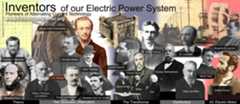
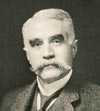
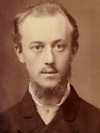
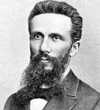
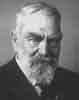
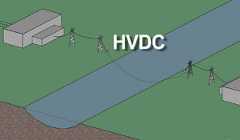
he development of electrical systems is a long and winding story which I have been researching for some 48 years. From the arc light systems, now forgotten, which played a major role; to the incandescent light systems of Edison and his competitors; through the development of power systems in the 20th century, much has been lost or forgotten. For example, the DC transmission concepts of Rene Thury are all but gone from most reference sources, as are those of later HVDC pioneers.
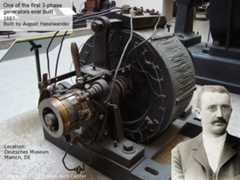
When it comes to polyphase AC, it appears that there is no true "father," but rather a number of researchers.William Stanley, the inventor of the transformer in the US was funded by George Westinghouse, an industrialist in railway air brake and signal systems who sought to improve upon the limitations of the DC systems. In Germany,Werner Siemens and others took the lead and produced the first long distance transmission of AC power 1891. AC motors were a different matter and the two leading figures on opposite sides of the Atlantic approached the problem independently.
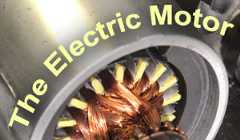
Galileo Ferraris, a physicist at the university of Turin, described in 1885 the rotating field principle. but did not publish until 1888 by which time Nikola Tesla, having conceived the concept as well, had built machines for which patents were granted two weeks after the Ferraris publication. Tesla, seeking commercial development of an AC motor, developed a two phase system of supply. Tesla in a letter to Electrical World of May 25, 1889 recognized Ferraris' work and also cited the work ofOliver Shallenberger at Westinghouse. Shallenberger claimed to have intuited the principle after the observation of the twisting of a meter spring in the field of an AC coil. Electrical World of April 15, 1893 attempted to sort this issue by giving field theory primacy toFerraris and multiphase system primacy to Tesla. Many, including Thomas Hughes in his book Networks of Power (Johns Hopkins U Press available from Amazon) believe that the issue of primacy of the idea will never be settled completely.
The Tesla system patents, though two phase, were the basis of the Westinghouse system at the Columbian Exposition and then at Niagara Falls. At the time, Tesla's work was the most recognized, having been the subject of demonstrations to the AIEE (now IEEE) and also at Columbia University and having undergone a thorough analysis by Prof. Anthony, director of the electrical engineering program at Cornell. Tesla was subsequently feted by the science academies of London and Paris.
Elihu Thomson of Thomson-Houston arrived at AC by another path. He produced initially AC arc light systems and formed the basis for the GE effort directed by Steinmetz, for GE was an amalgamation of Edison and Sprague companies funded through T-H capital. An article in the IEEE PES from several years ago detailed the birth of 3 phase systems through both AEG and Siemens efforts. In the United States, transmission range was a paramount concern and two phase systems prevailed for several decades wherever AC was supplied to the customer, thus the Tesla/Westinghouse system found a ready market.Three phase customer connections were not common until the 1920s; acceptance delayed by an inability to balance single phase customer loads on three phase AC lines. Only after the work of Charles Fortescu at Westinghouse and also that ofEdith Clark at GE in the 1917-20 period were standardized equations available for the engineering of three phase distribution.
As for other AC pioneers there are many-Frank Sprague, usually associated with railways, was an early proponent of AC research. Having the mathematical skills to devise the practical formulae to adapt the British Hopkinson 3 wire system to Edison lighting applications, he went on to develop practical industrial motors which made small utility companies financially viable with the establishment of a daytime motor load. As consultant to the Edison company in NY he recommended the use of AC in a large central plant to be distributed through "receiving" stations in which a transformer would step down the voltage and apply it to a "receiving motor" (reversed alternator) to drive DC generators. That report in September ,1886, but a few months after the firstStanley installation in Great Barrington, shows how universal was the thinking toward large scale AC generation. In that sense, the conversion substation could be said to have been invented by Sprague.
Thus the story has many participants, most of whom replicated another's work, sometimes simultaneously, often with no knowledge of the other. Even the standard power converter of the day had multiple fathers.Benjamin Lamme who led development of AC at Westinghouse described his rotary converter as the overlaying of a DC generator on a synchronous motor and believed it unique until he discovered thatCharles Bradley (Bradley Electric was later acquired by of GE) had applied for a patent as well and there are indications that others had the same idea.
Much of the AC distribution refinement which led to the practical secondary distribution network was the work of Westinghouse engineers working with the United Electric Light & Power Co. in Manhattan to develop the first practical AC networks. But even at Westinghouse, it was researchers likeGuido Pantaleoni, a student of Ferraris, that bridged the ocean by licensing the Gaulard and Gibbs, Siemens, and AEG patents.Sebastian Zinni DeFerrante, a leader in British arc lighting while still in his mid teens, had installed underground 10,000 volt lines in London as early as 1891.
Moreover, in an era prior to the refined understanding of inductance, capacitance and reactive power issues, and prior to the development of steel with magnetic characteristics ideal for alternating fields, the issue of the best frequency was another major concern. Benjamin Lamme's article on the Technical Story of the Frequencies (presented Jan 1918 to the Washington Section AIEE and available online under Google Books) is the best source of 1890s thinking on the issues.
Joseph Cunningham has contributed information for television programs and technical publications.
See more of his articles on theIEEE website.(IEEE membership may be required to view some material)
Also join us onFacebook to give us feedback.